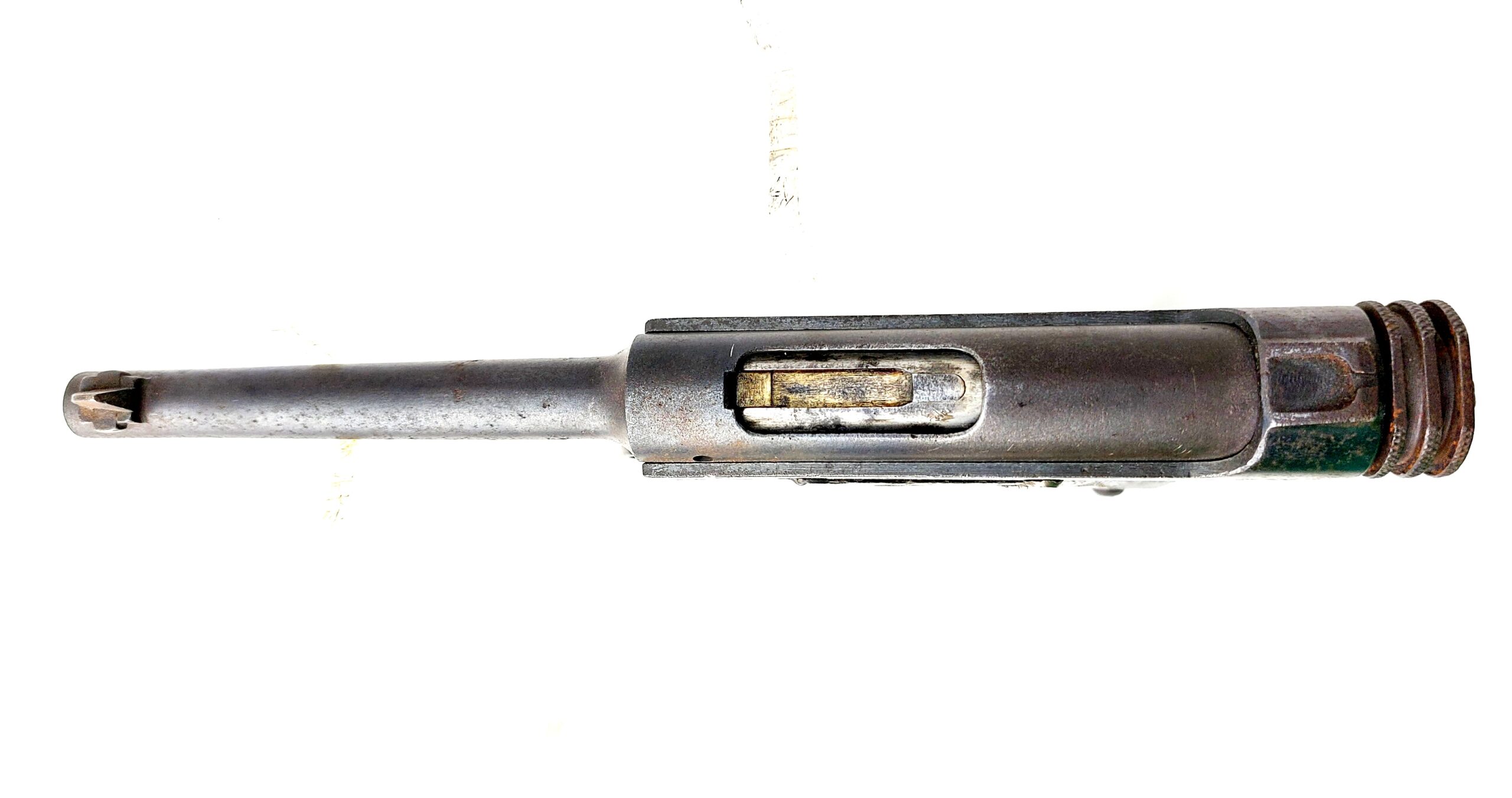
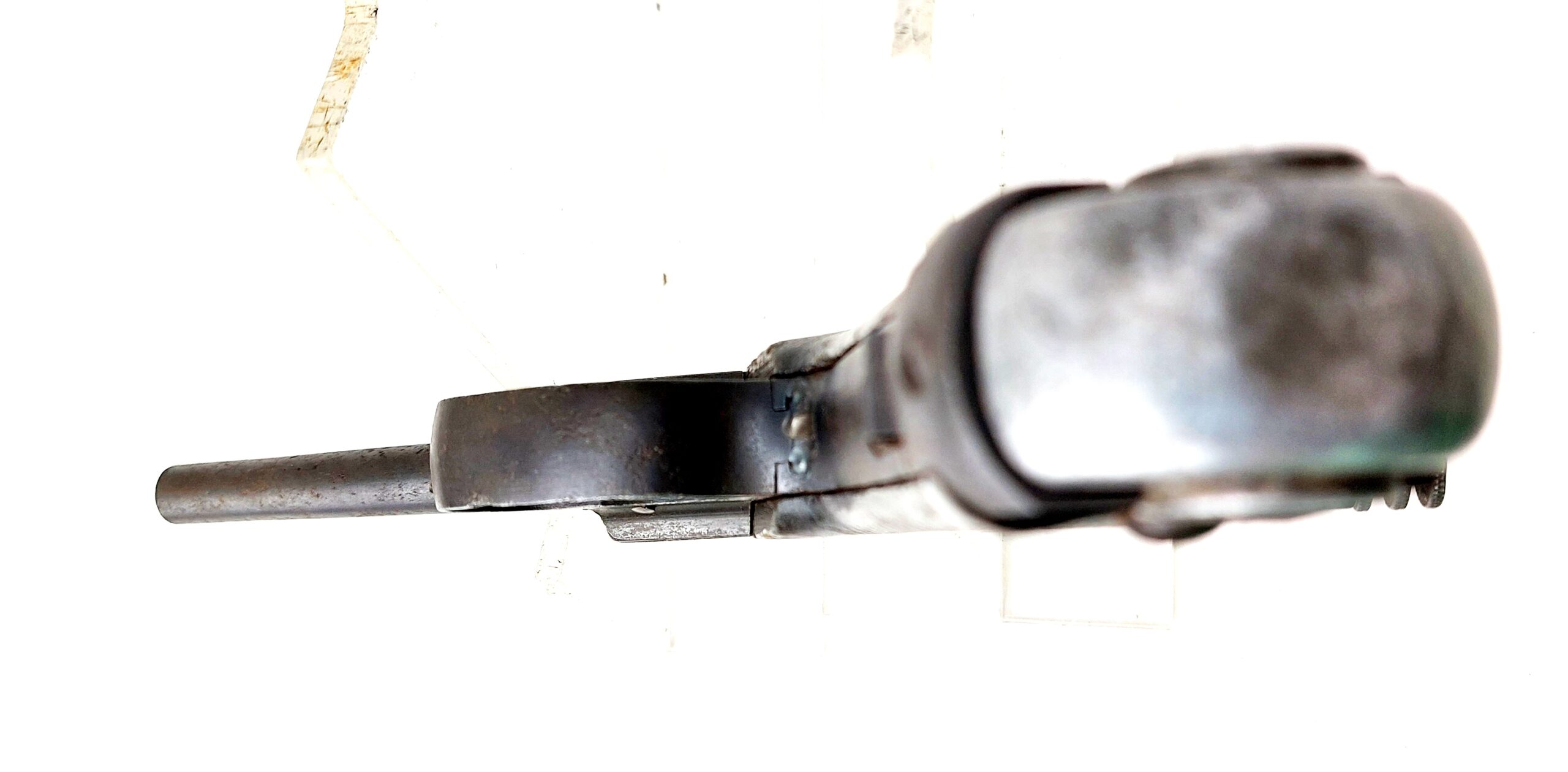
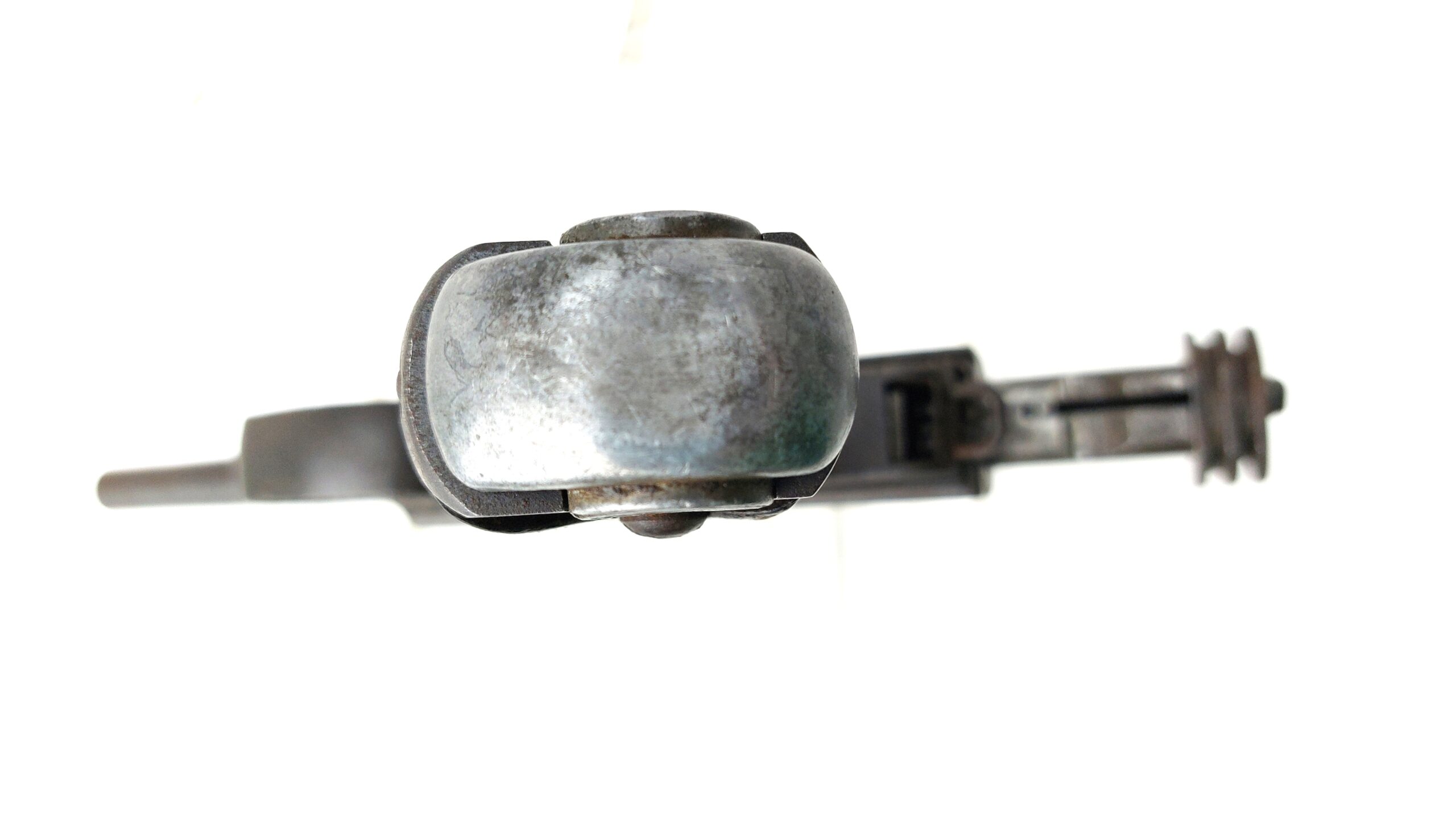
Japanese, WW2, Type 14 Nambu Semi Automatic Pistol, Large Trigger Guard, Showa 16.9 (Sept 1941), Nagoya 2nd Series, Serial 99079, EU/UK Deactivated - 6

SKU / Ref. No: JAQ#GFO_010720263287

£1,550.00

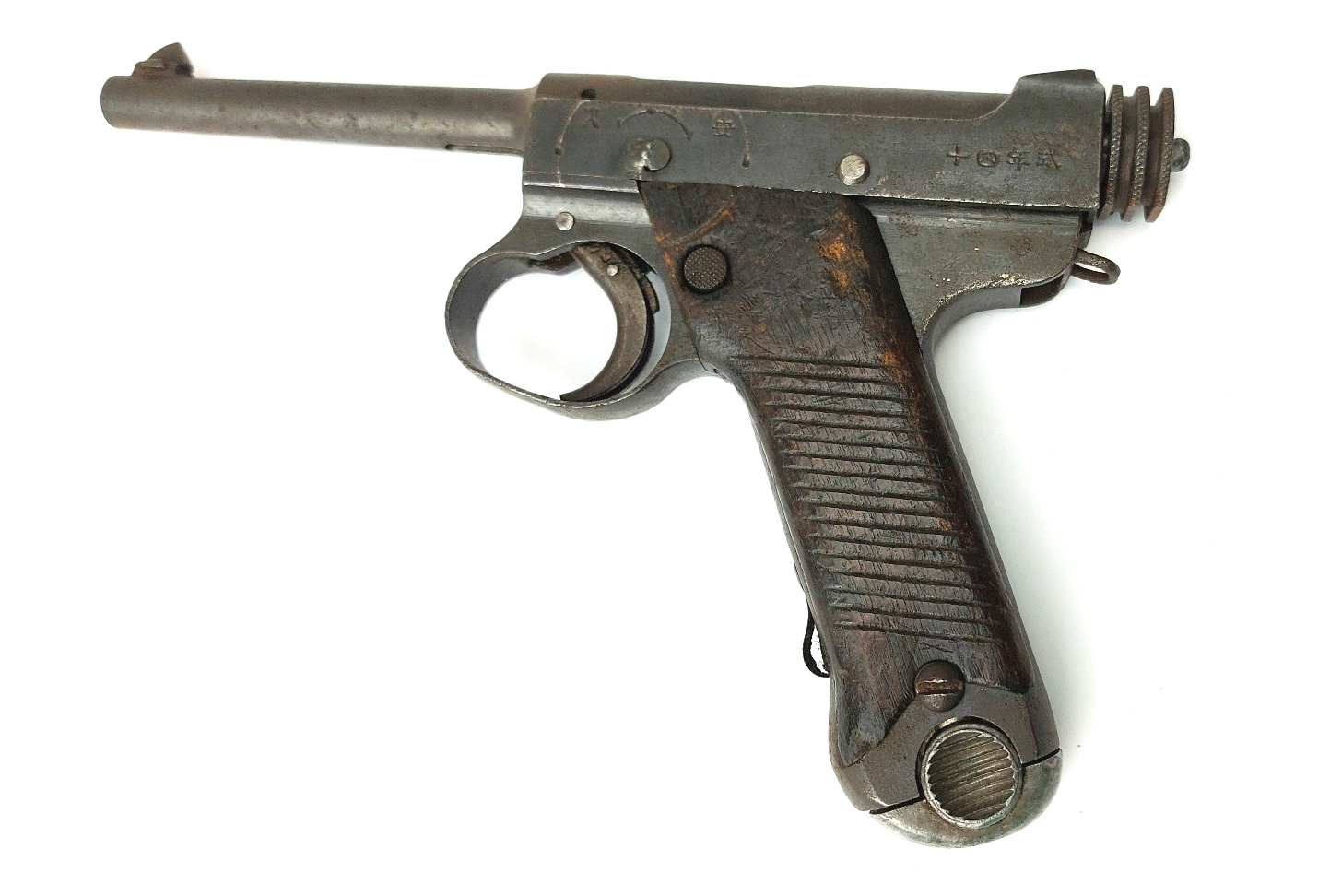
An original September 1941-dated Imperial Japanese Type 14 Nambu large trigger guard pistol retaining clear Nagoya Arsenal markings, matching-numbered cocking assembly, wartime magazine retention spring, removable magazine, and modern Birmingham Proof House EU/UK deactivation certification.

Would you like to find out more about this product?

SKU / Ref. No: JAQ#GFO_010720263287

Enquire about this product

*Japanese, WW2, Type 14 Nambu Semi Automatic Pistol, Large Trigger Guard, Showa 16.9 (Sept 1941), Nagoya 2nd Series, Serial 99079, EU/UK Deactivated*

- Type: Deactivated Semi-Automatic Pistol
- Calibre: 8mm Nambu
- Model: Type 14 Nambu
- Serial Number: 2nd Series No. 99079
- Date Code: Showa 16.9 (September 1941)
- Arsenal: Nagoya Army Ordnance Arsenal / Chuo Kogyo supervision
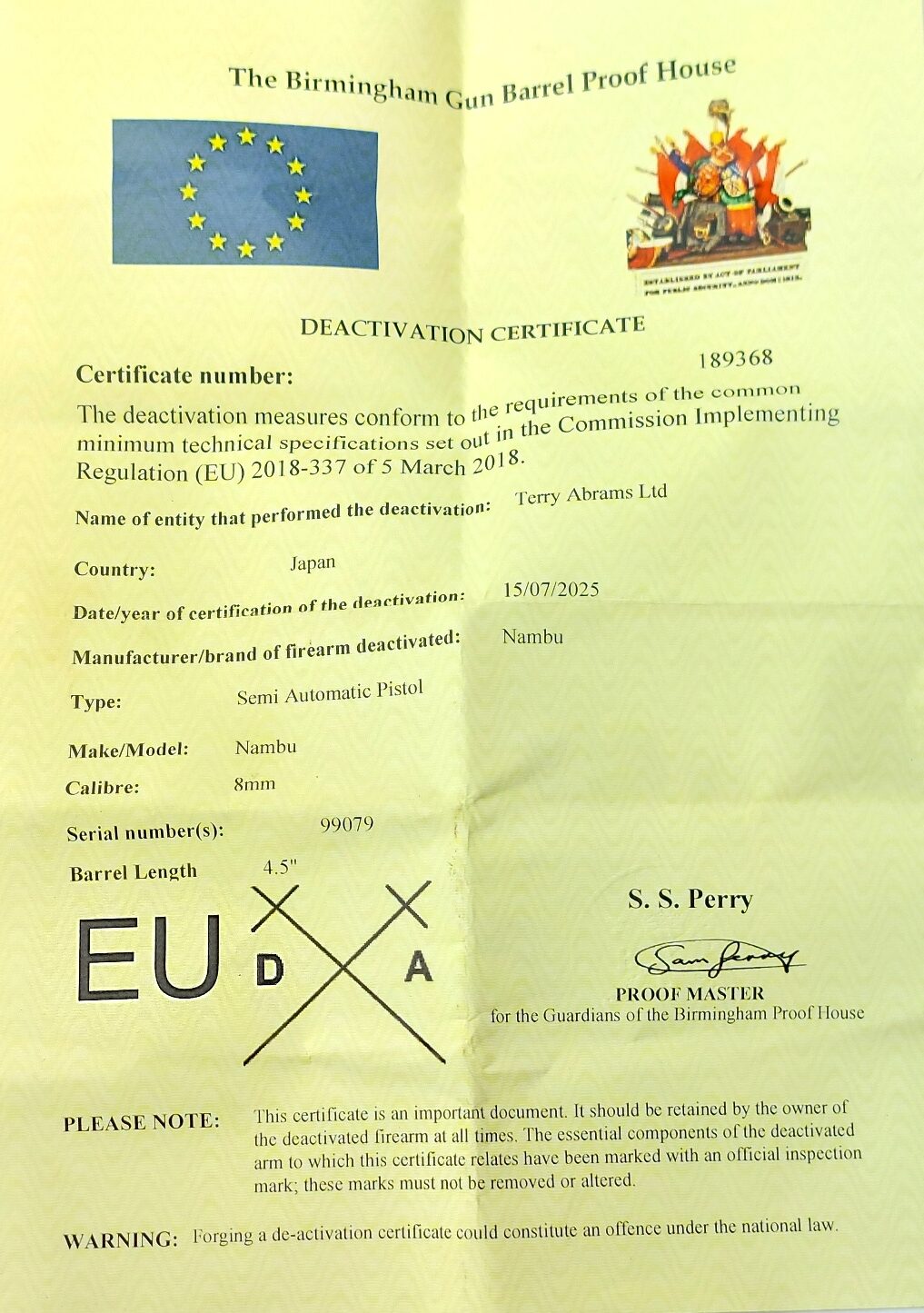
- Certification: Birmingham Gun Barrel Proof House EU/UK Specification (2025)

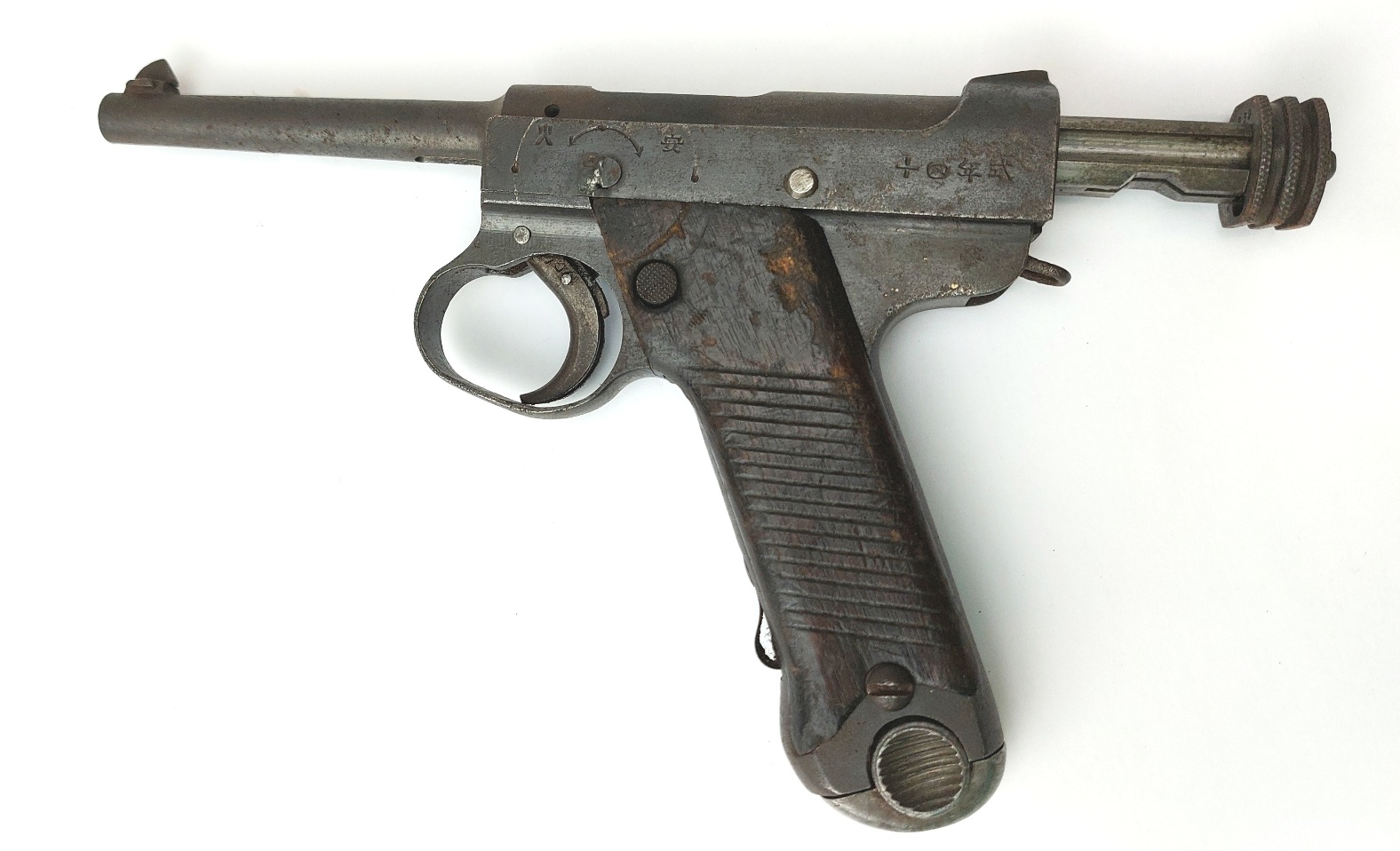
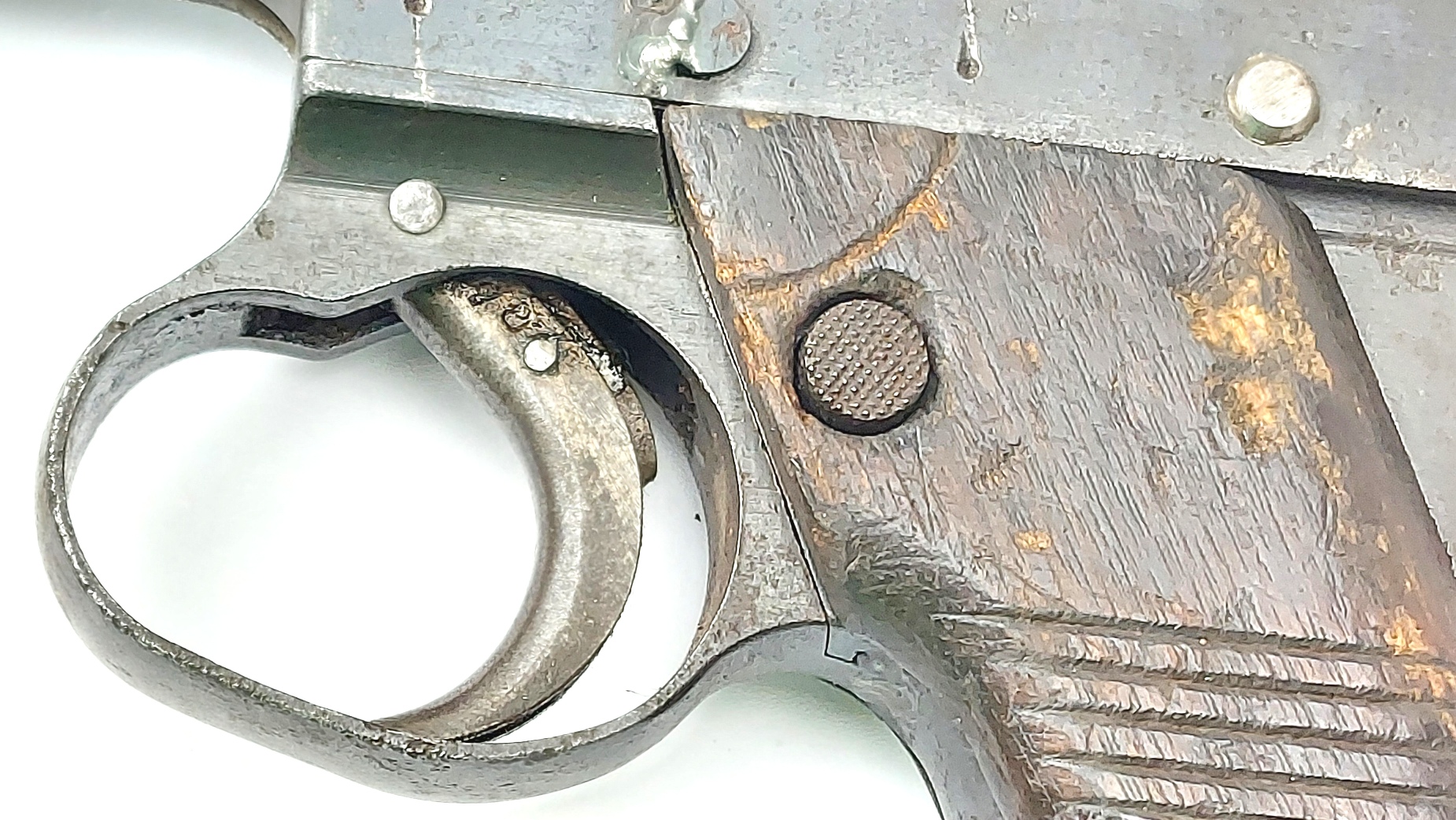
An original Imperial Japanese Army Type 14 Nambu semi-automatic pistol produced during the WW2 and dated Showa 16.9, corresponding to September 1941. This example is the desirable large trigger guard variant introduced during the late 1930s and early wartime production period to facilitate operation while wearing winter gloves during service in colder operational theatres.

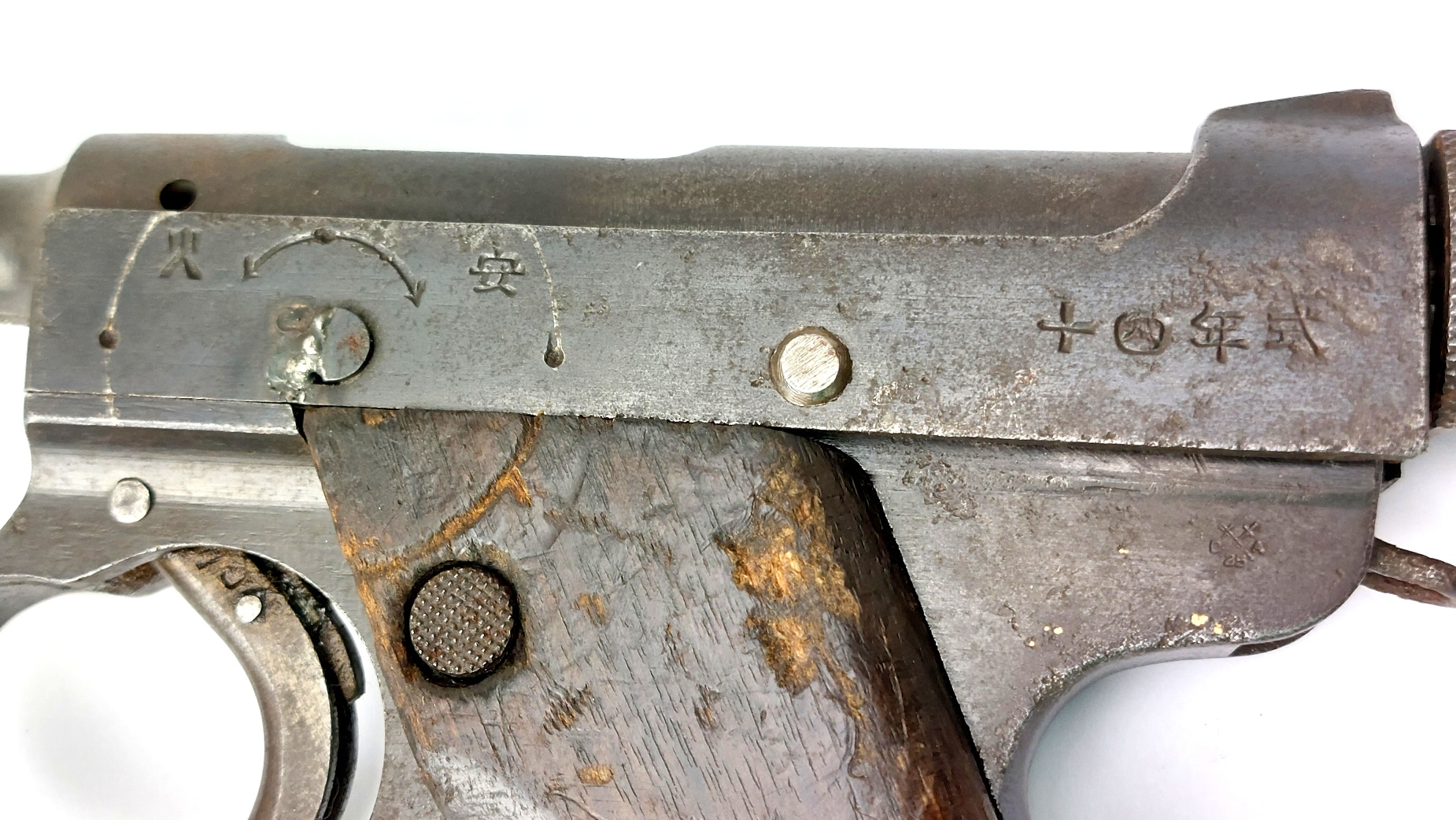
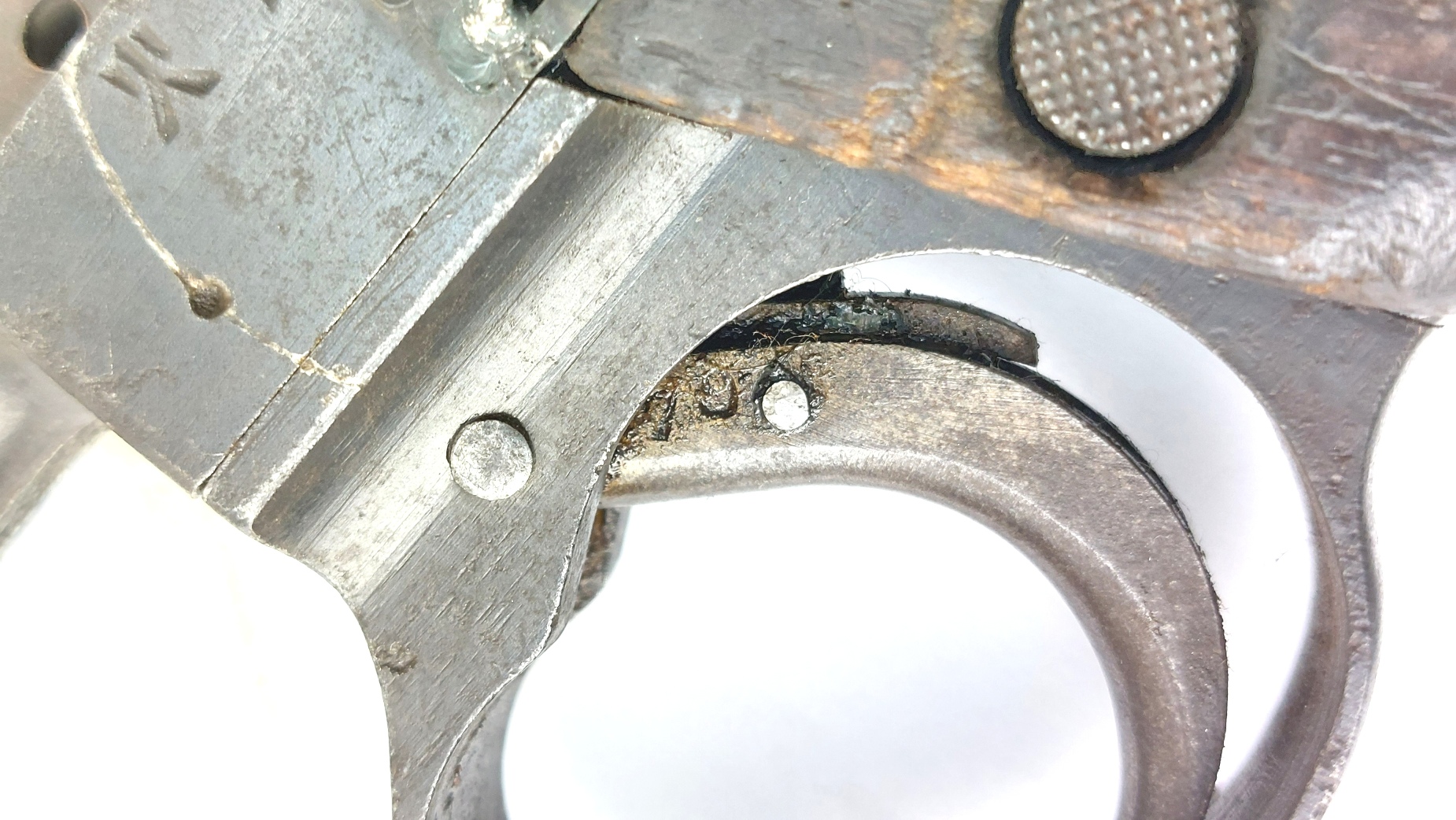
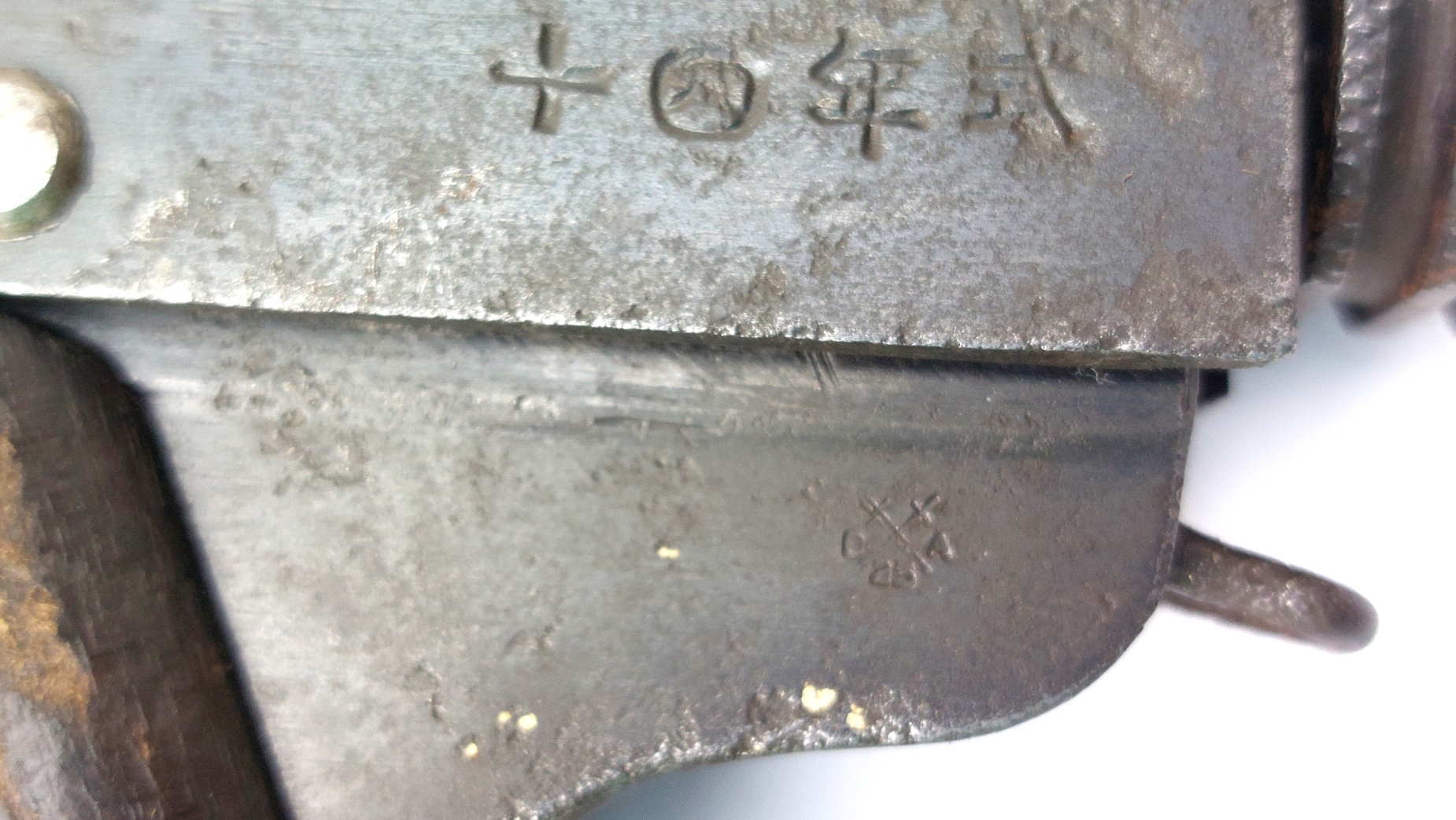
The pistol retains clear wartime markings throughout. The right side of the frame displays the crisp Type 14 designation characters (十四年式), read traditionally from right-to-left, literally translating as “Type 14”. The left side retains the original safety marking arc together with the kanji 安 (“An” – Safe) and 火 (“Ka” – Fire) denoting the safety positions.

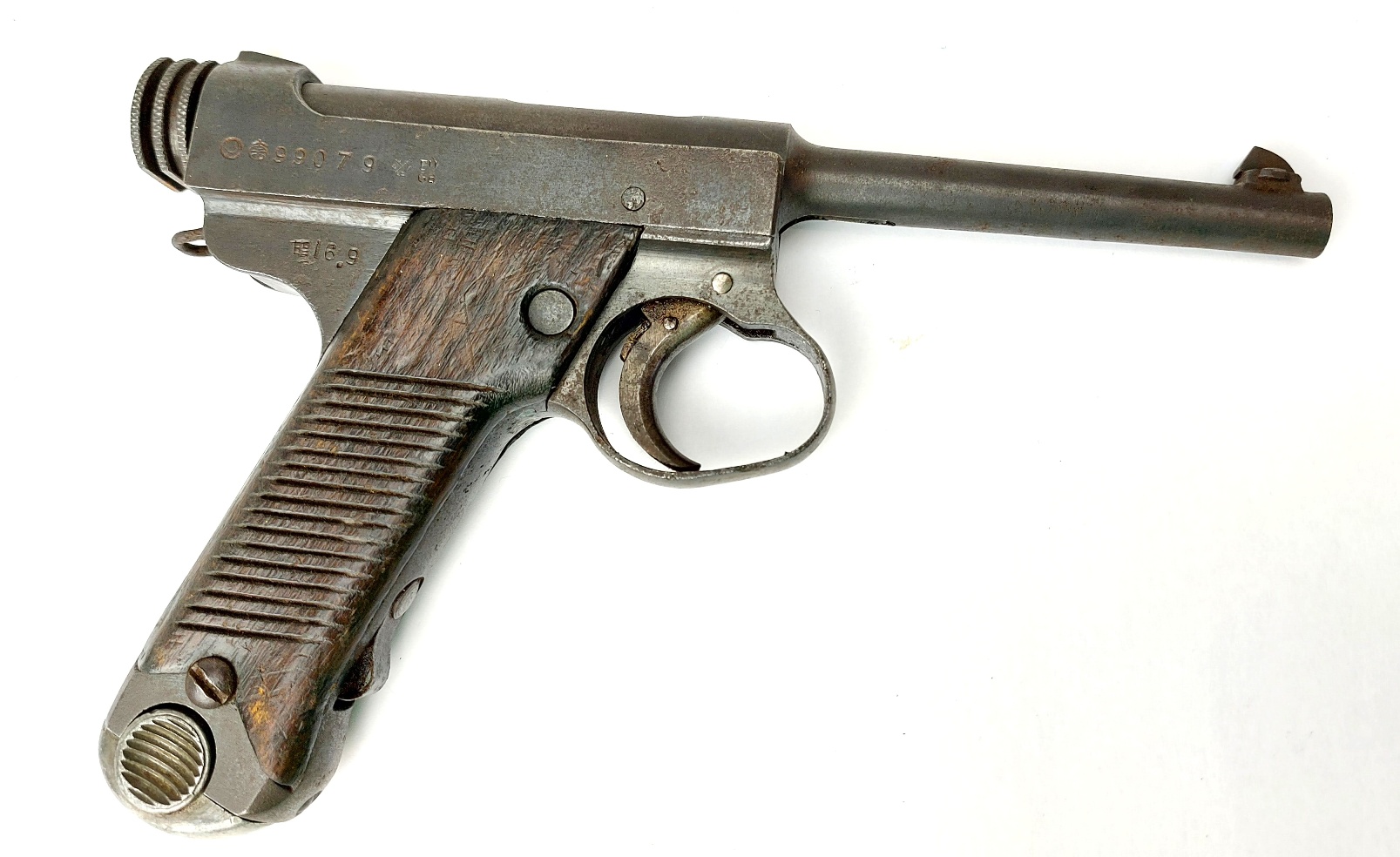
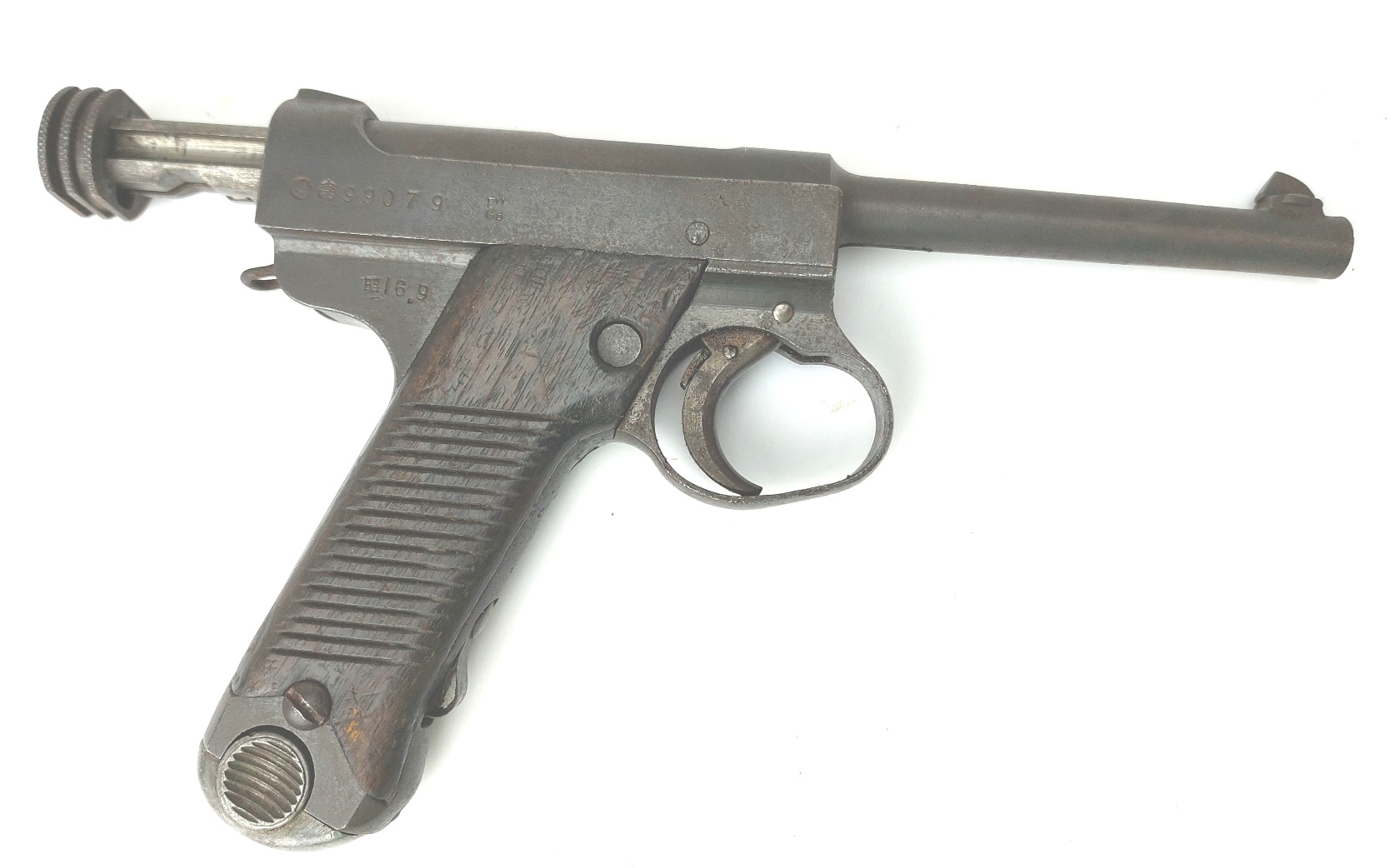
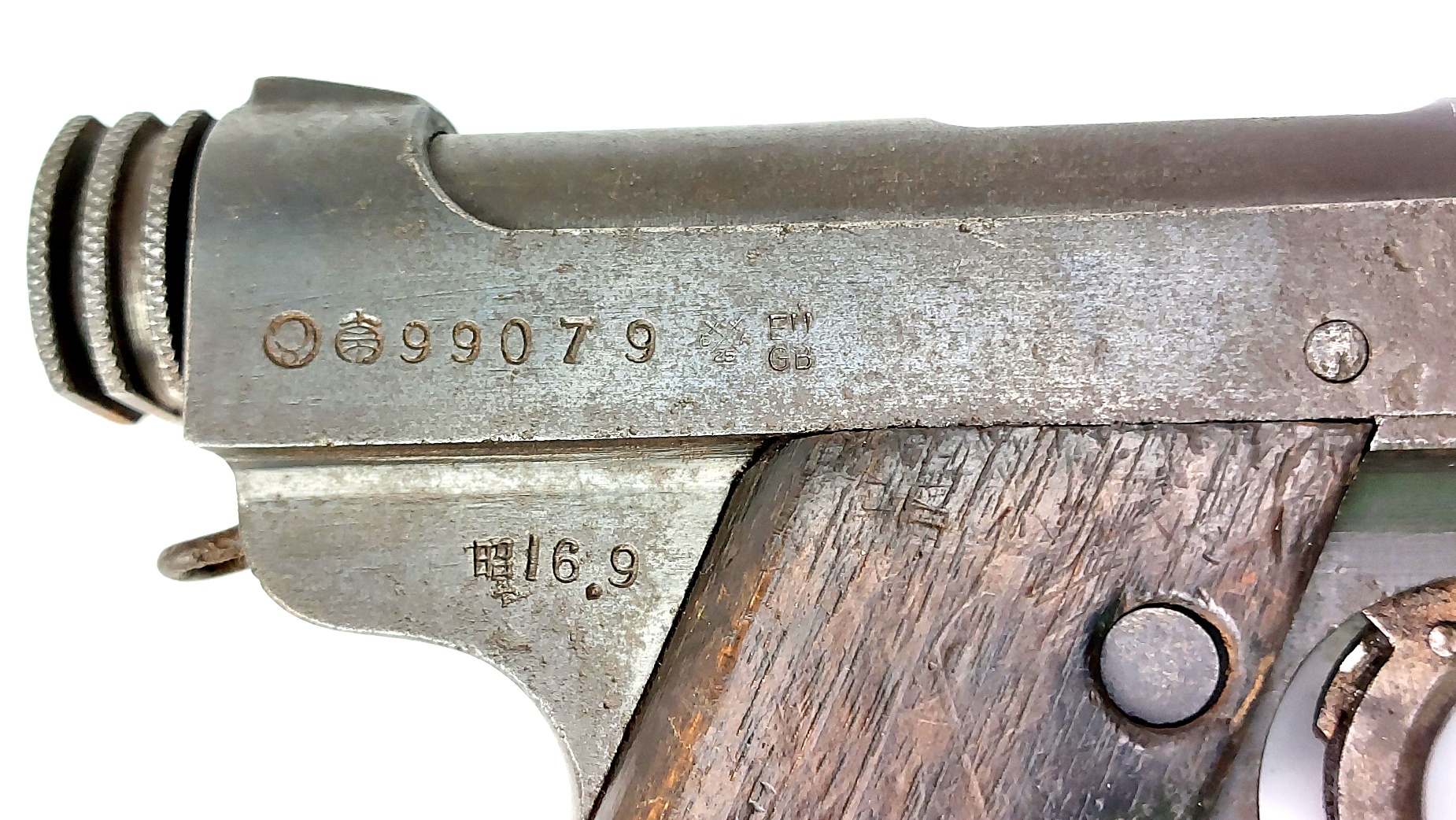
The left side of the frame additionally bears the Nagoya Arsenal identification stamp together with the circled katakana “Ro” (ロ) series mark identifying this pistol as a Nagoya Arsenal 2nd Series production example. The serial number 99079 remains clearly struck alongside the small inspection character 名 (“Nao”), a standard inspection mark associated with Nagoya Army Ordnance Arsenal inspection procedures. Beneath the frame line, the Showa date code 昭16.9 confirms production during September 1941.

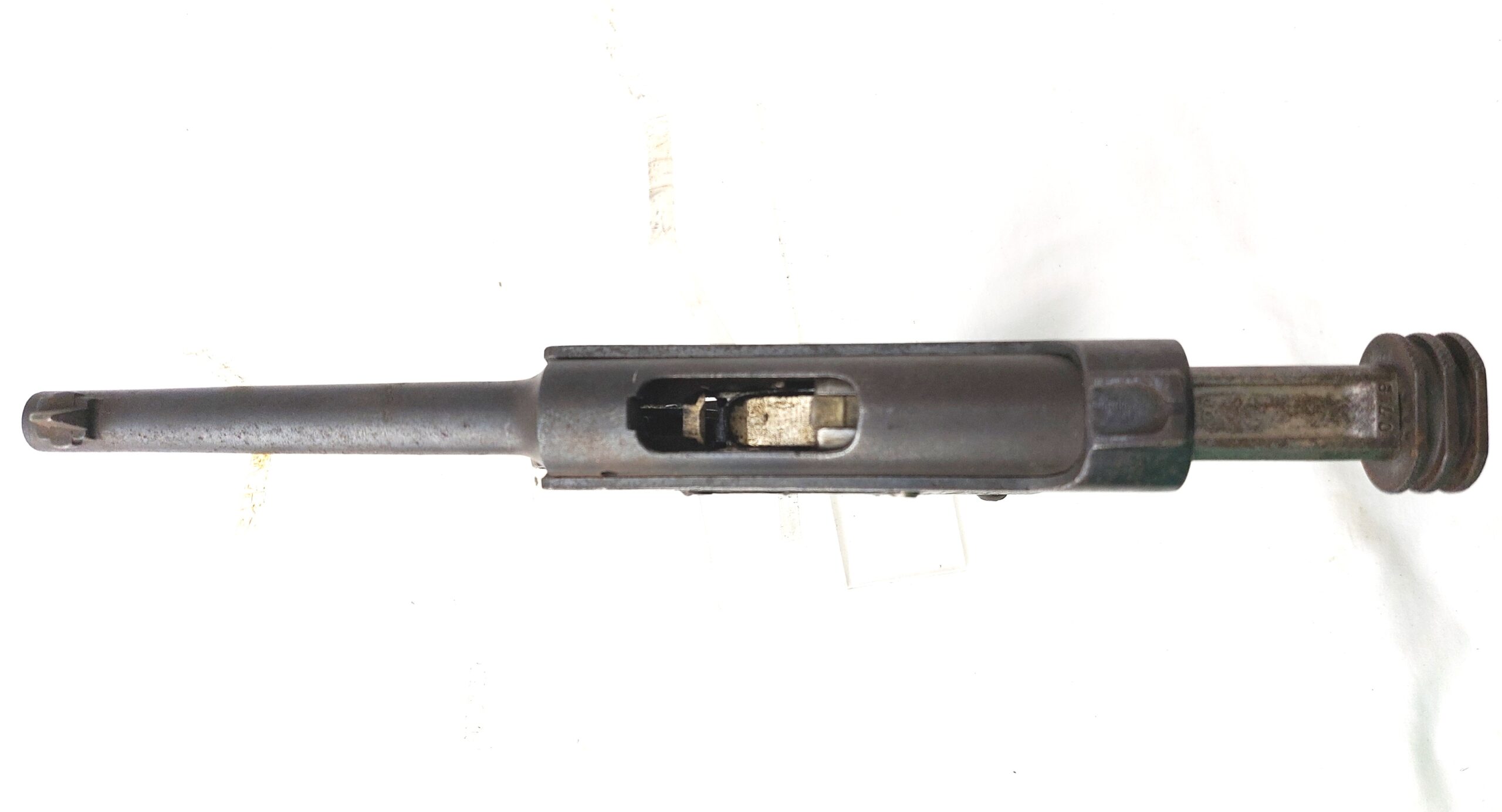
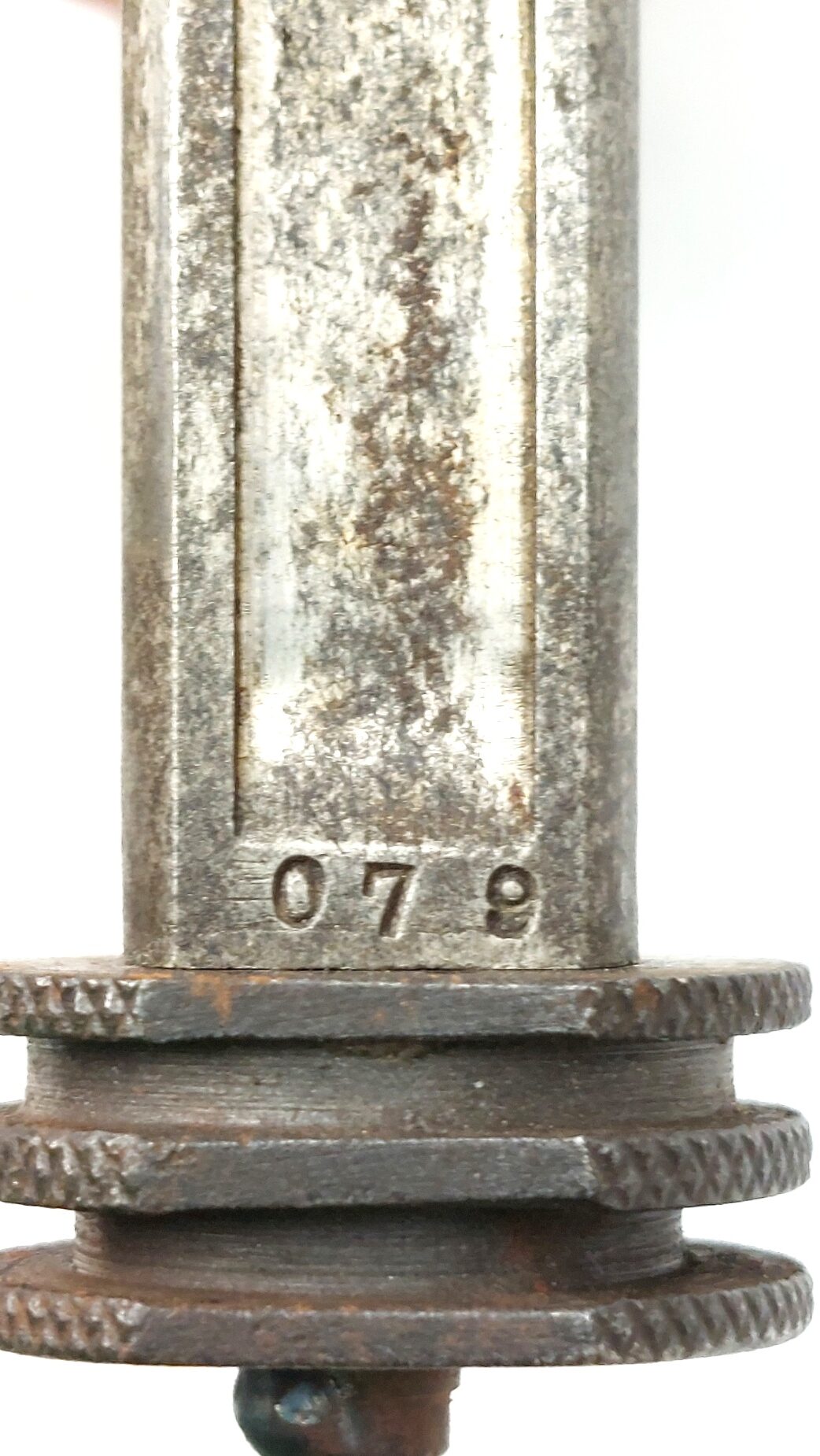
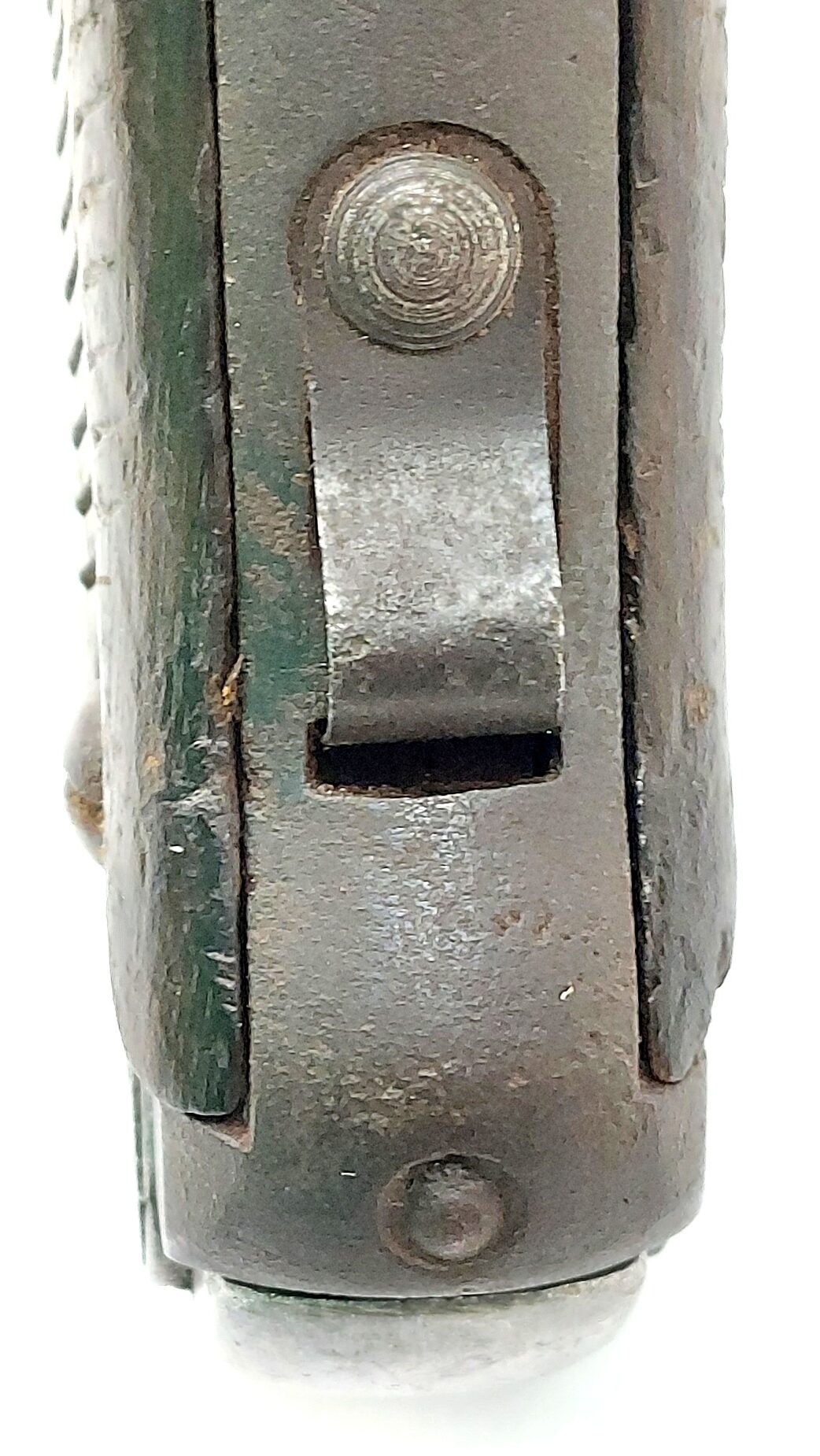
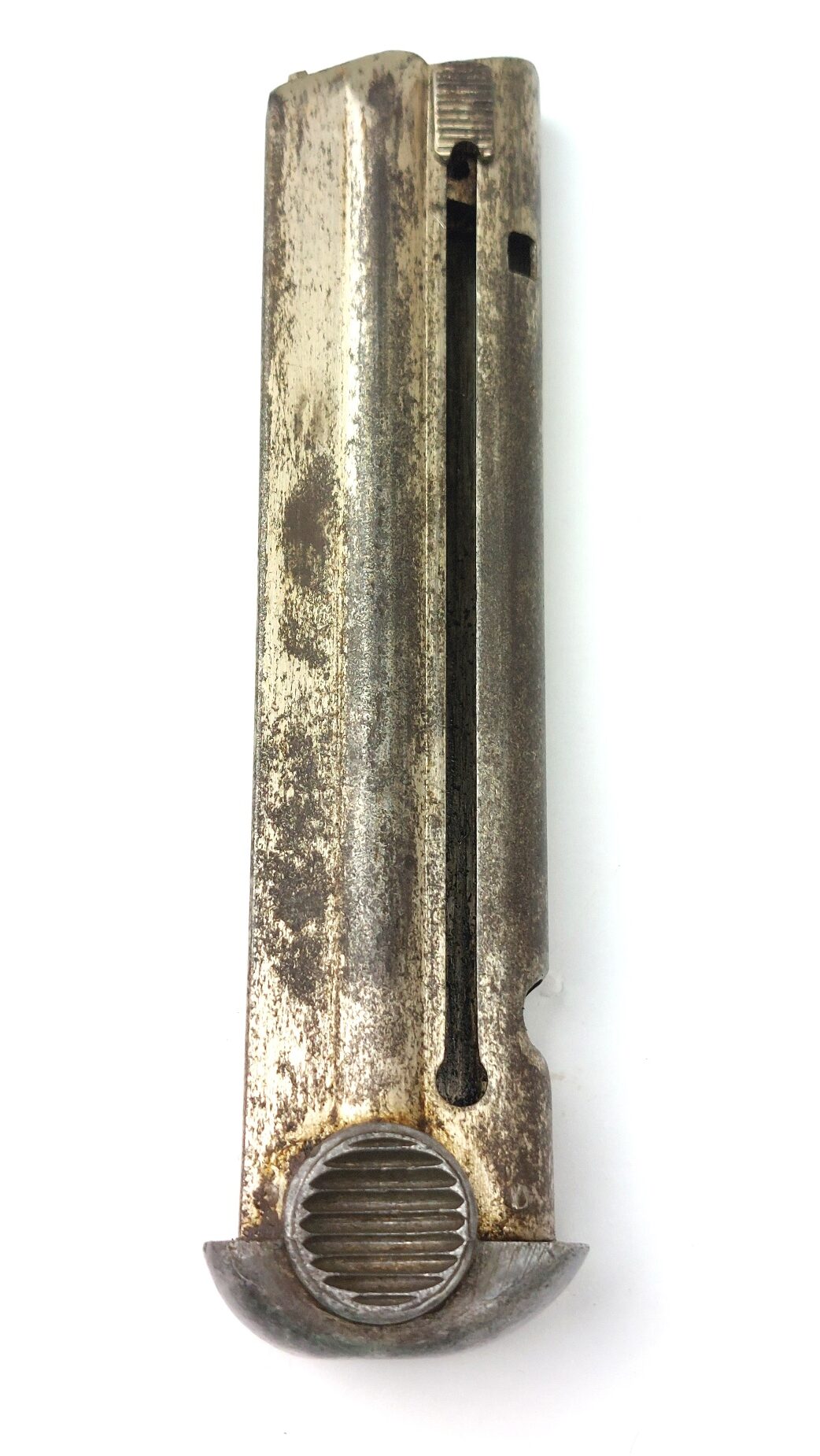
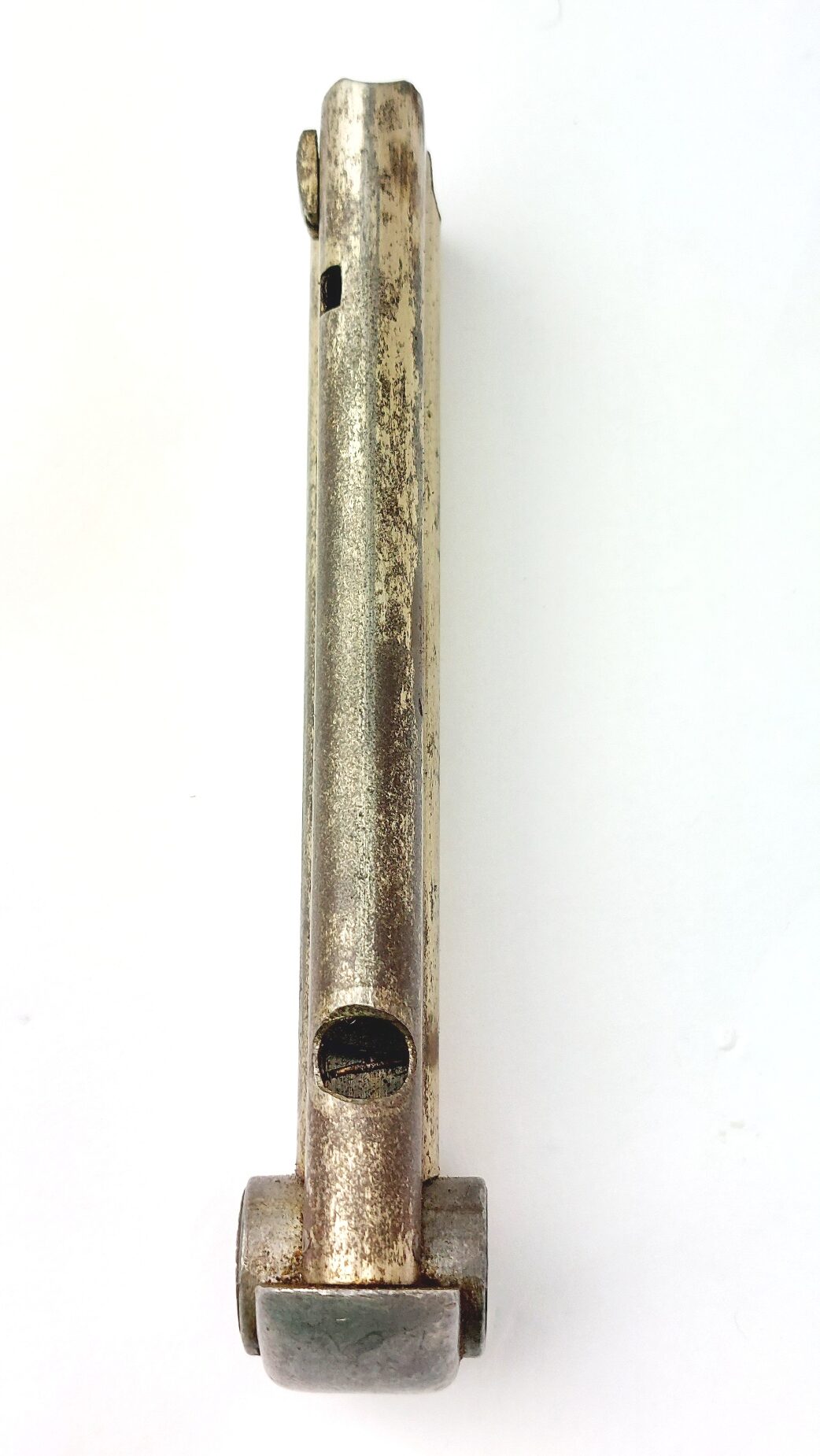
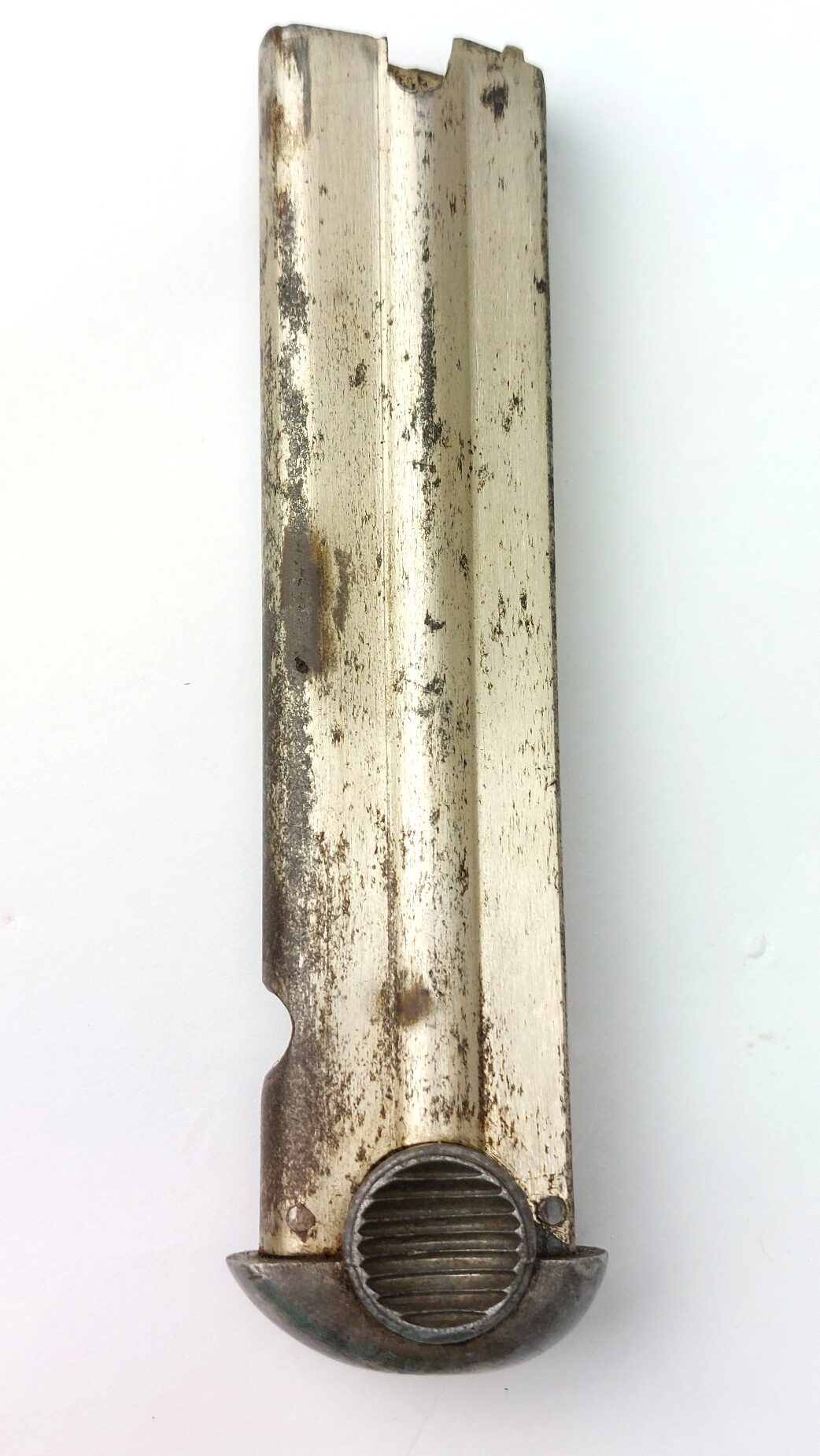
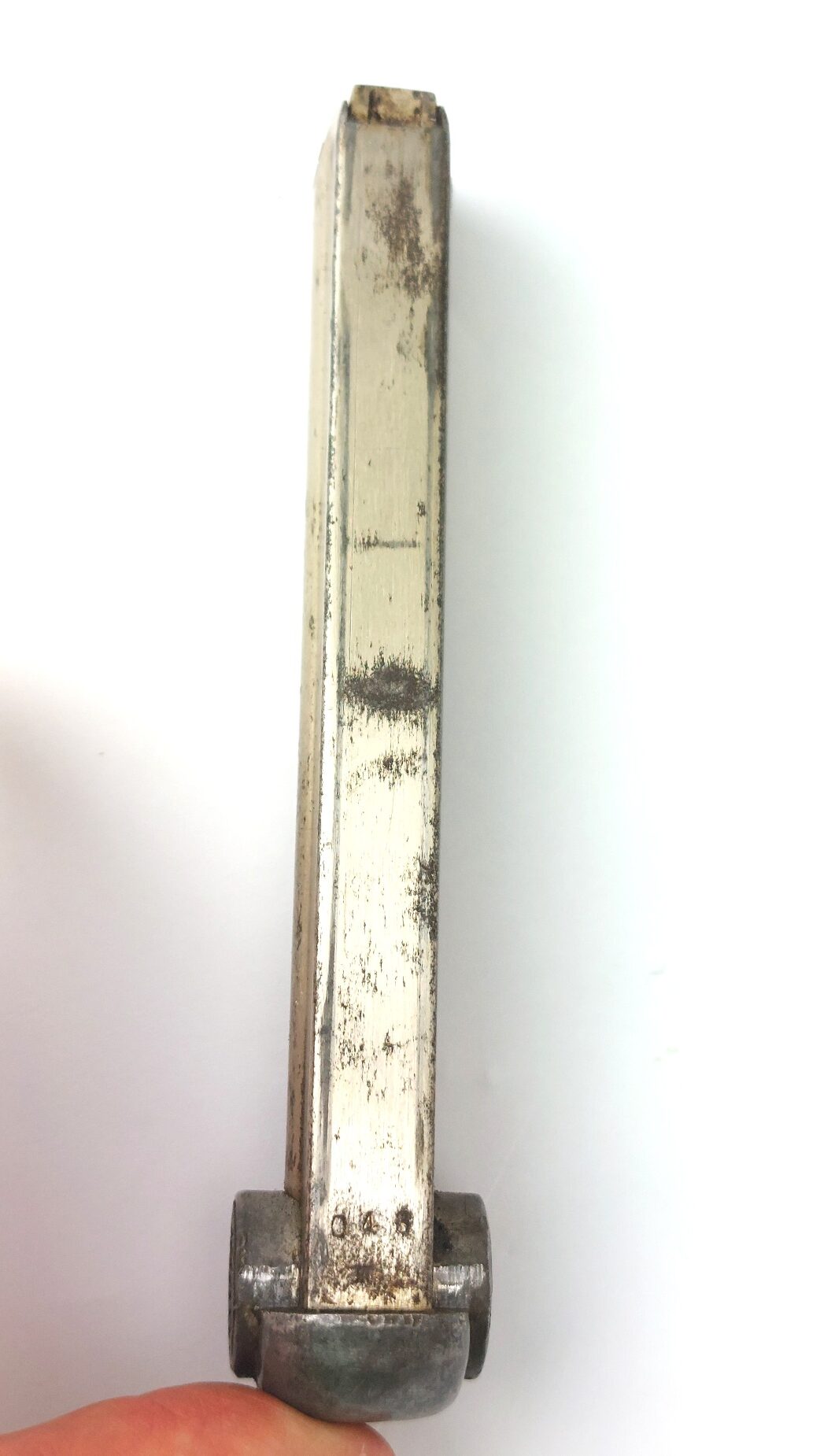
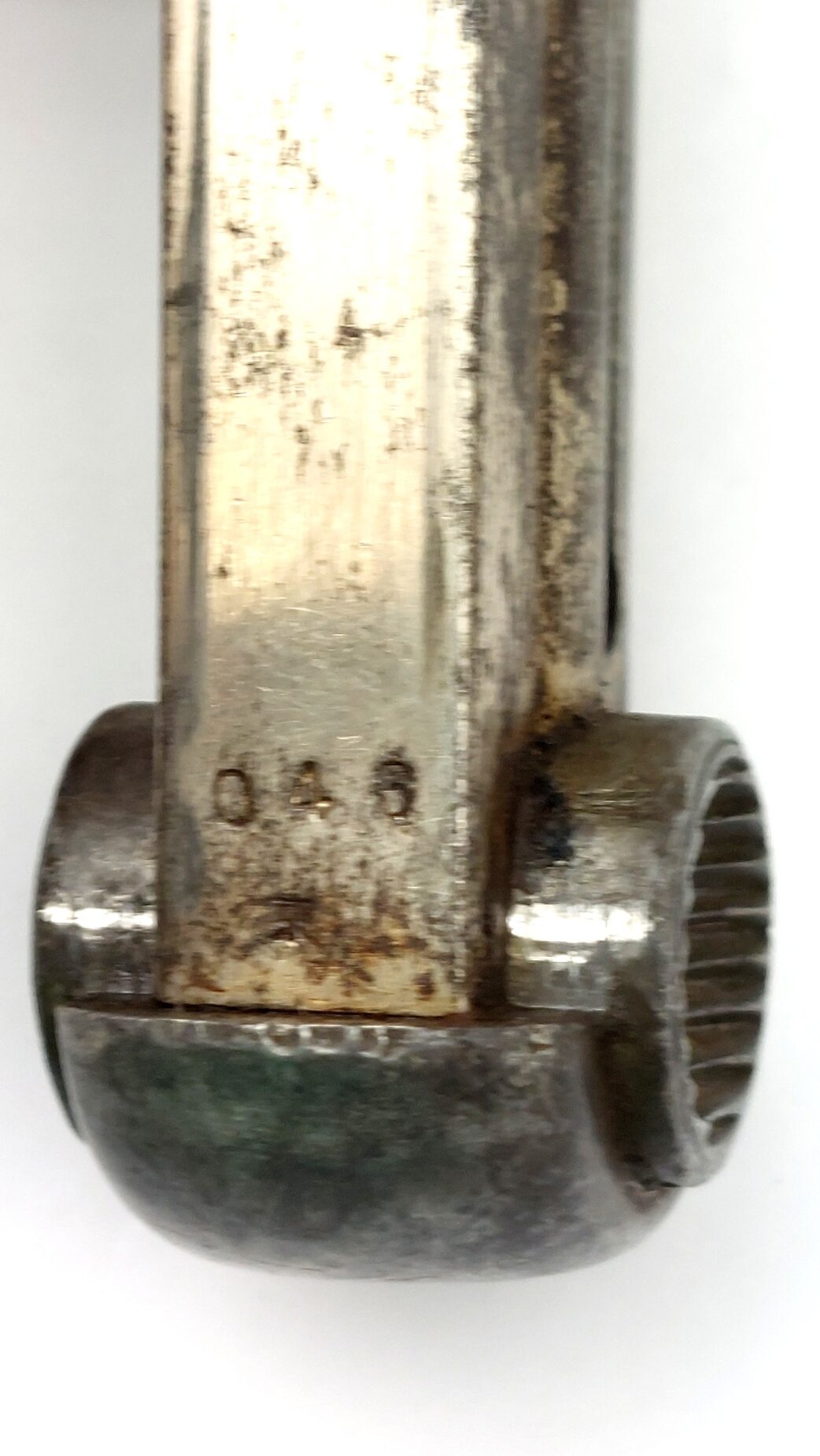
This example retains its original wartime ribbed wooden grip panels, fixed lanyard loop, and matching-numbered cocking assembly stamped “079”, correctly corresponding with the last three digits of the frame serial number. The removable magazine is present but separately numbered “046”, indicating a wartime replacement or later arsenal substitution.

The pistol additionally retains the correct factory-installed front-strap magazine retention spring, sometimes referred to as the magazine safety auxiliary spring, introduced during mid-war Type 14 production. This flat steel leaf spring applies forward pressure against the magazine body to reduce the risk of accidental magazine loss during active service. Its presence is entirely correct for a September 1941 Nagoya Arsenal-produced large trigger guard pistol and further confirms the pistol’s authentic mid-war configuration.

Approx. Measurements: Overall Length: Approx. 23 cm. Barrel Length: 4.5 inches

History Note:
The Type 14 Nambu was officially adopted by the Imperial Japanese Army during the Taishō 14 period (1925), from which the pistol derives its designation. Designed by General Kijiro Nambu, it became the principal Japanese military sidearm throughout much of the Second World War and remains one of the most recognisable Japanese military pistols of the era.

The enlarged trigger guard and front-strap magazine retention spring were both introduced as wartime improvements following Japanese combat experience during campaigns in Manchuria and China. Earlier pre-war Type 14 pistols lacked both features, with accidental magazine loss becoming a recognised field problem under combat conditions. The additional front-strap spring applied constant forward pressure against the magazine body, helping ensure the magazine remained securely retained even if the magazine release was inadvertently pressed during movement or recoil.

Mid-war Nagoya Arsenal examples such as this are particularly sought after by collectors as they retain comparatively good machining standards and fully developed wartime features prior to the severe material and production simplifications introduced during the later stages of the Pacific War.

*Condition*
Deactivated to the latest EU/UK standards with accompanying 2025 Birmingham Proof House certificate. The bolt slides fully backward and forward under spring pressure, but in accordance with current legislation, the action does not cock or dry-fire. The magazine remains removable. Modern Birmingham Proof House deactivation markings, including EU over GB and the crossed swords proof mark, are stamped to the left side of the frame, while the bright central frame pin is consistent with modern EU-specification deactivation work.

The metal surfaces retain an attractive untouched wartime appearance with an even greyed field patina, scattered oxidation, and light speckling consistent with age and service use. The safety lever thumb-piece has broken away, leaving the semi-circular spindle flush within the frame. A faint Nagoya Arsenal or subcontractor inspection stamp remains visible toward the rear right frame below the Type 14 characters, and the original ribbed wooden grip panels remain sound with expected handling wear, scratches, age darkening, and areas of finish loss.

, , , , , , , , , , , , , , , , , , , , , , ,

Download QRPrint QR

Important!

*In order to complete the online purchase we will require a picture/scan of a photo ID (Driving Licence, Passport or an official document with a recent picture). If you don't posses any such document please call to buy.
If we consider that the proof of ID is incorect or insuficient, we reserve the right to cancel the transaction.

*We also reserve the right to cancel the transaction with a full refund if there is any suspicion that the provided item will be used in any way contrary to the laws and legislation of UK.

Scroll to Top