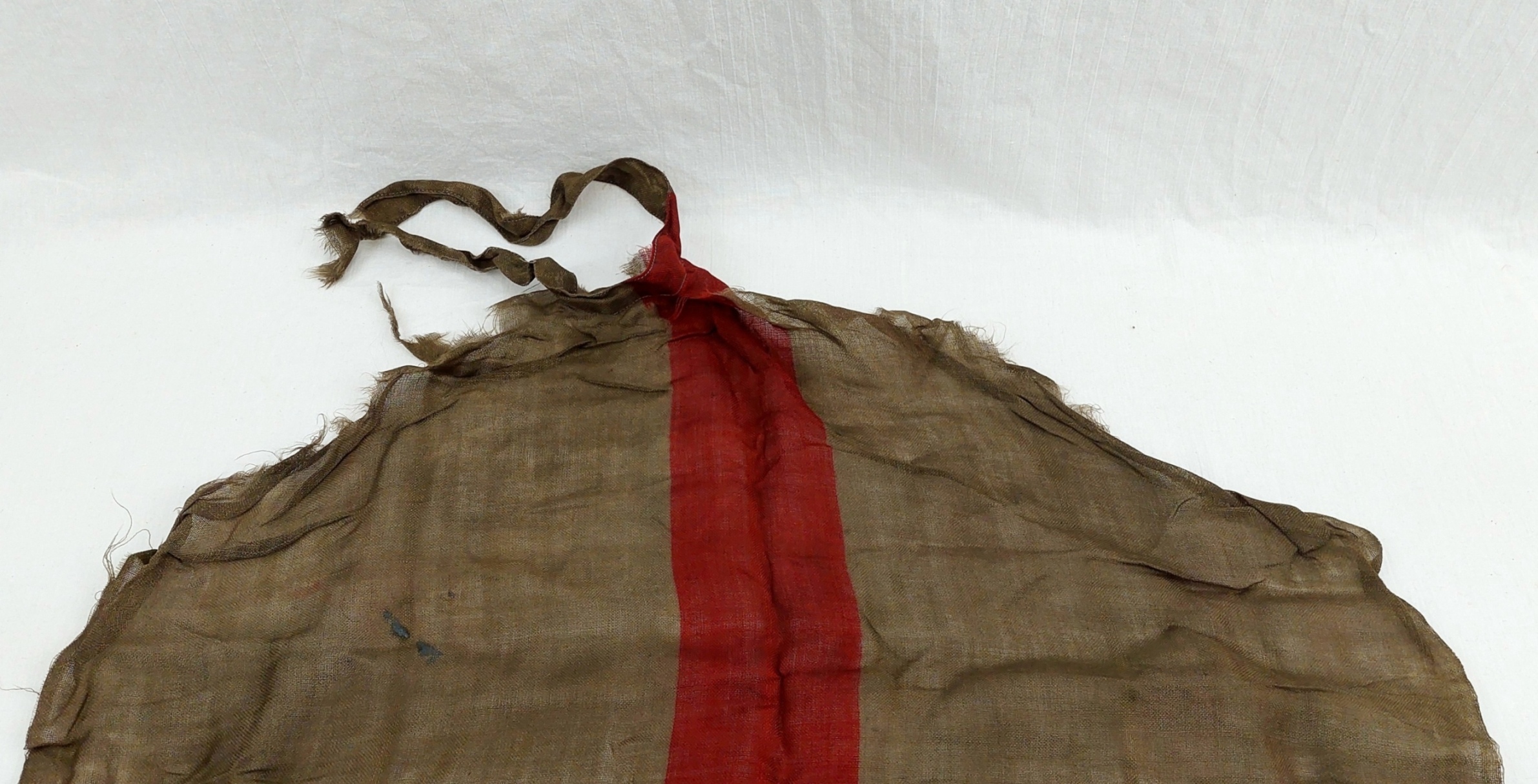
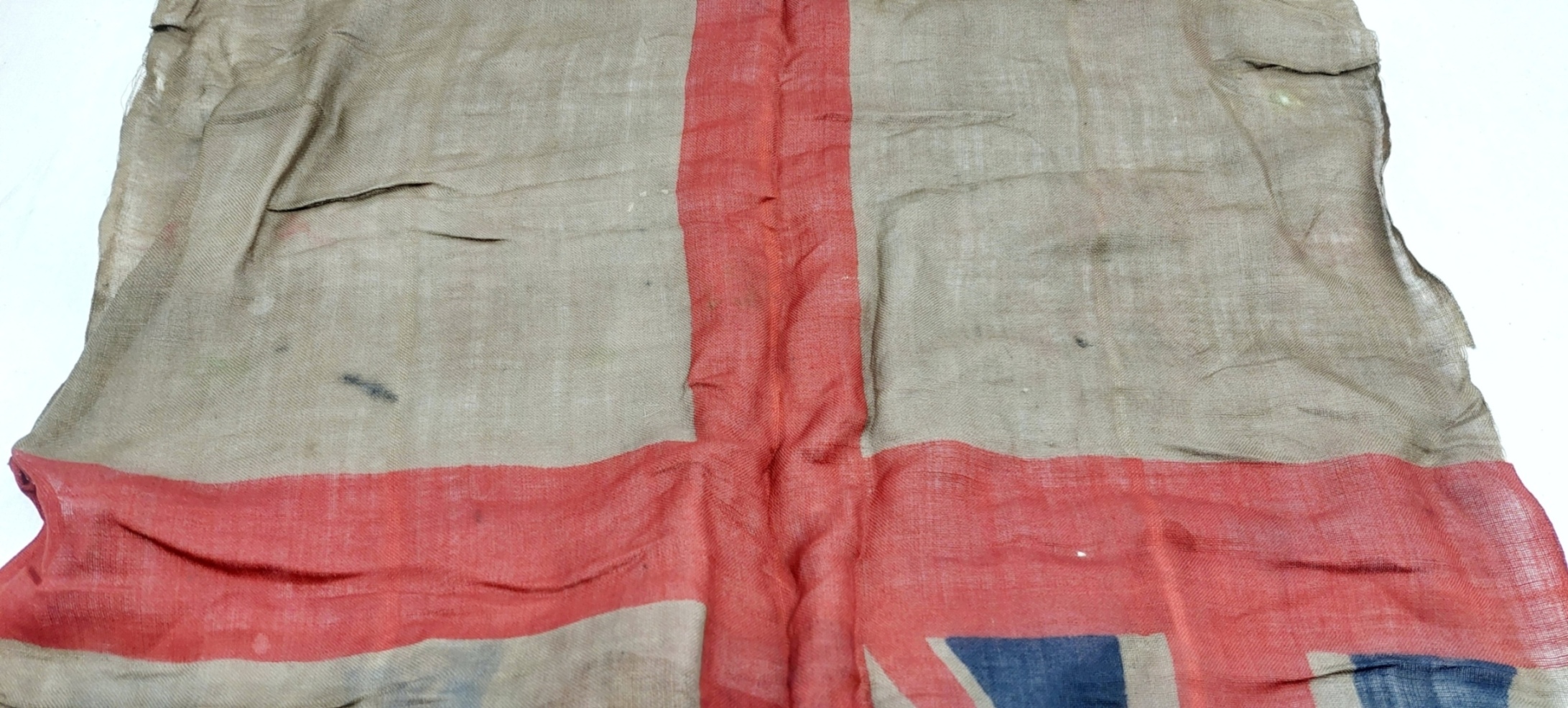
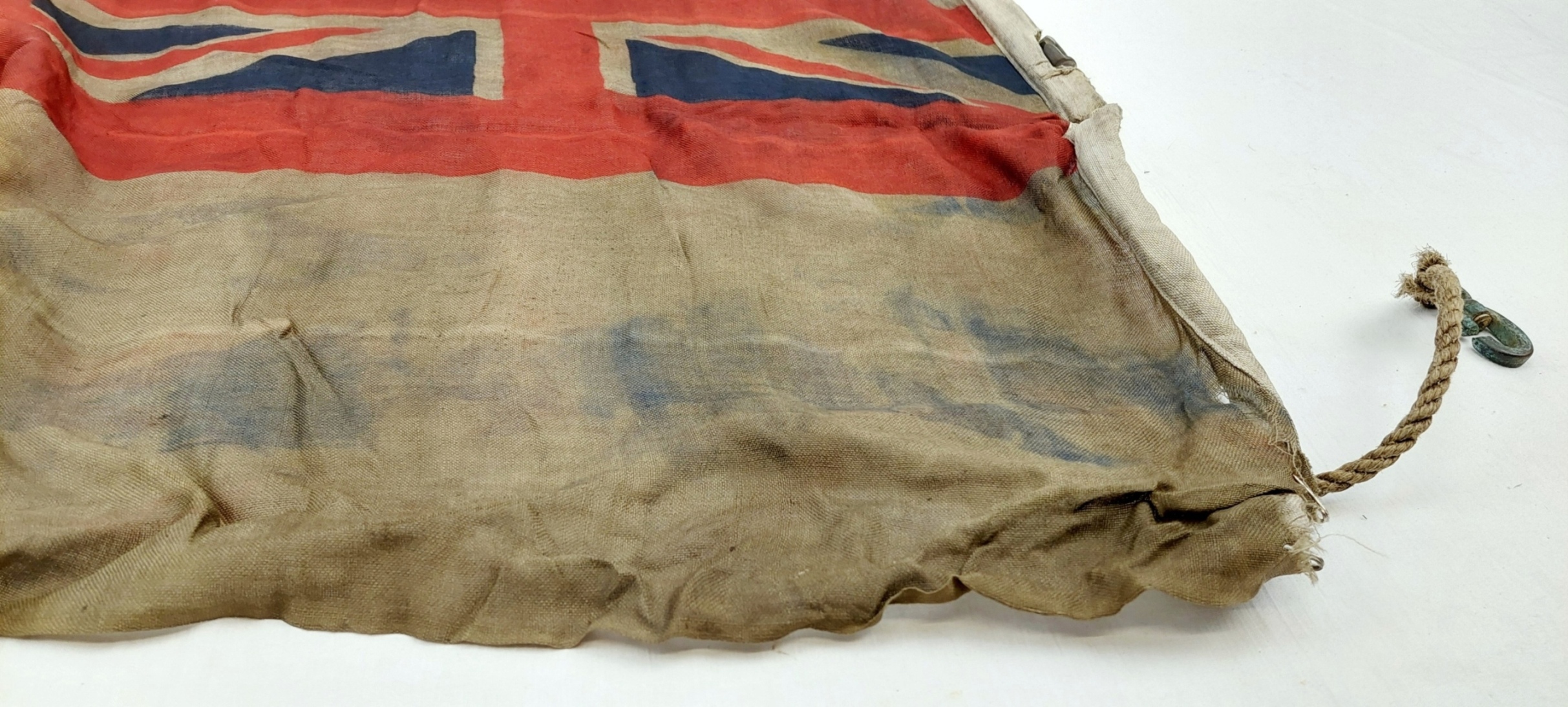
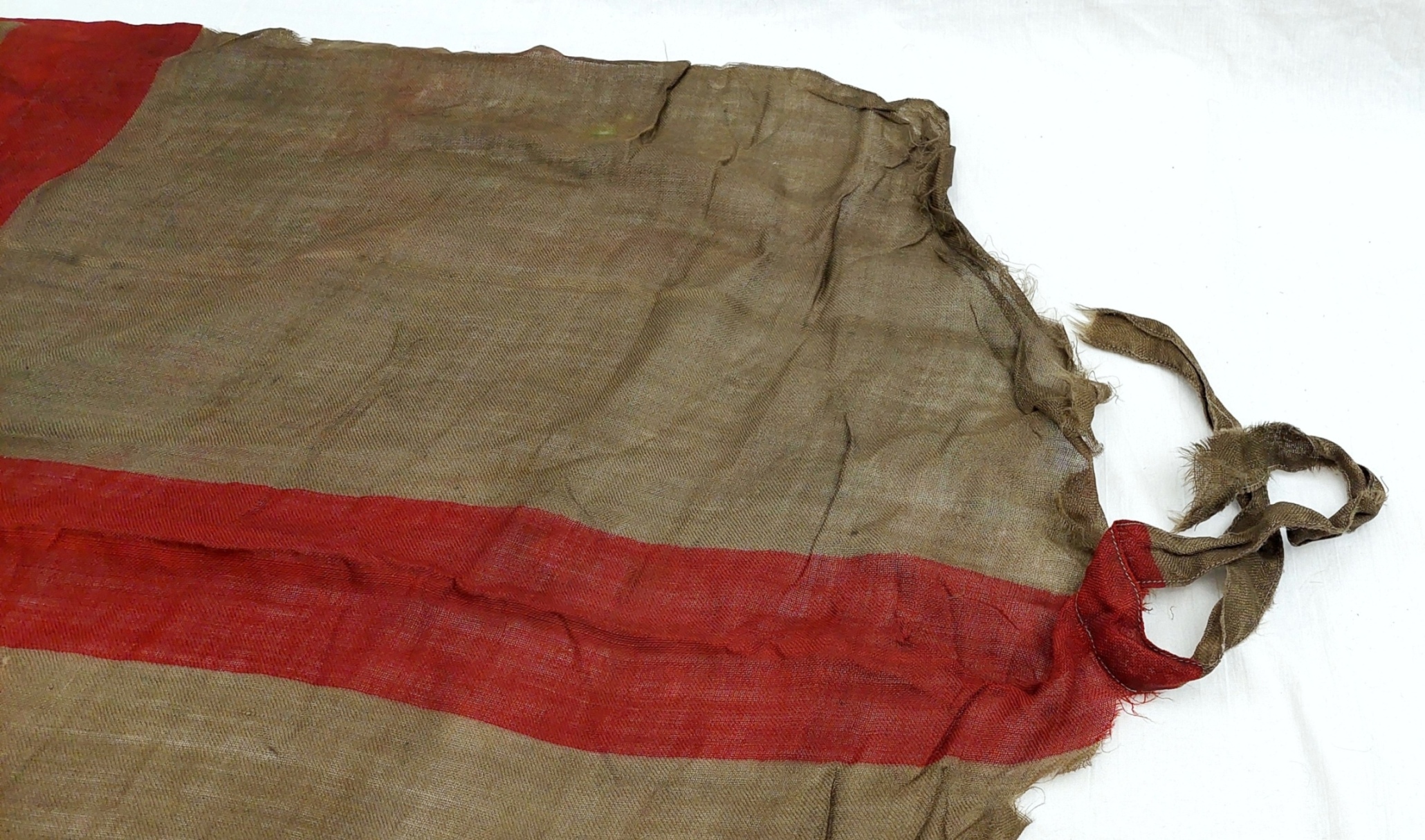
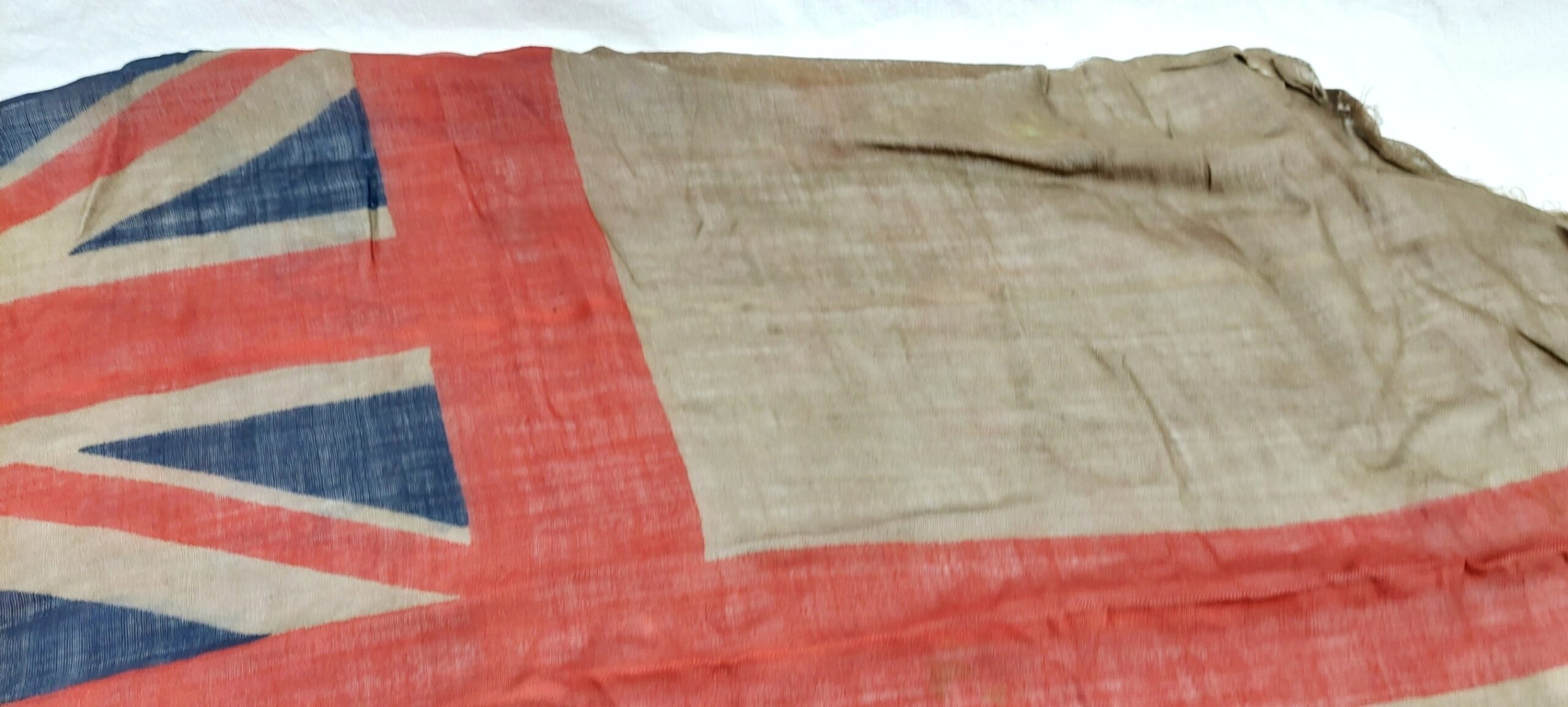
British Royal Navy CollectableUnion Jack From The Battlecruiser HMS Tiger (1913) Flown At Jutland With Provenance
SKU / Ref. No: JA_1178247197*
£2,500.00
Your message was sent. We will contact you shortly.
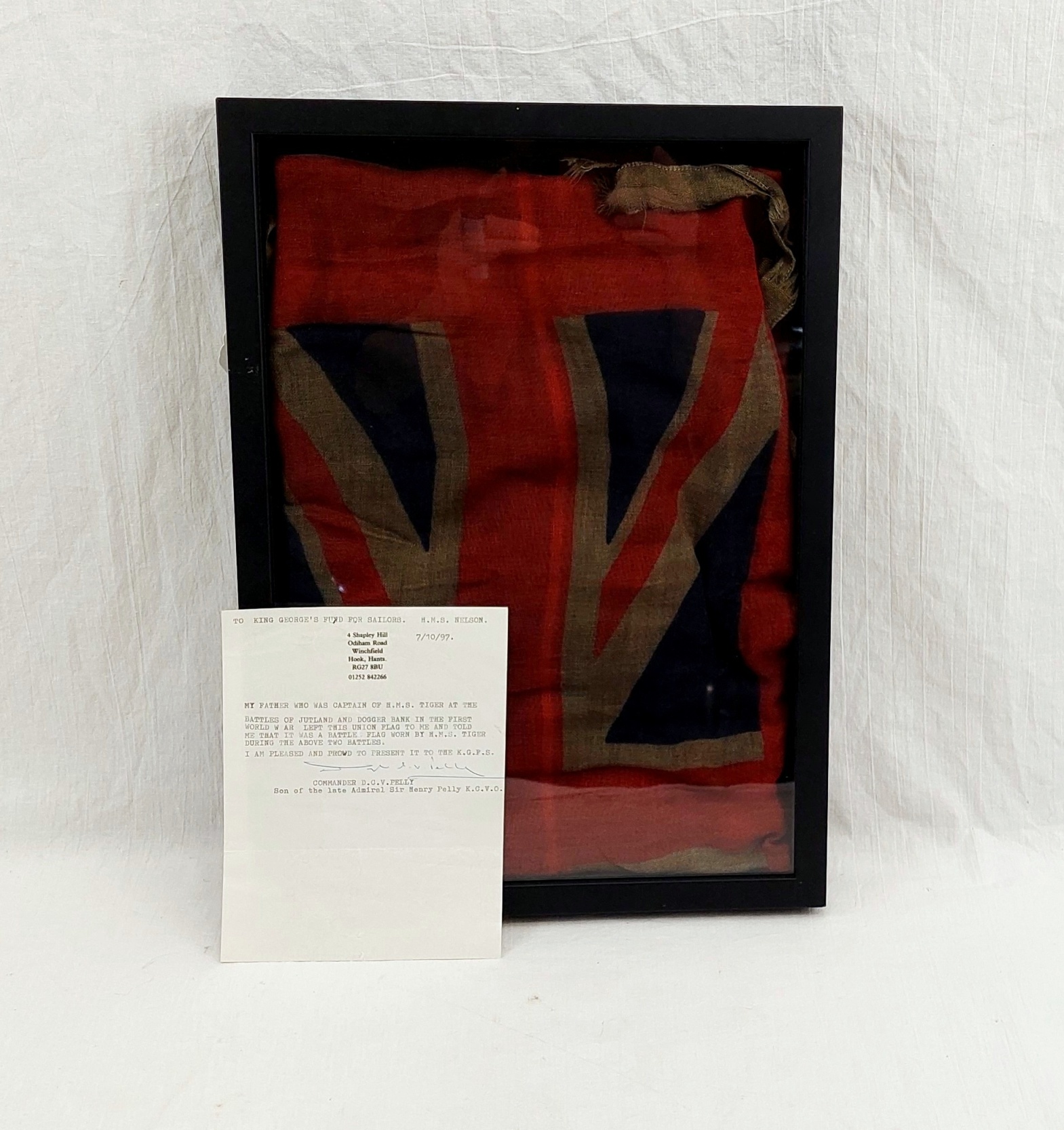
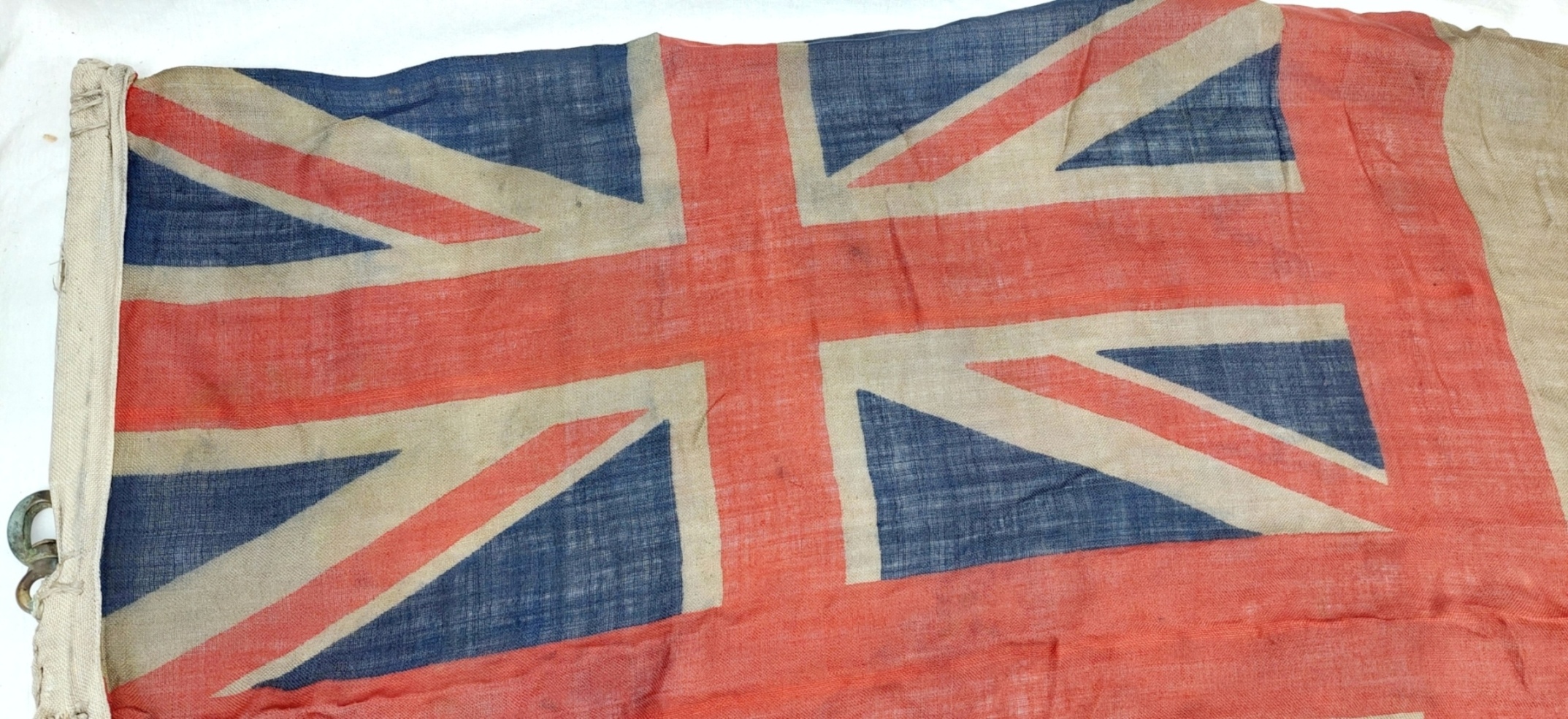
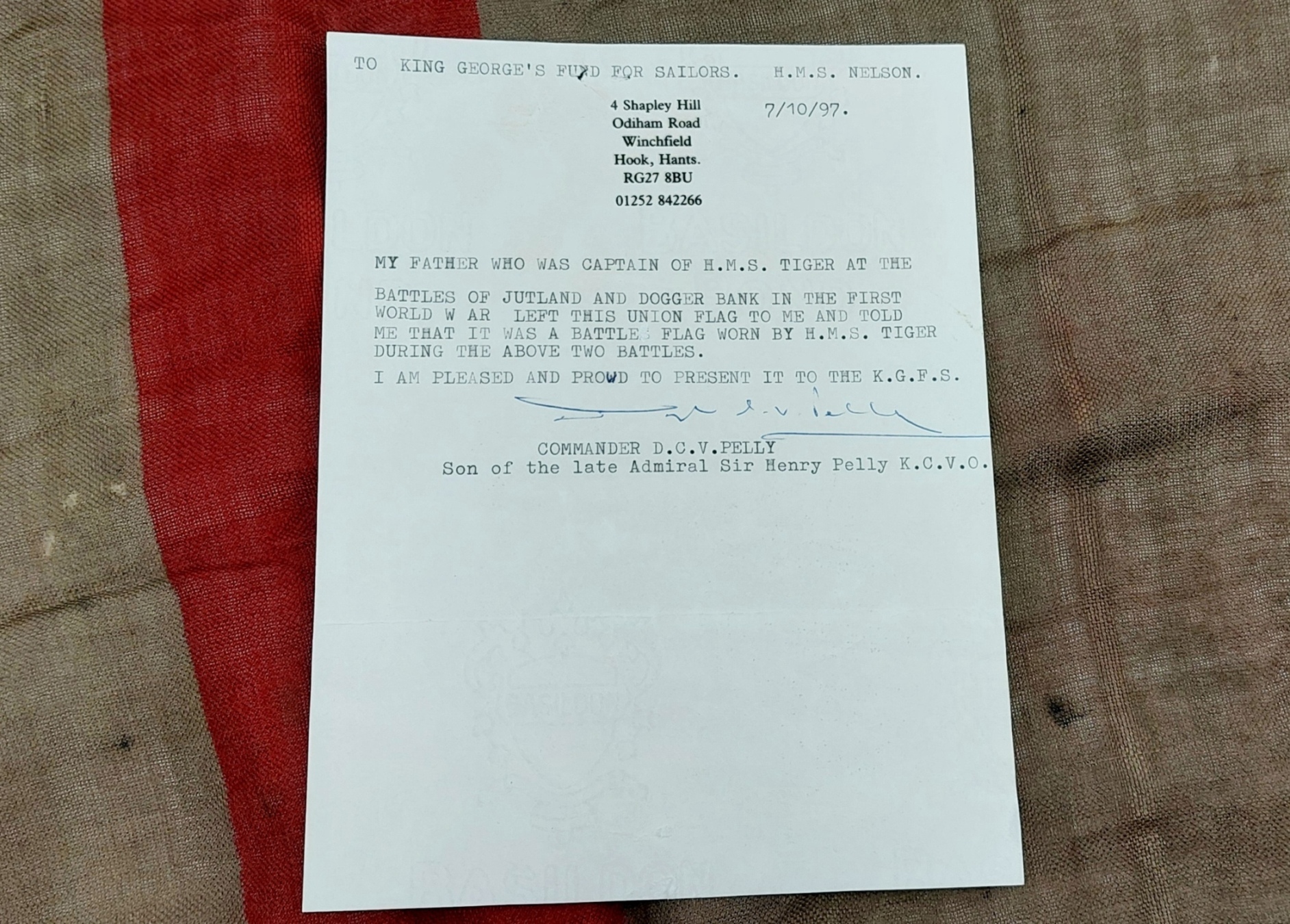
~ Union Jack From The Battlecruiser HMS Tiger (1913) With Letter Of Provenance ~
It comes with a letter of provenance, dated 1997, from Commander D. C. V. Pelly, who was the son of Admiral Sir Henry Pelly.
It was flown in both of the battles of Jutland and Dogger Bank.
It is presented in a modern, glazed case.
~ HMS Tiger ~
HMS Tiger was a battlecruiser built for the Royal Navy during the 1910s. The ship was the most heavily armoured British battlecruiser at the start of the First World War in 1914, but was not yet ready for service. The ship was assigned to the 1st Battlecruiser Squadron (1st BCS) for the duration of the war and participated in the Battle of Dogger Bank in early 1915, though she was still shaking down and did not perform well. Tiger next participated in the Battle of Jutland in 1916, where she was only lightly damaged despite suffering many hits by German shells. Apart from providing distant cover during the Second Battle of Heligoland Bight in 1917, she spent the rest of the war on uneventful patrols in the North Sea.
The ship was the oldest battlecruiser retained by the Royal Navy after the tonnage limits of the Washington Naval Treaty came into effect in 1922. She became a gunnery training ship in 1924 and then joined the Battlecruiser Squadron in 1929 when its flagship, Hood, underwent a lengthy refit. Upon Hood's return to service in 1931, Tiger was decommissioned and sold for scrap in 1932 in accordance with the terms of the London Naval Treaty of 1930.
In his book, The Price of Admiralty, British military historian John Keegan described her as "certainly the most beautiful warship in the world then, and perhaps ever".
~ HMS Tiger At The Battle Of Dogger Bank ~
During the action, Tiger was hit by six German shells, the most significant of which was a 28-centimetre (11 in) shell that burst on the roof of 'Q' turret. Although most of the shell was deflected overboard, fragments penetrated the roof, damaged the left gun's breech mechanism and jammed the training gear, knocking the turret out of action. Ten men were killed during the battle and 11 wounded. Tiger's repairs were completed on 8 February. Like the rest of the battlecruisers, Tiger's own gunnery was rapid, but inaccurate, and she achieved only two hits out of 355 13.5-inch (340 mm) shells fired, scoring one hit each on Seydlitz and Derfflinger. Her performance was noted and commented upon by the senior leadership of the Royal Navy: Lord Fisher criticised Pelly's performance, calling him a "poltroon" and adding "The Tiger's gunnery seems to have been villainously bad on January 24, yet she seems to have had a lot of practice." In a memorandum of 11 February 1915, Beatty explained to Pelly where the latter had misconstrued the standing orders, going through Tiger's part in the battle blow by blow and comparing it to that of other ships. His final paragraph was conciliatory however: "In making these remarks I have no wish to express censure in any form. I realise that a newly-commissioned ship in her first action has many difficulties to contend with, and I am quite ready to make the fullest allowance for them. My chief aim is to ensure that our next action shall be a complete success.".
The ship was given a refit in December 1915.
~ HMS Tiger At The Battle Of Jutland ~
The Germans opened fire first at 15:48, followed by the British. The British ships were still in the process of making their turn as only the two leading ships, Lion and Princess Royal, had steadied on their course when the Germans opened fire. The 1st BCS was echeloned to the right with Tiger in the rear and the furthest to the west, closest to the Germans. Tiger missed Beatty's fire distribution order, as had Queen Mary, and Tiger engaged Moltke, instead of Seydlitz as Beatty intended. The German fire was accurate from the start, with Tiger hit six times by Moltke within the first seven minutes; although two of these hits temporarily disabled both 'Q' and 'X' turrets, she was not seriously damaged. By 15:54, the range was down to 12,900 yards (11,800 m); Beatty ordered a course change two points to starboard to open up the range at 15:57. Around 16:00, Indefatigable was hit around the rear turret by two or three shells from Von der Tann. She fell out of formation to starboard and started sinking toward the stern and listing to port. Her magazines exploded at 16:03 after more hits destroying the ship with the loss of all hands but three. The range gradually increased until the distance between the British and German ships was too great for accurate fire, so Beatty altered course four points to port between 16:12 and 16:15 to close the range. By 16:25, the range was down to 14,400 yards (13,200 m) and Beatty turned two points to starboard to open the range again. Around this time, Queen Mary was hit multiple times in quick succession and her forward magazines exploded. Tiger, following in Queen Mary's wake at a distance of only 500 yards (460 m), had to put her helm hard-a-starboard to avoid colliding with the wreckage. At 16:30, the light cruiser Southampton, scouting in front of Beatty's ships, spotted the lead elements of the High Seas Fleet coming north at top speed. Three minutes later, she sighted the topmasts of Vice-Admiral Reinhard Scheer's battleships, but did not report this for another five minutes. Beatty continued south for another two minutes to confirm the sighting before ordering his force to turn north. By this time, Tiger had been hit a total of 17 times, all but one fired by Moltke, but she remained fit to fight.
Tiger and the rest of the battlecruisers reached Rosyth Dockyard in Scotland on the morning of 2 June. Docked the next day for repairs which took until 1 July, she was the first of the "Splendid Cats" to be repaired. Tiger was hit a total of 18 times during the battle, mostly by shells fired by Moltke, suffering 24 men killed and 46 wounded. The battlecruiser fired 303 shells from her main guns during the battle and is credited with one hit on Moltke and two on Von der Tann. The ship also fired 136 rounds from her 6-inch guns at the light cruiser Wiesbaden and German destroyers.
~ Admiral Sir Henry Bertram Pelly ~
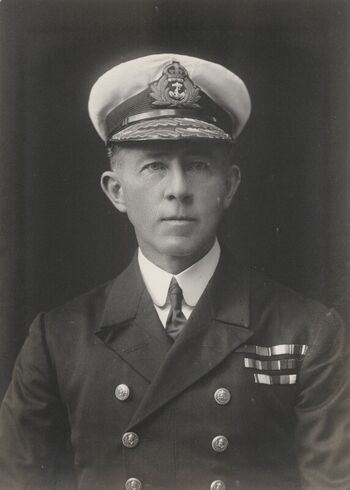
Admiral Sir Henry Bertram Pelly, K.C.V.O., C.B., Royal Navy, Retired (9 September, 1867 – 27 December, 1942) was an officer of the Royal Navy.
Pelly was promoted to the rank of Lieutenant on 1 January, 1891.
Pelly was appointed a Member of the Fourth Class in the Royal Victorian Order (M.V.O.) on 1 February, 1901.
Pelly was promoted to the rank of Commander on 31 August, 1901.
Pelly was promoted to the rank of Captain on 1 January, 1906. In March of that same year, he was appointed captain of battleship Venerable, remaining in command until some time in 1907.
Pelly was appointed Flag Captain to Admiral Lord Charles Beresford, and in command of King Edward VII, on 5 March, 1907.
When Beresford hauled down his flag, Pelly was placed on half-pay on 27 March, 1909. He asked that he might be considered for a shore appointment, and on 16 August he was appointed for temporary service at the Admiralty. On 31 August he was appointed Captain Superintendent of Contract-Built Ships.
He was appointed in command of Invincible on 10 August, 1913.
Pelly's appointment as Chief of Staff to Admiral Sir Henry B. Jackson, to date 1 September, was announced on 24 July, 1914.
Pelly commanded H.M.S. Tiger from her commissioning through actions at Dogger Bank and Jutland.
On 15 September he was appointed an Additional Member of the Third Class, or Companion, in the Military Division of the Most Honourable Order of the Bath (C.B.) dated 31 May.
He was promoted to the rank of Rear-Admiral on 17 May, 1917, vice de Robeck.
Pelly was promoted to the rank of Vice-Admiral on 3 May, 1922.
On 1 January, 1923, Pelly was knighted and appointed a Knight Commander in the Royal Victorian Order (K.C.V.O.).
He was placed on the Retired List at his own request on 18 January, 1925,[and was advanced to the rank of Admiral on the Retired List on 8 November, 1926.
~ Condition ~
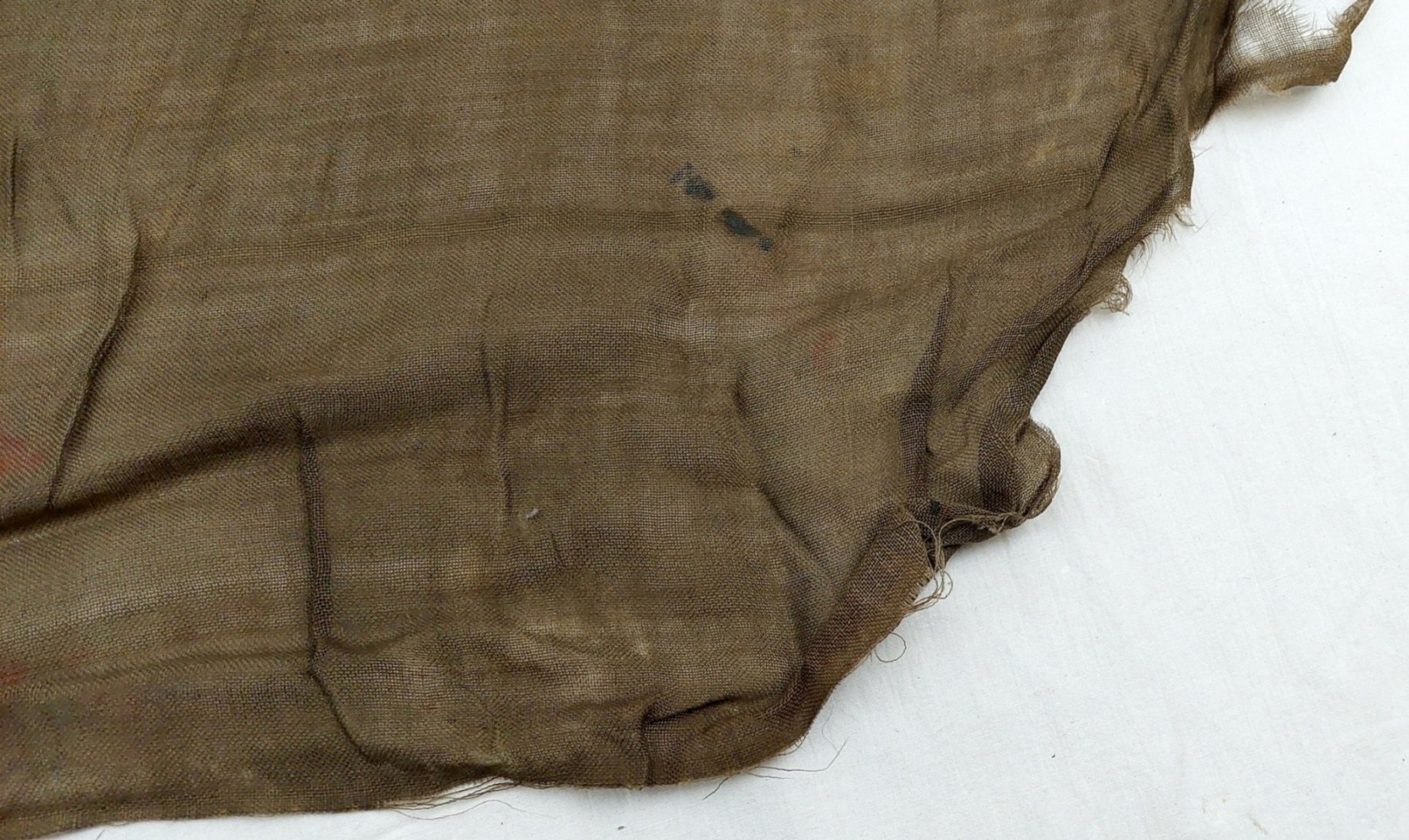
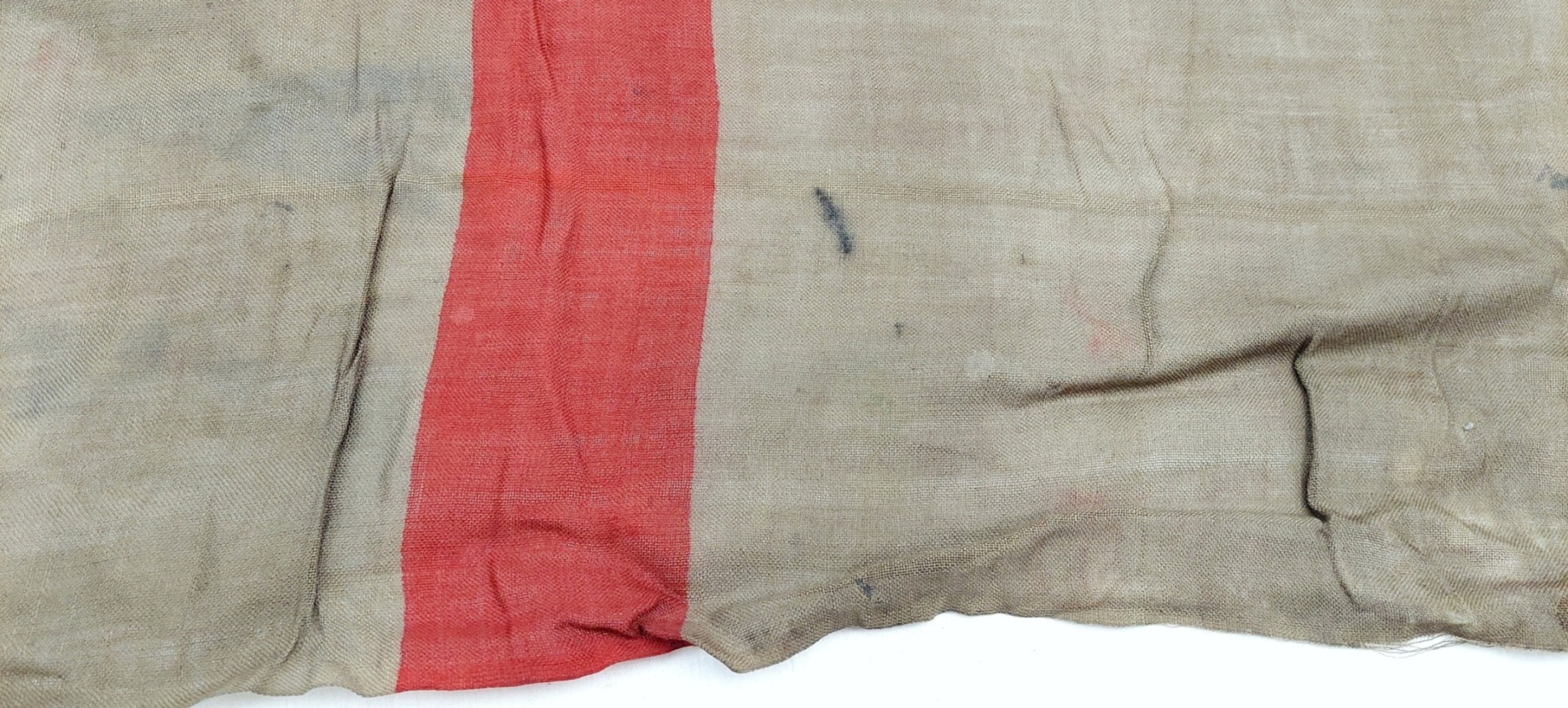
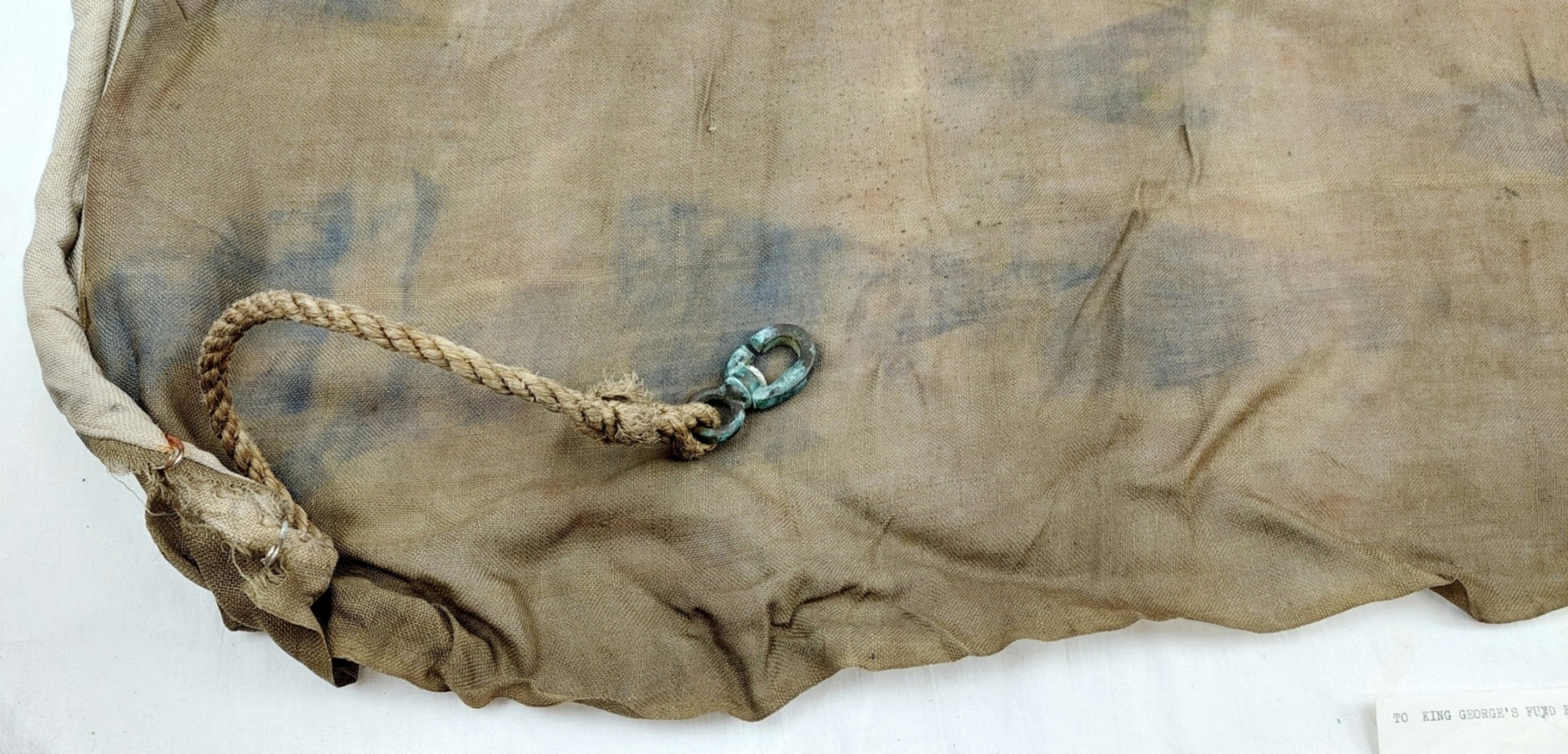
Please refer to the images for the condition. The flag has smoke staining from the funnel at sea.
~ Dimensions ~
The frame is 45cm (17.5 inches) wide and 32cm (12.5 inches) tall.