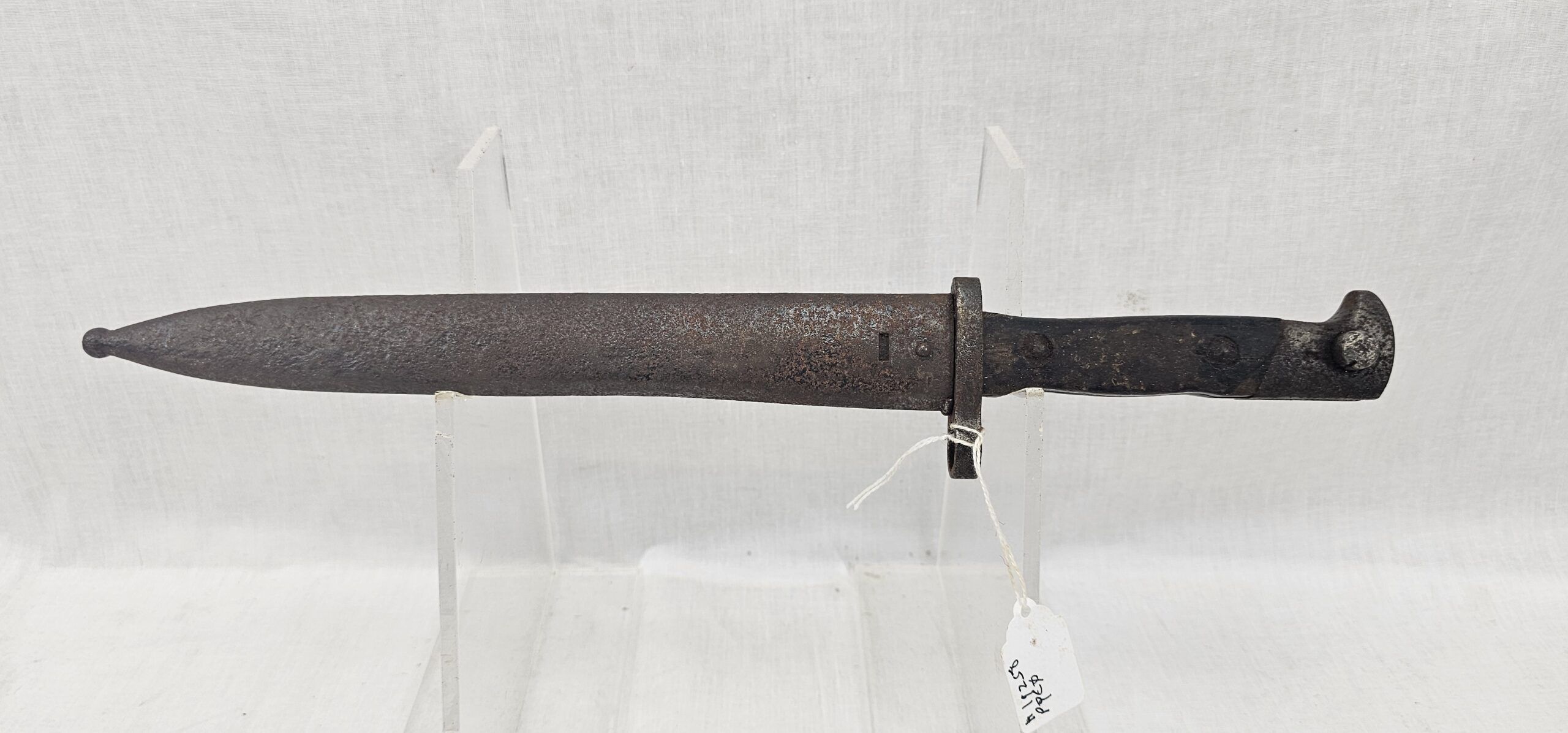
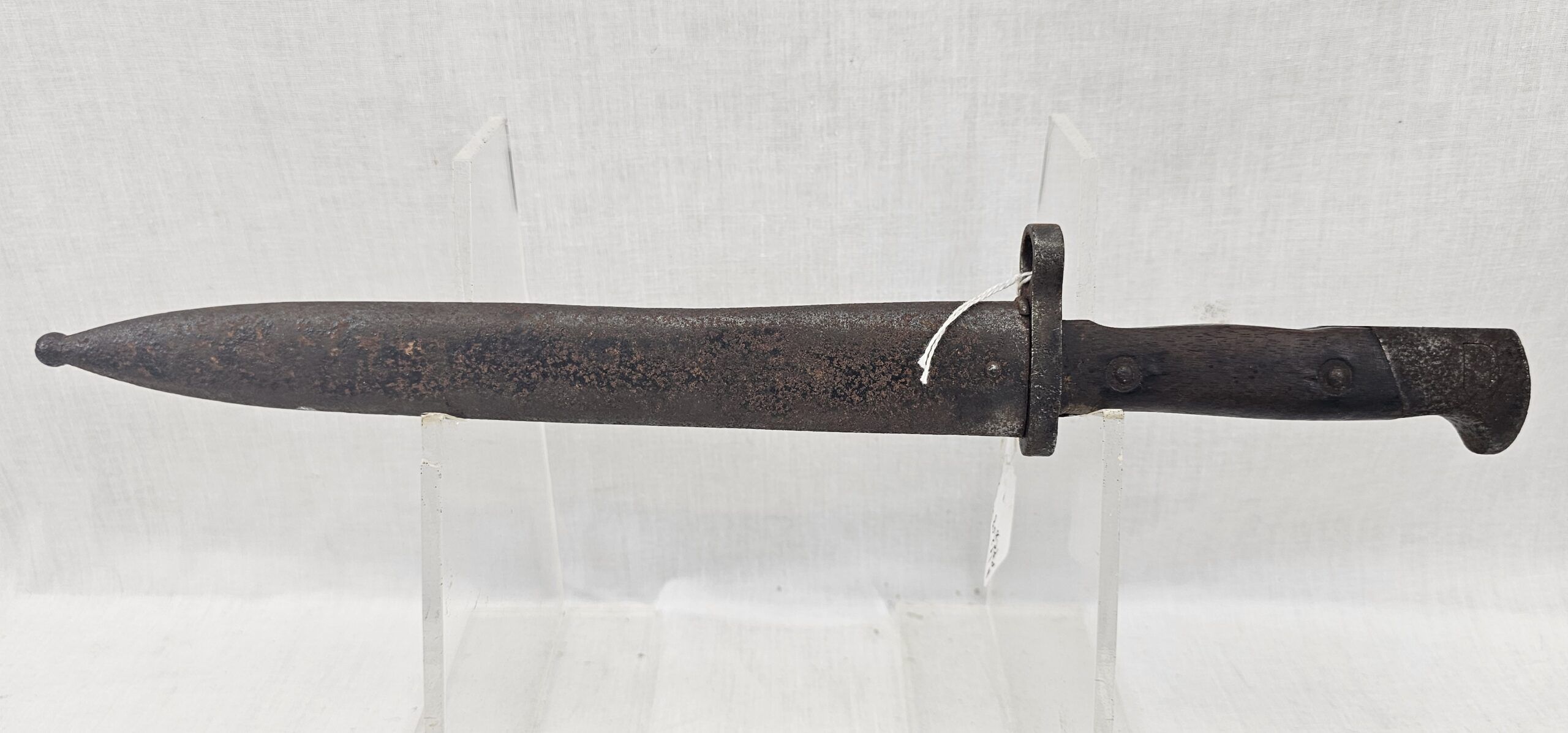
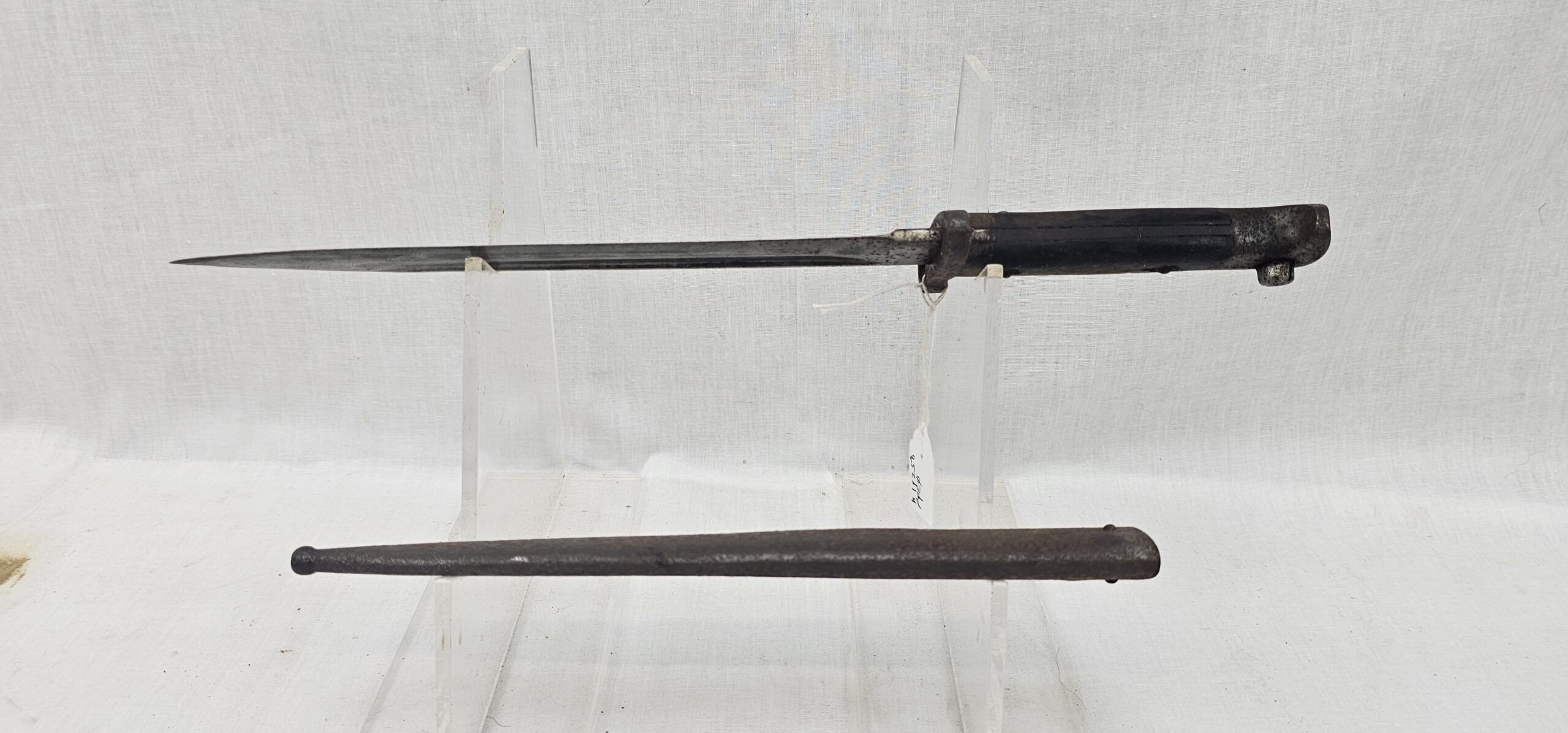
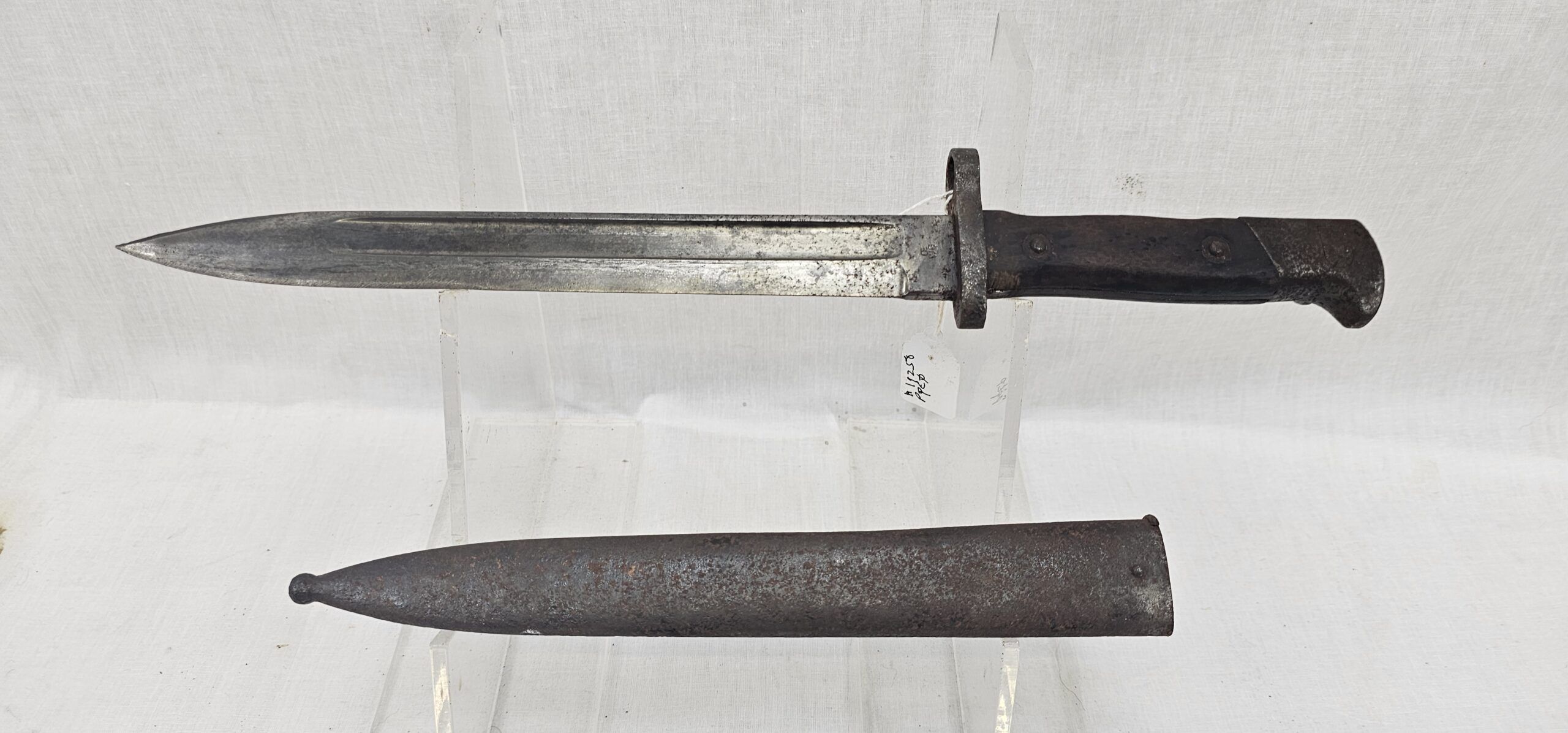

~ Austrian Steyer Made Mauser Model 1871/84 Rifle Bayonet ~
The Austrian Steyr-made Mauser Model 1871/84 Rifle was an important firearm produced in the late 19th century, and it was often paired with a distinctive bayonet.
~ Condition ~
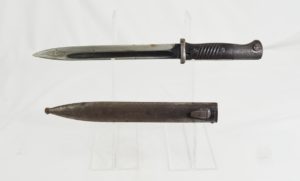
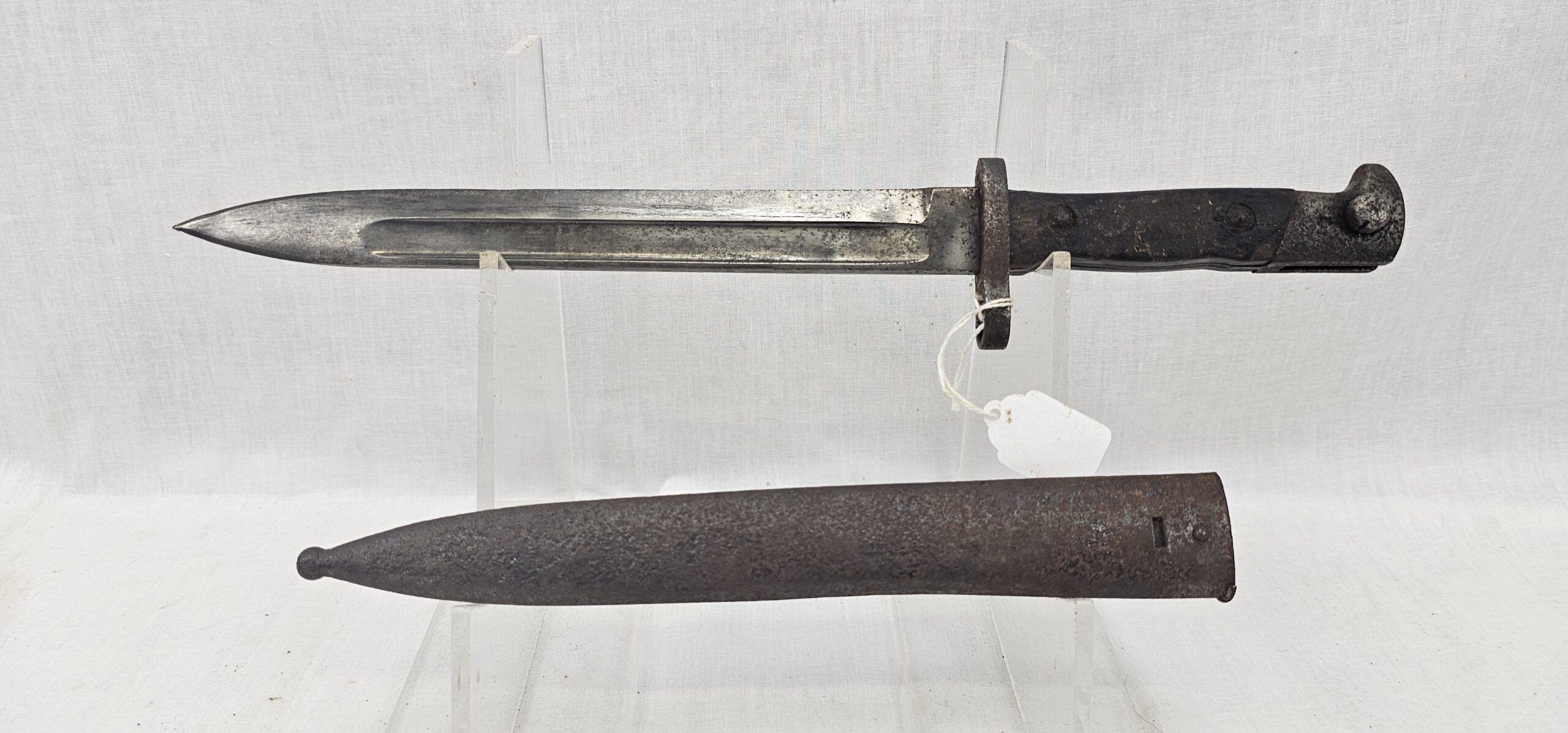
The scabbard has some amount of surface rust as are the other metal elements of the grip. The wooden parts of the grip have some age-related wear. The blade is excellent though and bears the manufacturer's stamp.
Historical Context: The Mauser Model 1871/84 Rifle
Origin: The Mauser Model 1871/84 is a German bolt-action repeating rifle, which is a significant variant of the original Mauser Model 1871. The Model 1871, also known as the Gewehr 71, was the first rifle adopted by the German Empire that utilized Mauser’s bolt-action mechanism. It was originally a single-shot rifle but was modified into a repeating rifle in 1884, hence the designation 1871/84.
Steyr Production: While the rifle was of German design (from the Mauser brothers), many were produced under contract by the Austrian Steyr arms company, officially known as Österreichische Waffenfabriks-Gesellschaft (Steyr). Steyr was a prominent firearms manufacturer and produced these rifles for the German military to meet growing demand.
Repeating Mechanism: The key feature of the Model 1871/84 was its adoption of a magazine-fed system, which gave it a capacity of 8 rounds, stored in a tubular magazine beneath the barrel. This represented a significant improvement over the single-shot Mauser 1871, increasing its firepower and making it more competitive with contemporary repeating rifles.
Design and Features of the Bayonet
The bayonet produced for the Mauser Model 1871/84 was an essential accessory for close combat and was specifically designed to fit the rifle.
History and Use
Introduction: The bayonet was introduced alongside the Mauser Model 1871, but continued to be used with the 1871/84 variant. Bayonets in this era were critical components of infantry combat, and virtually every soldier issued a rifle would also receive a bayonet for melee engagements.
Combat Role: The bayonet was designed for use in close-quarters combat, particularly during charges or defensive situations where soldiers would "fix bayonets" to their rifles, effectively turning them into spears.
Design and Specifications
Blade: The bayonet had a long, straight, single-edged blade, typically around 18-20 inches (45-50 cm) in length. The blade had a fuller (blood groove) to reduce weight without compromising strength. The blade was designed to be robust and capable of both stabbing and slashing actions, though stabbing was its primary purpose.
Hilt: The hilt featured a crossguard with a hooked quillon (a forward-curved projection), which provided protection for the hand and could potentially catch or deflect an opponent's blade. The opposite side of the crossguard typically had a muzzle ring, which would slide over the rifle's barrel when the bayonet was affixed.
Grip: The grip was often made of wood with metal fittings, including a metal pommel at the end. The grips were secured by rivets and designed for a firm handhold, even under stressful combat conditions.
Scabbard: The bayonet was usually paired with a steel or leather scabbard, which was worn on a soldier’s belt. The scabbard protected the blade when not in use and prevented accidental injuries.
Bayonet Locking Mechanism: The bayonet attached to the rifle via a locking mechanism located in the pommel, which would secure it firmly to the rifle’s bayonet lug. This ensured that the bayonet remained securely in place during combat, yet could be easily detached when needed.
Service and Use
German Empire: Both the Mauser Model 1871/84 and its bayonet saw service with the Imperial German Army in the late 19th century. Although by this time, firearms had largely overtaken bayonets in terms of combat utility, the bayonet was still viewed as essential for infantry fighting. Bayonets were especially useful in trench warfare or during charges, as seen later in conflicts like World War I.
Colonial Use: The Model 1871/84 rifle and its bayonet were also exported and used by various countries or in colonial campaigns where German forces participated. Some rifles and bayonets even found their way into the hands of colonial troops or were sold to other nations.
Specifications of the Mauser 1871/84 Bayonet
Blade Length: Approximately 18-20 inches.
Overall Length (with hilt): Around 25 inches (63 cm).
Blade Type: Single-edged, straight with a fuller.
Hilt Material: Wooden grips with metal fittings, typically steel crossguard and pommel.
Scabbard: Metal (steel or iron) or leather with metal fittings.
Collectibility and Legacy
Austrian Steyr-Made Rifles: Since Steyr was a well-known manufacturer, the Austrian-made versions of the Mauser 1871/84 and their associated bayonets are highly sought after by collectors today. These bayonets, especially if paired with their original rifles, hold significant value due to their historical importance and the craftsmanship involved.
Preservation: Many surviving bayonets are kept in military museums or private collections. Their relatively simple yet functional design has made them durable, and many examples remain in good condition even over a century later.
Iconic Design: The bayonet’s design is characteristic of late 19th-century military bayonets: simple, functional, and built to last. It represents the era when the bayonet was transitioning from a primary combat weapon to more of a backup or ceremonial tool as firearms became more advanced.
Conclusion
The Austrian Steyr-made Mauser Model 1871/84 rifle bayonet is a piece of military history that reflects the transition from single-shot rifles to repeating firearms. The bayonet was designed to complement the Mauser rifle in both offensive and defensive actions, and it remains an iconic symbol of late 19th-century warfare. Today, it is a prized item for collectors, representing an era when soldiers still fixed bayonets for hand-to-hand combat in an age dominated by increasingly sophisticated firearms.