
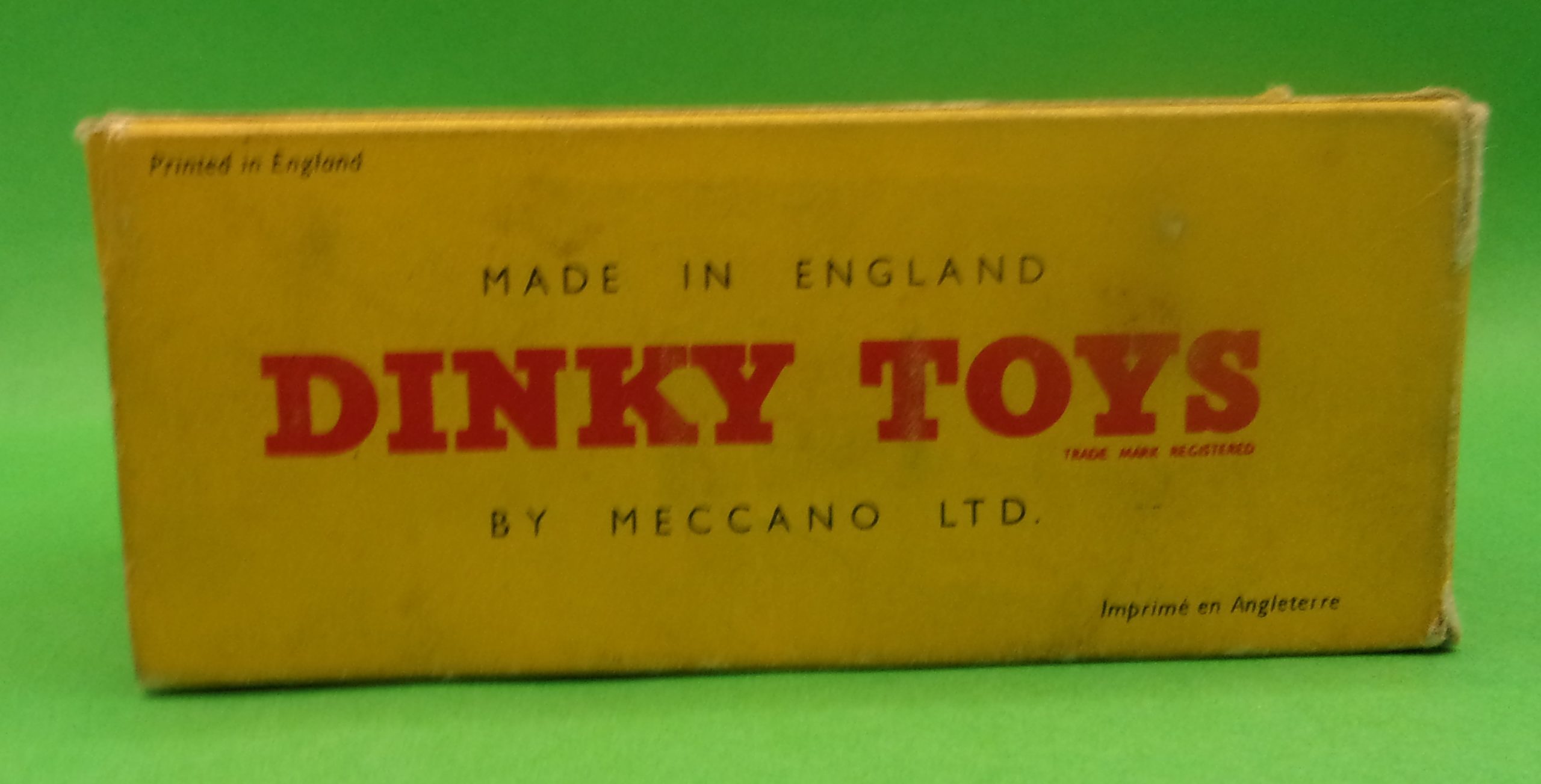
~ Boxed Dinky Toys 254 Austin Taxi 1956-59 Two Tone ~
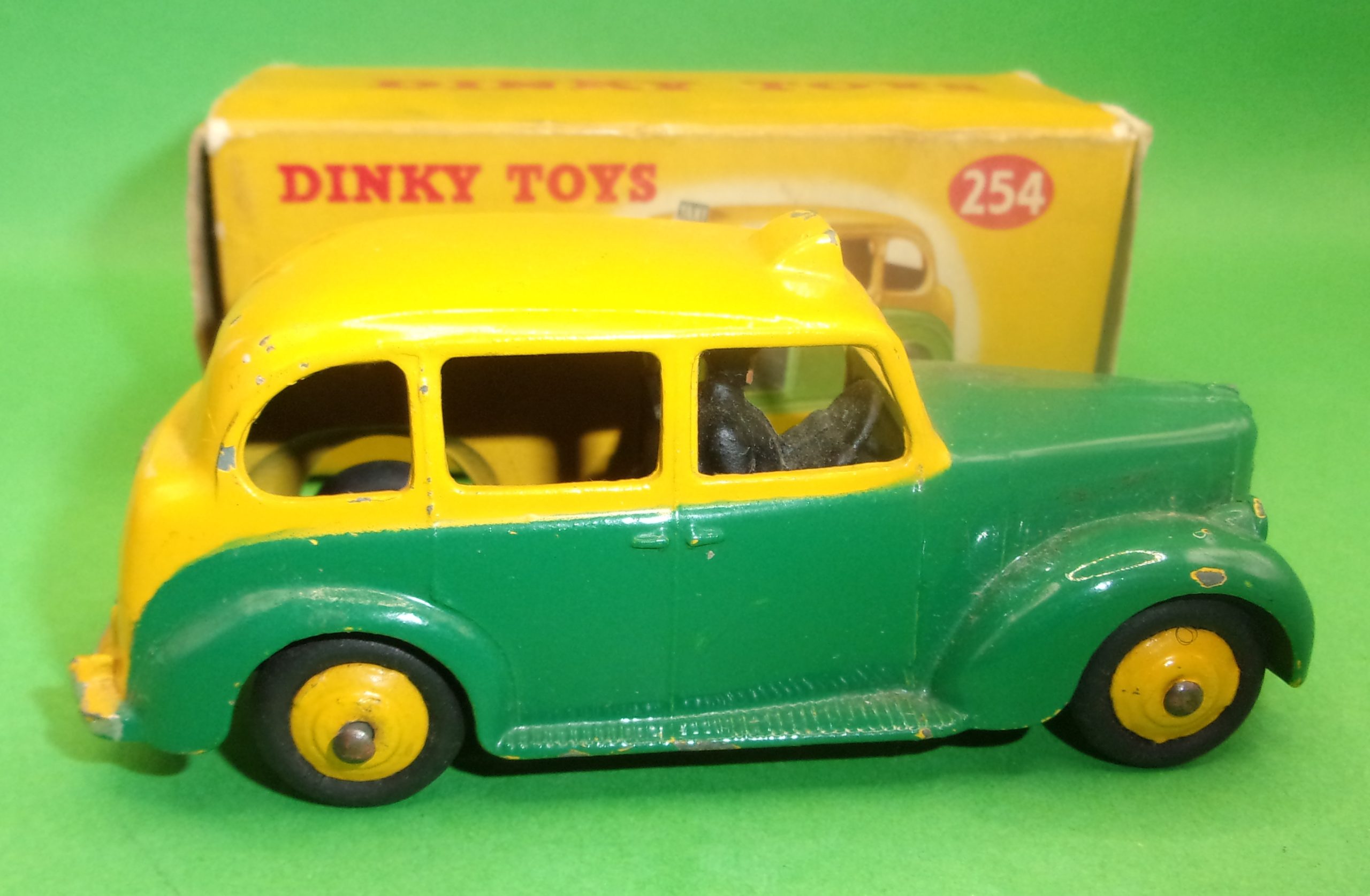
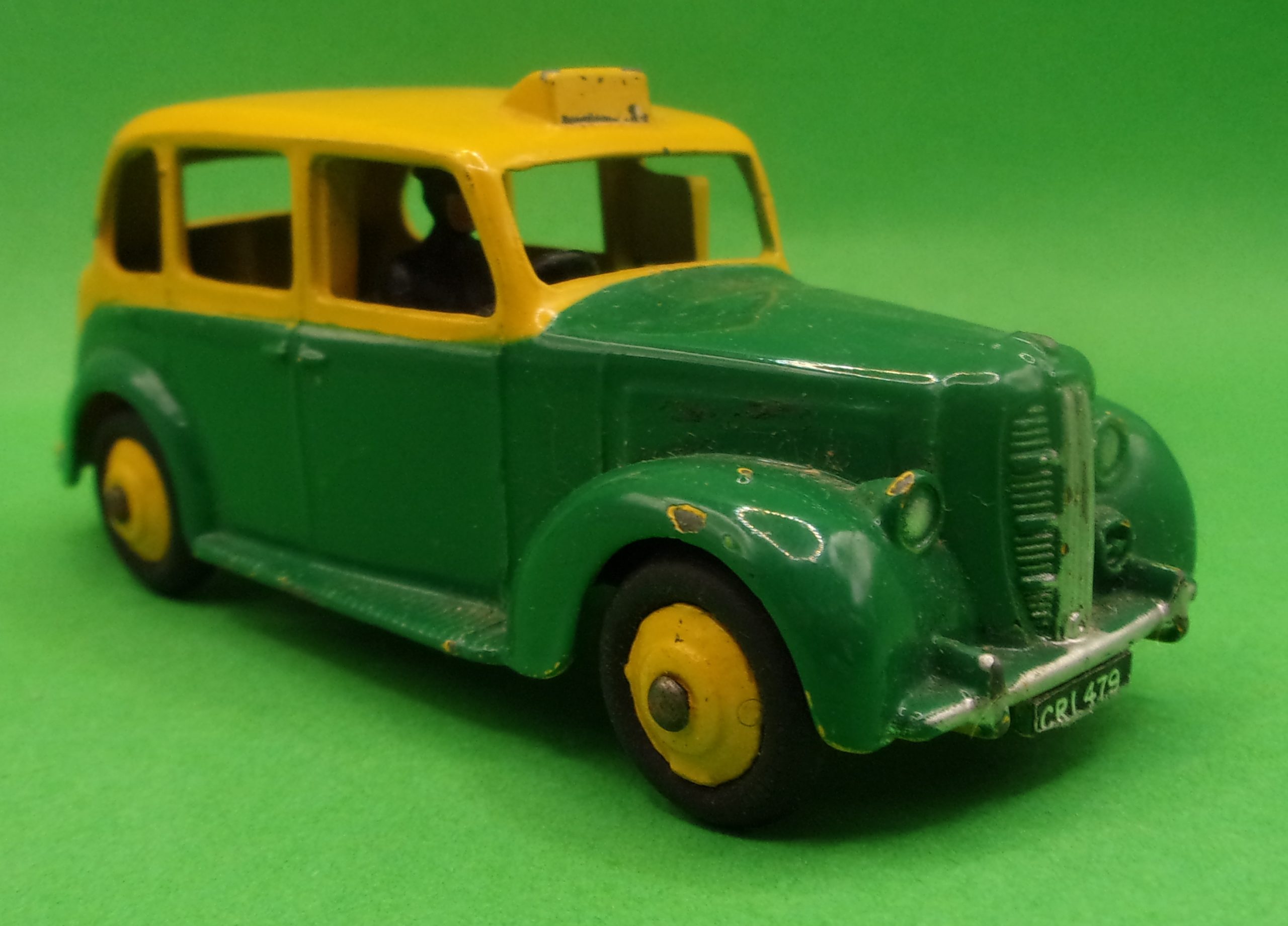
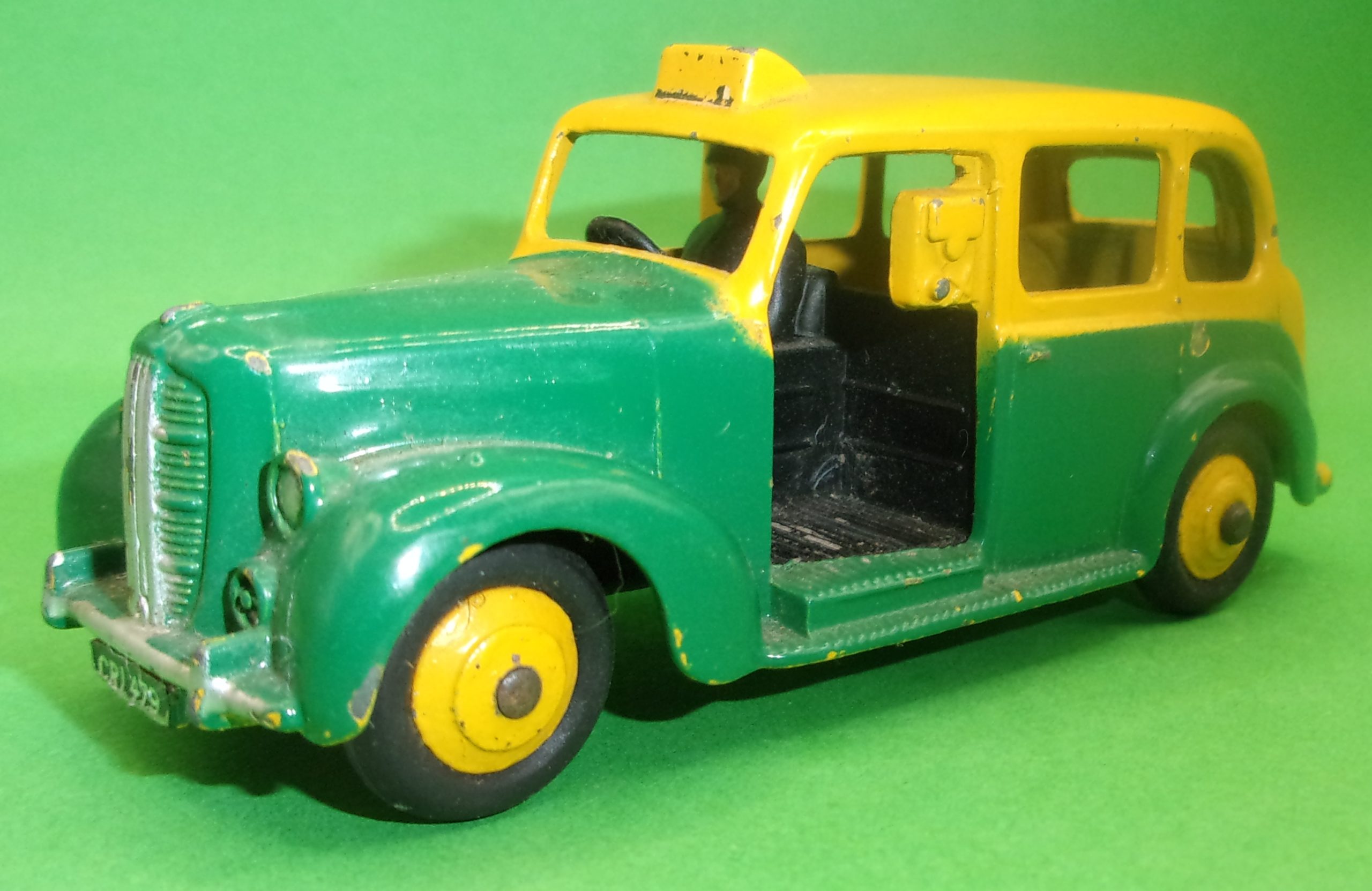
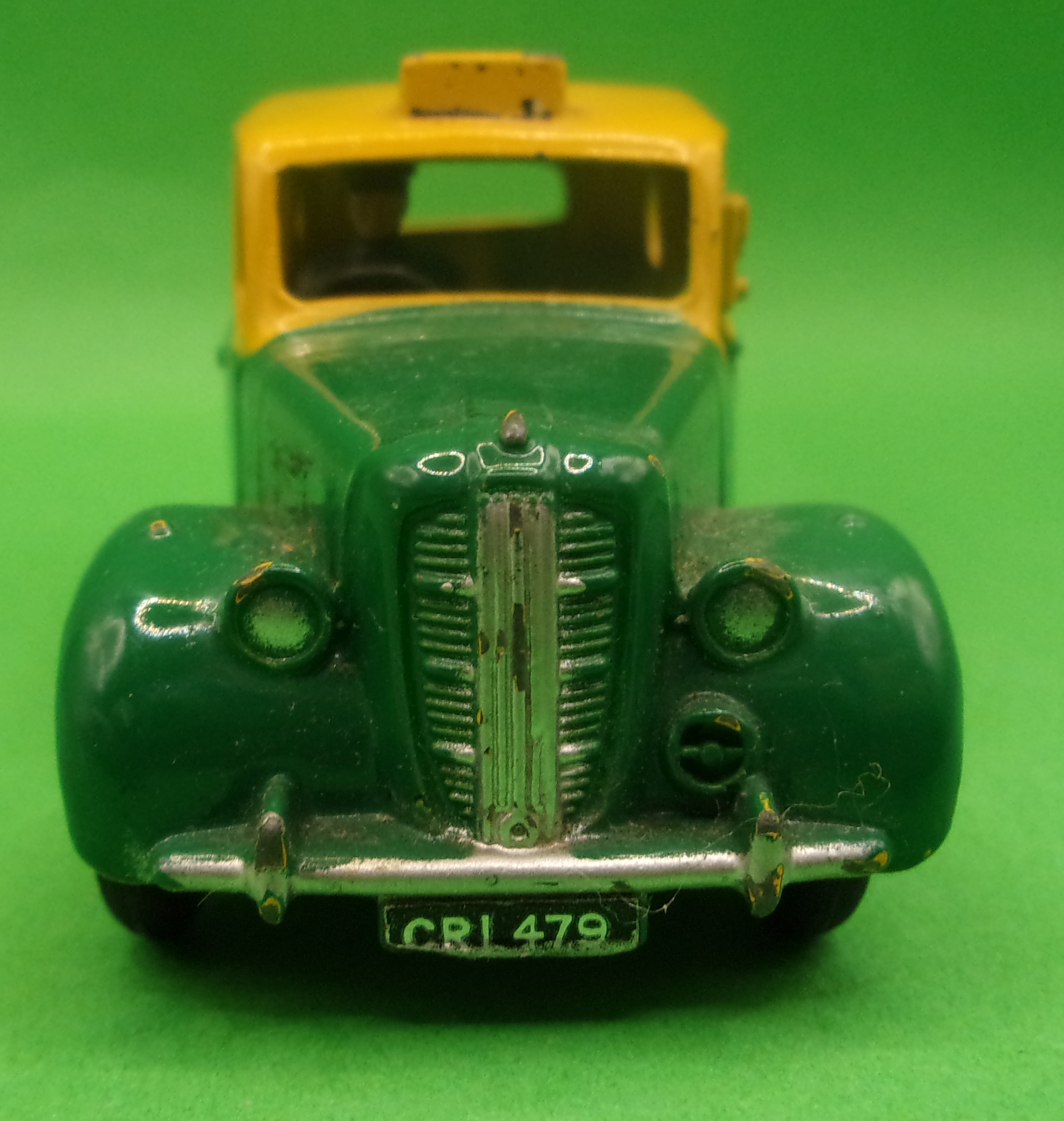
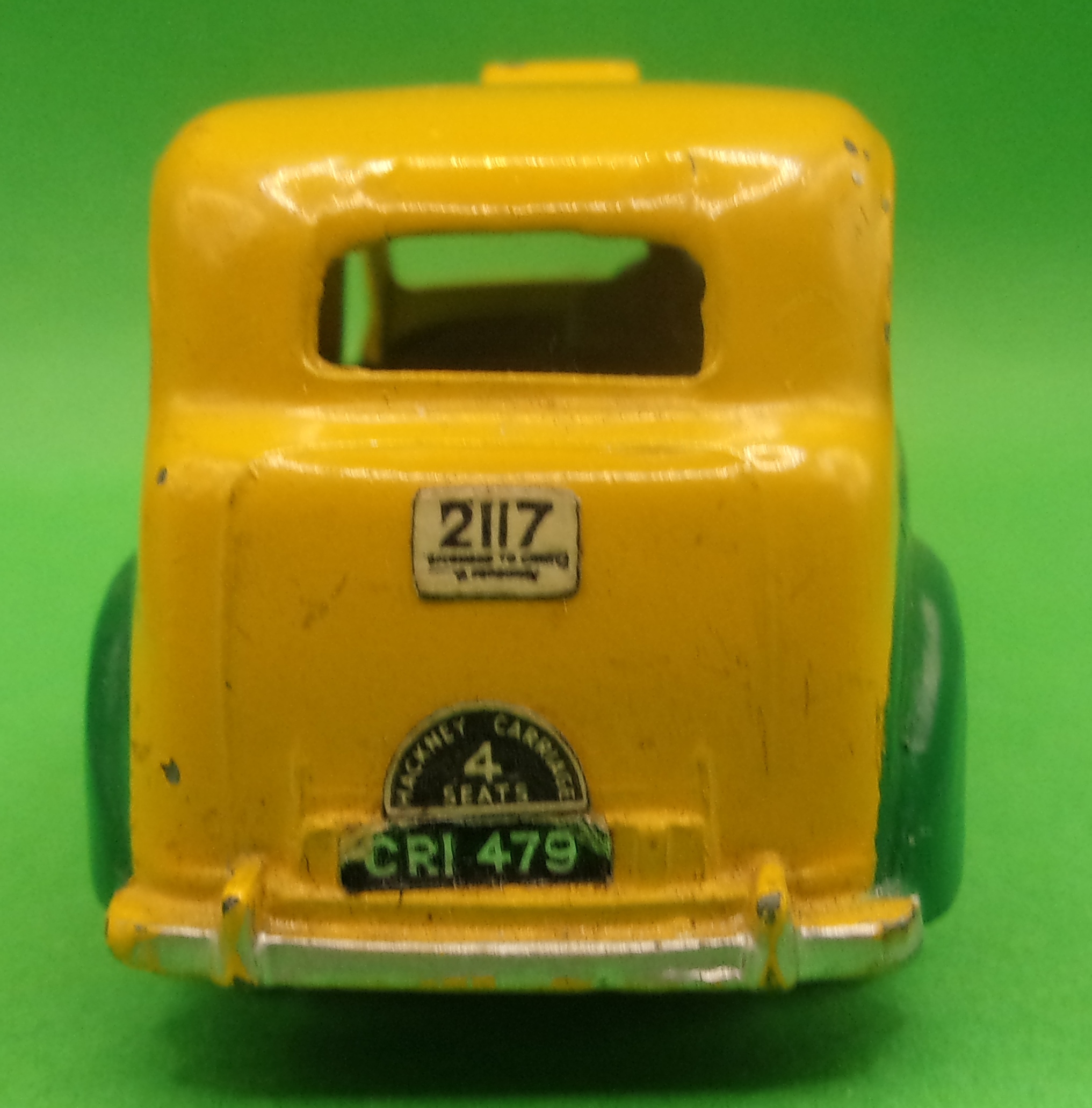
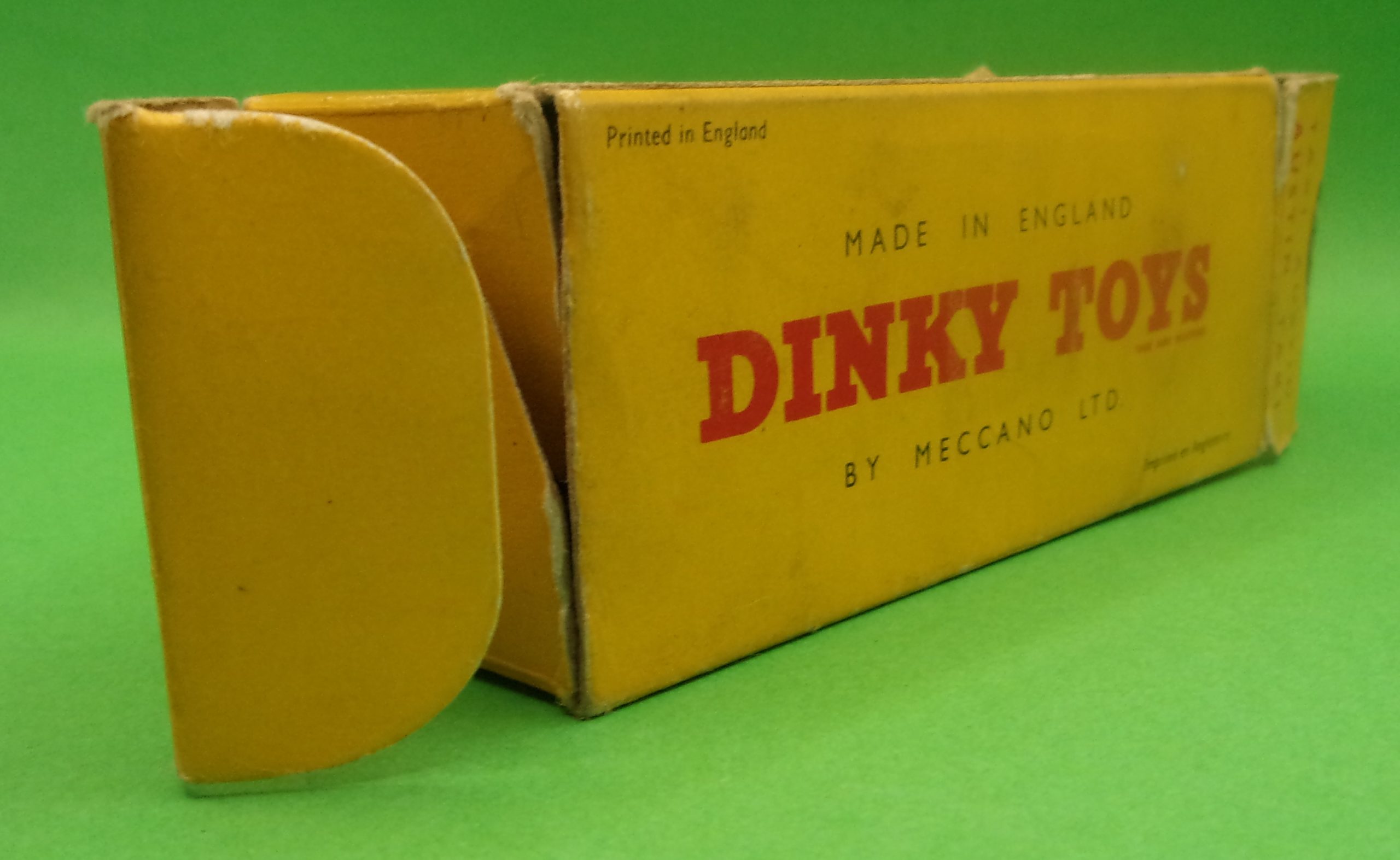
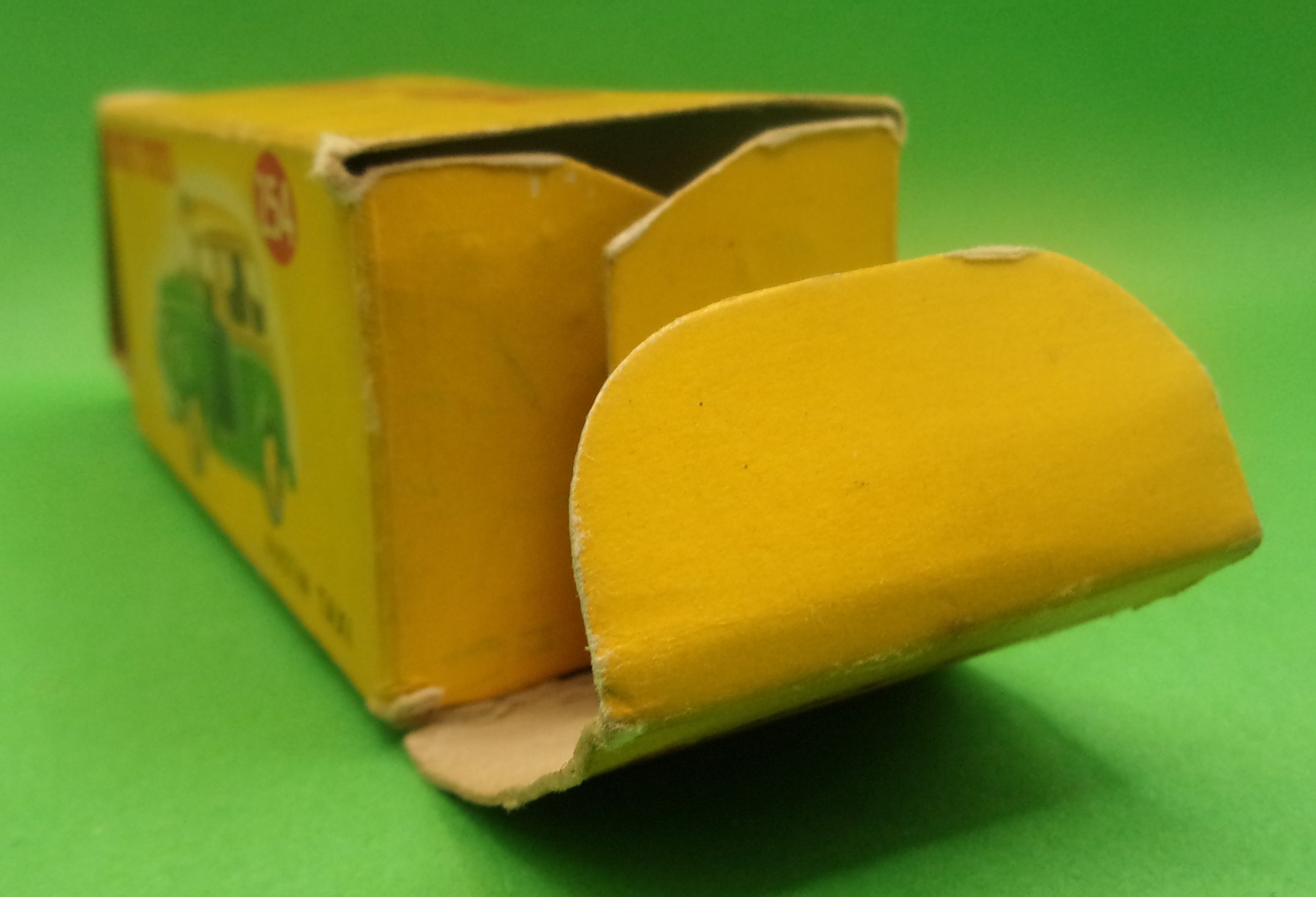
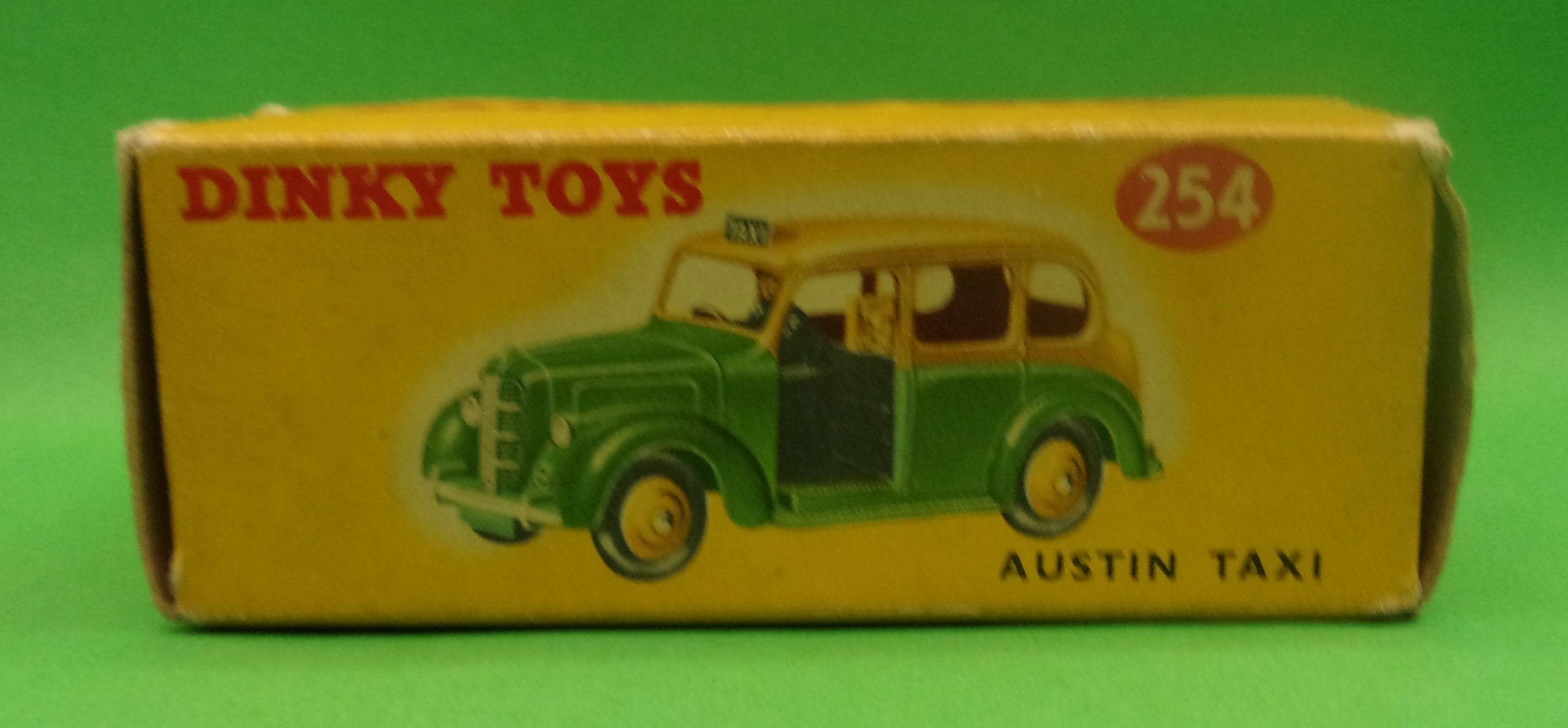
A Dinky Toys diecast model of the Austin FX3 London taxicab, number 254, in the two tone livery of a green lower body and wings with a yellow upper body and roof, fitted with yellow ridged wheel hubs and black tyres, and with a cast interior and steering wheel visible through the open glassless windows. It is a small scale model of roughly 1 to 43, in the style that sat neatly alongside O gauge railways of the period. The model is accompanied by its correct illustrated yellow Dinky Toys box printed with the number 254 and a picture of the taxi. A point of collector interest worth checking on these green and yellow examples is the baseplate, since the two tone finish was introduced while the old castings were still in use, so some carry the earlier 40h number underneath rather than 254.
Toy history
The Austin Taxi belongs to Dinky's celebrated 40 series of early post war British saloon cars, models that are often regarded by collectors as the quintessential Dinky Toys of the post war golden age, made in a better quality alloy that gave them a higher survival rate. It was first issued as 40h, introduced around 1951 to 1952. In 1954 Meccano replaced the old letter based numbering with a purely numerical system, and the model was renumbered from 40h to 254. Originally the 40 series cars were sold in trade boxes of six, but from the mid 1950s they were recoloured in two tone paintwork and given their own individual boxes. The two tone green and yellow finish seen here was introduced as late as 1956, which is also why some examples still carry the old 40h casting two years after the numbering change, and the model continued in production into the early 1960s. A characterful quirk often noted by collectors is that the taxi's paint tended to chip more readily than other Dinky models, so clean examples are prized.
Car model history
The model depicts the Austin FX3, the standard London taxicab of the 1950s. First shown in 1948 and in full production from 1949, the FX3 was built by Carbodies of Coventry on an Austin chassis, and more than twelve thousand were produced before it was withdrawn in 1958. It was specially designed to meet London's particular taxi regulations, the FX1 and FX2 having been prototypes that never reached production, with the FX3 being the successful version. A defining feature of the real cab was the open luggage platform beside the driver in place of a nearside front door, where passengers' luggage was carried, a hallmark of London taxis of the era. The FX3 was the immediate predecessor of the instantly recognisable Austin FX4, launched in 1958, which went on to define the look of the London black cab for the rest of the century. The model's upright shape and shield shaped radiator grille capture the older styling of this much loved Coventry built taxi.
~ Condition ~
The taxi has some paint chips but is in generally good order. The box is tidy with all its end flaps still attached.
~ Dimensions ~
The taxi is 9 cm (3.5 inches) in length.
#6964d