*British / European, Late Victorian–Early 20th Century, Admiralty-Style Brass Parallel Rule / Maritime Chart Plotter, in Wooden Case*
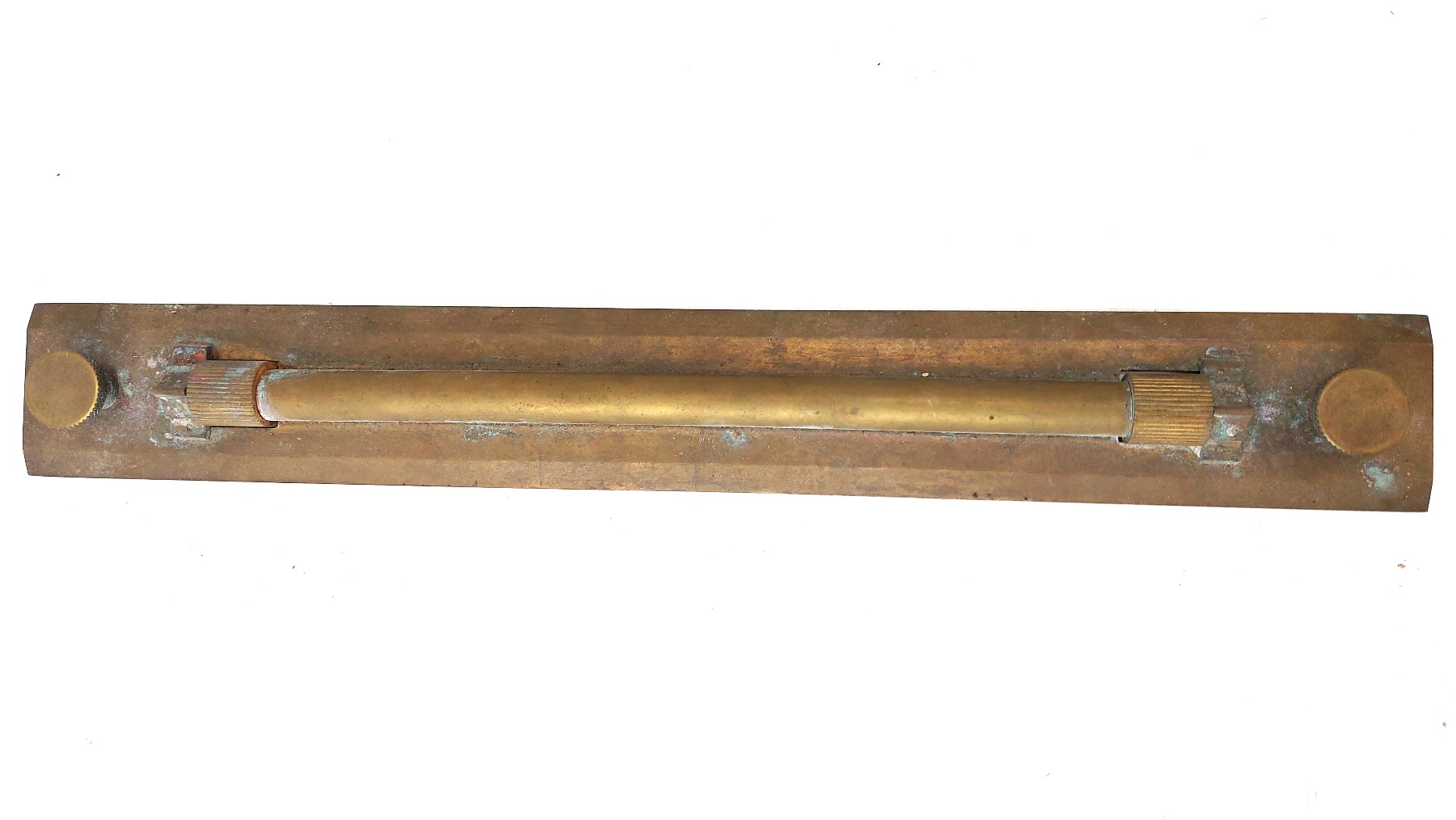
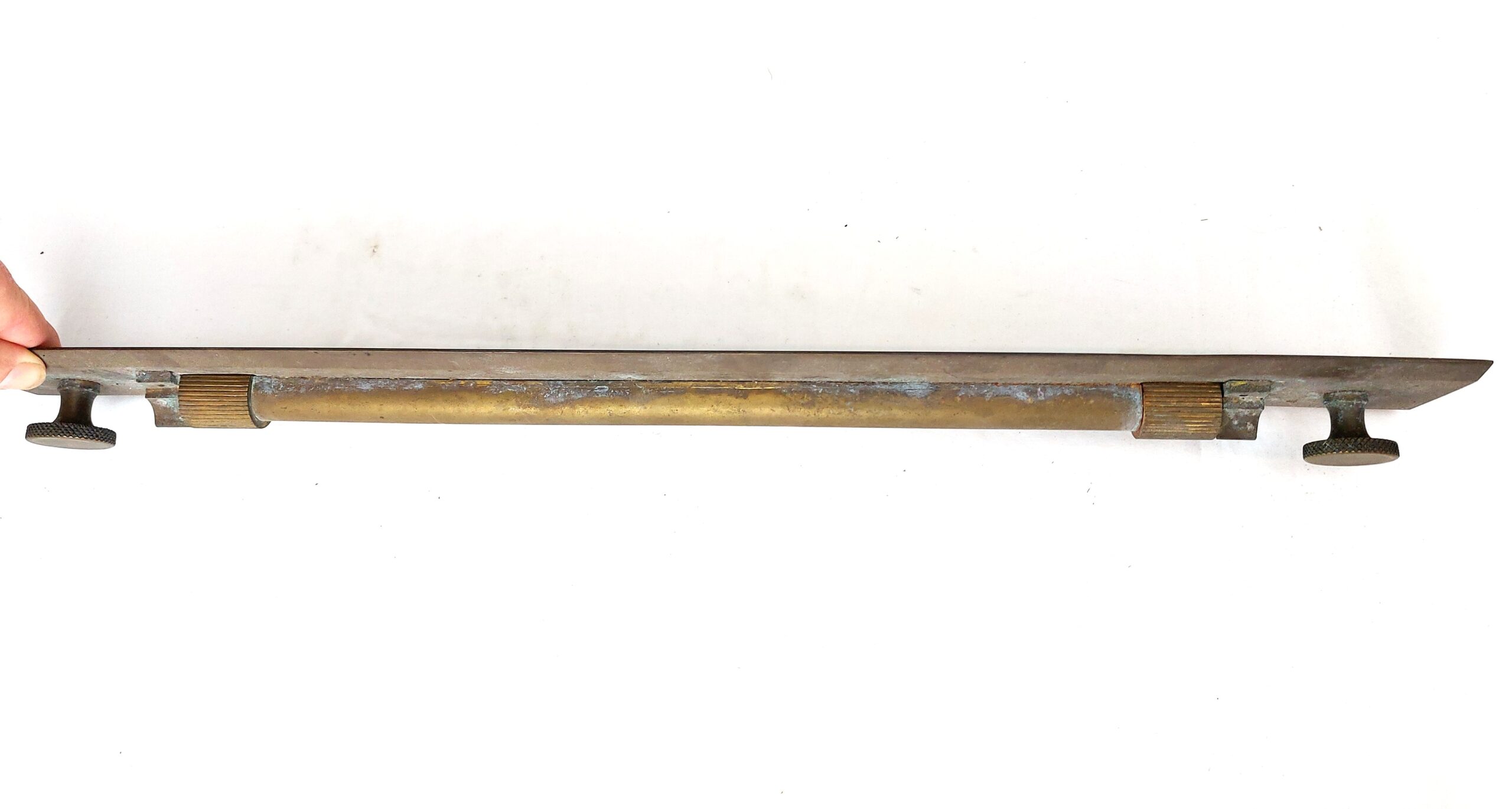
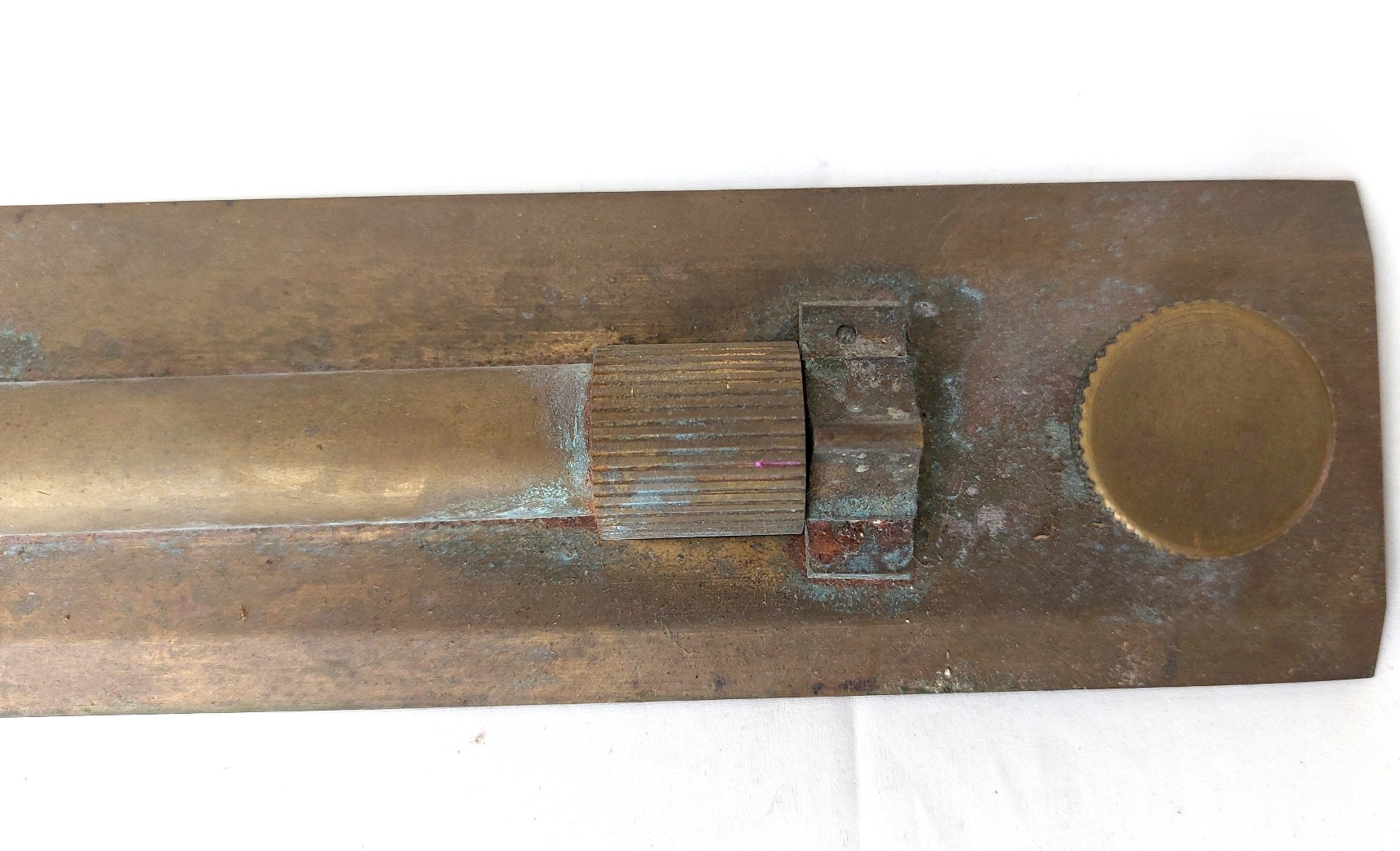
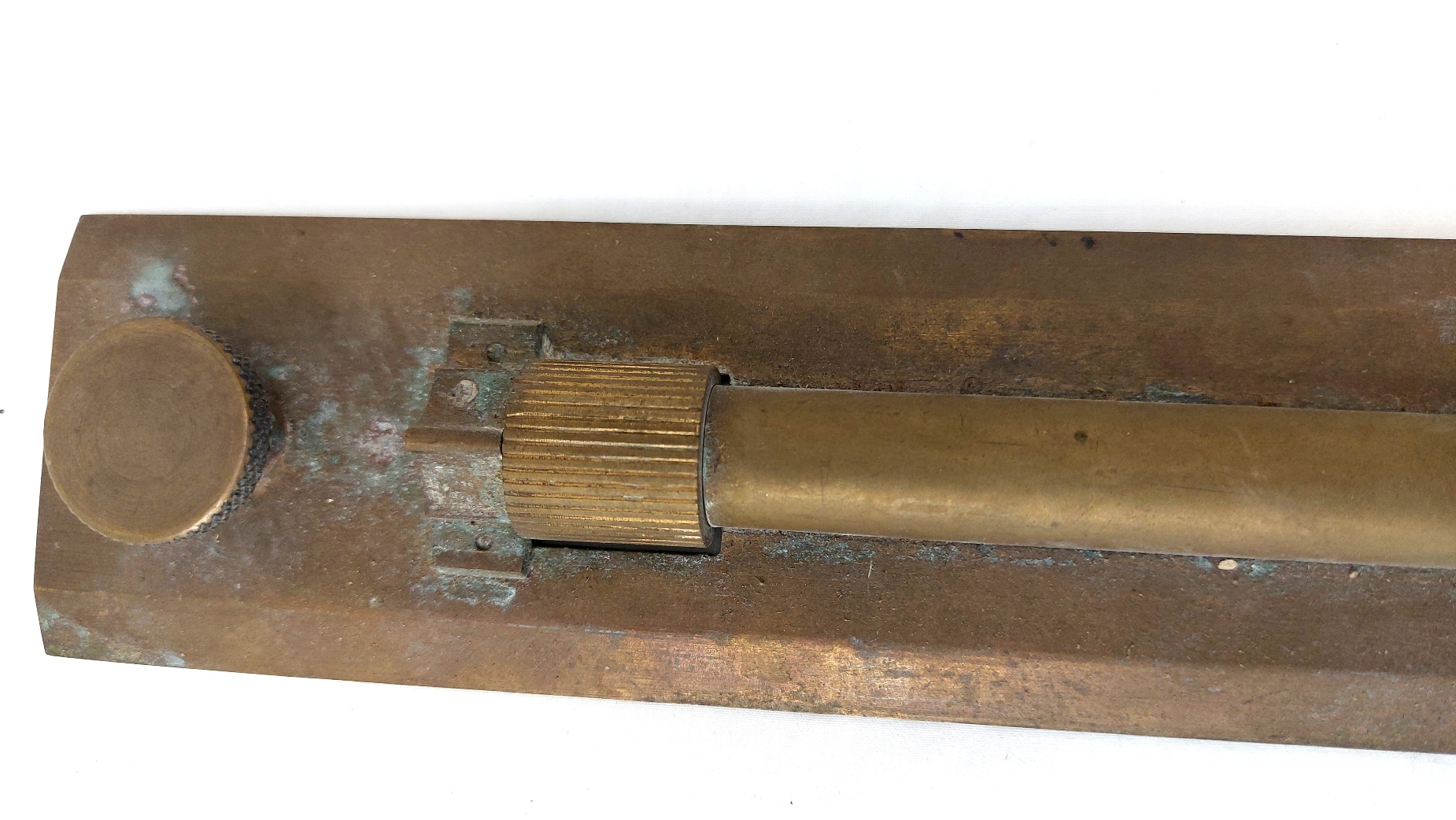
An unusual and substantial large-format brass parallel rule or maritime chart-plotting straightedge of probable late Victorian or early 20th century manufacture, strongly associated with naval, merchant marine, or hydrographic navigation use. Constructed from a heavy flat brass rule fitted with a cylindrical rolling linkage and knurled end drums, the instrument was designed to maintain a constant parallel orientation while being moved across navigational charts or technical plans.
Examples of this type were commonly employed aboard naval and commercial vessels for transferring bearings, plotting courses, and maintaining accurate parallel reference lines across Admiralty sea charts. The robust all-brass construction and oversized format are particularly consistent with professional maritime or hydrographic service equipment rather than later lightweight civilian drafting tools.
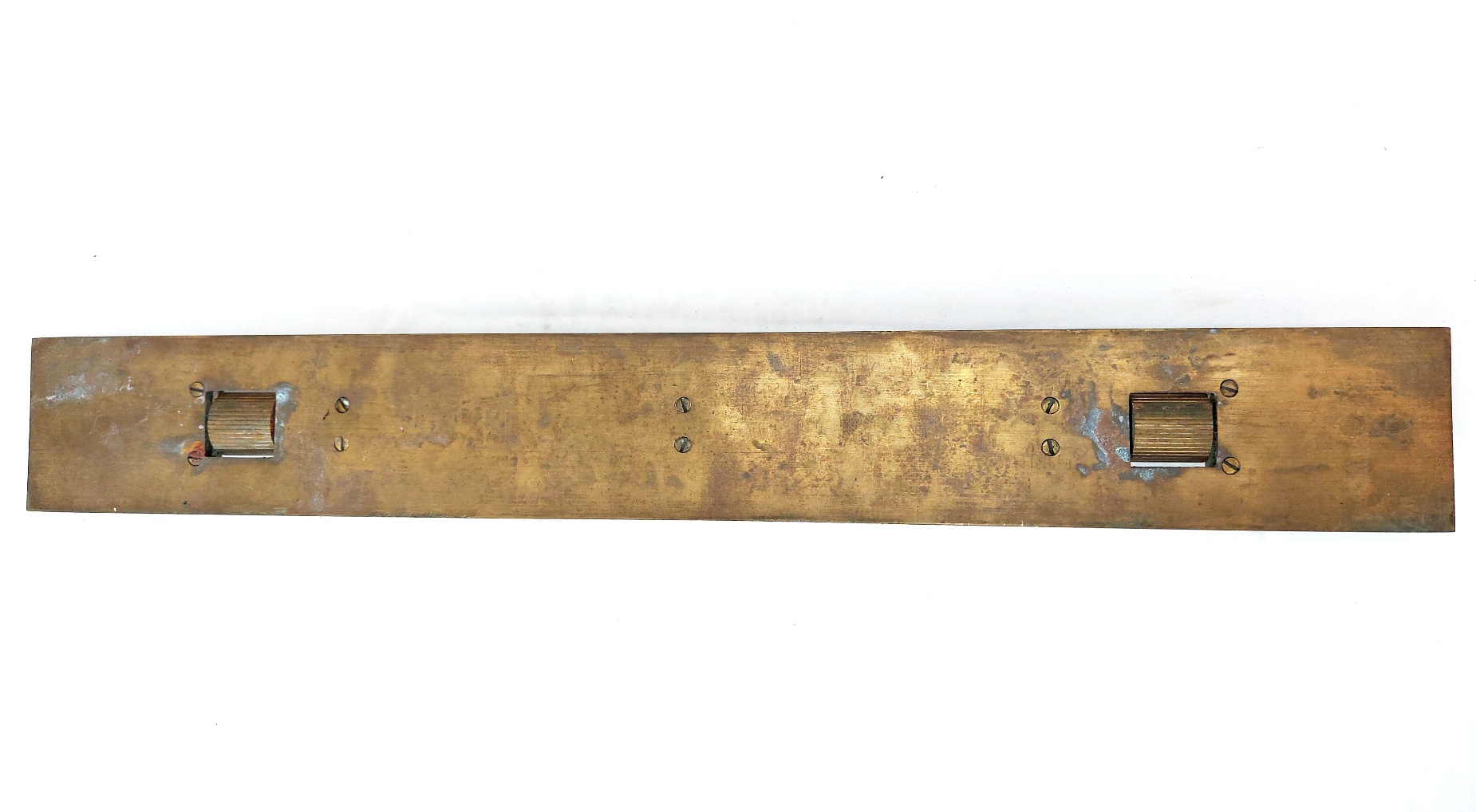
The instrument retains an attractive untouched aged surface with natural oxidation and verdigris throughout. Both knurled rollers remain functional and rotate correctly, allowing the straightedge to move freely. The long working edges remain generally clean and free from any major dents or impact damage, important for practical chart or drafting accuracy.
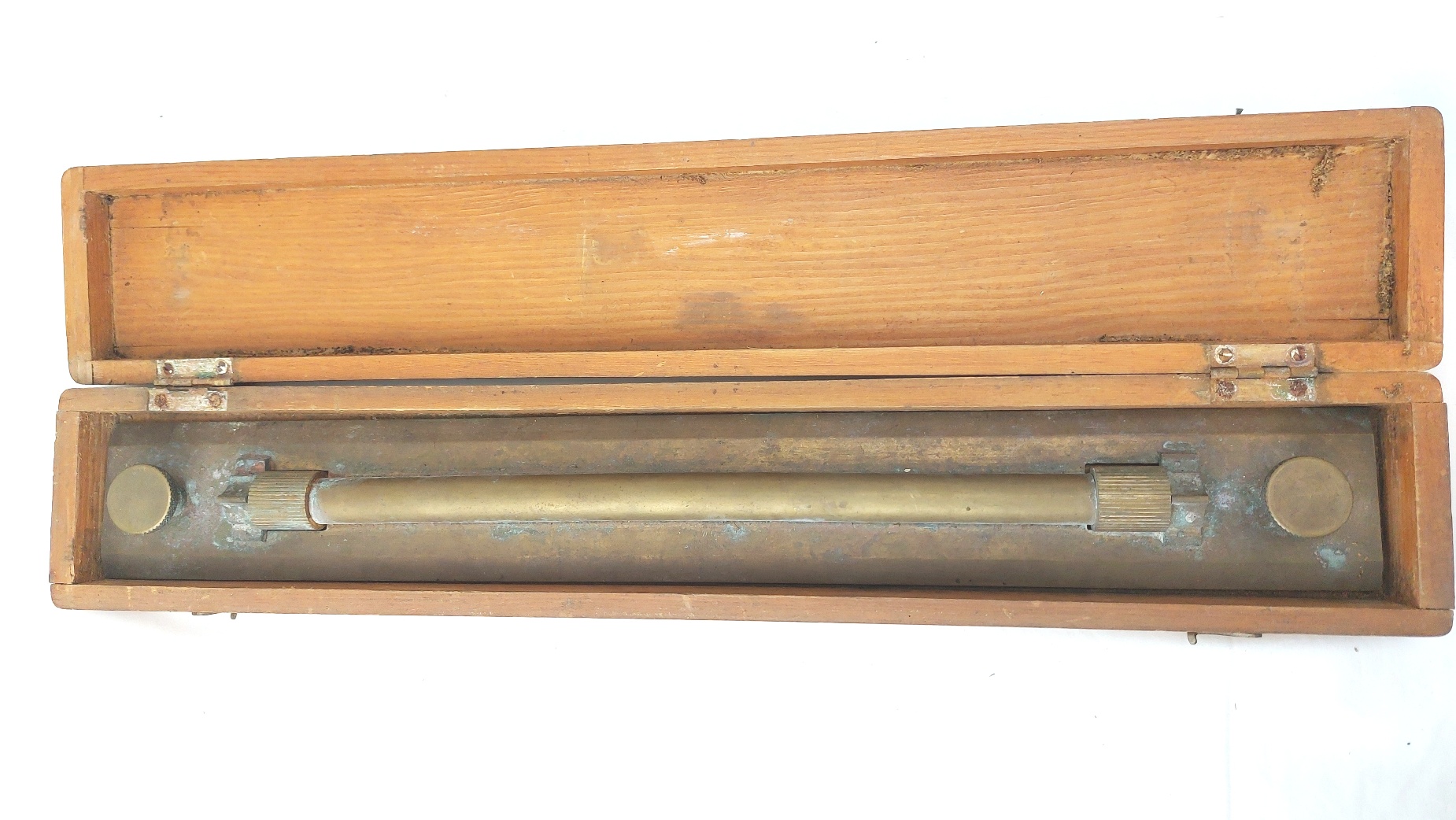
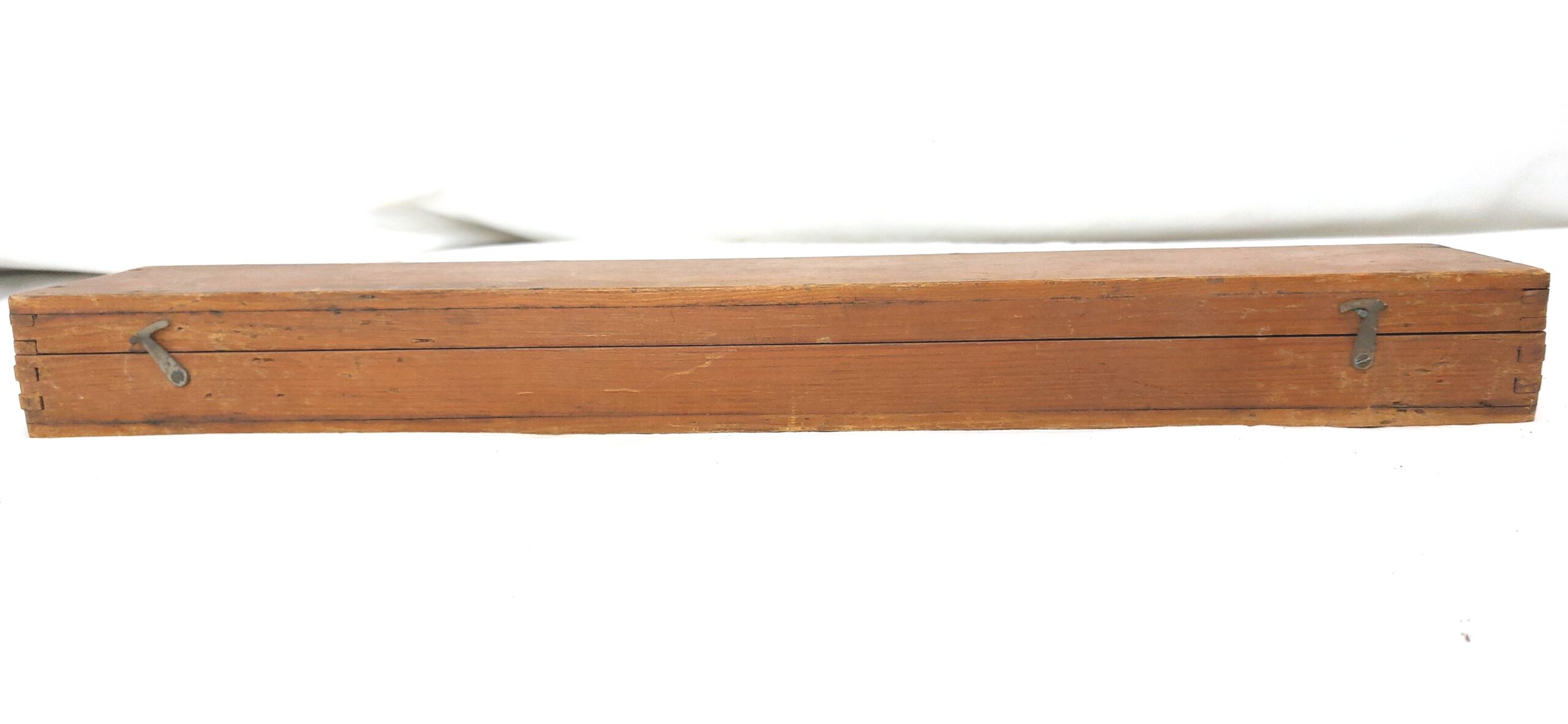
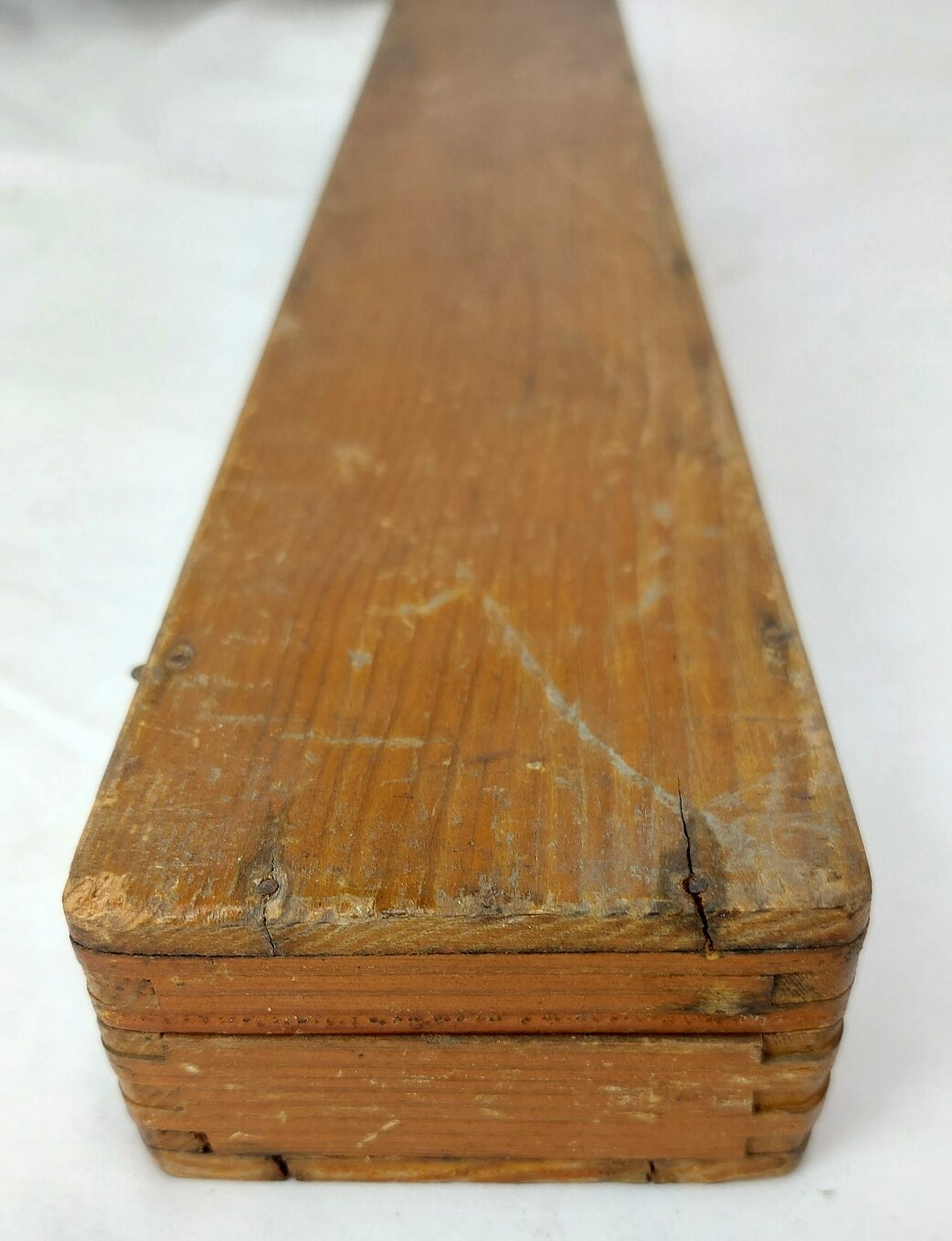
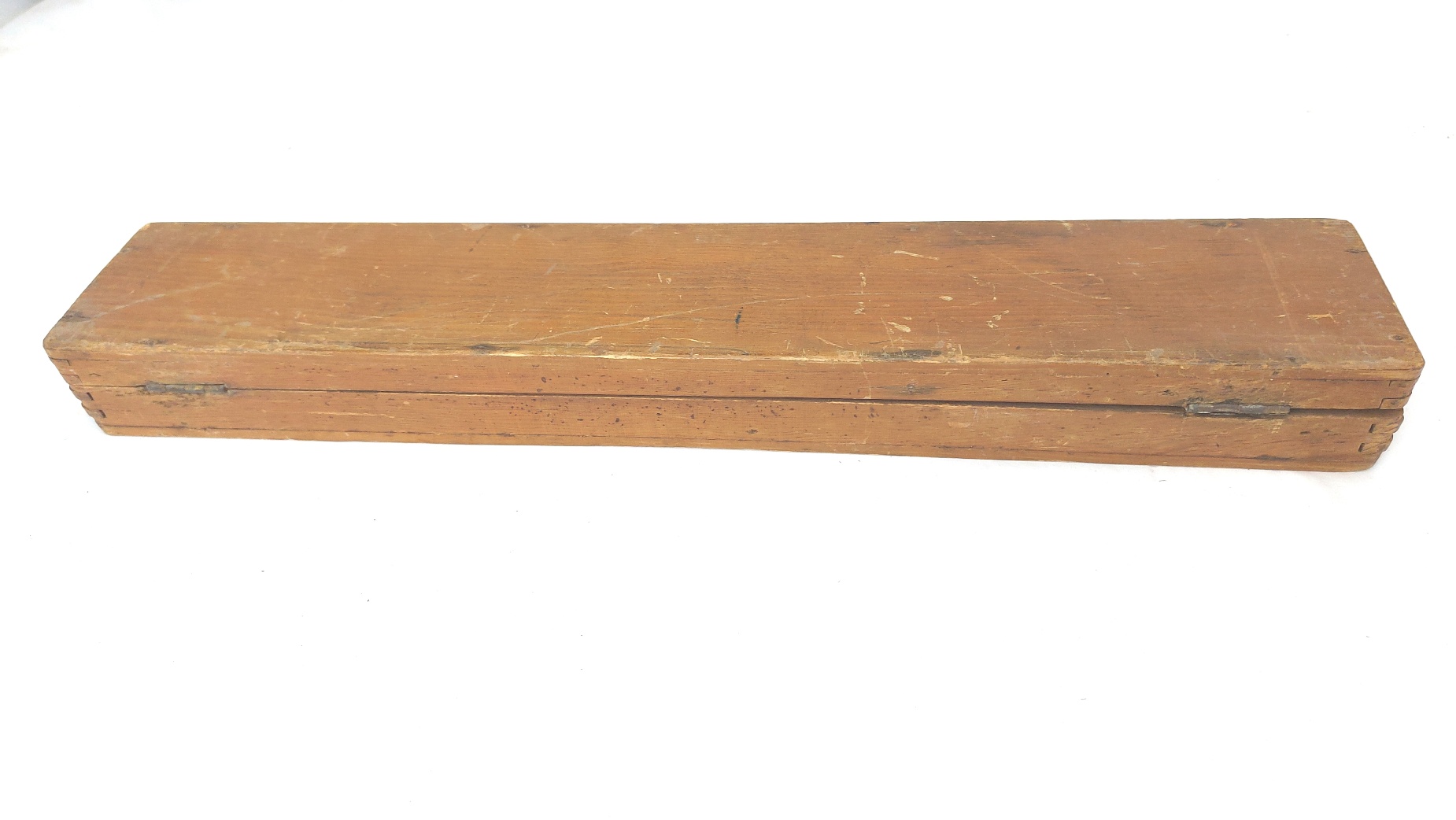
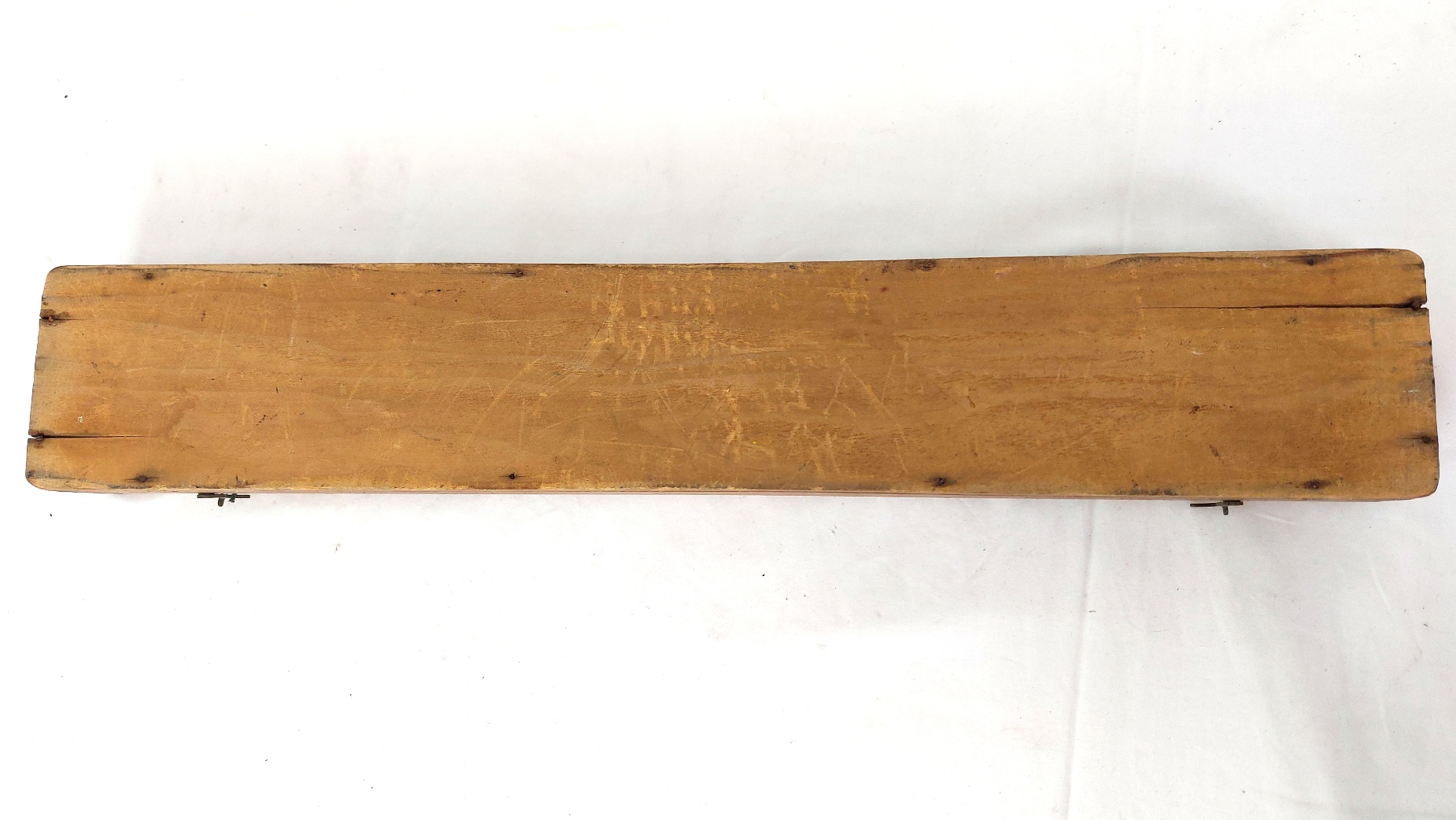
Accompanied by its associated finger-jointed softwood storage case typical of late 19th and early 20th century technical and navigational equipment.
Approx. Measurements – Instrument: 45.7 cm long x 6.1 cm wide. Wooden box: 48 cm x 8 cm x 5 cm deep.
History Note:
Parallel rules formed an essential component of maritime navigation equipment from the 18th century onward, particularly within Royal Navy, Admiralty, hydrographic, and merchant marine service. Before electronic navigation systems, officers relied upon chart plotting instruments such as parallel rules, dividers, and rolling straightedges to accurately transfer compass bearings and calculate courses across nautical charts. Larger heavy-duty brass examples like this were built for prolonged professional use aboard ships, in dockyards, survey offices, and navigation schools.
*Condition*
Naturally aged throughout with surface tarnishing, oxidation, and areas of verdigris to the brass surfaces. Mechanically functional with both end rollers rotating correctly. Working edges remain generally straight with no major visible damage. Wooden storage case displays age and storage wear throughout; one hinge is broken and one lock pin is missing. Please see photographs as part of the condition report.
RQMCEXFO_9542245794