~ Chinese Han Style Nephrite Jade Carving Belt Hook ~
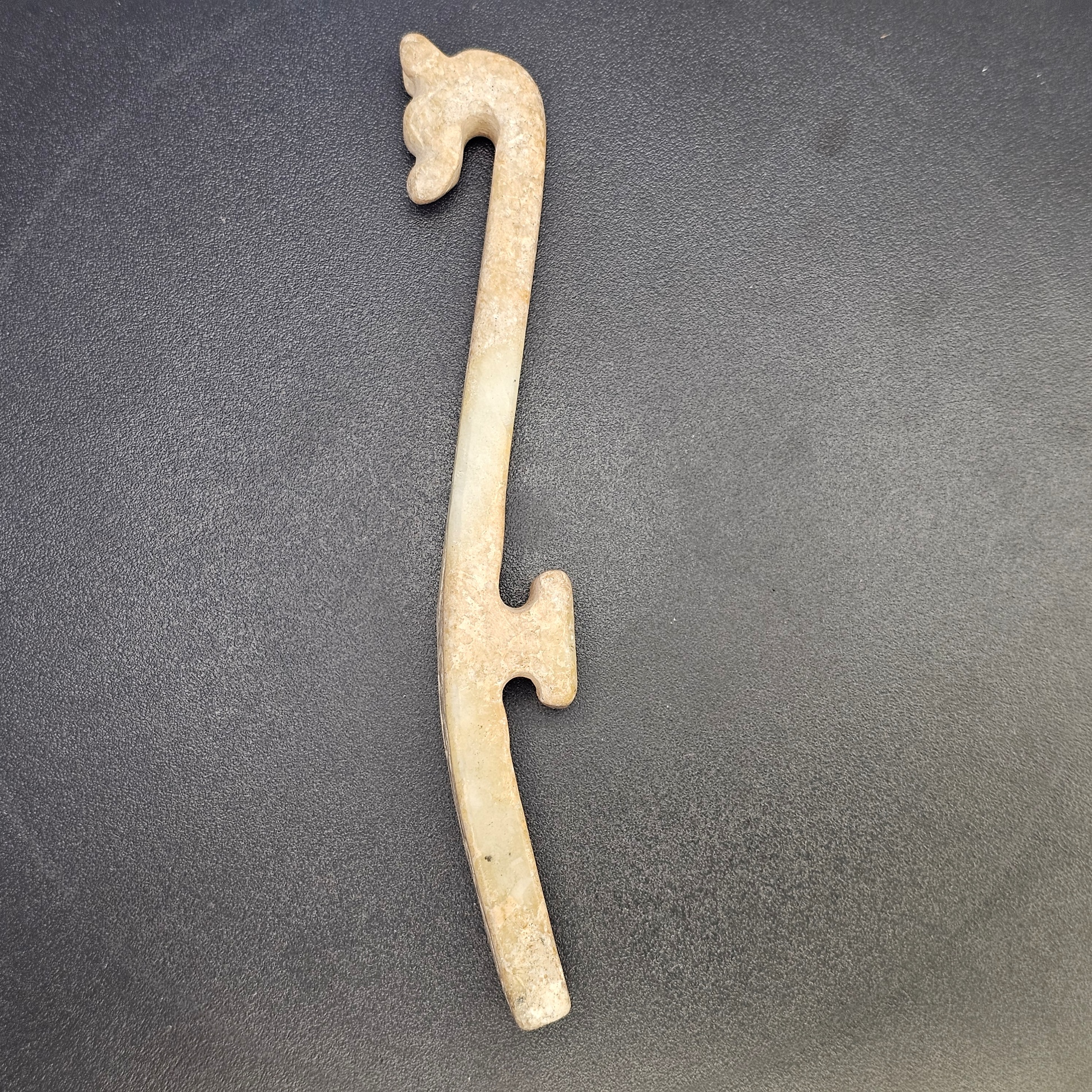
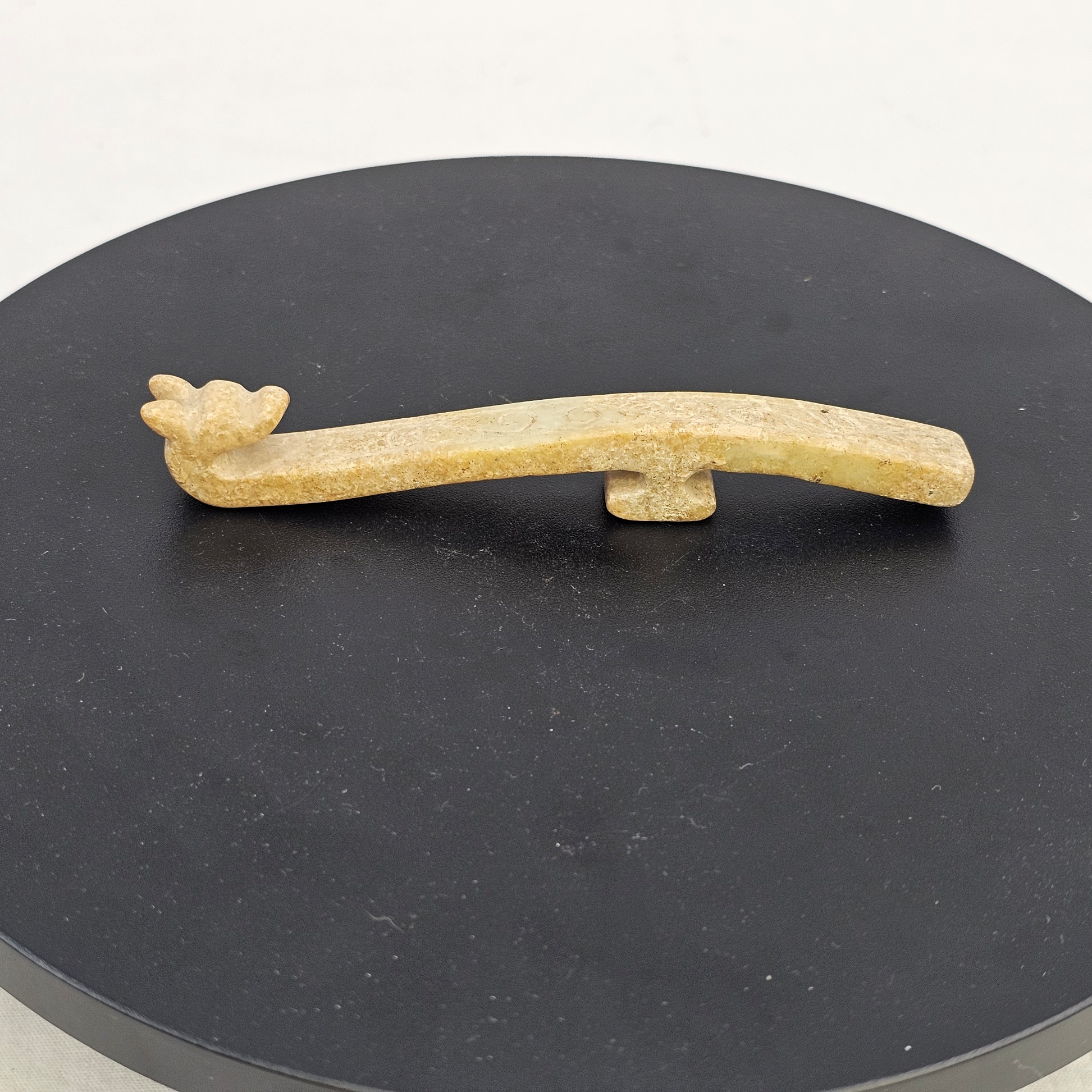
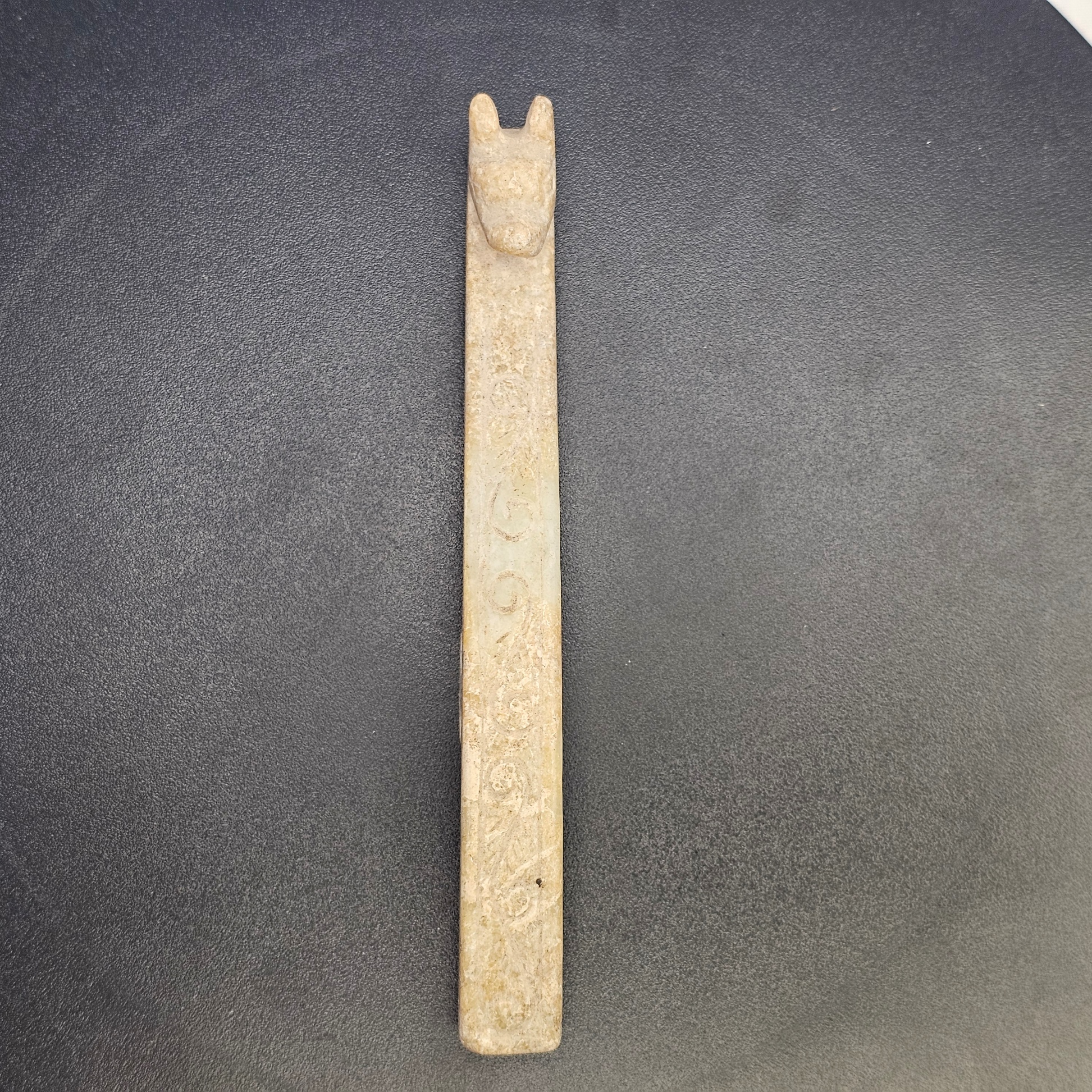
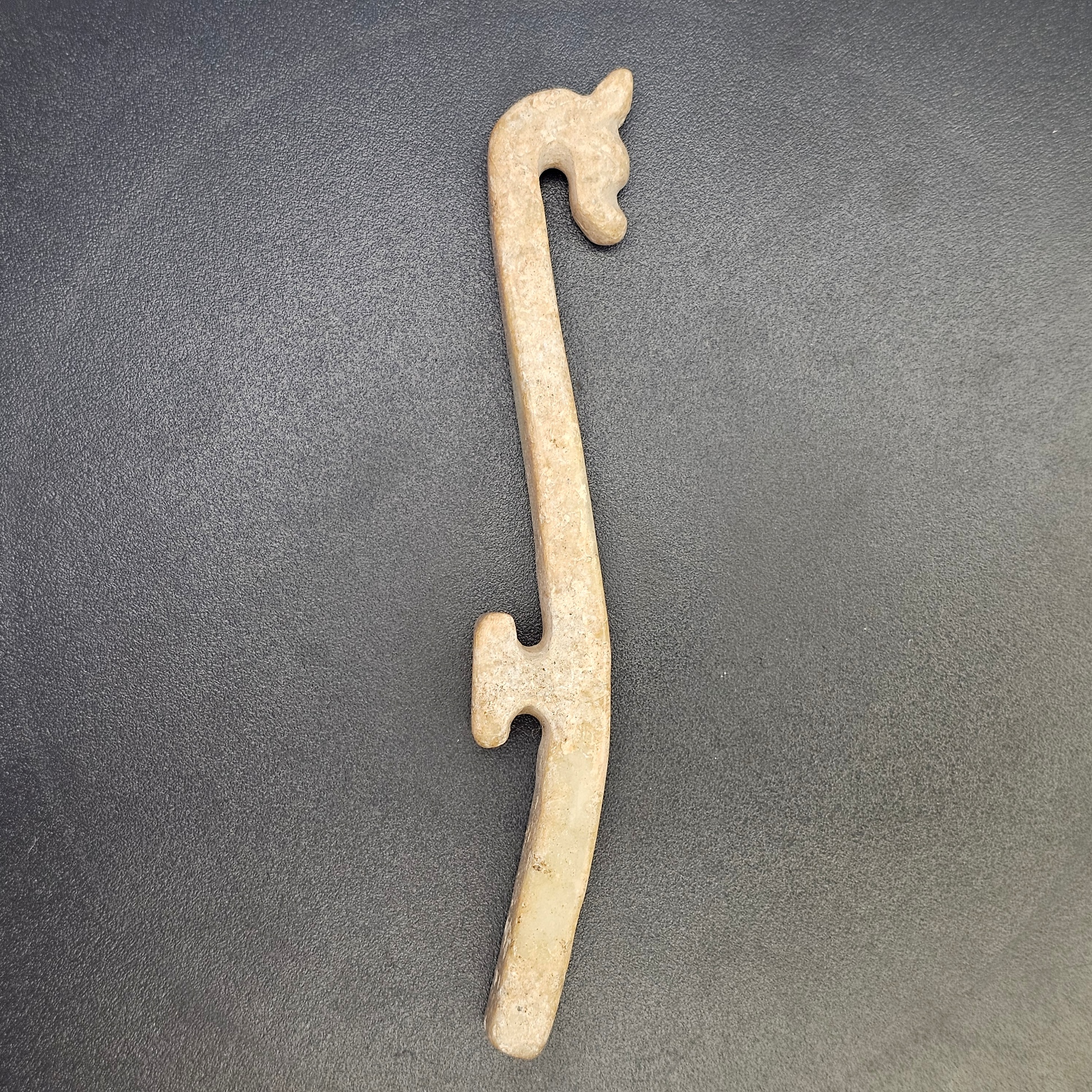
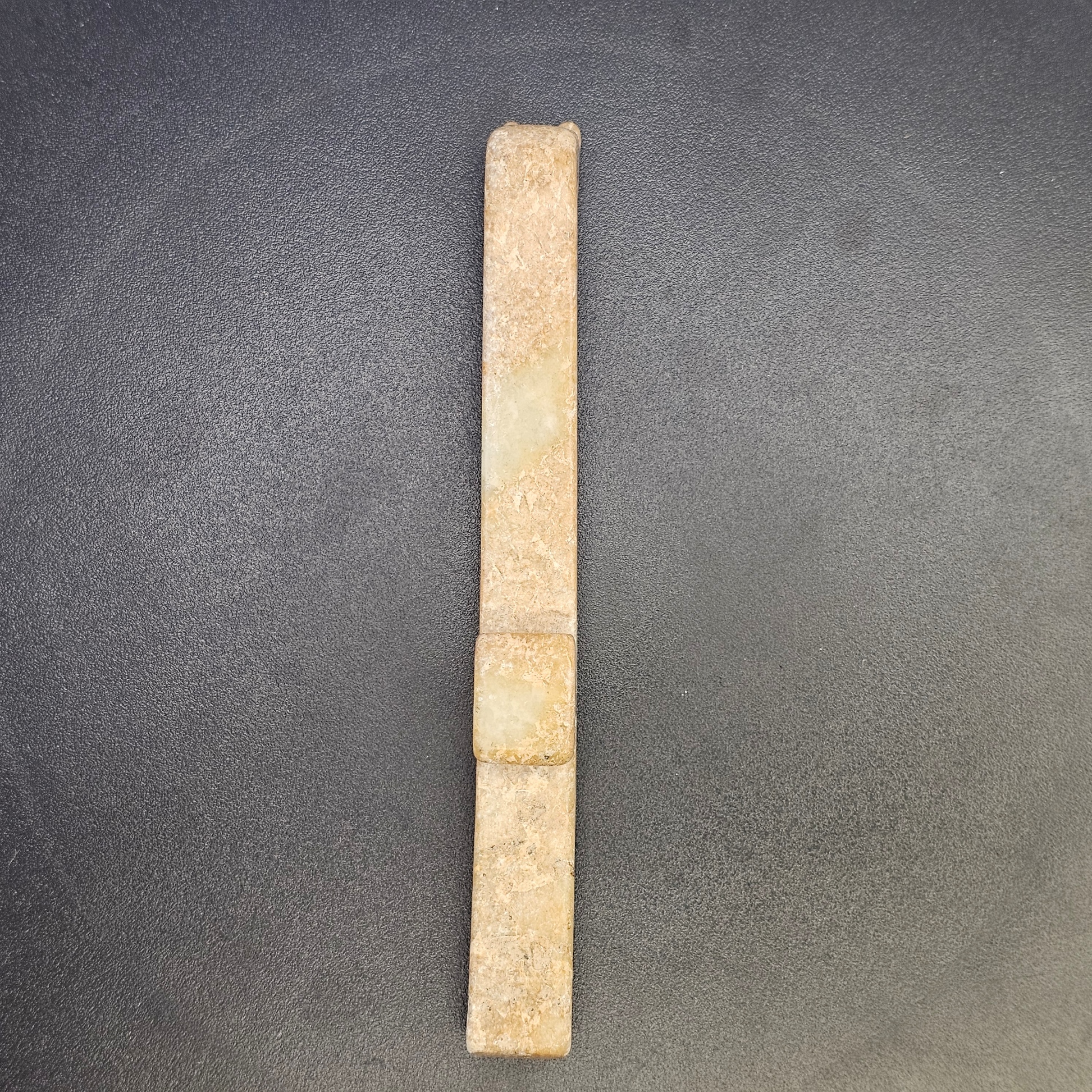
A hand-carved nephrite jade belt hook in archaistic Han dynasty style, of elongated curved form with a slender, gently arching shaft terminating at one end in a stylised dragon or mythical beast head, the head turned back upon itself with small carved ears or horns and an articulated muzzle forming the hook itself. The opposite end of the shaft terminates in a flattened, slightly splayed foot, with a small projecting rectangular boss or button to the underside of the shaft, positioned roughly two-thirds of the way along its length, which would originally have secured the hook through a loop of leather or fabric belt. The narrow upper face of the shaft is decorated with shallow incised scrolling motifs, including spiral and cloud-scroll forms, running along its visible length. The stone is a warm cream to biscuit-toned material with extensive russet and ochre surface colouration and calcification, giving the piece an attractively weathered, archaic appearance consistent with considerable age and burial or long handling.
Historical Context
The belt hook, or daigou, was a functional and status-bearing accessory in ancient China, first appearing around the 5th century BCE and used to secure leather or fabric belts, particularly among the warrior and official classes. Over subsequent centuries the belt hook evolved from a purely practical fastening into a status symbol and mark of rank for the privileged classes, with jade examples representing the highest tier of production. By the time of the Qing dynasty, belt hooks had largely lost their practical function and were instead retained and produced as desk ornaments and scholarly curios, often deliberately carved in earlier, archaistic styles to evoke the prestige of antiquity. The dragon or chilong head terminal, as seen on this example, is one of the most common and enduring belt hook forms, with the creature's open jaws forming the functional hook. The scrolling incised decoration along the shaft is characteristic of the archaistic revival style, drawing on motifs found on genuinely ancient jades and bronzes. The heavily calcified, russet-toned surface of this example is the result of long burial or age-related alteration of the stone, a quality highly prized by collectors of archaic and archaistic Chinese jades as evidence of genuine age and history.
One has a length of 4.75 inches (12.2 cm).
It weighs 35g
~ Condition ~
The piece is in great condition with no cracks or chips.
#1345