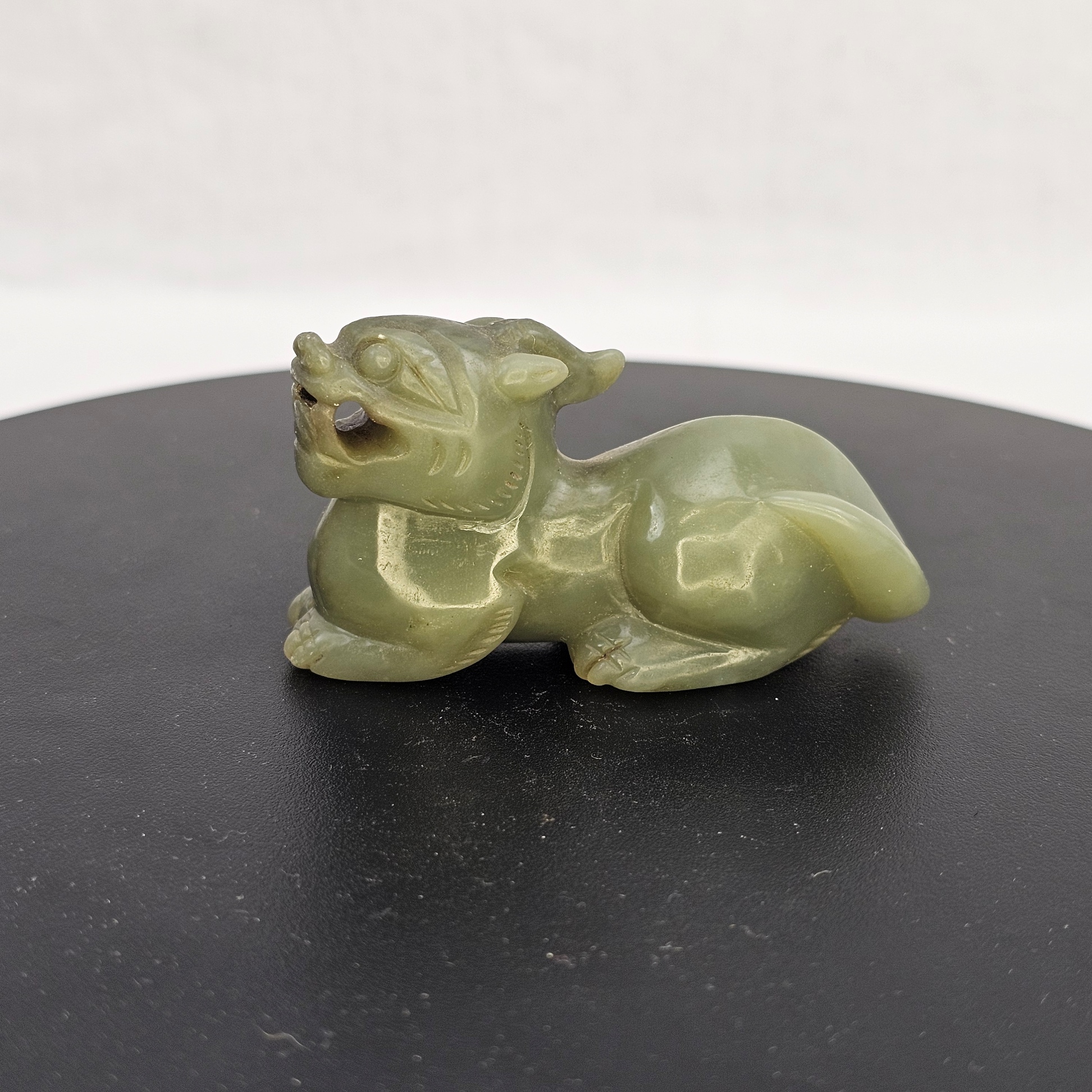
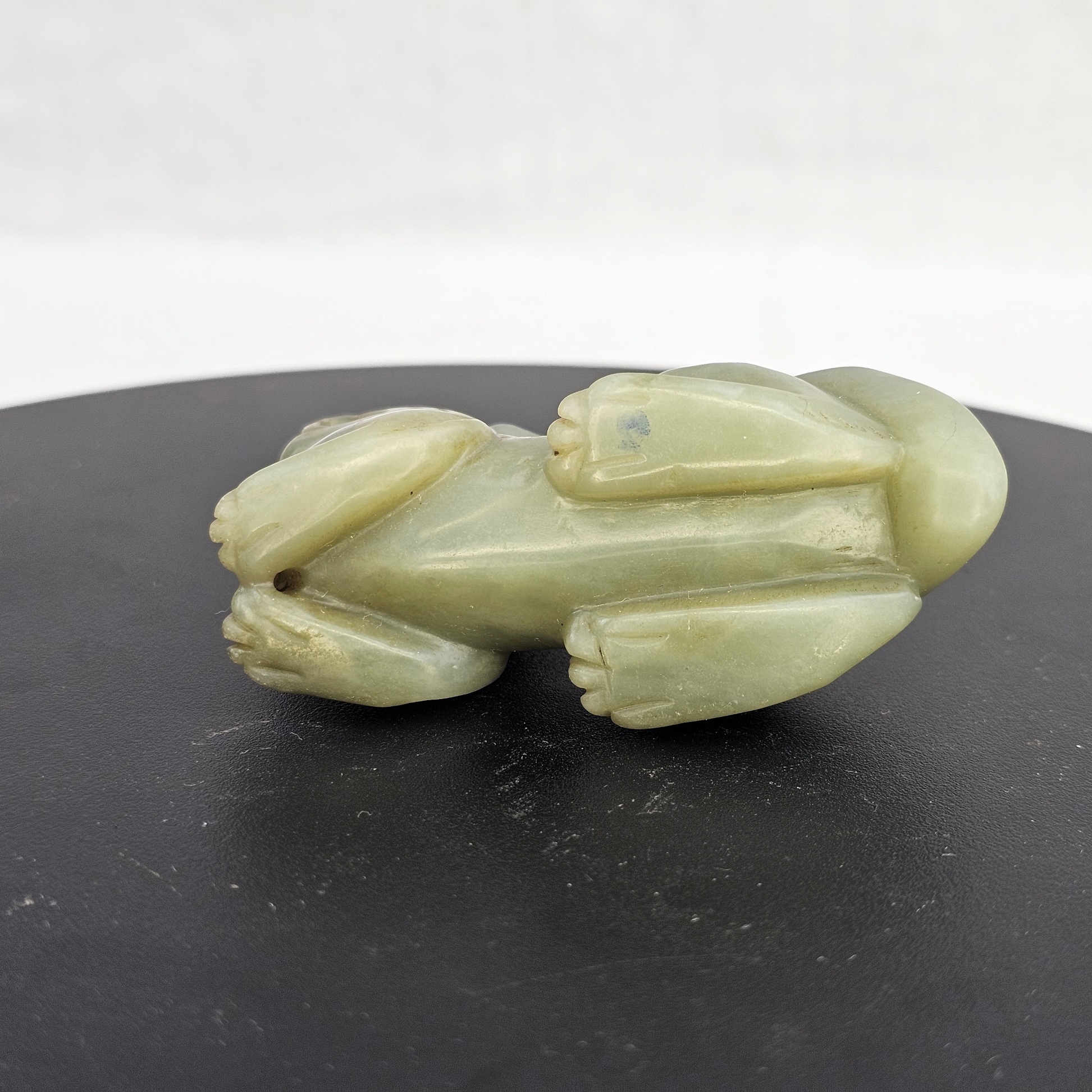
~ Chinese Qing Dynasty Nephrite Jade Carving of a Mythical Unicorn Creature ~
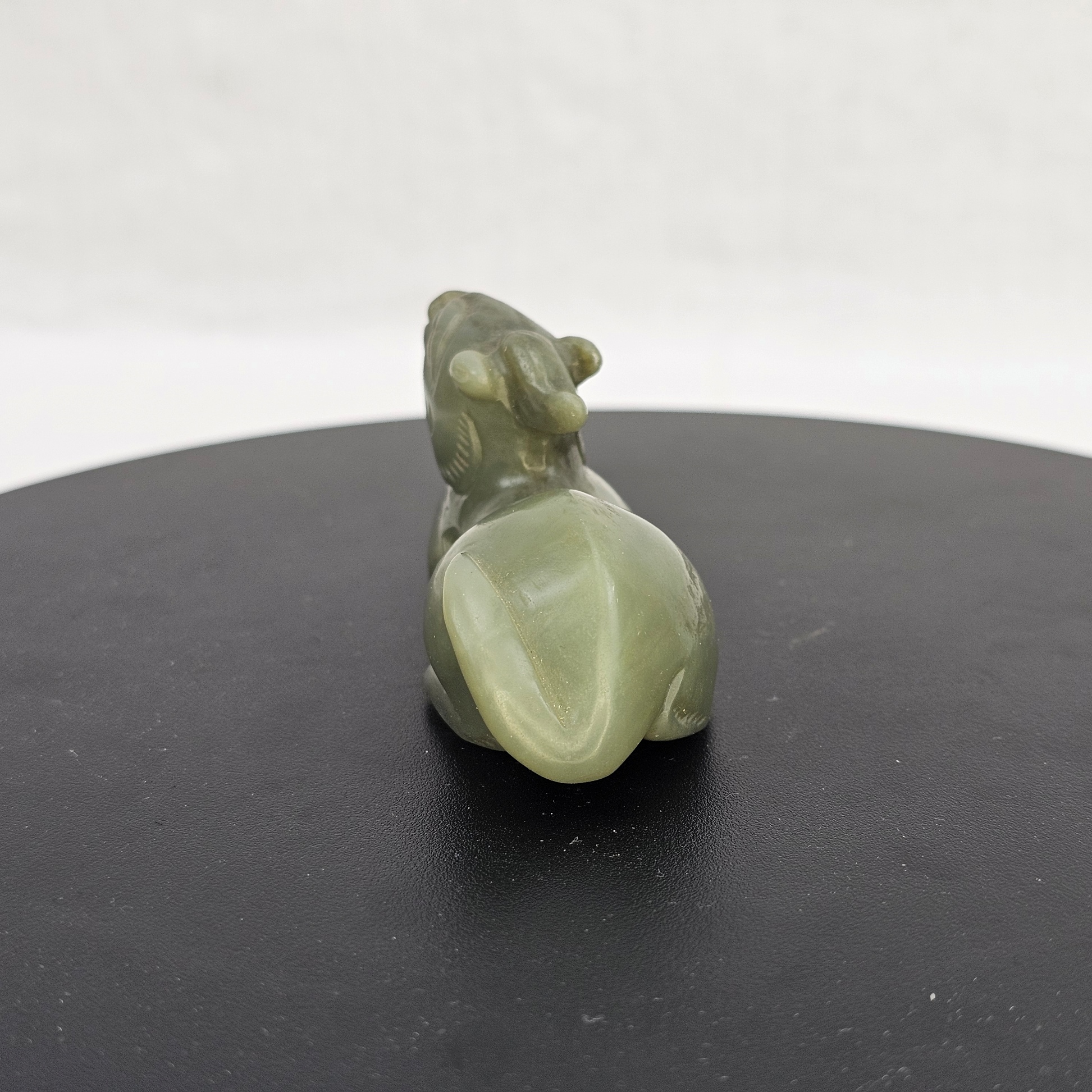
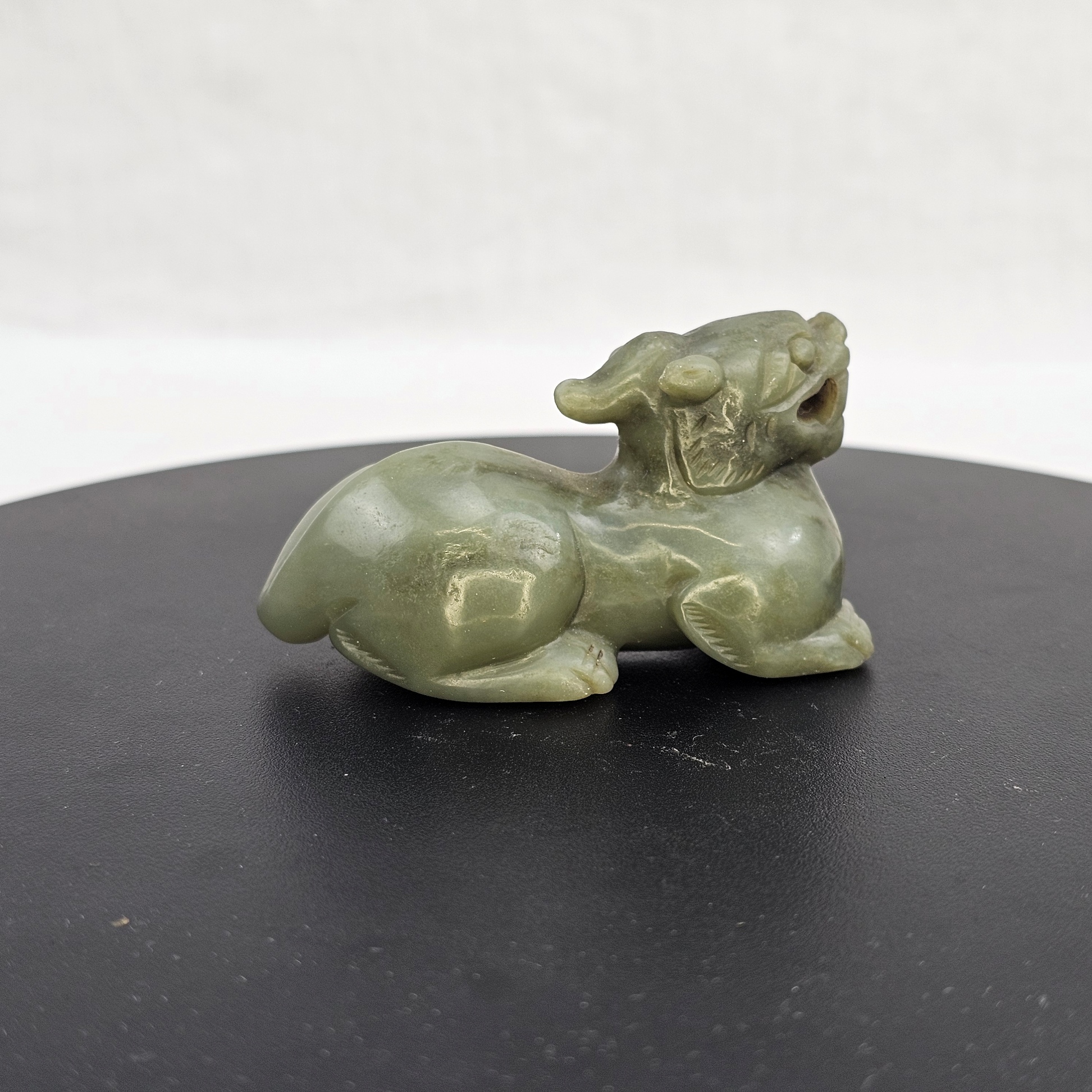
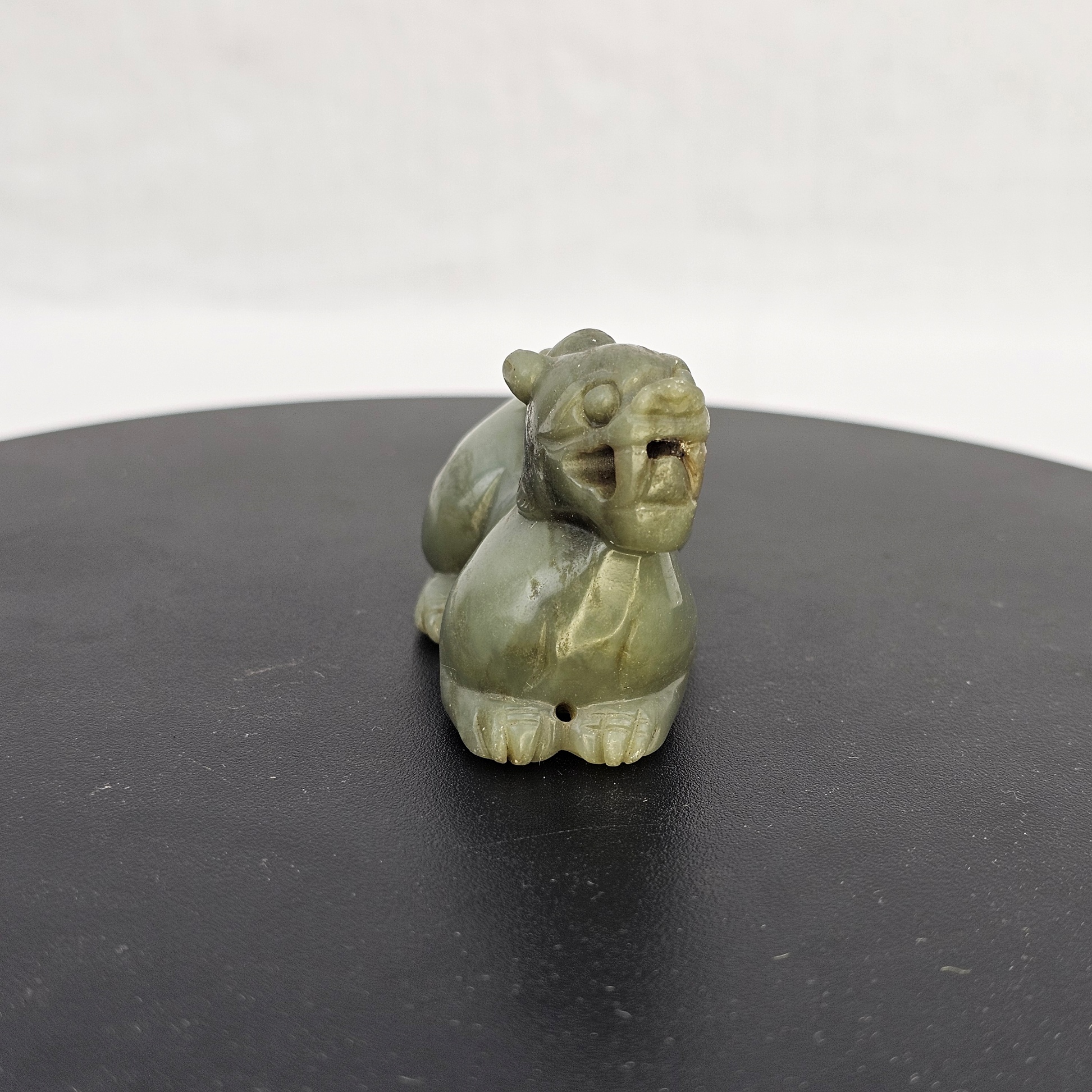
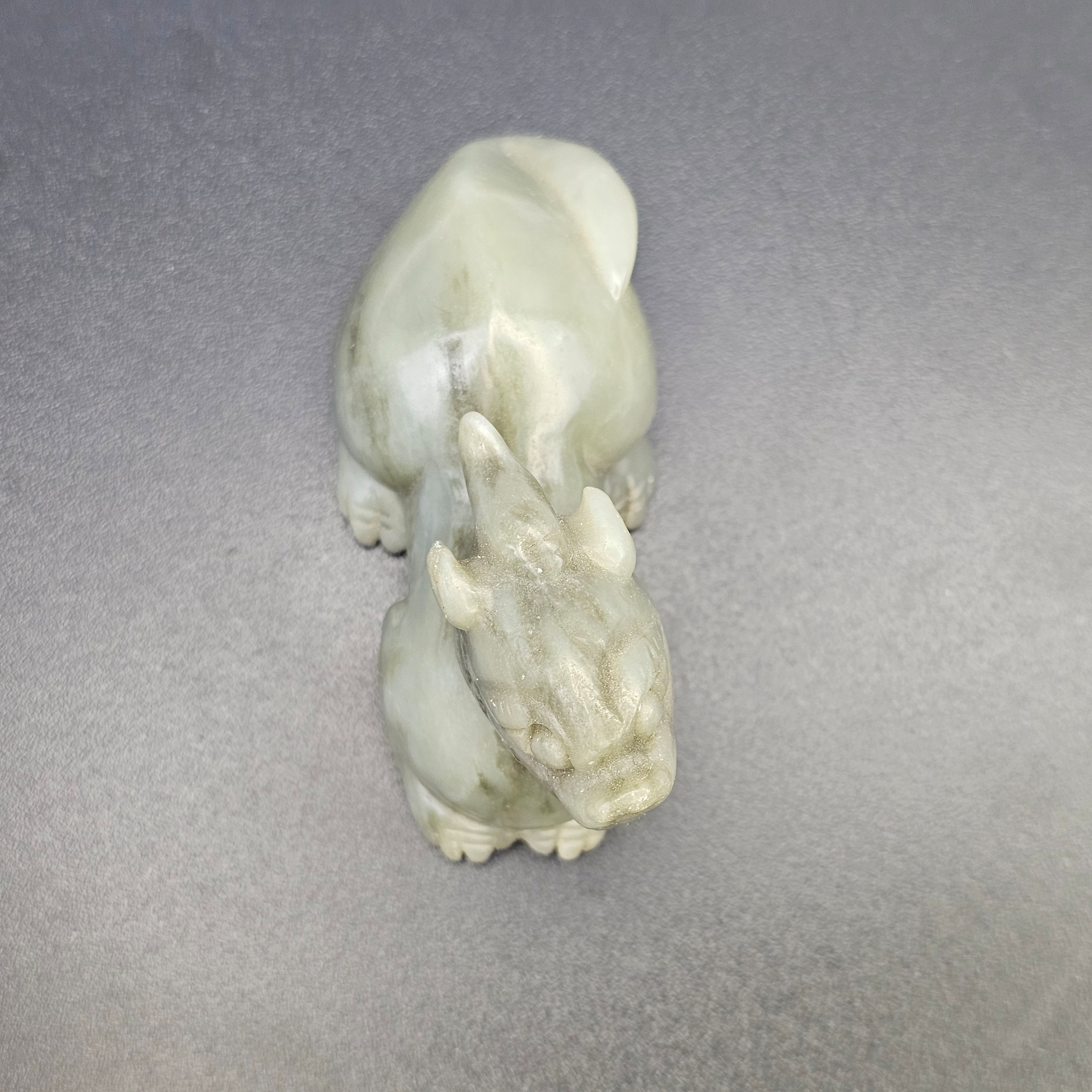
A finely carved small nephrite jade figure of a mythical beast depicted in a compact recumbent pose, with the body settled low to the ground, the head raised and turned sharply upward, and the jaws open in a fierce or alert expression showing incised teeth. The creature has a broad, leonine head with incised brow detail, small rounded ears set close to the skull, and prominent oval eyes, with a single curved horn projecting from the top of the skull, lending the piece its unicorn identification. The body is full and rounded, the haunches and flanks carved with characteristic incised scale or cloud motifs suggesting a supernatural rather than naturalistic animal, and a short scrolling tail sweeps across the rear flank. The four legs are tucked partially beneath the body with carefully incised hoof-like feet. A small suspension hole is drilled through the underside, indicating the piece was originally intended or used as a toggle, pendant, or garment ornament. The stone is a rich olive-tinged celadon green with areas of darker mottling and a warm golden-brown tone in the deeper recesses, the polish consistently waxy and well-preserved throughout. The carving quality is confident and assured, with the beast conveying genuine sculptural energy despite its small scale.
Historical Context
Mythical beast carvings in jade occupy a central place in Chinese decorative and talismanic arts from the Neolithic period onwards. By the Qing dynasty (1644 to 1912) a rich tradition of single-horned and multi-horned chimeric creatures had developed, encompassing the qilin, bixie, pixiu, and related types, each carrying specific auspicious associations. As J. Rawson notes in Chinese Jade from the Neolithic to the Qing (London, 1995), early jades carved as mythical creatures primarily resembled tomb sculpture in their powerful form and protective function, but by the Qing dynasty such jades were the prized possessions of scholars and officials, intended for sumptuous display and discerning admiration. The single-horned unicorn form in Chinese iconography typically relates to the zhi or jiaoduan, creatures associated with righteous judgment, good omens, and the appearance of a virtuous ruler. The suspension hole drilled through the base is consistent with use as a belt toggle or pendant, a functional format widely employed during the Ming and Qing periods for jade animal carvings of this type, reflecting a tradition of wearing auspicious jade animals on the person to draw good fortune and repel malevolent influence. The compact recumbent posture with raised turned head is a compositional type associated with Qing period mythical beast carvings intended for tactile as well as visual appreciation.