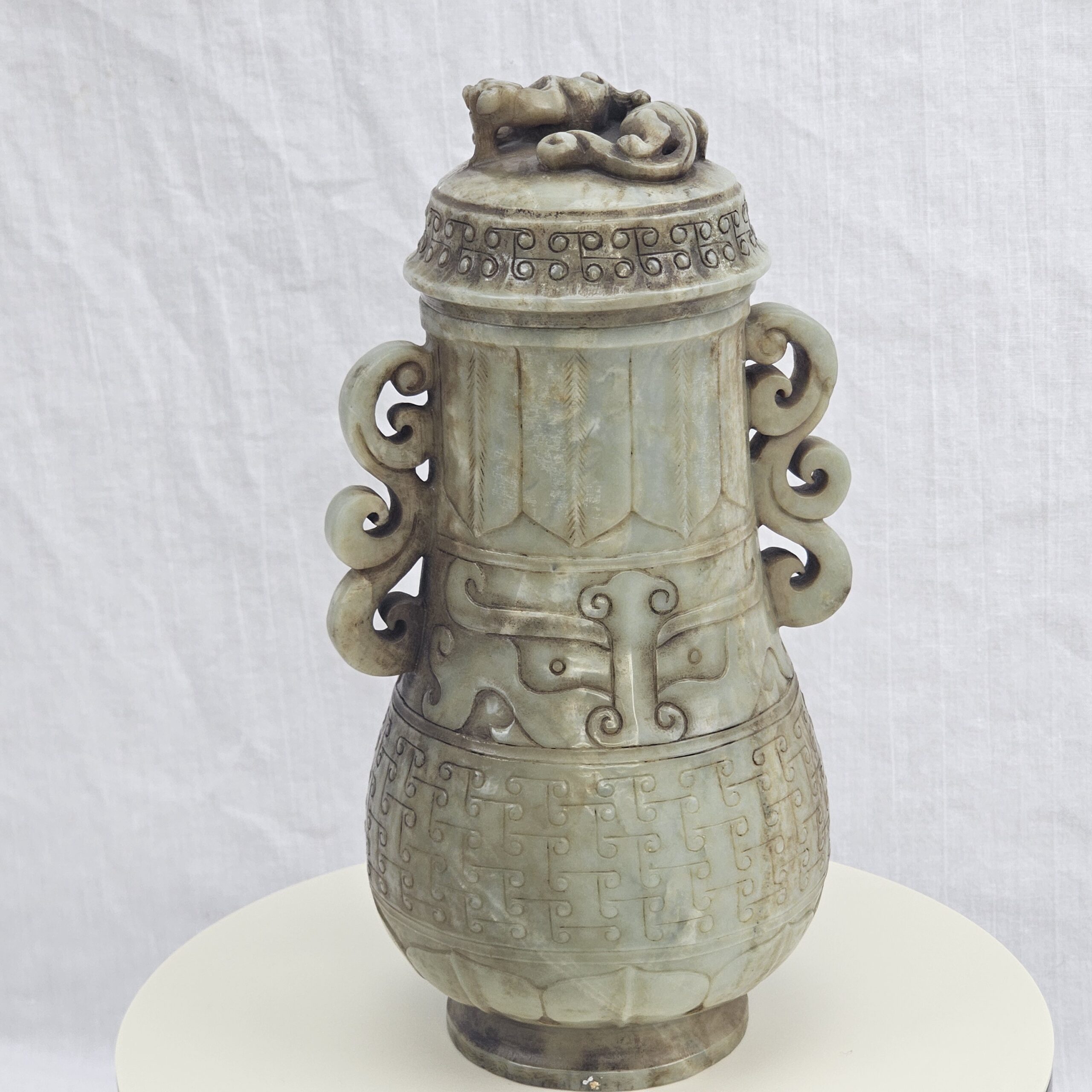
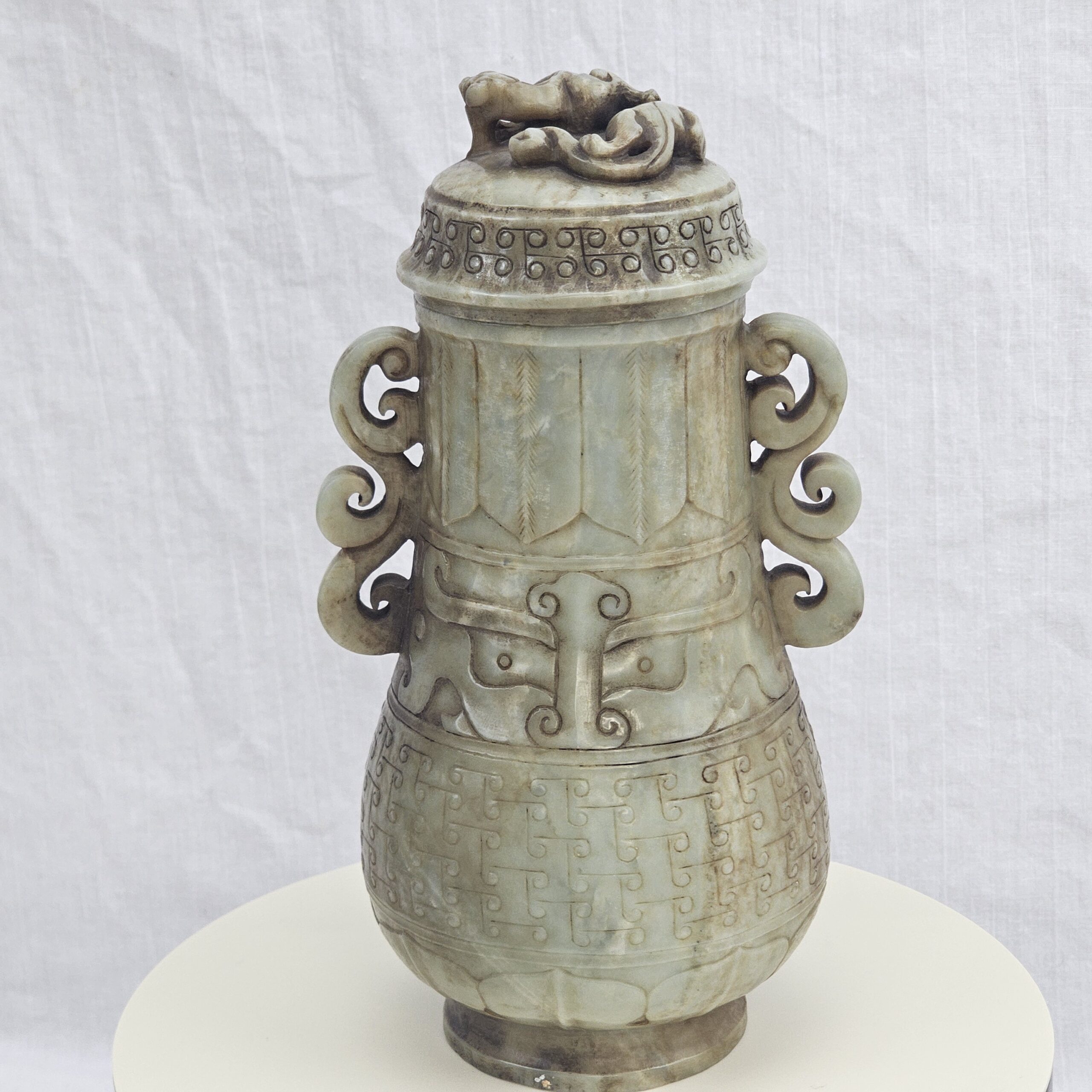
~ Chinese Archaistic Carved Nepirite Jade Covered Vase, Hu Form, with Chilong Finial and Carved Loose Ring Chain ~
Description
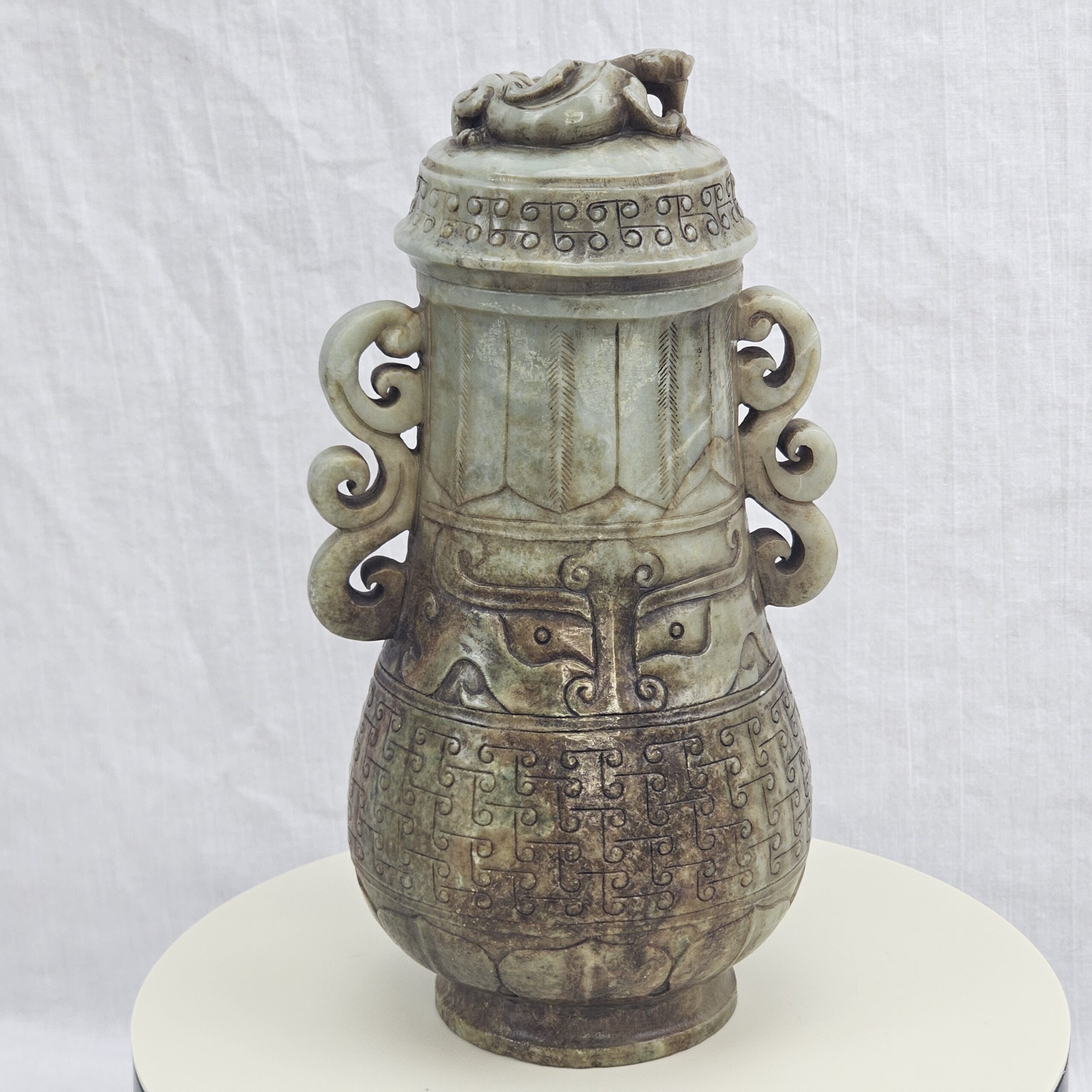
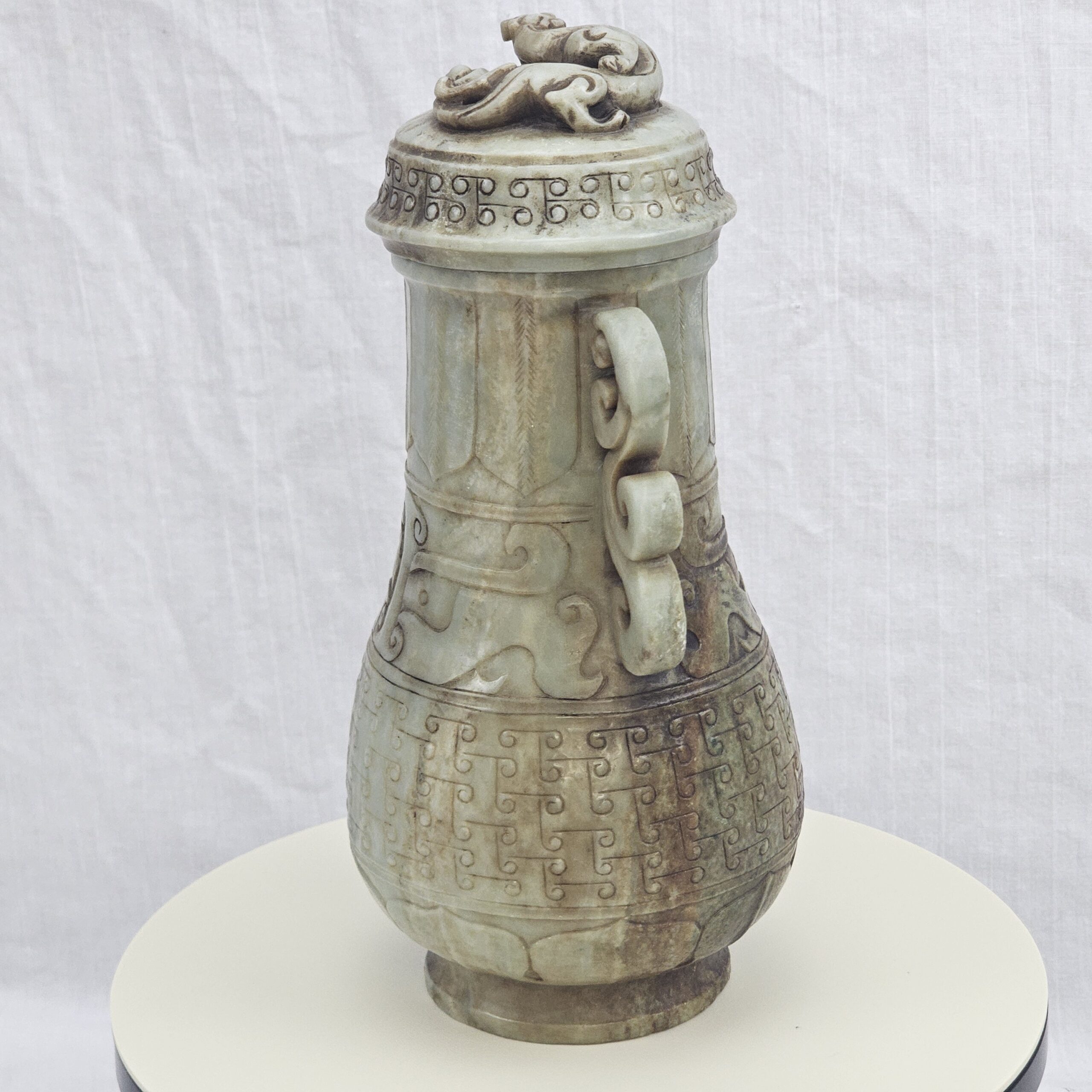
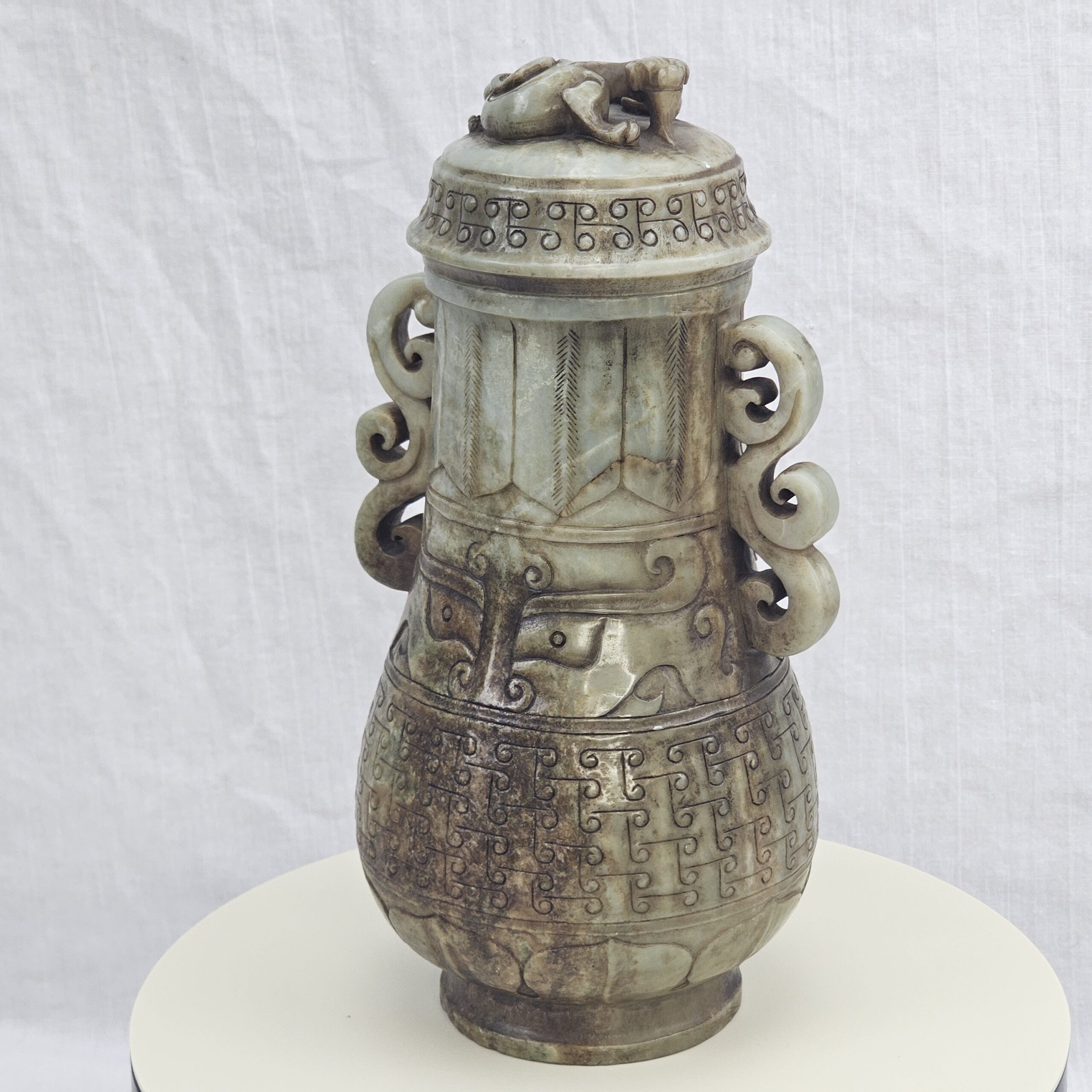
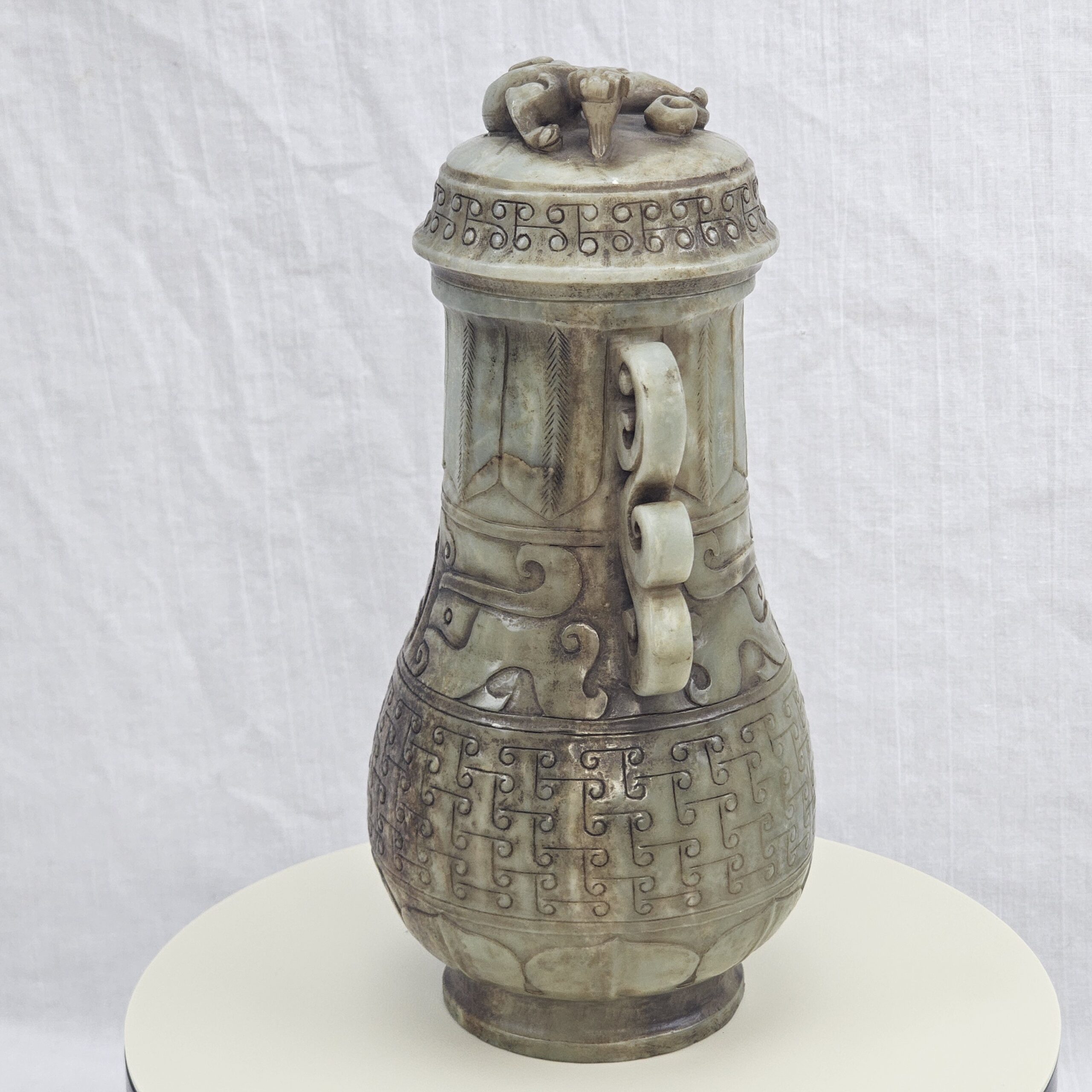
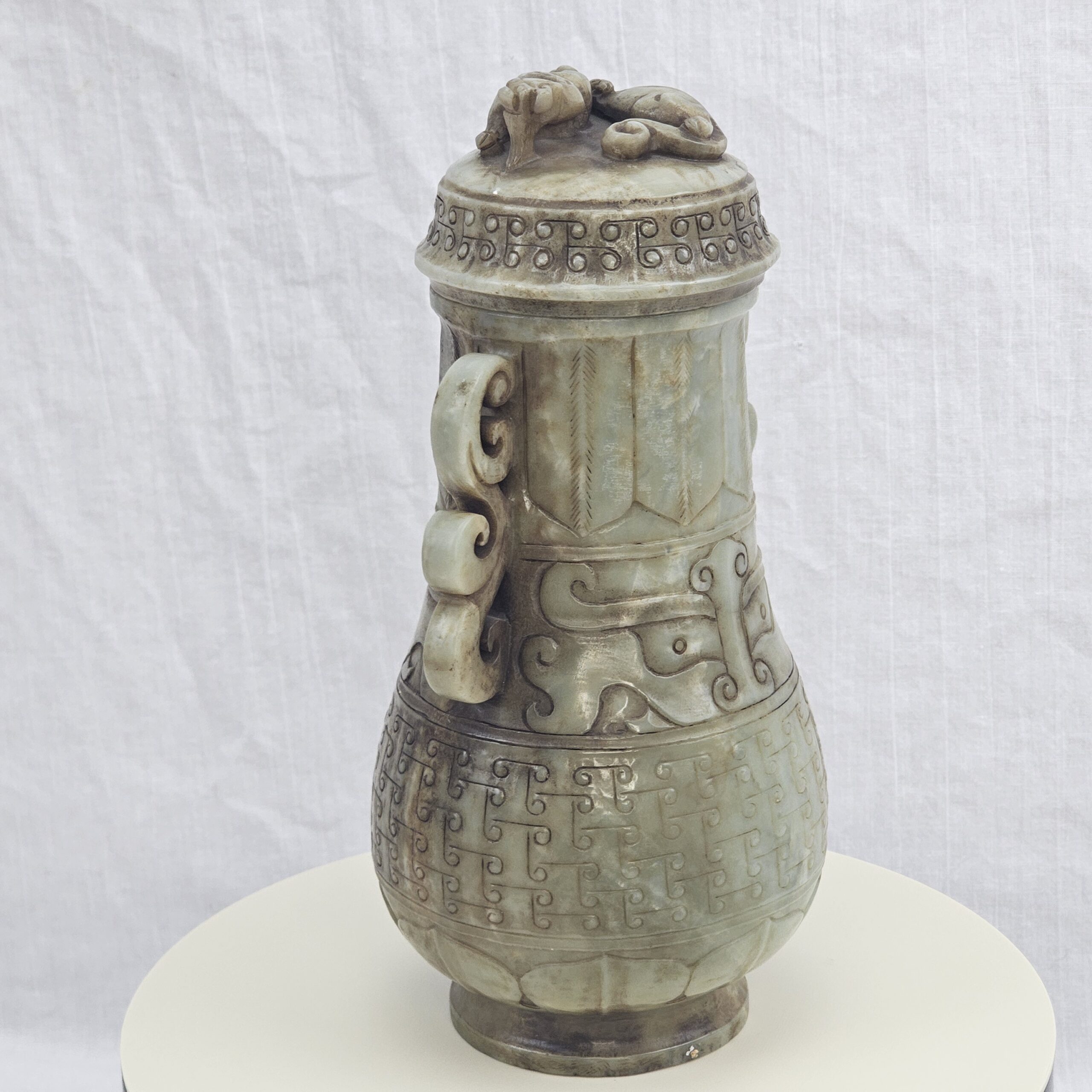
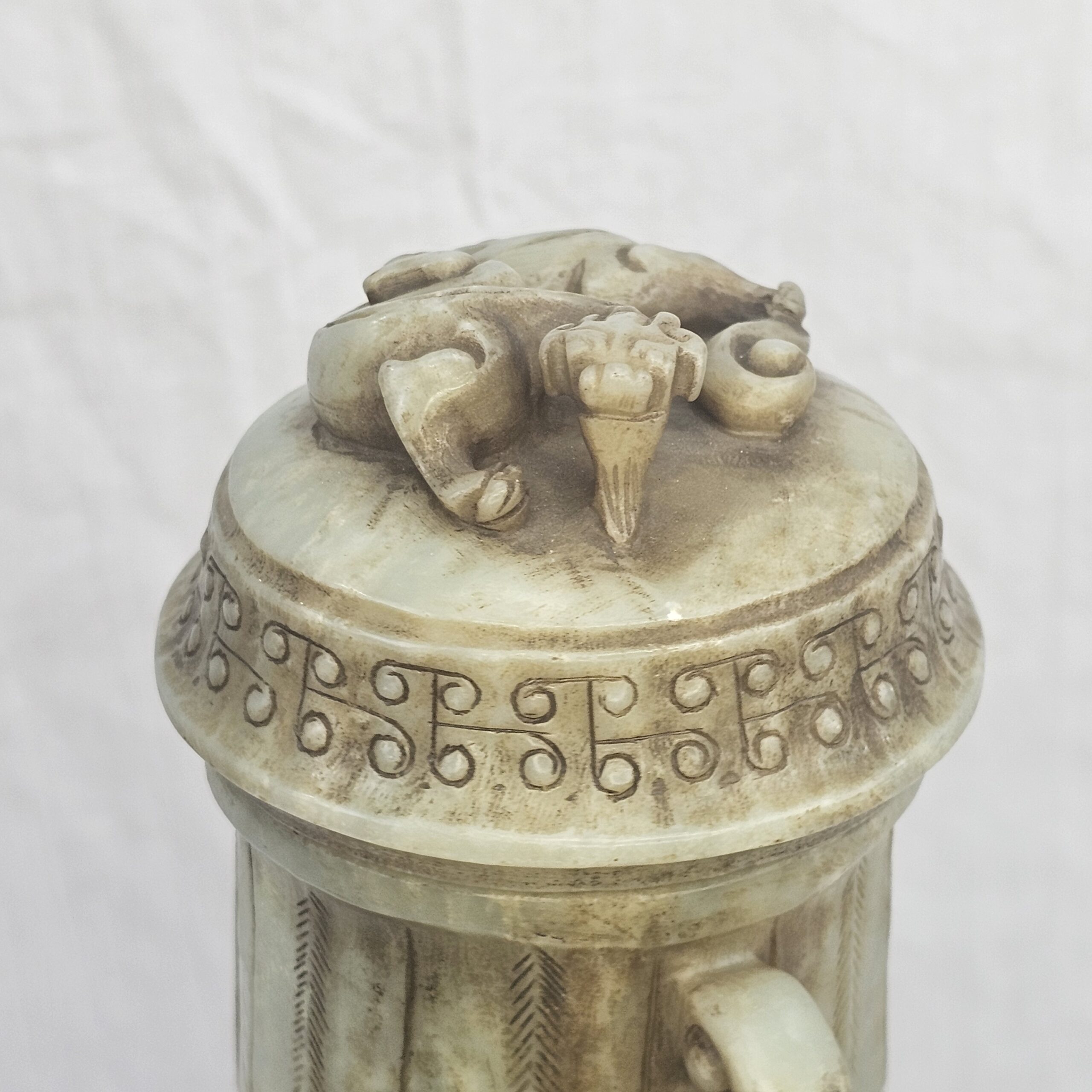
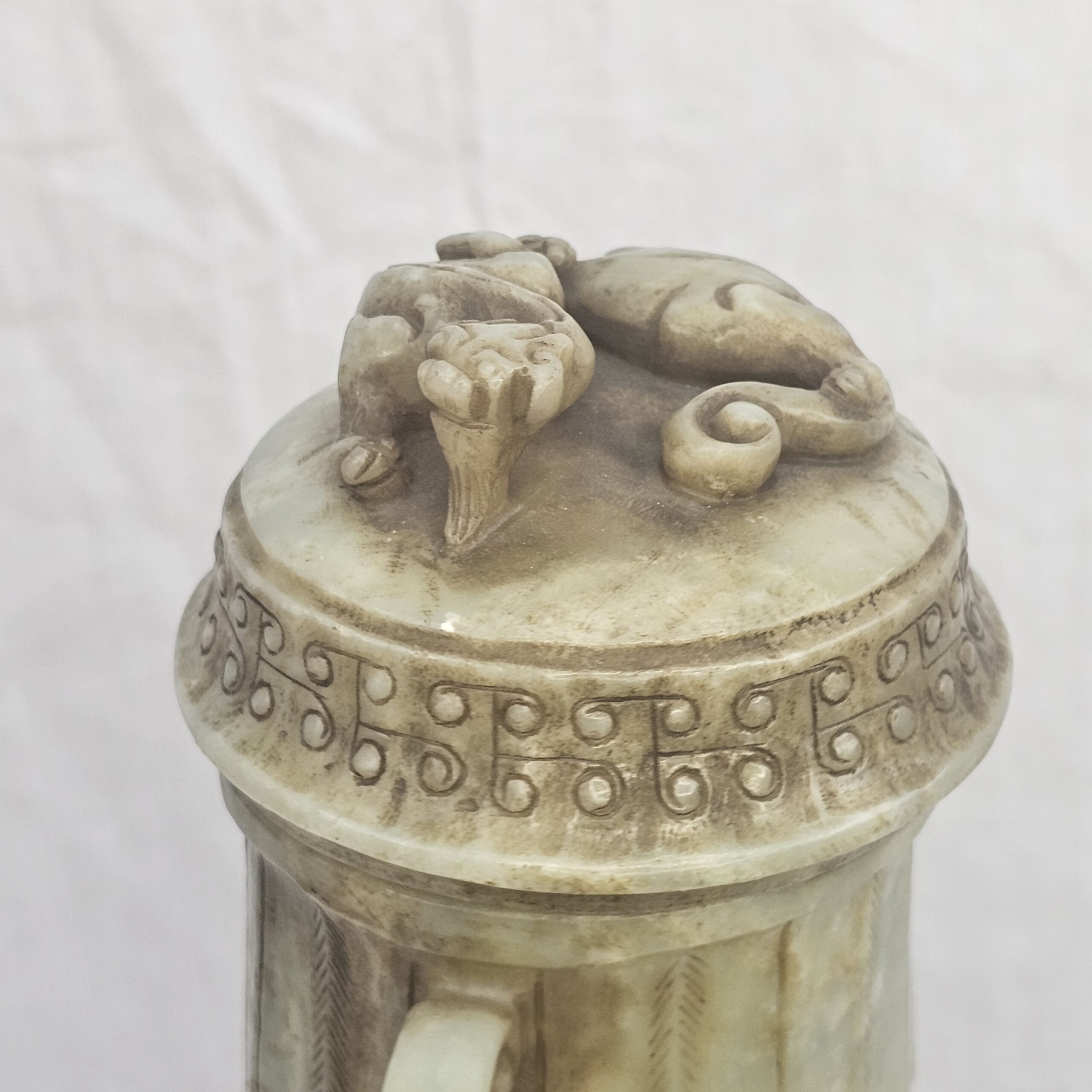
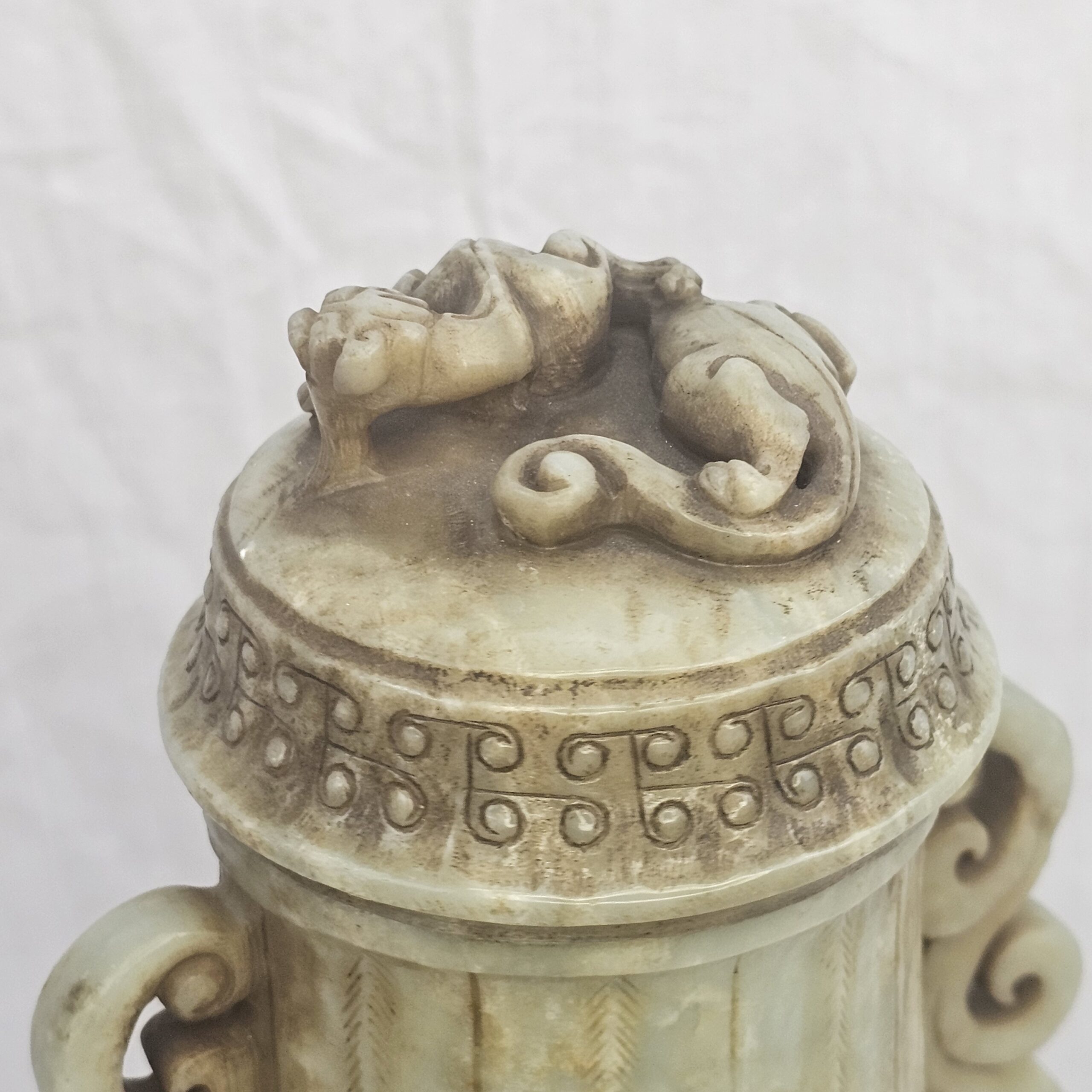
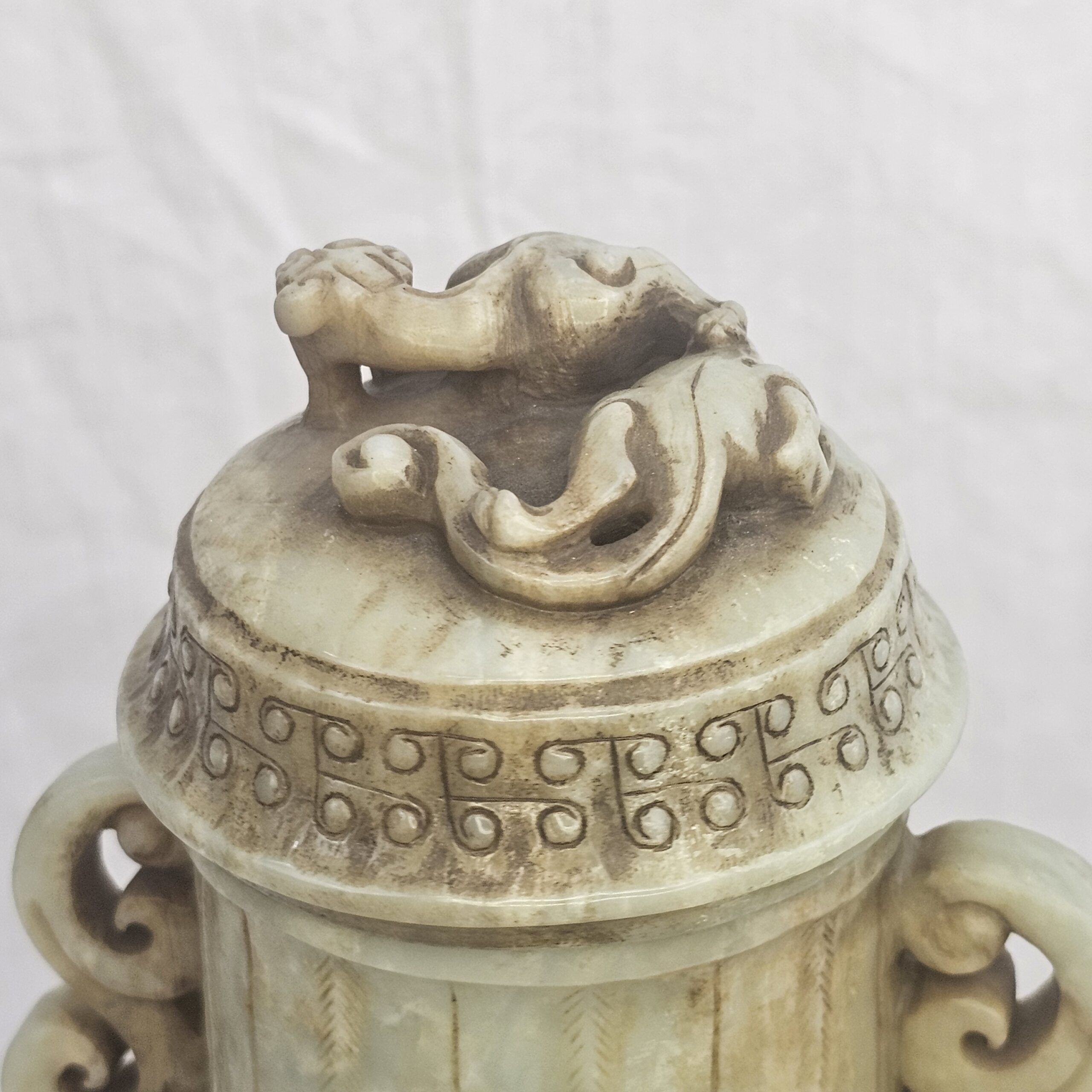
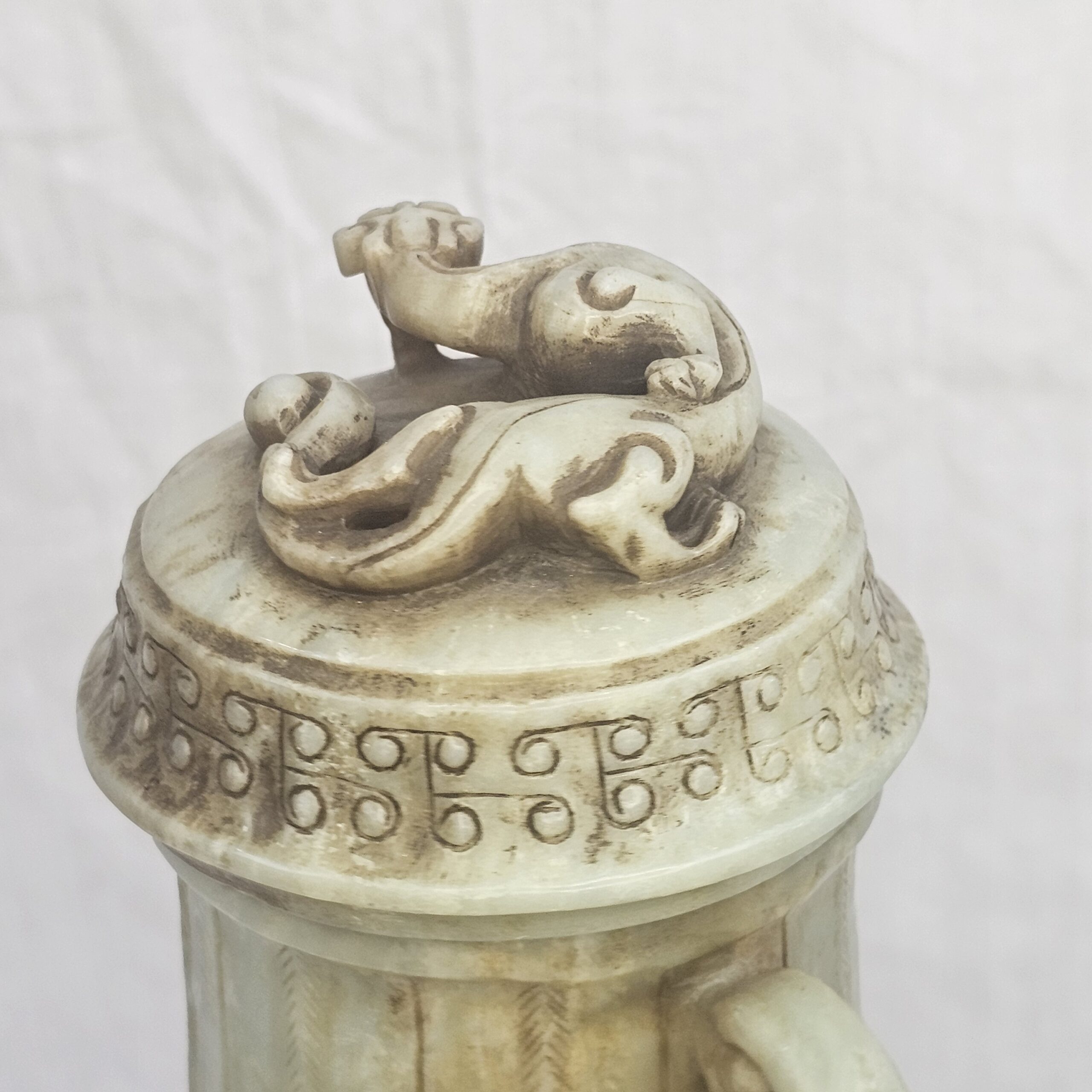
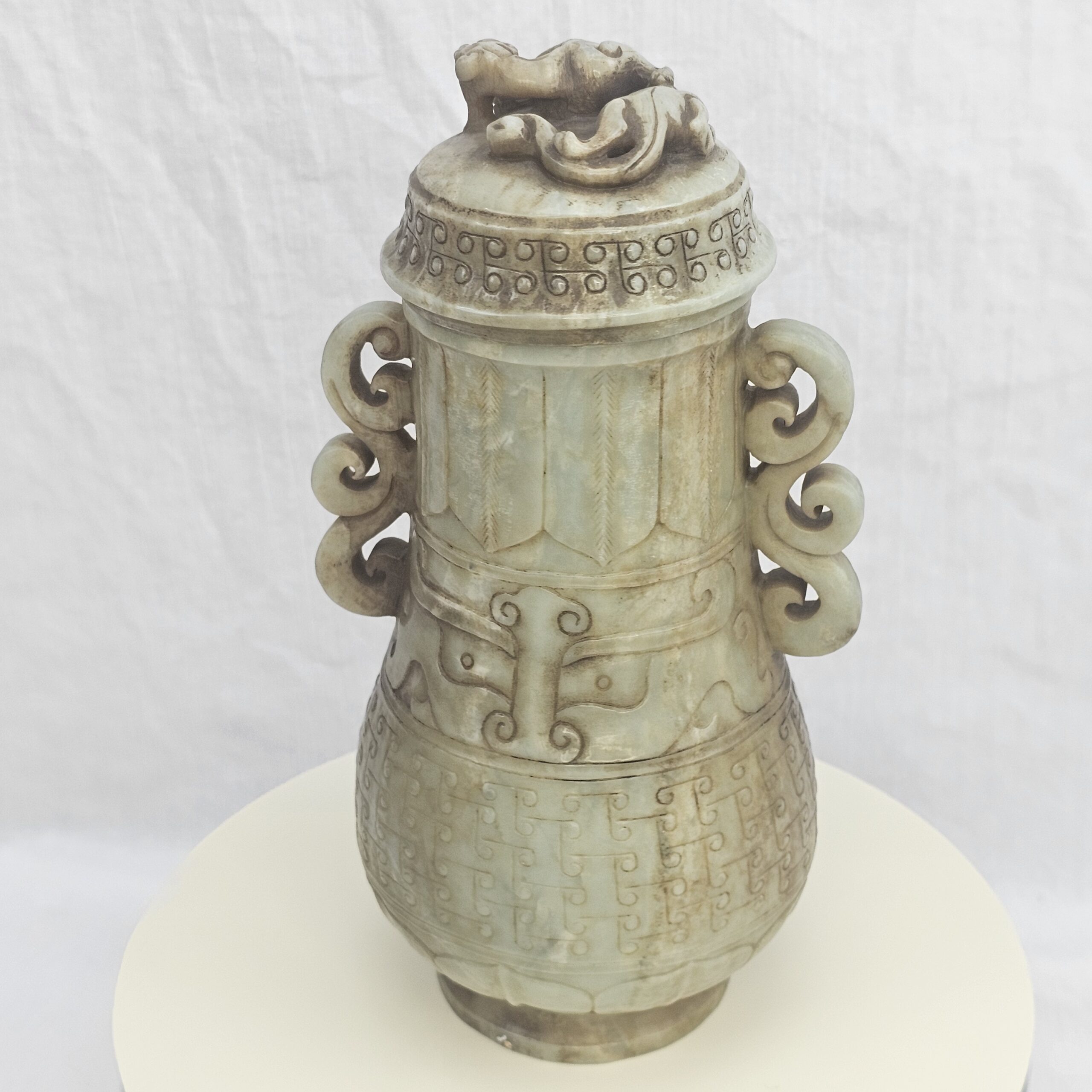
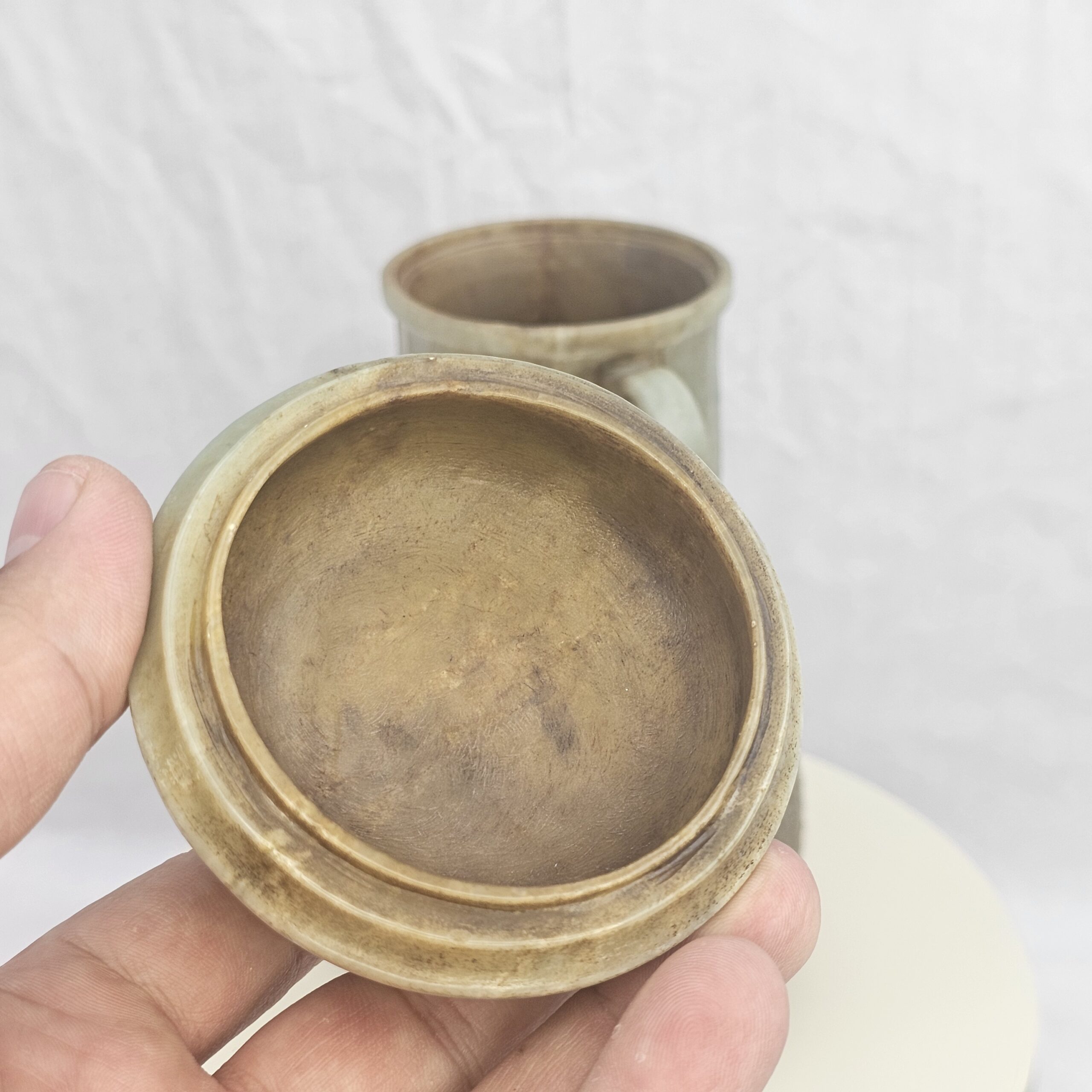
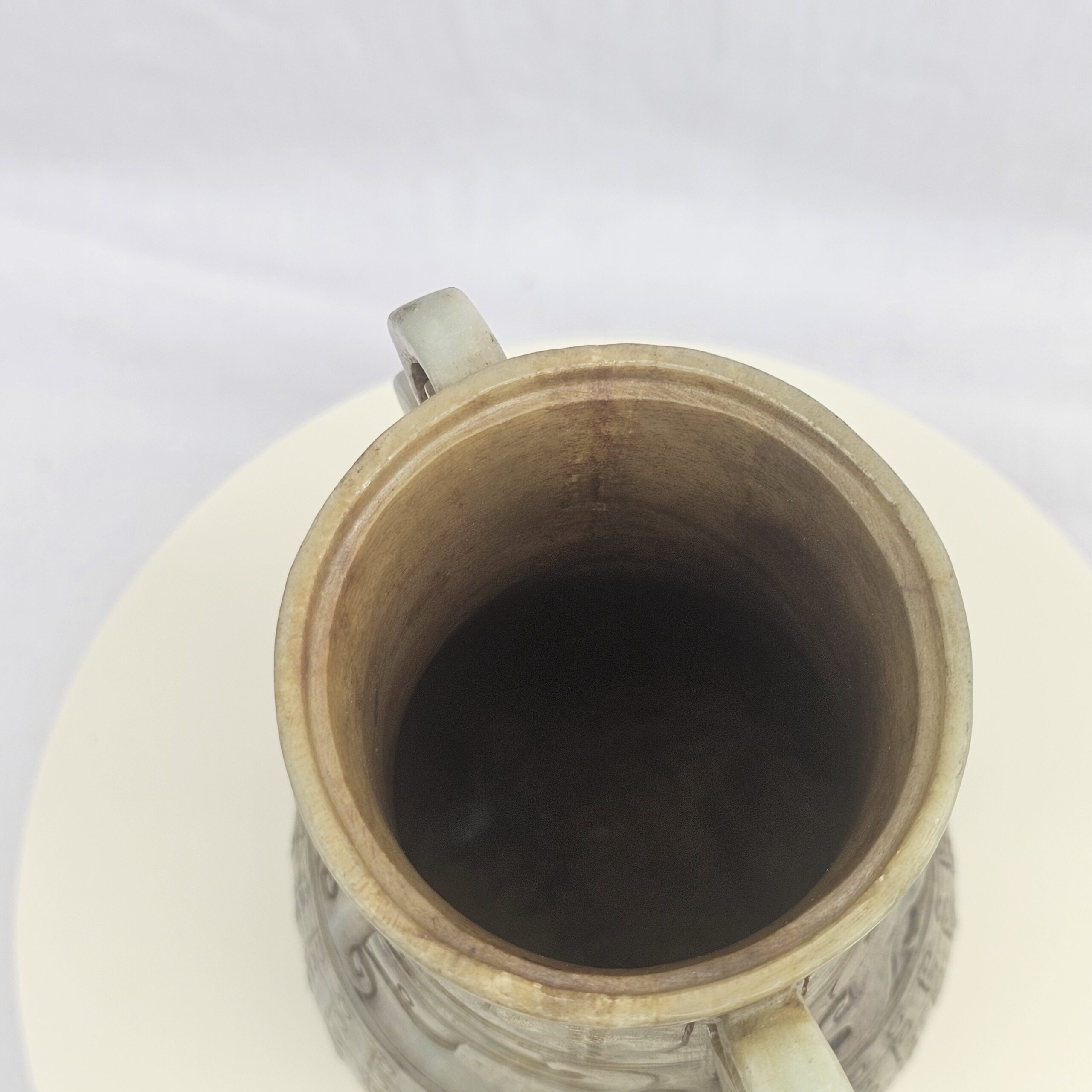
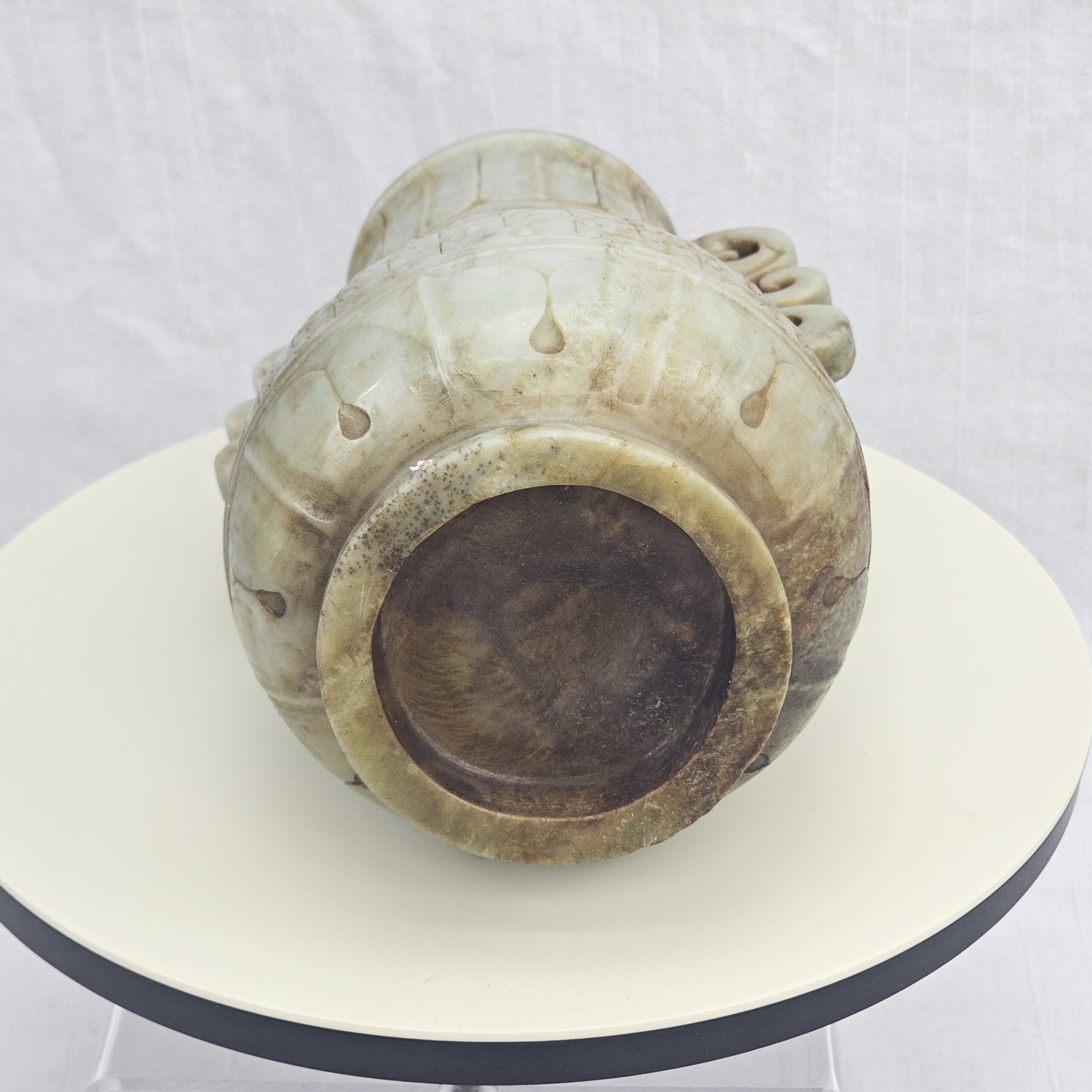
A substantial covered vase carved in nephrite jade of pale greyish green tone with warm russet and caramel suffusions throughout. The vessel takes the flattened baluster hu form of an ancient Chinese ritual bronze, rising from a short spreading foot through a swelling lower body to a tall waisted neck. The ornament is laid out in registers in the archaic manner: a dense interlaced ground of squared spirals (leiwen, the so called thunder pattern) across the lower body, a bold taotie mask flanked by confronting scroll forms at the shoulder, and a band of upright blade lappets with finely incised herringbone veining around the neck. The sides carry large openwork double scroll handles, and one face also displays a chain of three loose rings worked from the solid stone, a deliberate demonstration of the carver's skill. The domed cover repeats the scrollwork border and is surmounted by a recumbent chilong, a hornless dragon, accompanied by a smaller cub, both carved in the round with curling bifurcated tails. The vessel is well hollowed and the recessed foot is left matte.
Historical context
The vase belongs to the long Chinese tradition of carving jade in the forms and ornament of antiquity. The interlaced leiwen ground, the taotie mask and the blade shaped lappets are part of the decorative vocabulary of the bronze and jade vessels of the Eastern Zhou period, and it is this archaic ornament that the present piece evokes. As with most jade vessels of this kind, the covered hu shape, the chilong finial and the loose ring chain are later virtuoso elaborations of that ancient language rather than literal Eastern Zhou forms, so the proper description is jade carved in the Eastern Zhou archaistic taste. A closely comparable carved jade hu, with the same taotie mask over a repeating leiwen interlace, was identified on Antiques Roadshow as a Chinese hu vase copying ancient bronze design, its interlace ground looking back to the leiwen pattern of ancient Chinese bronze vessels, and dated by the appraiser to around 1900, which gives a fair sense of when refined carvings in this idiom were typically produced.
Condition report
The vase is complete and structurally sound, with the cover, the chilong finial and cub, the openwork scroll handles and the carved loose ring chain all present and intact.