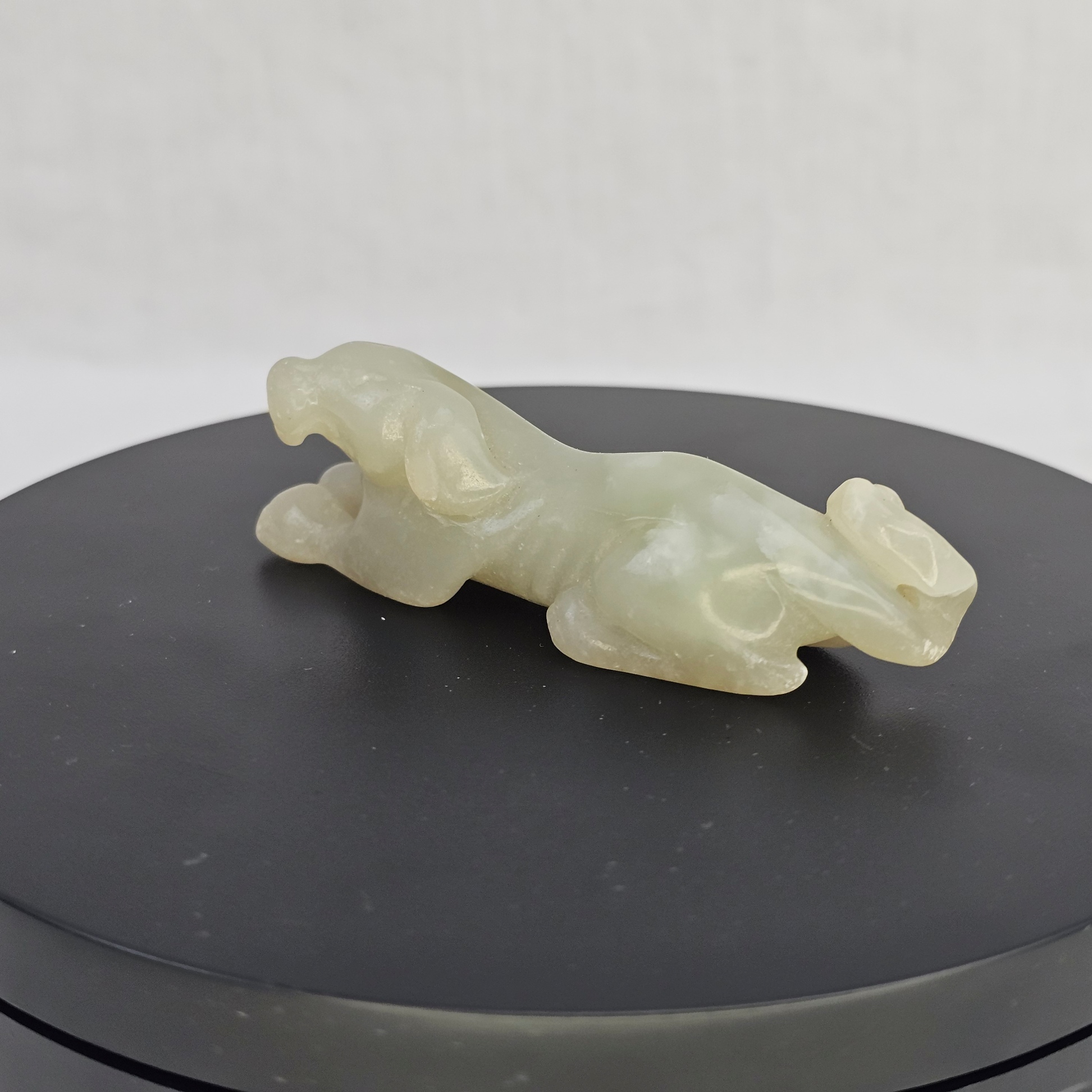
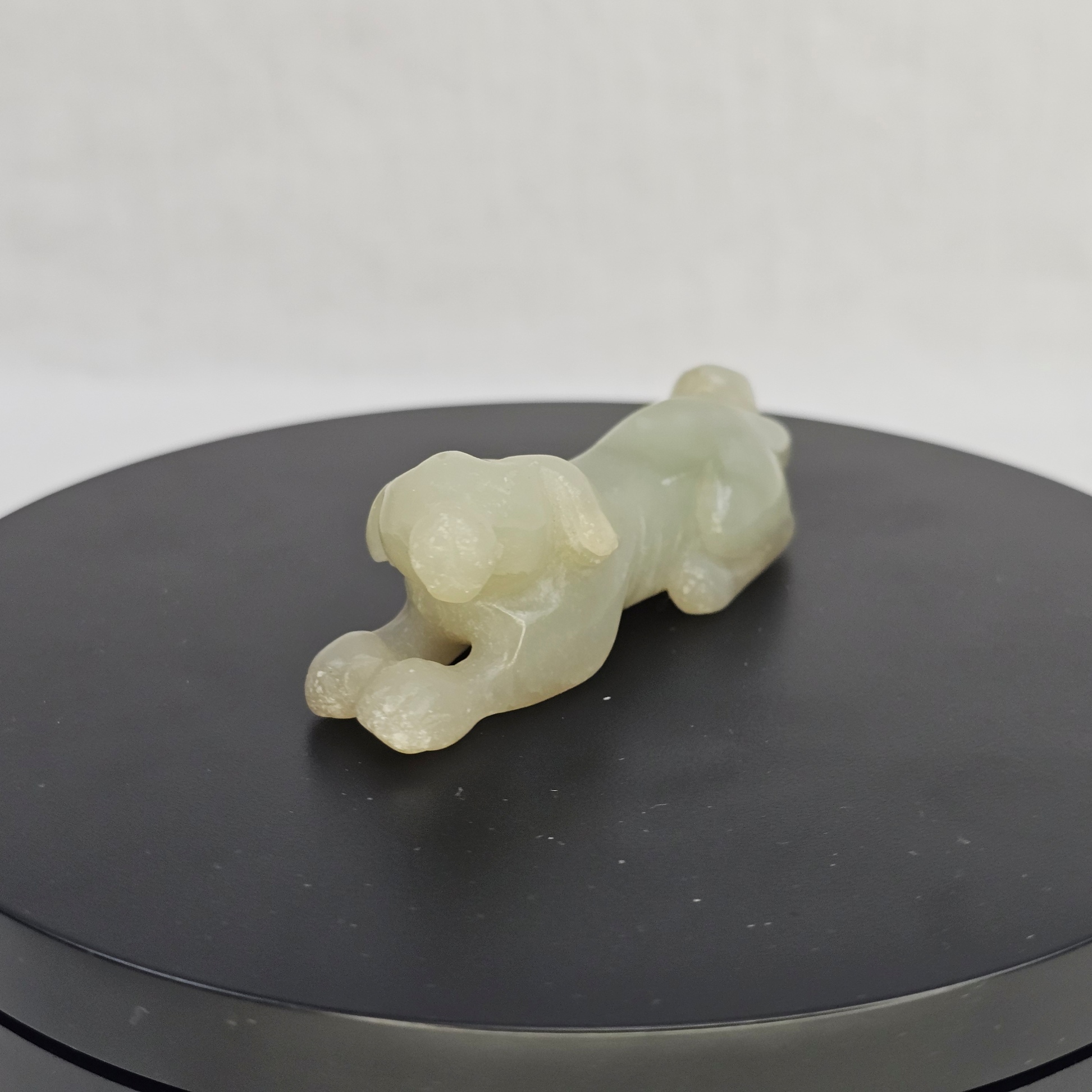
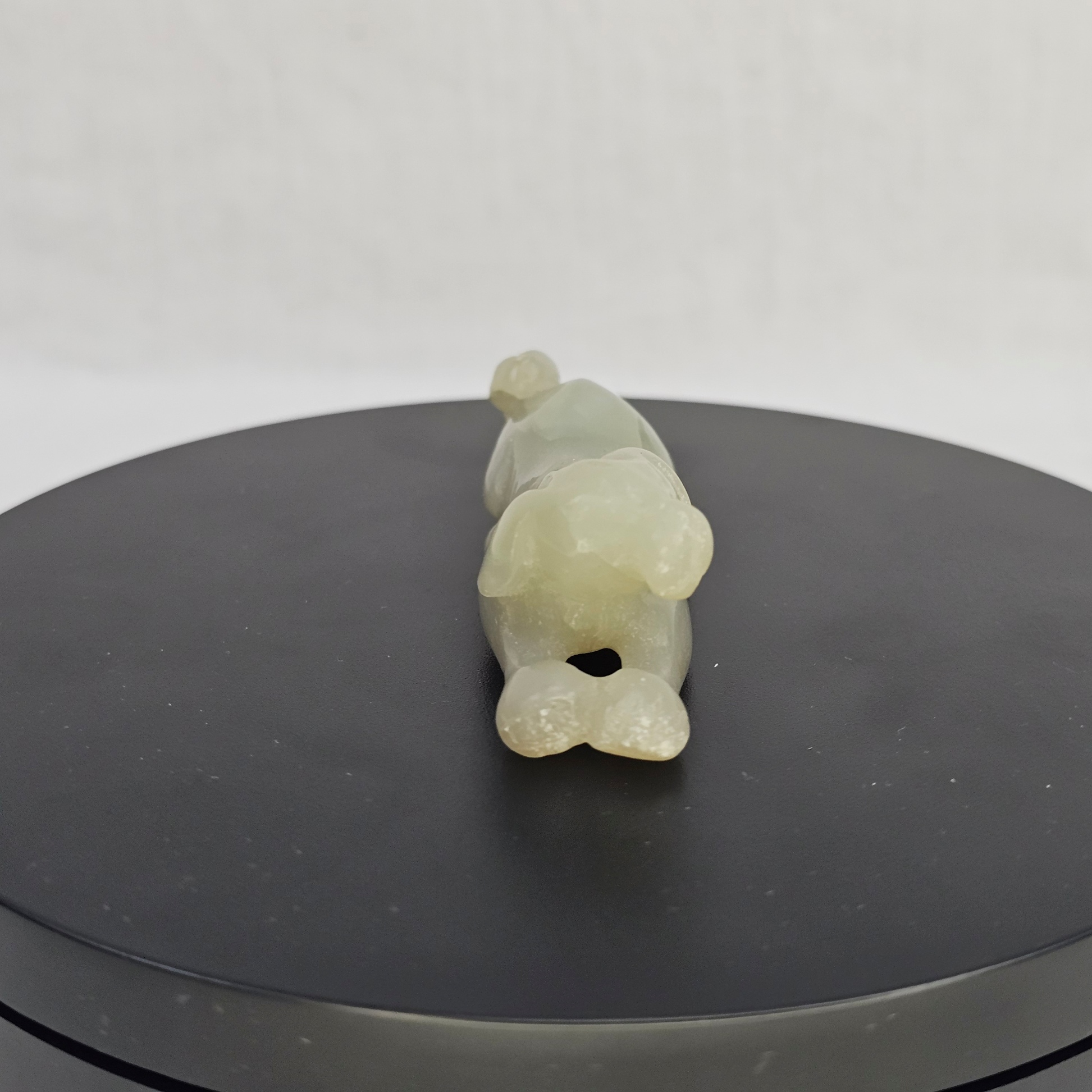
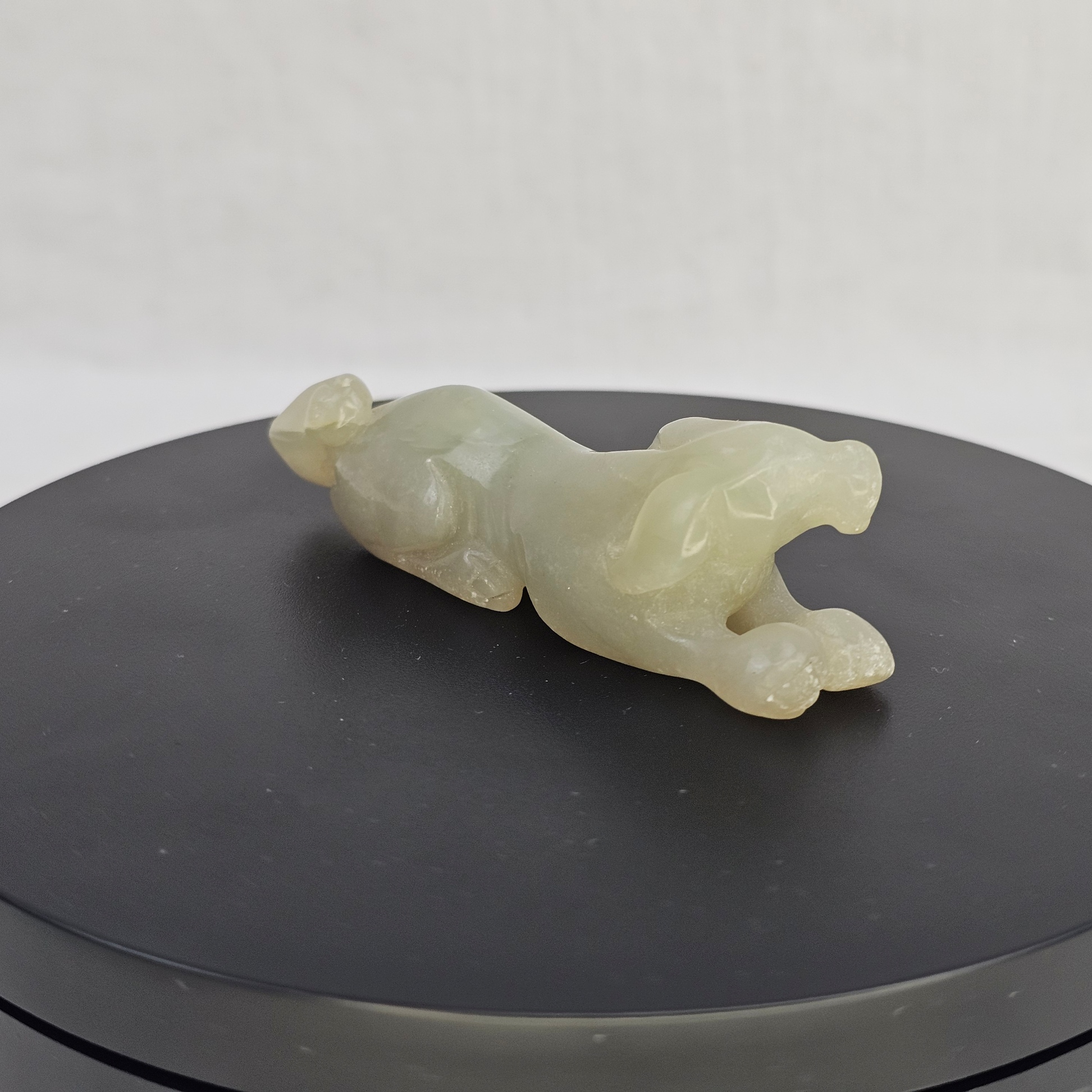
~ Chinese Pale Celadon Nephrite Jade Carving of a Recumbent Hound ~
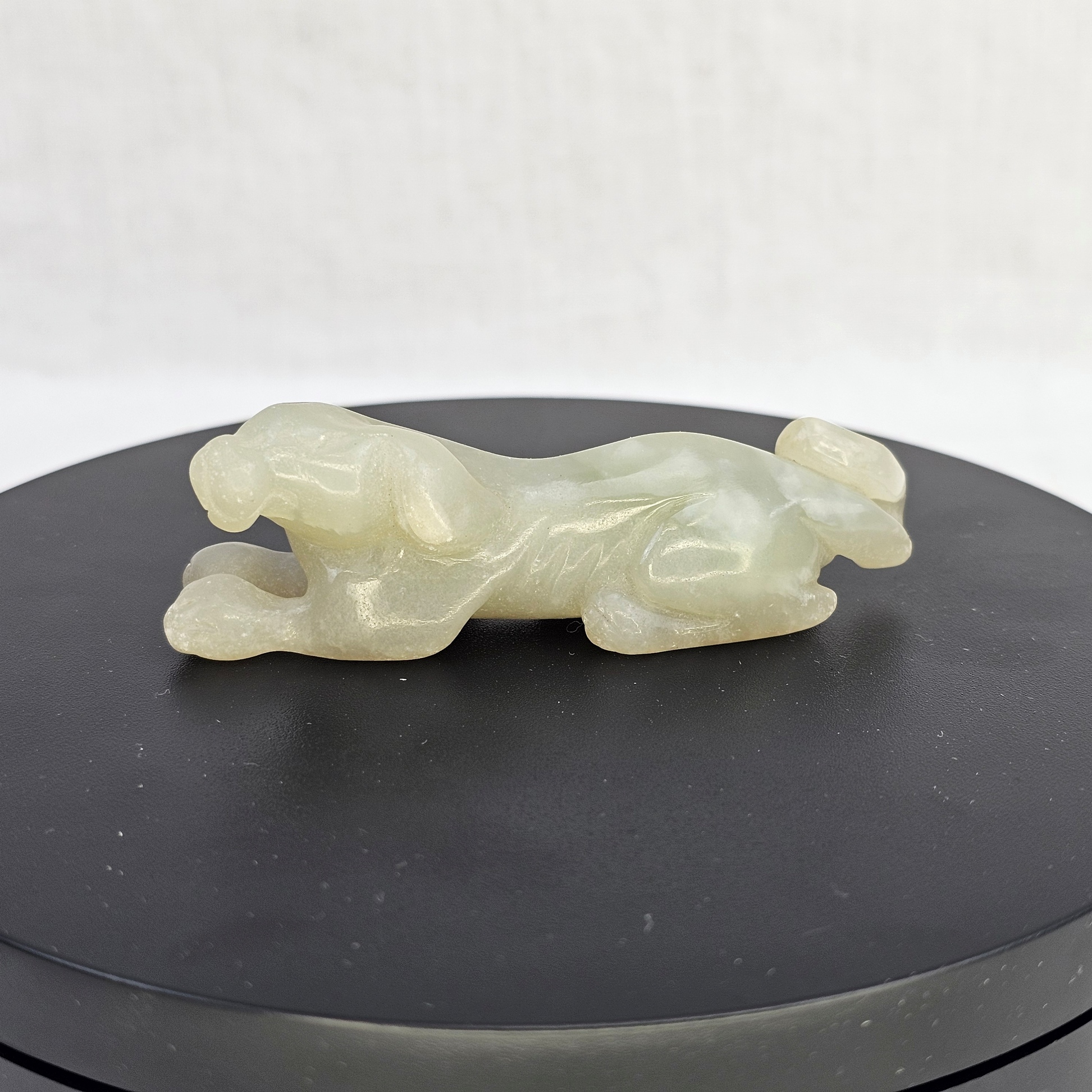
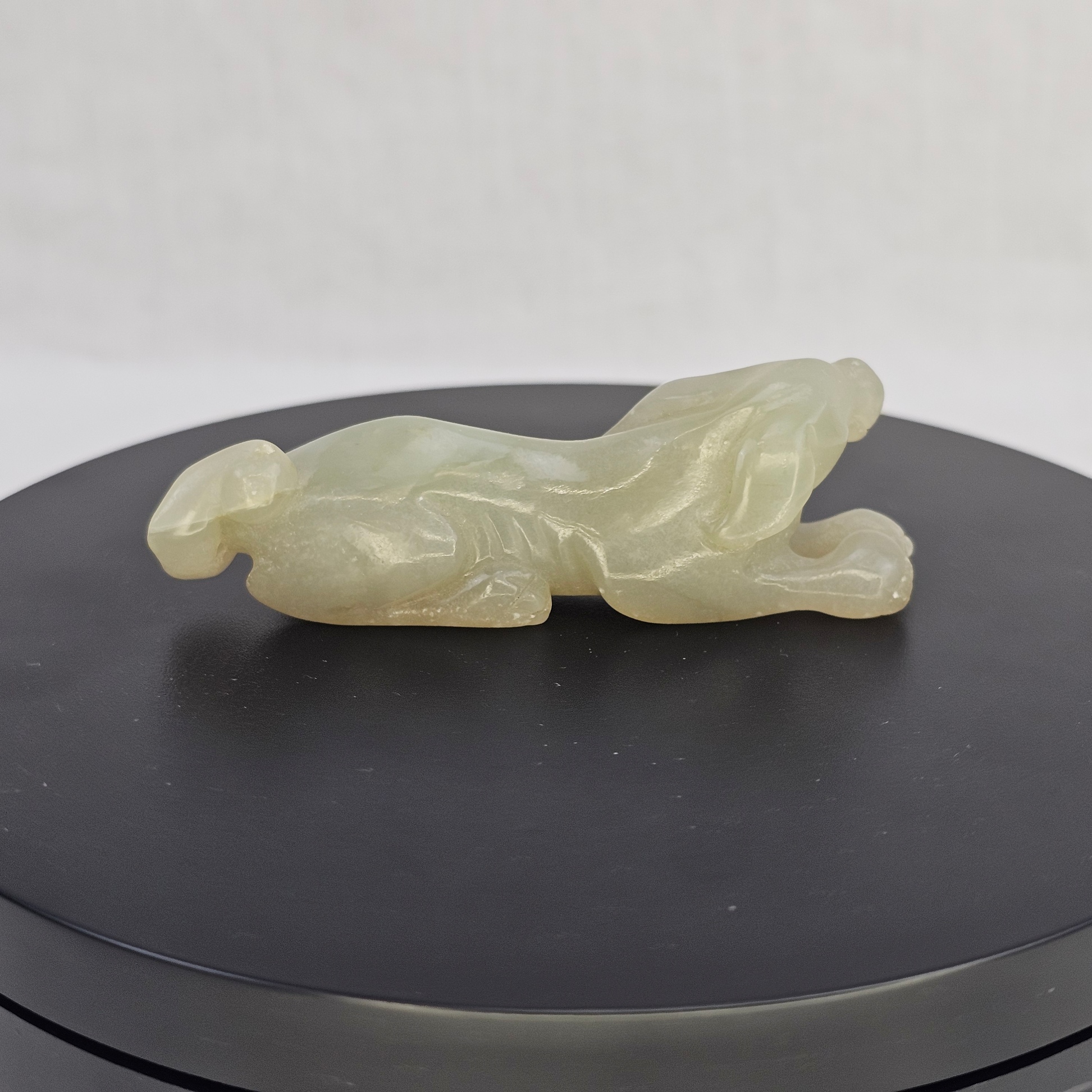
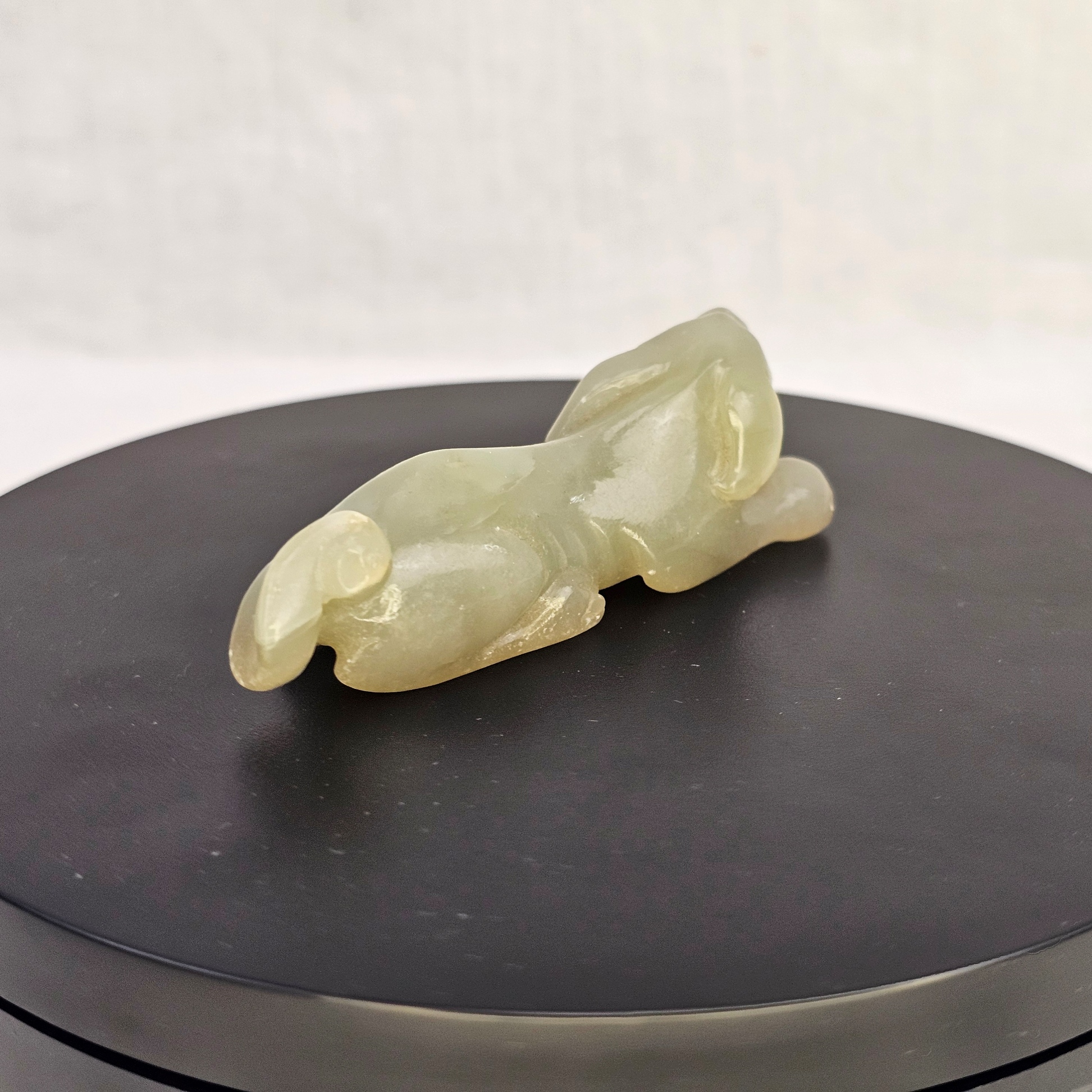
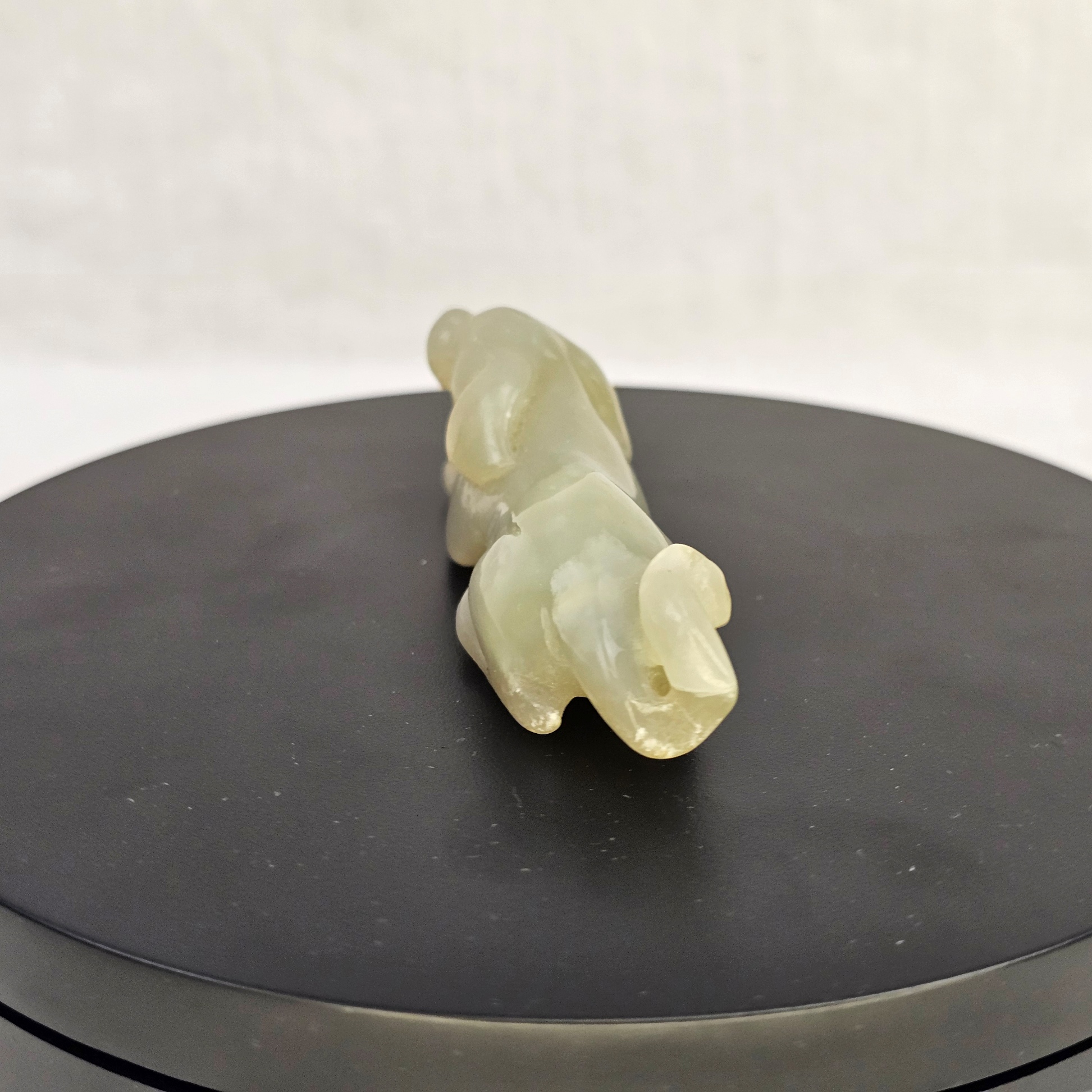
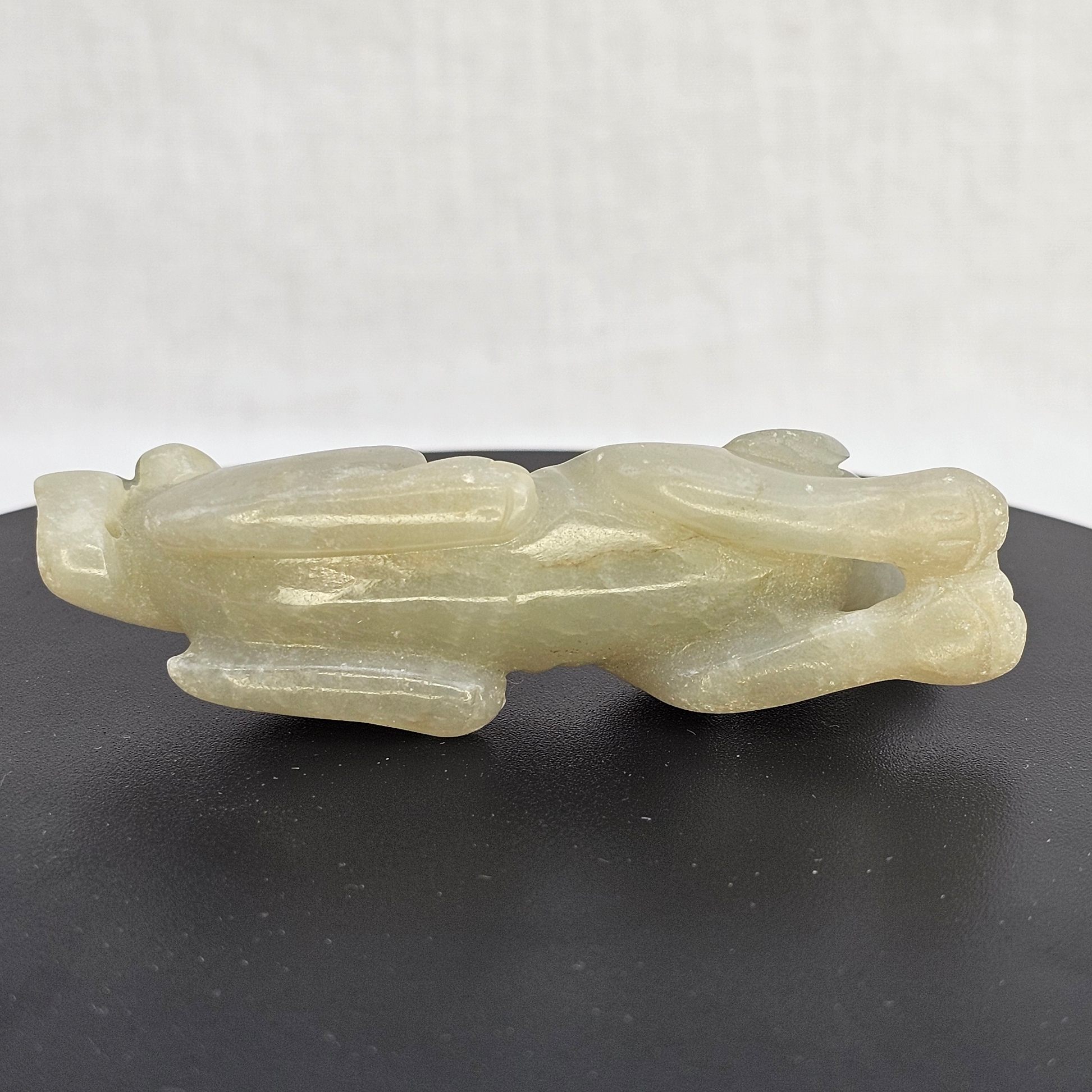
A pale celadon nephrite jade carving of a recumbent hound-type dog, shown stretched out with its hindquarters raised slightly and its long ears falling forward either side of its head, which rests low between its outstretched front paws. The front paws are extended forward, with a pierced aperture carved between them (visible from the underside), while the tail curls back over and to one side of the rump. The body is rendered in smooth, simplified, slightly elongated form with minimal incised detail beyond the ears, paws, and a stylised tail, in a manner typical of small Chinese jade animal carvings made as desk ornaments or toggles. The stone is an even pale celadon (off-white to pale grey-green) with a soft, slightly waxy polish and a scattering of natural inclusions and minor surface marks.
Historical Context
Small pale celadon jade carvings of recumbent dogs or hounds, often shown with extended front paws and a pierced aperture beneath the chin or between the paws for stringing or mounting, form a well-established type within later Chinese jade carving, with groups of such animal carvings — dogs, cats, horses, mythical beasts — frequently catalogued together as "archaistic jade animal carvings" of the late Qing dynasty and the following Republic period. Recorded examples include a white jade "recumbent hound" with front paws outstretched beneath the head and the tail curved over the body, comparable in pose to this piece. The simplified, naturalistic modelling and minimal surface decoration seen here are typical of this broad late Qing/Republic period production, made in quantity for both the domestic market and for export, rather than of an earlier or imperial date.