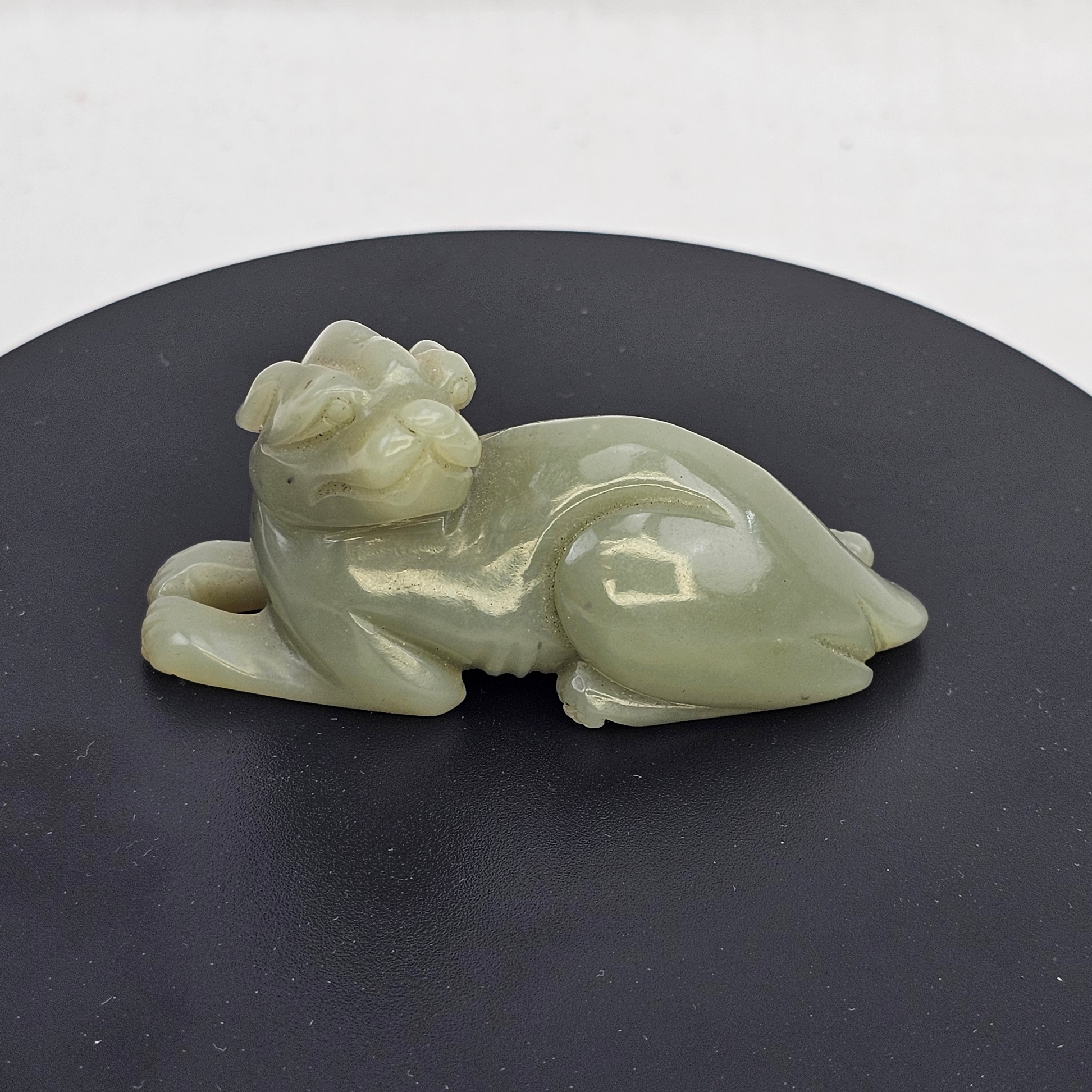
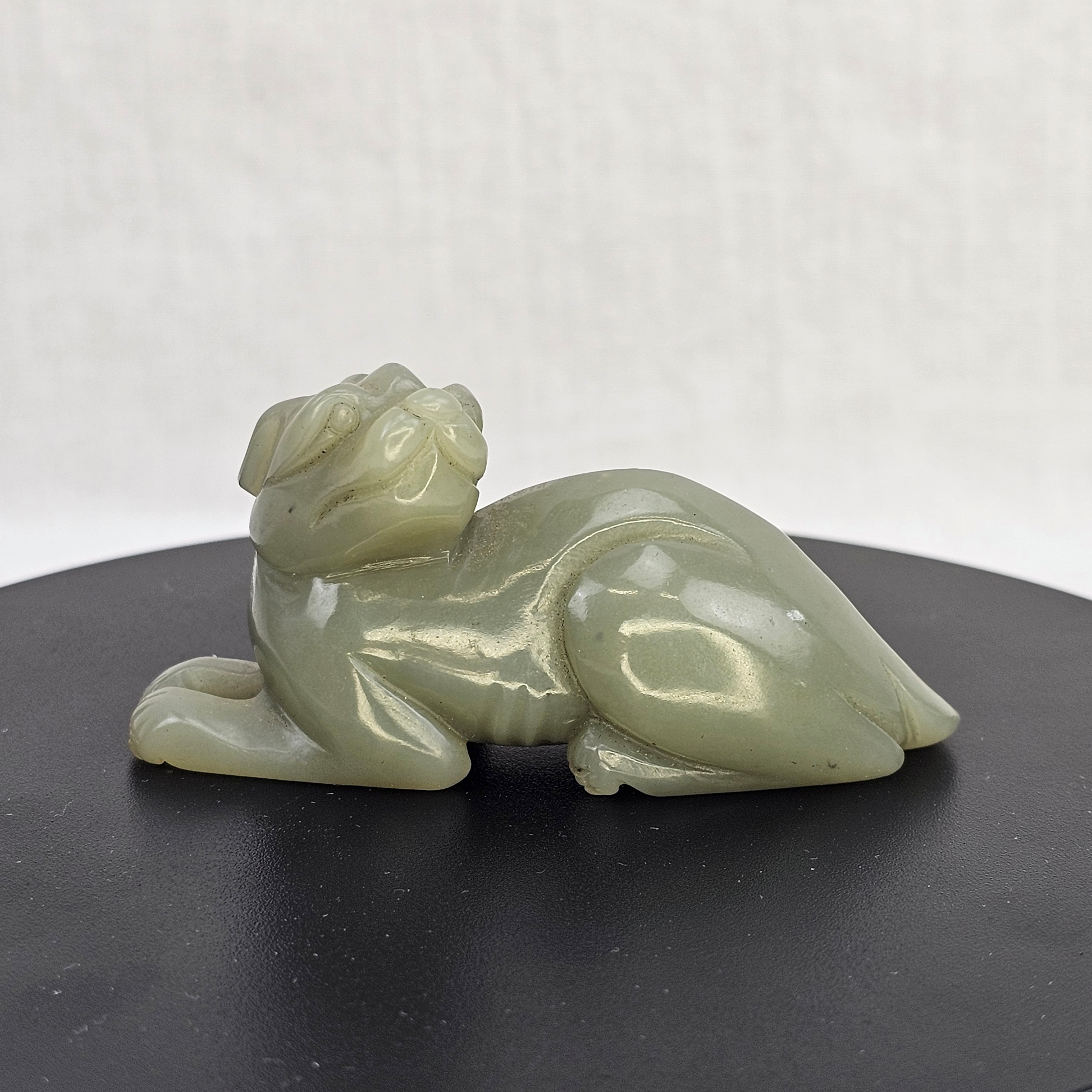
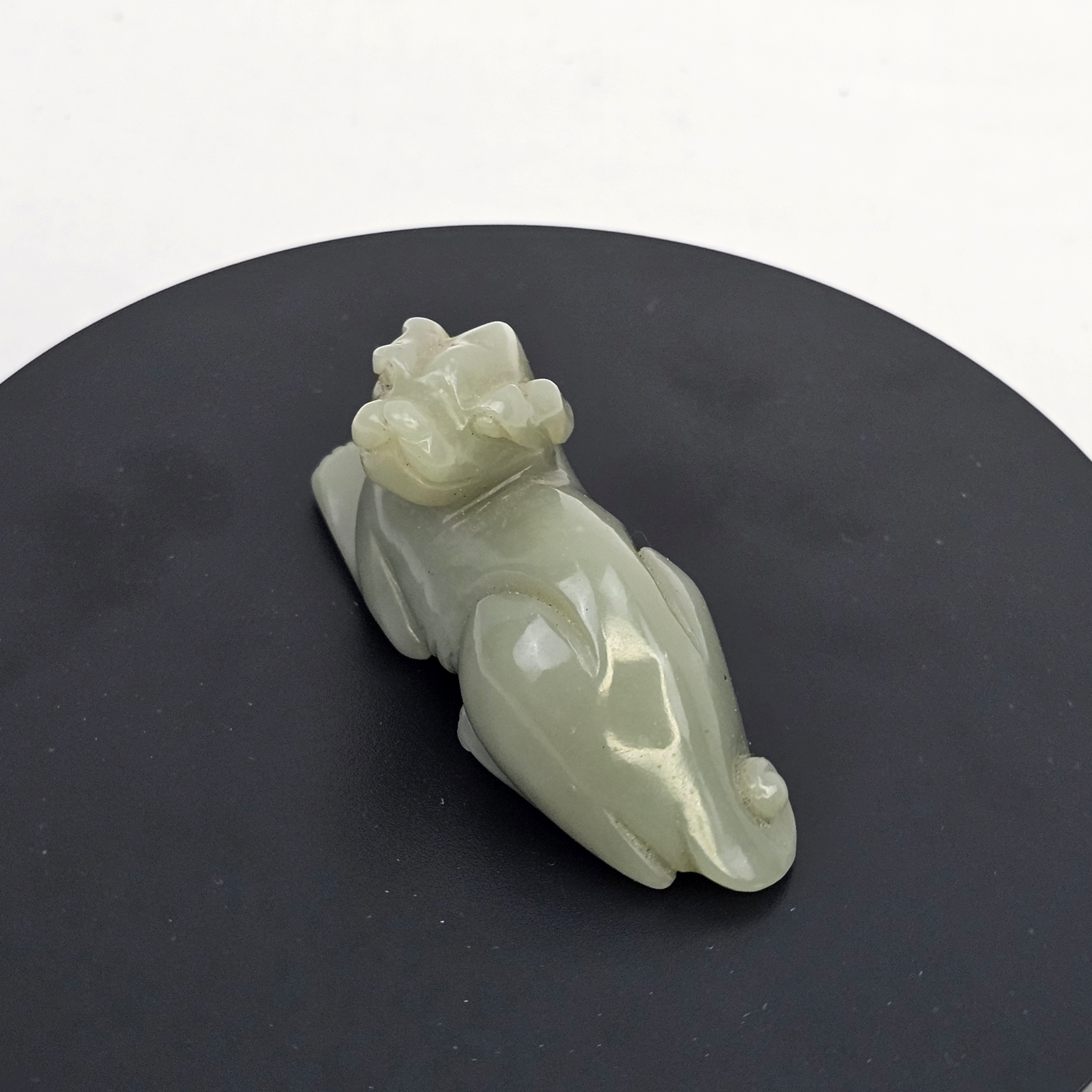
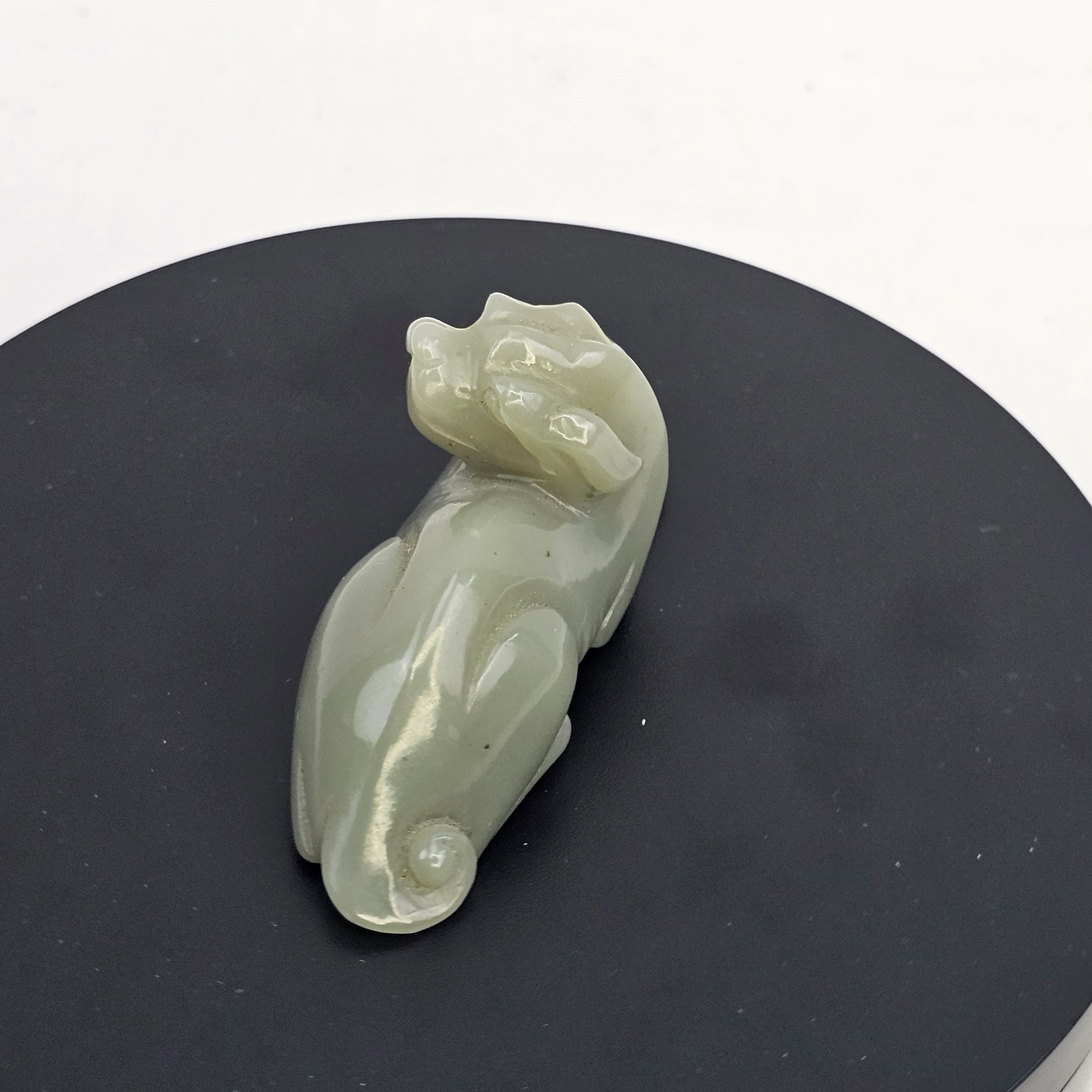
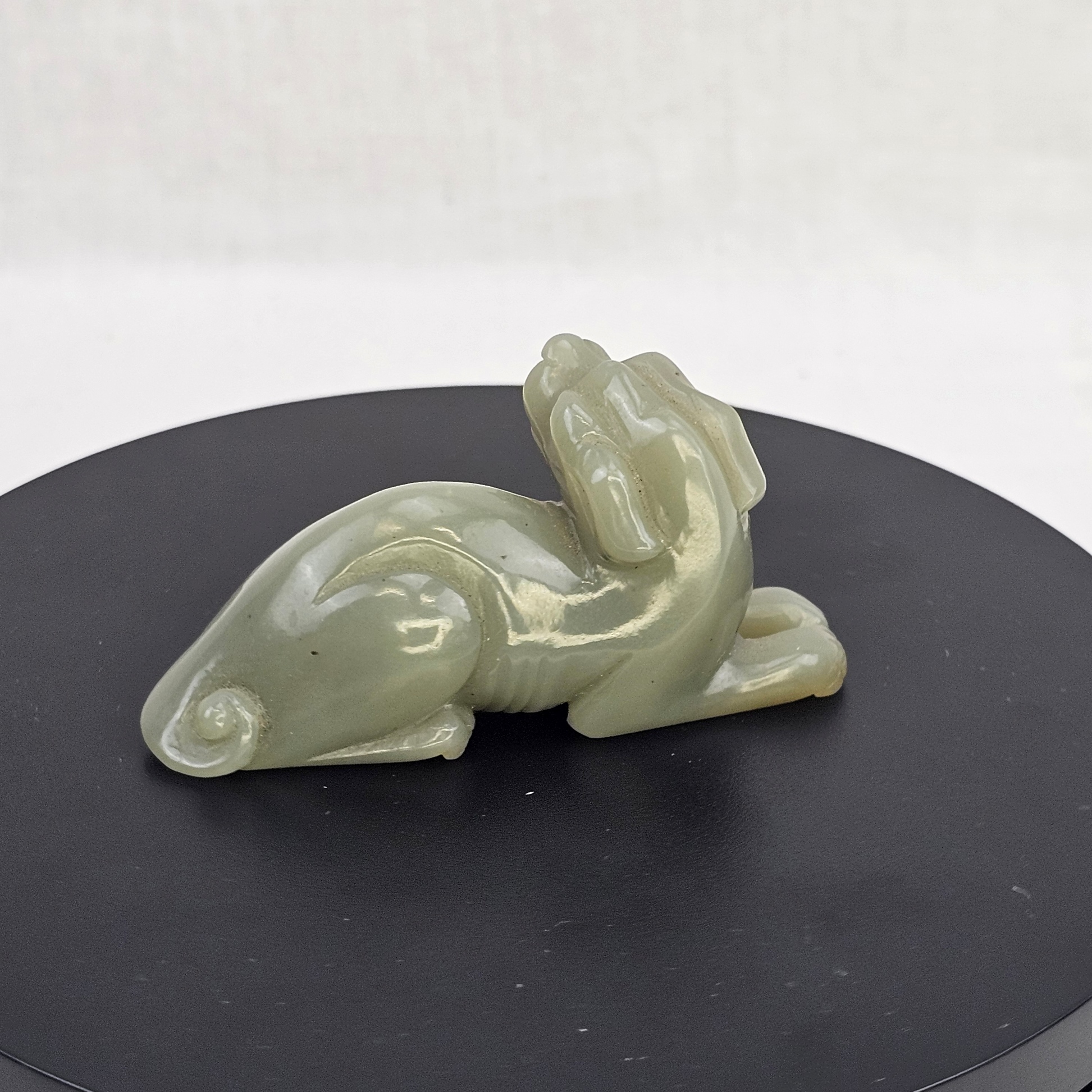
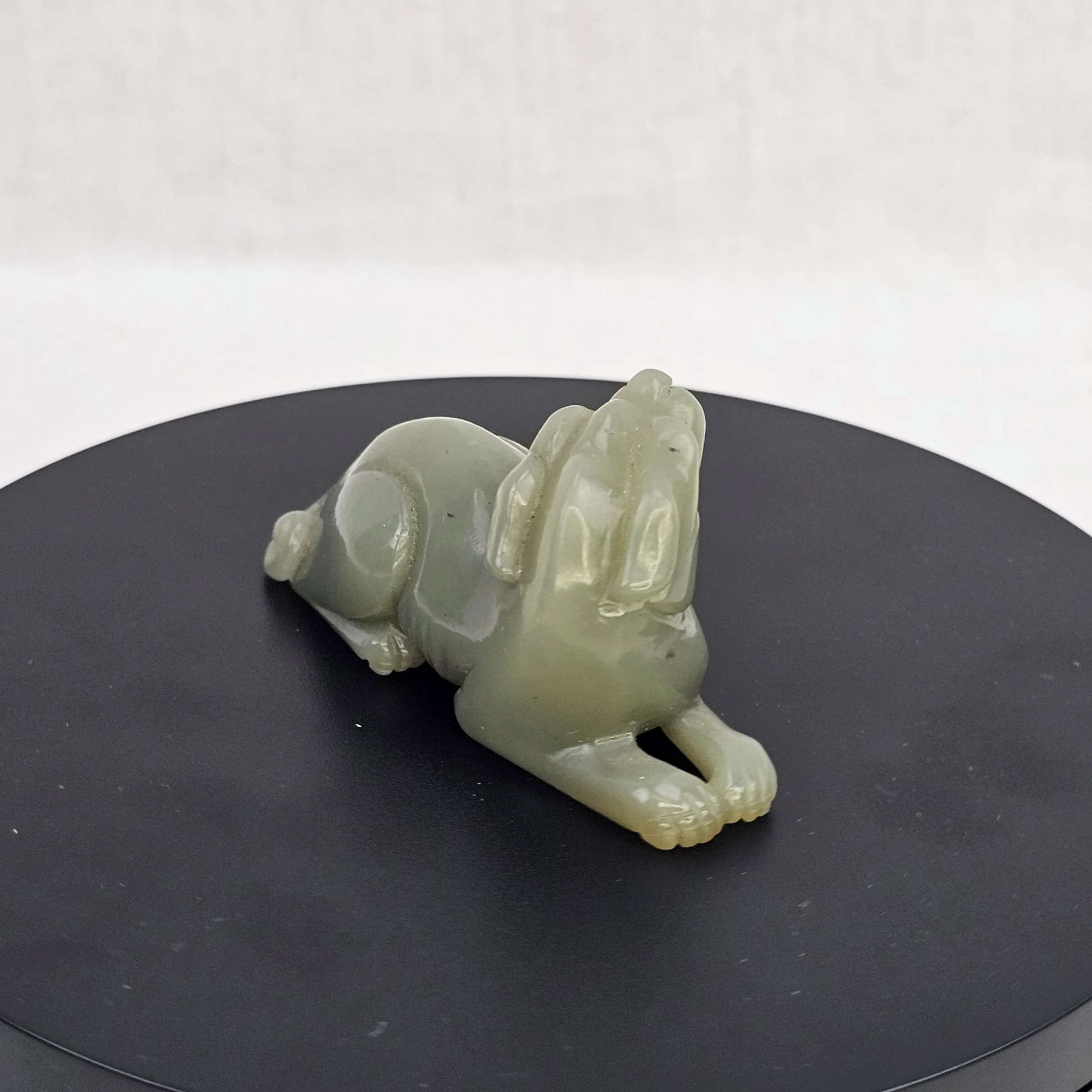
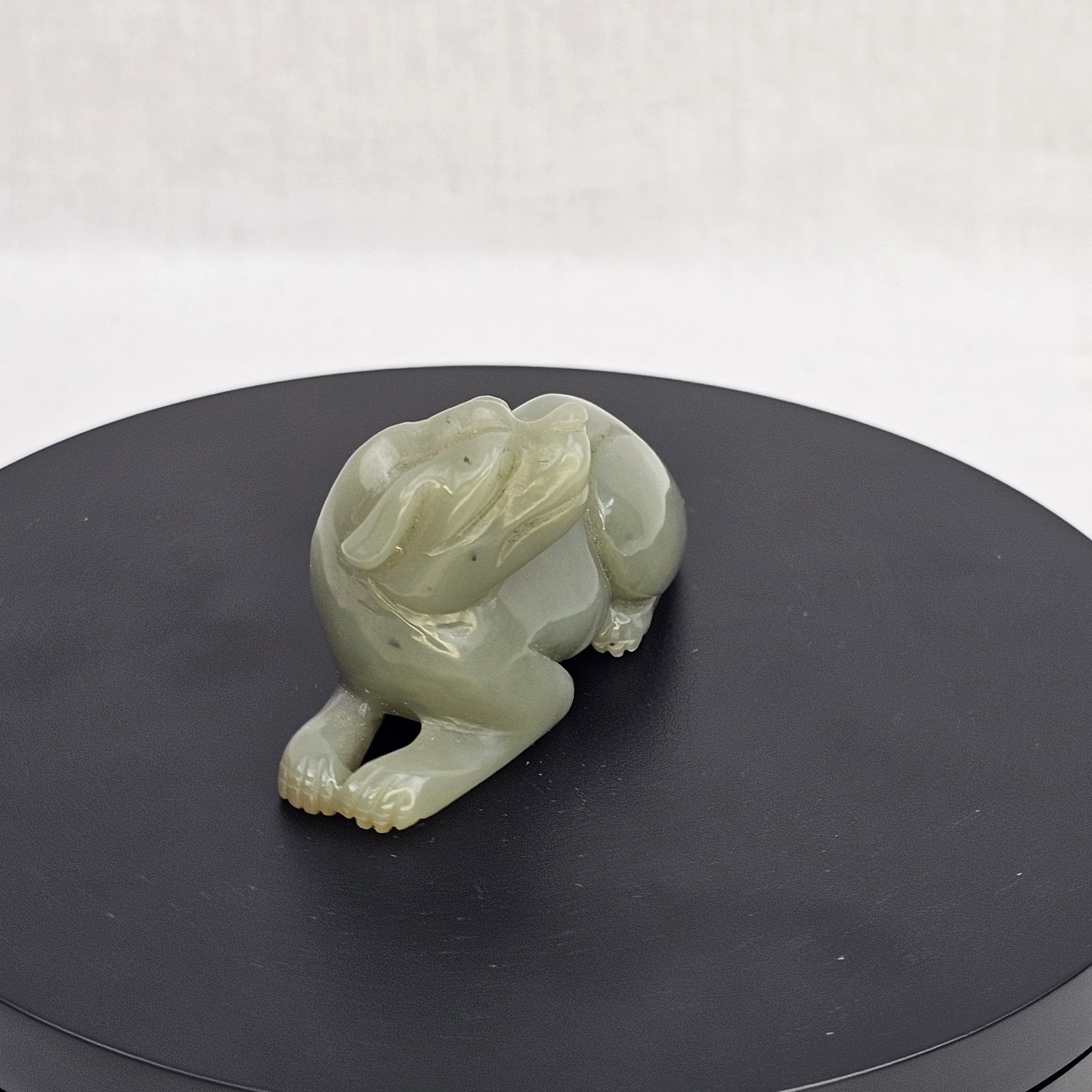
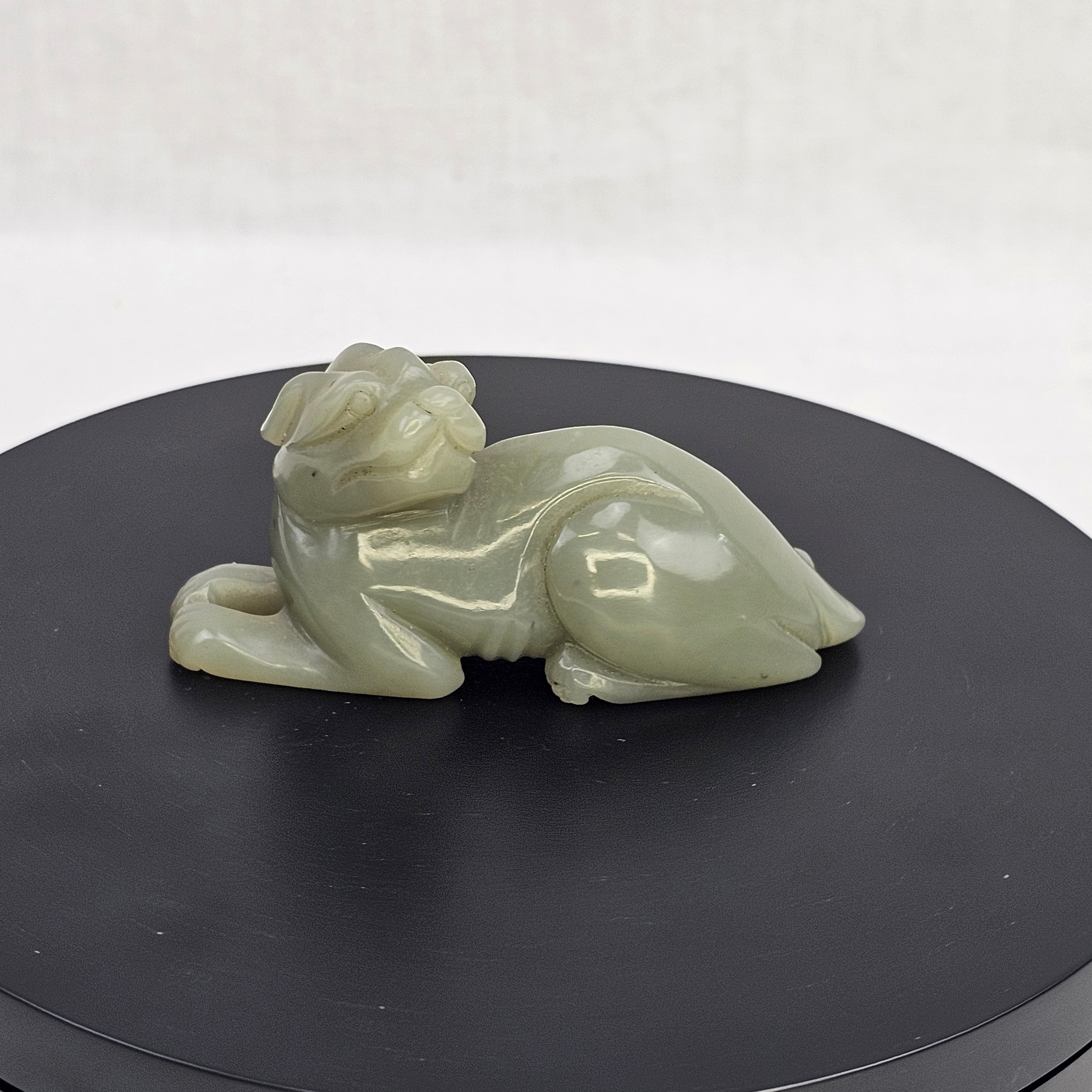
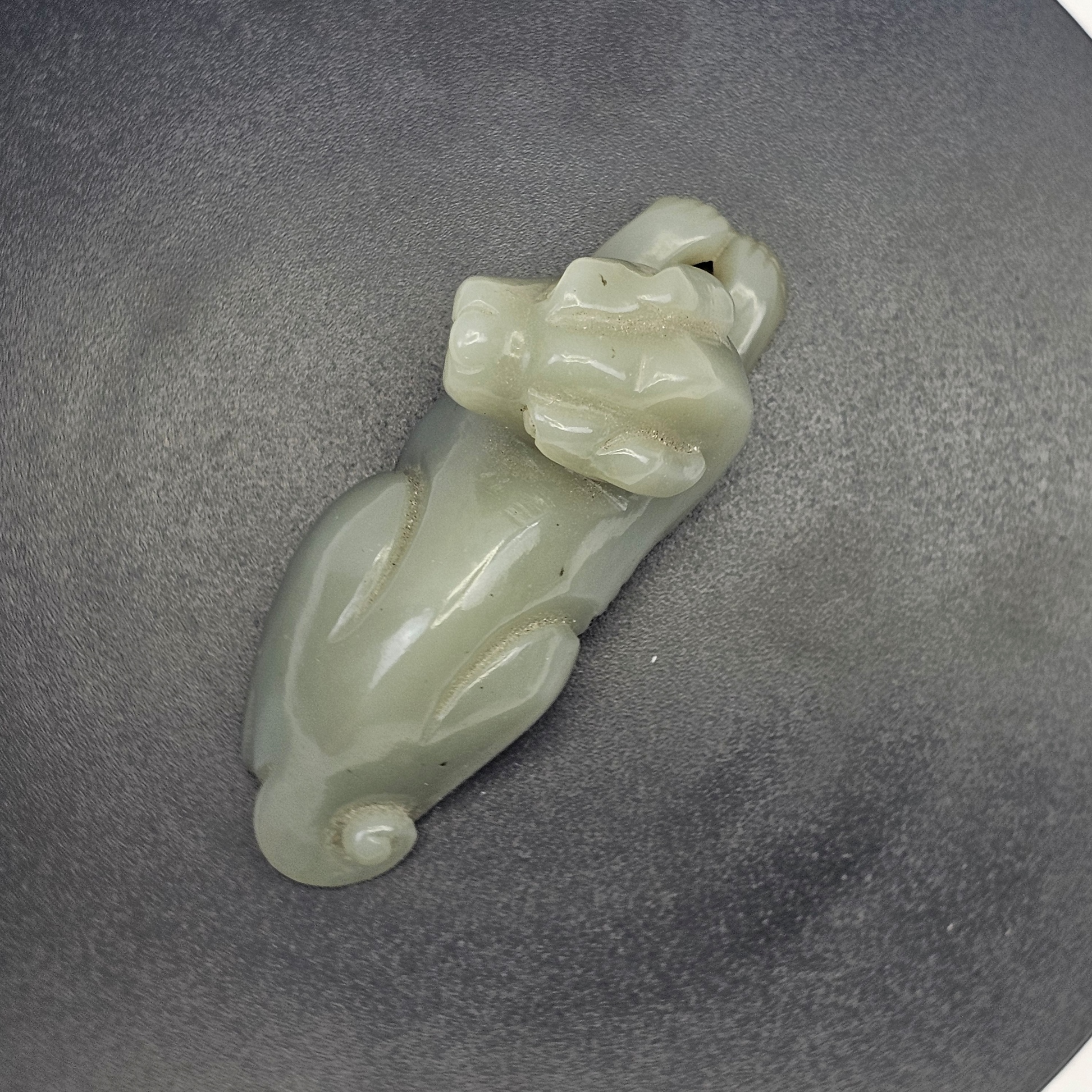
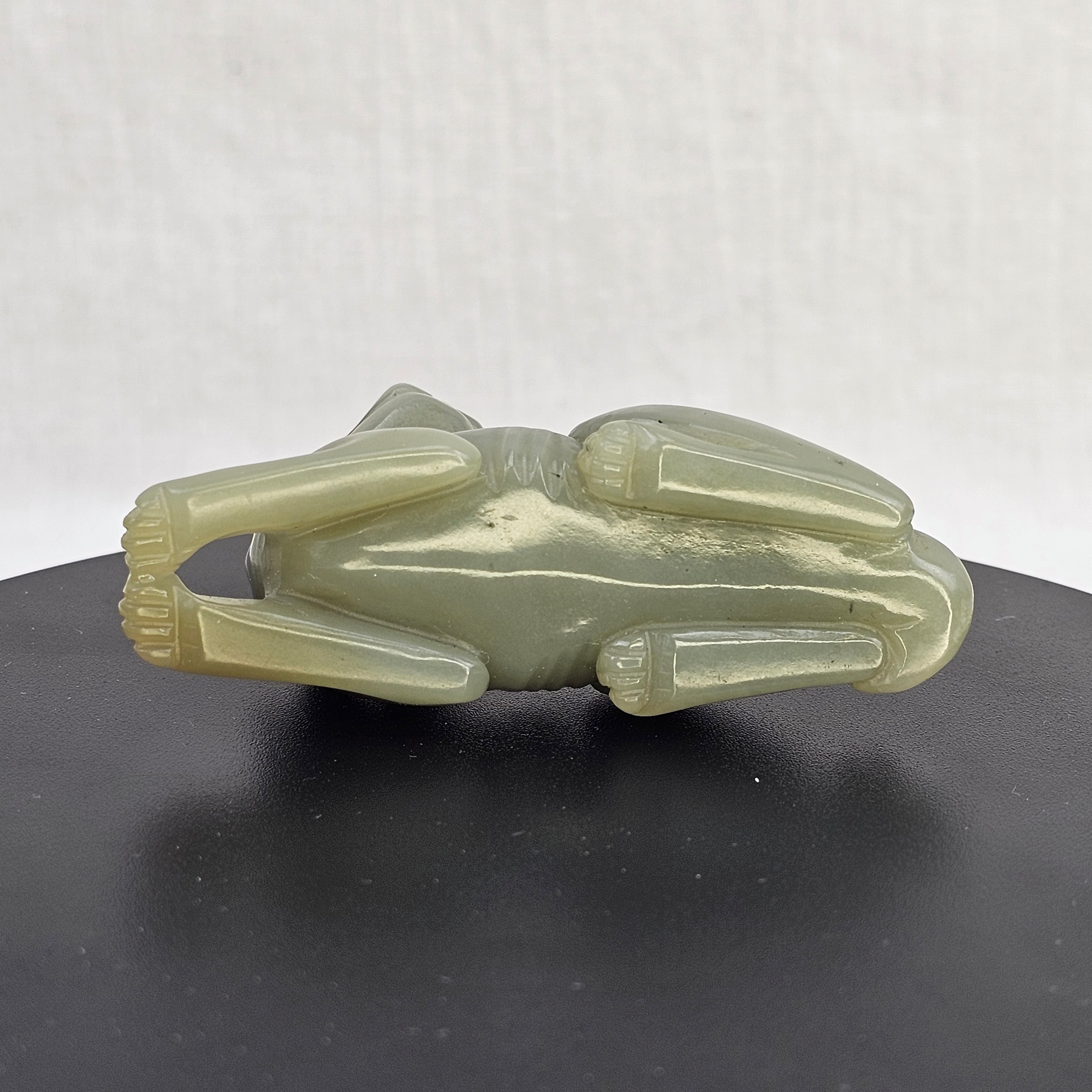
~ Chinese Pale Celadon Nephrite Jade Carving of a Recumbent Mythical Dog (Foo Dog) ~
A solidly carved pale celadon nephrite jade figure of a recumbent mythical dog or "foo dog" (a guardian lion-dog/bixie type beast), shown lying with its body curled to one side, head turned back over its shoulder towards a large bushy, scrolled tail that sweeps up and over its haunches in a strong curling arc terminating in a small spiral. The beast's head is carved with bulging round eyes, a curled mane or ruff falling in waves around the face, pricked ears, and an open, slightly snarling muzzle. The forepaws are drawn together beneath the chin with toes individually defined, and there is a small pierced aperture beneath the muzzle/paws (visible in the underside view) typical of this type of carving, possibly originally intended to take a cord or for use as a brush-rest/seal-rest. The stone is an even pale celadon (greyish-green) nephrite with a smooth, slightly soapy polish and small natural inclusions, with a patch of darker mineral staining/discolouration along the spine and flank.
Historical Context
Recumbent carvings of mythical "dogs" — variously identified as bixie, foo dogs, or generic guardian lion-dogs — form a long-running category of Chinese jade carving, with examples known from the Ming dynasty through the 19th and into the 20th century. Pale celadon nephrite examples of a recumbent beast with its head turned back over its body and a large curling tail are a recognised type at UK and international auction, generally produced as desk ornaments, paperweights, or scholar's objects, often associated with wishes for protection and good fortune. The combination of a soapy pale celadon stone with naturally occurring darker mineral inclusions, as seen along the back of this piece, is commonly seen in both genuinely early pieces and in good-quality later (19th/20th century) carvings continuing the same long-established designs, making precise dating from photographs alone difficult; the slightly worn, soft modelling of the mane and somewhat simplified rendering of the face are most consistent with a 19th/20th century workshop piece in the Qing taste rather than an earlier carving.