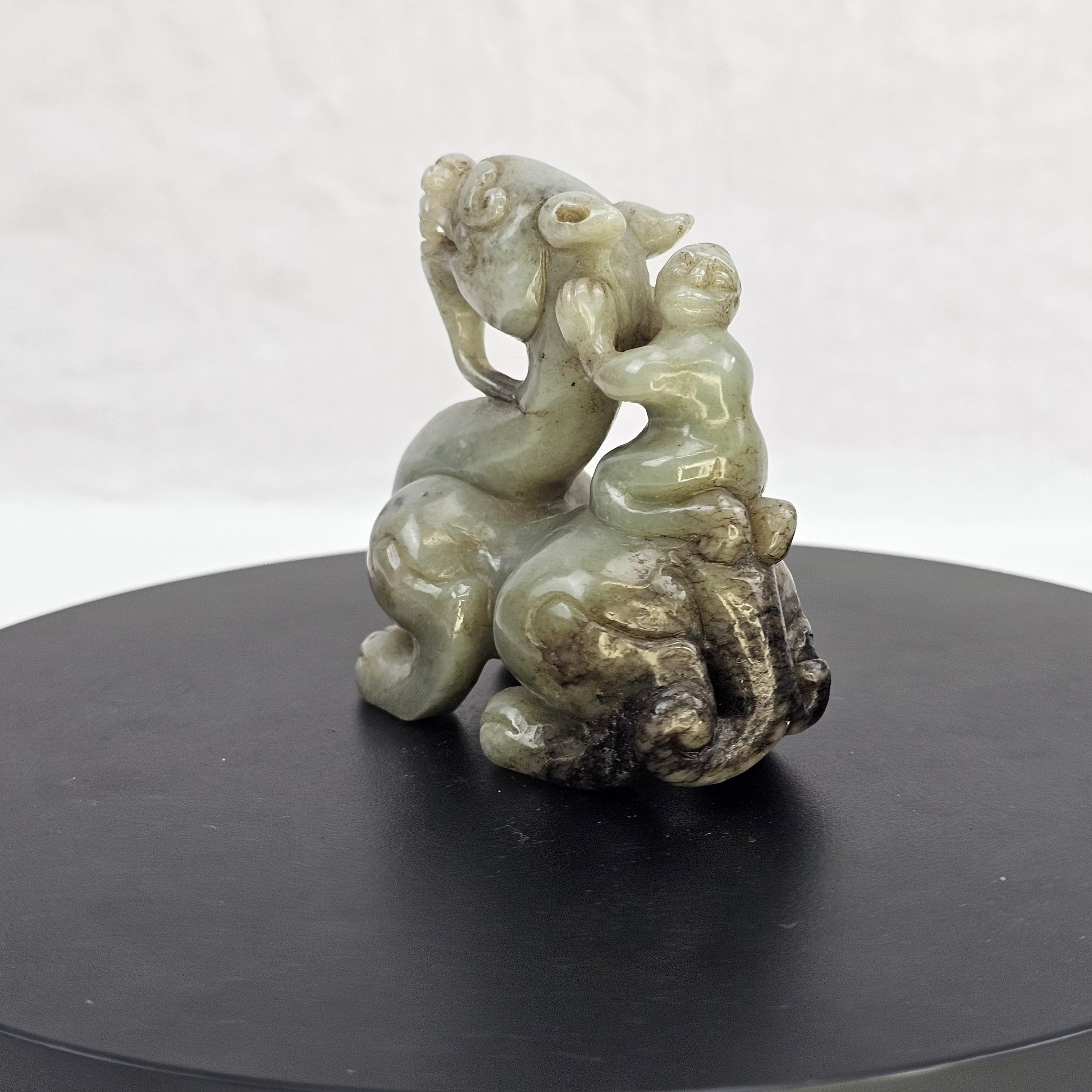
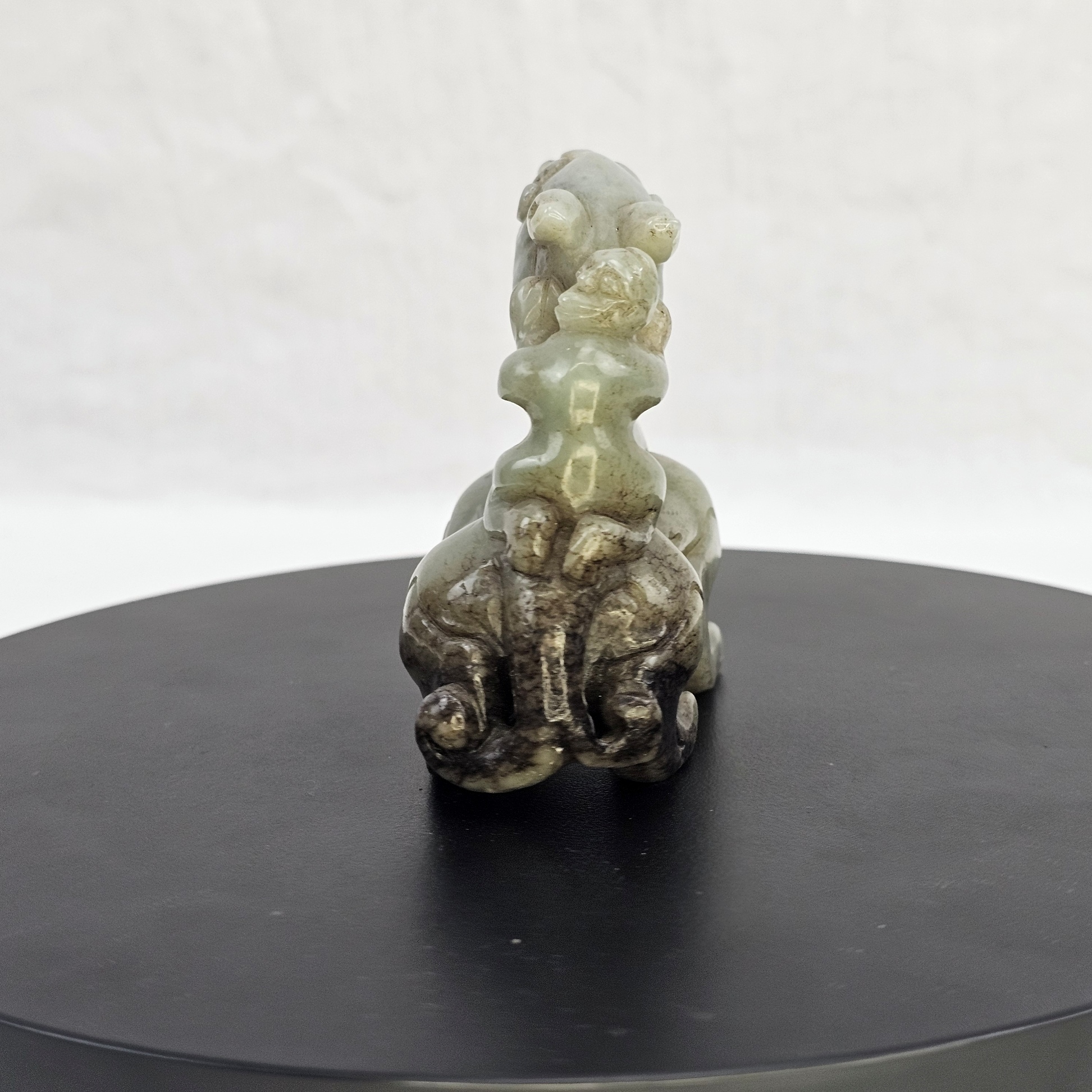
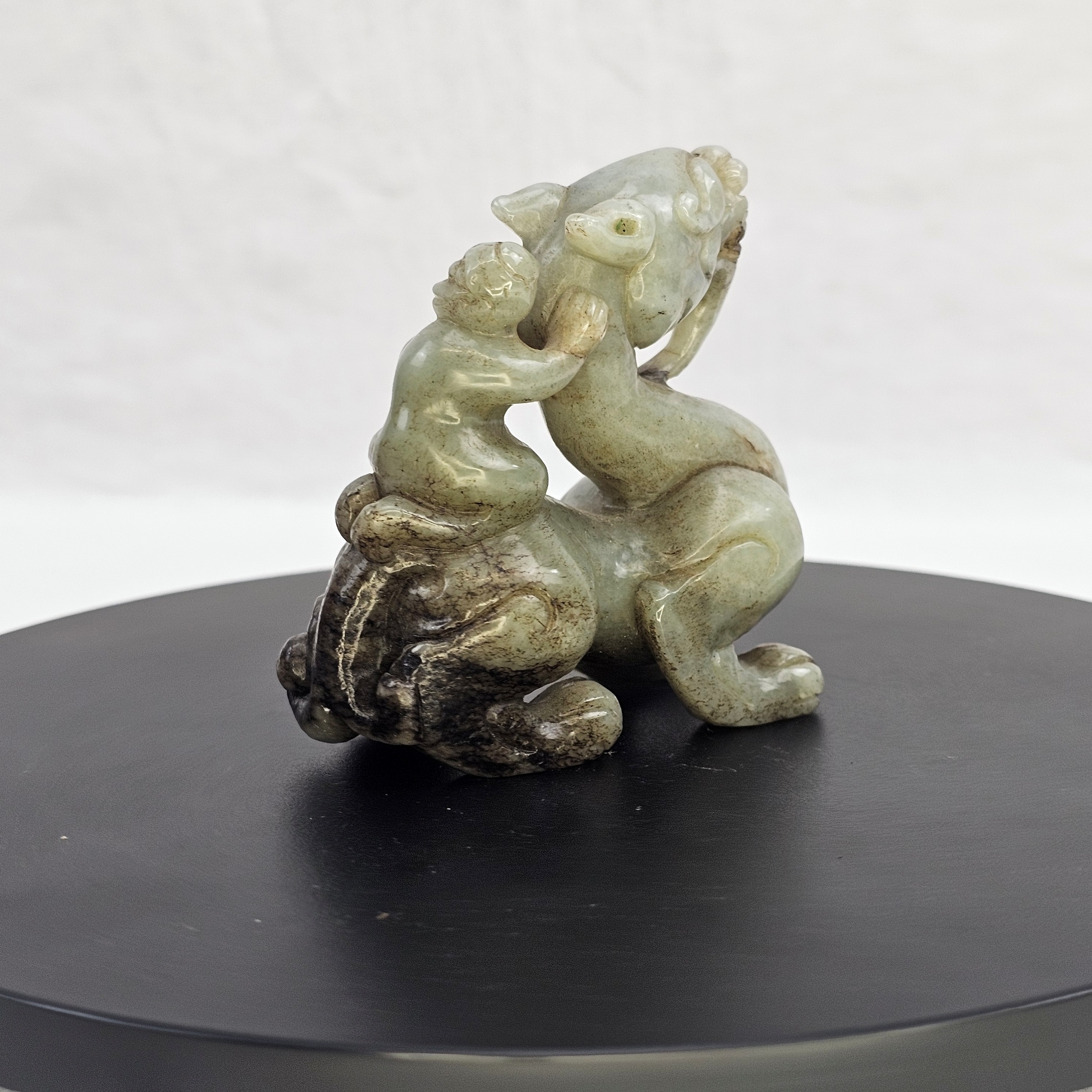
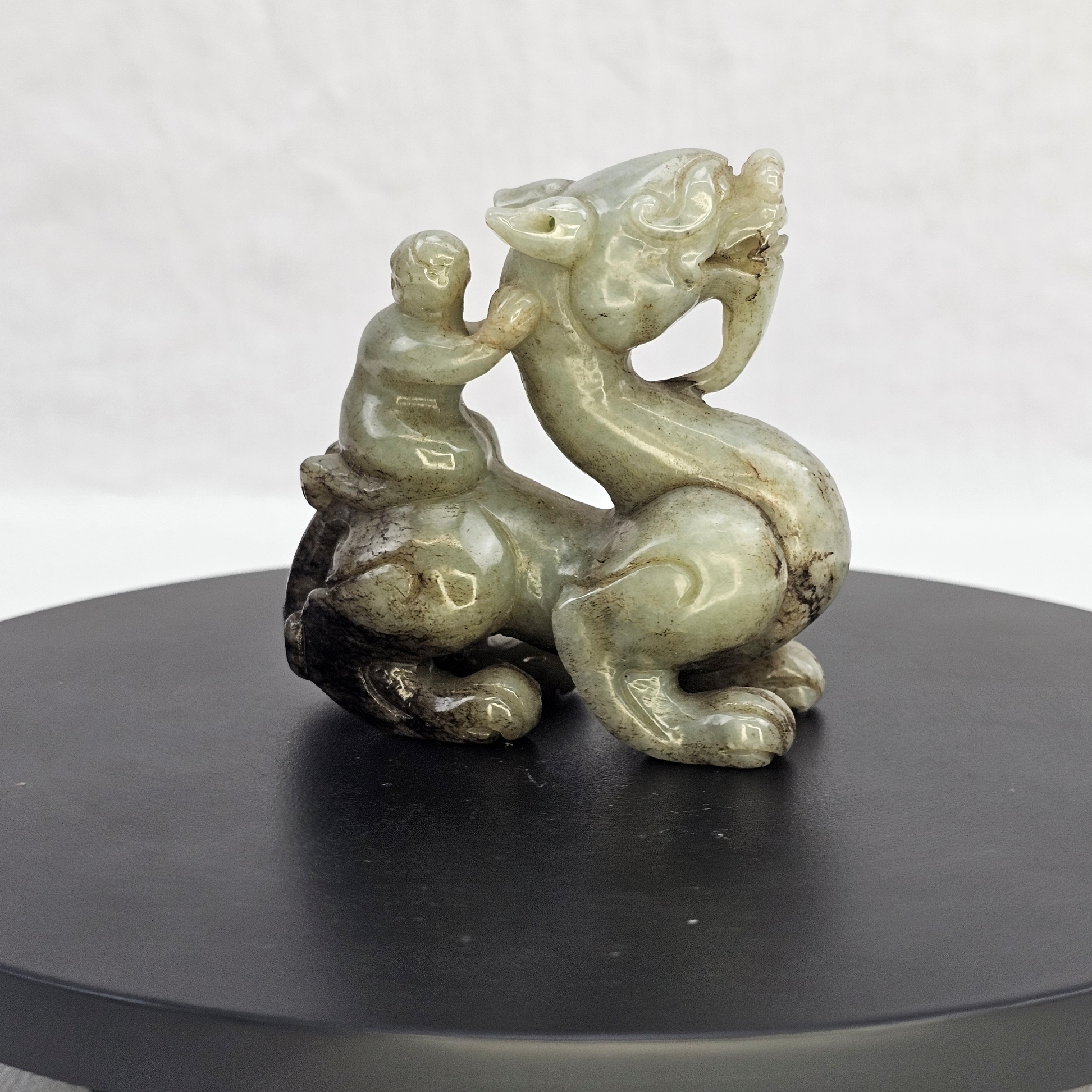
~ Chinese Qing Dynasty Nephrite Jade Carving Of A Dragon With A Boy On His Back ~
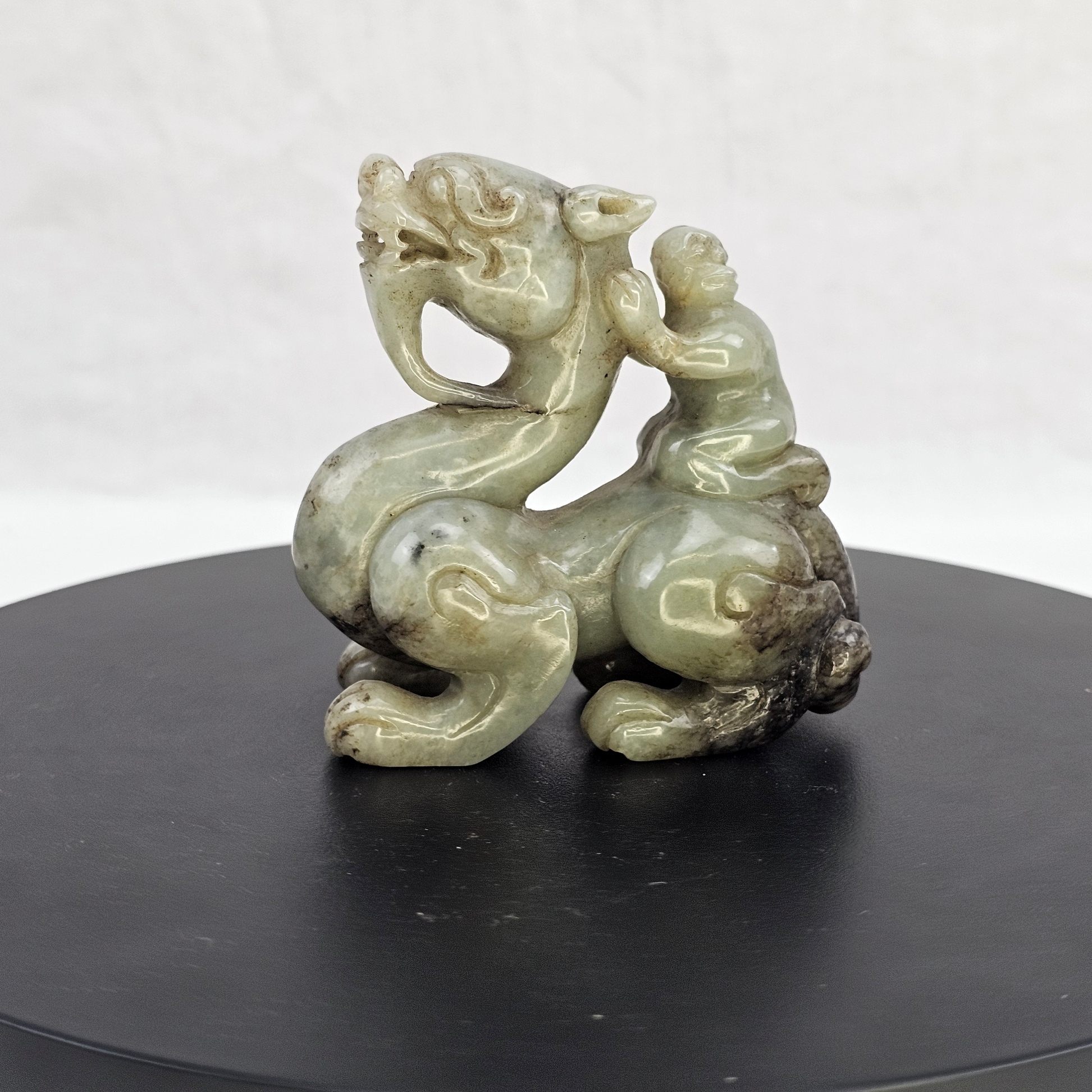
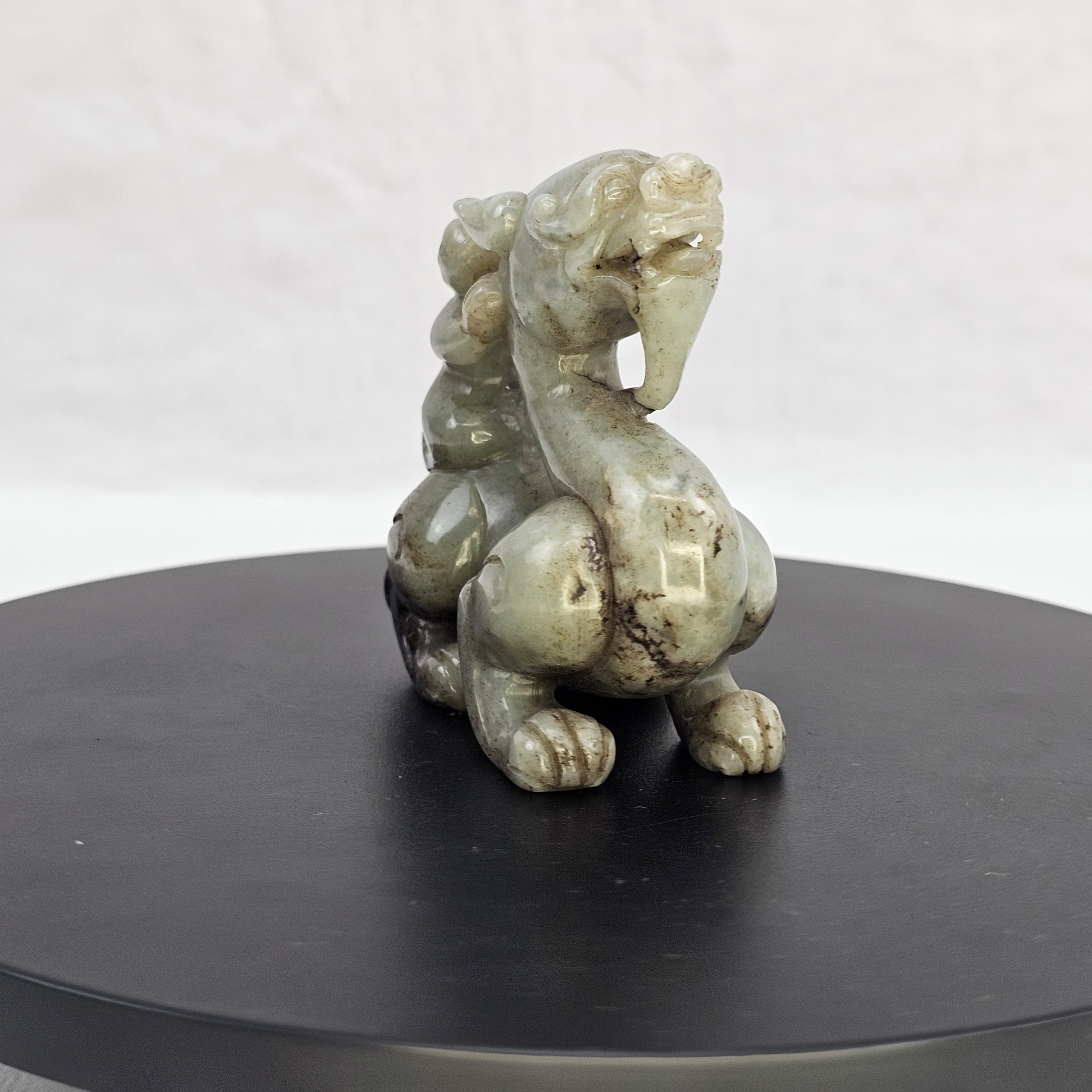
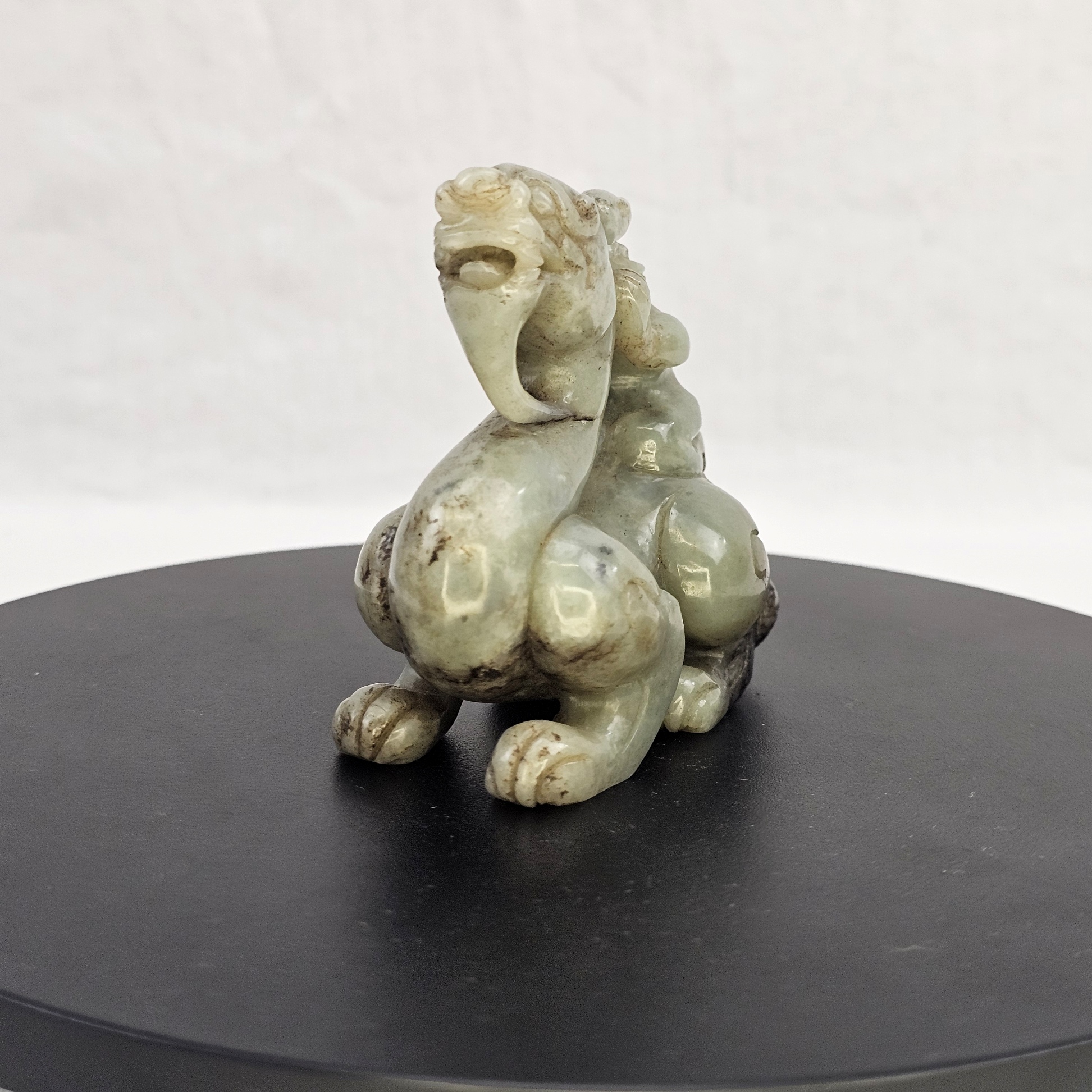
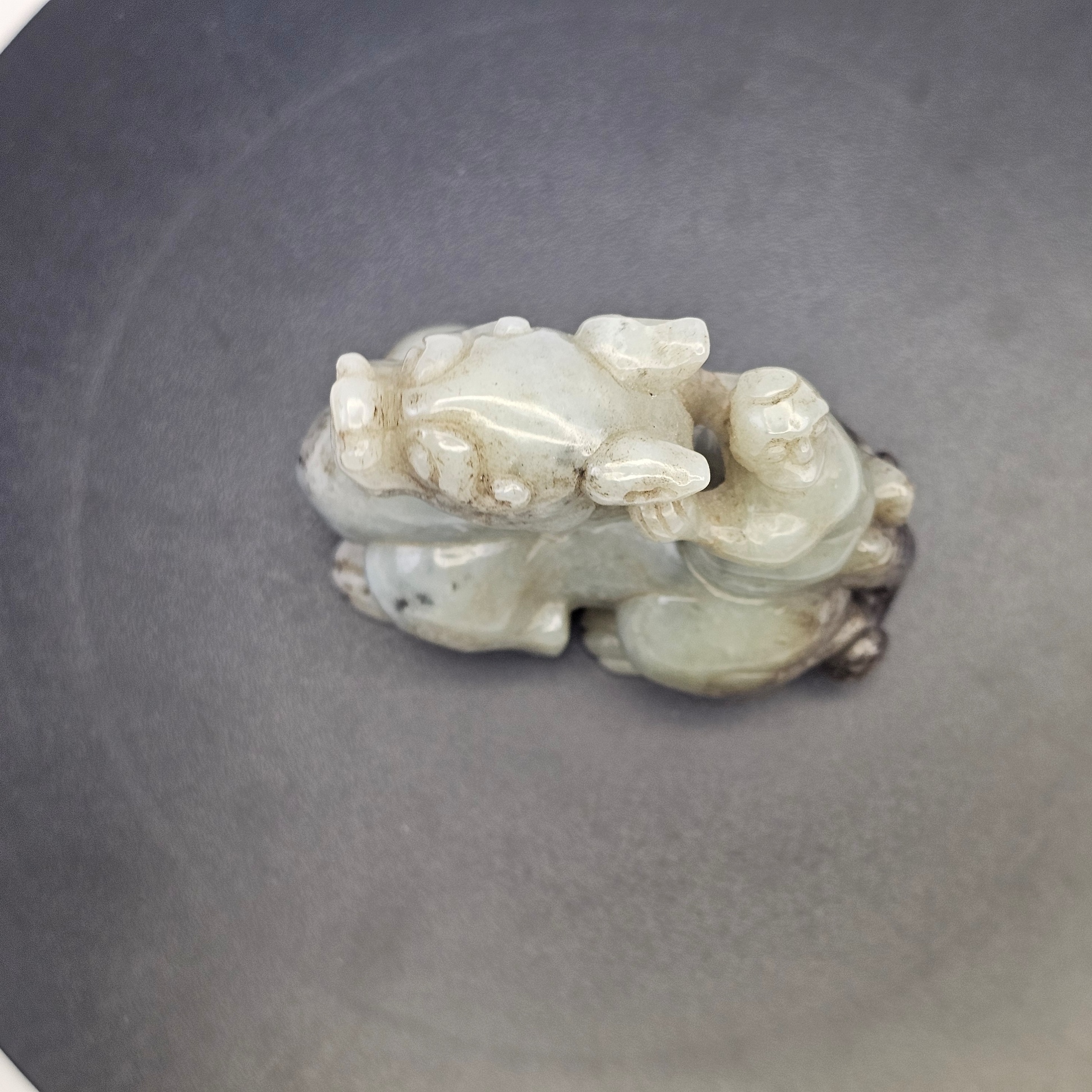
A delightful and skilfully carved nephrite jade group depicting a mythical horned dragon or chilong, its long serpentine neck arched dramatically backward so that the head, with open jaws baring teeth and a curling beard or mane, faces toward the rear of the body. A small boy figure is seated astride the dragon's haunches, his hands raised to grasp or steady himself against the creature's neck, his garments rendered with simple incised folds and his hair tied in a topknot typical of the depiction of children in Chinese decorative arts. The dragon's body is full and rounded, the limbs tucked beneath in a crouching pose, with incised scroll and scale motifs decorating the legs and haunches. The stone is a pale celadon nephrite, displaying striking two-tone colouration: the upper body, head, and the boy figure are carved from the lighter, more translucent portion of the stone, while the lower body, base, and one foreleg retain a darker, mottled grey-brown skin, which the carver has incorporated to suggest rocky ground or terrain beneath the creature. This skilful use of the stone's natural variation adds considerable visual interest and depth to the composition. The reverse of the dragon's neck shows a natural fissure in the stone, present at the time of carving.
Historical Context
The motif of a young boy riding a mythical beast is a recurring and much-loved theme in Chinese decorative arts, carrying connotations of childhood innocence protected by auspicious supernatural forces, and often alluding to the wish for many sons and the hope of examination success leading to high office. The pairing of boys with the qilin in particular was a popular subject during the Qing dynasty, as evidenced by porcelain figure groups of boys riding a qilin from the Kangxi period. The horned dragon or chilong depicted here, with its serpentine body and backward-turned head, belongs to a long tradition of archaistic dragon imagery revived and reinterpreted throughout the Ming and Qing periods, associated with imperial authority, protection, and the harmonious balance of yin and yang. The deliberate retention of the stone's natural darker skin to represent the ground beneath the creature's feet is a hallmark of accomplished Qing jade carving, in which the natural qualities of the raw material were read and exploited by the carver to enhance the narrative and pictorial qualities of the finished piece. Compositions combining a mythical beast with a human or child figure were particularly favoured for the scholar's desk, where their auspicious symbolism could be appreciated daily.