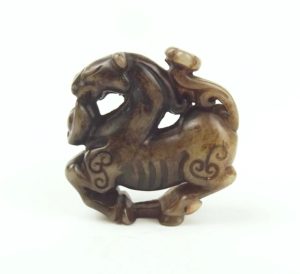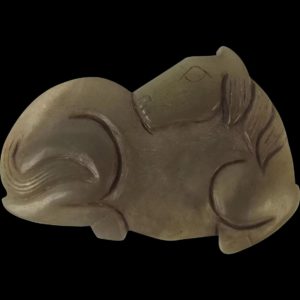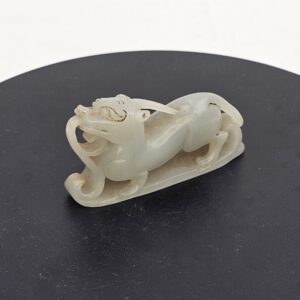
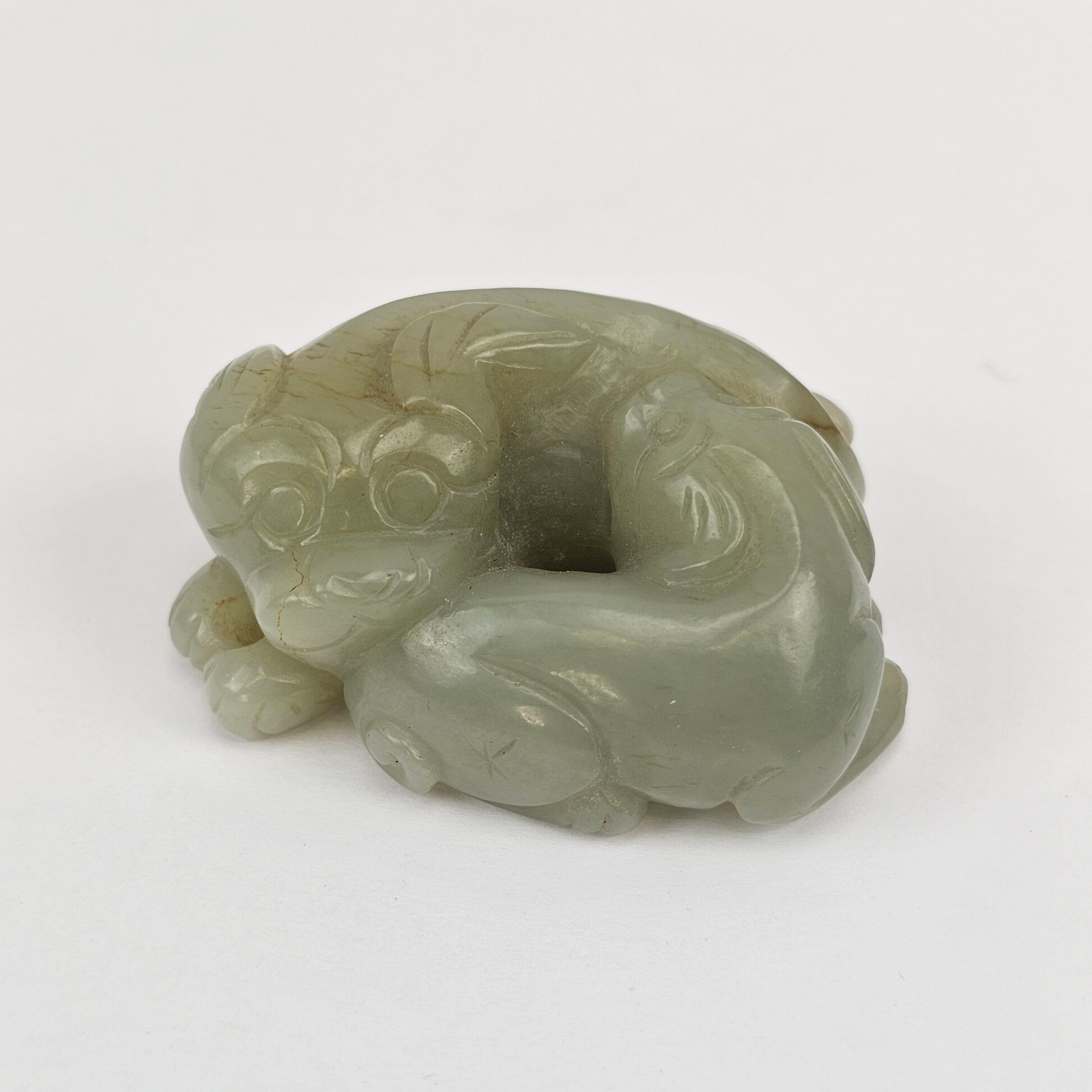
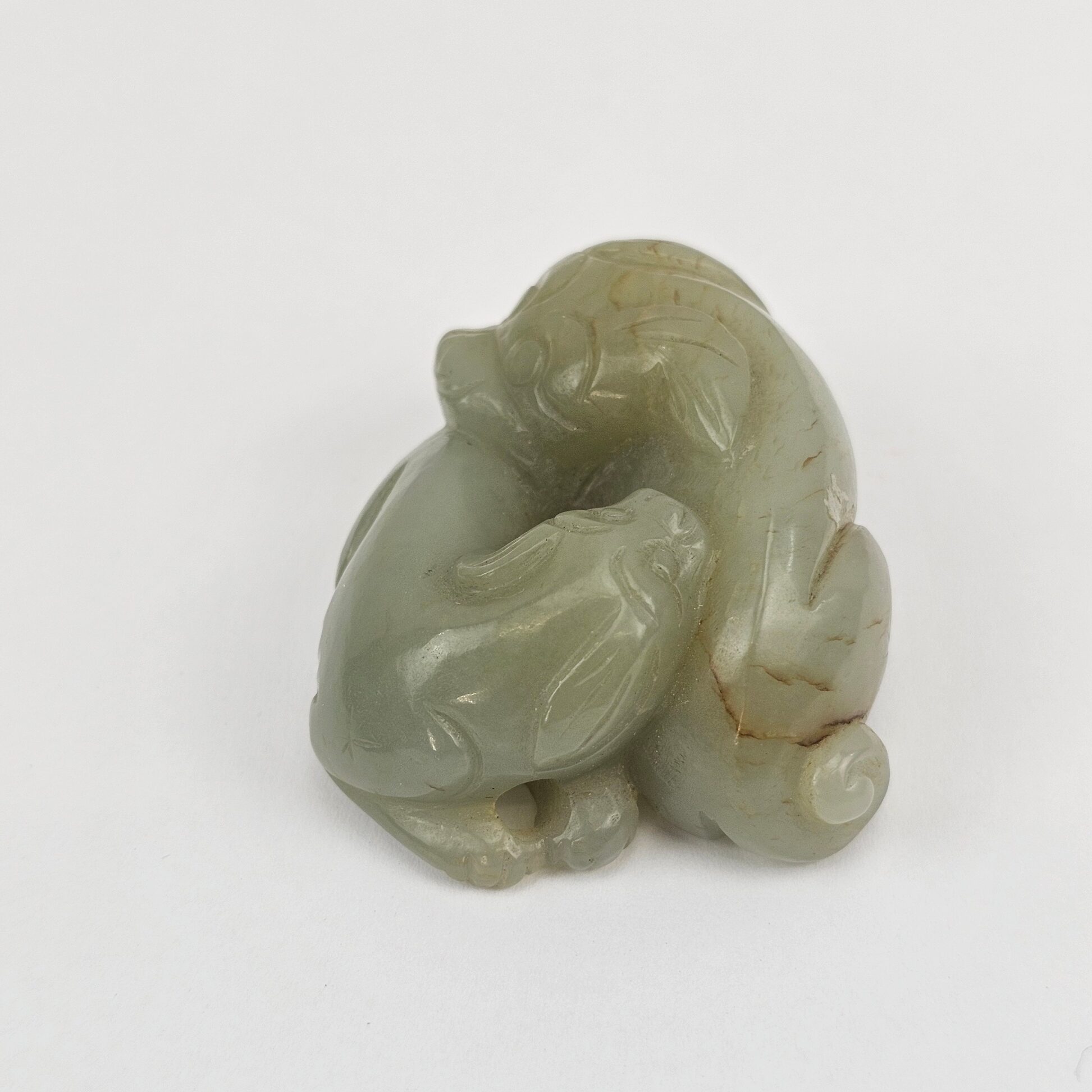
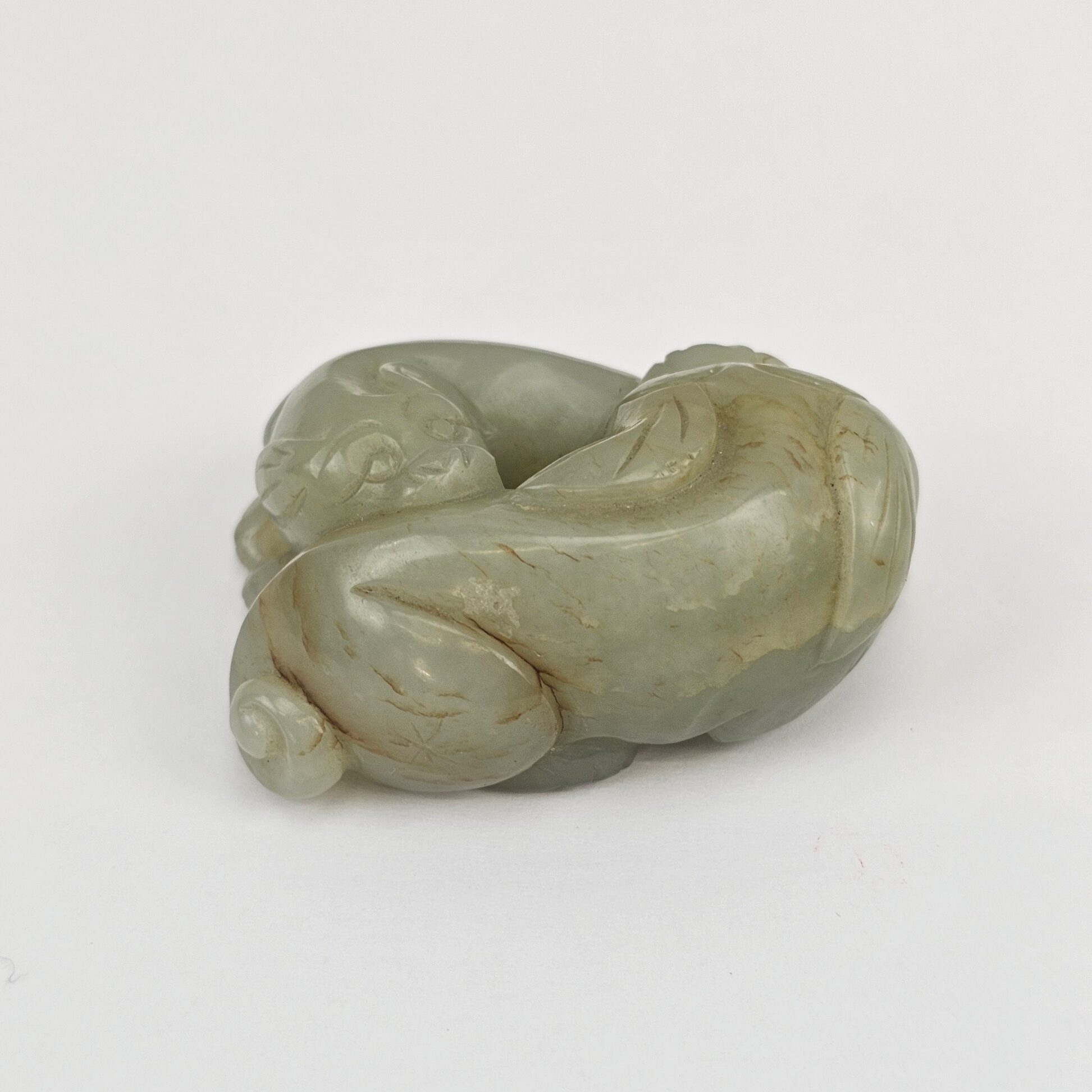
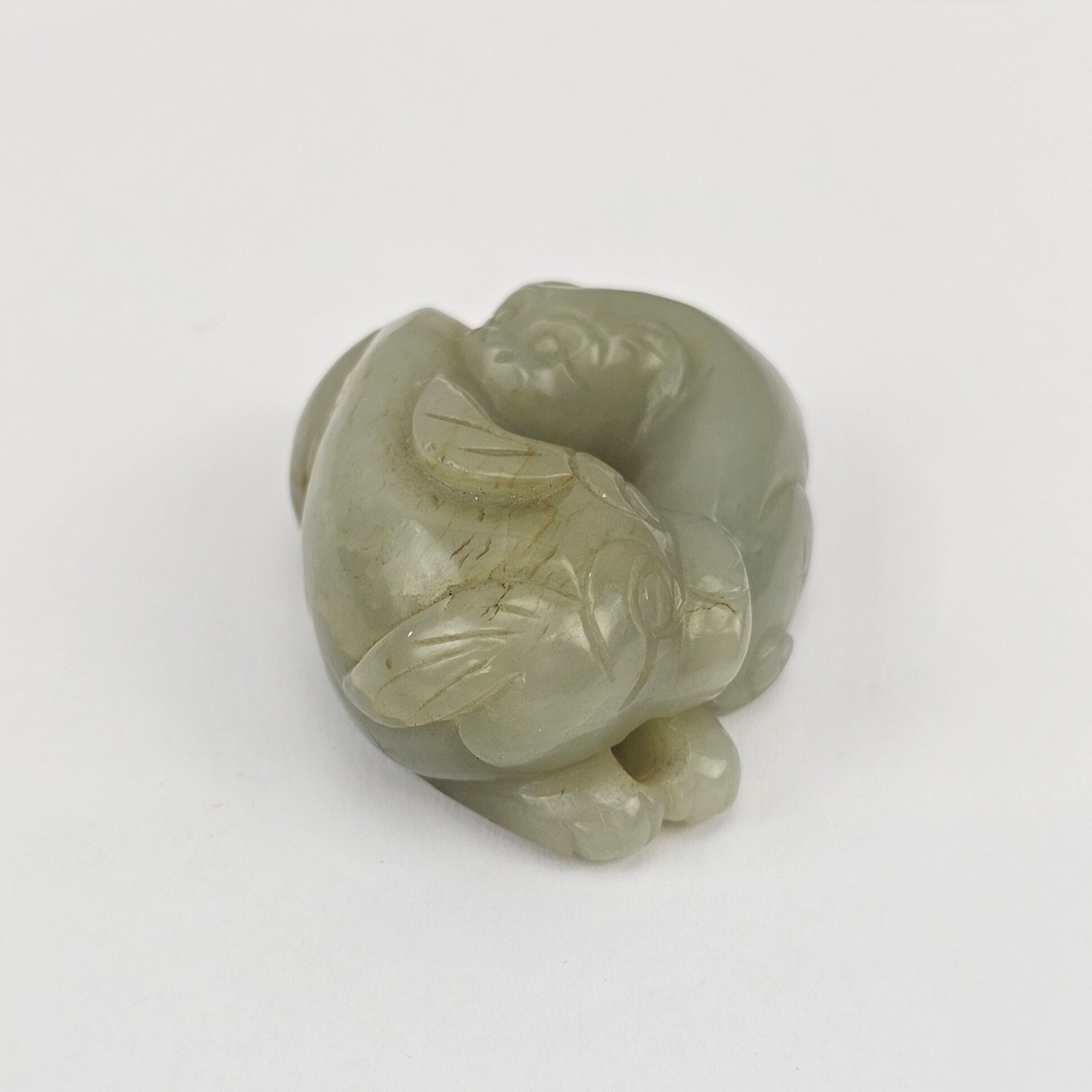
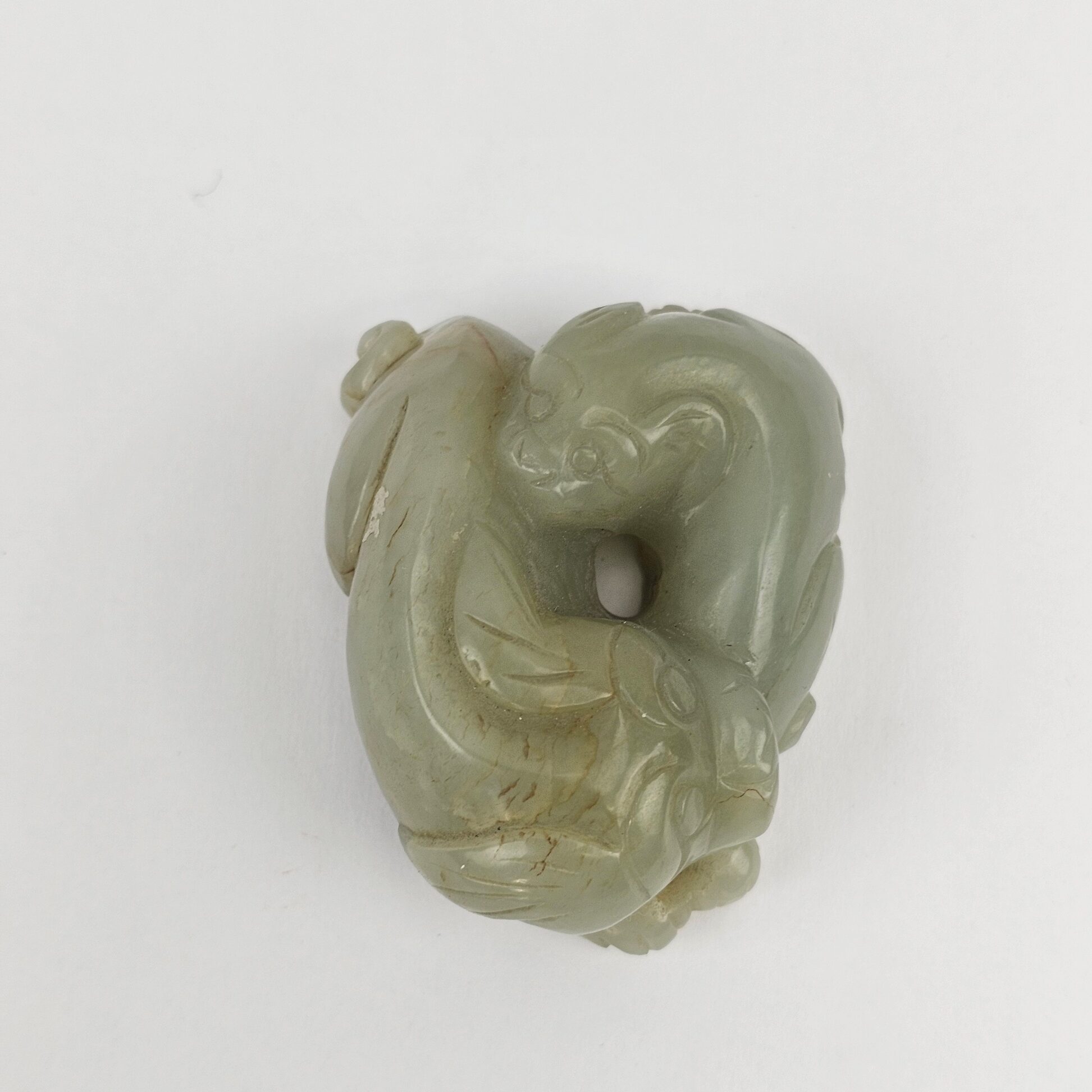
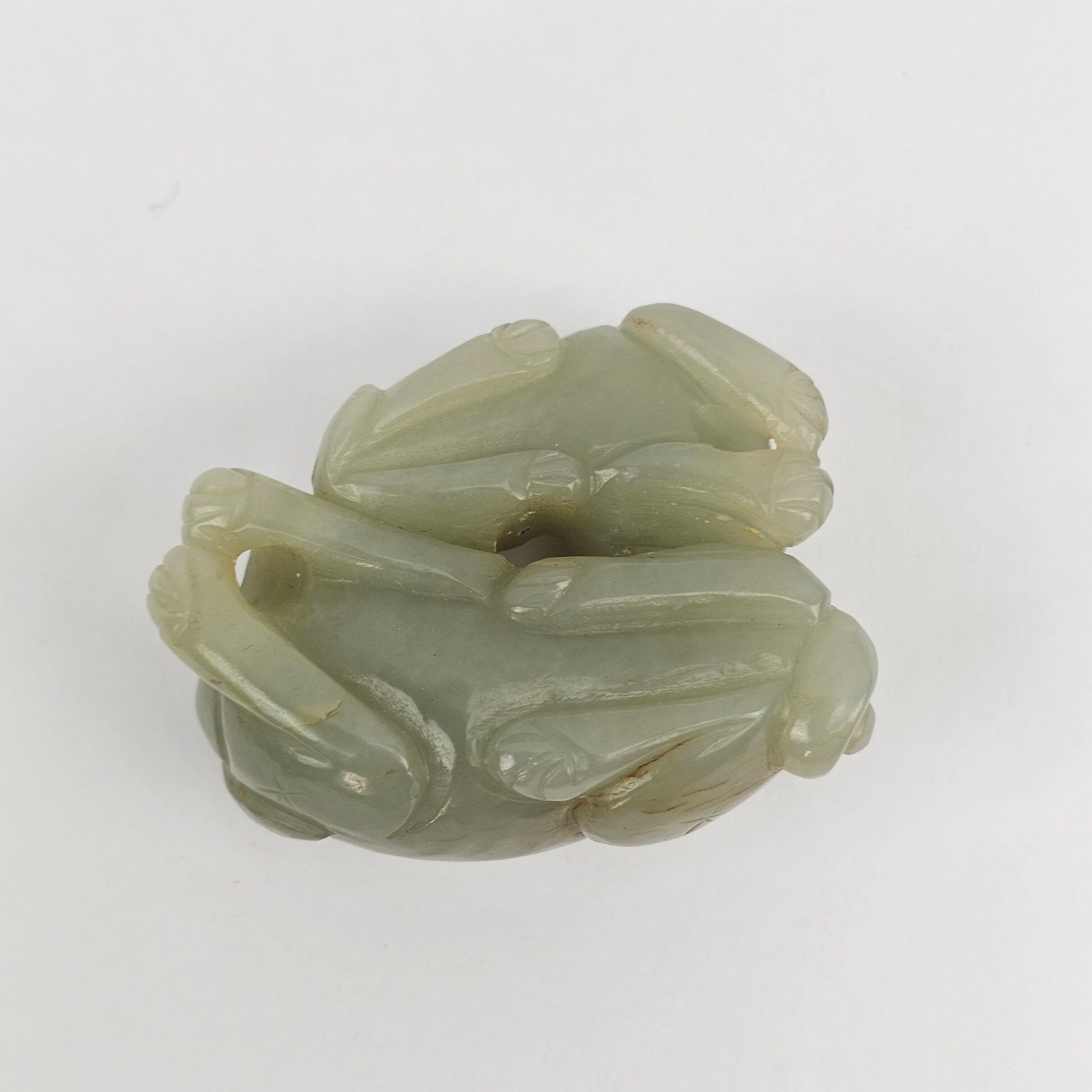
~ Chinese Qing Dynasty Pale Celadon Nephrite Jade Toggle of Two Interlocking Foo Dogs, 18th to 19th Century ~
A finely hand-carved nephrite jade toggle depicting two interlocking foo dogs in a compact and satisfying circular composition, united by a central drilled aperture that runs through the body of the group confirming its original function as a suspended belt ornament or toggle. The two guardian lion figures are shown entwined with one another, their bodies curling around the central hole in opposing directions to form a coherent, self-contained whole when viewed from any angle. The larger of the two creatures dominates the upper and front faces, rendered with a broad, expressive face featuring concentric circular incised eyes with clearly defined pupils, a broad open mouth, incised curling mane elements at the forehead and crown, and small rounded ears. The body of this figure curves fully around the aperture, with the tail coiling in a tight scroll at one end of the piece. The smaller figure emerges from the reverse and side of the composition, similarly rendered with circular eyes, an open muzzle and mane detail, its body interlocked with that of the larger creature. Between and around the two figures, incised leaf or foliage elements are worked into the transitional areas, adding a naturalistic botanical note to the composition and filling the spaces between the animal bodies with decorative incising. A small curled knop or scroll is visible at one end, consistent with toggle form. The underside of the piece shows the legs and paws of the two figures and further incised detail including leaf forms, and is broadly flat, allowing the piece to rest when not suspended. The stone is a warm, even pale celadon to olive-green nephrite throughout, with natural amber-brown veining running through the body of the stone in several areas, concentrated in the deeper recesses where the colour enriches and deepens. The surface carries a good smooth polish with a satin sheen.
Historical Context
Jade toggles, known in Chinese as zhuizi, were an integral element of the dressed gentleman's belt or girdle throughout the Ming and Qing dynasties. Suspended from a cord attached to the belt, the toggle served as a counterweight or stopper preventing pouches, scent holders, fans and other personal accessories from slipping free, while simultaneously functioning as a refined display object inviting contemplation and handling. The finest toggles were carved in nephrite jade, and the genre produced some of the most imaginative and technically accomplished small carvings of the entire Qing period. Interlocking animal compositions of the kind seen here, in which two creatures coil around a central aperture in a dynamic unified group, are among the most sophisticated toggle formats and required considerable skill both in the initial design and in the execution.
The paired foo dog, or double shishi, was among the most auspicious of all subject choices for a toggle. Guardian lions in Chinese culture protect against malevolent forces, draw good fortune, and symbolise strength and prosperity, and carrying a pair of such protective beasts about one's person was considered a potent talisman. The interlocking composition may also carry a secondary reading of playful confrontation or mutual protection, an image of dynamic equilibrium well suited to an object worn close to the body. The warm olive celadon nephrite used here, with its characteristic amber veining, was a standard and well-regarded material for quality Qing toggles, favoured for its even tone and the way the natural coloration deepens attractively in the recesses of detailed carving.