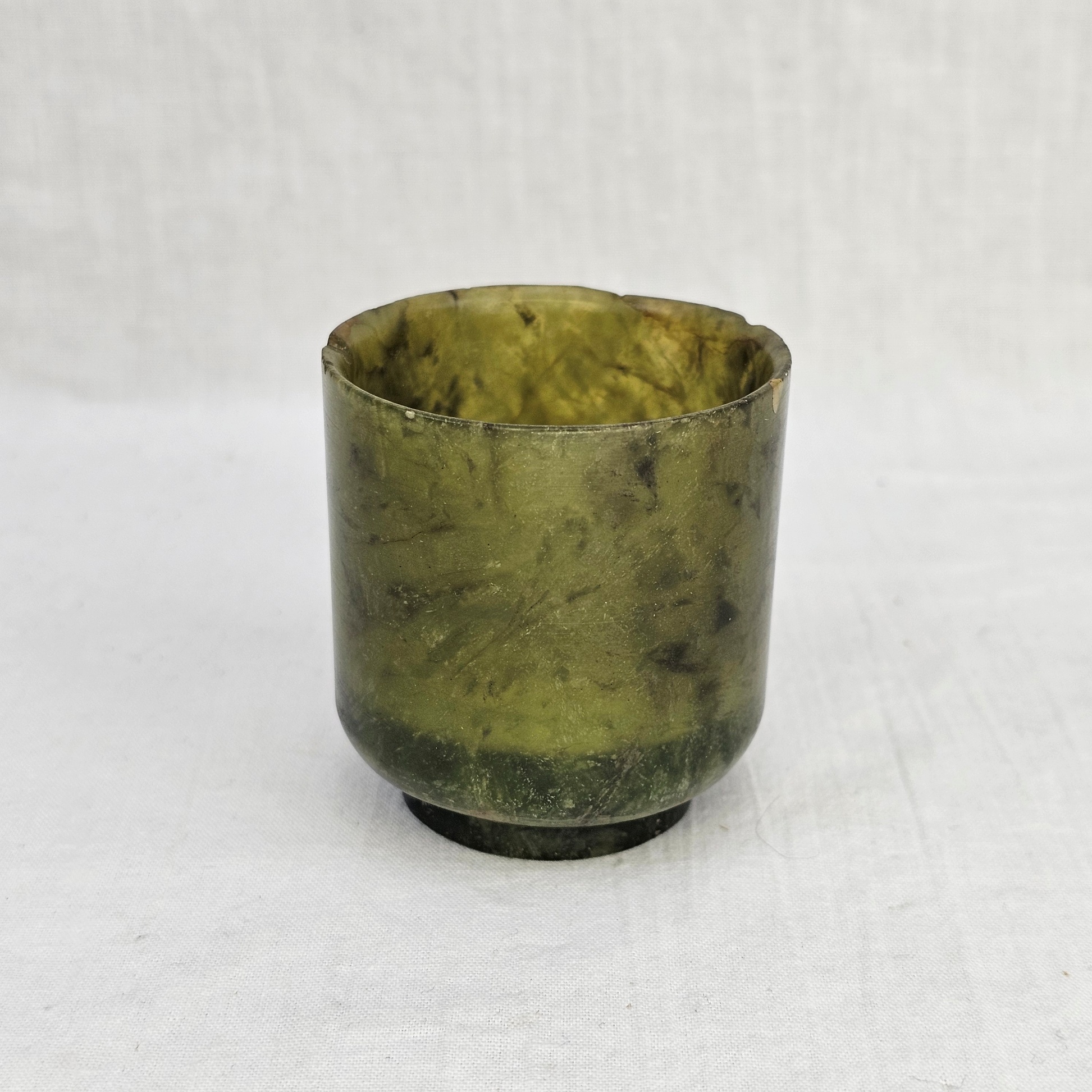
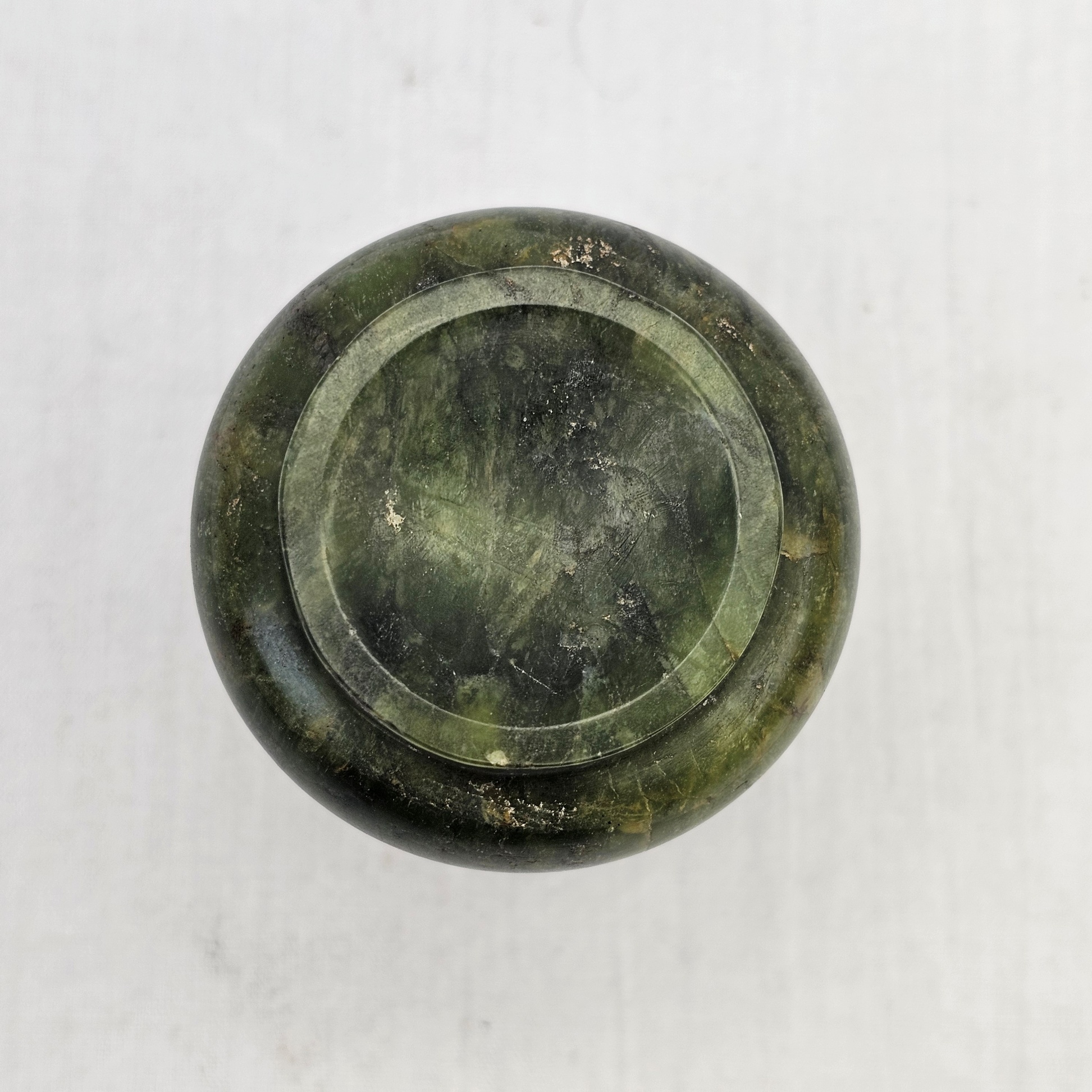
~ Chinese Qing Dynasty Nephrite Spinach Jade Turned Cup ~
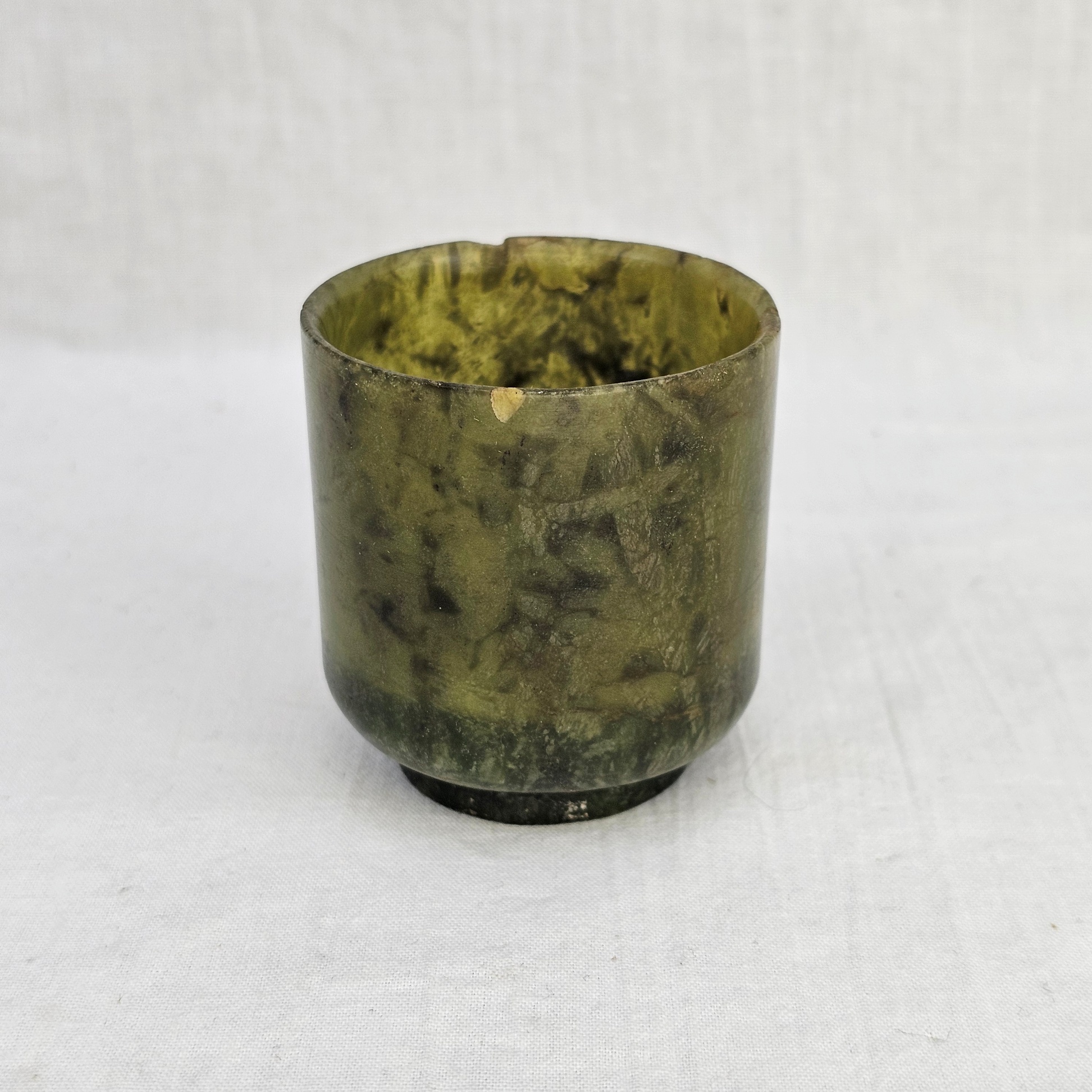
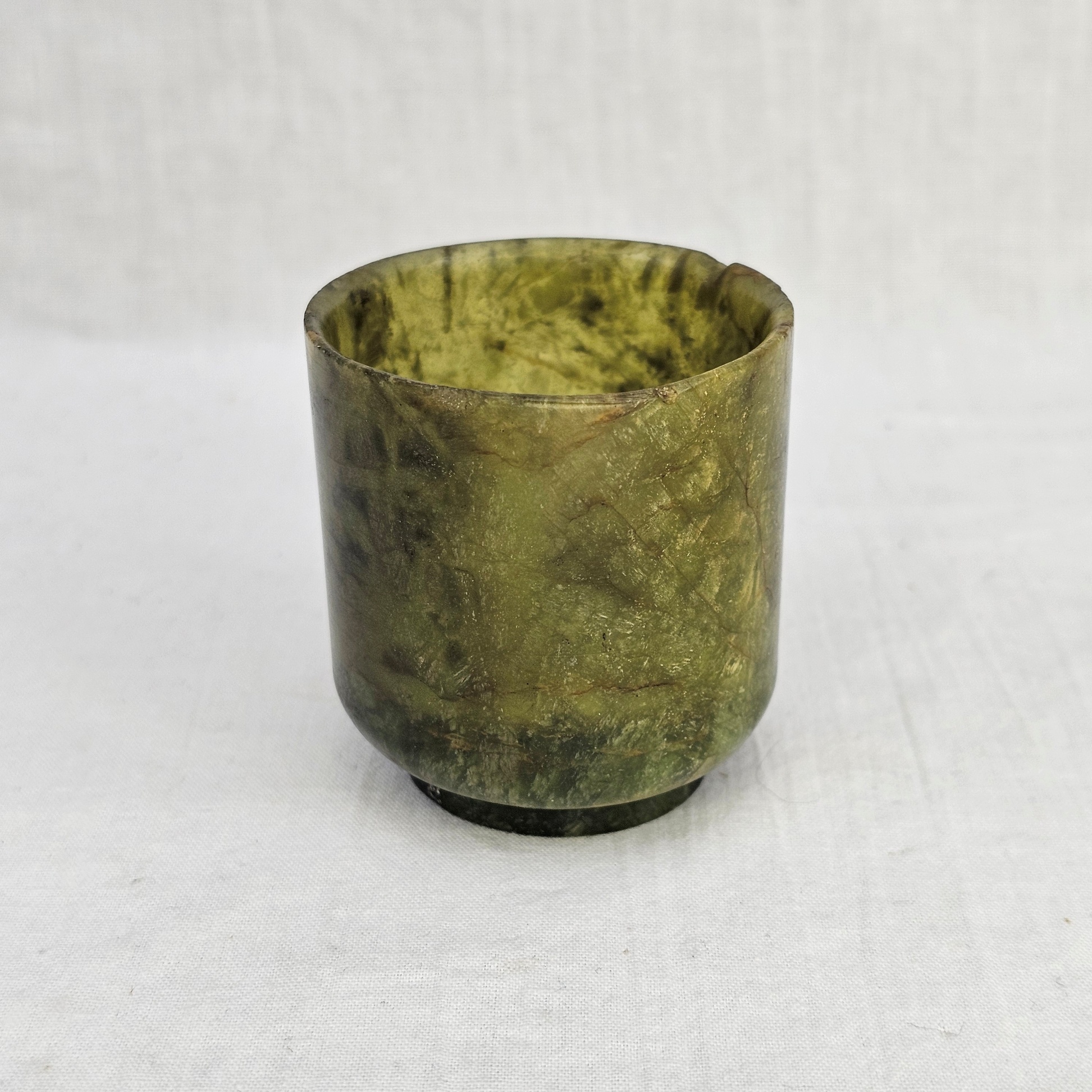
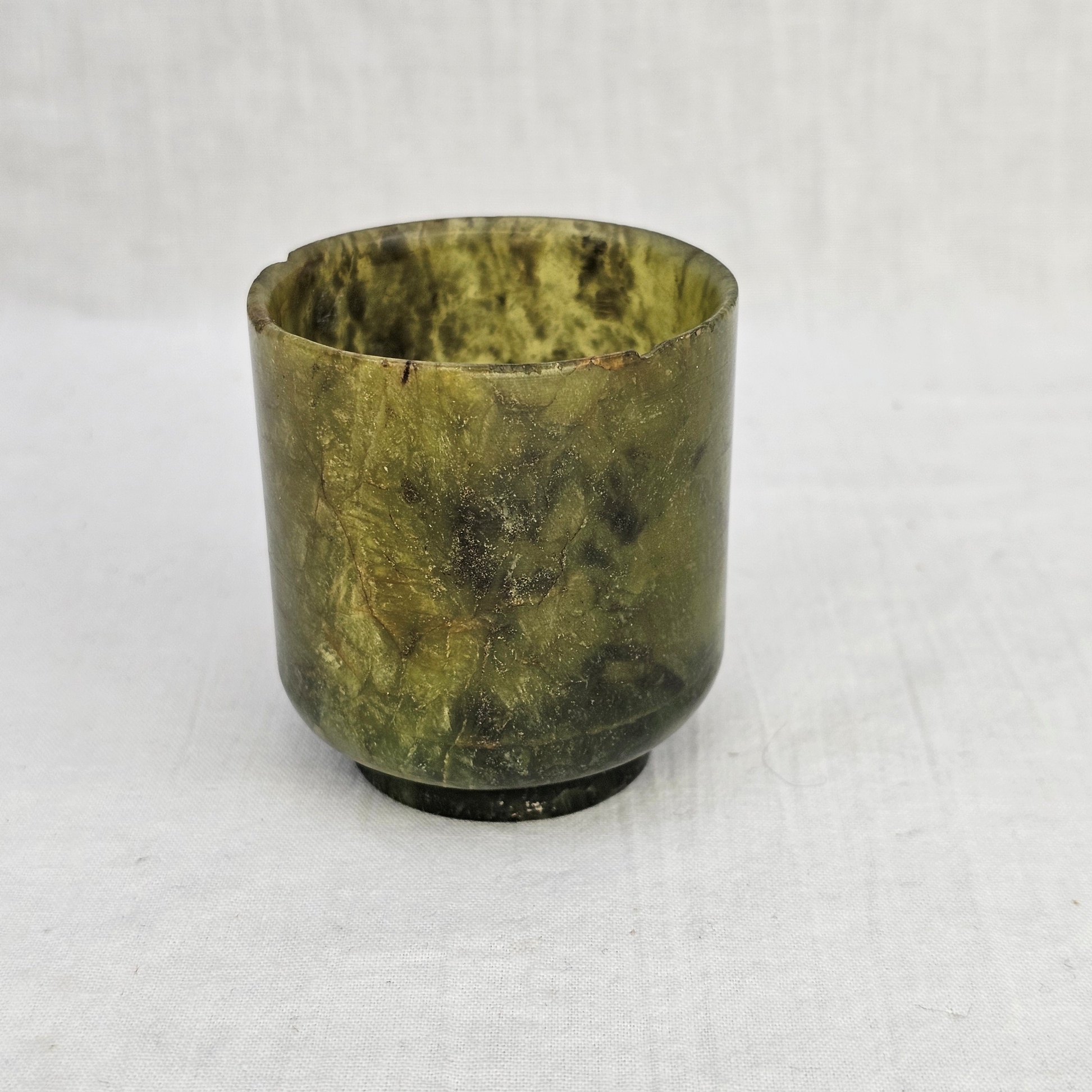
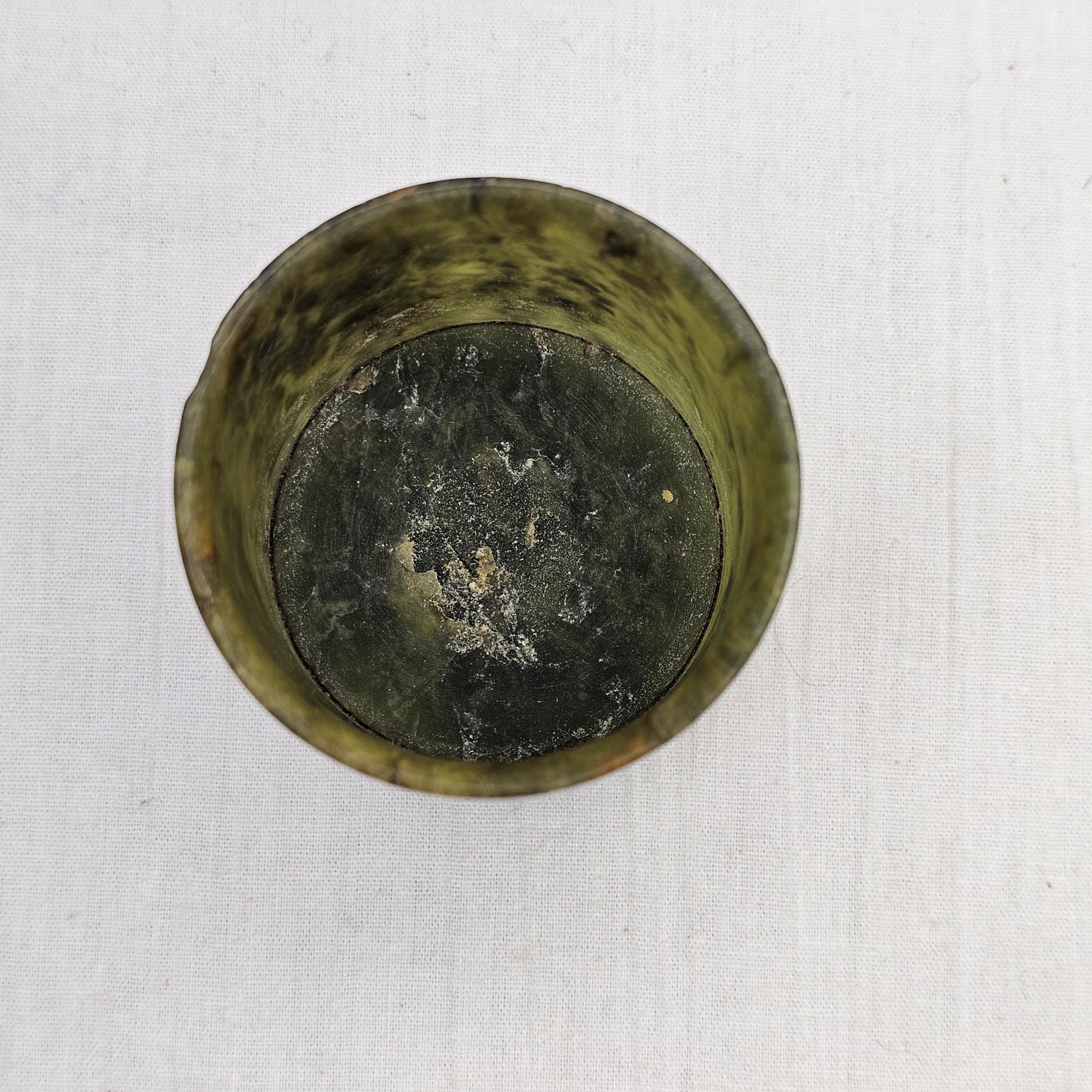
A plain turned cup carved from a dense, dark spinach-green nephrite, of cylindrical form rising from a short, slightly recessed footring to a gently flared rim. The stone is heavily mottled throughout with the characteristic dark green to near-black "spinach" colouration, interspersed with darker inclusions, paler celadon patches, and natural russet veining, giving an overall mottled, almost camouflage-like appearance. The walls are of even thickness, smoothly polished on the exterior with a slightly more textured, naturally fissured finish to the interior and underside, where the natural stone striations are particularly visible. The rim shows a small old chip/loss to one edge.
Historical Context
Plain turned cups and small vessels in spinach-green nephrite were produced in considerable numbers during the Qing dynasty and into the early 20th century, the dense, dark stone — often sourced from Siberian or Central Asian deposits — being valued for desk wares, brush pots, and small vessels rather than the finer white "mutton-fat" jades reserved for imperial pieces. The relatively ample supply of raw nephrite jade following the Qianlong emperor's campaigns in Khotan meant that demand for jade desk items at court could be fully satisfied, and spinach jade became a popular material for both utilitarian and decorative pieces among the wider scholarly and merchant classes. Plain, unadorned forms such as this cup rely on the natural beauty and mottling of the stone itself for decorative effect, a quality long appreciated by collectors, as seen in related antique Chinese jade objects prized for their natural inclusions and colour variation.