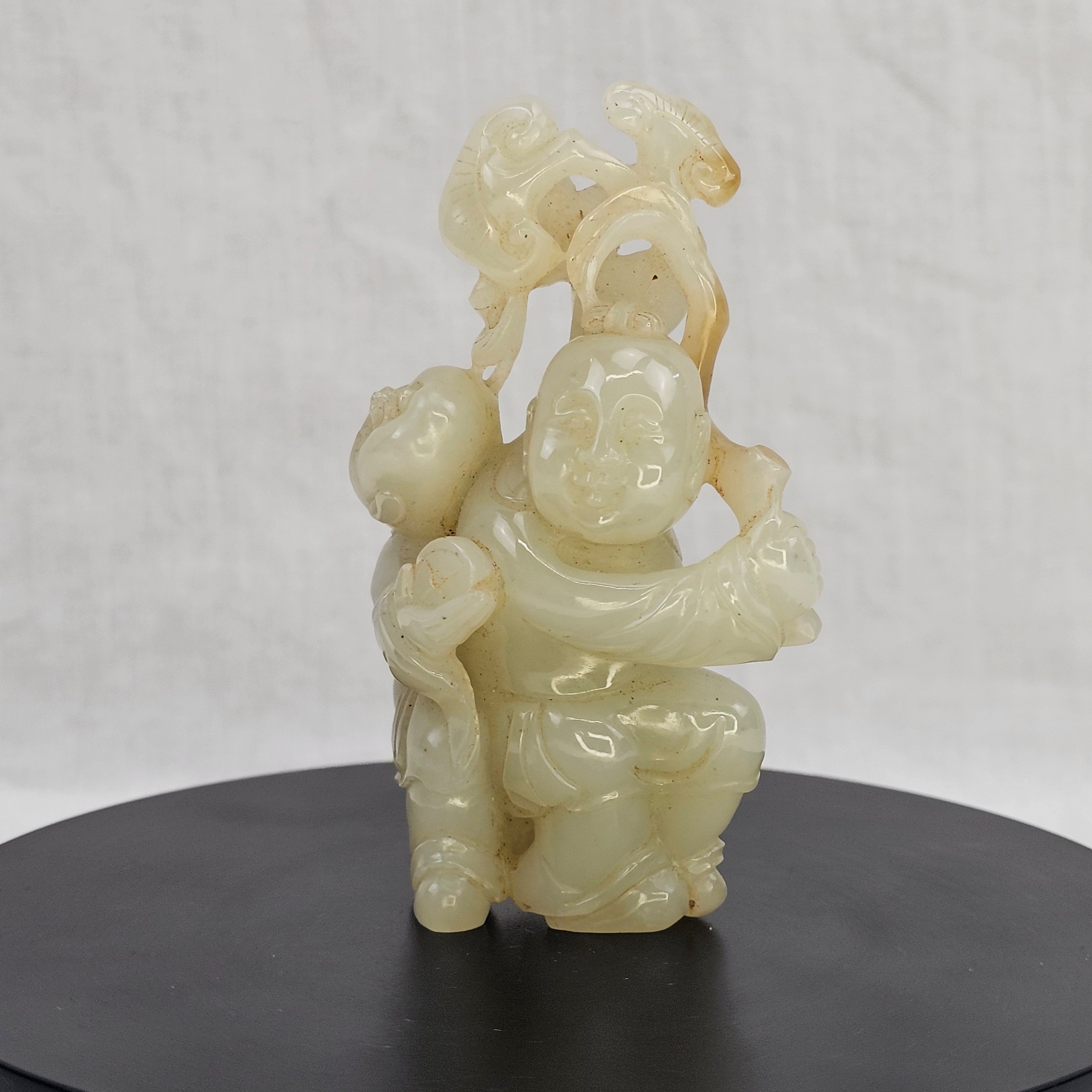
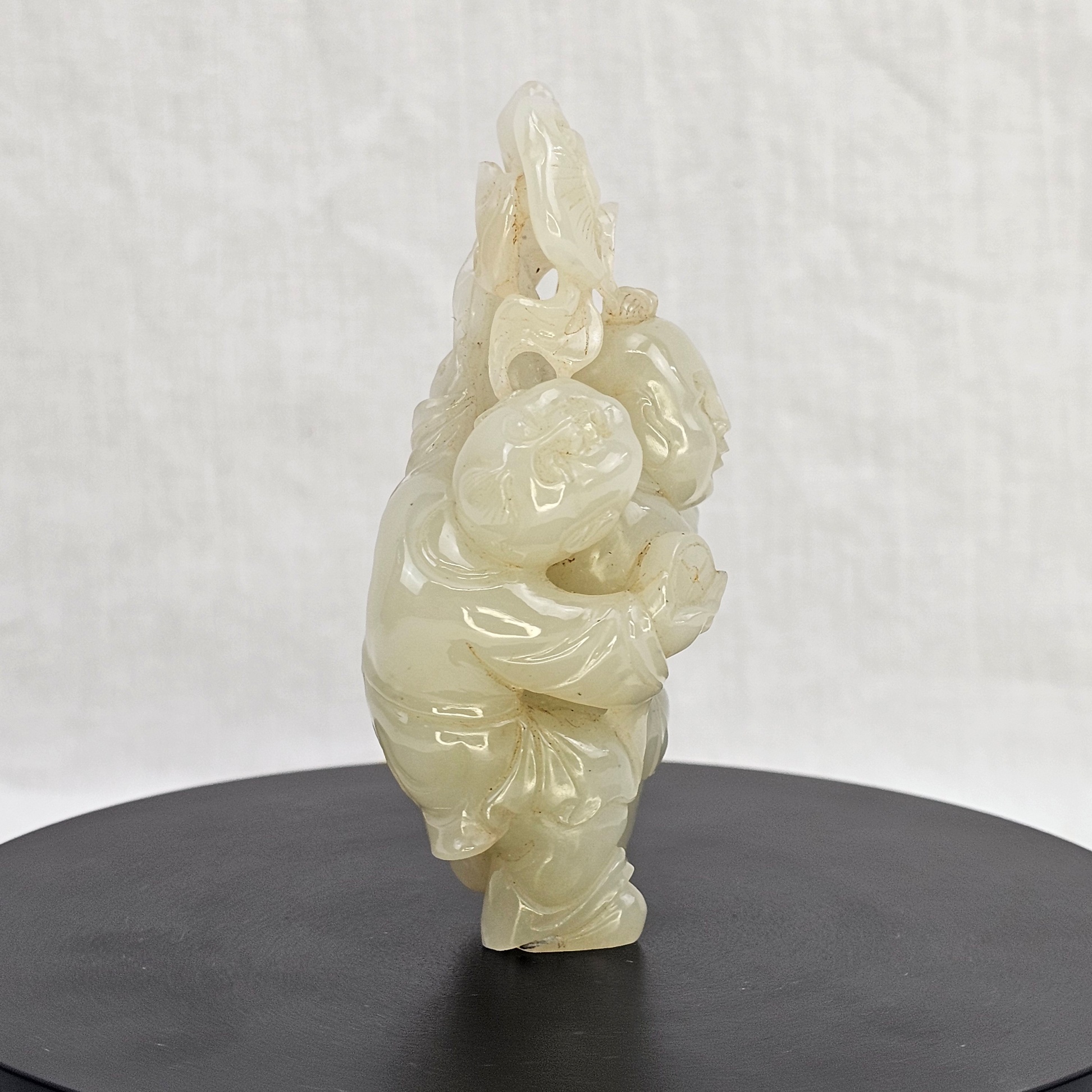
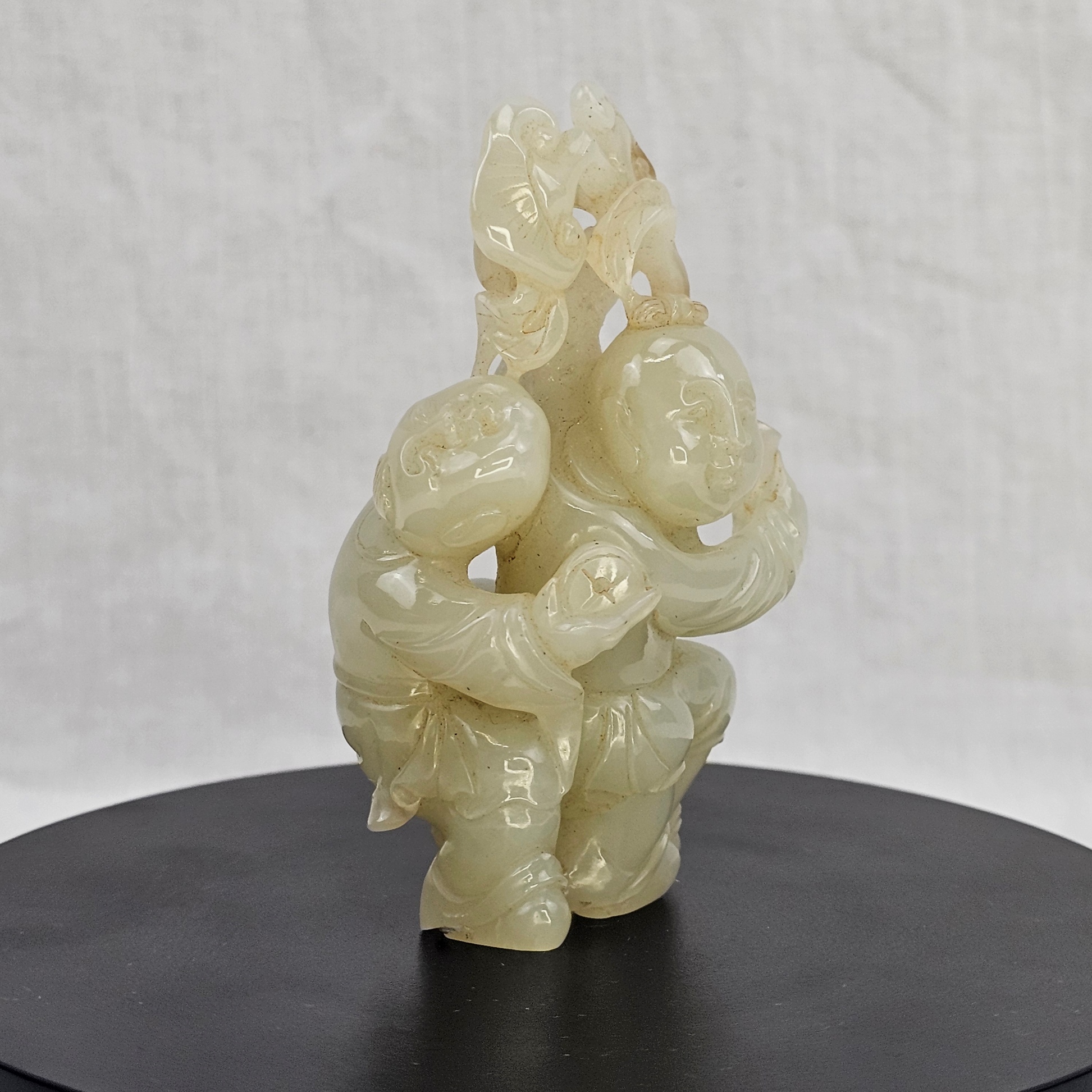
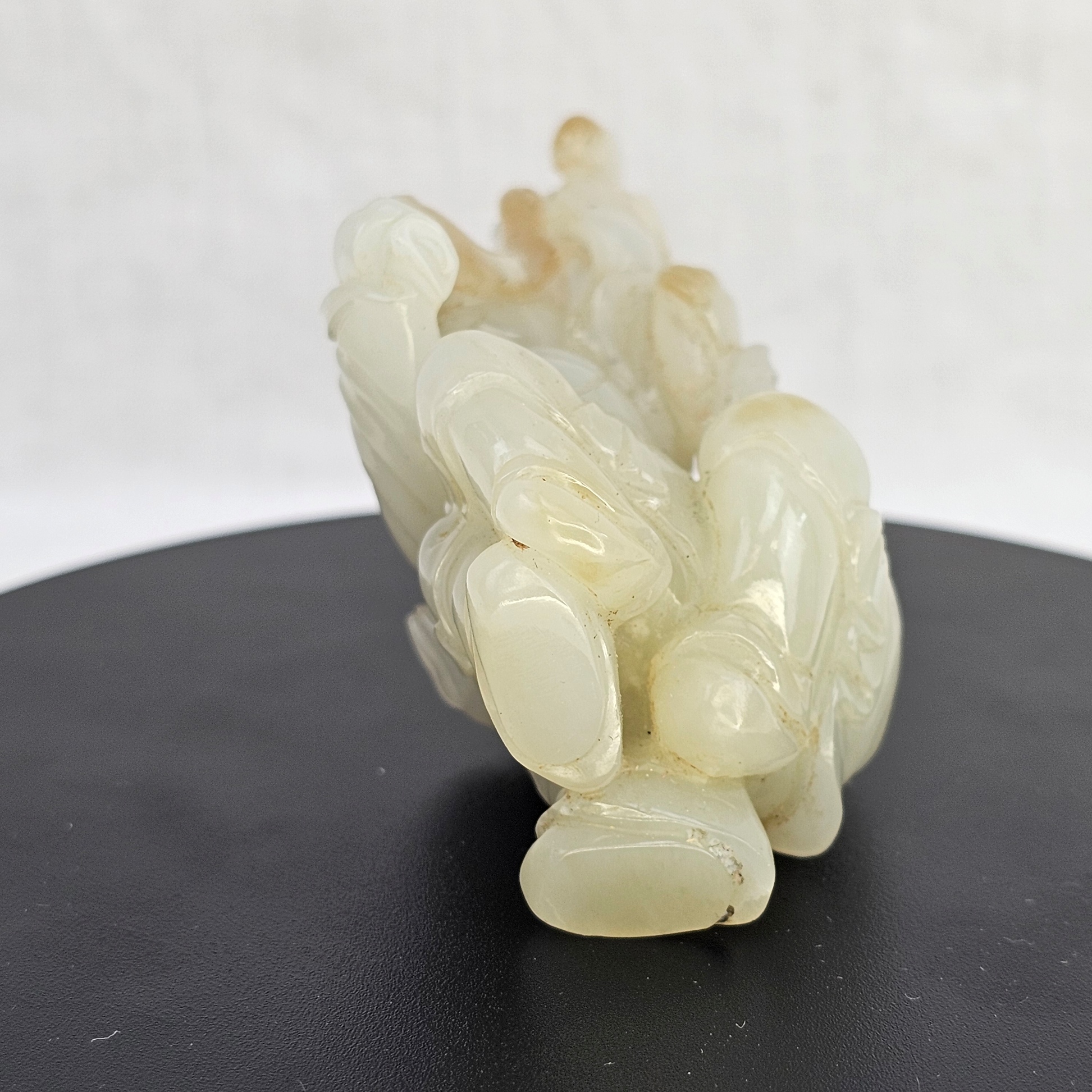
~ Chinese Pale Celadon Nephrite Jade Carving of an Immortal with Two Boys, Qing Style ~
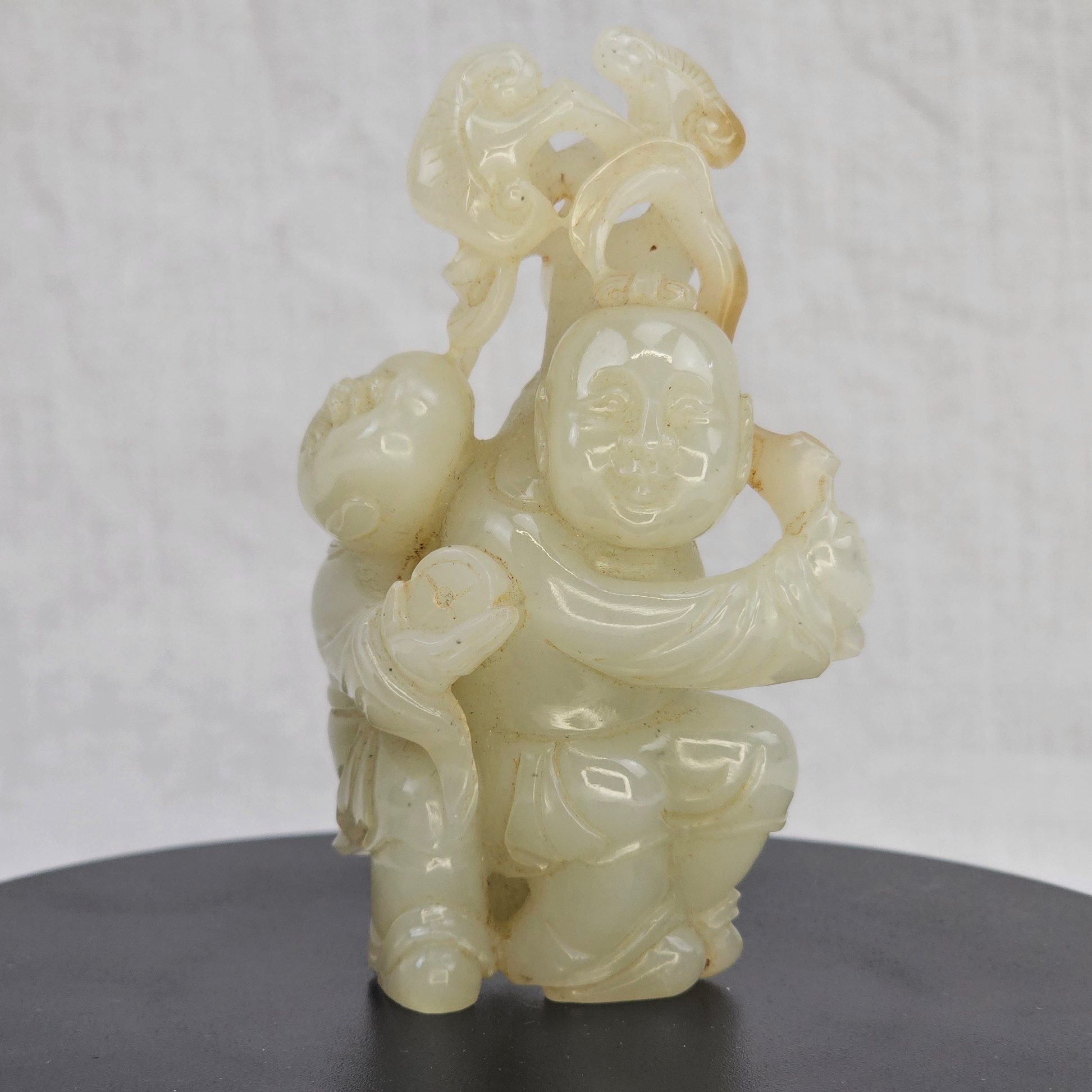
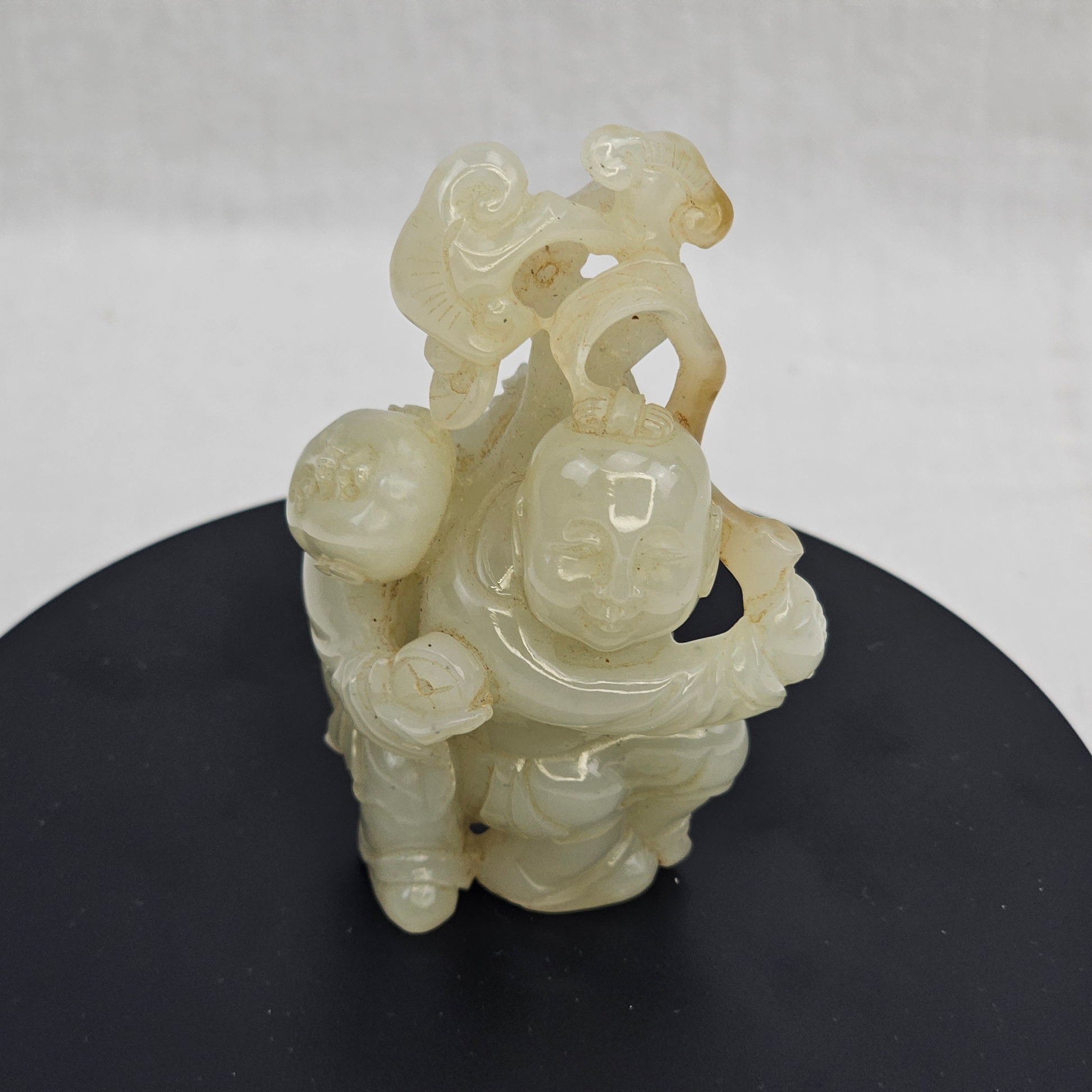
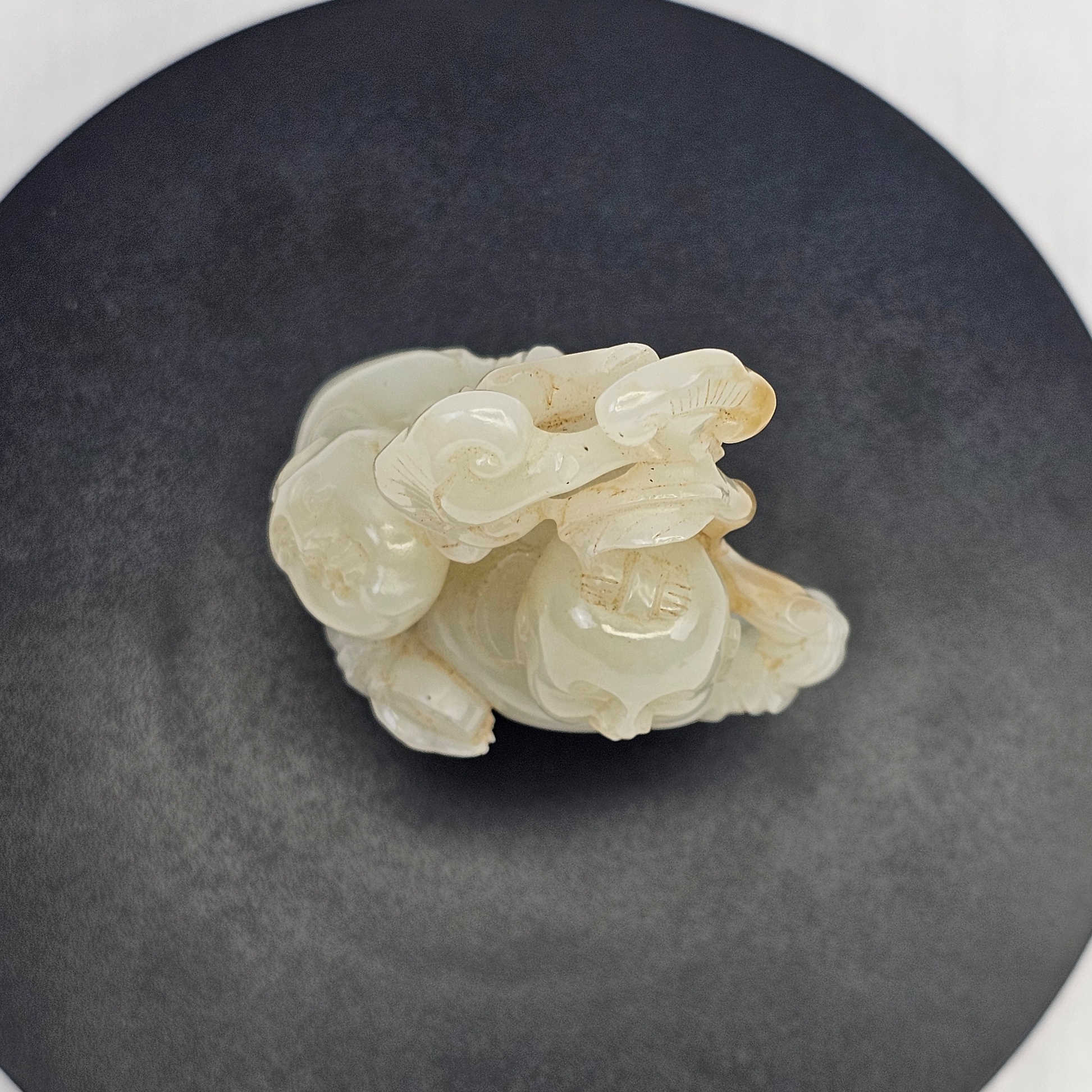
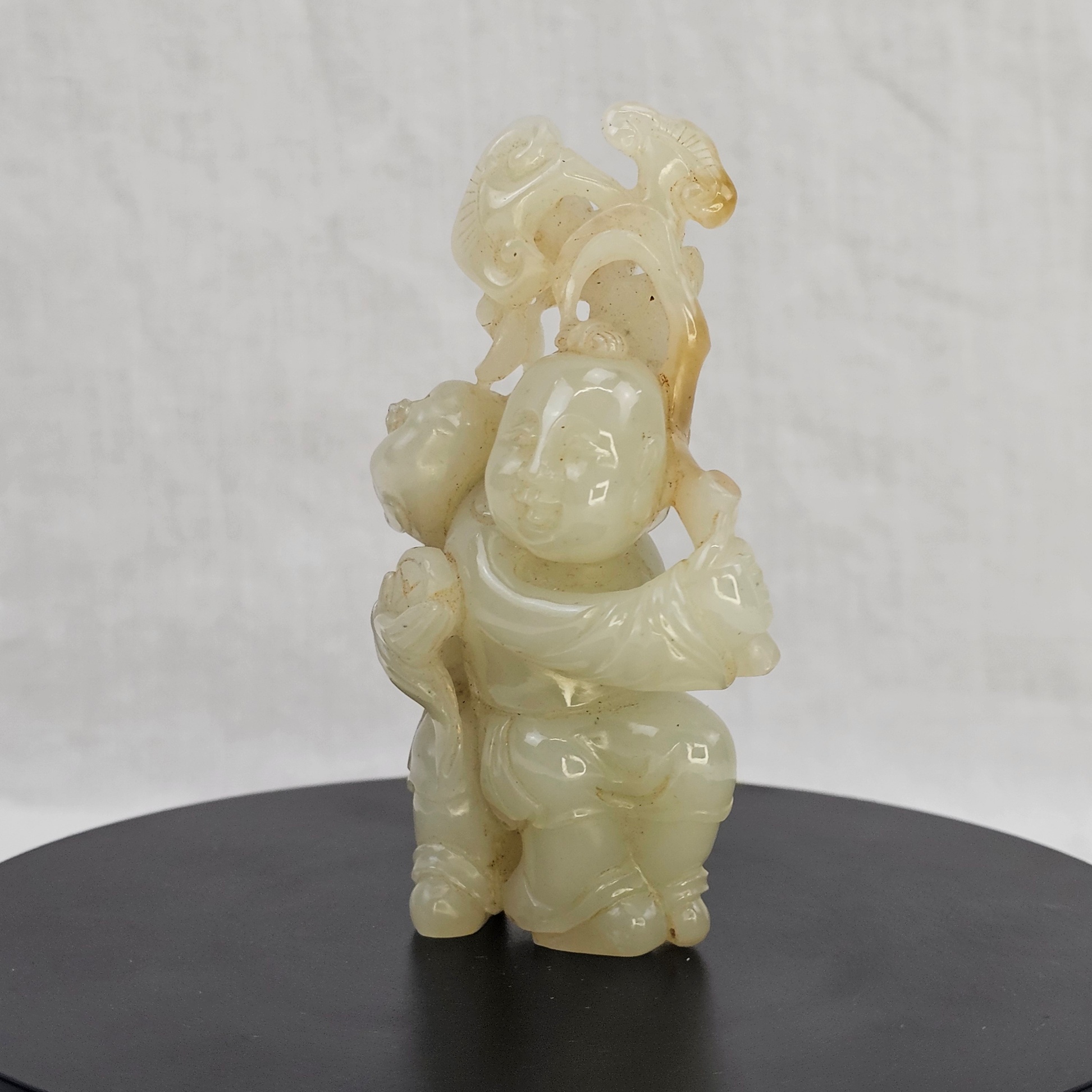
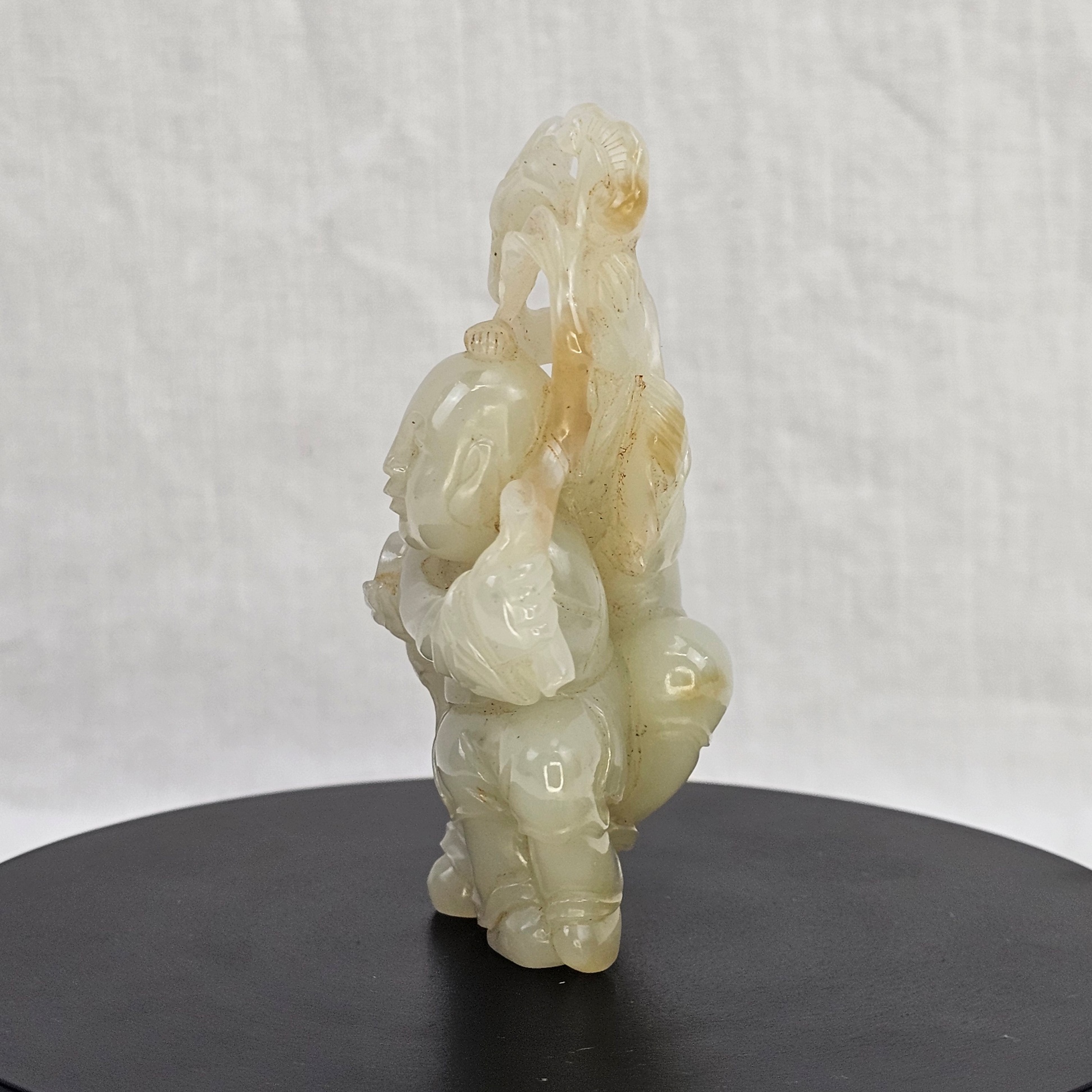
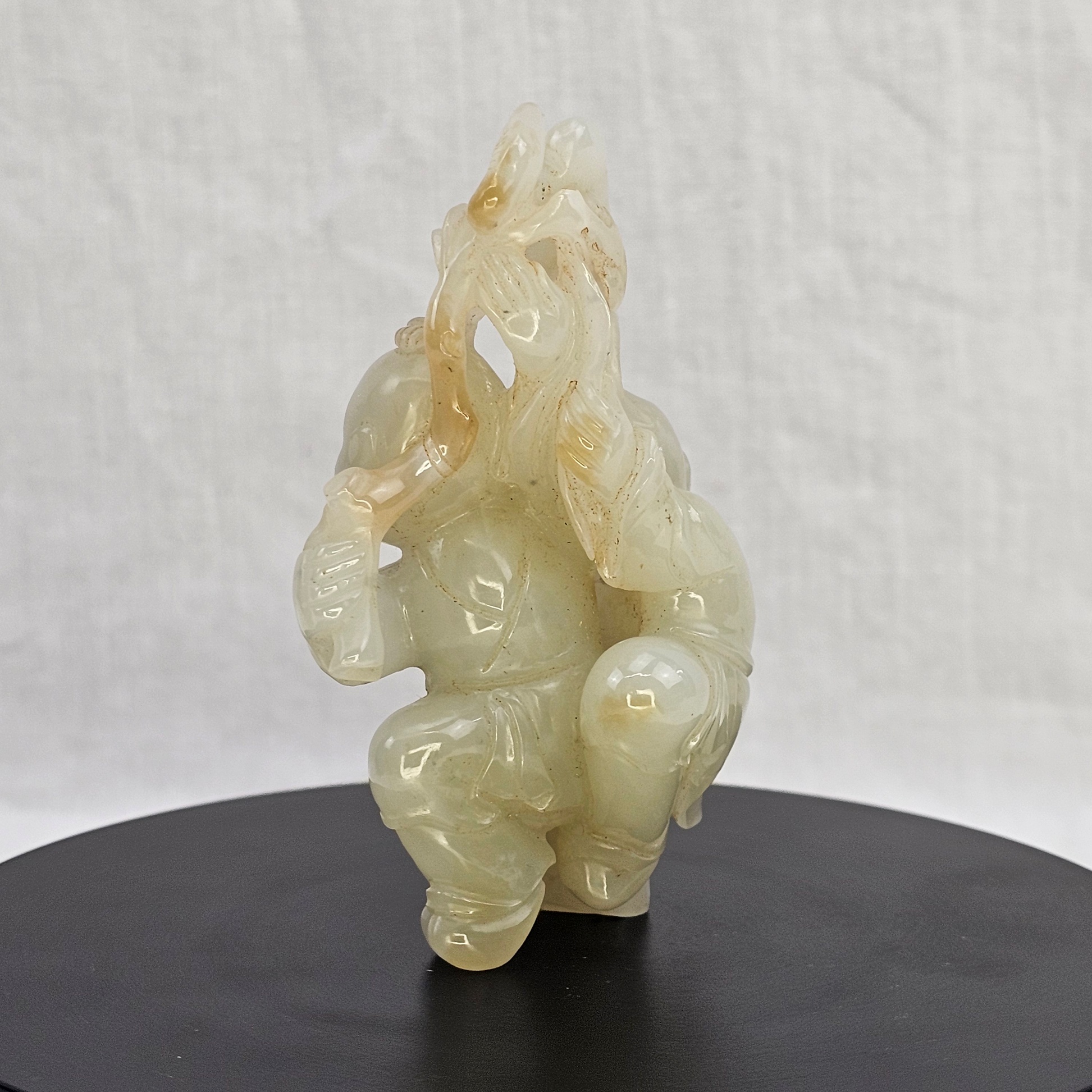
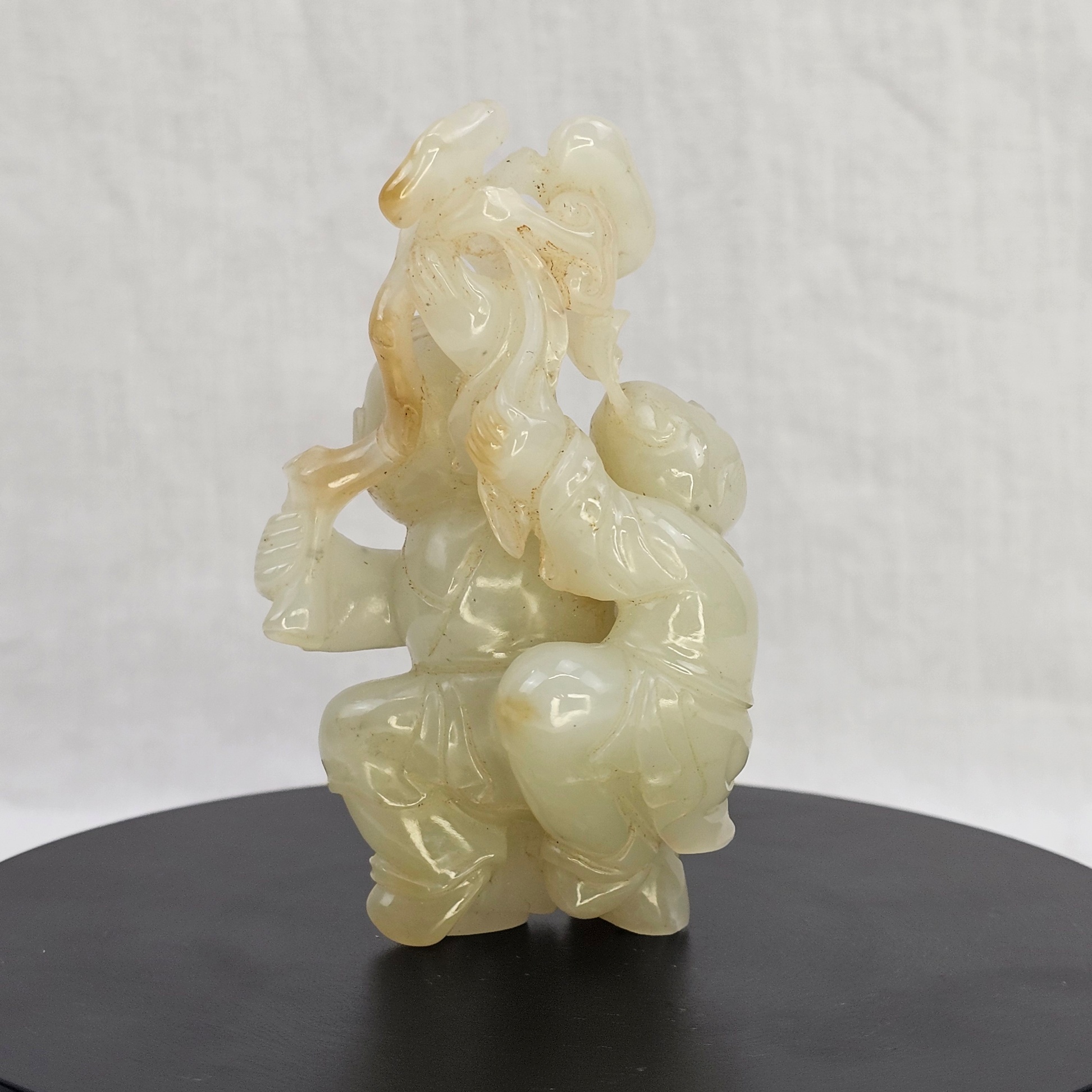
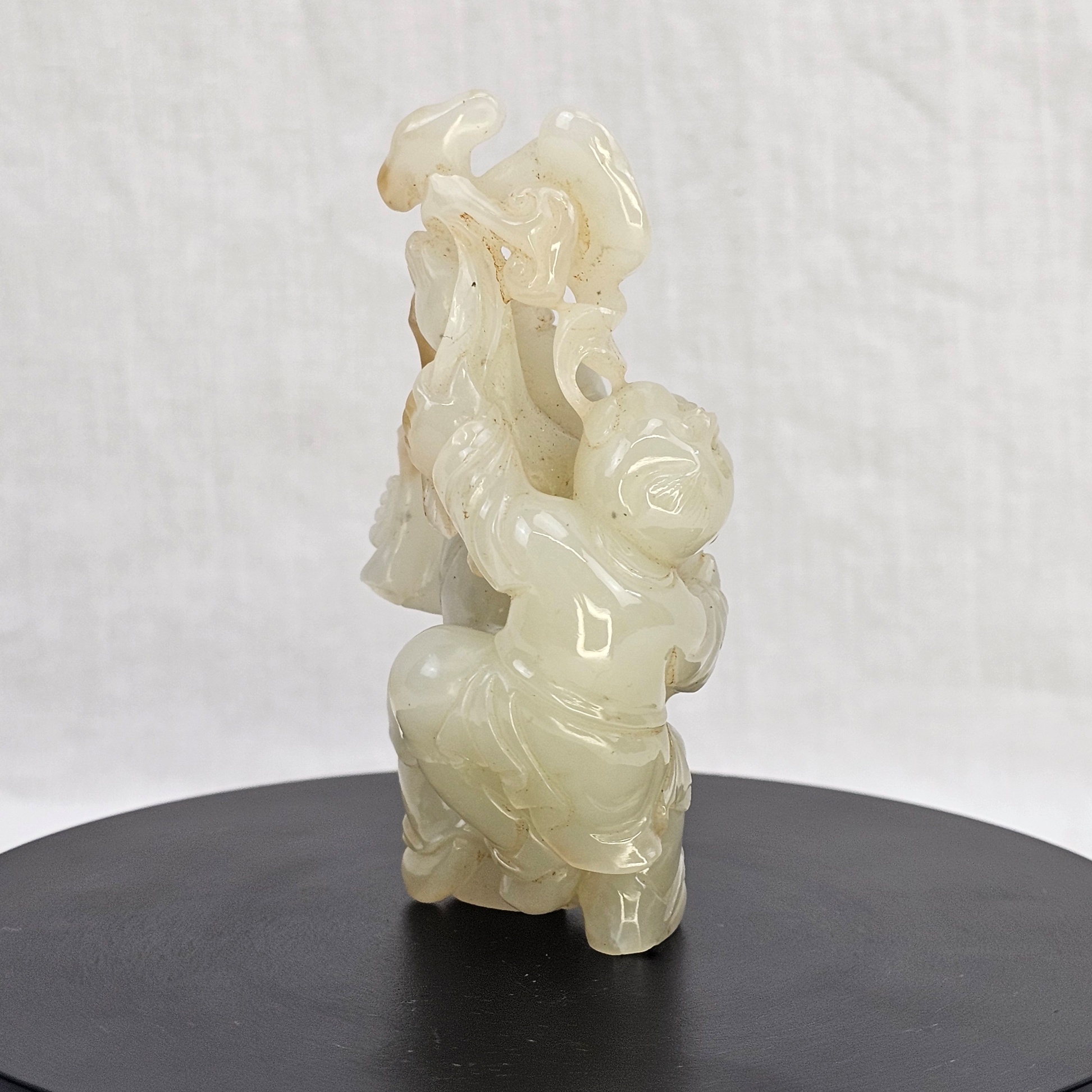
A finely hand-carved group in pale celadon nephrite, depicting a seated, smiling bearded immortal or deity (likely Liu Hai or a related "happiness" figure) flanked by two chubby young boys, one perched on each side of him, in a composition full of movement and auspicious symbolism. The central figure sits cross-legged with one hand raised, his round, jovial face carved with great character, wearing loose flowing robes incised with detailed drapery folds and a small belt clasp. Above and behind the group rises an elaborate openwork crest of scrolling ribbons, ruyi-head clouds, and a curling horned ram or goat motif, carved in a warmer, honey-toned russet area of the stone that contrasts attractively with the pale body of the carving. The two boys clamber over the immortal's shoulders, one reaching up towards the ribbon above. The stone is a soft, slightly translucent pale celadon with scattered minor brown flecks/inclusions and the natural russet "skin" deliberately retained and exploited for the crest and ribbon elements. The base is left as a natural, slightly irregular unpolished foot, typical of figure groups of this kind, and the piece sits on a later turned black wood/composite display stand.
Historical Context
Groups combining an immortal or deity figure with playful boys (tongzi) are amongst the most popular subjects in later Chinese jade carving, combining wishes for happiness, abundant male heirs, and longevity in a single auspicious composition. The use of a pale, slightly translucent celadon nephrite with a contrasting russet "skin" deliberately worked into the design — here forming the ribbon-and-cloud crest above the figures' heads — is a hallmark of skilled lapidary work that exploits the natural colour zones of the raw boulder, a technique with a long pedigree in Chinese jade carving. Pairs and groups of pale celadon jade carvings with russet "skin" cleverly worked into the design, such as boys at play with cats, parrots, and plantain leaves, are documented as a recognised Qing dynasty type (19th century), and single pale celadon and russet jade figures of this general scale and character, formerly in English private collections, are known from the 18th century onward. While the carving style and quality here are consistent with this broad tradition, the slightly busier, more crowded composition and softer detailing are most consistent with a later Qing or early Republic-period workshop production rather than an imperial commission.