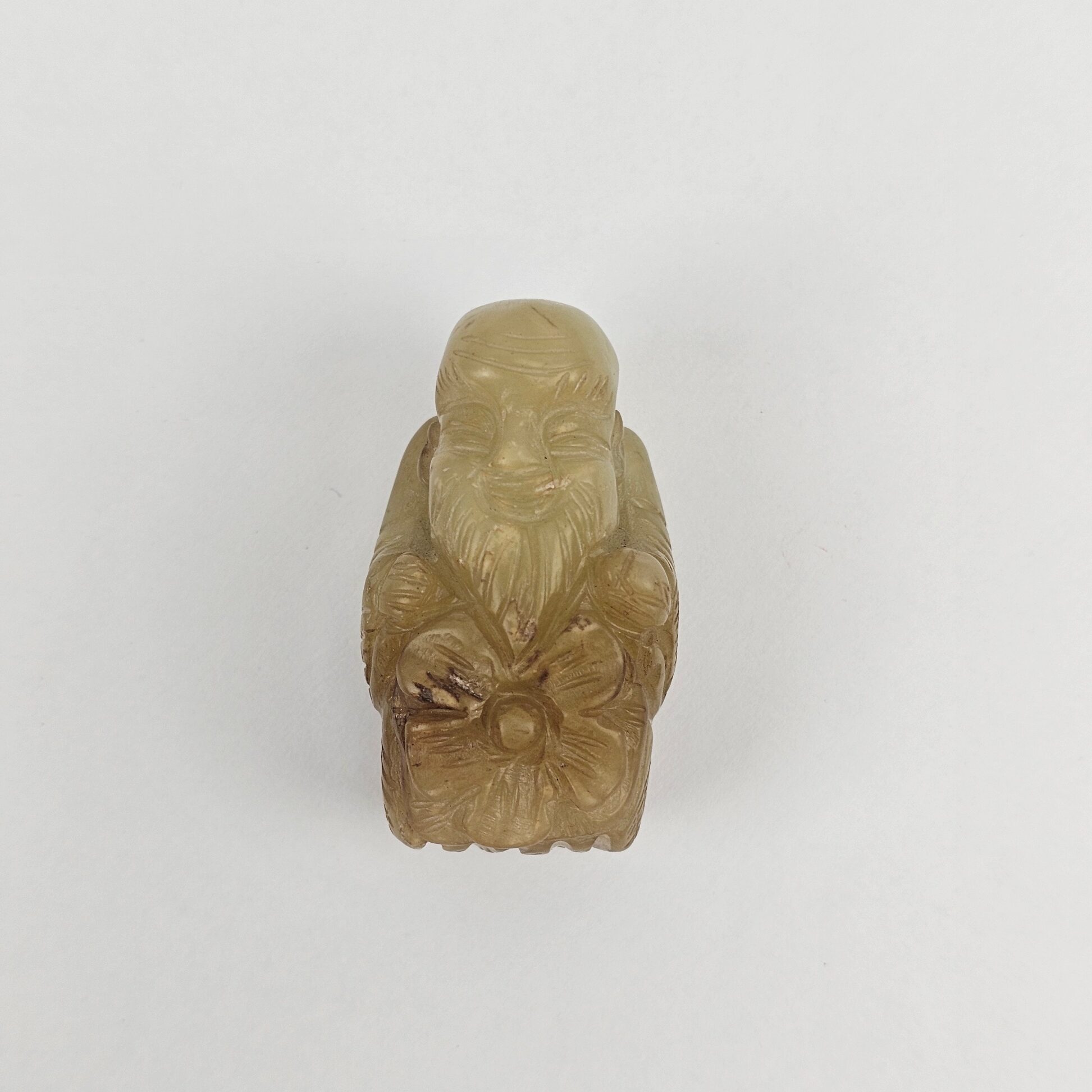
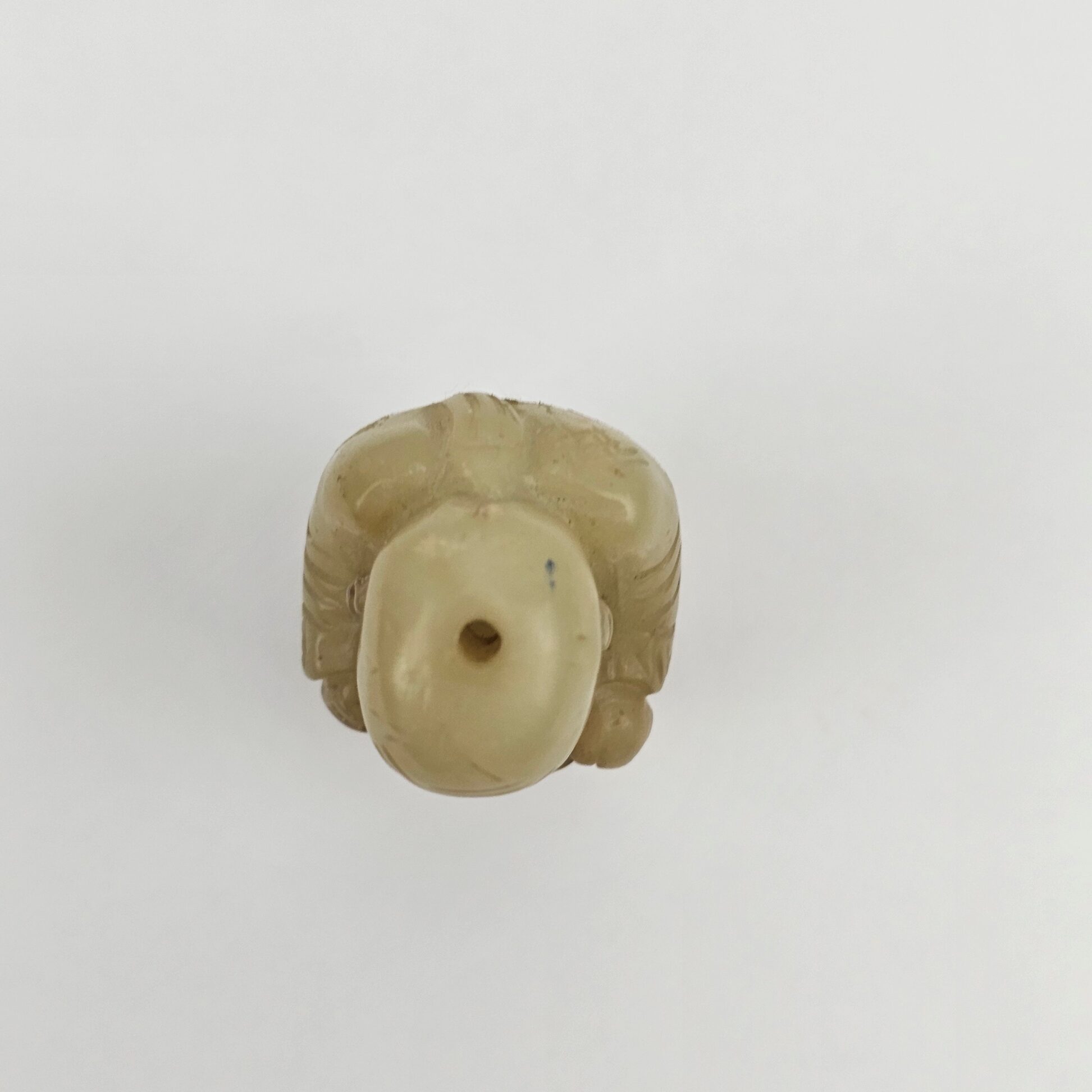
~ Chinese Qing Dynasty Warm Yellow Nephrite Jade Pendant Figure of Shoulao with Peach of Immortality, 19th Century ~
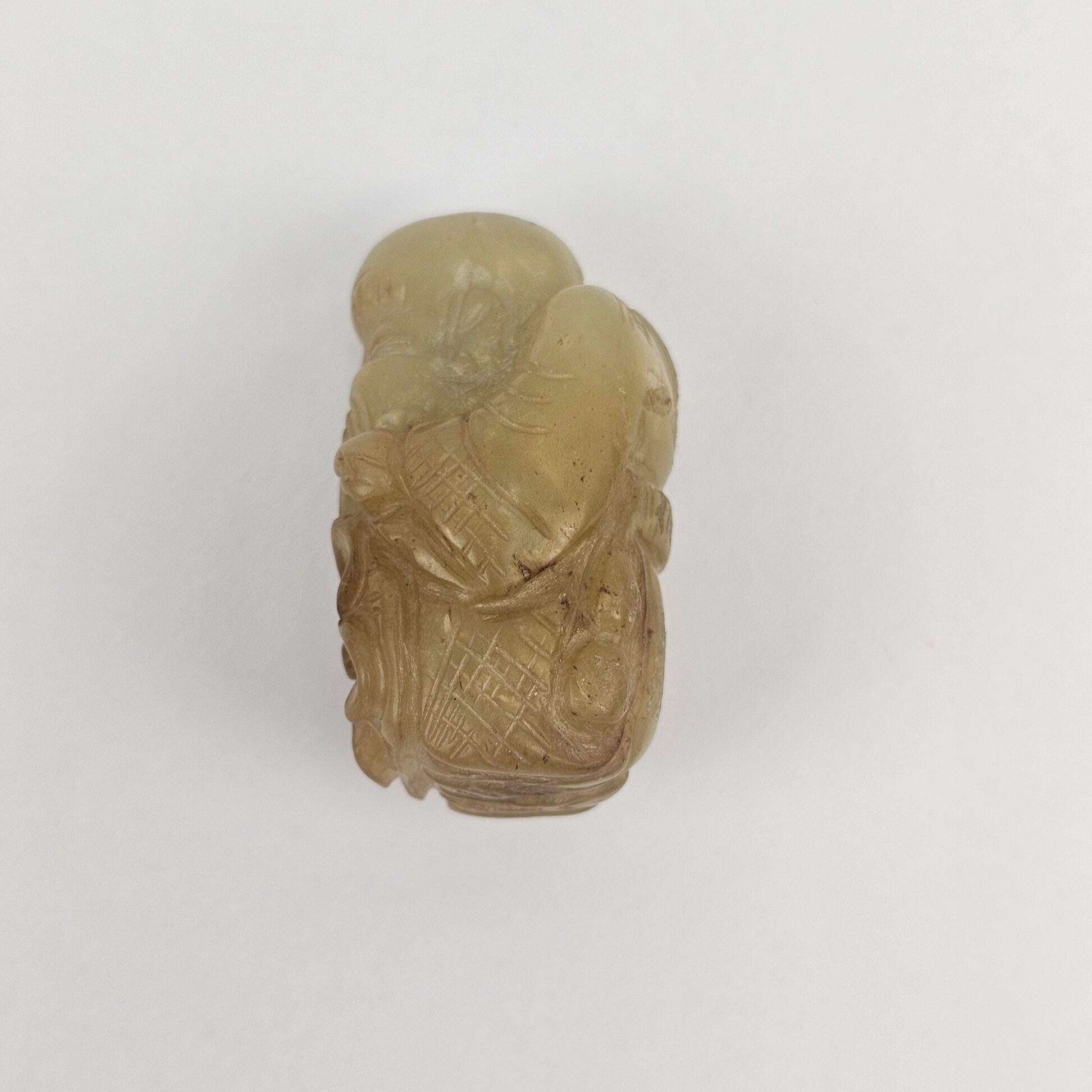
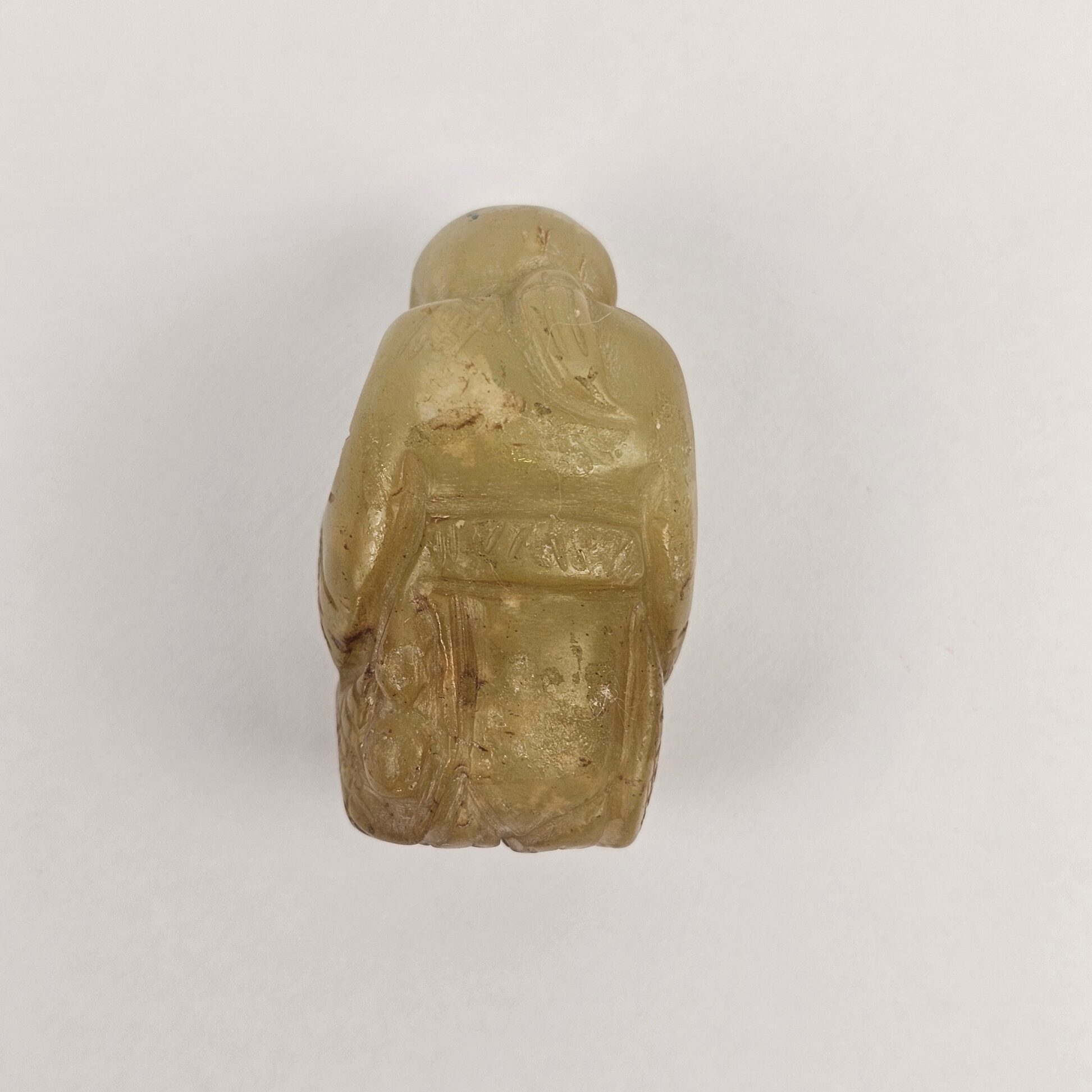
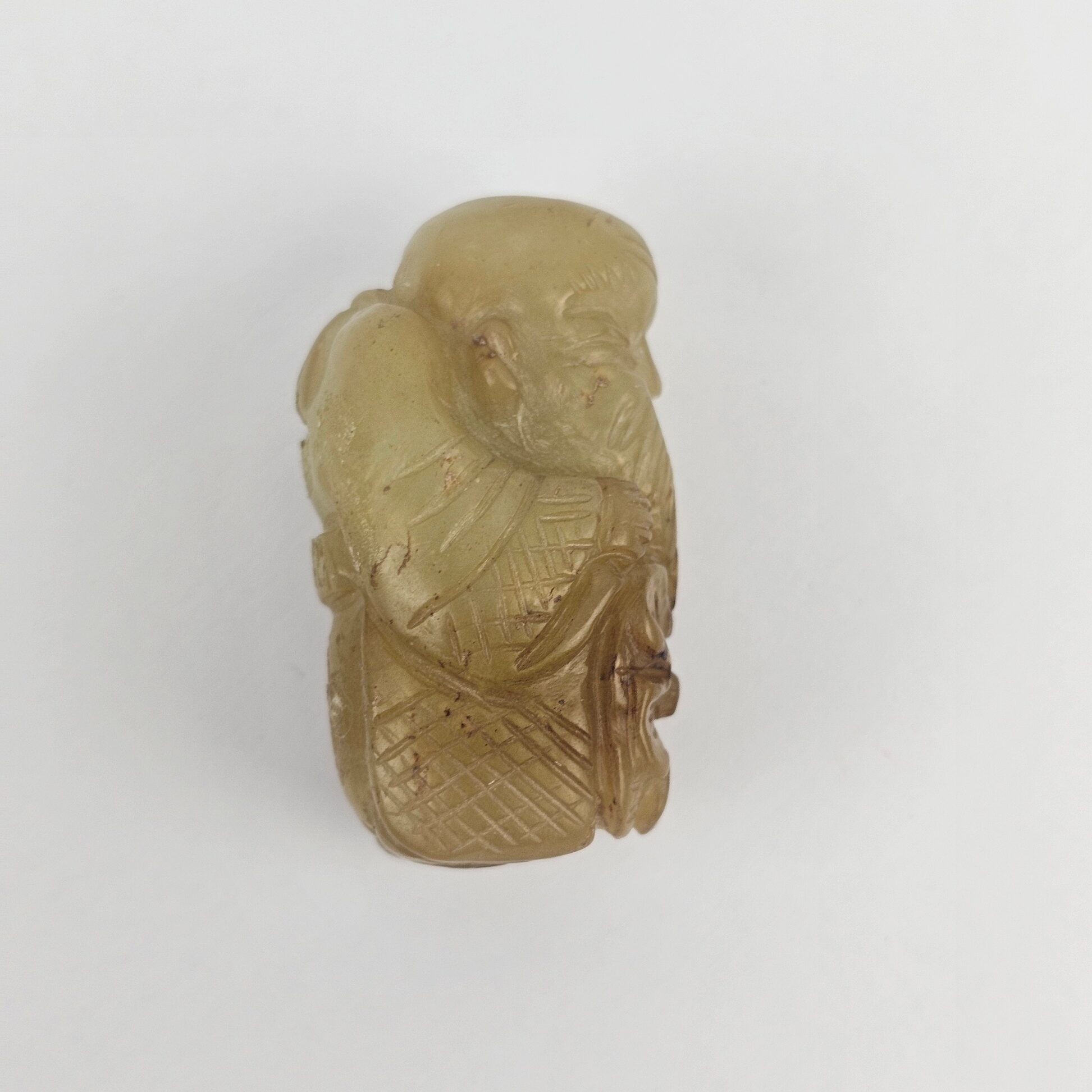
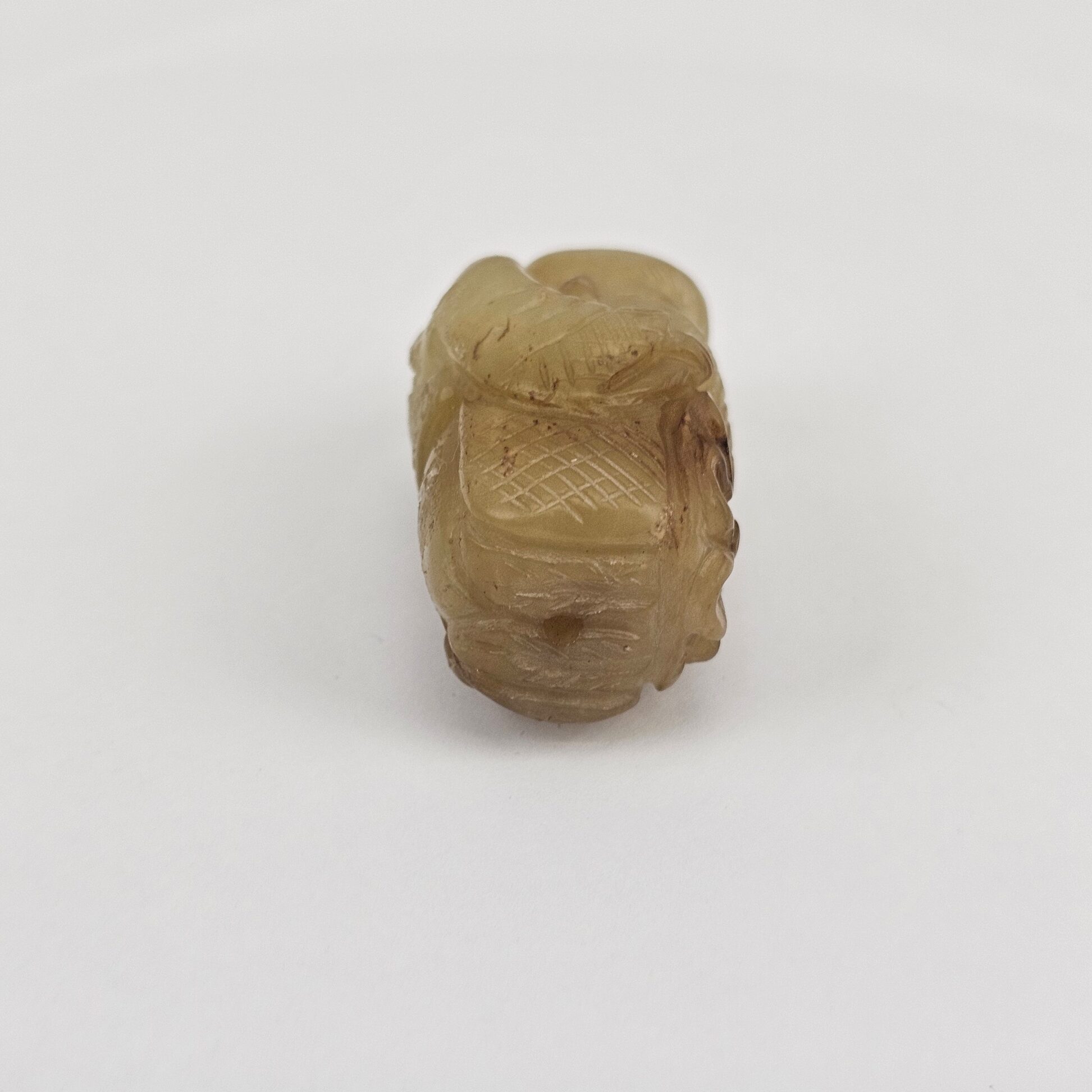
A finely hand-carved pendant figure worked from a single piece of warm golden-yellow nephrite jade, depicting Shoulao, the Chinese God of Longevity, shown as a rotund old man of great character, the whole conceived in a compact upright form with a drilled suspension aperture through the base confirming its original function as a personal pendant or amulet. The figure stands broad and solid, with a large rounded belly and wide body tapering slightly toward the flat oval base. The face is the most accomplished element of the carving, rendered with considerable expressiveness, depicting a bearded old man with heavy-lidded smiling eyes, a prominently modelled nose, rounded cheeks parted in a wide, genial smile, and a long flowing beard rendered through densely incised parallel lines spreading across the upper chest. The head is broad, smooth and domed, the high forehead and bald or closely capped crown characteristic of Shoulao iconography. The arms are shown clasped before the body, holding a large peach, the surface of which is elaborately decorated with a prominent multi-petalled flower with a central boss, surrounded by further incised petal and leaf forms. The front of the body carries this bold floral decoration integrating seamlessly with the figure. The sides and reverse of the piece are densely worked with a fine cross-hatched lattice pattern suggesting the fabric of the deity's robe, with additional incised botanical detail in the transitional areas. Two further rounded forms are visible at the upper rear, possibly representing subsidiary peaches, peach branches, or an attendant element. The base of the piece shows a carved oval protrusion through which the suspension hole passes. The stone is a warm and luminous golden-yellow jade throughout, even in tone, with areas of slightly deeper amber developing toward the lower body and in the deeper recesses. The surface carries a fine smooth polish.
Historical Context
Shoulao, the God of Longevity, also known as Shouxing or Nanjixianweng, the Old Man of the South Pole Star, is one of the most beloved and enduringly popular deities in the Chinese popular religious pantheon. He is invariably depicted as a cheerful, broad-domed, bearded old man of vast age, typically holding the peach of immortality, the fruit grown in the paradise garden of the Queen Mother of the West, Xi Wangmu, which ripens only once every three thousand years and bestows eternal life upon those who taste it. His depiction with the peach as his primary attribute makes the iconography here unmistakeable, and the floral decoration on the peach surface adds further layers of auspicious botanical symbolism.
The Qing imperial court placed enormous cultural weight on longevity, with the Kangxi and Qianlong Emperors hosting grand longevity banquets for elderly subjects and commissioning vast quantities of Shoulao-related art. Bonhams have documented fine pale green jade Shoulao figures from the Qianlong period in specialist auction catalogues, noting the deep association between this deity and imperial and elite culture. Small Shoulao pendant figures in nephrite jade were among the most widely produced personal devotional objects of the Qing period, worn to invoke blessings of long life for the wearer or given as gifts for birthdays and celebrations of great age. The pendant form here, with its drilled suspension hole, is consistent with an object worn close to the body as a continuous protective and auspicious presence.
Yellow nephrite of the warm golden tone seen here was among the most prized jade colours within the classical Chinese aesthetic canon, associated with the earth element, imperial virtue, and the rich mineral wealth of the Khotan region. Its warmth and luminosity in small carved figures, where the stone's golden quality catches the light on the rounded forms of the face and hands, made it particularly desirable for devotional pendants of exactly this type.