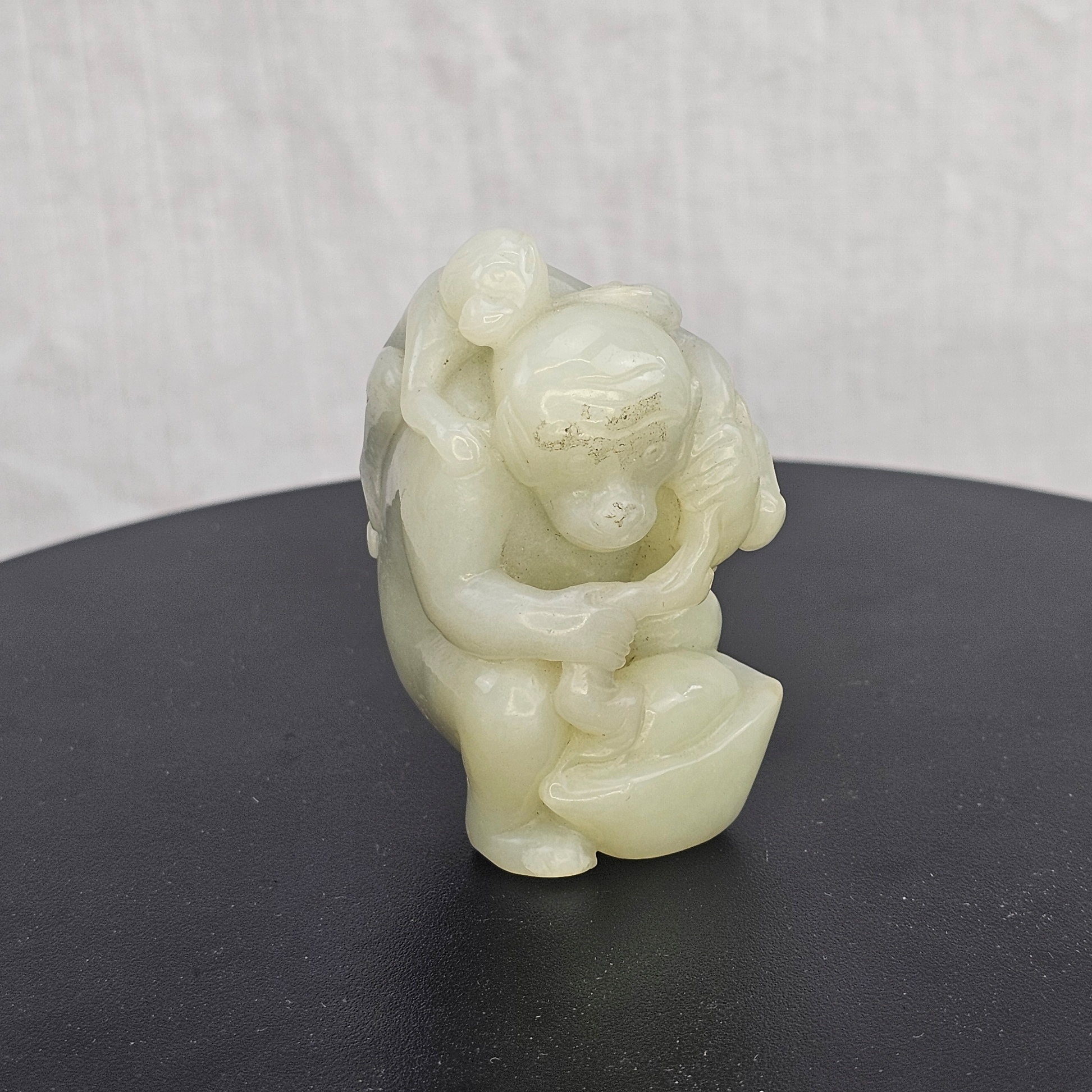
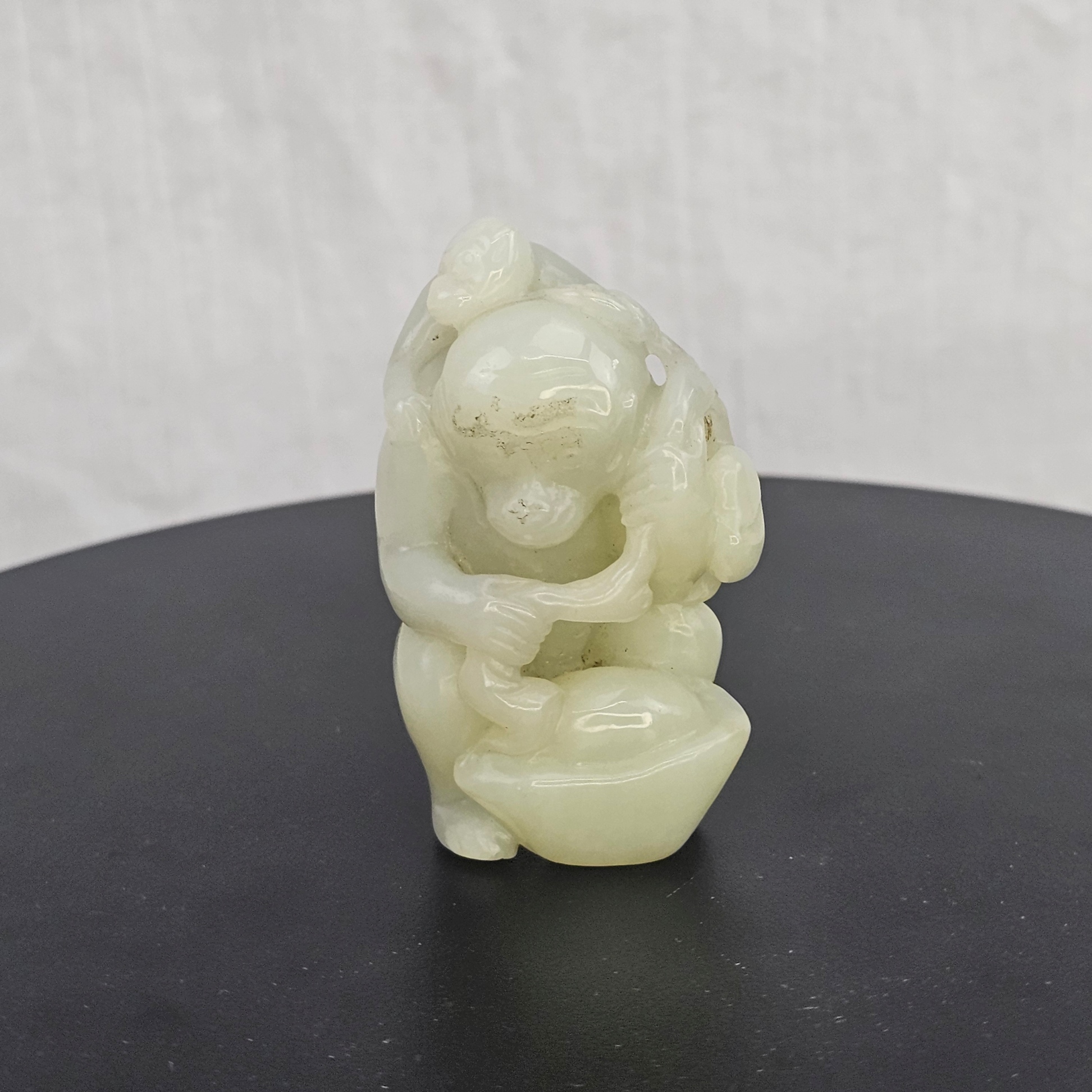
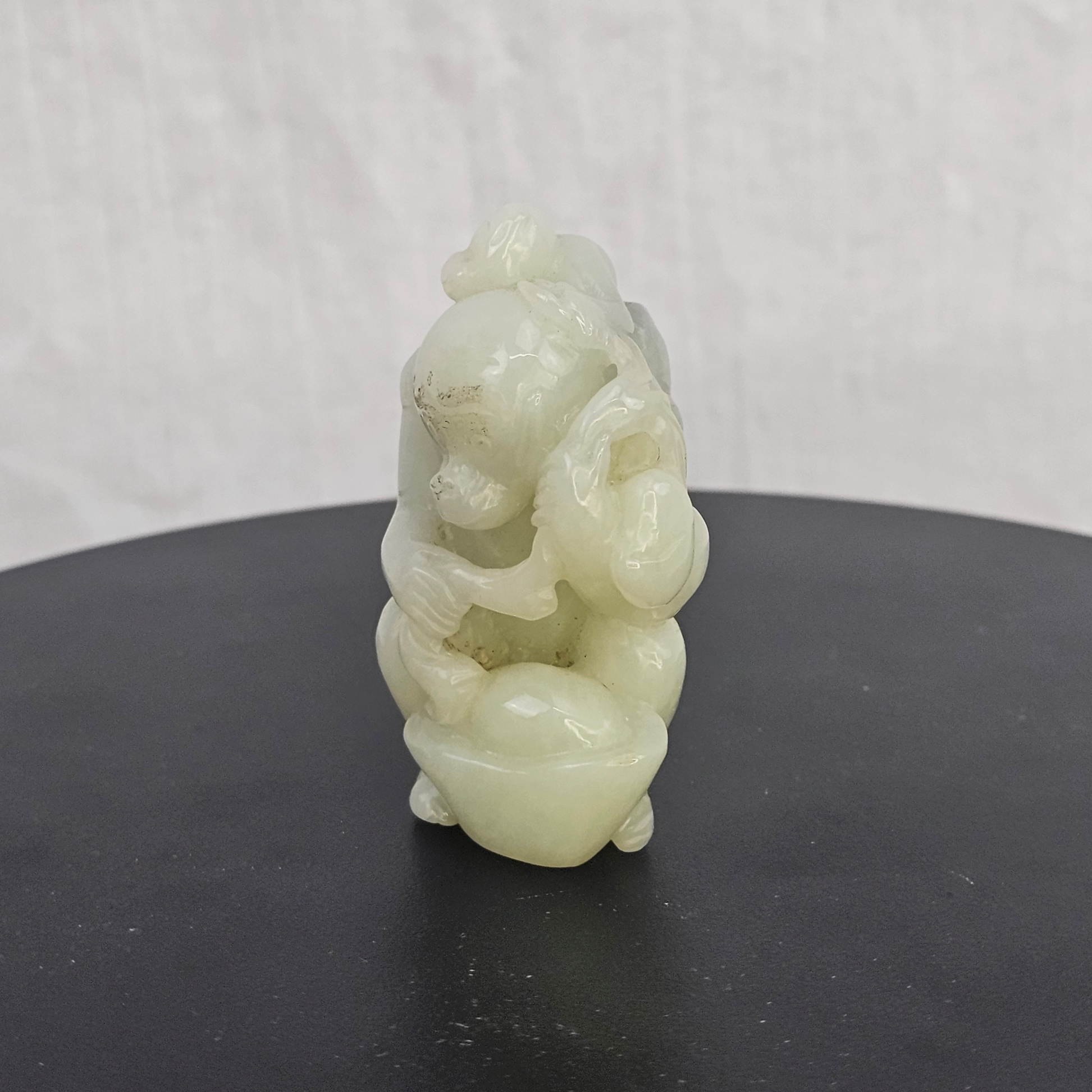
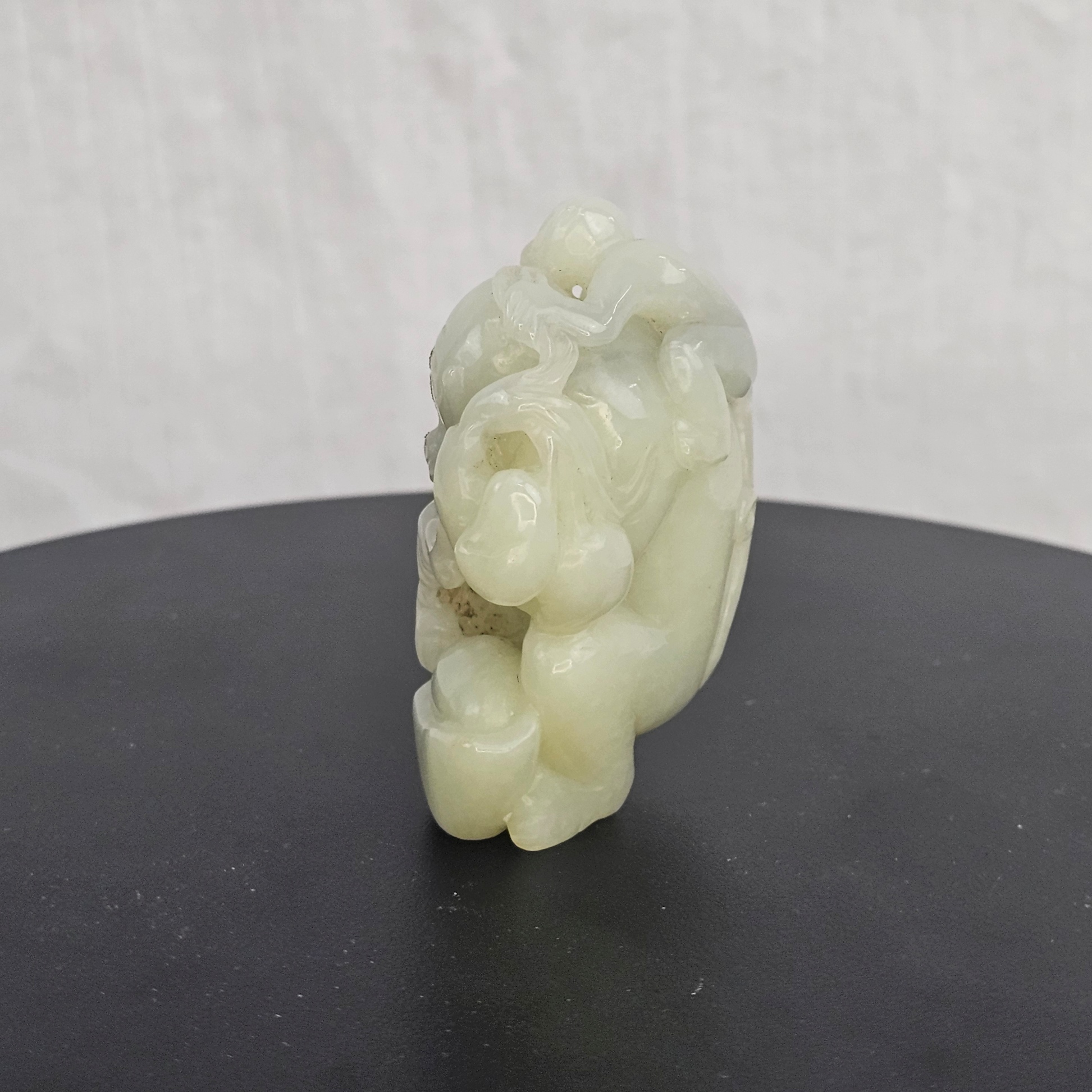
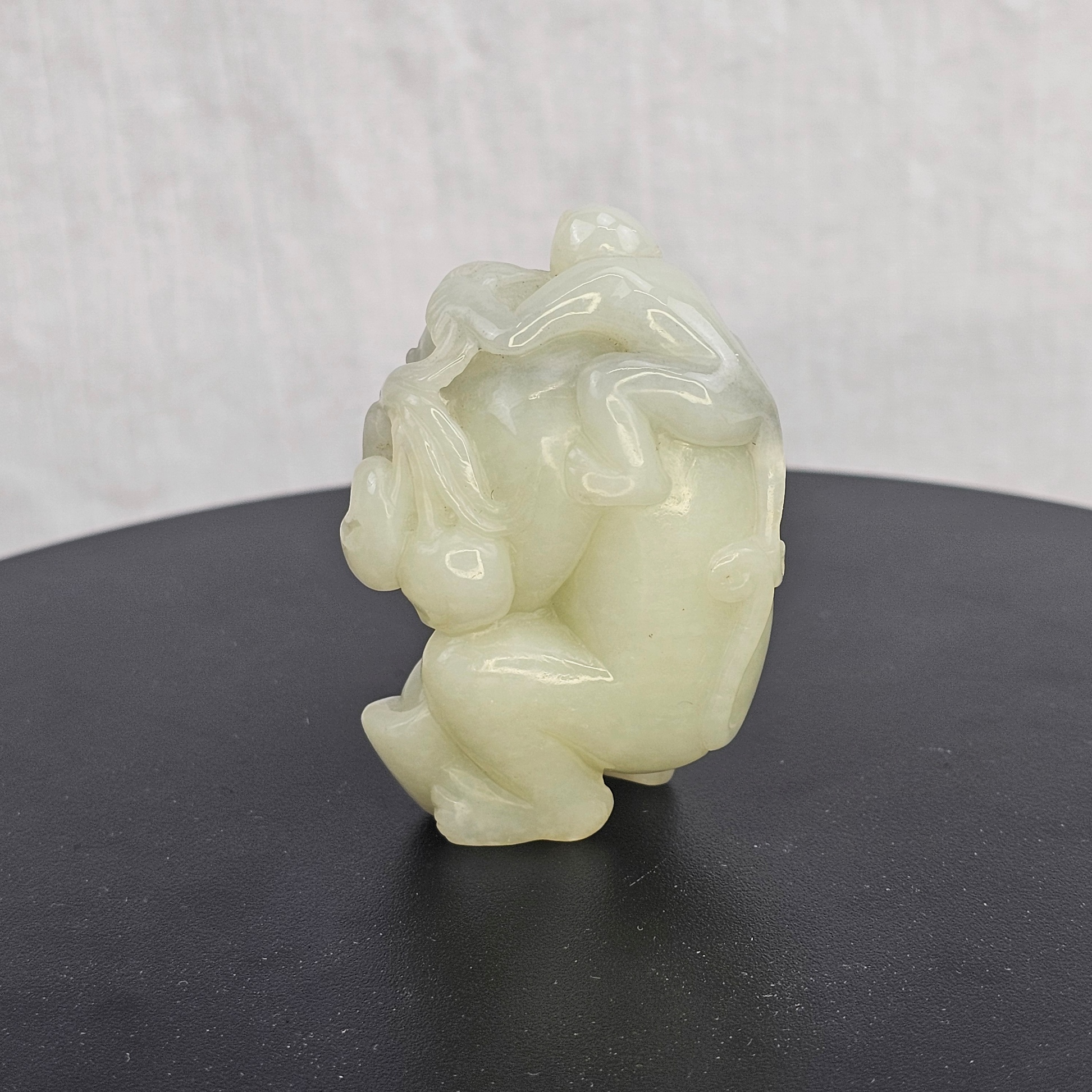
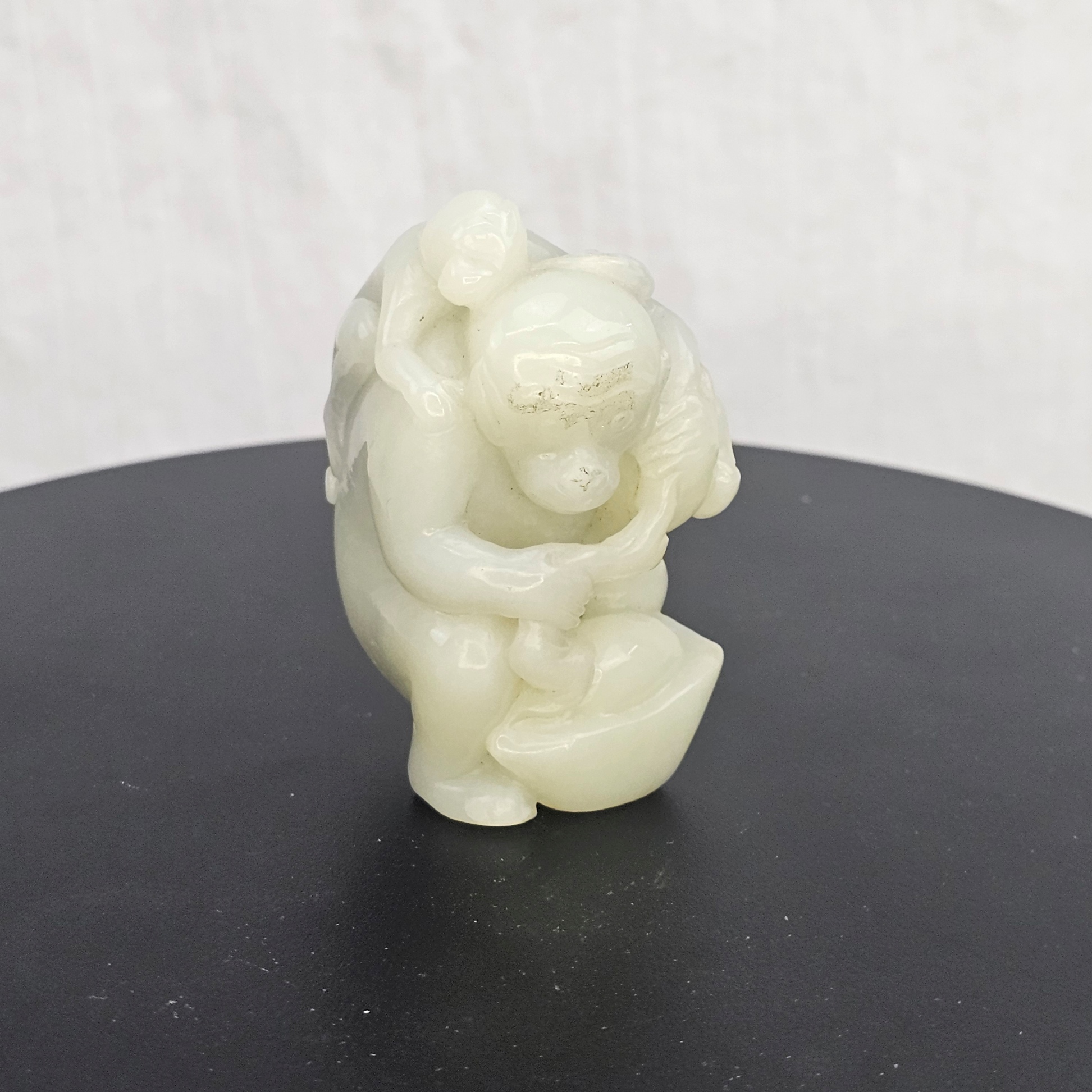
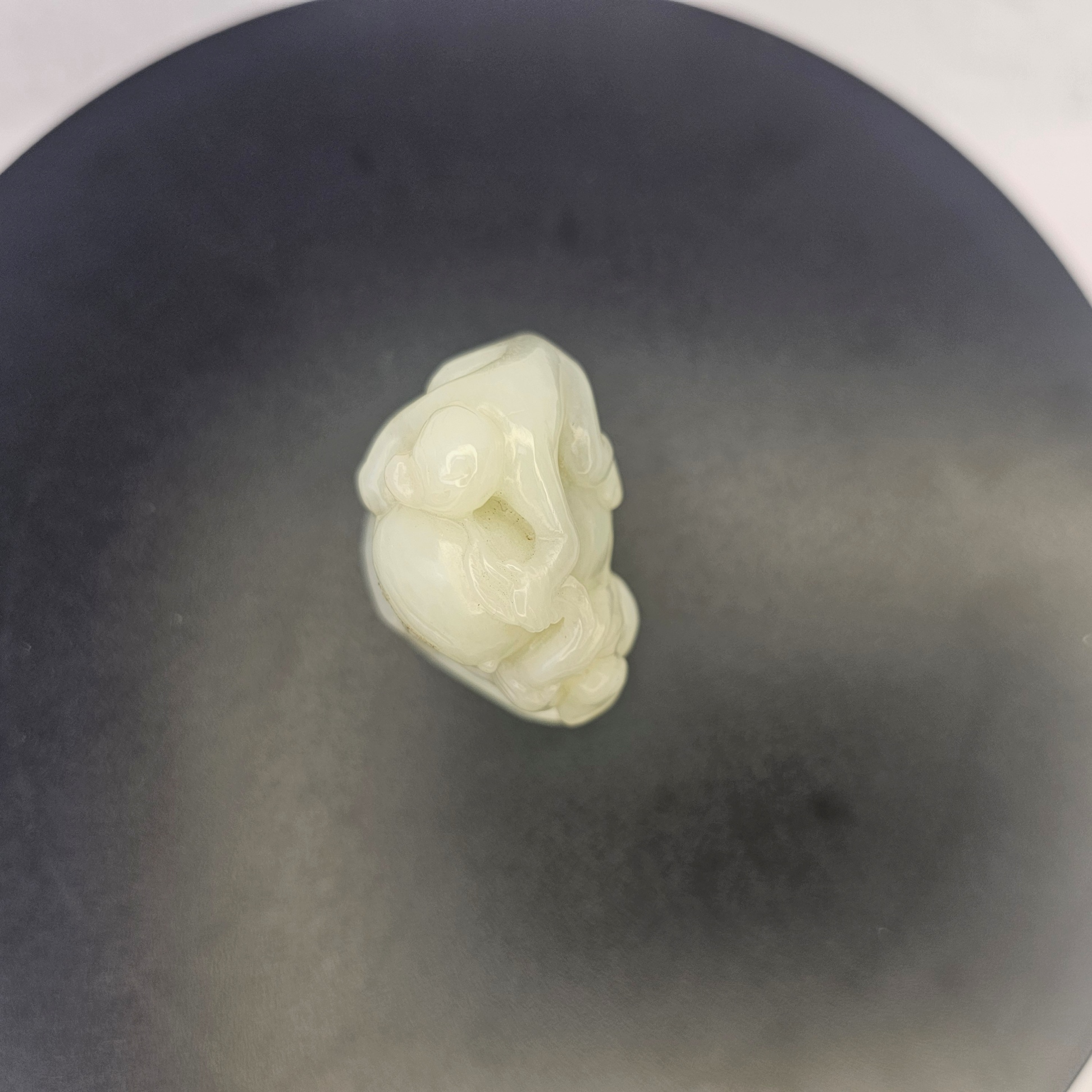
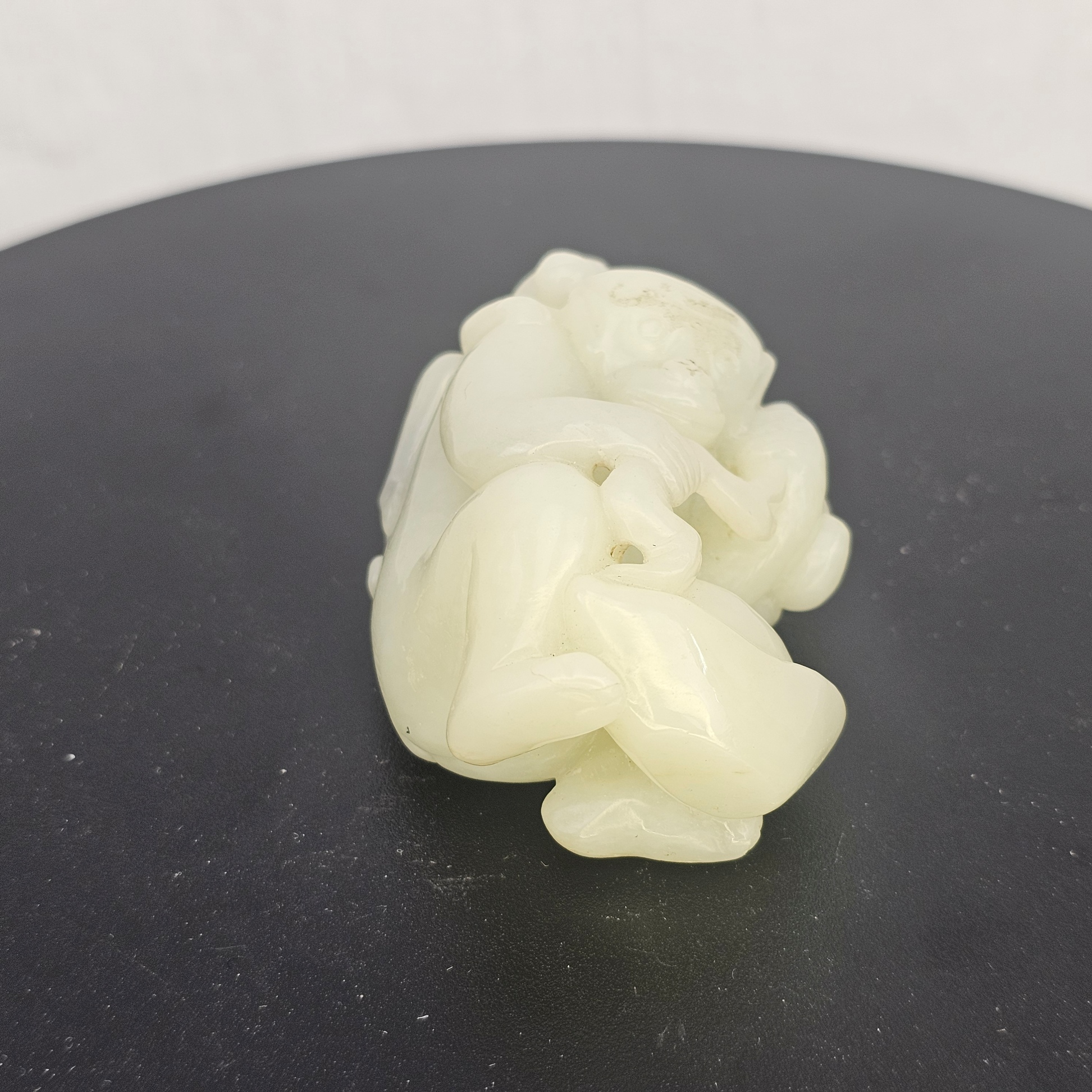
~ Chinese Qing Period Two Monkeys Nephrite Jade Sculpture ~
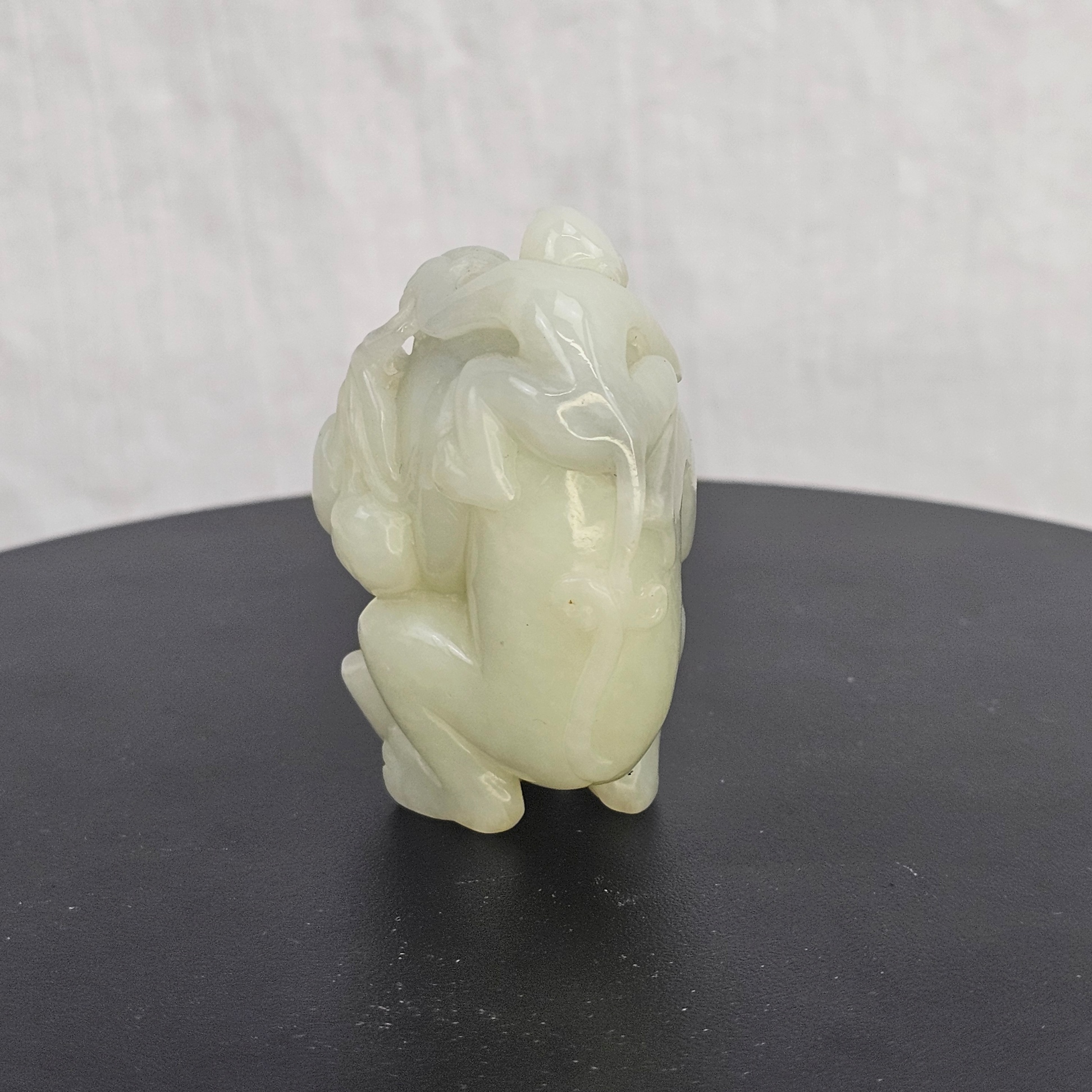
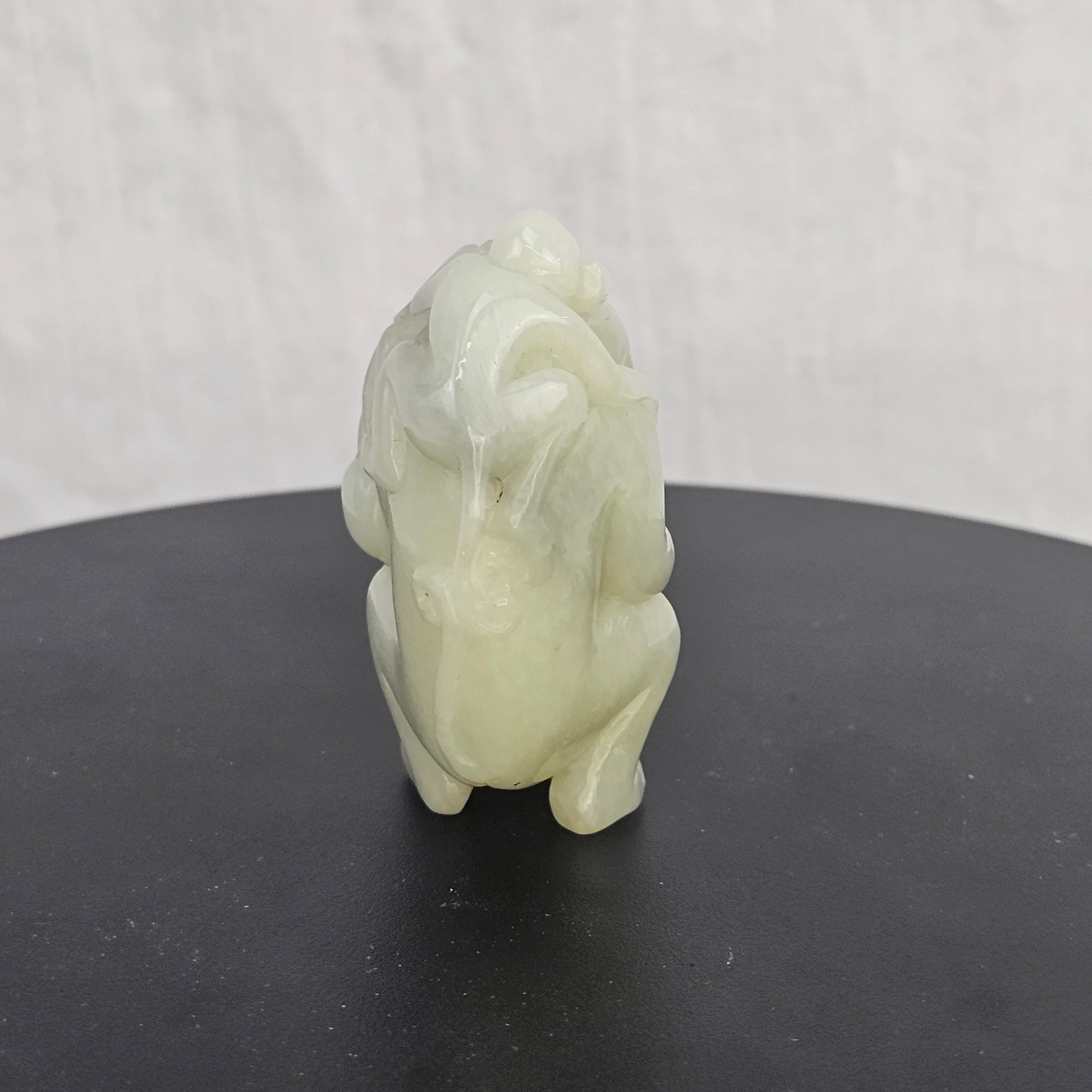
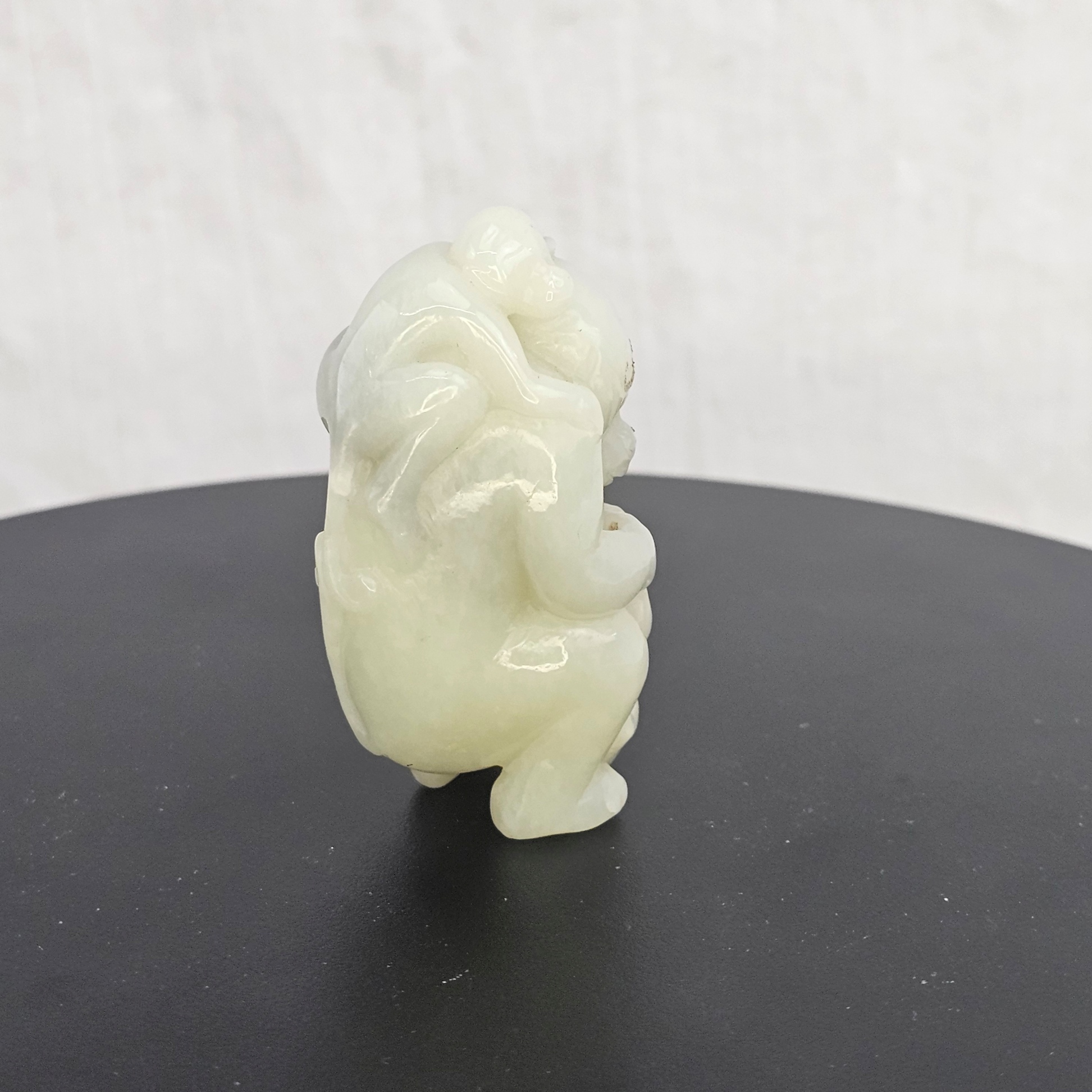
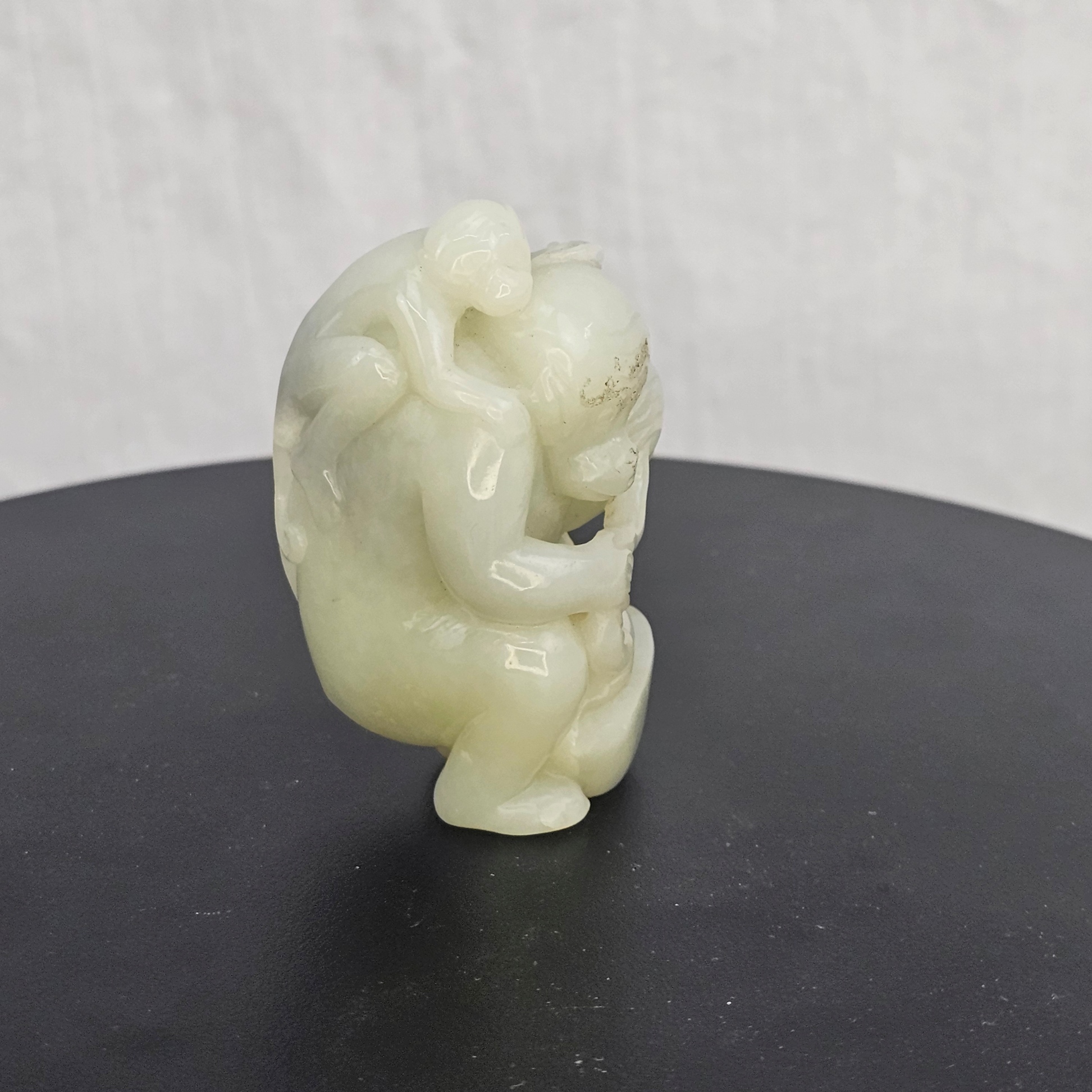
A small carved group depicting a seated monkey holding a large peach or fruit between its forepaws, with a second, smaller monkey clambering onto its back and reaching toward its shoulder. The stone is a smooth, even, pale celadon to white nephrite jade with a soft waxy lustre and only minor natural surface markings. A small pierced hole appears near the top of the group, likely either a deliberately drilled suspension hole or a natural void in the stone incorporated into the design, a technique often used by Chinese jade carvers to work around flaws or hollows in the raw material.
Historical Context
Groups of this kind, showing a monkey with its young clinging to its back, belong to a well established tradition of punning, auspicious imagery in Chinese decorative art. In Chinese, "hou," the word for monkey, is a homophone of "hou," the word for marquis, while "bei," meaning back, also sounds like the word for "generation." A carving of a monkey carrying its young on its back is therefore read as the rebus "beibei fenghou," conveying the wish that each generation of a family should be granted noble rank, a popular sentiment for gifts marking career success or the birth of a son. The peach reinforces the auspicious theme, since it is one of the most enduring symbols of longevity in Chinese art, tied to the legend of the immortality peaches grown in the orchard of the Queen Mother of the West. Carvings combining monkeys with peaches were produced in considerable numbers from the Qing dynasty onward, in materials ranging from fine white and pale green nephrite to more workaday stone, for the domestic gift market as much as for display.