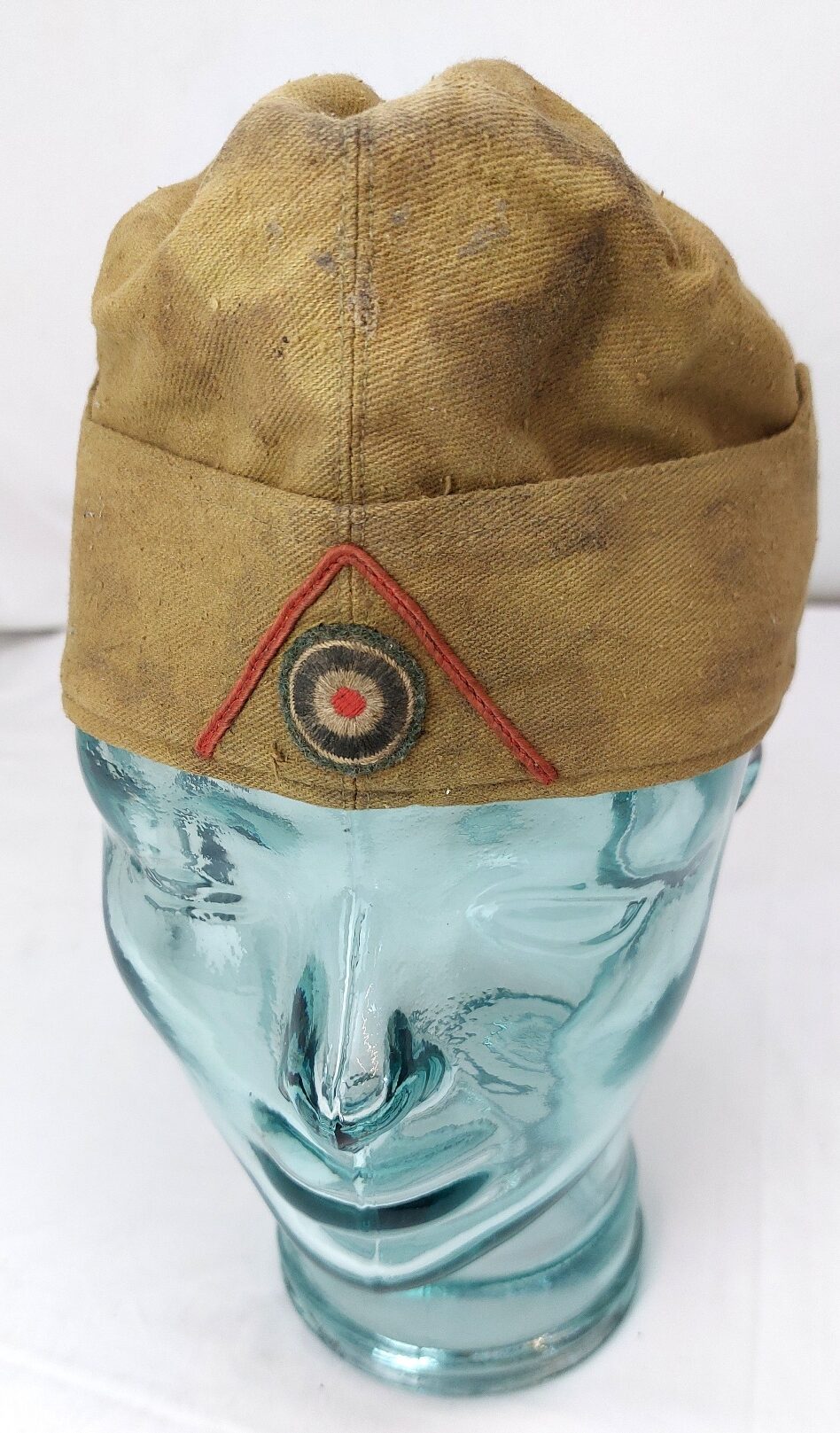
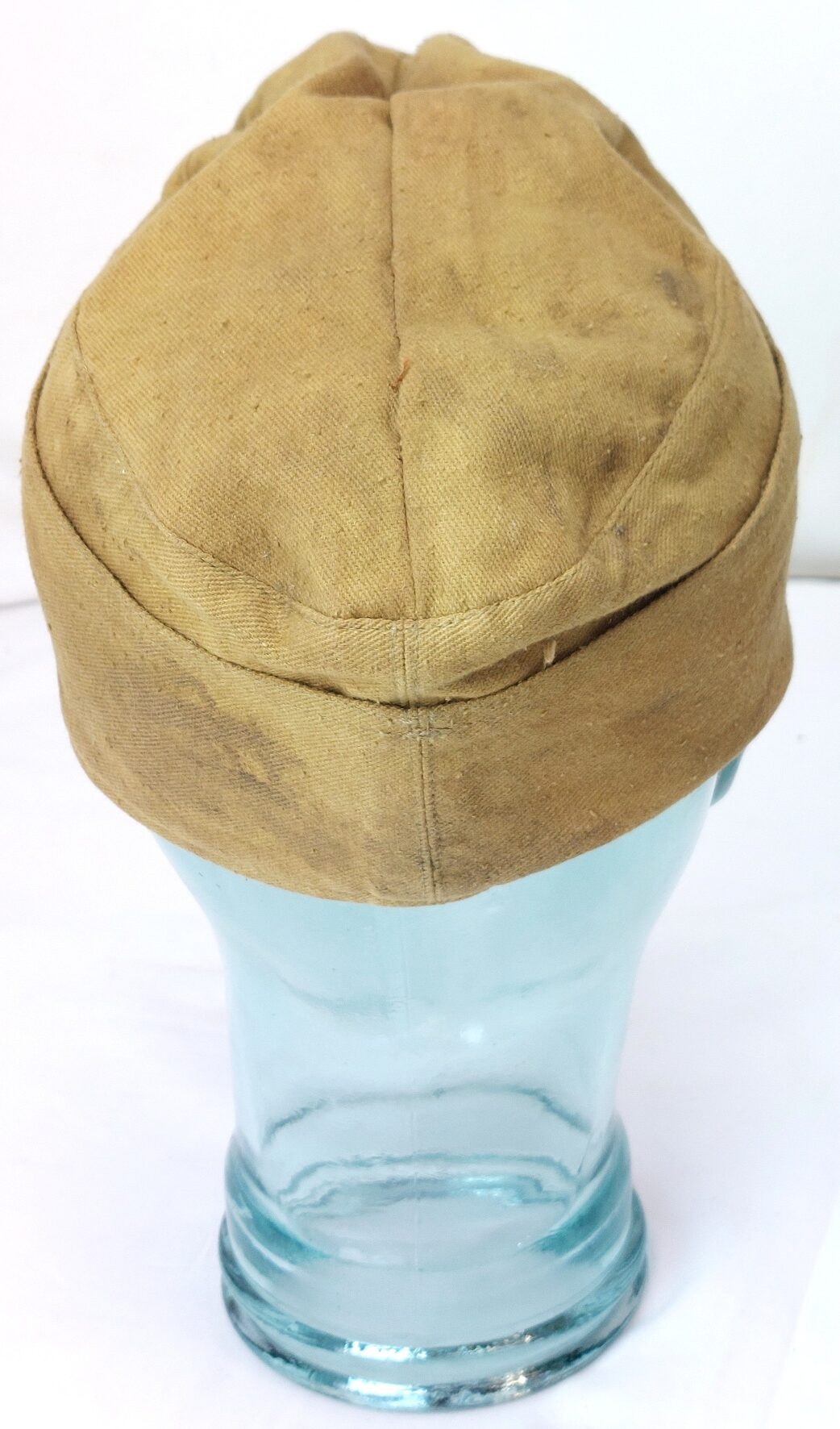
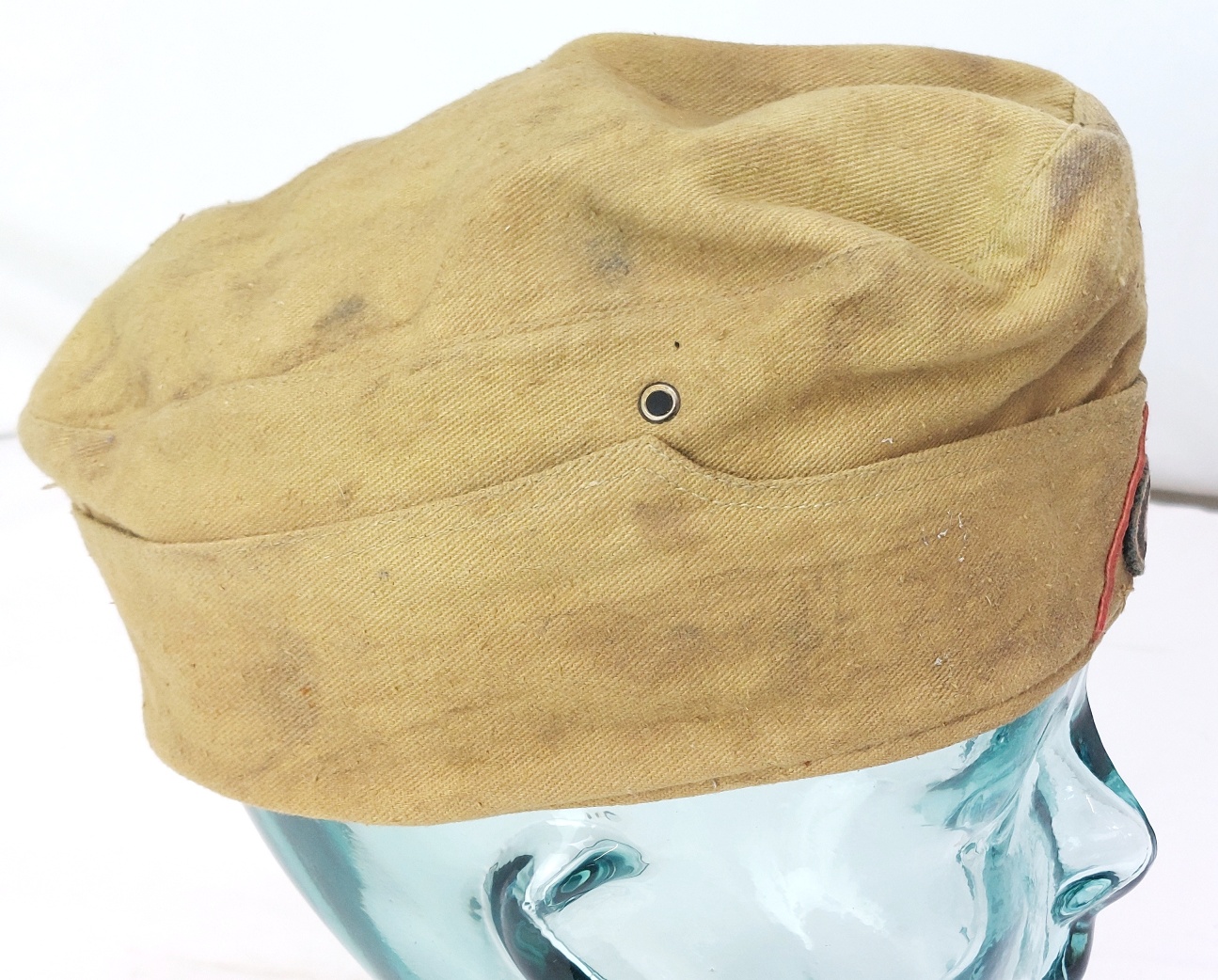
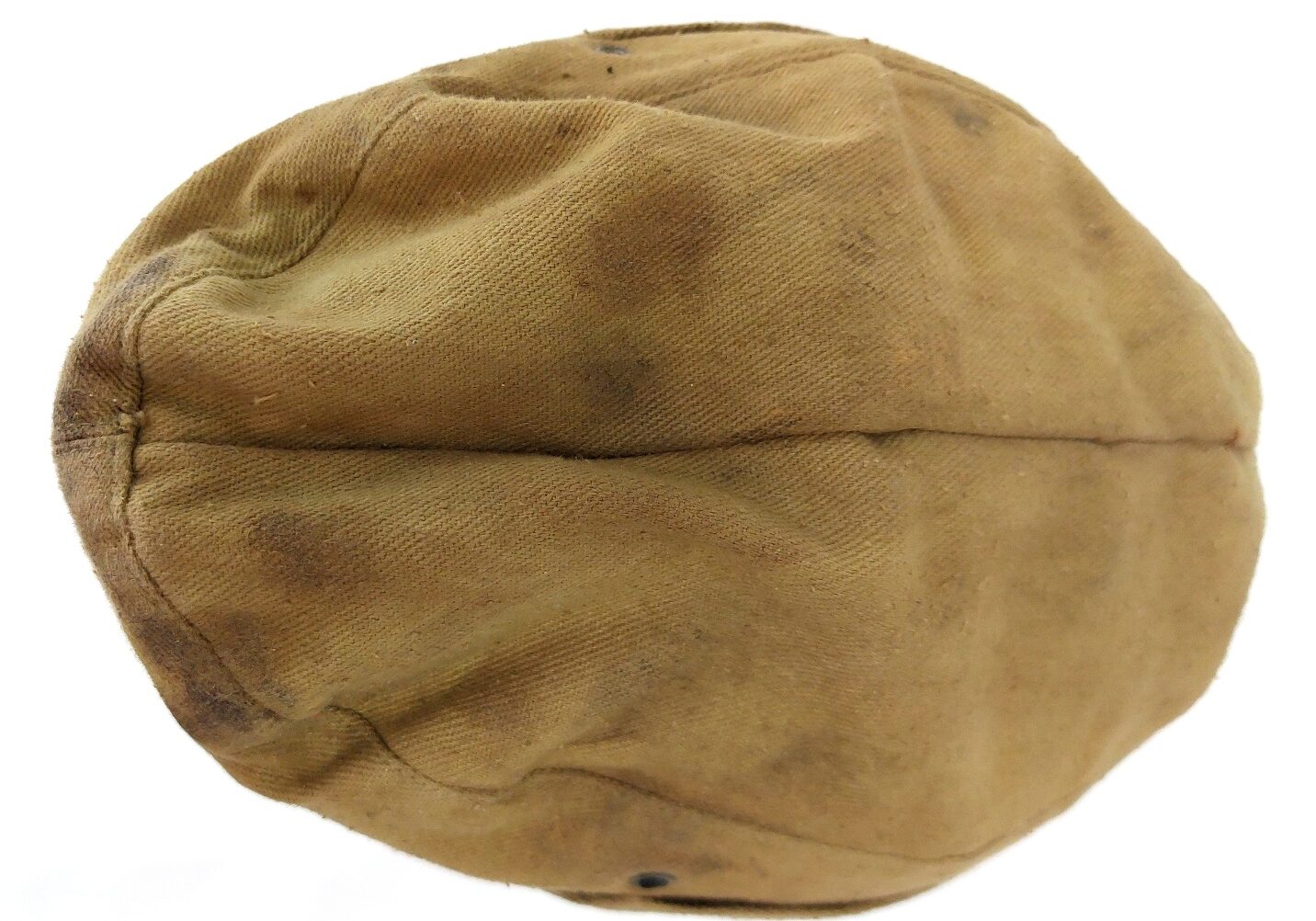
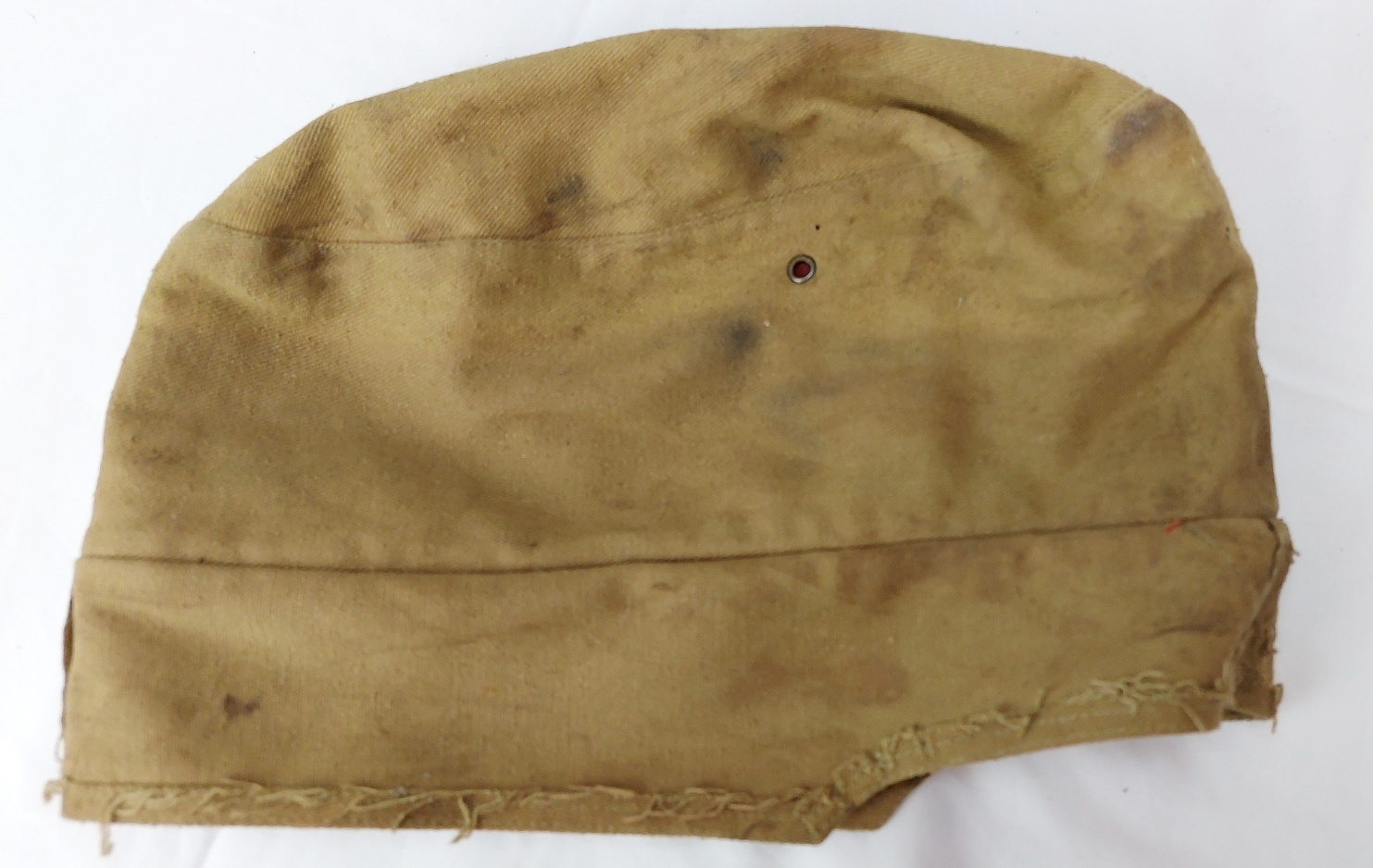
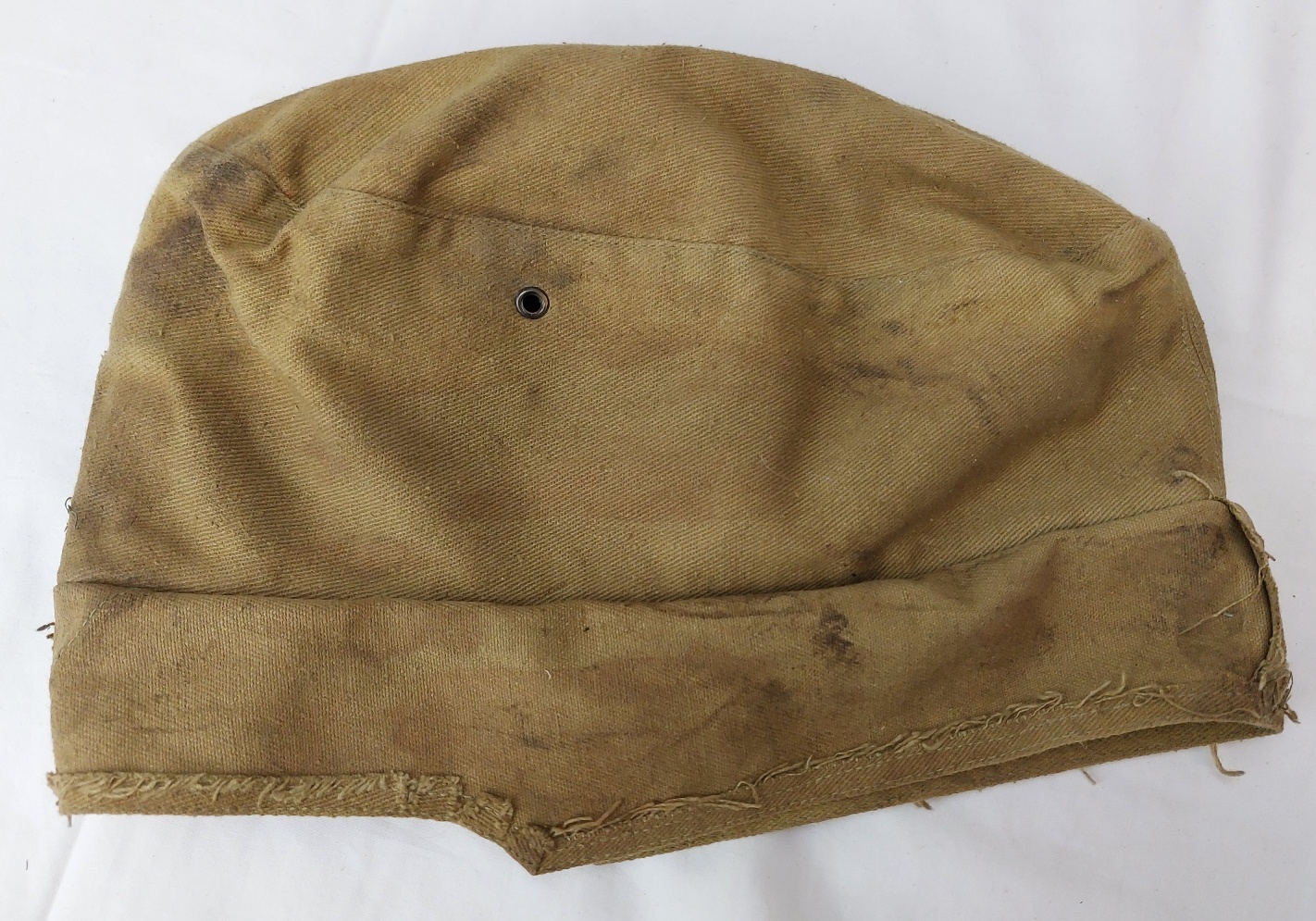
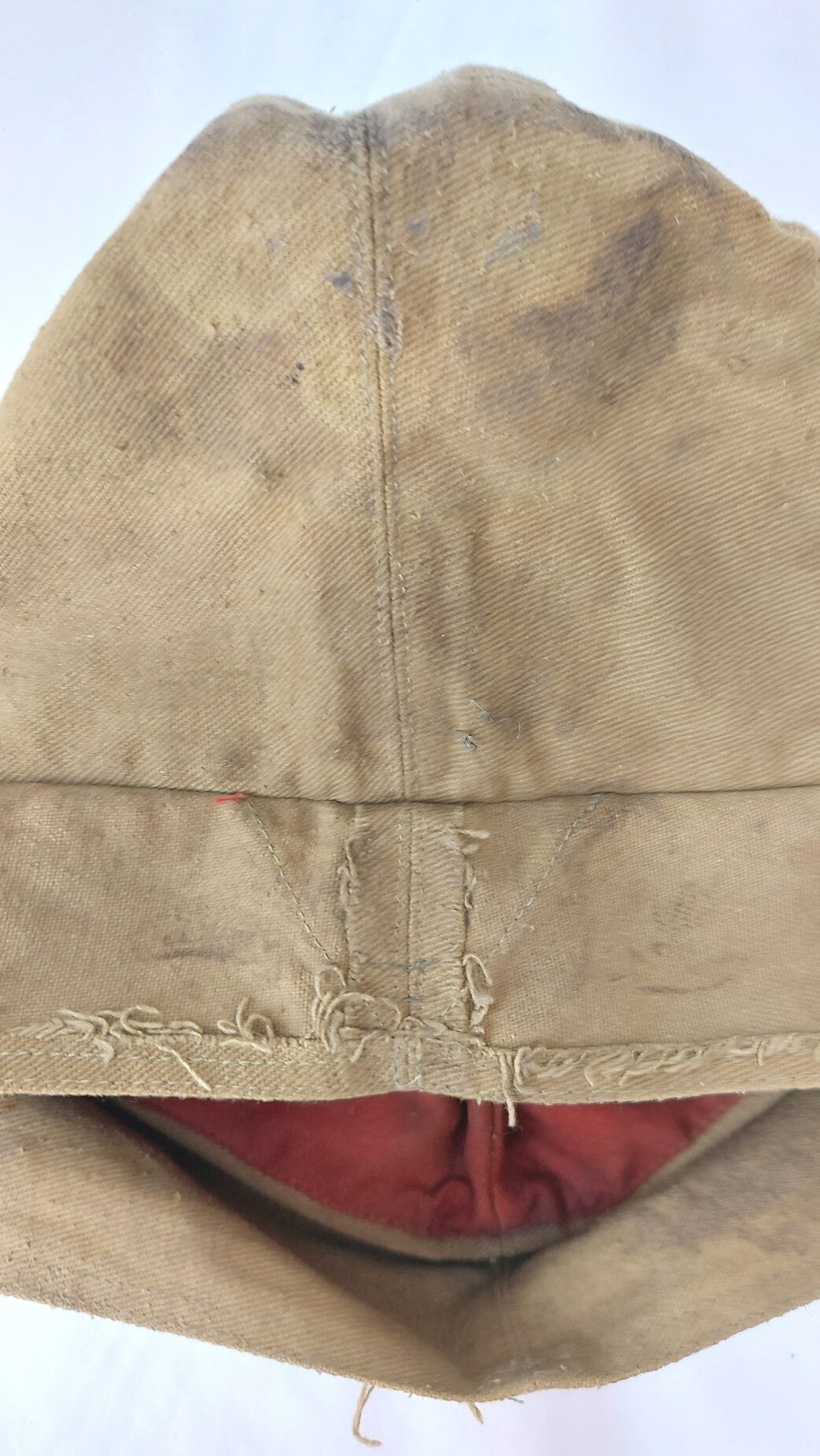
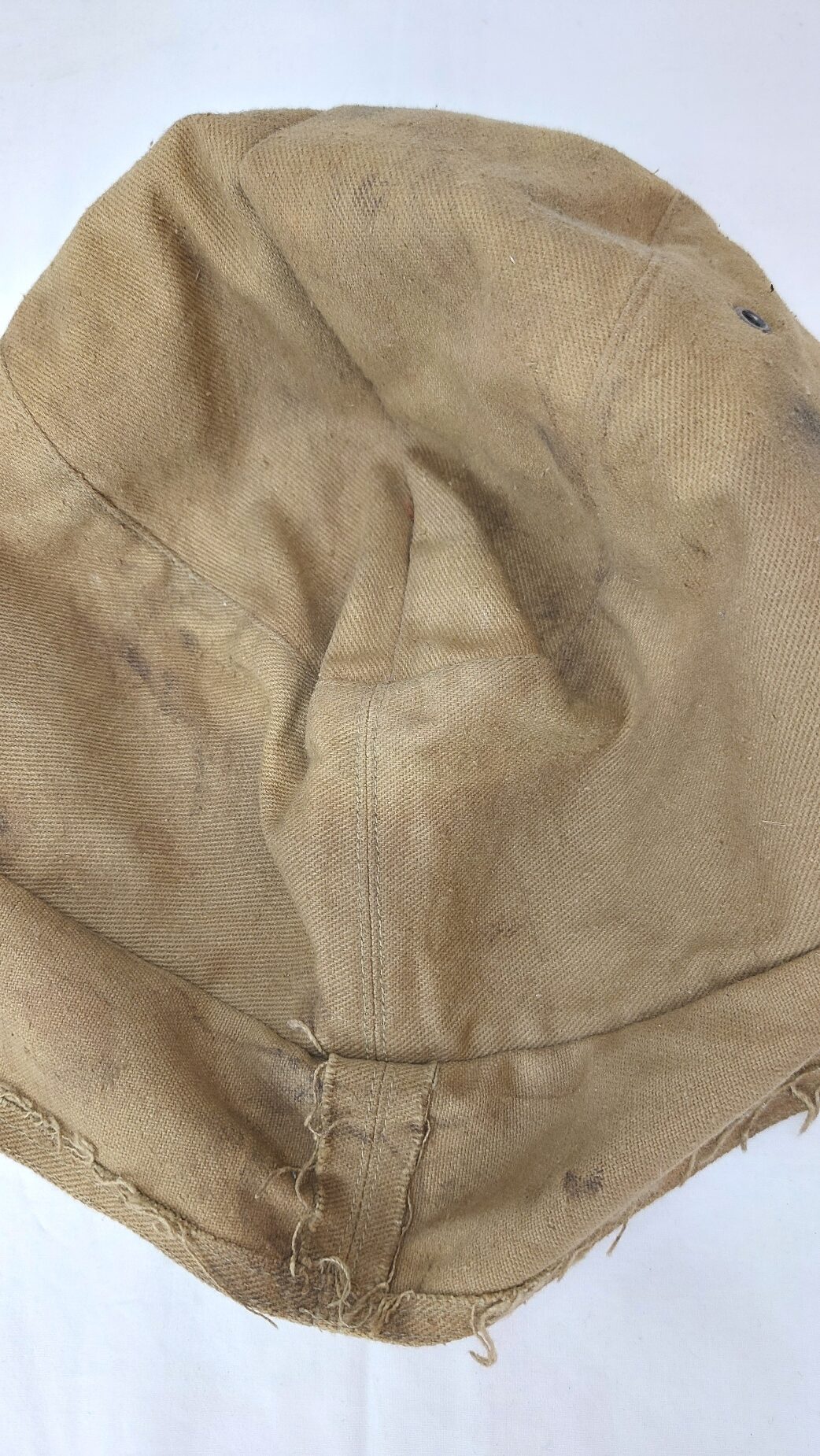
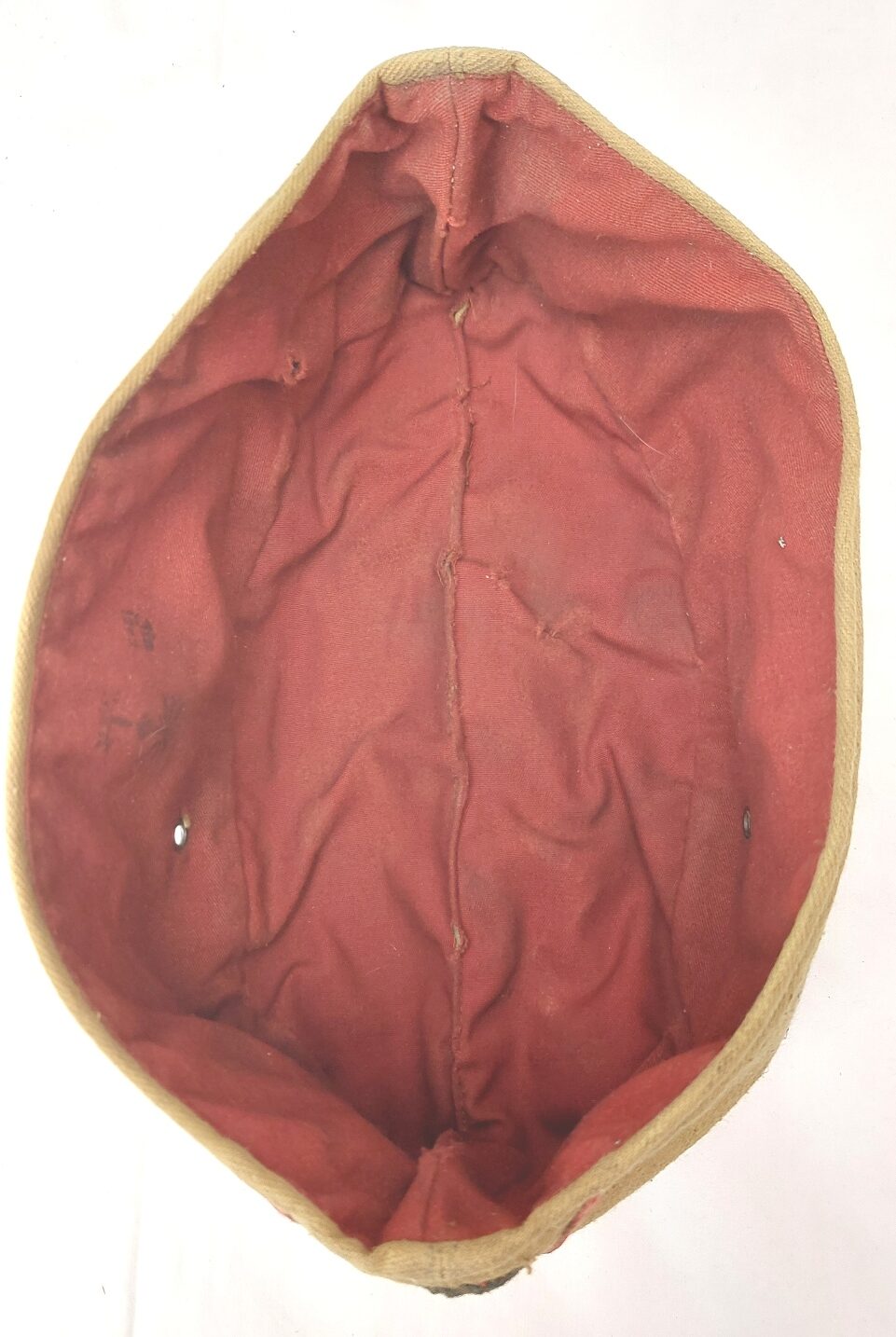
*German, WW2, Deutsches Afrikakorps (DAK) Artillery Tropical Field Cap (M40 Feldmütze), Denazified, Palm Tree Marked, Size 55 & Dated 1942*
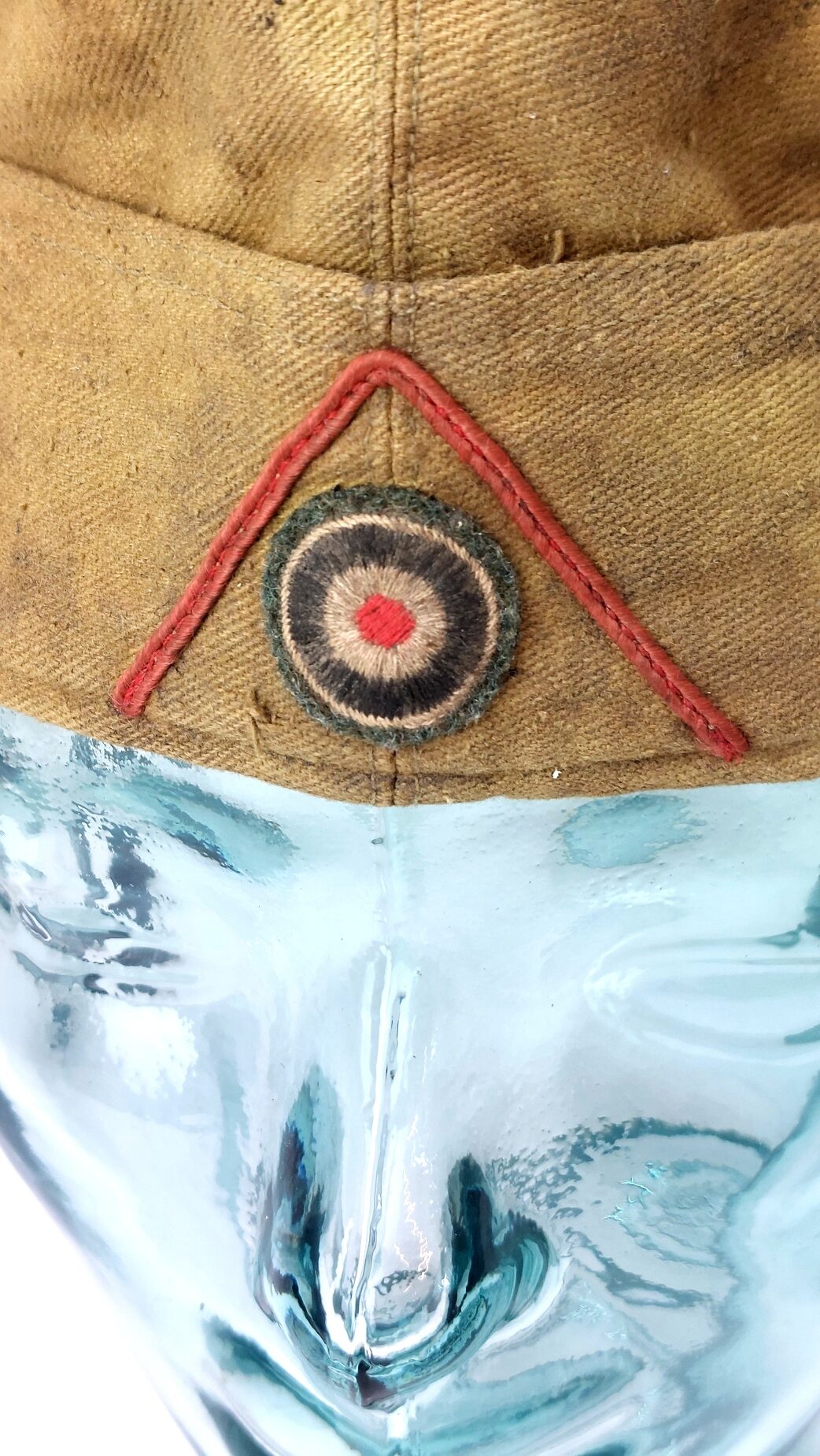
An original Second World War German tropical field cap (M40 pattern Feldmütze) associated with service in the North African campaign, constructed in tan cotton drill with factory-applied red soutache piping denoting Artillery branch service. The front retains its original machine-woven national cockade mounted beneath the inverted red soutache “V”, while the original Wehrmacht eagle insignia above has been carefully removed in period “denazified” fashion.
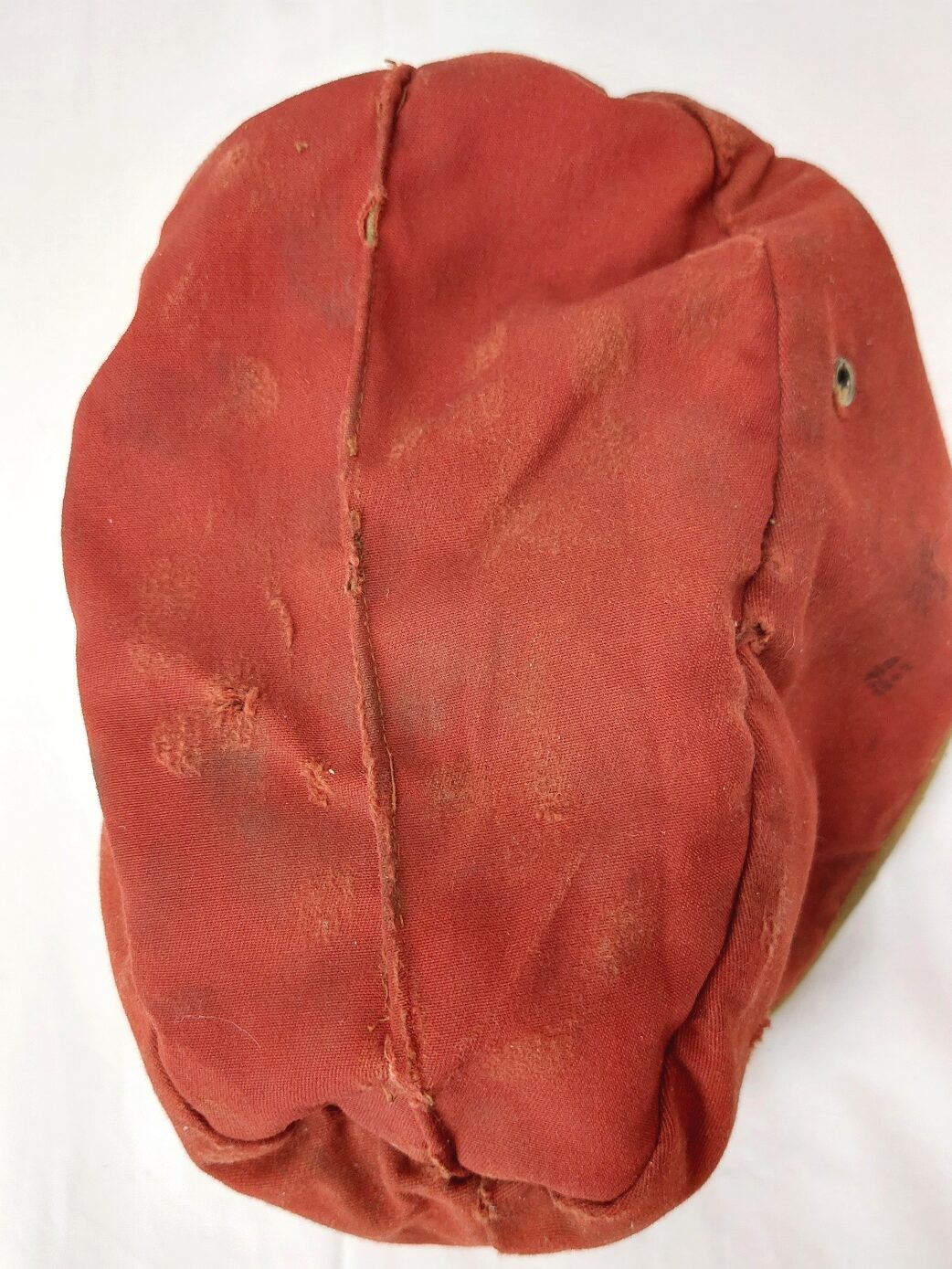
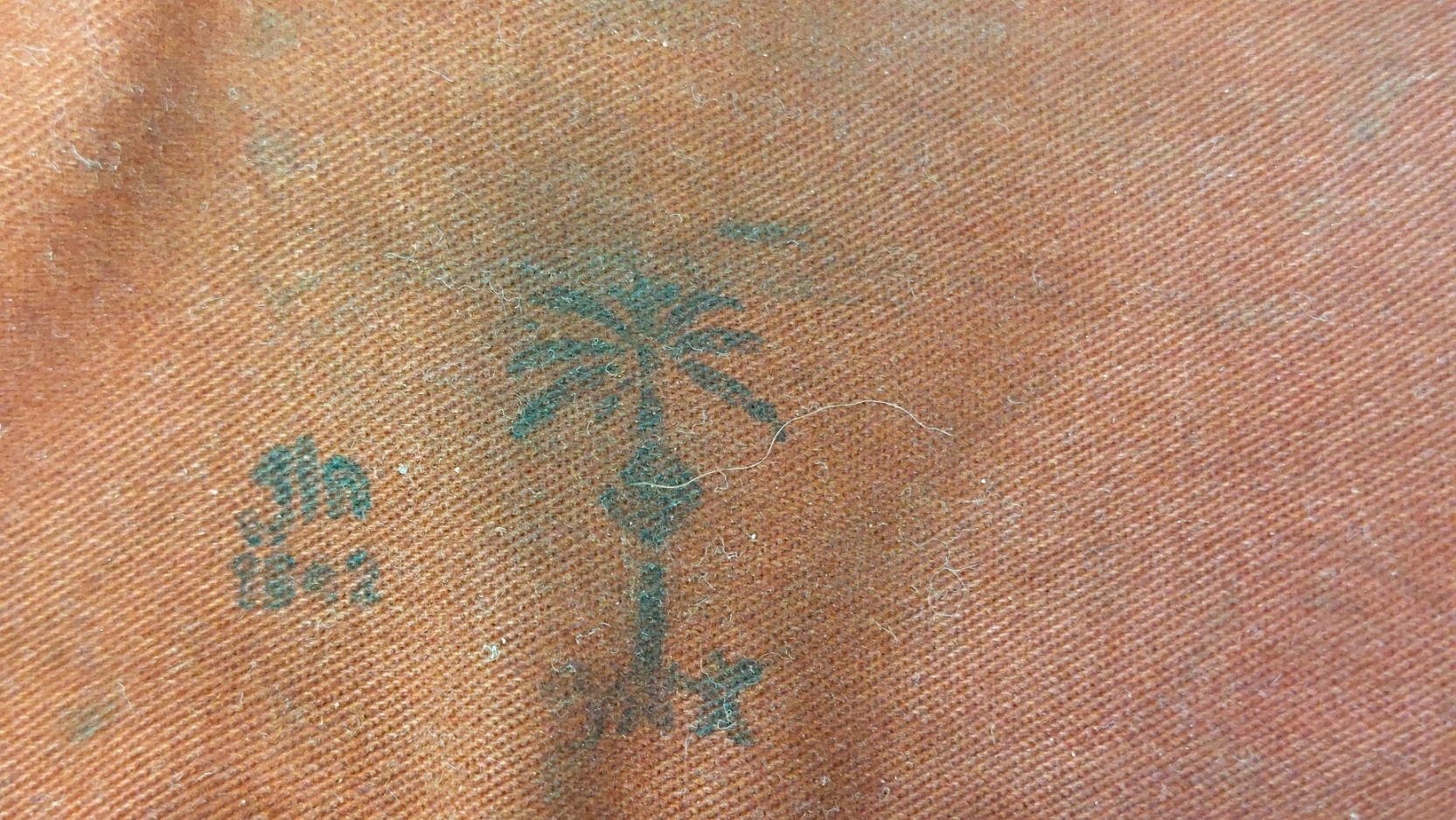
The interior retains its original deep red cotton drill lining together with clear tropical depot markings including the classic Deutsches Afrikakorps palm tree stamp and visible “1942” date marking. A partially faded size marking, appearing to read either “54” or “55”, is also present adjacent to the depot stamp. The palm tree marking notably appears without the swastika to the trunk, entirely consistent with known wartime DAK tropical depot and manufacturer acceptance stamps encountered on original North African uniform items.
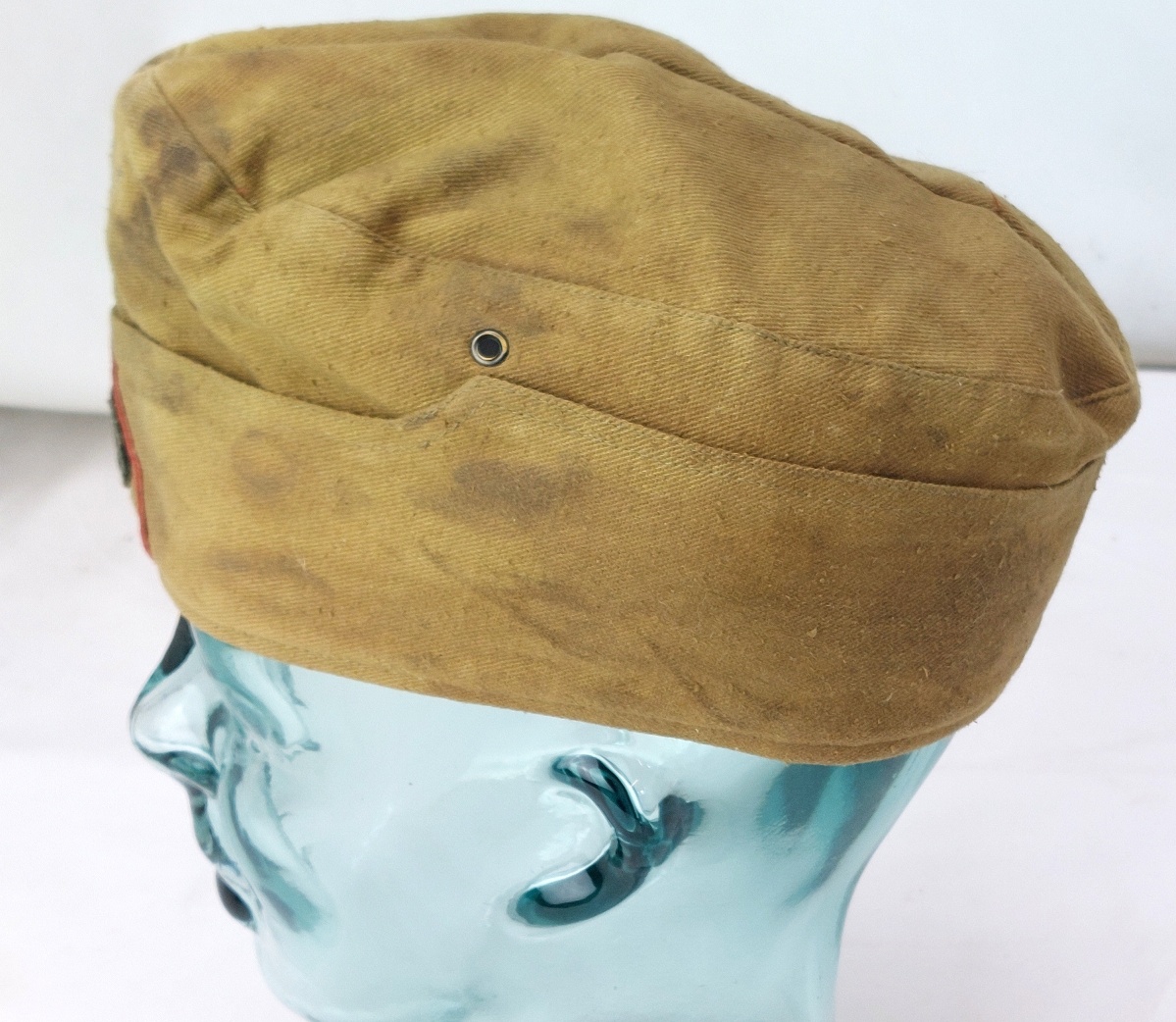
The cap further retains both original side ventilation eyelets and displays strong evidence of prolonged genuine field use, with extensive desert-wear patina, ingrained dust accumulation, sweat staining, and natural service fading throughout.
Approx. Measurements – Approximately 27cm long laid flat. Interior size appears approximately 54–55cm.
History Note:
The Deutsches Afrikakorps (DAK) was deployed to North Africa beginning in 1941 under Generalfeldmarschall Erwin Rommel to support Axis operations against British Commonwealth forces in Libya and Egypt. German tropical uniforms and headgear were specially developed for desert warfare, using lightweight cotton drill fabrics far better suited to extreme temperatures than standard European wool uniforms.
The red soutache piping identifies this cap as having been issued to an Artillery (Artillerie) formation. In July 1942, German regulations ordered the discontinuation and removal of colored soutache piping from field caps to simplify wartime production and improve camouflage. The combination of a 1942 interior date together with intact factory-applied artillery soutache places this example squarely within the important mid-1942 transitional production period immediately before, or during, implementation of those regulation changes.
The careful removal of the national eagle from the front panel reflects a highly common post-war practice known as denazification, often carried out by returning Allied servicemen bringing captured German items home as souvenirs. Such untouched “souvenired” examples today form a well-recognized collecting category in their own right.
*Condition*
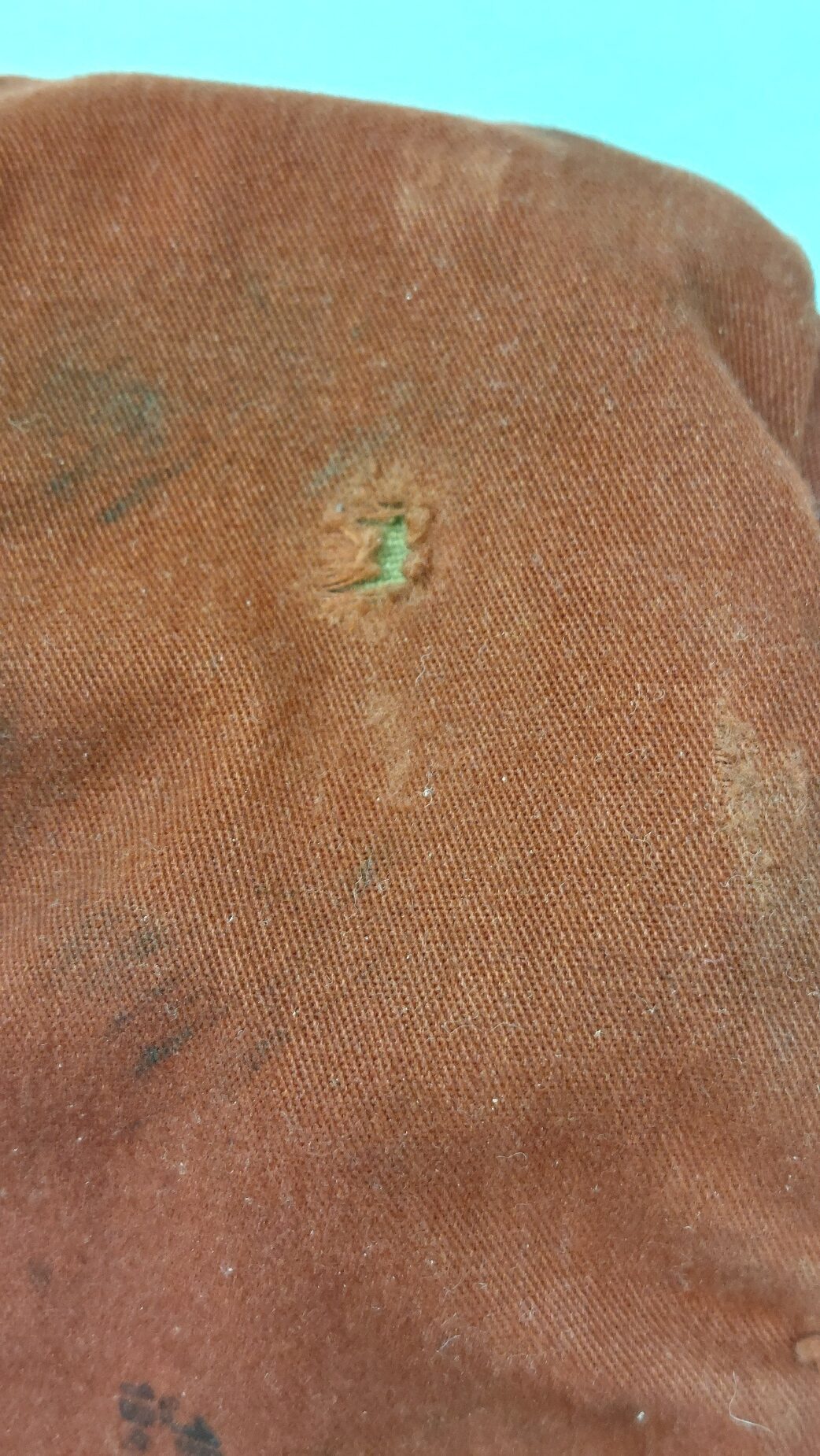
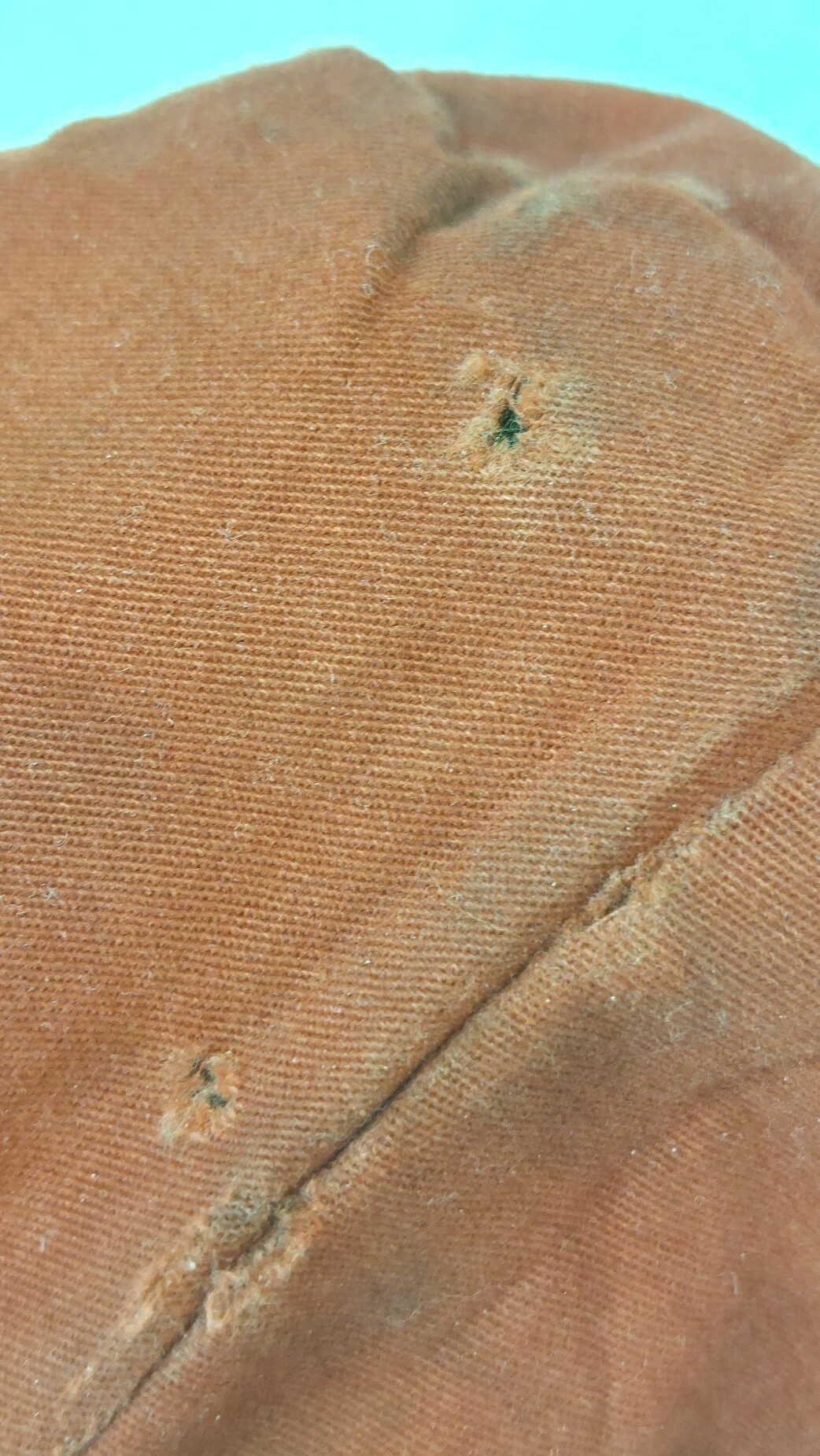
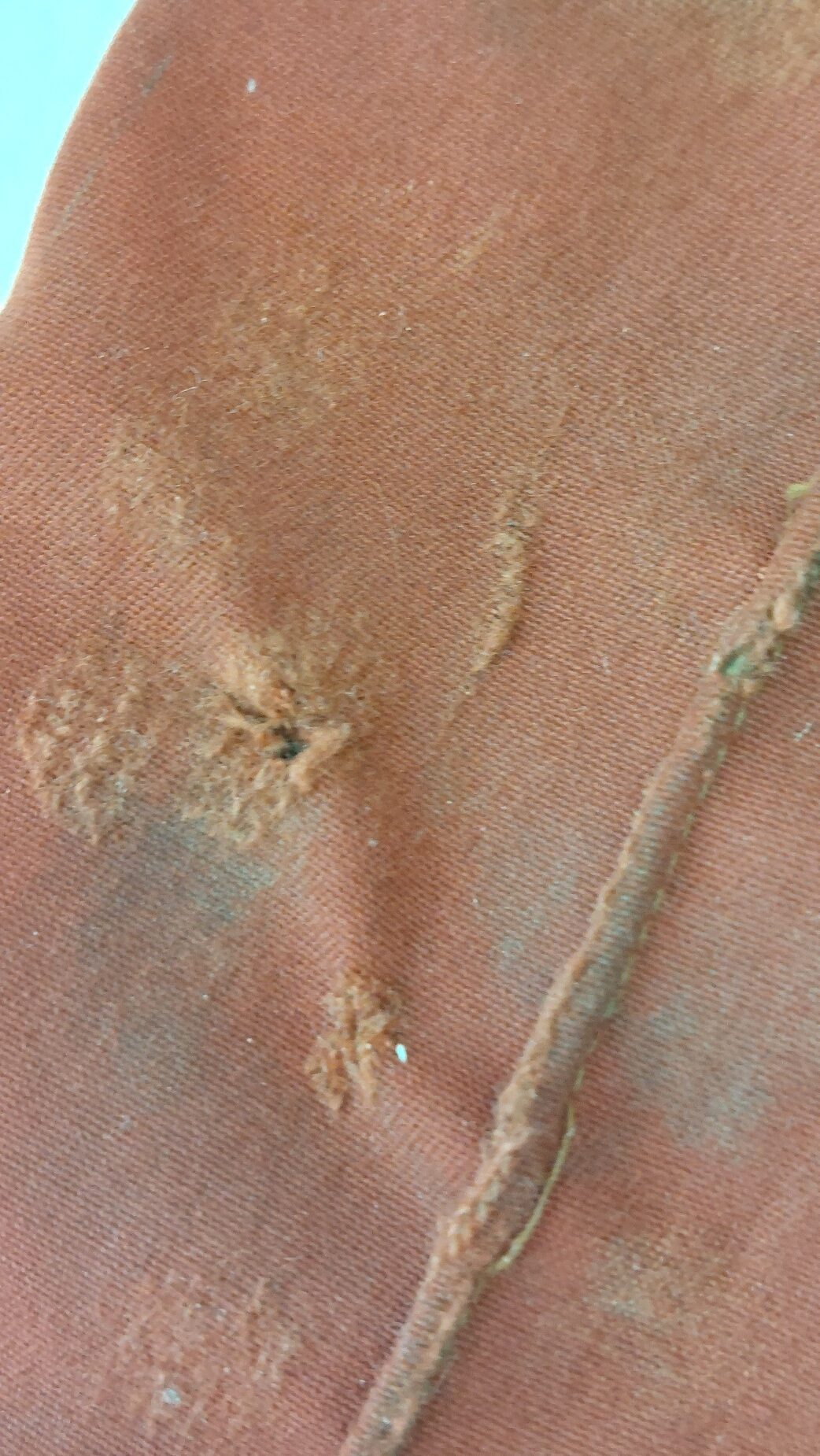
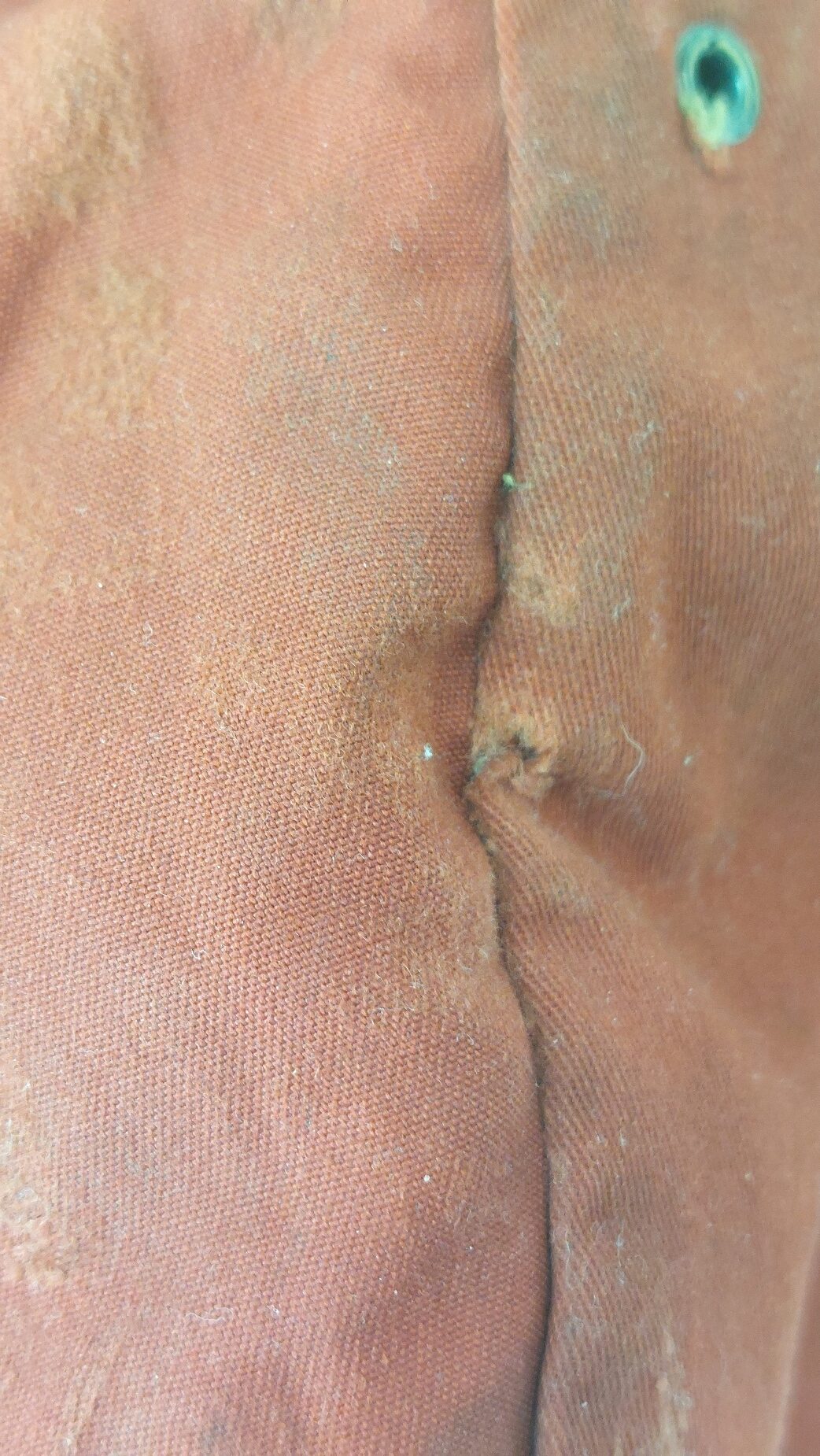
Well-worn, untouched field-used condition overall with heavy age and service wear throughout. Exterior fabric displays substantial staining, ingrained dirt, sweat darkening, and handling wear entirely consistent with prolonged tropical campaign use. The original Wehrmacht eagle insignia has been removed from above the cockade, leaving the characteristic discoloured stitch-shadow area visible to the front. The machine-woven cockade remains intact and correctly positioned beneath the artillery soutache piping. Interior red cotton lining remains complete with visible palm tree depot marking, partial size stamp, and 1942 date marking still discernible. Scattered small holes, thinning, seam wear, fraying, and minor stitch separation are present internally and around lower edges. Ventilation eyelets remain in place with light age oxidation. Overall an honest and highly evocative Afrika Korps relic retaining strong original campaign character and excellent display appeal. Please see photographs as part of the condition report.
RQMEOOXGEO_1243245616