Bullets & BeltsGerman, WW2, Deutsches Rotes Kreuz (DRK – German Red Cross) Enlisted/NCO Belt, Leather Medical Pouch with Dated Contents, Named “O.. Mann 11/163”
SKU / Ref. No: RQMBEOXDEO_8323230402
£495.00
A well-preserved and cohesive WWII German DRK medical field set, complete with named pouch and period-dated 1941–1945 contents, offering strong display presence and research potential.
Your message was sent. We will contact you shortly.
*German, WW2, Deutsches Rotes Kreuz (DRK – German Red Cross) Enlisted/NCO Belt, Leather Medical Pouch with Dated Contents, Named “O.. Mann 11/163”*
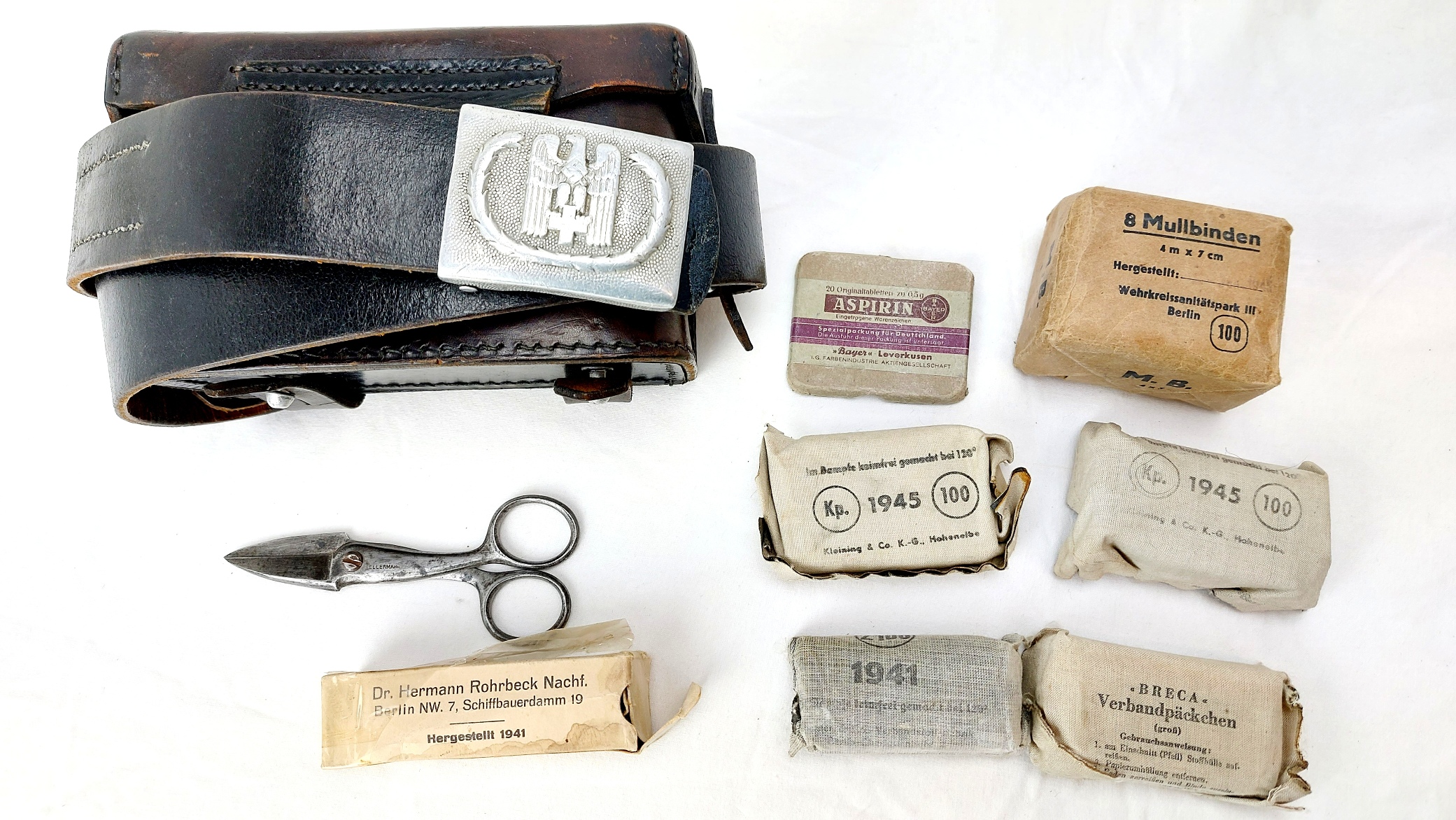
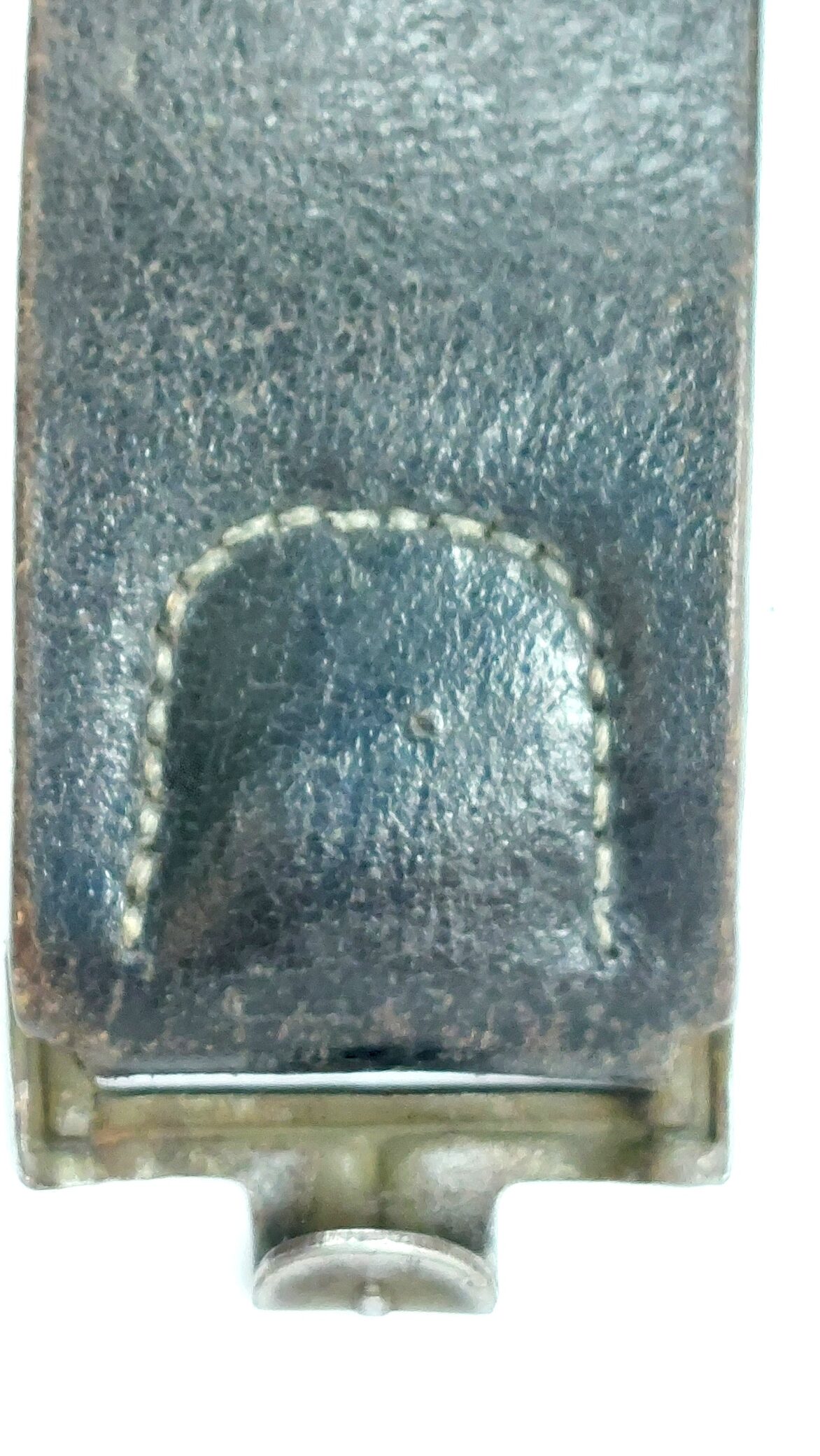
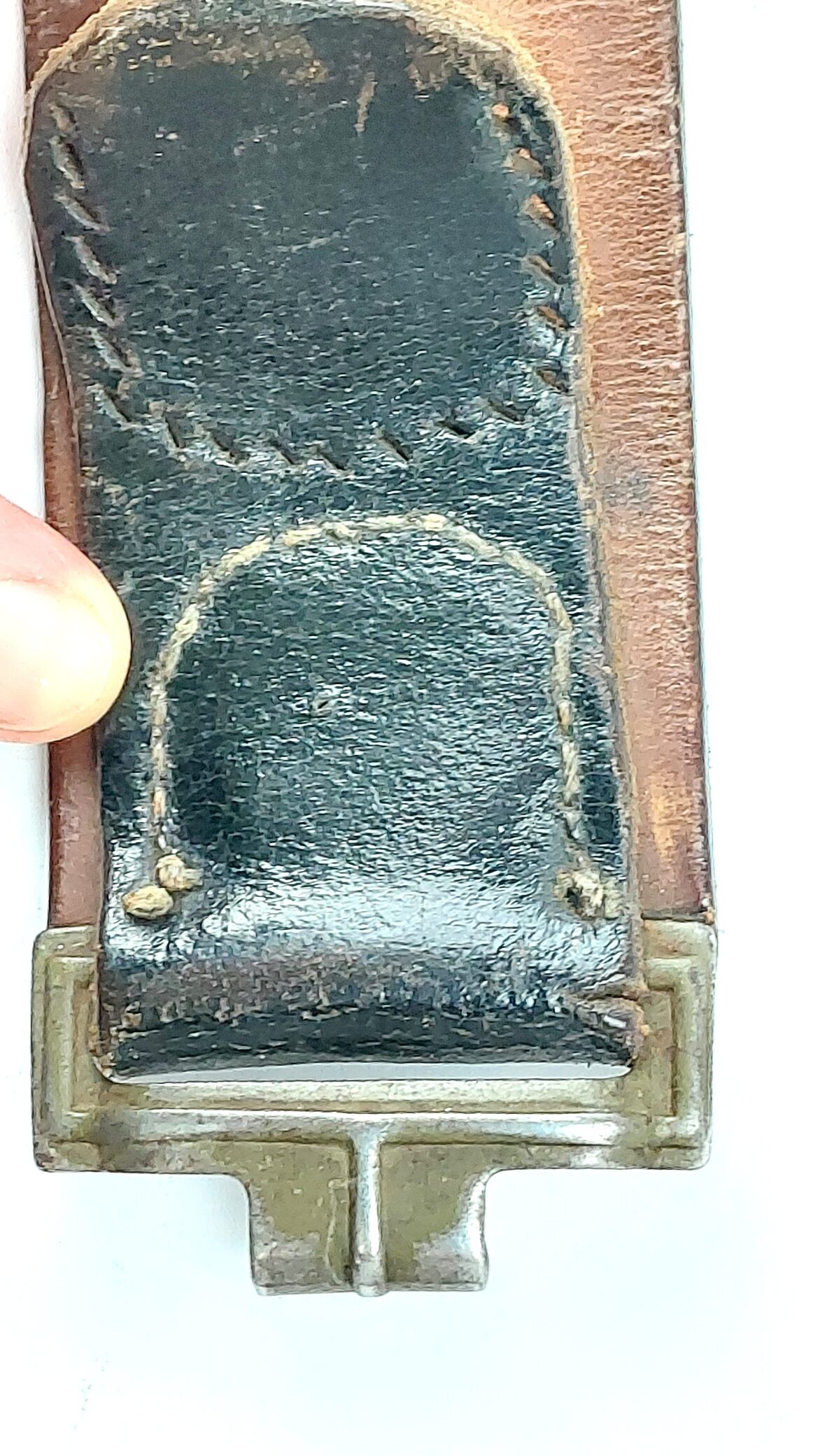
An original Second World War German medical field set comprising a 1938-pattern Deutsches Rotes Kreuz (DRK) enlisted/NCO aluminium belt buckle with its brown leather belt, accompanied by a matching leather medical pouch retaining a cohesive and period selection of wartime medical supplies dated between 1941 and 1945.
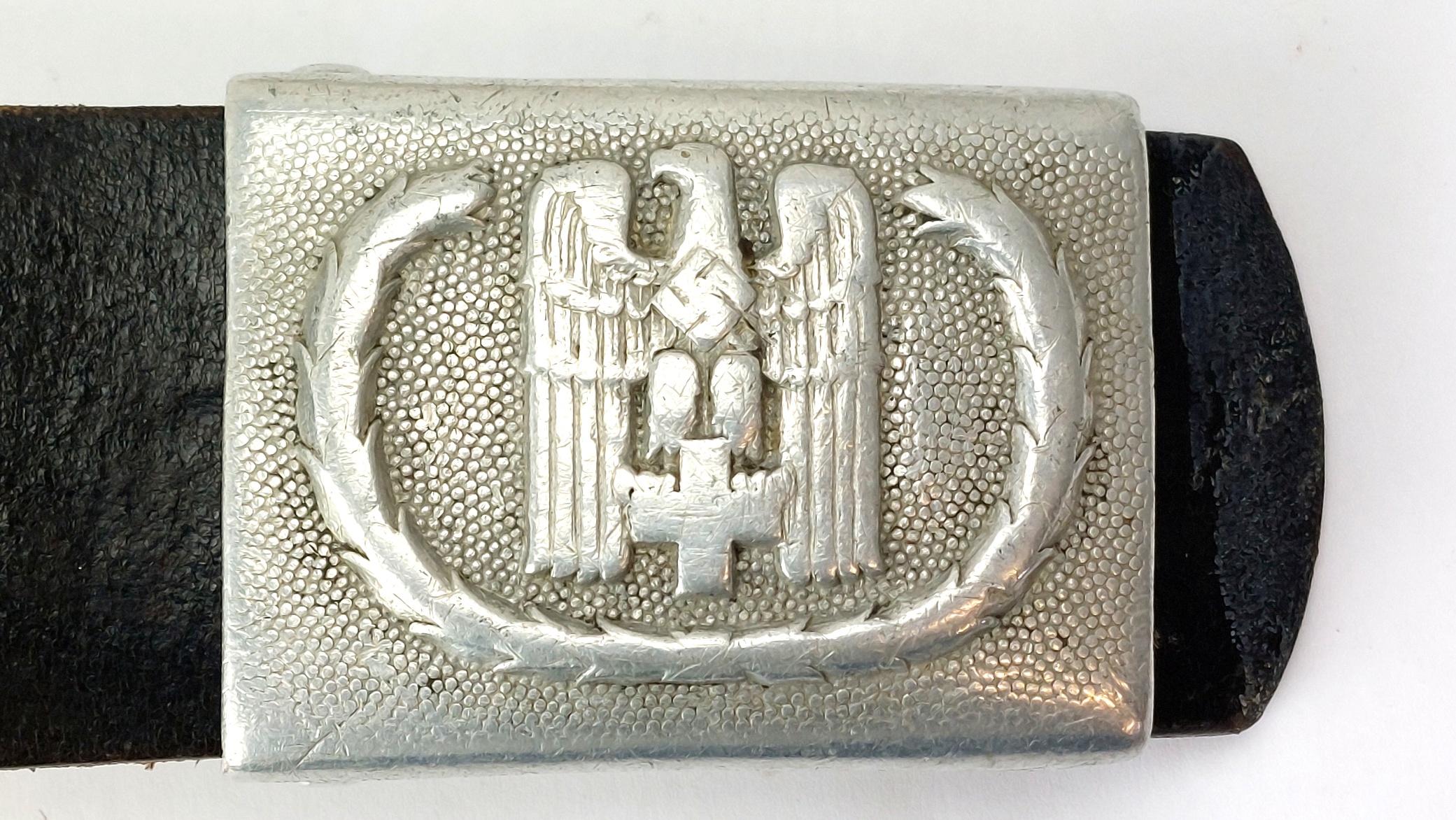
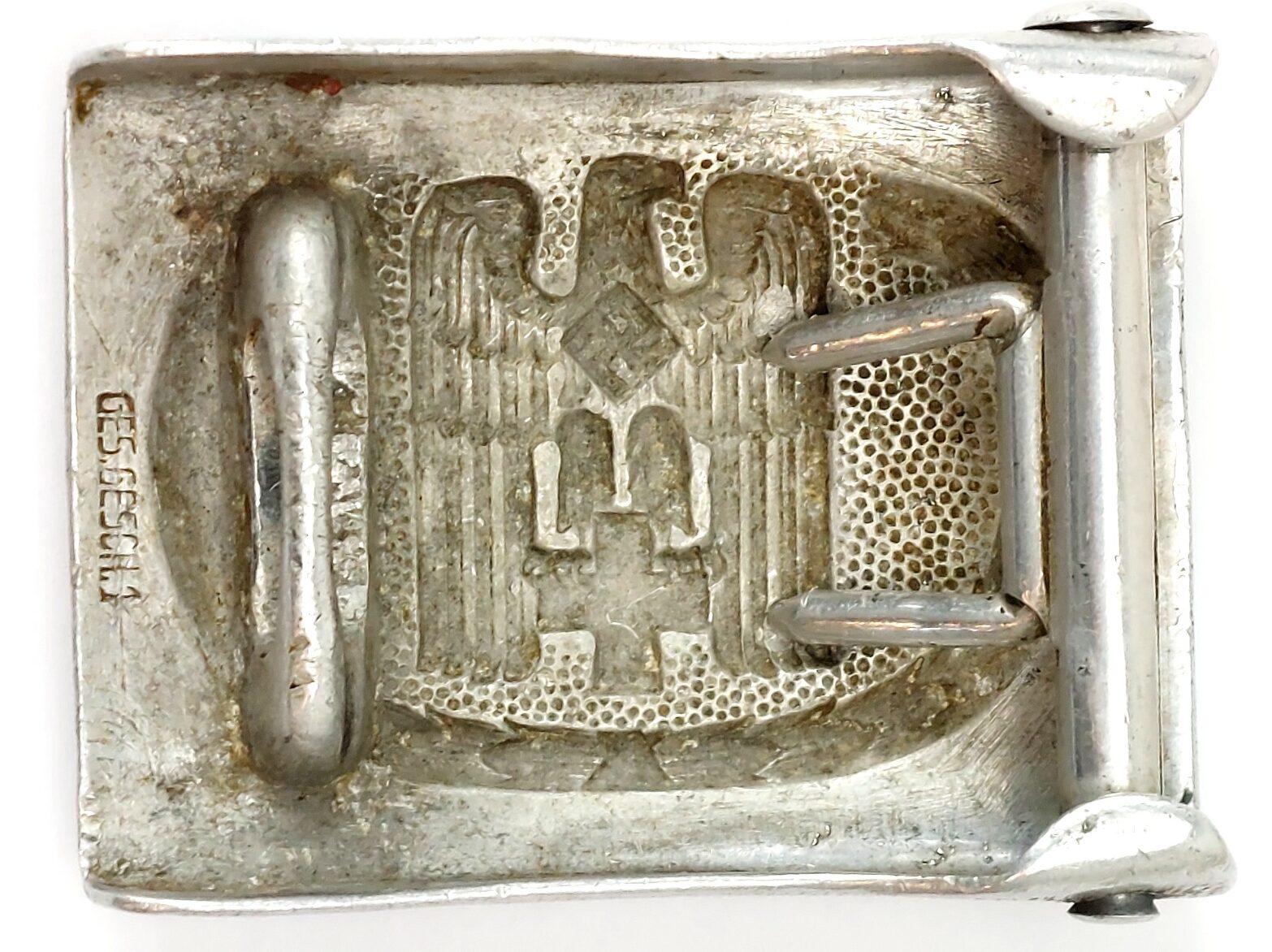
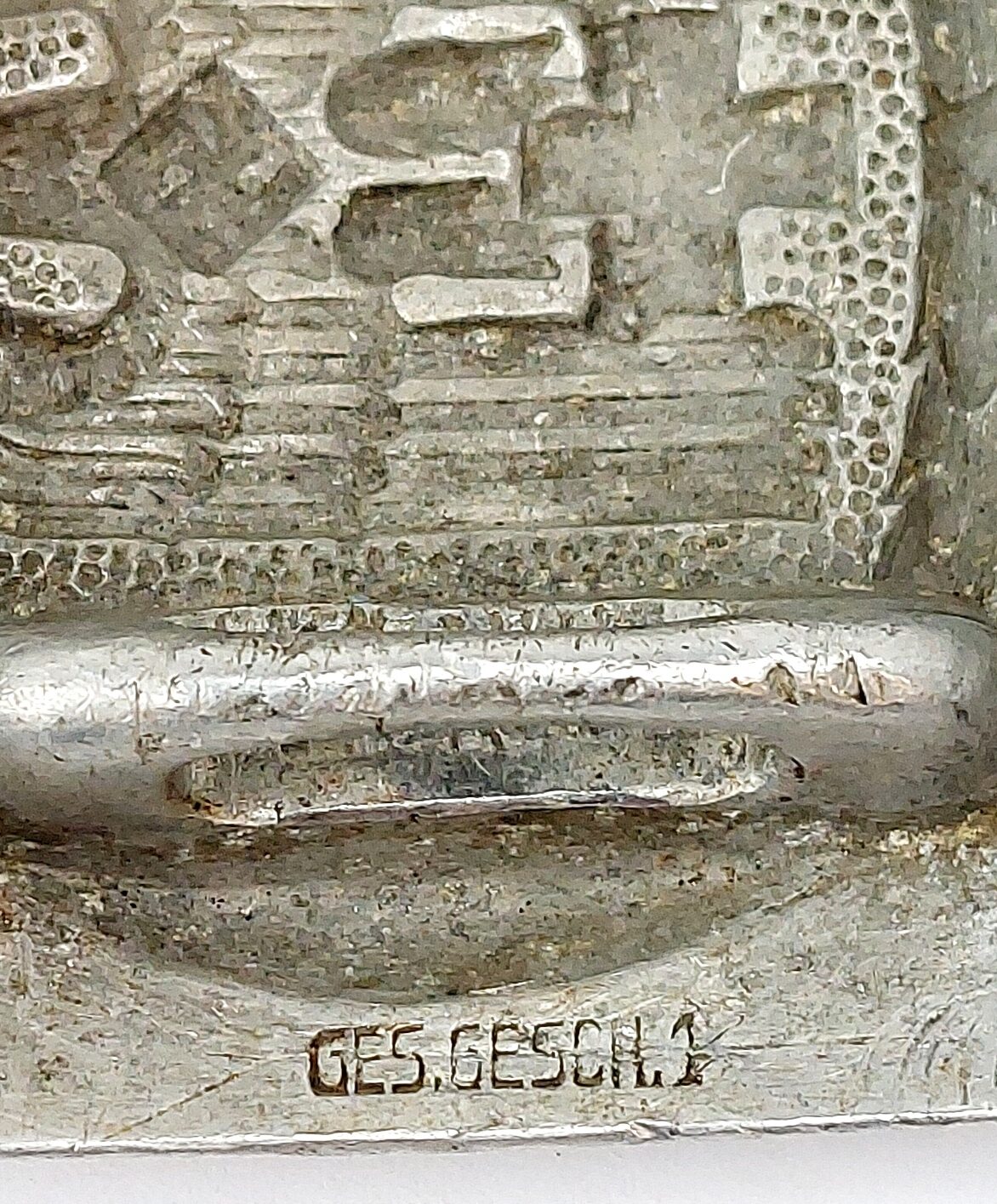
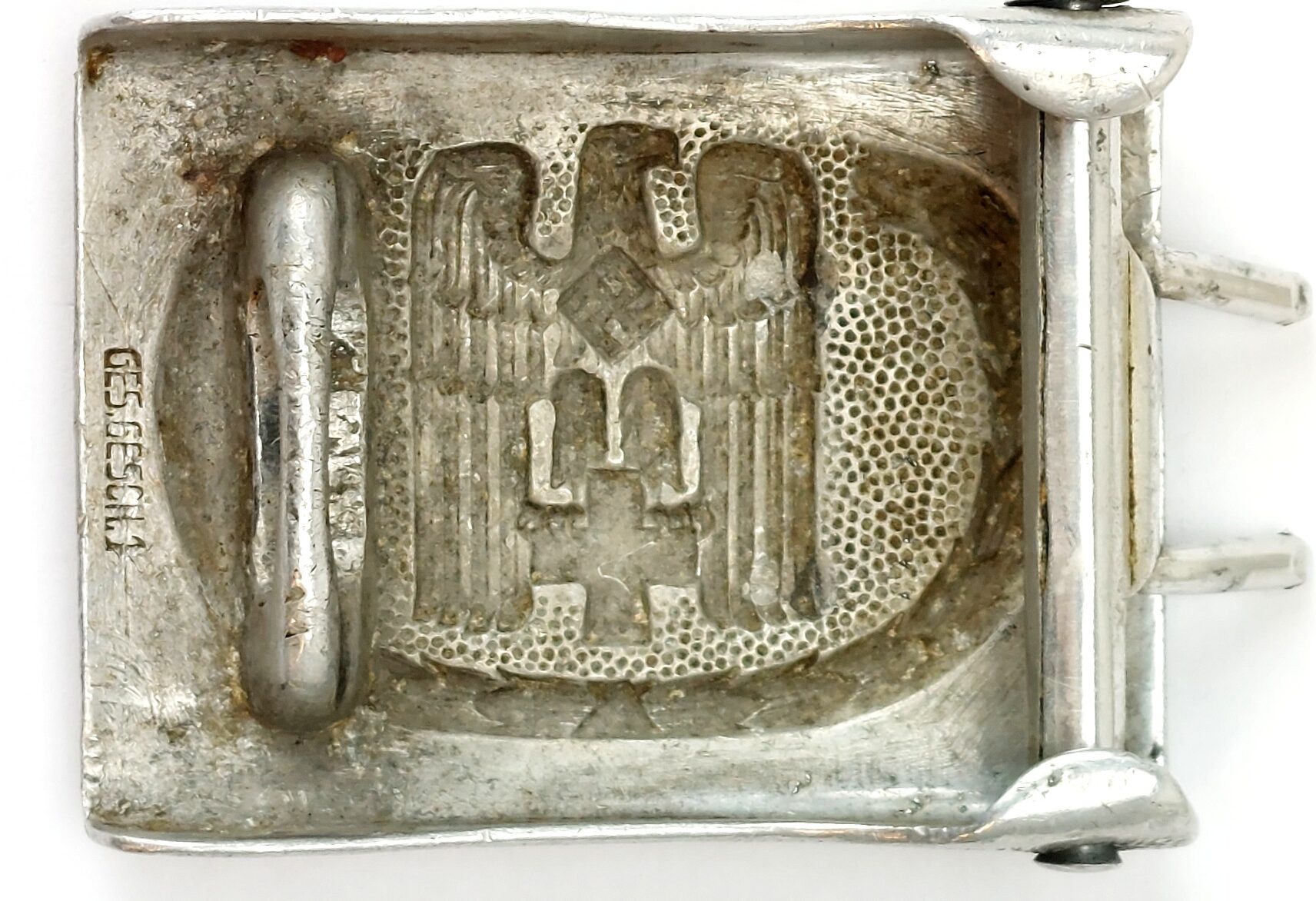
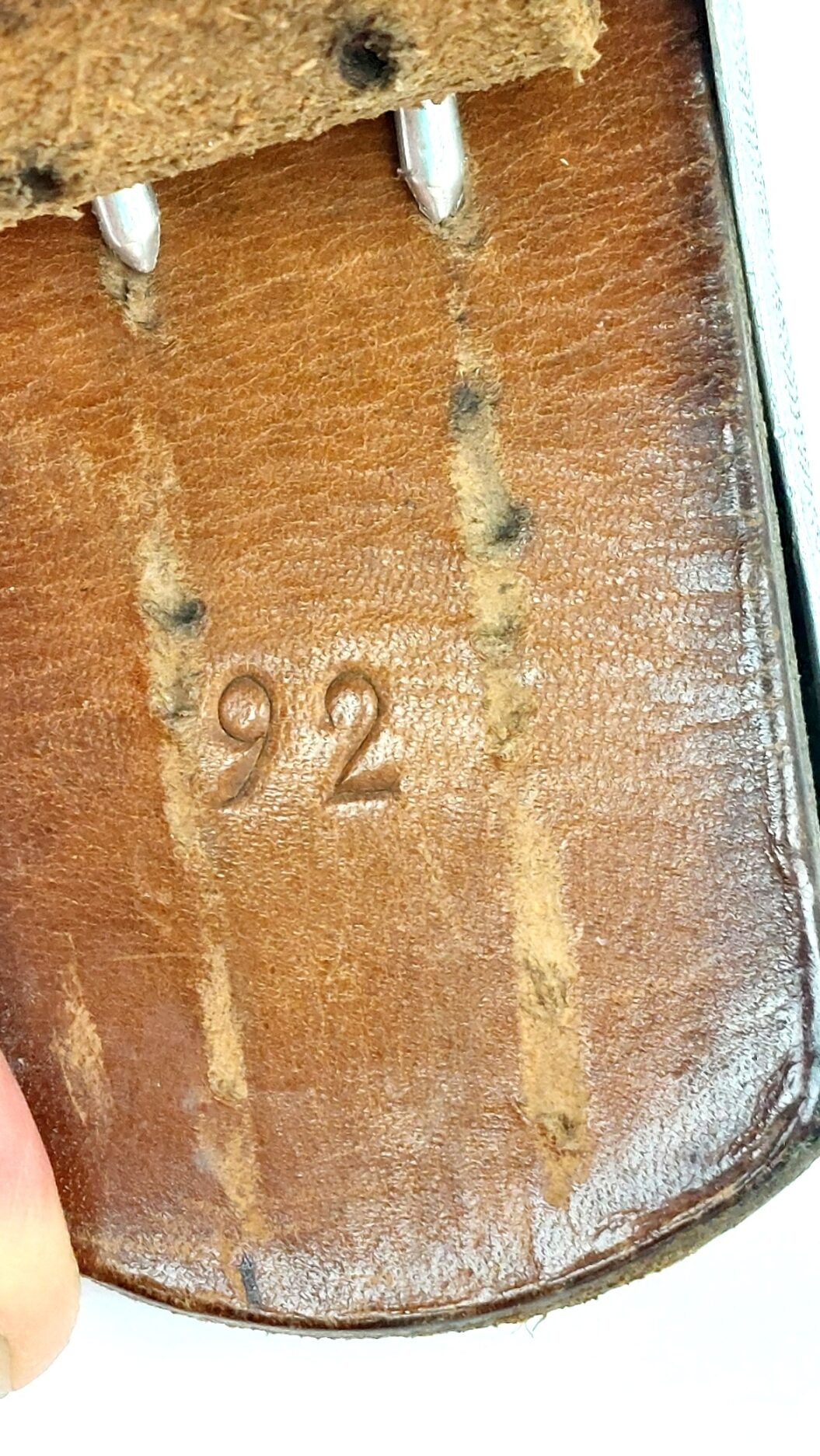
The aluminium buckle is the correct 1938 DRK pattern, die-stamped with fine pebbled field. The obverse displays the national eagle above the Red Cross emblem within an open laurel wreath. The reverse is stamped “GES. GESCH. 1” (Gesetzlich Geschützt – “Legally Protected”), a recognised early production marking found on textbook examples. The brown leather belt measures approximately 92cm and is stamped “92,” the leather remaining supple with honest period wear.
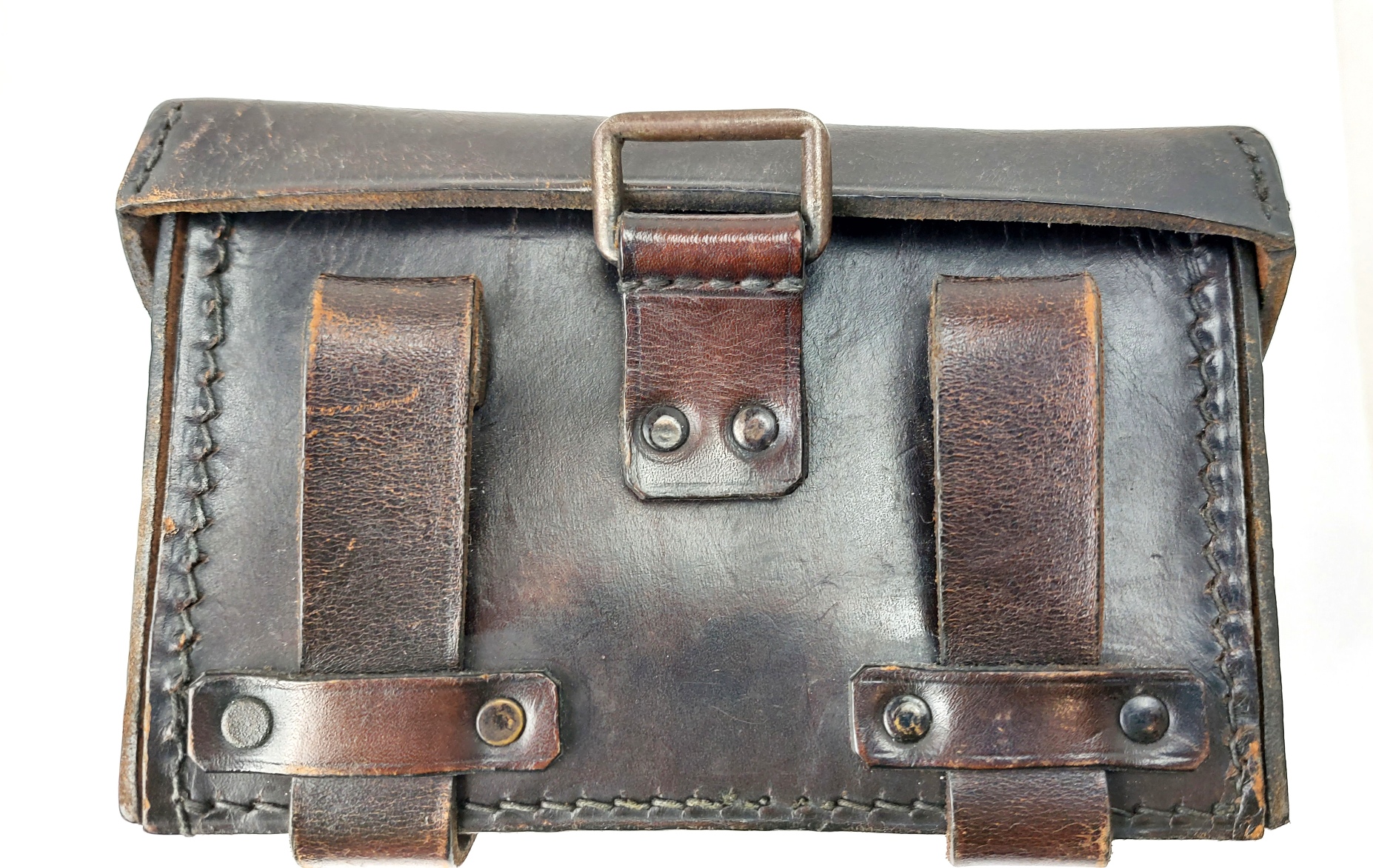
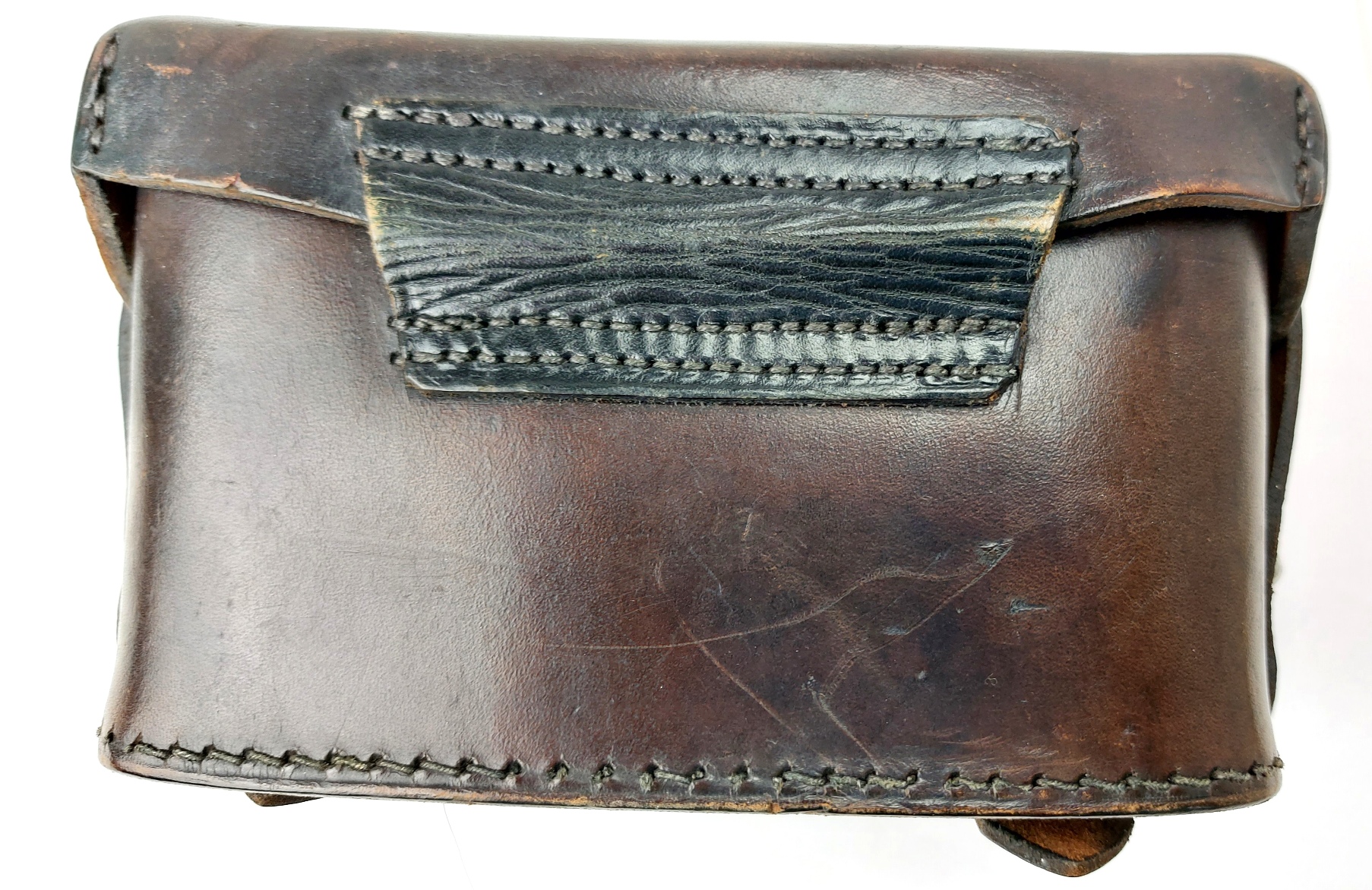
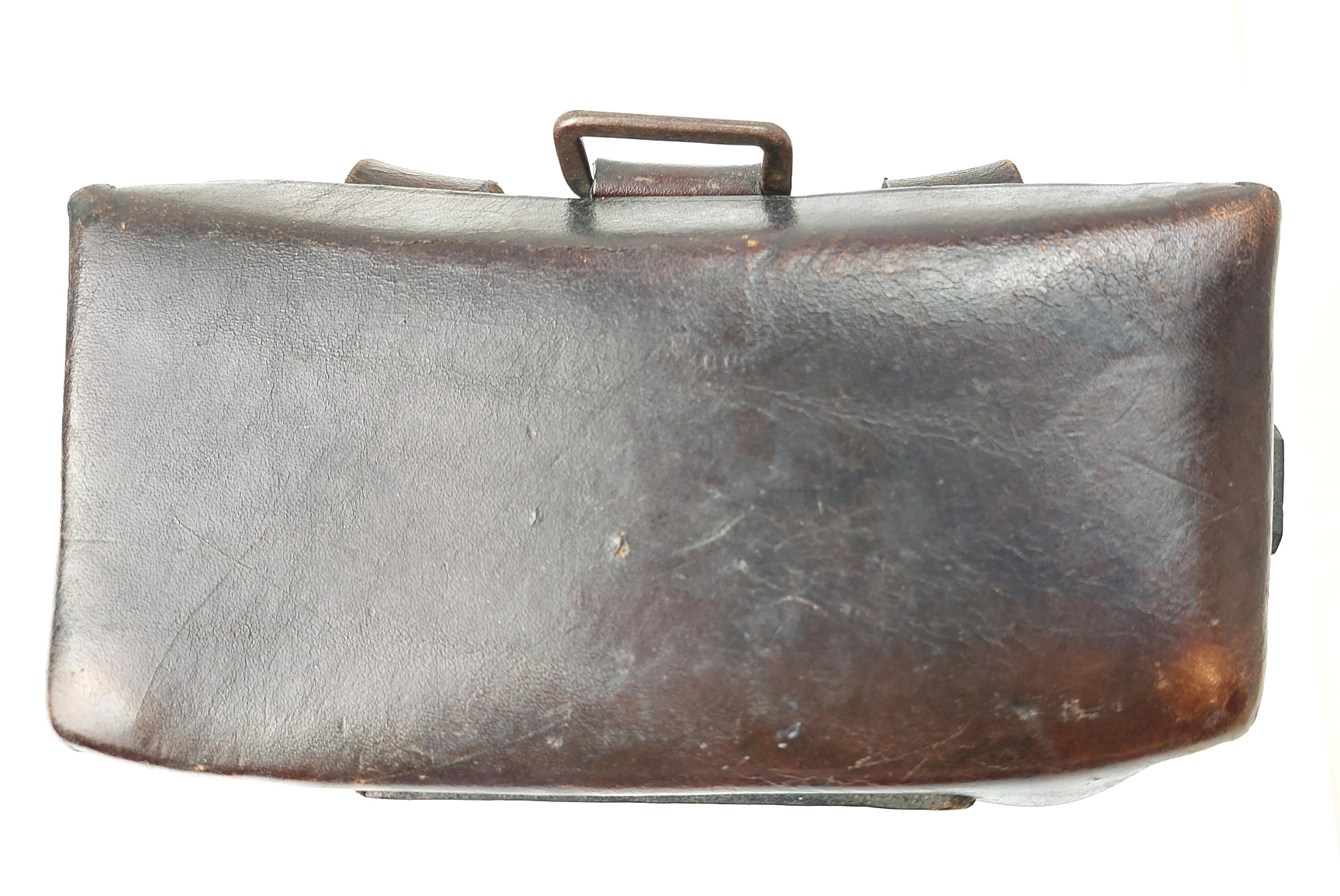
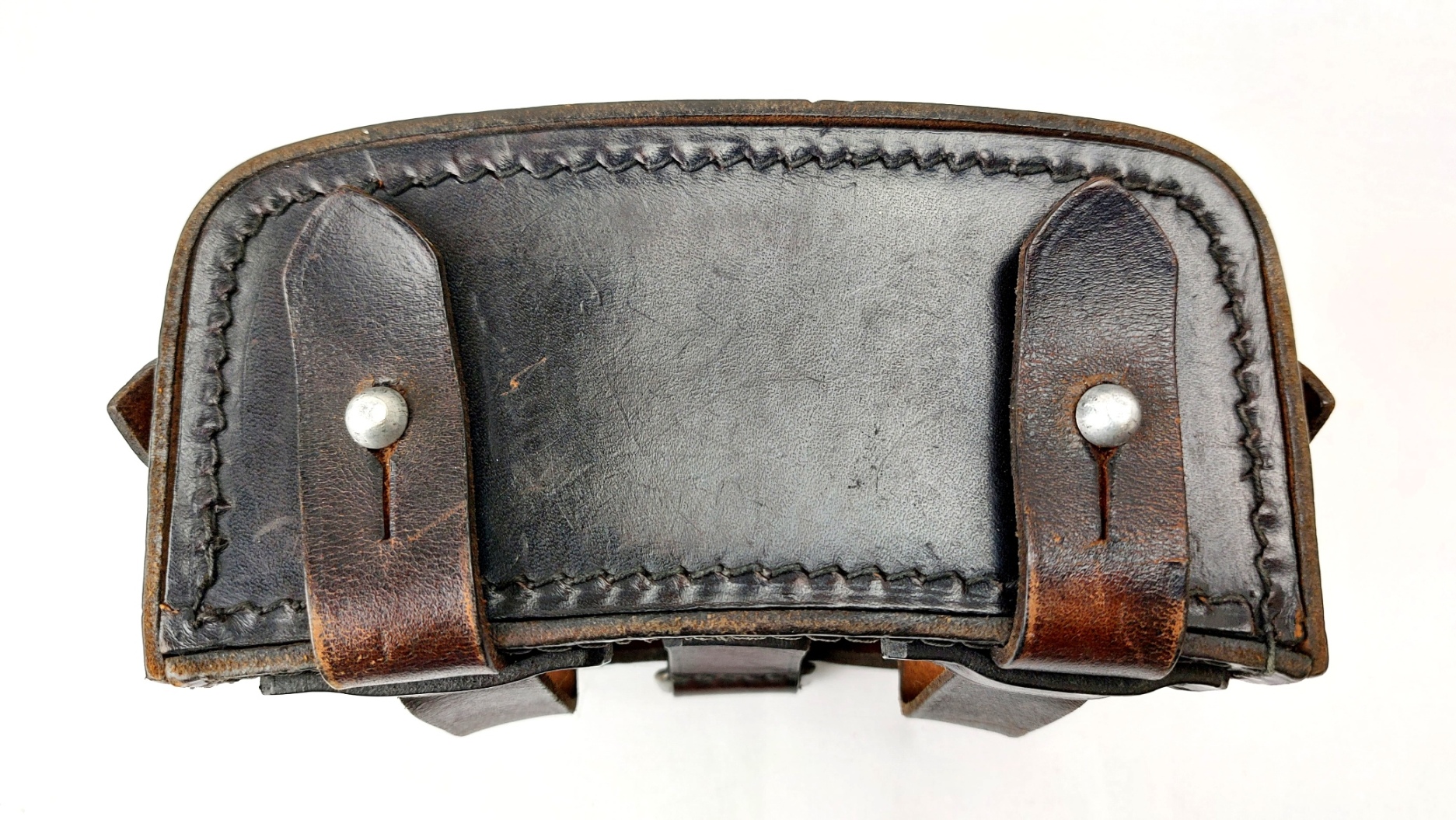
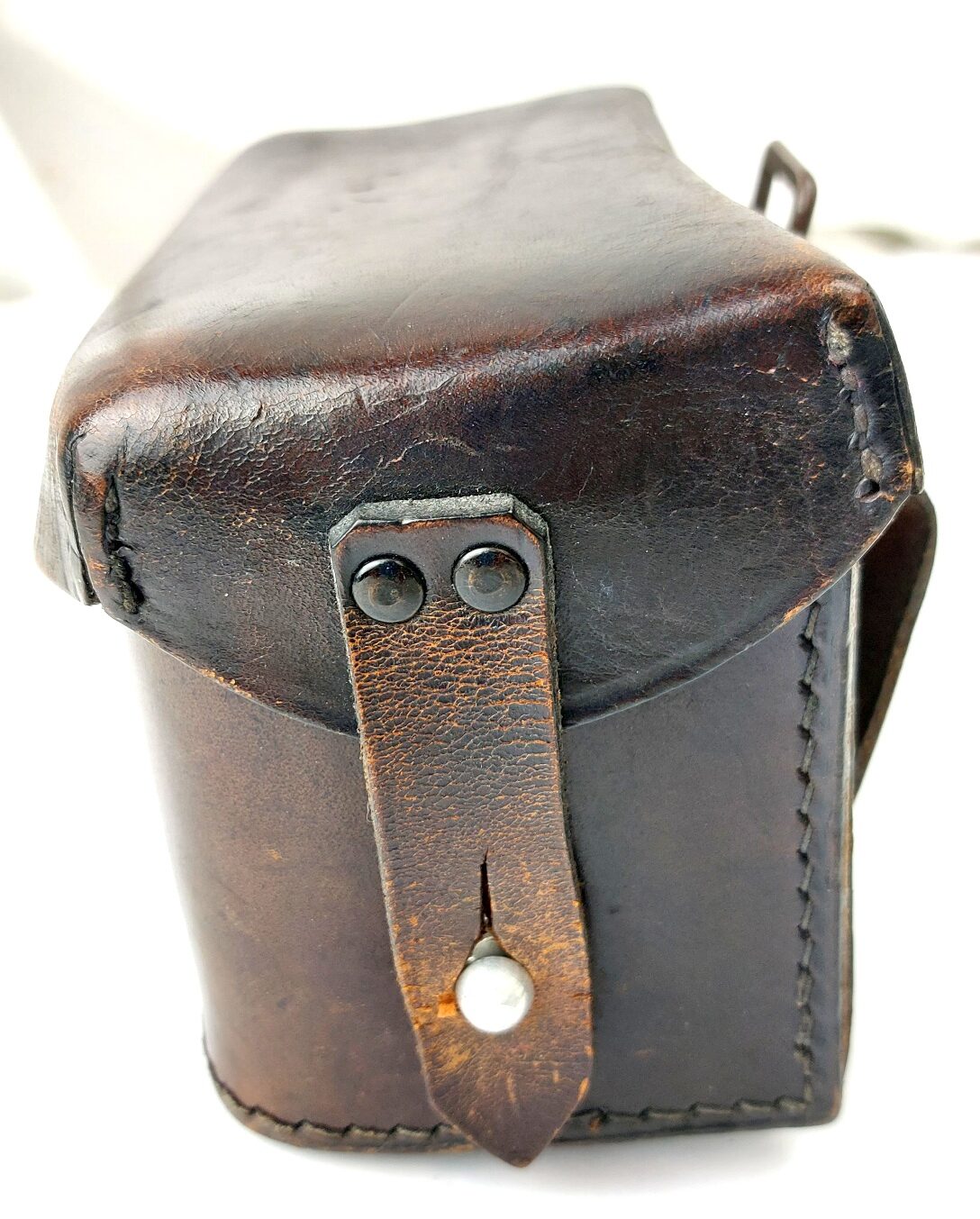
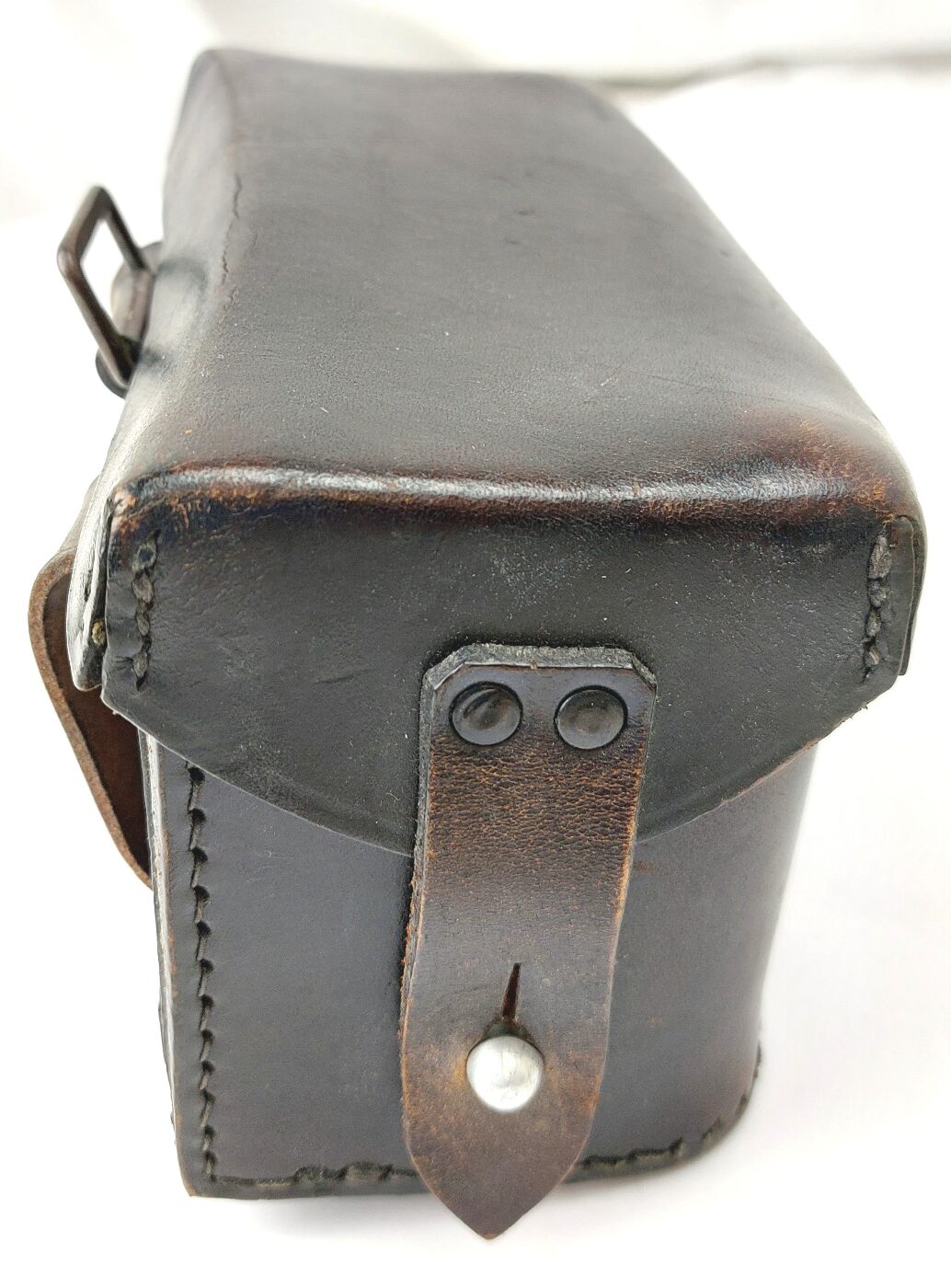
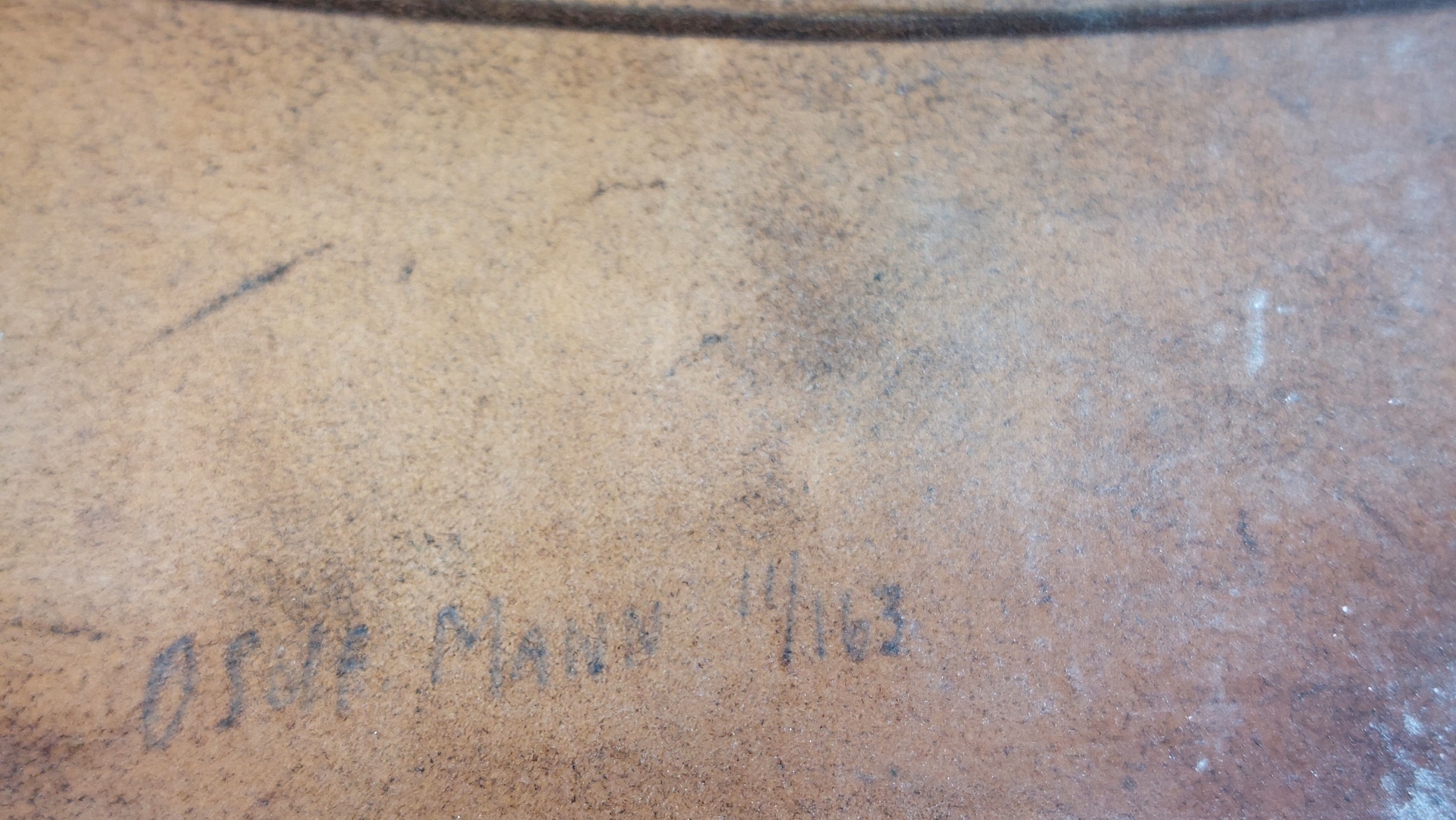
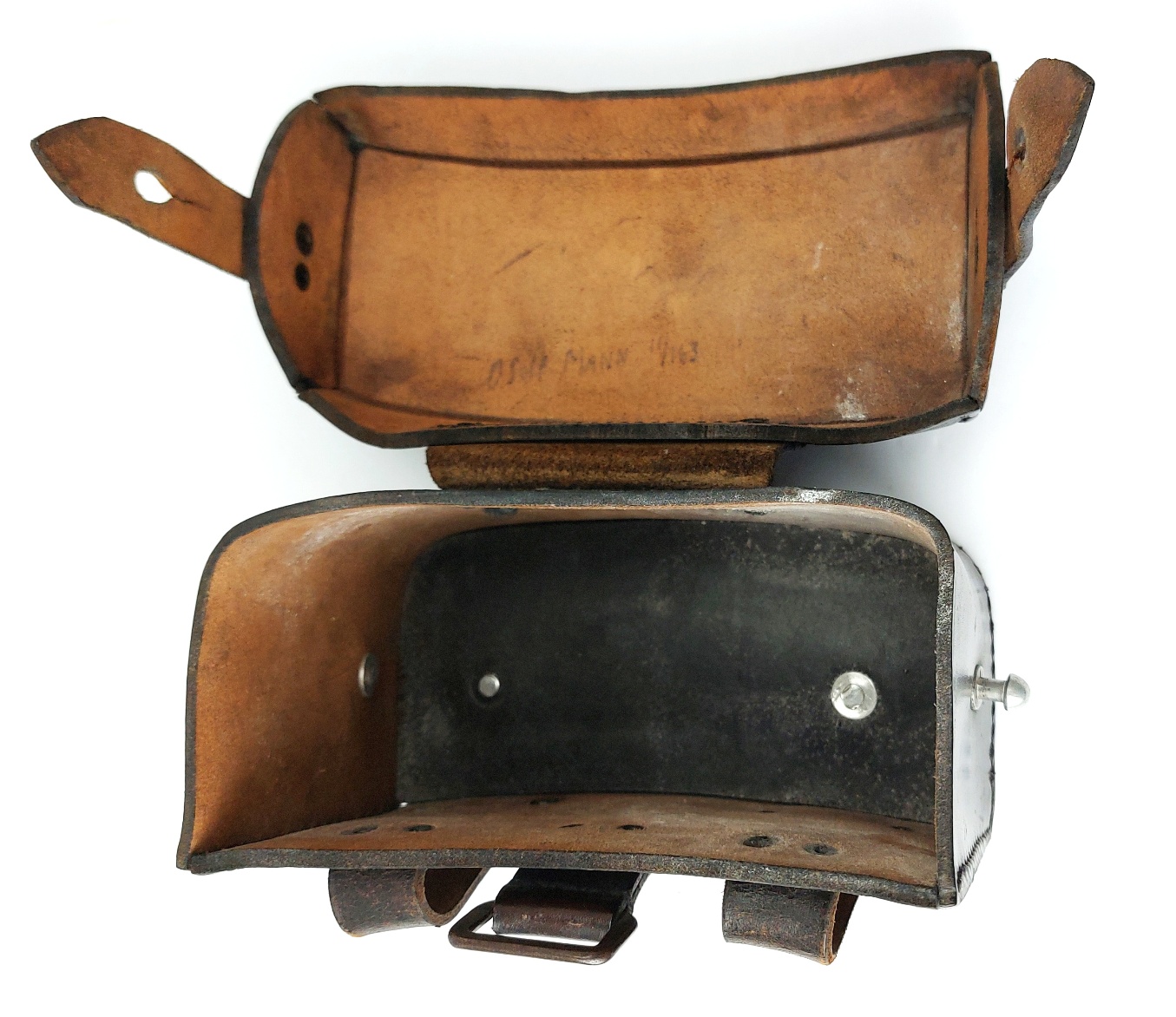
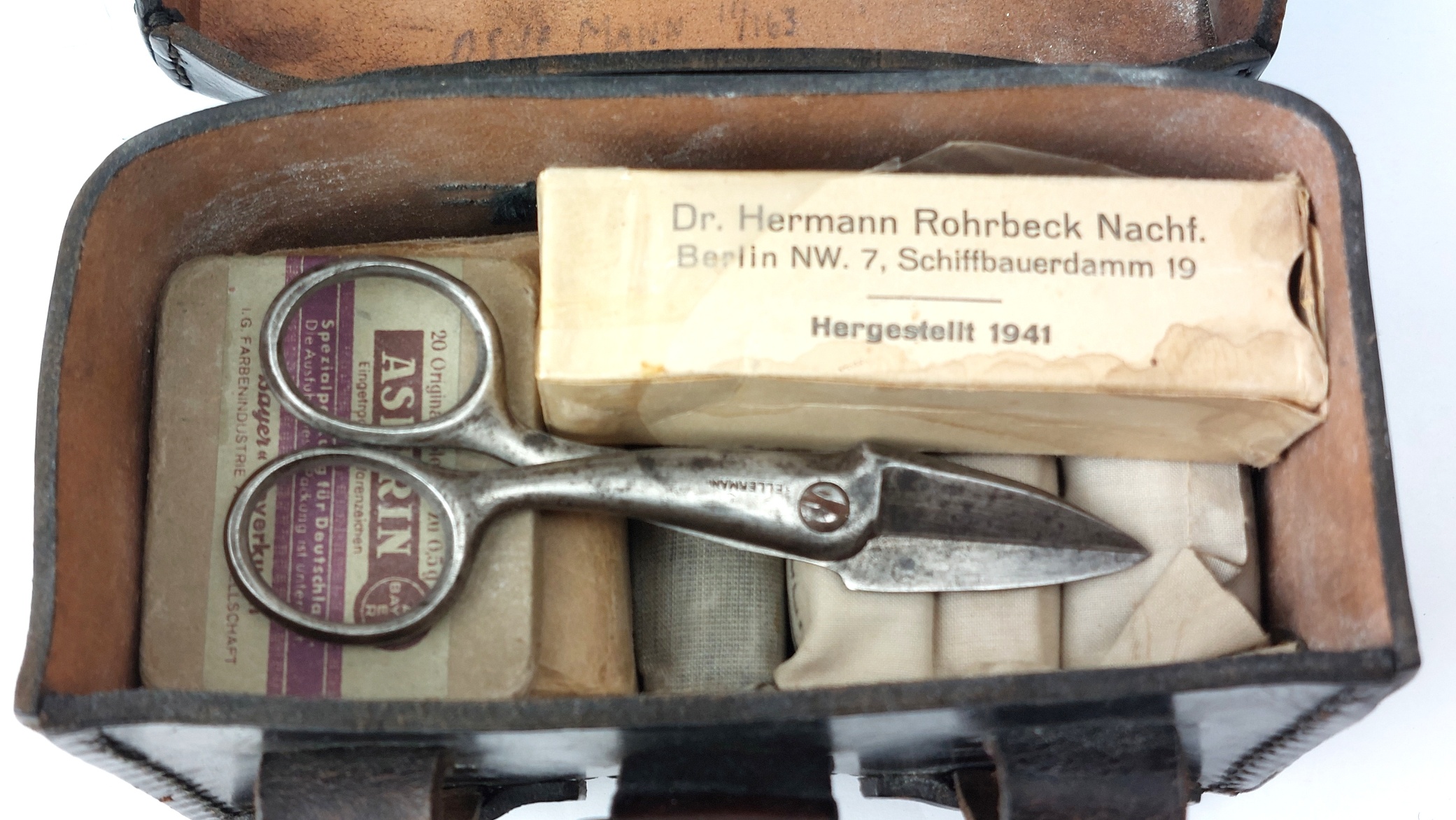
The accompanying brown leather medical pouch, measuring approximately 17.5cm x 11cm x 8.5cm, is of the type issued to Wehrmacht medical personnel and also utilised by members of the DRK. It retains complete belt loops, secure fastening hardware and strong stitching. The interior of the pouch is pencil named, appearing to read: “(Osolf) Mann 11/163”. The first name or initials is indistinct but clearly precedes “Mann.”
Medical Contents:
A particularly appealing aspect of this grouping is the survival of multiple dated and largely unopened wartime medical items, entirely consistent with German field issue.
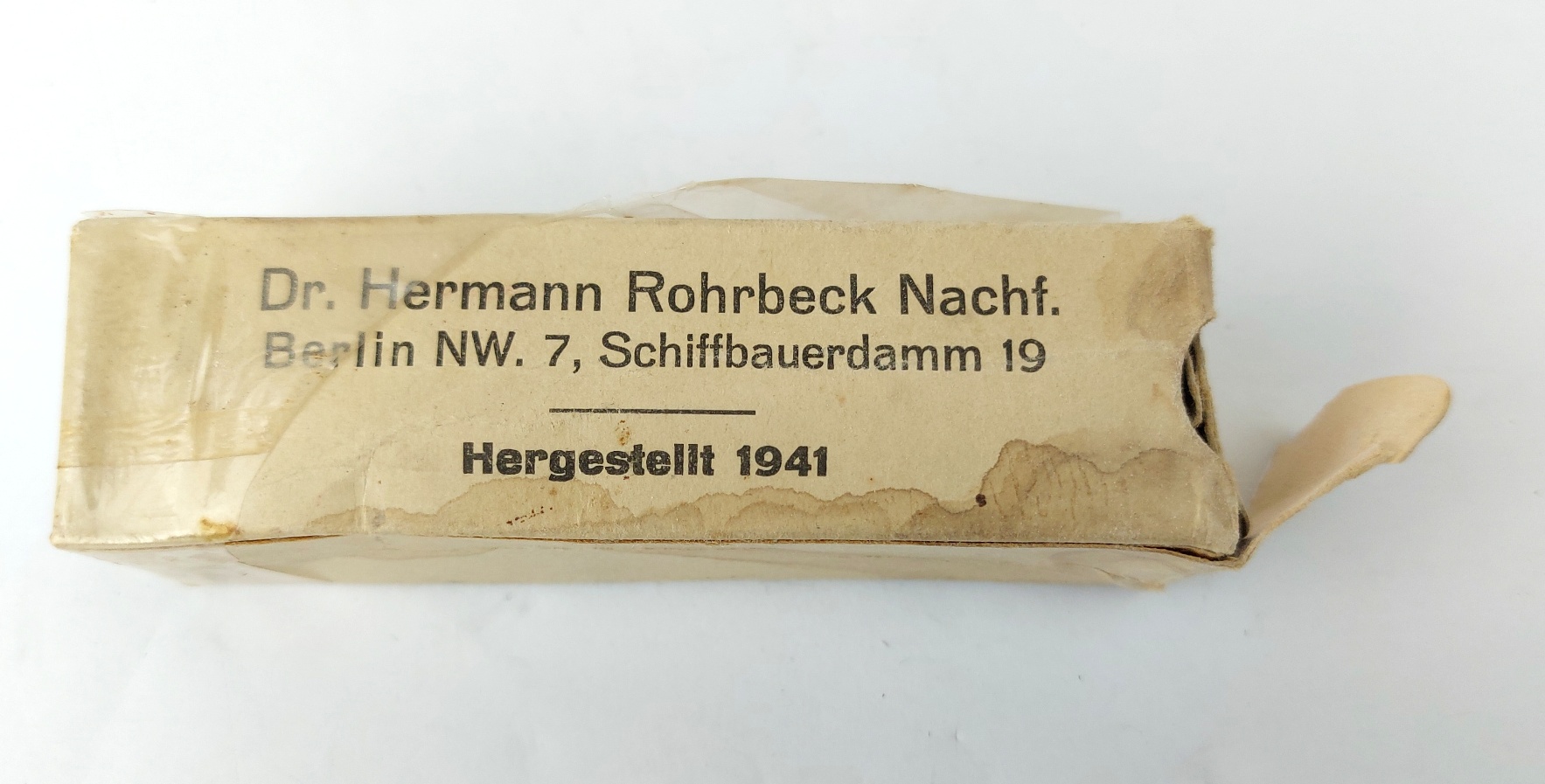
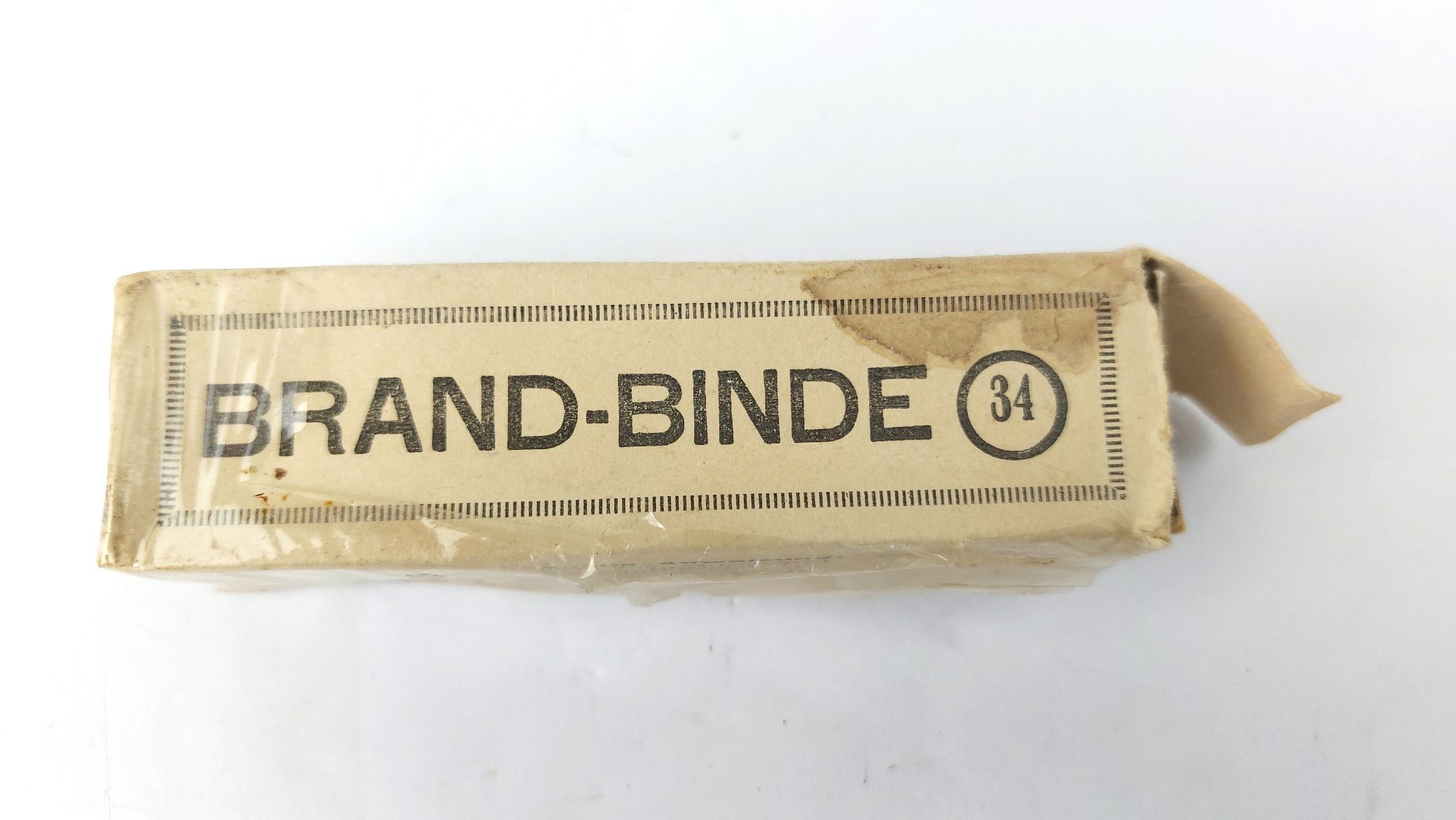
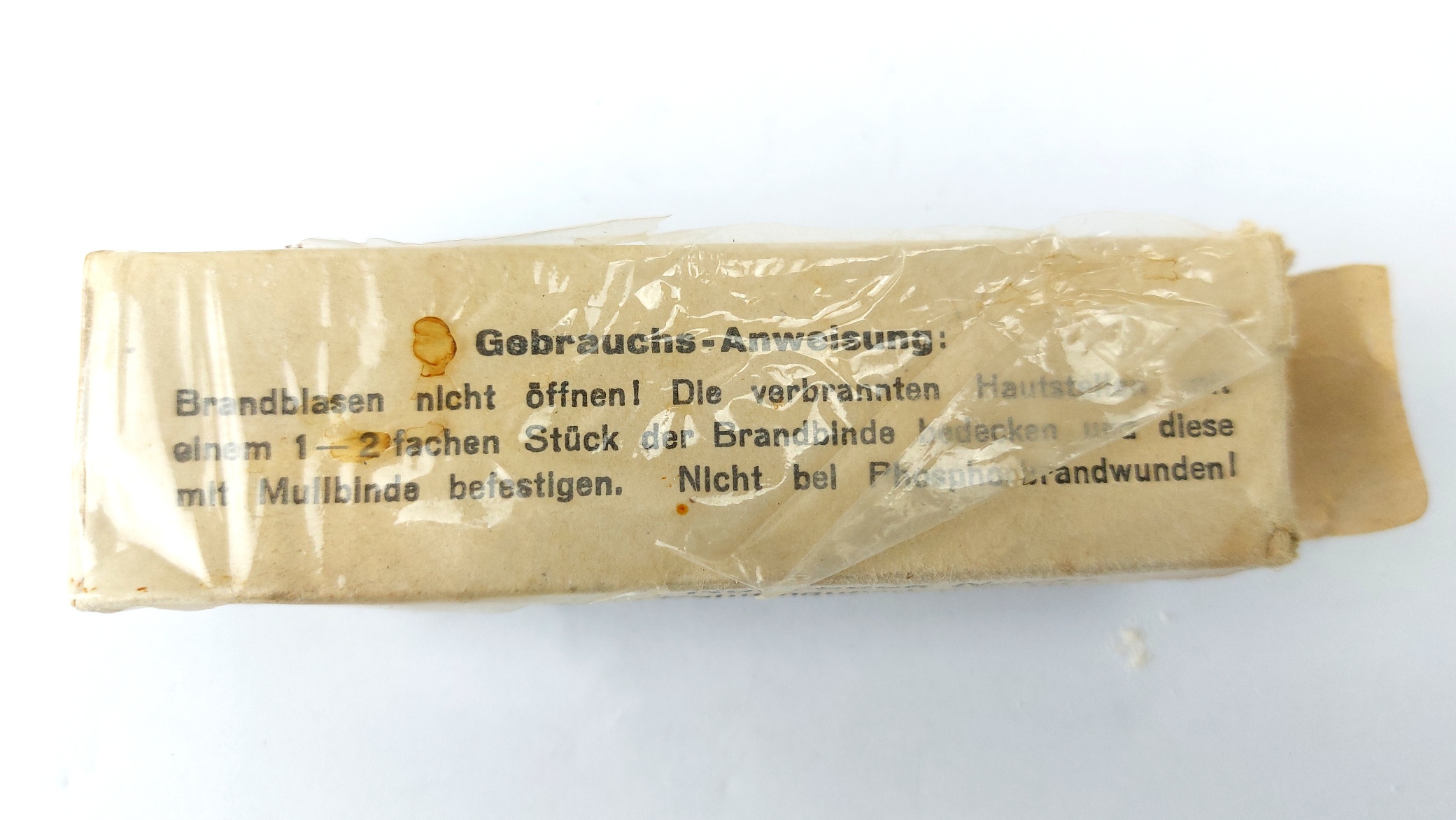
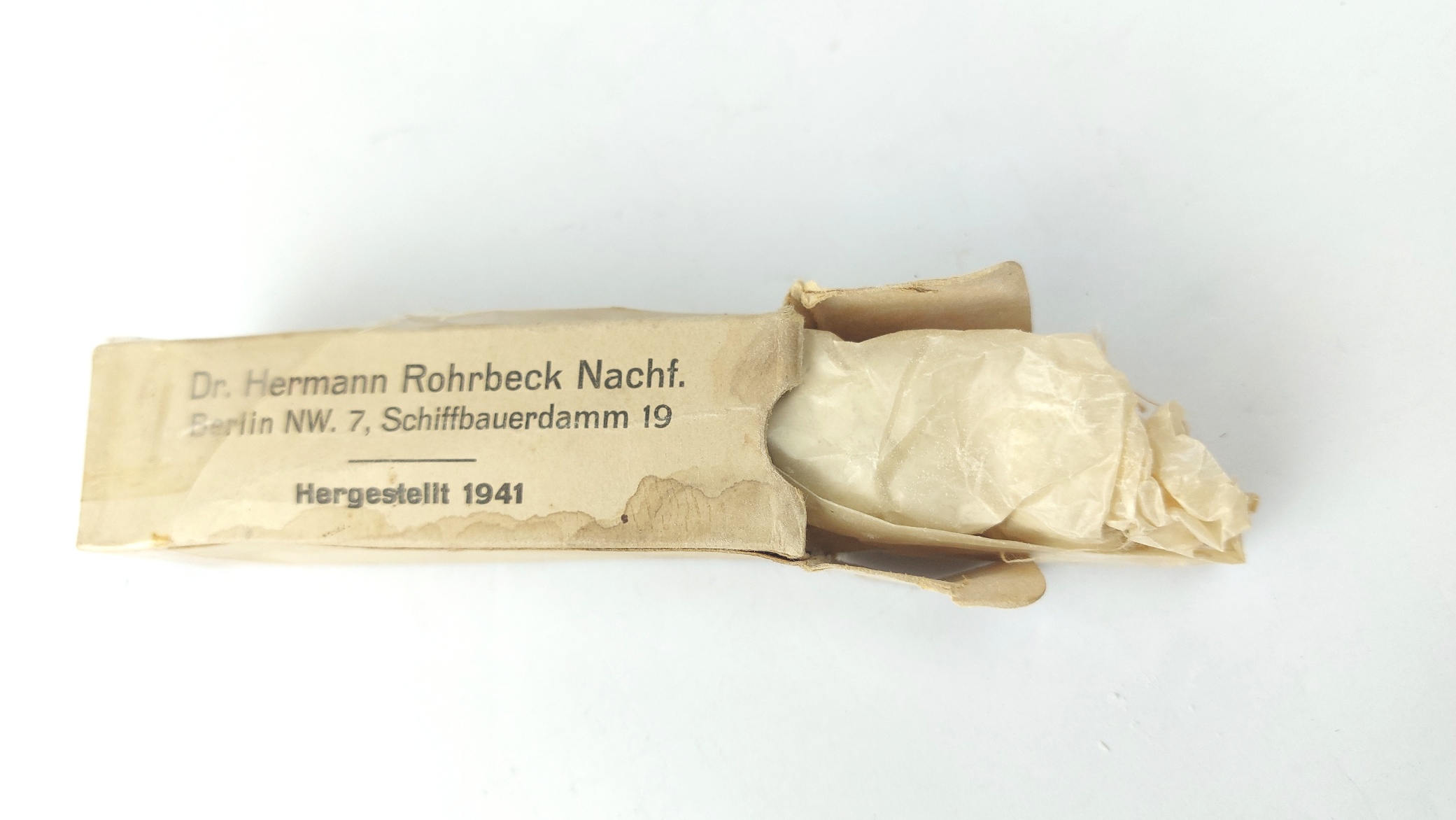
Present is a package marked “Brand-Binde 34” (Burn Bandage No. 34), manufactured by Dr. Hermann Rohrbeck Nachf., Berlin NW.7, Schiffbauerdamm 19, and dated 1941 (Hergestellt 1941 – “Manufactured 1941”). This type of sterile dressing was specifically intended for the treatment and protection of burn injuries, particularly relevant in modern mechanised warfare.
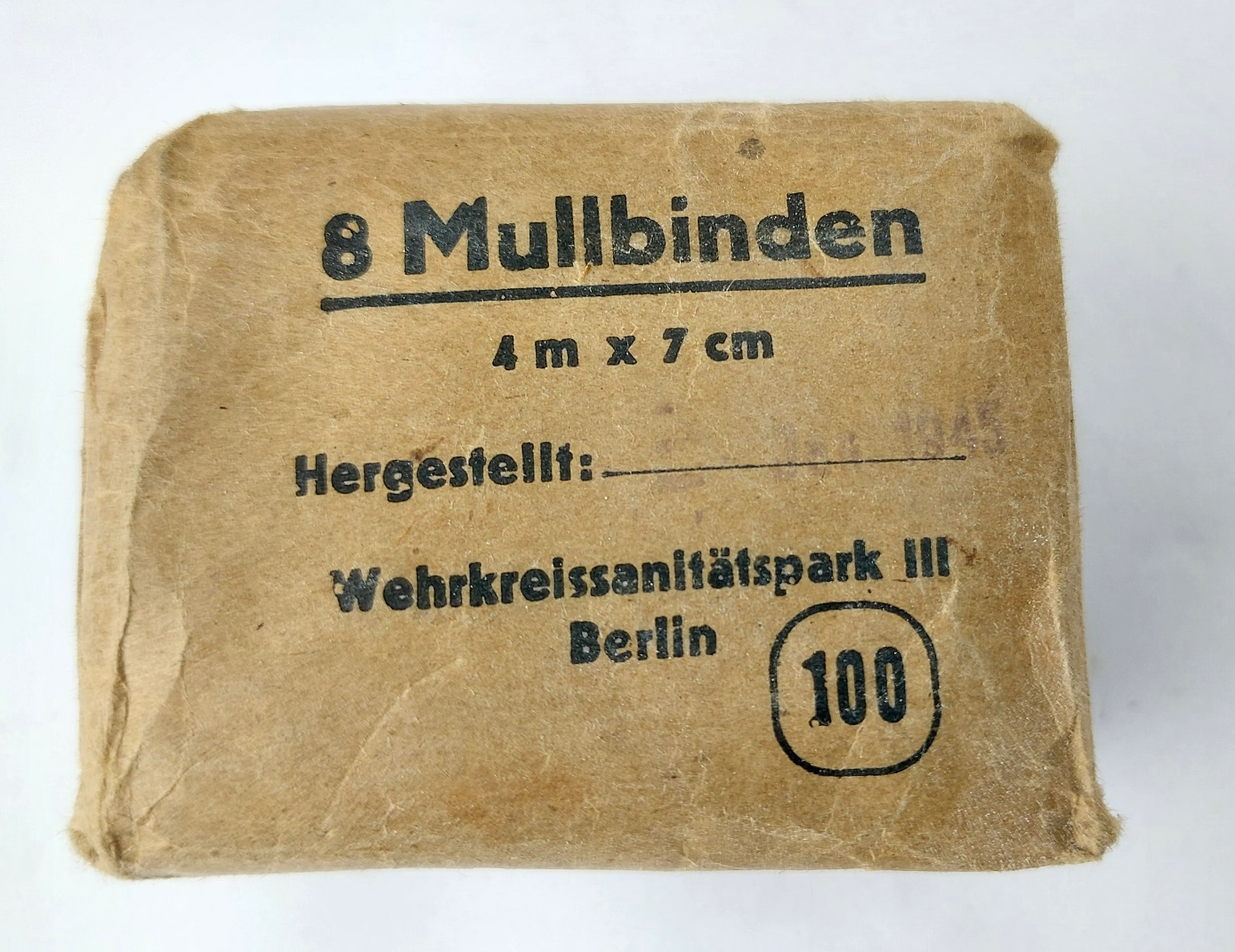
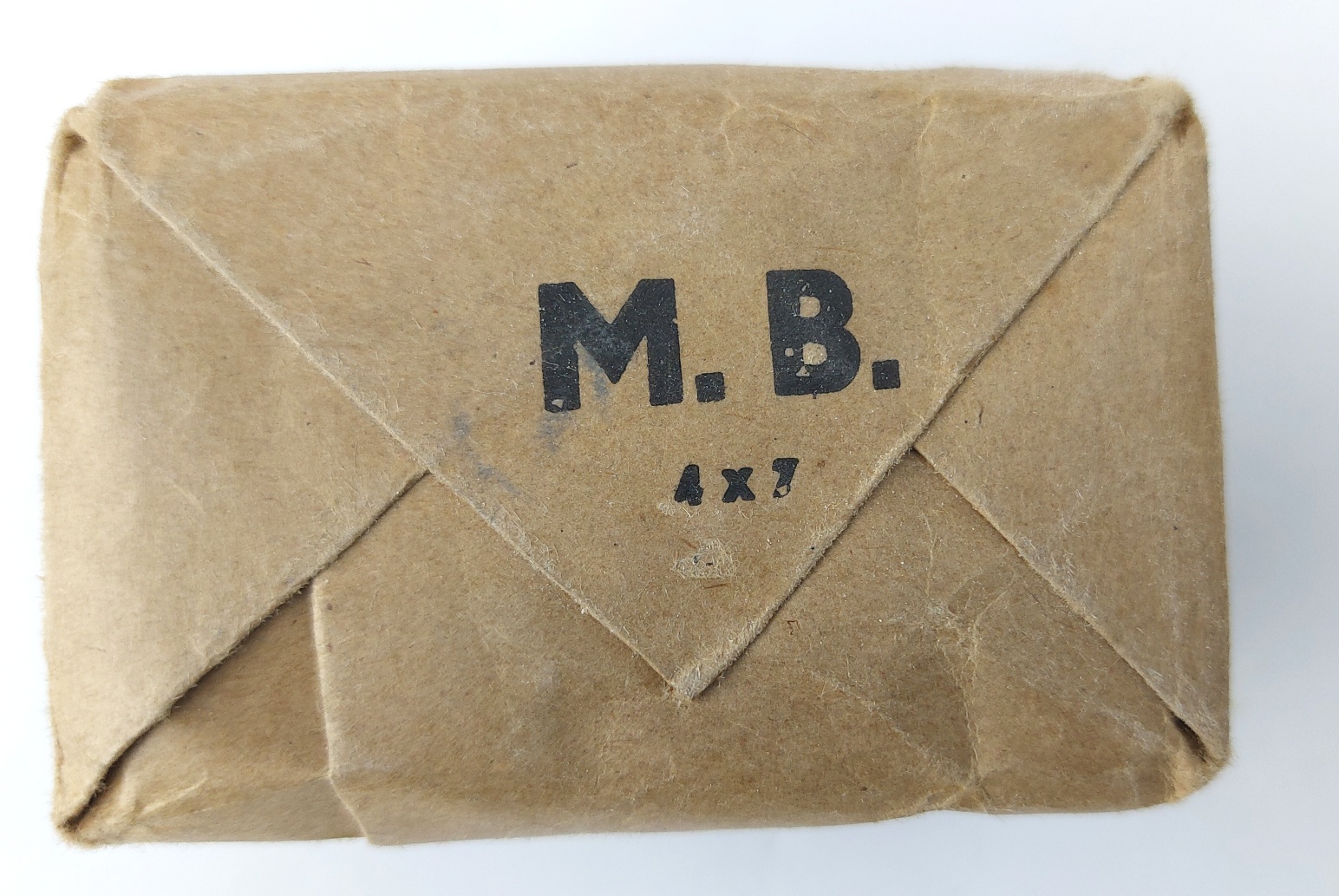
Also included is an unopened brown paper parcel labelled “8 Mullbinden 4m x 7cm” (8 gauze bandages, 4 metres by 7 centimetres), produced by Wehrkreissanitätspark III, Berlin (Military District Medical Depot No. III, Berlin). Mullbinden were standard rolled gauze bandages used for securing dressings and stabilising wounds in the field.
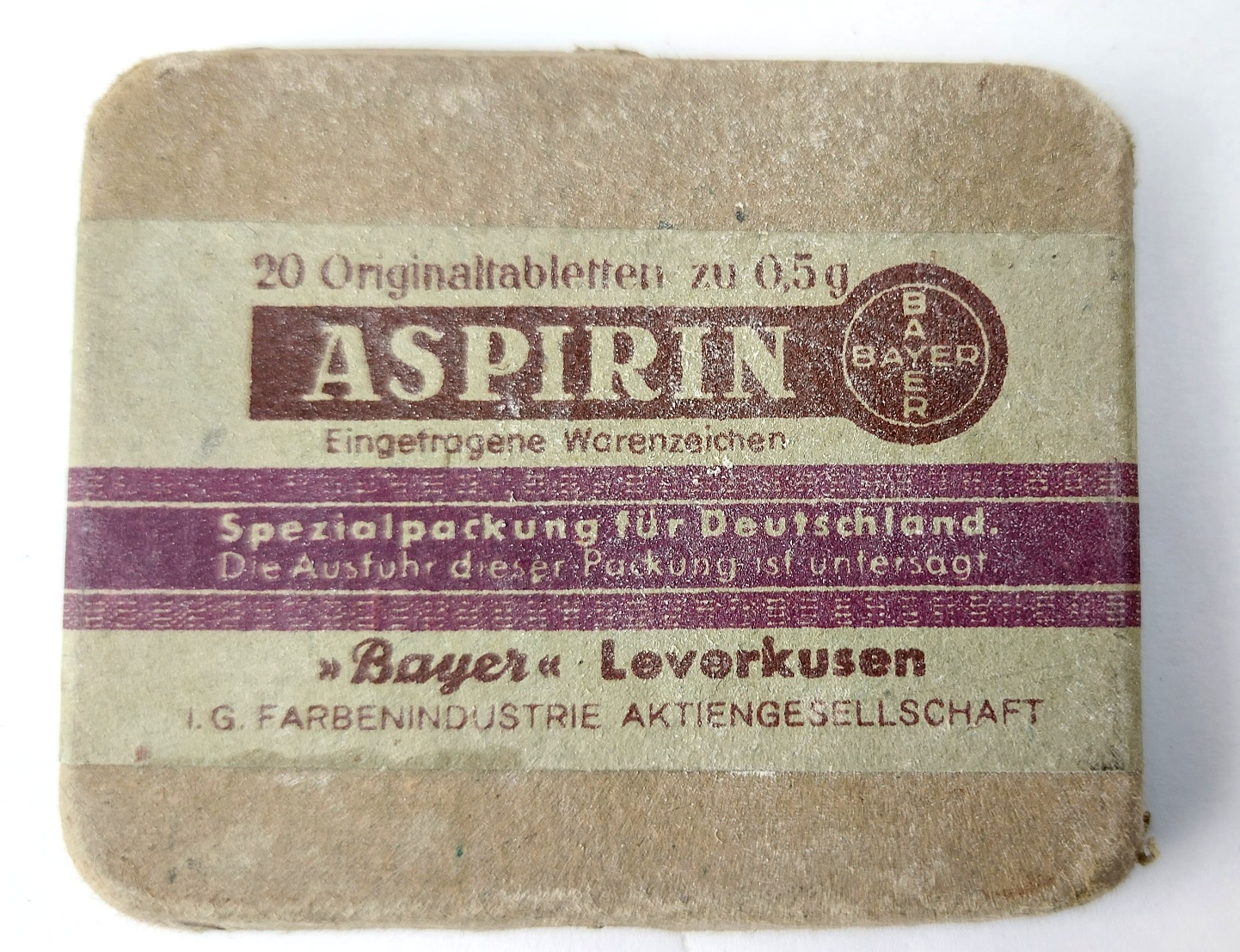
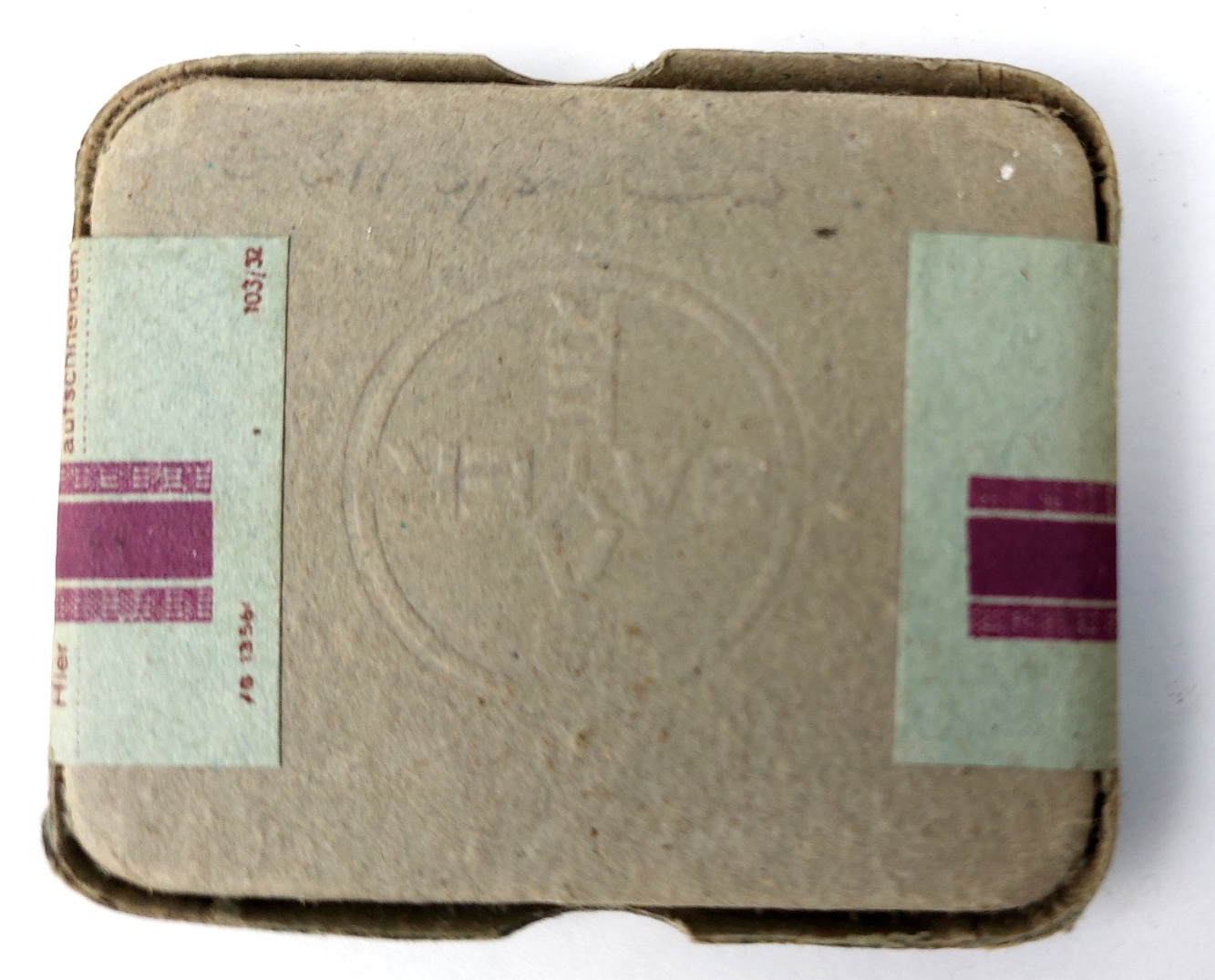
An unopened Bayer Aspirin packet is present, marked “20 Originaltabletten zu 0,5g” (20 original tablets of 0.5 grams), produced by I.G. Farbenindustrie AG, Leverkusen. The packet is further labelled “Spezialpackung für Deutschland – Die Ausfuhr dieser Packung ist untersagt” (“Special packaging for Germany – Export of this package is prohibited”), confirming it as domestic wartime issue. Aspirin (acetylsalicylic acid) was widely used for pain relief and fever reduction in military medical kits.
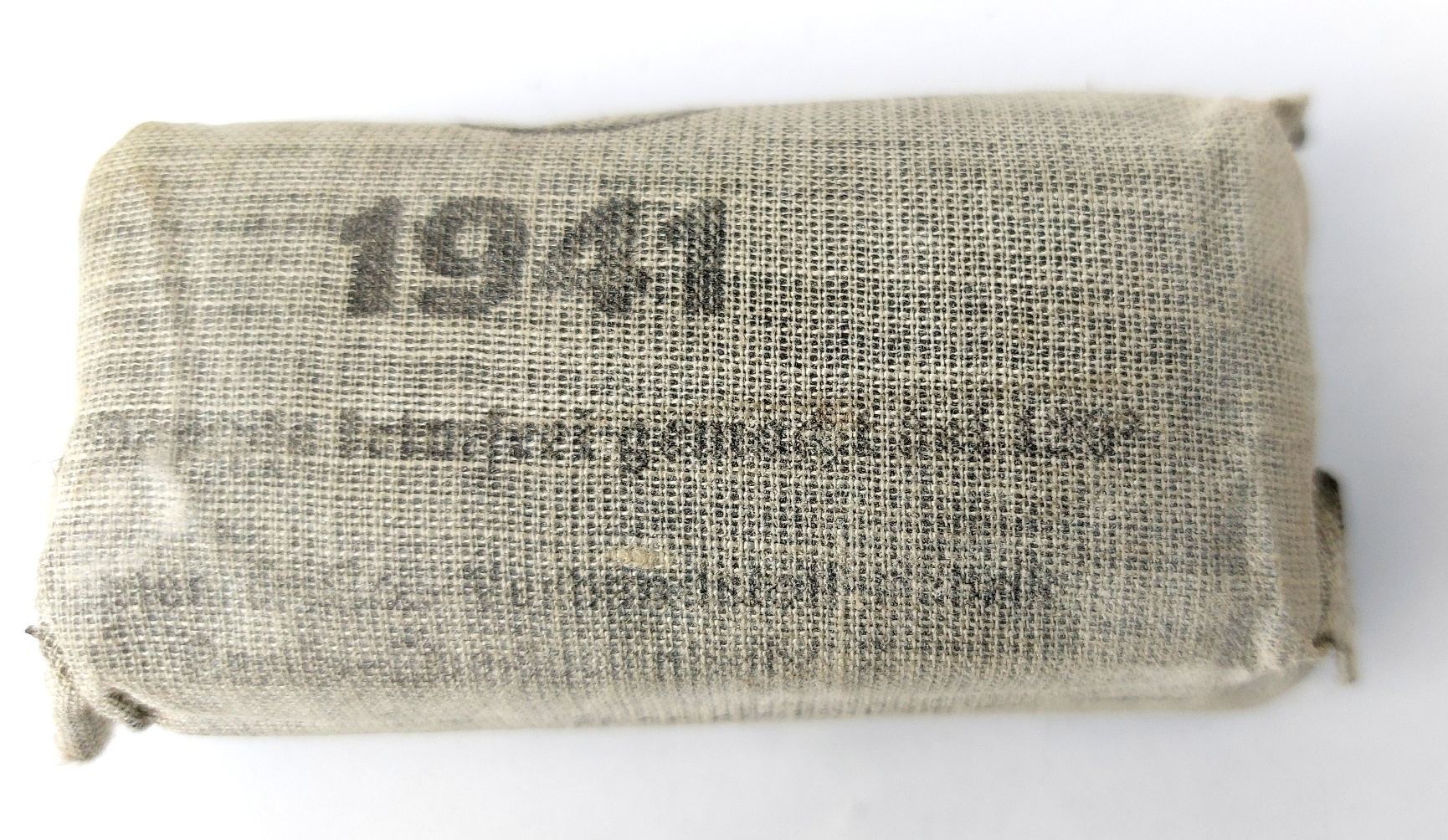
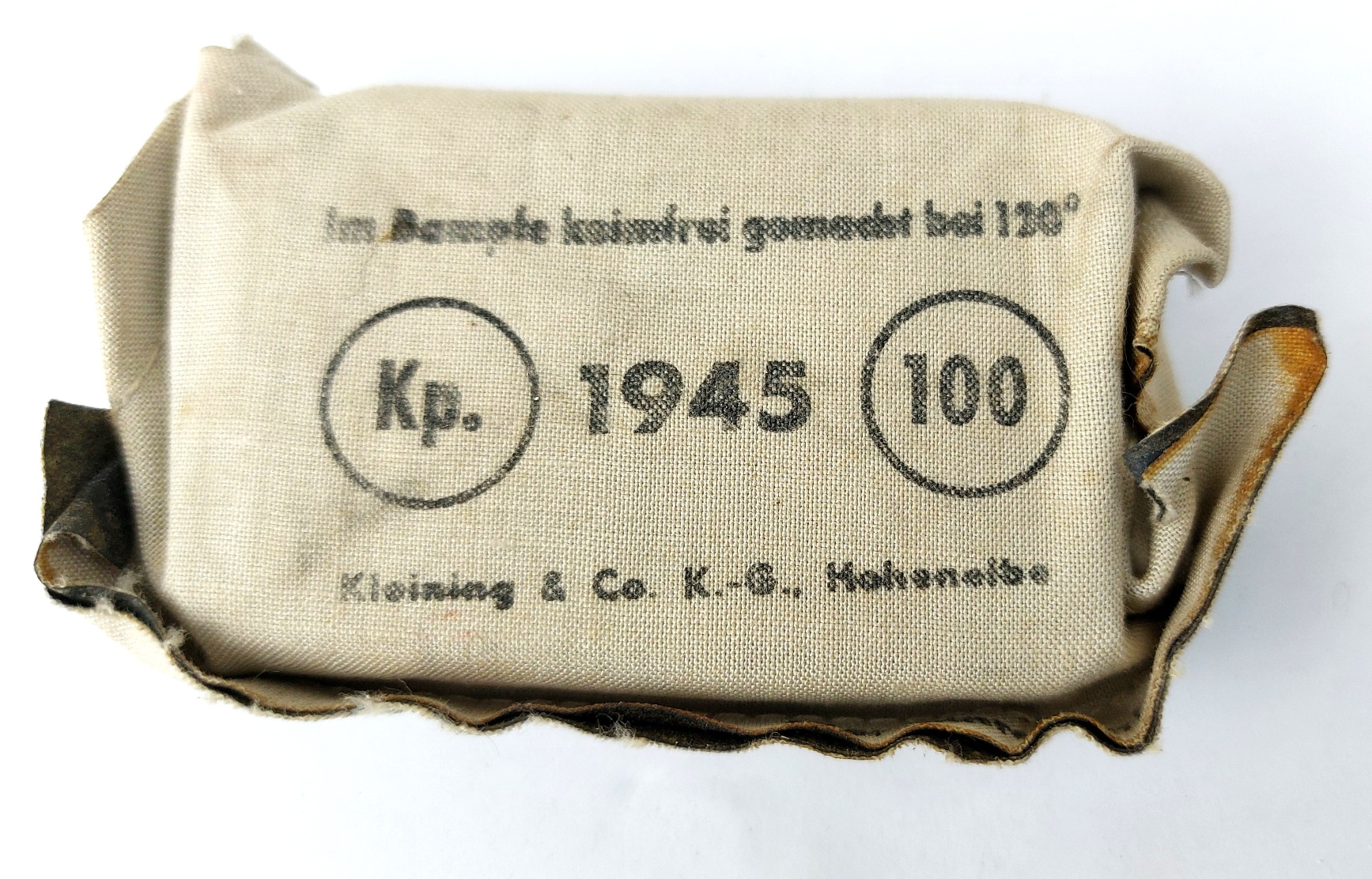
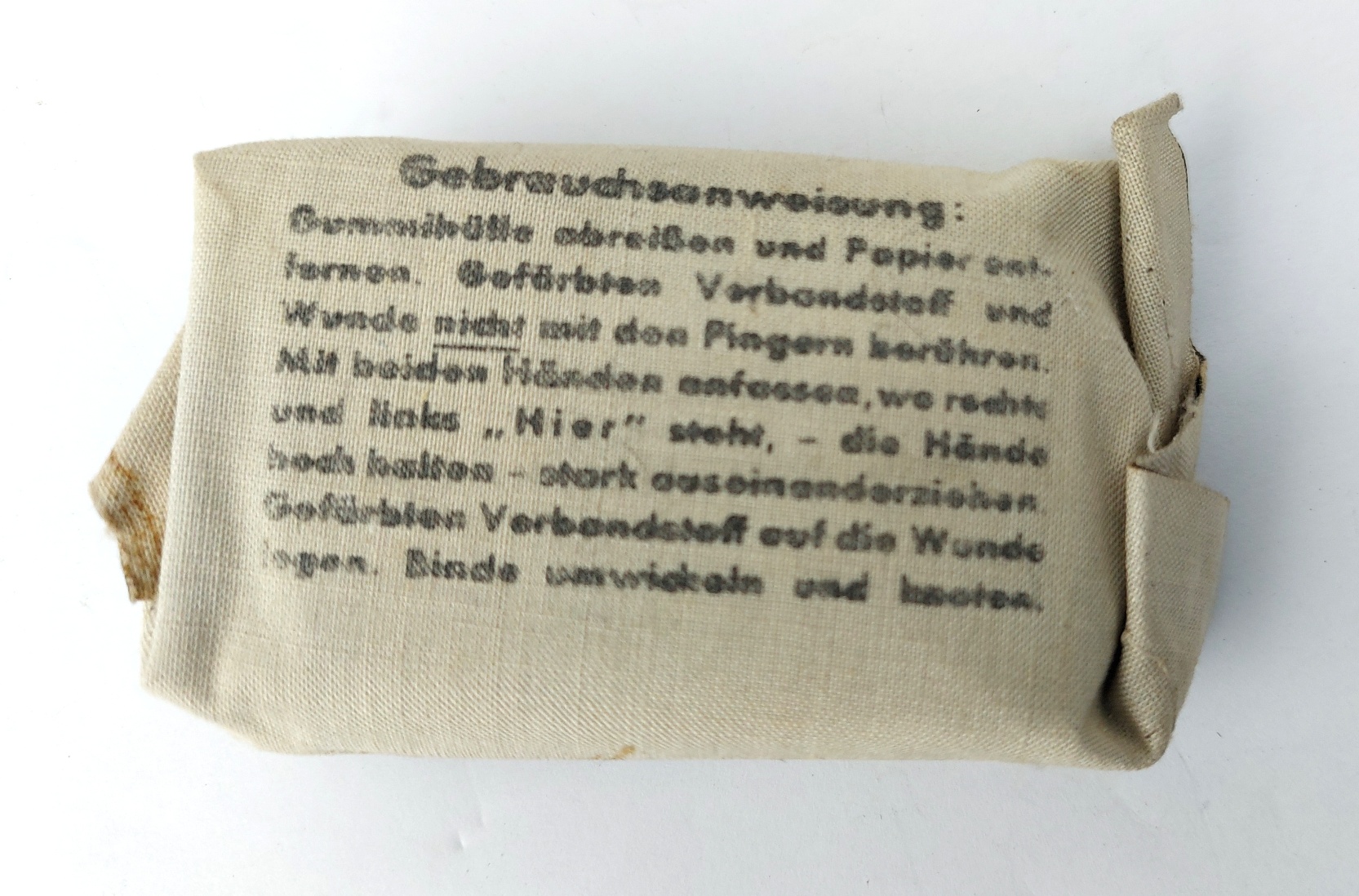
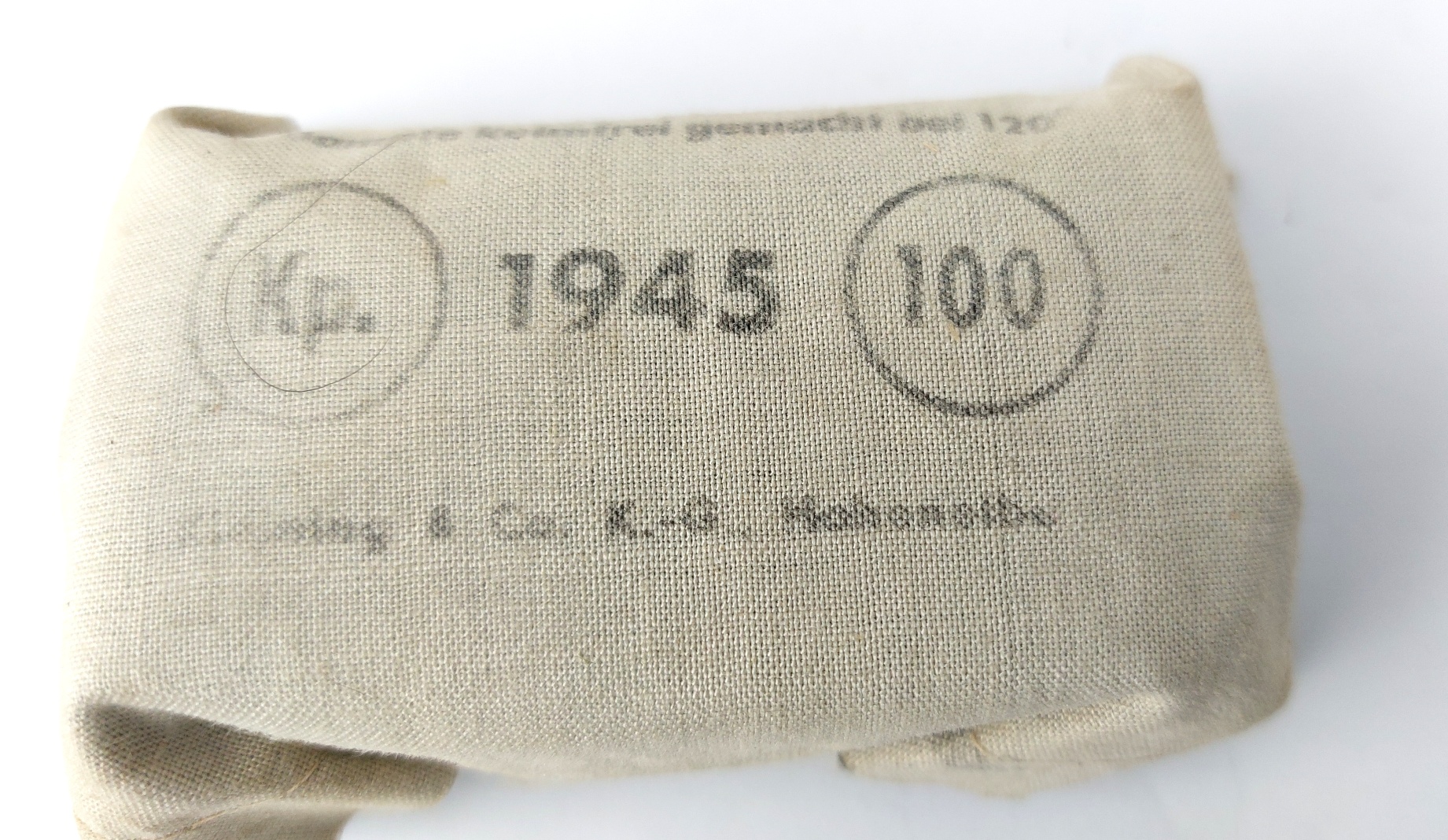
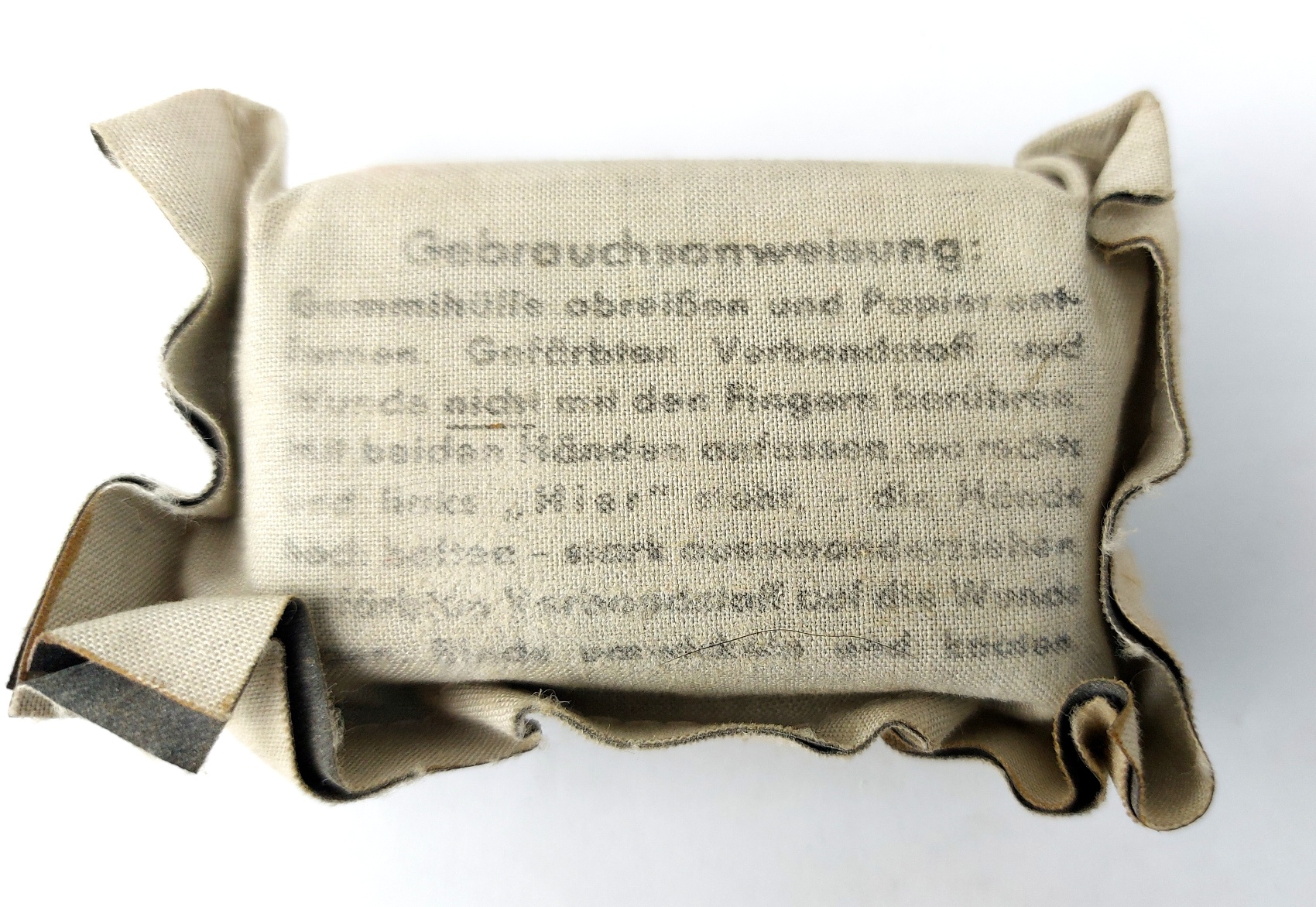
Several unopened cloth-wrapped field dressings are included under the designation “Verbandpäckchen” (field dressing packet). One example dated 1941 represents early-war production. Two further examples dated 1945, manufactured by Kleining & Co. K.-G., Hohenelbe, bear the sterilisation marking “Im Dampfe keimfrei gemacht bei 120°” (“Steam sterilised at 120°C”). These compact personal wound dressings were standard issue to every German soldier and were carried in a dedicated bandage pocket inside the Feldbluse (combat tunic). Late-war 1945-dated examples are notably scarcer.
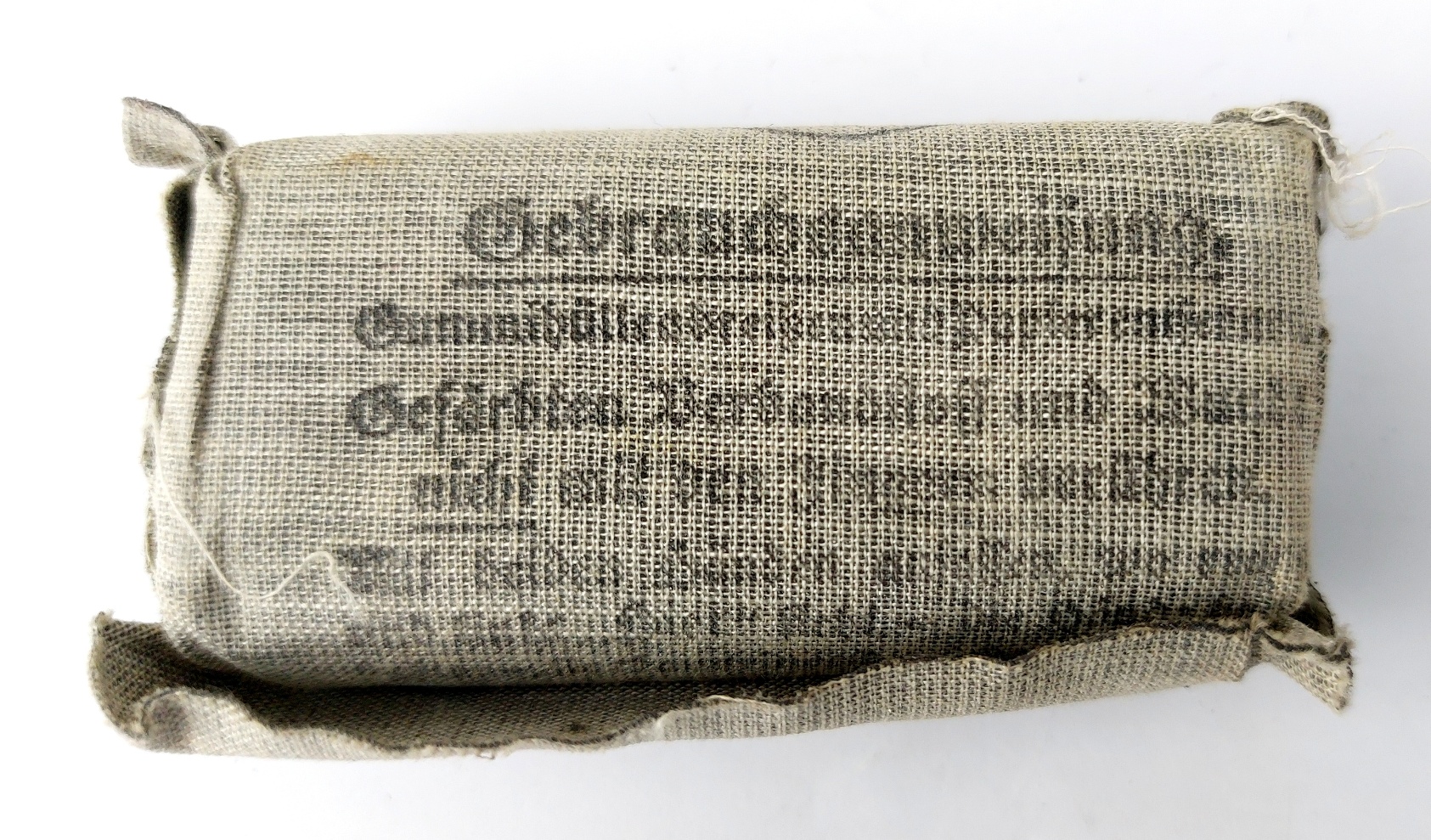
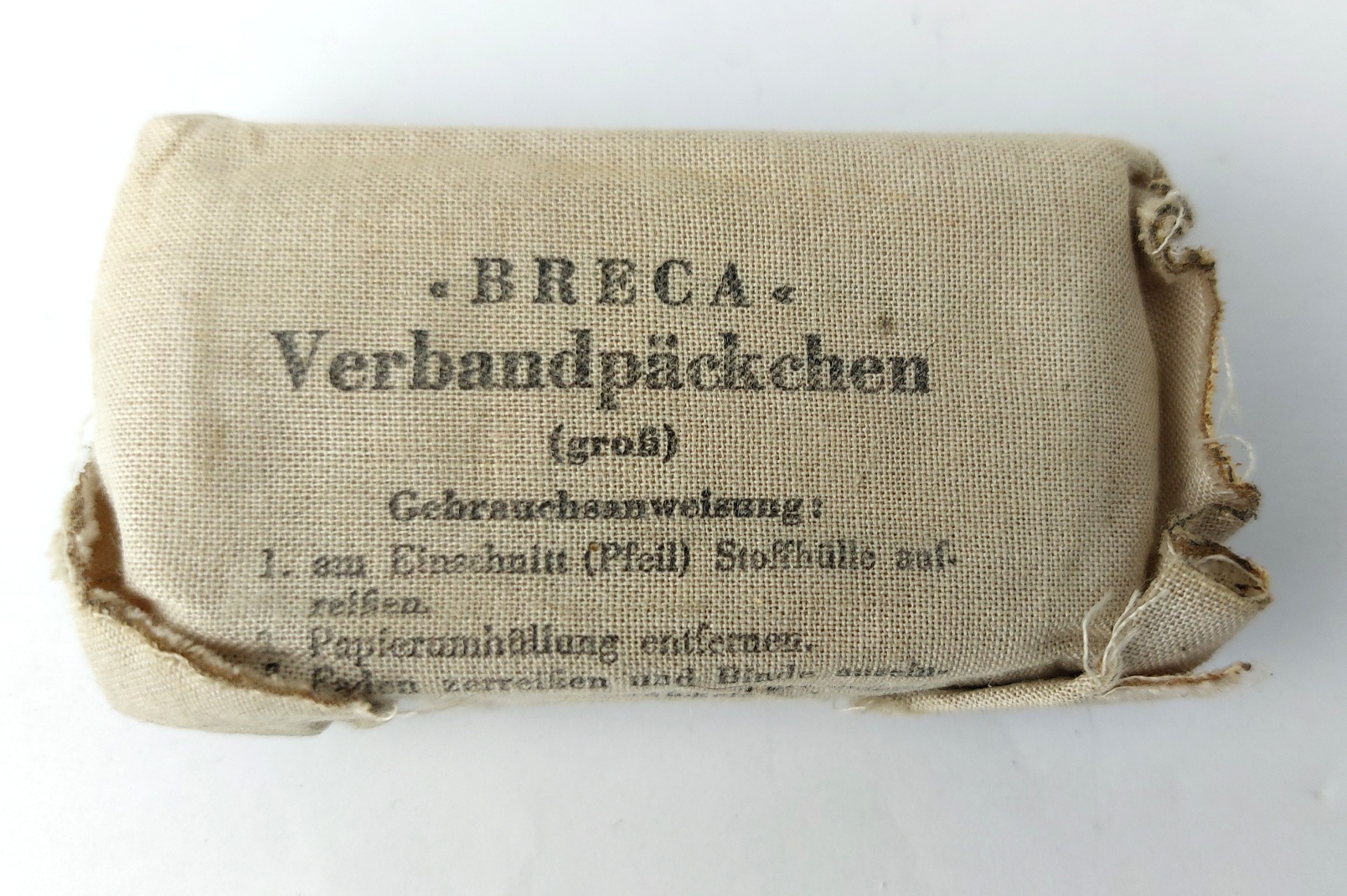
Also present is an unopened large-format dressing labelled “BRECA Verbandpäckchen (groß)” (“BRECA field dressing – large size”), complete with printed “Gebrauchsanweisung” (instructions for use). The larger pattern was intended for more substantial wound coverage.
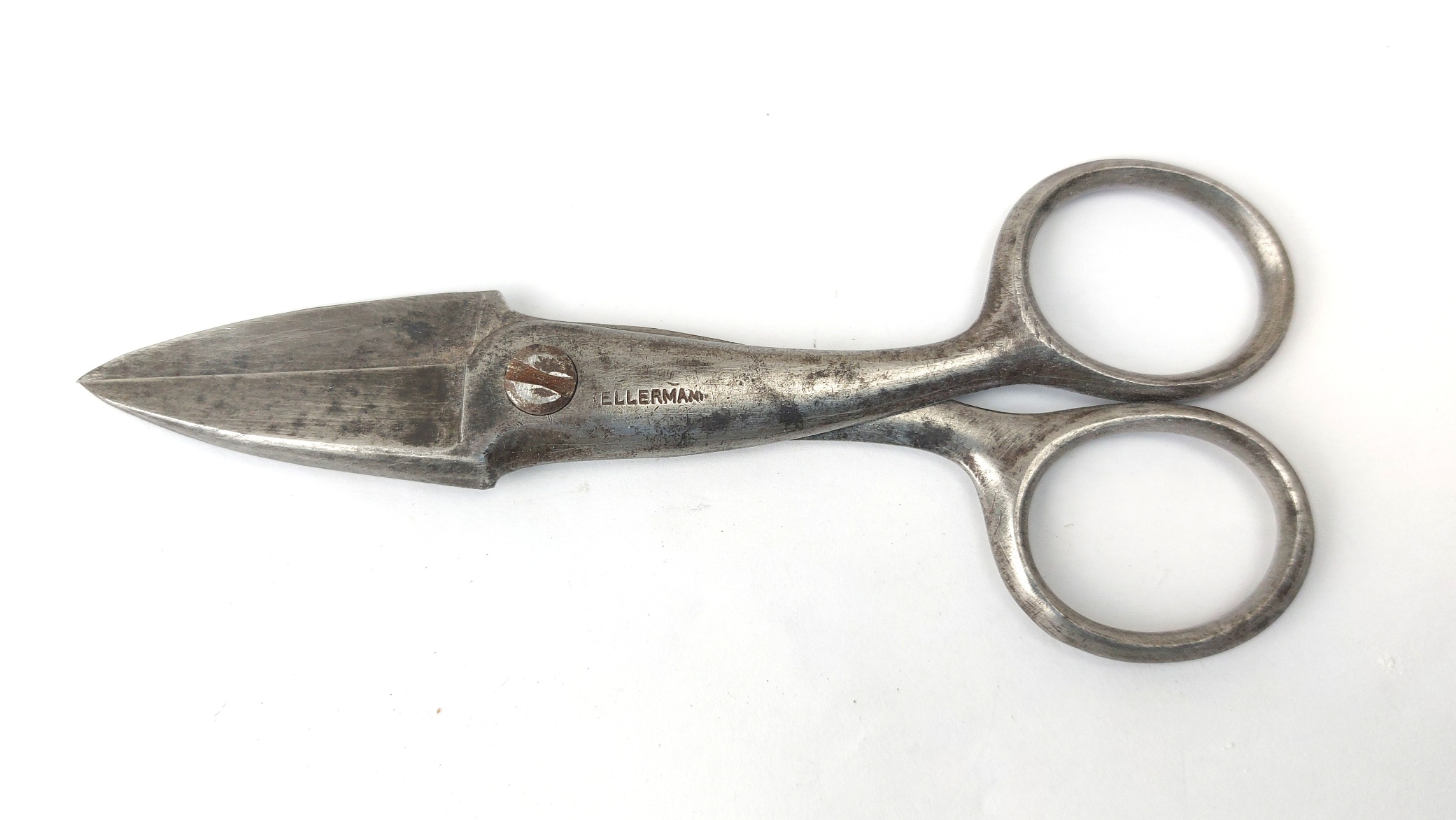
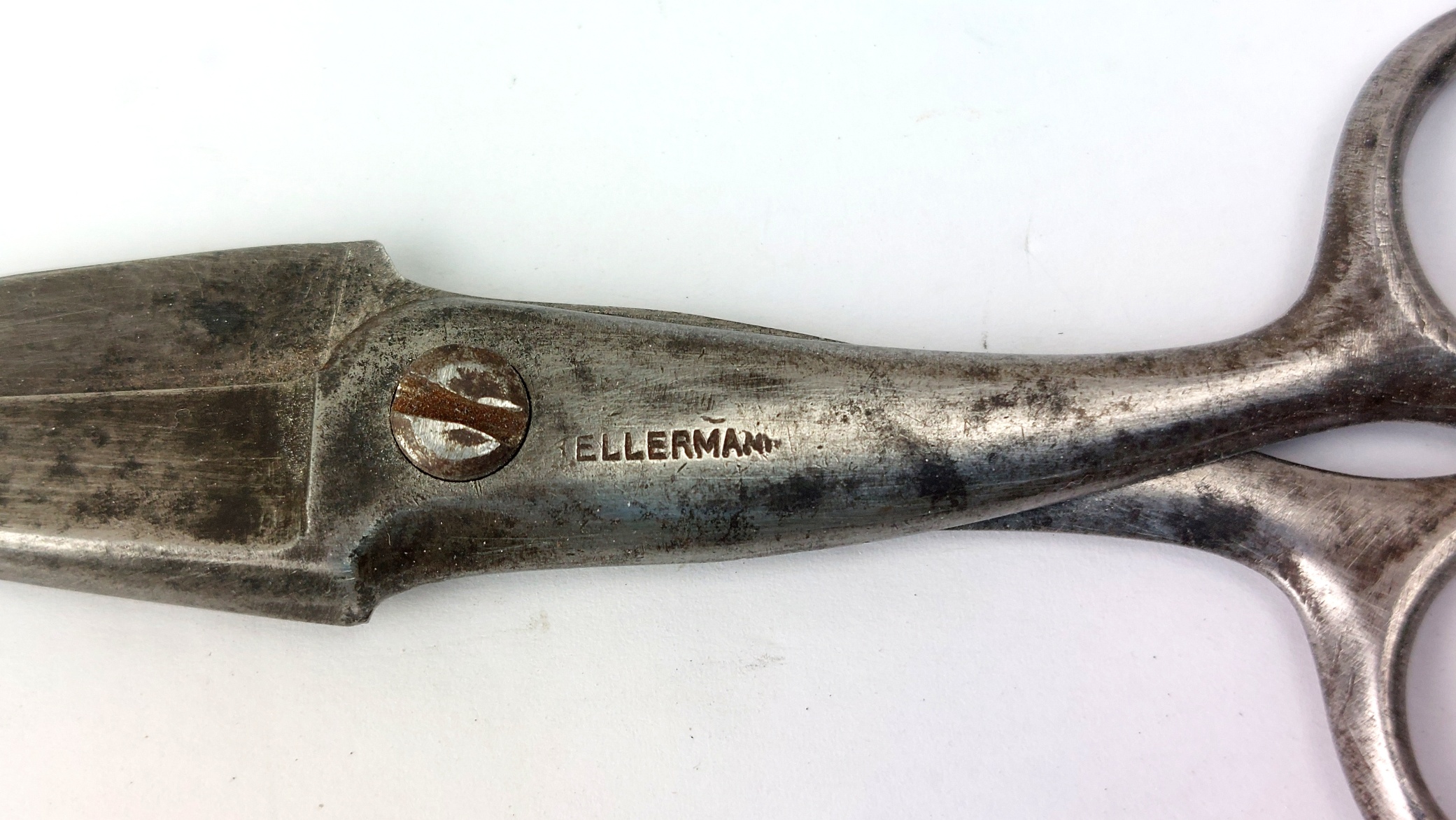
Completing the contents is a pair of steel scissors stamped “ELLERMAN,” of heavy straight-bladed utility pattern. Such scissors are commonly encountered as general-purpose or sewing-type tools and would have been entirely practical within a wartime medical pouch for cutting bandages, dressings, or clothing as required. They display honest age patination appropriate to the grouping.
Historical Note & Unit Interpretation:
The interior inscription appears to read:
“… Mann 11/163”
Two interpretations are possible. The most likely is that “Mann” represents the surname of the owner, with “11/163” indicating a company and regimental designation in the format commonly used in the German Army. If so, this may denote 11. Kompanie, Infanterie-Regiment 163, part of the 163. Infanterie-Division. That formation participated in the occupation of Norway in 1940, was transported through neutral Sweden during the 1941 “Midsummer Crisis,” fought for several years on the Arctic Front in Finland, and was largely destroyed in Pomerania in March 1945. Within regimental structure, the 11th Company typically functioned as the heavy weapons company of III Battalion, equipped with mortars and heavy machine guns; a company-level medic attached to such a unit would plausibly have carried equipment of this type.
Alternatively, “Mann” may represent the lowest enlisted rank (equivalent to Private), though the handwriting format more strongly suggests it functions as a surname. Without supporting documentation such as a Soldbuch or Wehrpass, the unit identification must remain plausible but unconfirmed.
*Condition*
The buckle retains strong detail with natural age toning. The belt and pouch leather remain supple and structurally sound with expected service wear. The medical contents are period examples, several unopened, with minor age-related staining to paper packaging. The scissors retain honest patina. Please see photographs as part of the condition report.
RQMBEOXDEO_8323230402