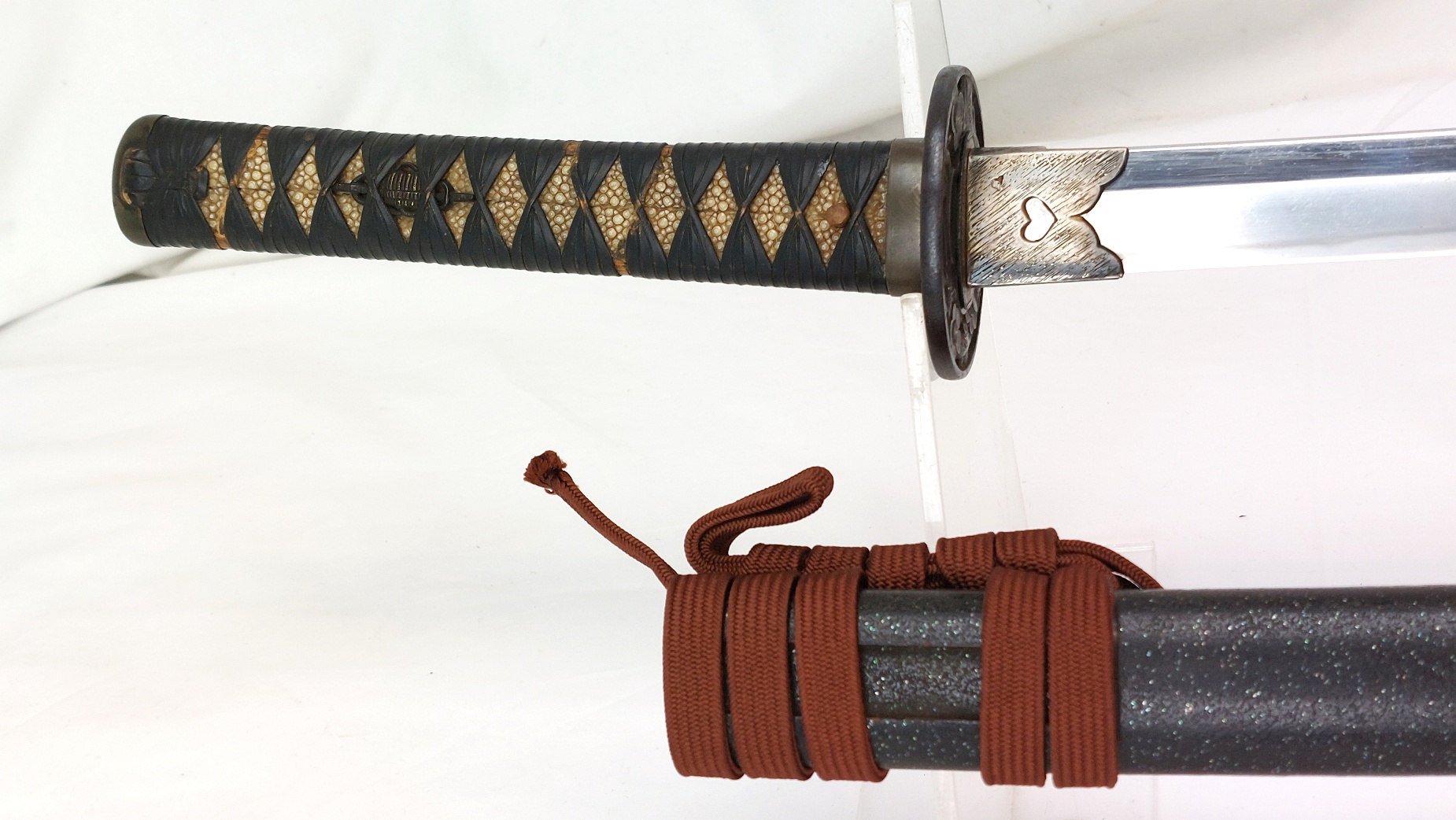
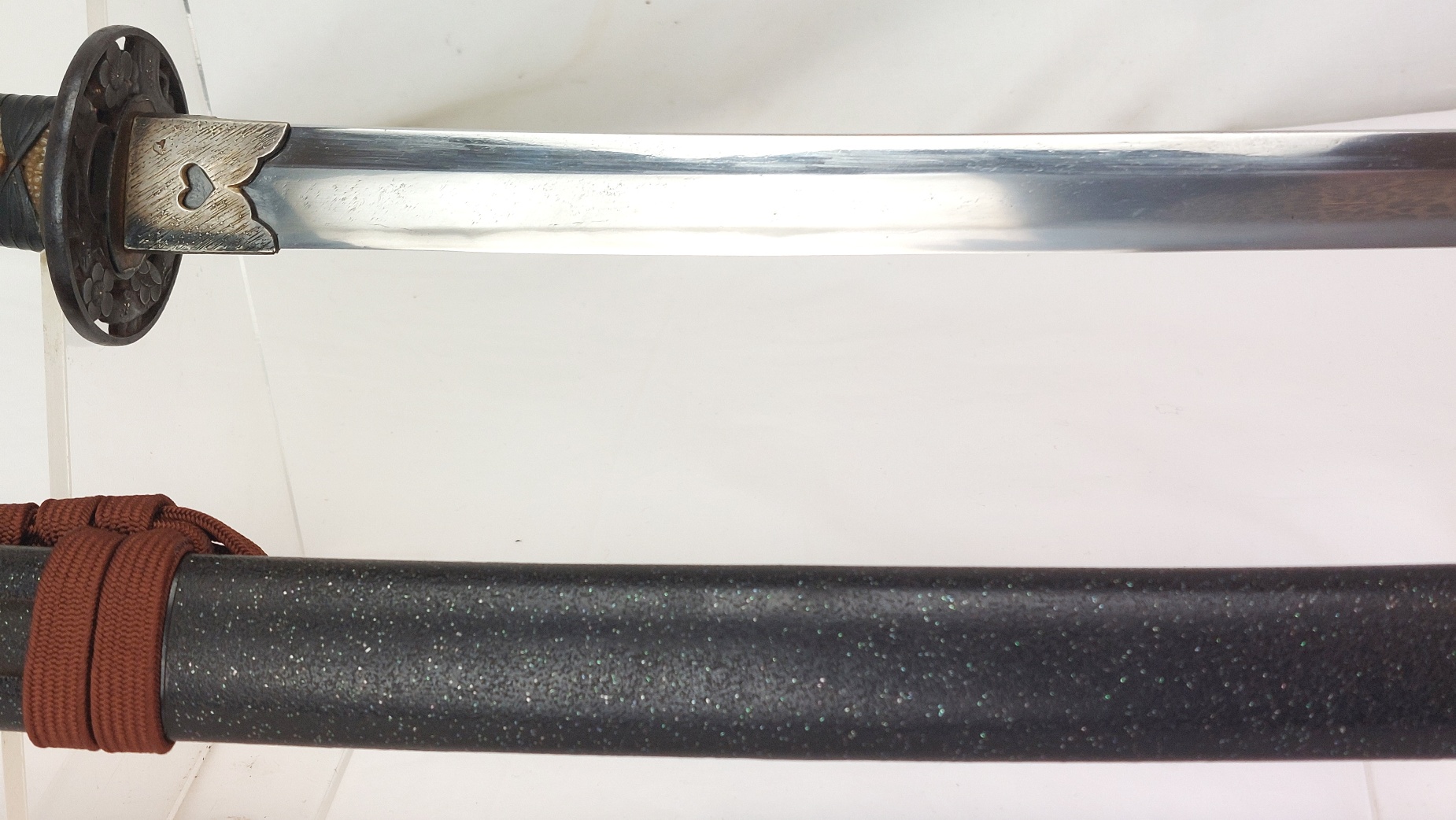
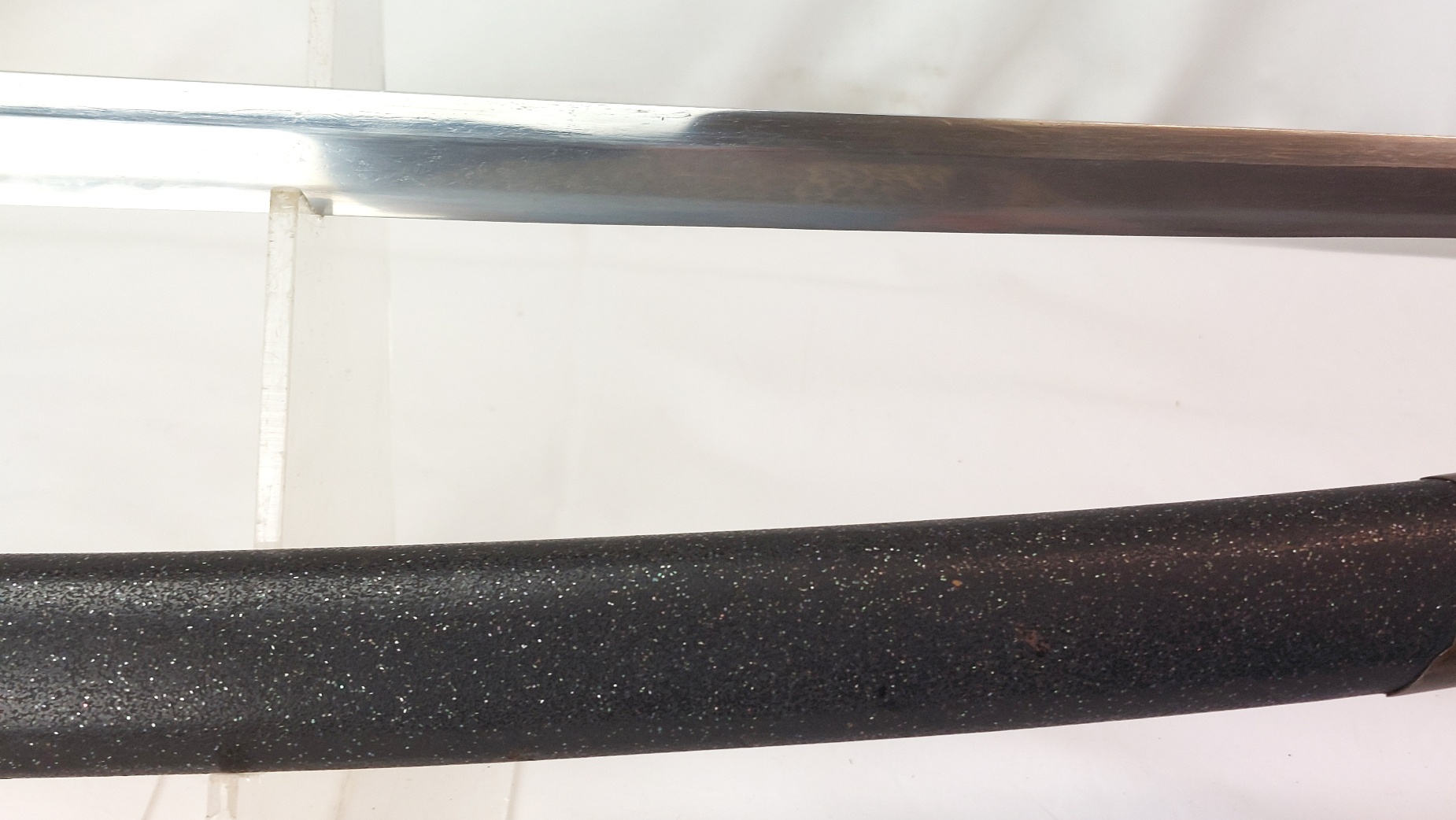
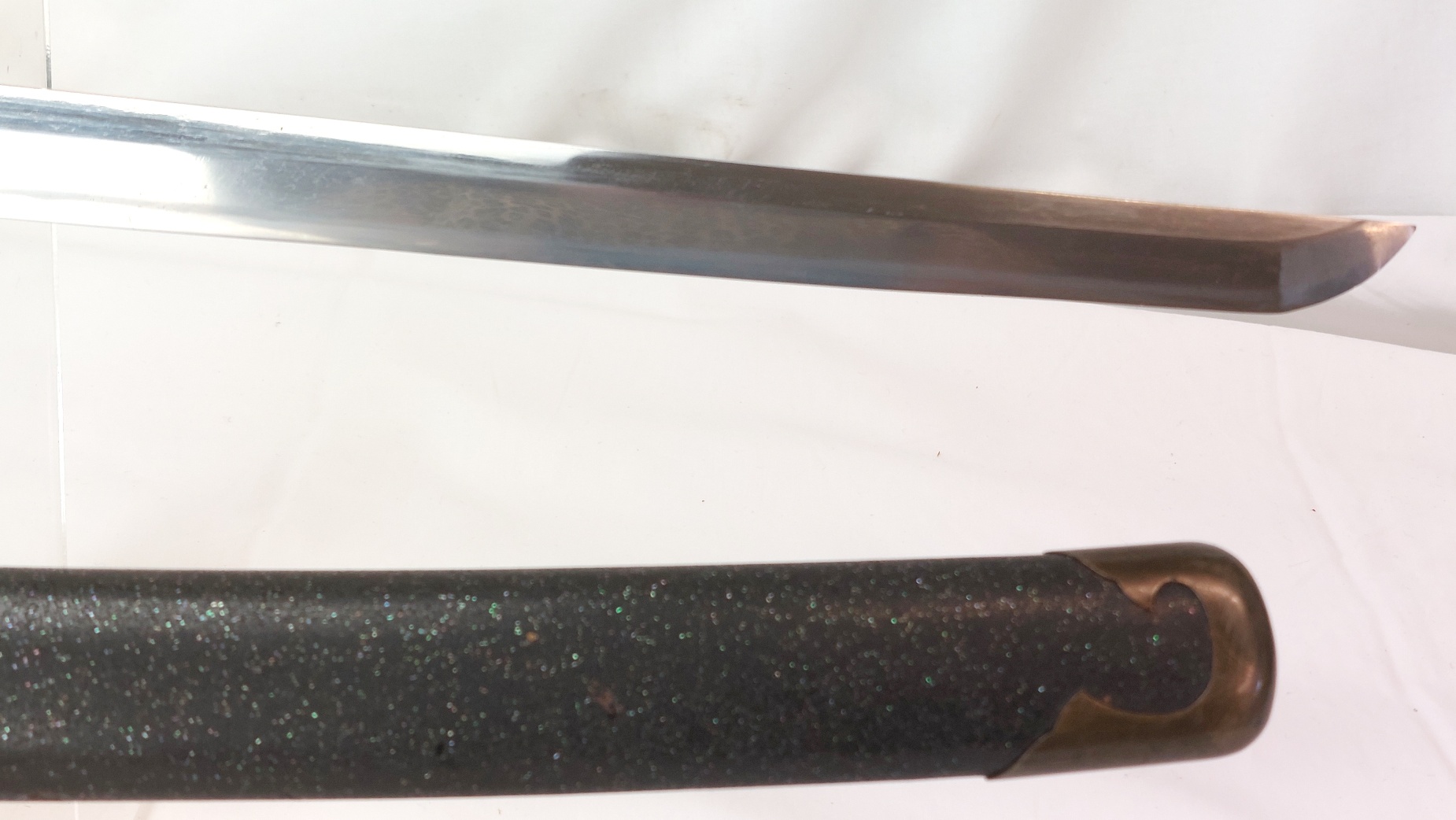
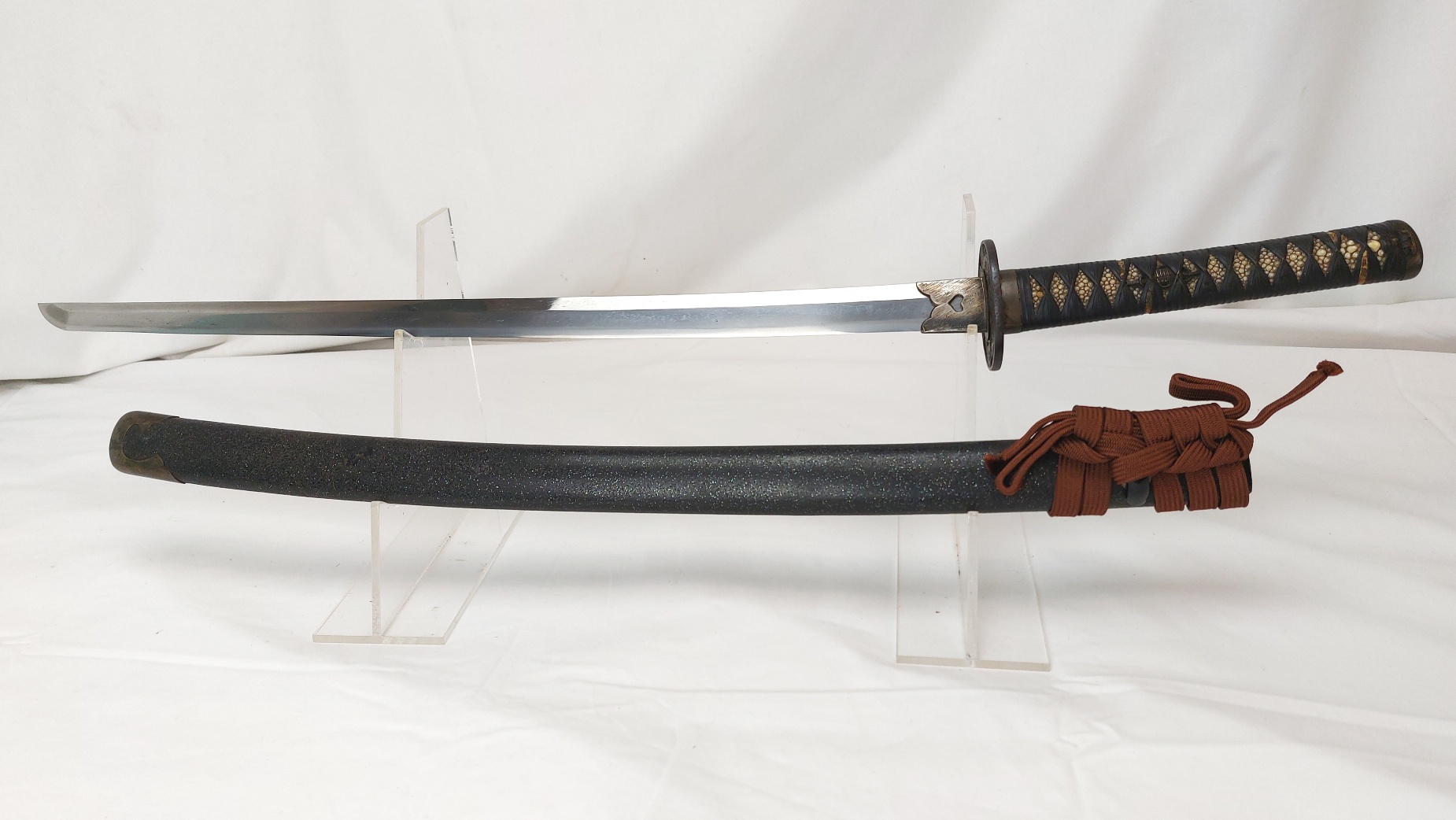
Japanese, Edo Period (Kanbun Era c.1661–1673), Wakizashi Sword, Signed 'Hizen no Kuni Saga Tadayoshi' (Gimei), Complete Koshirae, AOI-Art Appraisal

SKU / Ref. No: JAQ#IBO_300620263329

£2,995.00

A highly attractive early Edo period Japanese wakizashi dating to the Kanbun era, professionally appraised by AOI-Art as an authentic period blade mounted in complete traditional koshirae. Although bearing a later gimei Tadayoshi signature, the blade itself has been assessed as consistent with the respected Bungo School, making this a desirable and honest collector's example complete with its original appraisal documentation.

Would you like to find out more about this product?

SKU / Ref. No: JAQ#IBO_300620263329

Enquire about this product

*Japanese, Edo Period (Kanbun Era c.1661–1673), Wakizashi Sword, Signed 'Hizen no Kuni Saga Tadayoshi' (Gimei), Complete Koshirae, AOI-Art Appraisal*

- Early Edo period wakizashi dating to the Kanbun era (c.1661–1673).
- Blade mounted in a complete traditional Japanese koshirae.
- Signed 'Hizen no Kuni Saga Tadayoshi', with accompanying AOI-Art appraisal identifying the signature as gimei (not genuine).
- AOI-Art appraisal attributes the blade itself as being consistent with the Bungo School.
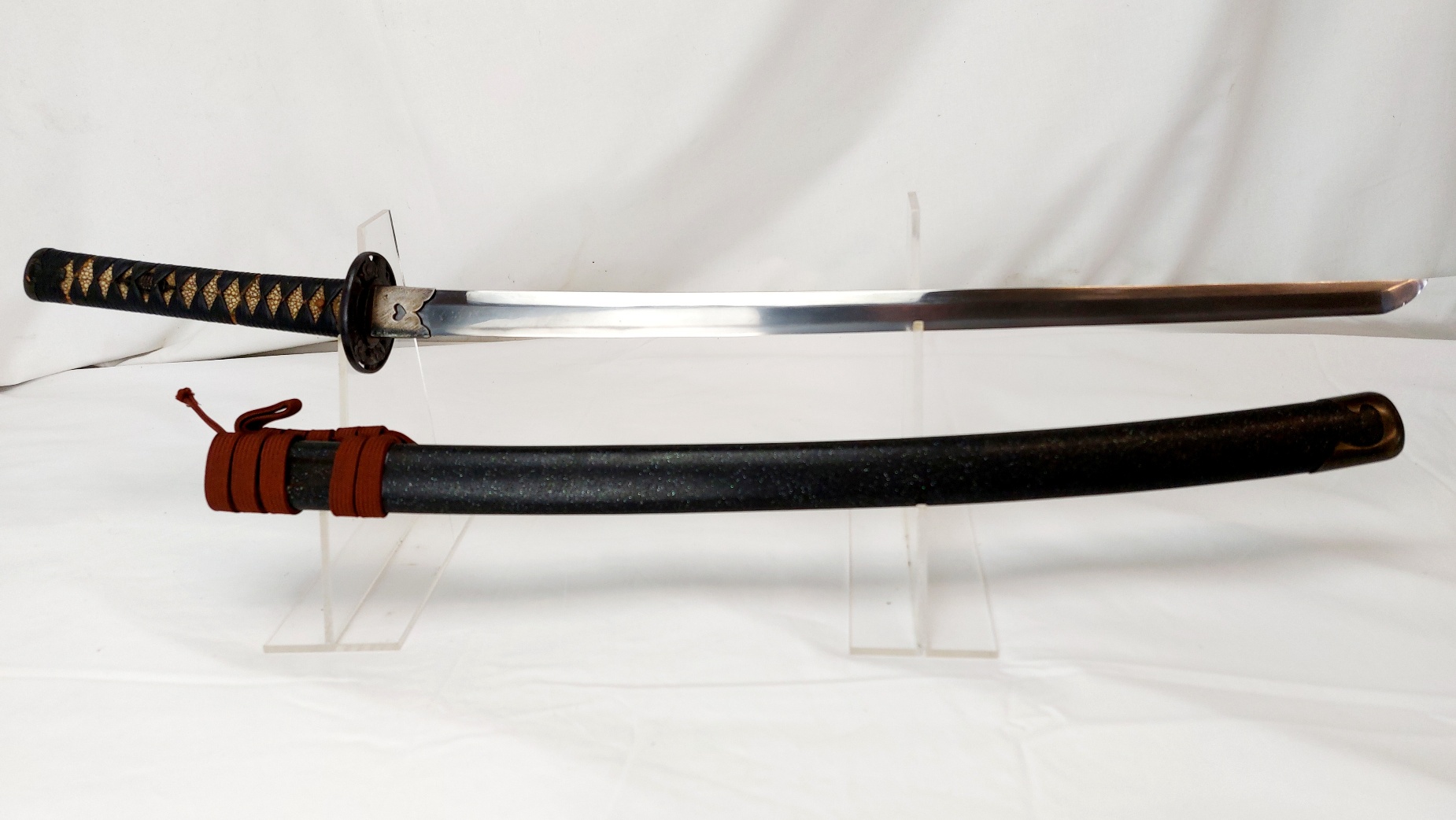
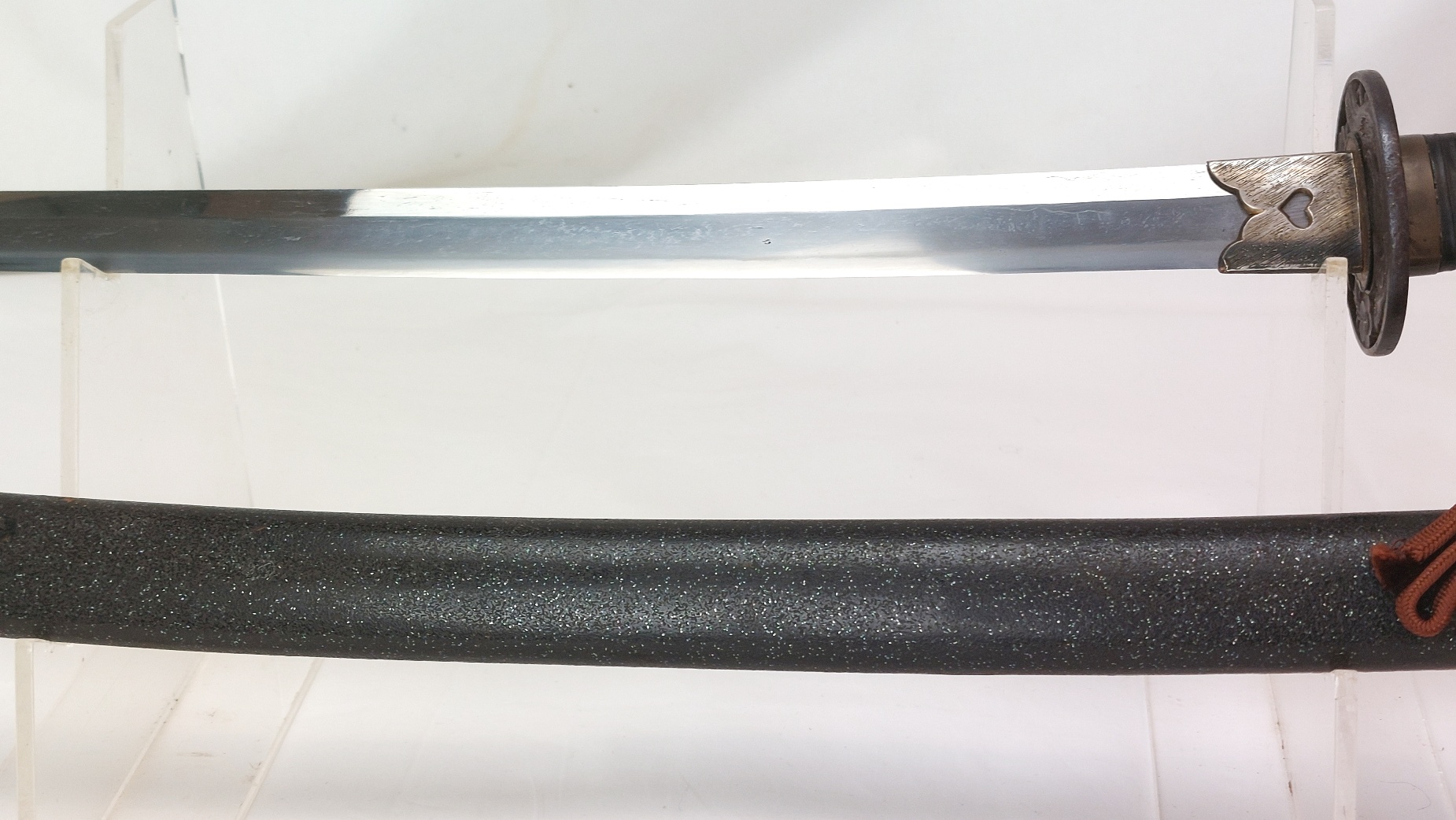
- Attractive polished blade displaying a traditional suguha hamon.
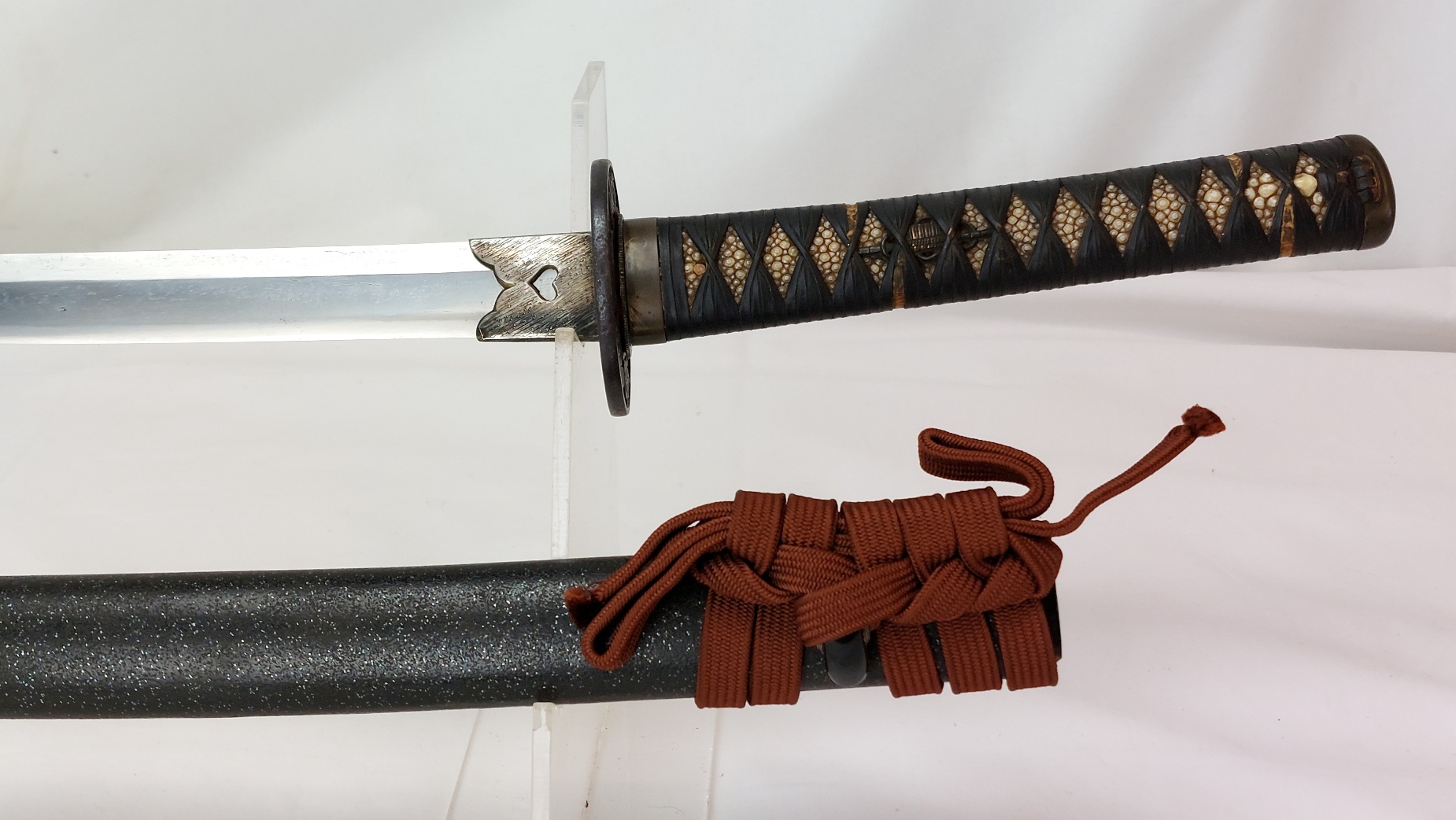
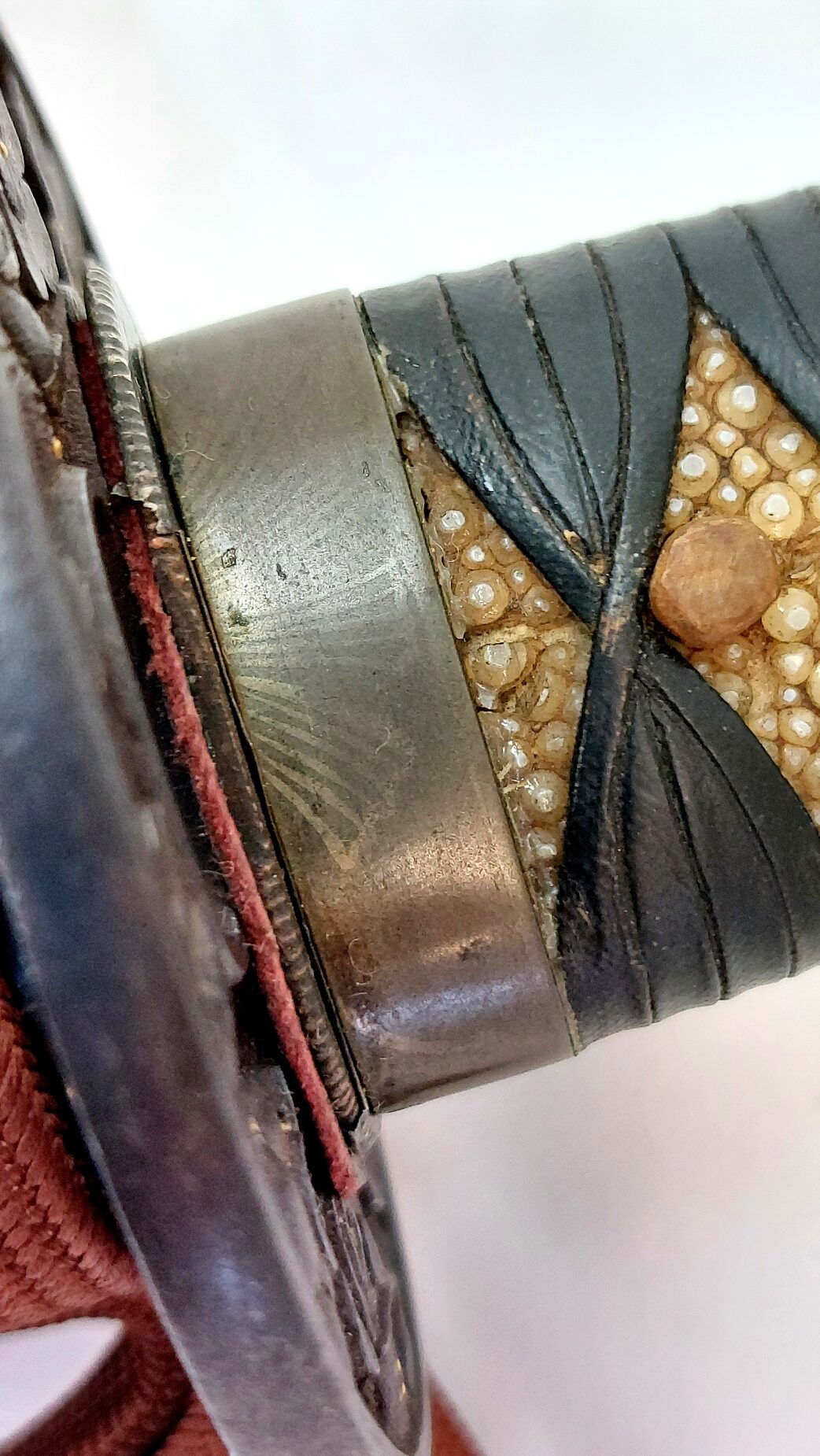
- Iron pierced tsuba decorated with cherry blossom motifs.
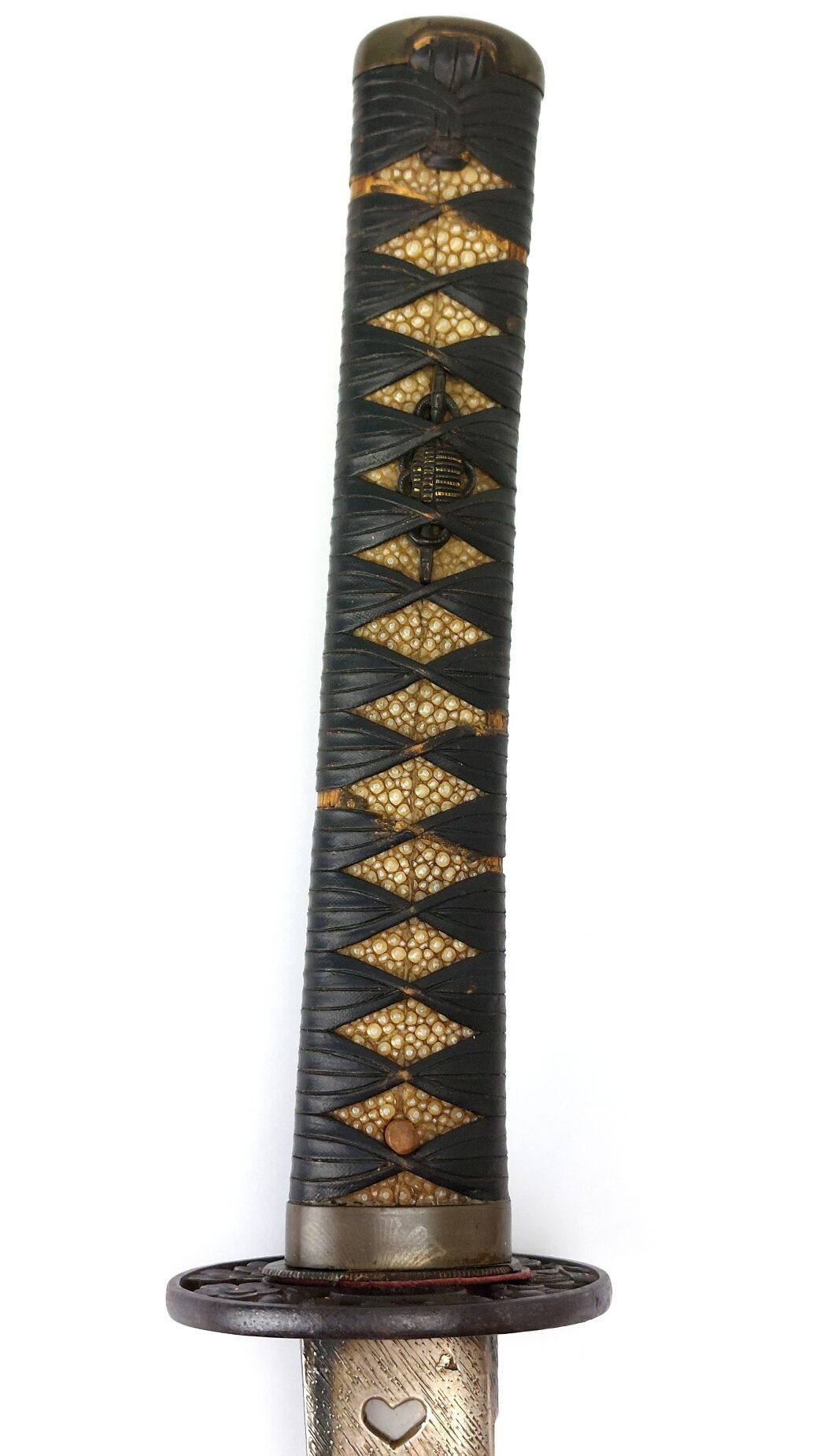
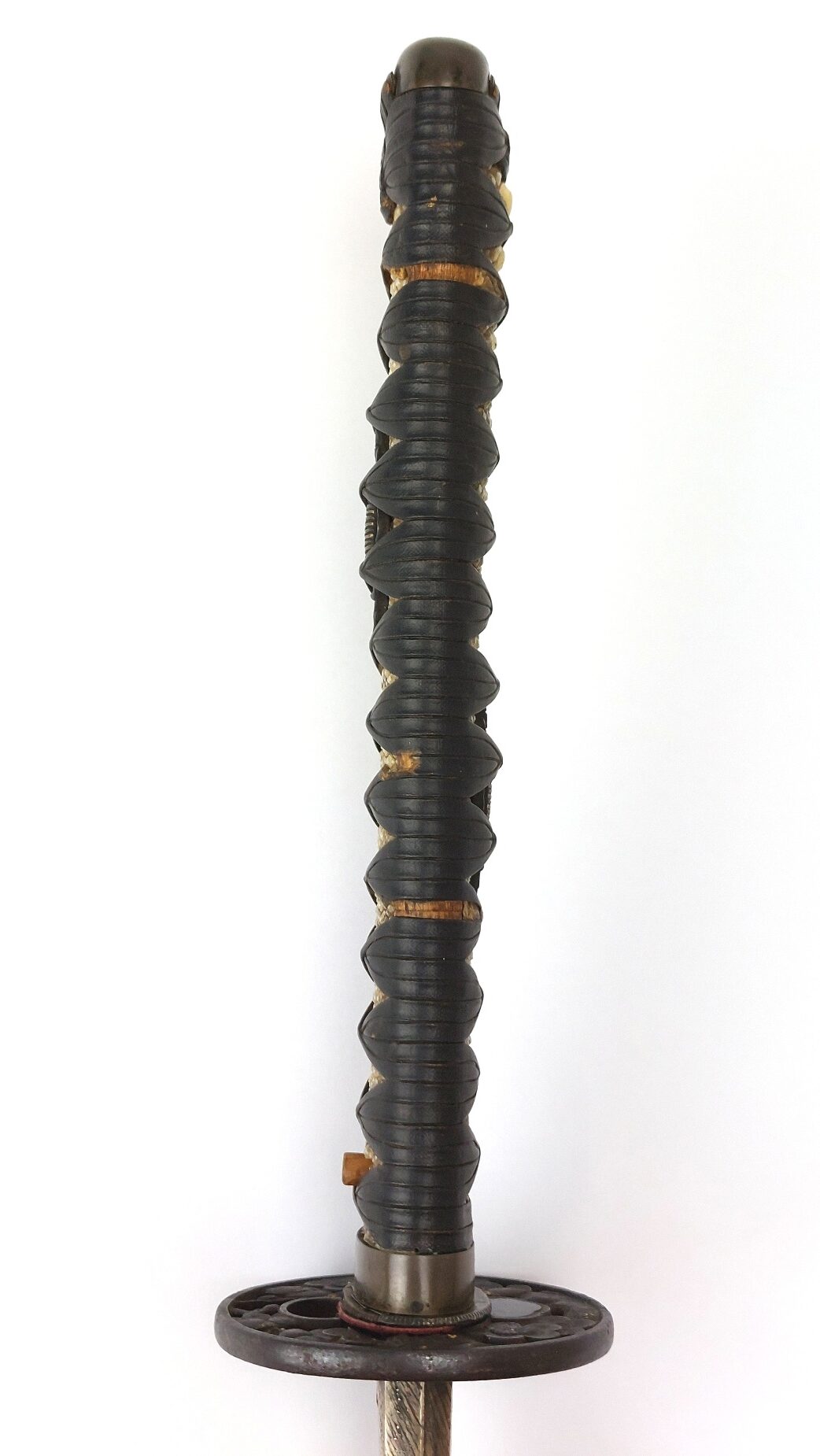
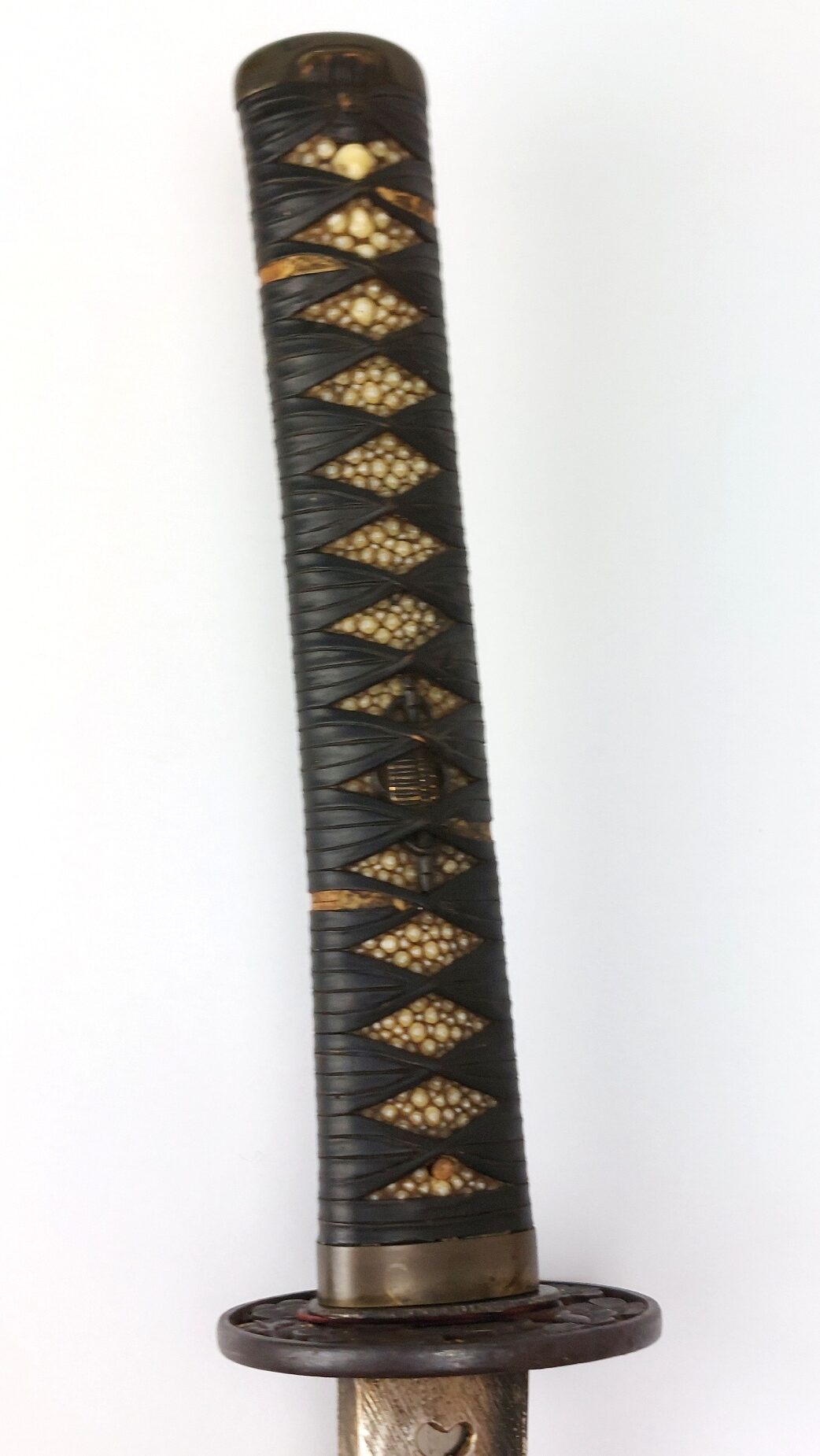
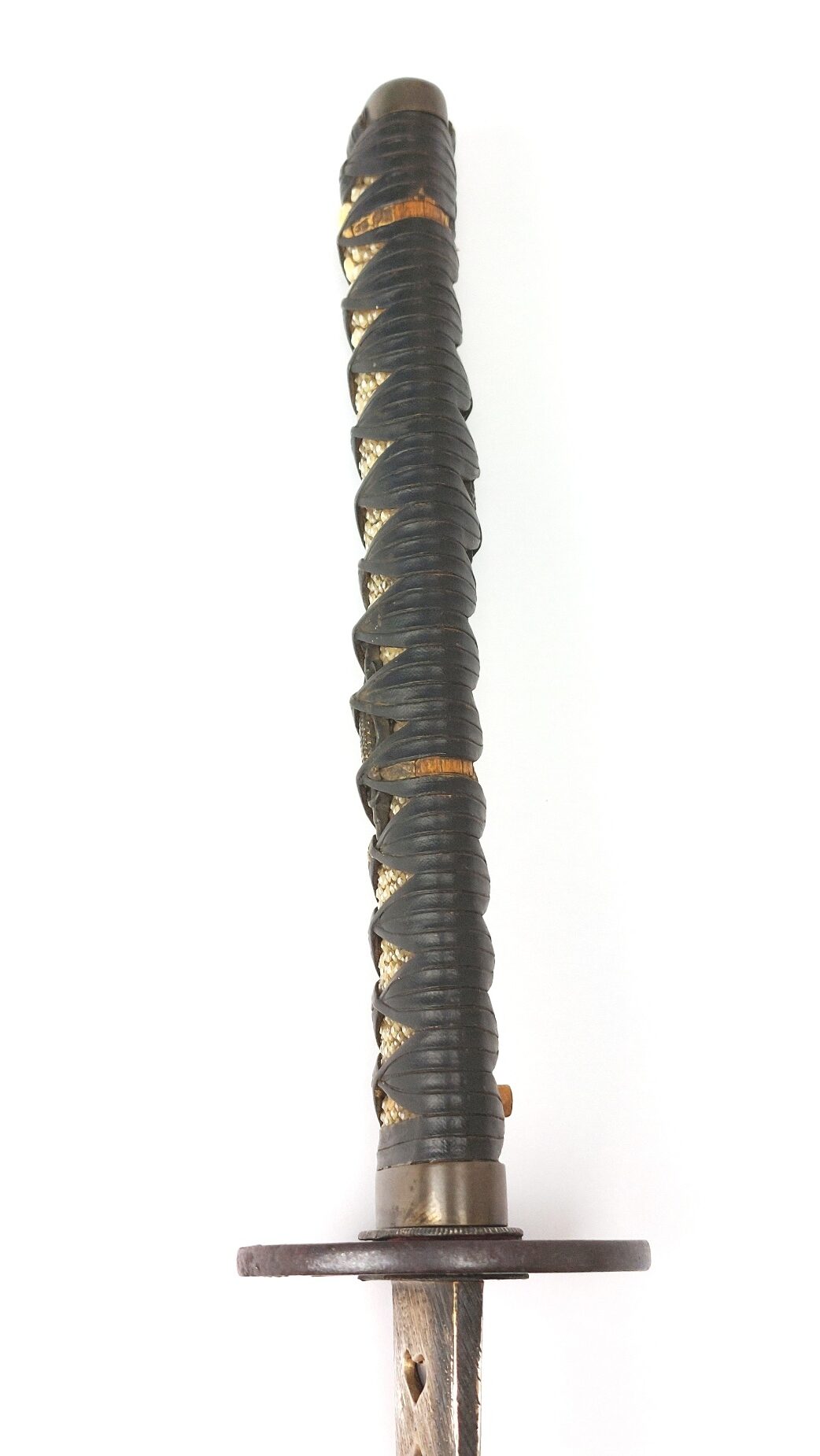
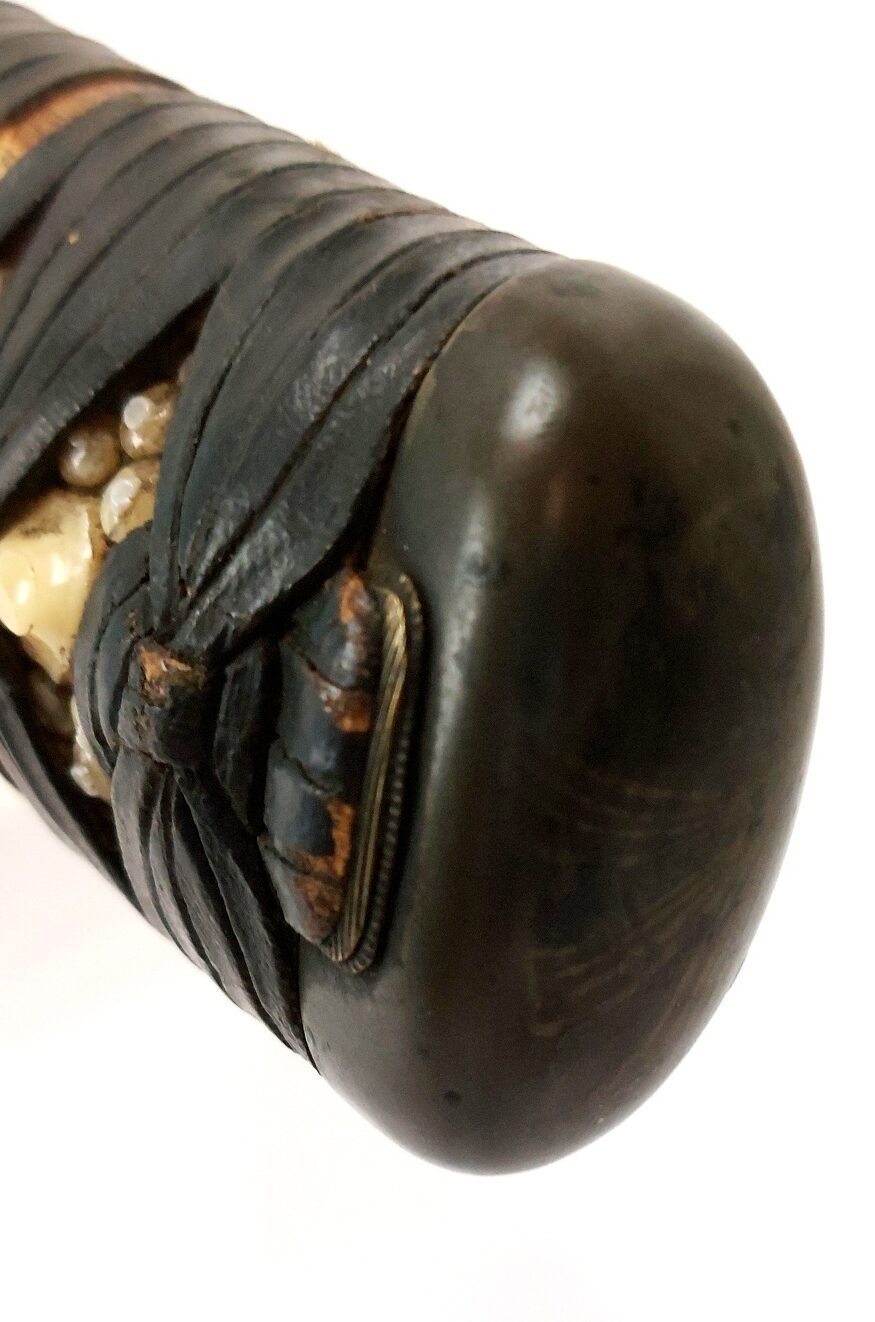
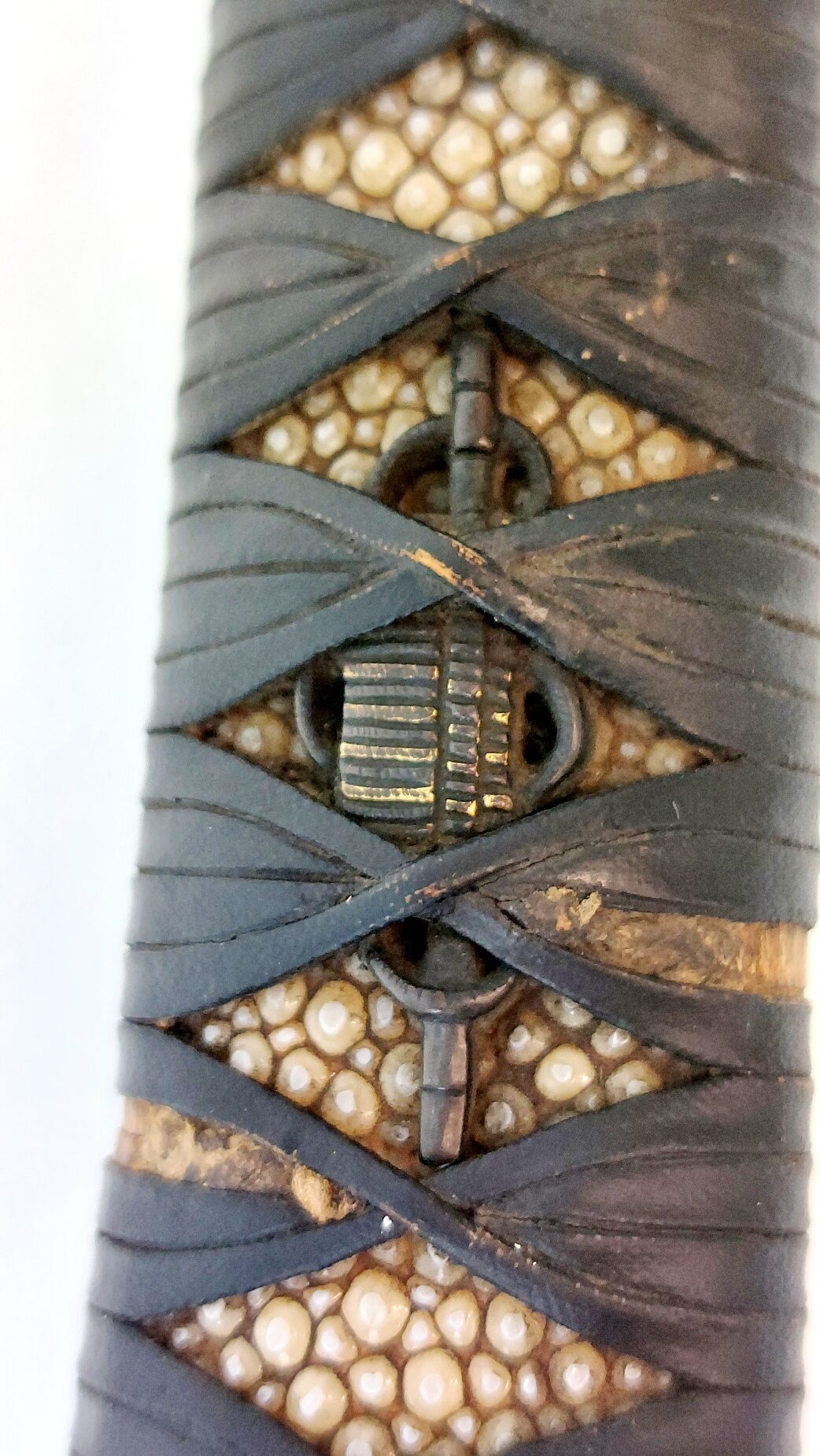
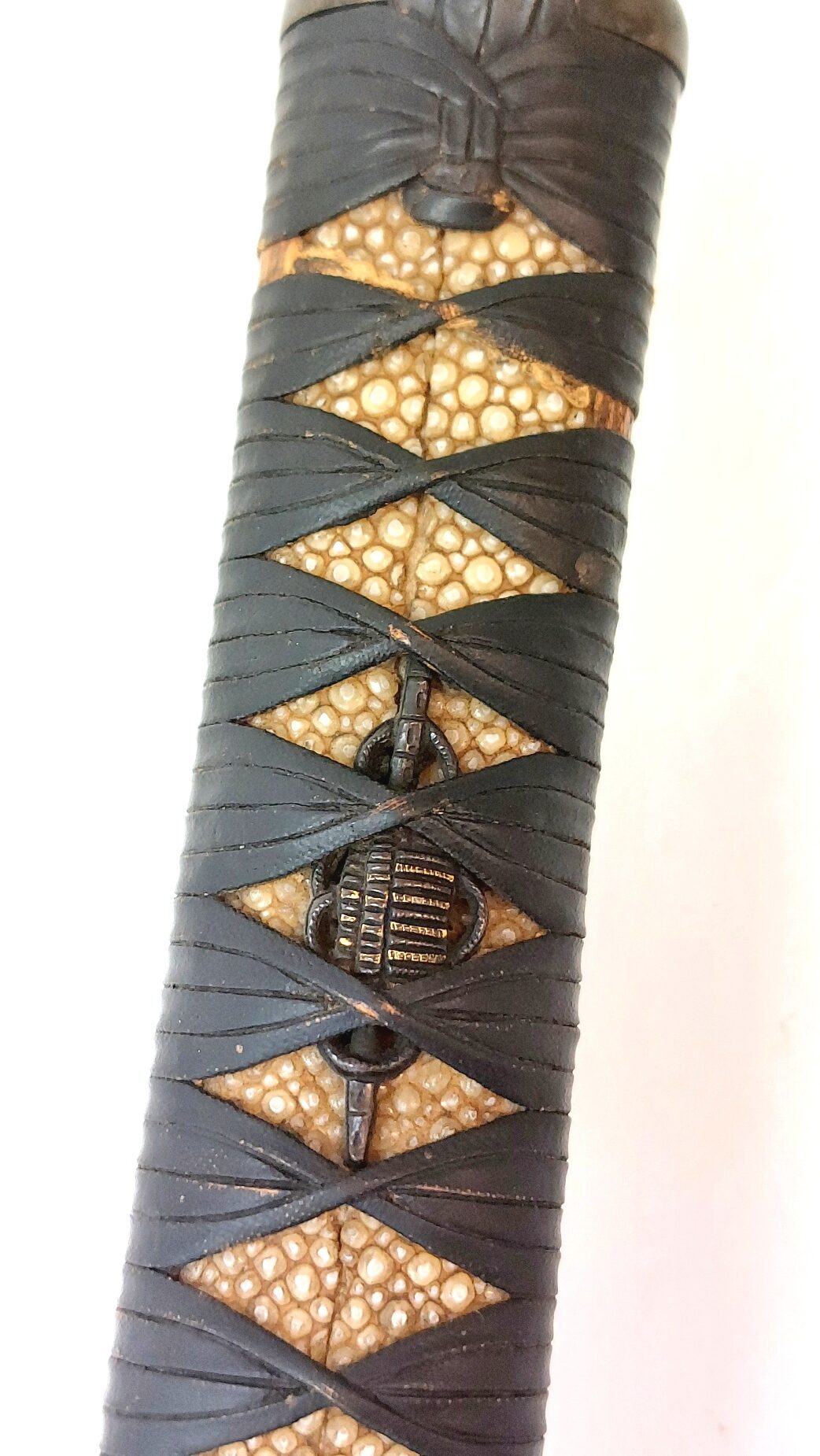
- Samegawa-covered tsuka with black silk ito wrap, menuki and shibuichi fuchi-kashira.
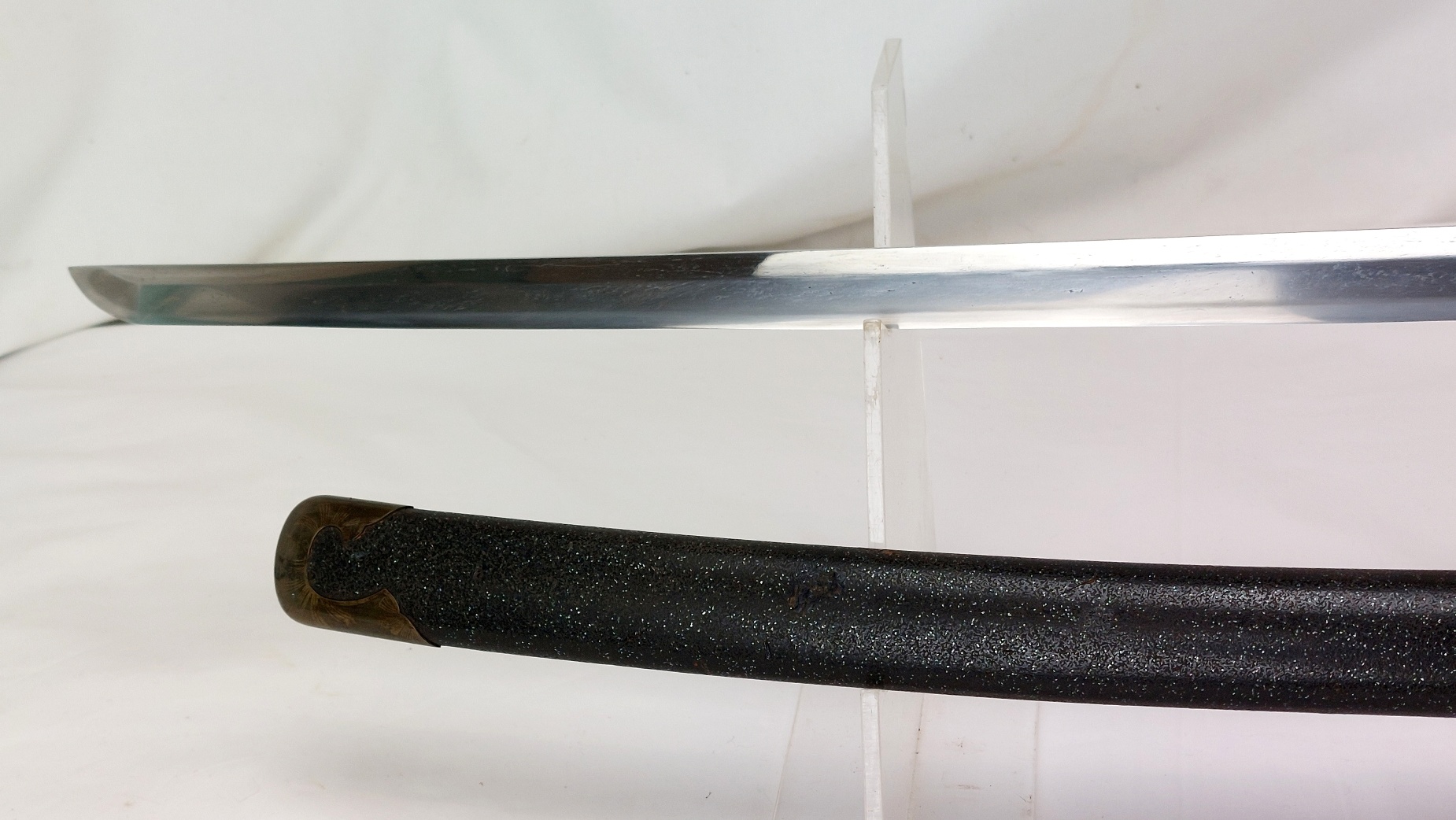
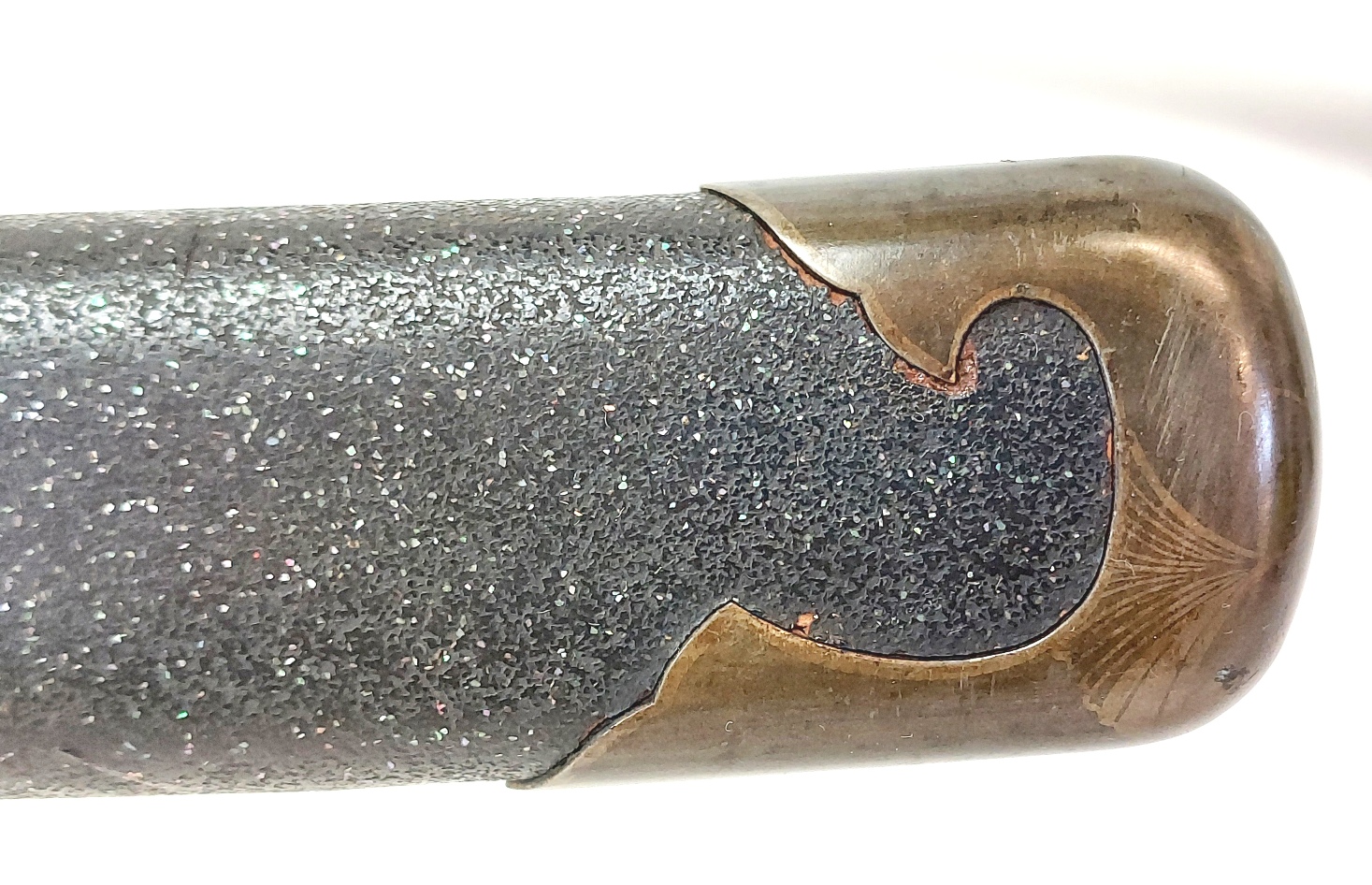
- Lacquered saya finished in aogai chirashi (sprinkled shell powder) with horn-mounted fittings.
- Accompanied by the original 2007 AOI-Art appraisal certificate.

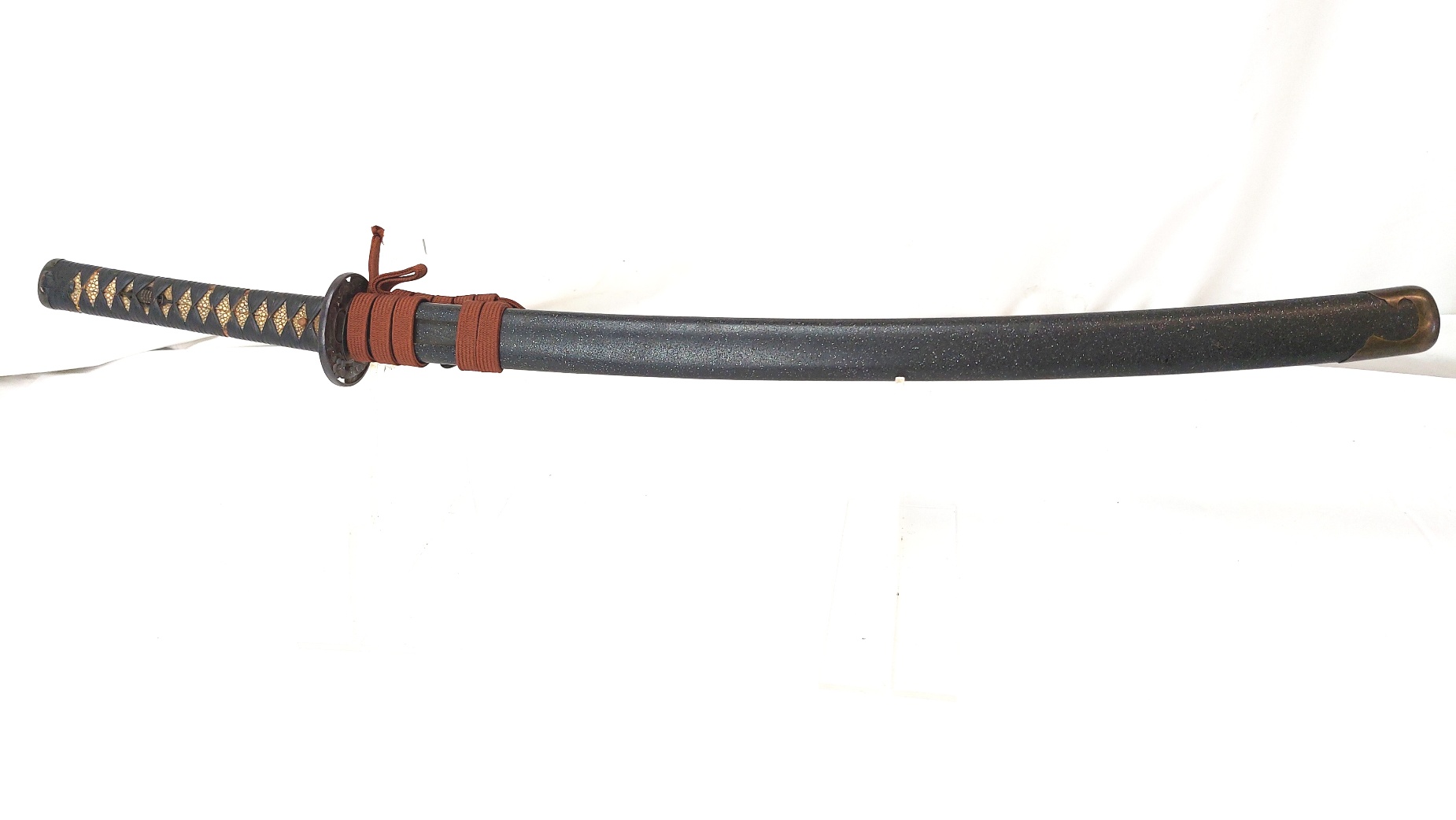
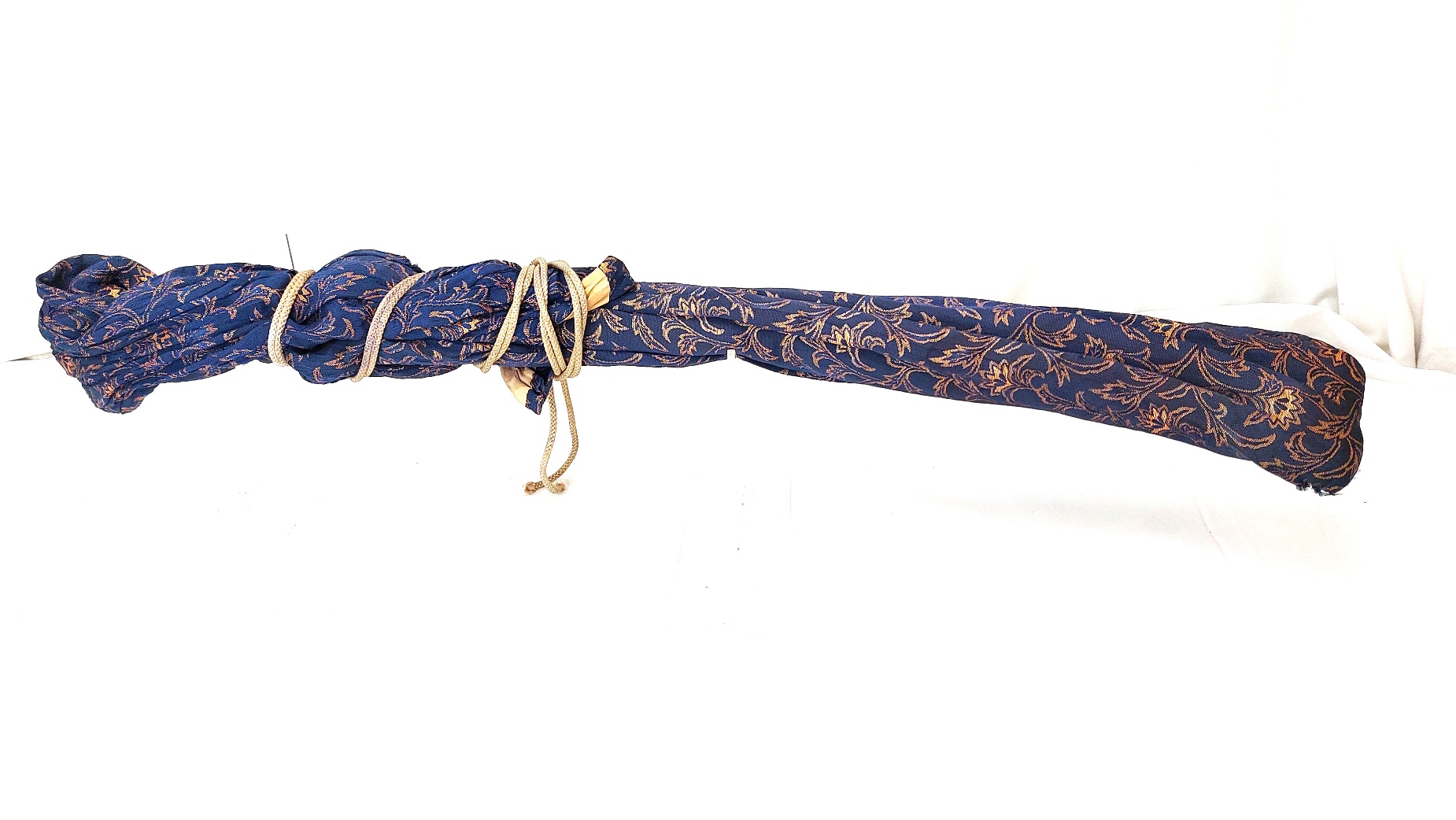
A Japanese Edo period wakizashi dating to the Kanbun era (c.1661–1673), presented in complete traditional koshirae, housed in a traditional Japanese cloth sword bag, and accompanied by its original AOI-Art appraisal certificate dated 2007.

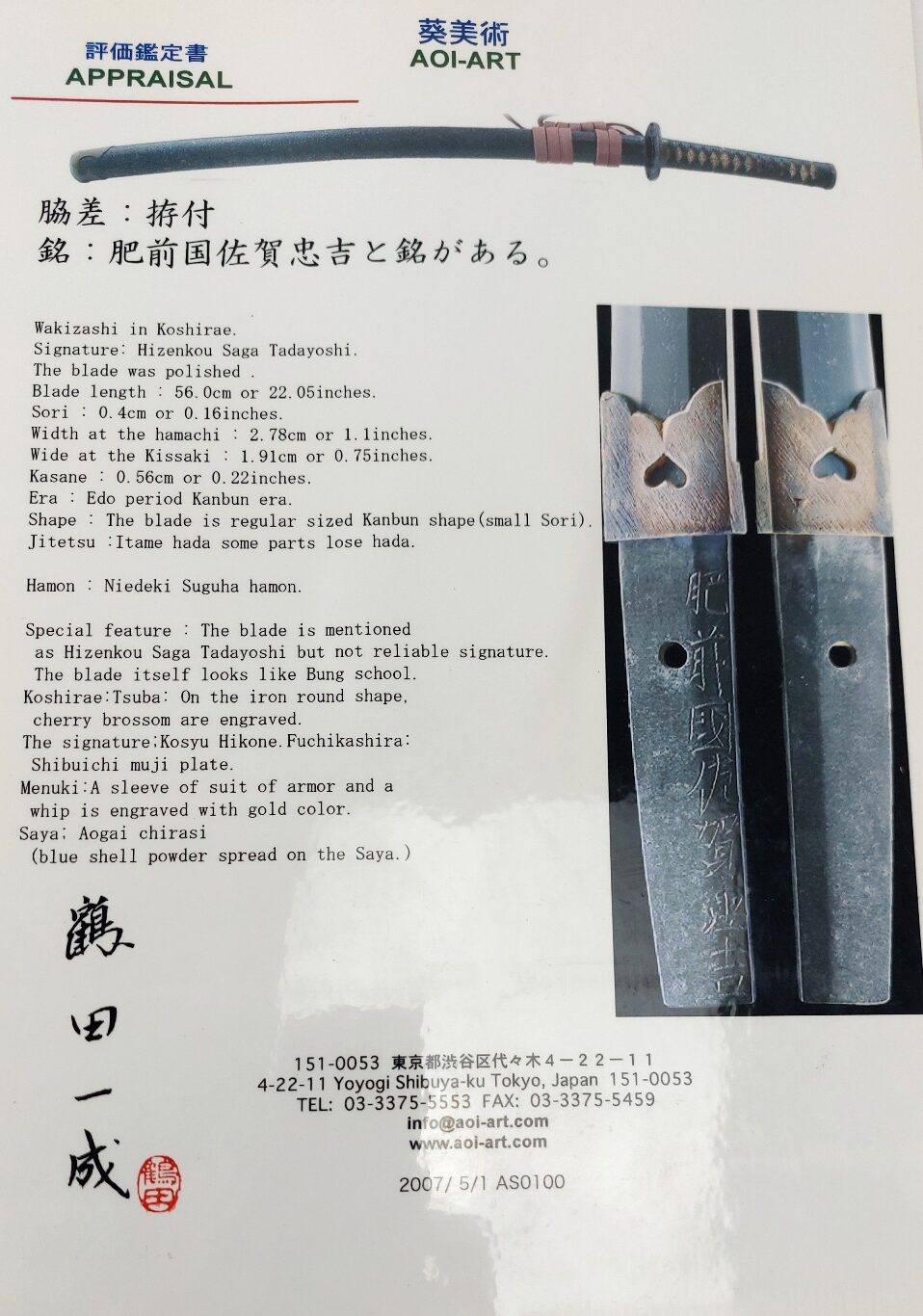
The blade measures approximately 57.8cm and is of classic Kanbun-period form, featuring a relatively shallow sori, well-defined yokote and medium kissaki. It has been professionally polished and displays an elegant straight nie-deki suguha hamon together with an itame hada, characteristics noted within the accompanying appraisal.

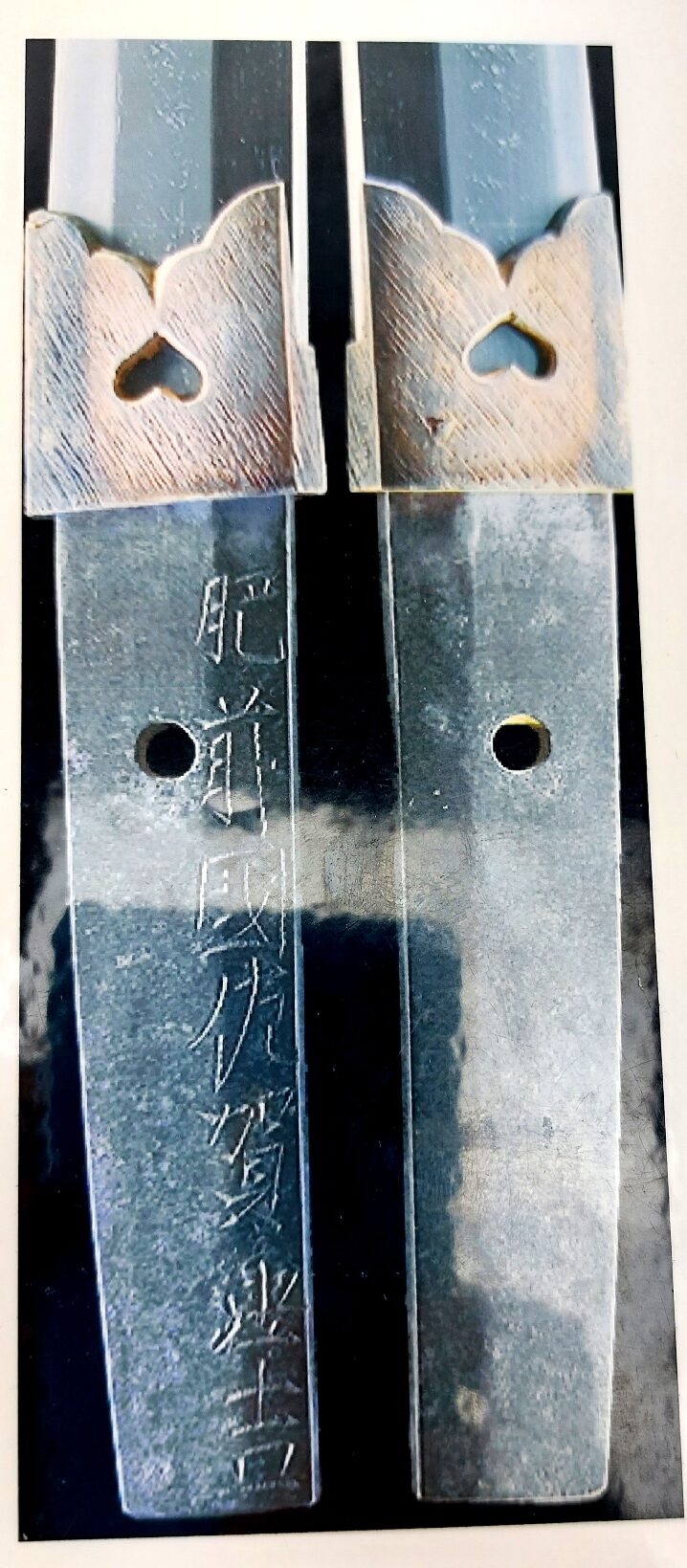
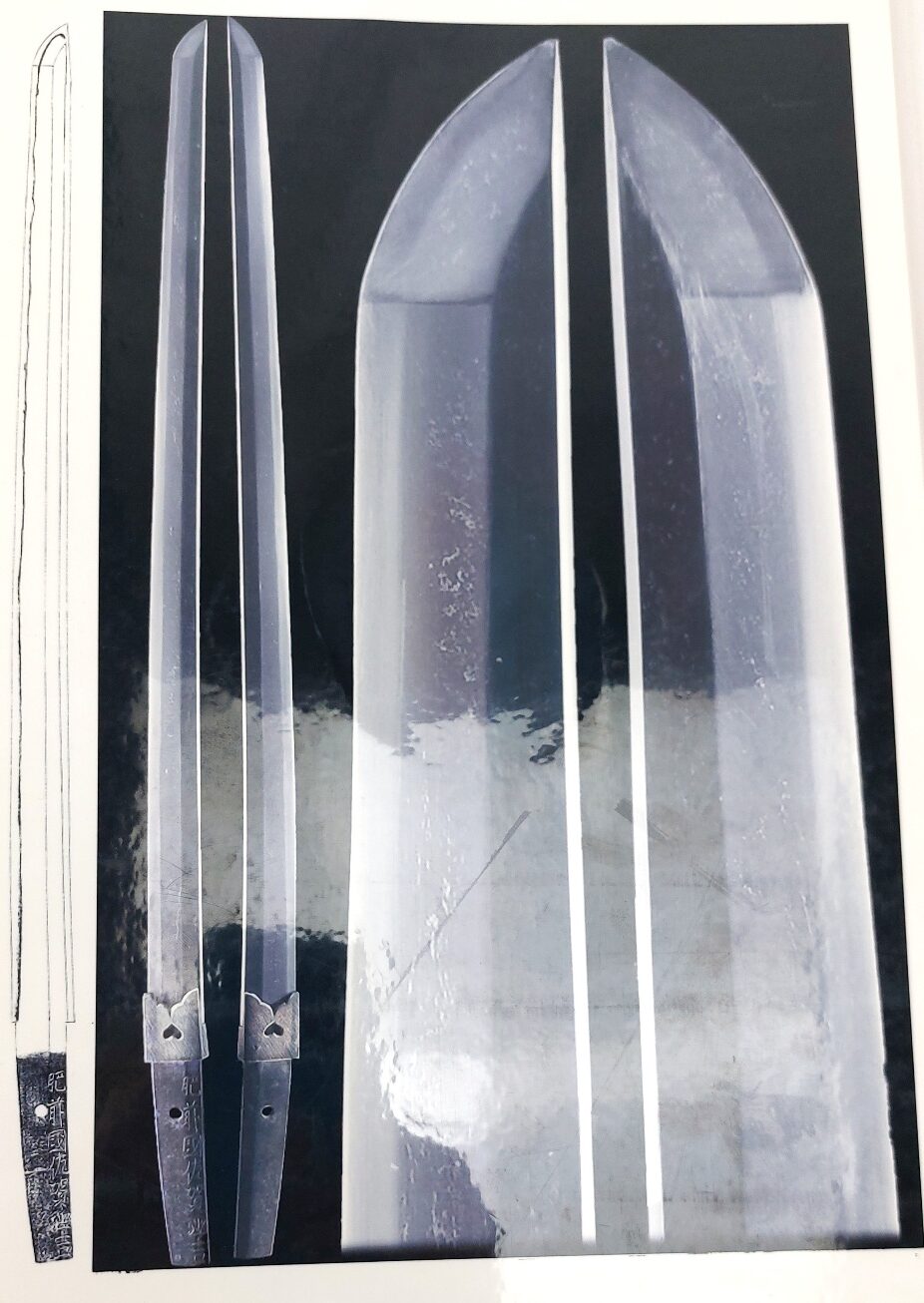
The blade bears the signature 'Hizen no Kuni Saga Tadayoshi' on the tang. Importantly, the AOI-Art appraisal concludes that the signature is not considered genuine (gimei), whilst stating that the blade itself exhibits the characteristics of the Bungo School. Such later-added signatures are well known within Japanese sword collecting, particularly on blades attributed to celebrated schools, and do not detract from the blade's authenticity as an Edo-period sword.

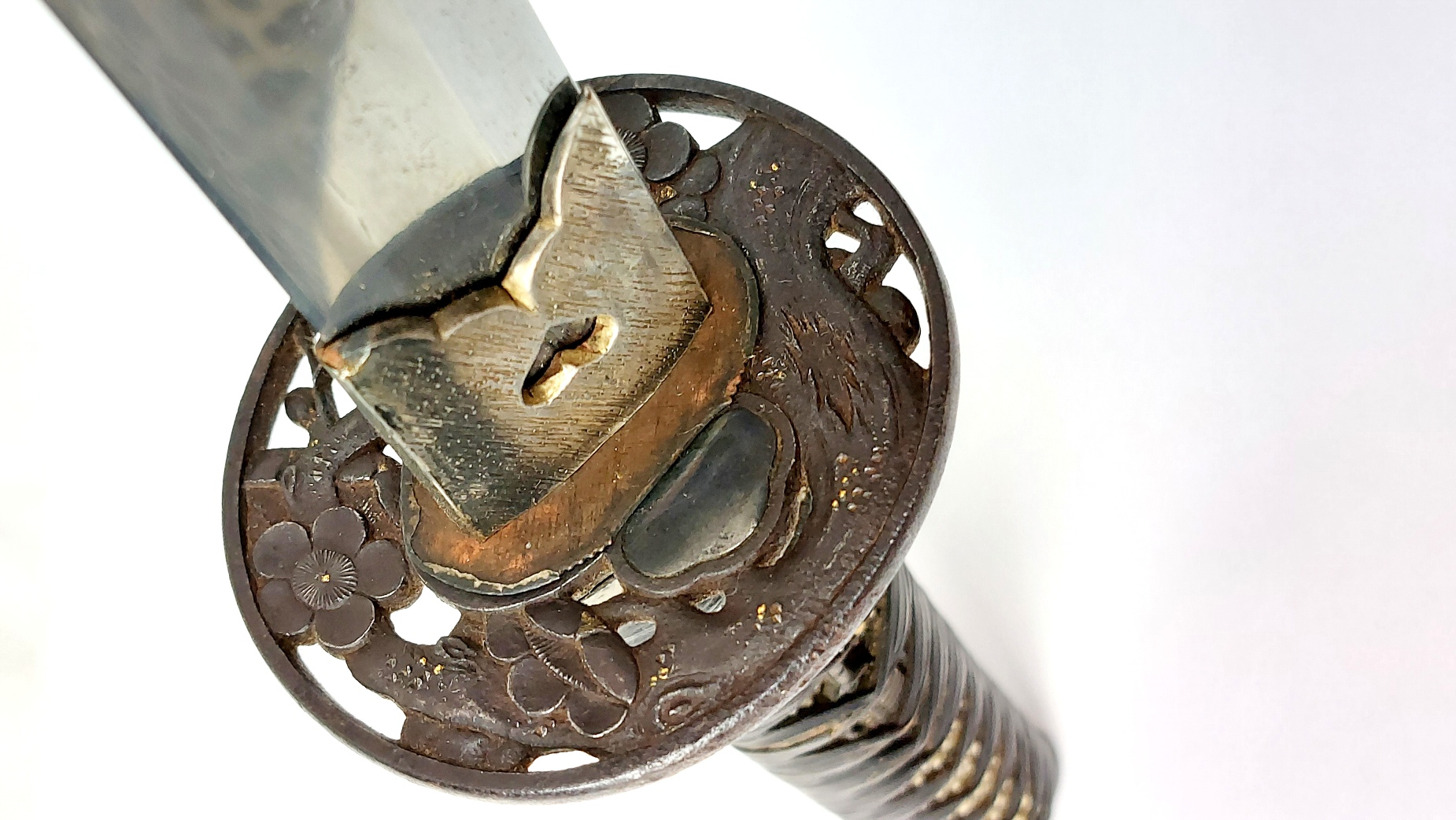
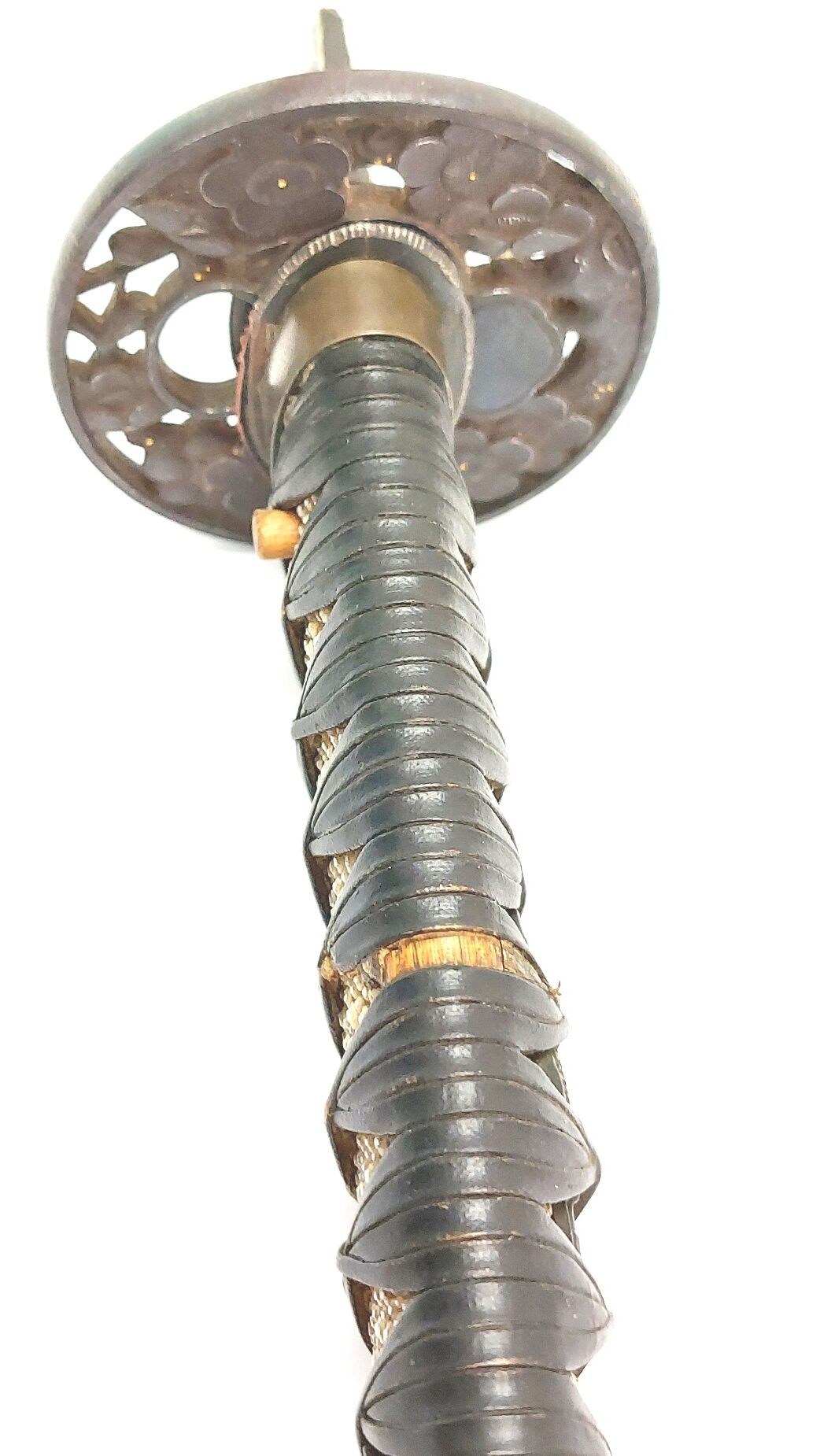
The sword is mounted in an attractive civilian koshirae comprising an iron openwork tsuba decorated with cherry blossom motifs, a brass habaki, shibuichi fuchi-kashira, black silk tsuka-ito over samegawa, and decorative menuki depicting armour and a riding whip. The black lacquer saya is finished in aogai chirashi, incorporating finely sprinkled shell powder beneath the lacquer, and is fitted with horn koiguchi and kojiri mounts. A brown sageo remains fitted.

Accompanying the sword is the original AOI-Art appraisal certificate, which records the blade as a Kanbun-era wakizashi in koshirae and provides detailed measurements together with its assessment of the blade and fittings.

Approximate Measurements: Overall length: 79.5cm. Blade length: 57.8cm

History Note:
The Kanbun era (1661–1673) falls within the early Edo period and is regarded as one of the defining periods of Shinto sword production. Swords of this era typically display a comparatively shallow curvature, compact kissaki and practical proportions intended for everyday wear by the samurai class during Japan's long period of peace under Tokugawa rule.

The Hizen Tadayoshi school, based in Saga Province on Kyushu, ranks among Japan's most celebrated sword-making traditions. Owing to the exceptional reputation of successive generations of Tadayoshi smiths, their signatures were frequently copied or added to unrelated blades. Such gimei inscriptions are widely recognised within Japanese sword collecting. In this instance, AOI-Art concluded that while the signature is not authentic, the blade itself is an Edo-period example displaying characteristics consistent with the Bungo School, another respected sword-making tradition of Kyushu.

*Condition*
Presented in very good overall condition commensurate with its age. The blade retains a bright polish with a well-defined suguha hamon and only light age-related surface marks visible. The koshirae is complete and displays honest wear from age and handling. The black tsuka-ito remains secure with minor wear and shrinkage exposing small areas of the samegawa beneath, while the iron tsuba has developed an attractive dark patina. The lacquered saya remains in very good order with light handling marks, retaining its decorative shell finish and horn-mounted fittings.

The tsuka has not been removed for inspection, as the mekugi is firmly seated, and the tang has therefore not been examined firsthand. The photographs of the tang included within the accompanying 2007 AOI-Art appraisal certificate have been reproduced as part of this listing and show the signed tang on which the appraisal is based. The original AOI-Art appraisal certificate accompanies the sword. Please study the photographs carefully, as they form an important part of the condition description.

JAQ#IBO_300620263329

, , , , , , , , , , , , , , , , , , , , , ,

Download QRPrint QR

Important!

*In order to complete the online purchase we will require a picture/scan of a photo ID (Driving Licence, Passport or an official document with a recent picture). If you don't posses any such document please call to buy.
If we consider that the proof of ID is incorect or insuficient, we reserve the right to cancel the transaction.

*We also reserve the right to cancel the transaction with a full refund if there is any suspicion that the provided item will be used in any way contrary to the laws and legislation of UK.

Scroll to Top