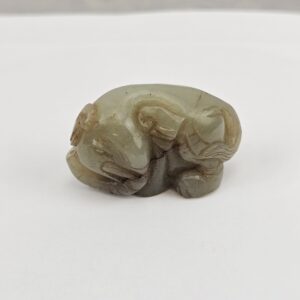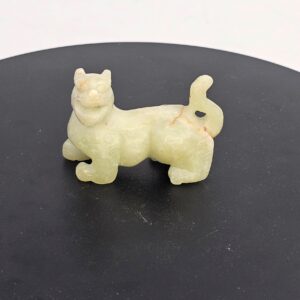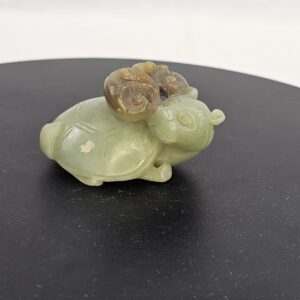
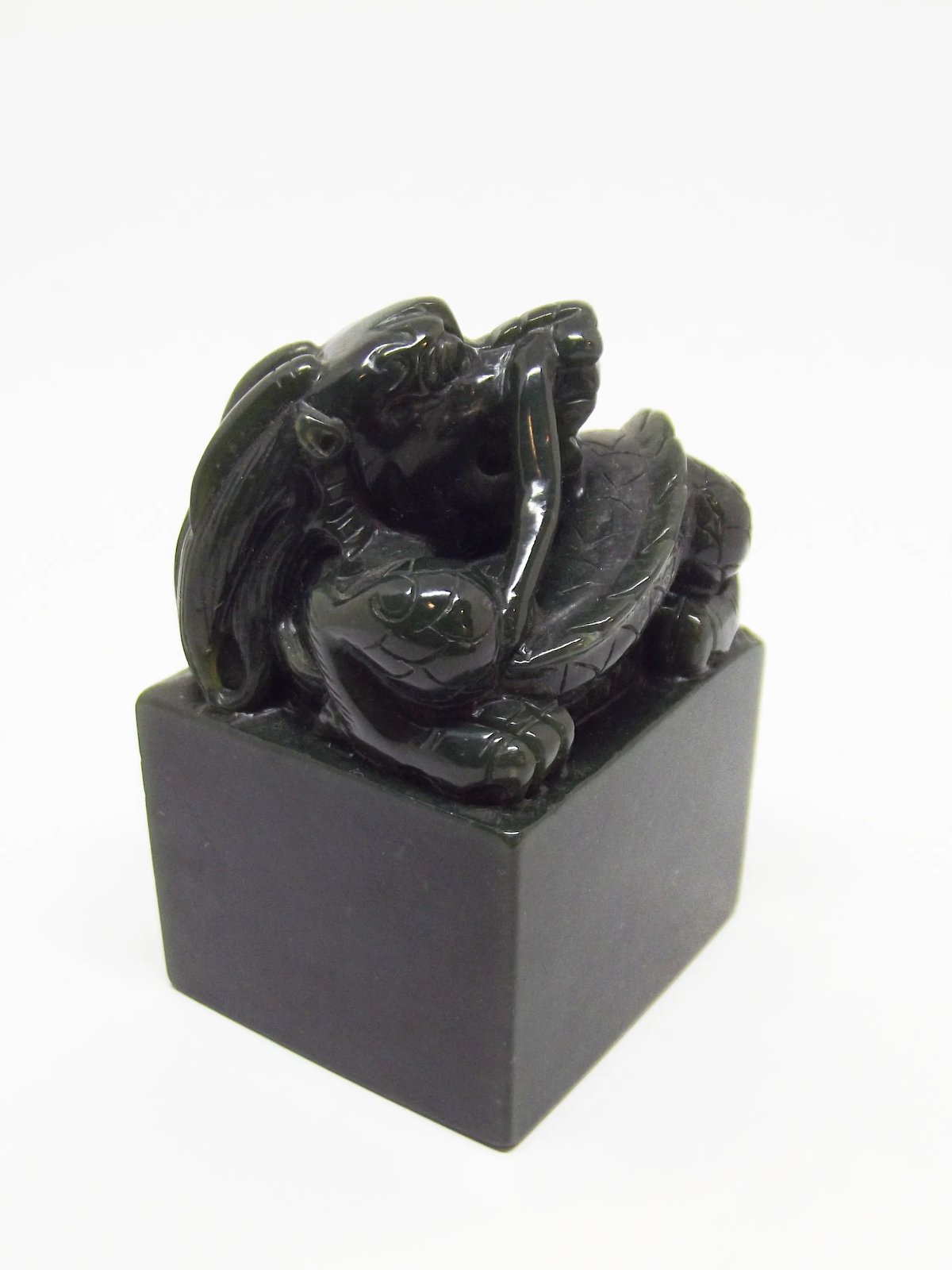
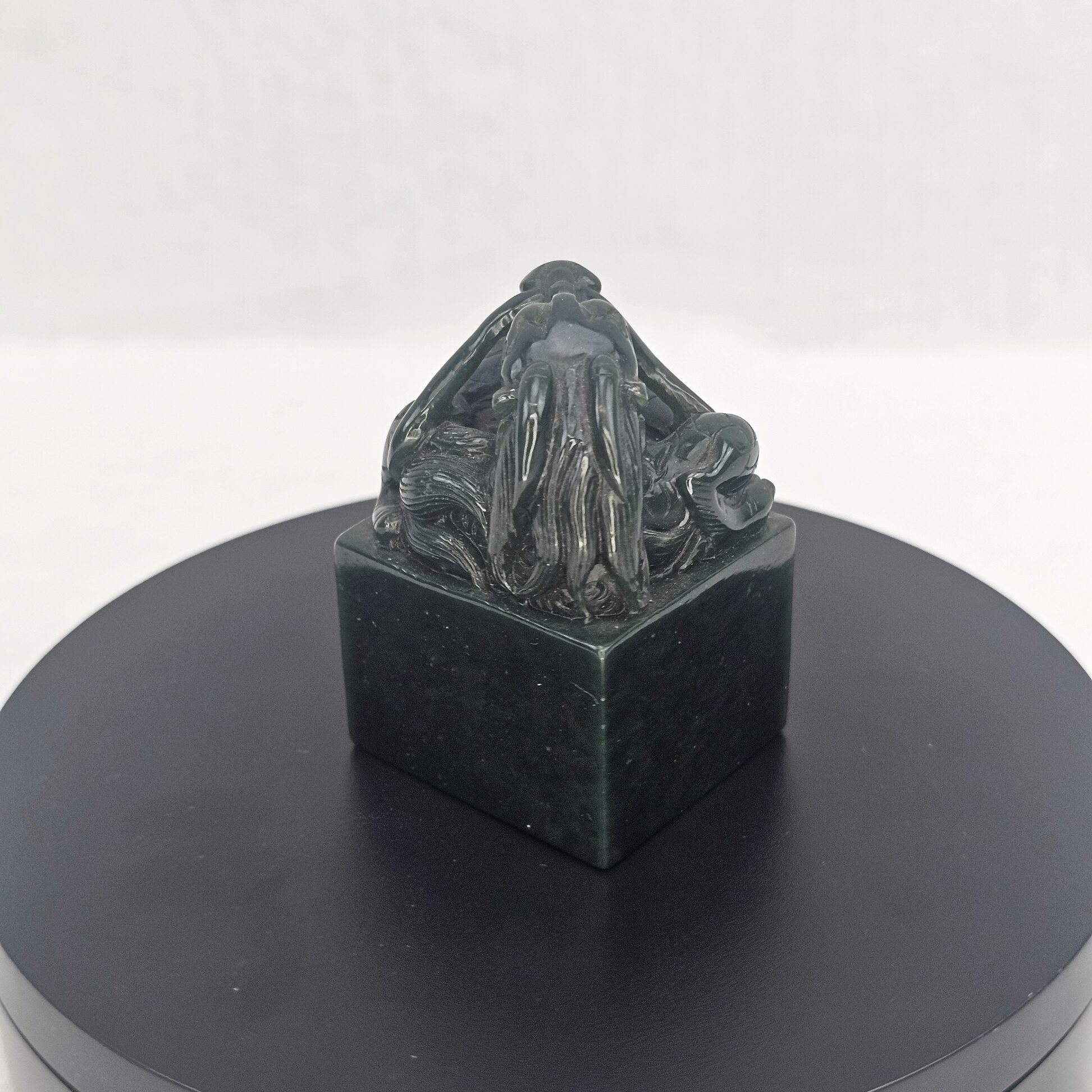
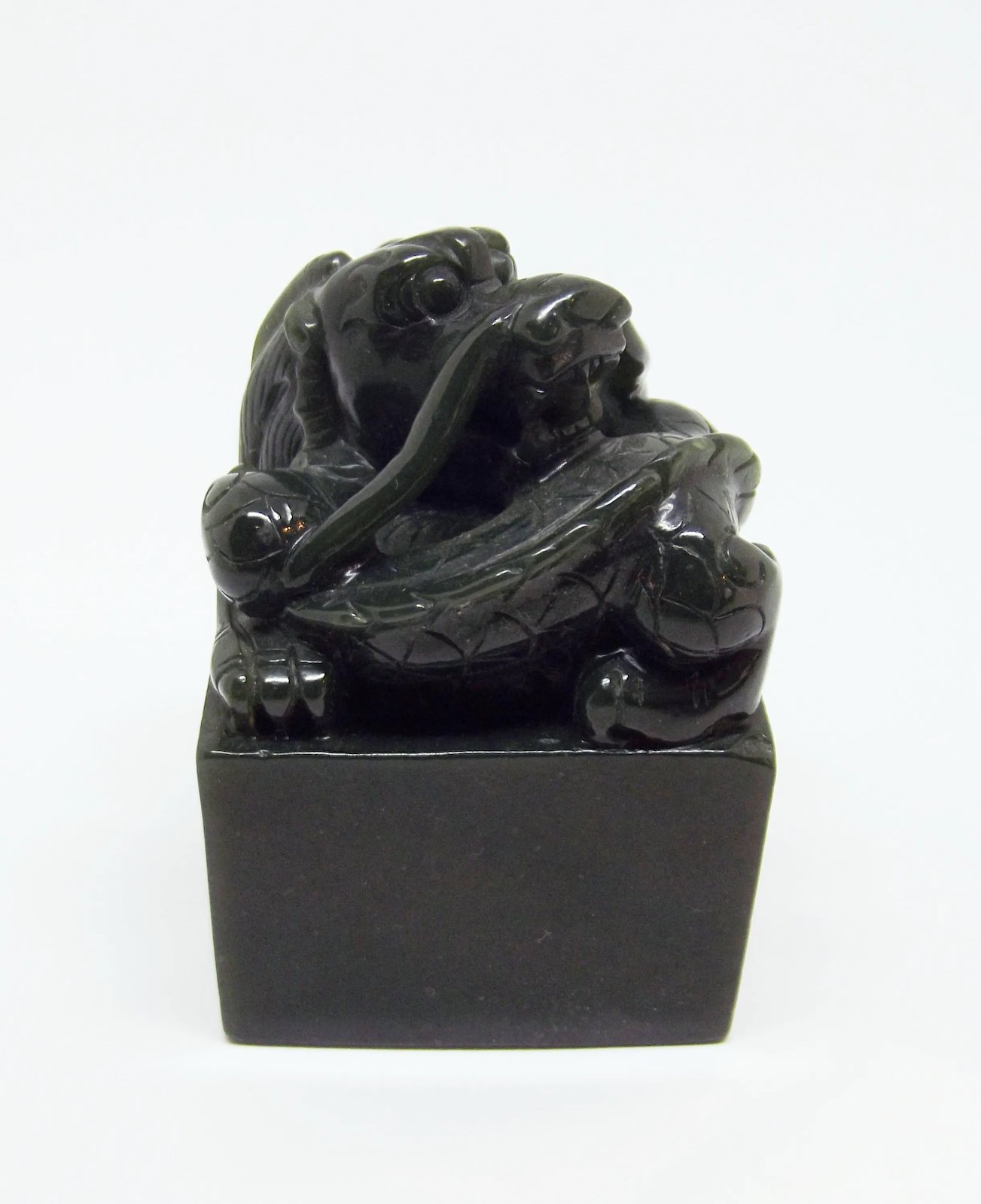
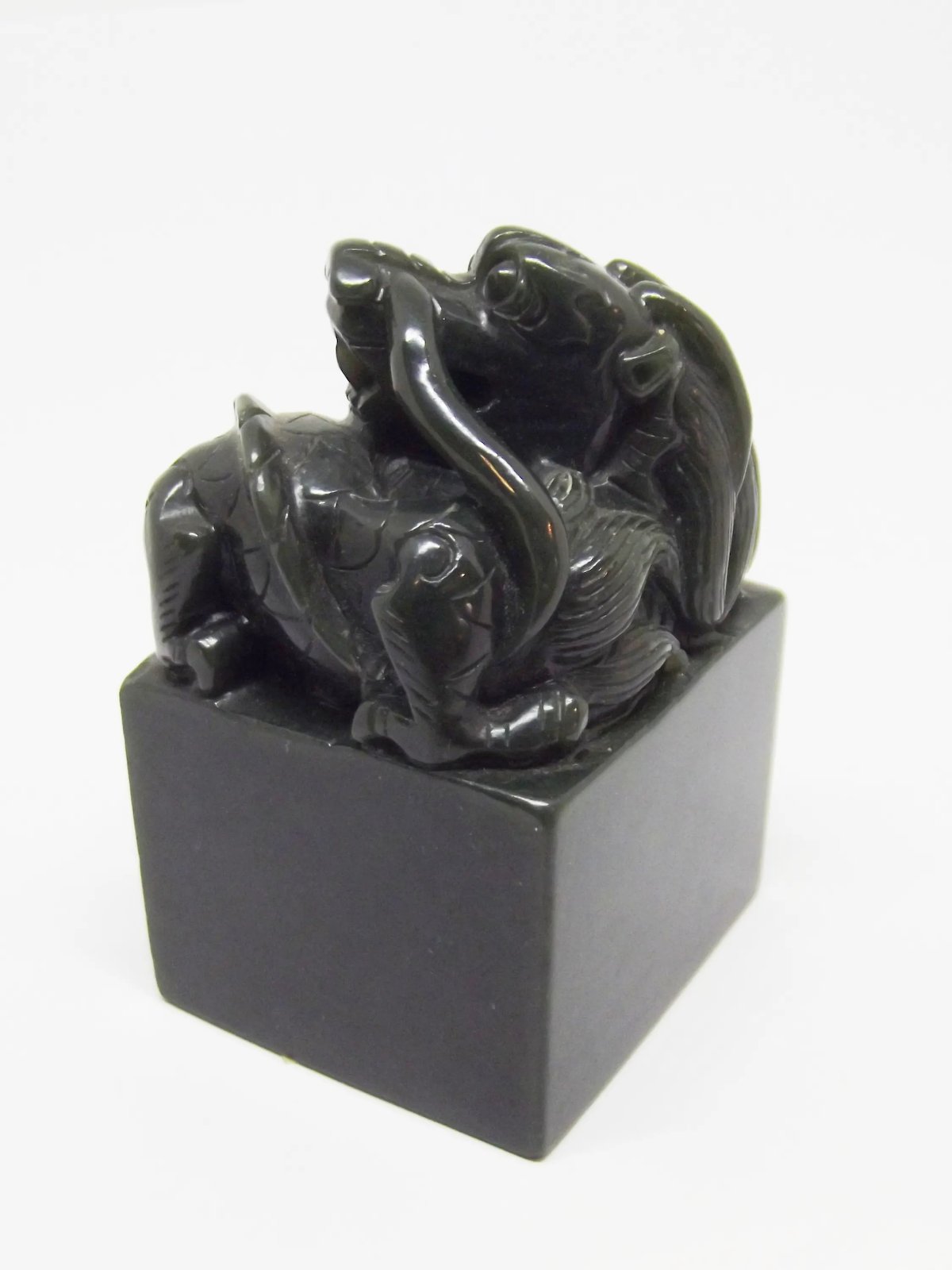
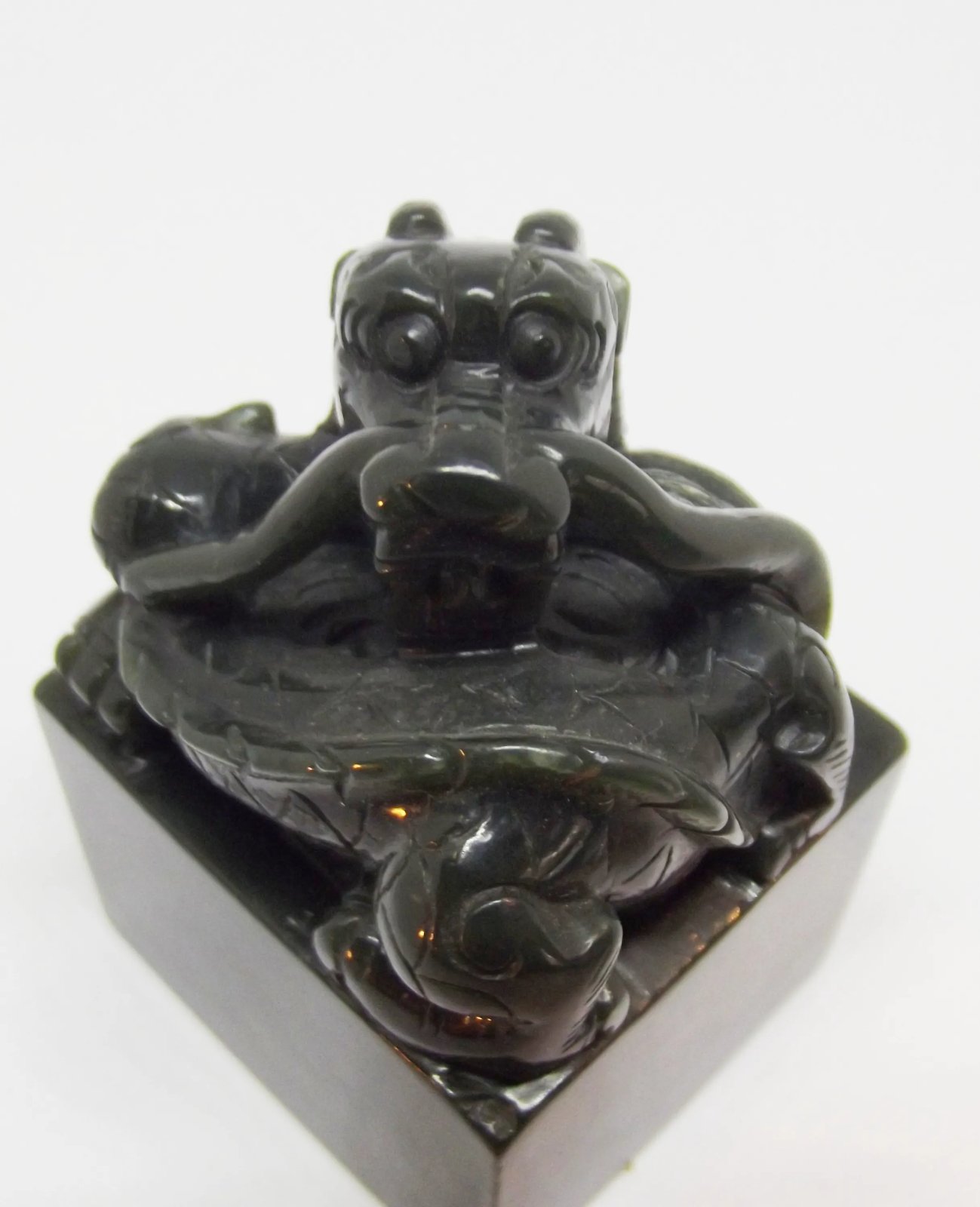
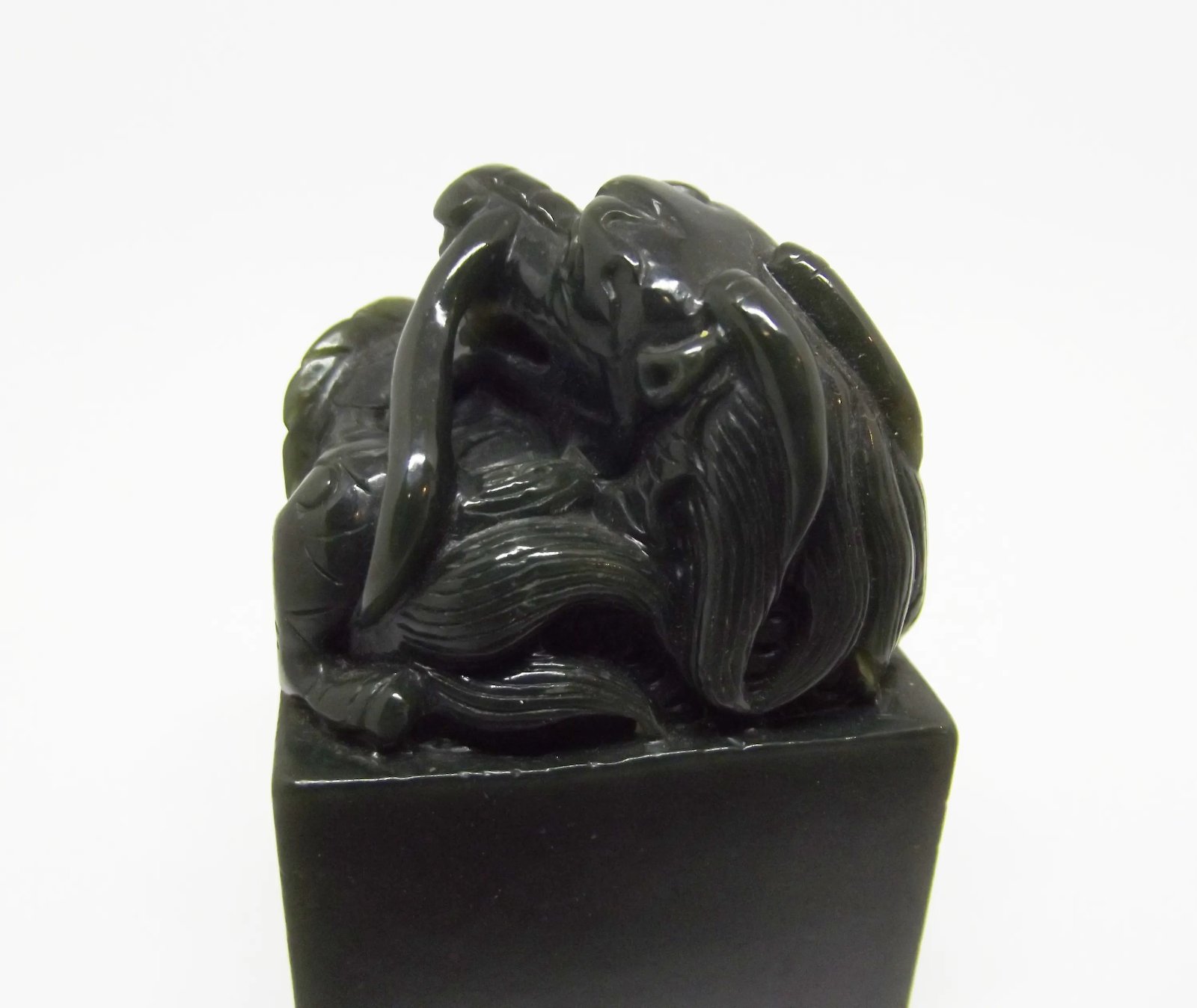
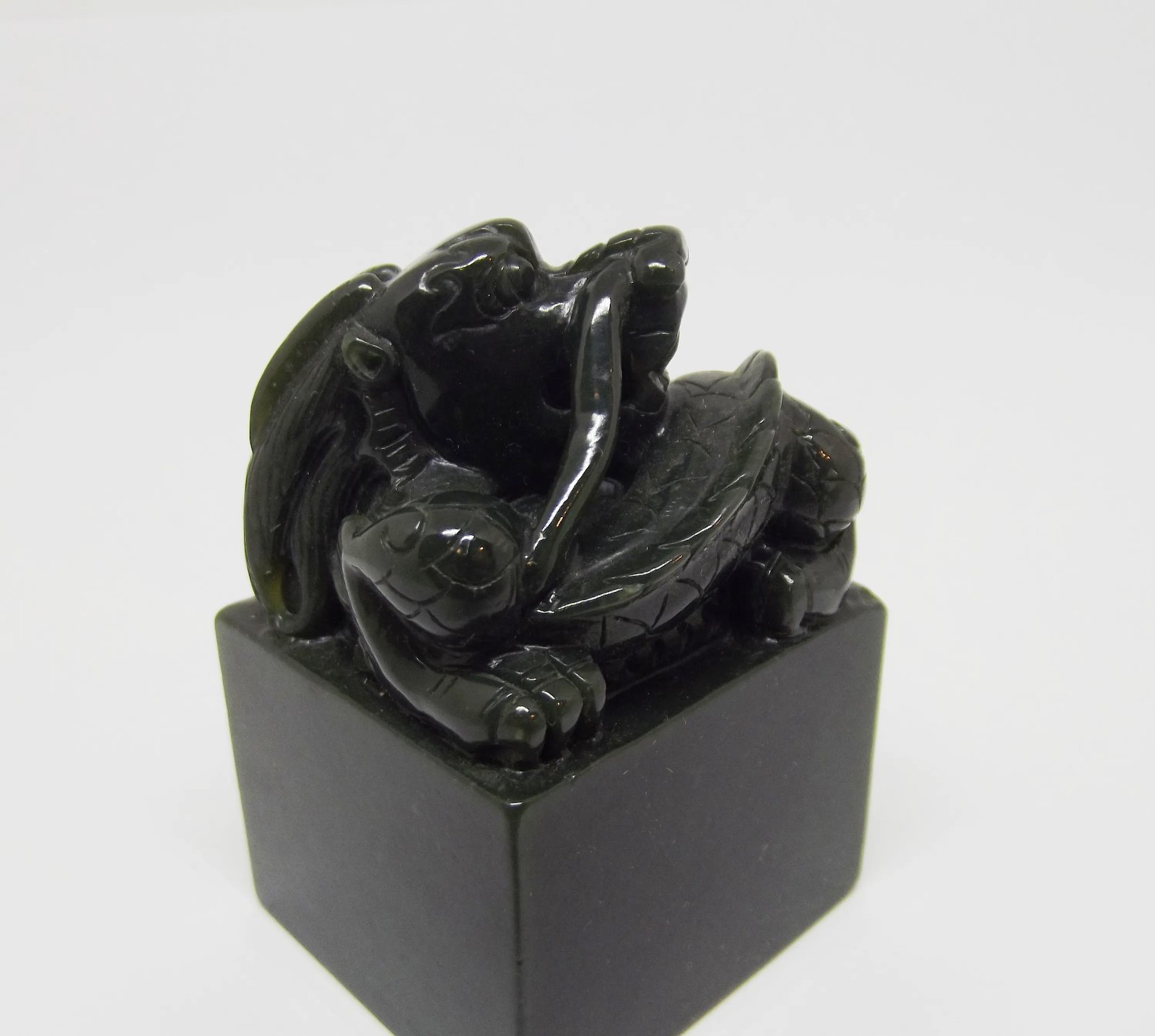
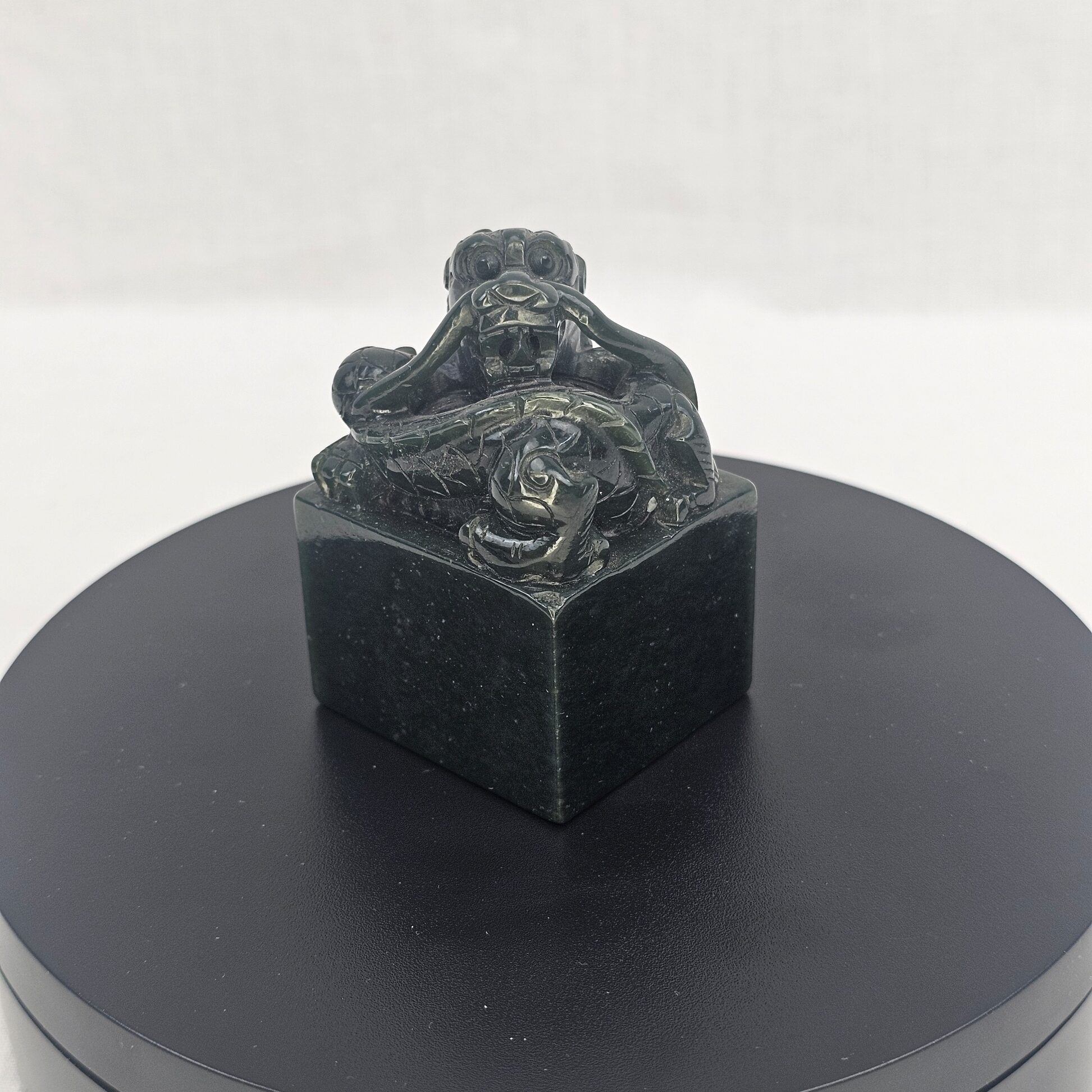
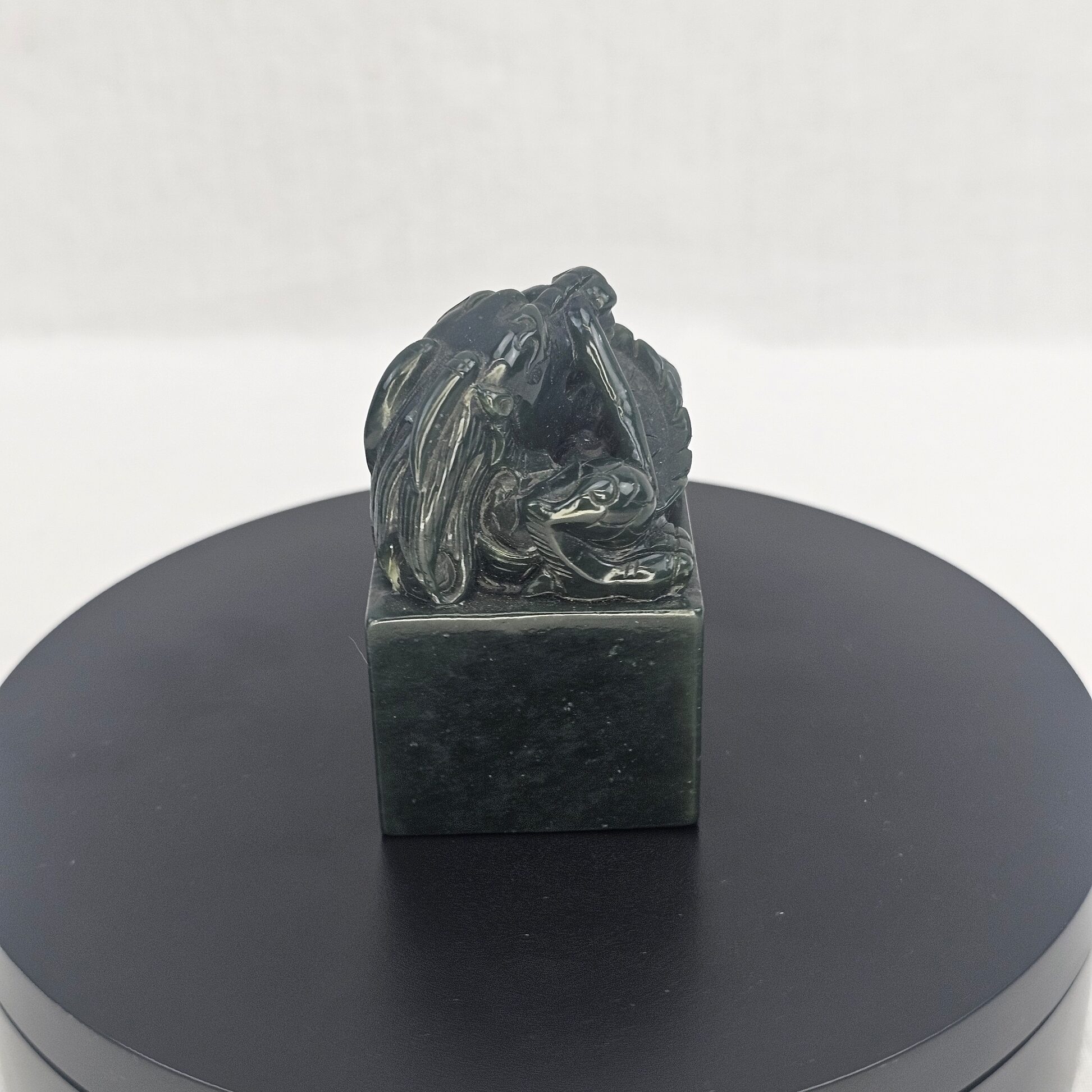
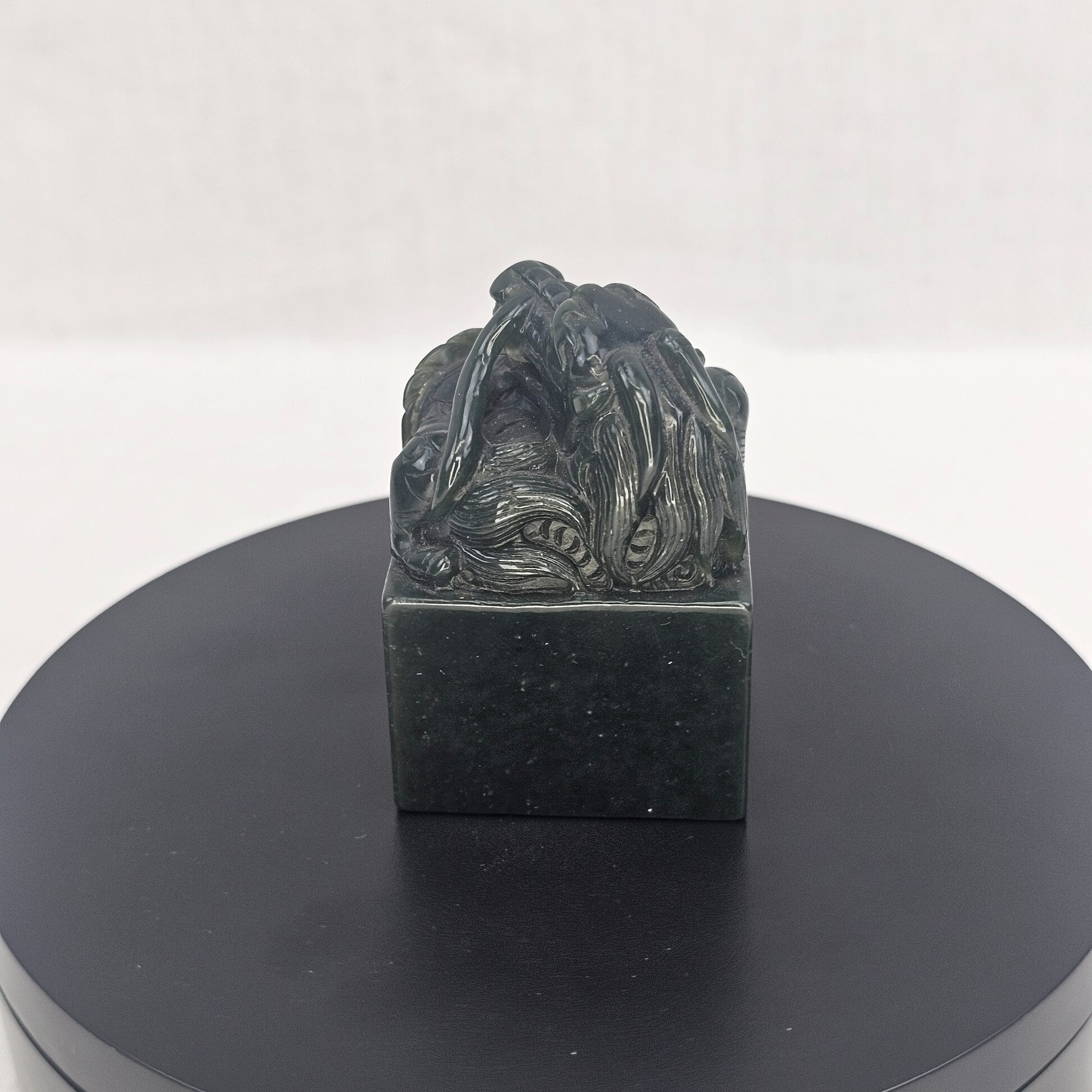
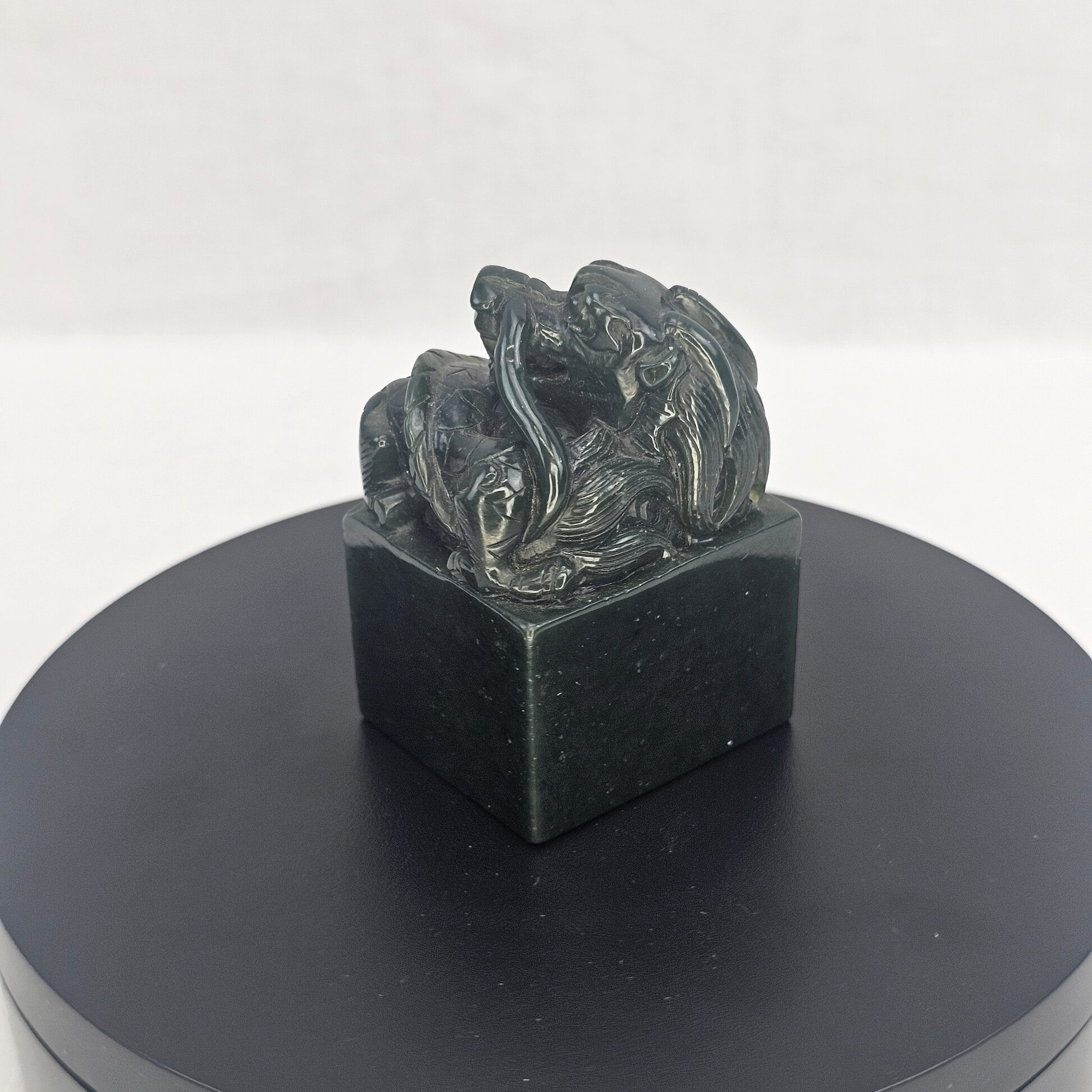
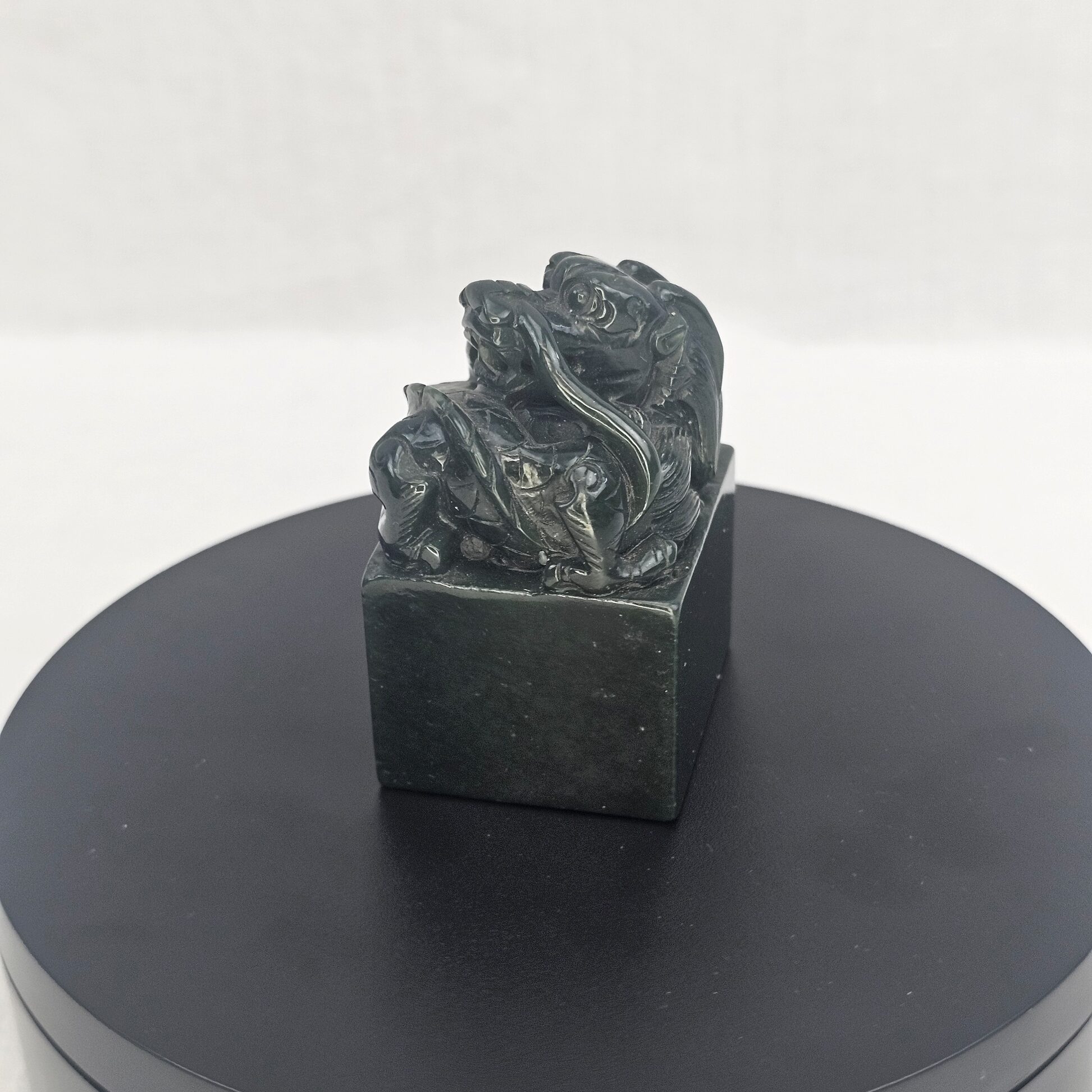
~ Qing Period Horned Dragon Nephrite Jade Seal ~
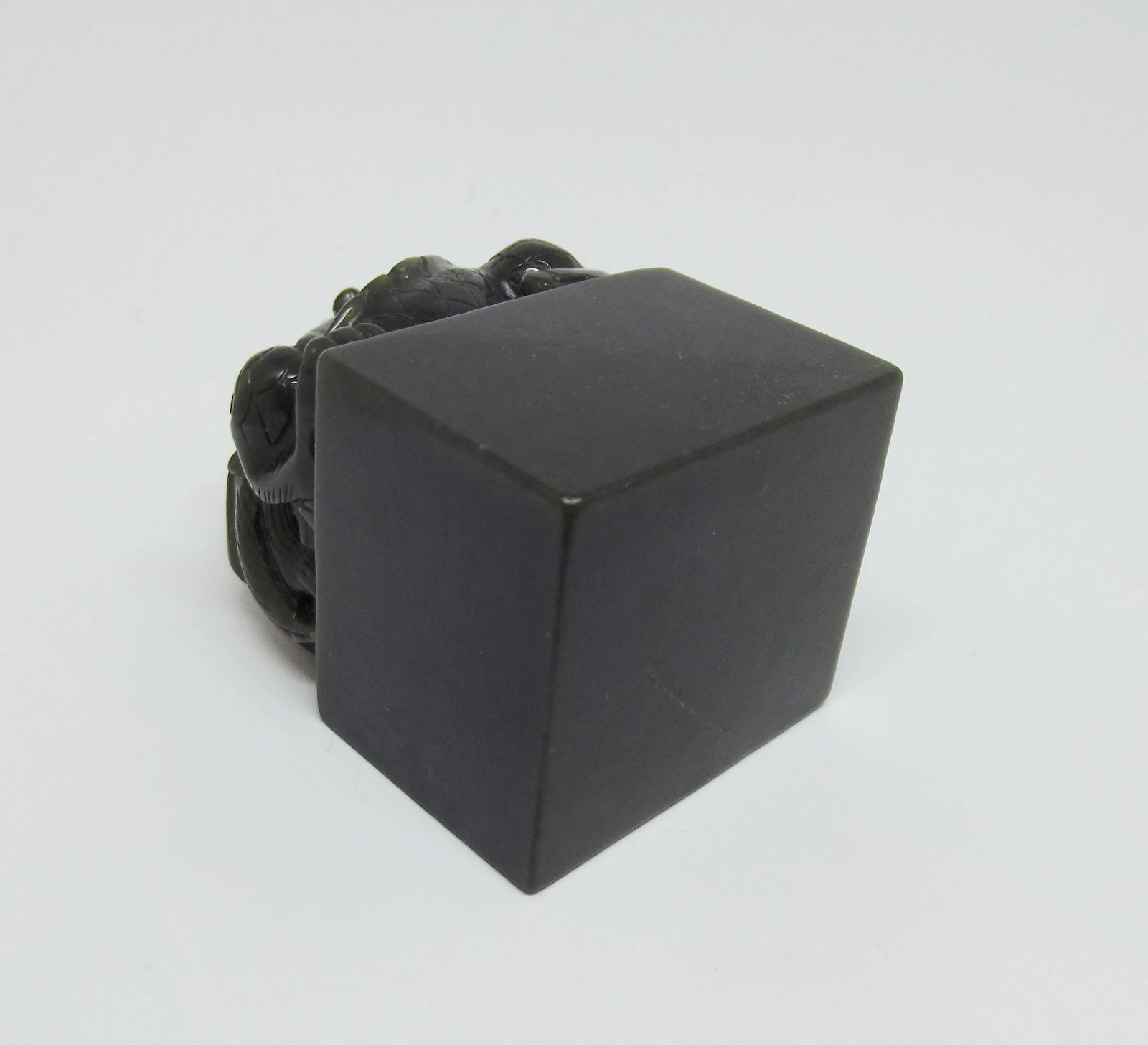
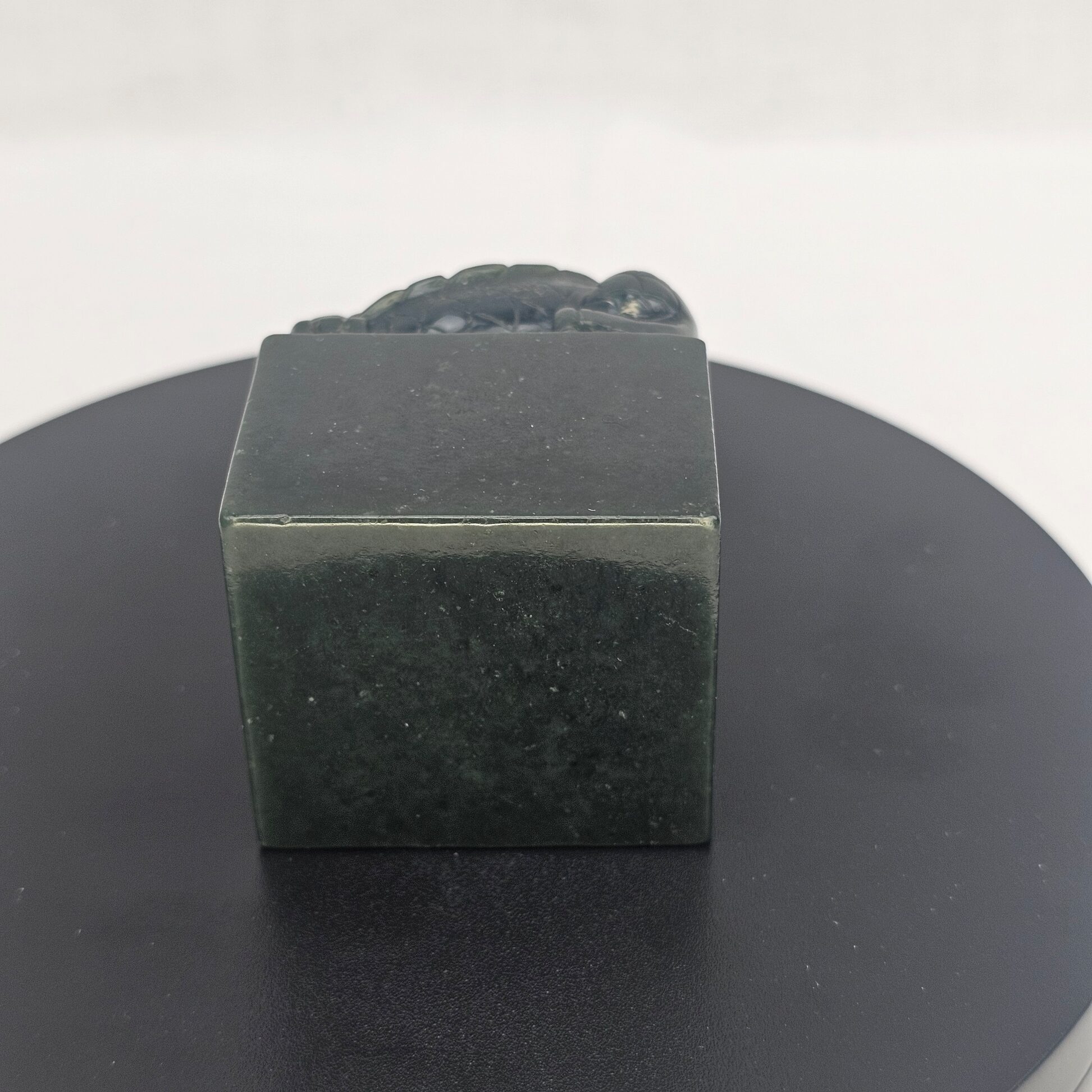
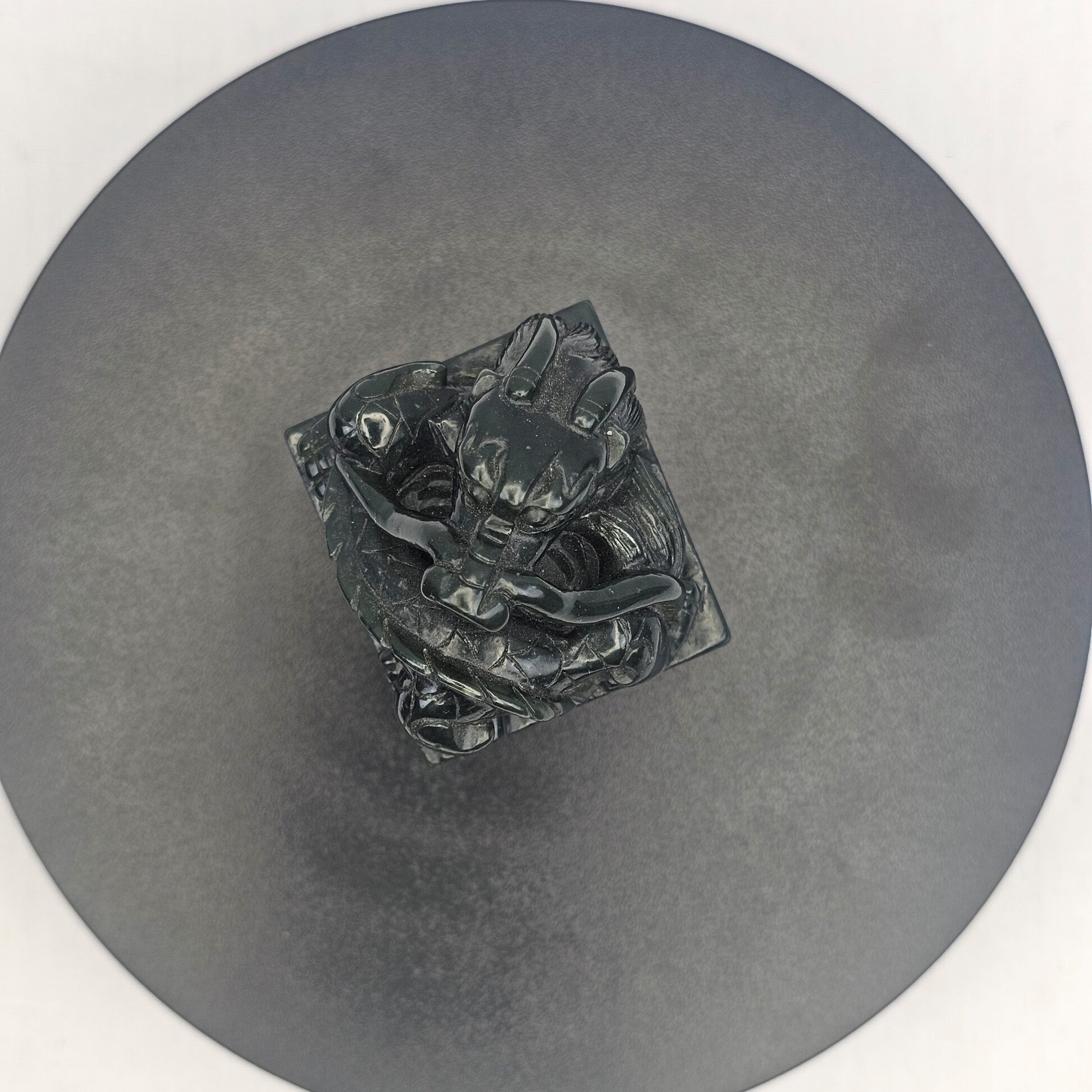
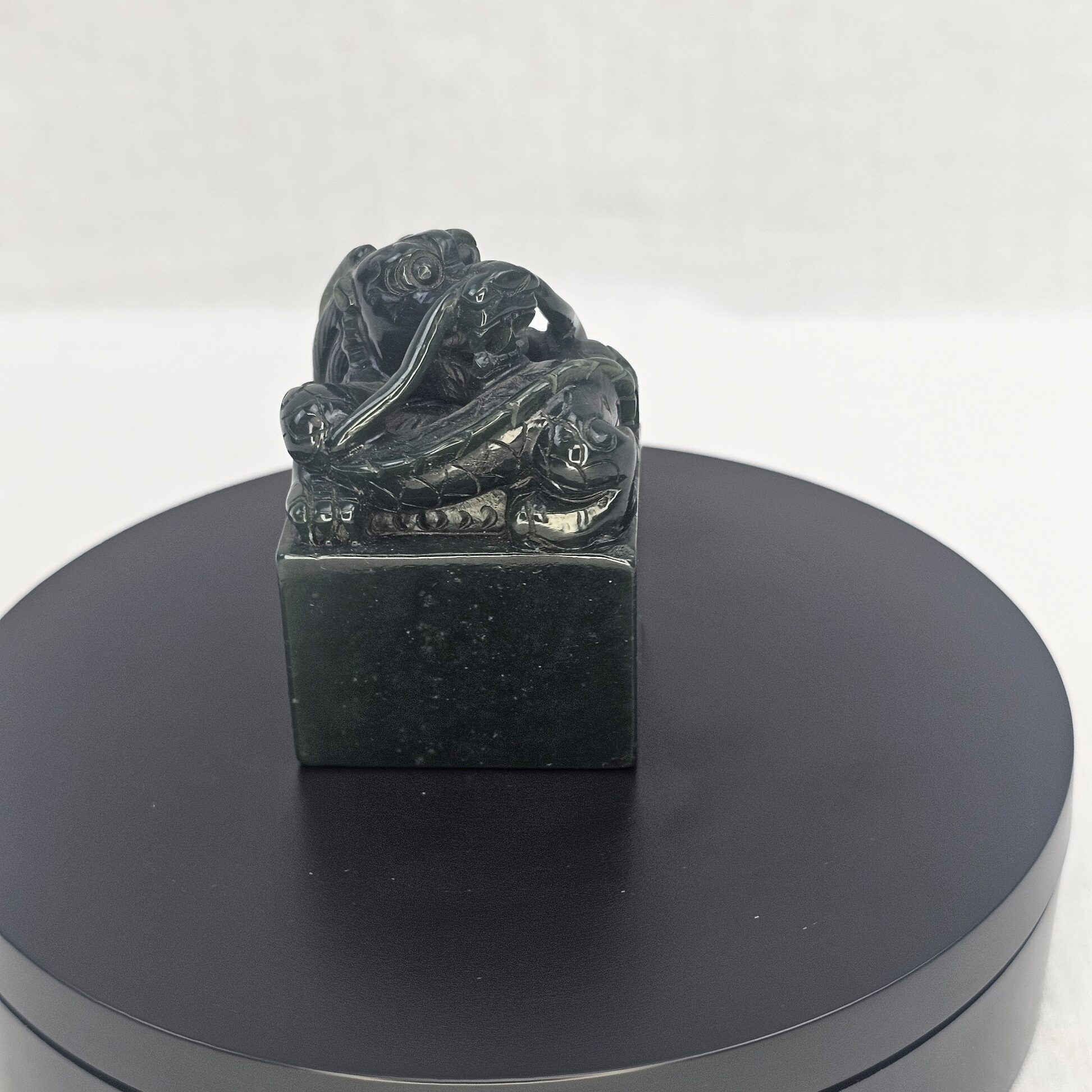
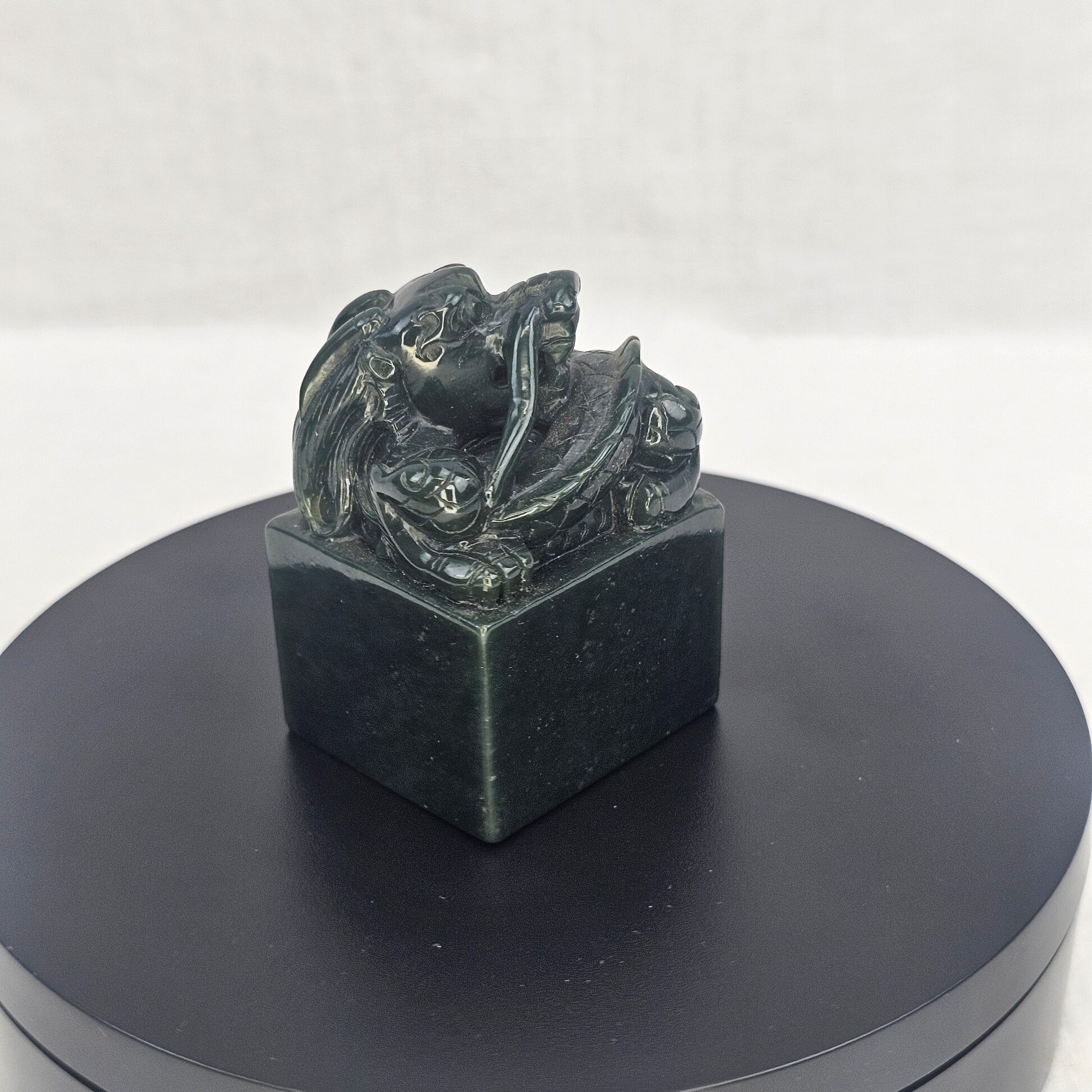
A Chinese carved seal of square section, the body in a pale yellow-green stone with attractive natural russet-brown "skin" markings to the corners and upper edges. The top is surmounted by a sculpted chilong (hornless dragon) finial, shown in a sinuous crouching/climbing pose with the long scaled body arching over and the head turned back towards the tail, carved in higher relief from the contrasting darker russet-toned area of the stone. The underside of the seal face appears uncarved/blank (plain), suggesting this piece was intended as a decorative seal-form ornament rather than a used personal seal, or that the seal face has not been engraved. The stone has a soft, slightly waxy finish typical of soapstone or steatite, with natural inclusions and colour zoning used decoratively by the carver to set the dragon apart from the body of the seal.
Historical Context
Seals surmounted by sculpted chilong, mythical beasts, or Buddhist lions are among the most traditional forms of Chinese scholar's seal, the dragon finial denoting status, good fortune, and scholarly accomplishment. Such seals were produced in soapstone, steatite, and various hardstones from the Qing dynasty onward, with production continuing in considerable quantity through the late 19th and 20th centuries for both domestic use and the export/curio trade.