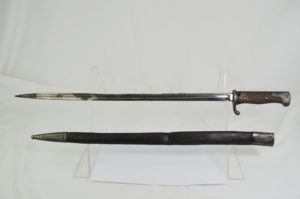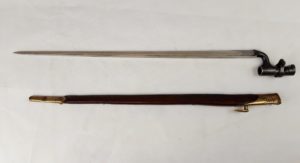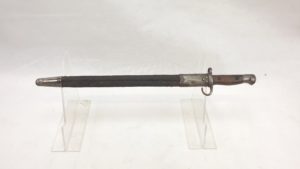
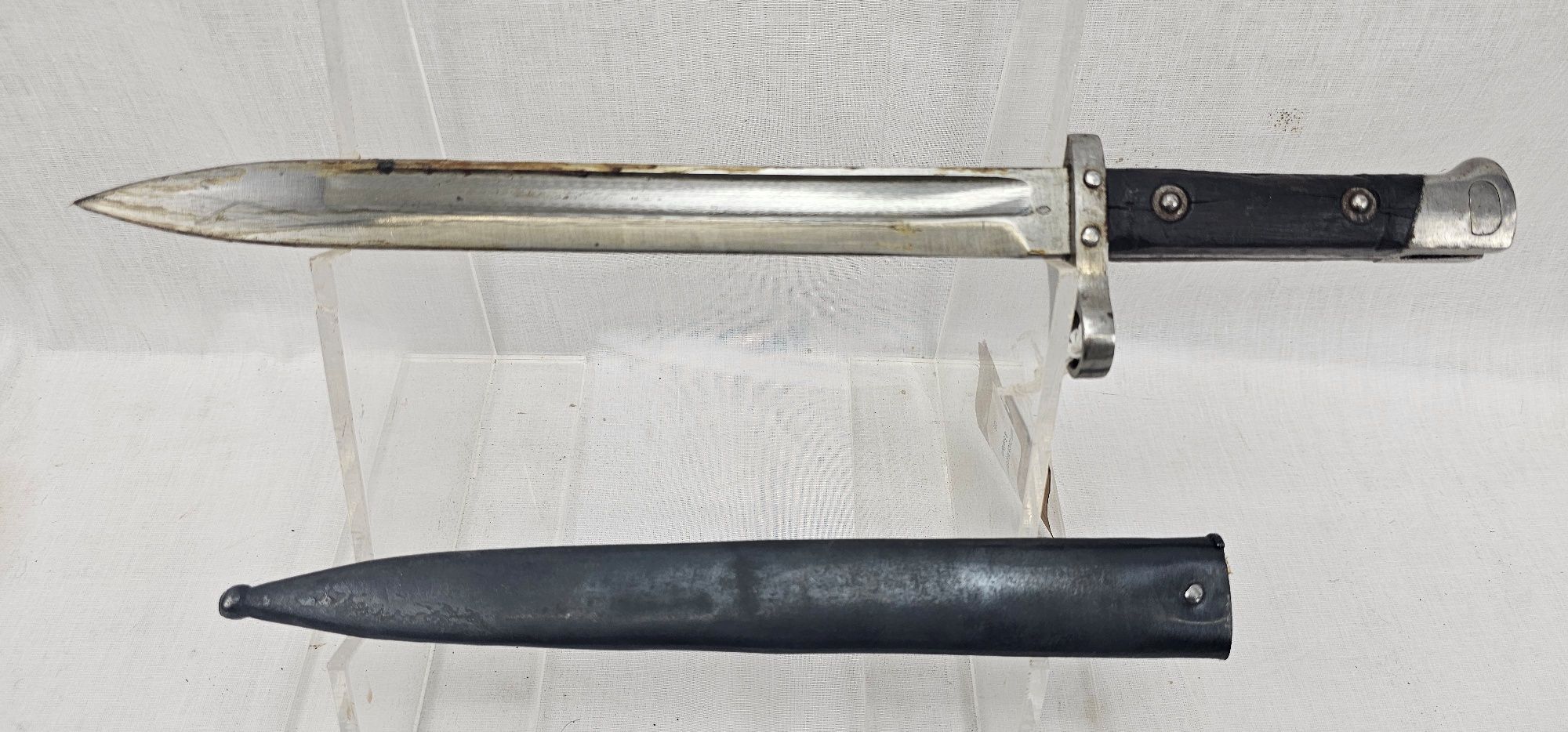
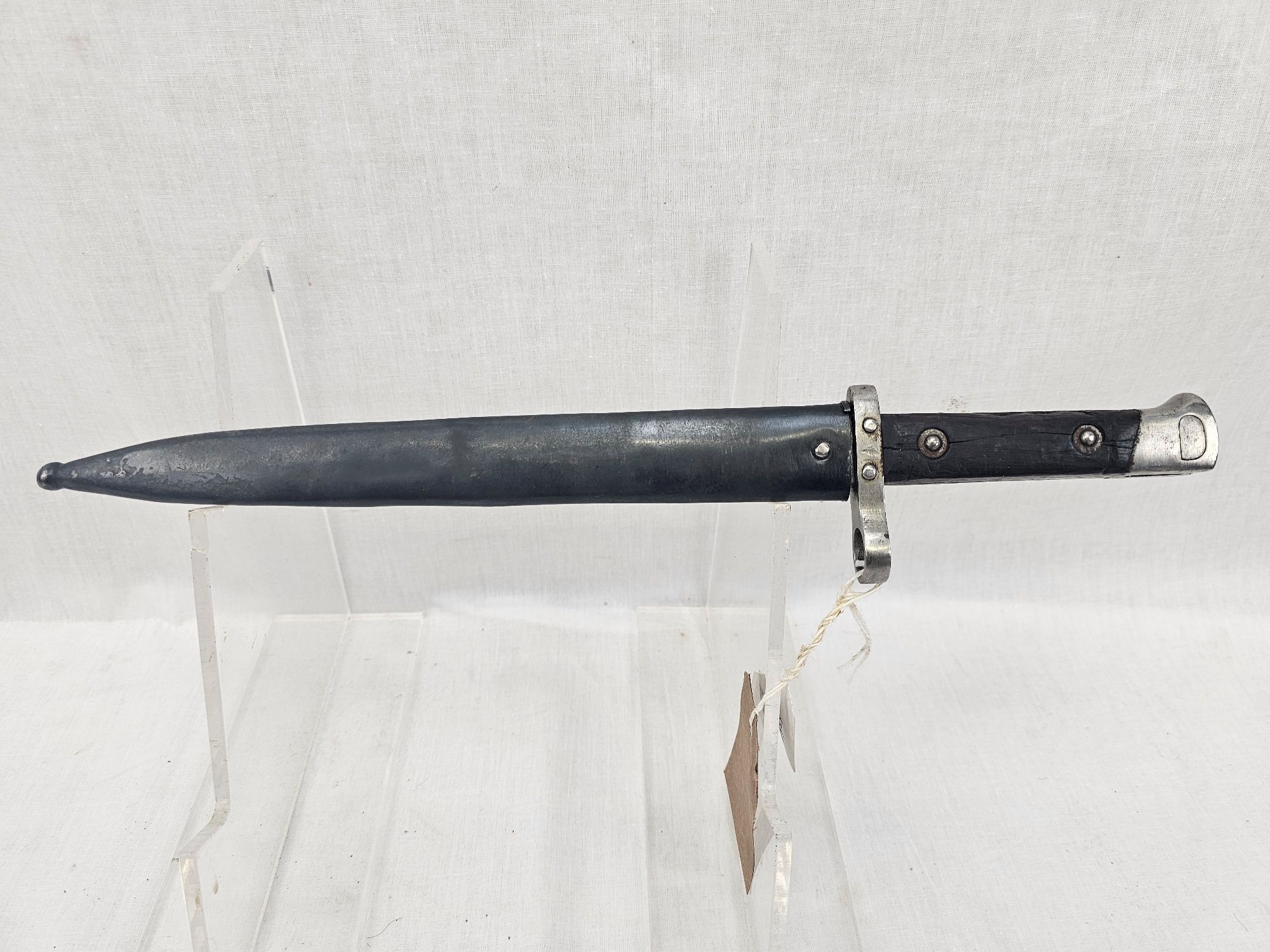
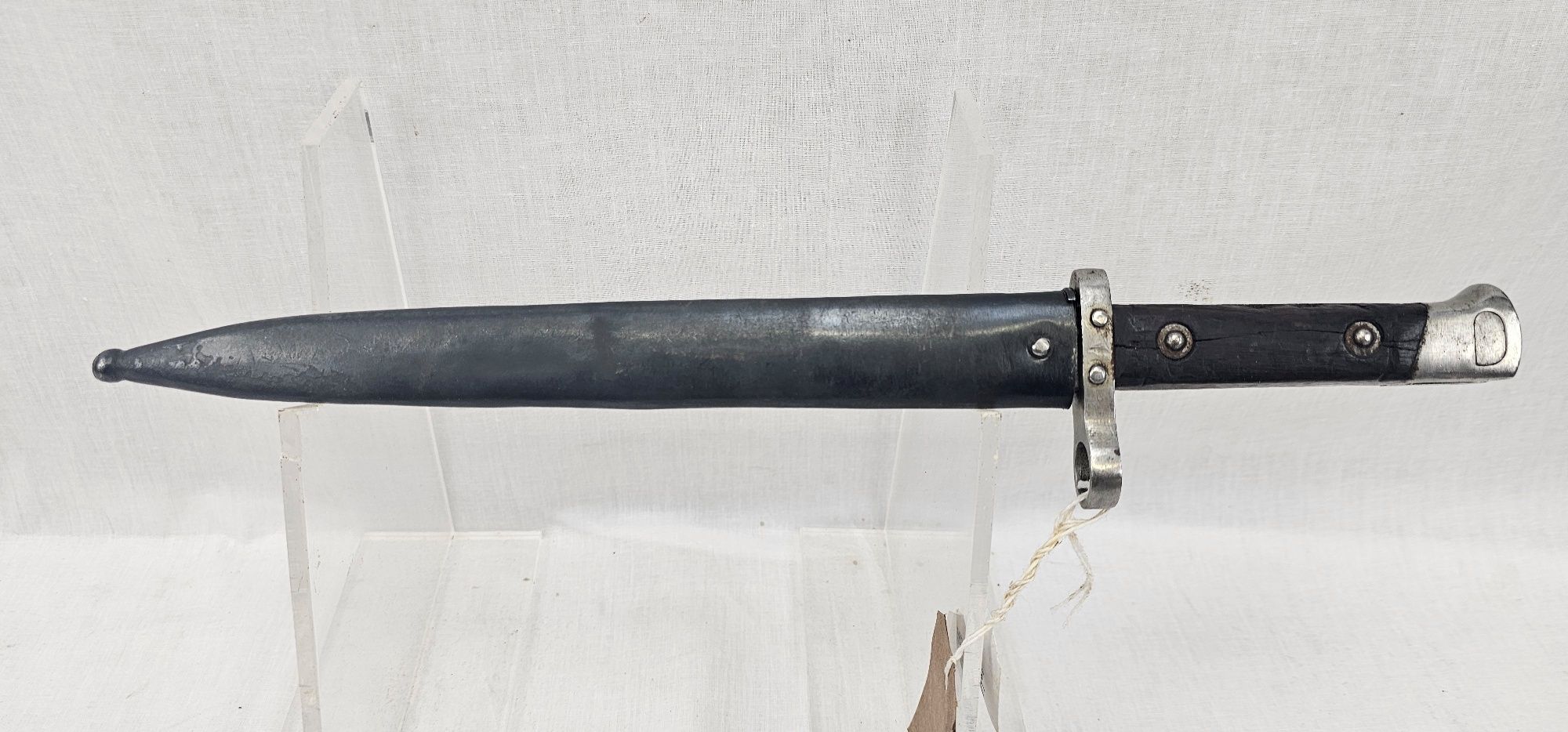
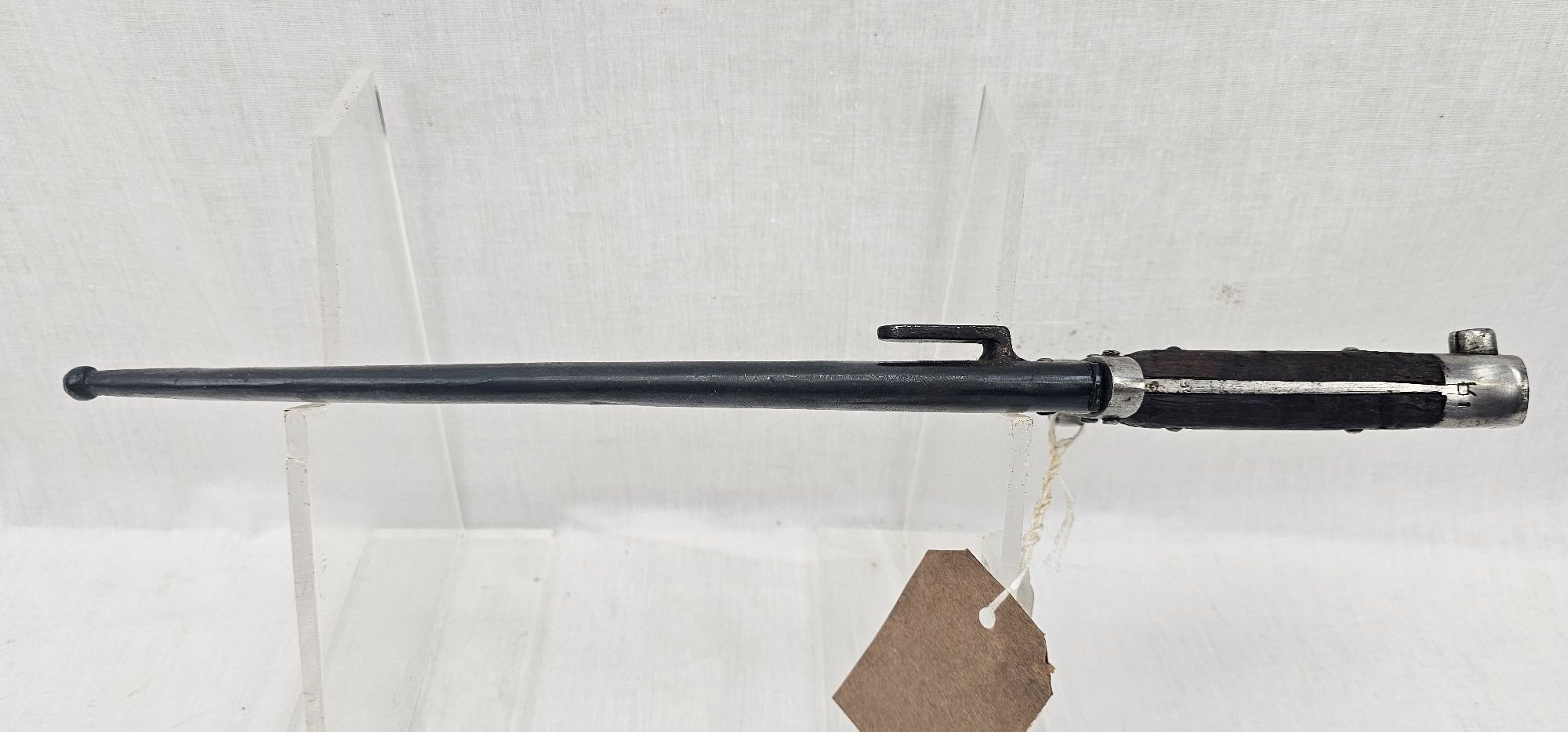
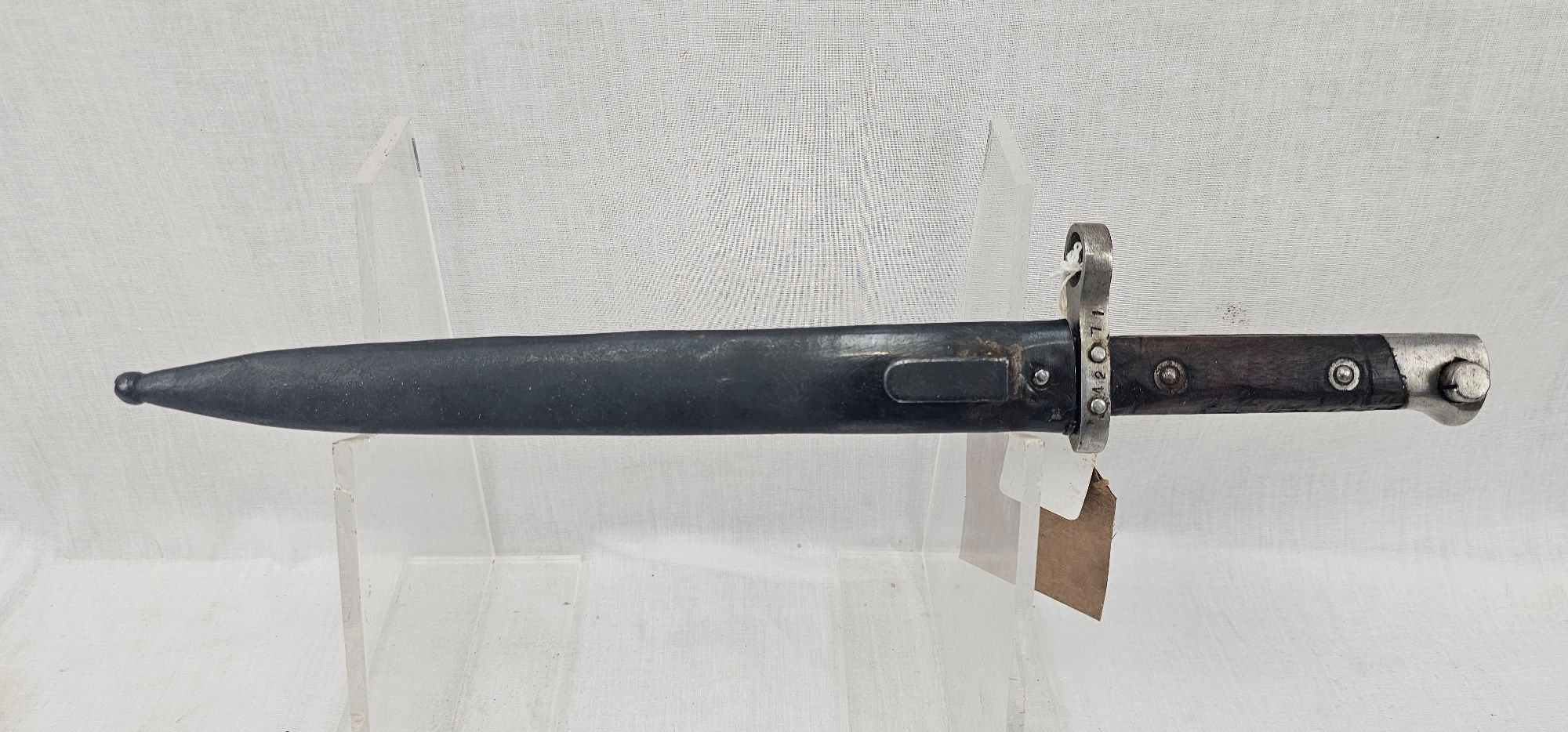
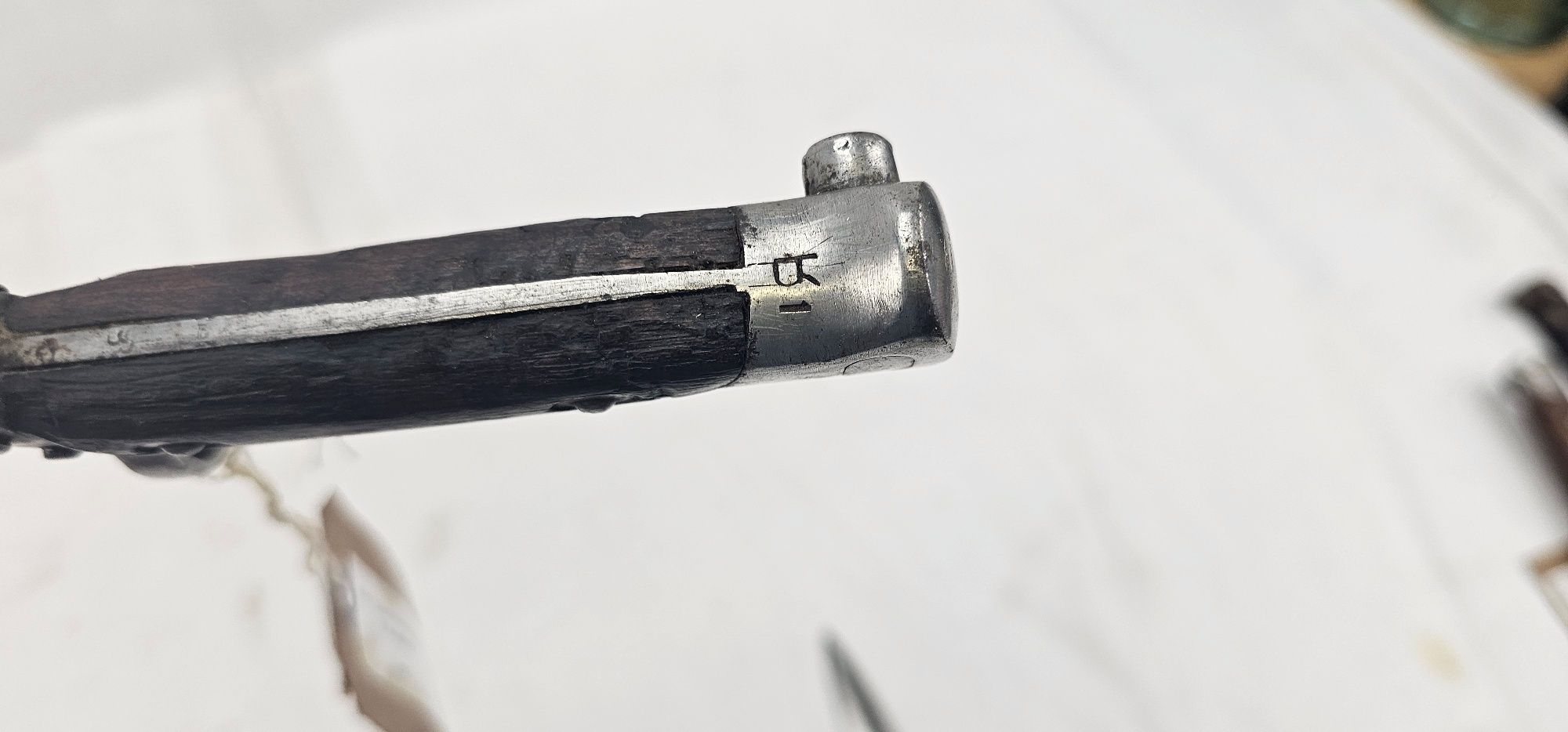
~ WW2 Czech M95 Bayonet And Scabbard sn. 4271~
The Czech M95 bayonet is a significant piece of military history with roots in the Austro-Hungarian Empire. Originally designed for the Steyr-Mannlicher M1895 rifle, it saw continued use after World War I, particularly in Czechoslovakia, and was later used during World War II.
~ Condition ~
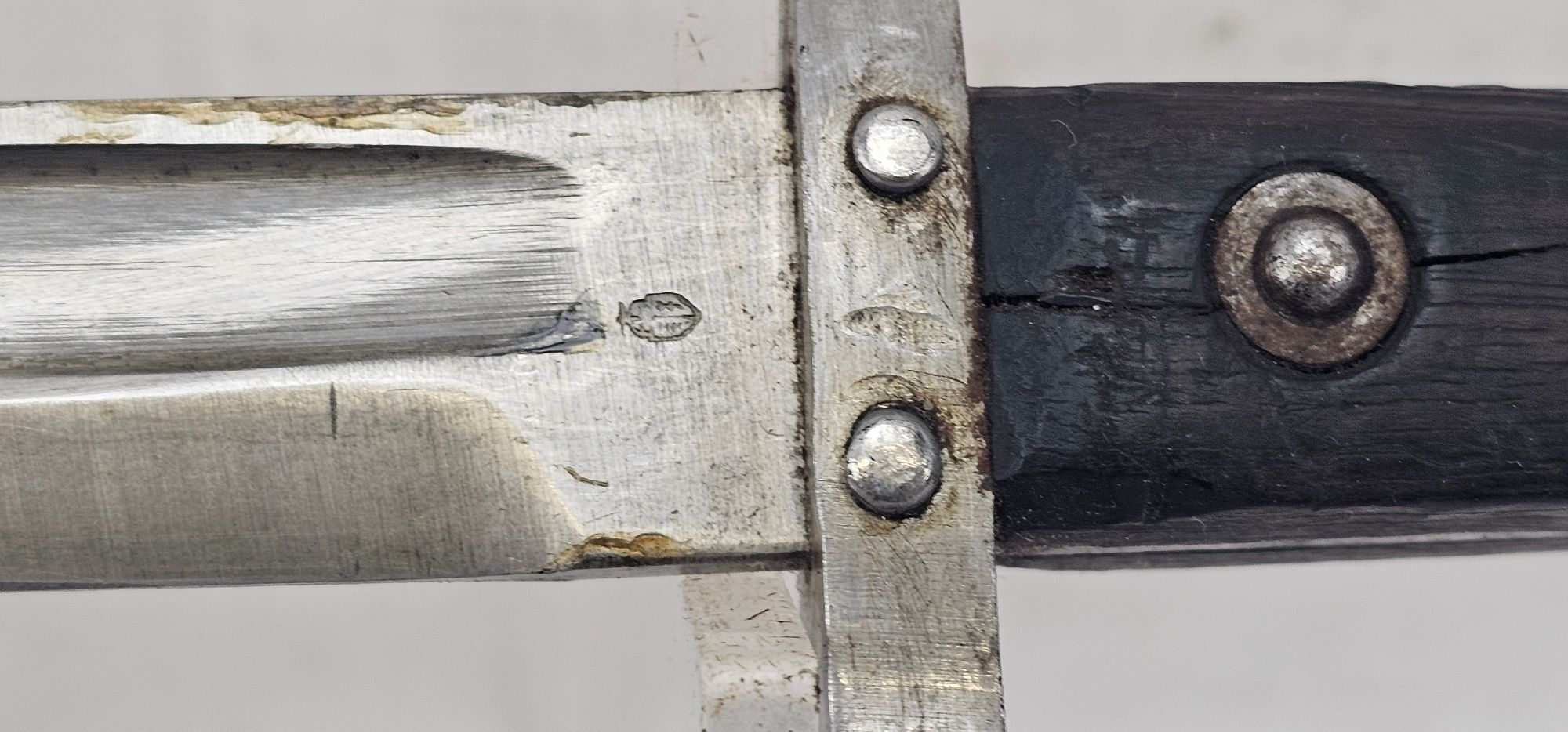
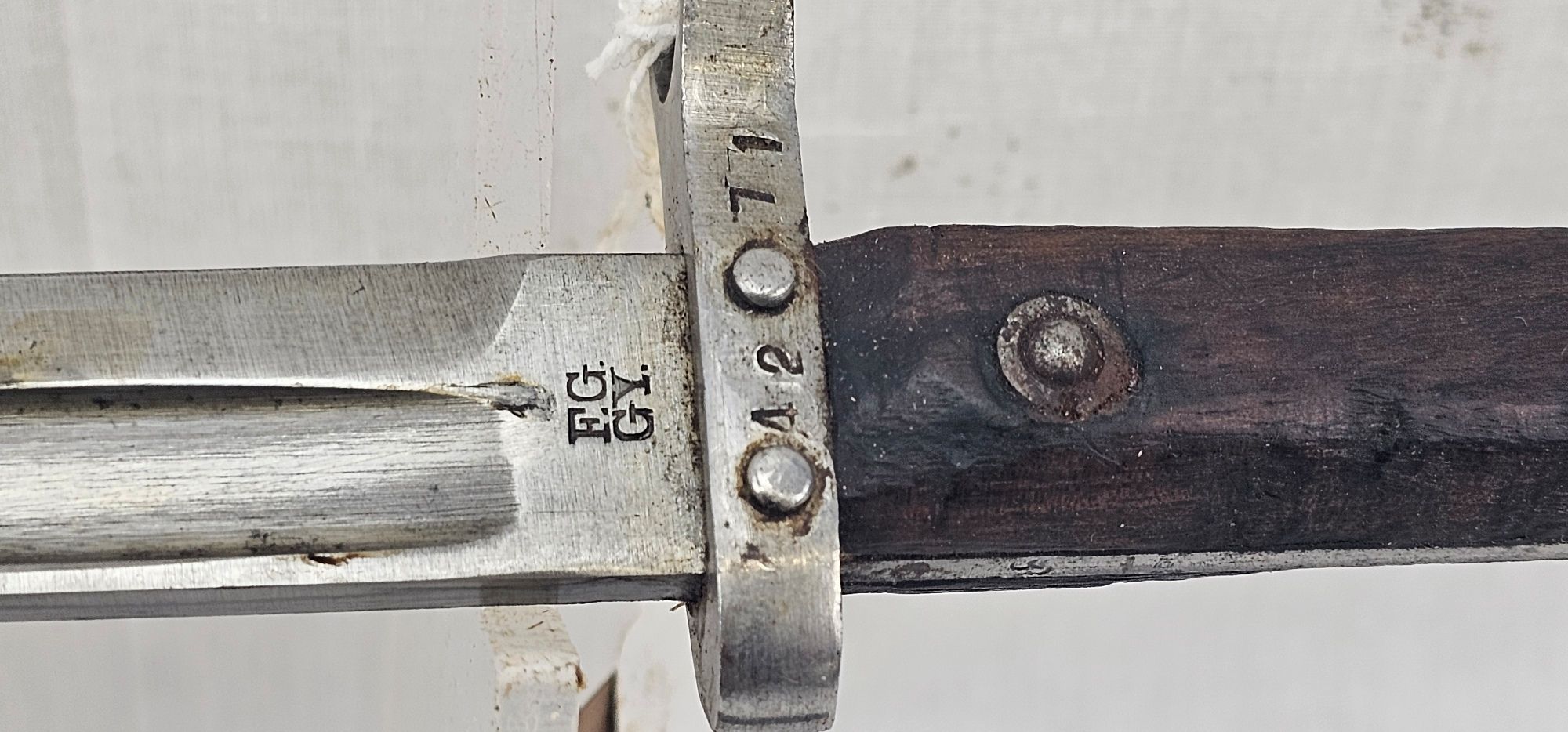
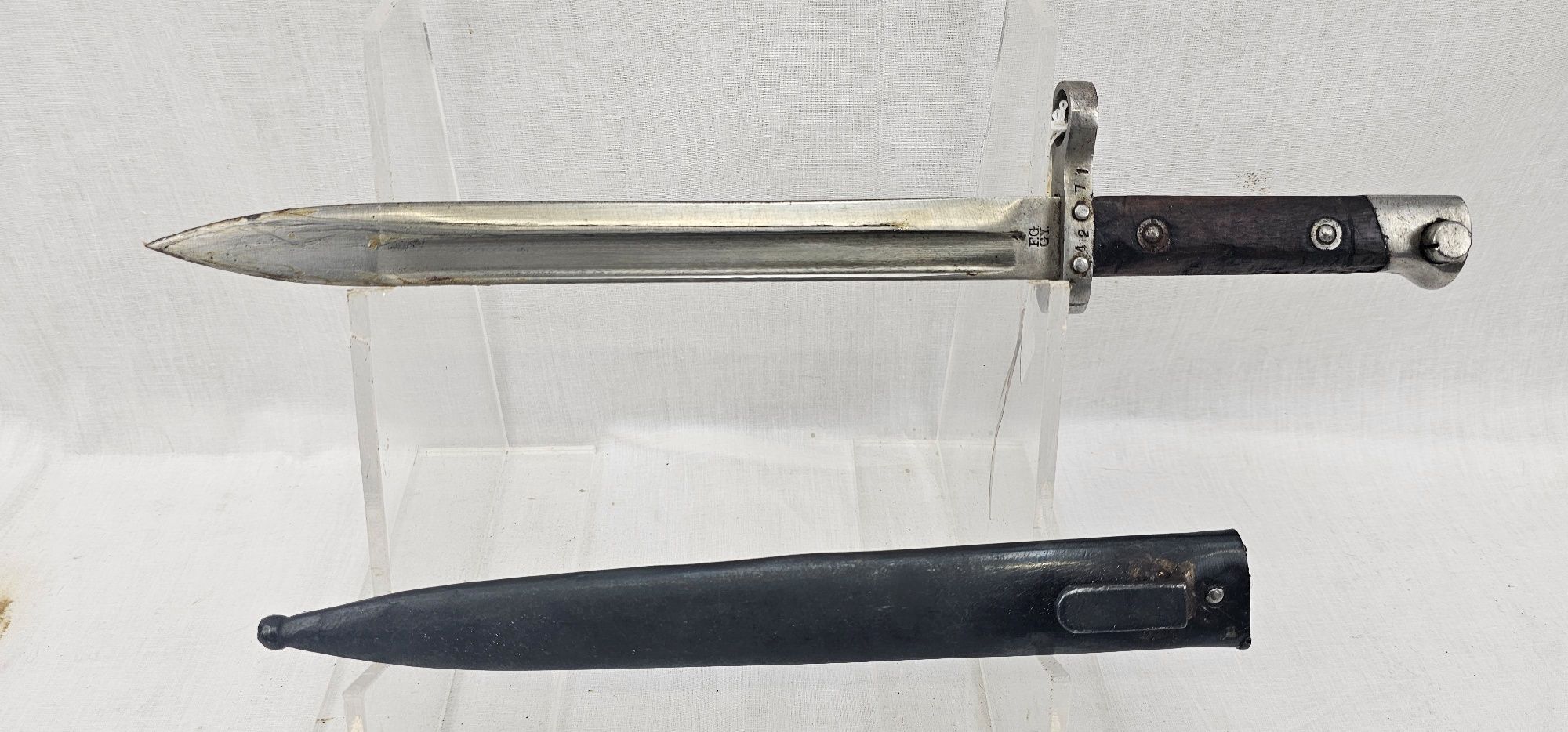
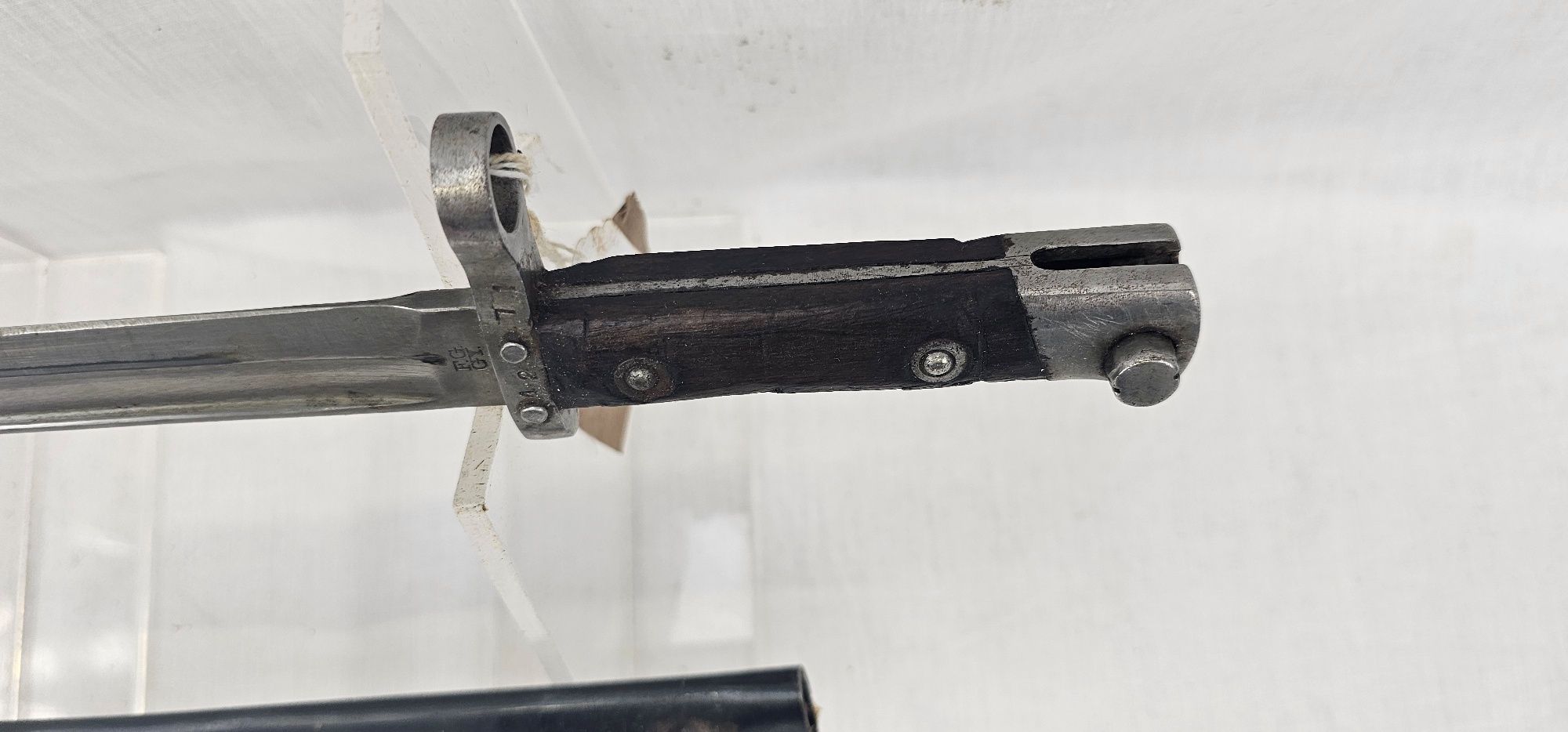
Please refer to the images for the condition. The bayonet fits the scabbard well. The clasp works well.
~ Dimensions ~
The piece is 36cm (14 inches) in length.
Historical Background
Austro-Hungarian Origins
The M95 bayonet was initially developed for the M1895 Mannlicher straight-pull rifle, a standard issue rifle for the Austro-Hungarian military from 1895 onward. These rifles were used extensively in World War I and saw service with Austro-Hungarian forces across the European fronts.
The M1895 rifle was known for its straight-pull bolt action, which allowed the shooter to pull the bolt directly backward and push it forward without rotating it. The M95 bayonet was designed to fit onto this rifle and provide the standard infantry soldier with a versatile tool for close-quarters combat.
Post-WWI Usage in Czechoslovakia
After the dissolution of the Austro-Hungarian Empire following World War I in 1918, the newly formed Czechoslovak military inherited large stocks of M95 rifles and bayonets. These weapons were used by Czechoslovak forces through the 1920s and 1930s.
The M95 bayonet continued to see use even as Czechoslovakia modernized its military in the interwar period, eventually producing the vz. 24 Mauser rifle as a replacement for the older M95 Mannlicher rifles.
World War II
During World War II, when Czechoslovakia was occupied by Nazi Germany in 1939, many M95 rifles and bayonets were seized by the Germans and repurposed for use by their forces, particularly for rear-line troops, police, and second-line units.
The M95 bayonet became part of the German occupation forces' equipment, with some of the captured Czech bayonets being reissued or sold to Germany’s allies.
Design and Features
The Czech M95 bayonet closely resembles the Austro-Hungarian version but with some national markings or stamps added to indicate Czech military use. Below are its key design features:
Blade
Blade Length: The blade of the M95 bayonet was typically around 9.8 inches (25 cm) long.
Blade Shape: The blade is a single-edged, straight blade with a fuller (blood groove) running down the length of both sides of the blade. The fuller helps to reduce the weight of the blade without compromising its strength.
Material: The blade was made of carbon steel, which was durable and capable of holding a sharp edge.
Hilt and Handle
Handle Construction: The grip of the M95 bayonet typically featured wooden grips, which were attached to the tang of the blade using rivets or screws. The wood provided a sturdy, non-slip grip for the user.
Pommel and Locking Mechanism: The pommel of the bayonet had an internal spring-loaded bayonet catch, which allowed the bayonet to be securely attached to the rifle's bayonet lug. This ensured that the bayonet stayed fixed to the rifle during combat.
Crossguard: The crossguard had a straight quillon (guard) with a circular hole known as the muzzle ring, which fit over the rifle's barrel to stabilize the bayonet when mounted.
Scabbard
The bayonet was typically paired with a metal scabbard, which could be worn on the soldier’s belt. The scabbard was designed to protect the blade when not in use and keep it easily accessible for combat or other tasks.
Markings and Identification
Czech Modifications: Many M95 bayonets produced before 1918 were later marked with Czech national markings after World War I. These markings helped identify them as part of the Czechoslovak military stock. Some of these bayonets were stamped with Czechoslovak acceptance marks or unit stamps.
Austro-Hungarian Marks: Early M95 bayonets would have been stamped with Austro-Hungarian markings, such as the imperial eagle or other identifying features that linked them to Austro-Hungarian arsenals.
German Reuse: Bayonets used during the Nazi occupation of Czechoslovakia may also bear German markings or acceptance stamps from the time they were repurposed during World War II.
Service and Legacy
Versatility
The M95 bayonet was not just a weapon but a multi-purpose tool. Soldiers used it for various tasks, including cutting, prying, and even as a utility knife during everyday activities in the field.
Its compact size and relatively short blade made it effective in close-quarters combat but also easy to carry.
World War II and After
Many M95 bayonets were used by German and Axis forces in secondary roles during World War II. They were also used by various other militaries that had adopted the M1895 Mannlicher rifles, including countries in Eastern Europe.
After World War II, surviving M95 bayonets were often sold off as surplus or used by various smaller armies. They became a common item in the surplus arms market, where they were sold to collectors or as utility tools.
Specifications
Blade Length: 9.8 inches (25 cm)
Overall Length: Approximately 14.5 inches (37 cm)
Blade Material: Carbon steel
Grip: Wooden handles with metal rivets
Crossguard: Straight, with a muzzle ring
Scabbard: Metal, often painted or blued for protection
The Czech M95 bayonet is a significant artifact from both World War I and World War II, reflecting the changing nature of European military forces during the early 20th century. Originally designed for use with the Steyr-Mannlicher M1895 rifle, it remained in service long after the Austro-Hungarian Empire dissolved, with notable usage by Czechoslovakia and later the Germans during the Nazi occupation. Today, the M95 bayonet is a popular collectible due to its historical significance and robust design.