*British, WW1, c.1911, Kensington Rifles Sweetheart Brooch, Hallmarked Silver and Rose Gold, SMLE with Bayonet Form*
A beautifully made sweetheart brooch for the 13th (County of London) Battalion, The Kensington Rifles, formed as a miniature Short Magazine Lee-Enfield rifle with fixed bayonet in sterling silver, centred by a rose gold regimental badge. The badge features the borough arms of Kensington within a laurel wreath and scroll KENSINGTON RIFLES.
Reverse struck with what may be rubbed Chester hallmarks comprising lion passant, Chester’s wheatsheaves and sword device (partly rubbed), and a date letter “L” for 1911, together with maker’s mark W·B·S likely for Ward Brothers, Branston Street, Birmingham (registered 1897; active to 1918). The firm specialised in small silver regimental and sweetheart jewellery. Pin mountings intact but pin absent.
Measurements: Length: 5.3 cm (2.1 in), Height: 1.8 cm (0.7 in)
Historical Note:
The Kensington Rifles trace their lineage to 1860, when the 4th Middlesex Rifle Volunteer Corps was raised during the height of the Volunteer Movement. In 1908, they became the 13th (County of London) Battalion, London Regiment (Kensington) within the newly established Territorial Force. Mobilised in August 1914, they landed in France in November that year and went on to serve at Ypres, Loos, the Somme, and Passchendaele before final disbandment in 1919.
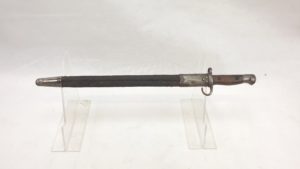
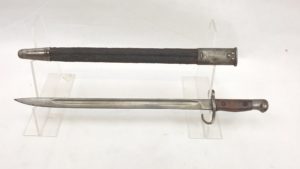
The brooch’s SMLE rifle (the Short Magazine Lee-Enfield (SMLE) Mk III) motif, was officially adopted by the British Army in 1907 and became the principal British service rifle of the Great War. This combined with the likely 1911 Chester hallmark place this brooch in the Edwardian–Territorial era, predating the battalion’s wartime service.
Registered in June 1897 at Branston Street, Birmingham, the Ward Brothers produced fine silver smallwares, presentation pieces, and sweetheart jewellery until around 1918. Their hallmark “W·B·S.” appears on numerous regimental brooches and patriotic designs, often assayed at Chester. Known for combining sterling silver with rose or yellow gold appliqué, their pre-1918 work is now scarce and sought after by collectors of early military and sweetheart jewellery.
This example, combining precious metals, Edwardian craftsmanship, and wartime symbolism, typifies the sentimental yet proud mementoes exchanged between servicemen and loved ones during the First World War.
*Condition*
Excellent overall condition with attractive untouched patina. Hallmarks softened but discernible; partial reading suggests early war date. Minor tarnish to silver consistent with age. Rose gold badge retains crisp engraved detail. Reverse fittings complete though pin absent. Please see photographs as part of the condition report.
RQMEEXABO_9499218465