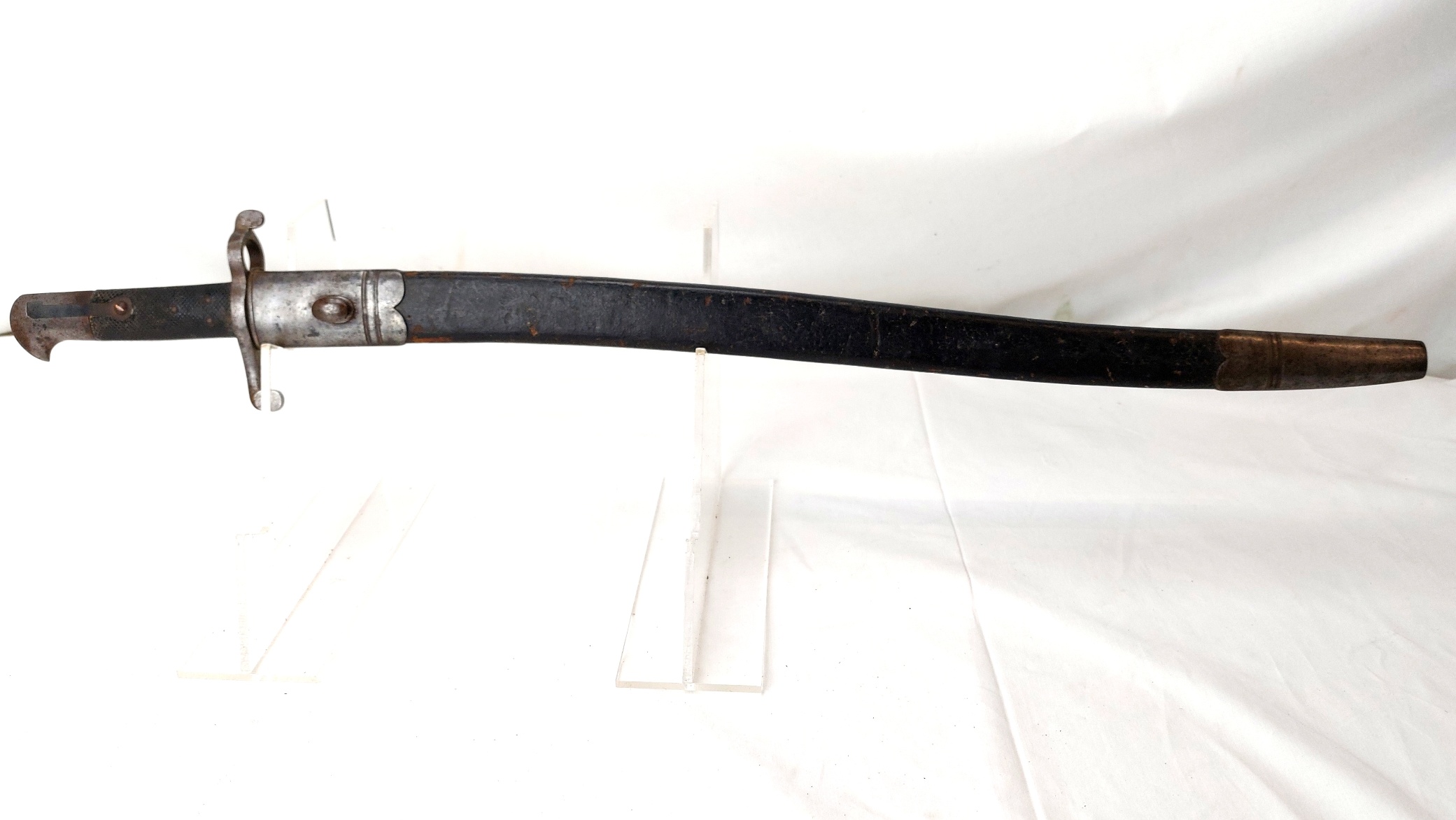
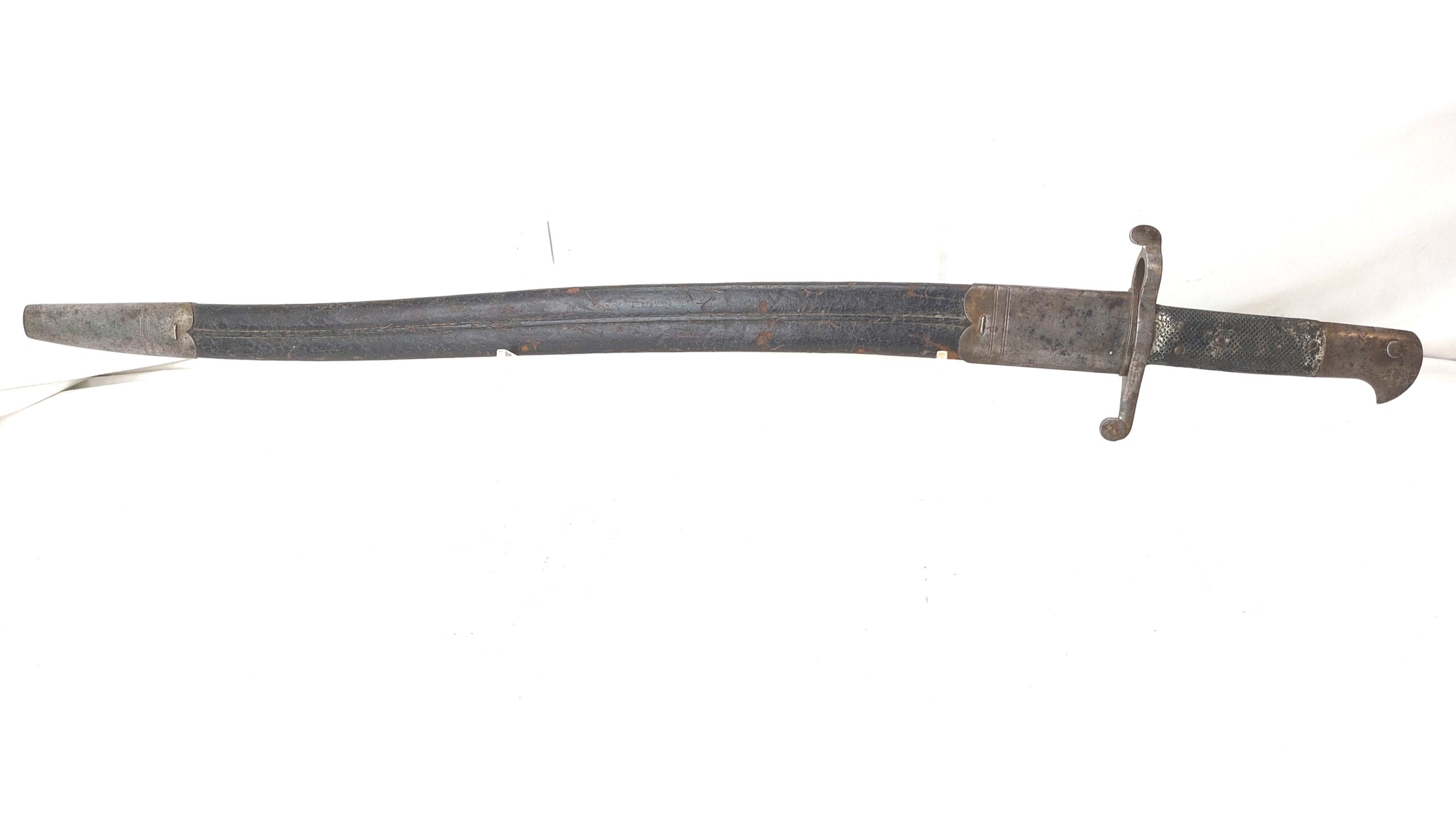
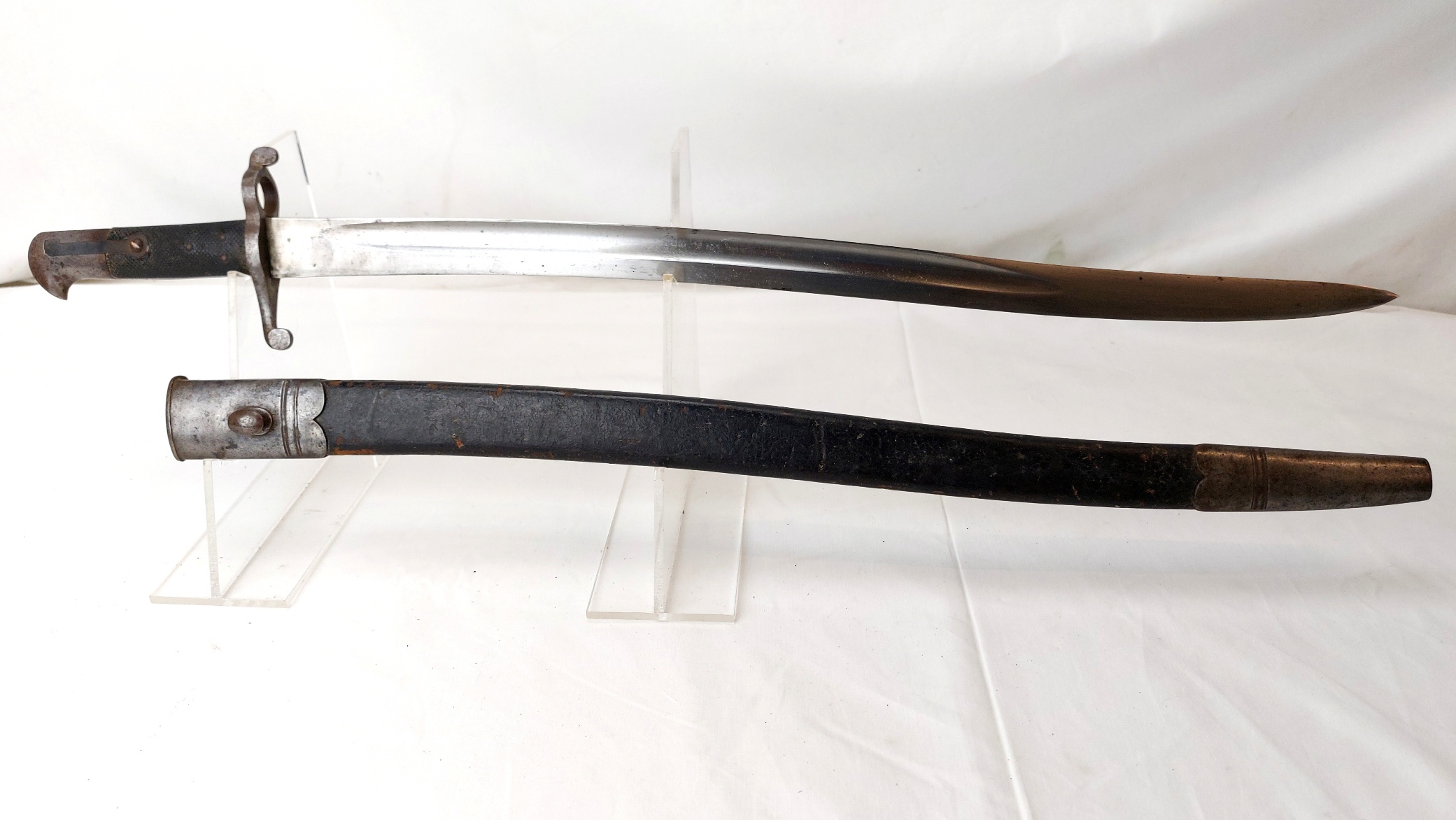
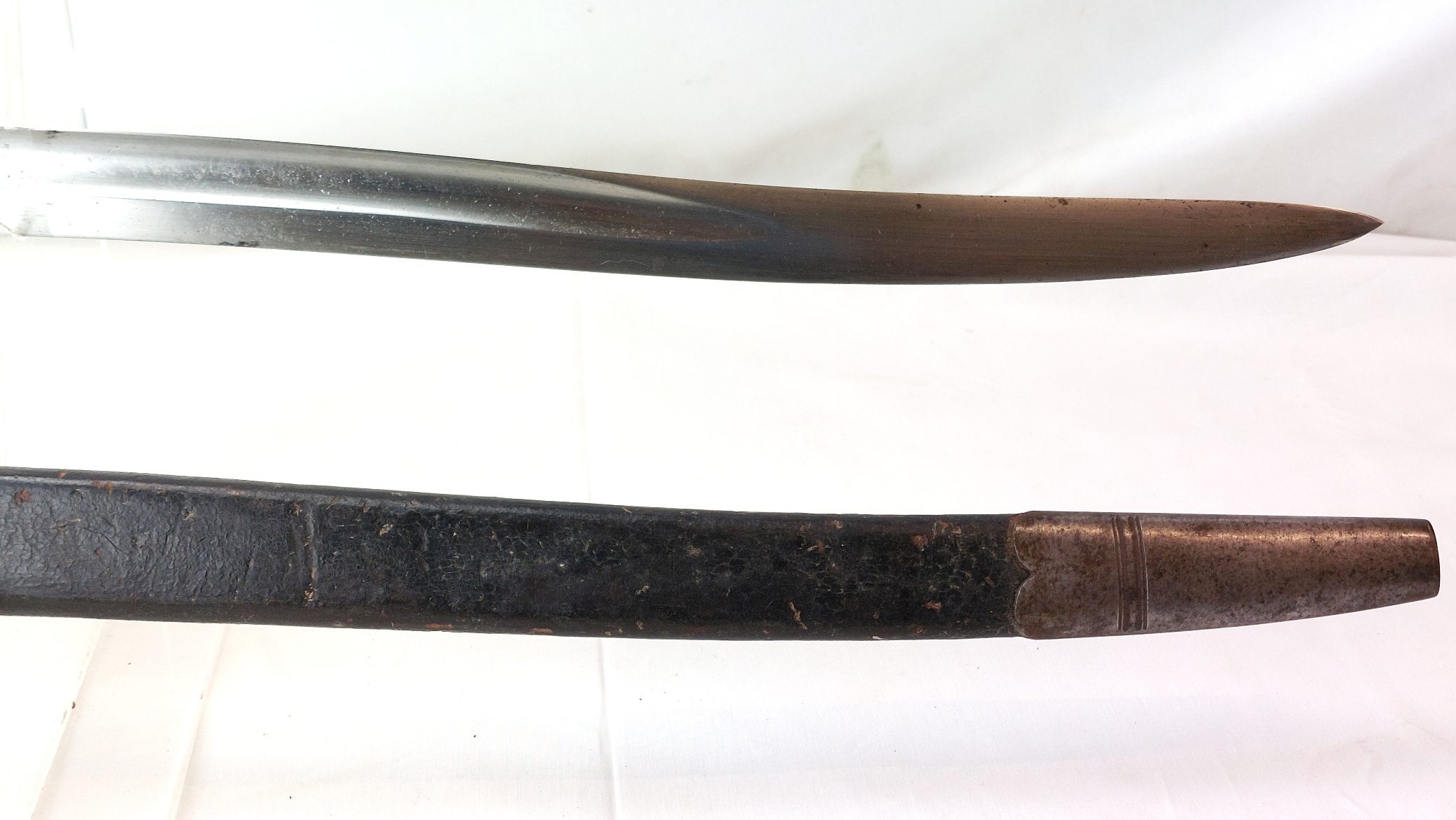
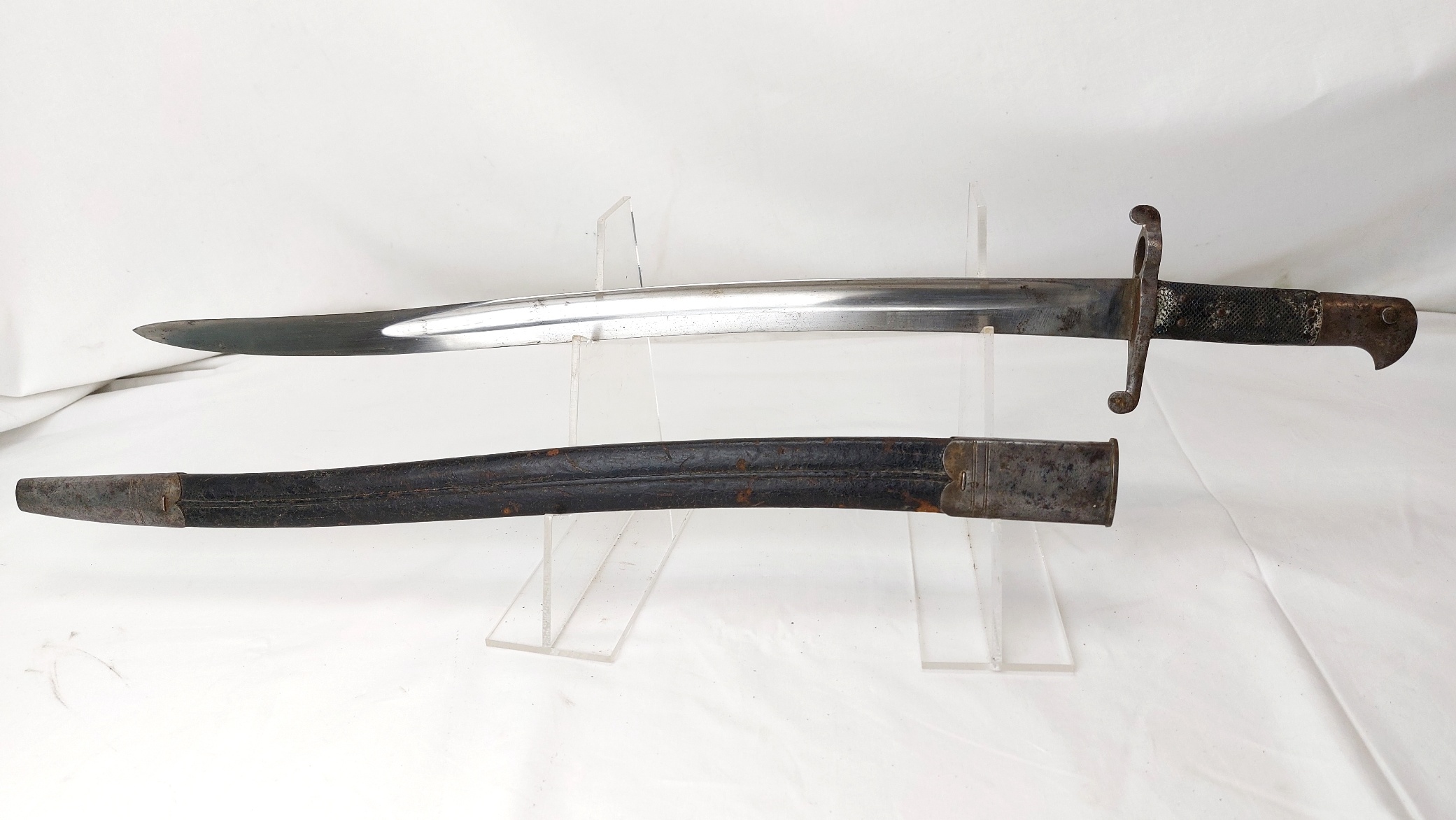
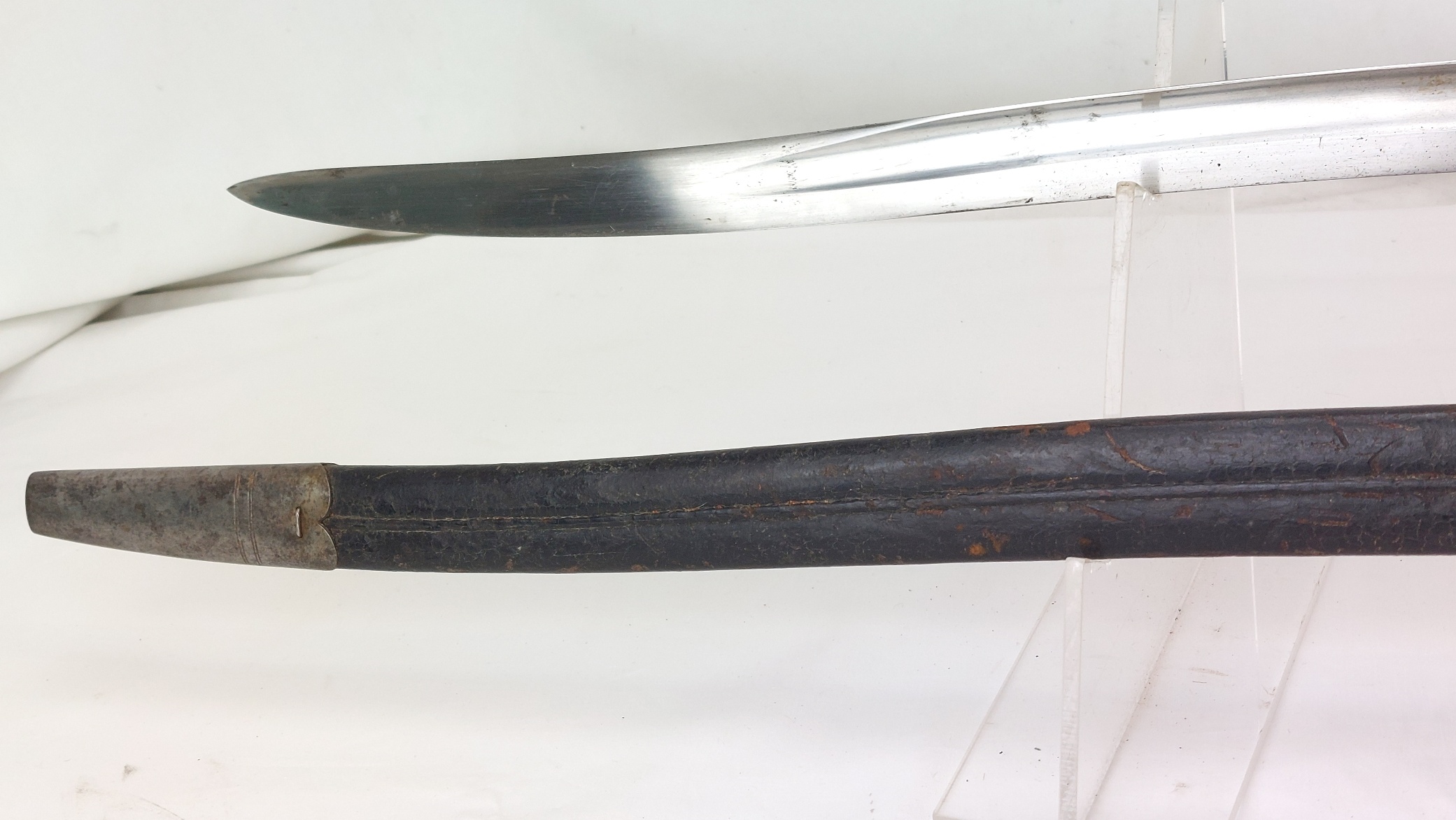
*British, c.1856, Pattern 1856 Yataghan Sword Bayonet and Scabbard, Stepped Mortise, for Enfield Two-Band Short Rifle, Volunteer - Commercial Type*
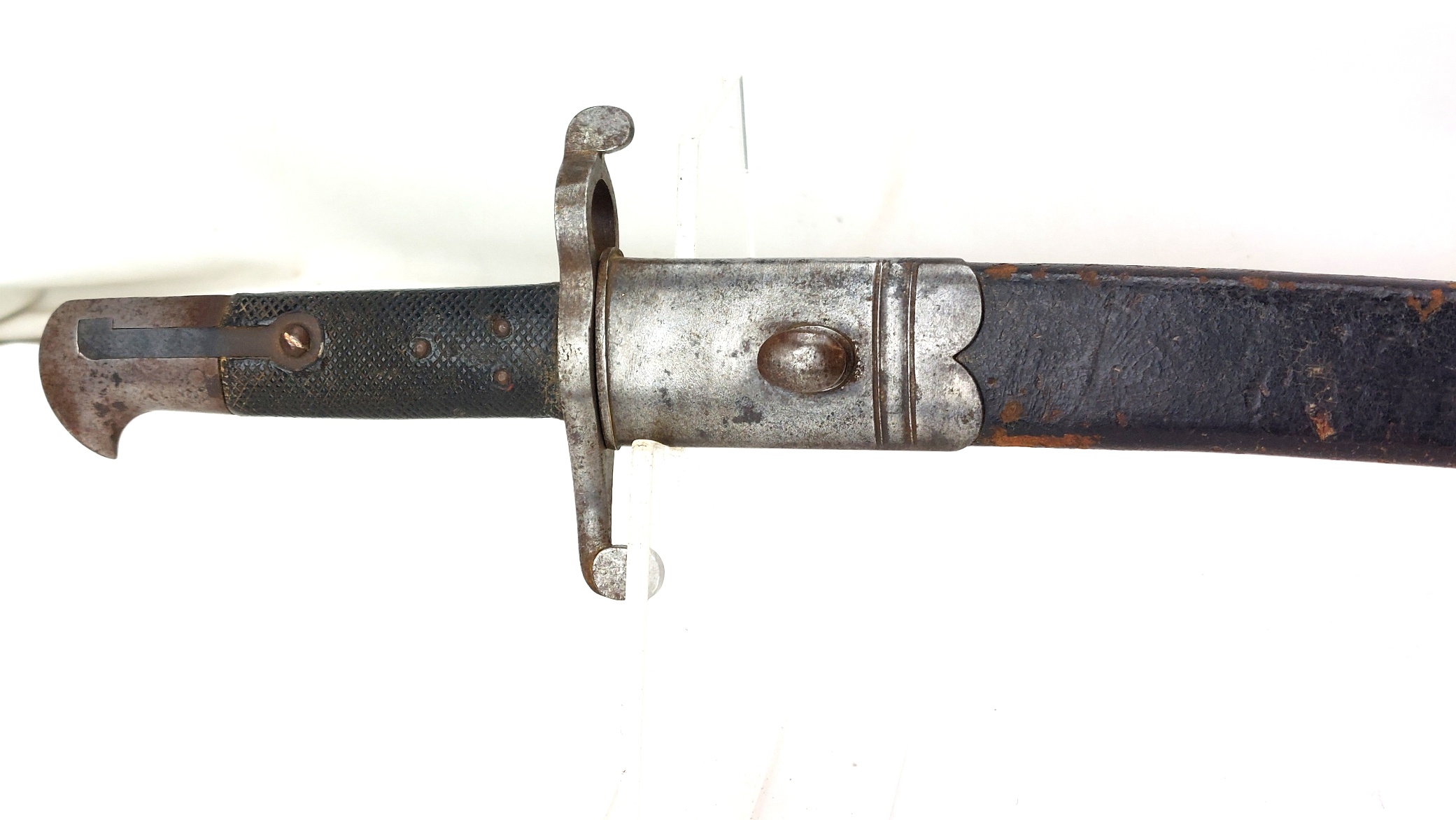
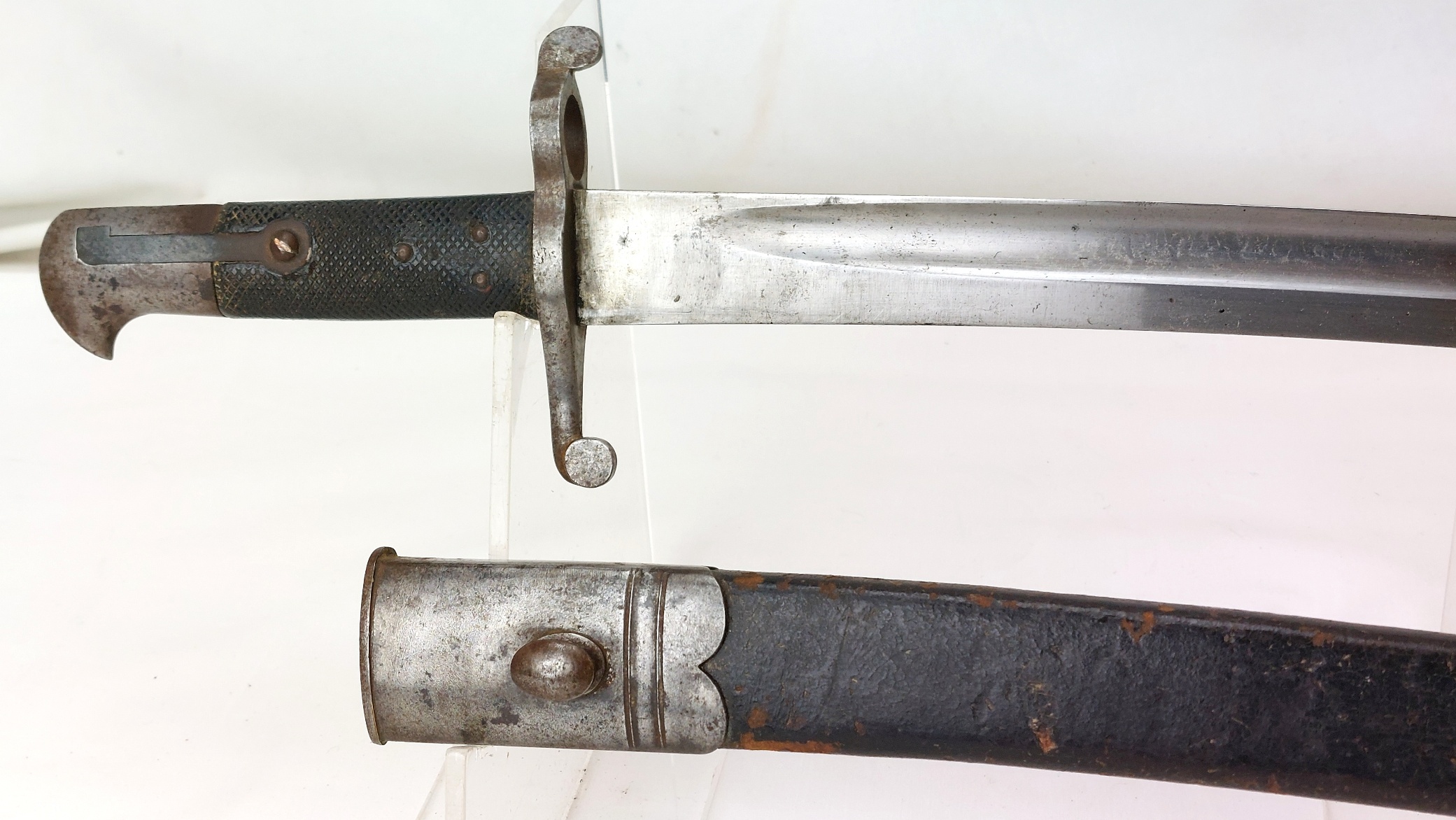
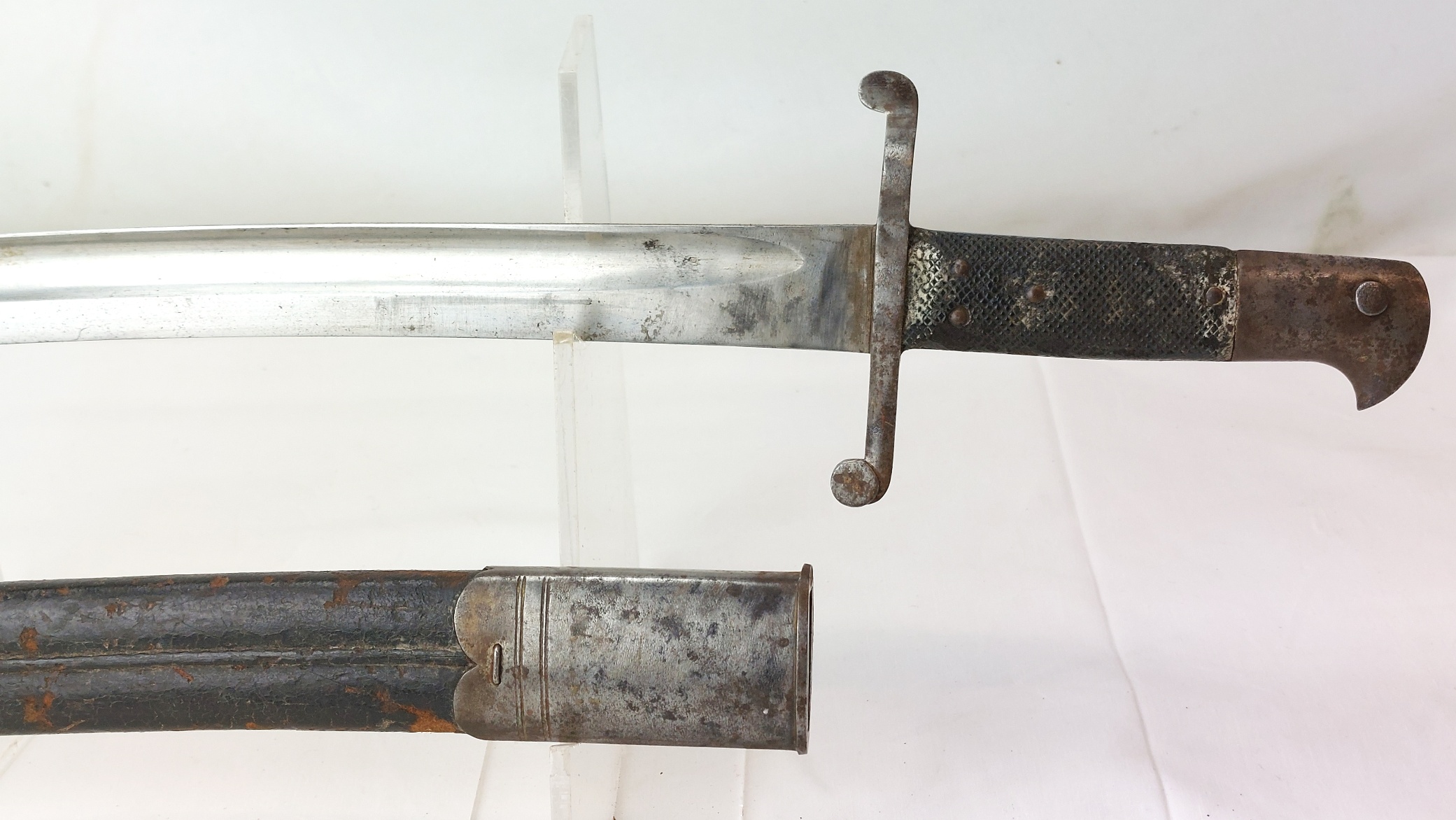
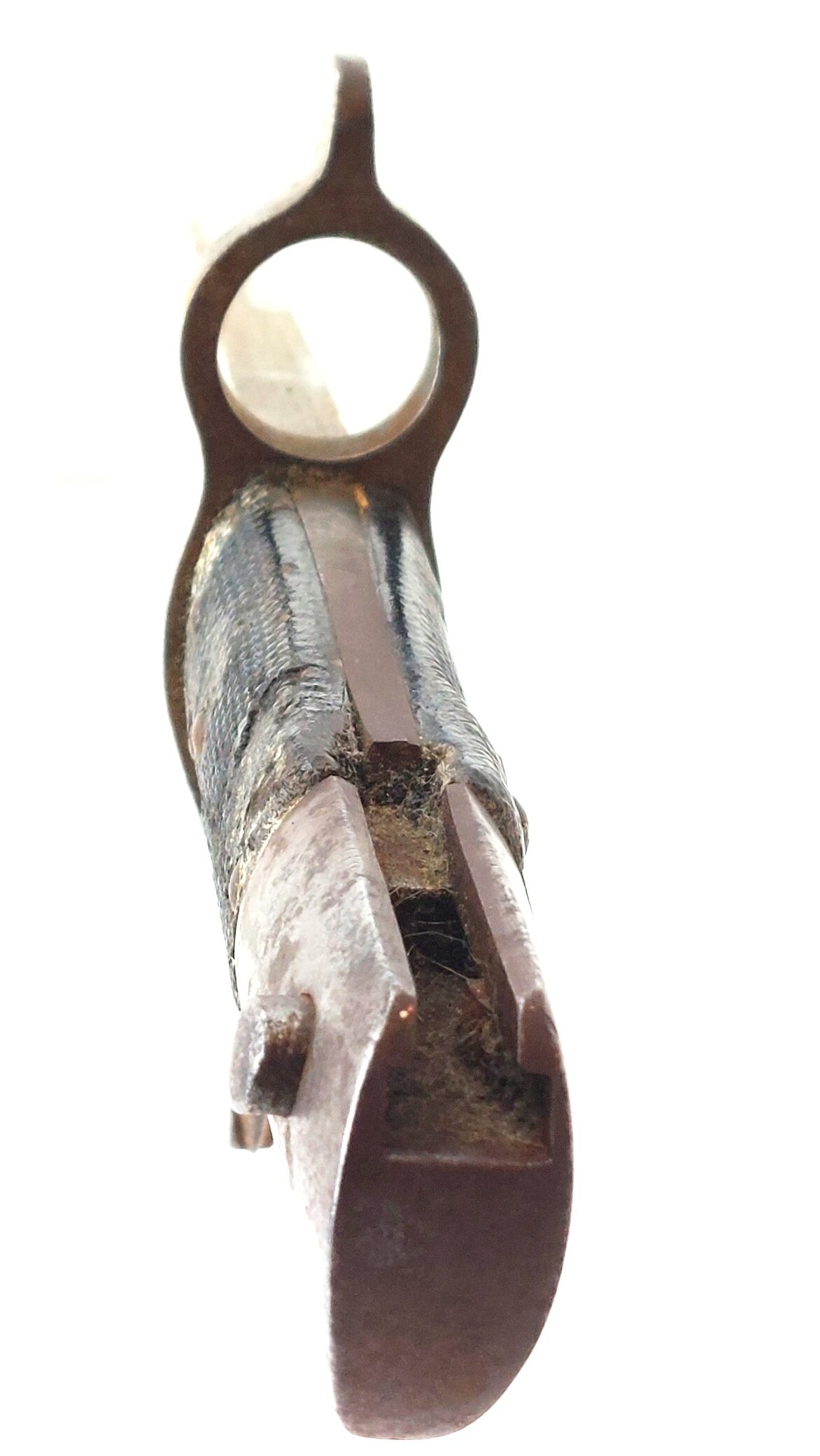
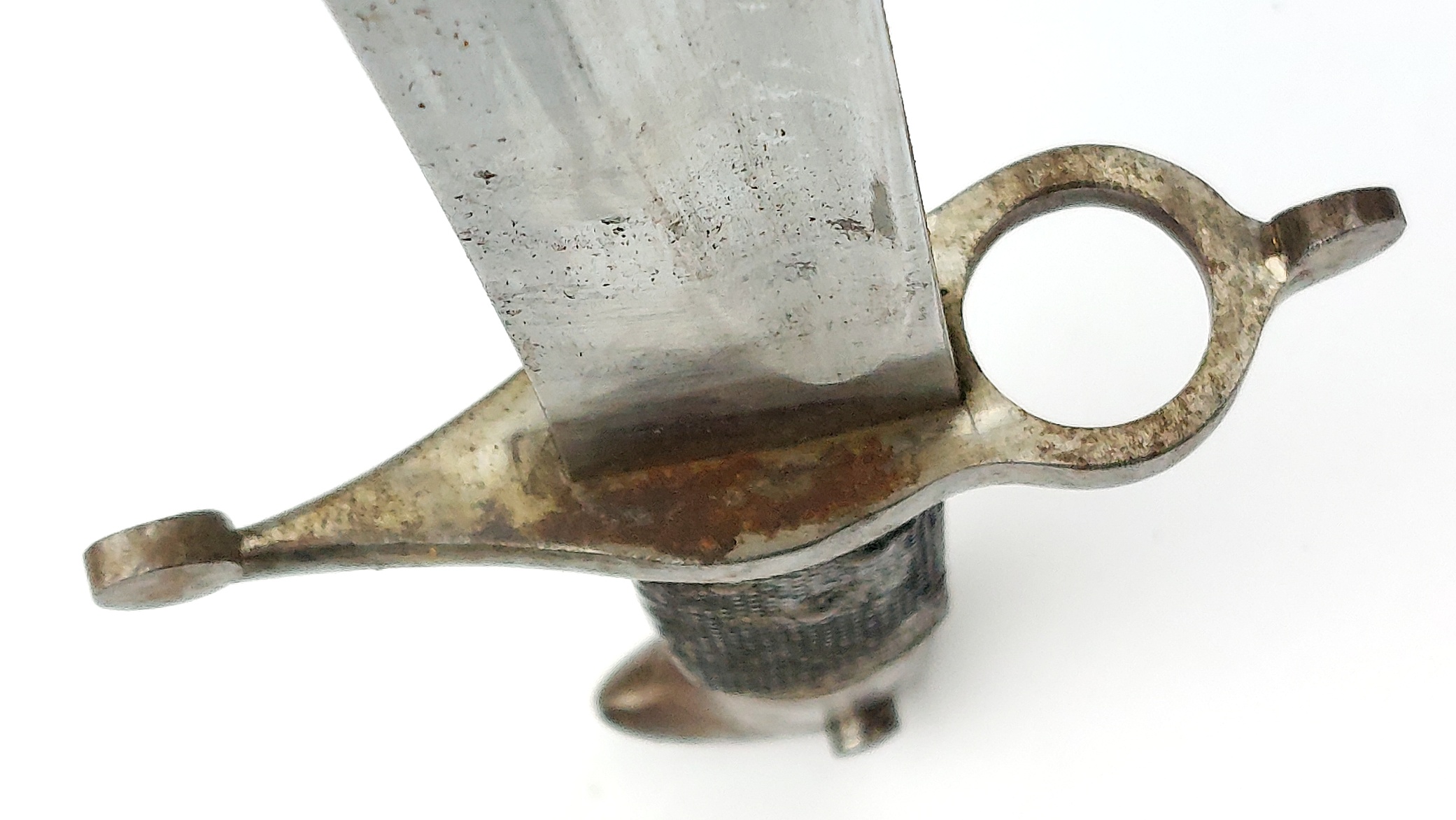
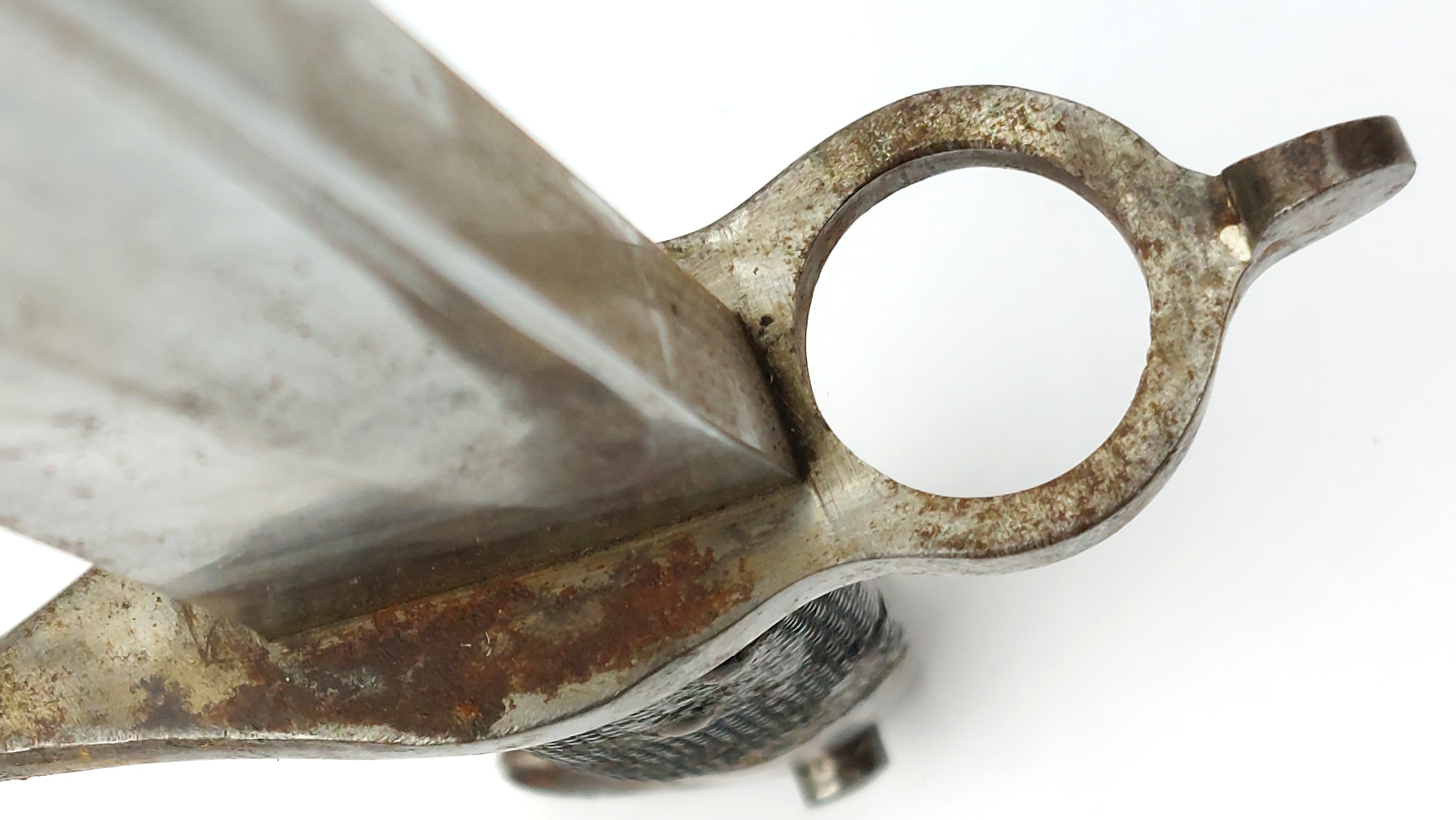
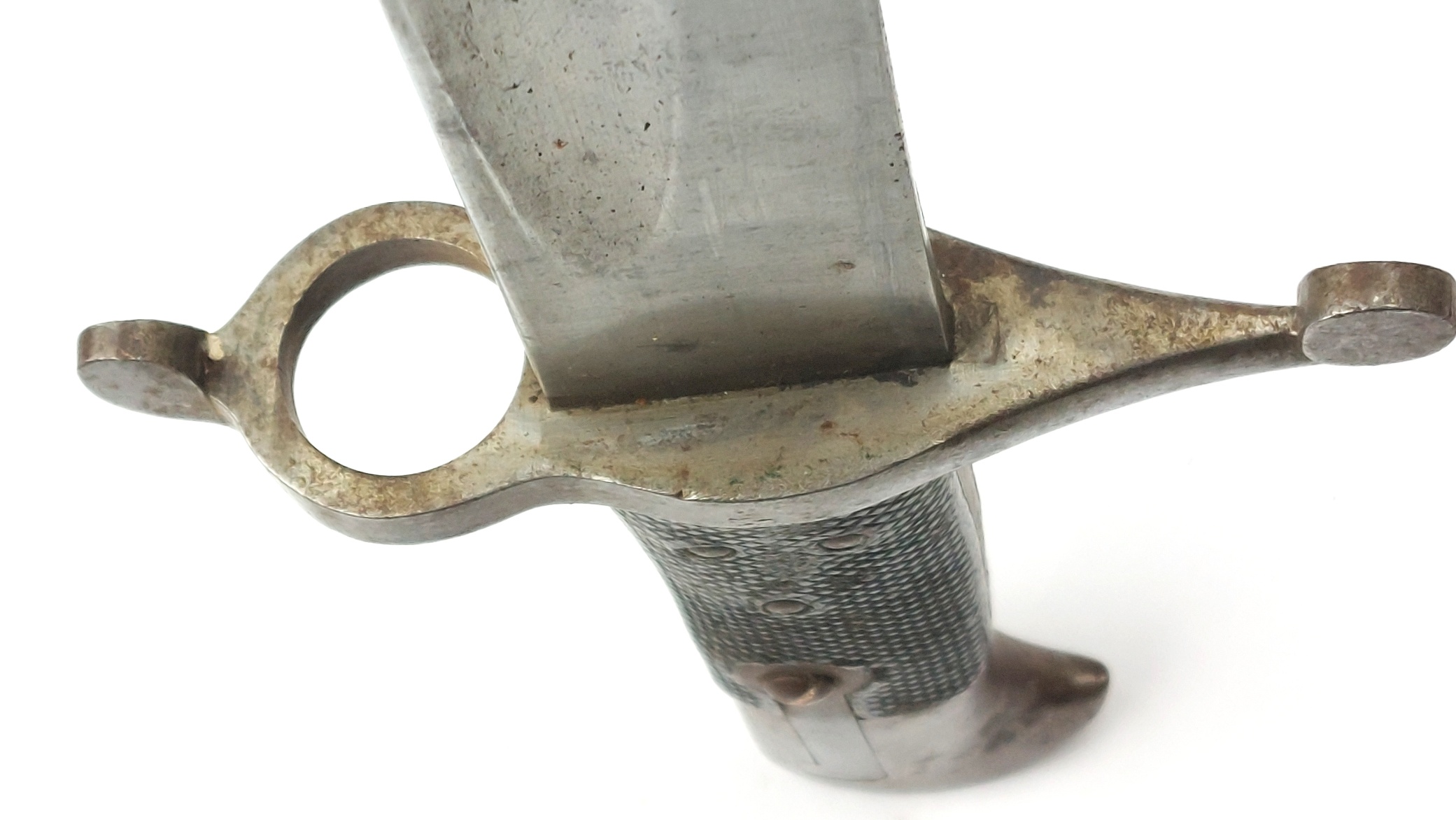
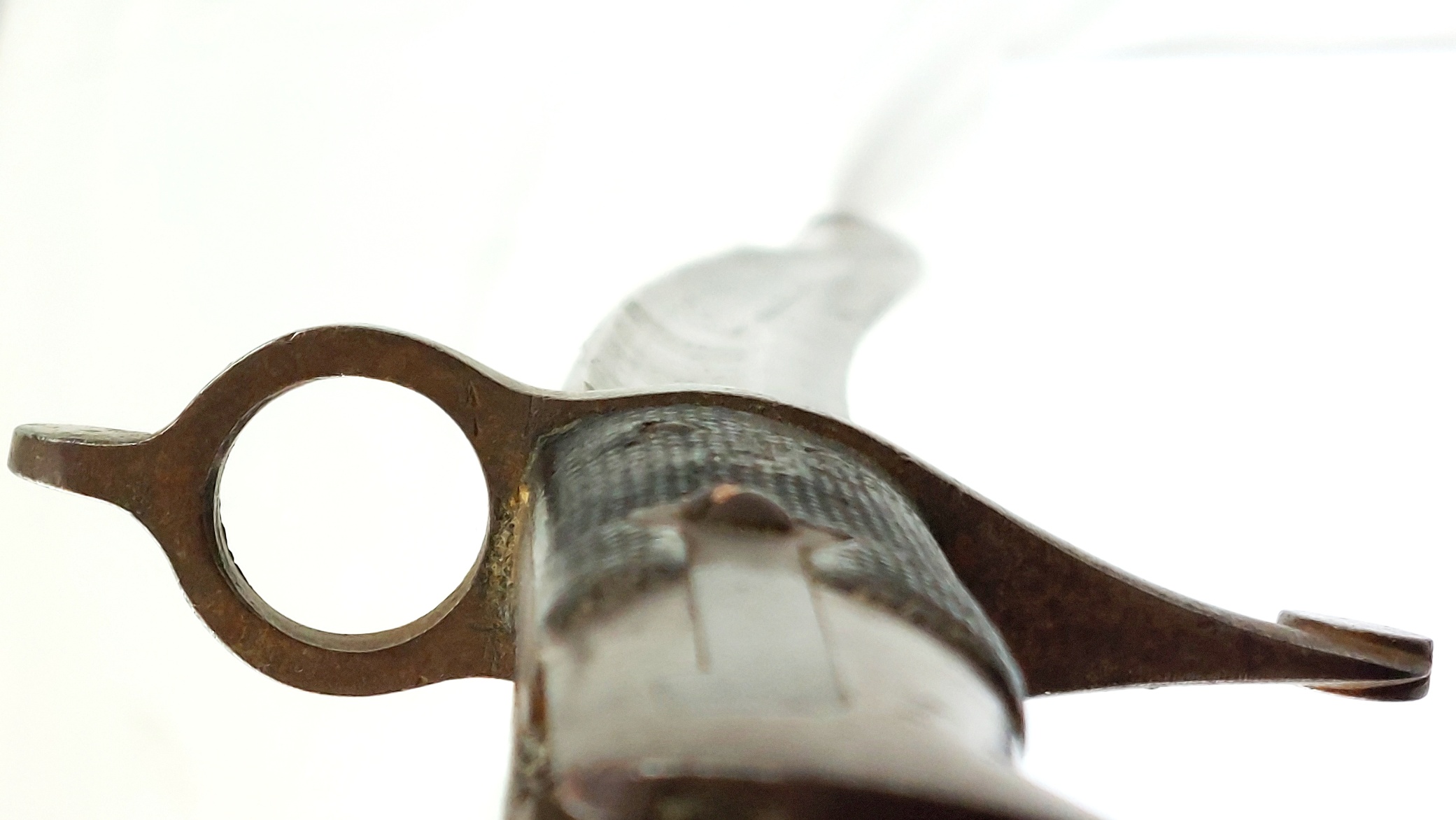
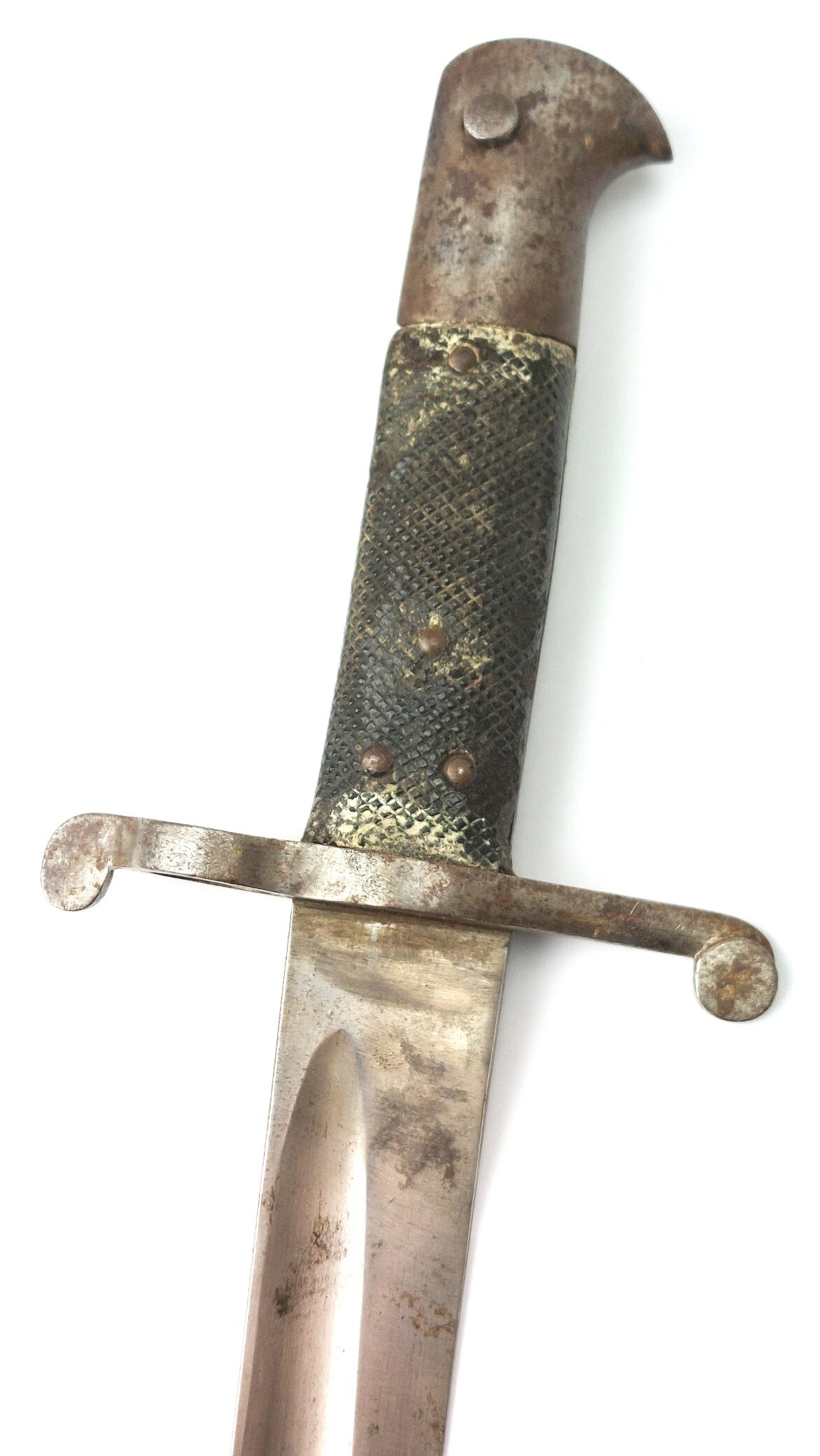
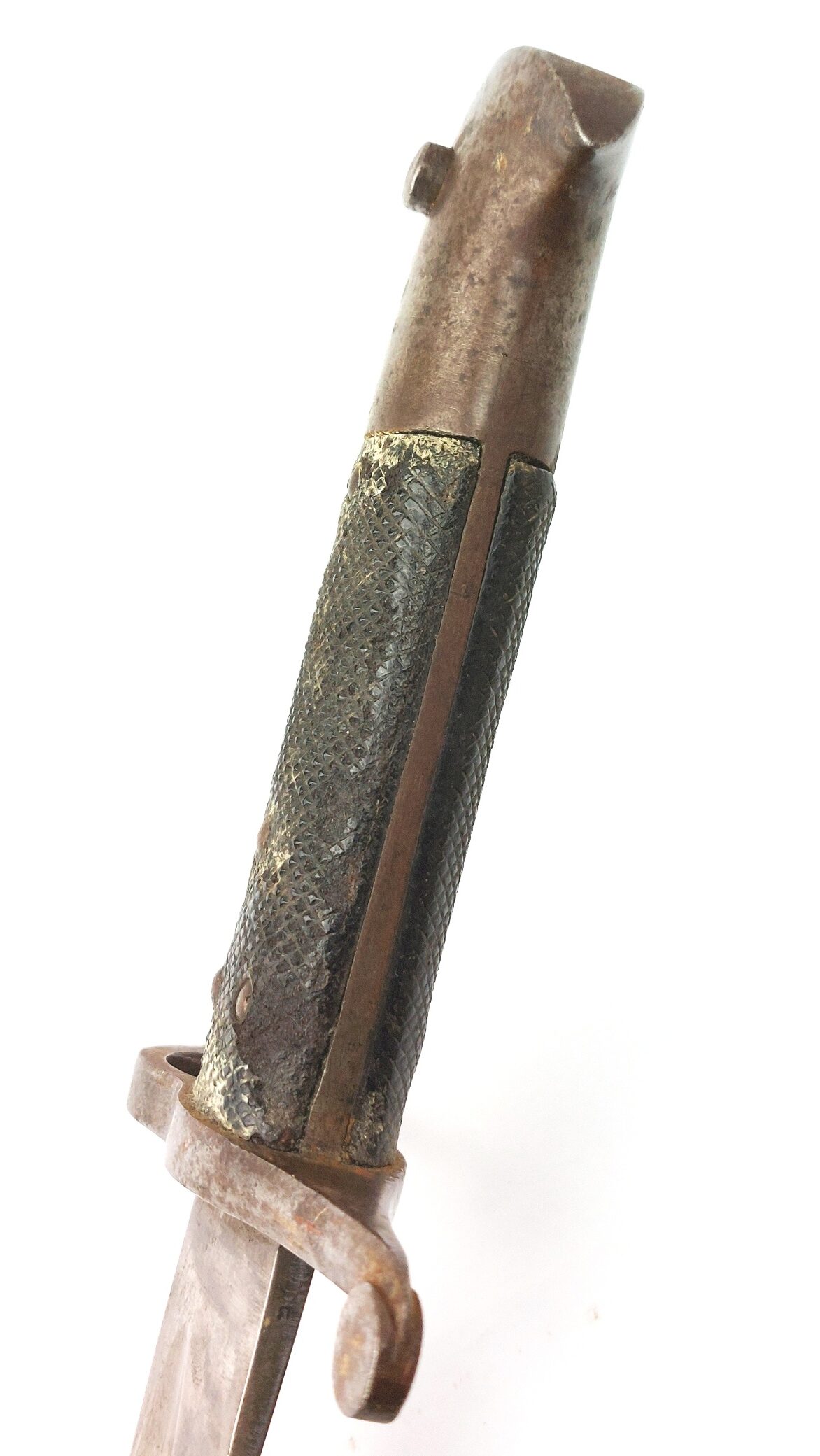
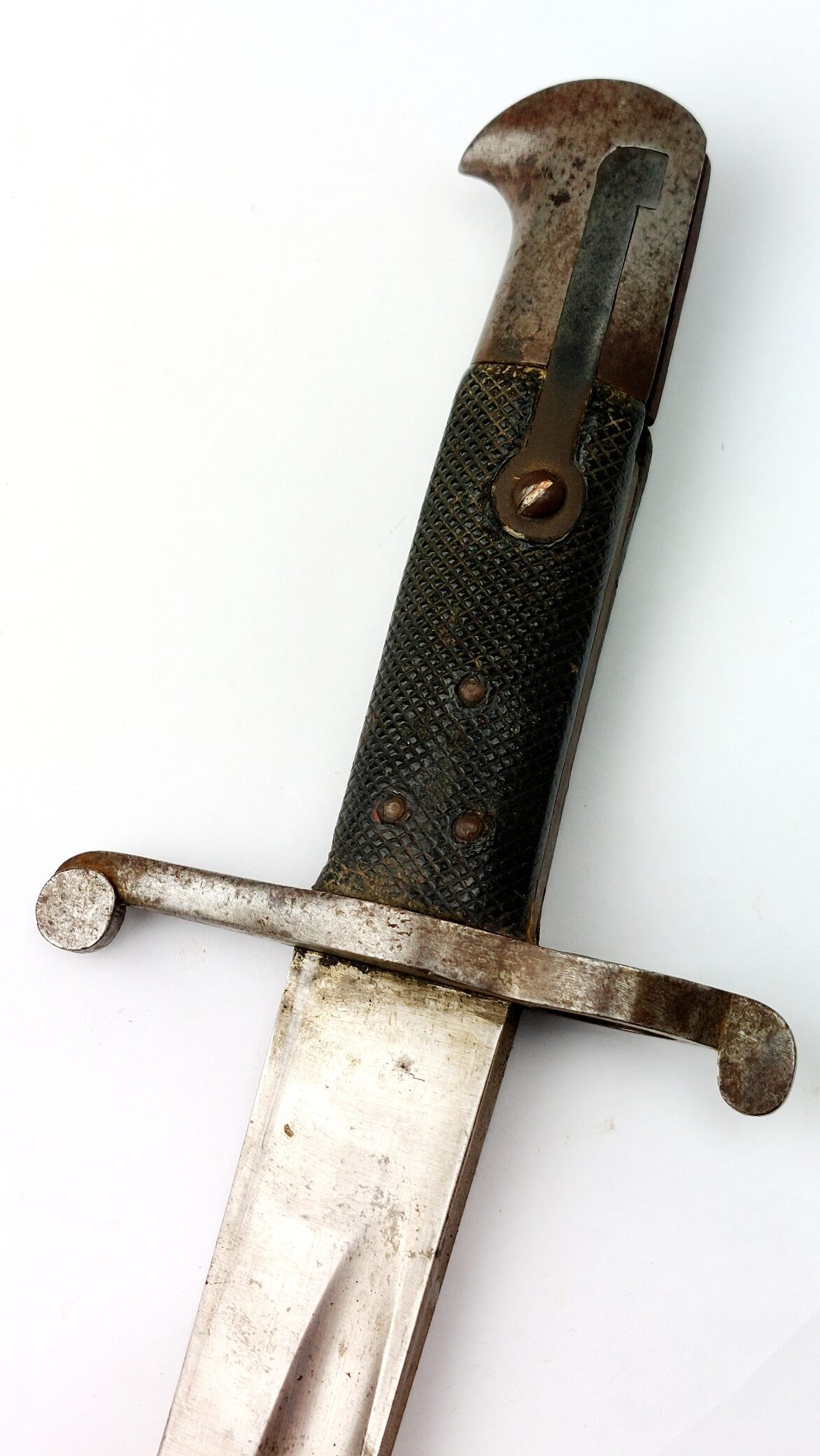
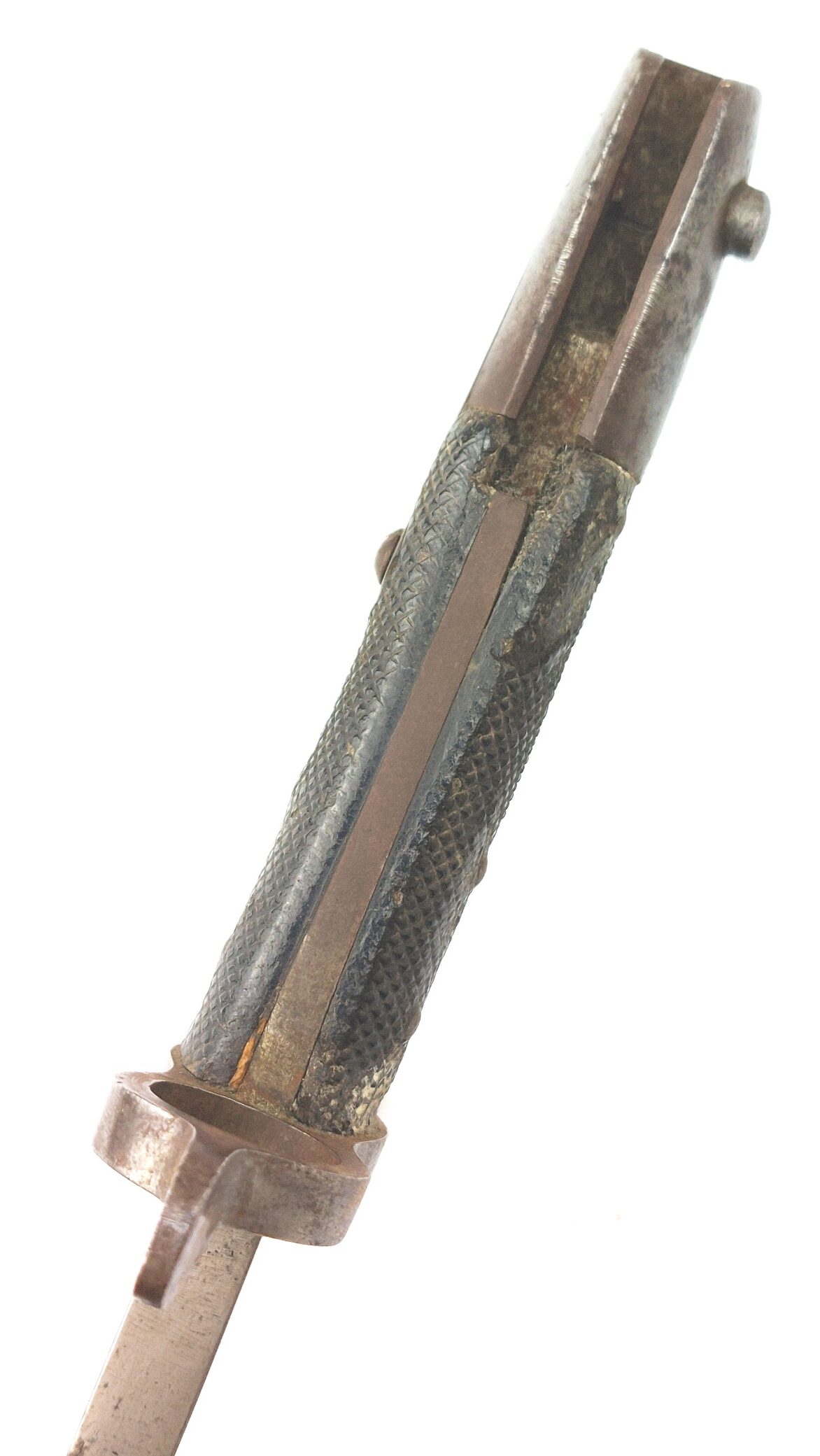
A British Pattern 1856 yataghan sword bayonet, complete with its steel-mounted leather scabbard, intended for the Model 1856 / 1853 two-band Enfield short rifle. The bayonet has the characteristic recurved yataghan blade with broad central fuller, steel crossguard with opposing curled finials and muzzle ring, and a bird’s-head pommel with spring-catch locking stud and T-shaped mortise slot.
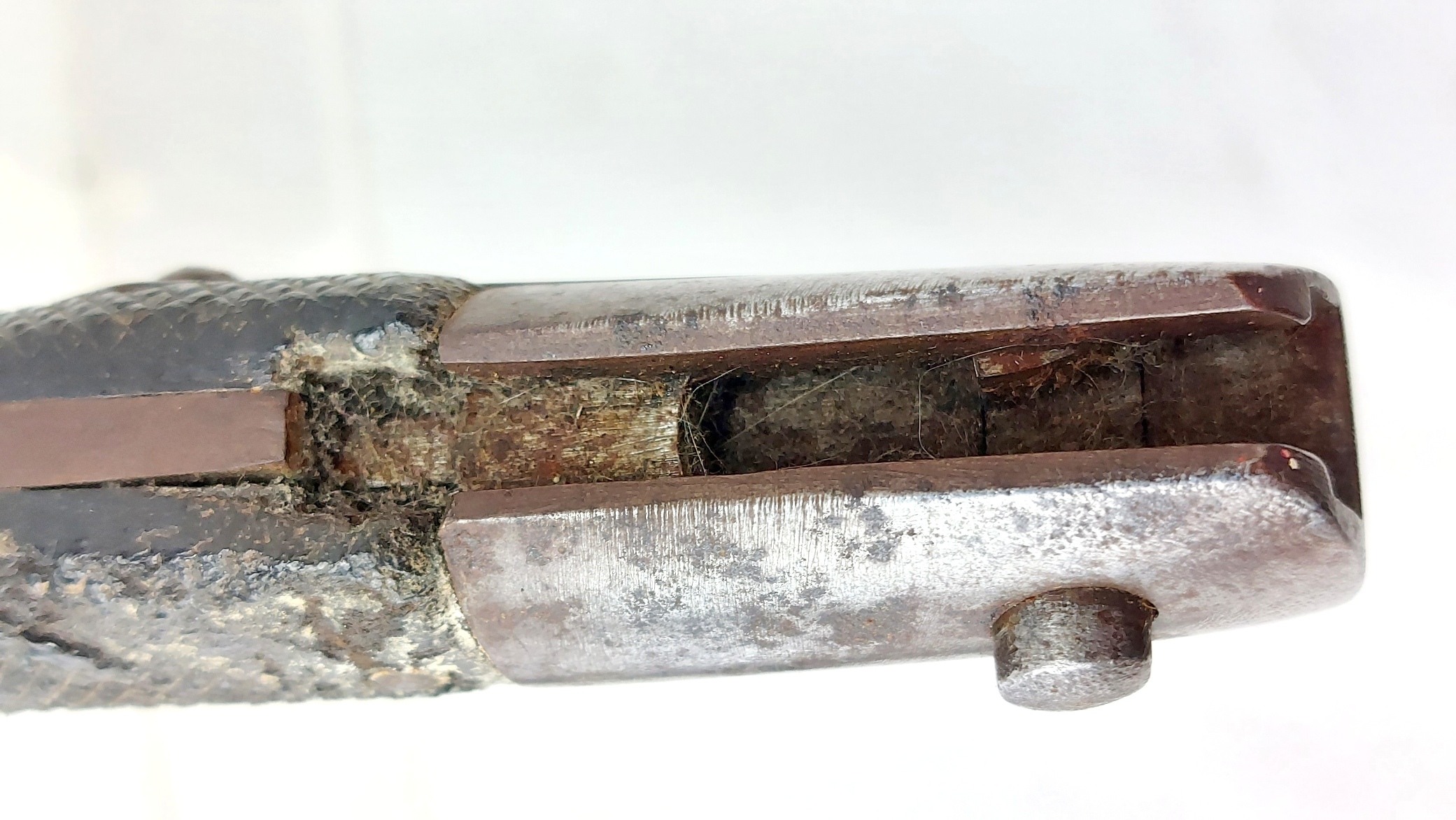
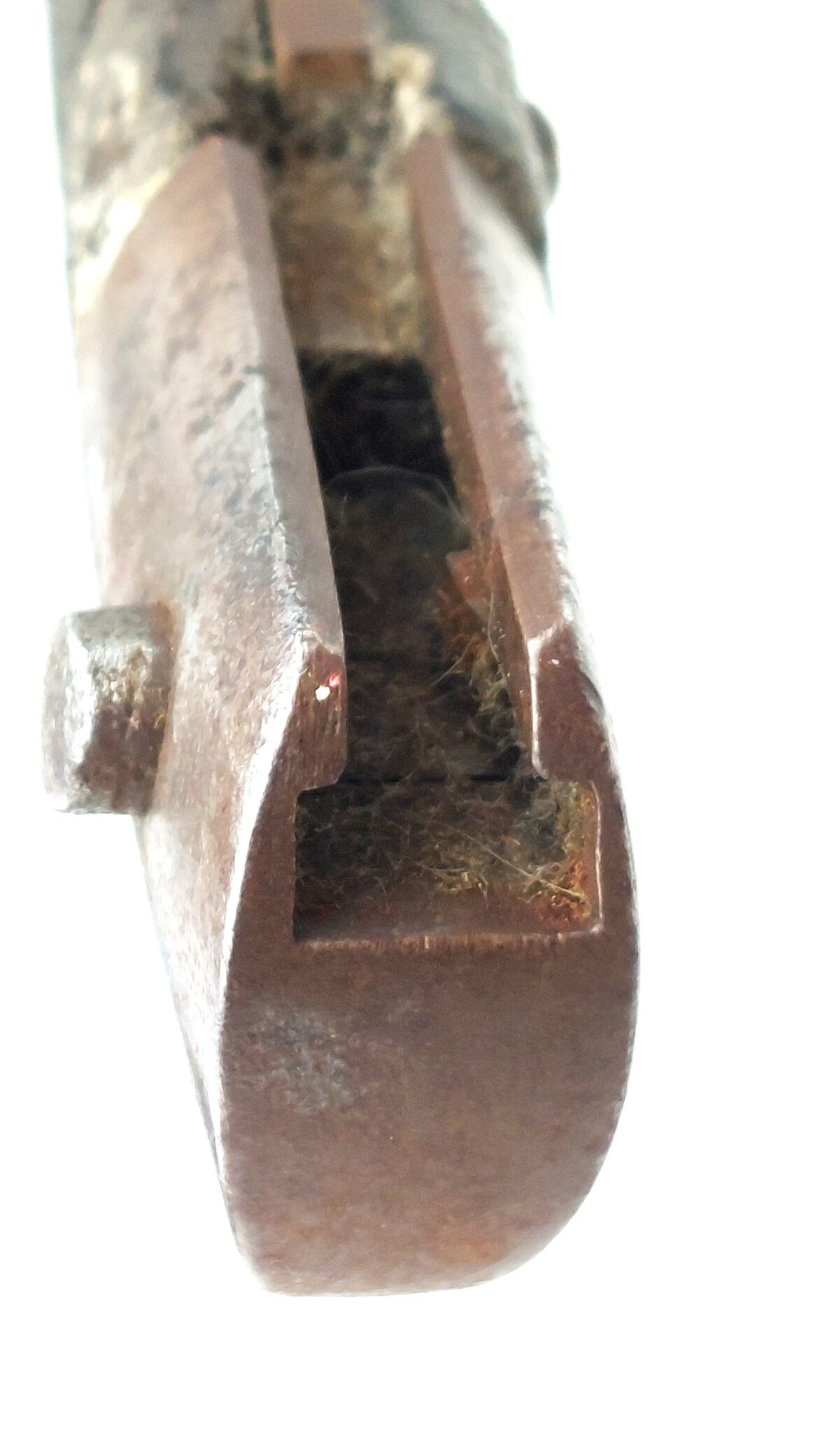
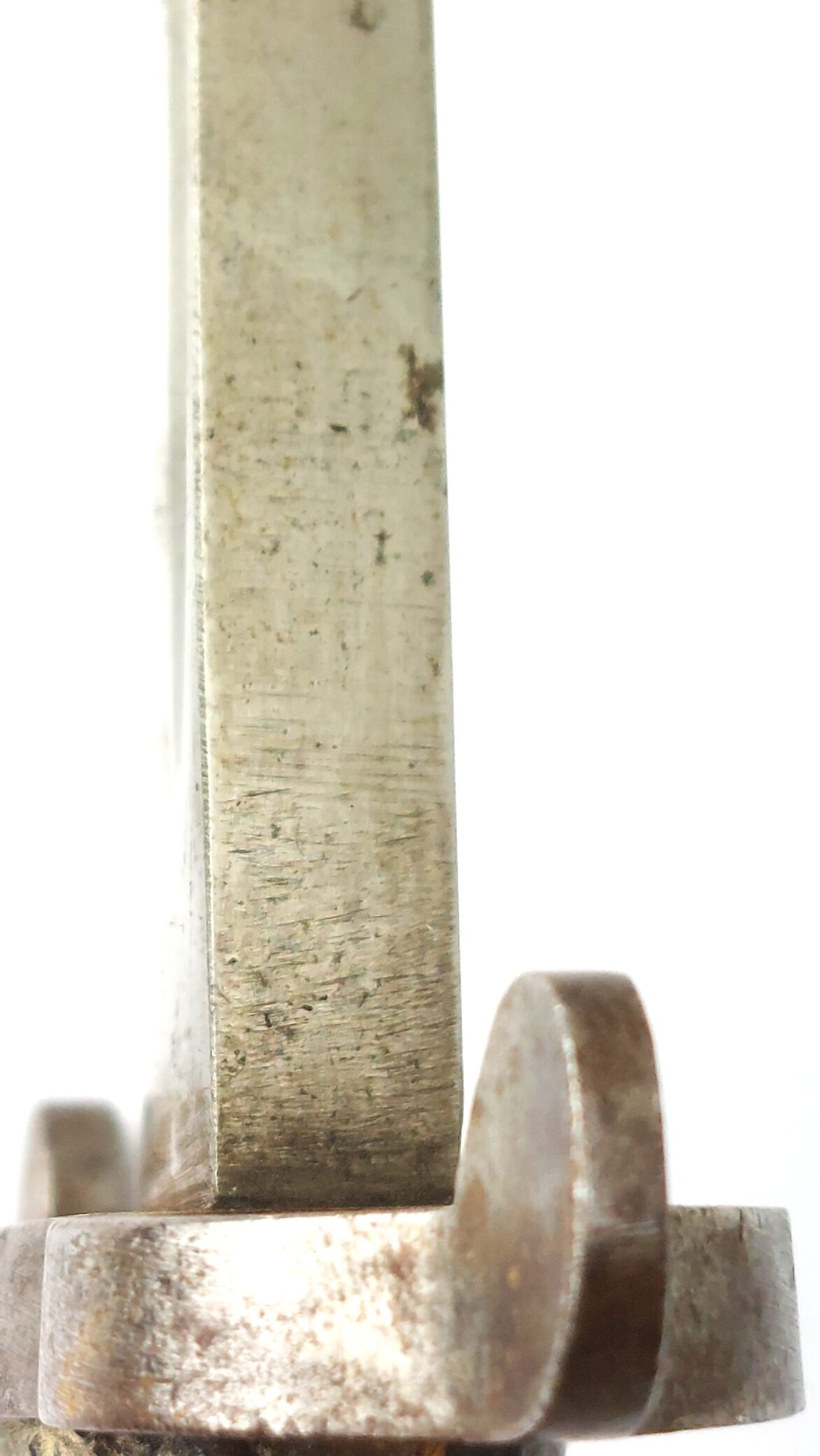
The mortise slot measures approximately 5.5 cm overall and shows the correct short-lead guide at the front of the slot, confirming Pattern 1856 barrel-bar configuration. No maker or government markings are visible, suggesting a Volunteer, commercial, or export-contract example, such bayonets commonly being produced by private makers in Birmingham or Solingen for Volunteer units or overseas contracts during the late 1850s and early 1860s.
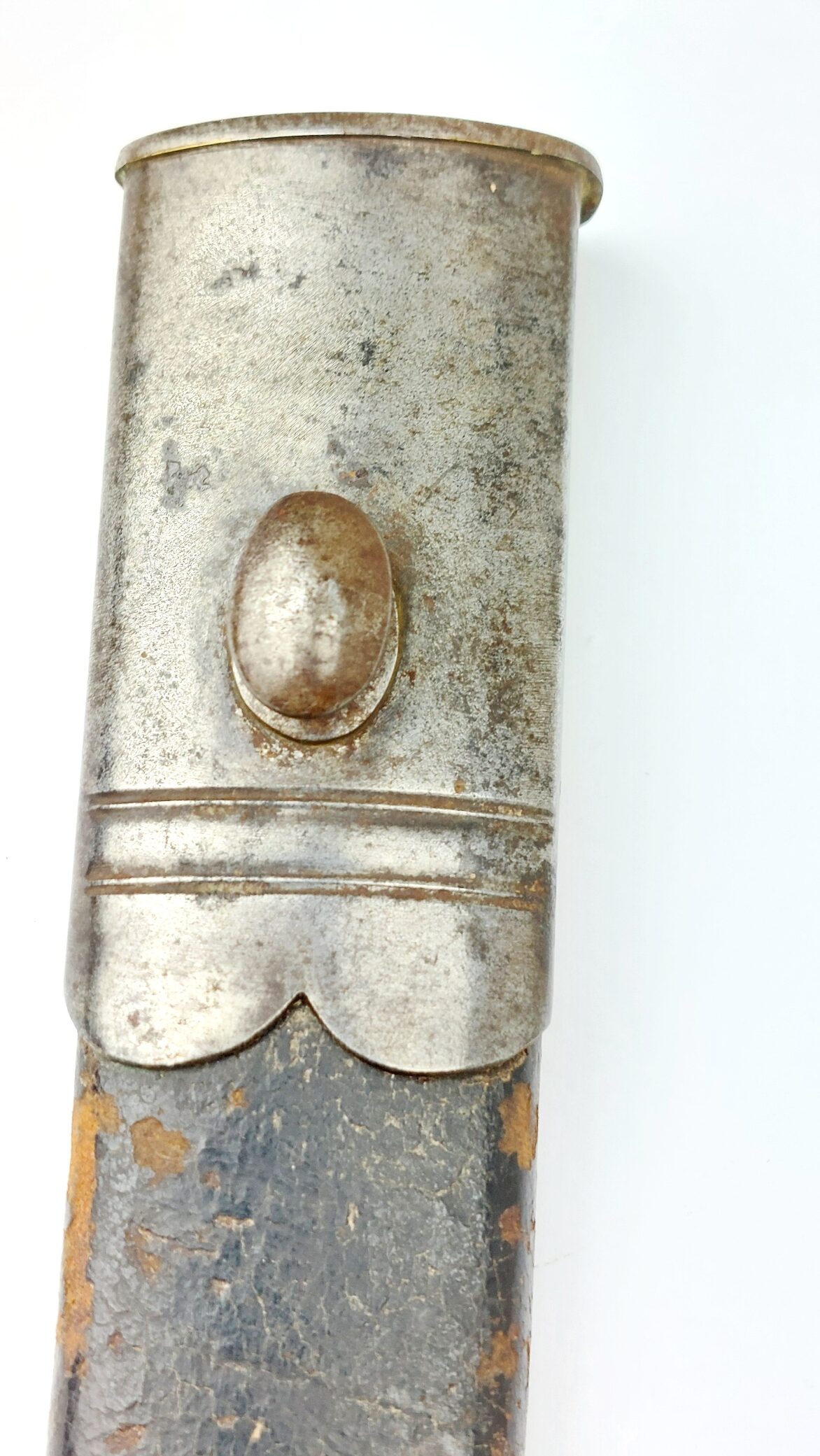
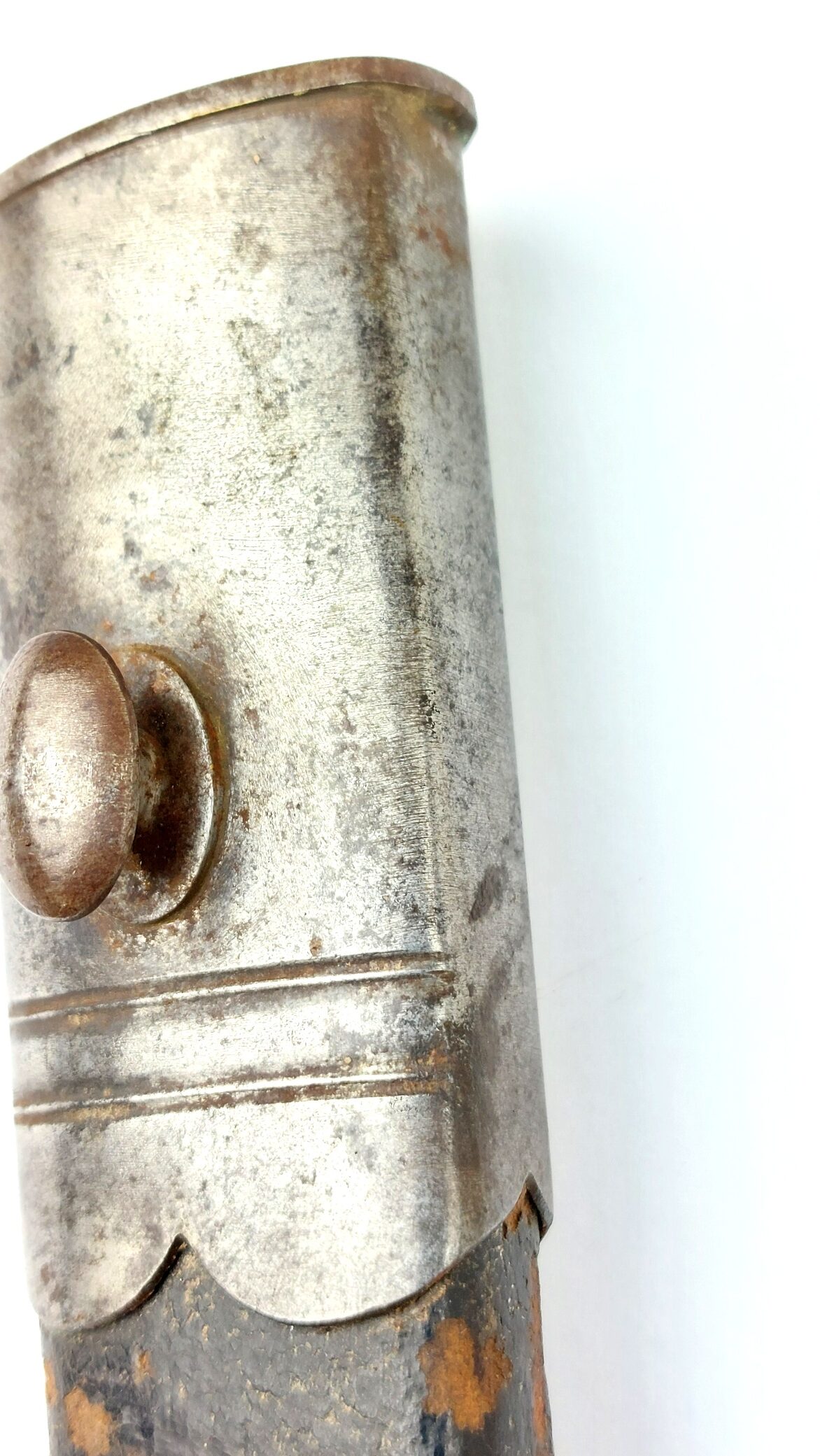
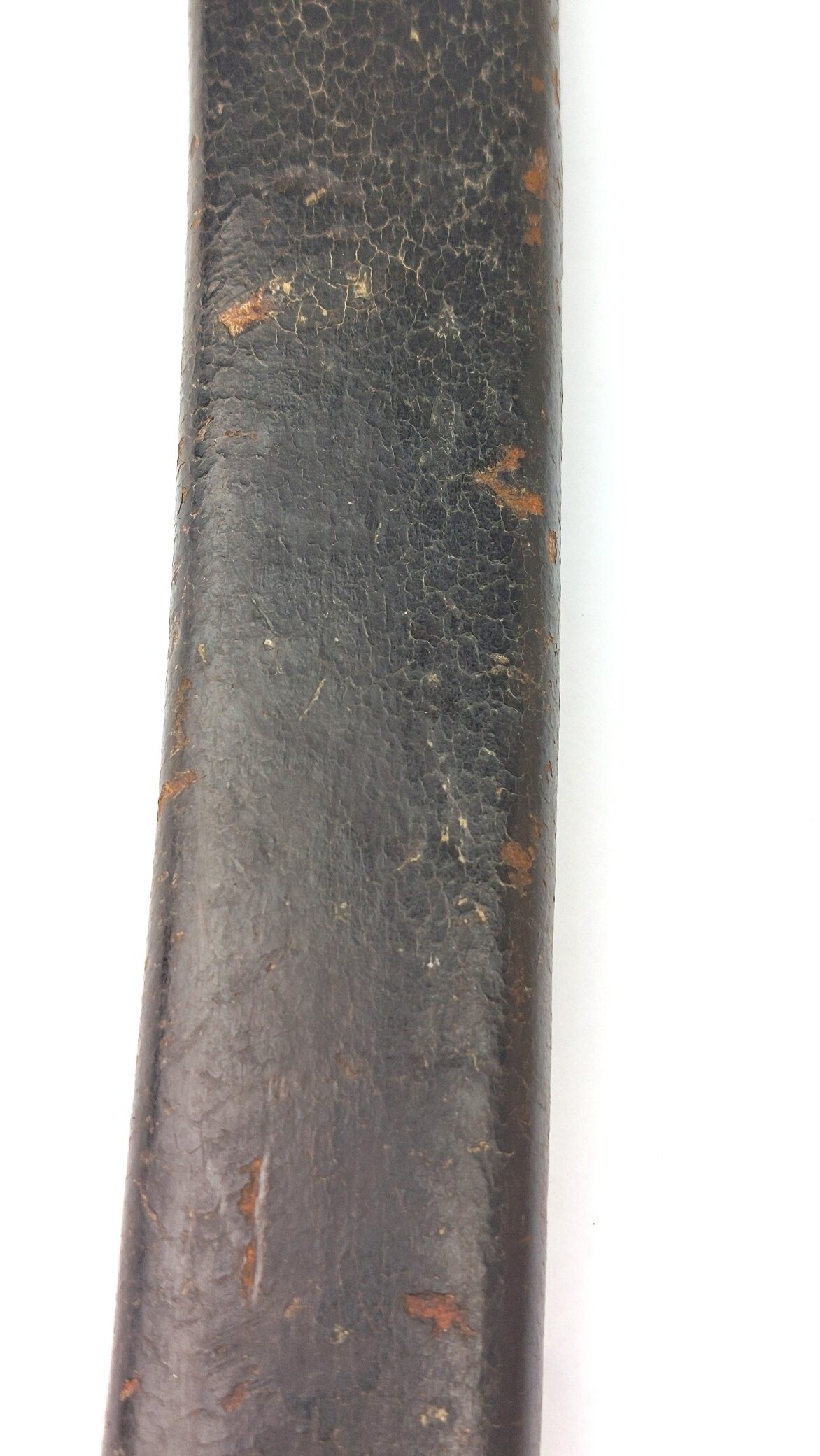
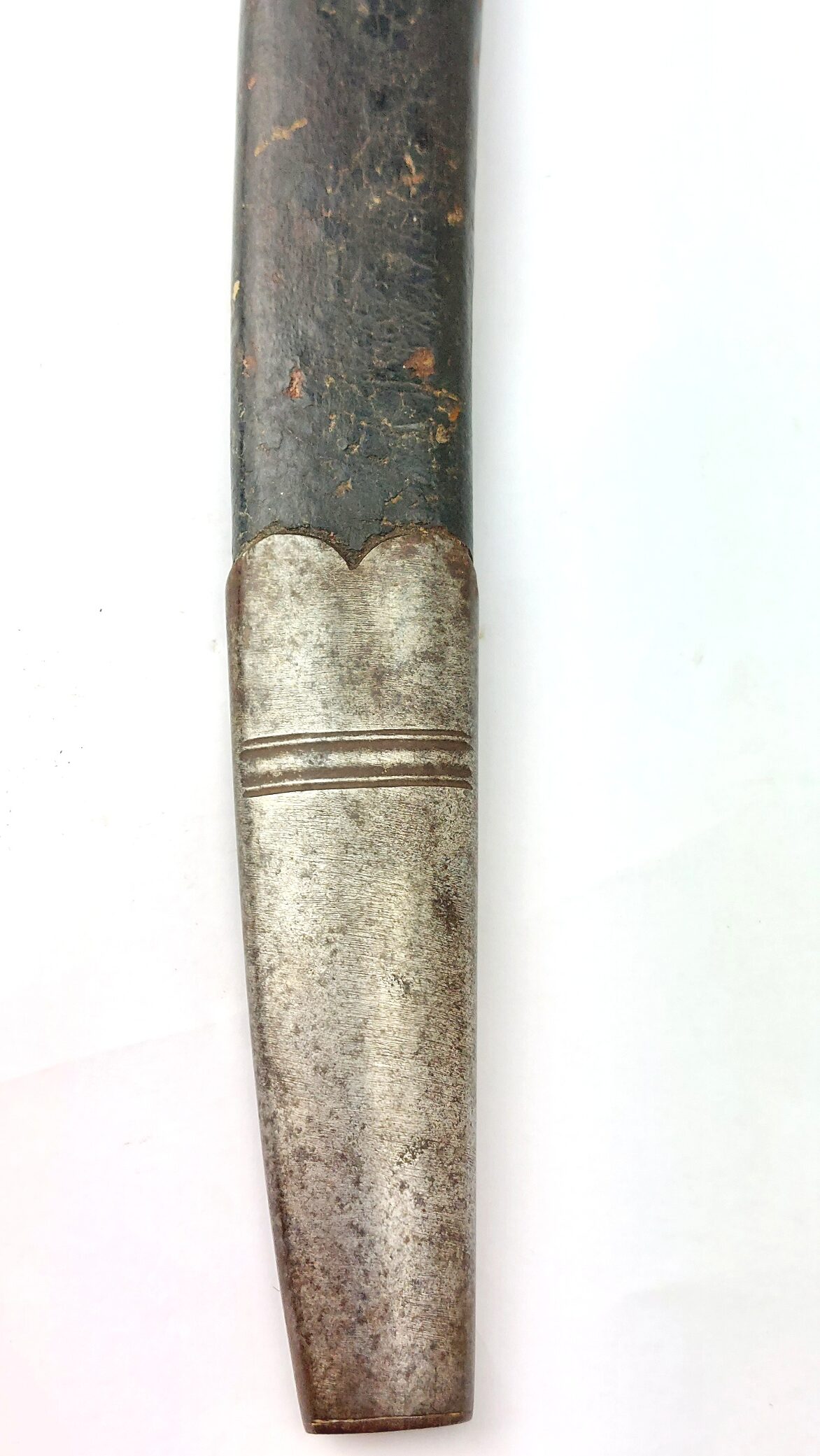
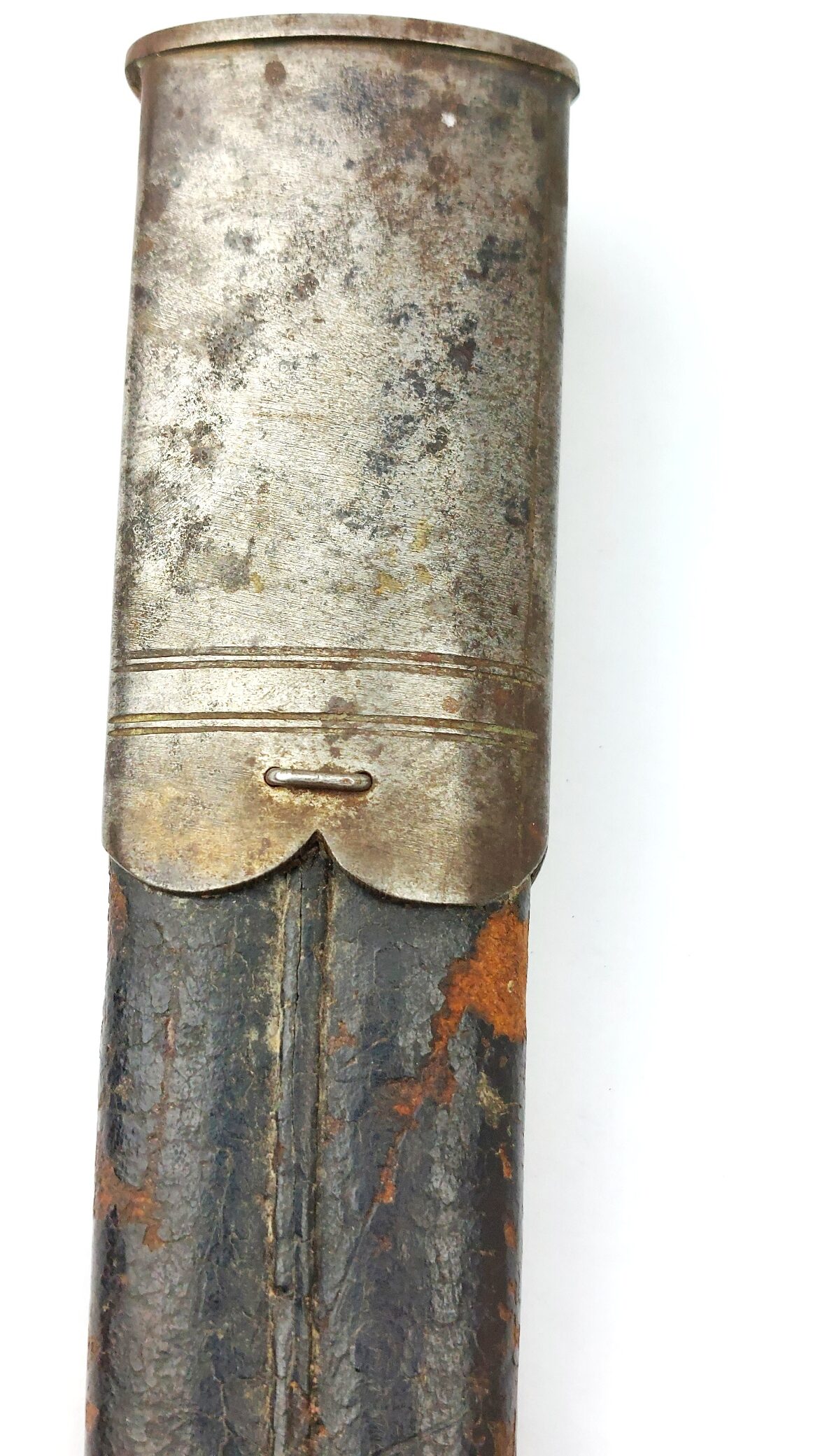
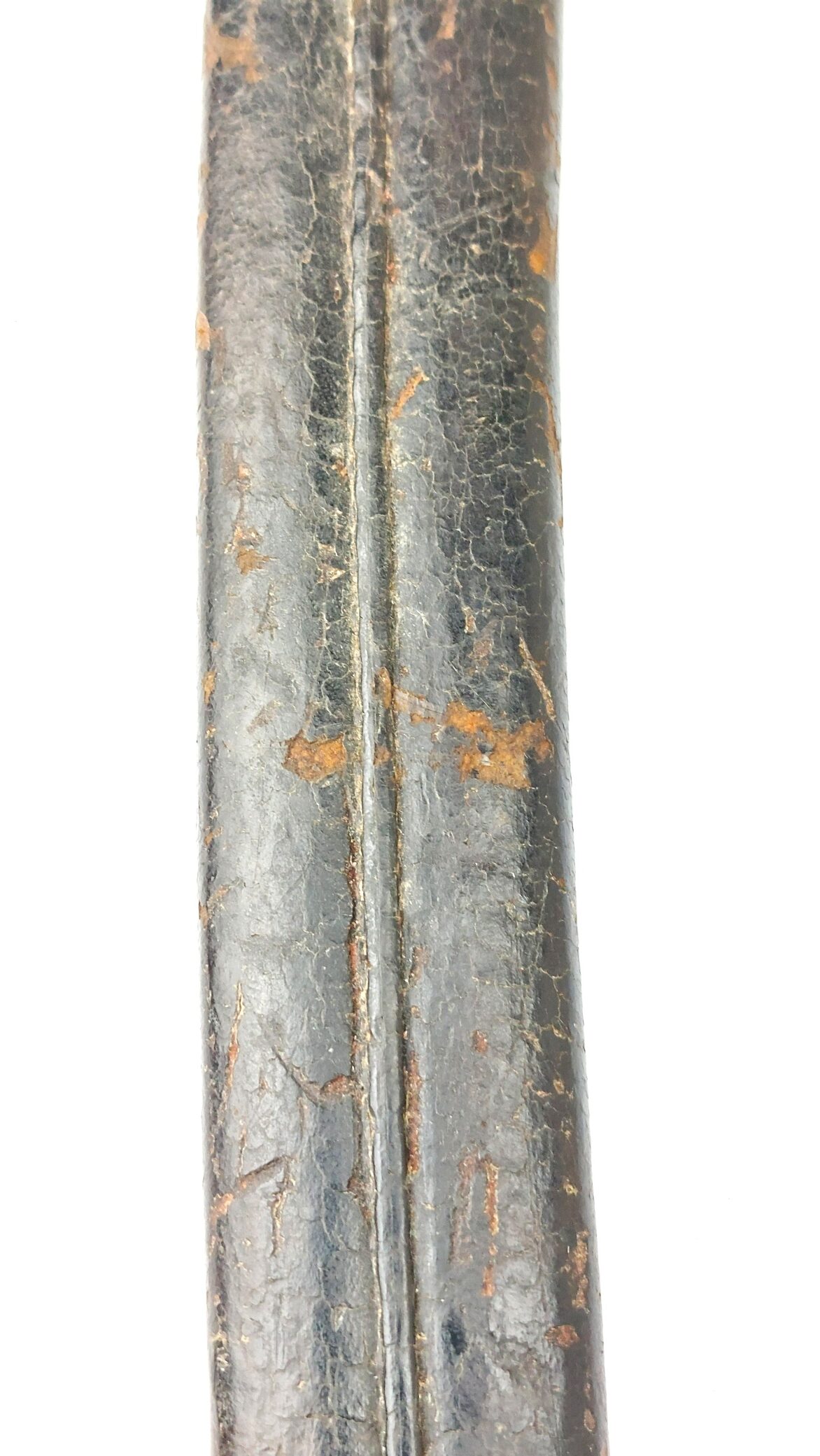
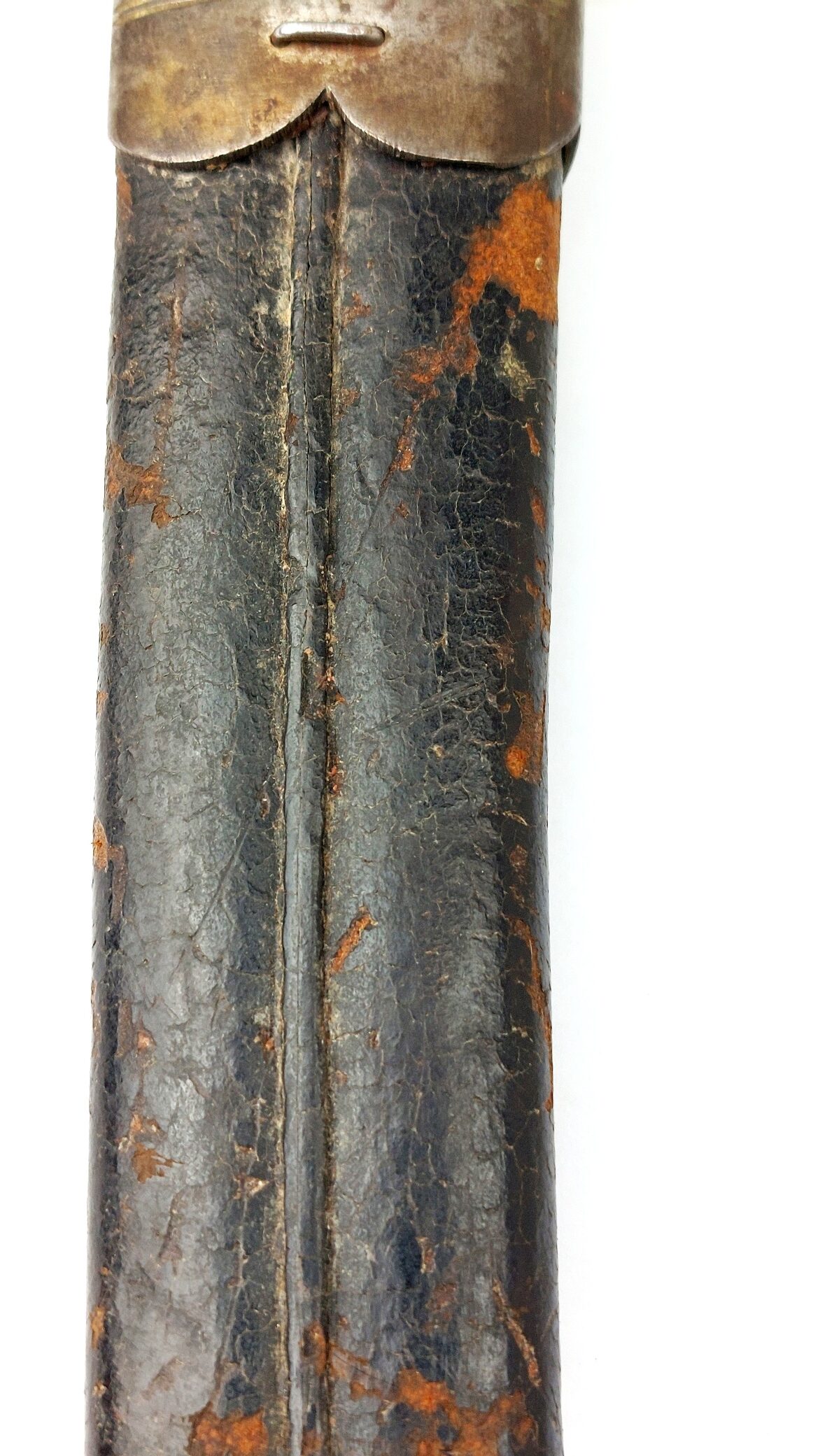
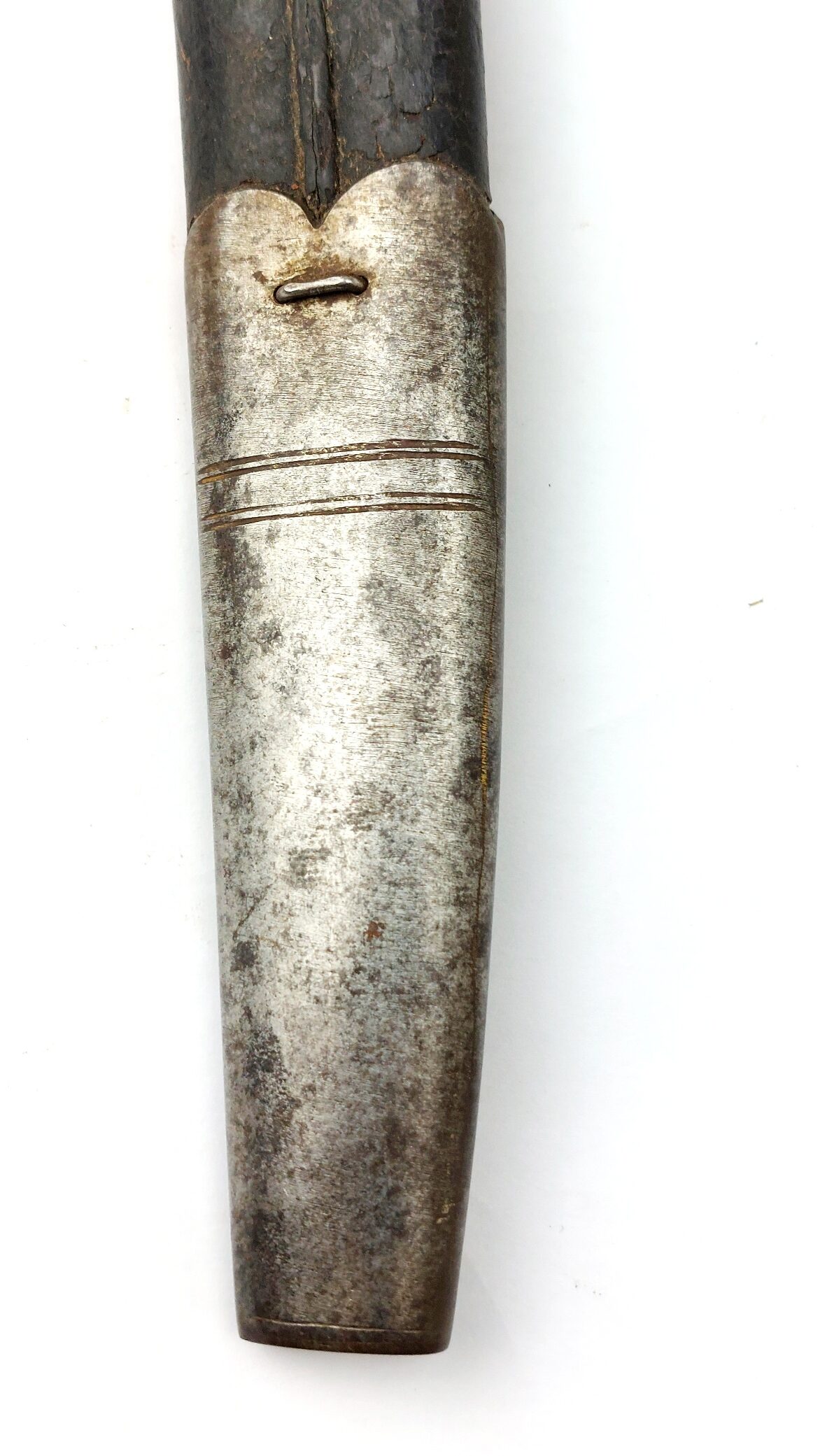
The bayonet is complete with its original leather scabbard with steel locket and chape.
Approx. Measurements – Blade length: 58.2 cm. Overall length: 71.5 cm.
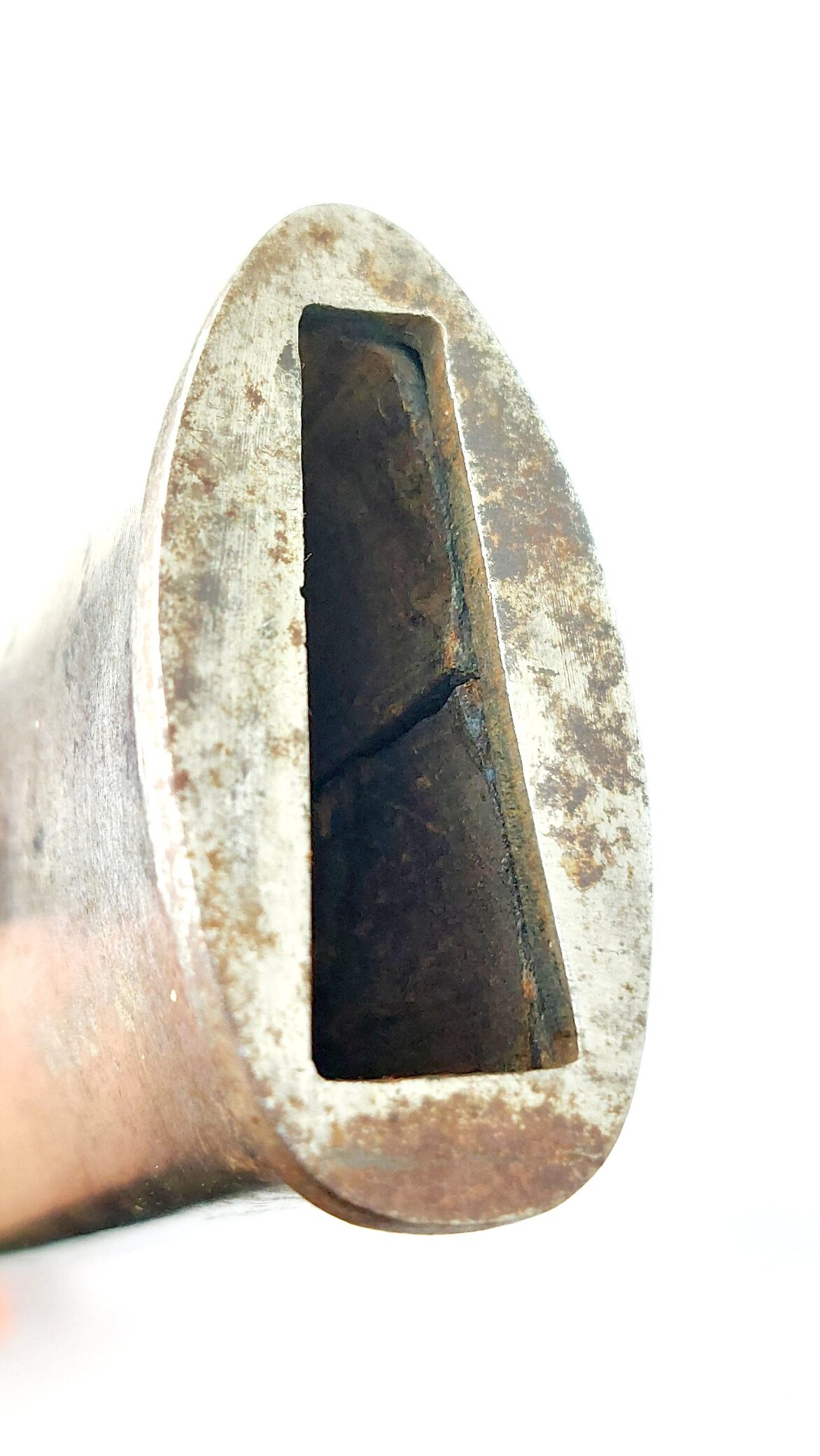
Muzzle ring – approx. 2.7 cm external, 2.1 cm internal.
Mortise slot – approx. 5.5 cm overall, stepped.
Historical Note:
The Pattern 1856 yataghan sword bayonet was introduced for rifle regiments armed with the shorter two-band Enfield rifle, providing a weapon that could serve both as a bayonet and as a short sword. Early Pattern 1856 bayonets were designed to fit a bayonet bar mounted directly on the barrel, requiring a distinctive stepped mortise slot known as the “short lead”. Later patterns altered the fitting when the bar position changed, but the original configuration remained in use for Volunteer units and export rifles.
Many examples supplied to Volunteer corps or foreign contracts were produced by private manufacturers and often lack official inspection or maker’s marks, as seen on this example. These unmarked bayonets were widely used in Britain and abroad during the late 1850s and early 1860s, including during the period of the American Civil War.
*Condition*
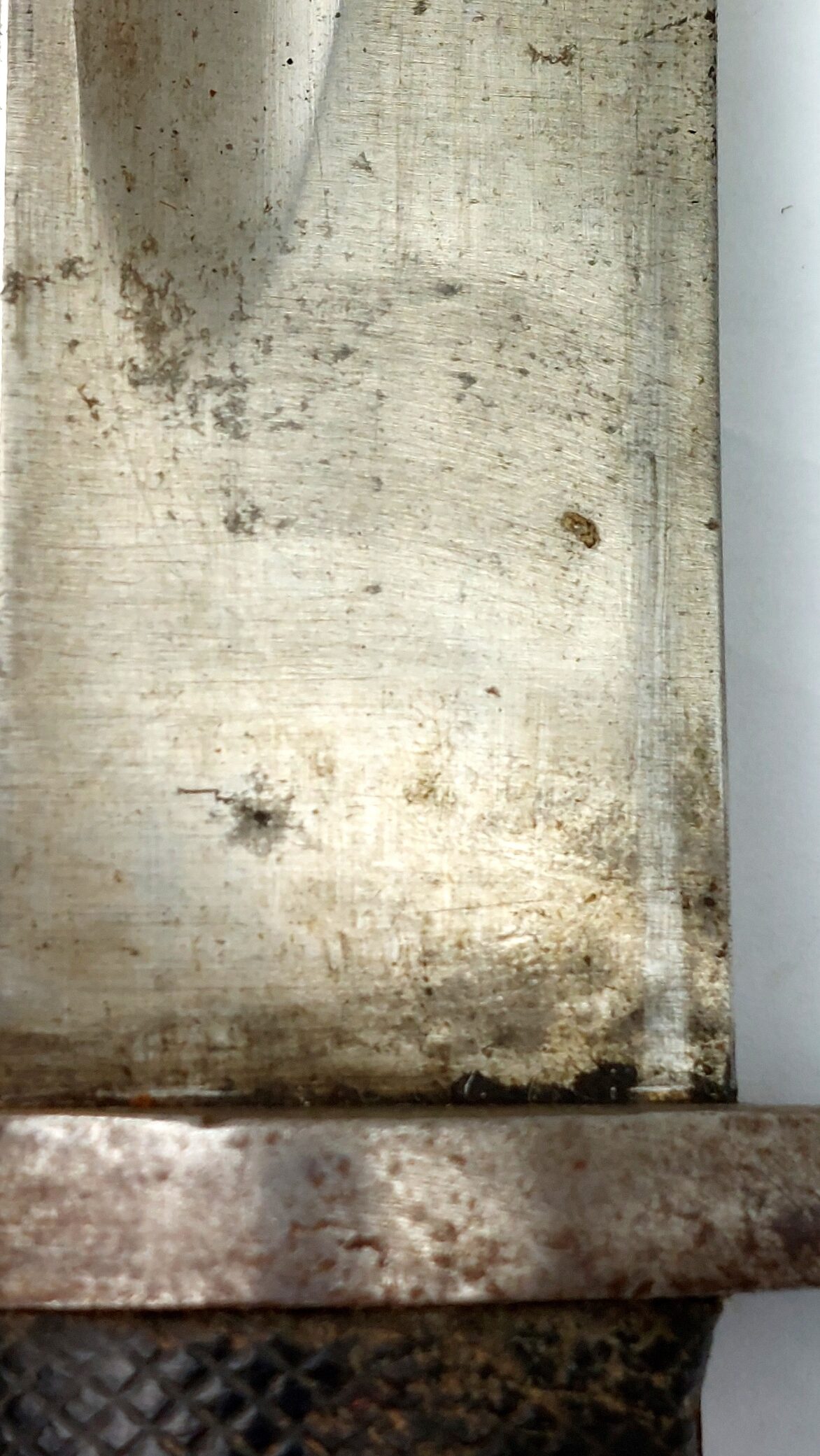
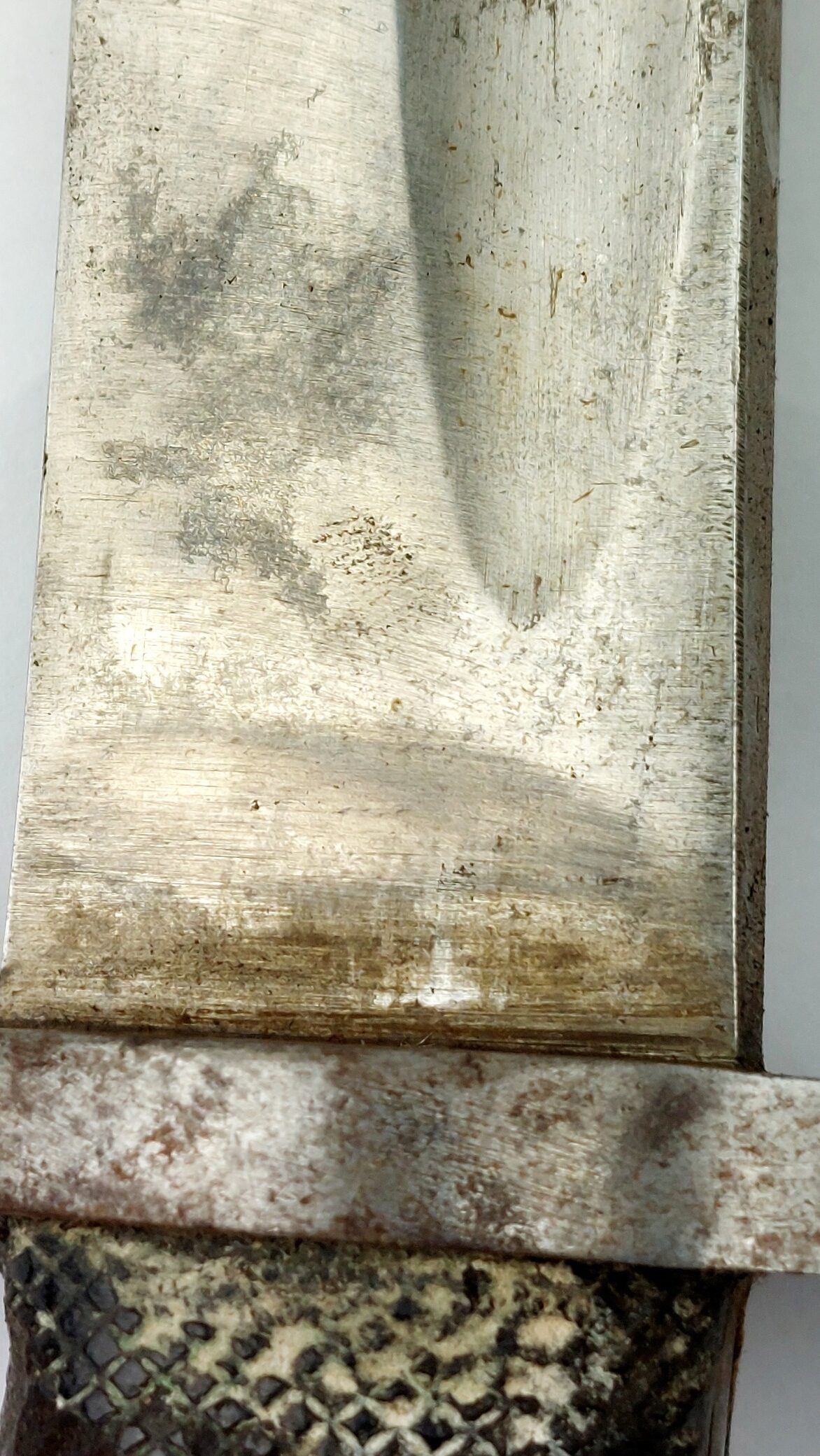
A solid example showing honest age and service wear. The blade has been cleaned in the past and shows scattered staining and light pitting but retains a good overall profile with clear fuller. The hilt is complete with working press-stud and correct stepped mortise slot, the interior showing age residue. The leather grips are worn with shrinkage and losses but remain secure. No visible markings noted. The scabbard remains present, the leather body worn with cracking and losses and the steel mounts showing age toning and oxidation. Please see photographs as part of the condition report.
RQMAAOXBBO_1914231941