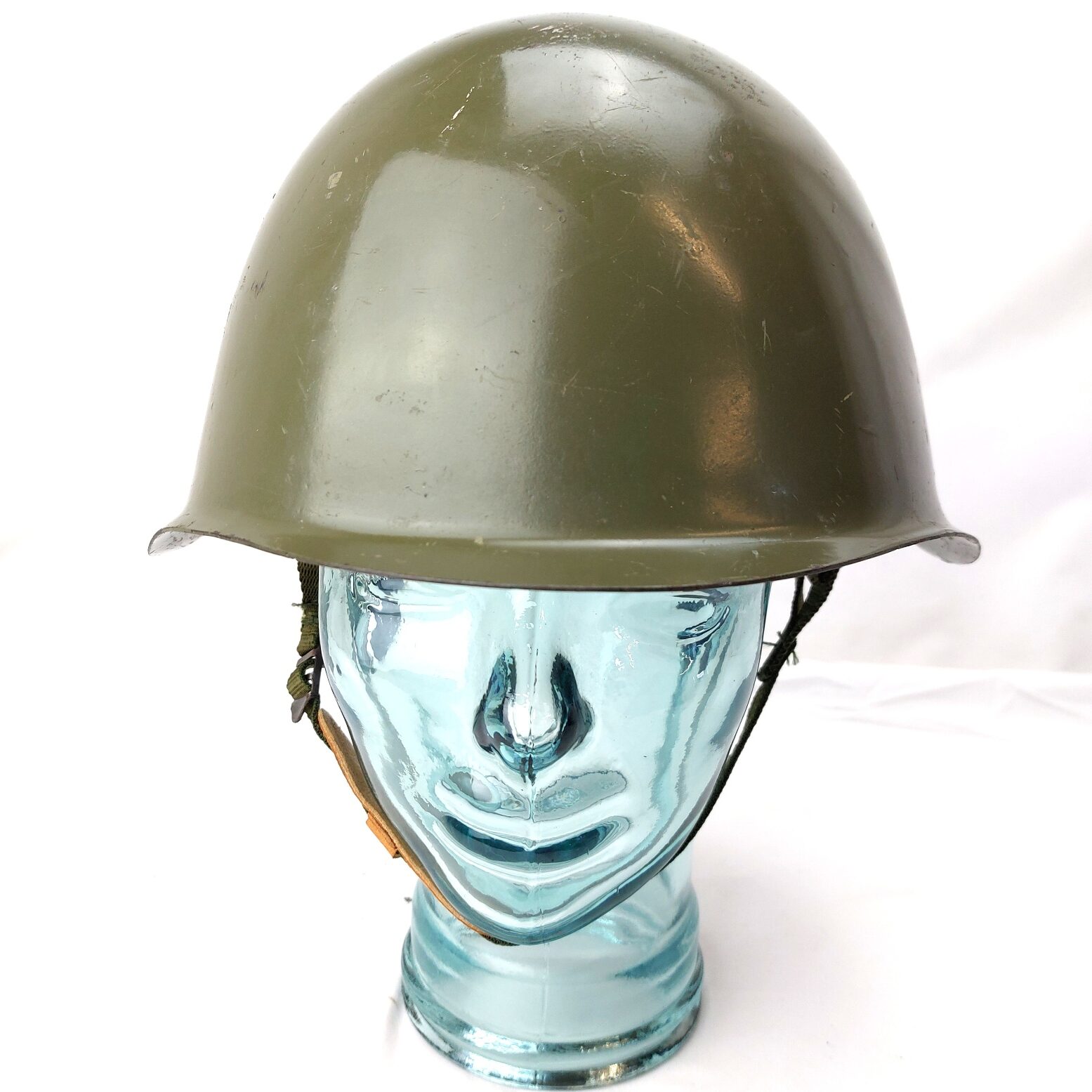
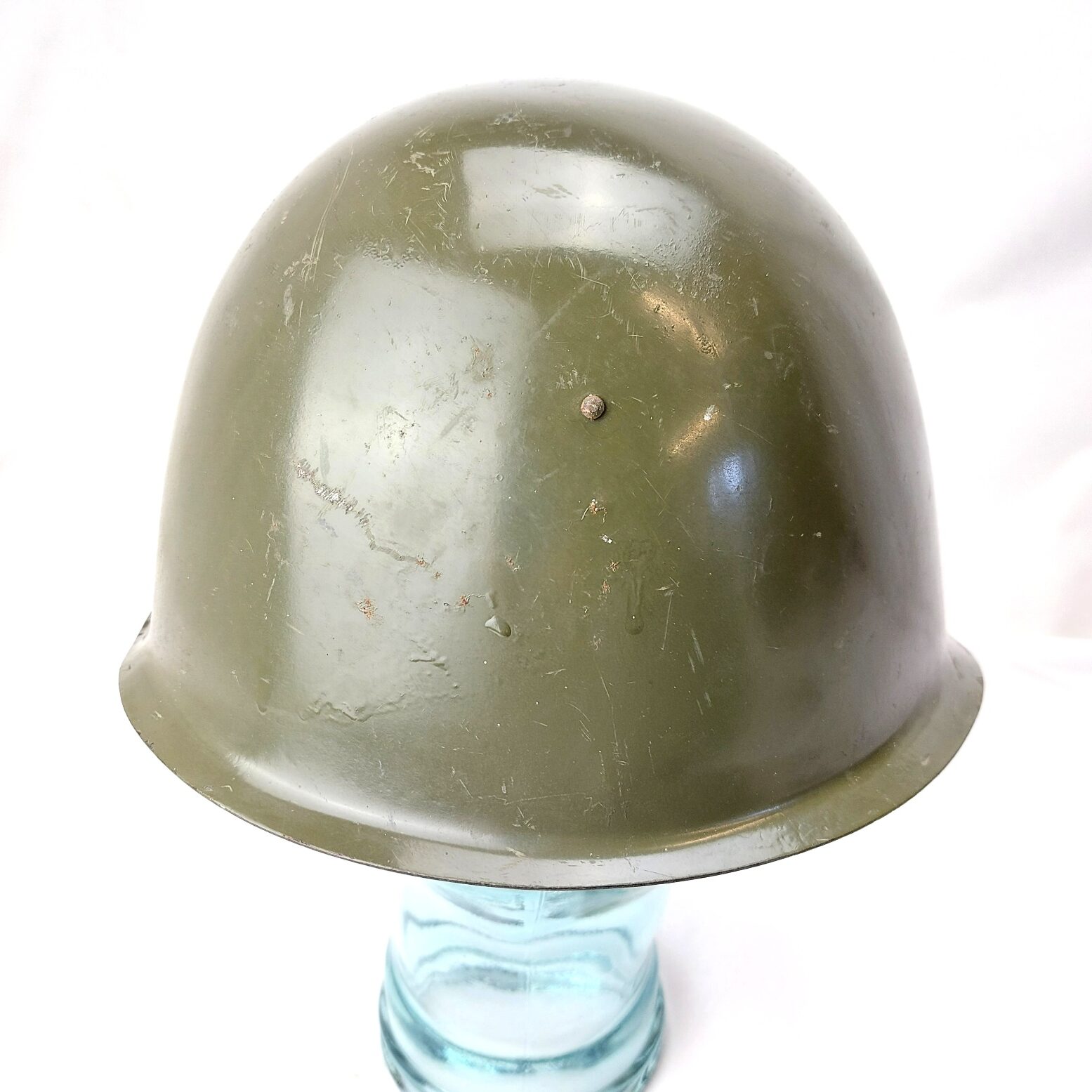
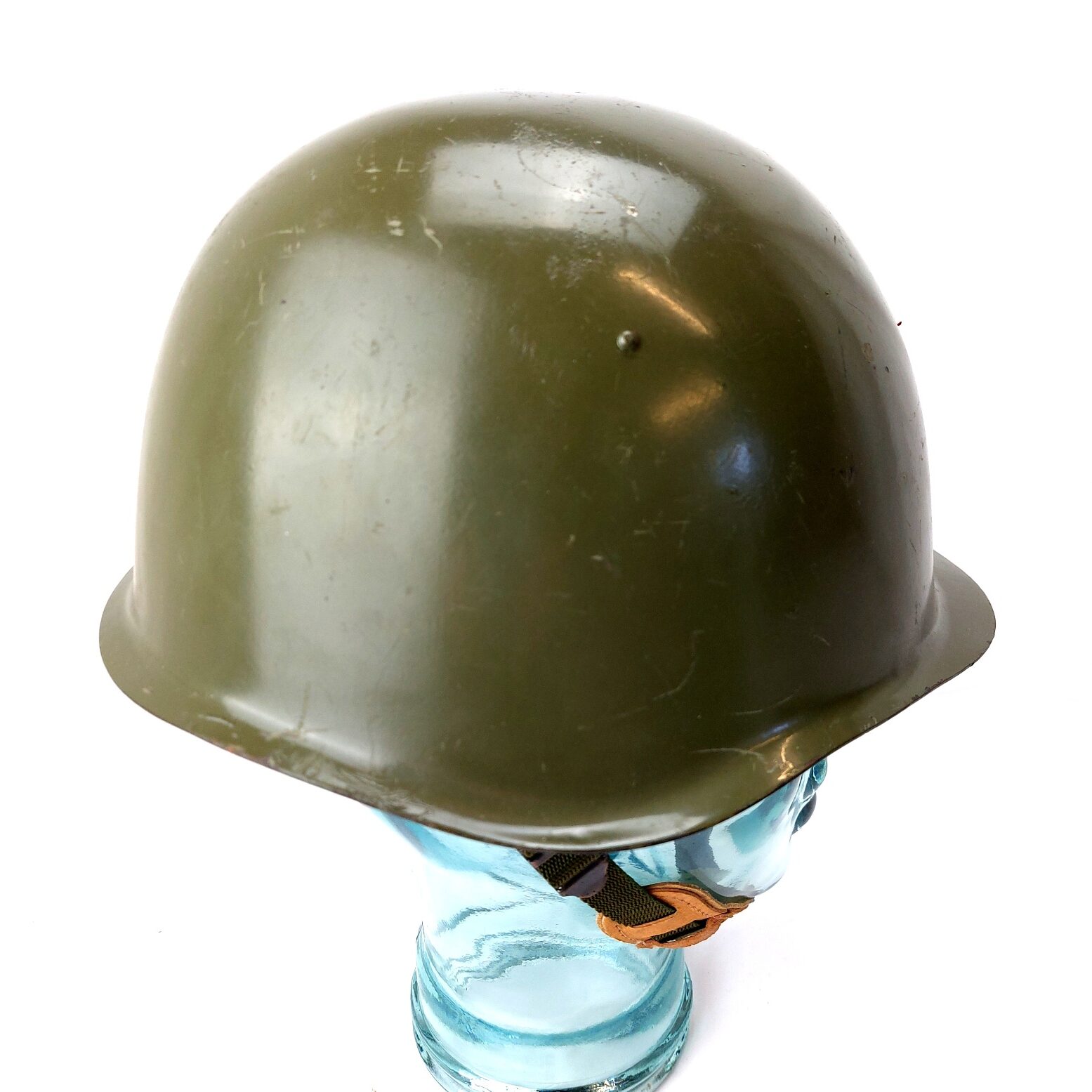
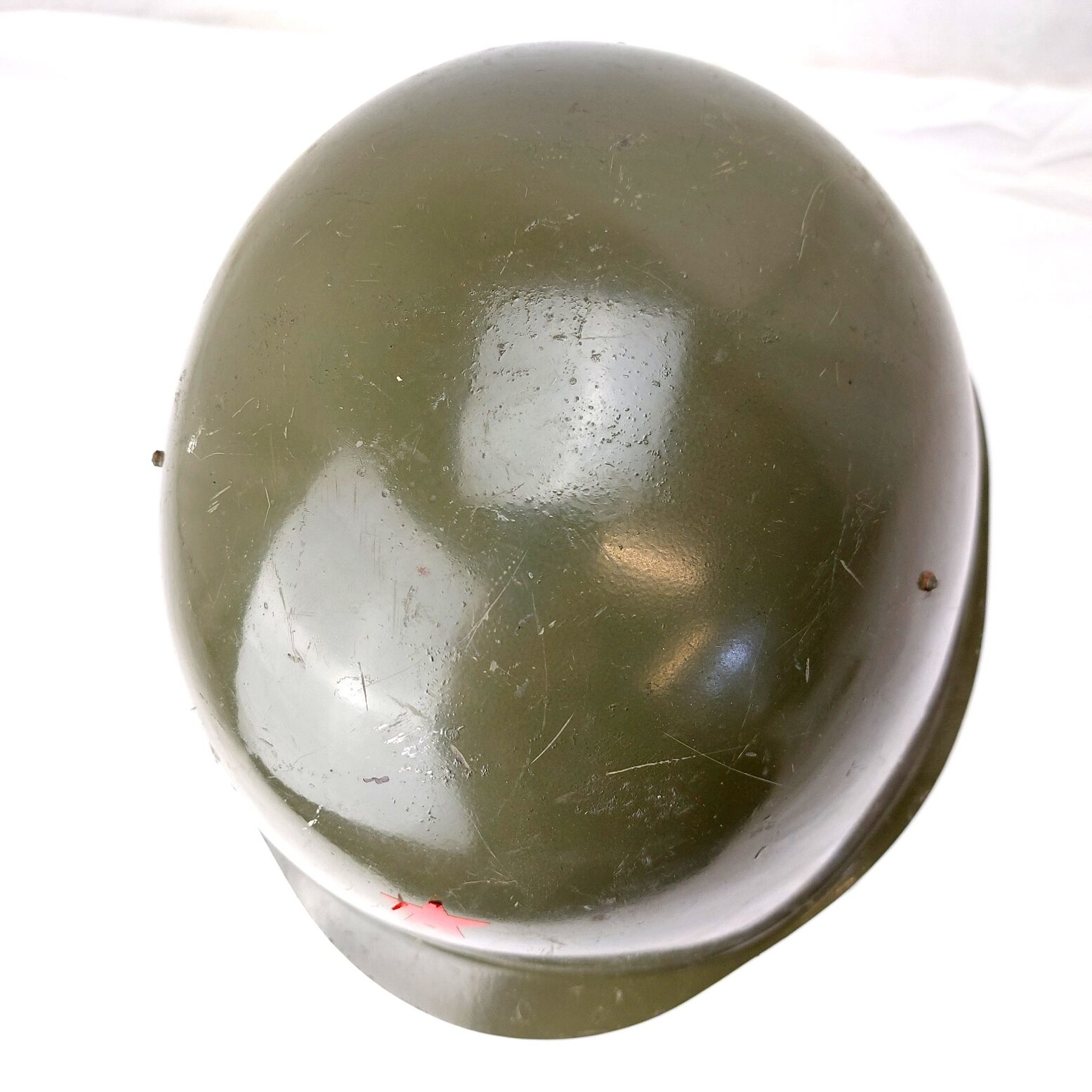
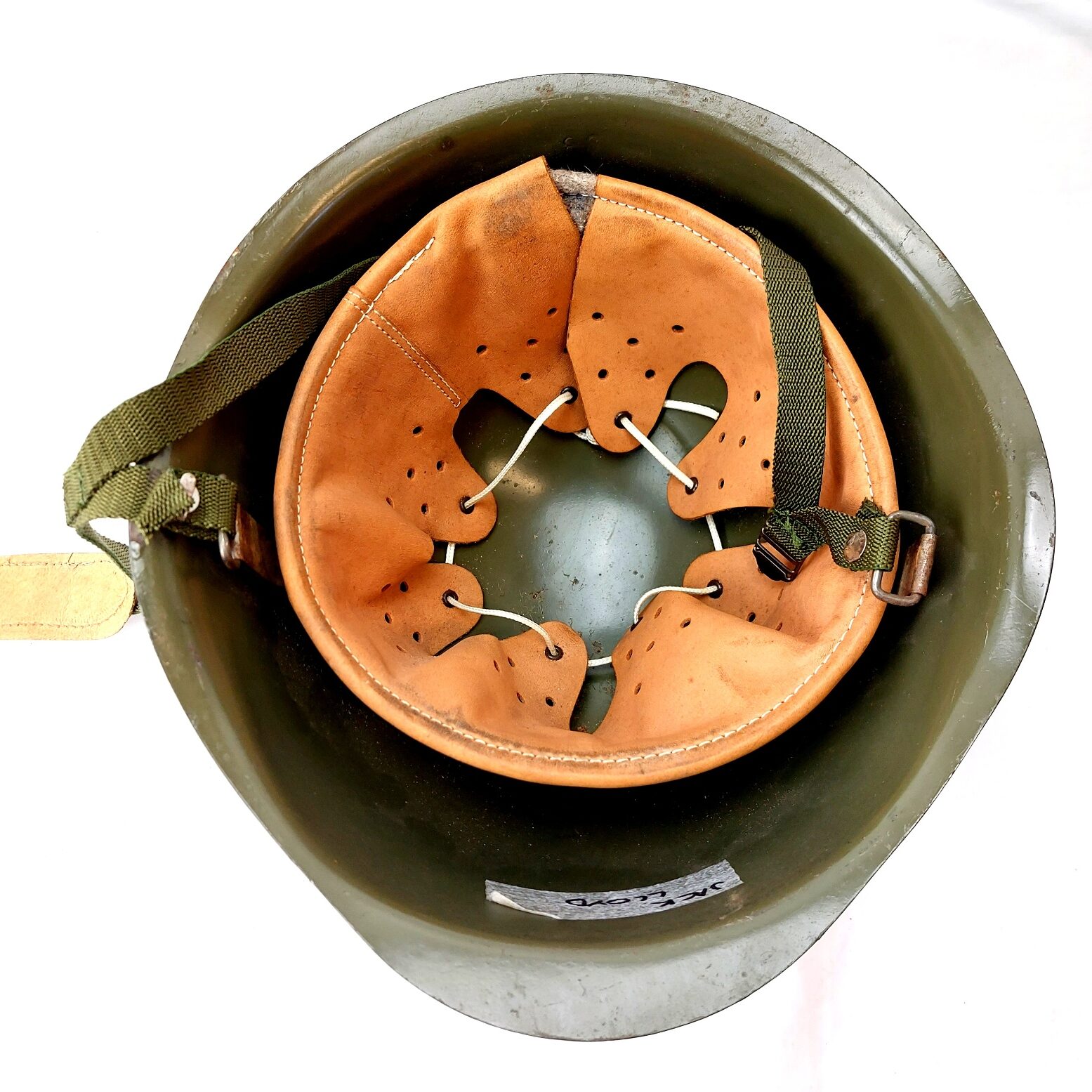
A Cold War era Army steel combat helmet of the Vz.53 / Wz.50 pattern, with later liner dated 1986 together with its webbing chinstrap assembly.
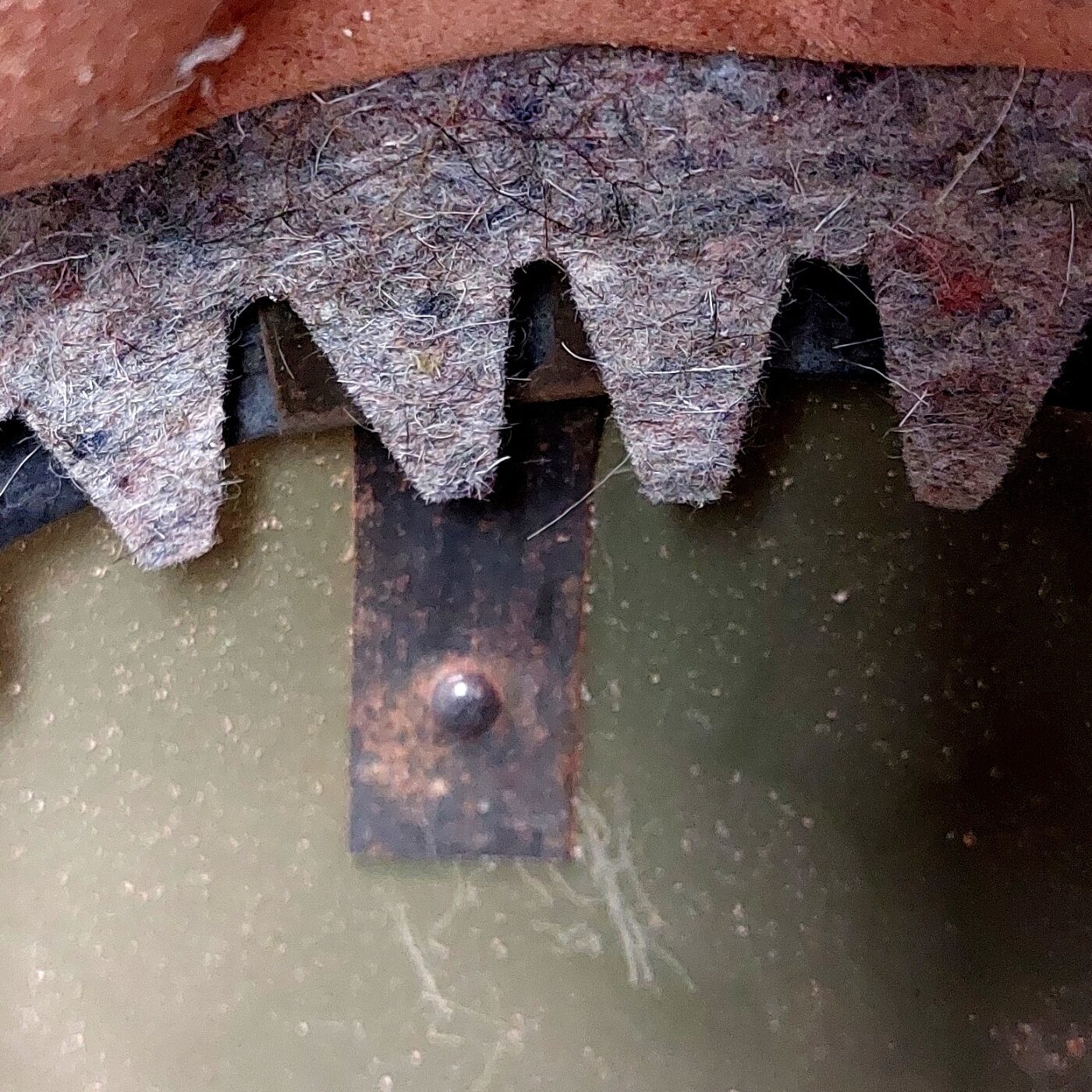
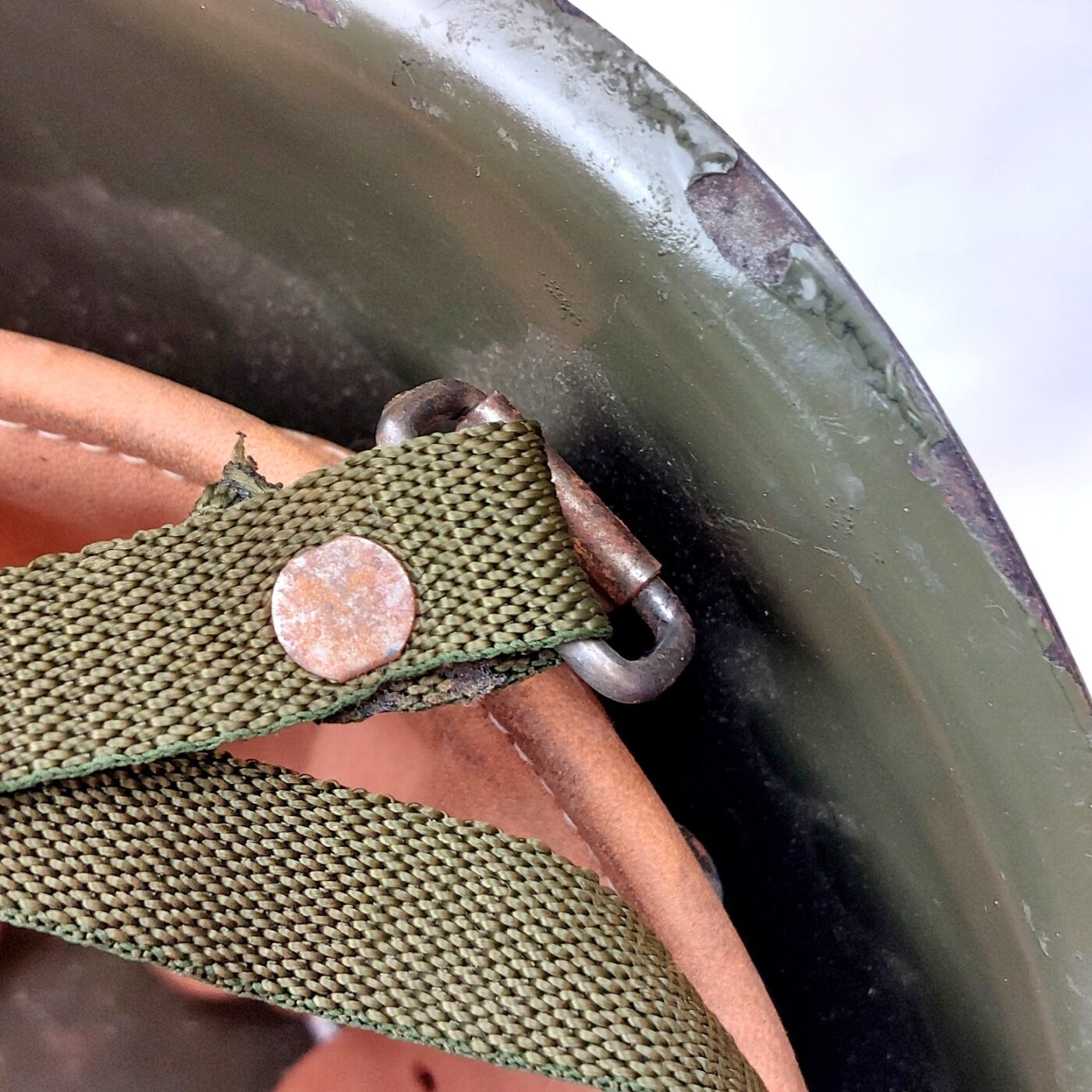
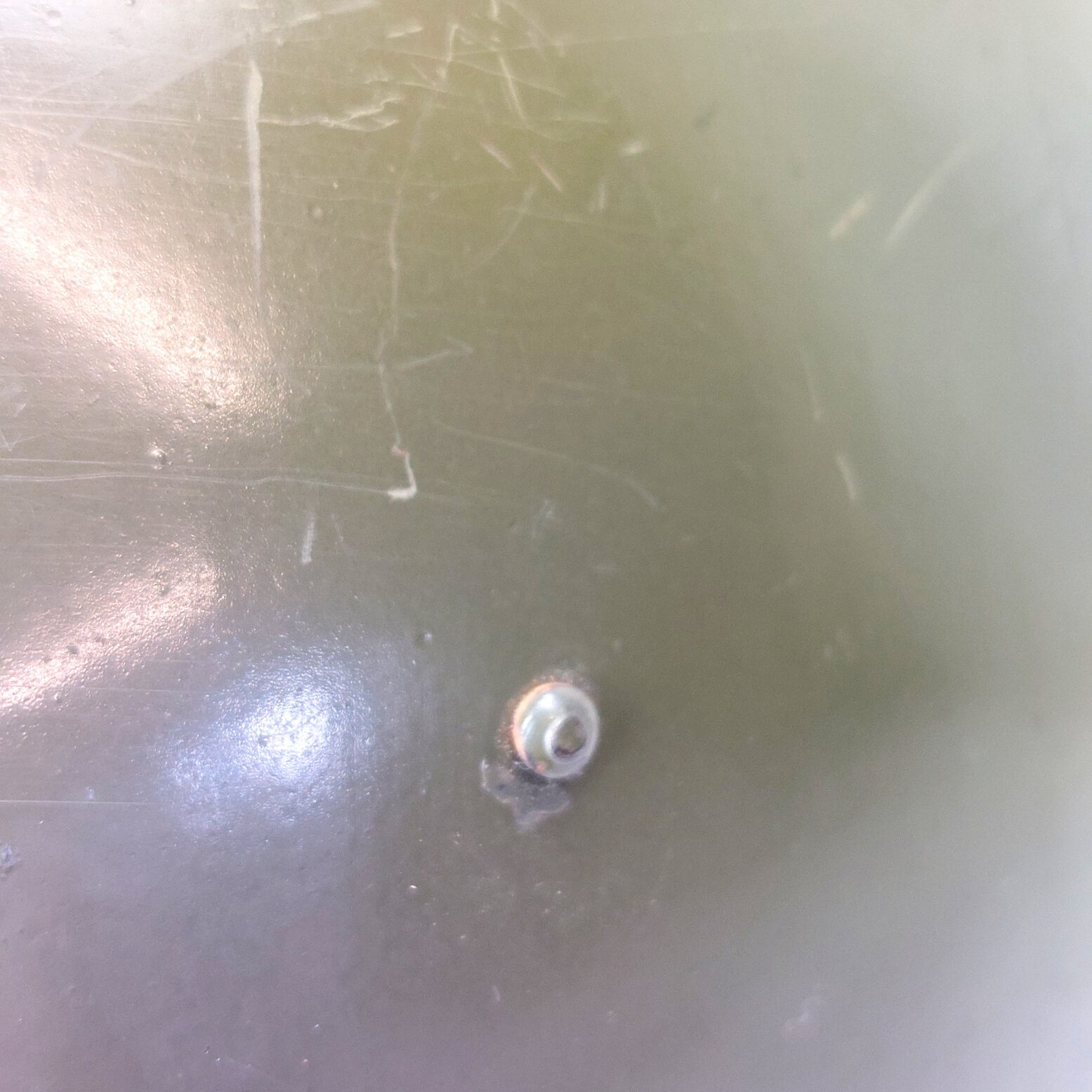
The helmet is constructed from pressed steel and finished in the standard khaki-green semi-matt military paint used by land forces during the later Cold War period. The shell displays the characteristic rounded profile derived from earlier Soviet-influenced designs and retains the correct three-rivet attachment system, consisting of two rivets positioned to the forward sides of the shell and one at the rear, securing the internal liner hoop.
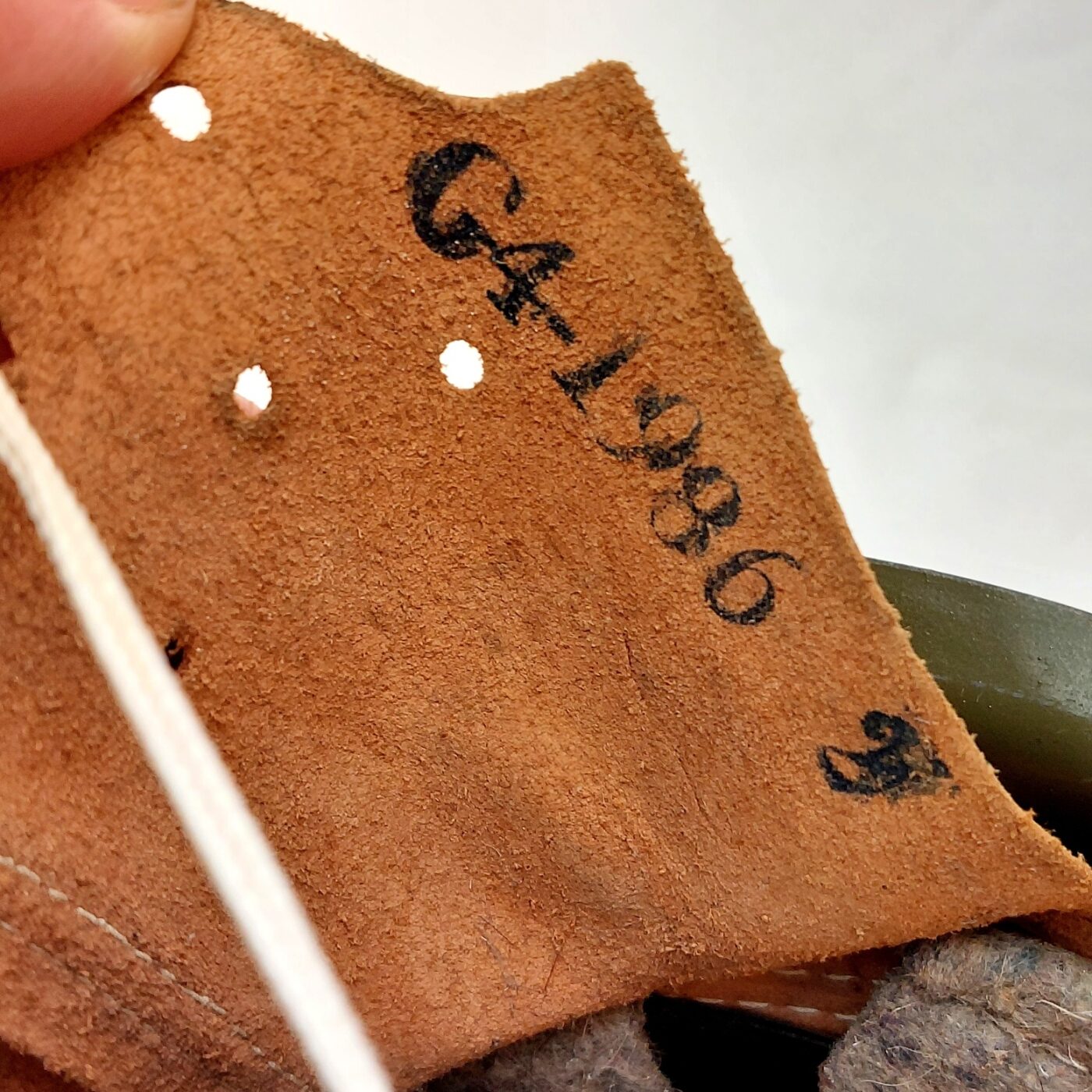
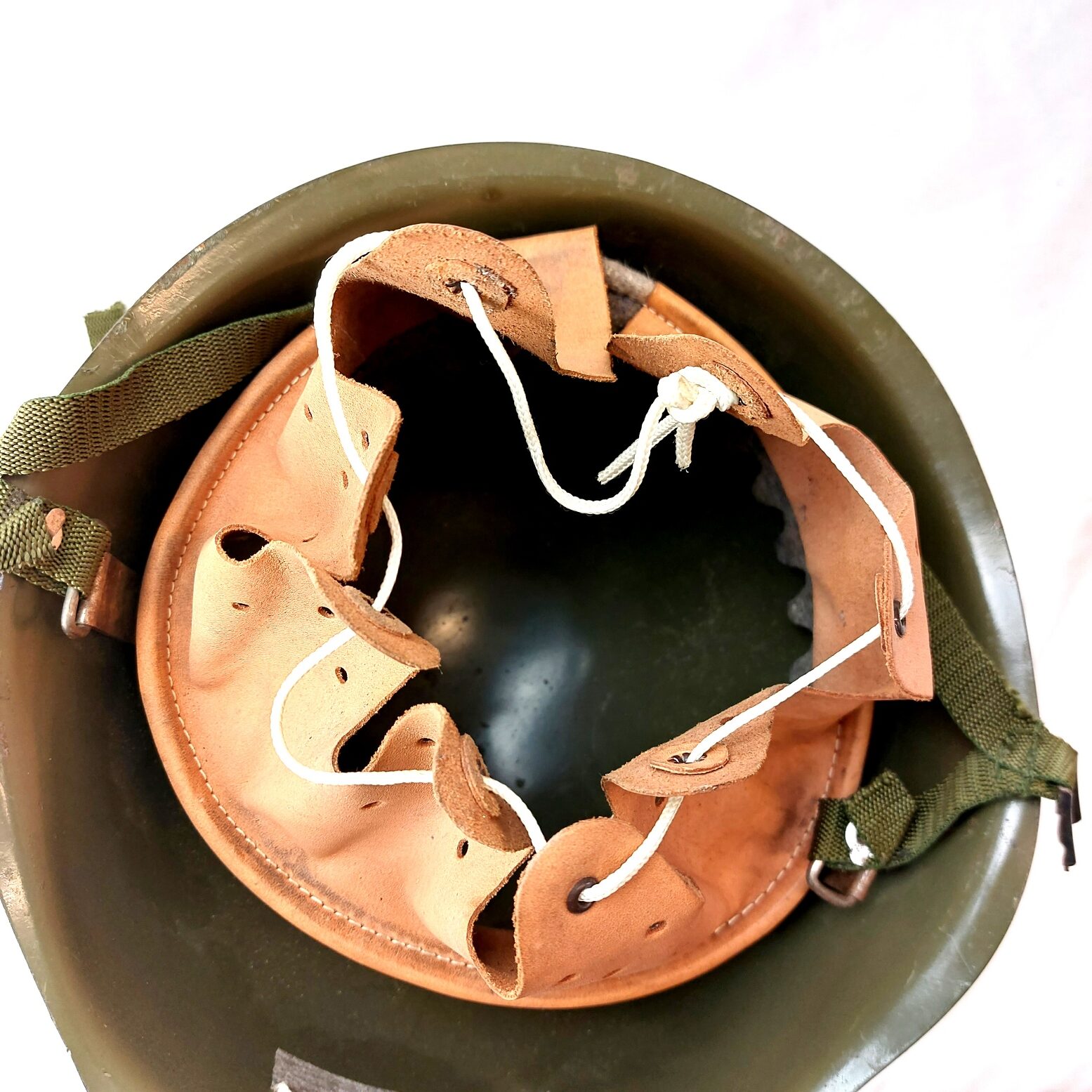
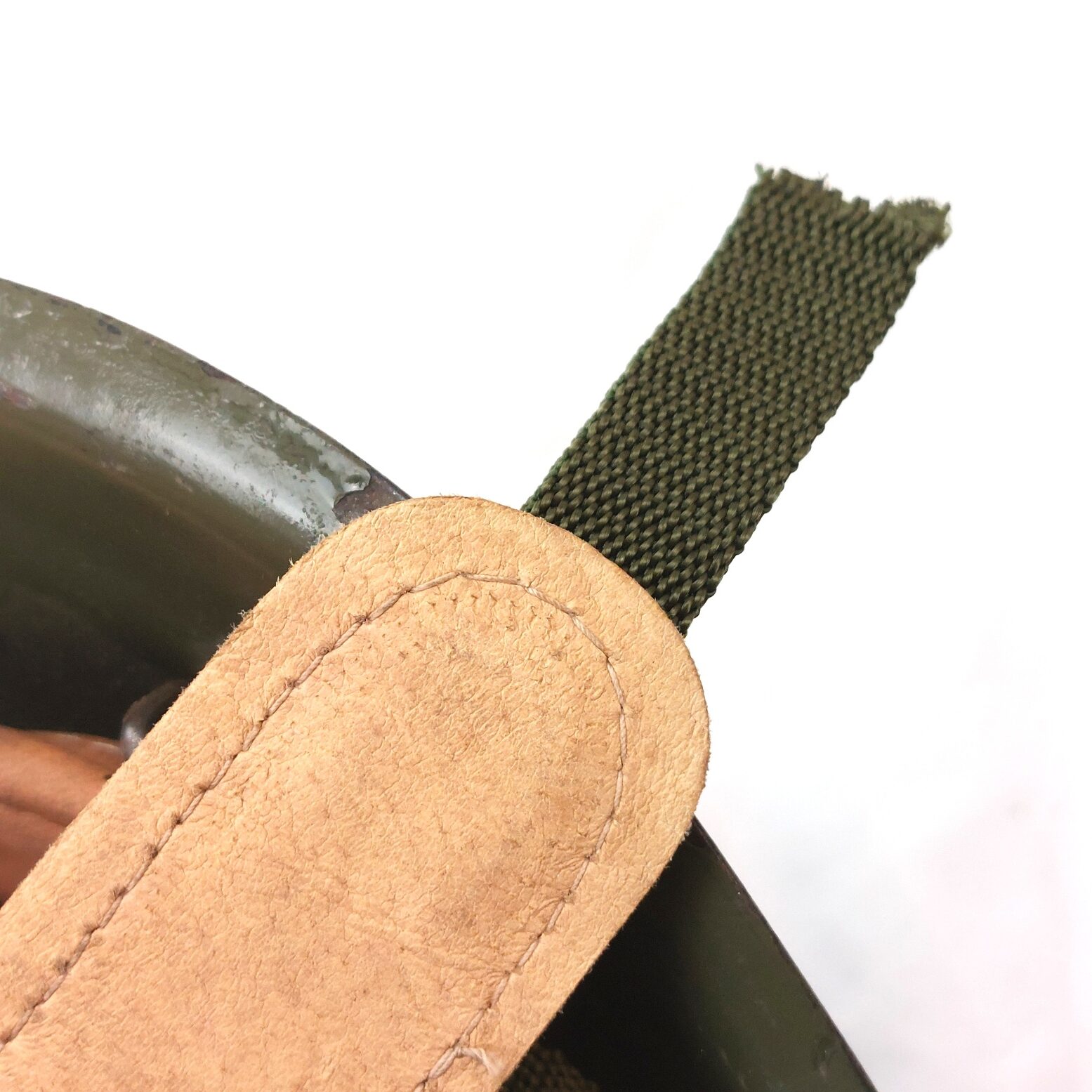
The interior retains its original suspension system consisting of an eight-tongue leather liner, tied together with a central drawstring and mounted on a spring steel hoop. One of the leather tongues is clearly stamped “G4 1986”, indicating manufacture or inspection in 1986. The “G4” marking is commonly associated with military inspection during the Cold War era. The leather liner remains complete and supple.
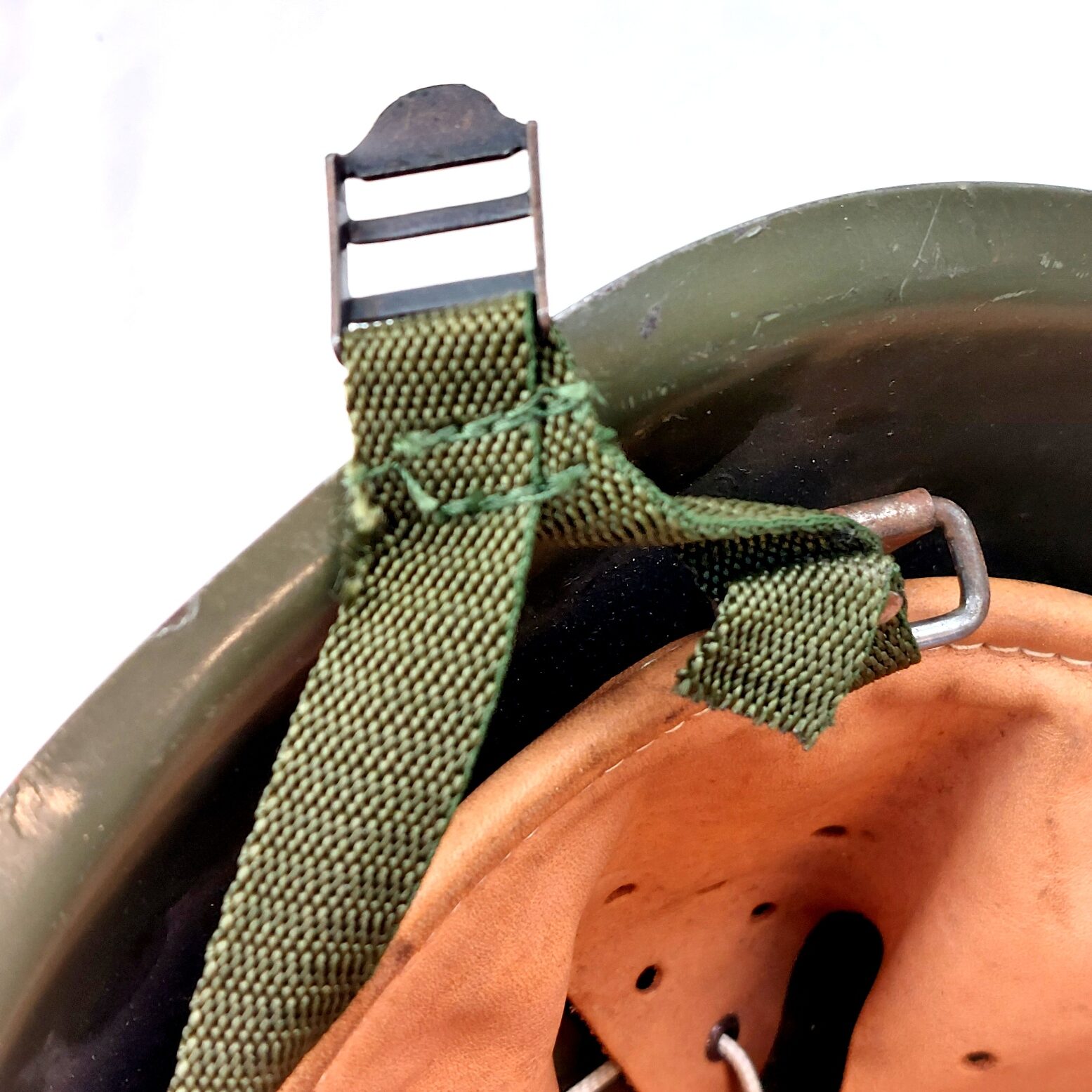
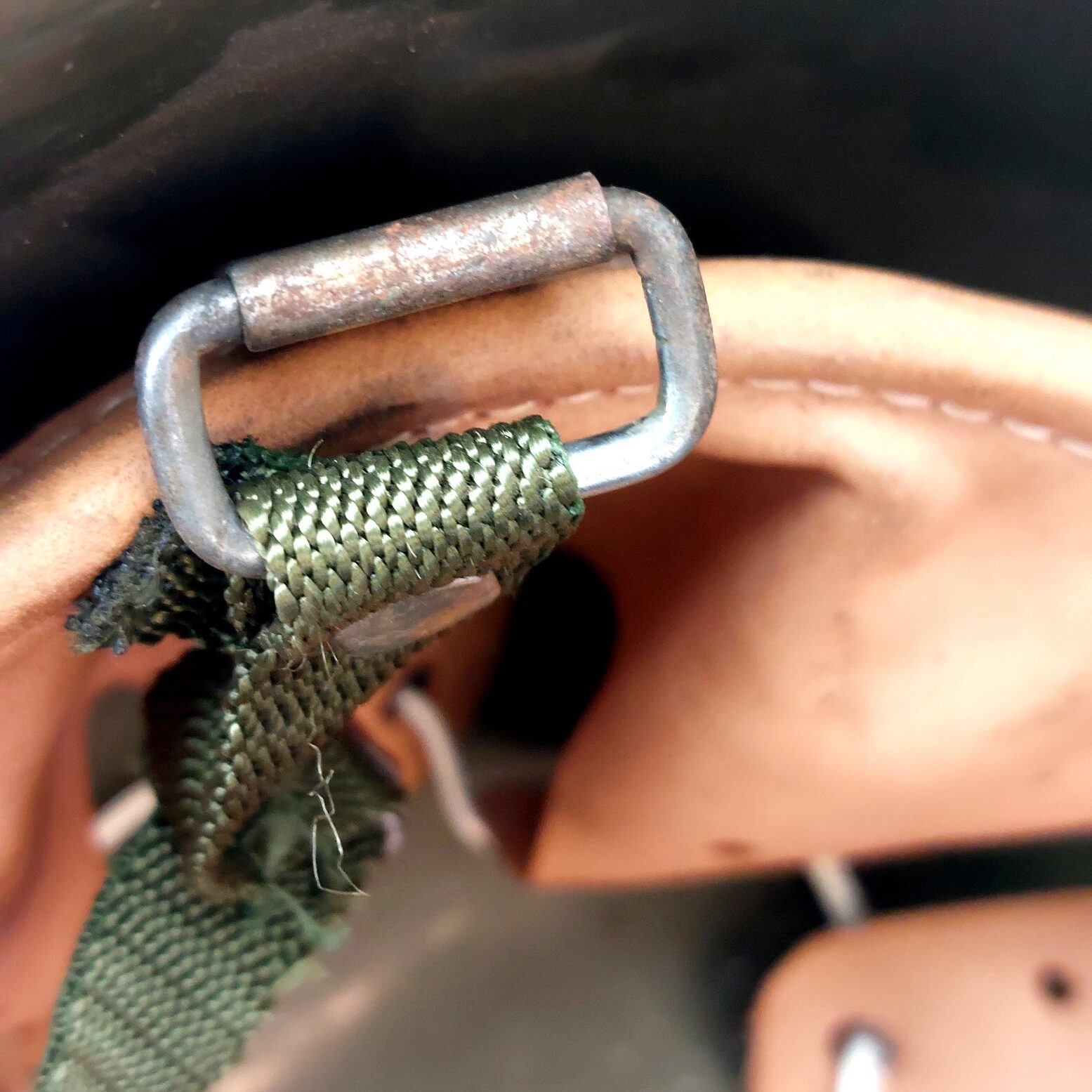
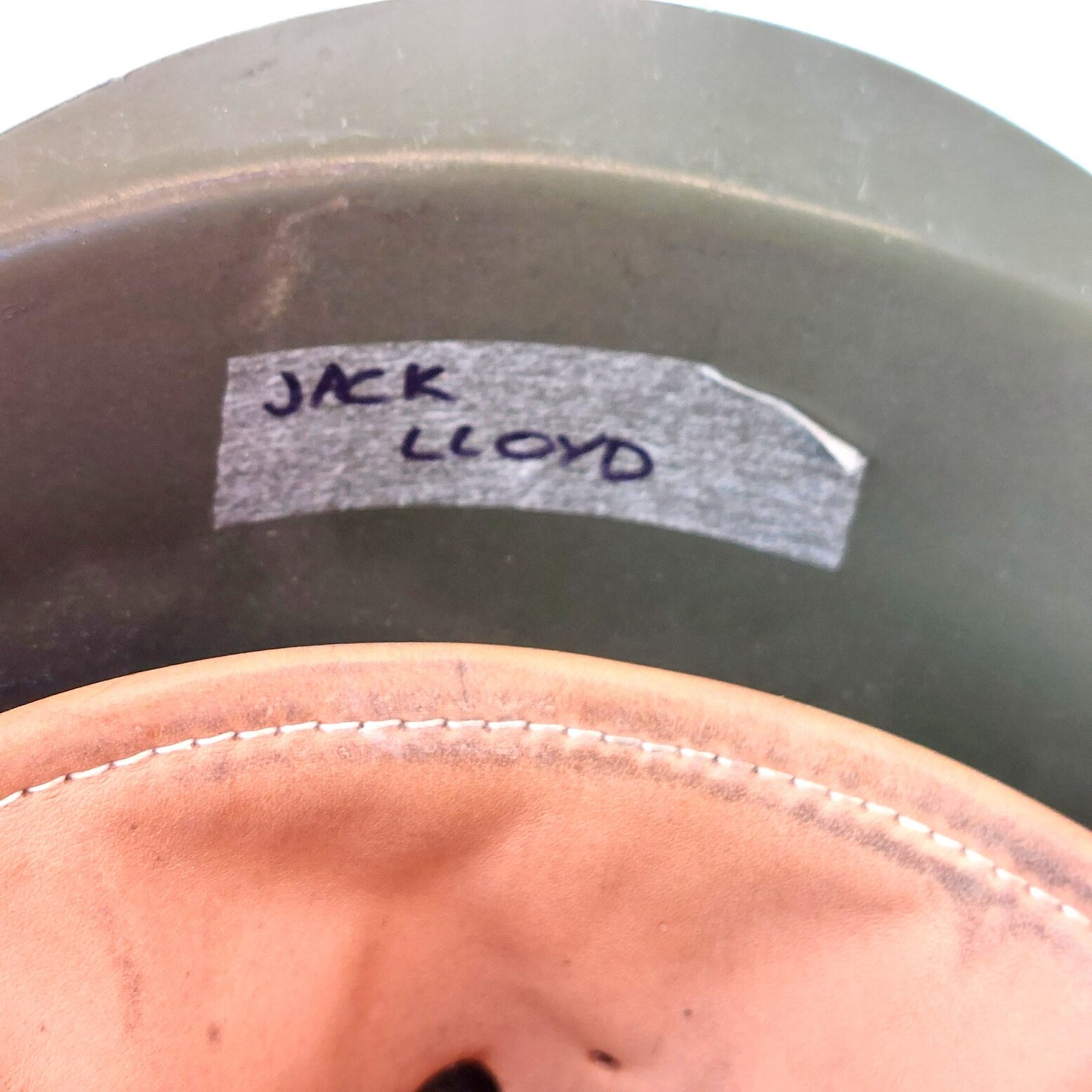
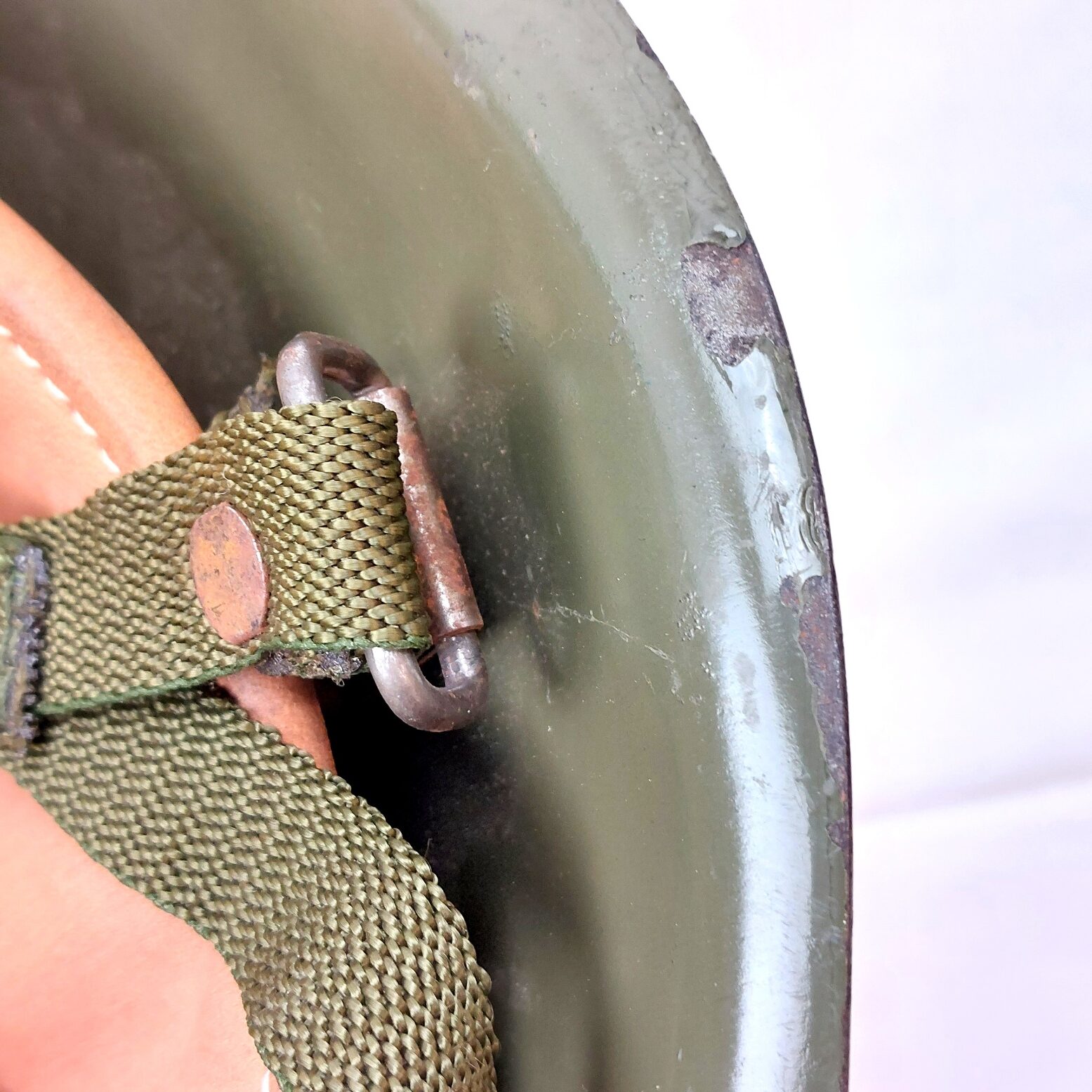
The helmet retains a later green webbing chinstrap with metal buckle fittings attached to the liner band, consistent with service refurbishment. The interior also bears a small handwritten label reading “Jack Lloyd”, likely the name of a previous owner or collector rather than a period military marking.
The exterior paint remains largely intact, showing typical signs of service and storage wear including light scratches and minor edge wear to the rim, consistent with honest military surplus condition.
History Note:
Following the Second World War, a number of Eastern Bloc nations adopted new steel helmet patterns influenced by Soviet designs such as the SSh-40. In Czechoslovakia, this resulted in the adoption of the Vz.53 helmet (Vzór 53) in 1953, which became the standard combat helmet of the Czechoslovak People's Army (ČSLA) throughout much of the Cold War. In Poland, a closely related pattern known as the Wz.50 (Hełm wzór 50) was introduced for the Polish People’s Army around 1950. Both helmets shared broadly similar forms and liner constructions typical of Warsaw Pact equipment of the period, reflecting the influence of Soviet military design and the standardisation of equipment across allied forces.
Helmets of these types were widely issued to regular army units, reserves, and civil defence organisations during the early Cold War decades. Because of the similarities in shell form, liner systems, and manufacturing practices between Warsaw Pact countries, surviving examples can sometimes display features associated with both Czechoslovak and Polish production. Dated examples such as this 1986-stamped helmet represent typical mid-production equipment used by frontline and reserve units during the height of the Cold War.
*Condition*
Good overall condition with original paint largely intact, showing typical service and storage wear including light scratches and minor rim wear. The interior leather liner remains complete and supple with clear “G4 1986” stamp. Original webbing chinstrap present with light wear. Interior bears a later owner’s name label. Please see photographs as part of the condition report.