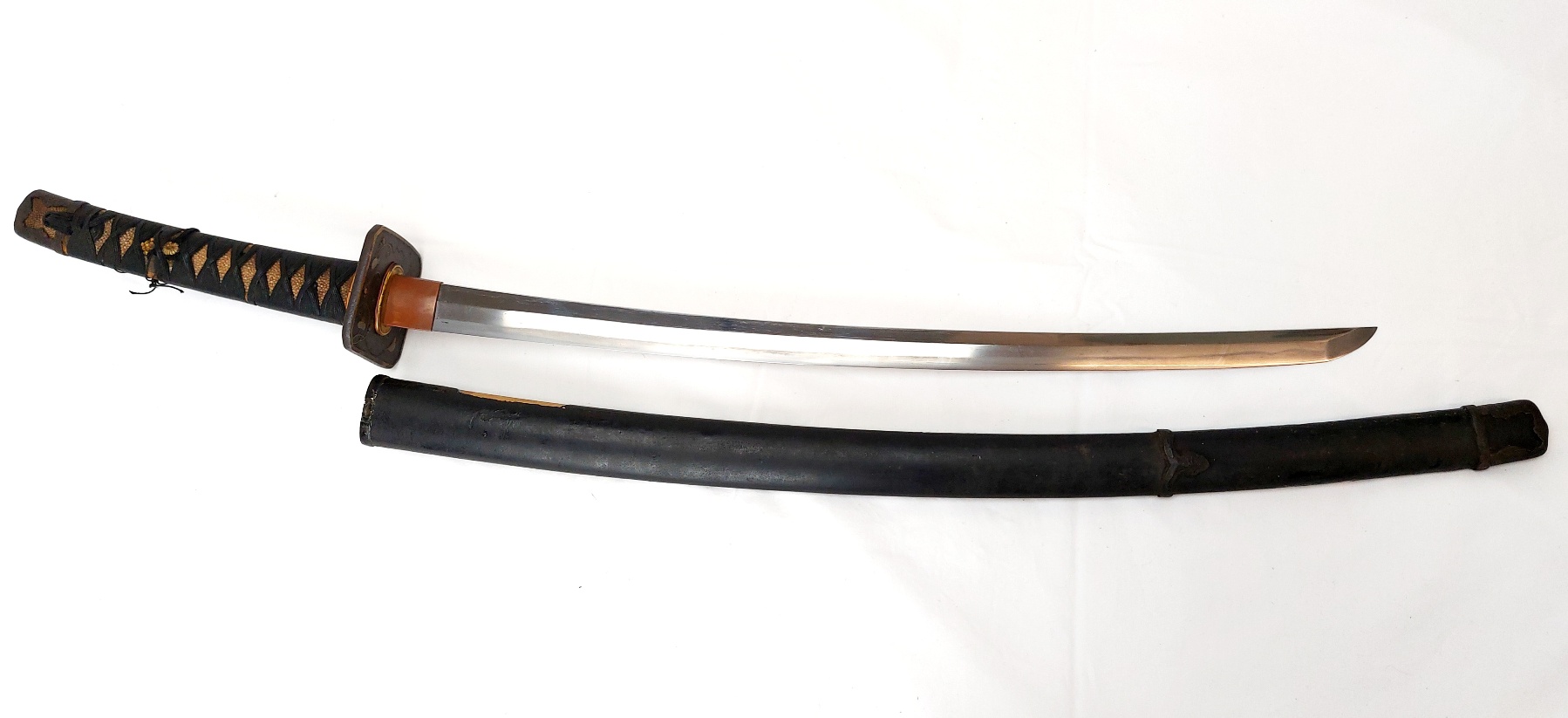
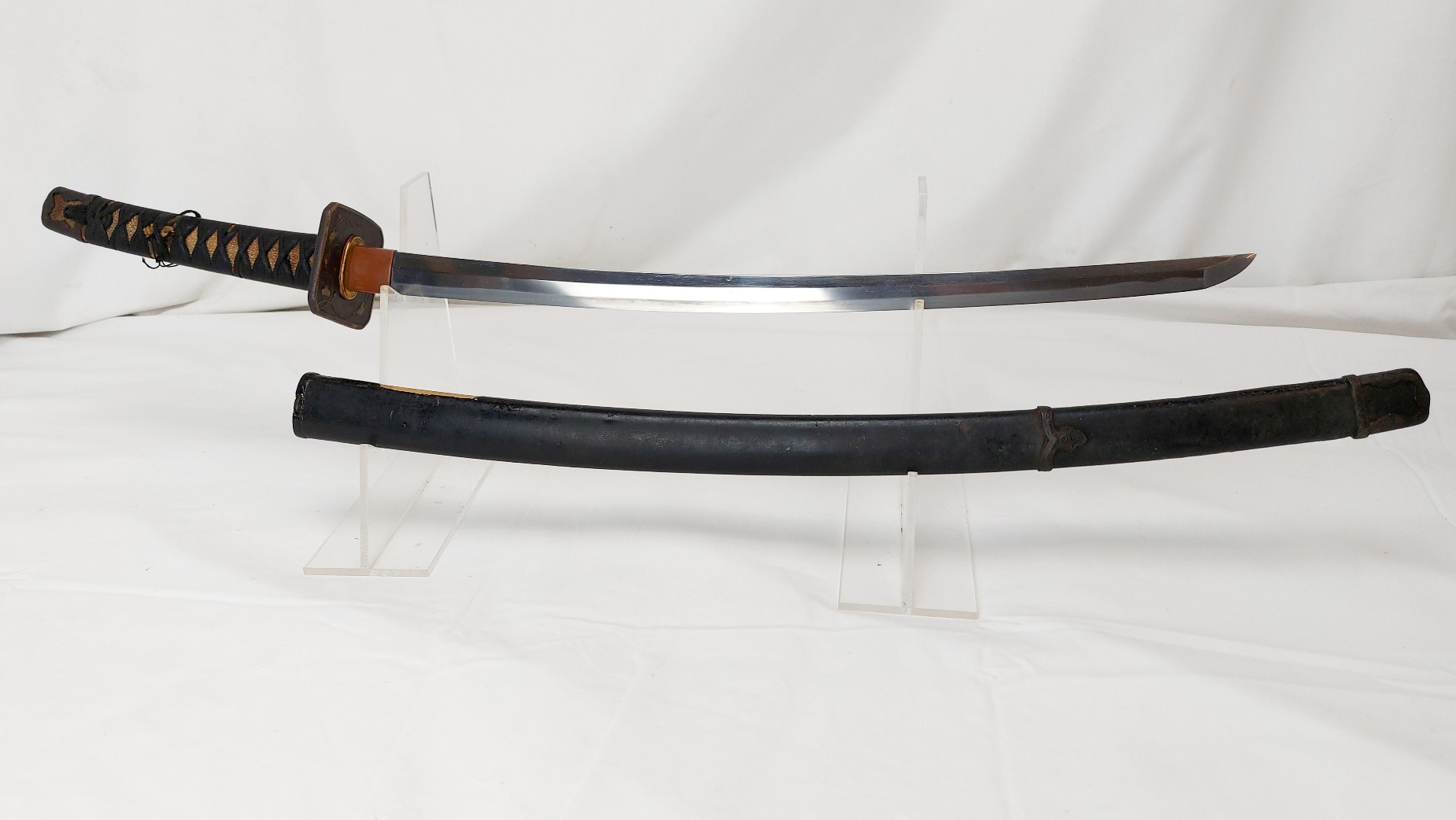
Japanese SwordsJapanese, Late Muromachi Period (c.1550–1600), Wakizashi Sword, Signed 'Sanjō Jū Nagayoshi' (Gimei), Attributed to the Kinbō School, Complete Koshirae, AOI-Art Appraisal
SKU / Ref. No: JAQ#IBO_300620263328
£2,995.00
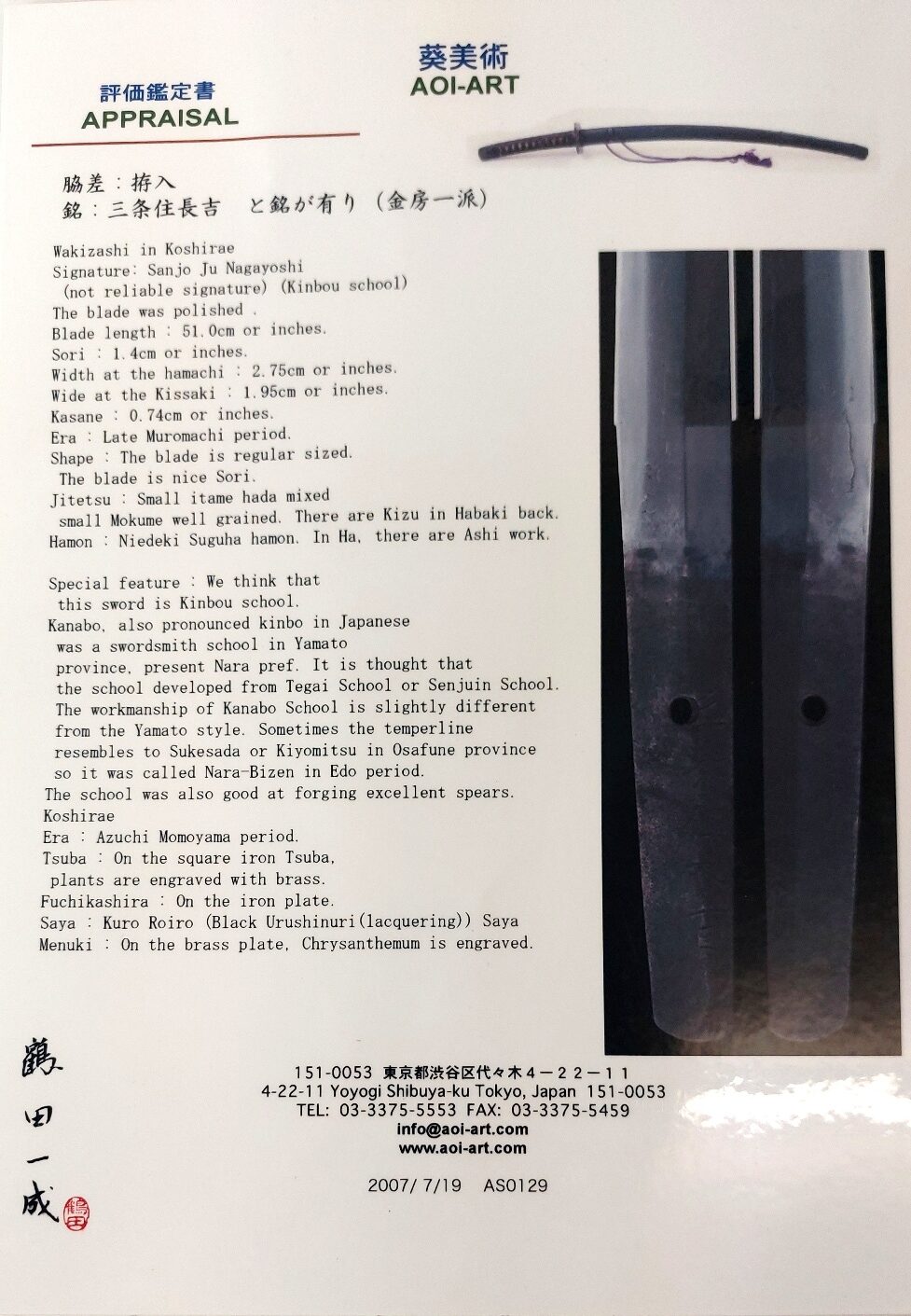
A desirable Japanese late Muromachi period wakizashi attributed by AOI-Art to the Kinbō School, retaining a traditionally mounted koshirae, signed Sanjō Jū Nagayoshi (gimei), and accompanied by its original 2007 AOI-Art appraisal certificate and storage bag.
Your message was sent. We will contact you shortly.
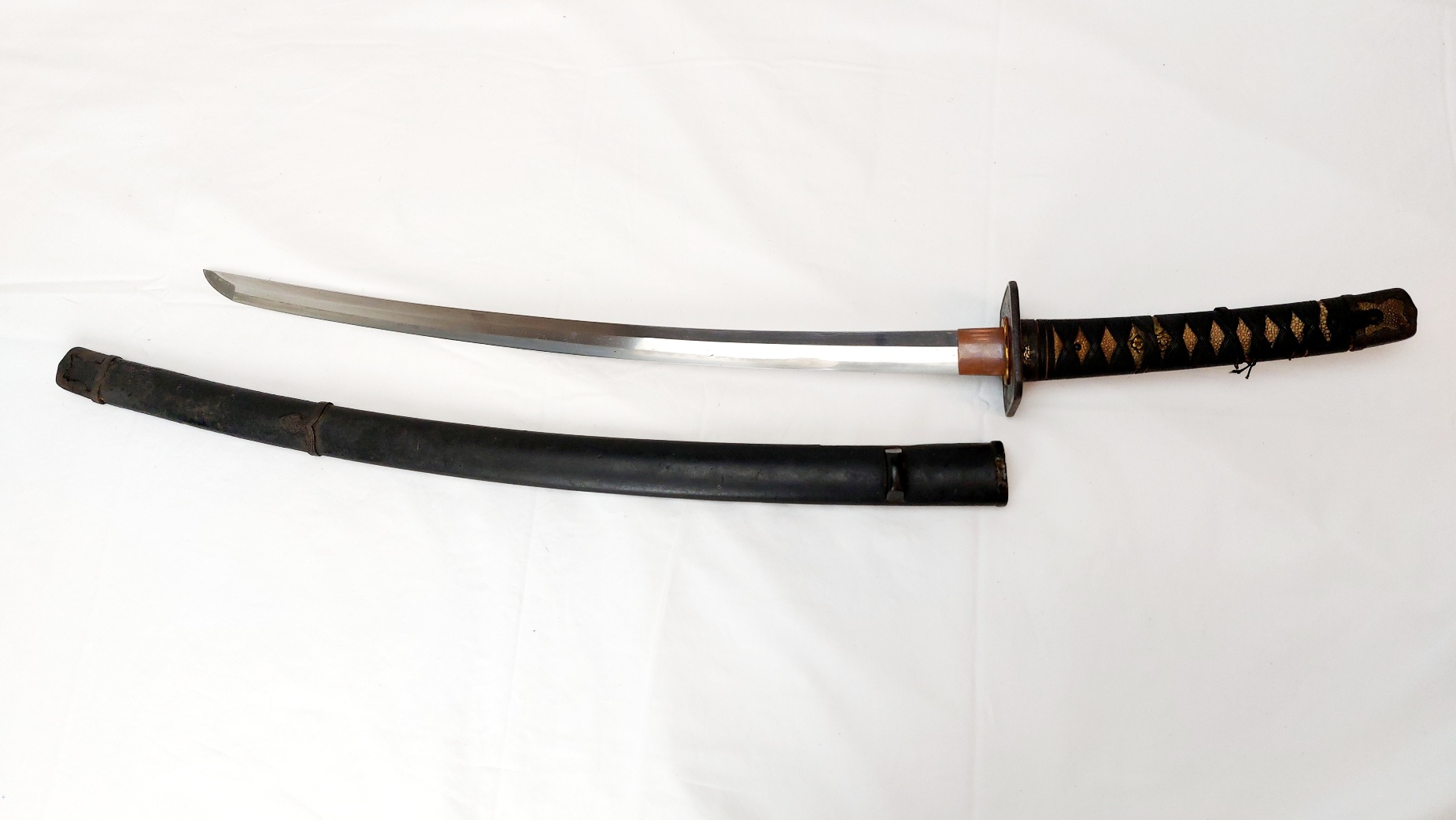
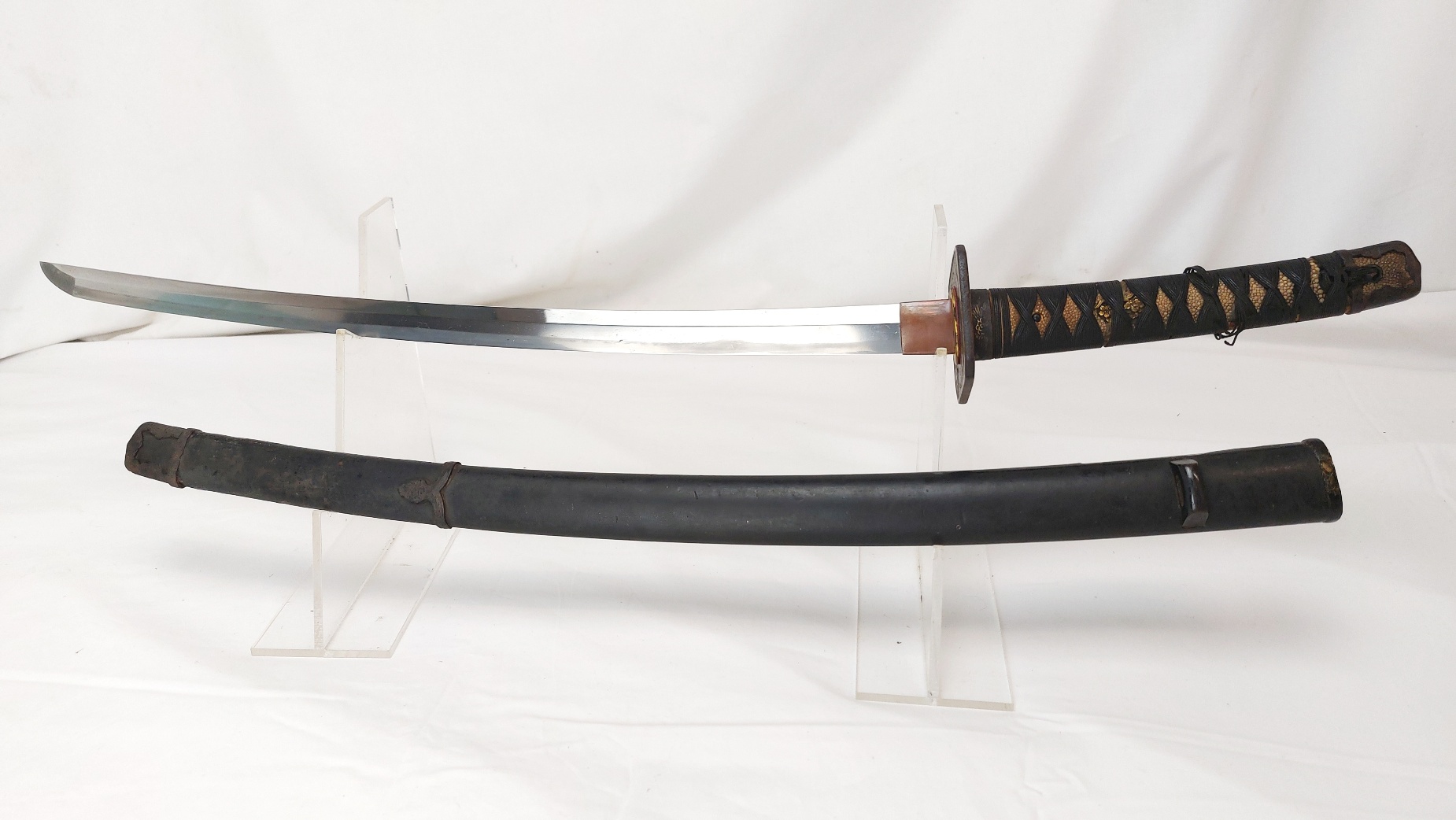
*Japanese, Late Muromachi Period (c.1550–1600), Wakizashi Sword, Signed 'Sanjō Jū Nagayoshi' (Gimei), Attributed to the Kinbō School, Complete Koshirae, AOI-Art Appraisal*
- Late Muromachi period wakizashi attributed to the Kinbō (Kanabō) School-
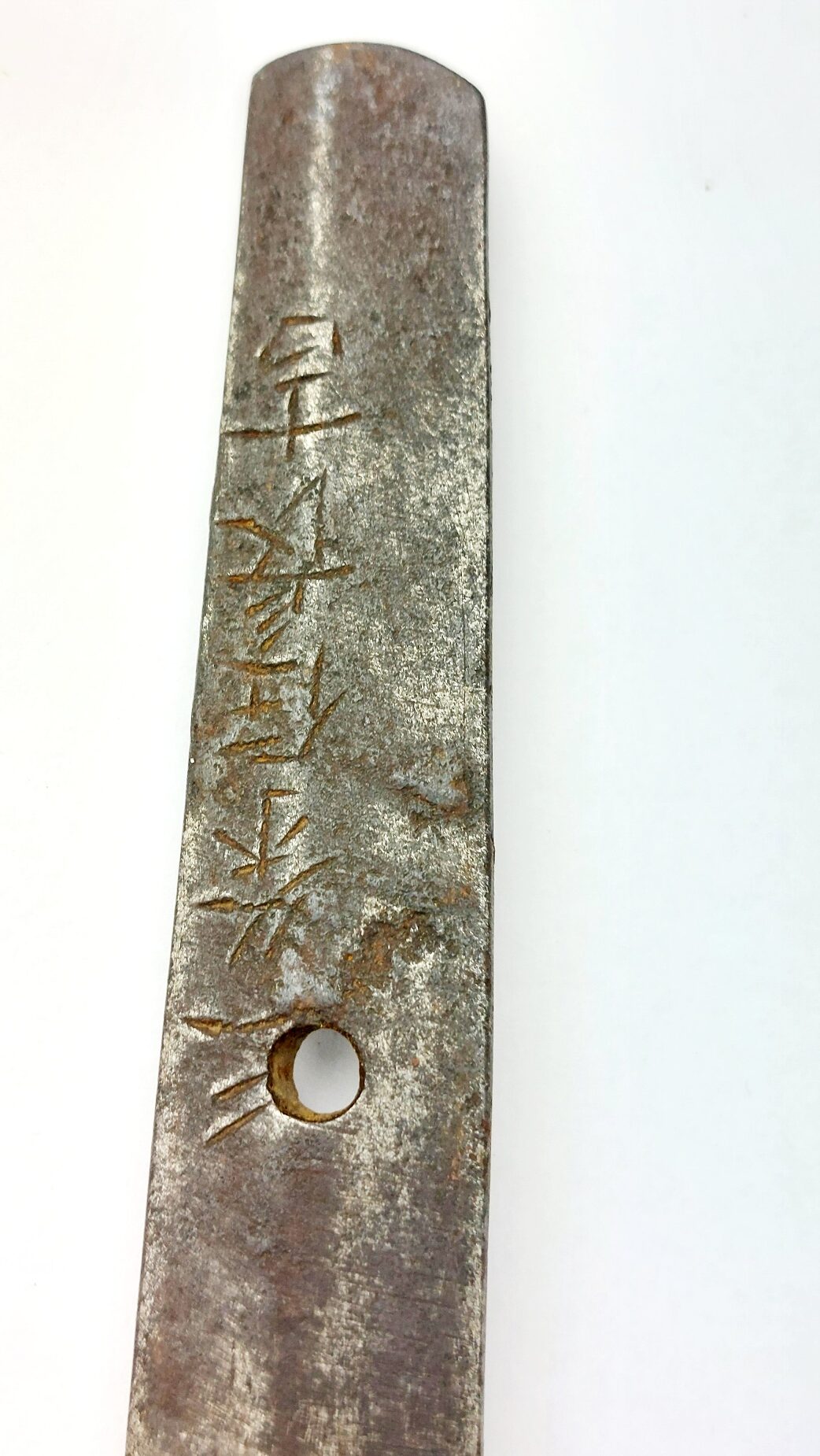
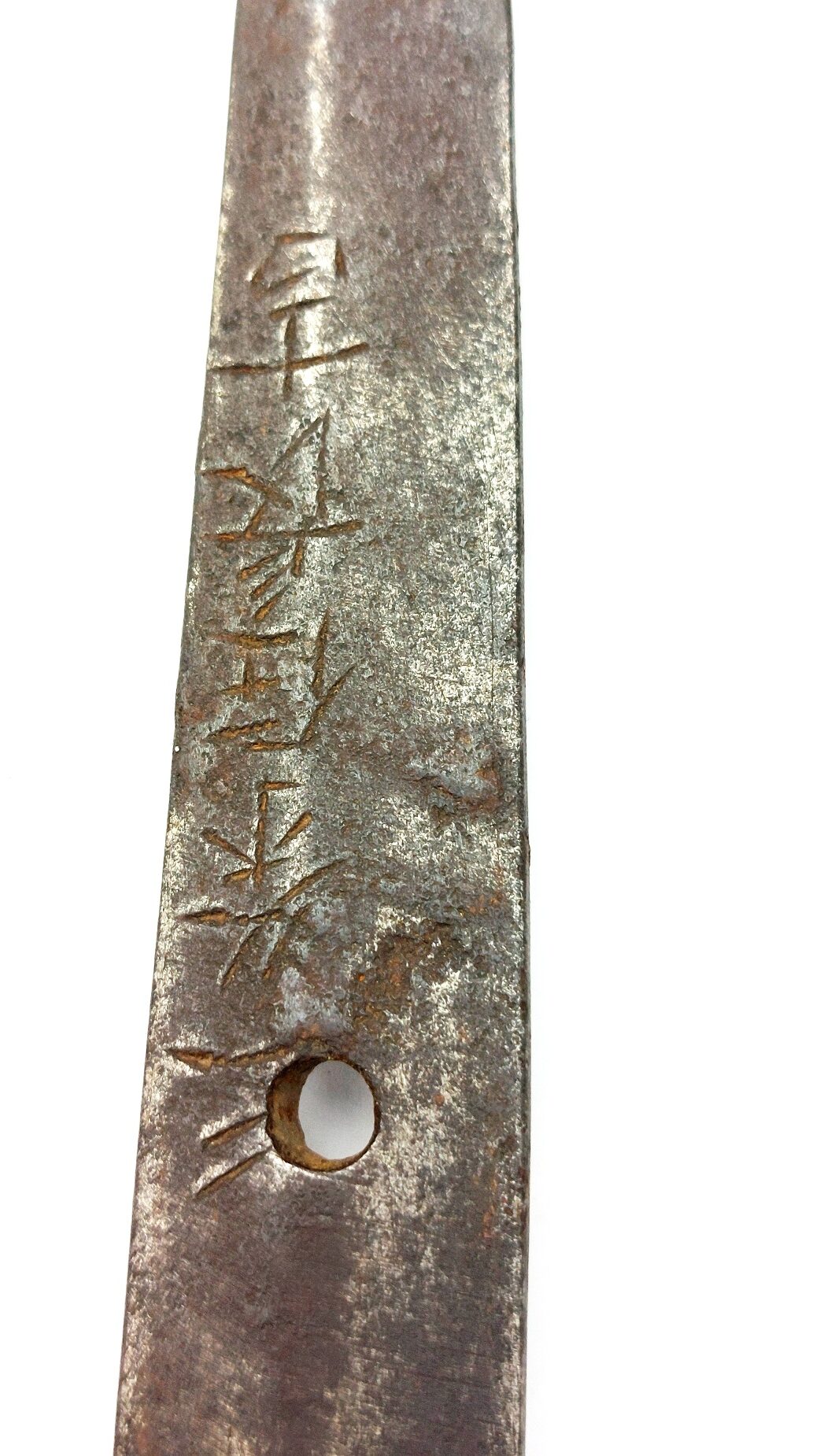
- Tang signed Sanjō Jū Nagayoshi, considered gimei (false signature)
- Accompanied by original AOI-Art appraisal certificate dated 19 July 2007
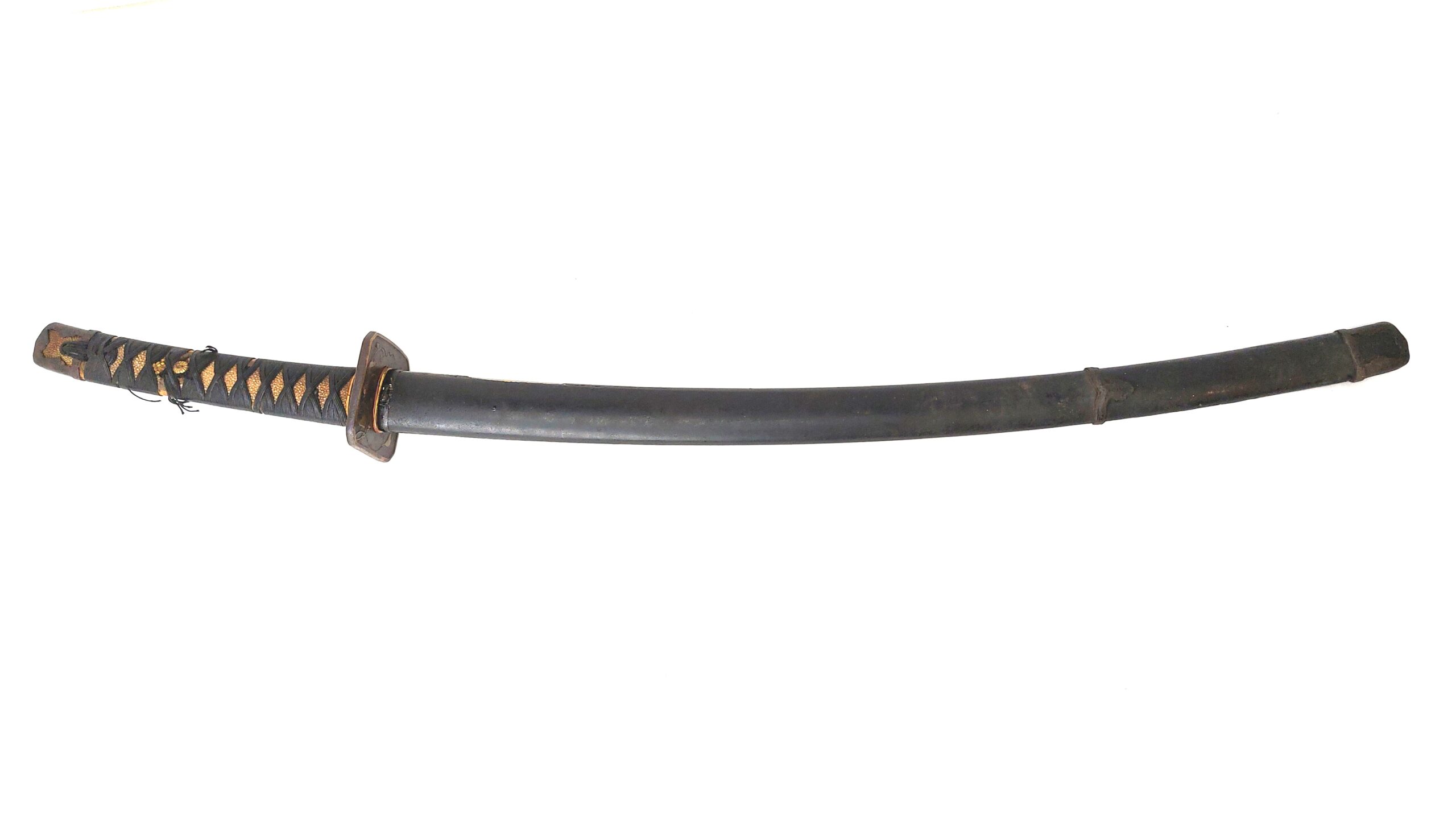
- Complete traditional koshirae with black lacquer saya
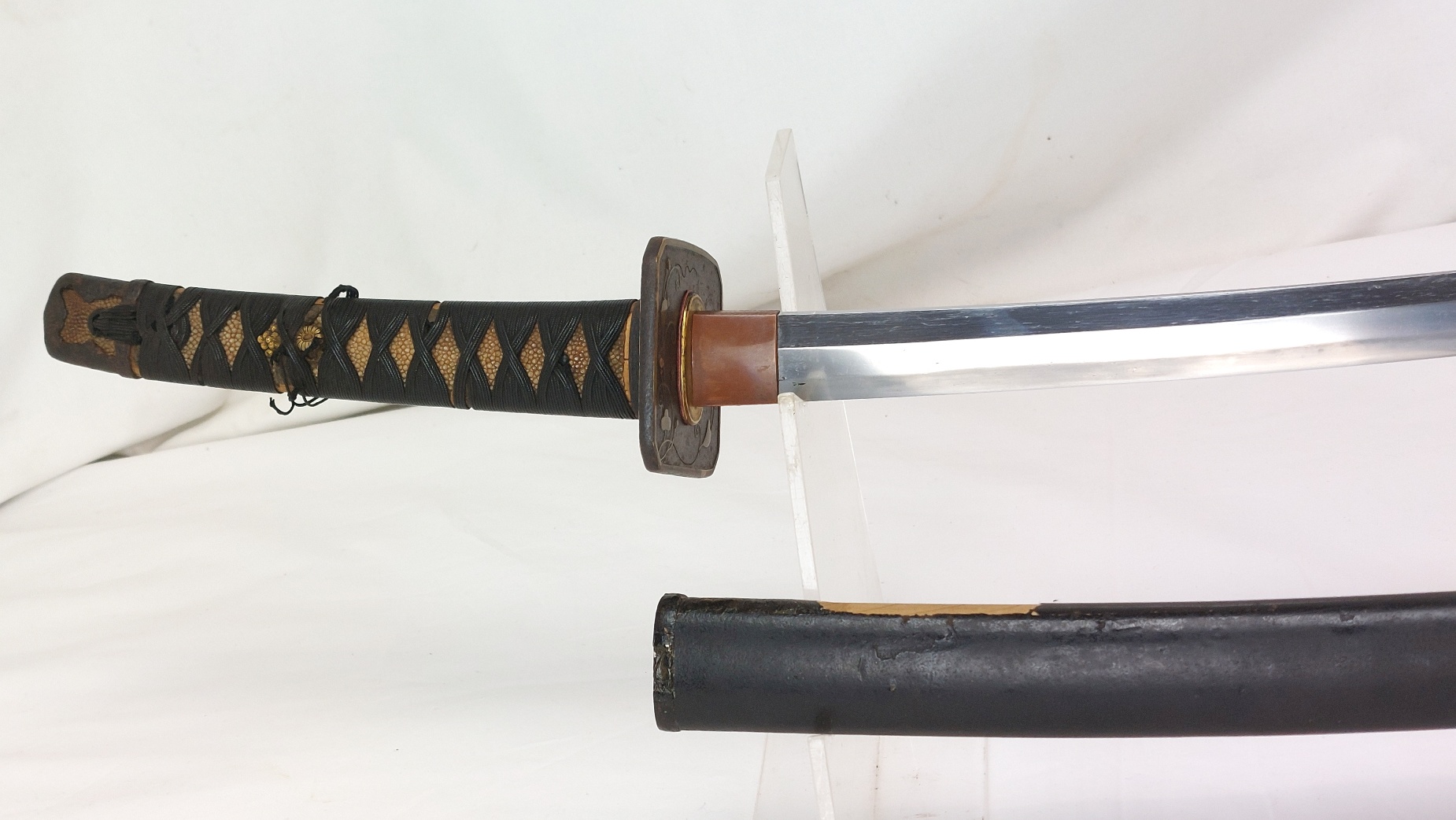
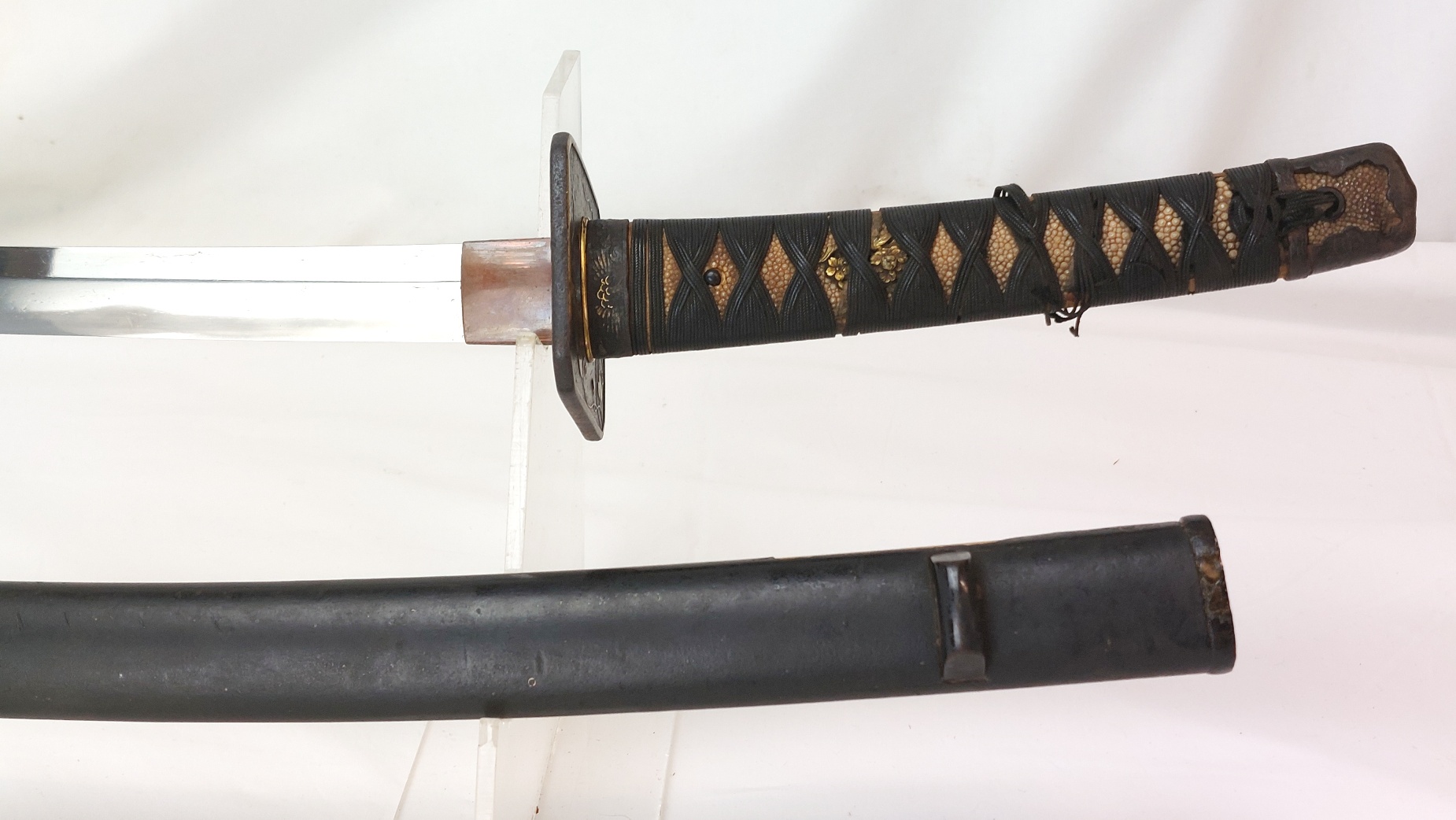
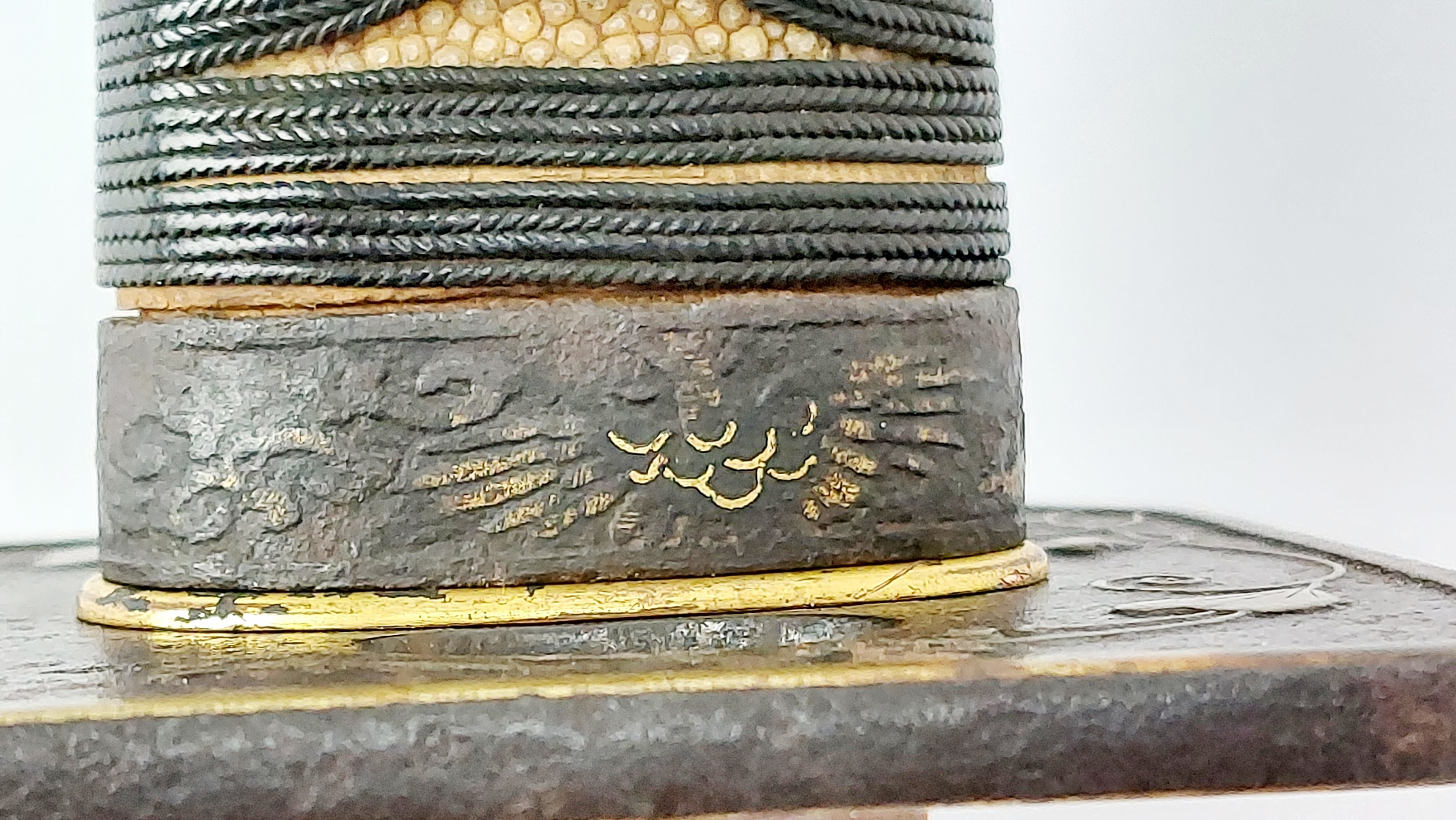
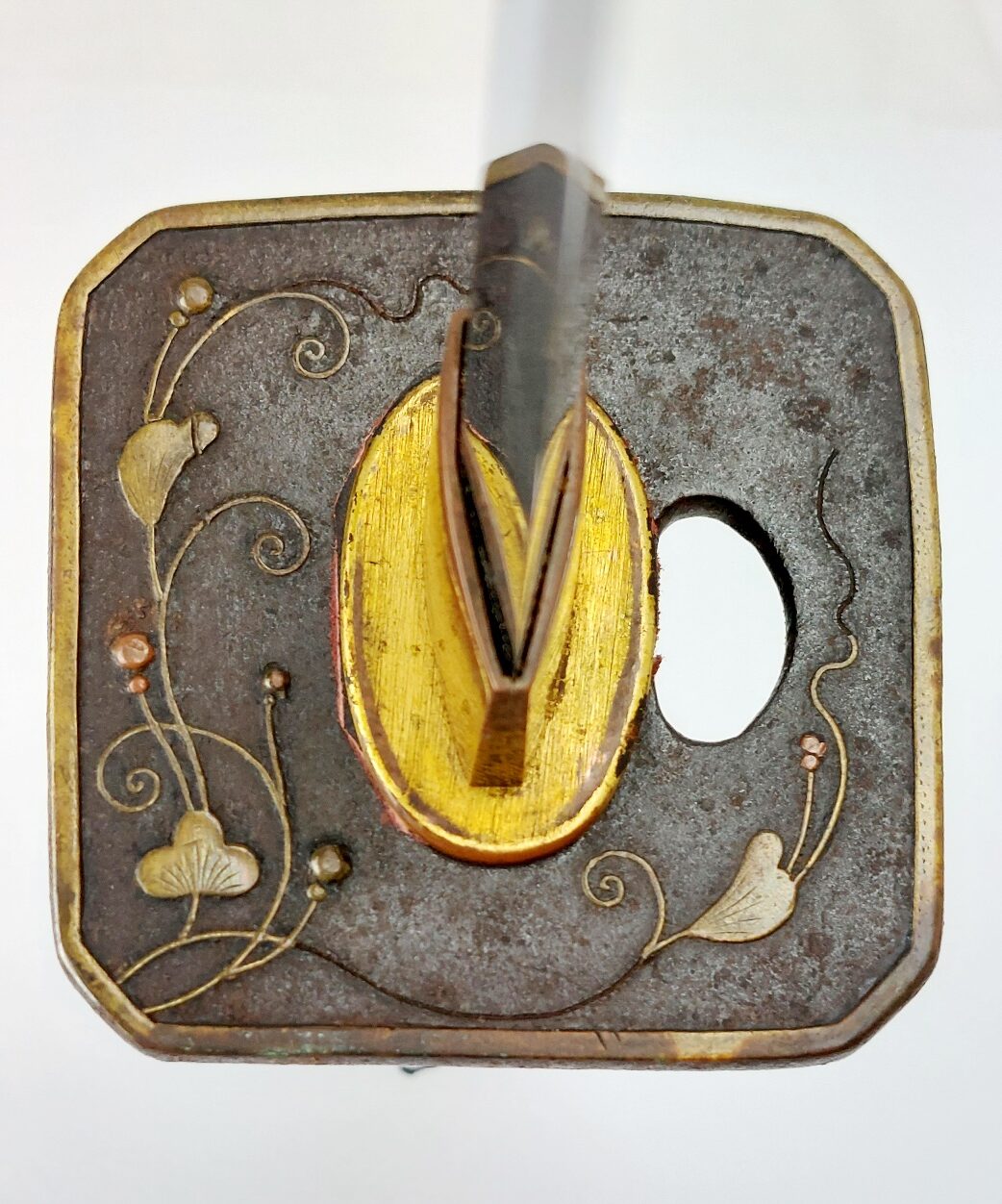
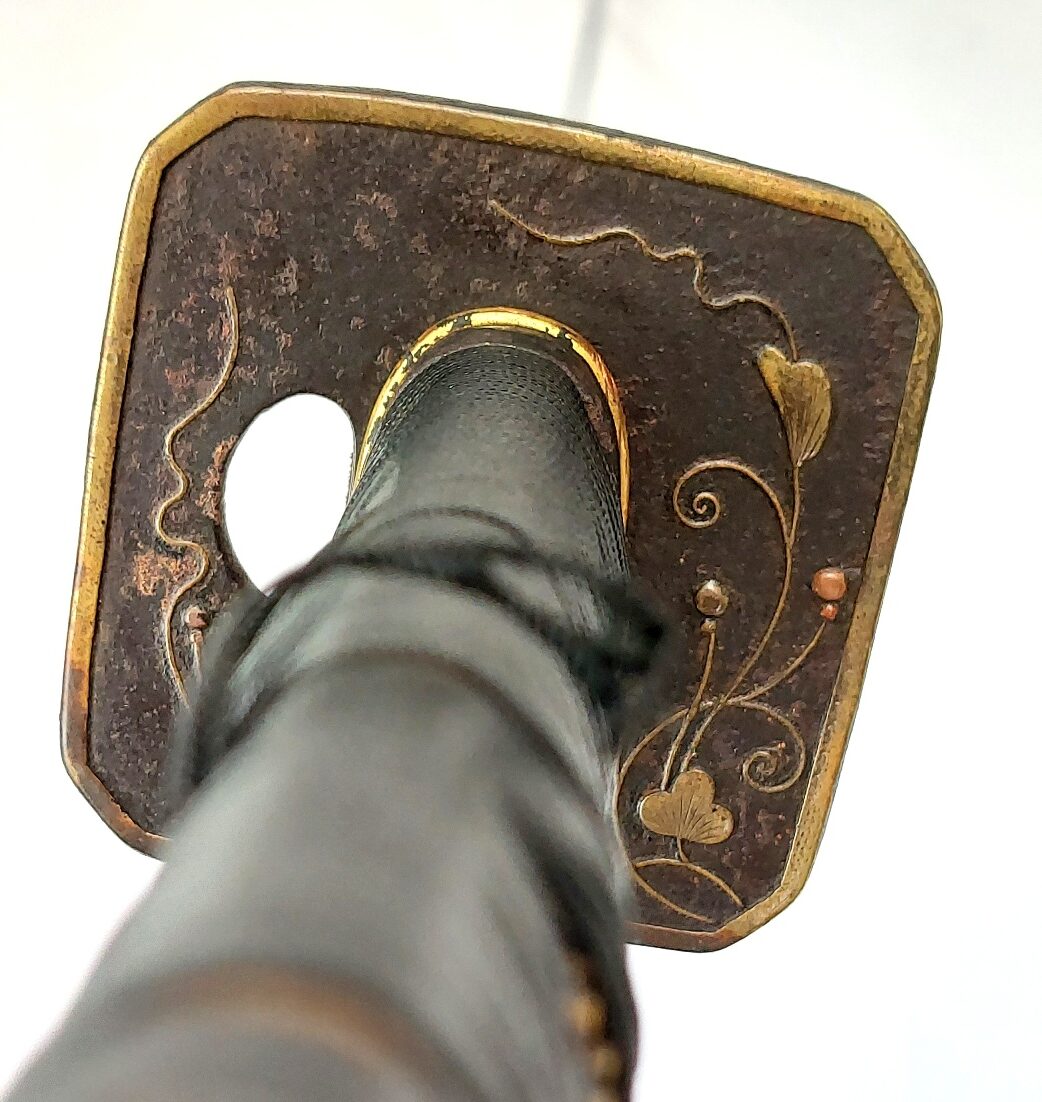
- Iron tsuba with brass-inlaid scrolling floral decoration
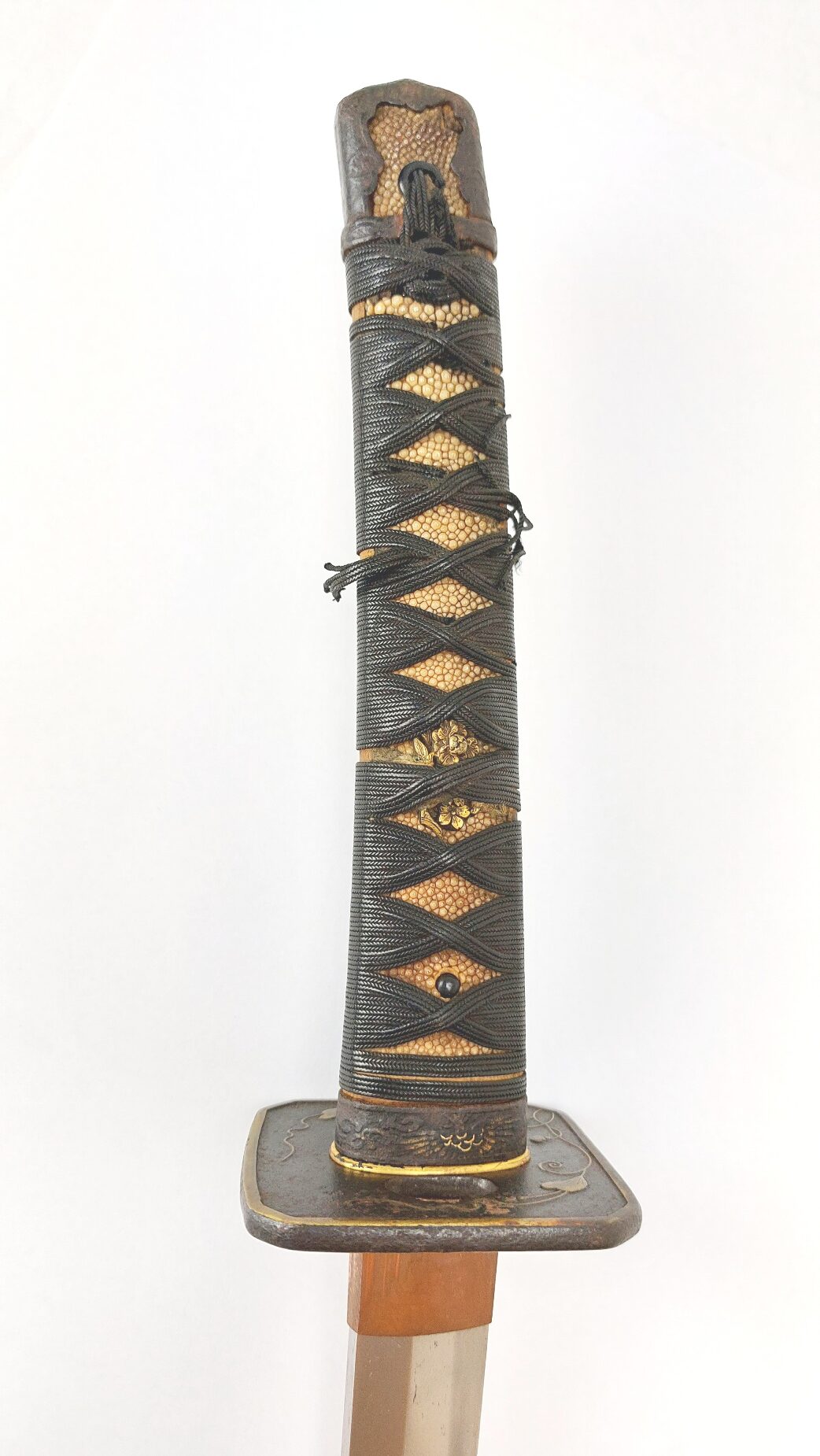
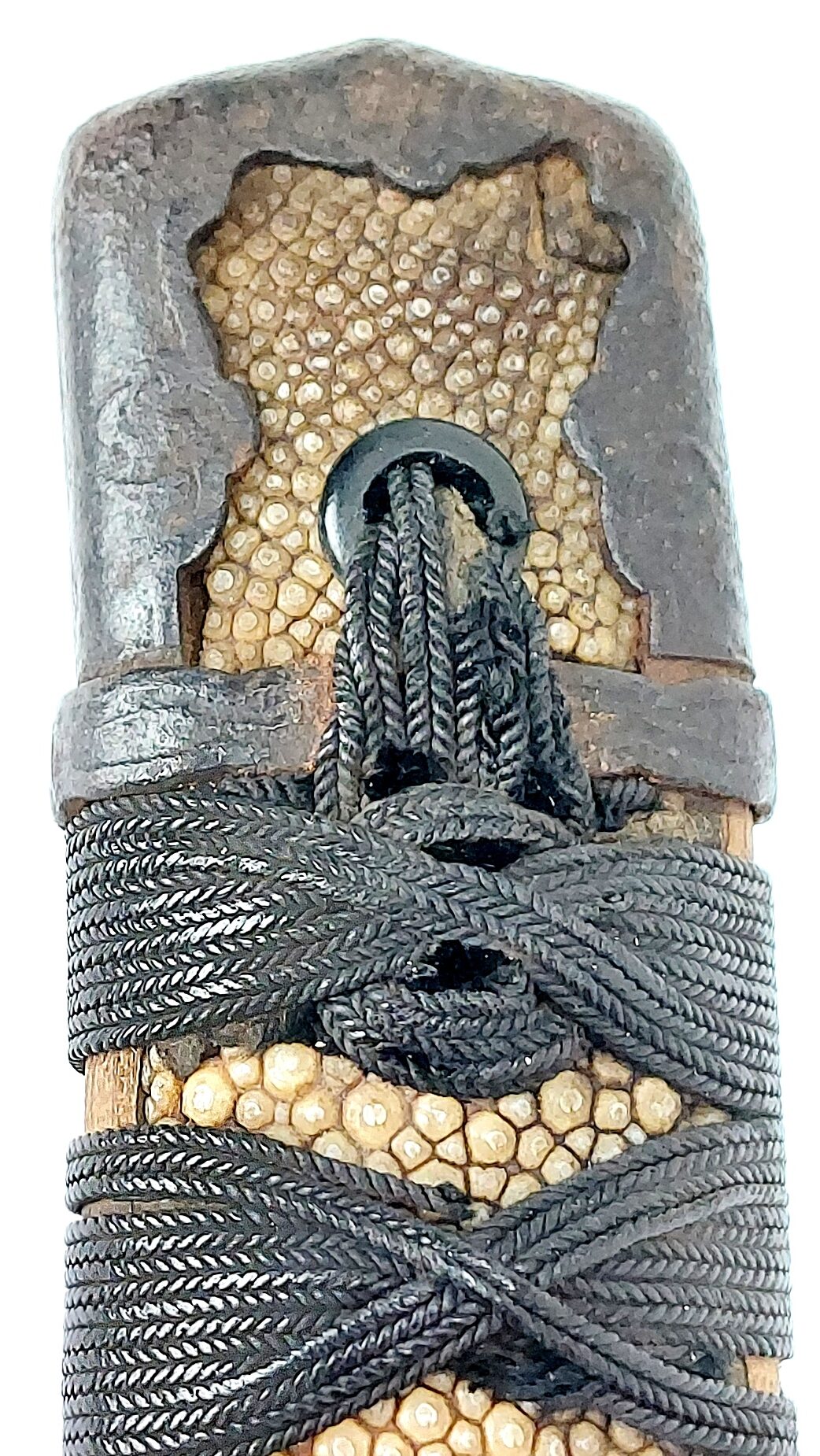
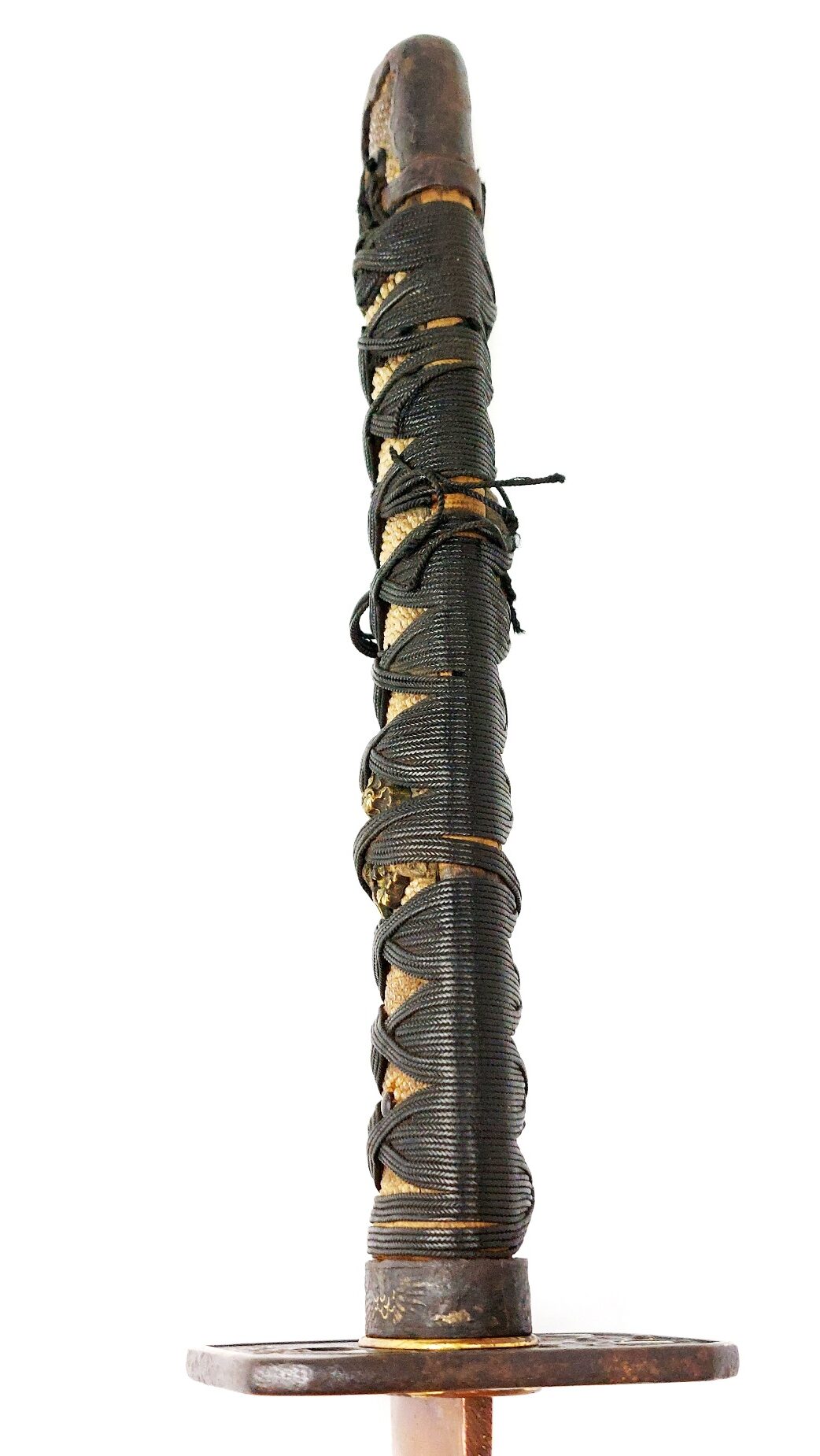
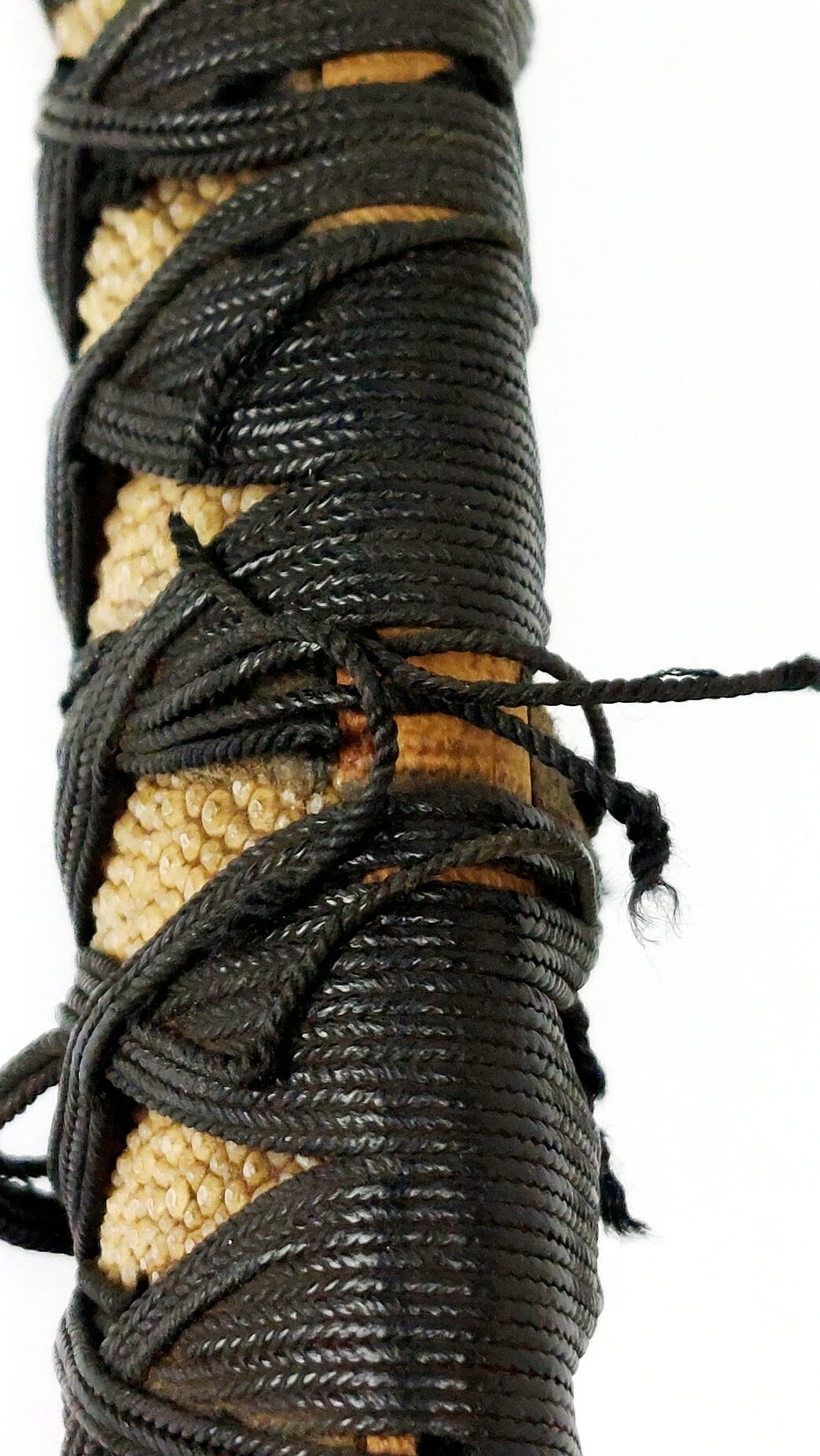
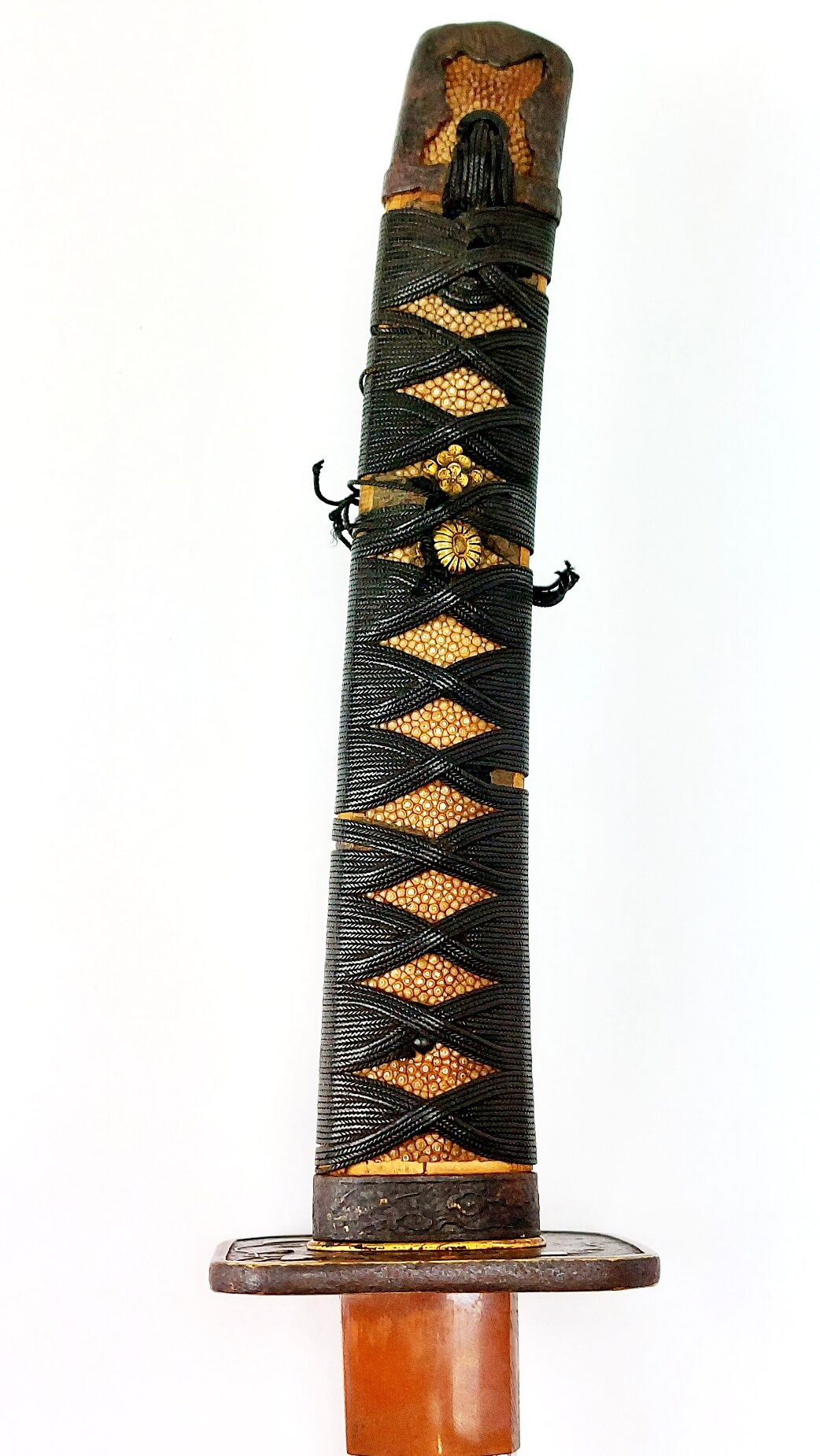
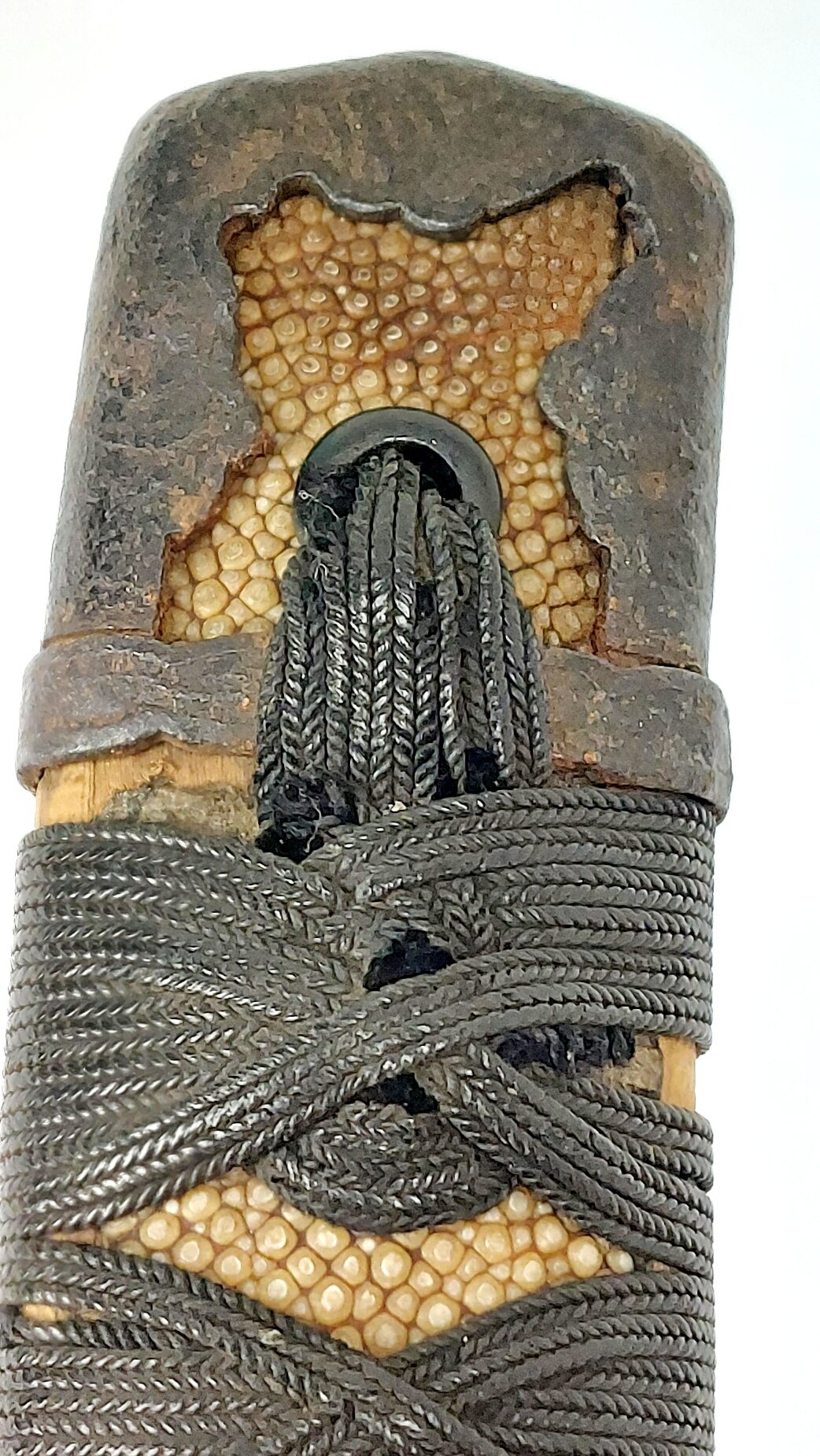
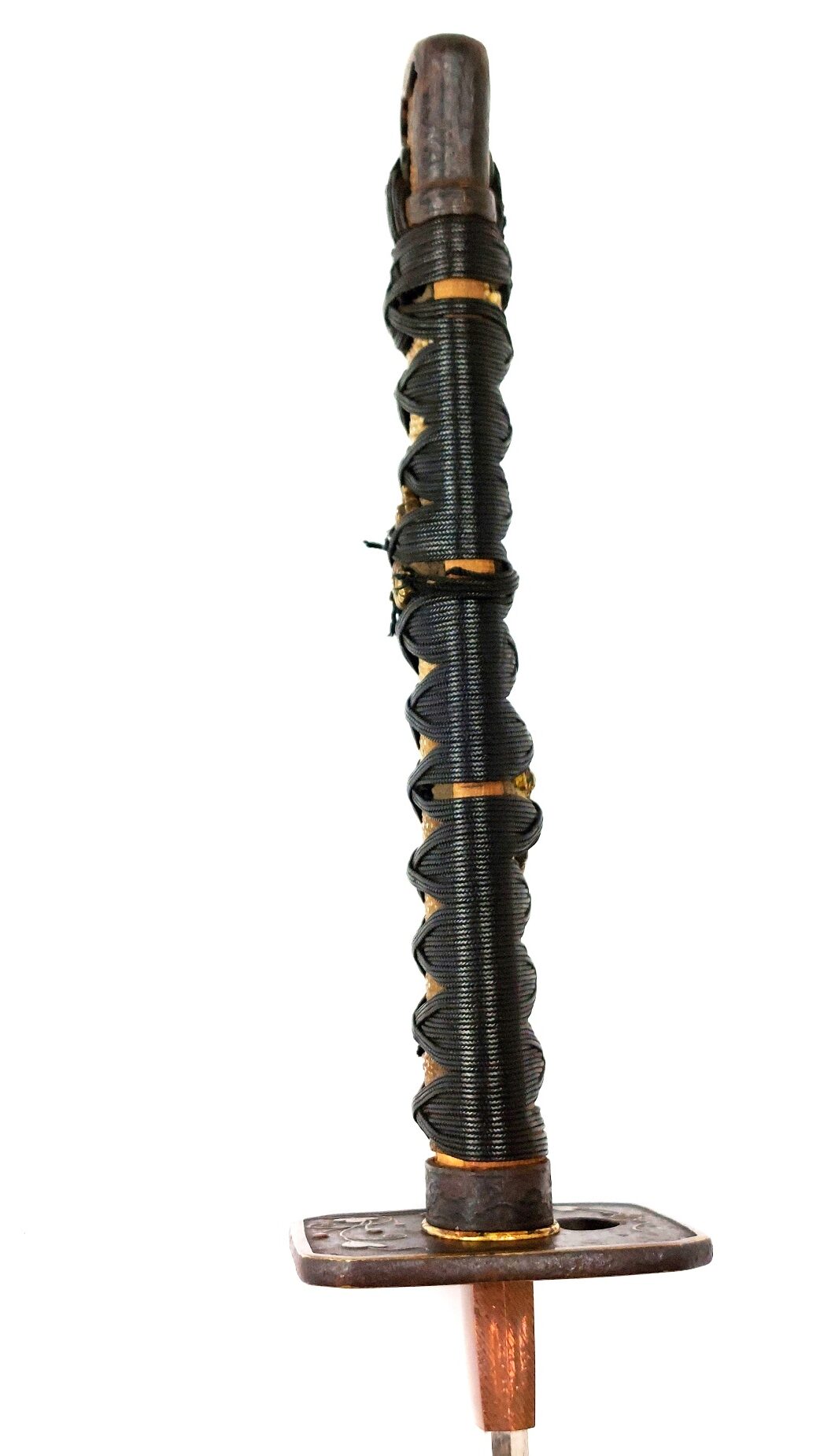
- Ray skin (samegawa) tsuka with black silk ito wrap
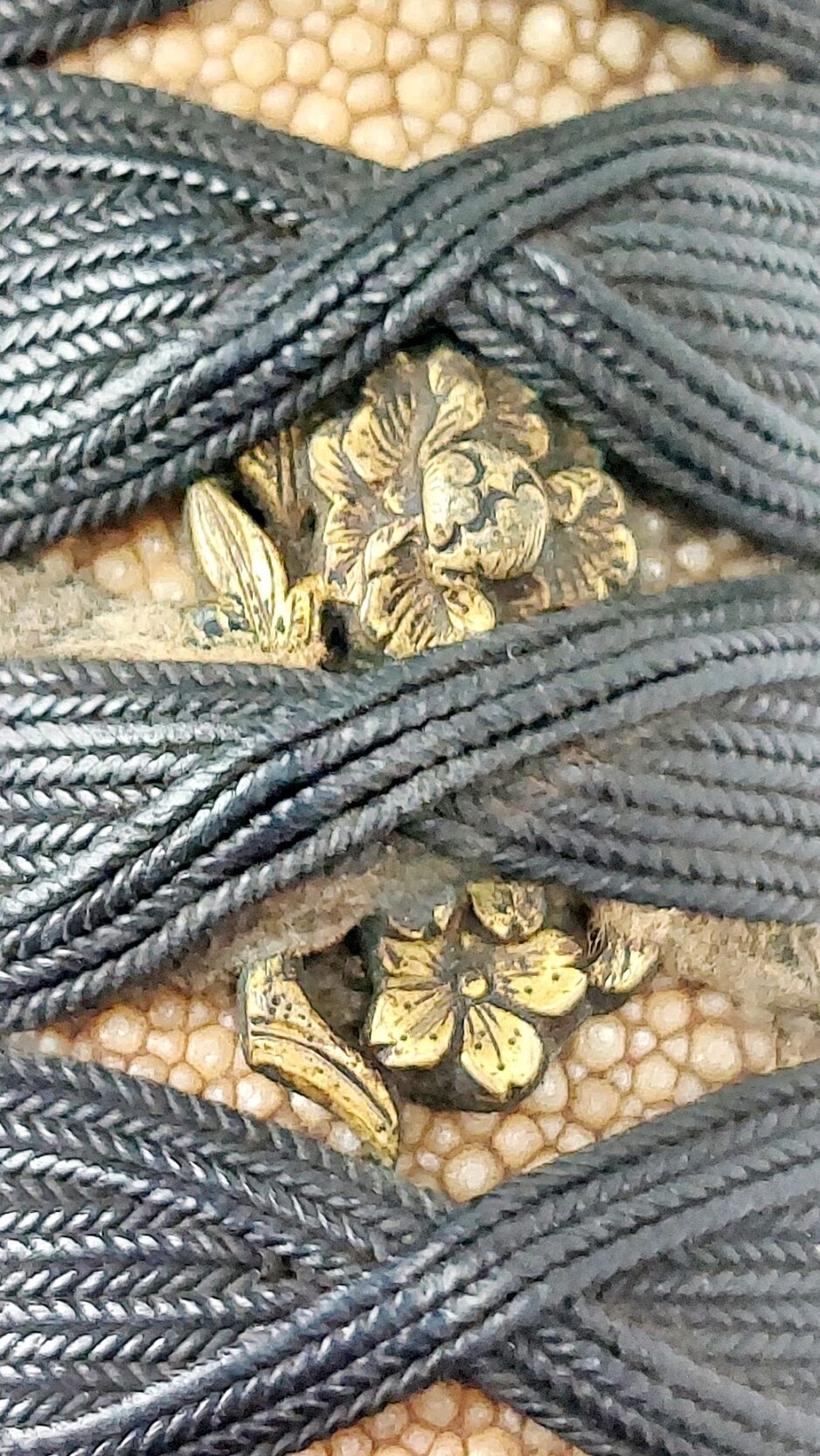
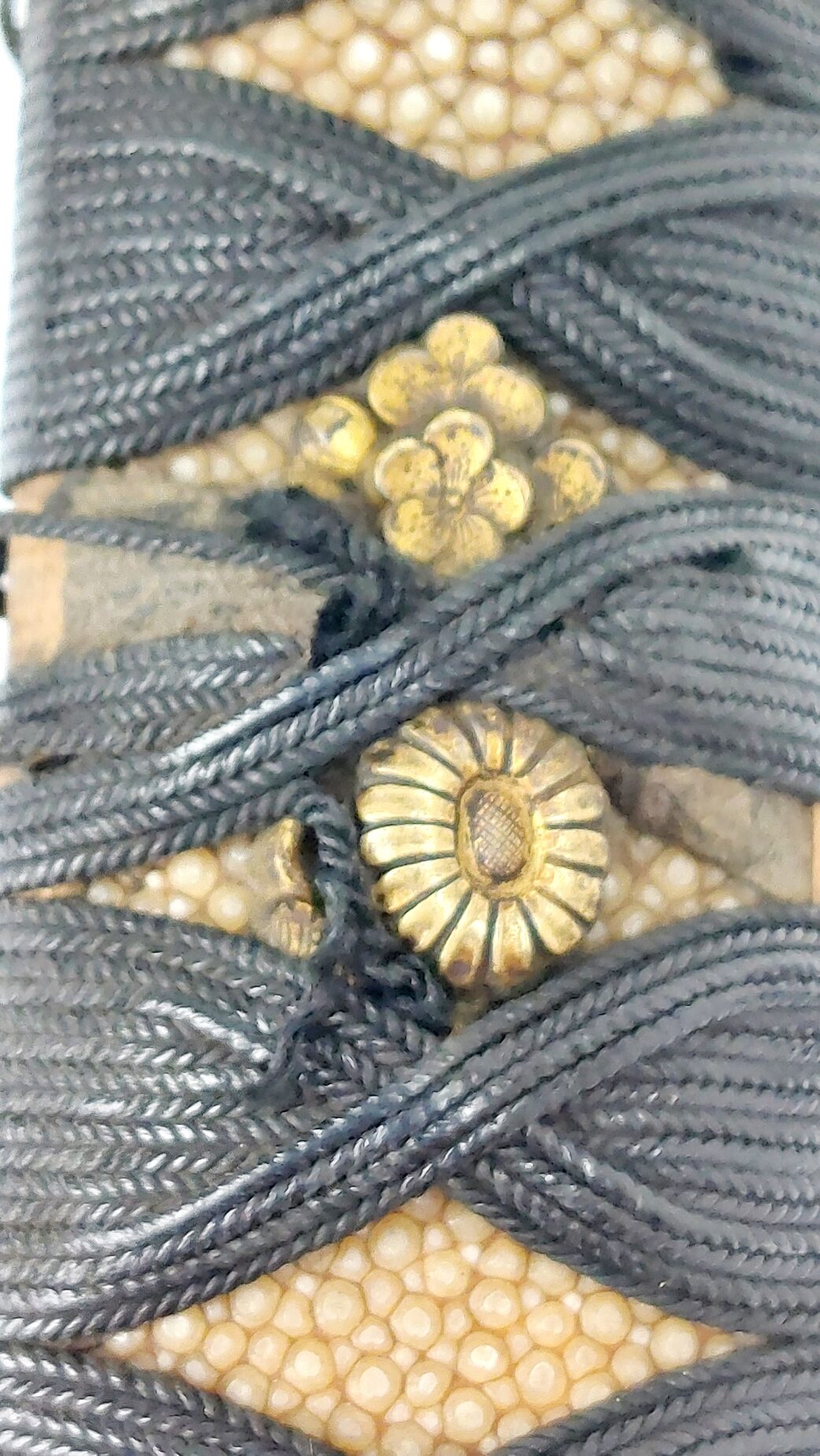
- Decorative gilt floral menuki beneath the wrapping
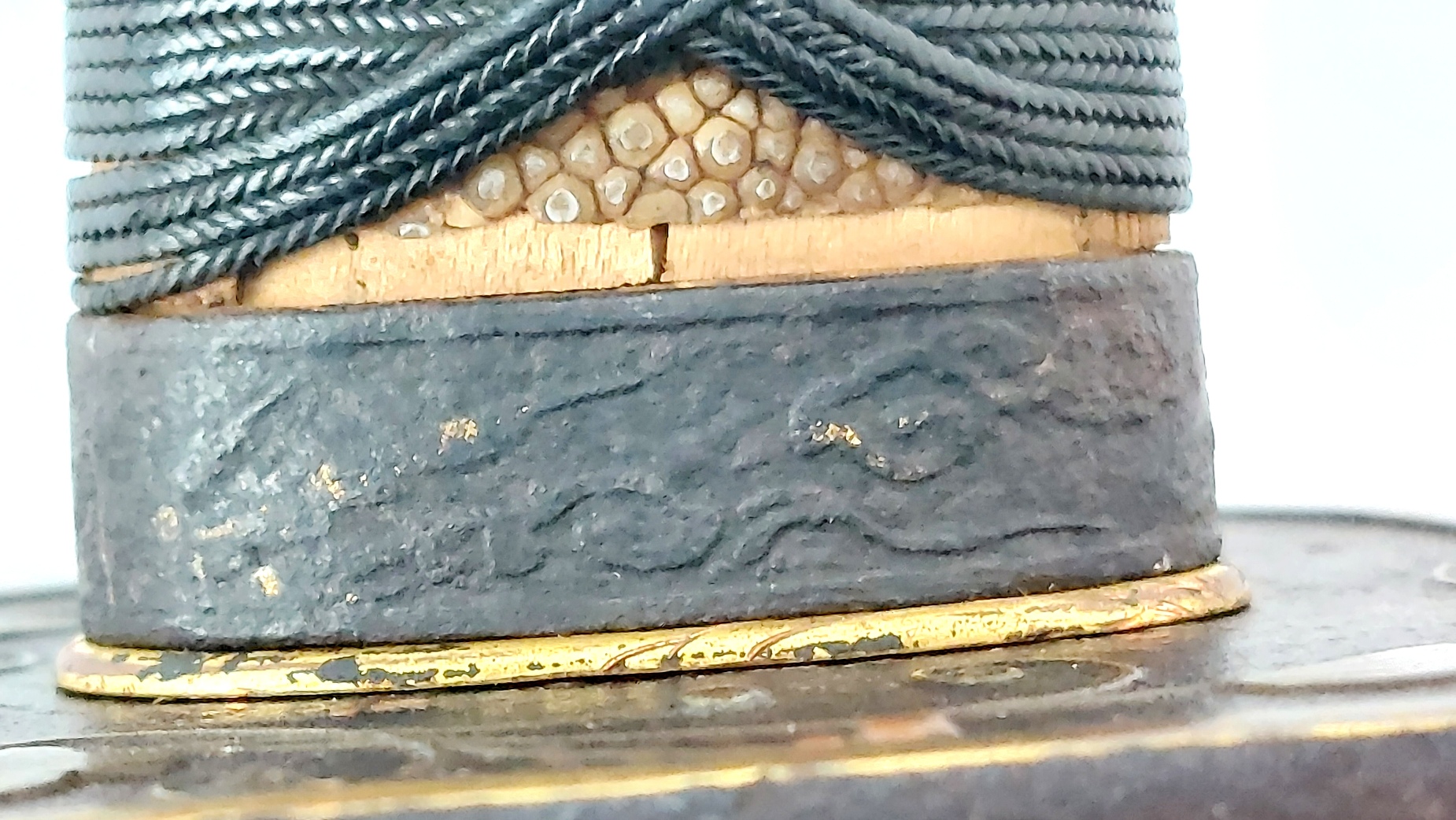
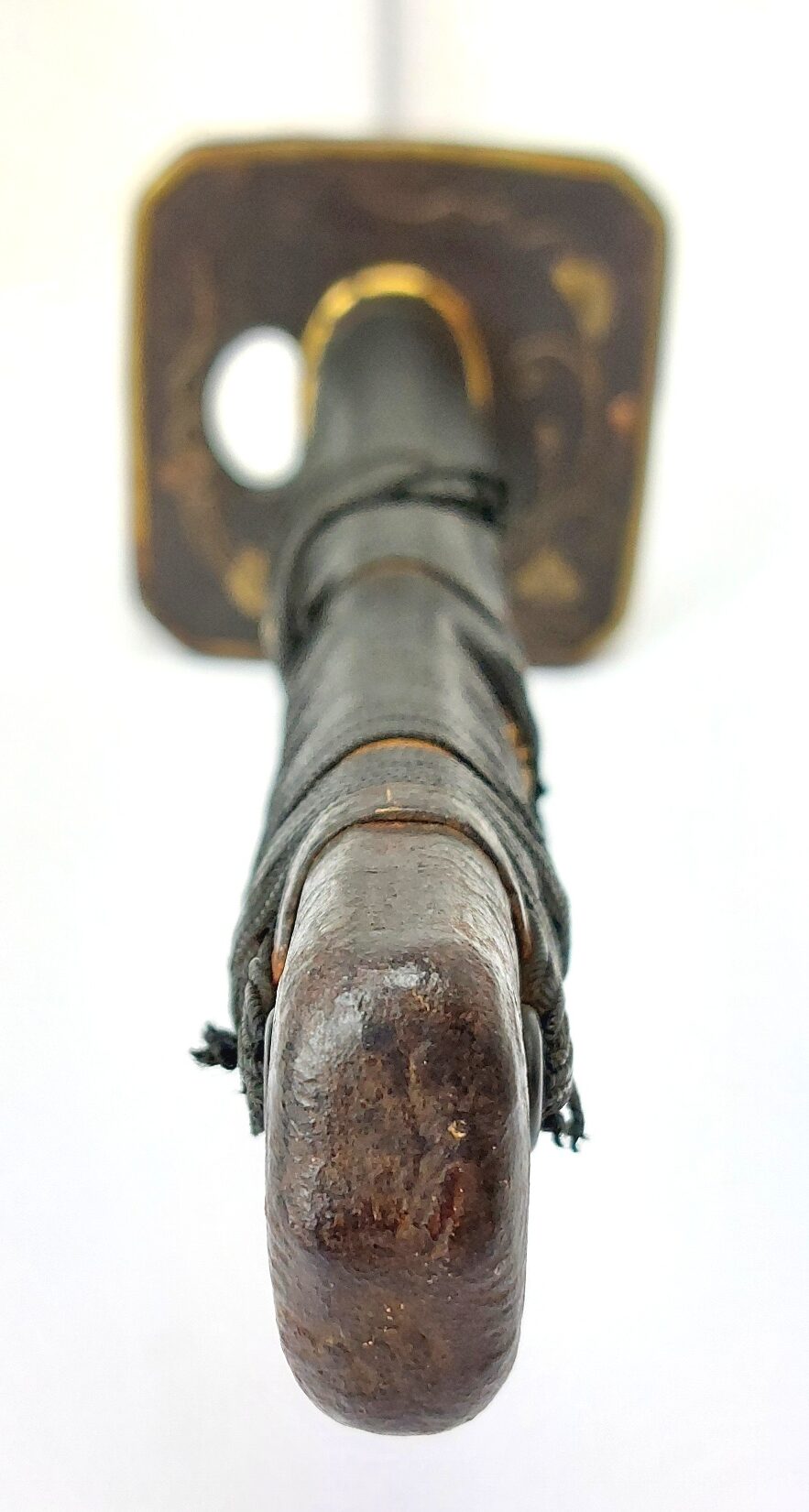
- Iron fuchi and kashira with gilt highlights
- Original habaki
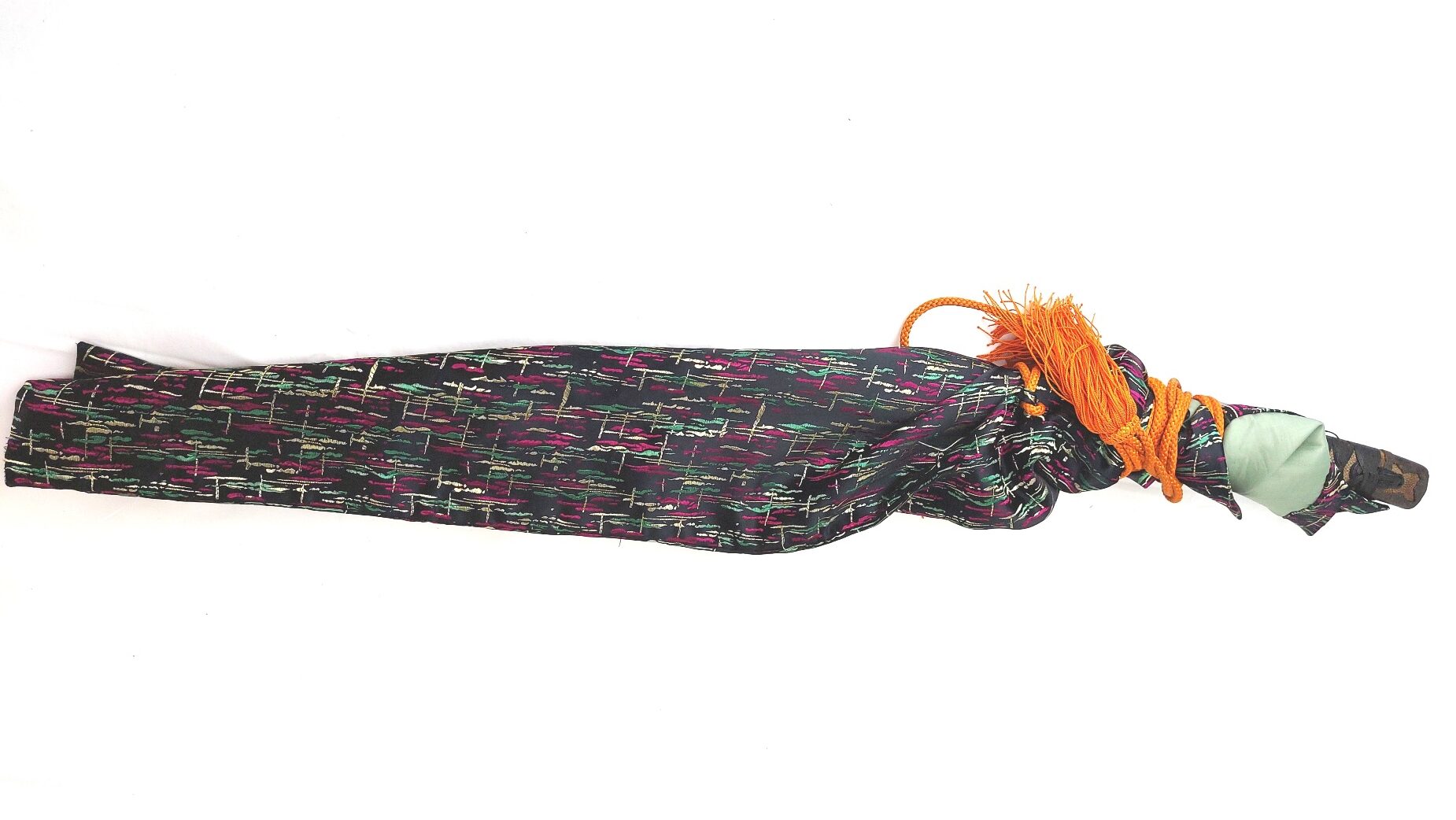
- Includes patterned storage sword bag
A Japanese wakizashi dating to the Late Muromachi period (c.1550–1600), presented in complete traditional koshirae and accompanied by its original AOI-Art appraisal certificate, issued in Tokyo on 19 July 2007.
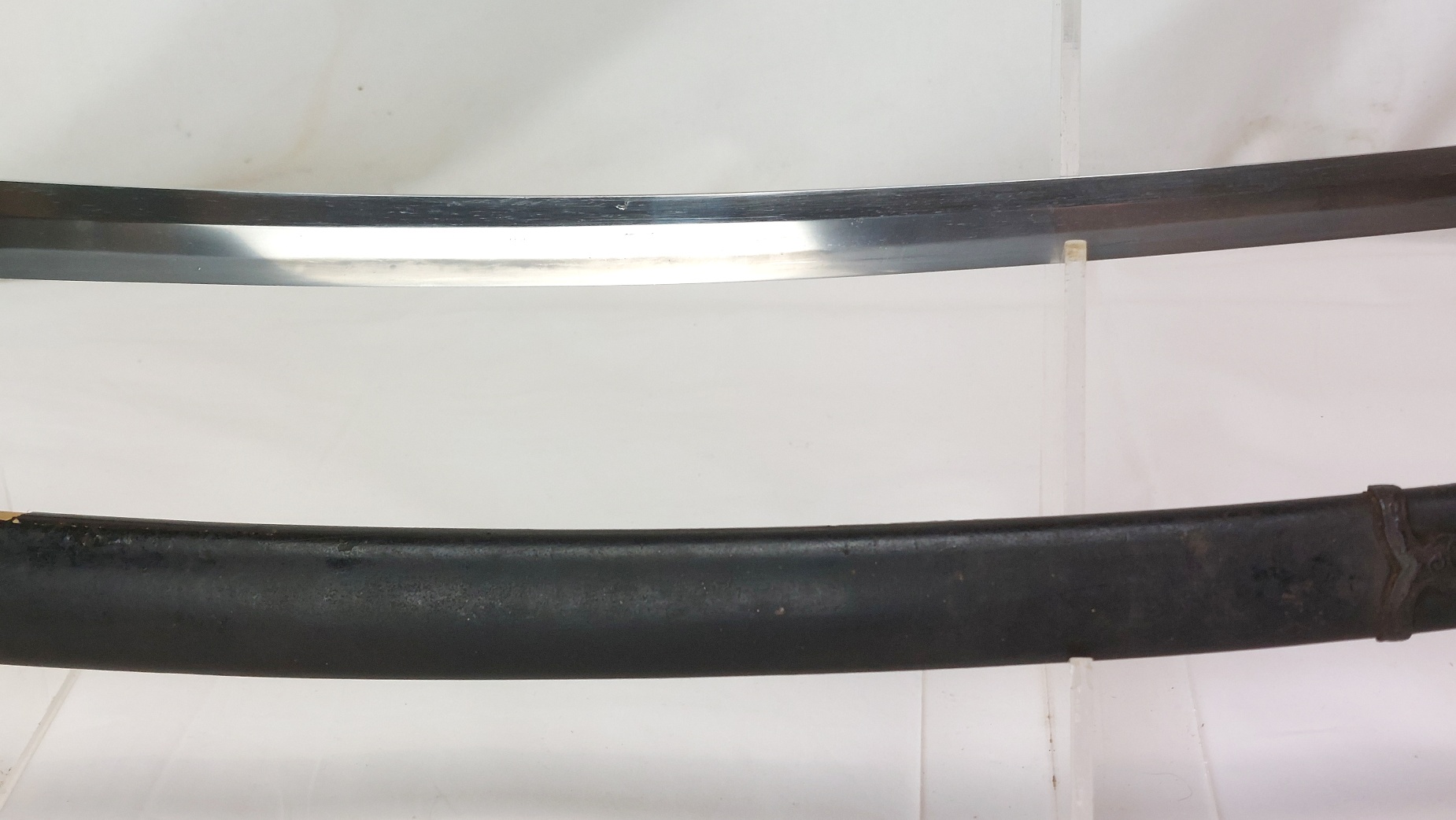
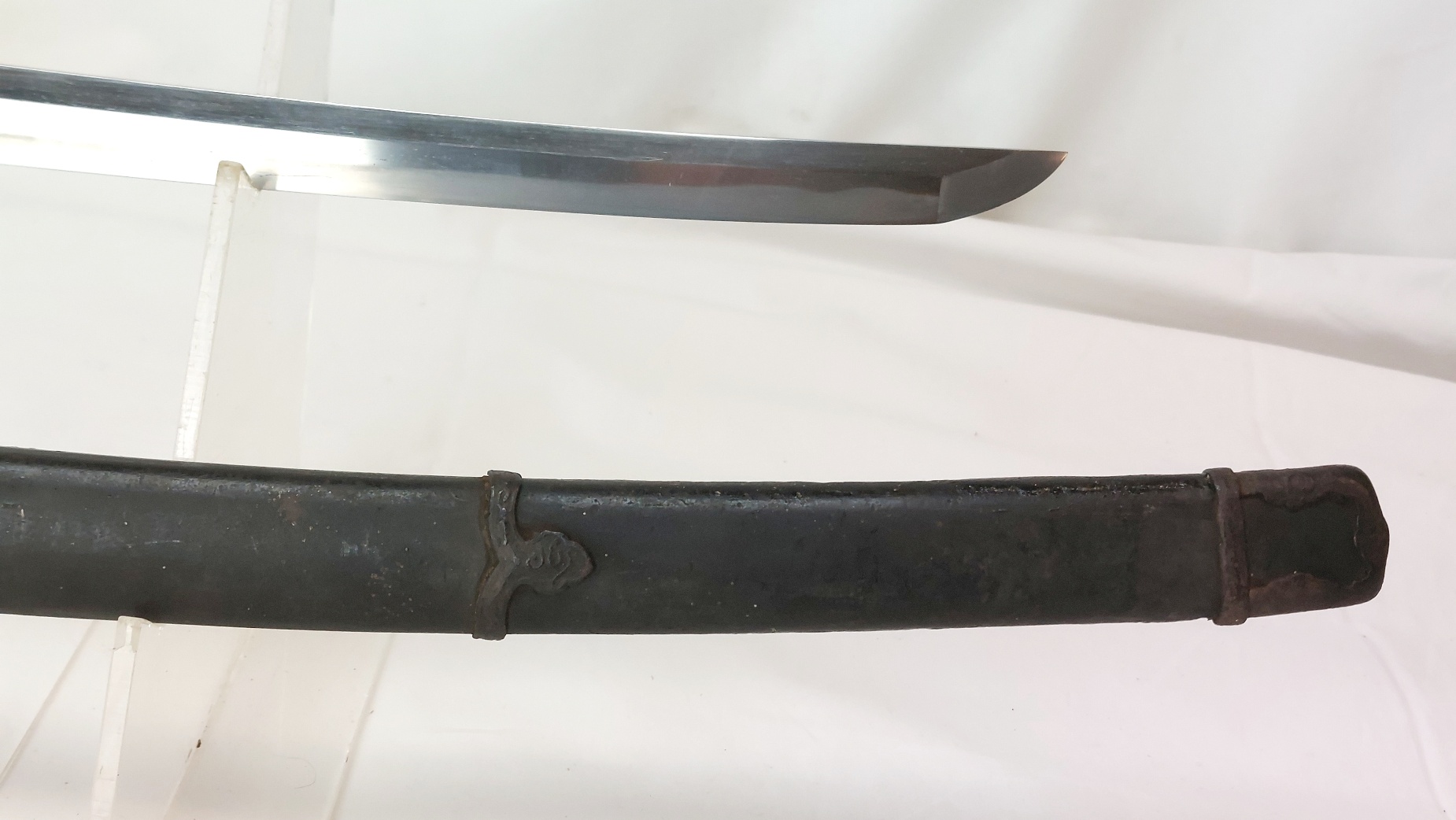
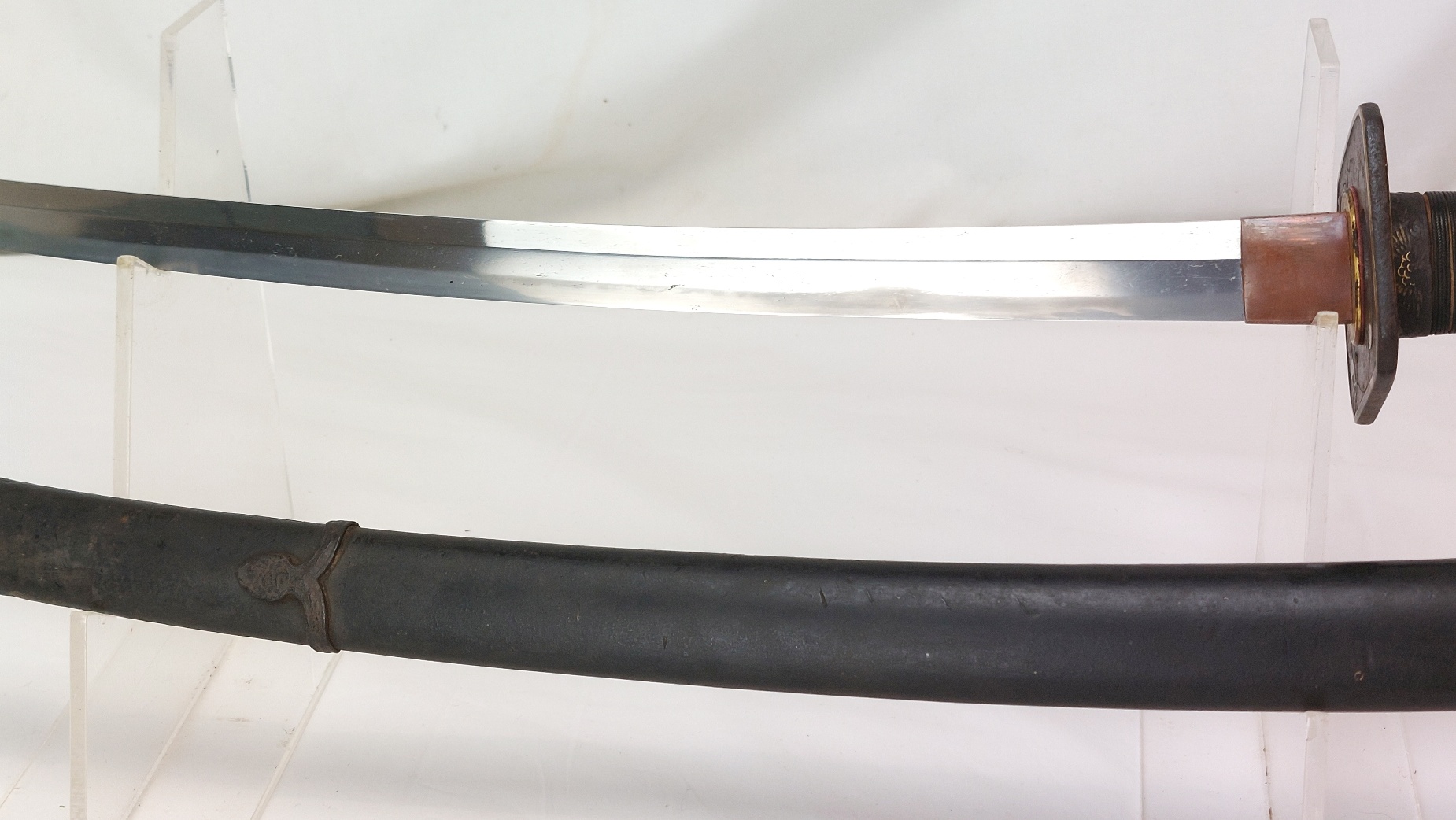
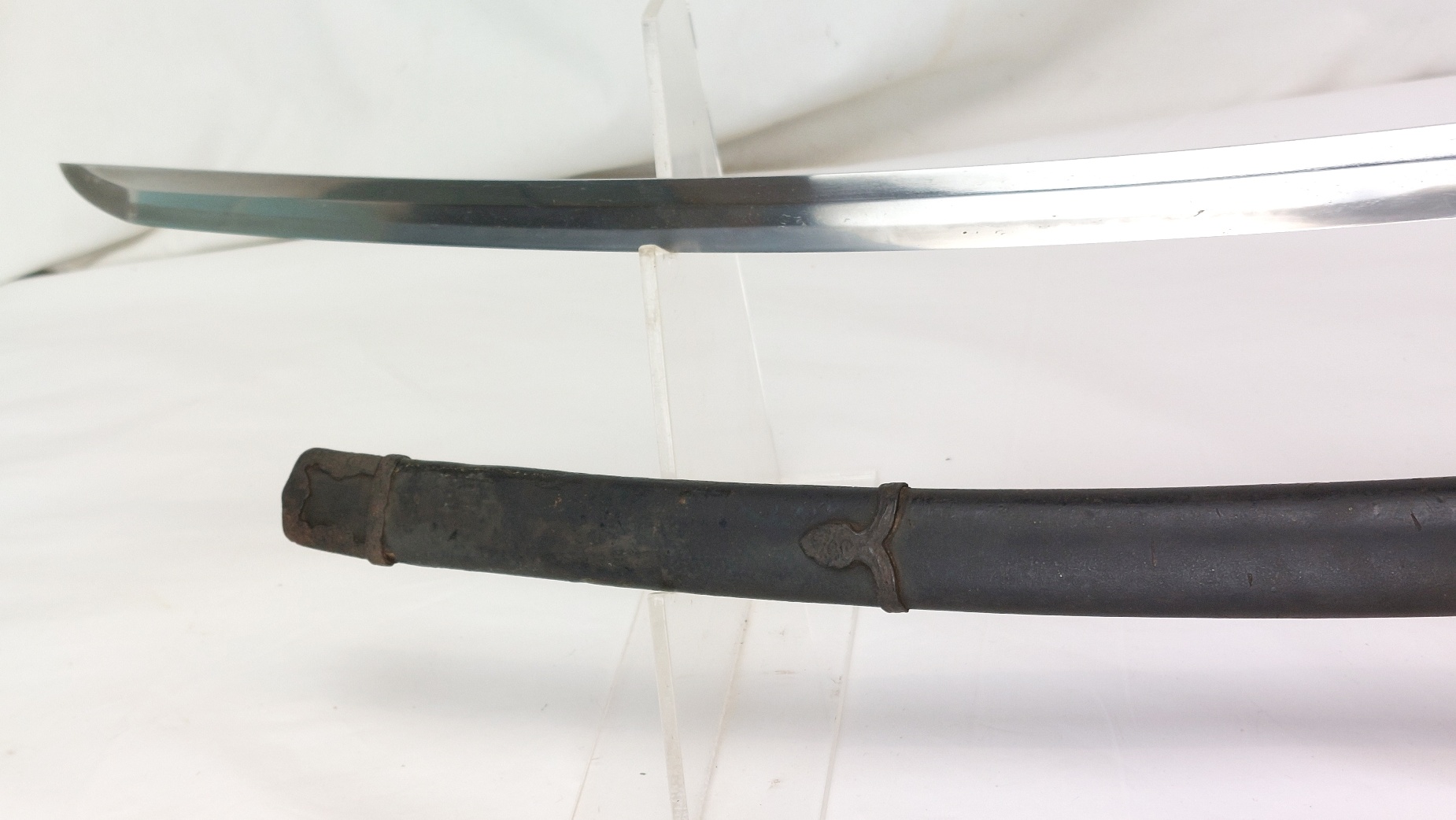
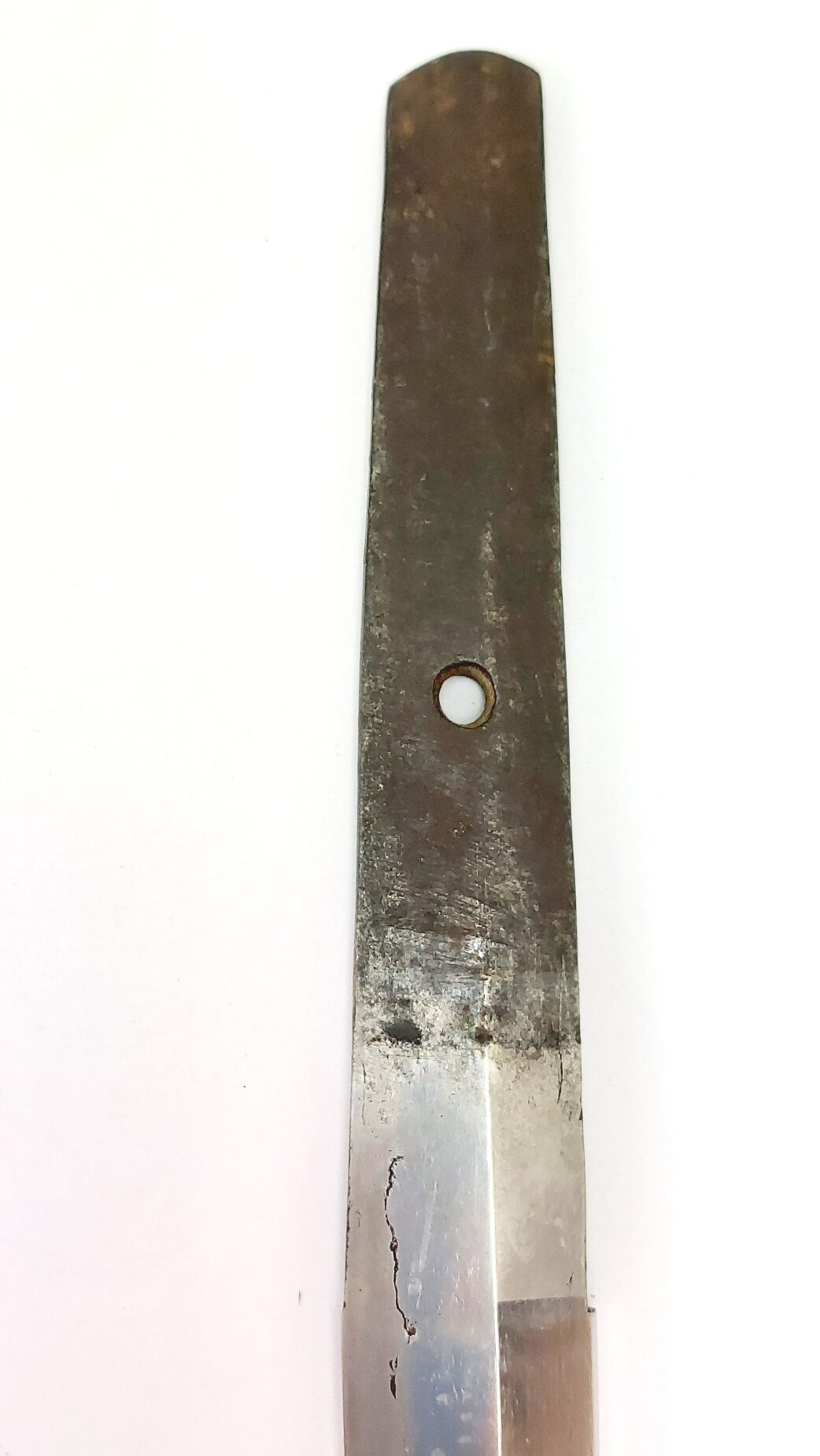
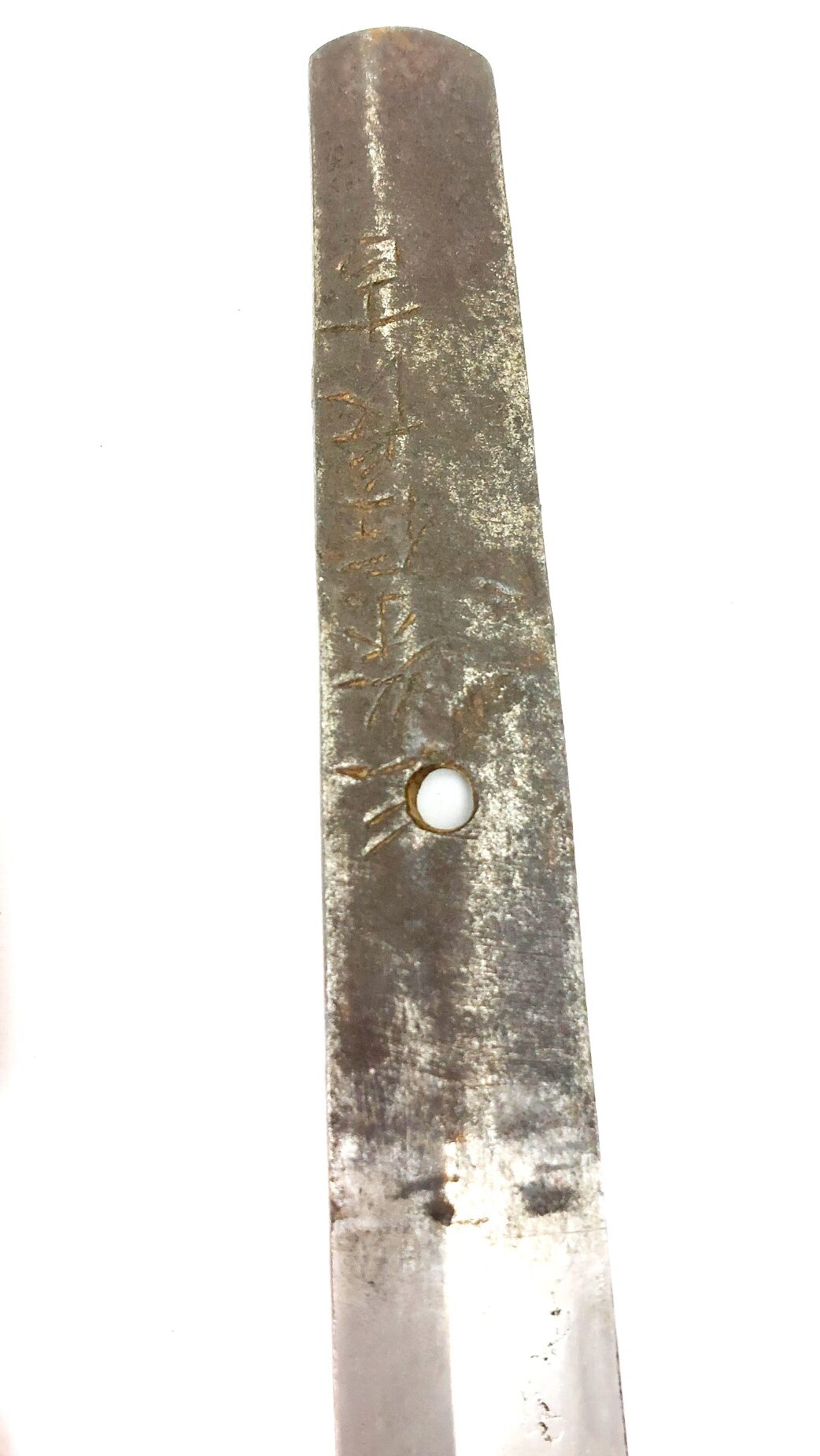
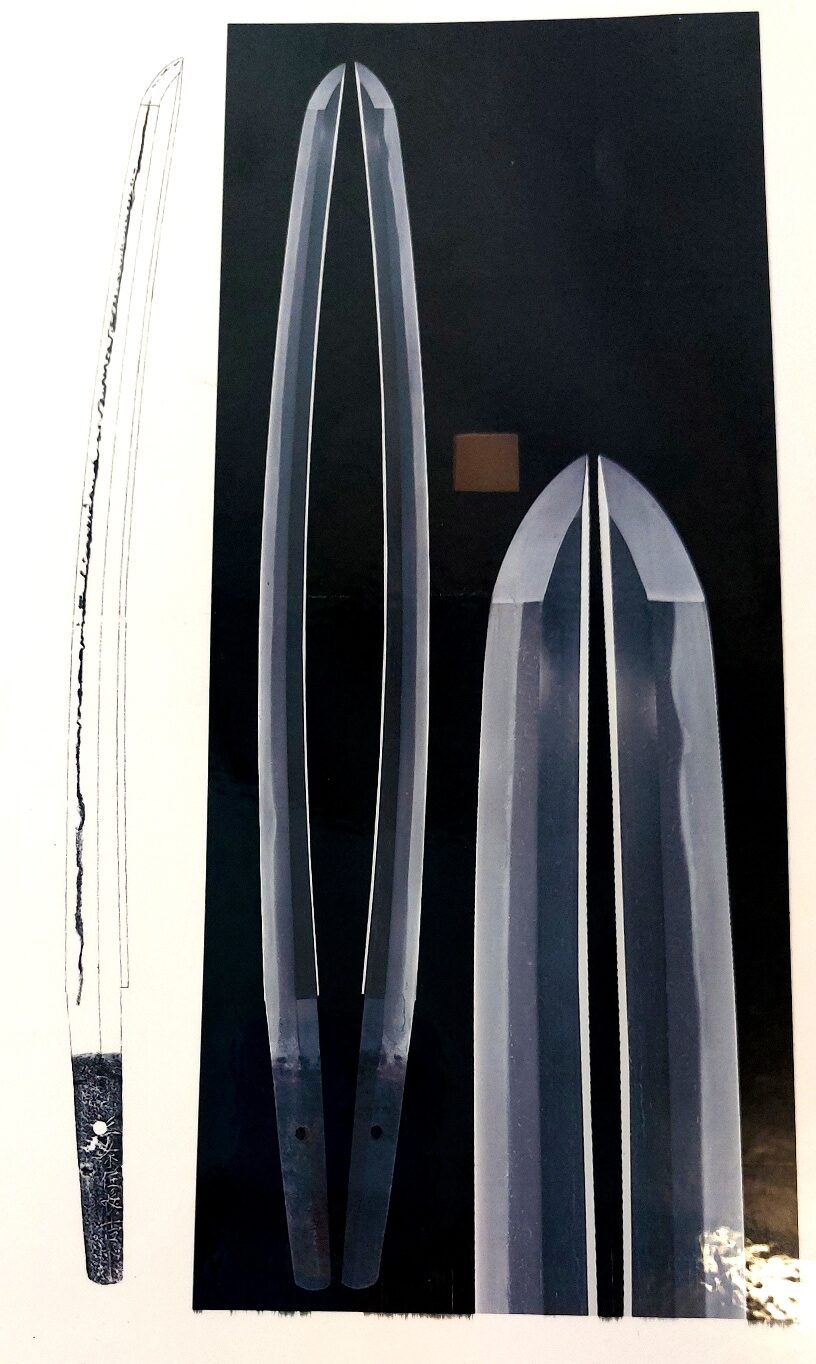
The blade measures approximately 53.6cm and displays an elegant curvature with a well-proportioned kissaki, retaining an attractive traditional polish. The tang is signed 三条住長吉 (Sanjō Jū Nagayoshi – "Nagayoshi, resident of Sanjō"). The accompanying AOI-Art appraisal concludes that this inscription is gimei (not considered a genuine signature) and instead attributes the workmanship to the Kinbō (金房) School, dating the blade to the Late Muromachi period. The appraisal further notes a mixed itame-mokume hada with a suguha hamon incorporating ashi, features considered characteristic of the school.
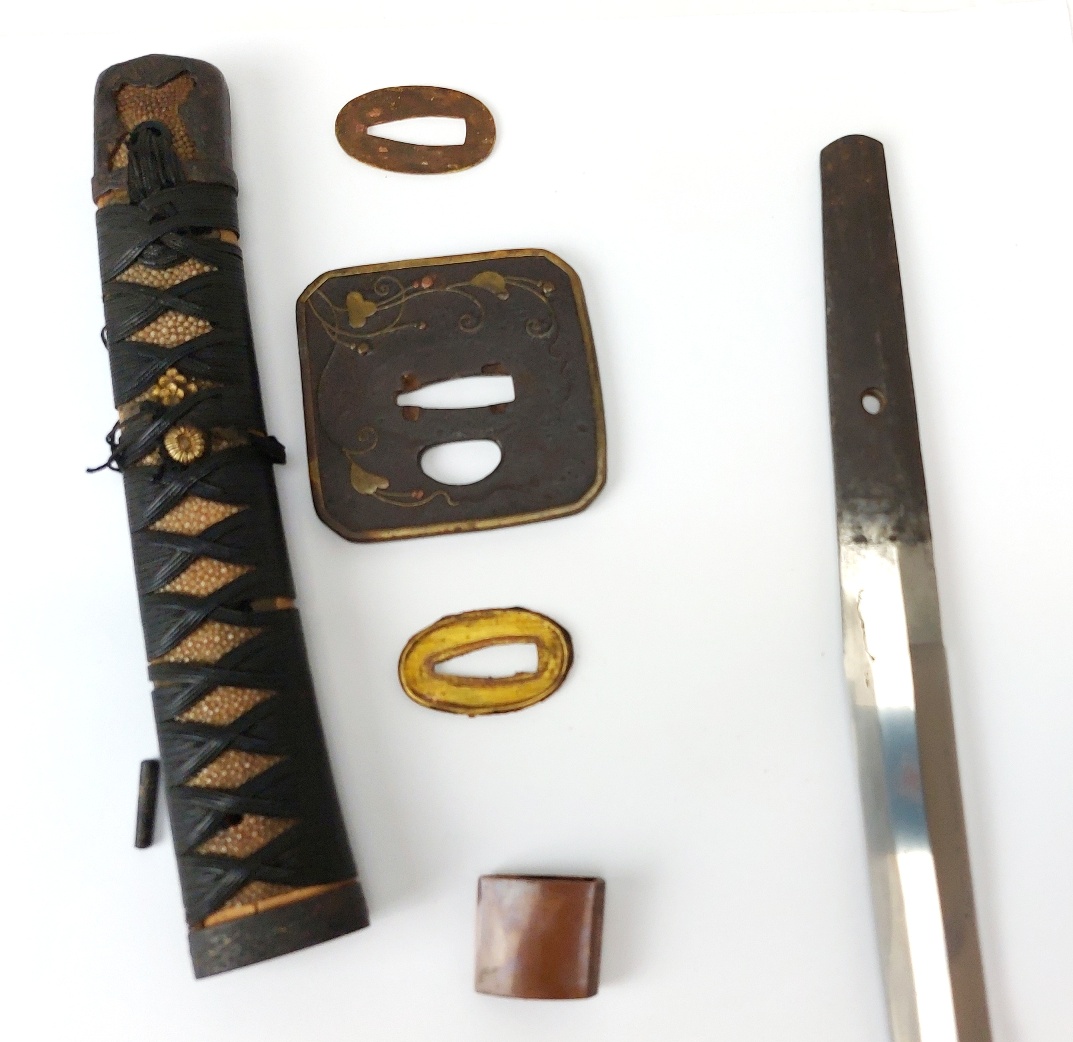
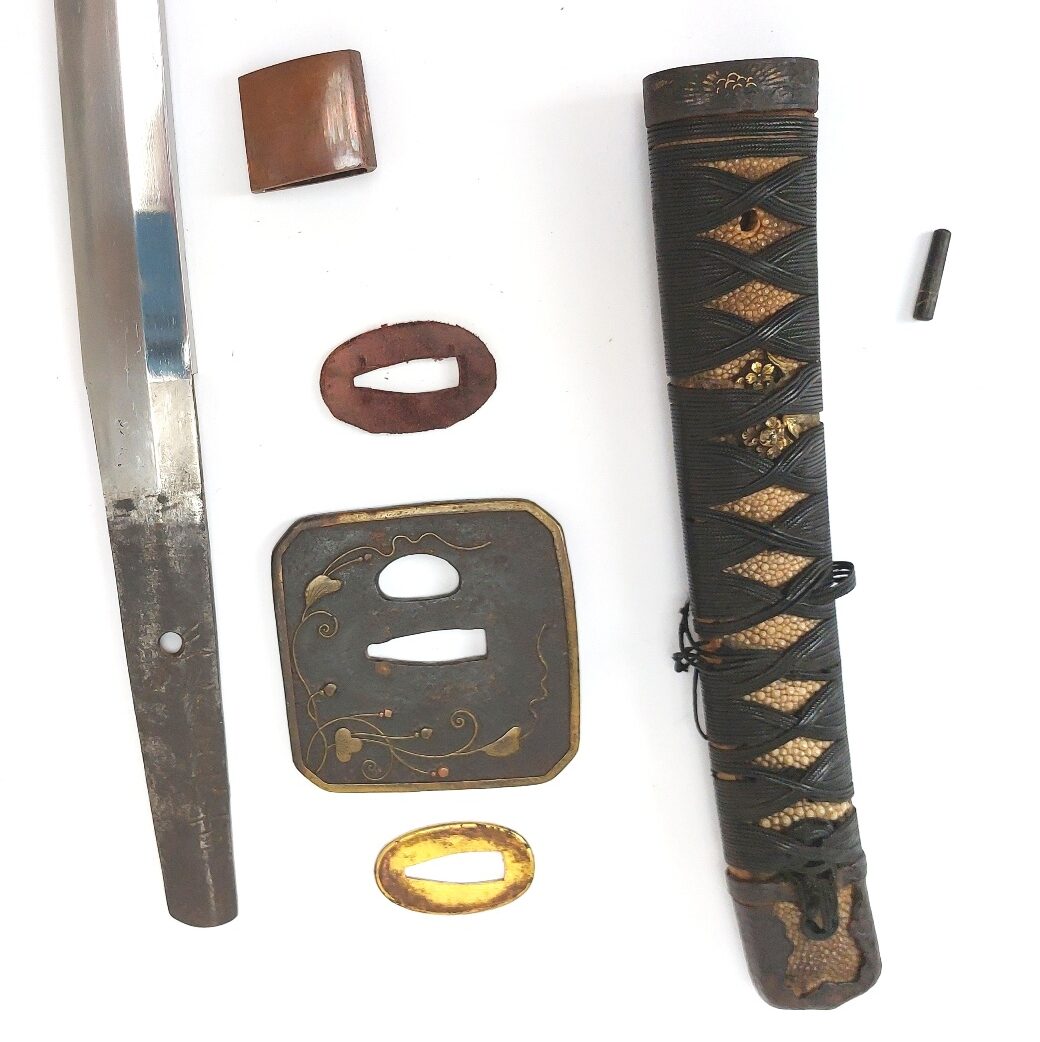
The sword is mounted in attractive period koshirae. The tsuka is covered in genuine samegawa beneath a black silk ito wrap and fitted with gilt floral menuki. It is mounted with an iron fuchi and kashira retaining gilt highlights, while the square iron tsuba is decorated with delicate brass-inlaid scrolling floral ornament and retains its original seppa and copper habaki. The black lacquered saya is fitted with horn mounts and complements the understated elegance of the mounting.
Accompanying the sword is its original AOI-Art appraisal certificate, together with a patterned cloth storage bag, providing useful provenance and supporting the attribution of the blade to the Kinbō tradition. This is an attractive and well-presented example of a genuine Japanese Koto-period wakizashi, combining a traditionally forged sixteenth-century blade with complete Edo-period style mountings.
Approximate Measurements: Overall length: 76.3cm. Blade length: 53.6cm
History Note:
The Kinbō (Kanabō) School emerged during the Muromachi period and is generally associated with swordsmiths working in Yamato tradition before later relocating to Mino Province. Their workmanship combines elements of both Yamato and Mino styles and was particularly respected for practical fighting swords and spear blades.
Many Japanese swords bear signatures that were added later to increase commercial appeal. Such inscriptions are known as gimei ("false signatures") and are well recognised within Japanese sword scholarship. Rather than diminishing historical interest, a blade may still be highly regarded when its workmanship can be confidently attributed to an established school, as is the case here according to the accompanying AOI-Art appraisal.
*Condition*
Presented in good overall condition commensurate with age. The blade retains an attractive polish with light age-related surface marks and evidence of careful use and maintenance over its lifetime. The tang bears the signature Sanjō Jū Nagayoshi, visible following disassembly of the hilt.
The koshirae remains substantially complete. The black lacquer saya displays expected age-related wear, minor scuffs and handling marks. The iron tsuba, fuchi and kashira exhibit an attractive aged patina with traces of gilt decoration remaining. The samegawa is well preserved beneath the black silk tsuka wrap, although the wrap shows areas of looseness, fraying and several broken strands consistent with age. The gilt floral menuki remain in place beneath the wrapping.
The sword has been carefully disassembled for photography, allowing the tang, signature and individual hilt components to be shown. It is accompanied by the original AOI-Art appraisal certificate and a patterned cloth storage bag. Please study the photographs carefully as they form an integral part of the description.
JAQ#IBO_300620263328