*British, Cold War Era, 7.62mm L2A2 Ball Ammunition Transit Chest – Government Explosives Safety Class 6 – Wooden Army Ammunition Box – 350 Round Capacity*
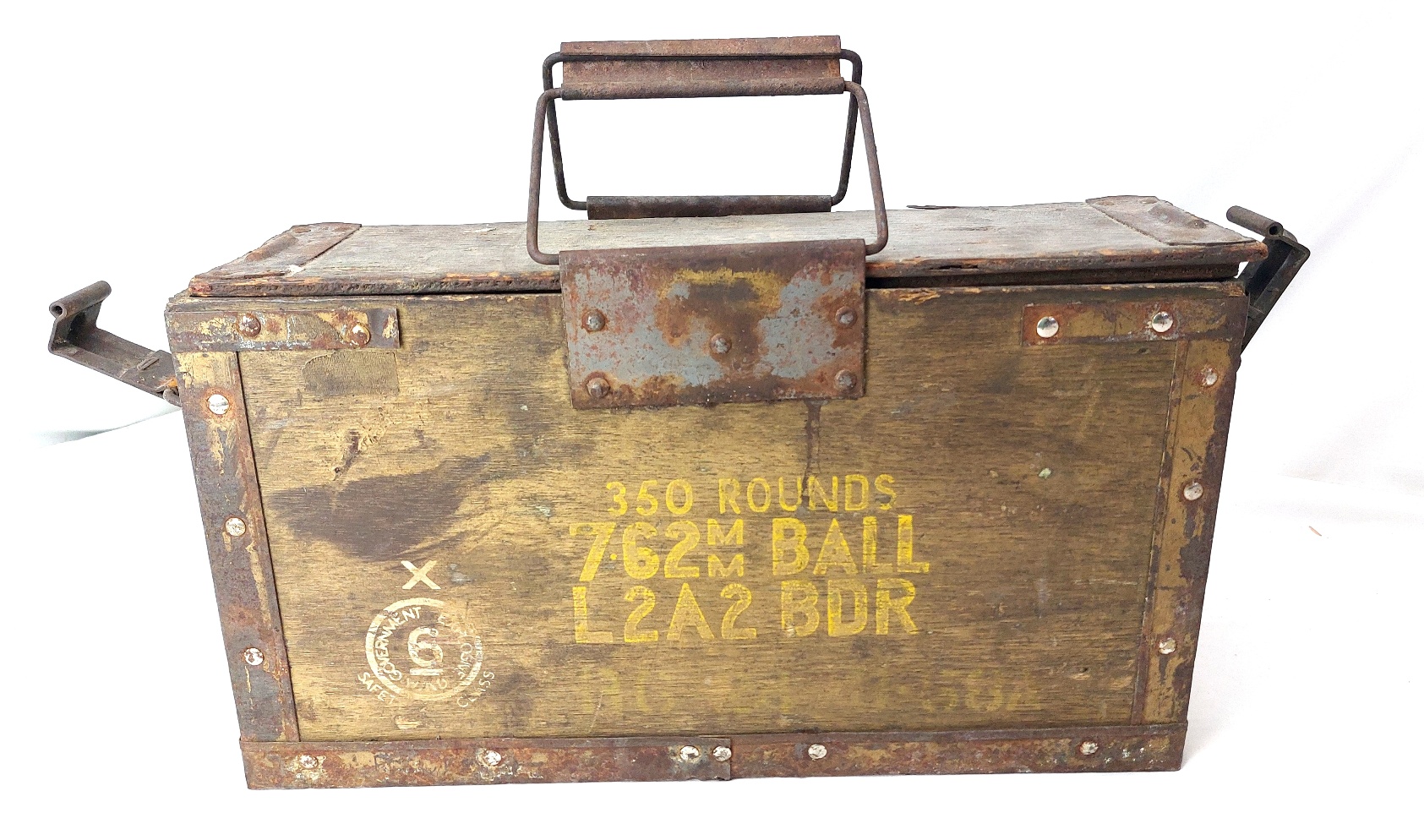
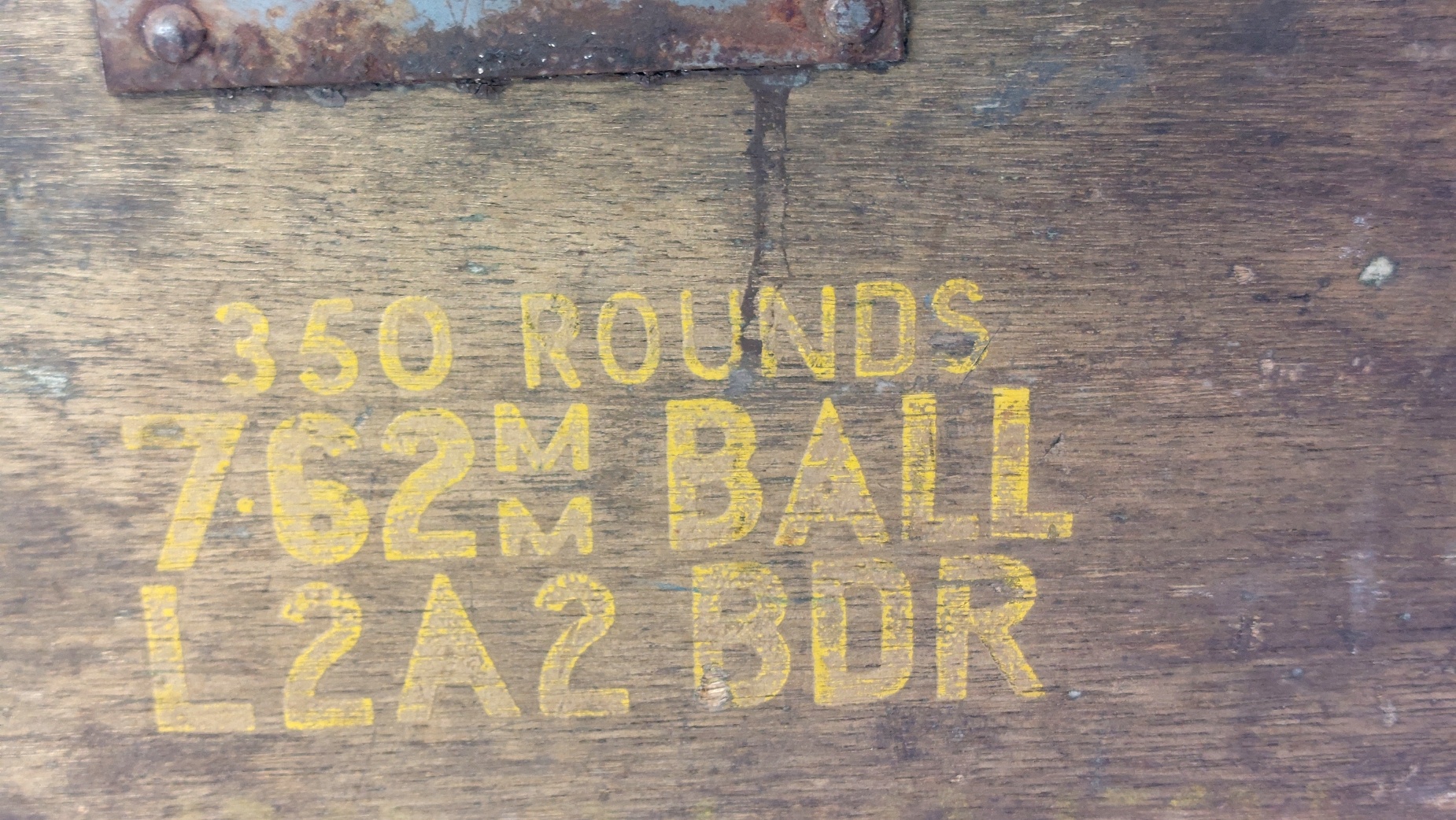
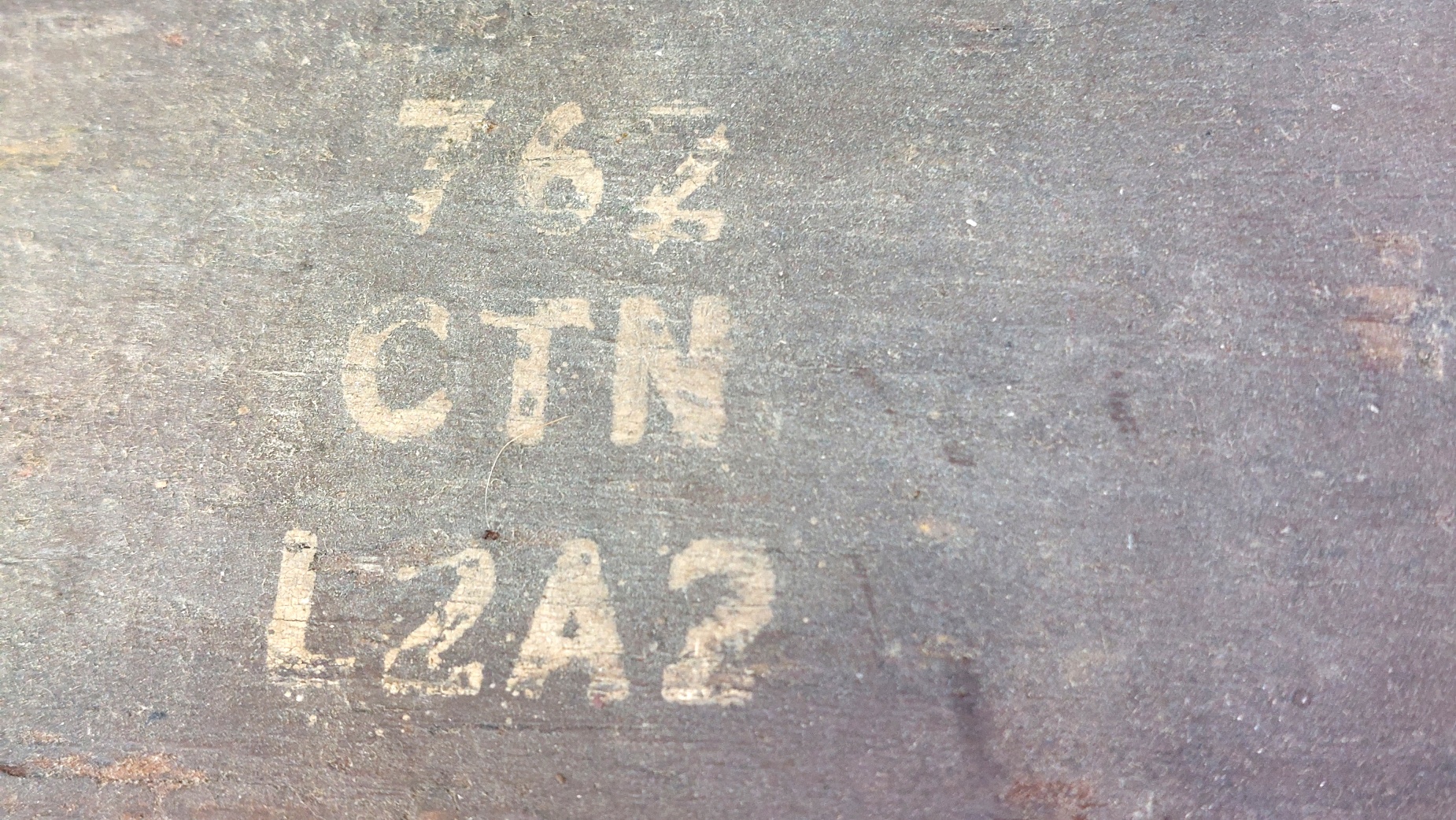
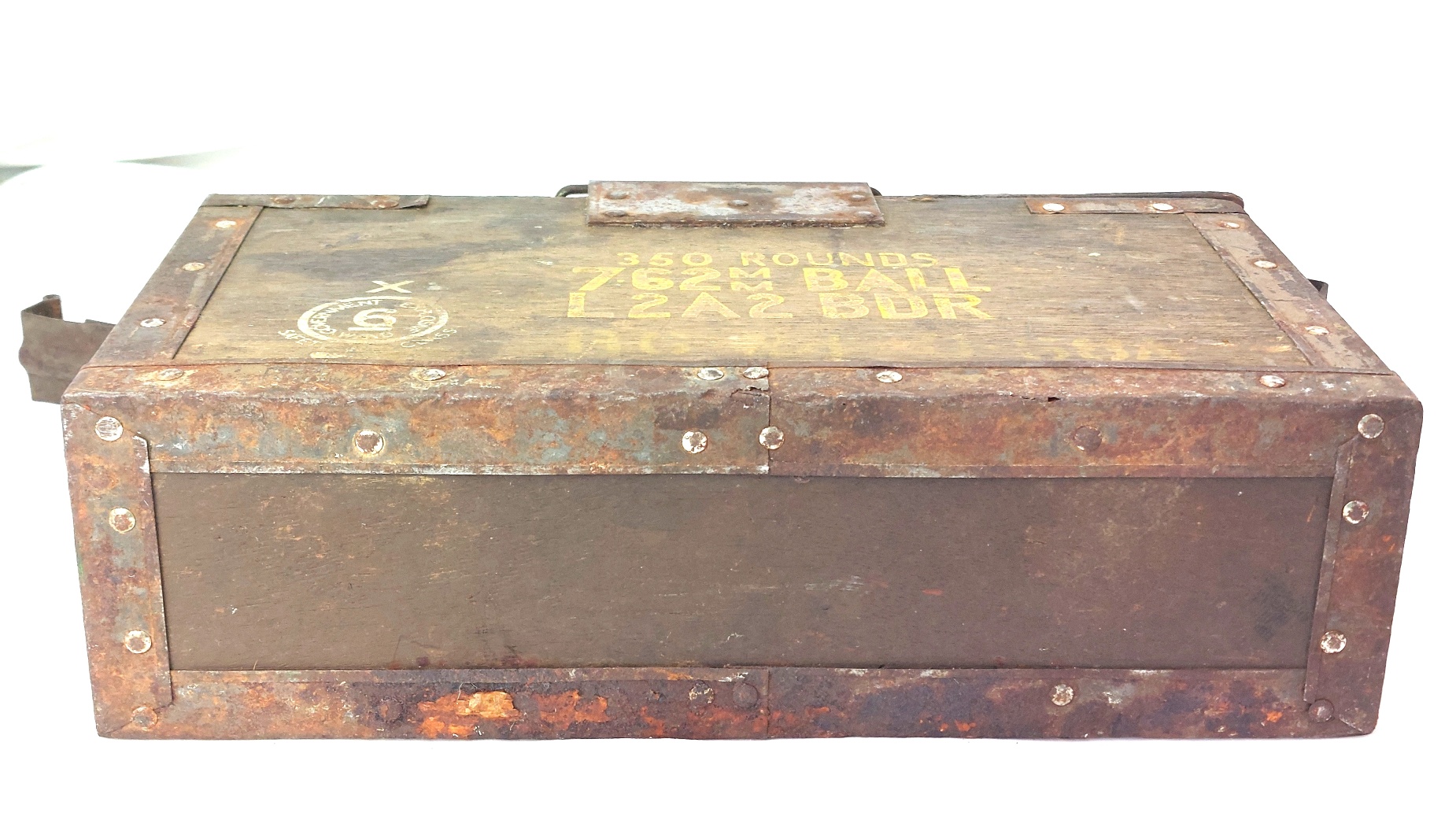
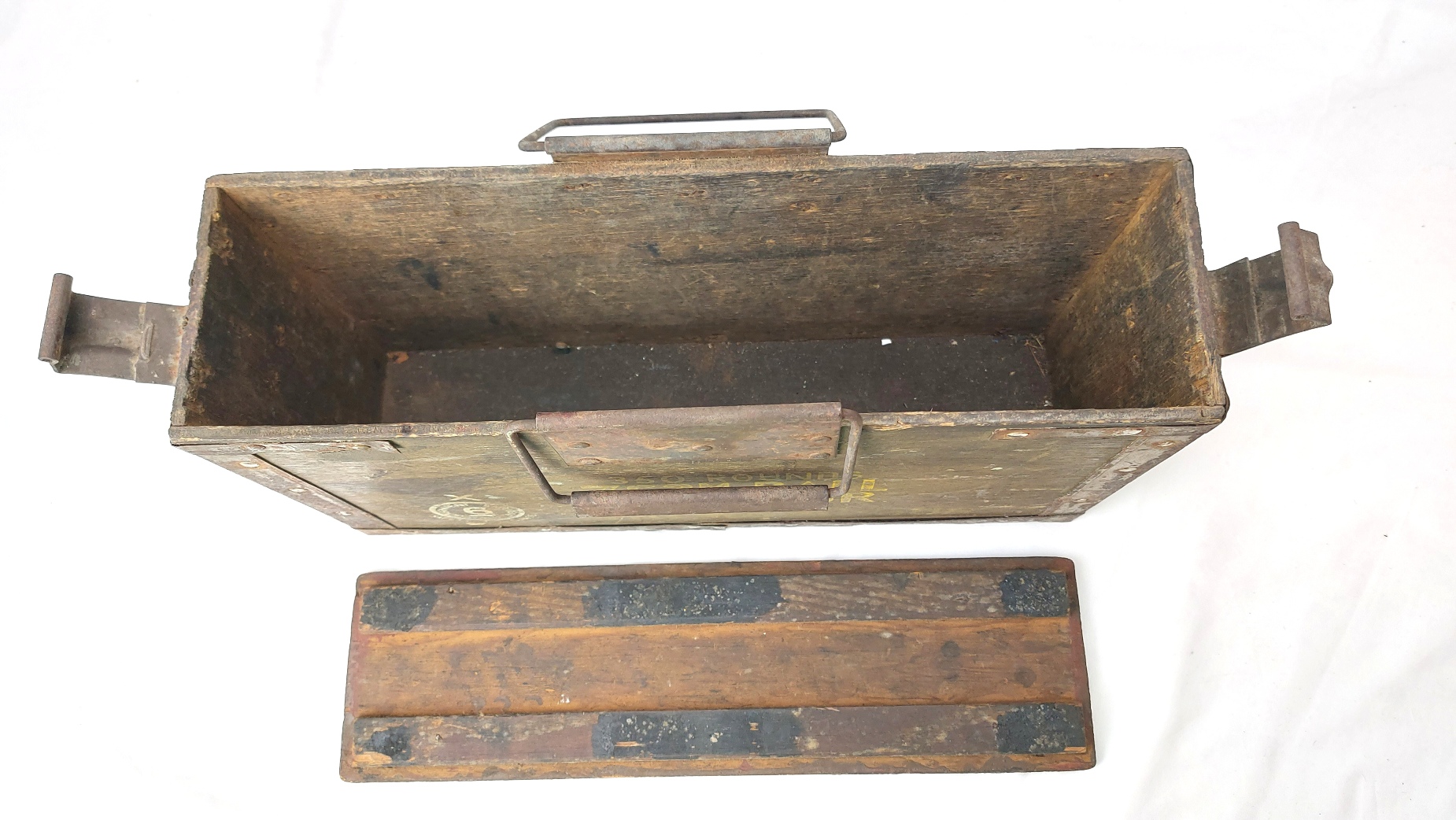
An original British Army Cold War-period wooden ammunition transit chest manufactured for the storage and transport of 350 rounds of 7.62mm L2A2 Ball ammunition, retaining its original military stencilling and classic field-service construction. Clearly marked “350 ROUNDS 7.62M BALL L2A2 BDR”, this is an authentic British military stores item from the era of the L1A1 Self Loading Rifle (SLR) and L7 GPMG, when the 7.62×51mm NATO cartridge became Britain's standard service rifle ammunition.
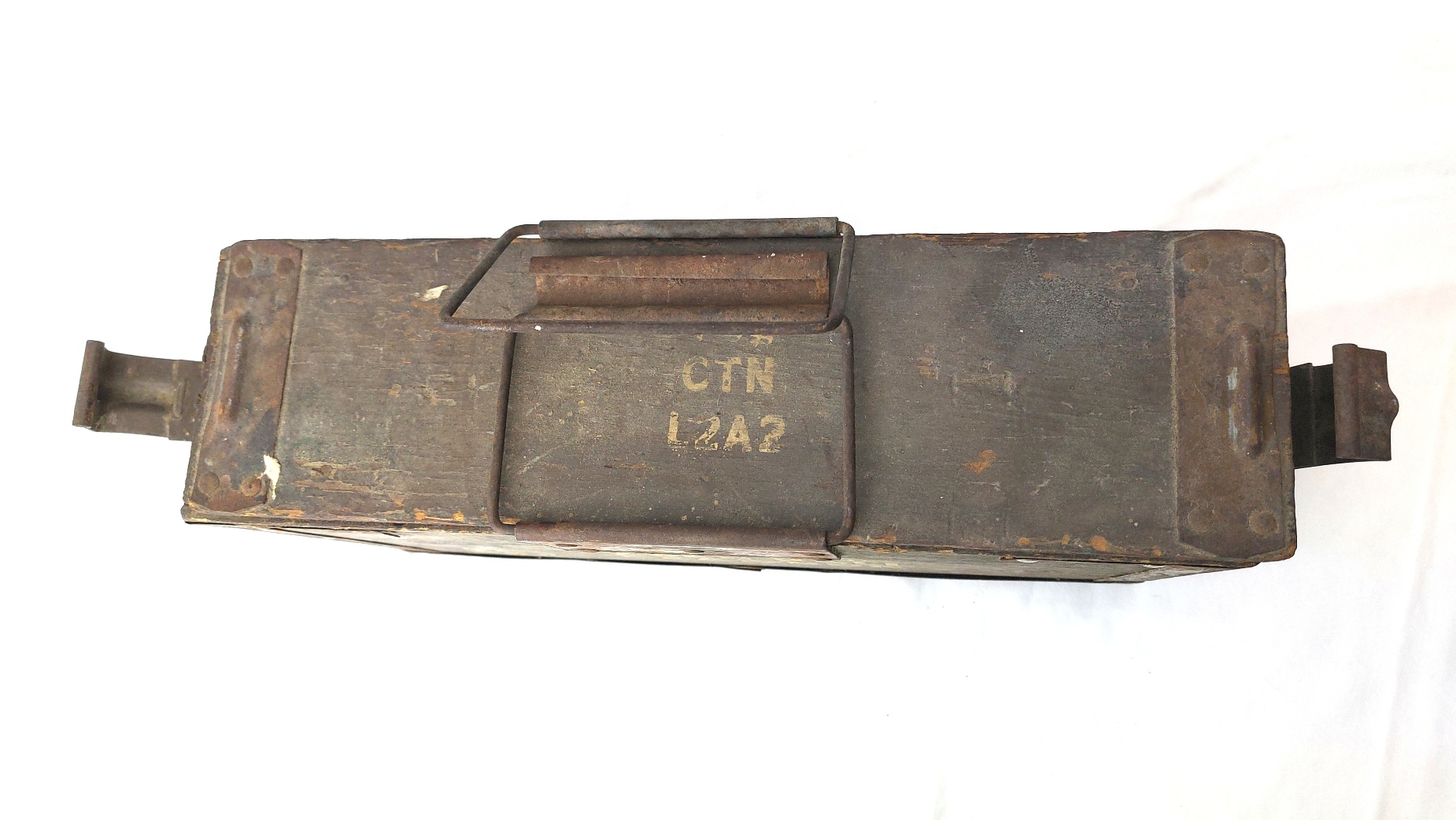
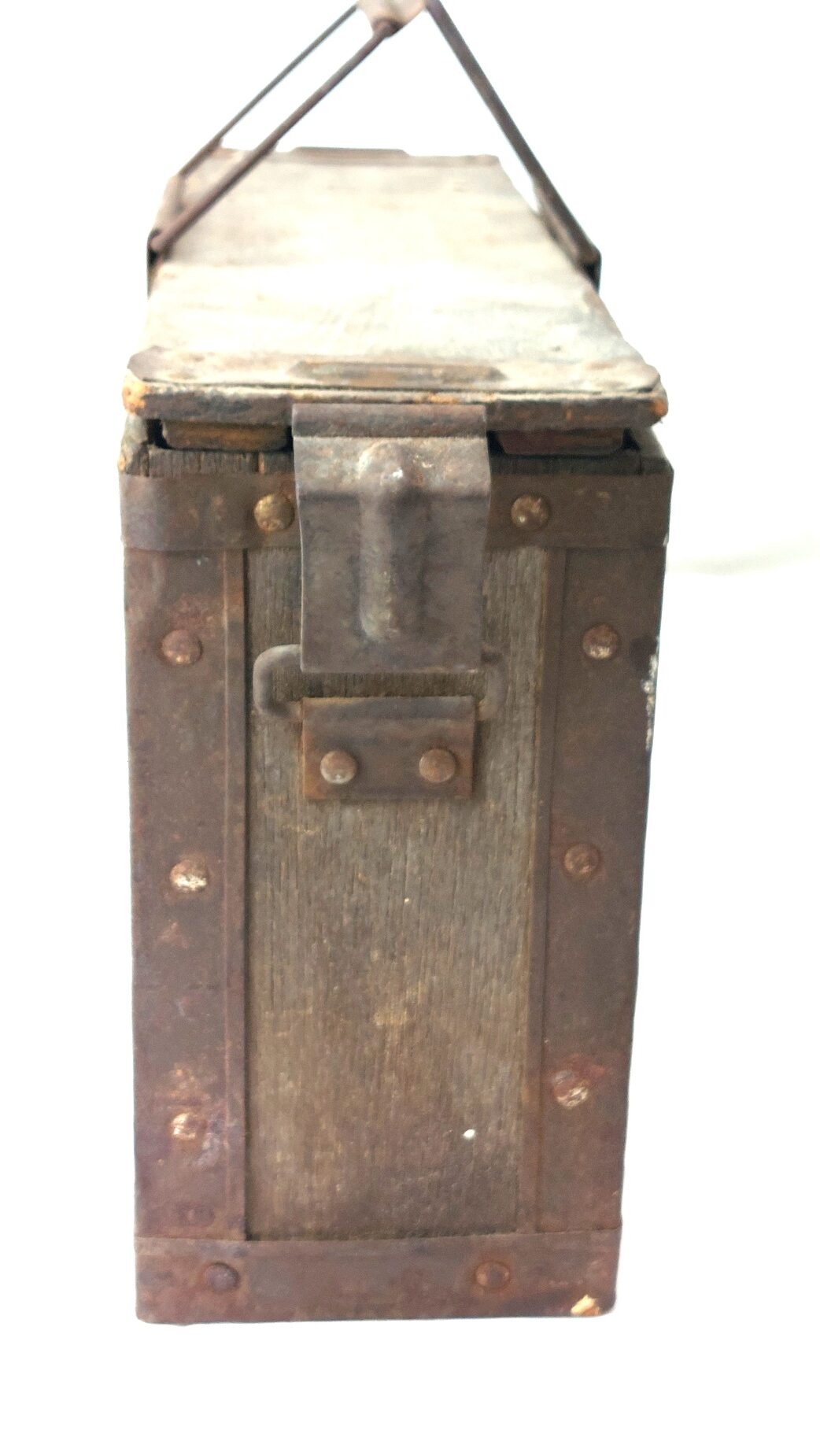
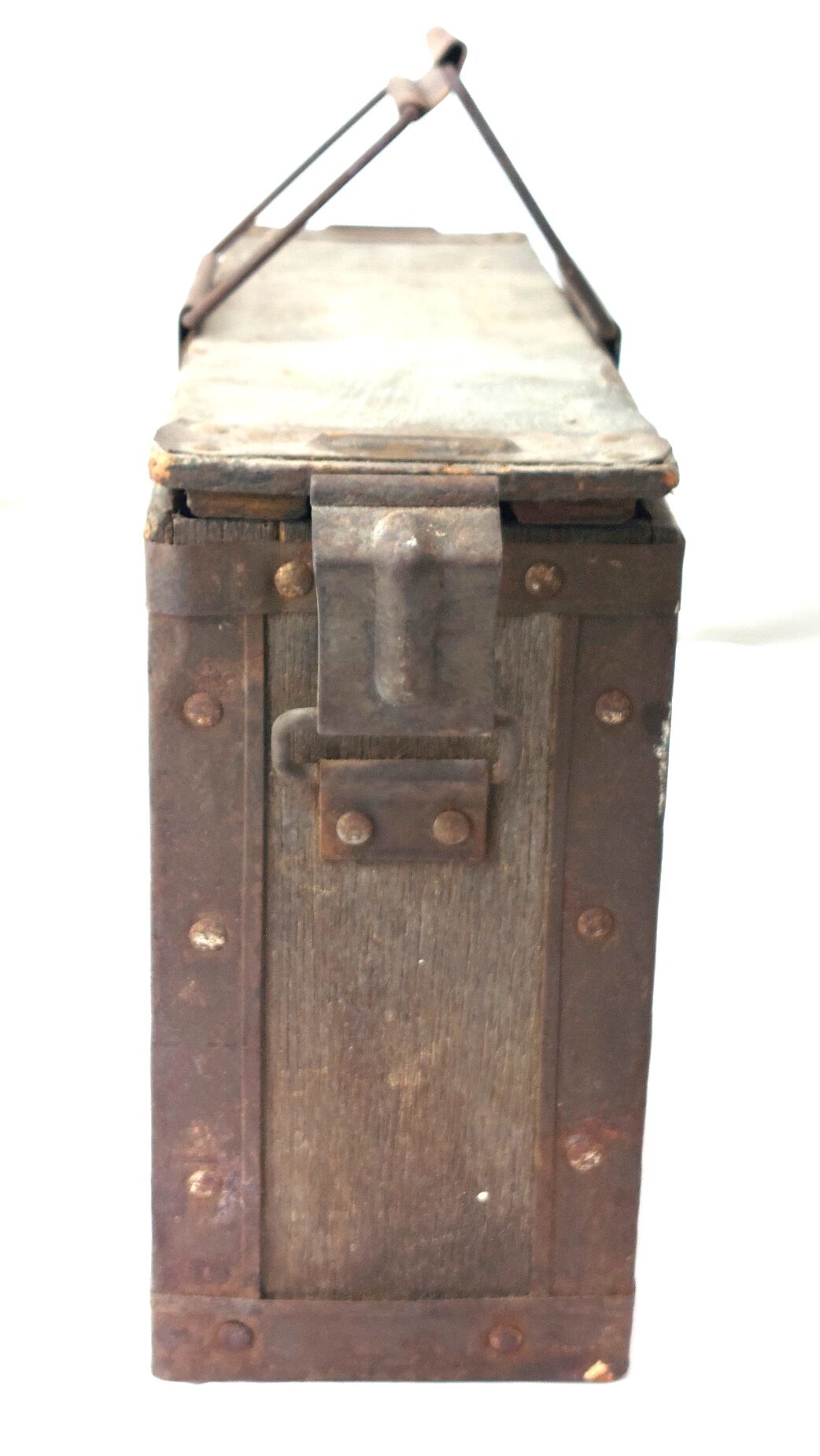
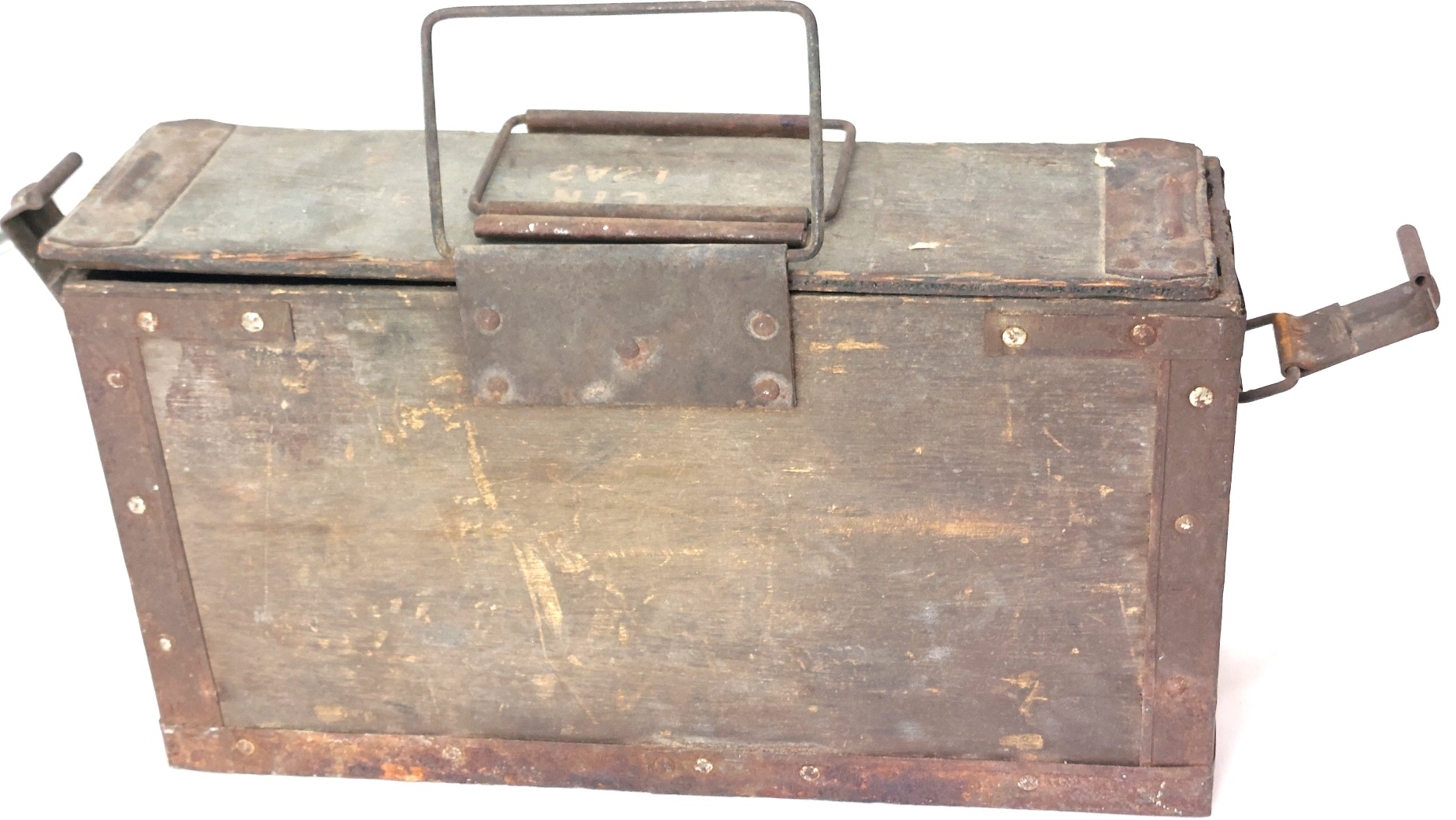
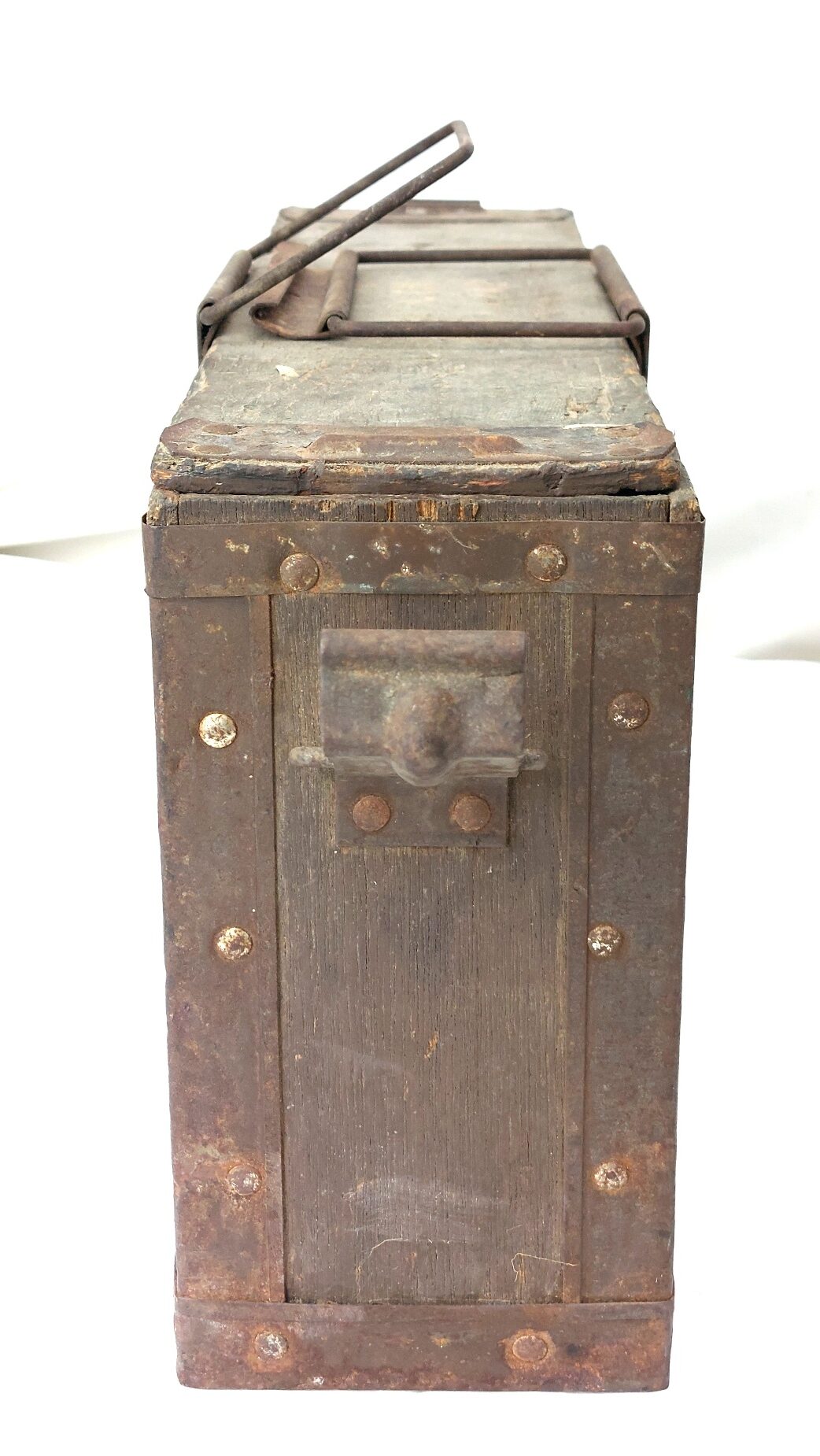
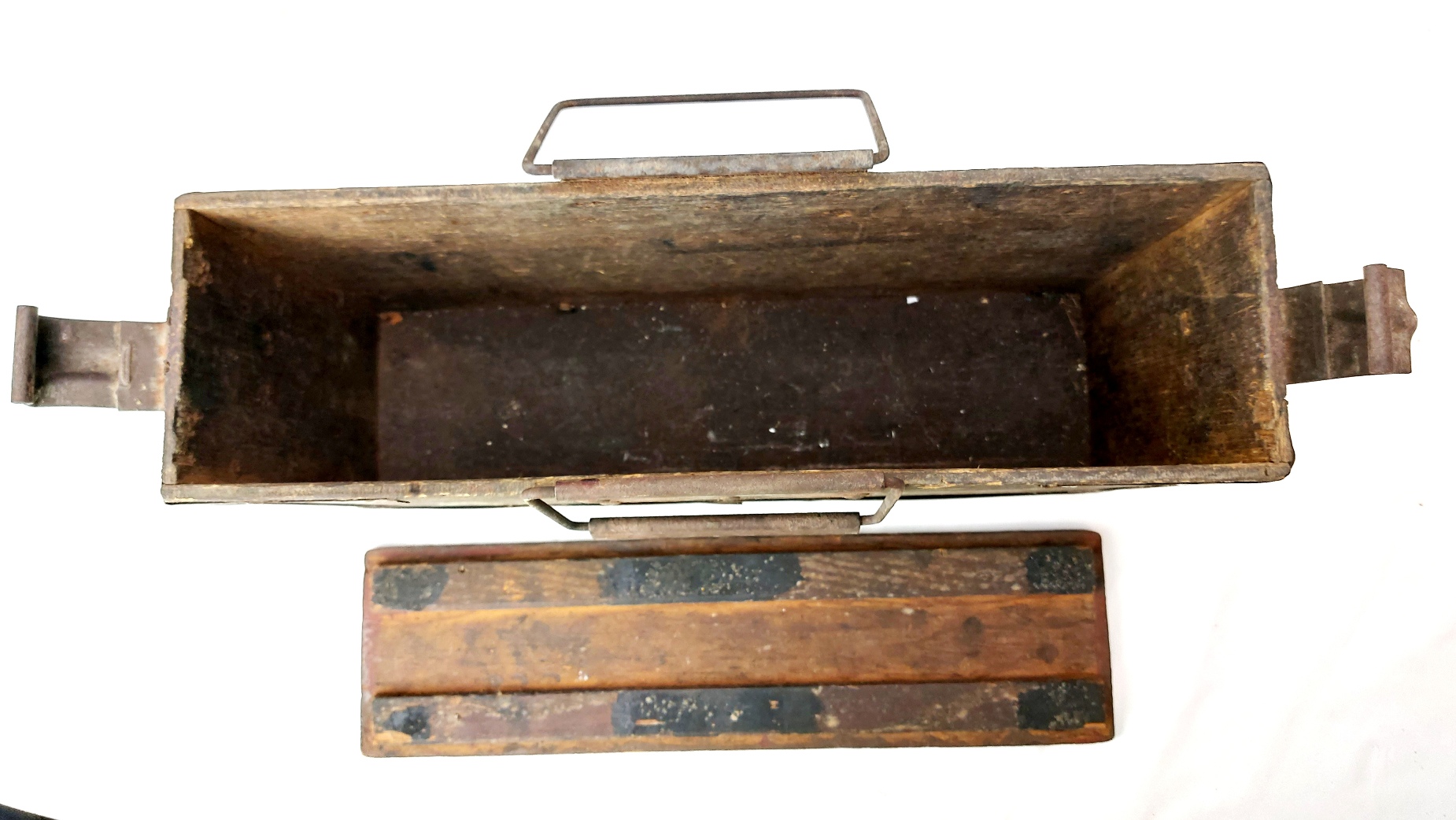
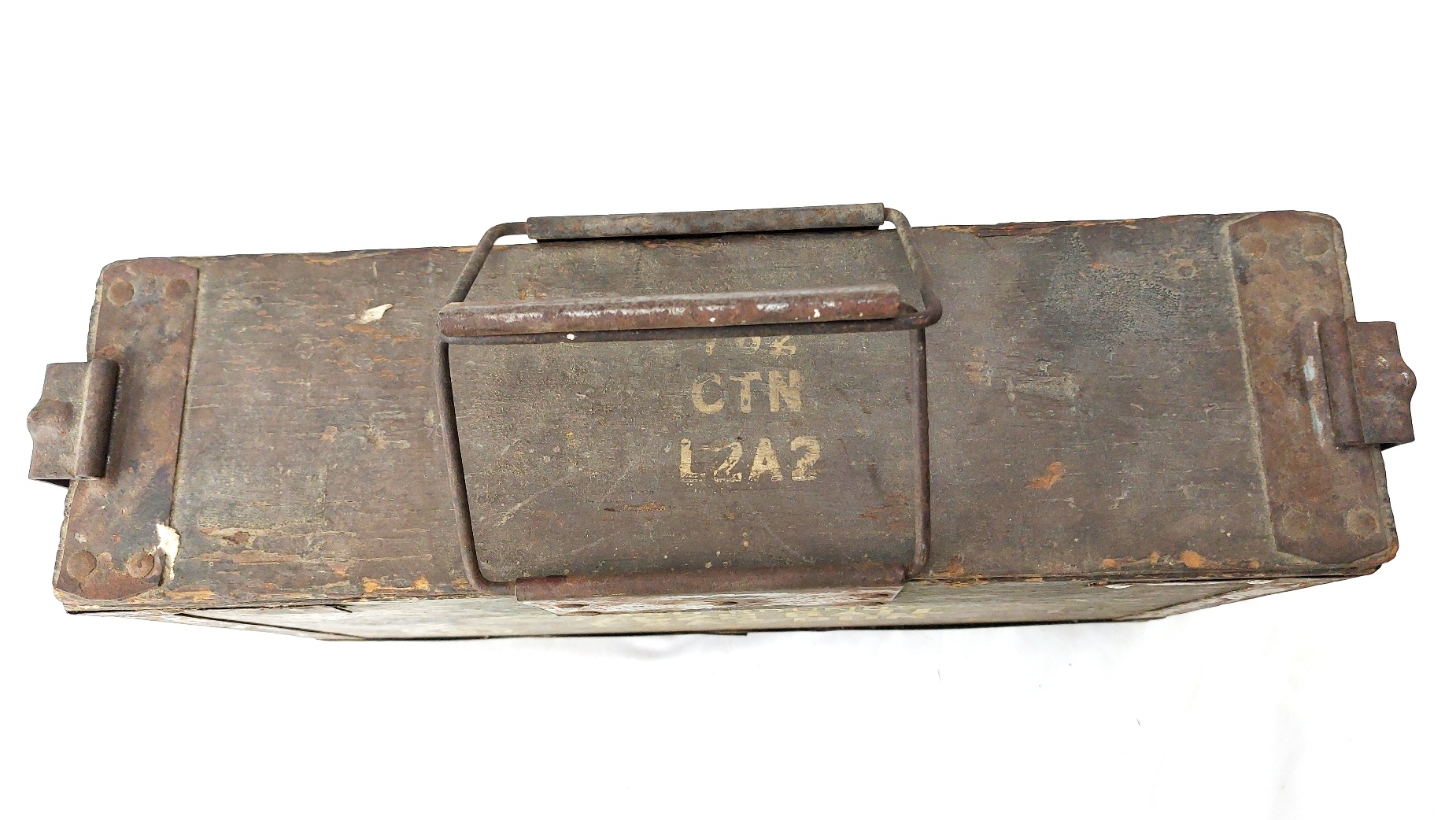
Constructed from heavy timber panels with steel reinforcing bands and fittings, the chest features a folding top carry handle mounted through a central anchor bracket together with end-latch fasteners at either end, allowing secure closure during transport and storage. Its practical military construction was designed to withstand repeated handling within depots, armouries and field supply chains.
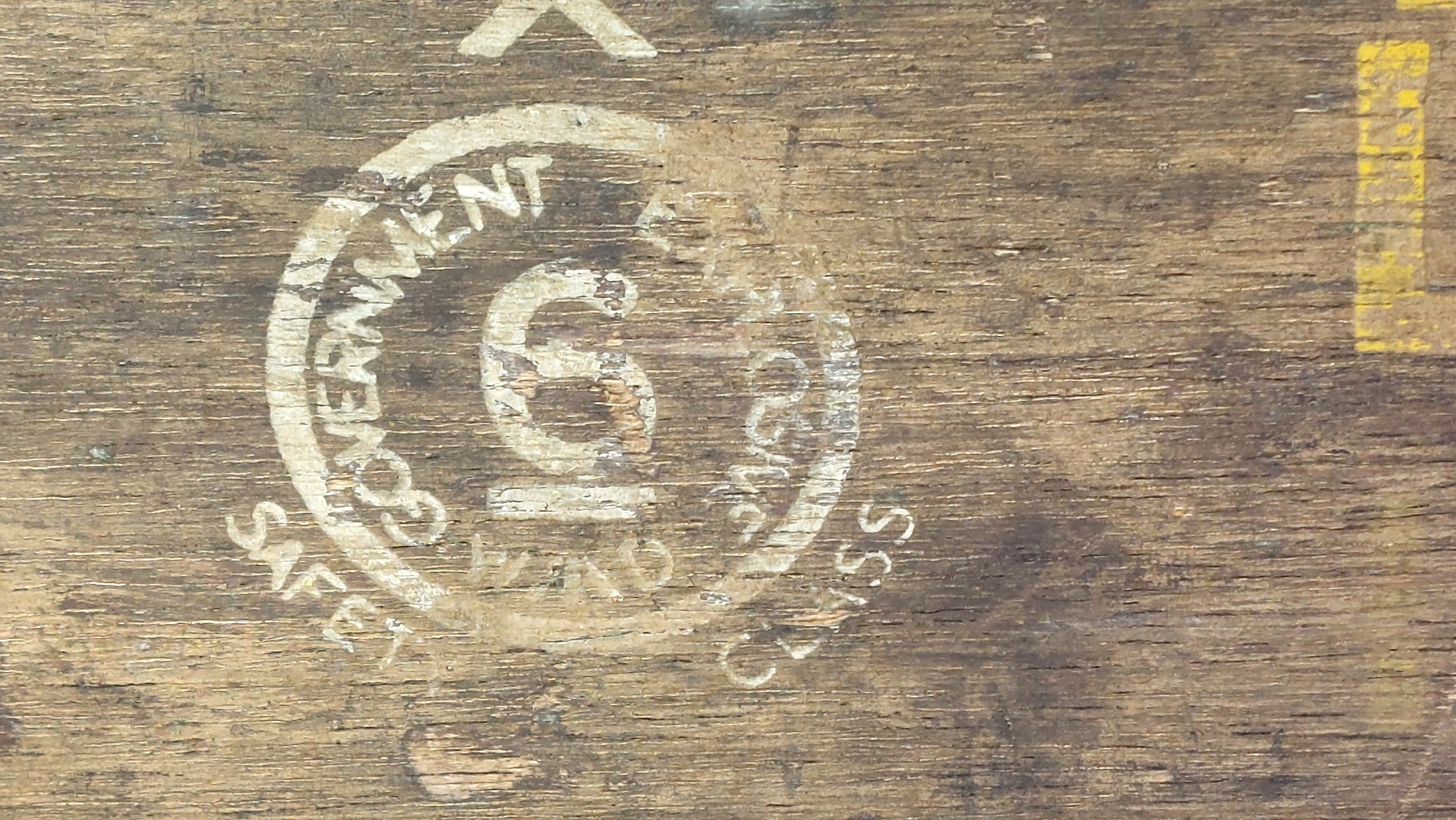
The chest retains several original period military markings, including “CTN L2A2” to the lid and a particularly attractive circular stencil denoting Government Explosives Safety Class 6. The circular marking, reading “Government Explosives – Safety Class” around a central “6”, formed part of the British military transport and storage classification system used on ammunition crates and ordnance packaging. Such markings are increasingly desirable today as surviving evidence of original military use and handling.
Approx. Measurements – Length: 40.5 cm. Width: 11.2 cm. Height: 22.5 cm.
History Note:
Following Britain's transition from .303 service ammunition and adoption of the NATO-standard 7.62×51mm cartridge during the late 1950s, substantial quantities of ammunition required rugged storage and transportation systems suitable for military service. Wooden ammunition transit chests such as this became standard issue throughout British Army armouries, supply depots and training establishments and remained in use throughout much of the Cold War period. Boxes of this type would have accompanied ammunition for infantry rifles, machine guns and support weapons across countless exercises and operational deployments.
*Condition*
Displays honest service wear throughout, with surface rust and oxidation to steel fittings, handling marks, age-darkening and wear to the timber together with losses and fading to the original stencilling. Structurally sound overall with expected military use wear and a strong untouched appearance. Empty internally and not retaining any internal liner or packing insert. Please see photographs as part of the condition report.
JAQ#3196_7212242551