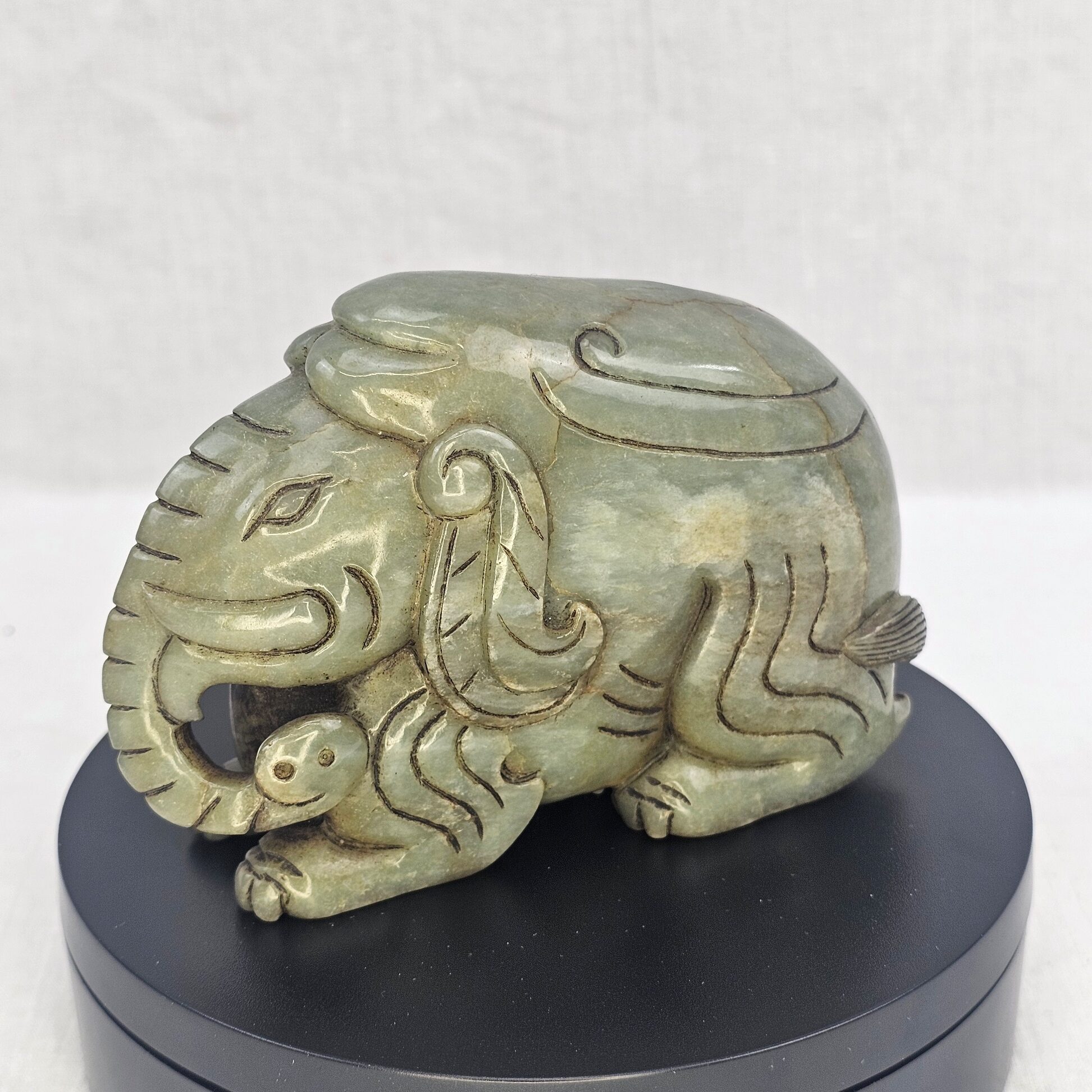
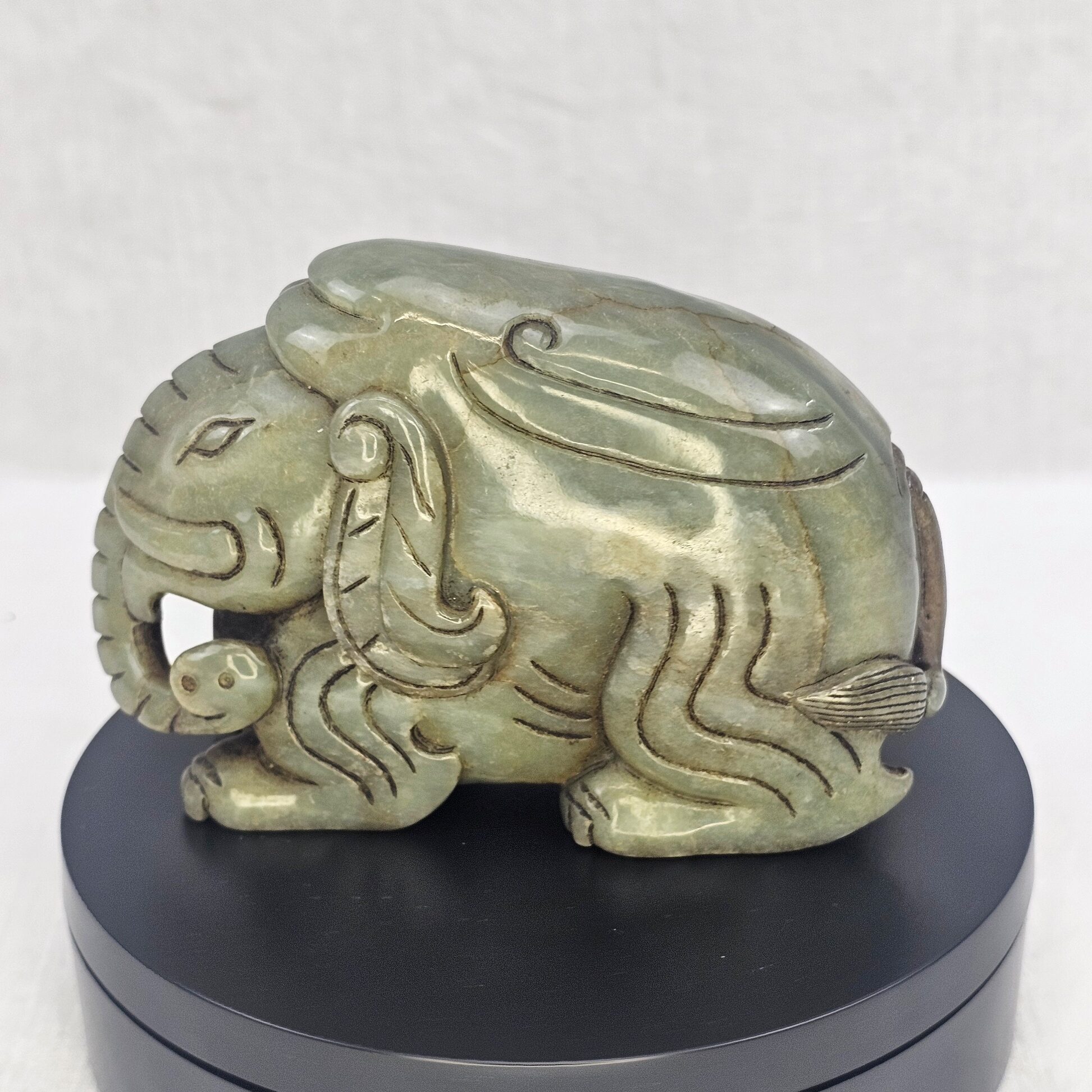
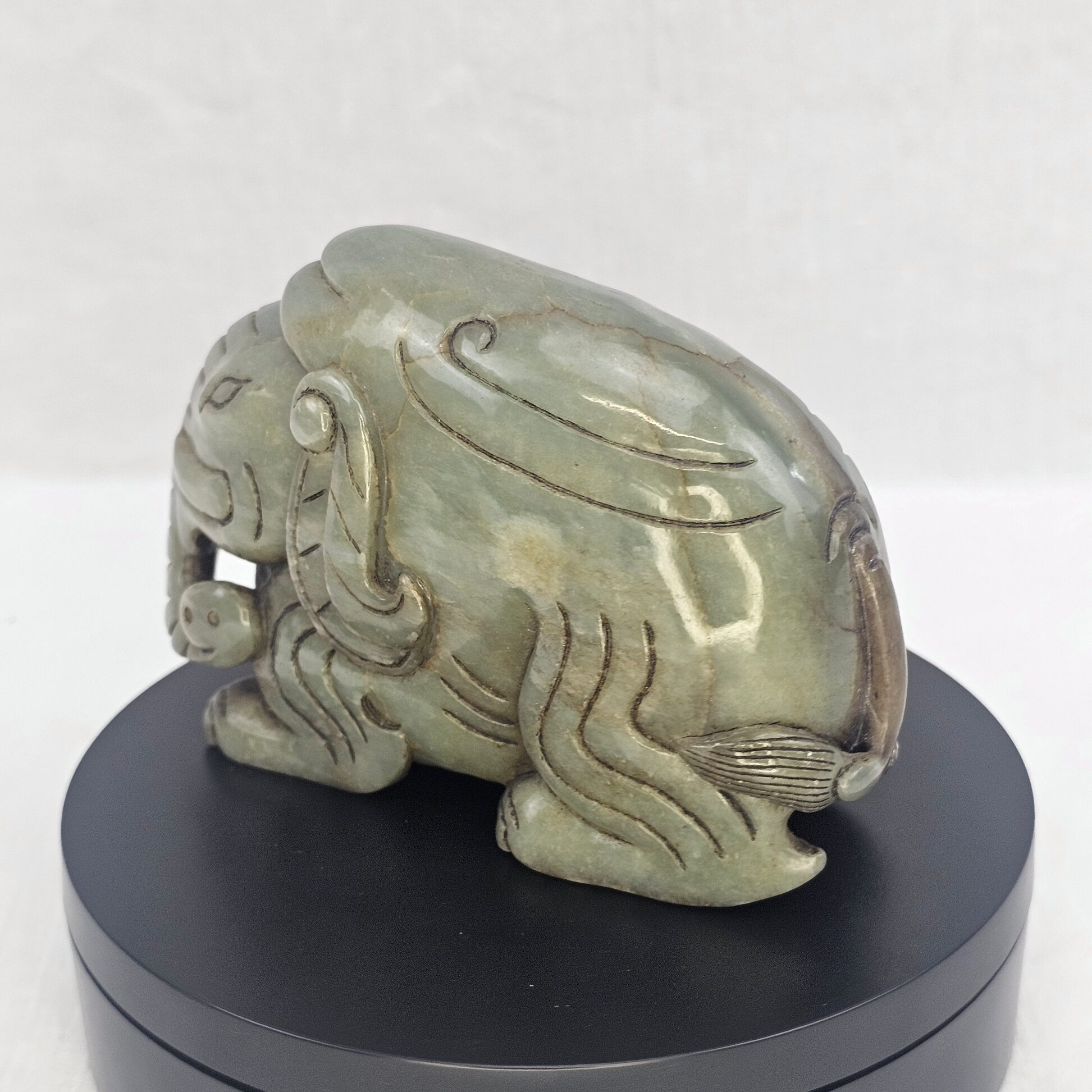
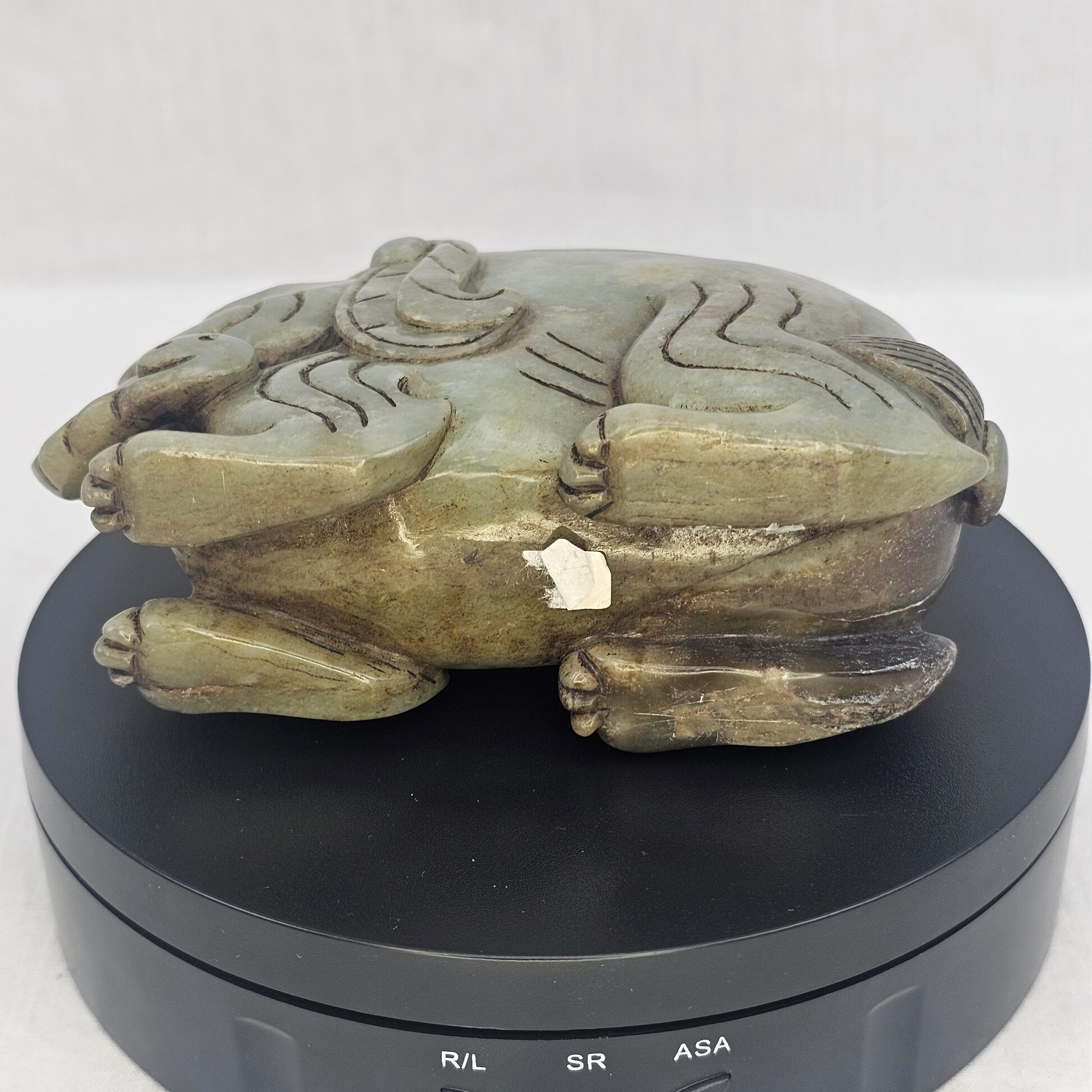
~ Chinese Qing Dynasty Nephrite Jade Carving Of An Elephant ~
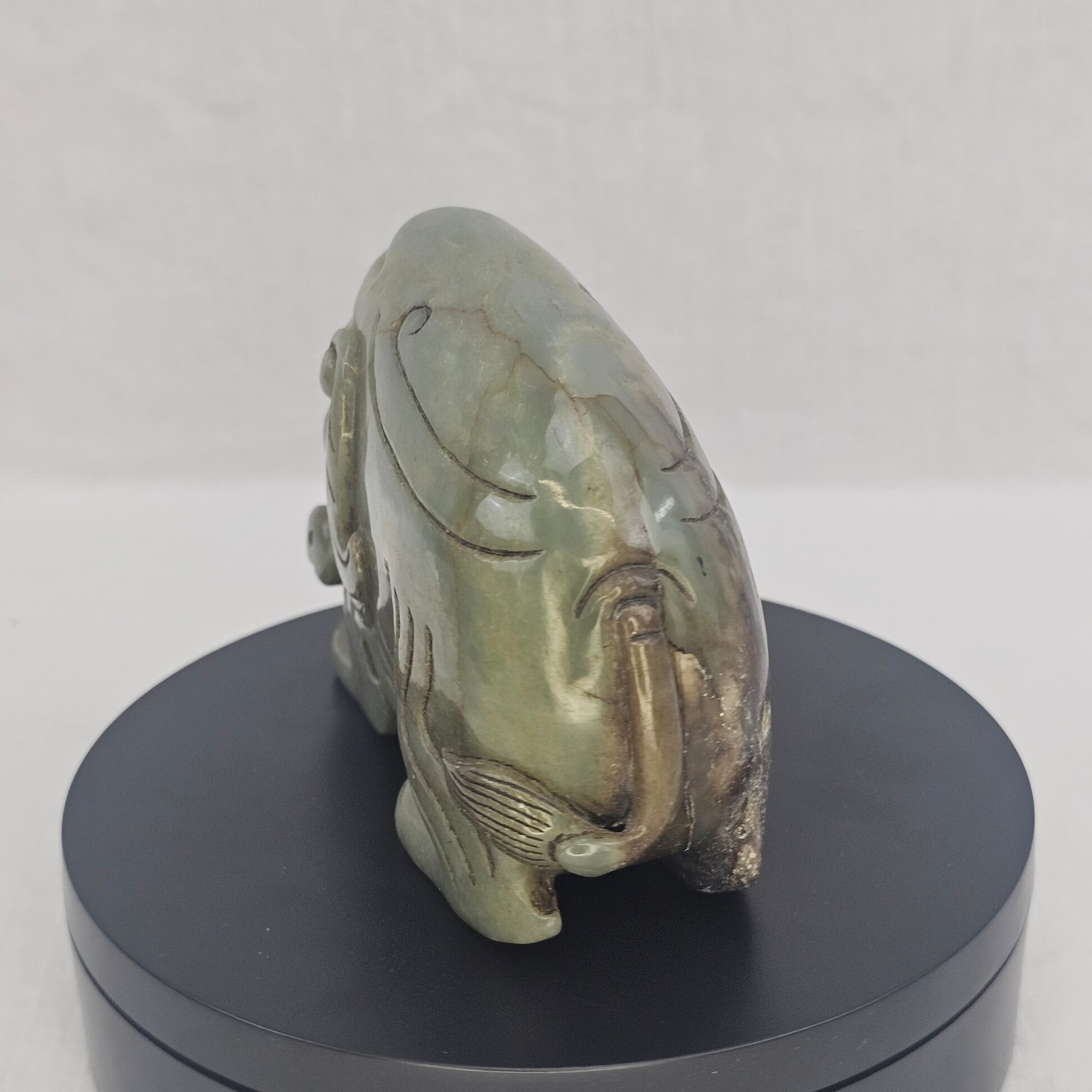
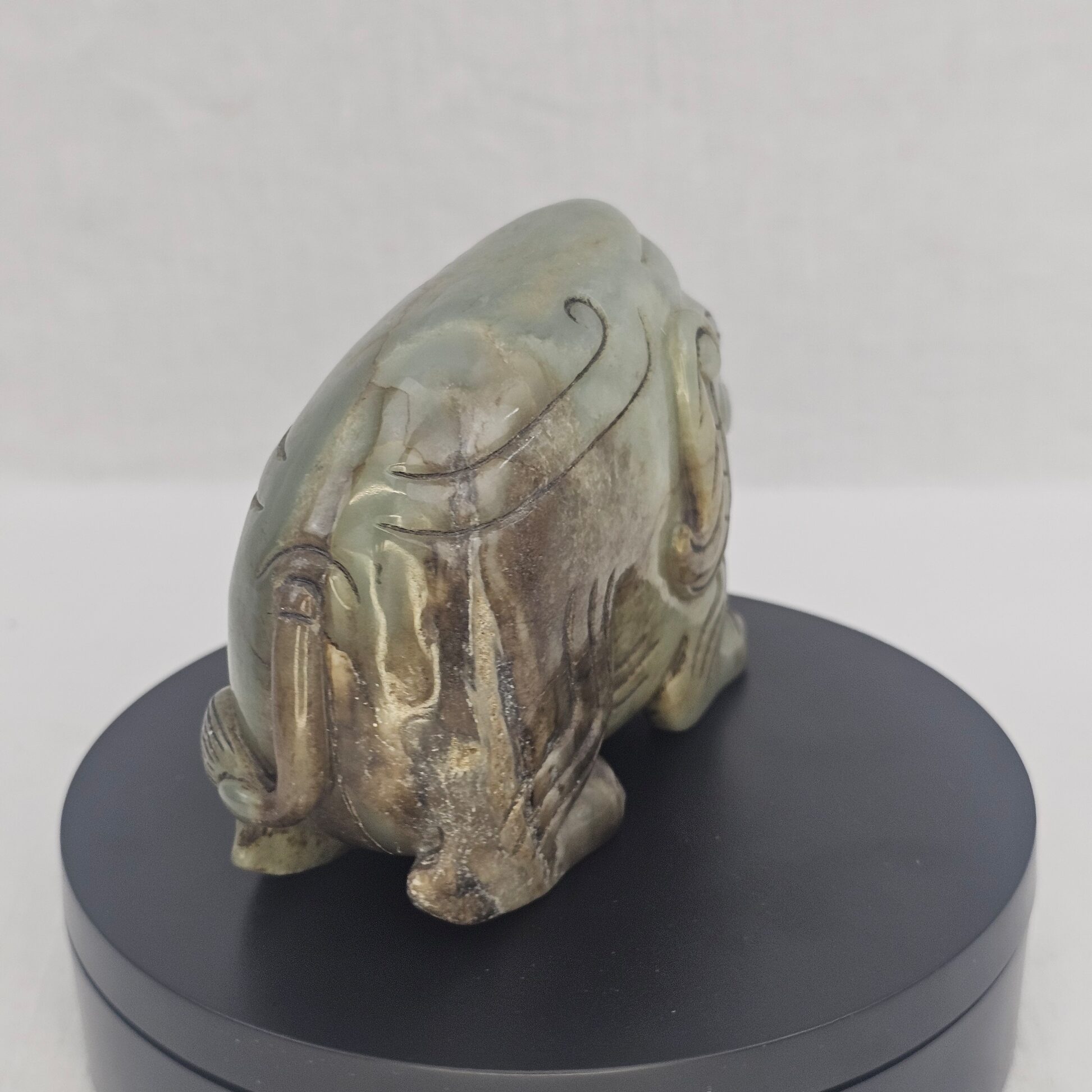
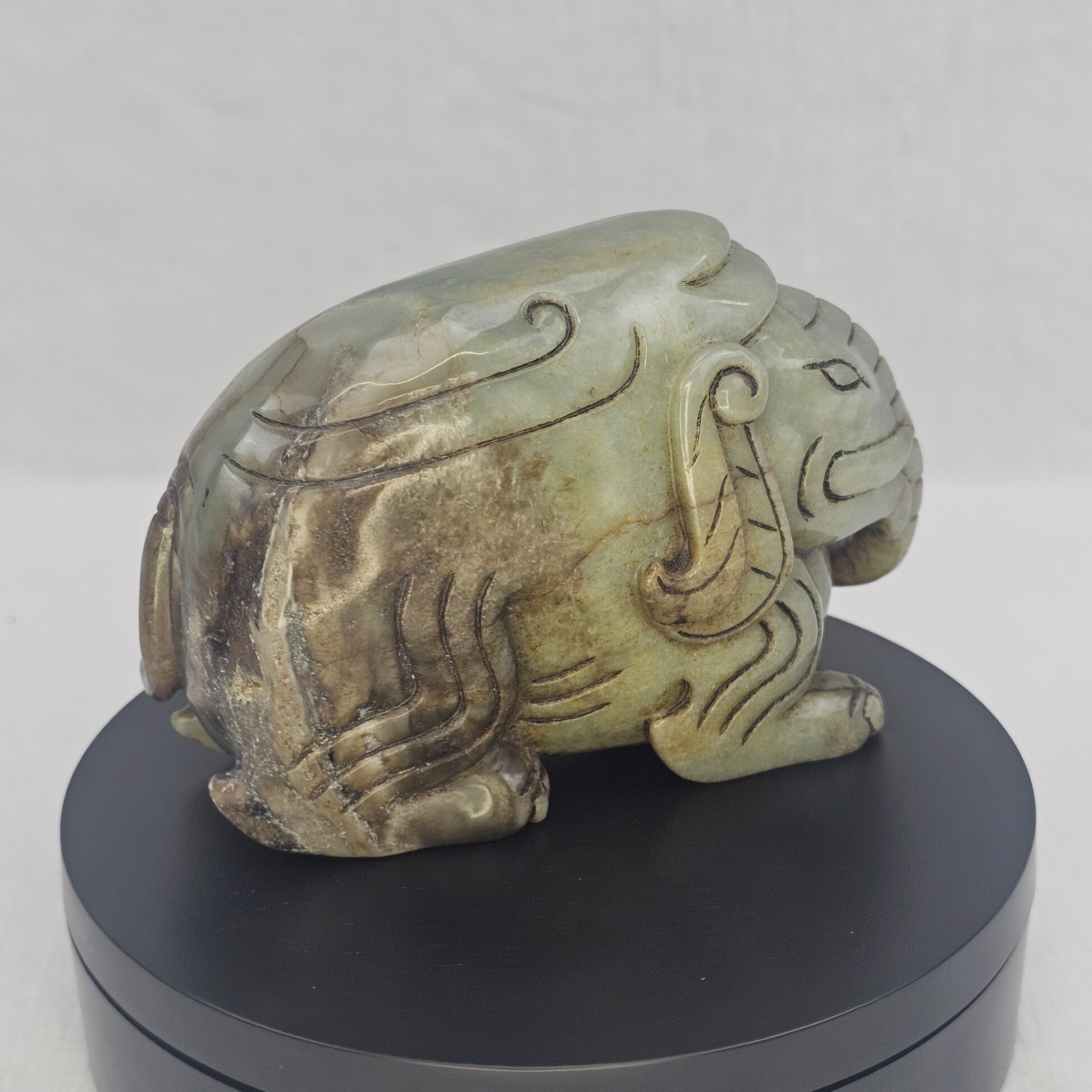
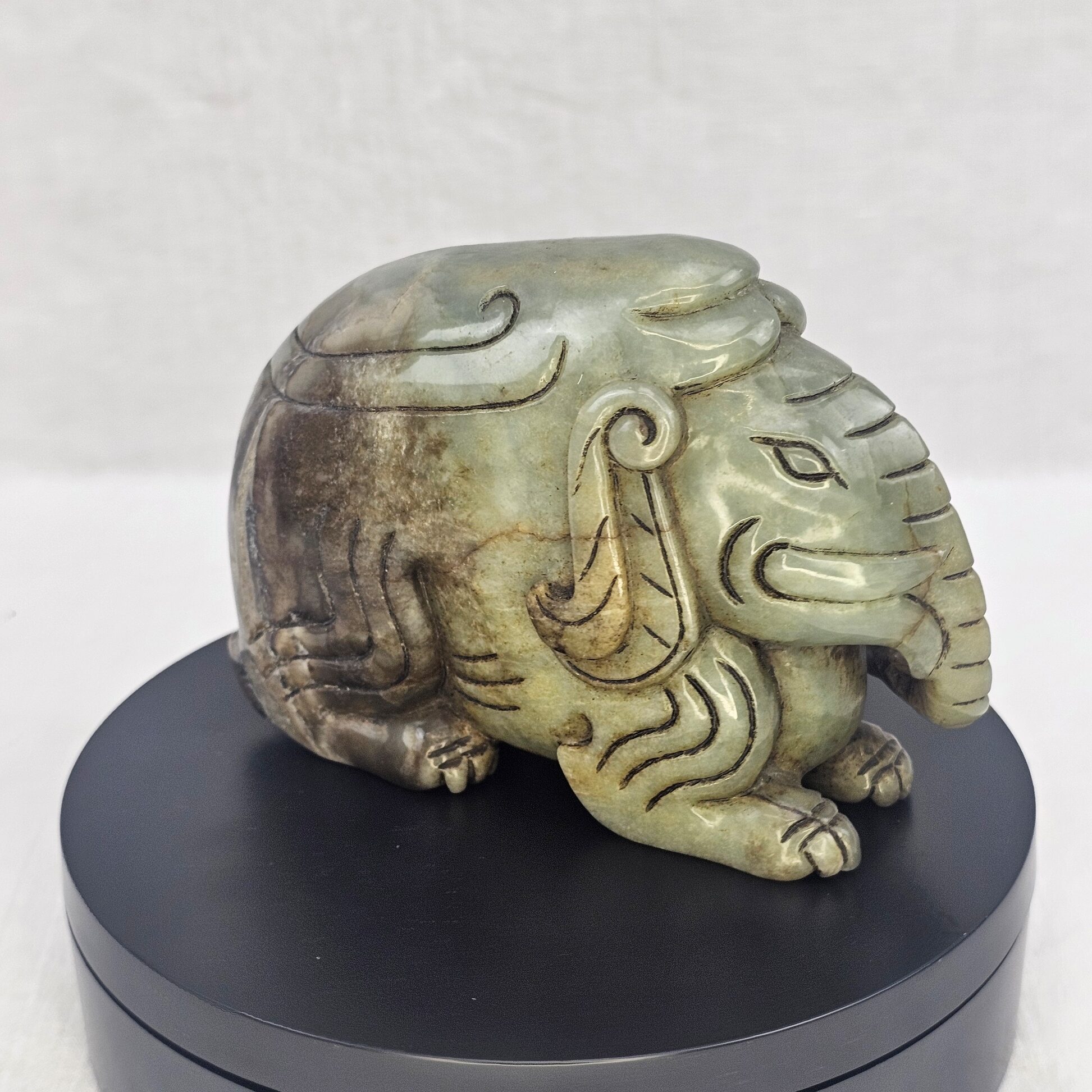
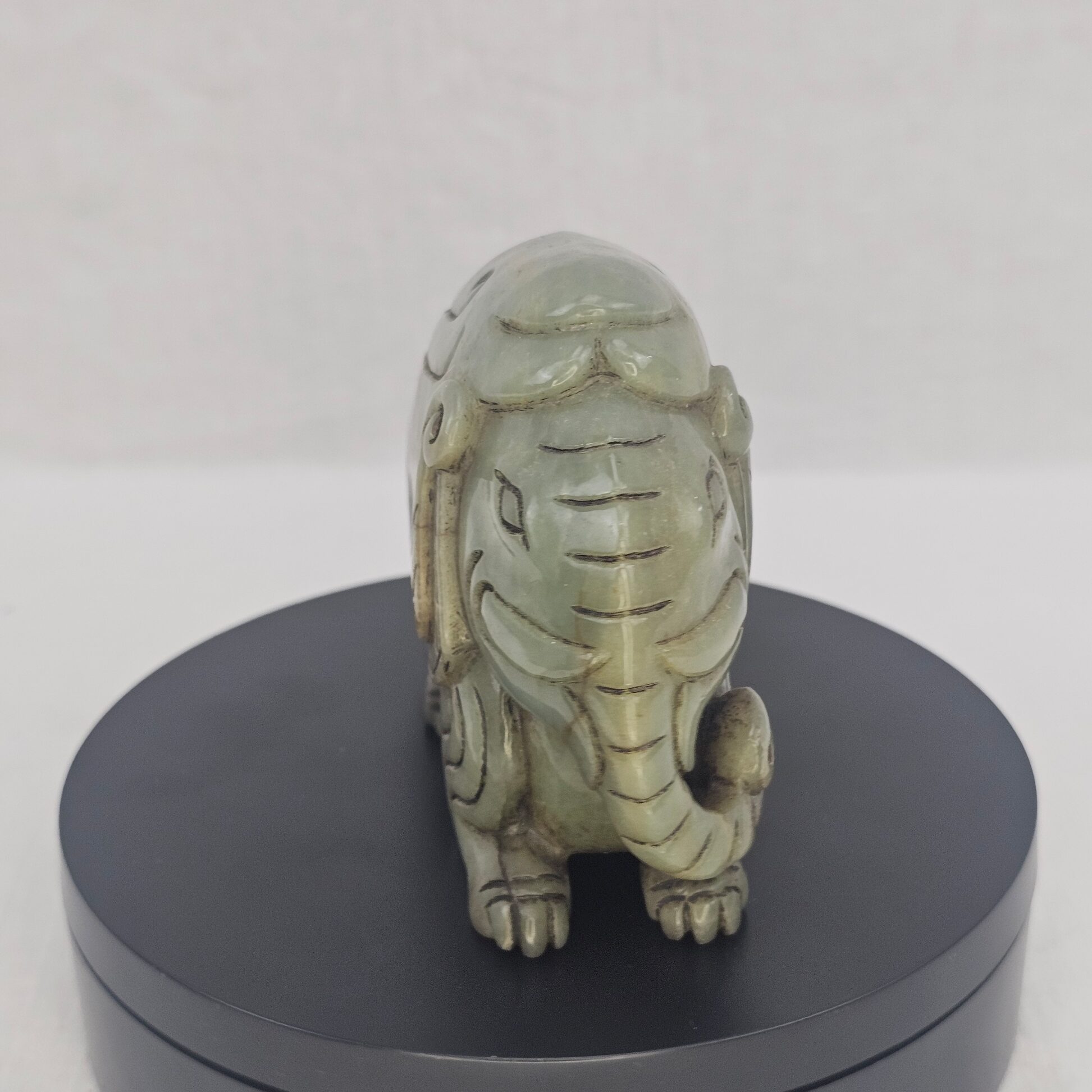
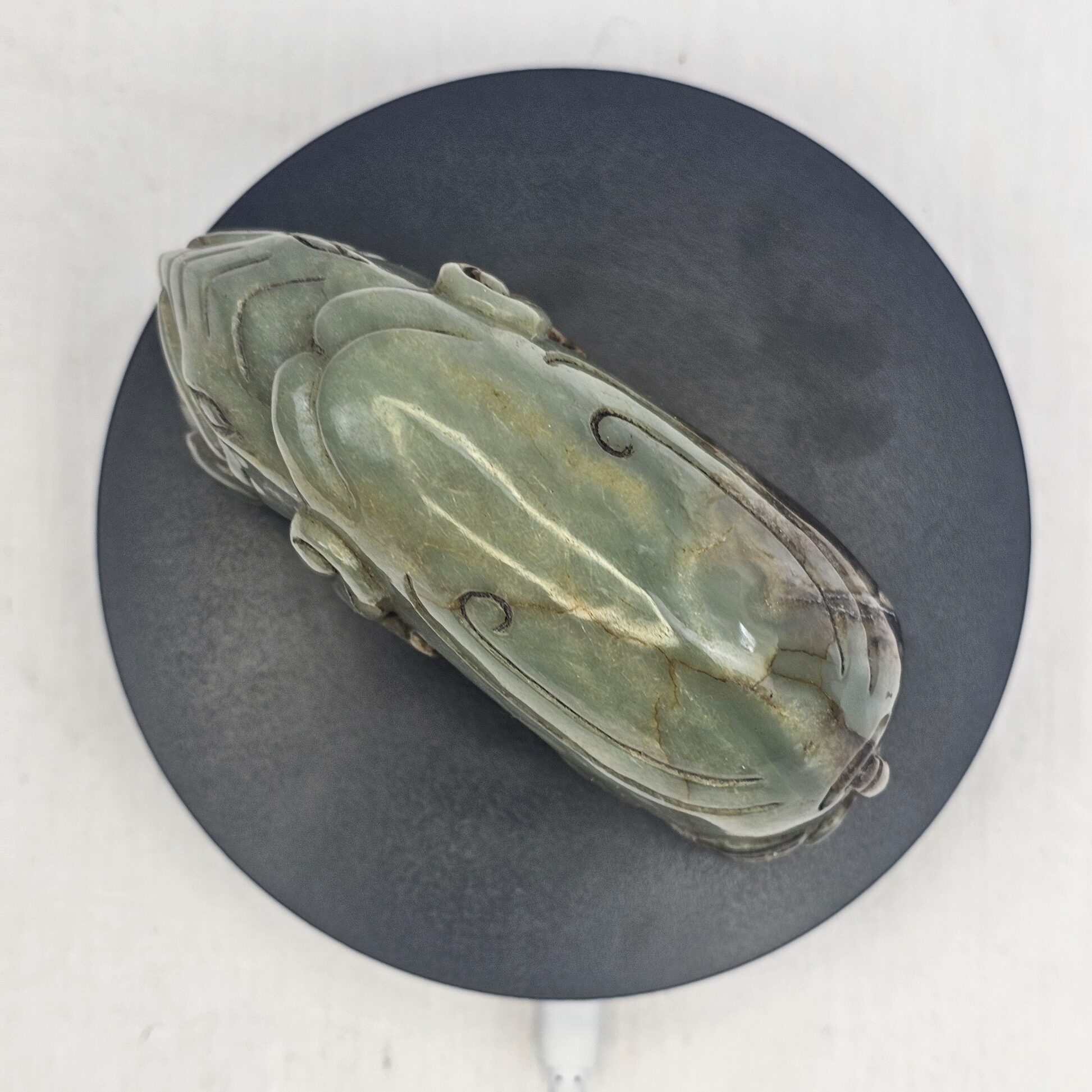
A substantial hand-carved nephrite jade group depicting a recumbent elephant with a young cub nestled beneath its curled trunk. The elephant is shown crouched with legs tucked beneath the body, its long ribbed trunk curling round to touch the head of the smaller cub, which peers out with large, drilled eyes. The body is decorated overall with incised scrolling ruyi-head and cloud motifs, a stylised mane or saddle-cloth rendered in flowing lines along the back and flanks, and a tasselled tail. The stone is a pale to mid-toned nephrite with attractive variegated russet-brown, ochre, and celadon-green tonal "skin" inclusions running through the body, giving the piece a naturalistic, almost camouflaged appearance. The carving has a good waxy polish to the raised surfaces. Mounted on a circular black-painted wood/composite display stand (later addition, not original to the piece).
The carving is of a green/grey nephrite jade with dark specks and dates to the Qing dynasty (1644-1912) or earlier.
~ Historical Context ~
The elephant is a long-established auspicious motif in Chinese decorative art, the Mandarin word for elephant (xiang) being a homophone for "auspicious" (祥), and elephant-and-cub or elephant-and-rider groups carry associations of peace, good fortune, and filial devotion. Carved jade and hardstone animal groups of this type, often worked from boulders or pebbles to retain naturalistic colour variation in the stone, have a long history in Chinese lapidary work, with related forms recorded in 17th/18th century court and scholar's collections such as a spinach jade elephant from the 17th/18th century in the Ashmolean Museum collection.
~ Dimensions ~
The piece measures 13 cm (5 inches) by 9 cm (3 ½ inches) by 5 cm (2 inches).
It weighs 730 g.
~ Condition ~
The piece is in very nice condition with no damage.
JA#10432DOO_519196526