German DaggersGerman, WW2, Early Hitler Youth Knife (HJ Hitlerjugend), “Blut und Ehre” Etched Blade, Pre-RZM, Solingen Manufacture
SKU / Ref. No: JAQCOOXEOO_275421062025
£550.00
Your message was sent. We will contact you shortly.
*German, WW2, Early Hitler Youth Knife (HJ Hitlerjugend), “Blut und Ehre” Etched Blade, Pre-RZM, Solingen Manufacture*
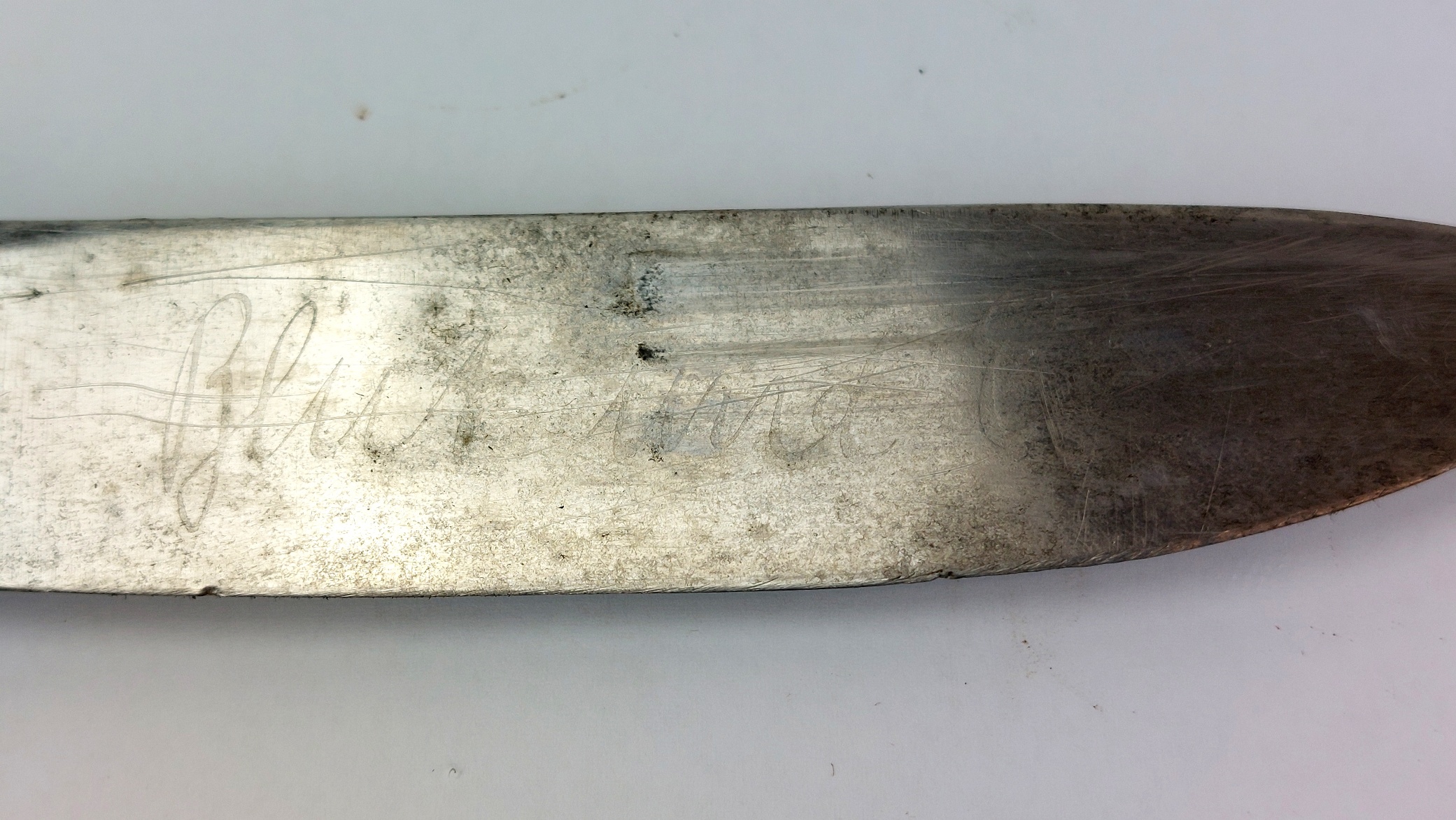
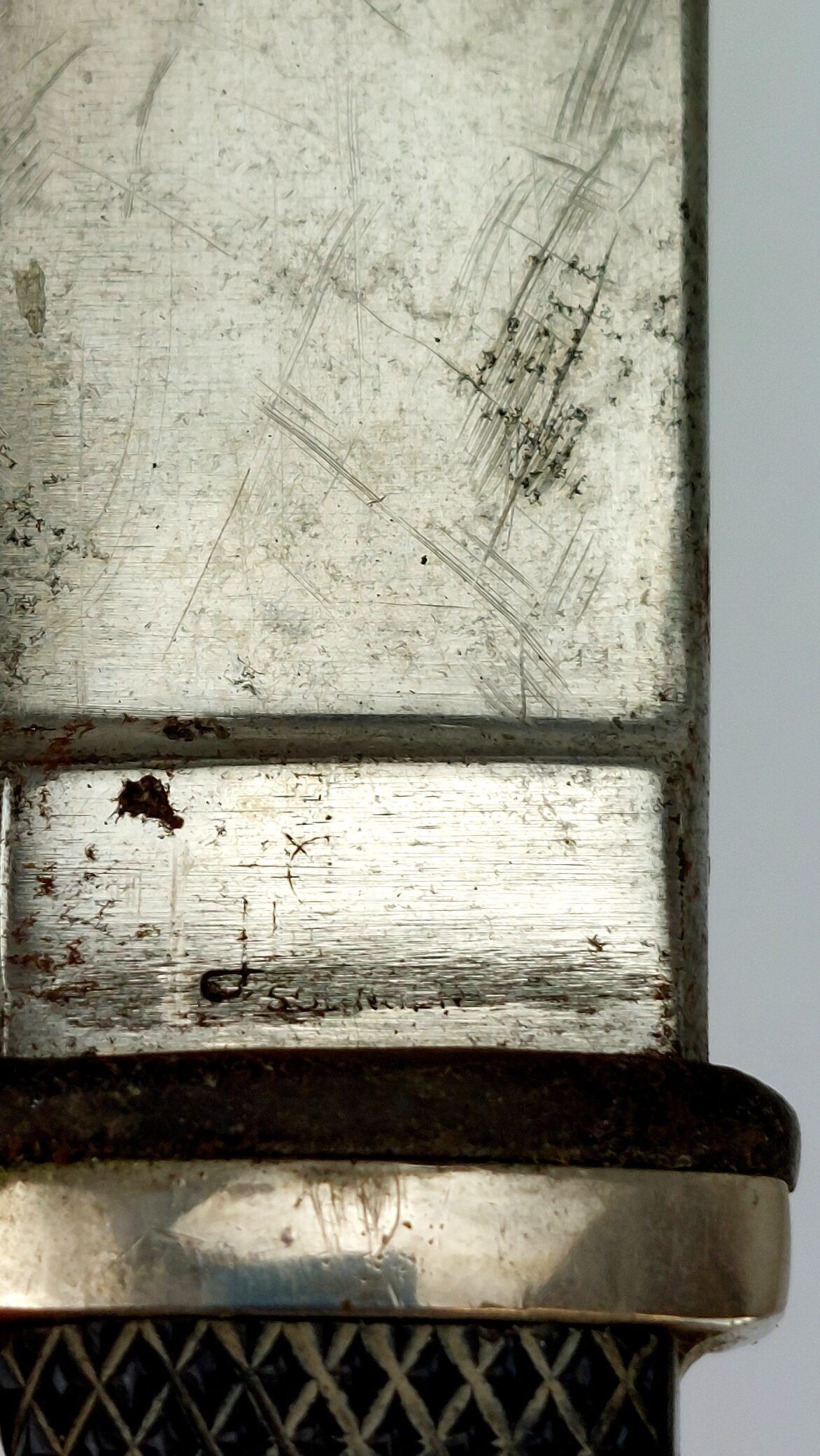
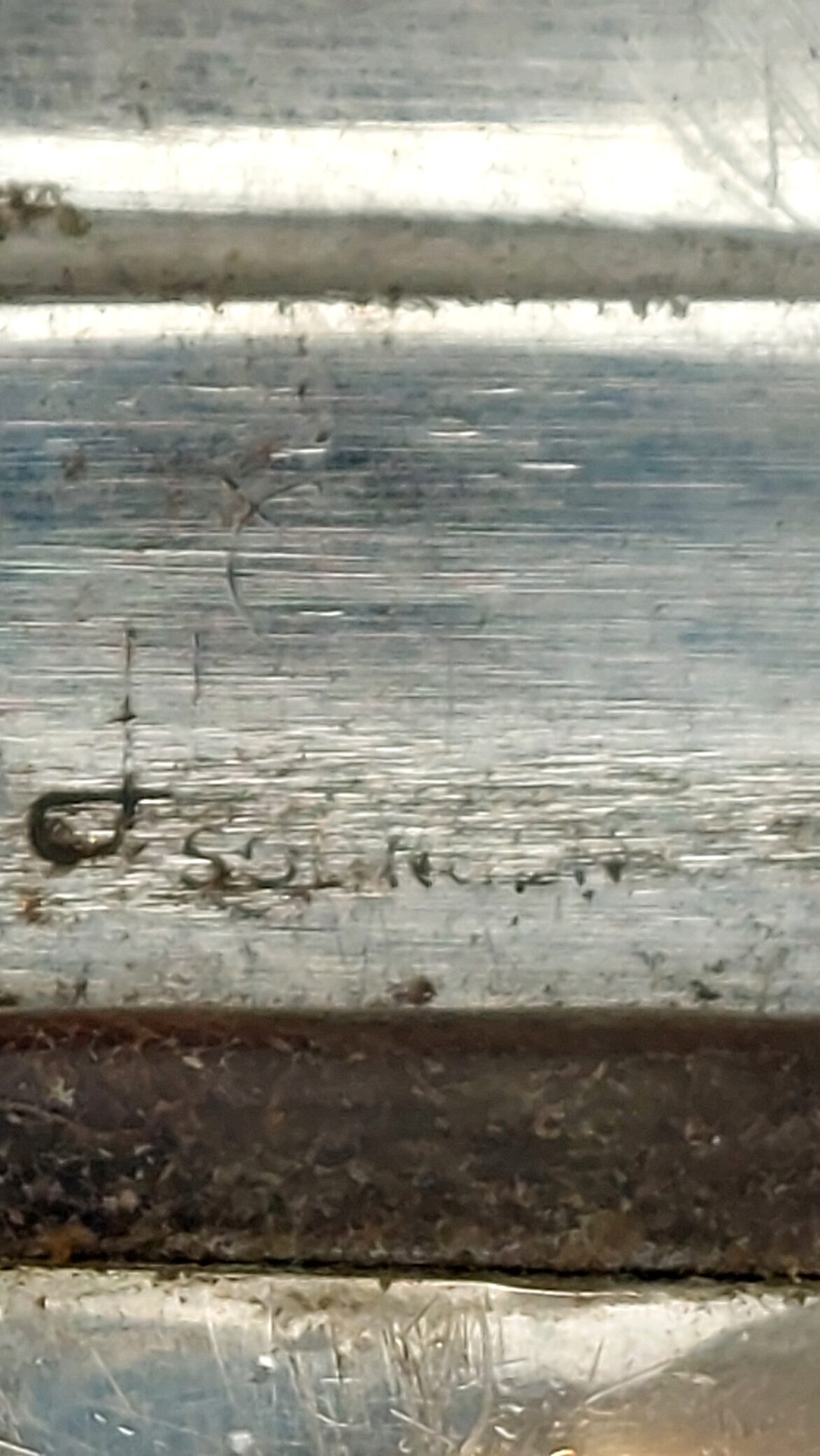
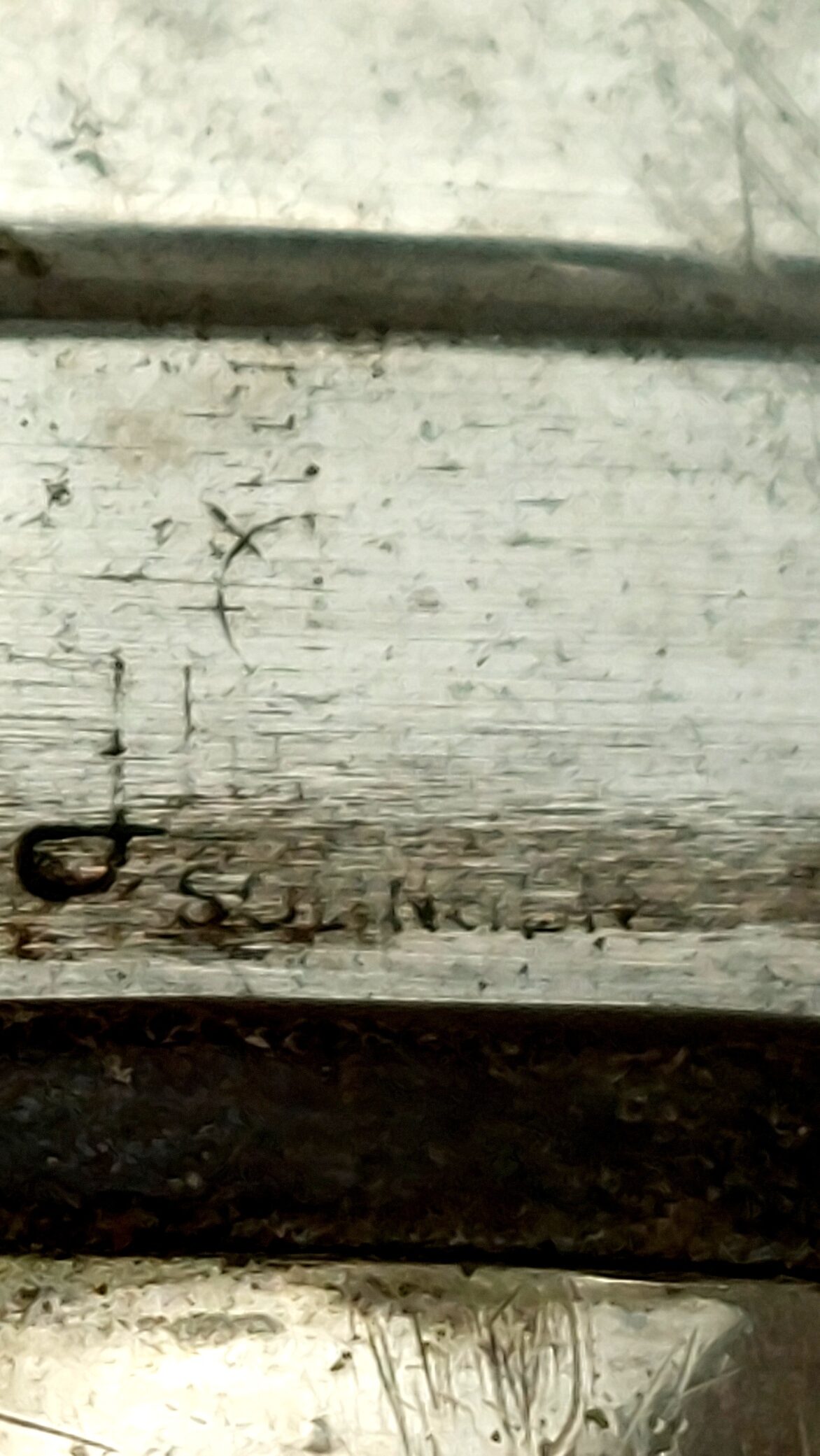
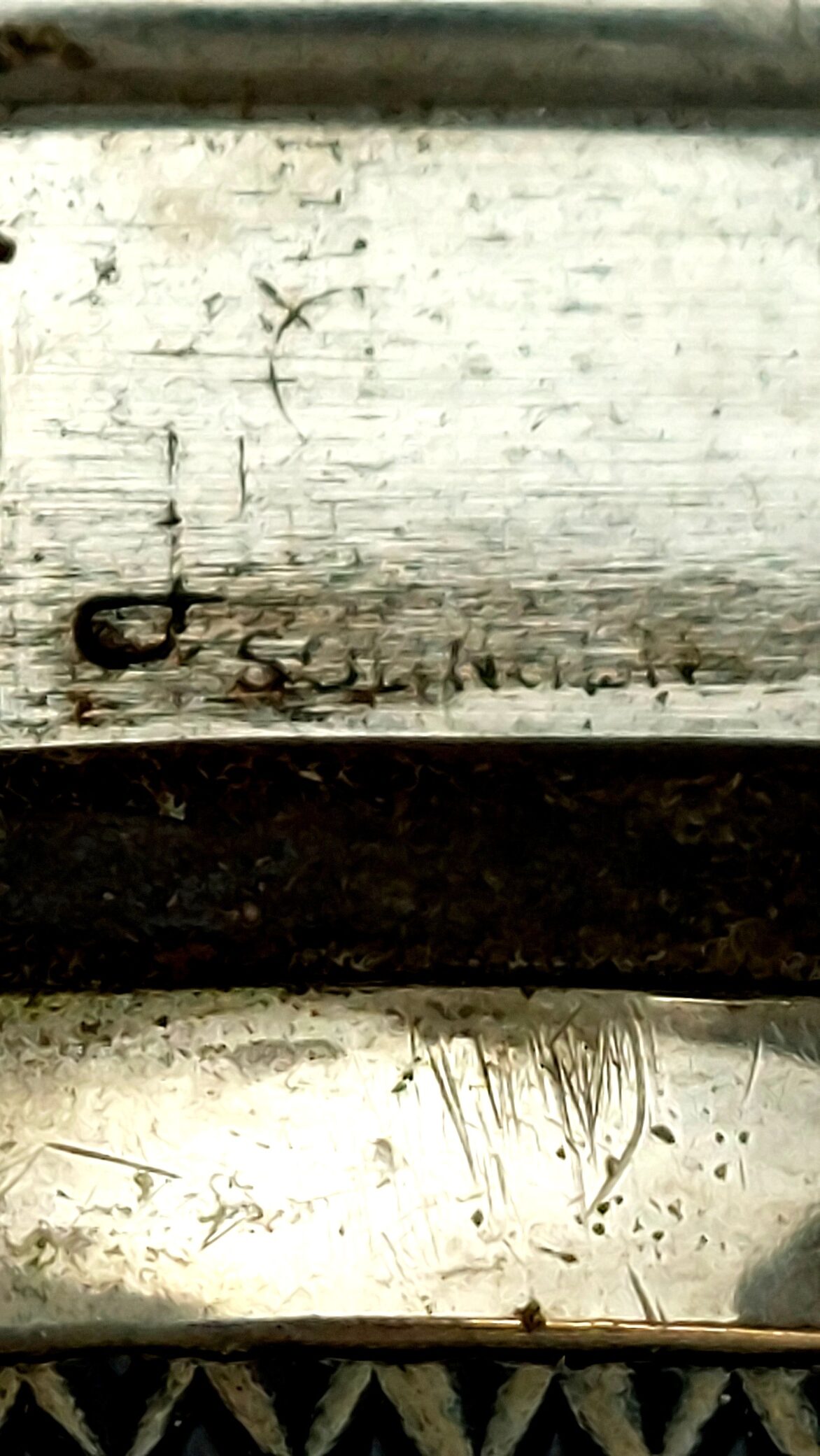
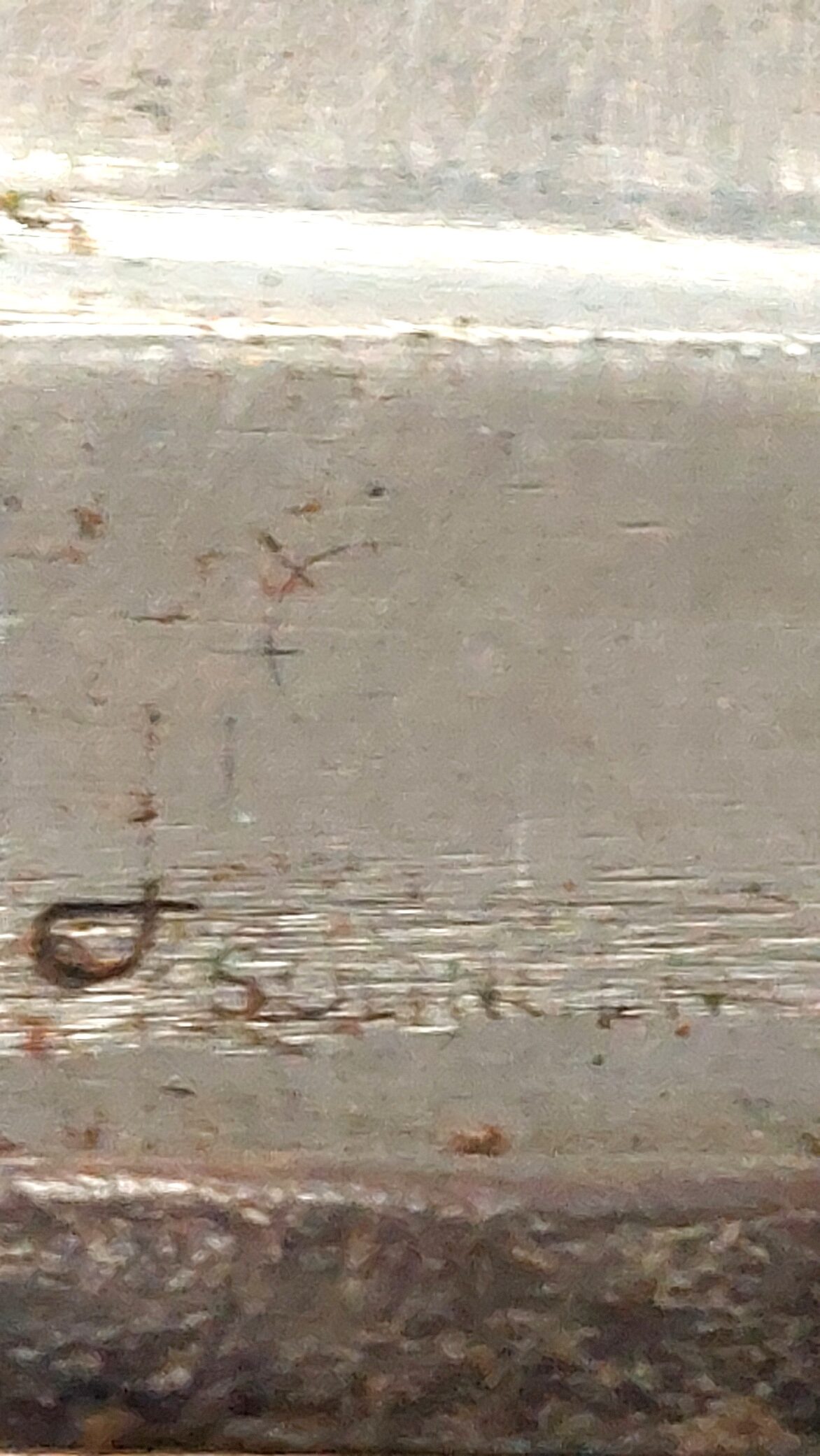
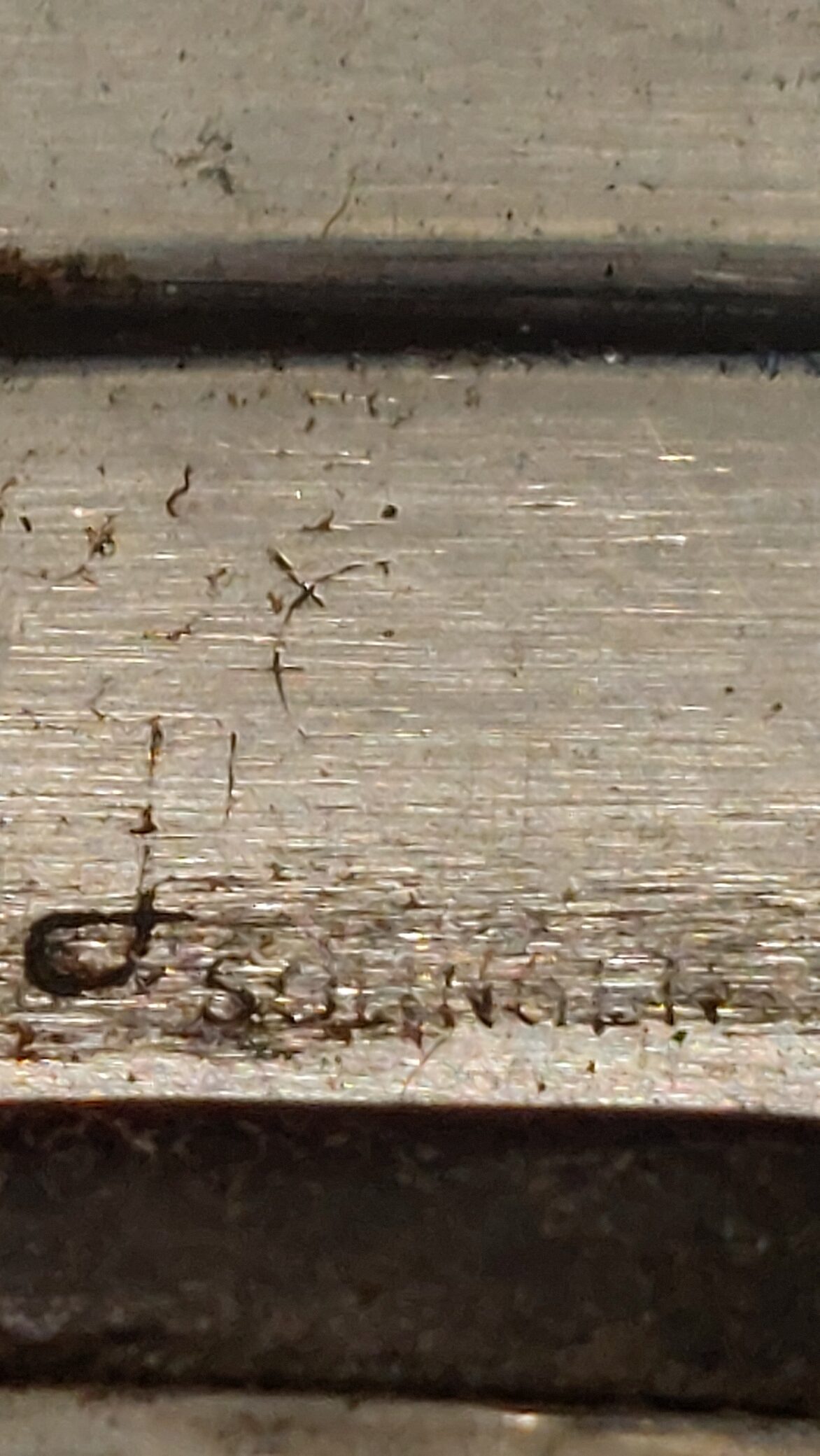
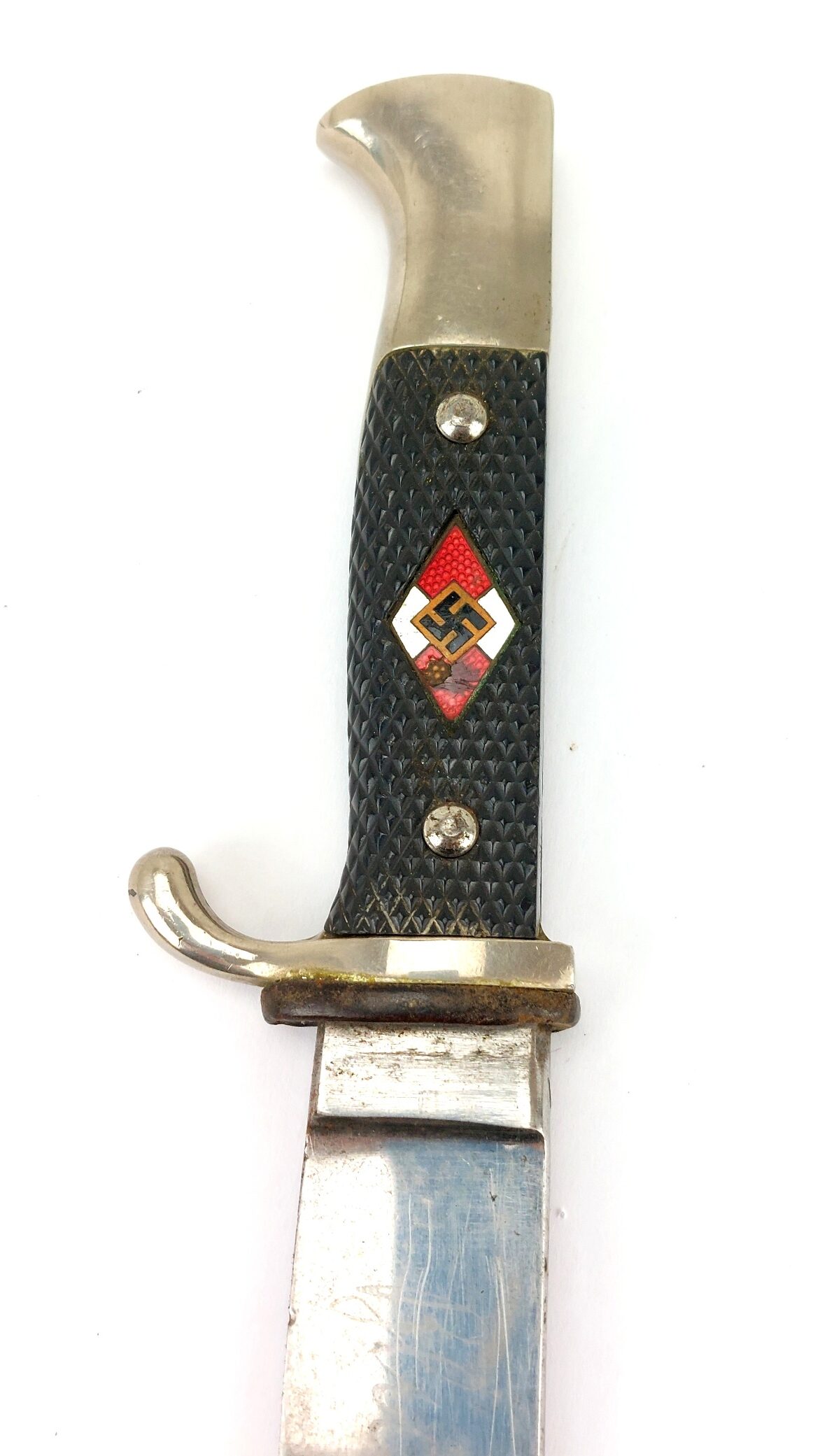
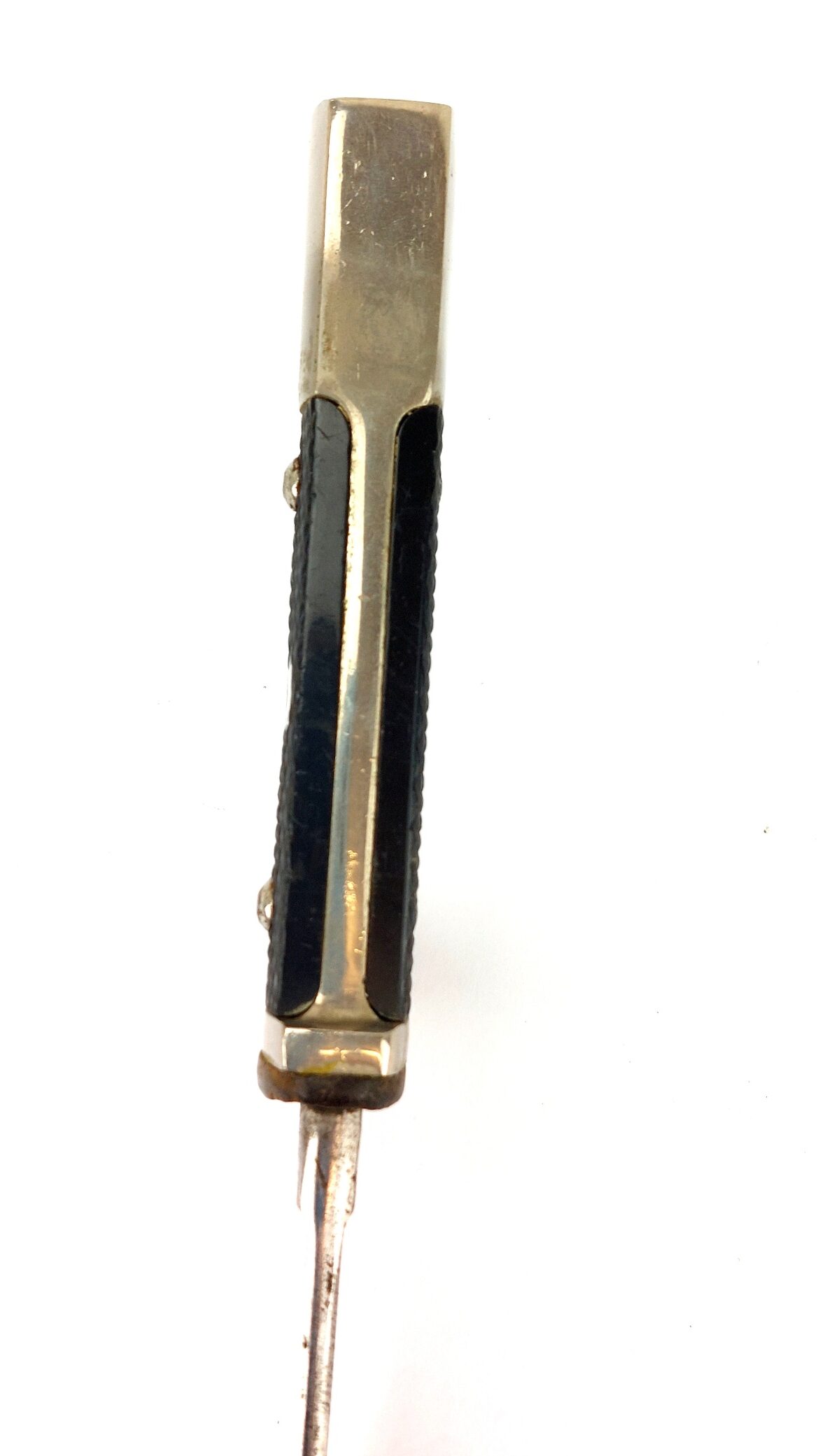
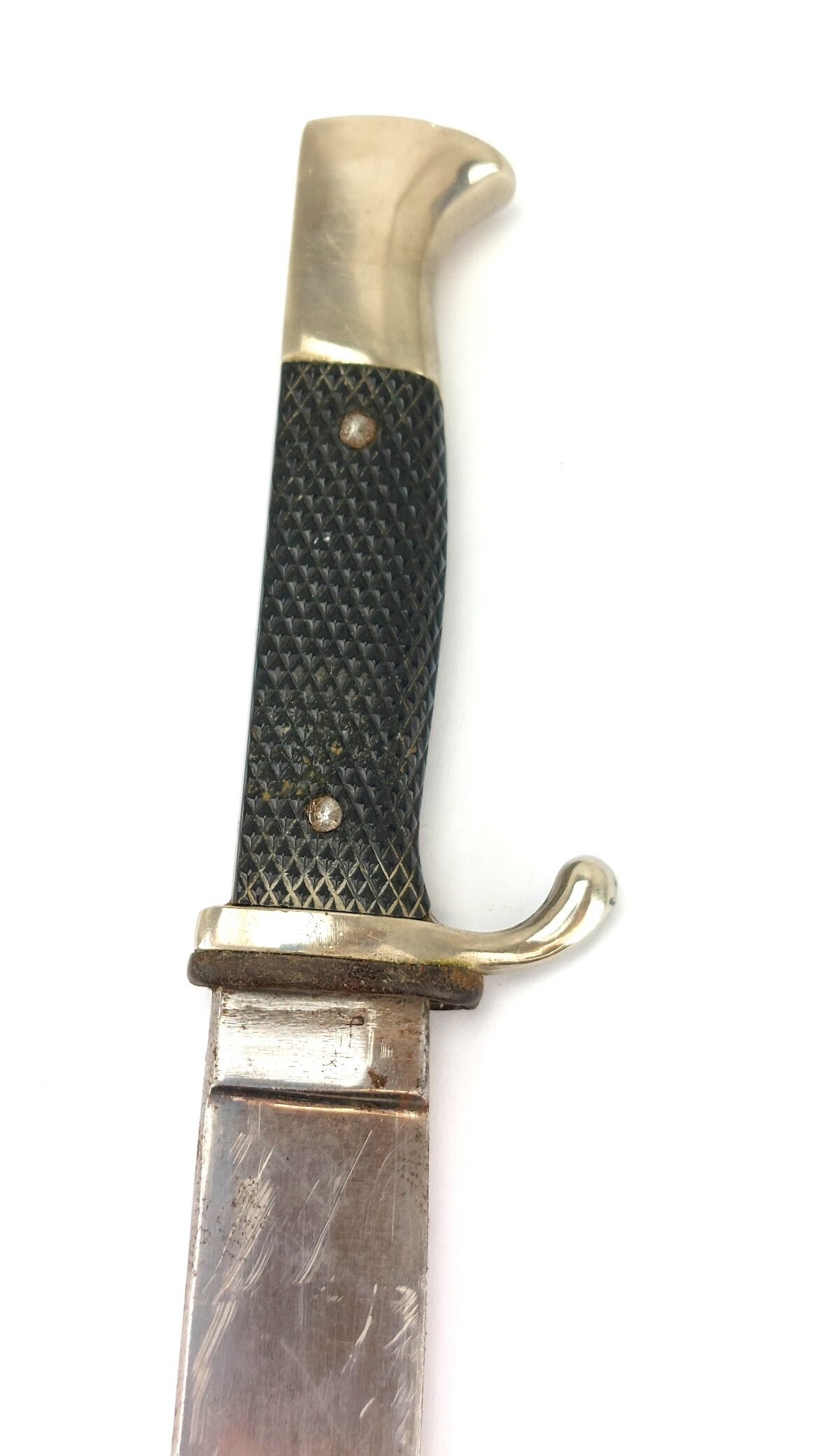
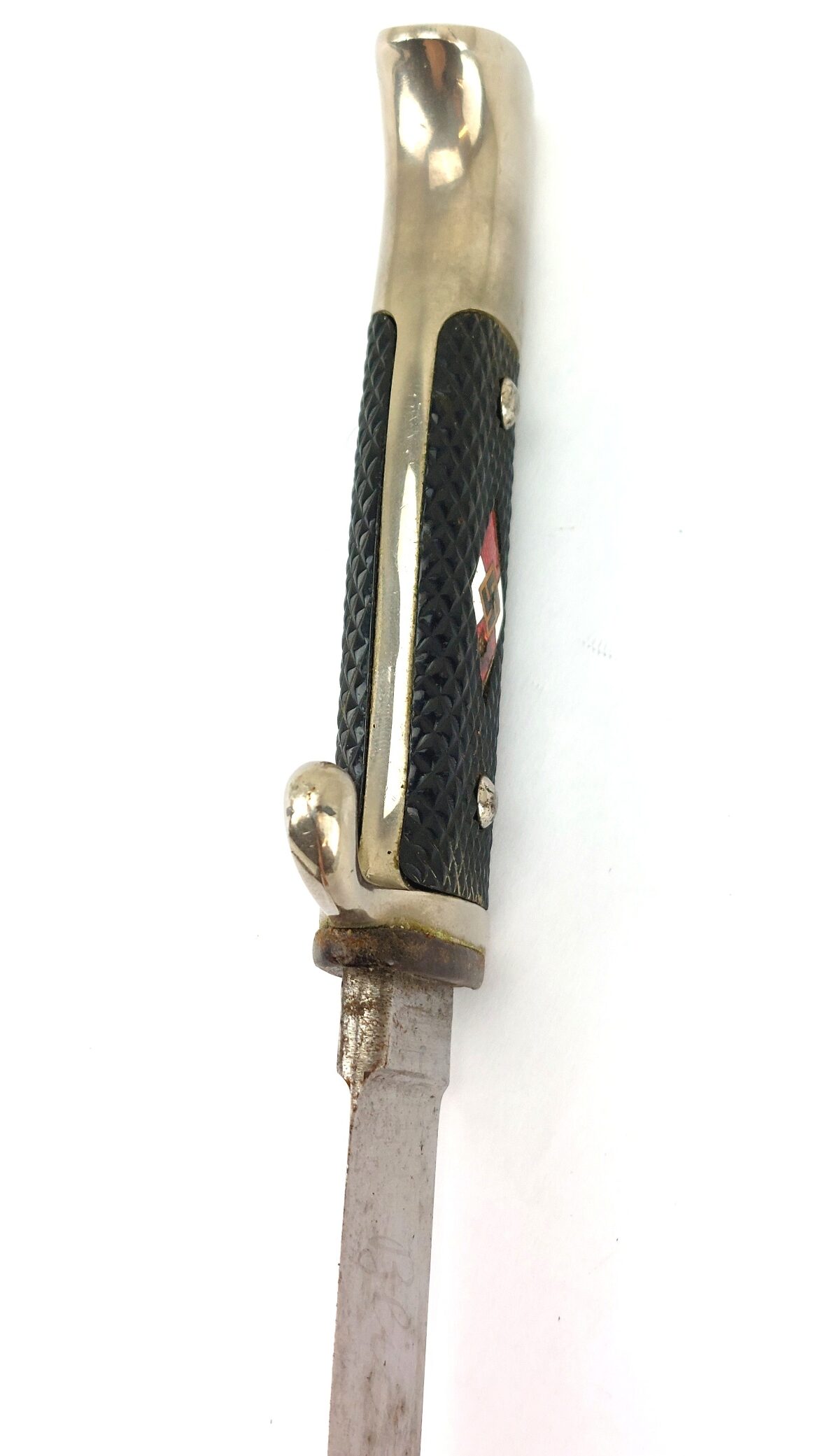
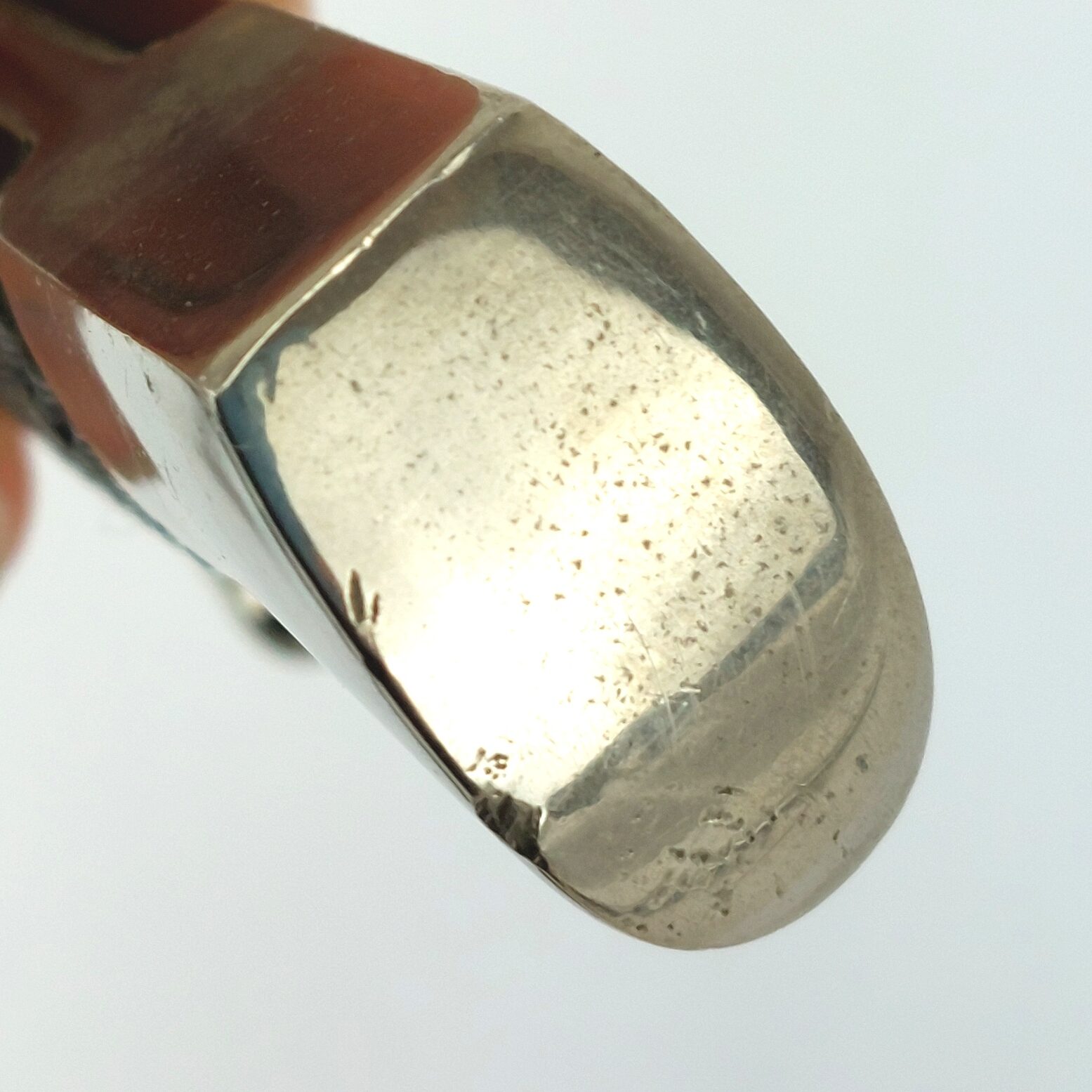
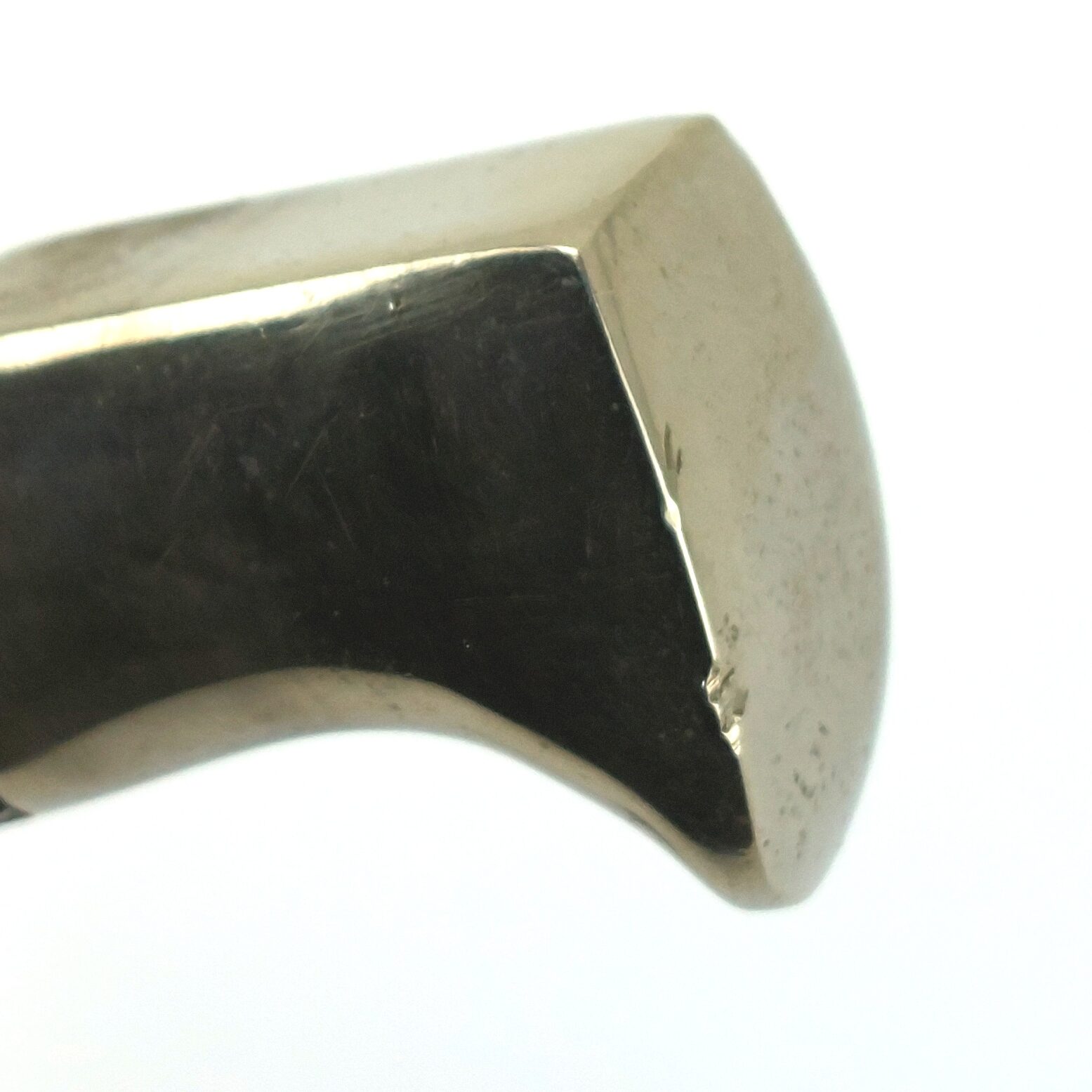
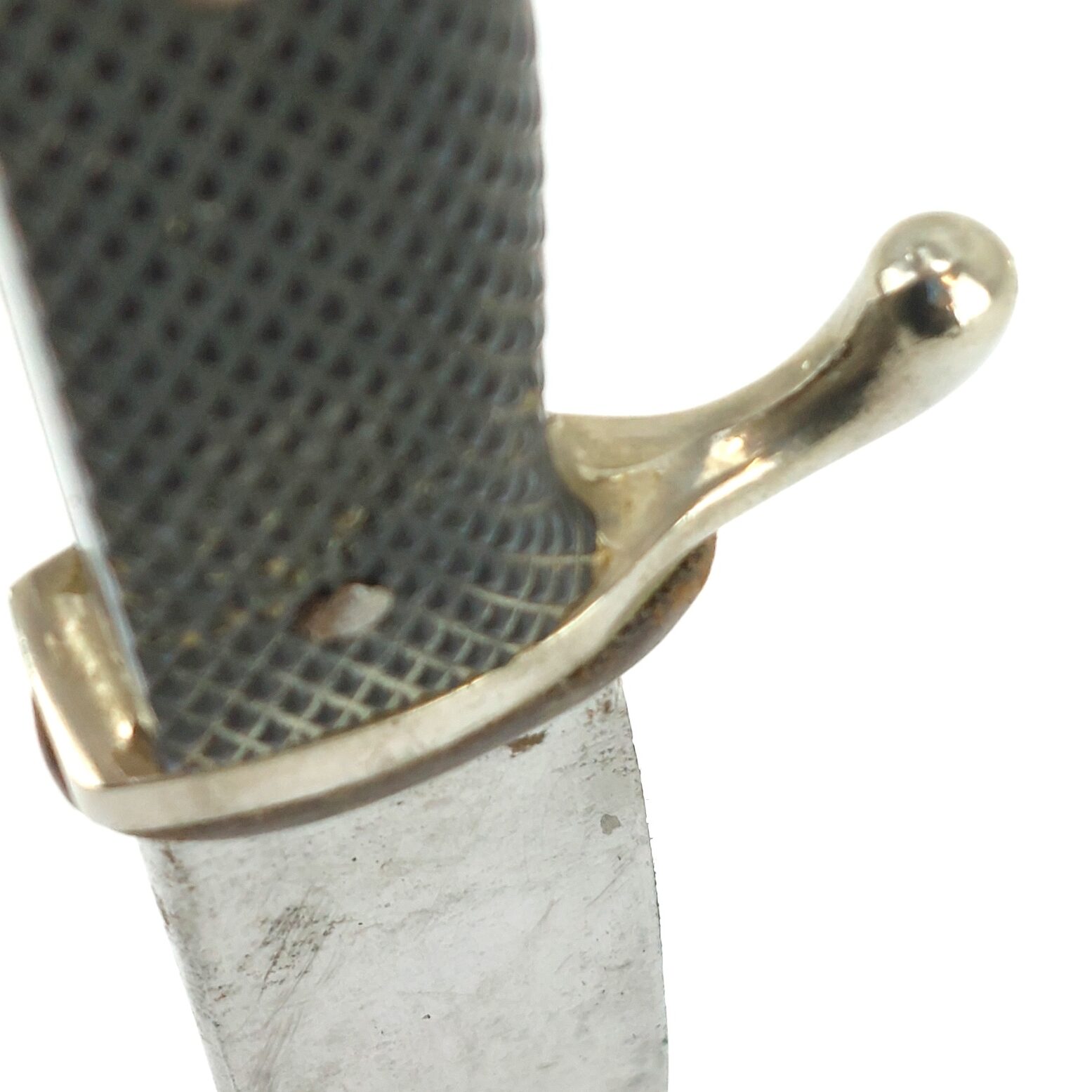
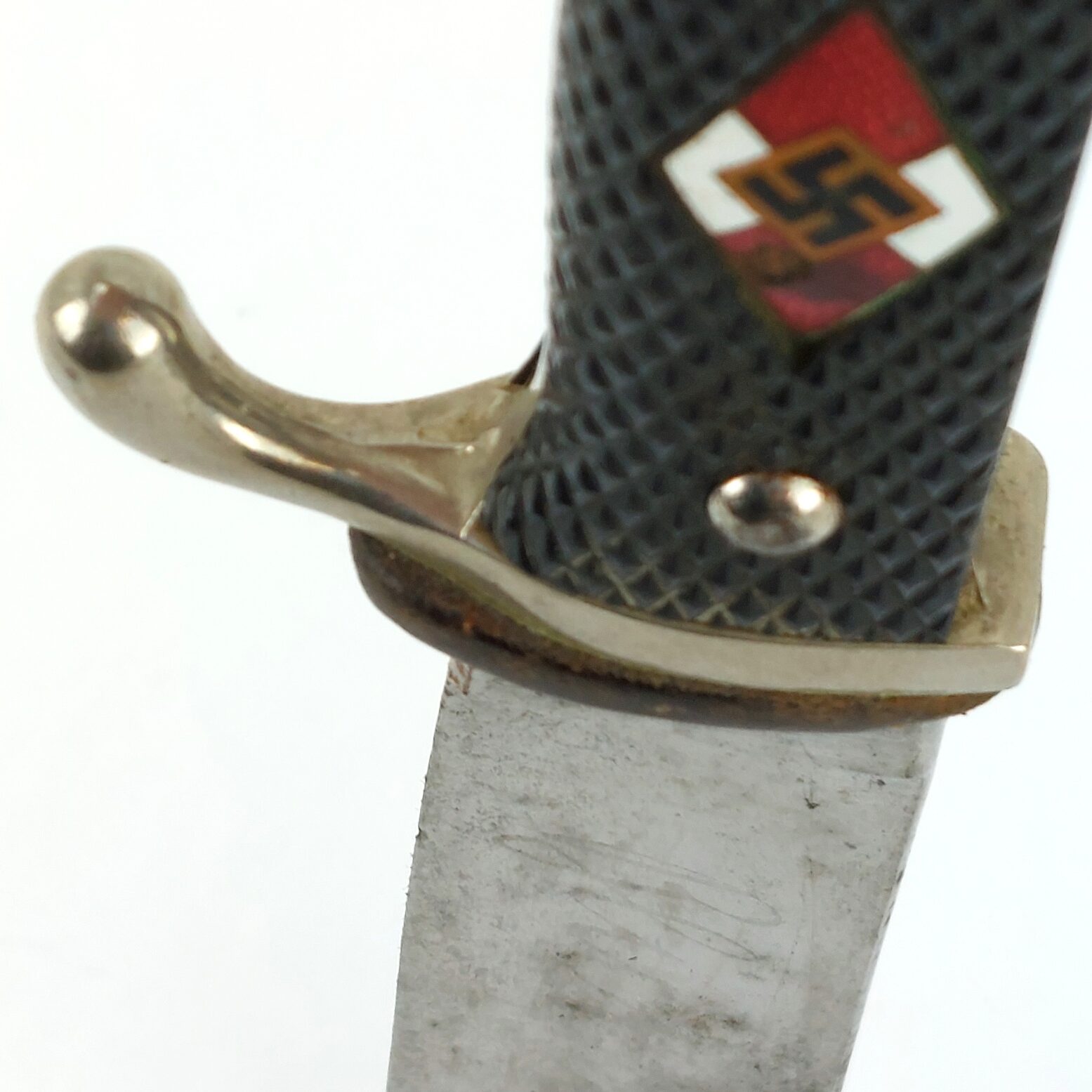
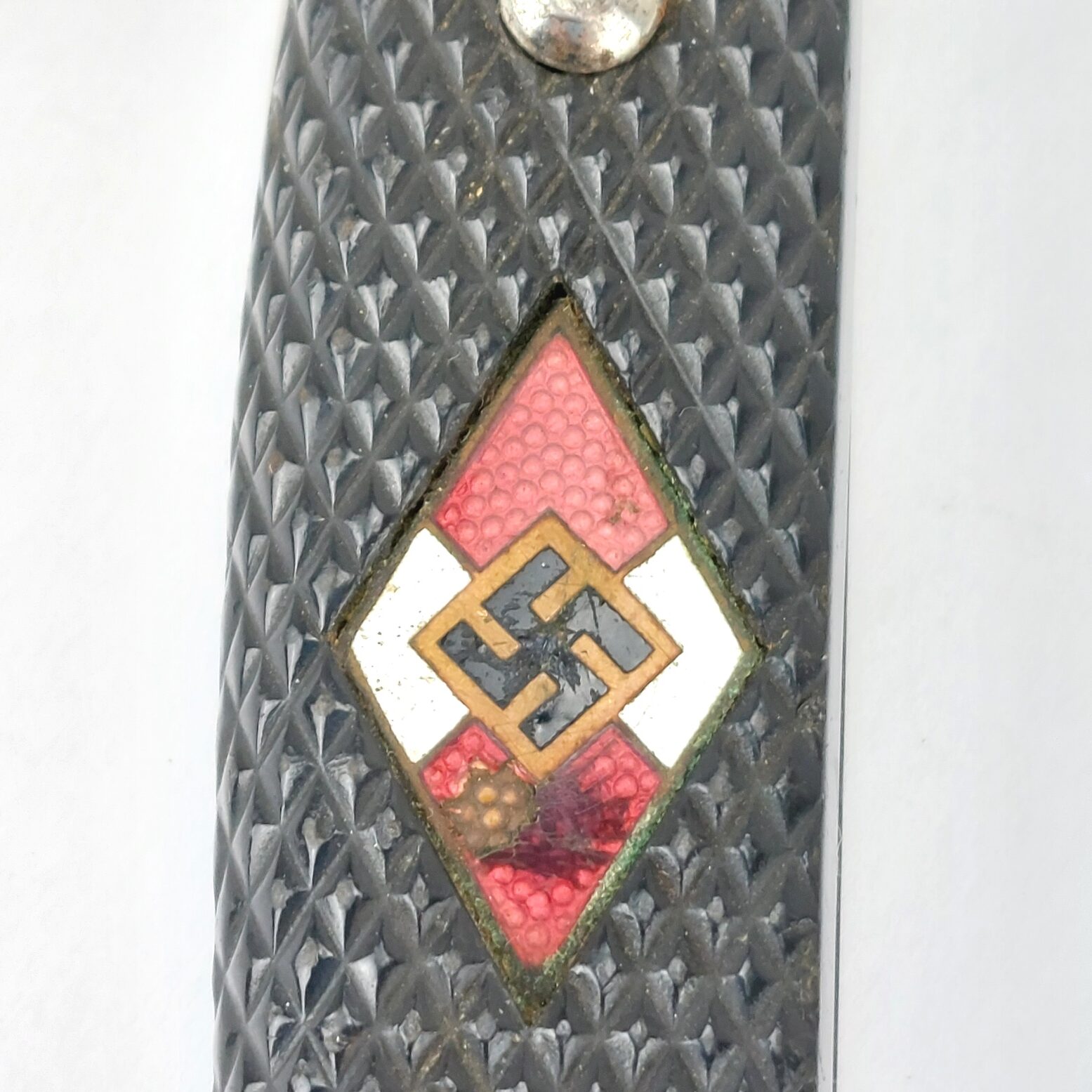
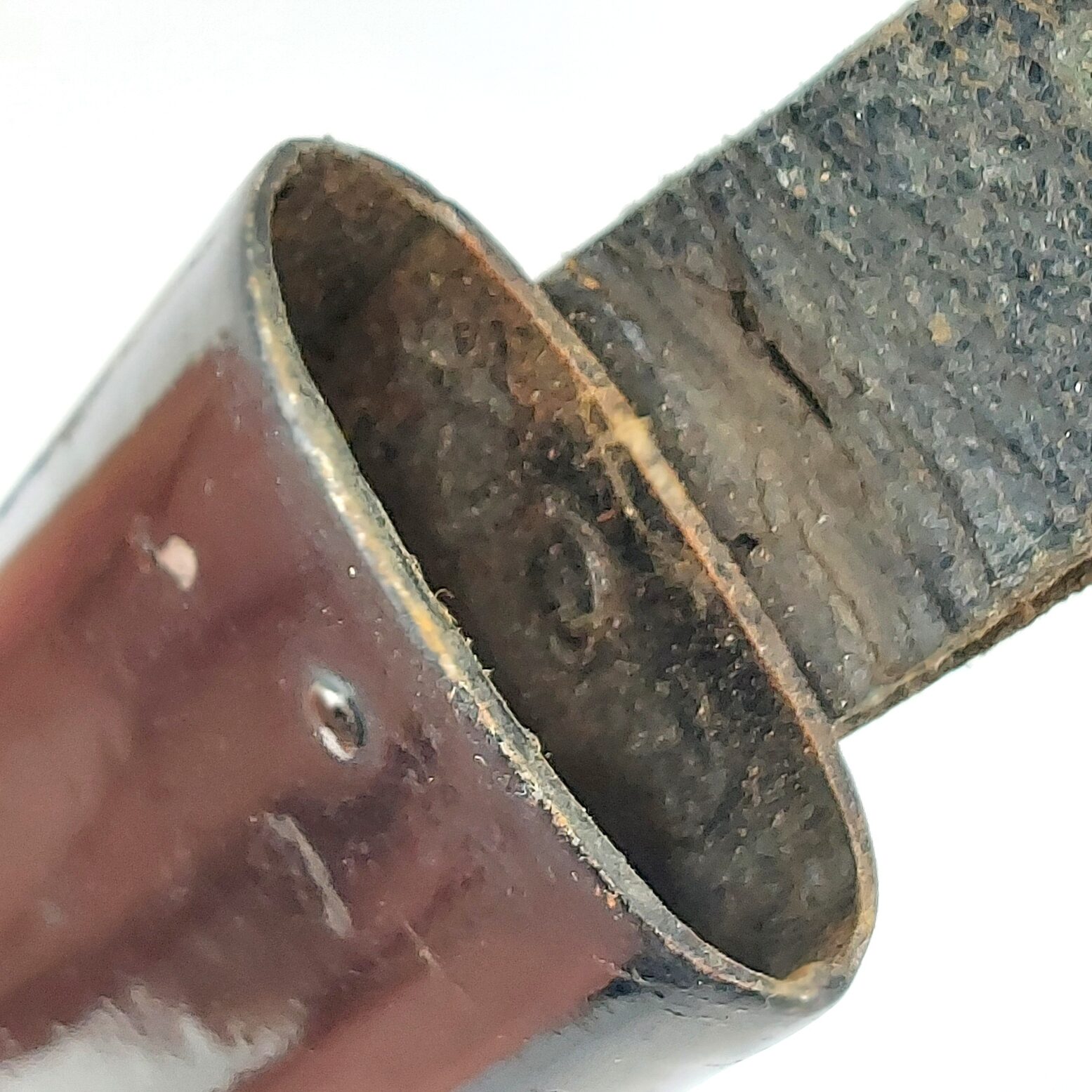
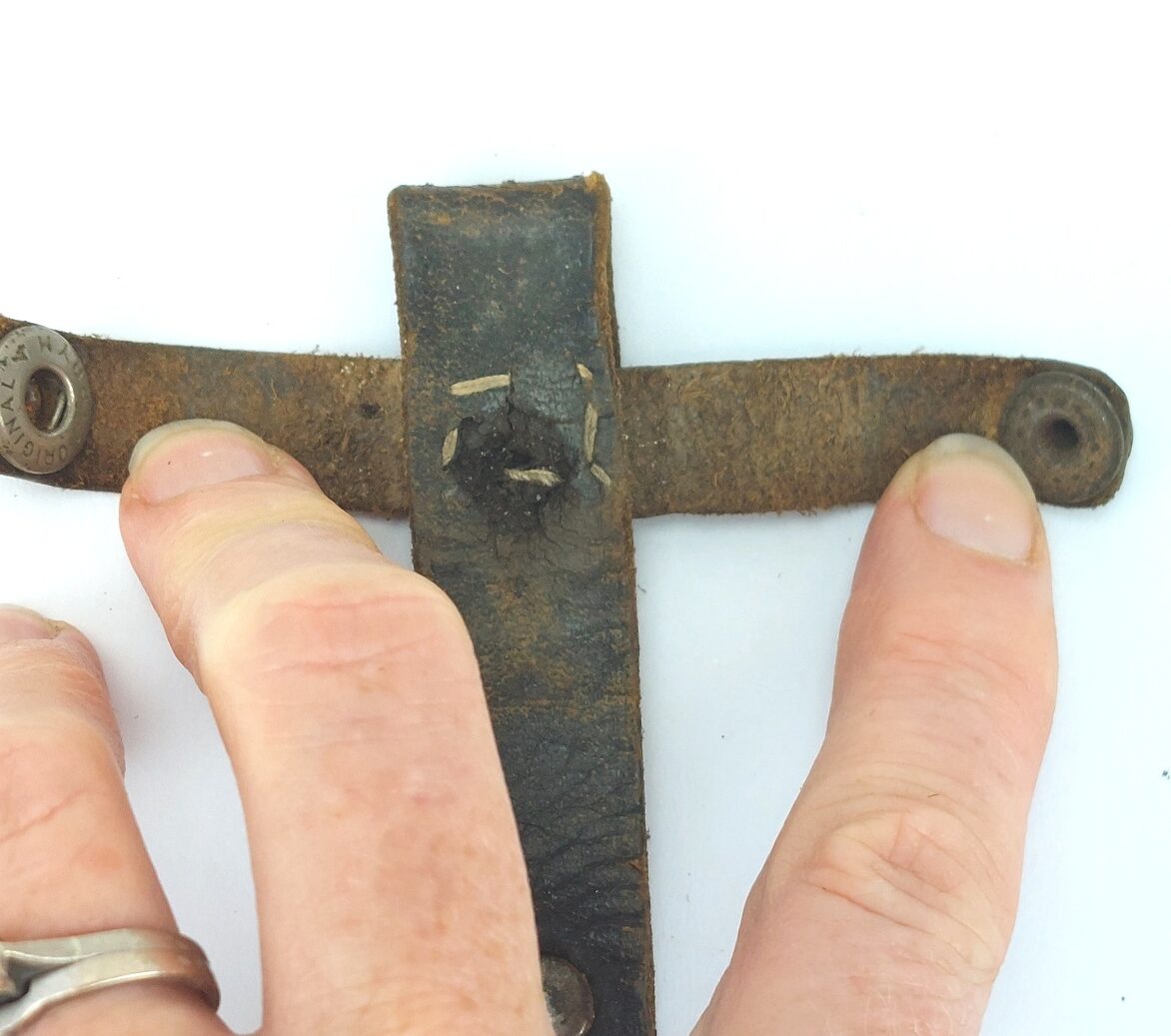
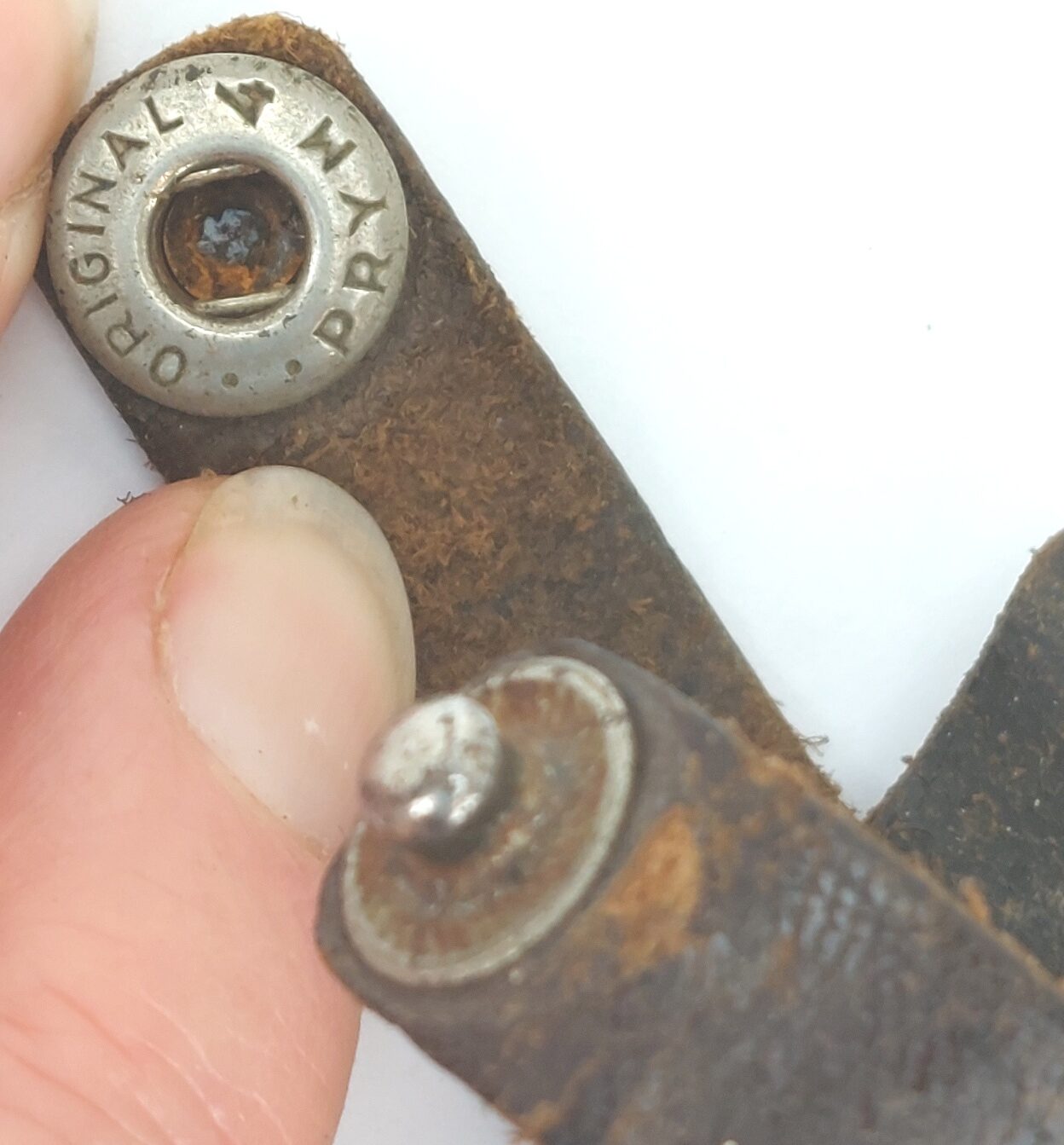
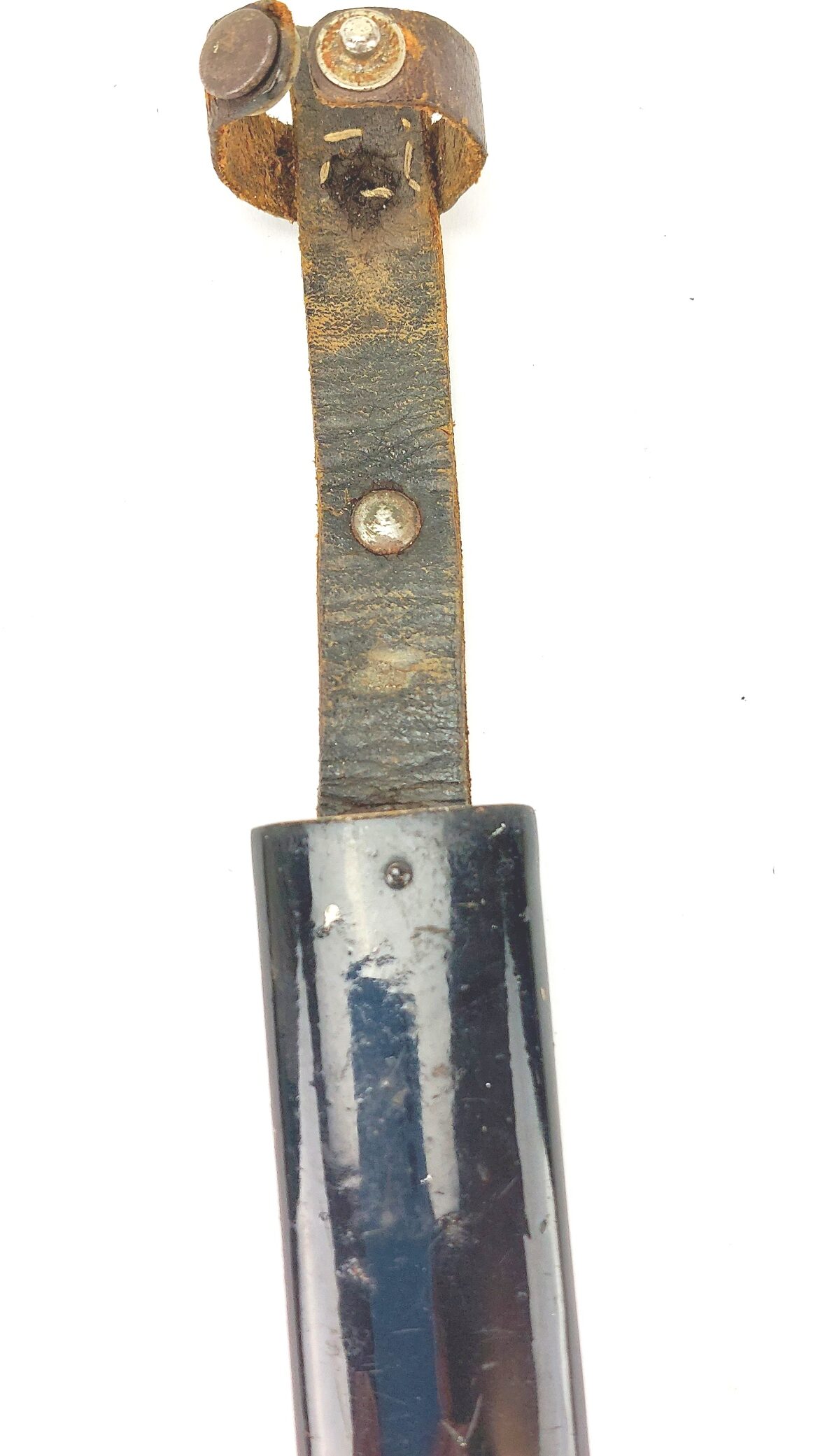
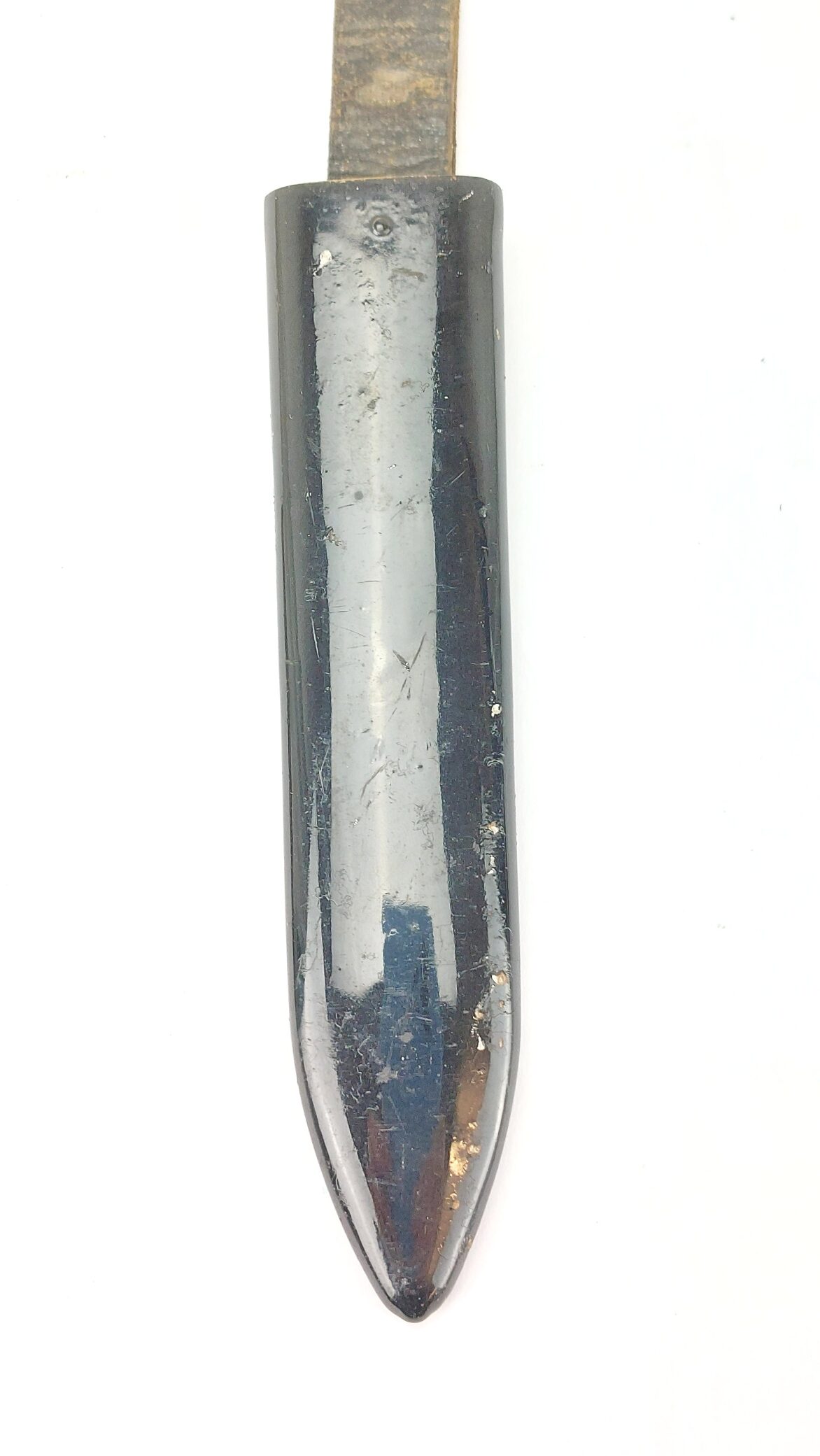
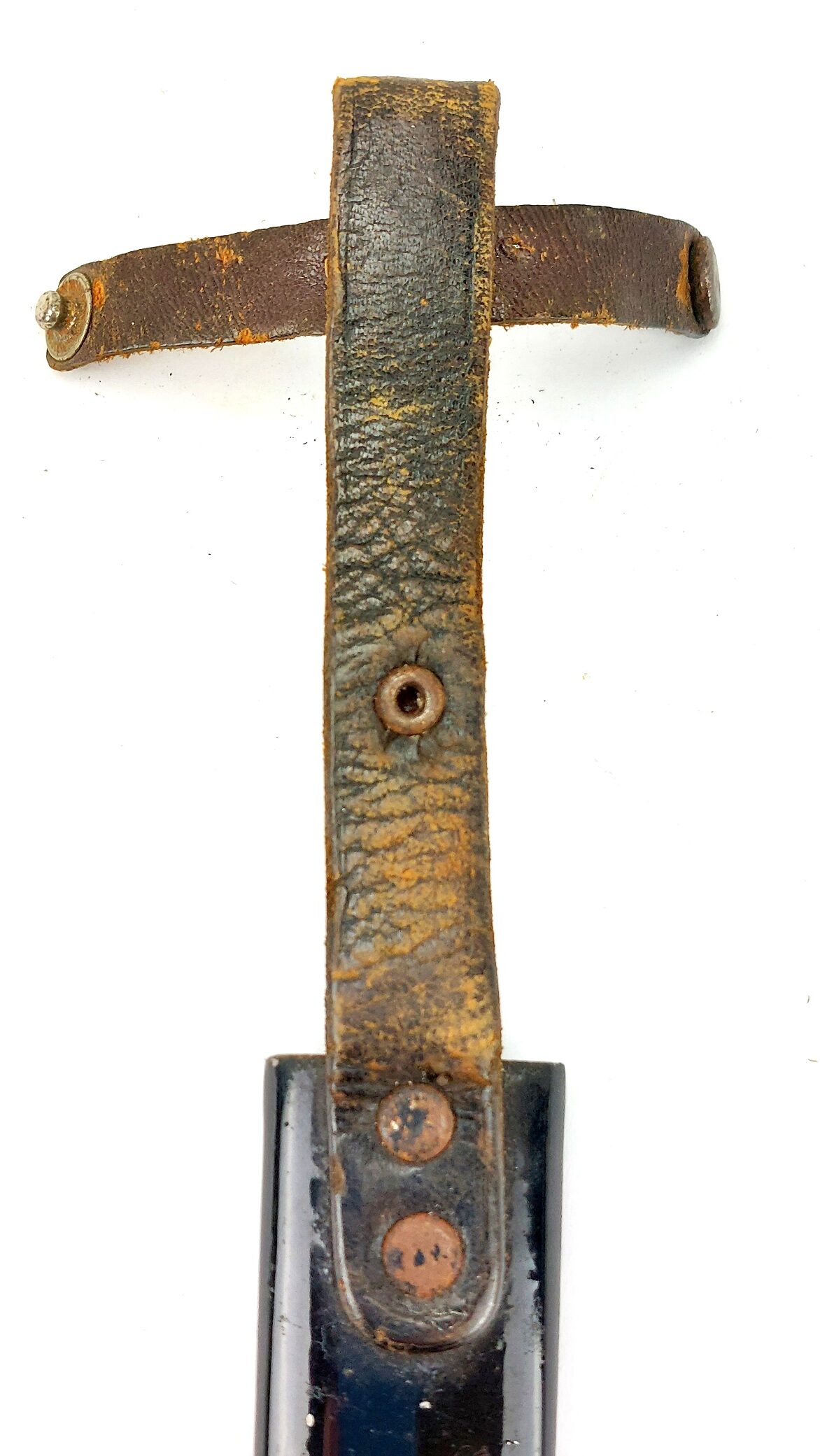
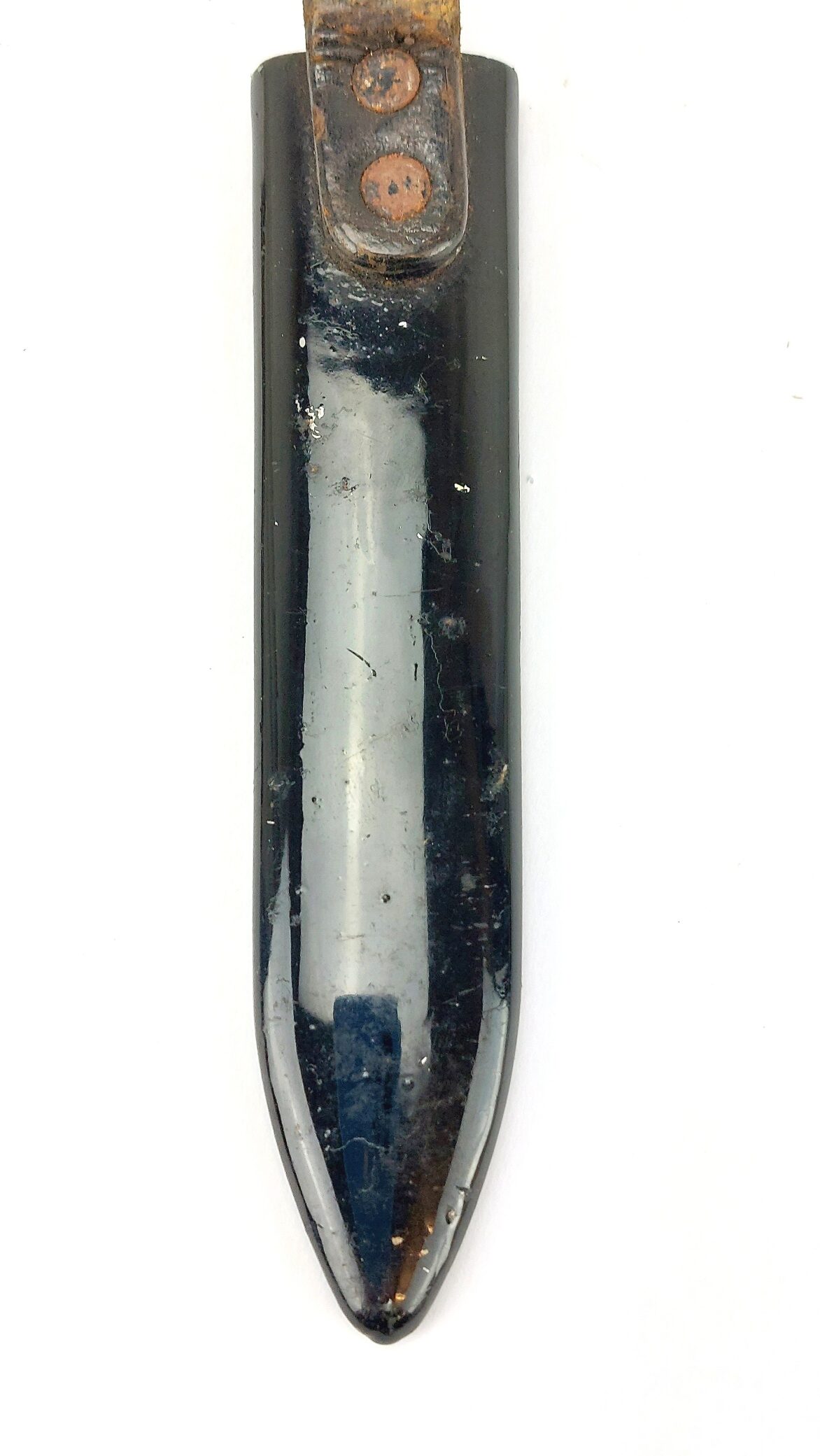
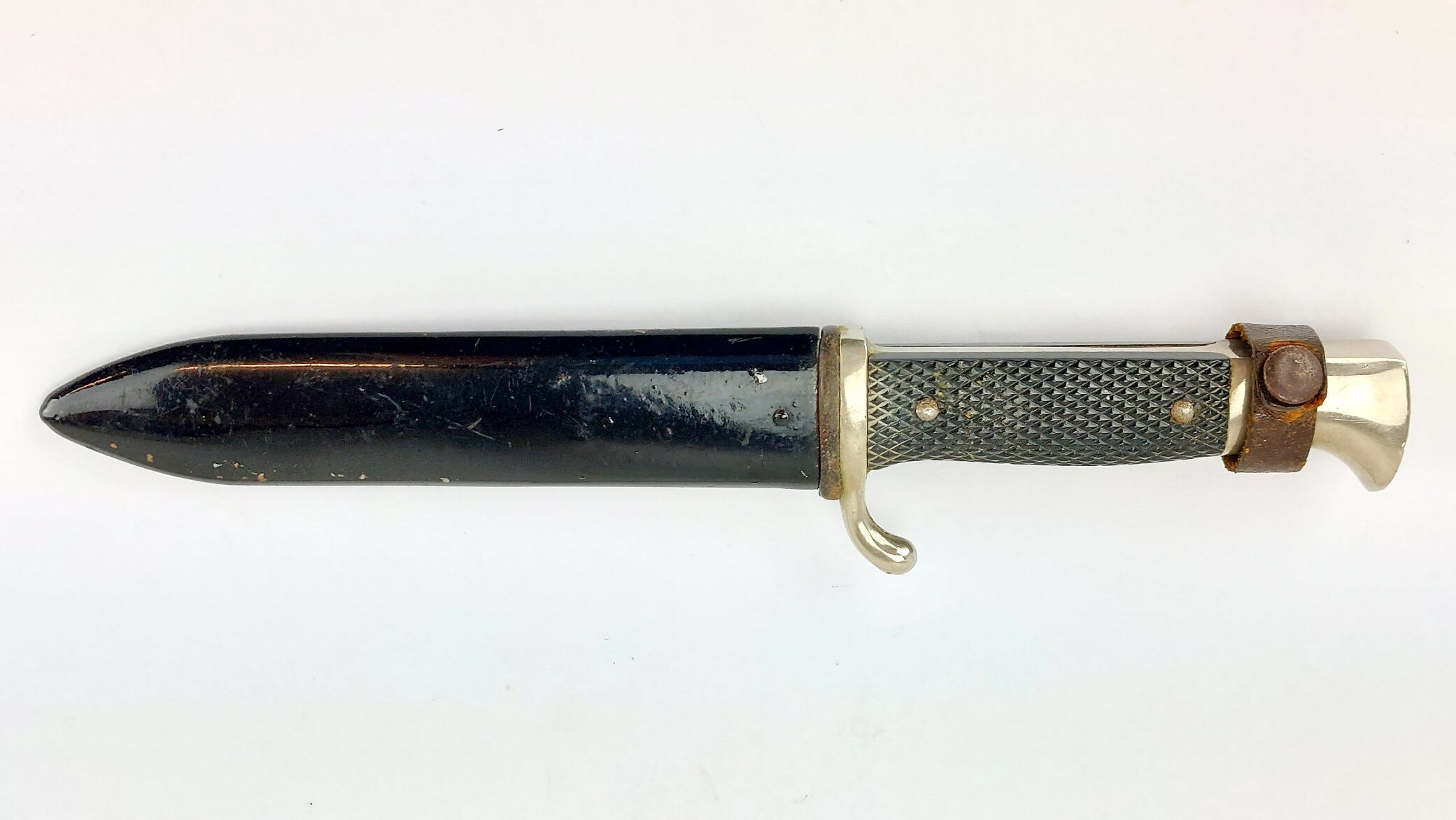
Early Hitler Youth knife (HJ Hitlerjugend) of pre-RZM manufacture, featuring the etched motto “Blut und Ehre” to the blade. The knife retains correct early characteristics including the acid-etched motto “Blut und Ehre!” (Blood and Honour) to the blade, correctly applied during the early pre-RZM period and manufacturer details (though very faint) to the other, nickel-plated steel fittings, chequered black grip plates secured by domed rivets, and an original celluloid Hitler Youth diamond inset to the grip. The blade bears a very faint Solingen maker’s mark, consisting of an initial followed by “Solingen”. Due to wear, the mark is indistinct but remains legible enough to indicate early Solingen production. The knife is complete with its original magnetic painted steel scabbard, retaining the correct early form and construction, and the original leather belt hanger, fitted with a period Prym “ORIGINAL 4 PRYM” press stud.
Measurements: Blade length approx. 12.5 cm Overall length approx. 23.4 cm
Historical Note:
The Hitler Youth (Hitlerjugend, HJ) was established in 1922 as a youth organisation of the National Socialist German Workers’ Party (NSDAP), later becoming compulsory after 1936 for boys aged 10 to 18. In 1933, the official Hitler Youth knife was introduced as a symbolic award worn by members who had passed specific physical and ideological qualifications.
Early HJ knives are widely regarded as the highest-quality examples, reflecting traditional Solingen craftsmanship. These early pieces typically feature nickel-plated steel fittings, bakelite grips, seamless magnetic scabbards, and blades acid-etched rather than stamped with the organisation’s motto. By contrast, later examples (post-1938) generally lack the motto, carry RZM codes, and increasingly use zinc-based fittings as wartime production economies took effect. This example dates to the early Third Reich period, circa 1933–1935, prior to the full enforcement of the Reichszeugmeisterei (RZM) control system. During this transitional period, Hitler Youth knives were produced by a number of established Solingen cutlers on a private-purchase basis, often without RZM markings.
The faint blade mark is consistent with early Solingen manufacture, and two plausible maker attributions could be considered: Paul Ebel, Stahlwarenfabrik, Solingen
Founded in 1890 and registered in Solingen in 1905, Paul Ebel was an established cutlery and edged-weapons manufacturer. The firm is known to have produced early SA and NSKK daggers and was later awarded RZM number M7/47 in 1935. Early Ebel blades encountered prior to this date are known without RZM markings, making a pre-1935 attribution consistent with this knife. The visible initial appears most convincingly as a “P” over the Solingen, supporting this attribution. Alternatively, Kuno Meissenburg – UNDINE / FISCHWEIB, Solingen. Founded in 1919, Kuno Meissenburg registered the UNDINE and FISCHWEIB trademarks in 1922 and is documented as an early SA dagger producer. This firm is not known to have held an RZM contract, and its early Third Reich production frequently appears without RZM markings. The faint circular mark and Solingen designation could also align with this small Solingen maker. Due to wear, the mark cannot be conclusively attributed, and the knife is therefore best described as attributed to either Paul Ebel or Kuno Meissenburg (UNDINE), both documented early Solingen producers active during the correct period.
The leather belt hanger is fitted with a period Prym press stud marked “ORIGINAL 4 PRYM”, a configuration commonly encountered on German leather equipment of the early Third Reich period. William Prym GmbH & Co. KG, based in Stolberg, was a long-established manufacturer of press studs, snaps and metal fasteners and supplied components to a wide range of civilian and military producers during the interwar and wartime years. The designation “ORIGINAL” refers to Prym’s proprietary fastening system, while the numeral “4” denotes the stud size or pattern within Prym’s product range. The presence of a Prym fastener of this type is considered correct for early Hitler Youth knife belt hangers.
*Condition*
Blade retains its original etched motto, now lightly worn and softened with age, with surface patina and scattered staining consistent with period use. Grip plates are secure, with honest wear and no cracks. Hitler Youth diamond shows age-appropriate wear and surface loss. Nickel fittings display expected rubbing and light pitting. Scabbard retains original finish with wear and oxidation consistent with age. Leather hanger is original, with cracking, darkening and age wear; Prym stud present. Please see photographs as part of the condition report.
JAQCOOXEOO_275421062025