WW2 PhotographsGerman, WW2, Named Soldier Archive – Richard Müller, Wehrmacht Bakery Company 572 (Bäckerei-Kompanie) – Photograph Album, Written Memoir, Soldbuch, POW & Repatriation Documents (France, Balkans & Greece Service) (1939–1948)
SKU / Ref. No: RQMCOOXFEO_2938231622
£695.00
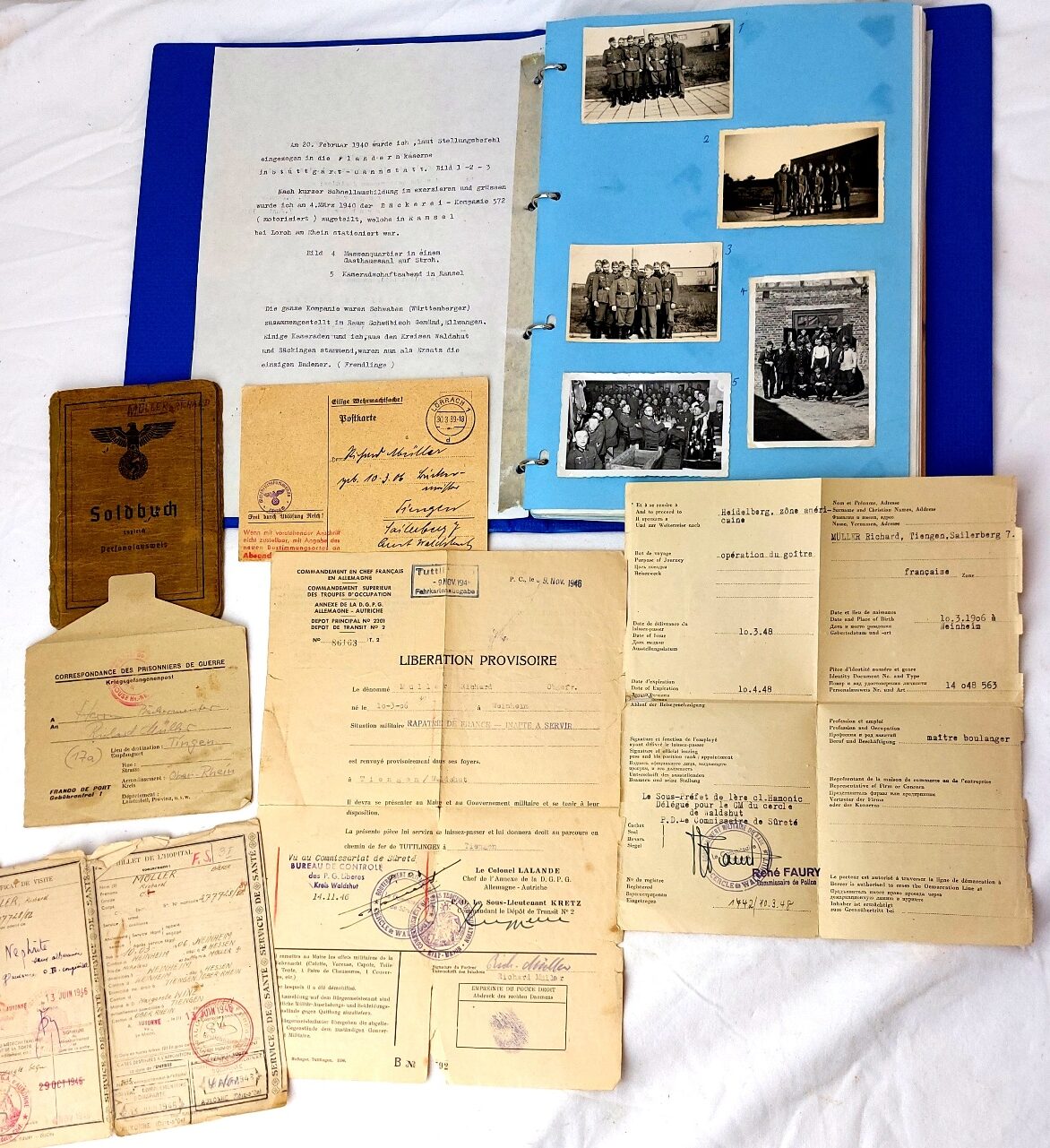
Named WW2 German soldier archive to Richard Müller, Bäckerei-Kompanie 572, including photograph album with written memoir, Soldbuch, mobilisation papers, POW correspondence and French repatriation documents, covering service from the France campaign (1940) through the Balkans and occupation of Greece to captivity and release in 1946.
Your message was sent. We will contact you shortly.
*German, WW2, Named Soldier Archive – Richard Müller, Wehrmacht Bakery Company 572 (Bäckerei-Kompanie) – Photograph Album, Written Memoir, Soldbuch, POW & Repatriation Documents (France, Balkans & Greece Service) (1939–1948)*
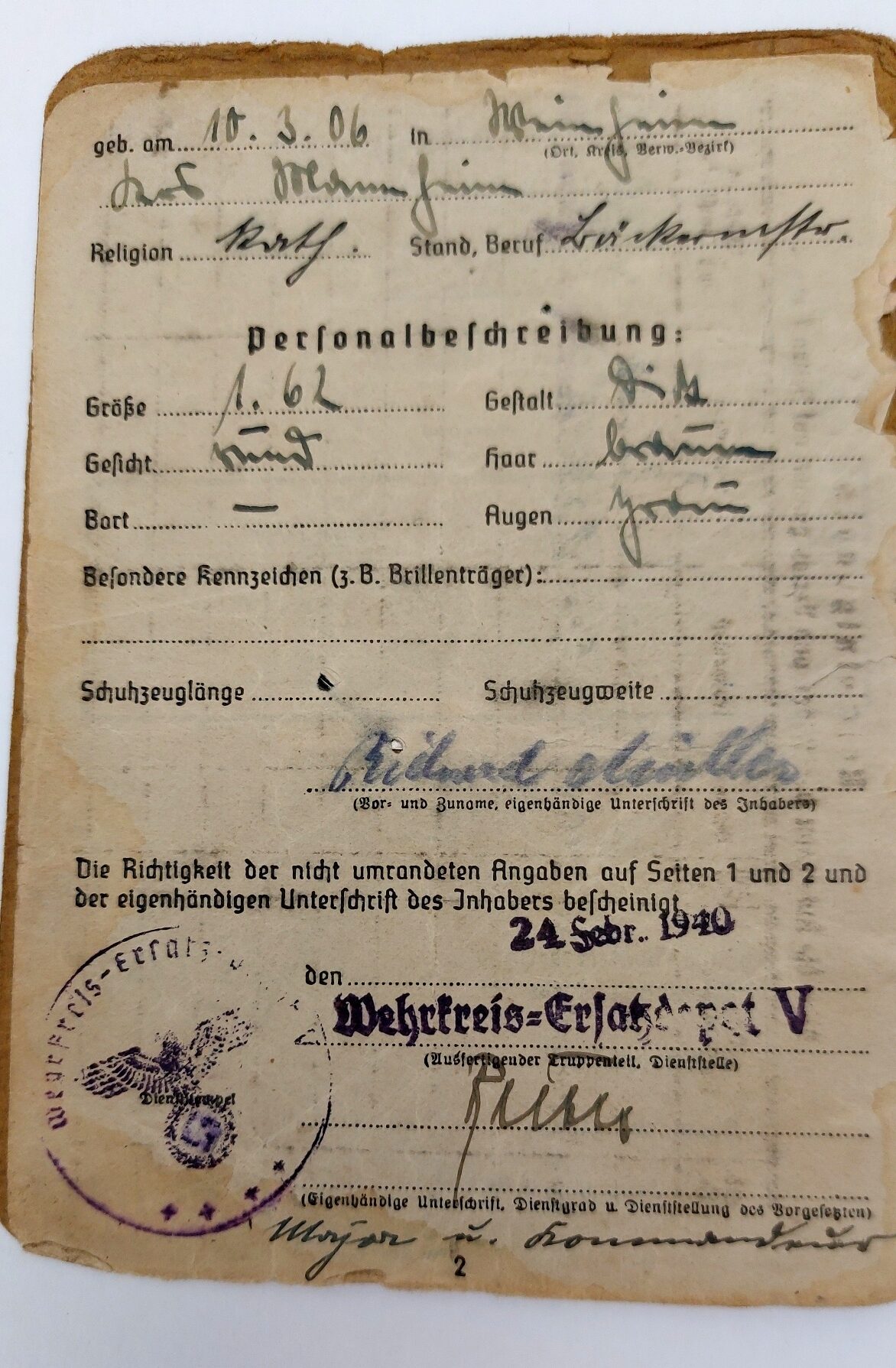
A substantial and highly complete named Second World War German soldier archive relating to Richard Müller (born 10 March 1906), a civilian master baker who served in the Wehrmacht with Bäckerei-Kompanie 572, a mobile field bakery unit responsible for supplying bread to front-line formations.
The archive comprises a large illustrated photograph album with the soldier’s own written wartime memoir, his original Wehrmacht Soldbuch, mobilisation papers, POW correspondence, French medical records and official repatriation documents. Together these items document Müller’s experience from pre-war mobilisation in 1939 through the campaigns in France and the Balkans to French captivity and release in 1946, forming a remarkably coherent and well-documented personal wartime record.
Photograph Album & Memoir:
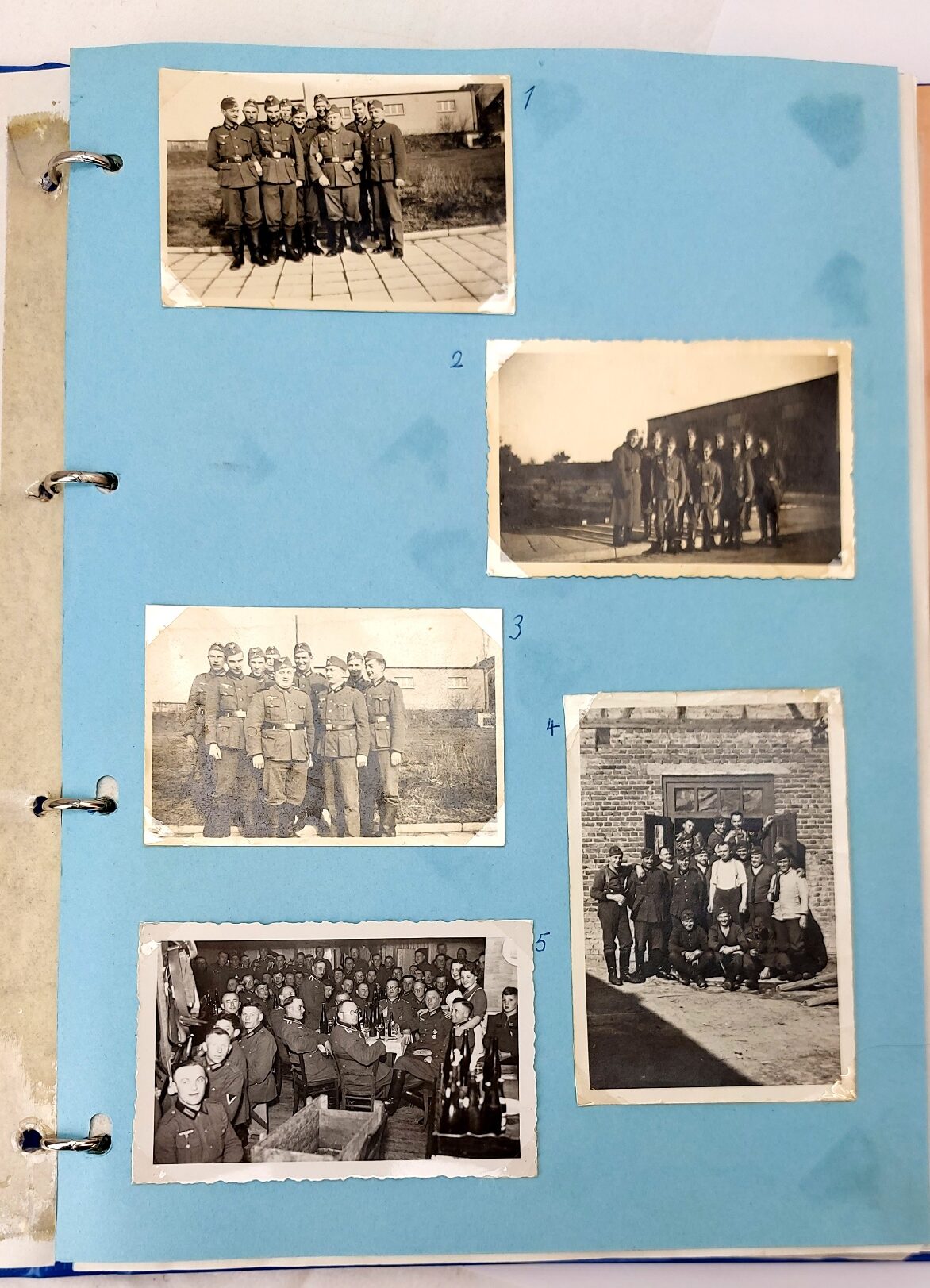
The archive is centred around a large A4 photograph album preserved in a ring-bound folder, containing approximately 155 original photographs and postcards mounted to blue album pages.
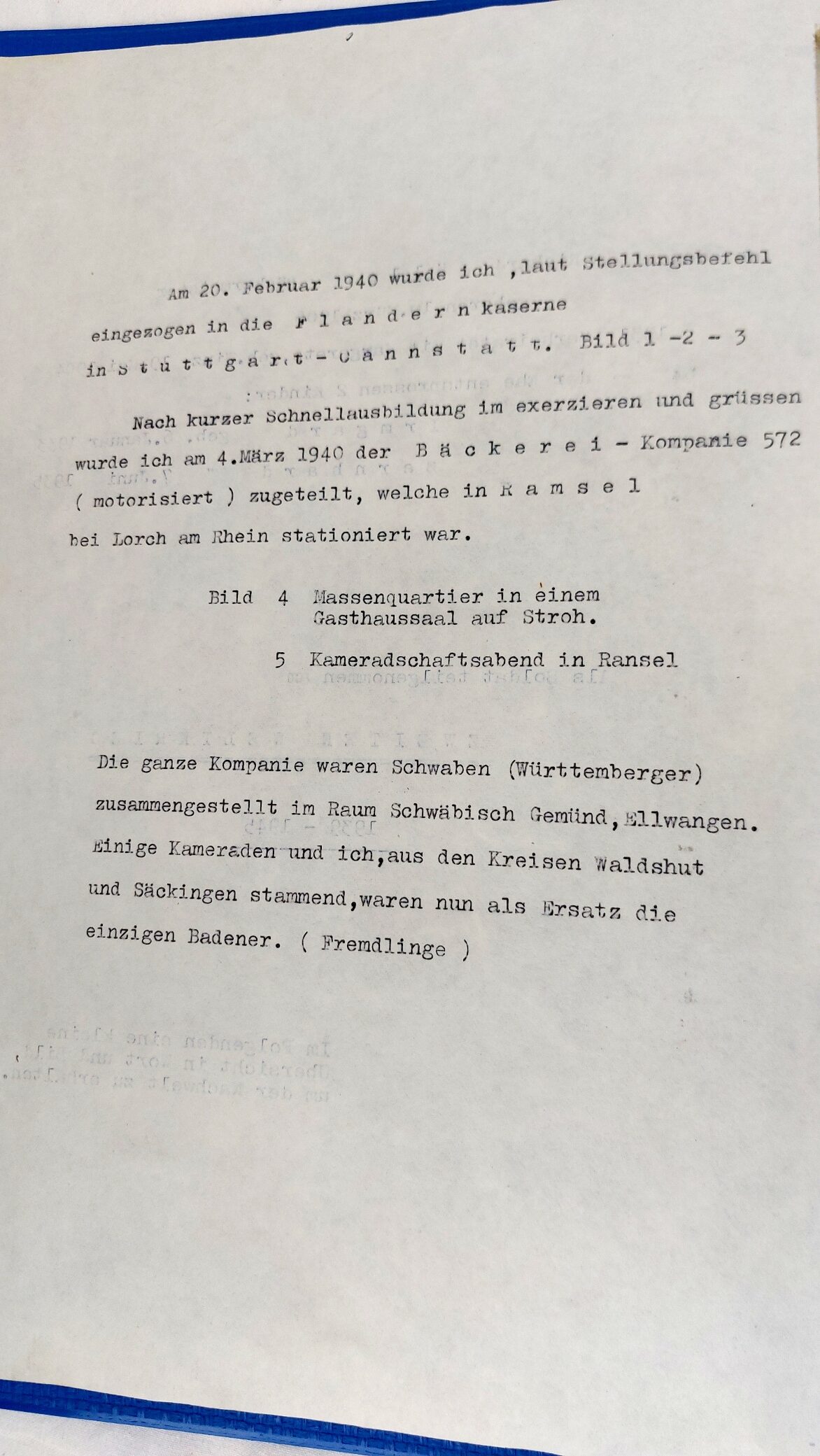
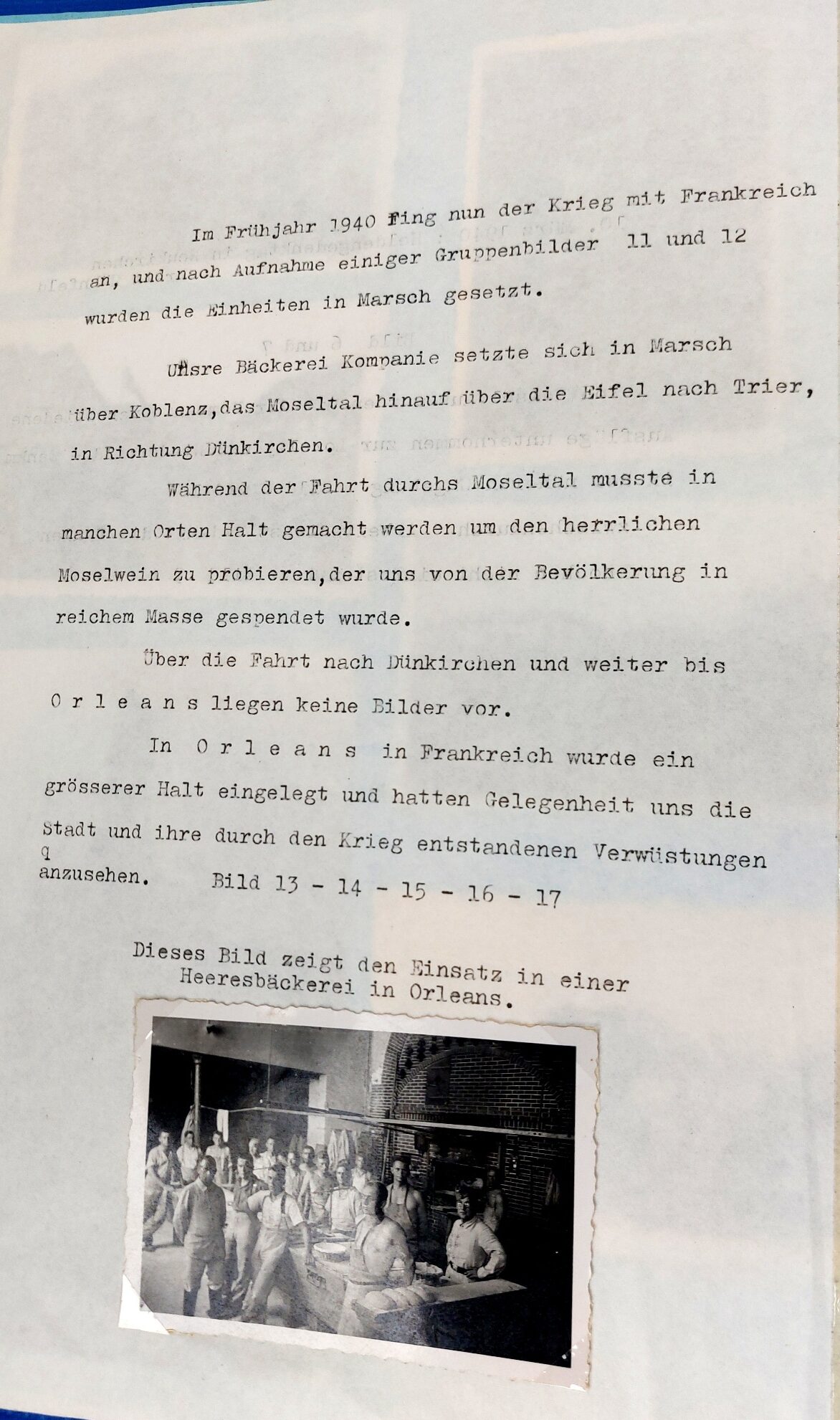
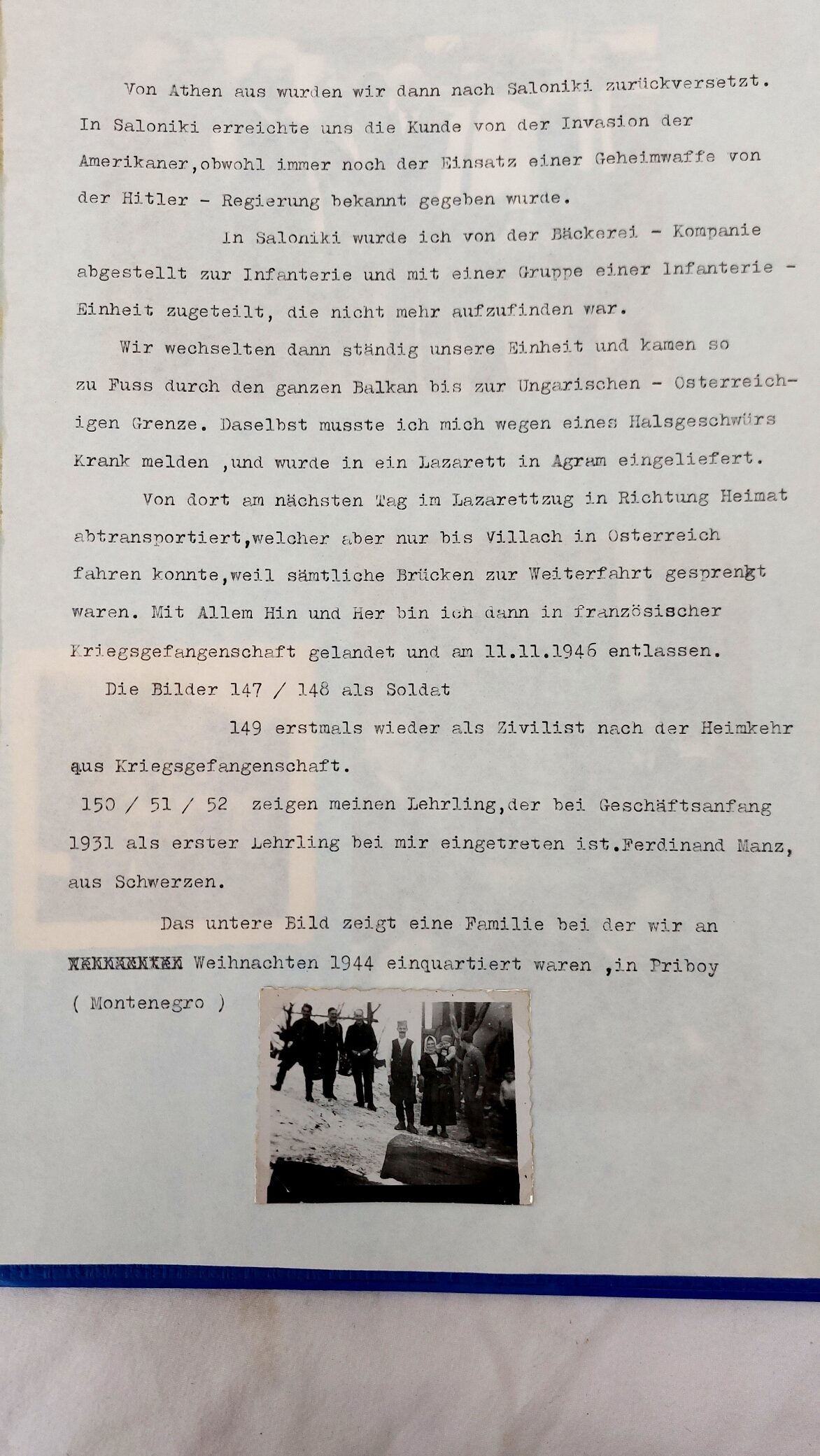
The photographs and postcards are individually numbered in ink and are accompanied by typed explanatory sheets written by Müller himself, in which he compiled a retrospective account of his wartime service. These pages effectively form a personal wartime memoir identifying locations, events and the movements of his unit across several theatres of war.
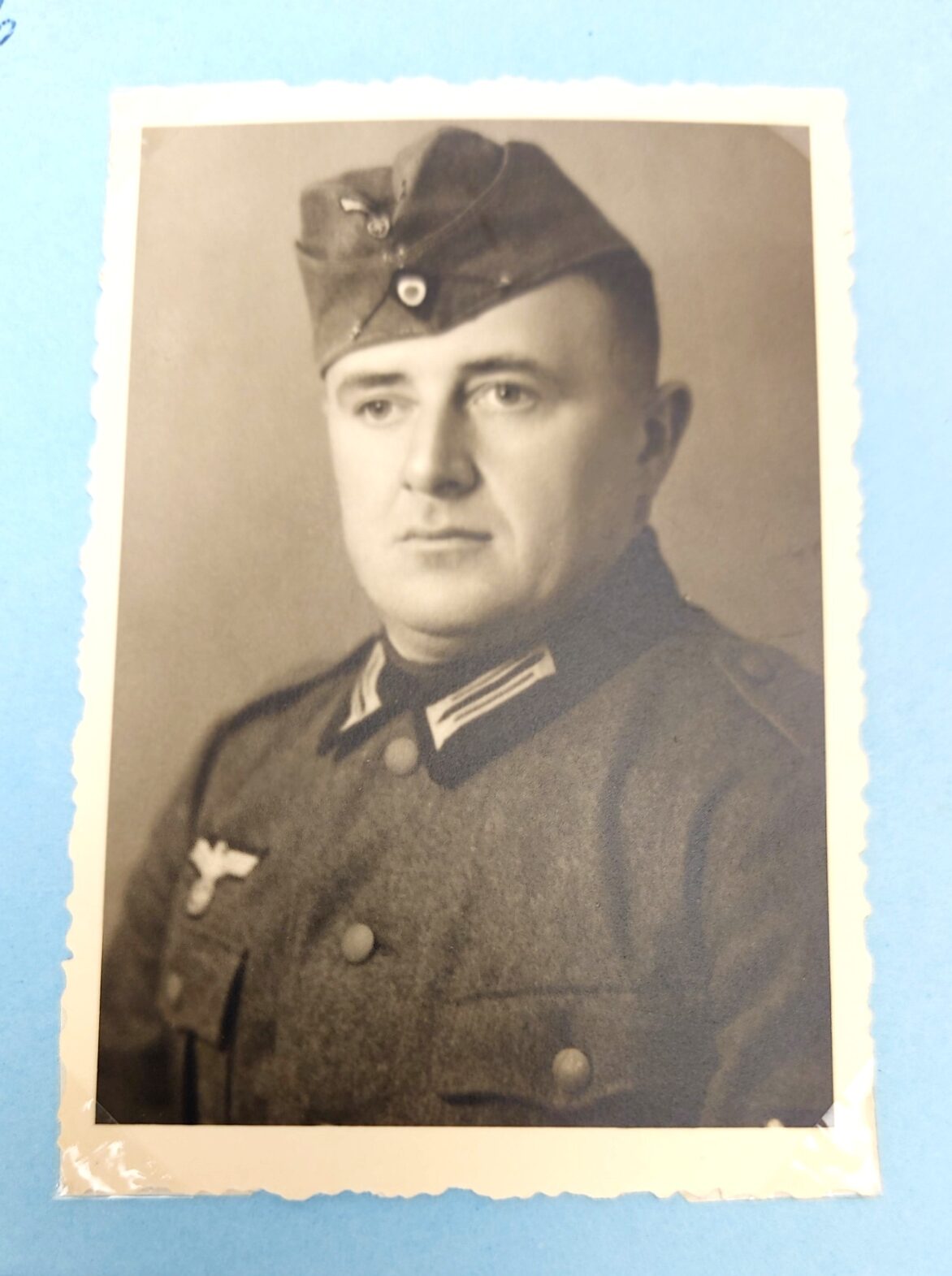
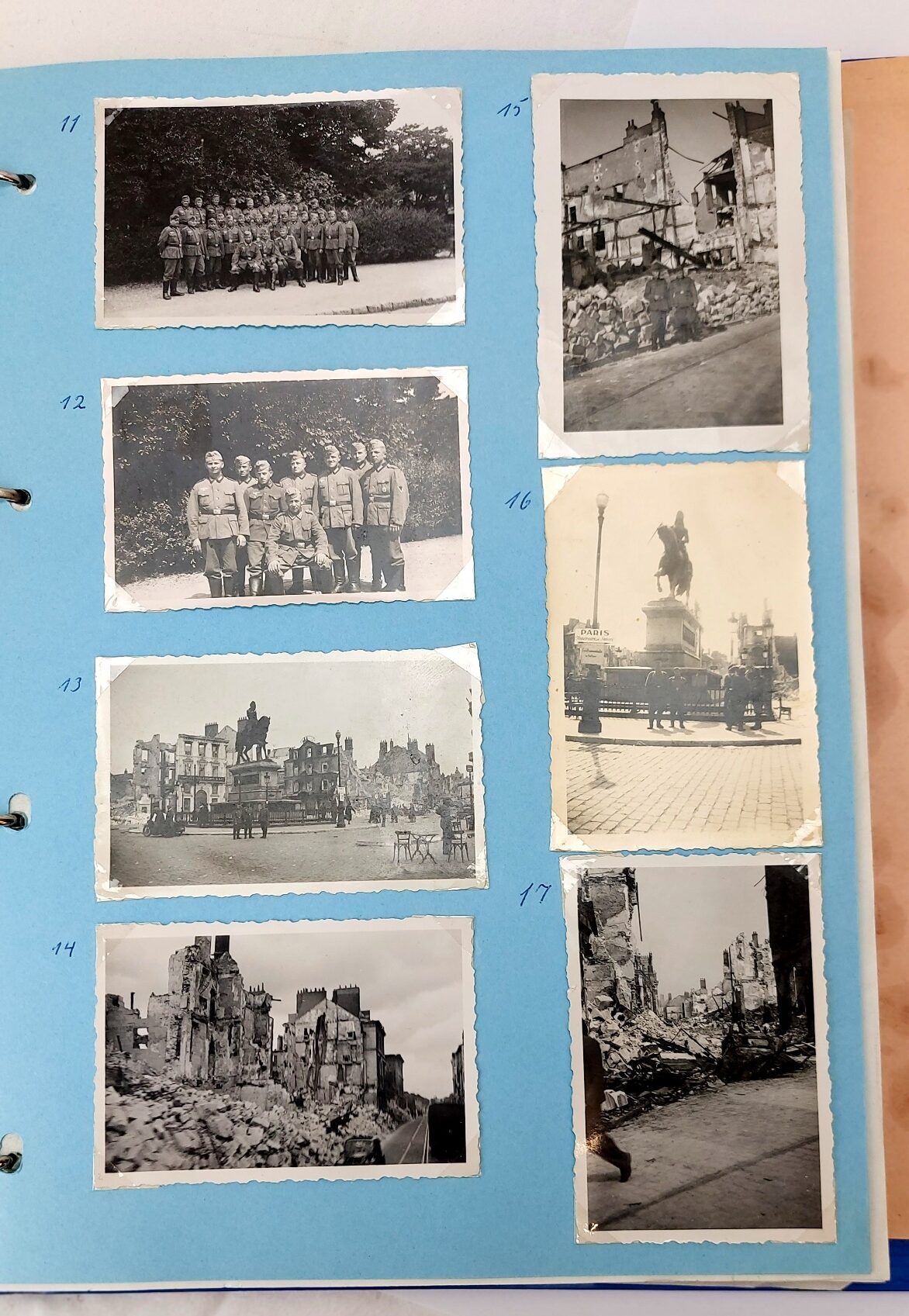
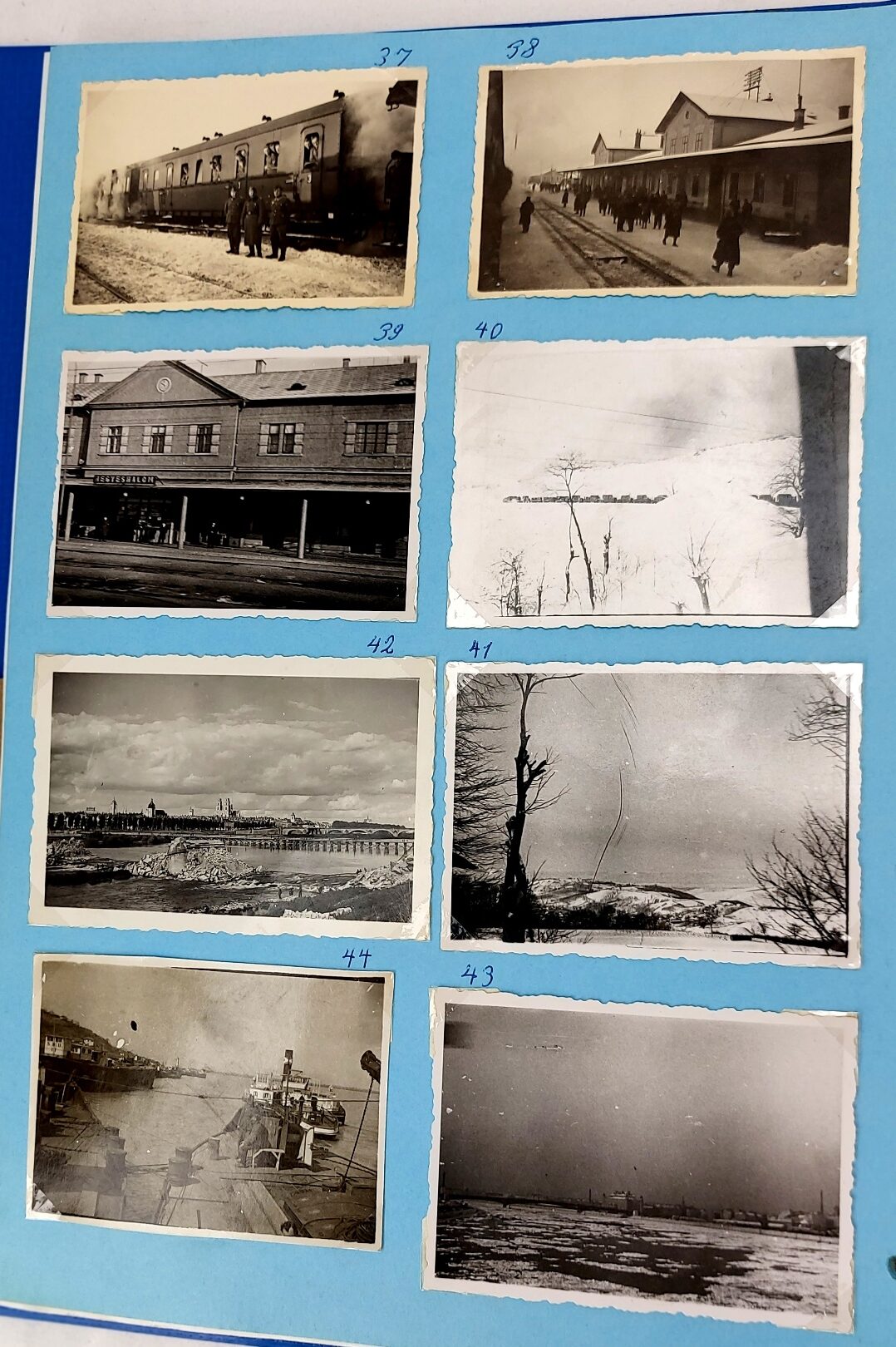
The photographs are typical period German soldier snapshots, including small format prints with white borders and informal images taken during service. Subjects include: group portraits of soldiers in uniform; barracks scenes and moments of camaraderie; soldiers socialising in mess halls; views of war-damaged French towns and ruined streets and occupation scenes in Greece, including Athens, the Acropolis and the harbour at Piraeus. The album also includes portraits of Müller himself in uniform.
Service with Bäckerei-Kompanie 572:
Müller explains in his memoir that he was mobilised on 20 February 1940, reporting to the Flandern Barracks in Stuttgart-Cannstatt, before being assigned to Bäckerei-Kompanie 572, a Wehrmacht field bakery unit composed largely of soldiers from the Swabian region. Field bakery companies formed an essential but often overlooked part of the Wehrmacht supply system. Operating large field ovens and mechanical baking installations, these units produced thousands of loaves of bread daily to sustain troops in the field.
France Campaign – Western Front (1940):
Müller’s wartime experience began during the campaign in France in 1940, where the bakery company moved westward following the German advance through: Koblenz; the Moselle valley and Trier before reaching Orléans, where they operated a captured French army bakery. Müller writes that the march was “no pleasure trip”, as the company’s responsibility was to ensure a constant bread supply for rapidly advancing troops. The unit later moved south toward Bordeaux, with a brief rest period at Arcachon on the Bay of Biscay.
Balkans Campaign (1941):
Following the French campaign the unit was transferred eastward through Austria and Hungary into Romania, marking the beginning of its involvement in the Balkans campaign of 1941. Müller records a period stationed in Craiova, before the company moved south through Bulgaria toward the Greek frontier, passing the fortified mountain defences of the Metaxas Line during the German invasion of Greece.
Occupation of Greece:
The memoir and photographs then document the company’s advance into Greece and subsequent occupation service. Movements recorded include: Saloniki (Thessaloniki); Larissa and Athens. In Athens Müller describes a large army bakery installation equipped with modern industrial machinery manufactured by Werner & Pfleiderer, capable of producing approximately 3,200 loaves of bread daily. Photographs and postcards from this period show numerous views of the city and surrounding areas, including: the Acropolis; Piraeus harbour and scenes of daily military life during the German occupation. These images provide a rare visual record of the work of a Wehrmacht field bakery unit, a logistical service seldom represented in surviving soldier archives.
Later War & Final Campaign:
During the later stages of the war Müller was detached with a smaller group to operate field baking ovens in the Peloponnese, crossing the Corinth Canal, which he remarks might later be destroyed if German forces were forced to retreat. As the military situation deteriorated he was eventually transferred from his bakery unit to an infantry formation, marching across the Balkans during the final months of the war. Shortly before the end of the conflict he became seriously ill with a throat abscess, requiring hospitalisation in Agram (Zagreb).
Captivity & Repatriation (1945–1946):
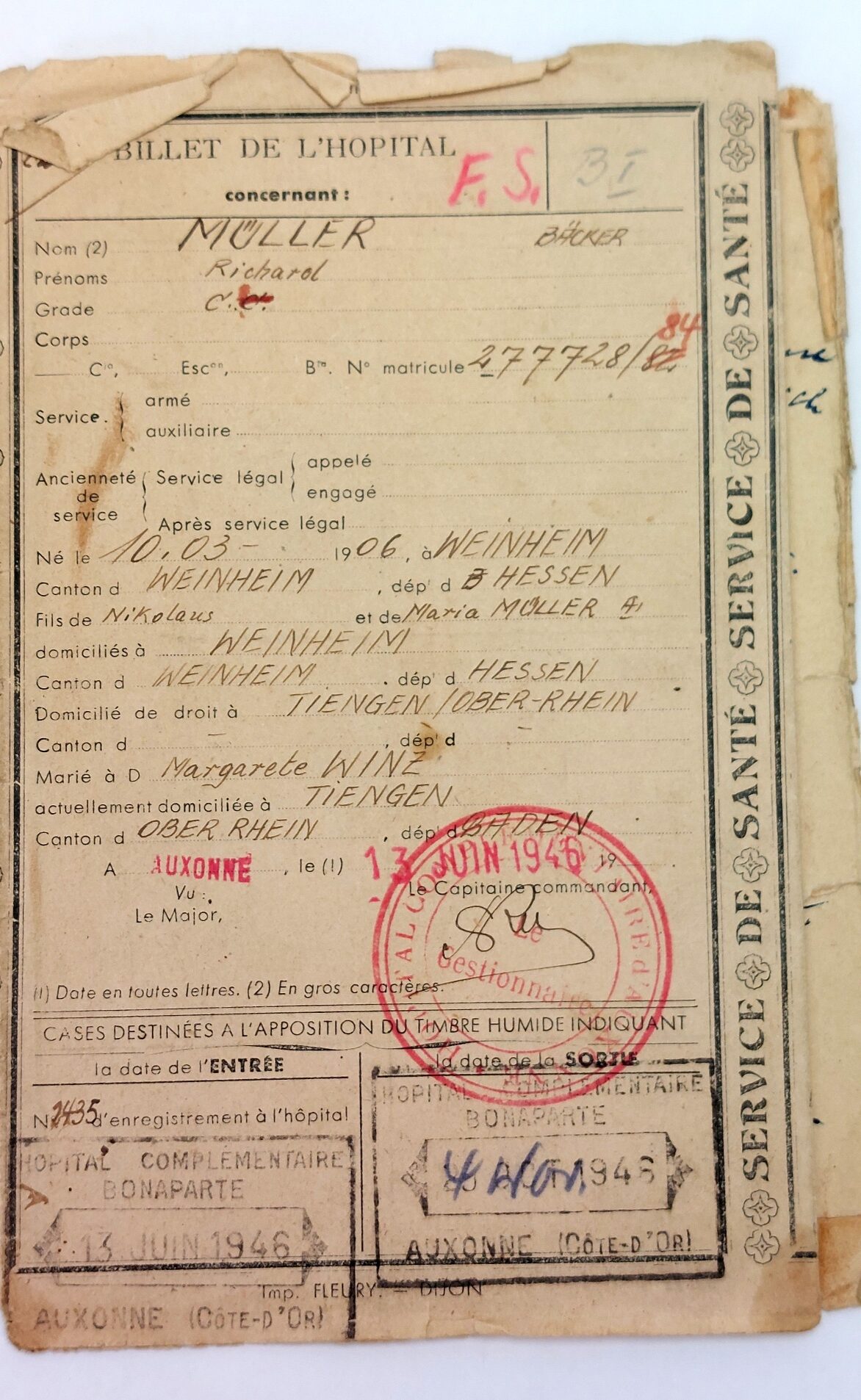
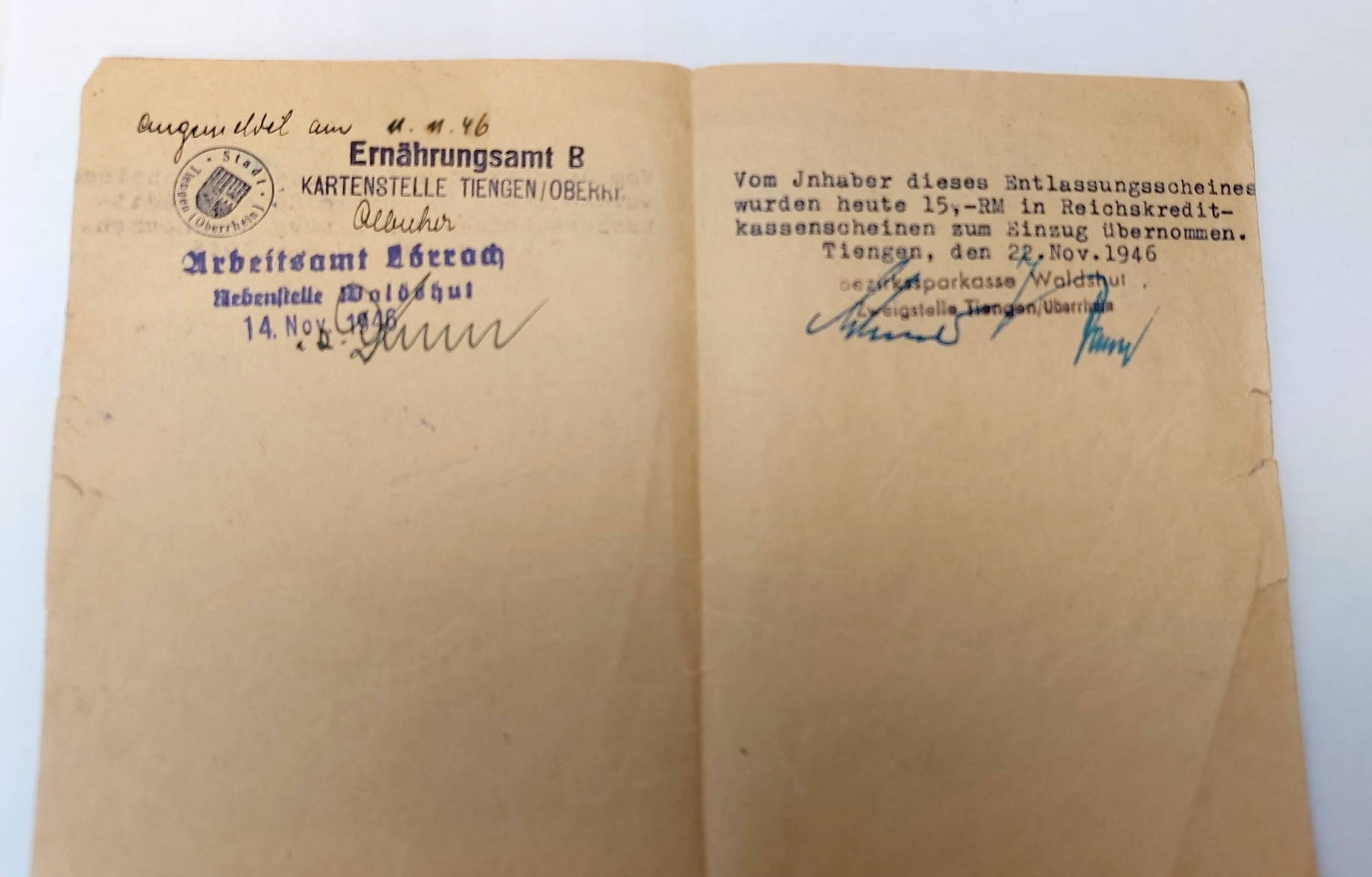
Following the collapse of German forces Müller was taken into French prisoner-of-war captivity, where he remained until November 1946. Documents from this period include:
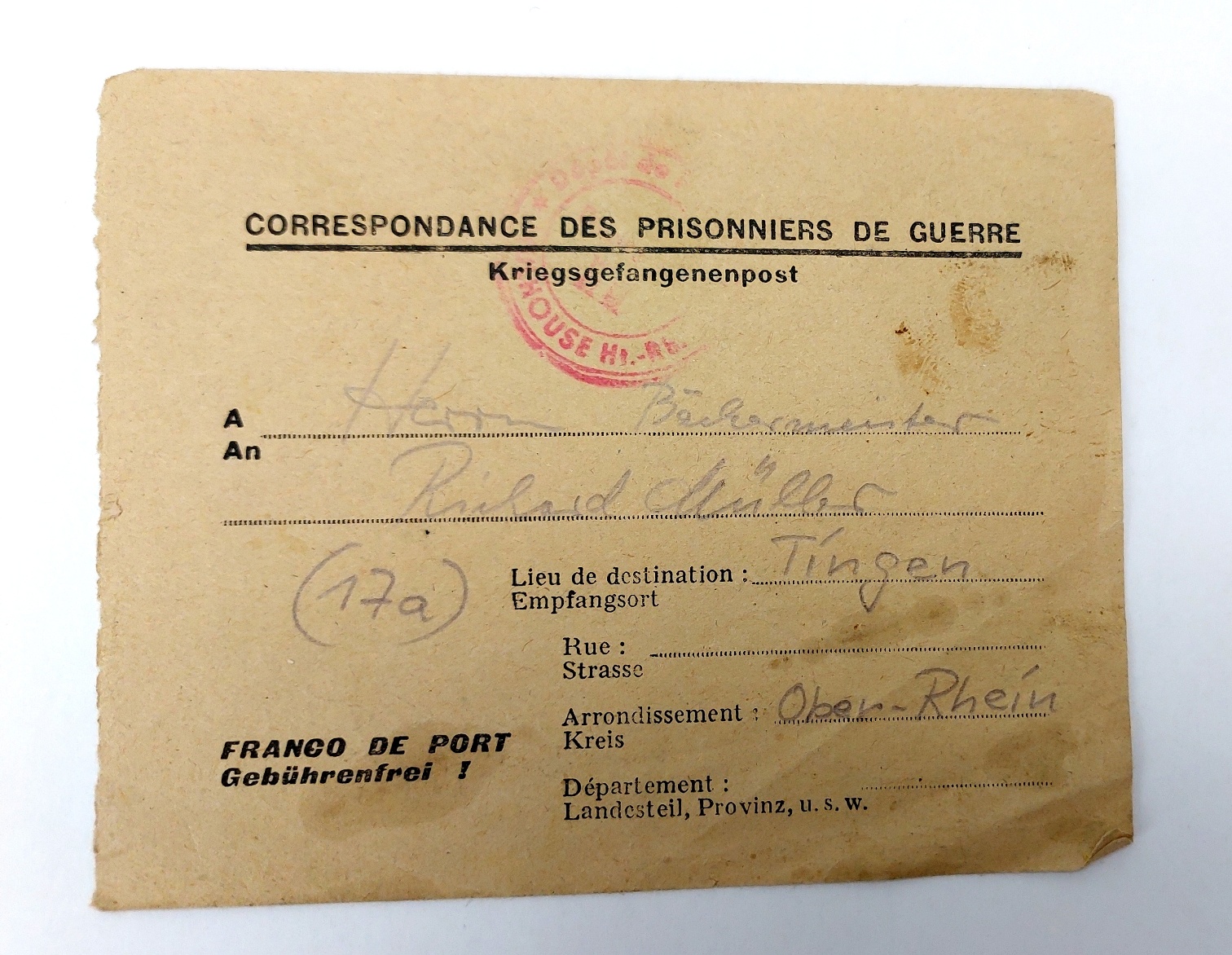
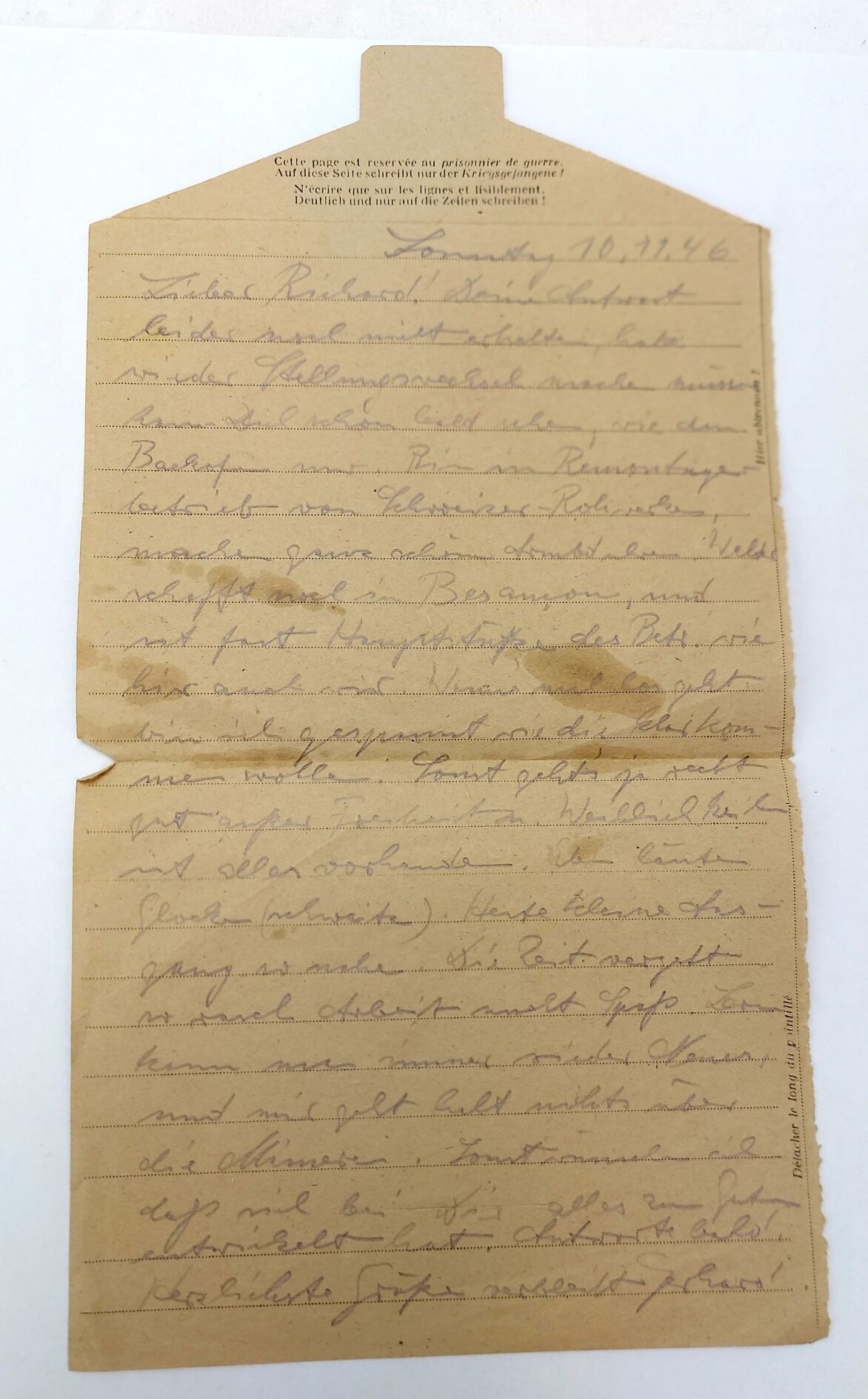
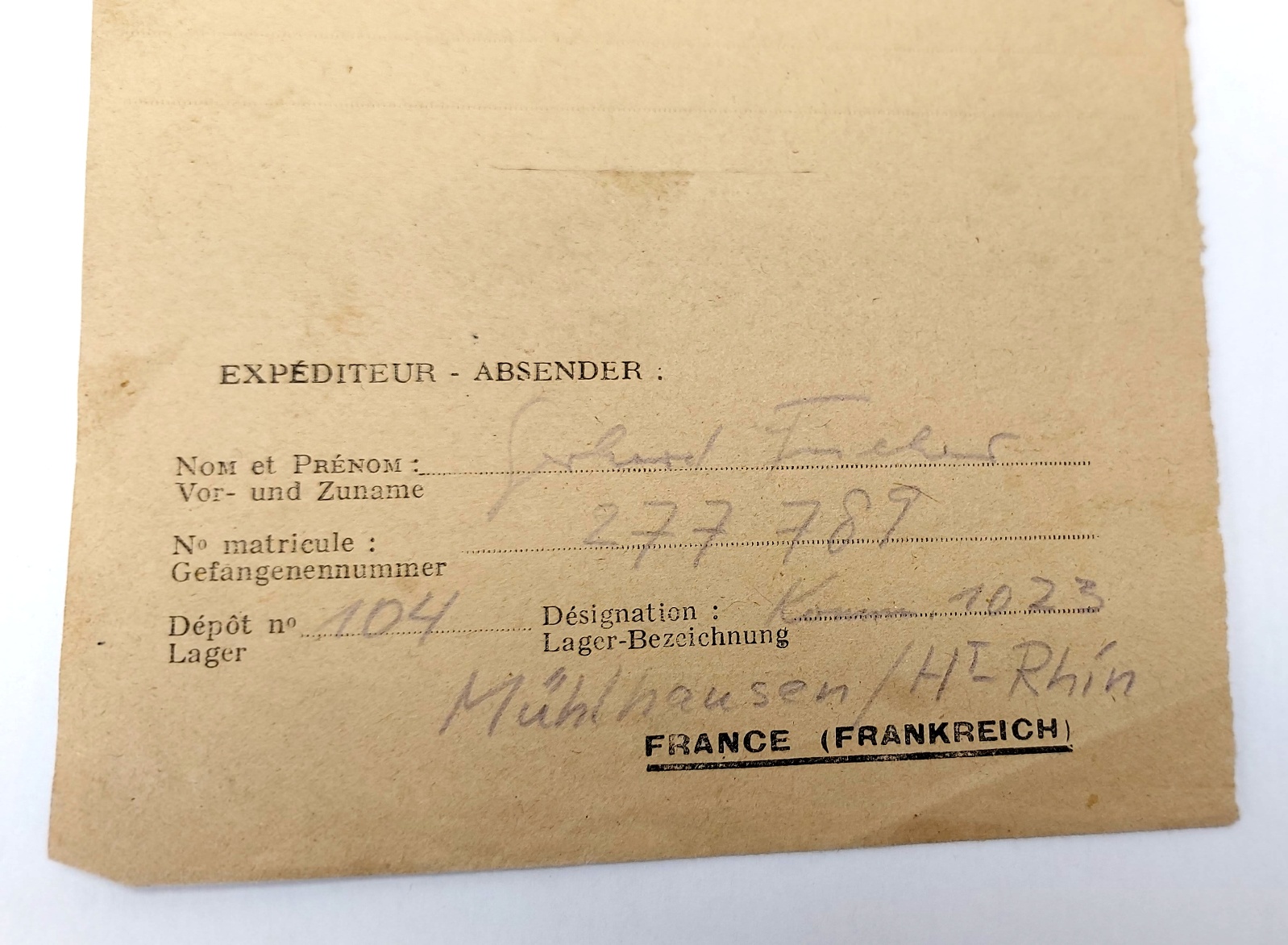
- French POW correspondence forms
- a handwritten letter written shortly after release describing the difficult journey home
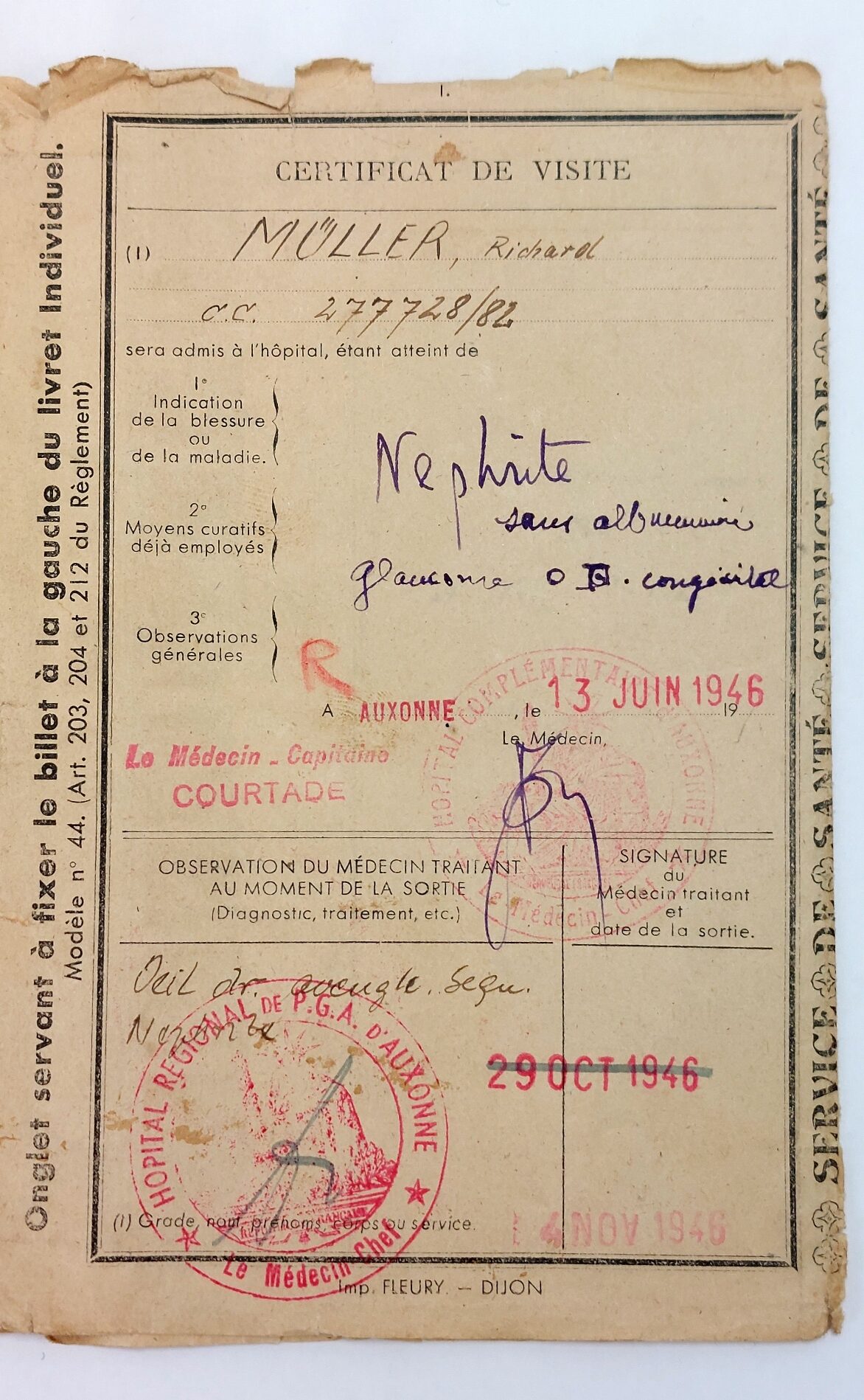
- medical paperwork recording treatment at Hôpital Complémentaire Bonaparte, Auxonne, for nephritis and glaucoma
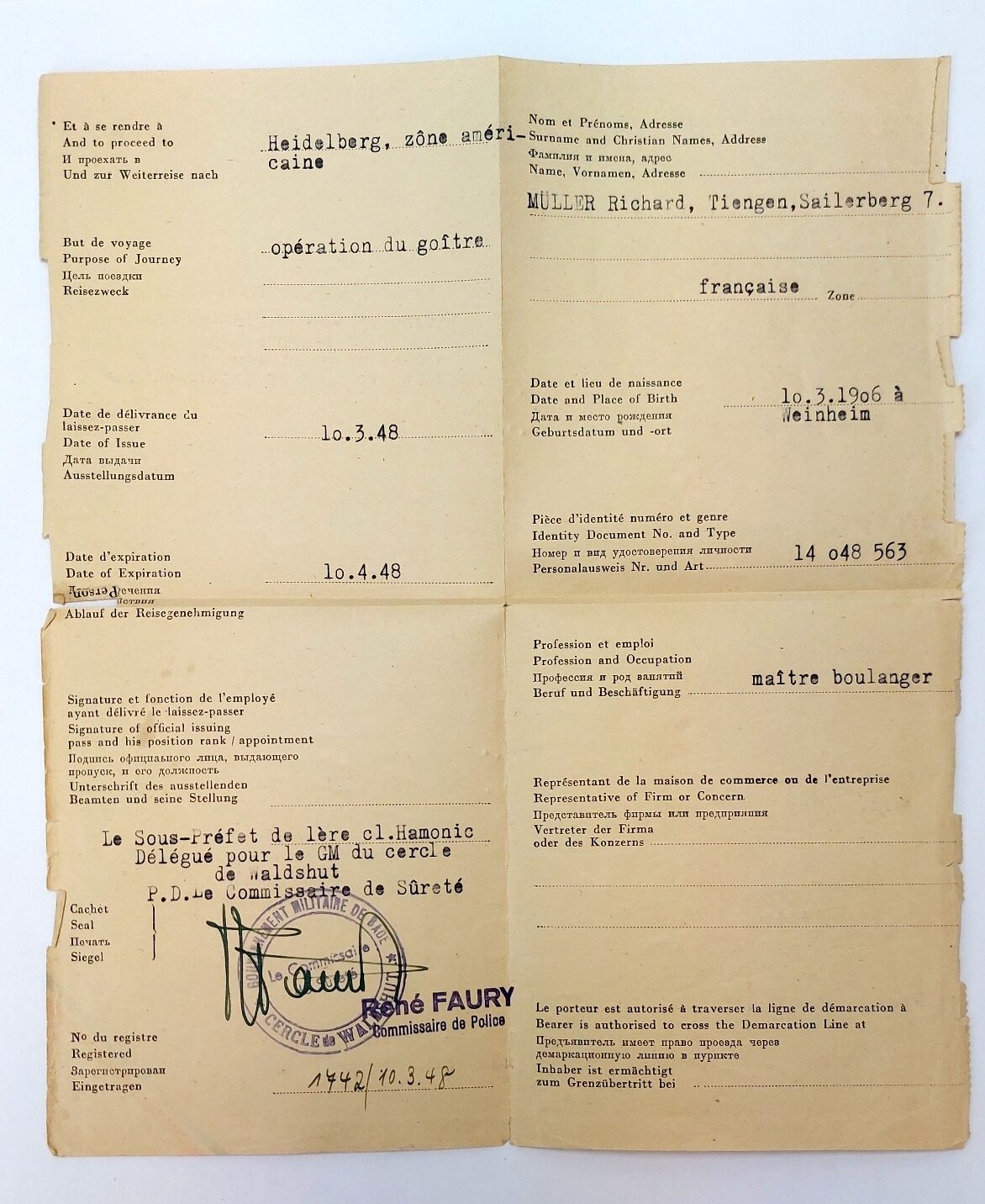
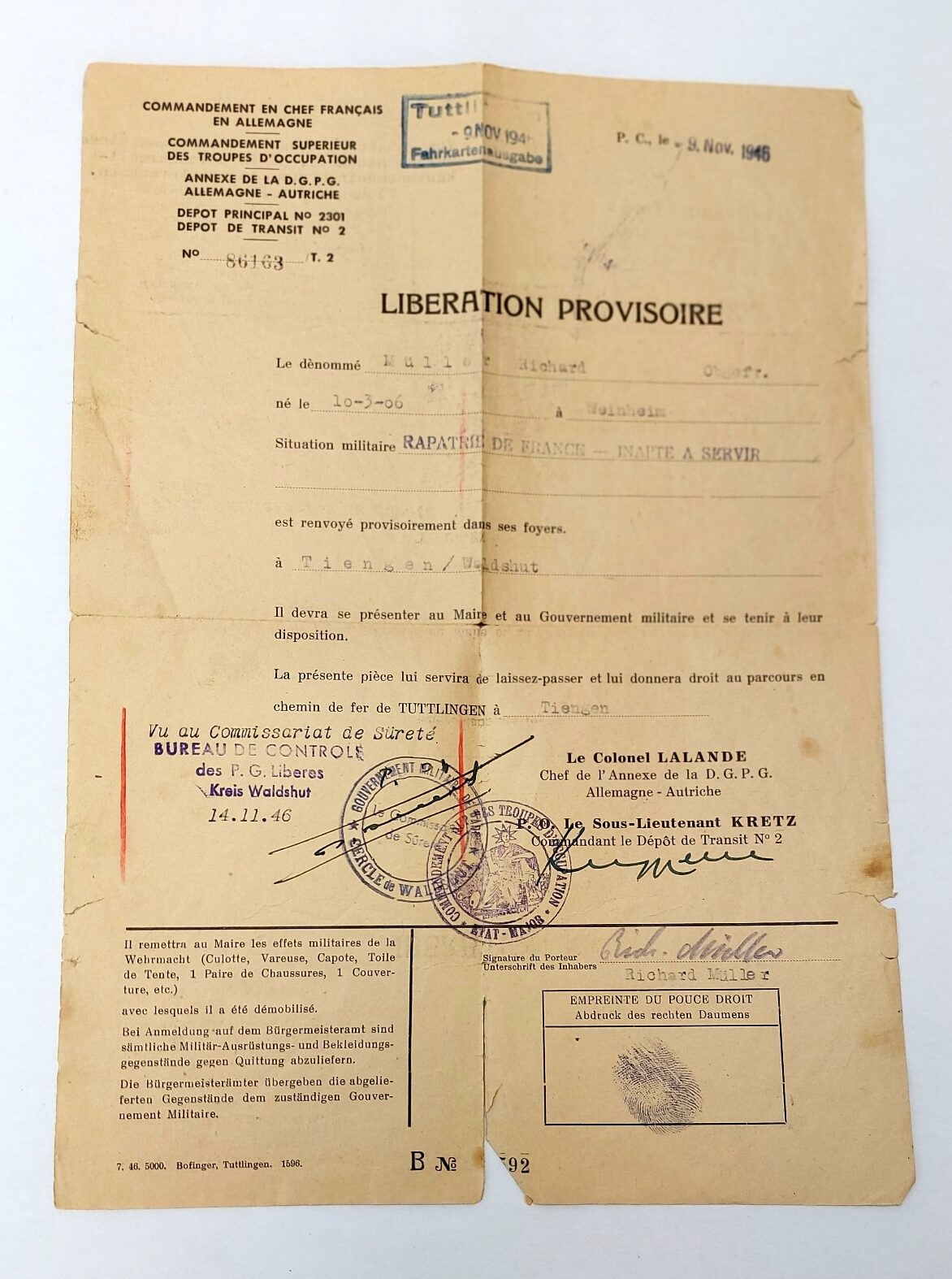
Among the most significant documents is the official French “Liberation Provisoire” certificate dated 9 November 1946, authorising Müller’s repatriation to Tiengen / Waldshut. The document records his status as: “Rapatrié de France – Inapte à servir” (Repatriated from France – unfit for service) and bears official stamps together with Müller’s signature and thumbprint.
Military Documentation:
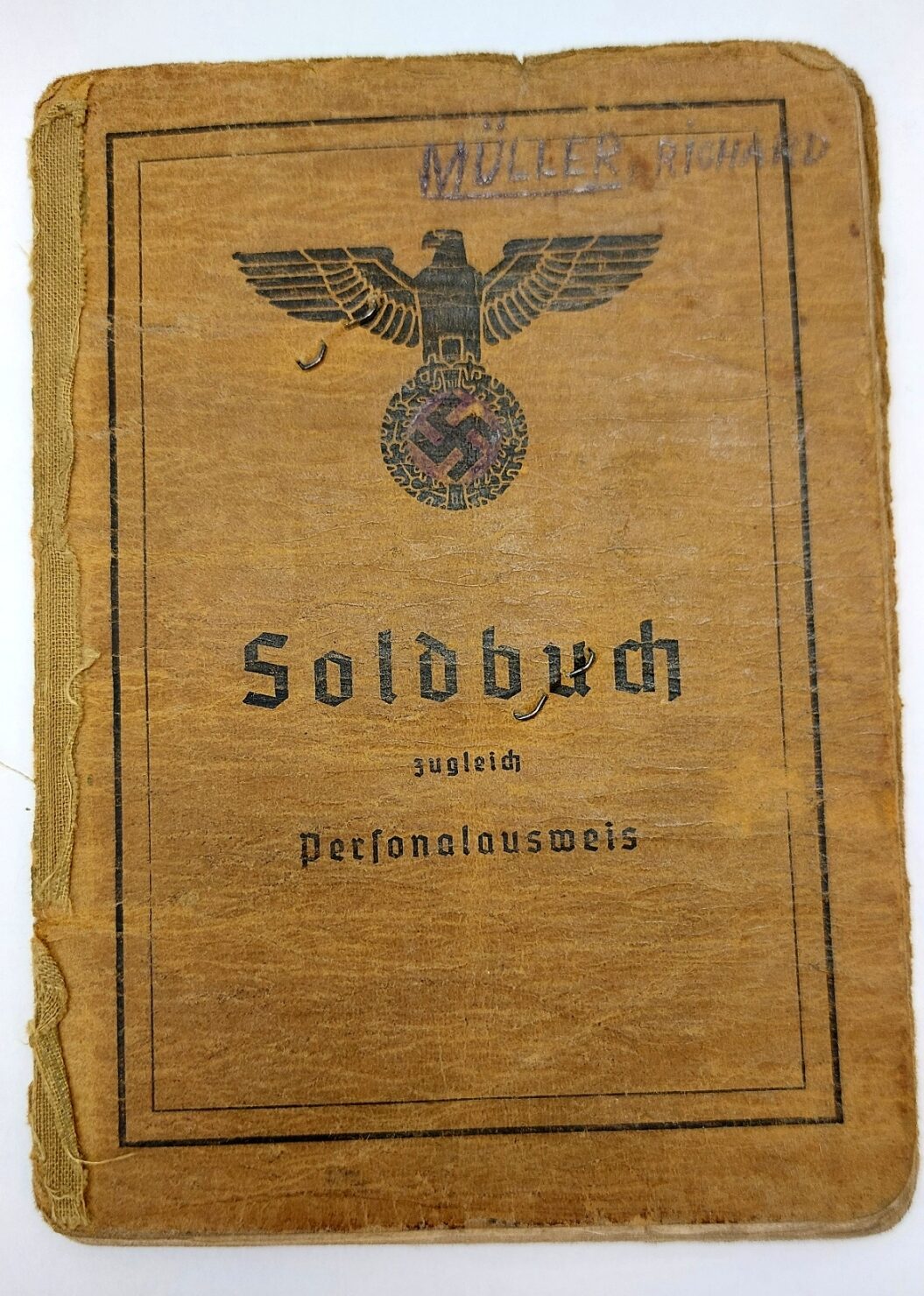
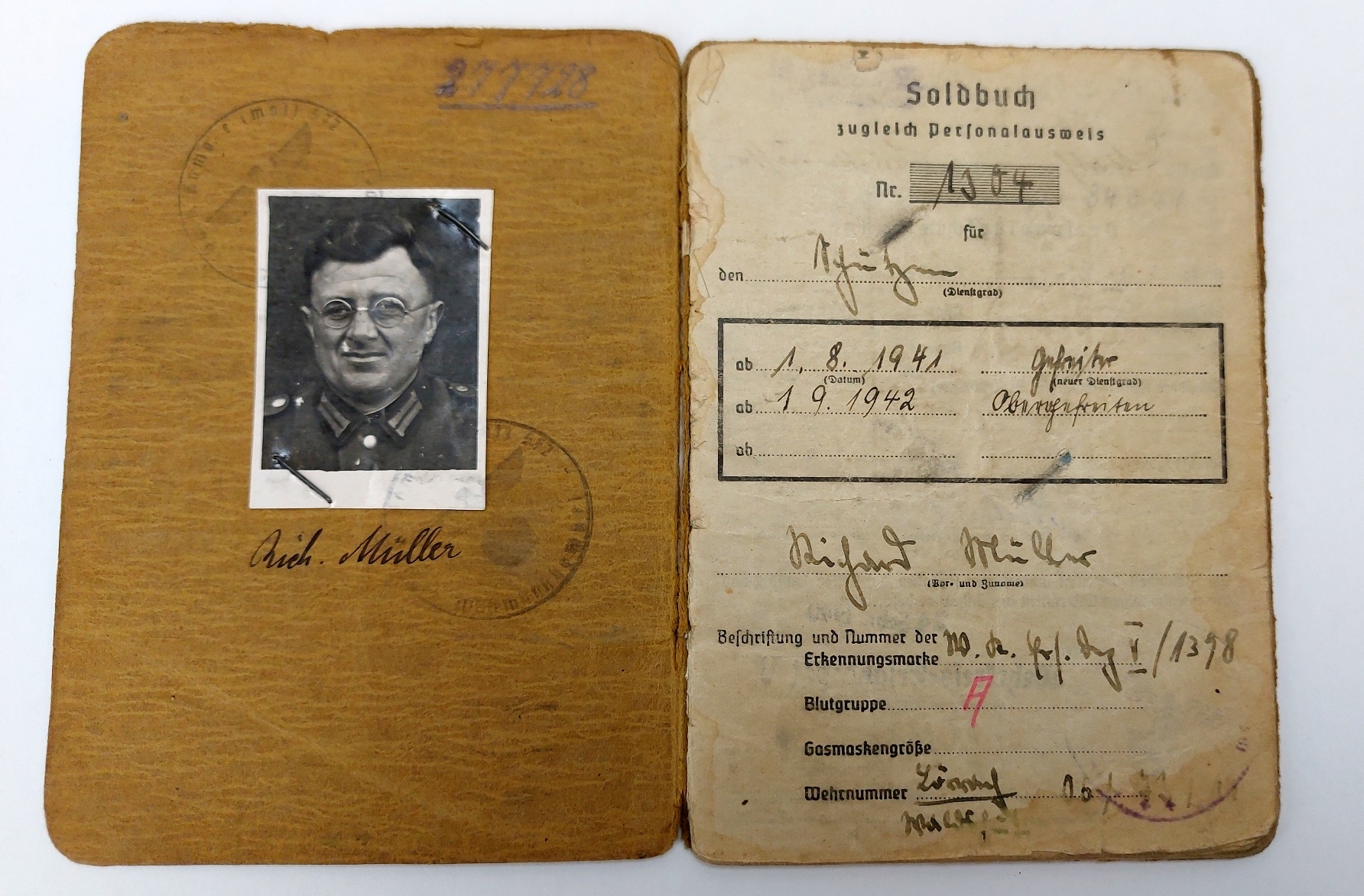
Accompanying the album is Müller’s original Wehrmacht Soldbuch, retaining its photograph and confirming his identity and service.
The Soldbuch records:
- occupation: Bäcker (baker)
- unit: Bäckerei-Kompanie 572
- promotion to Gefreiter – 1 August 1941
- promotion to Obergefreiter – 1 September 1942
It also records equipment issue, leave periods, vaccinations and wartime hospitalisation.
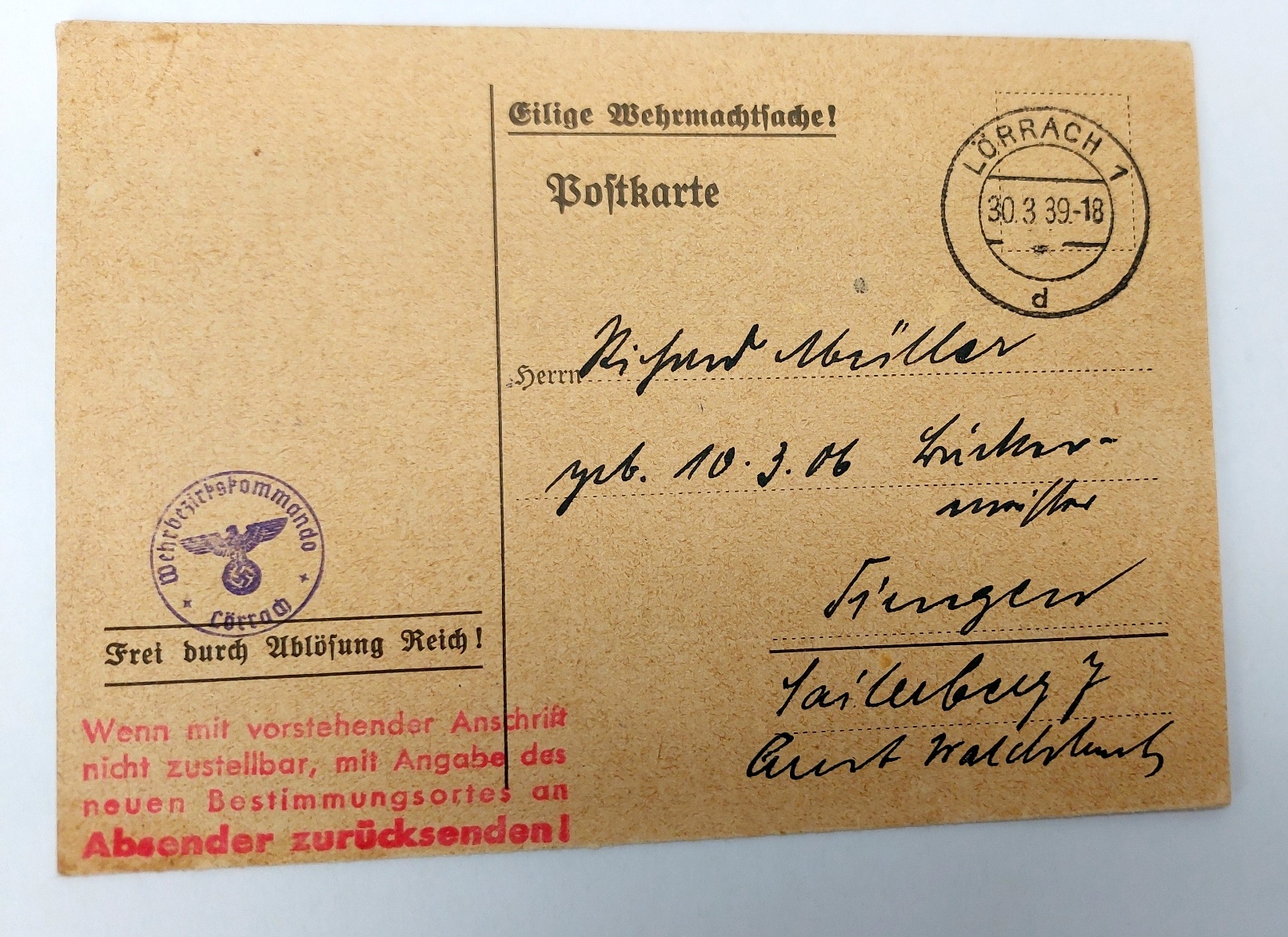
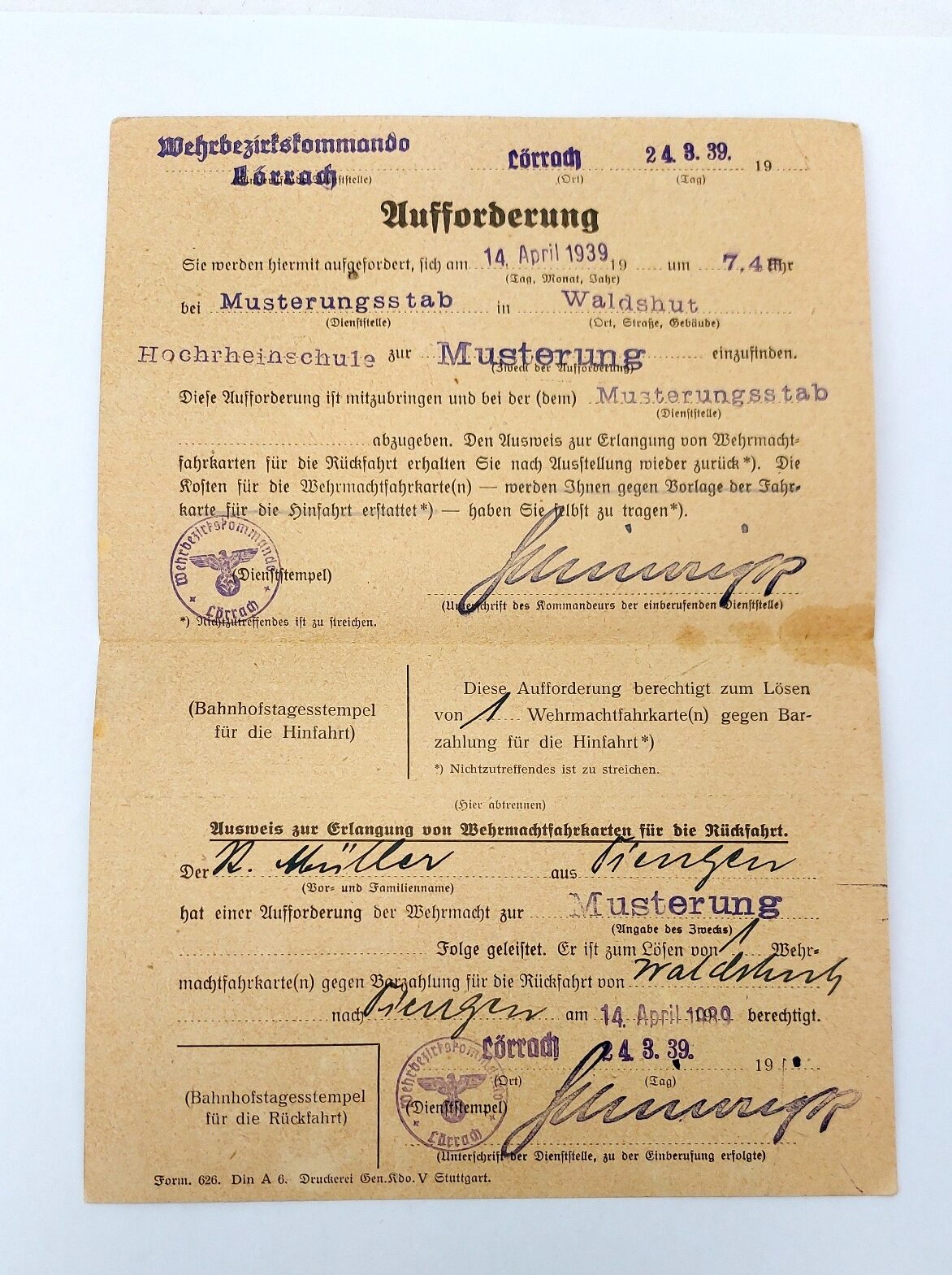
The archive also includes a pre-war Wehrmacht call-up notice issued by the Wehrbezirkskommando Lörrach dated 24 March 1939, ordering Müller to attend his military examination (Musterung) at Waldshut on 14 April 1939, together with a Wehrmacht postal card marked “Eilige Wehrmachtssache!” sent shortly before mobilisation.
Significance of the Archive:
Taken together, the photographs, memoir, military documents and post-war records form a remarkably coherent and complete personal archive, tracing the wartime experience of a German soldier from pre-war conscription through campaigns across Europe and the Balkans, into captivity and finally his return home after the war. Particularly notable is the insight it provides into the work of Wehrmacht field bakery units, an essential but rarely documented component of the German wartime supply system.
Approx. Measurements – Album folder: approx. A4 format.
*Condition*
The album and documents remain generally well preserved overall with expected signs of age and handling. Photographs remain mounted on their original pages and the Soldbuch retains its original photograph. Accompanying documents show typical folds, toning and handling wear consistent with their age. Please see photographs as part of the condition report. The archive remains generally well preserved overall with expected signs of age and handling. Please see photographs as part of the condition report. The photographs illustrate a representative snapshot of the collection as a whole and do not show every individual item.
RQMCOOXFEO_2938231622