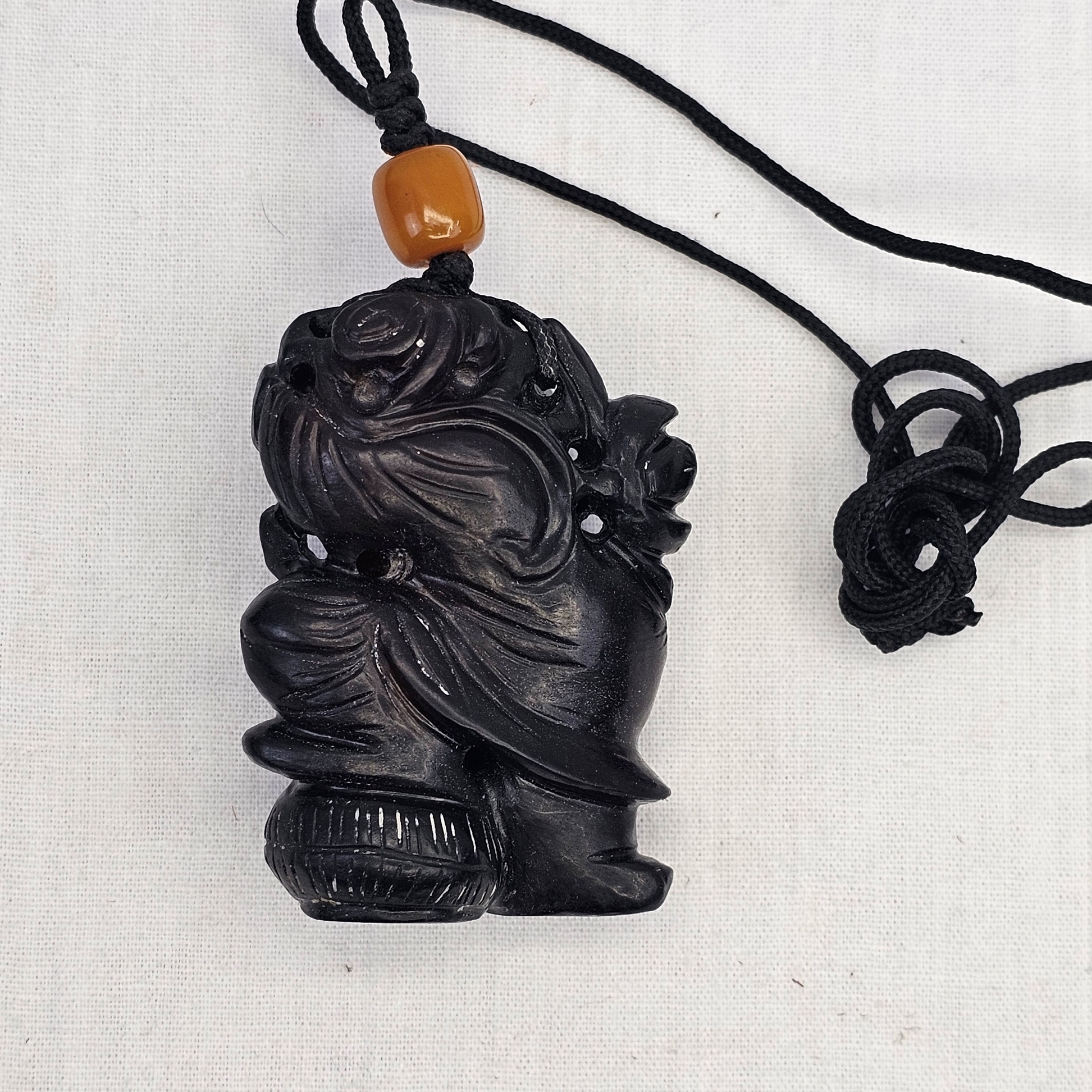
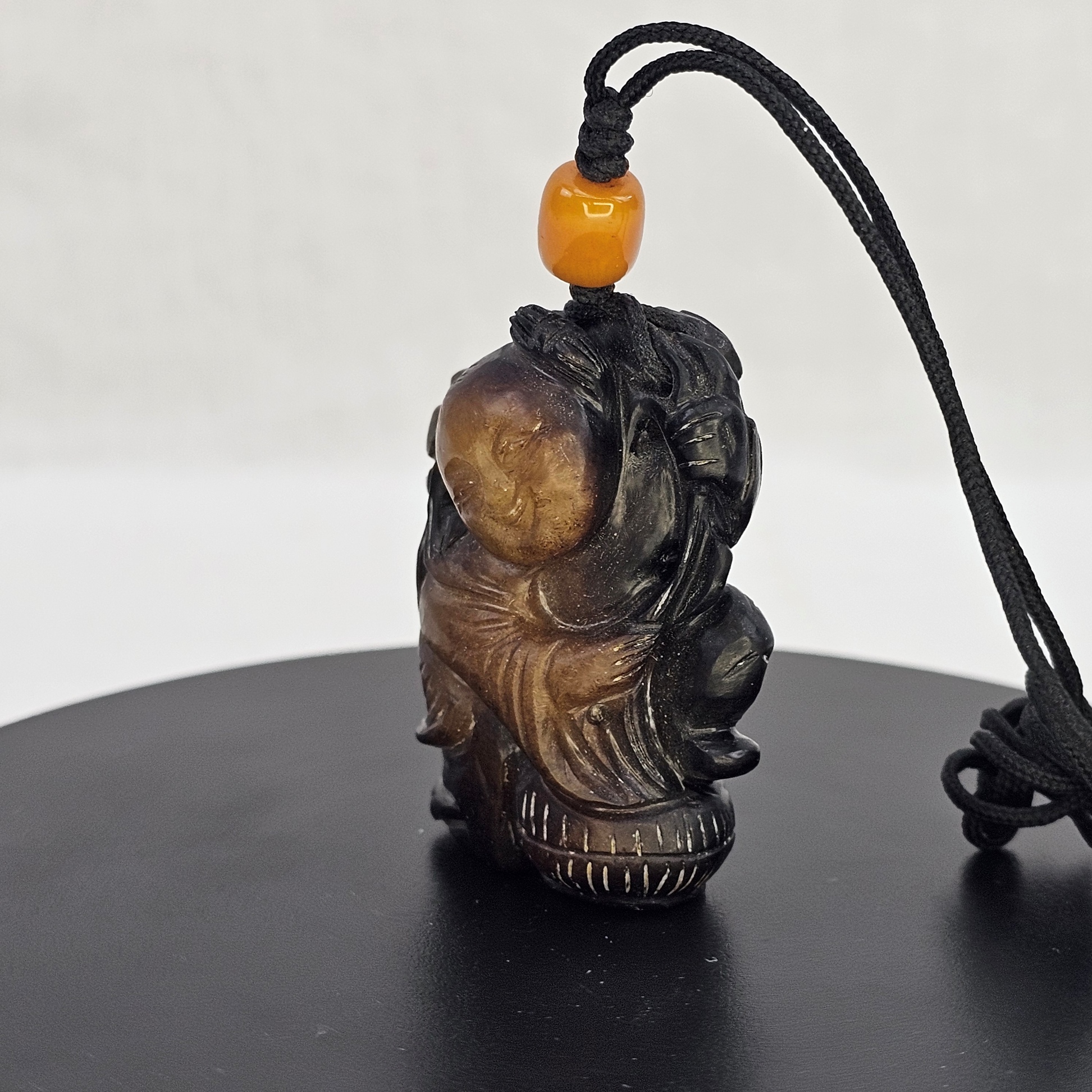
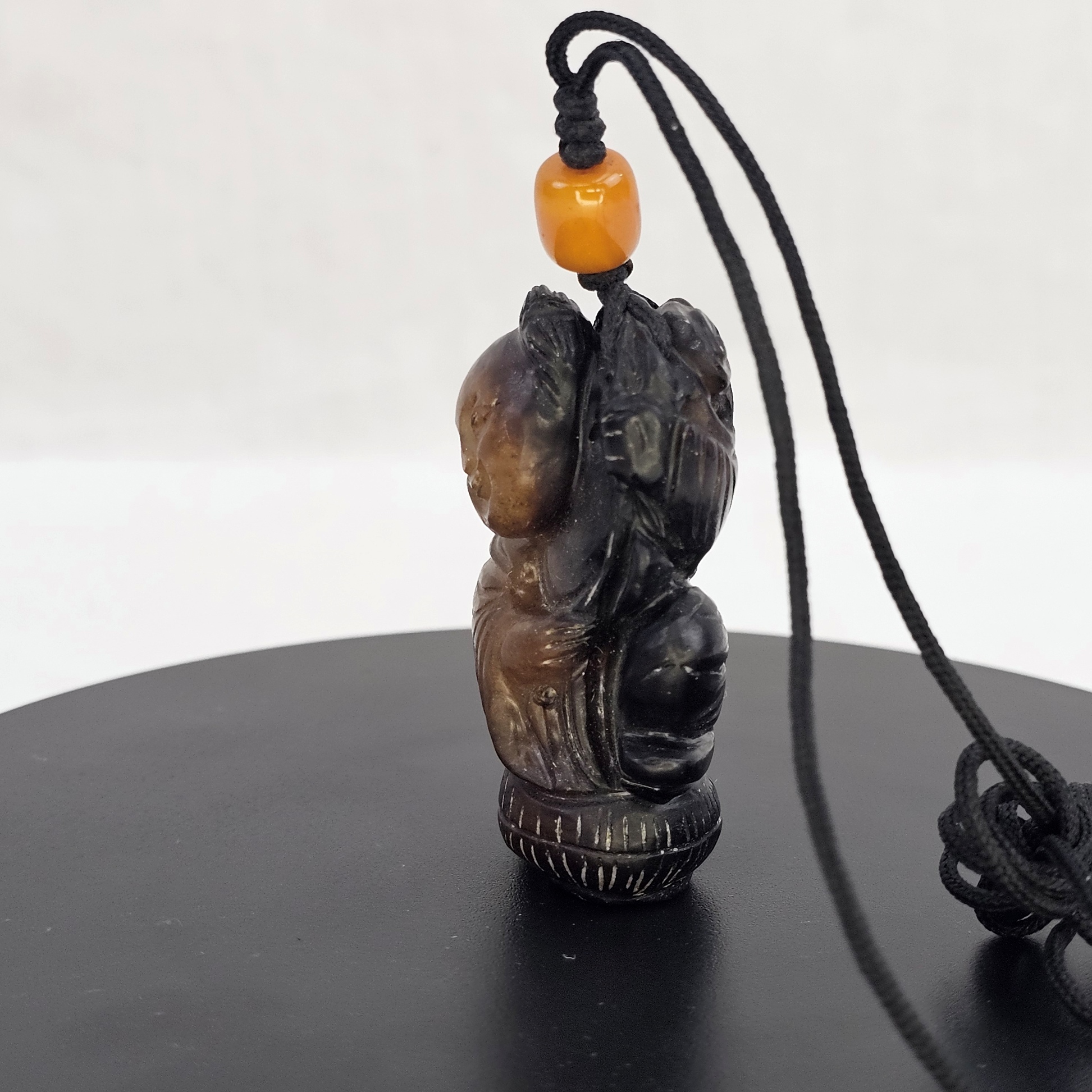
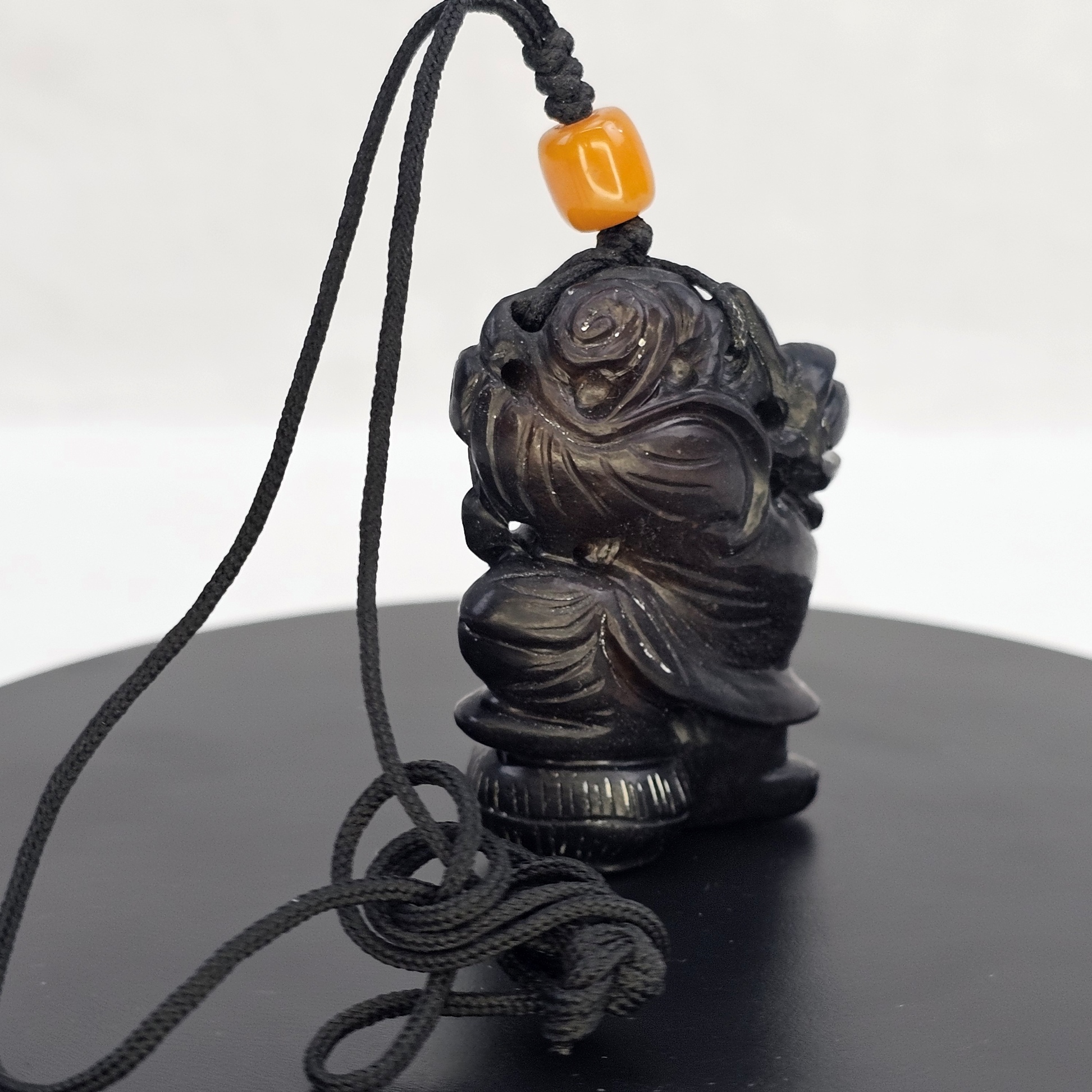
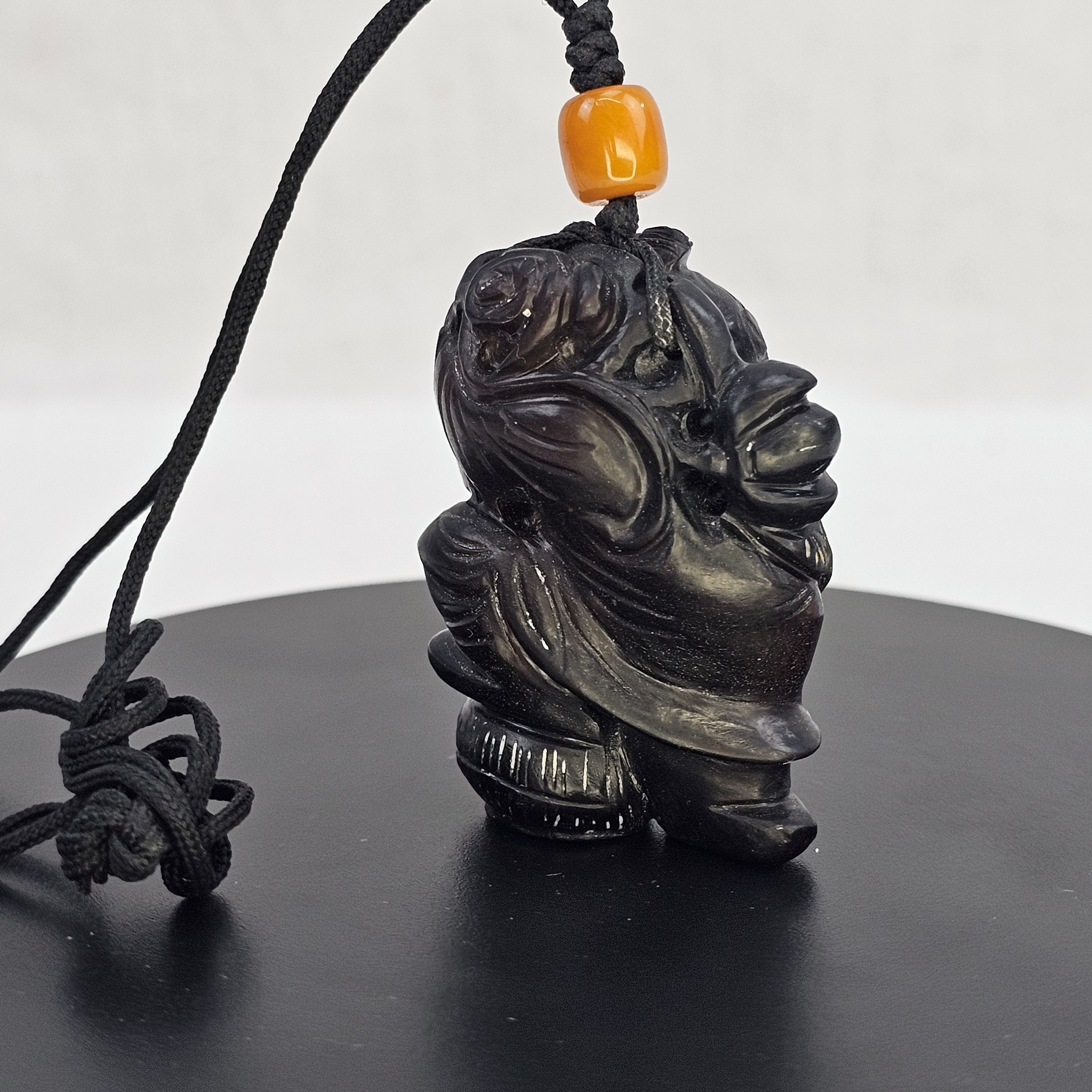
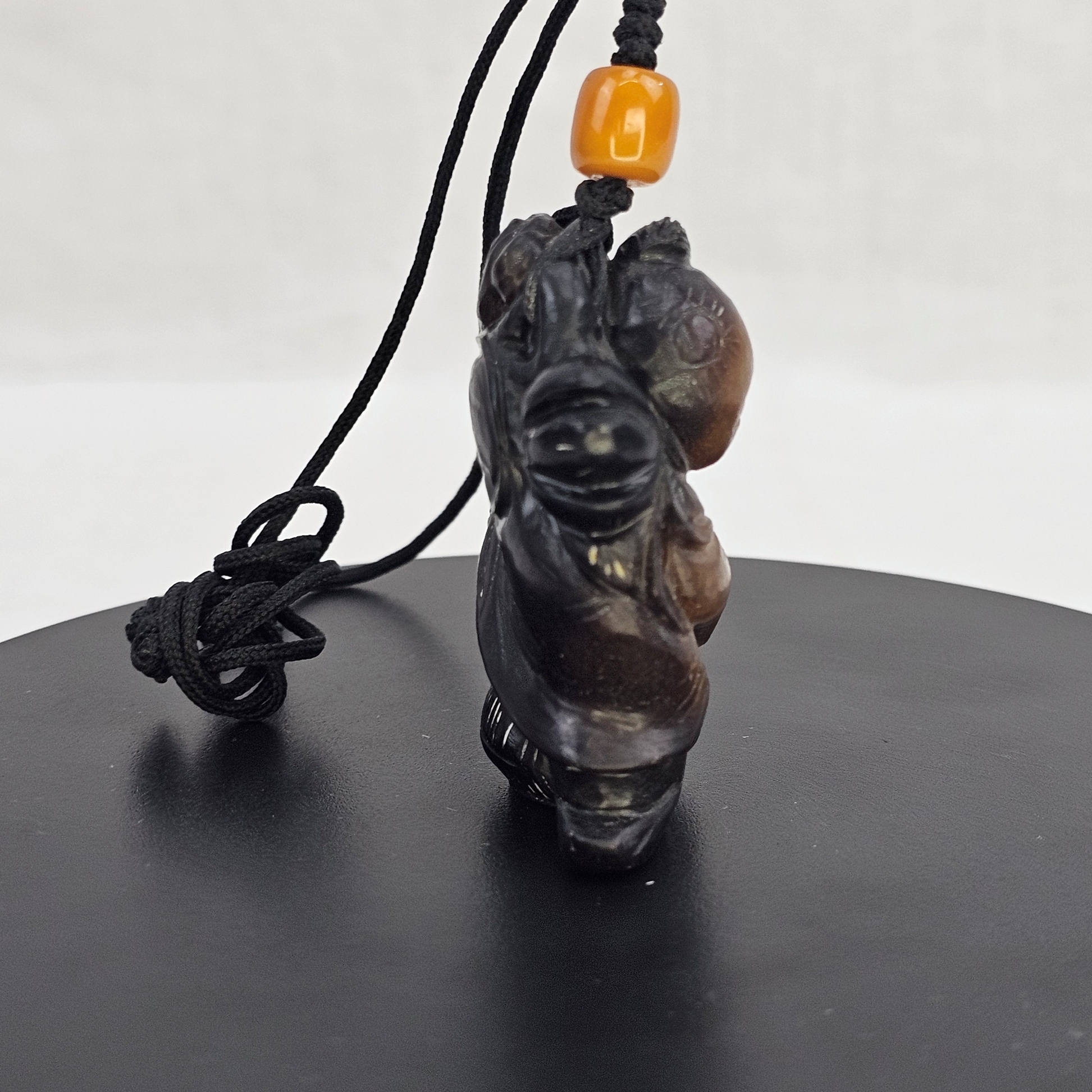
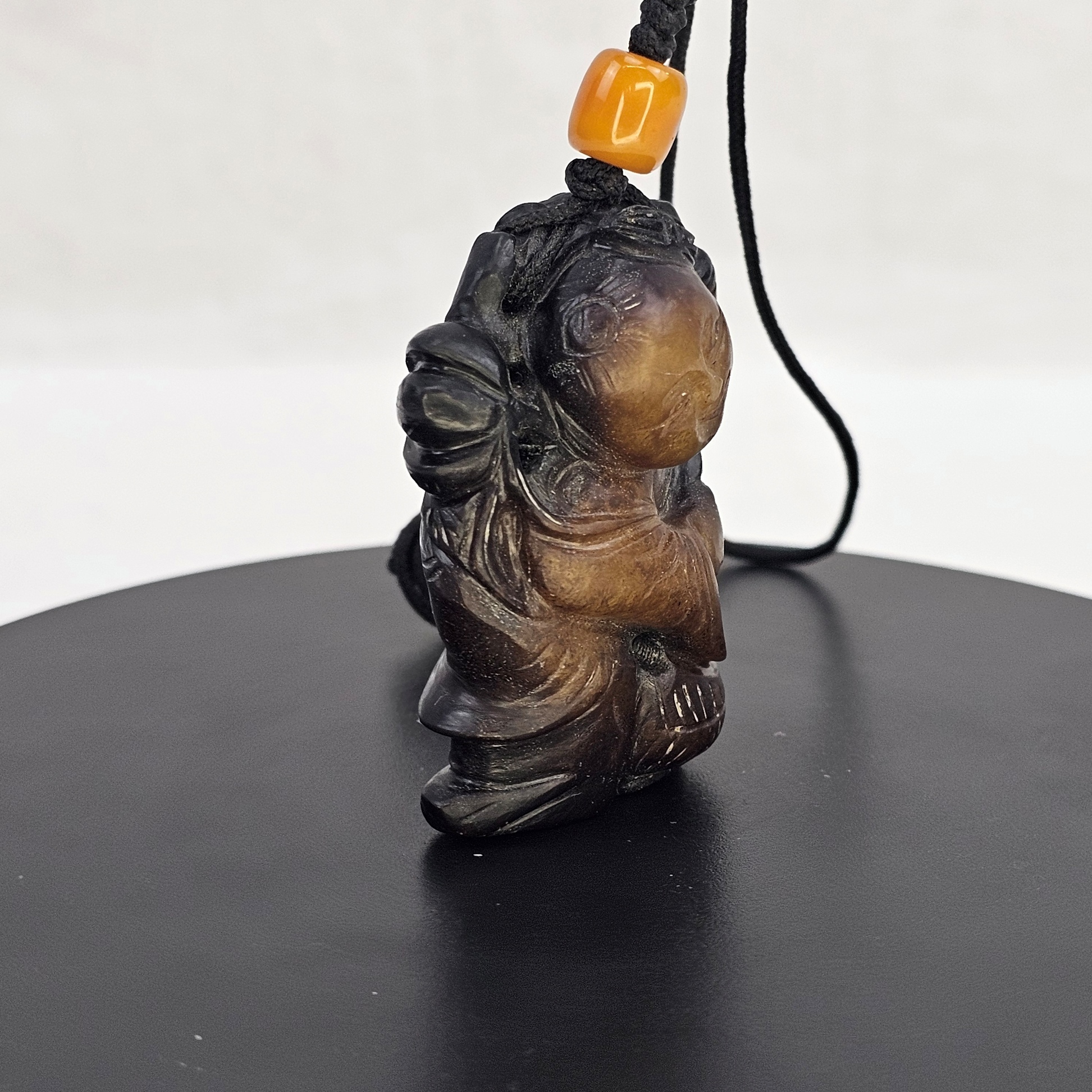
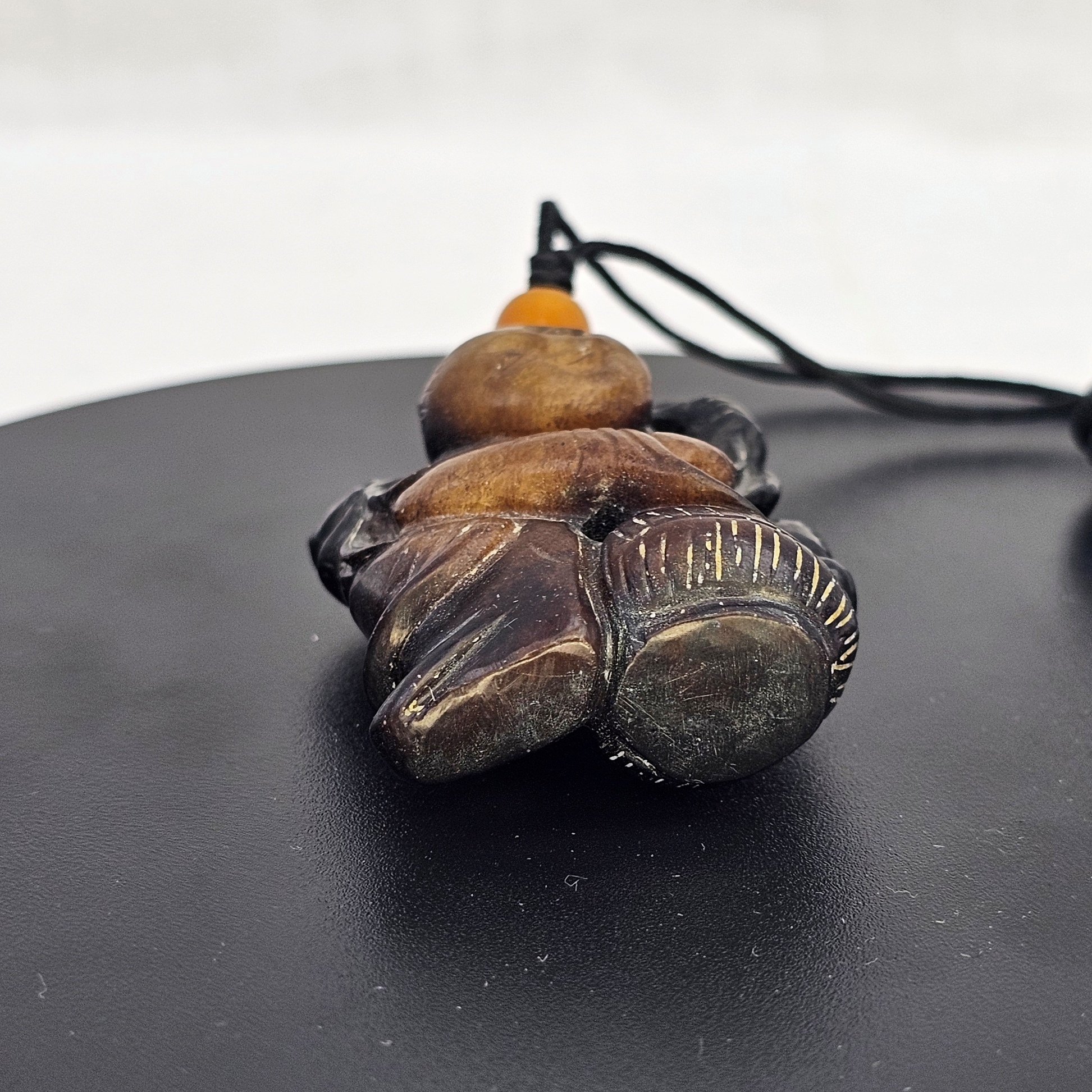
~ Chinese Carved Agate Pendant of a Boy with Lotus, Suzhou School Style ~
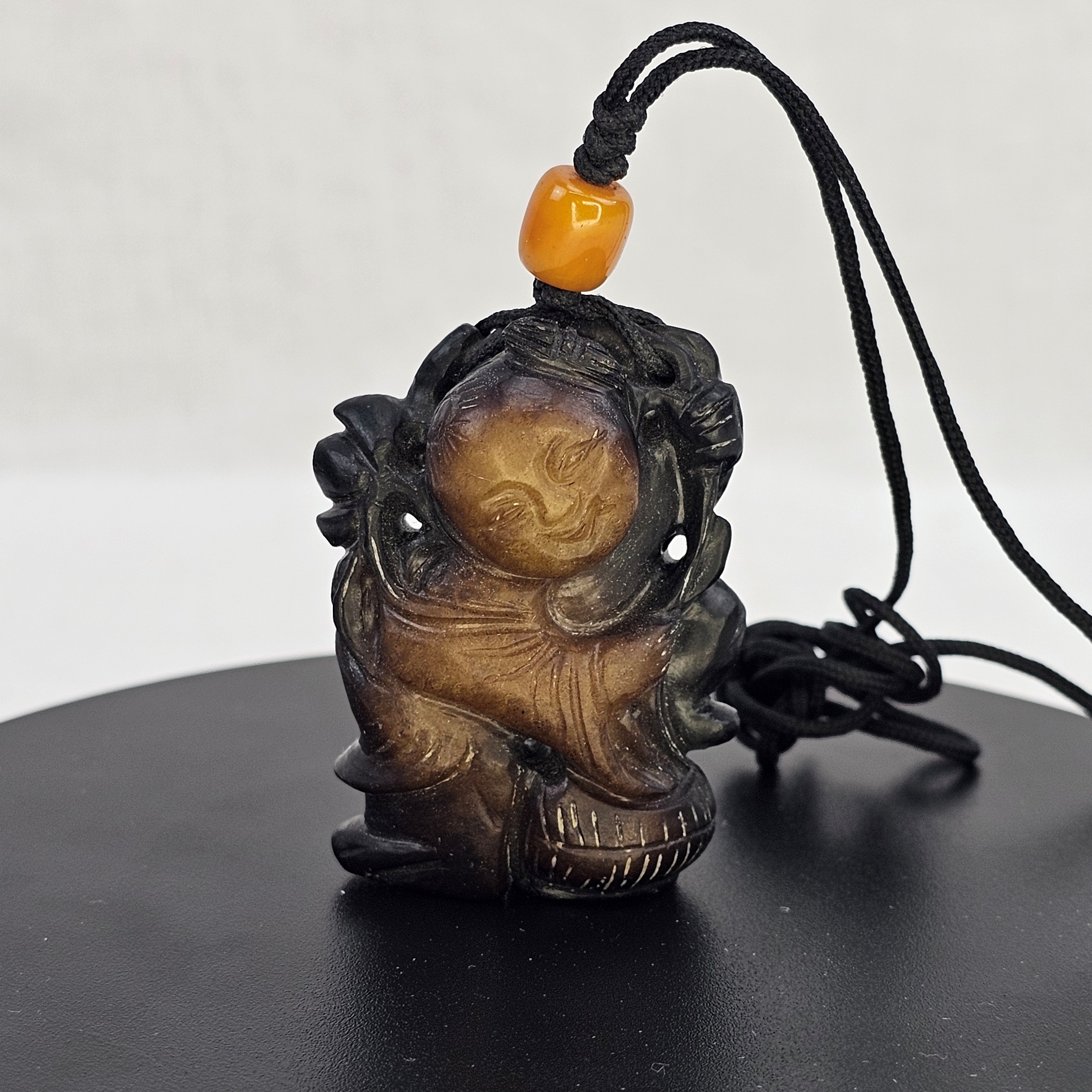
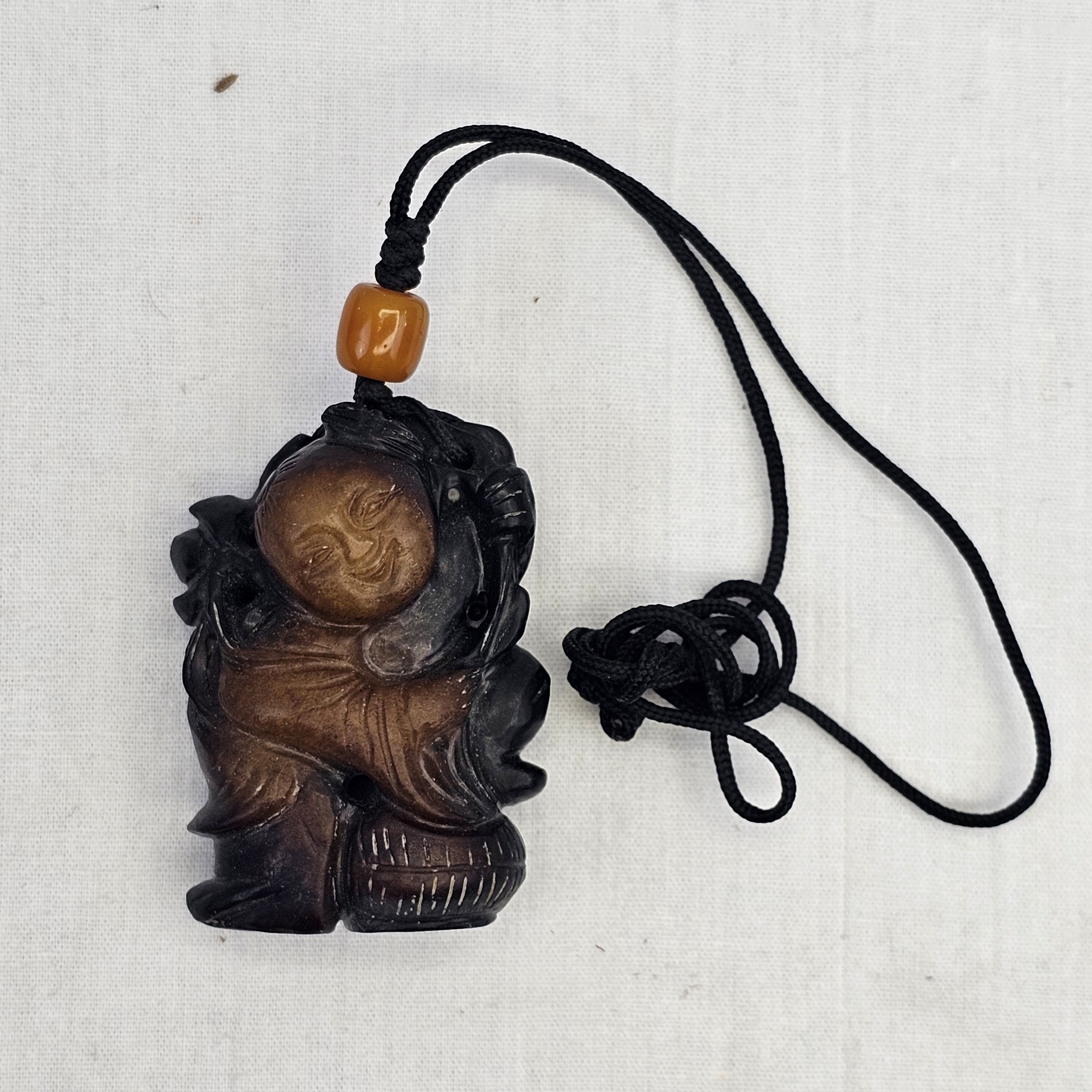
A small carved hardstone pendant depicting a chubby young boy (a "lotus boy", or hehe tongzi, a traditional auspicious figure) shown seated/crouching, holding a lotus pod or basket-form vessel before him, with a large lotus leaf and curling stem forming the backdrop above his head. The carving exploits the natural colour banding of the stone — most likely a banded agate or similar chalcedony rather than nephrite — moving from a warm honey-brown to near-black, with the boy's rounded face and torso left in the lighter caramel tone against the darker, almost black ground of the leaf and hair. The reverse is carved in low relief with further scrolling leaf and stem detail, and the piece is pierced with several small drilled holes (visible at the shoulders/head) for suspension. It is strung on a black cord with an adjustable sliding knot and a single oval-cut amber or amber-coloured resin bead above the pendant.
Historical Context
The "boy and lotus" (lien hua tong zi) motif is one of the most popular and enduring auspicious subjects in Chinese decorative art, the lotus (lian) being a pun on "continuous" and the boy symbolising the wish for abundant sons and continuing generations. Small carved pendants and toggles of boys with lotus leaves, vases, or baskets were produced across a range of hardstones — agate, jadeite, and soapstone among them — from the Qing dynasty onward, frequently worked in the Suzhou tradition of using the natural colour zones of banded agate to pick out figures against a contrasting ground. Eighteenth and nineteenth century Suzhou school agate boy toggles and pendants exploiting colour shifts within the stone for figures and auspicious motifs are a well-documented type, and such pieces continued to be produced into the early 20th century for both domestic wear and the export market, often later mounted (as here) on a simple cord with a bead spacer for wear as a pendant.