~ Regency Period English Barr Flight Worchester and Barr Porcelain Twin-Handled Bowl/Sucrier Base, Sepia & Gilt Botanical Pattern with Butterflies, Circa 1800–1815 ~
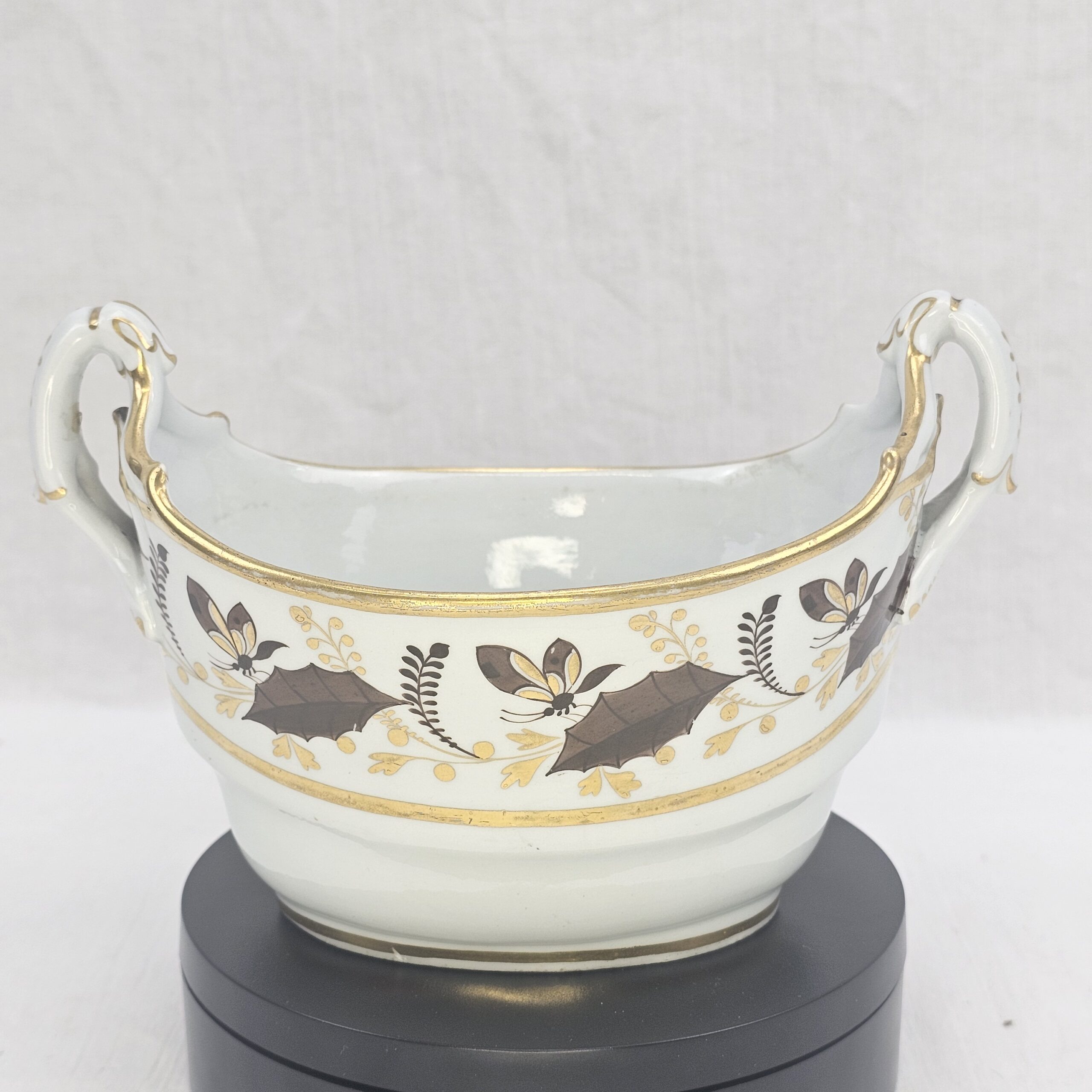
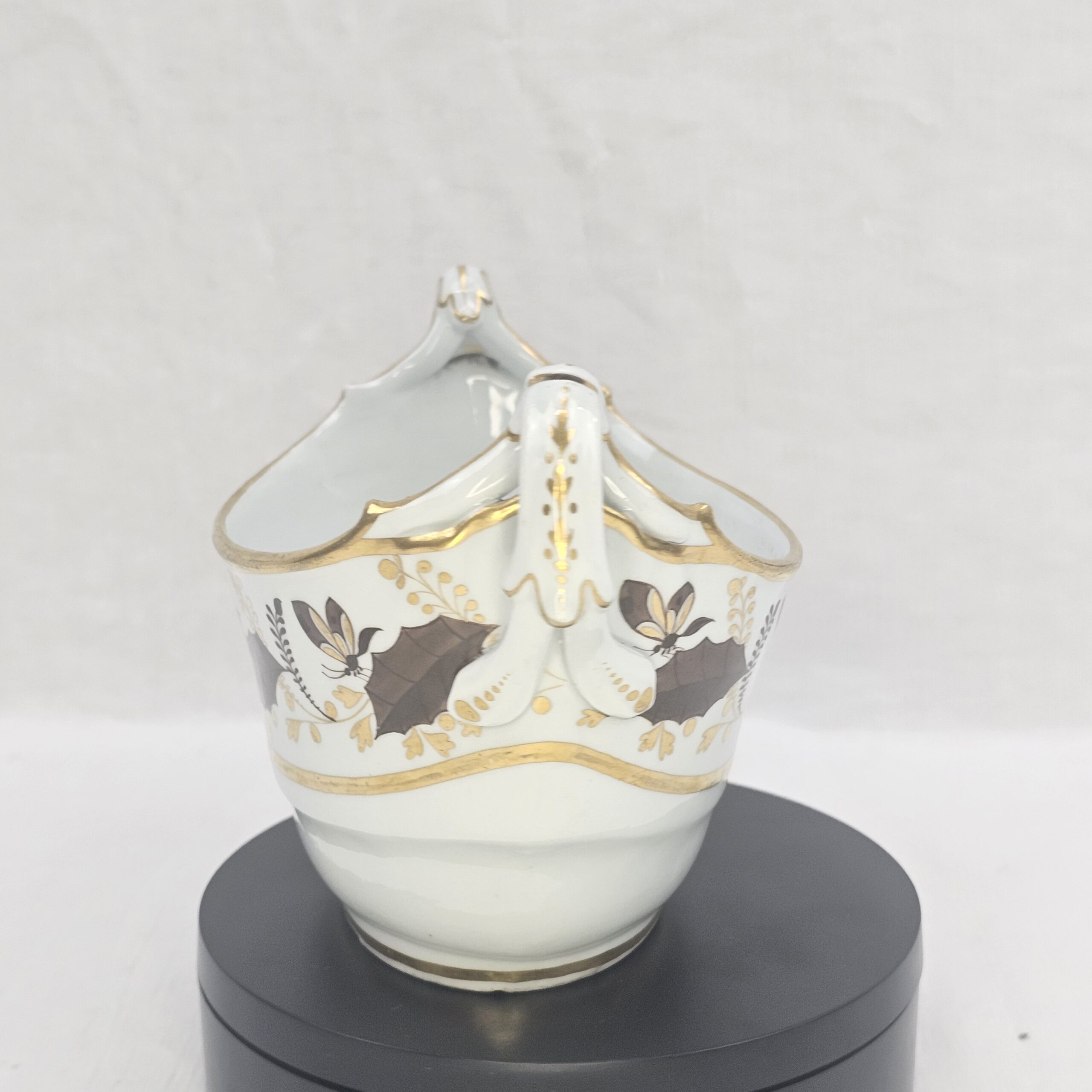
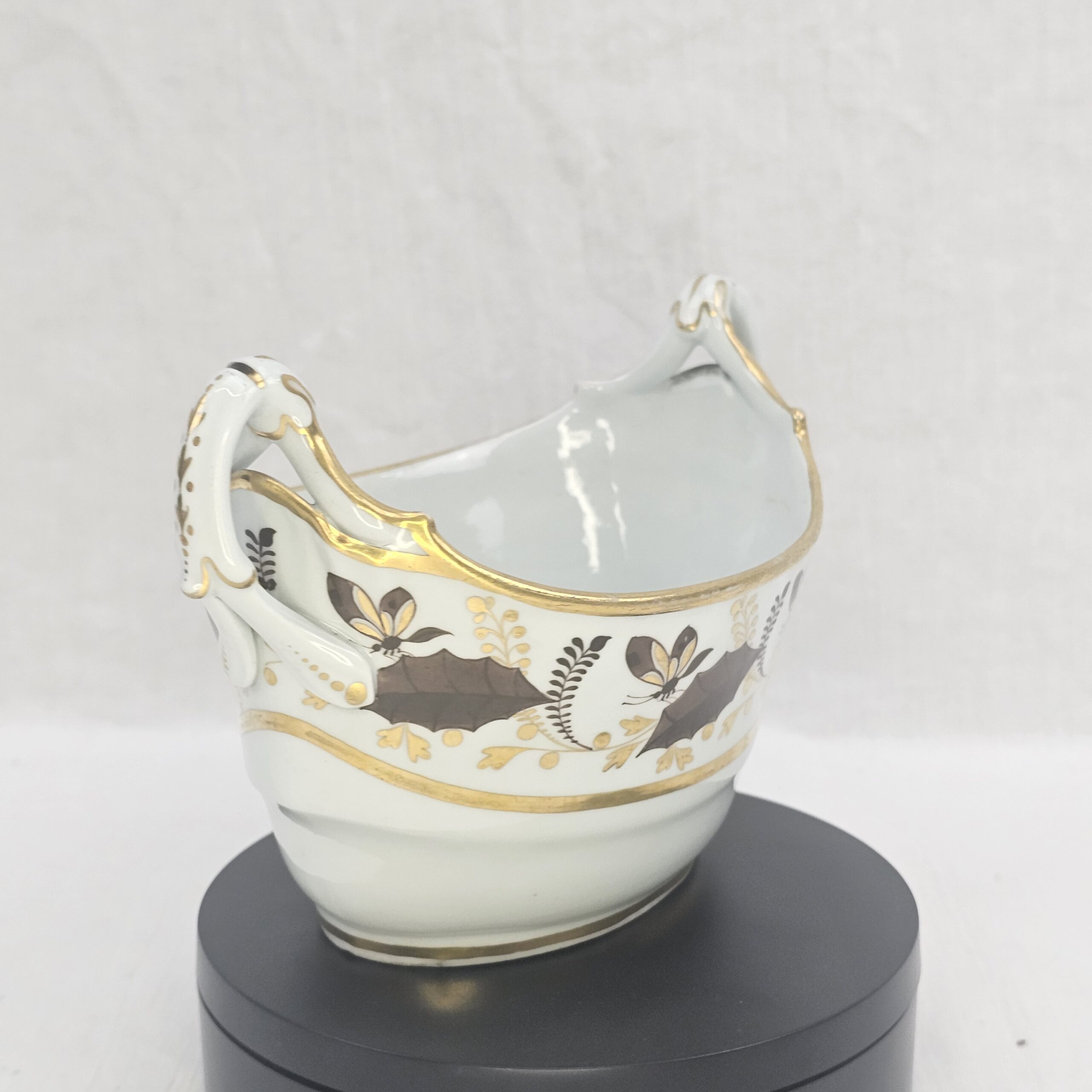
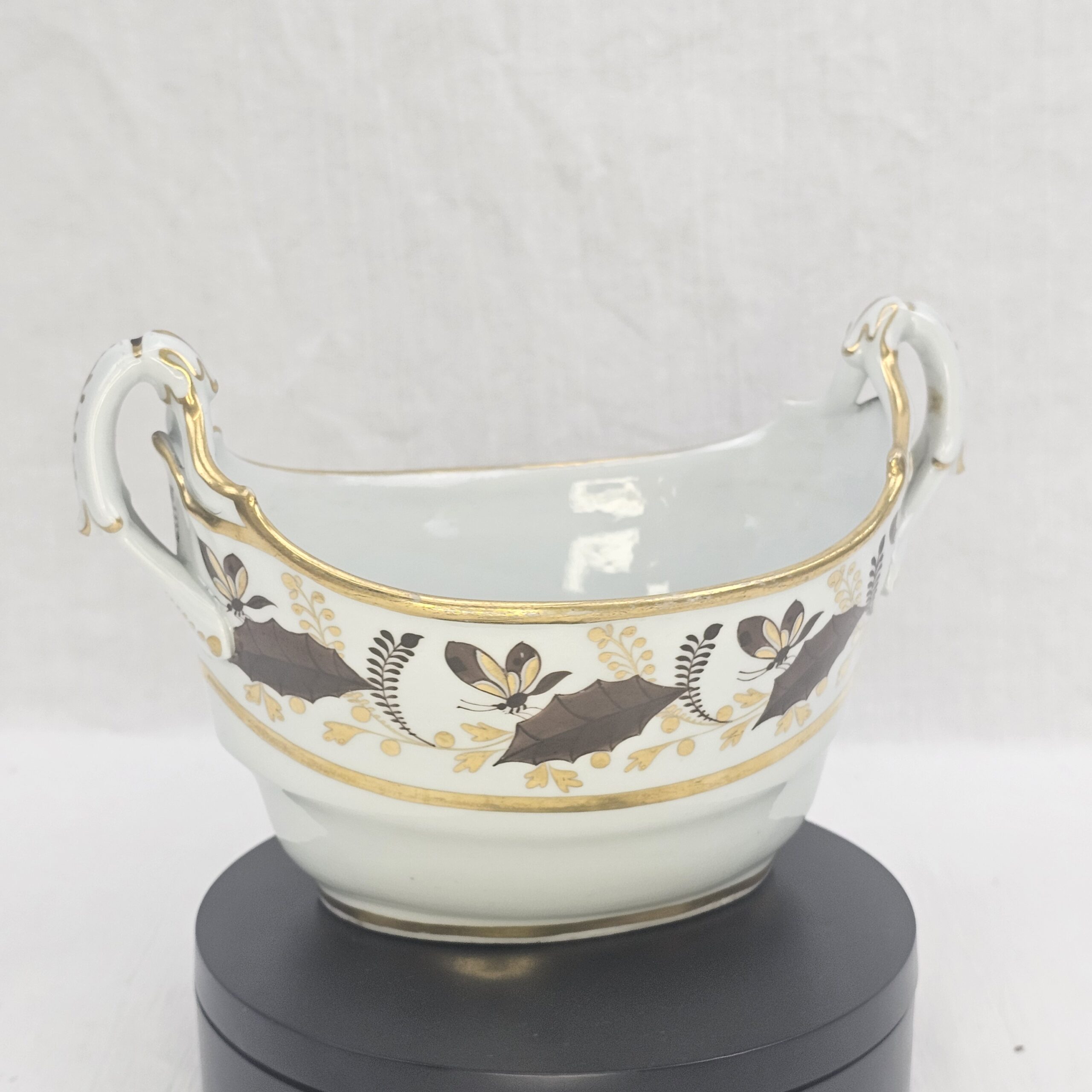
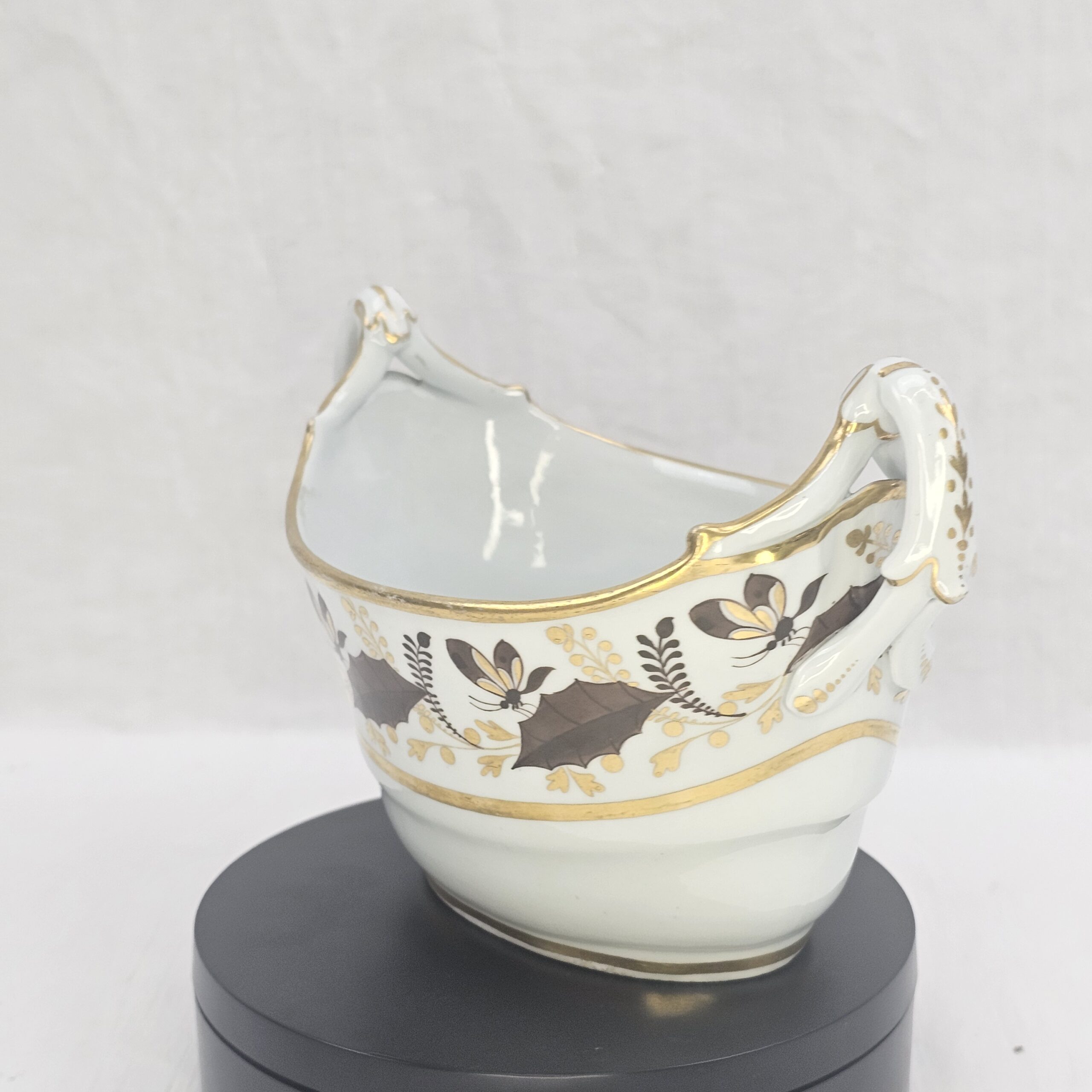
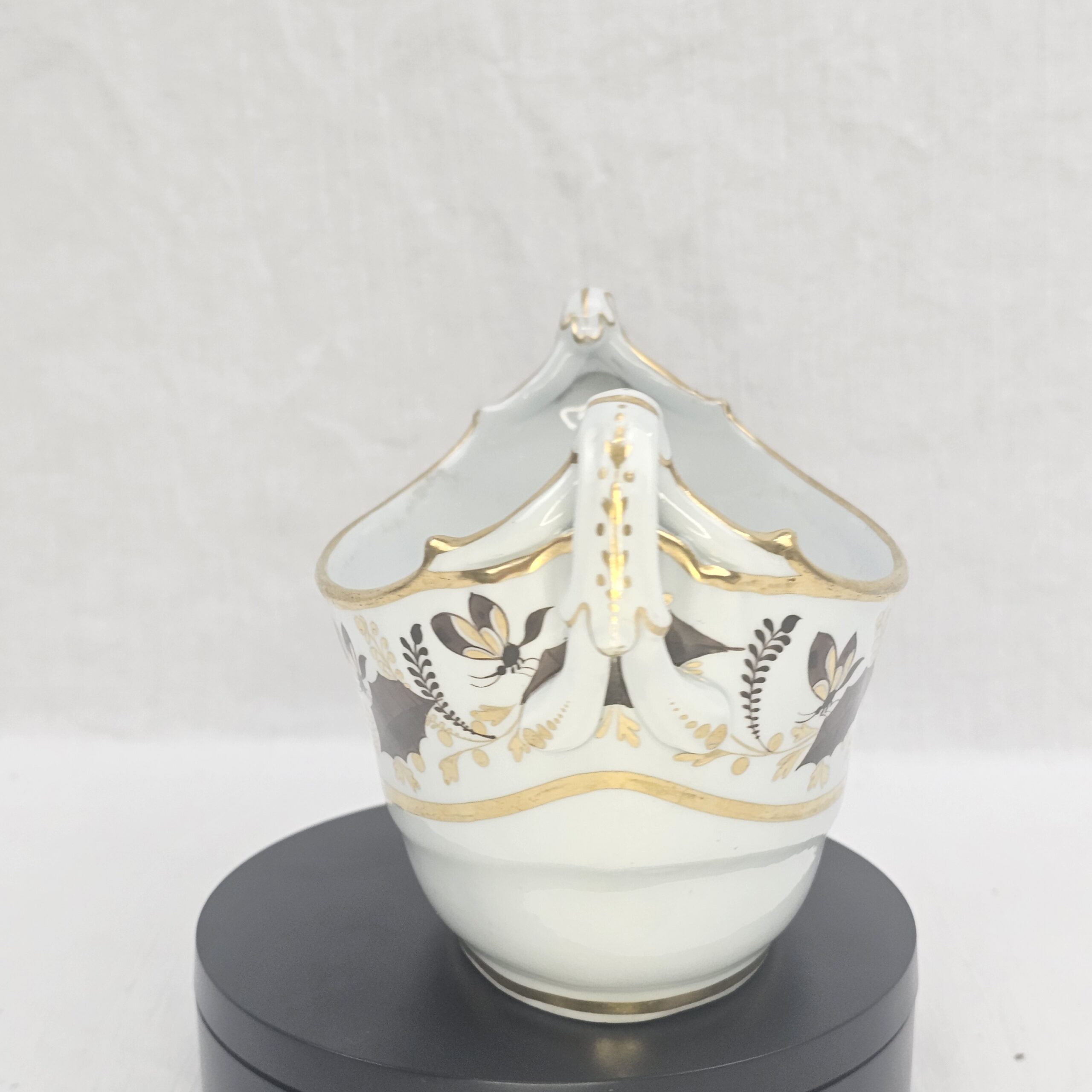
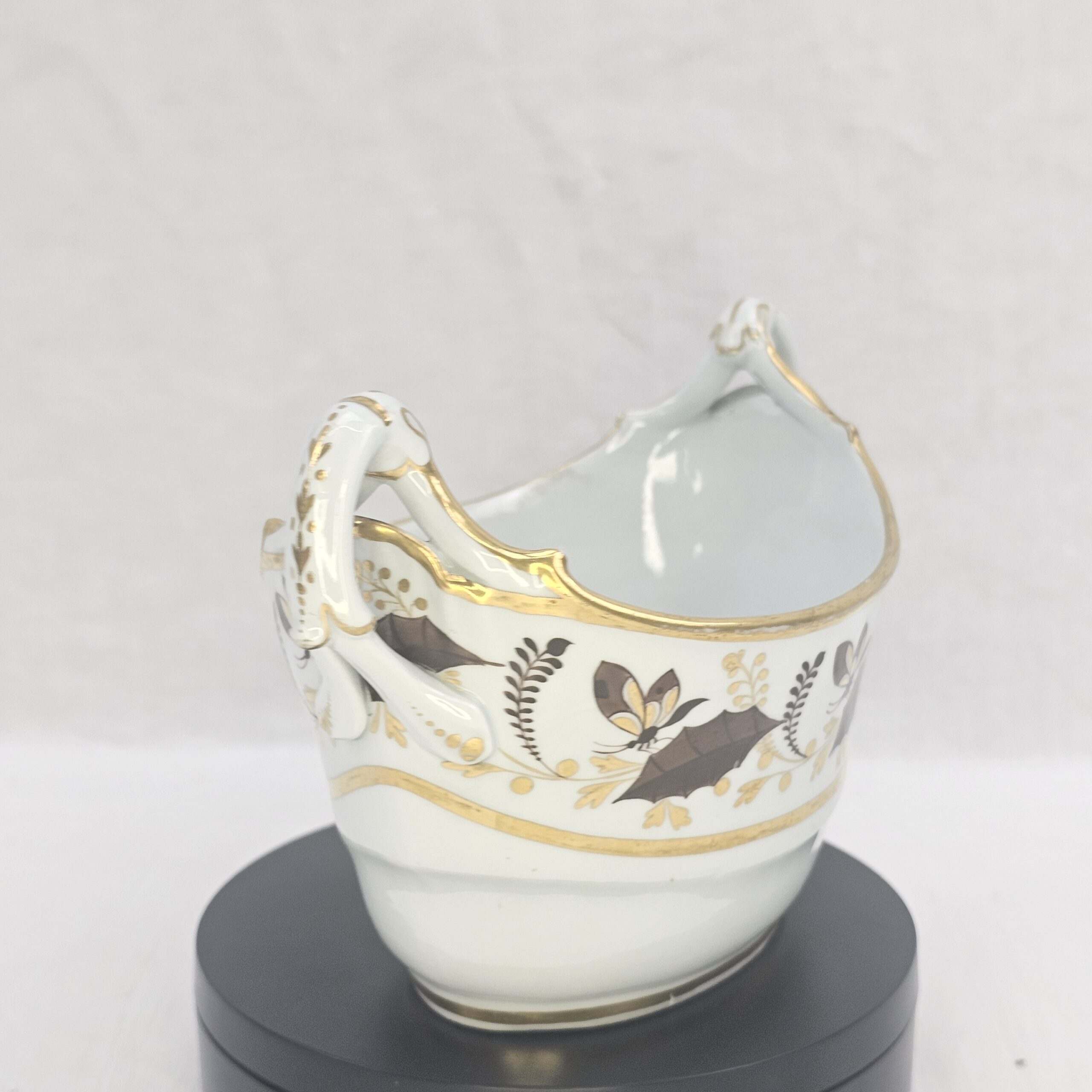
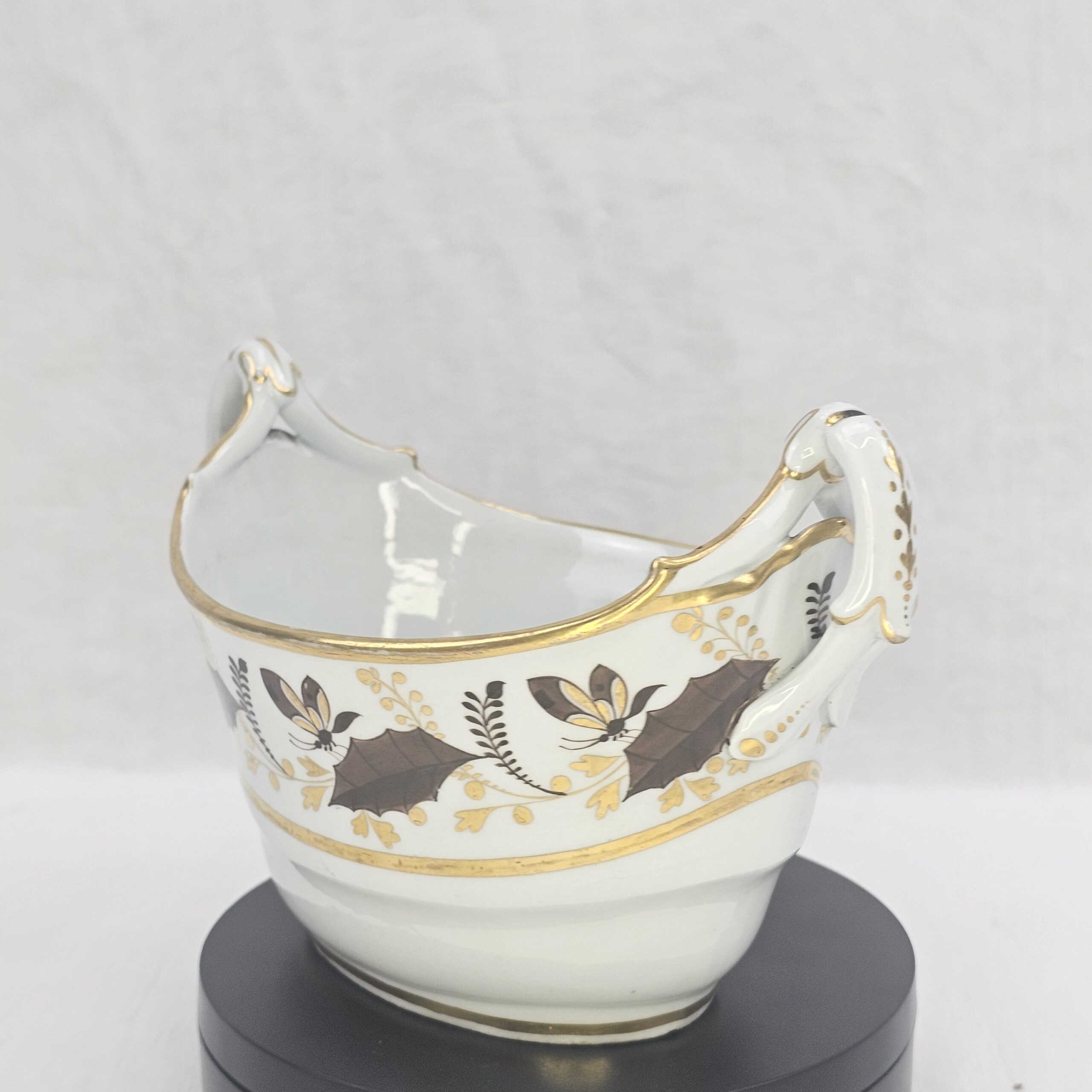
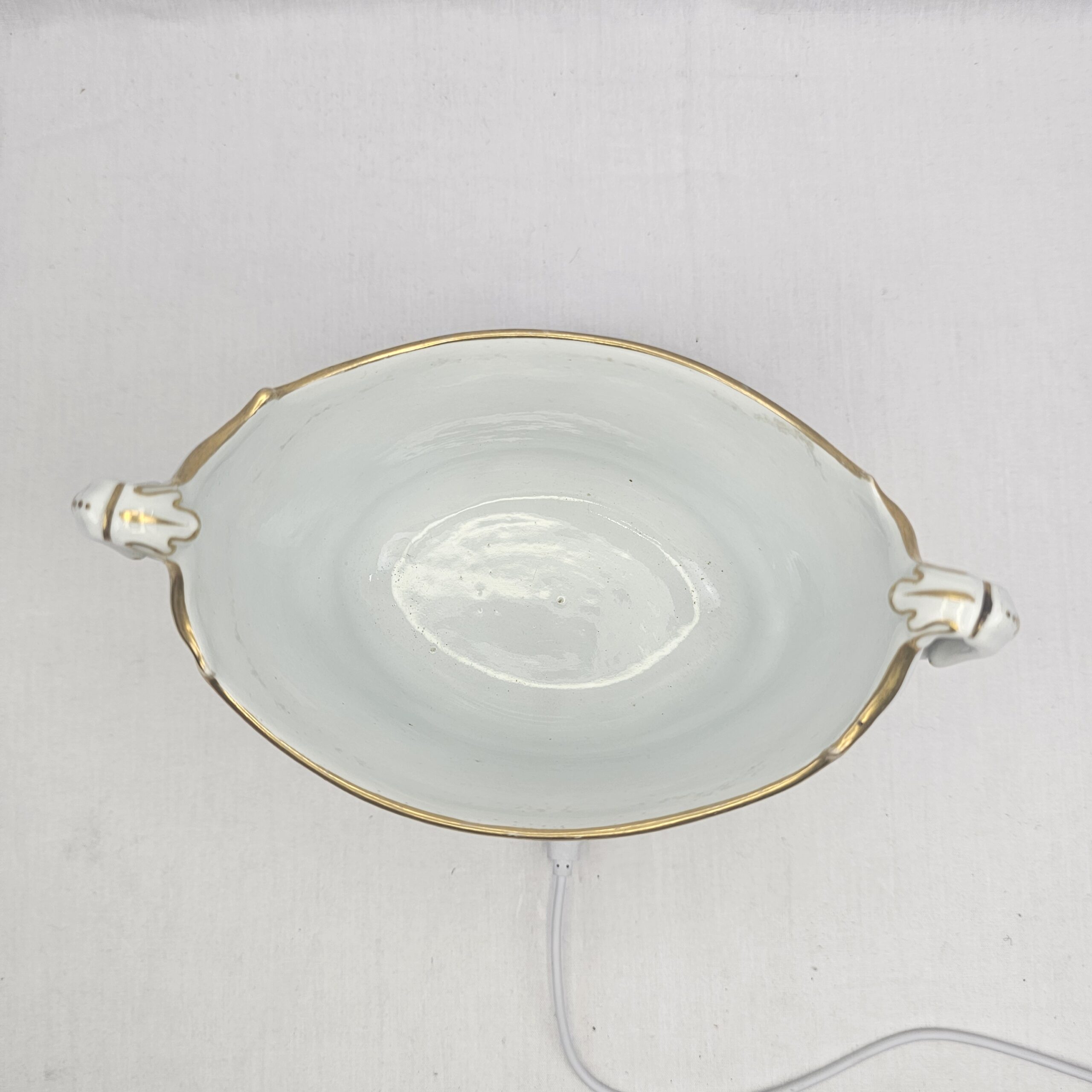
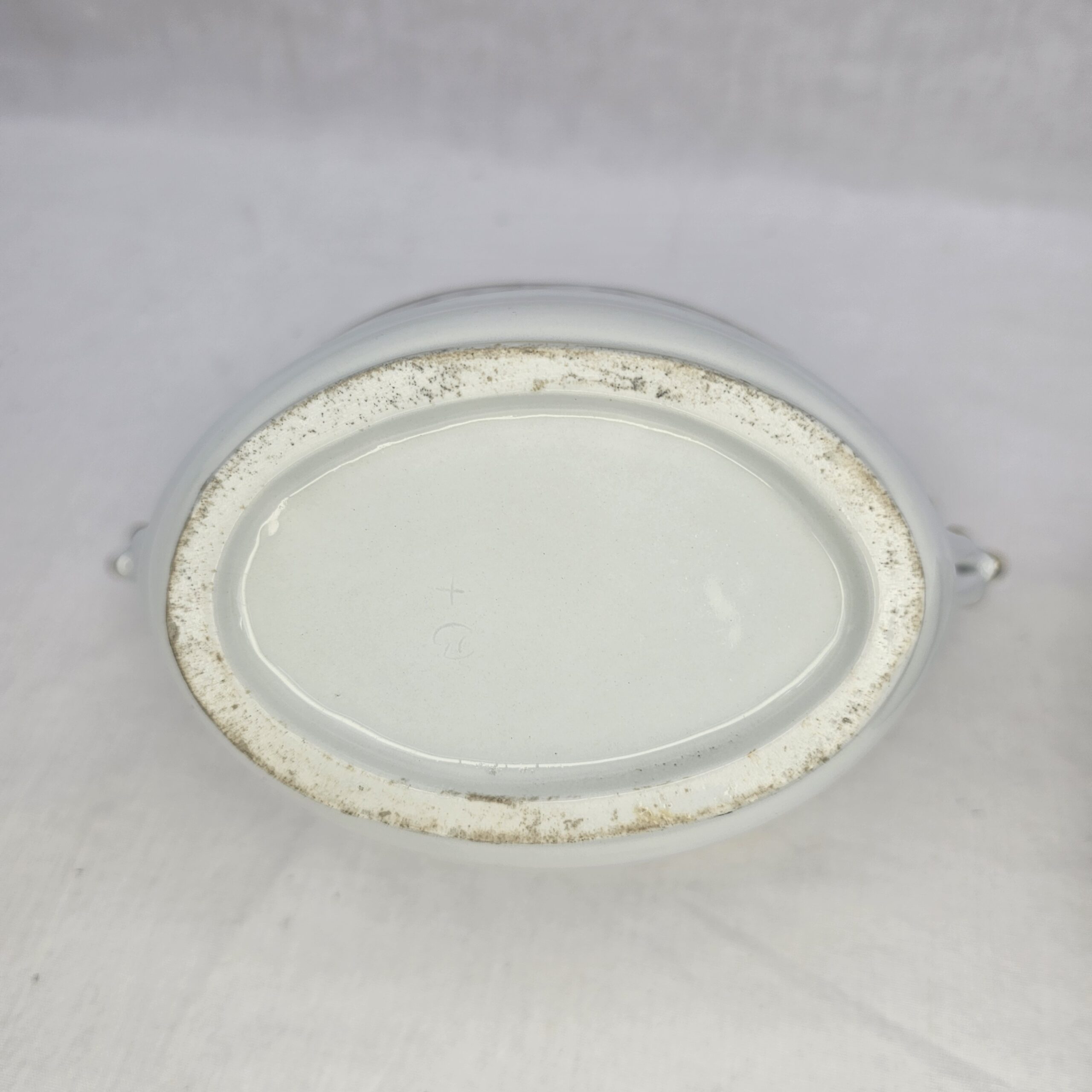
A fine English porcelain bowl of oval, "boat" shaped form, attributed to Barr, Flight & Barr, Worcester, circa 1807–1813. The bowl has two high, scrolling C-shaped handles, each highlighted in gilt with a small pendant gilt-dot motif. The exterior is decorated with a continuous band in sepia/iron-brown and gilt depicting stylised holly-type leaves, flowering sprigs, and naturalistic moths or butterflies, reserved on a white ground beneath a broad gilt rim line and above a further gilt band towards the base. The interior is plain white. The underside is unglazed within a glazed footrim and bears a small impressed mark, consistent with the workman's or repairer's marks found on Worcester porcelain of this period.
Historical Context
Barr, Flight & Barr operated the Worcester Royal Porcelain Works between 1804 and 1813, producing some of the finest English porcelain of the Regency period for an aristocratic and royal clientele, including services for the Royal Family and prominent country houses. The factory was particularly renowned for its sepia, iron-red and gilt botanical and entomological decoration — finely painted sprigs, leaves, and insects such as butterflies and moths — applied to elegant neoclassical shapes of exactly this type. Bowls of this twin-handled boat form were typically produced as the bowl/base of a sucrier (covered sugar bowl) or as a slop bowl within a tea or breakfast service; any accompanying cover is not present with this piece. While Barr, Flight & Barr pieces are sometimes found with painted script marks, many genuine examples carry only impressed workman's marks of the type seen on the base here, and attribution in such cases is made on the basis of shape, quality of painting, and characteristic pattern style.
Condition Report
The bowl is in generally good condition for its age. There is light wear to the gilding, particularly to the rim and handle highlights, consistent with age and historical use/cleaning. The unglazed footrim shows staining and firing marks typical of pieces of this date. No cracks, chips, or restoration are visible in the images provided; however, as no lid is present, this piece is catalogued as a sucrier/sugar bowl base (or slop bowl) rather than a complete covered sucrier.