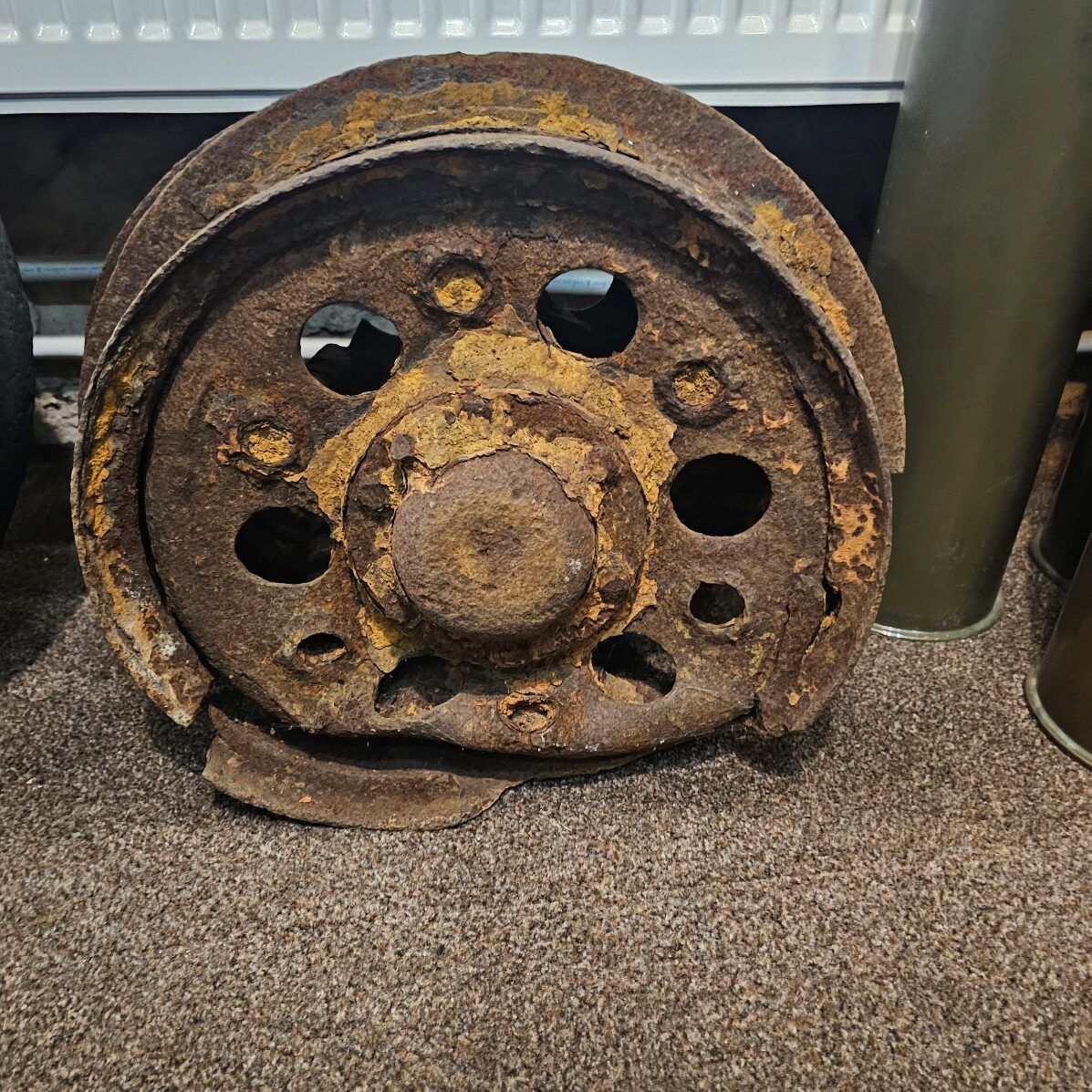
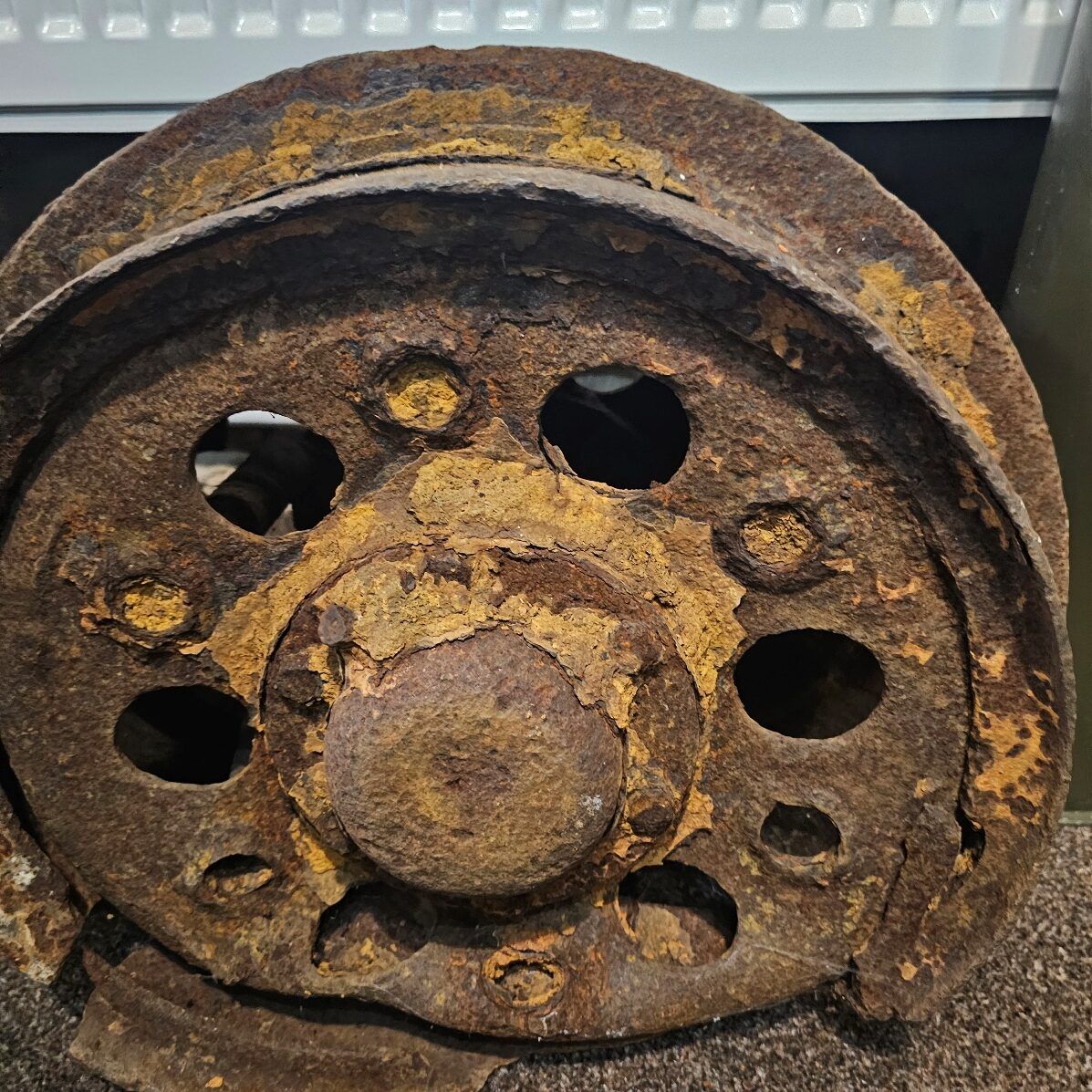
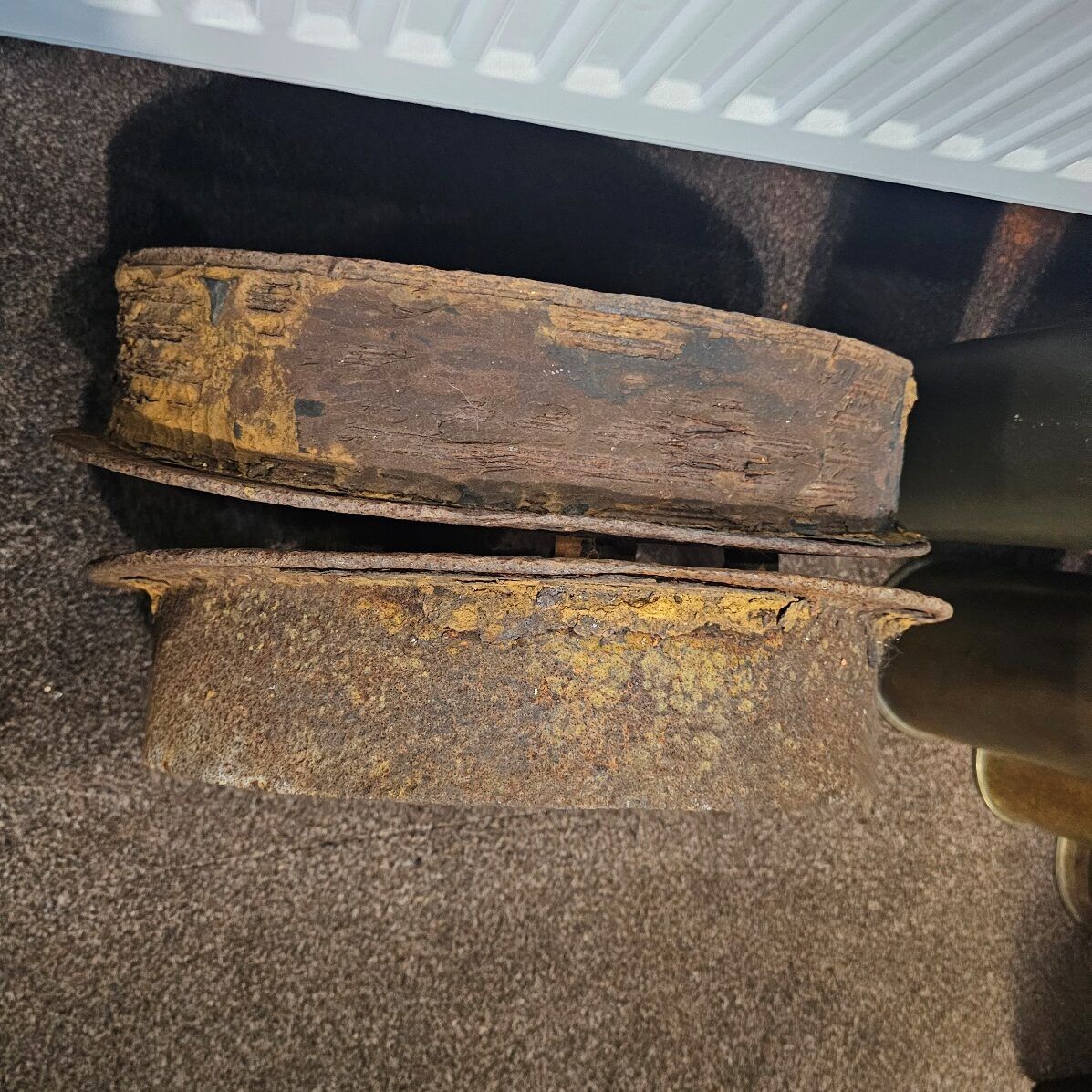
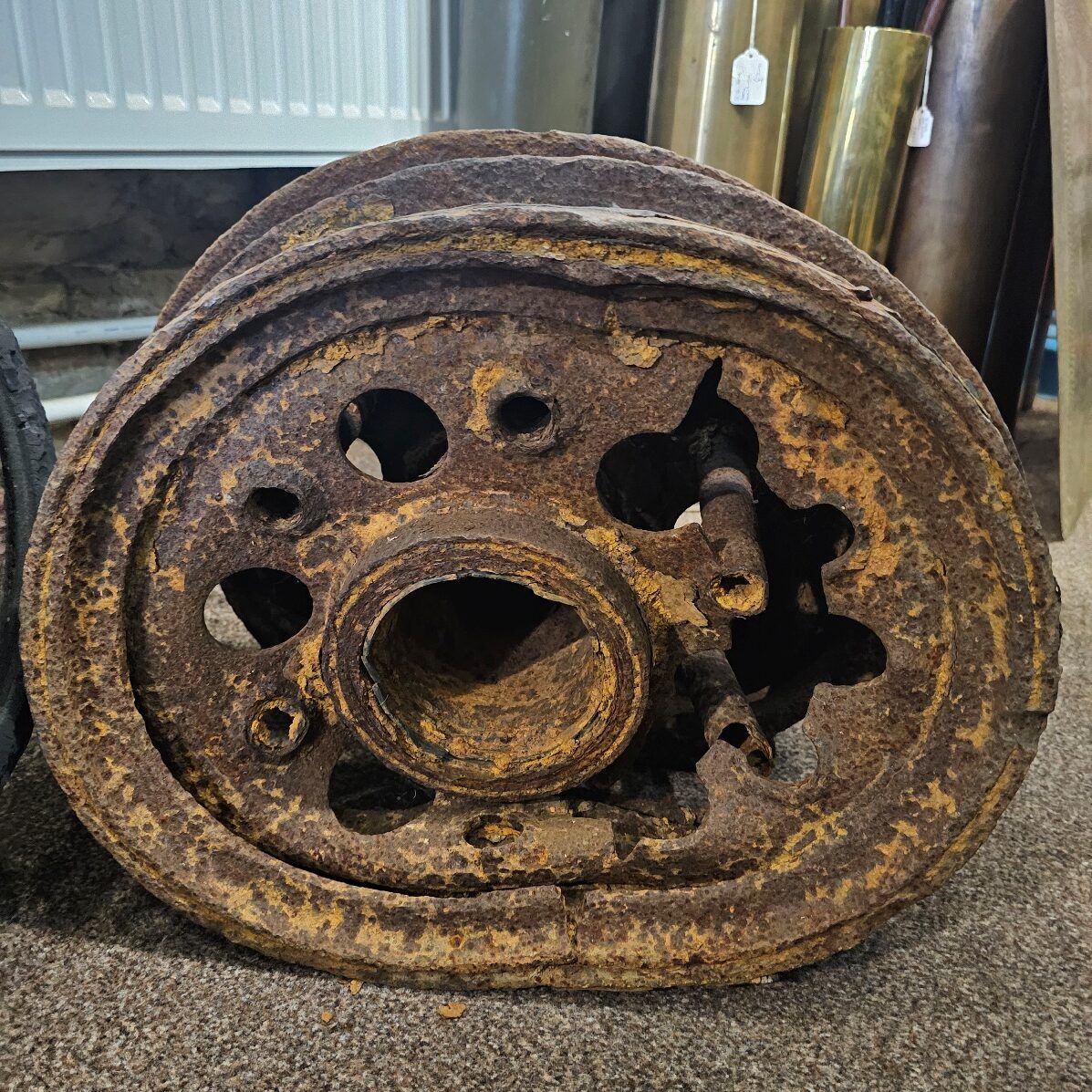
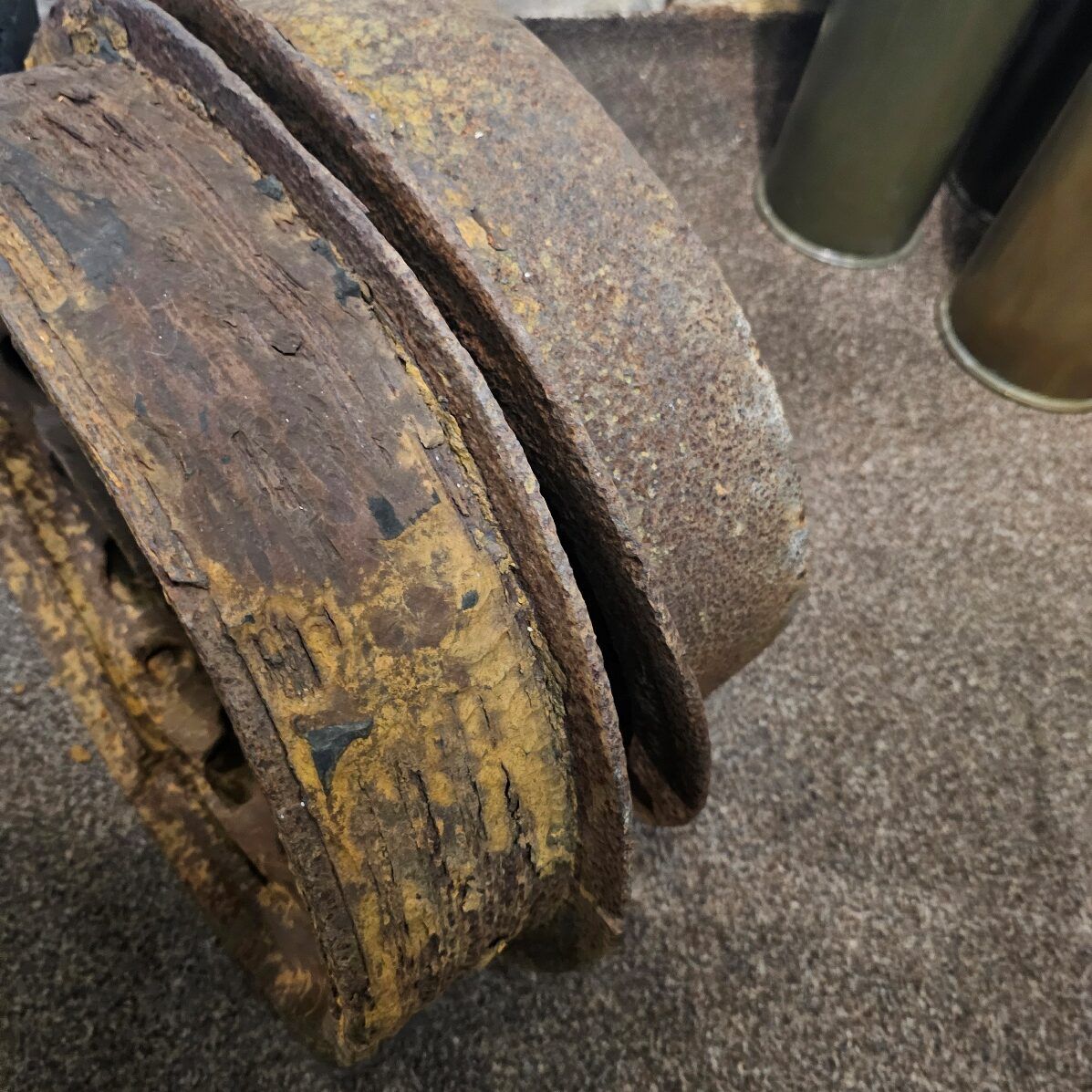
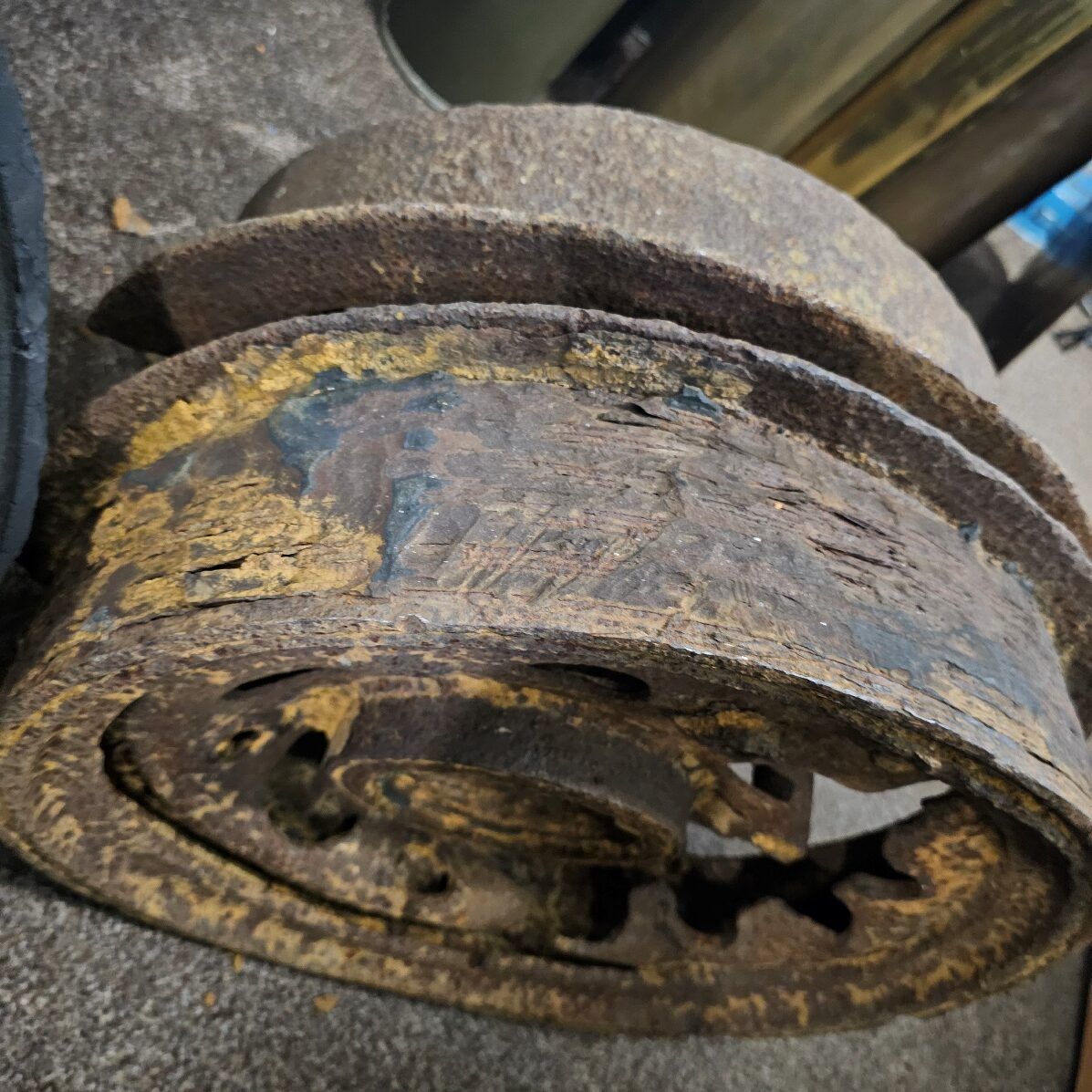
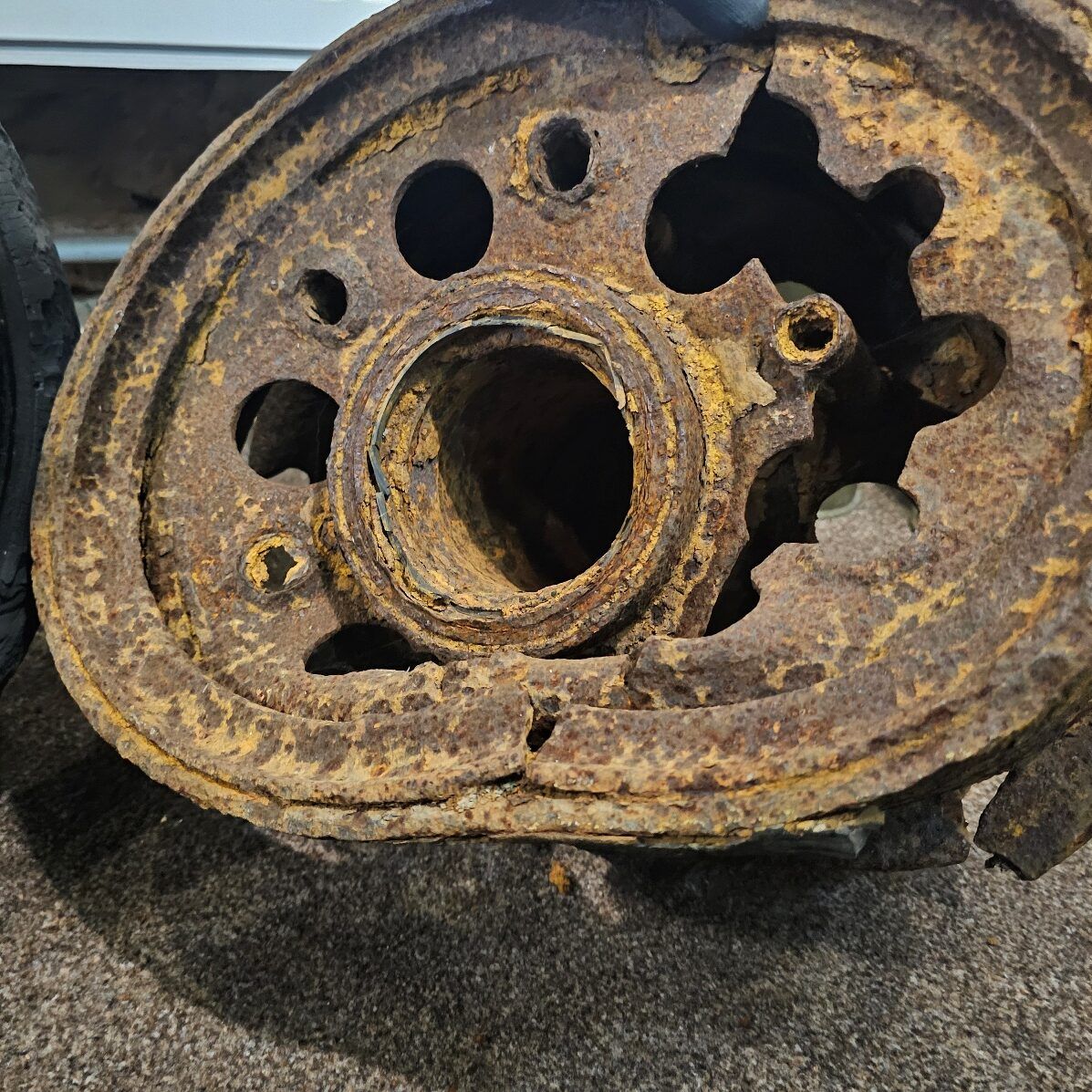
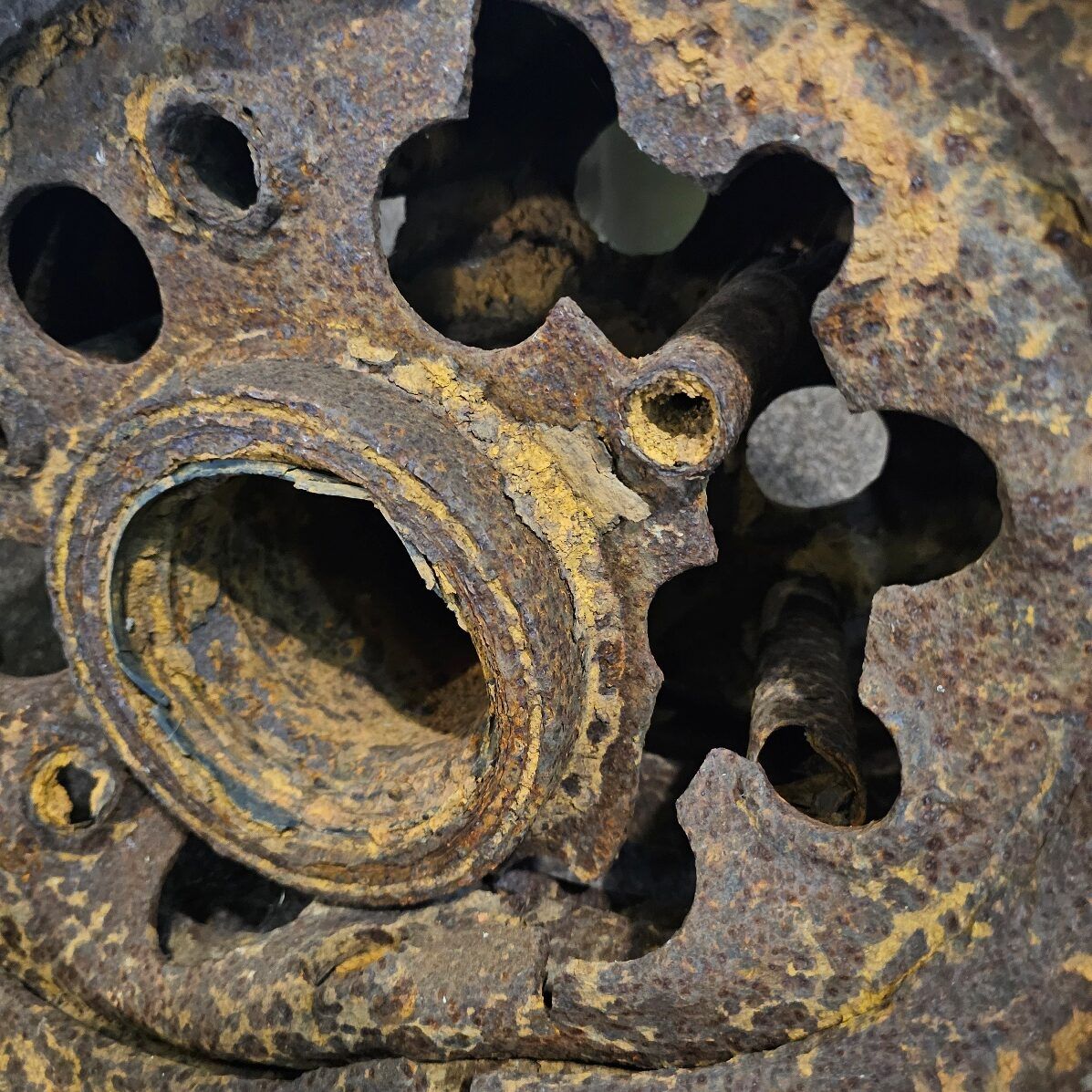
~ WW2 German Road Wheels of Sturmgeschütz III Tank ~
The road wheels of the Sturmgeschütz III (StuG III) tank destroyer, a highly effective German armored fighting vehicle used during World War II, played a crucial role in its mobility and combat efficiency. The StuG III, based on the chassis of the Panzer III tank, was initially designed as a mobile assault gun but evolved into one of the most successful tank destroyers of the war.
The road wheels of the StuG III were made of steel with a rubber rim or tire encircling the outer edge. The rubber tire provided cushioning and reduced wear on both the road wheels and the tracks while the vehicle was in motion.
The road wheels were 77 cm (30.3 inches) in diameter, similar to those used on the Panzer III tank.
Design:
The road wheels were solid discs made of steel, with a thick rubber tire around the perimeter. The solid design provided strength to support the vehicle’s weight and absorb the shocks from rough terrain.
Each wheel had six bolts holding it to the suspension arms.
The rubber tires around the steel discs helped reduce the vibrations and noise caused by the movement of the tank on hard surfaces, improving overall mobility and crew comfort.
Suspension System:
The StuG III utilized a torsion-bar suspension system, which was also found on the Panzer III and Panzer IV. In this system, each road wheel was connected to a torsion bar that twisted to absorb the shocks from uneven terrain. This provided a smoother ride and allowed the vehicle to move at higher speeds over rough ground.
There were six road wheels on each side of the StuG III, mounted in pairs. These wheels were connected to the suspension system in such a way that allowed for even distribution of weight and stress over the tracks, enhancing the vehicle's cross-country performance.
Number and Arrangement:
The StuG III, like the Panzer III, had six pairs of road wheels on each side, making a total of twelve road wheels per side. Each pair of wheels was mounted on a bogie and shared a torsion bar for suspension.
Return rollers (small wheels above the road wheels) helped guide the tracks over the wheels, reducing slack and ensuring the tracks stayed properly aligned during movement.
Purpose and Functionality:
Mobility: The road wheels of the StuG III were designed to handle various types of terrain, from hard surfaces like roads to softer terrains such as mud, snow, and sand. The rubber rims on the wheels helped maintain grip and smooth out the ride on uneven or rocky ground.
Weight Support: The StuG III weighed approximately 23 tons in its later models, so the road wheels were engineered to carry this heavy load while maintaining mobility.
Durability: The combination of steel and rubber gave the wheels durability in combat, allowing the StuG III to operate over extended periods without requiring frequent maintenance on its suspension components. However, like all tanks, the rubber on the wheels could wear out over time, especially in harsh environments, and would need replacement.
Historical Context:
The Sturmgeschütz III was originally conceived as an assault gun designed to provide infantry support by destroying fortifications and bunkers. As the war progressed and Germany needed more mobile anti-tank weapons, the StuG III evolved into a highly successful tank destroyer.
Introduced in 1940, the StuG III was used in nearly every theater of war where German forces were engaged. It saw action on the Eastern Front, in North Africa, and in Western Europe. The vehicle was particularly favored for its low profile, which made it difficult to spot and engage in battle.
Evolution of the StuG III:
Early Models (StuG III A to E): These were armed with short-barreled 75mm howitzers and were primarily used for infantry support. The suspension and road wheels of these early models were largely similar to the Panzer III on which they were based.
Later Models (StuG III F to G): Starting with the StuG III F, the vehicle was upgraded with a longer-barreled 75mm anti-tank gun, turning it into a formidable tank destroyer. The road wheels remained largely the same throughout the vehicle’s production run, although the vehicle's weight increased due to additional armor and equipment.
Impact on Battlefield Performance:
The StuG III became one of the most successful German armored vehicles during the war, thanks in part to its robust and reliable suspension and road wheel design. The solid construction of the wheels and the smooth operation of the torsion-bar suspension allowed it to move quickly and efficiently over varied terrains, making it a highly maneuverable vehicle.
The low profile of the StuG III, combined with the robust suspension and mobility provided by the road wheels, made it ideal for ambush tactics. It could lie in wait in defilade positions, striking at advancing enemy tanks and then quickly relocating to avoid counterfire.
Legacy:
Over 10,000 StuG IIIs were produced during the war, making it one of the most produced armored vehicles in the German arsenal. Its success can be attributed to its adaptability and reliability, including the performance of its road wheels and suspension system.
After World War II, the StuG III and its components, including the road wheels, became highly sought-after artifacts for military vehicle collectors and museums. Original parts, including road wheels, are often used in the restoration of surviving vehicles or are displayed as part of military history exhibits.