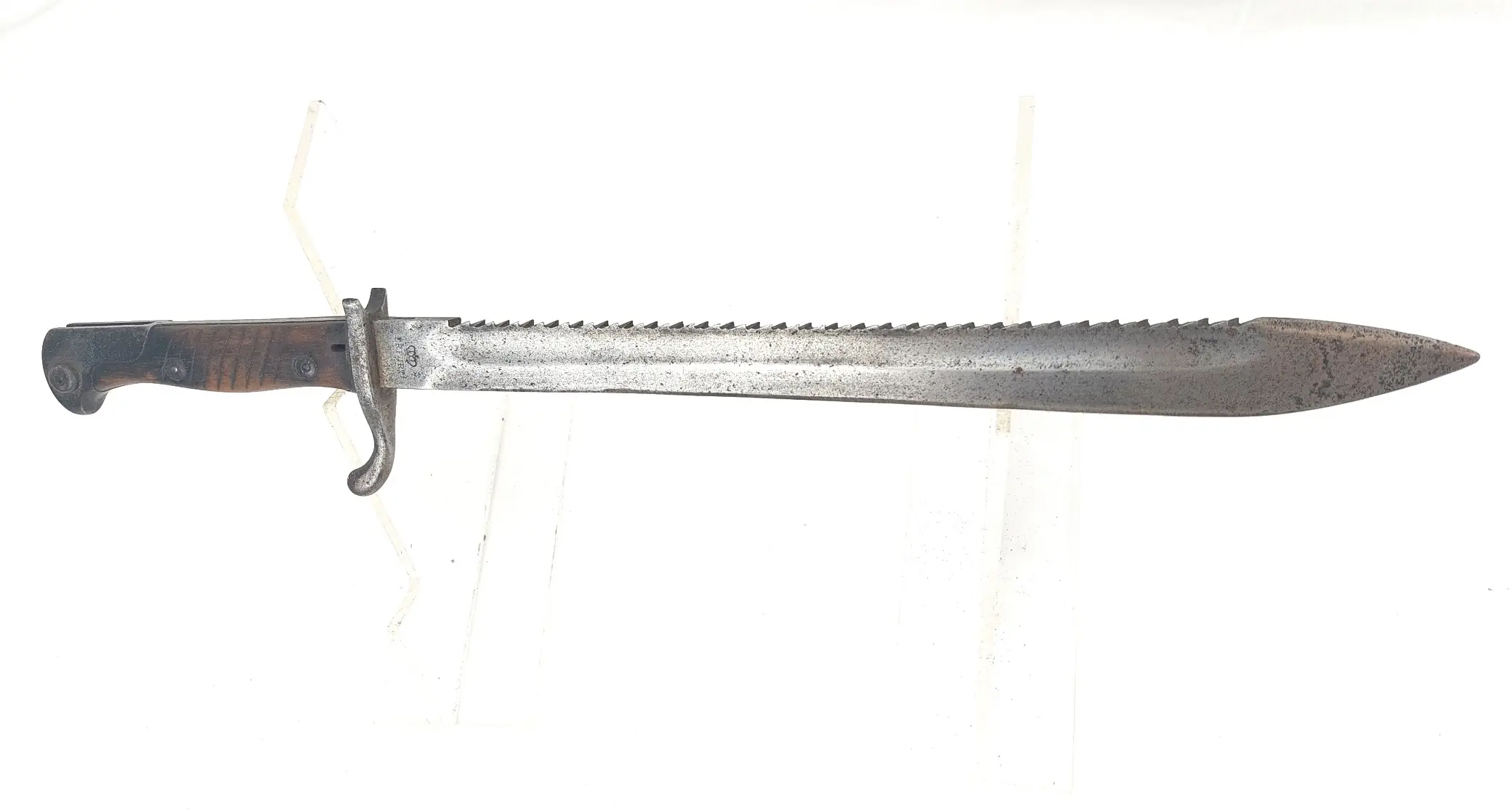
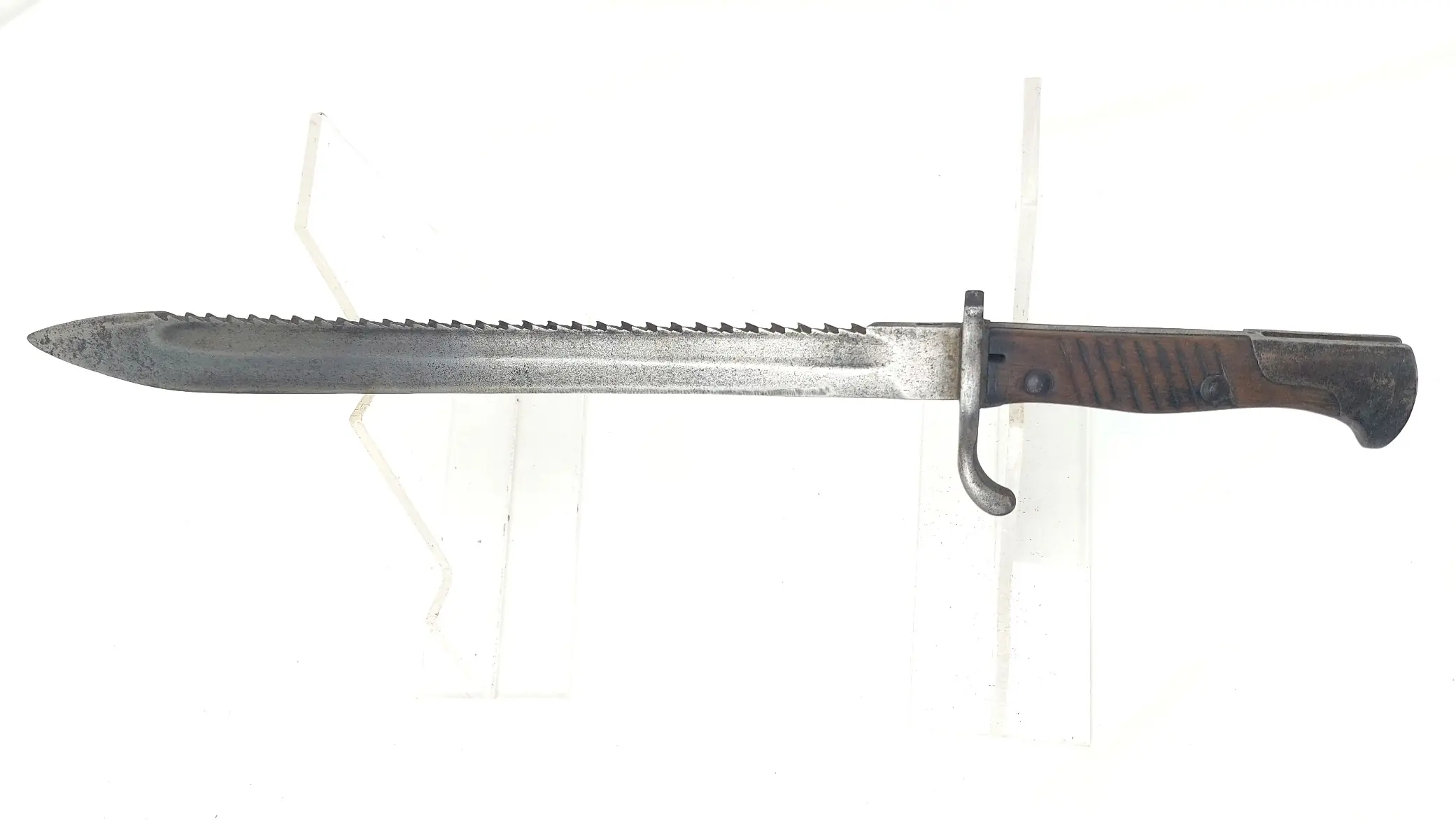
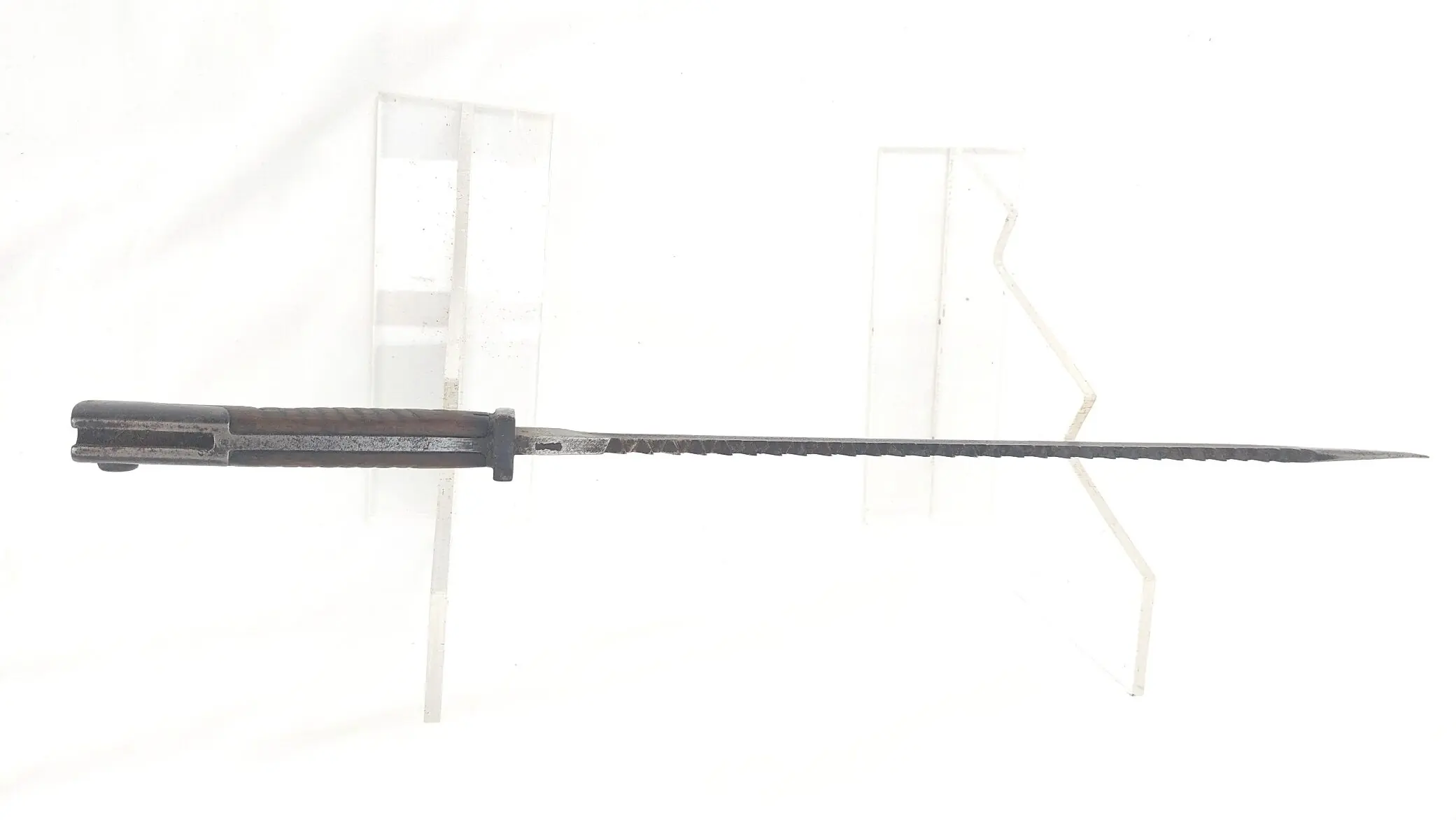
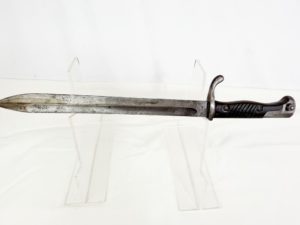
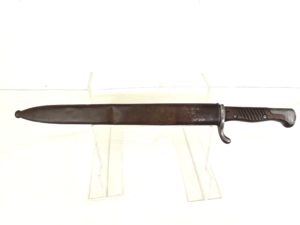
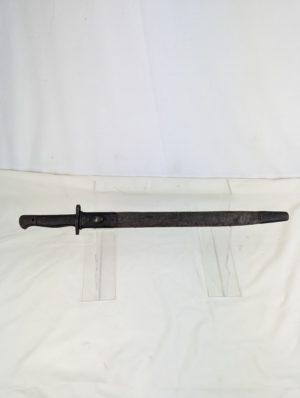
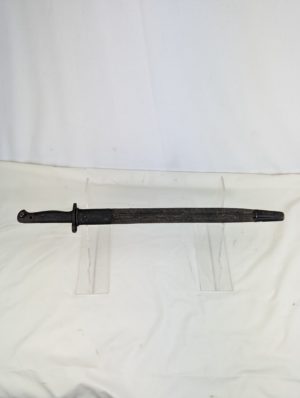
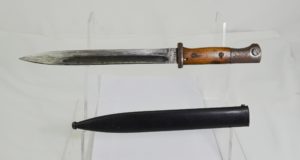
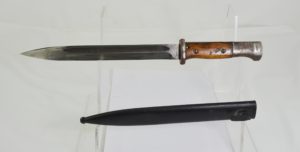
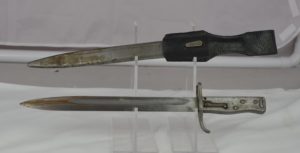
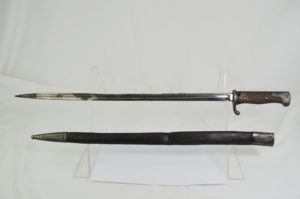
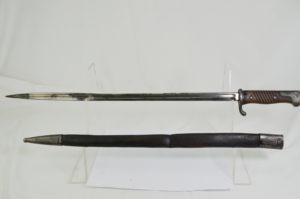
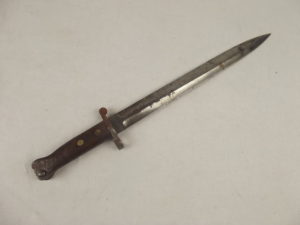
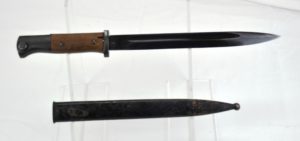
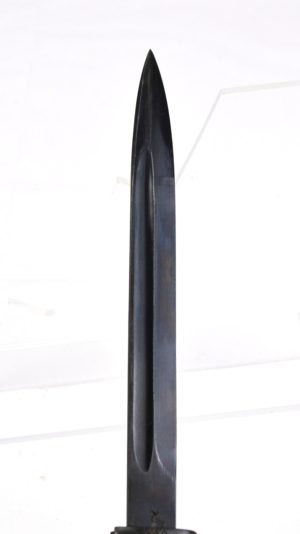
*Imperial German, WW1, 1916, First Pattern Model 1898/05 a/A Sawback Bayonet, by Erfurt*
This scarce 1916 Erfurt-made sawback bayonet is highly sought after for its early first pattern configuration ("high ears"), unaltered sawback blade, and production by the Imperial state arsenal rather than a commercial maker. Originally issued to pioneer and machine gun troops, most sawbacks were withdrawn or ground down during WW1, making intact examples rare today. Combined with its complete inspection markings and desirable Erfurt origin, this piece stands out as an exceptional collector's item.
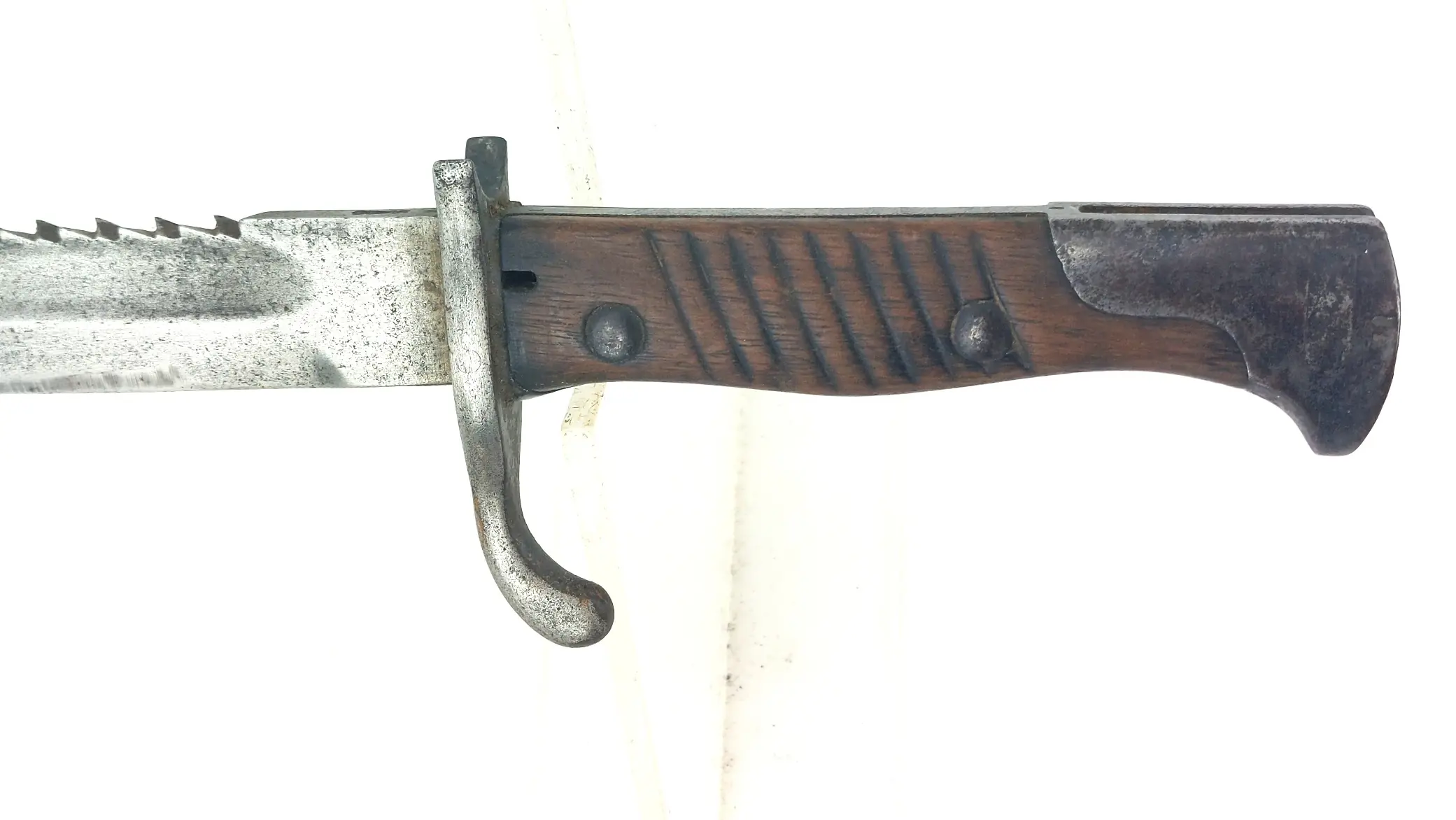
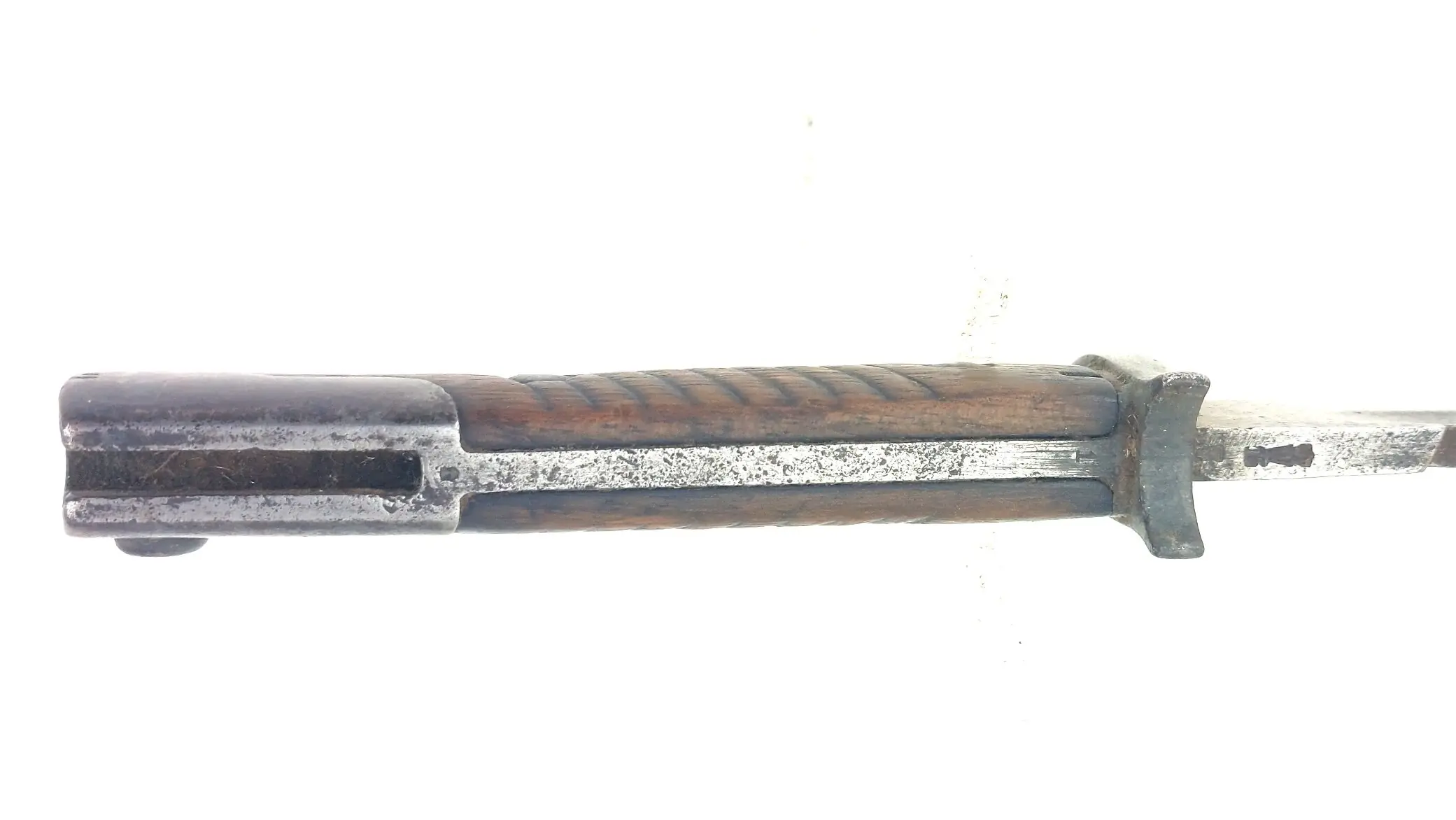
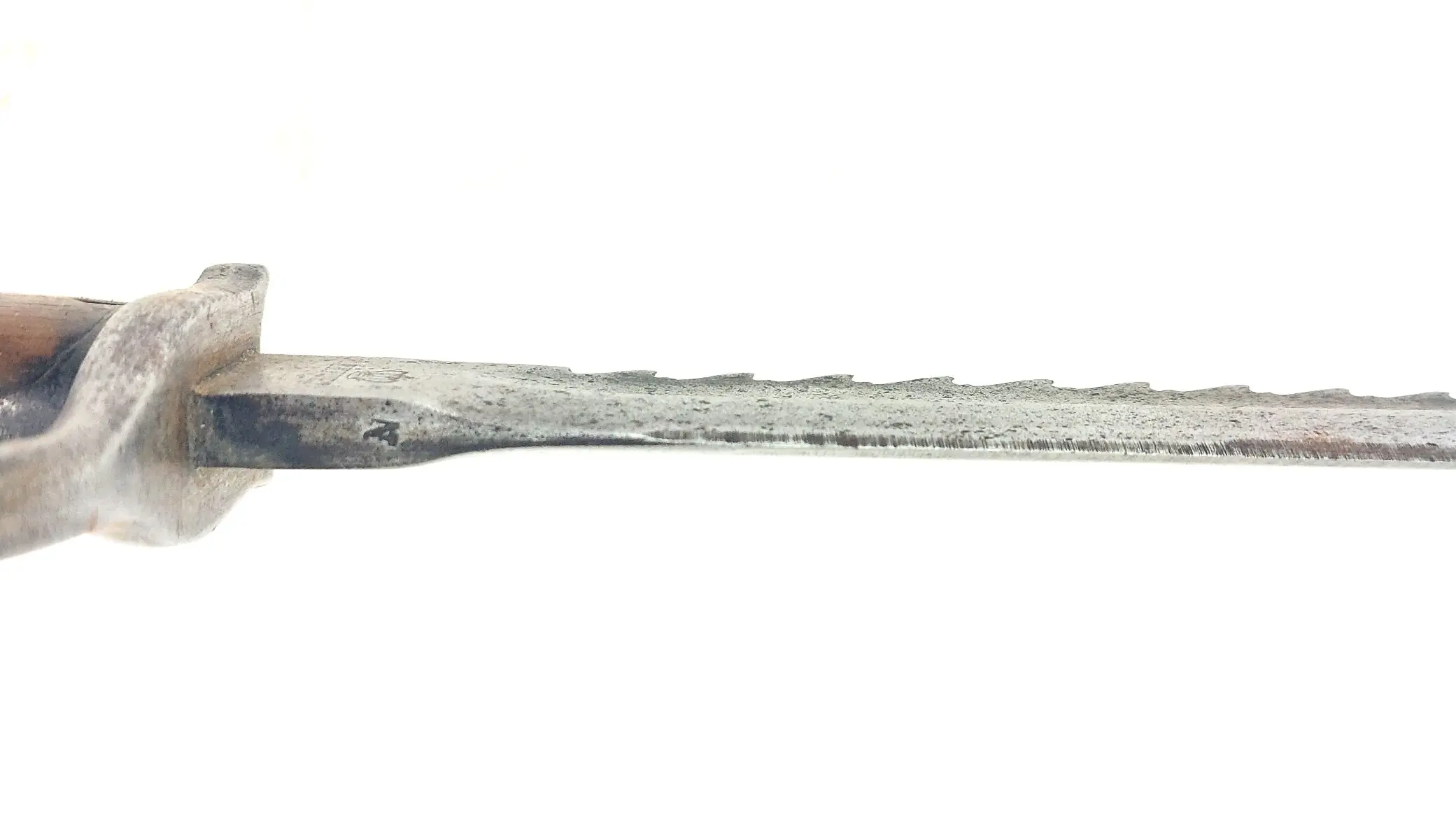
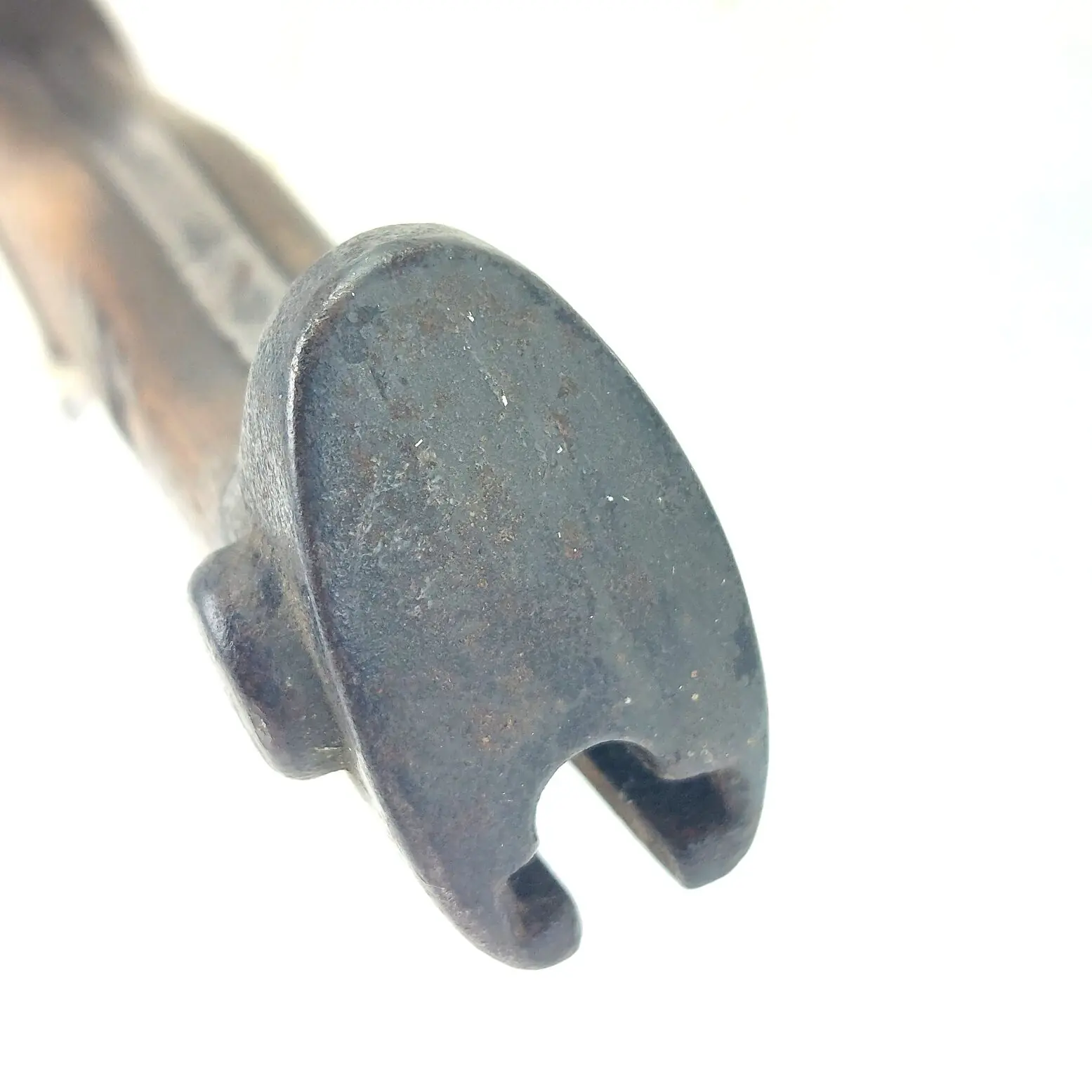
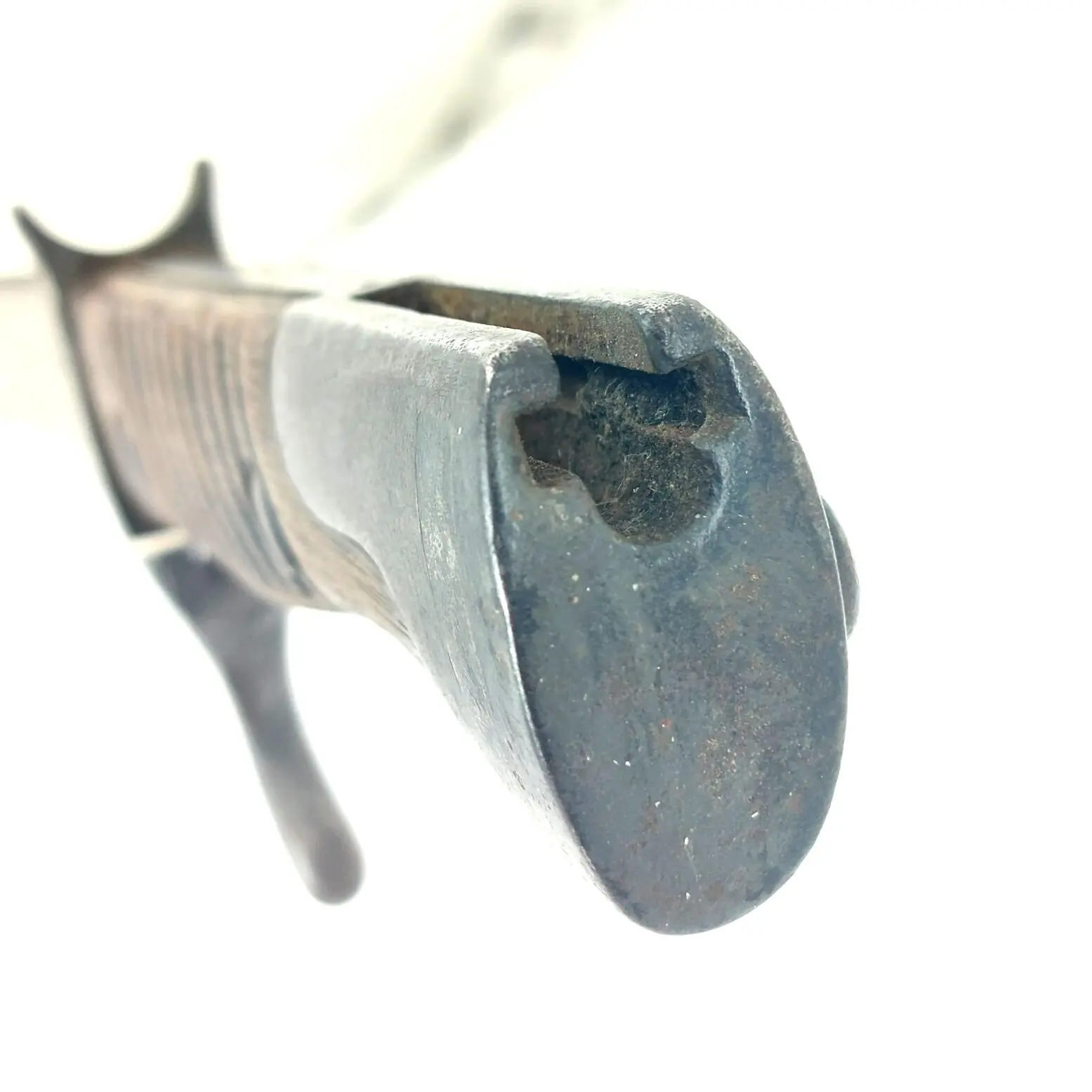
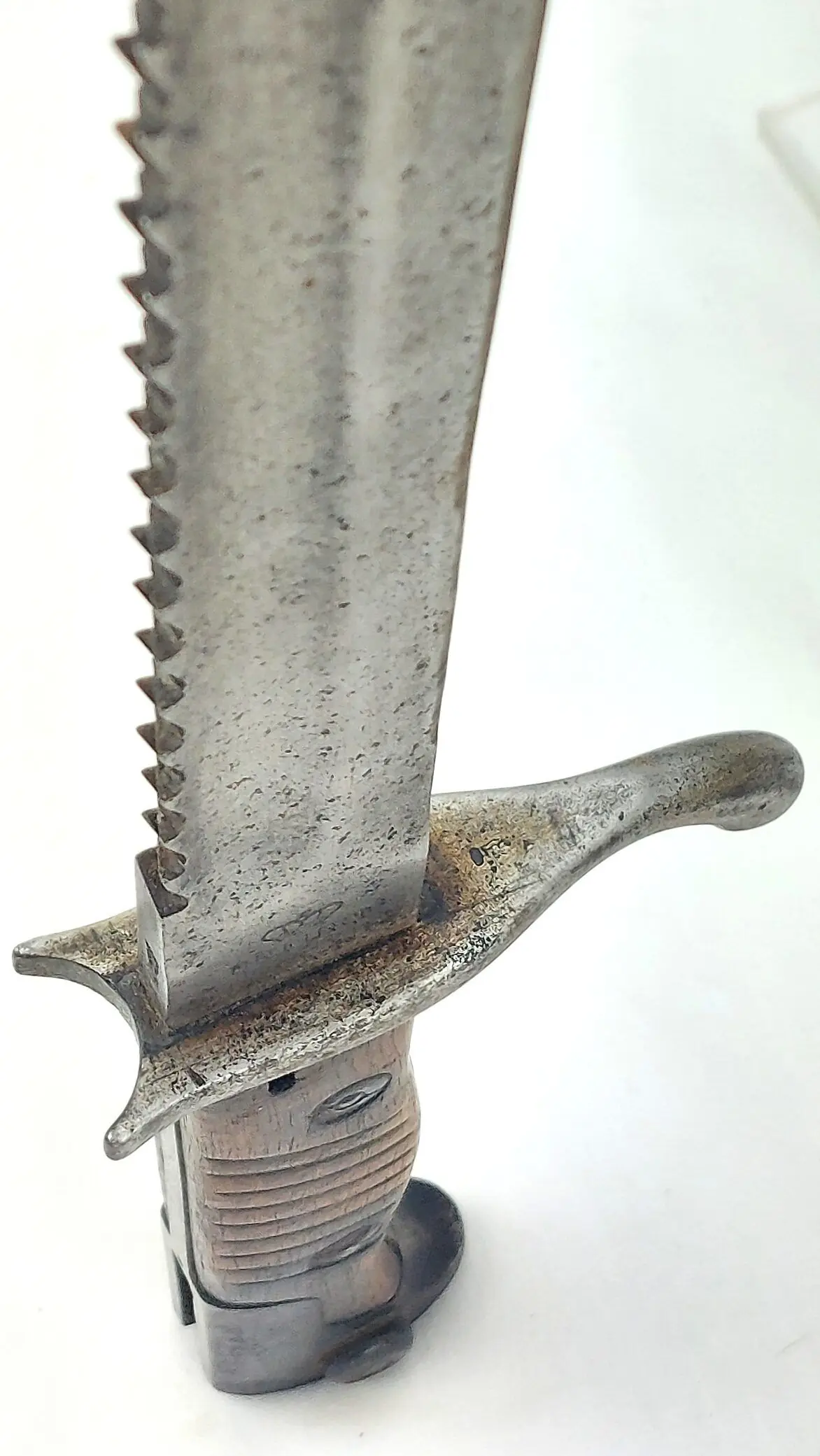
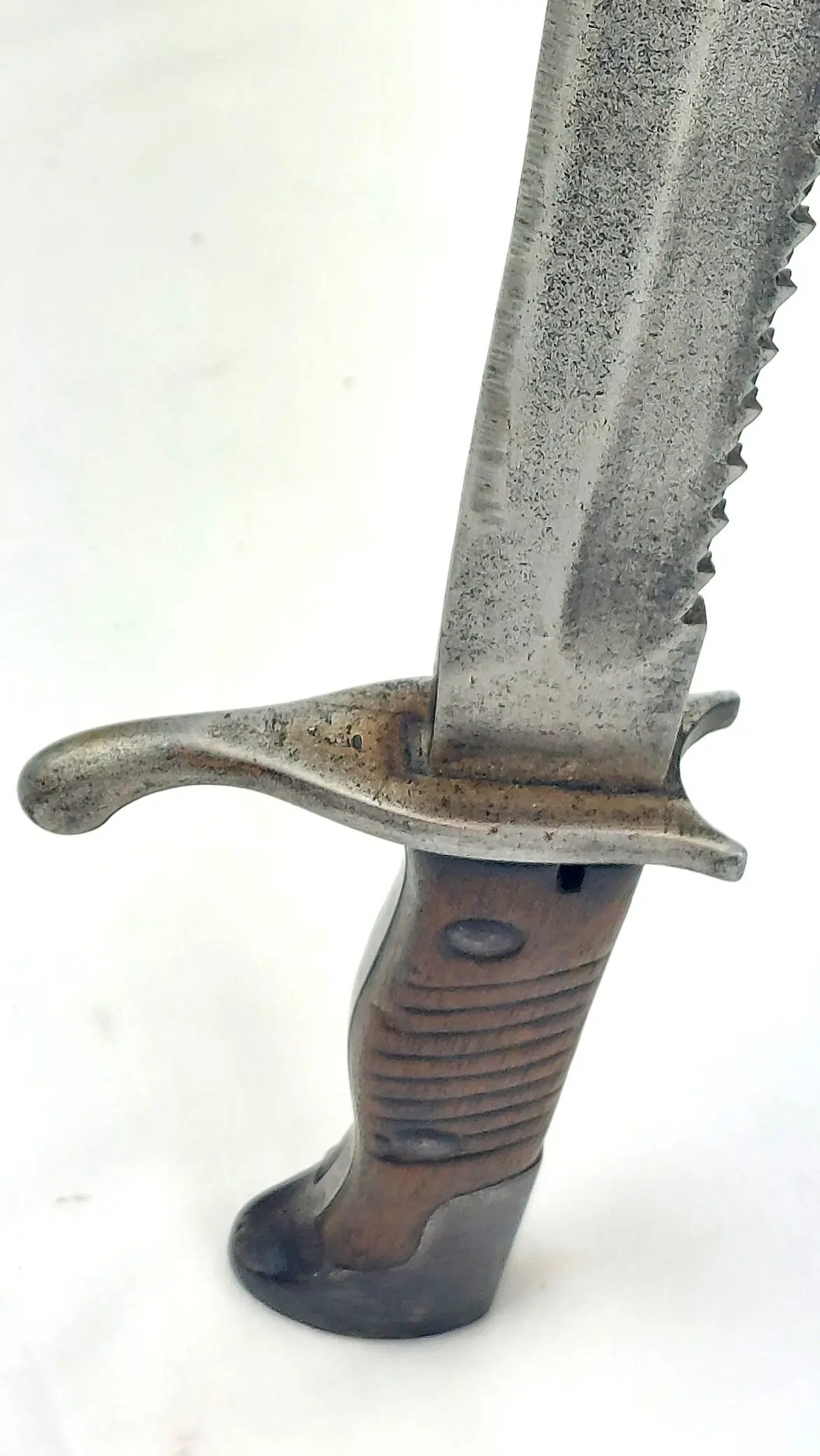
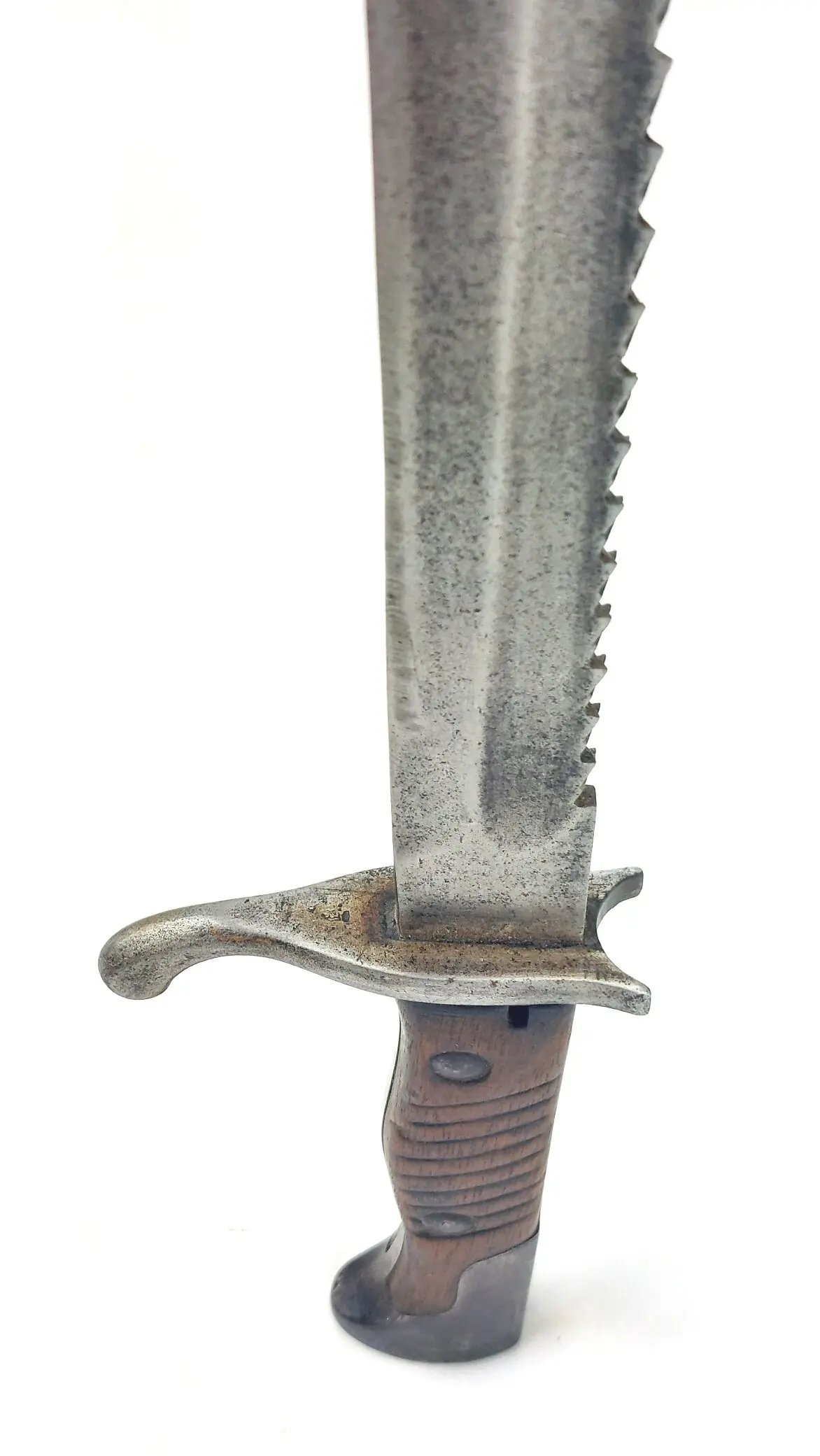
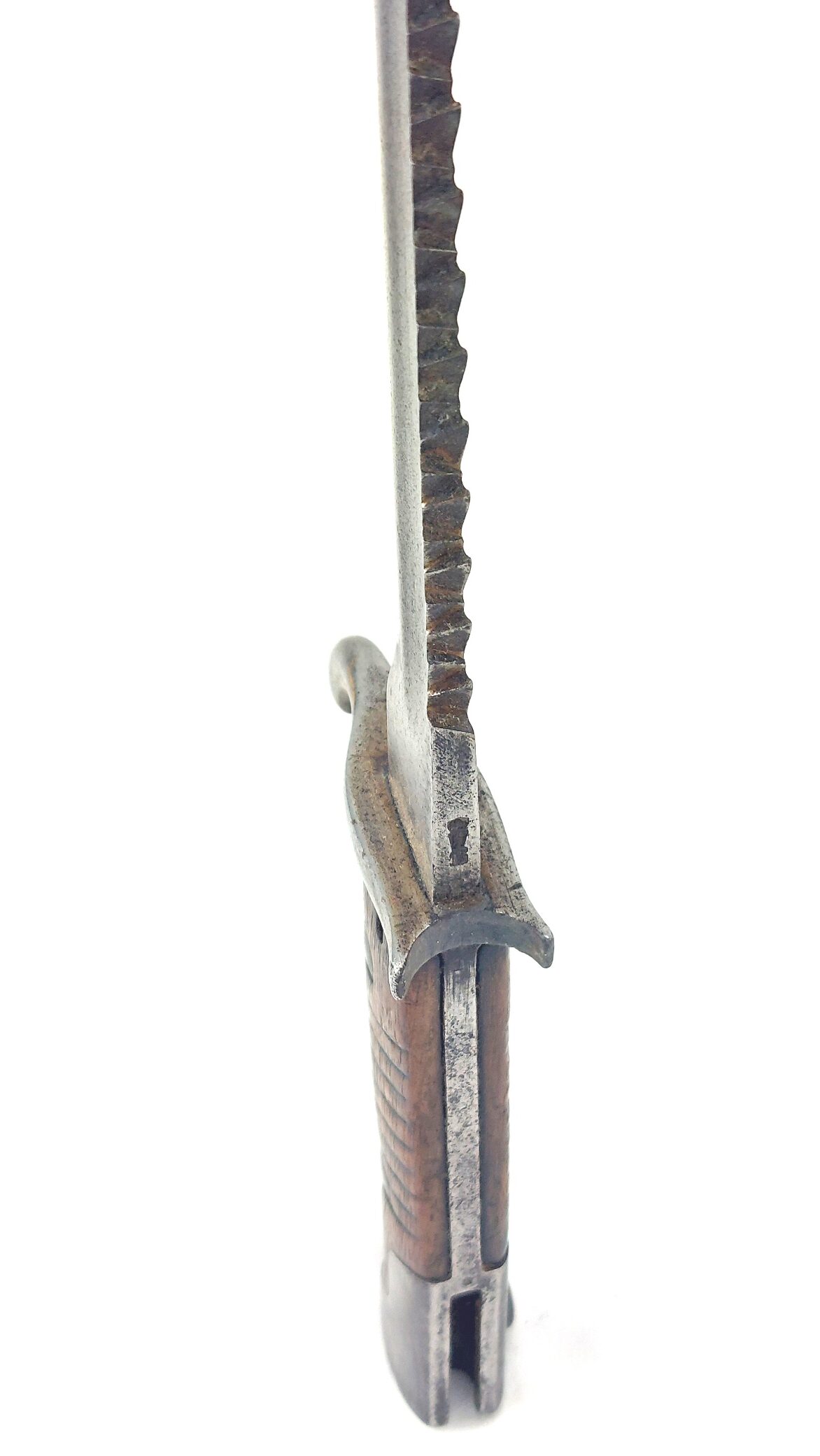
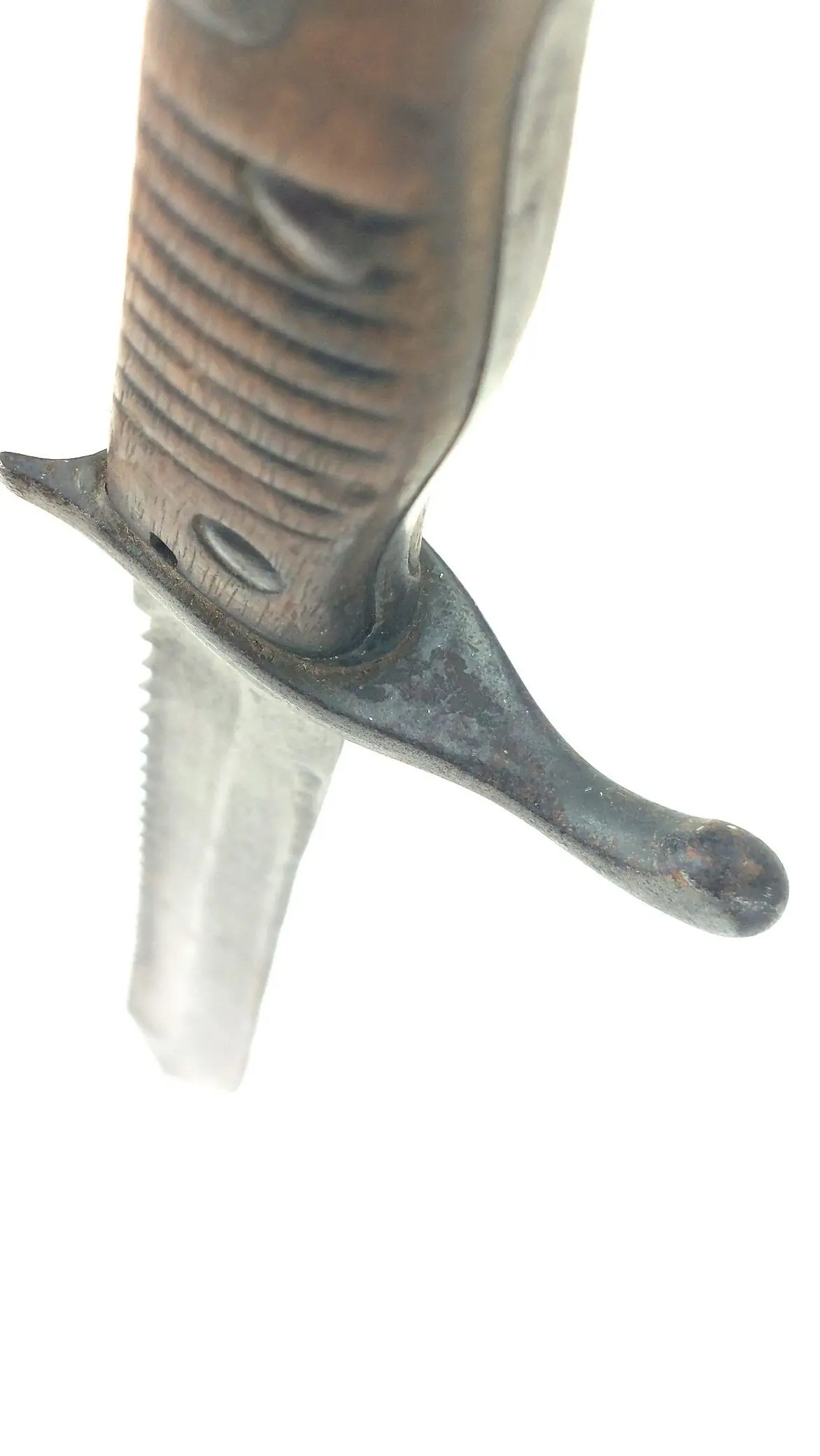
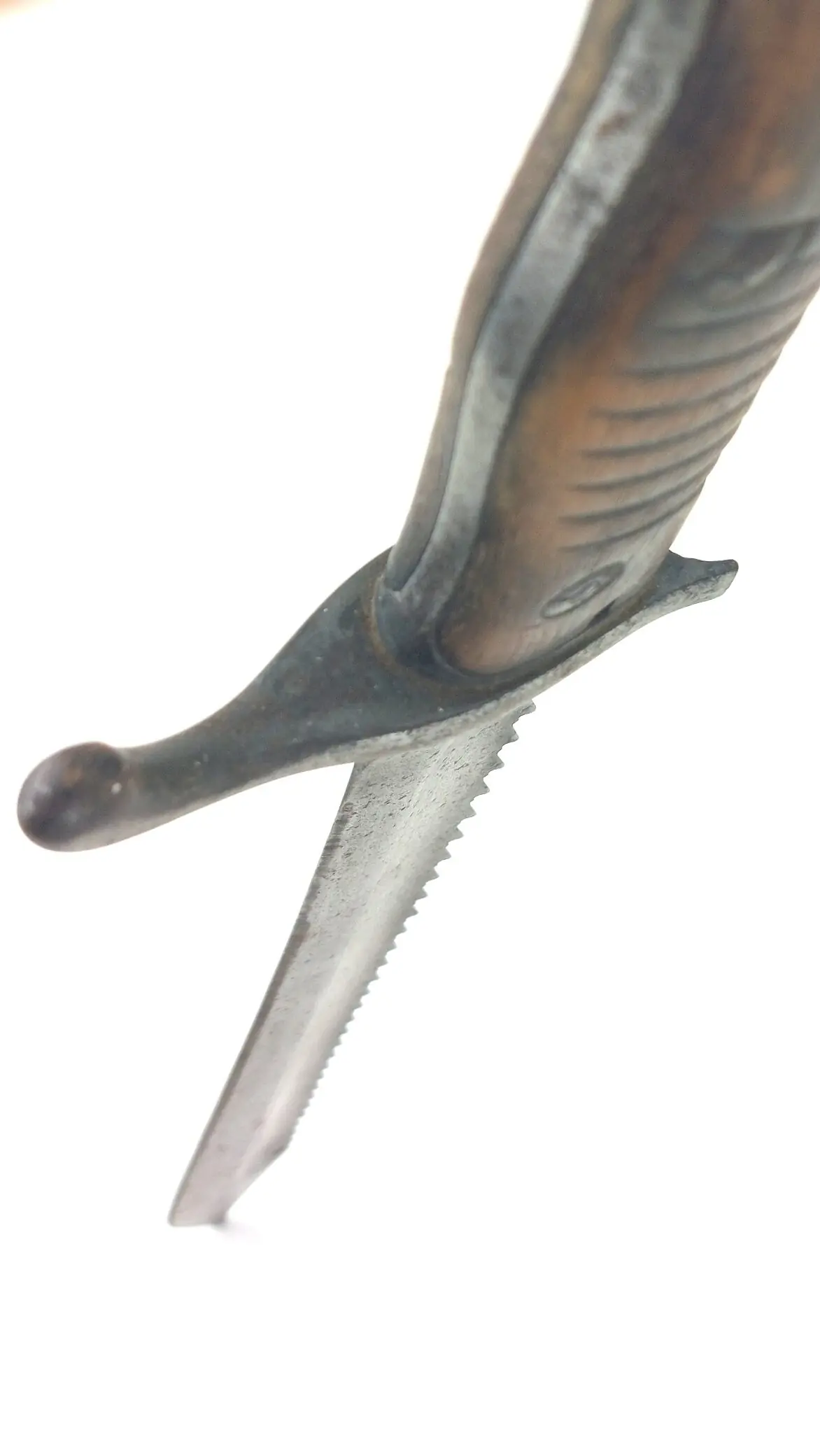
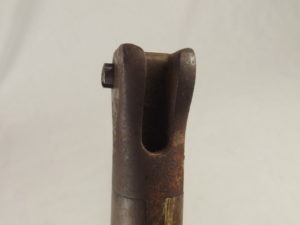
An original and rare Imperial German WW1 Model 1898/05 a/A "Butcher" sawback bayonet, manufactured at the Imperial Arsenal Erfurt and dated 1916. This is the desirable first pattern variant (a/A — alter Art, "old type"), featuring the early design with partial (vestigial) muzzle ring often referred to as "high ears," and no flashguard.
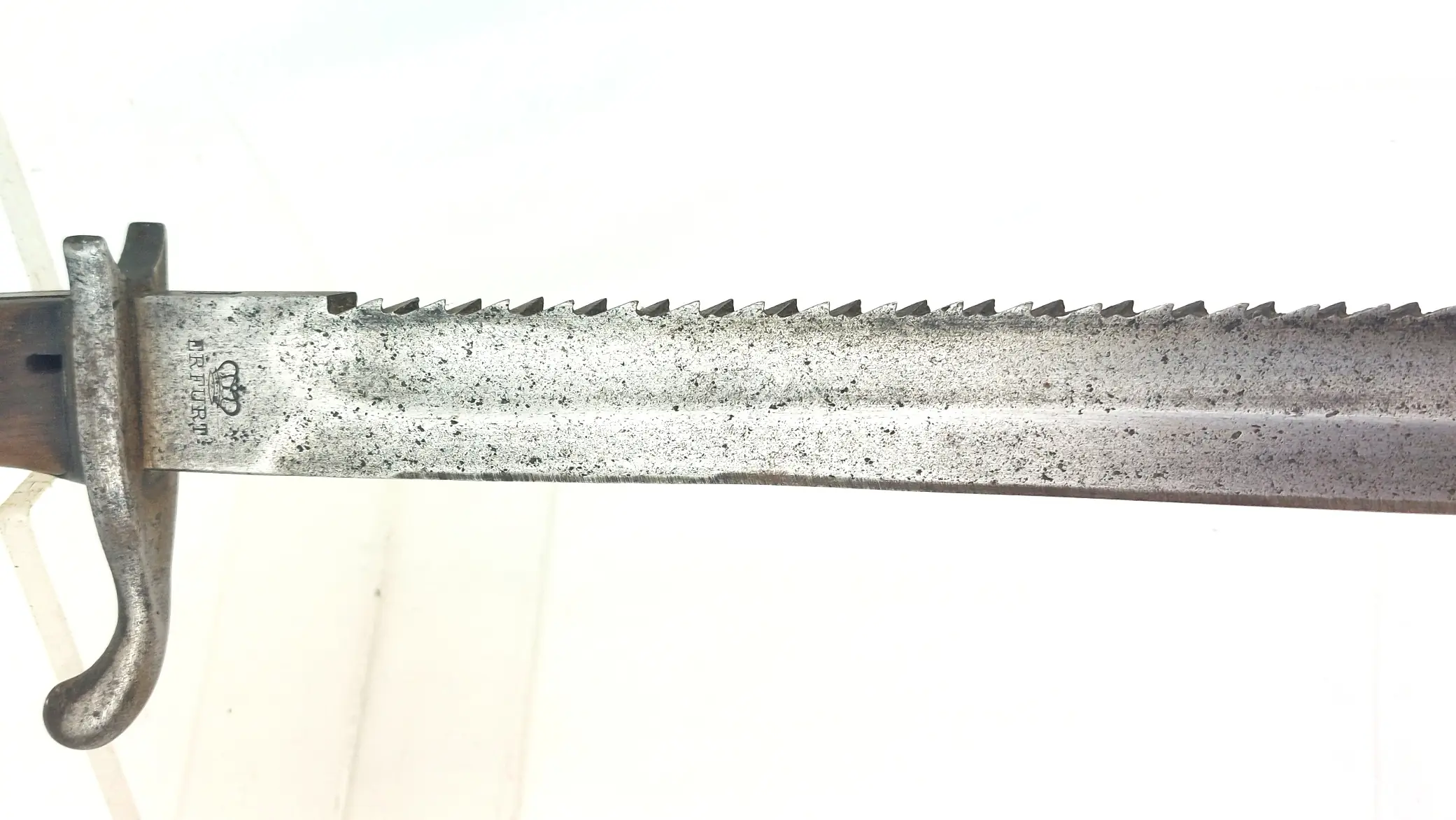
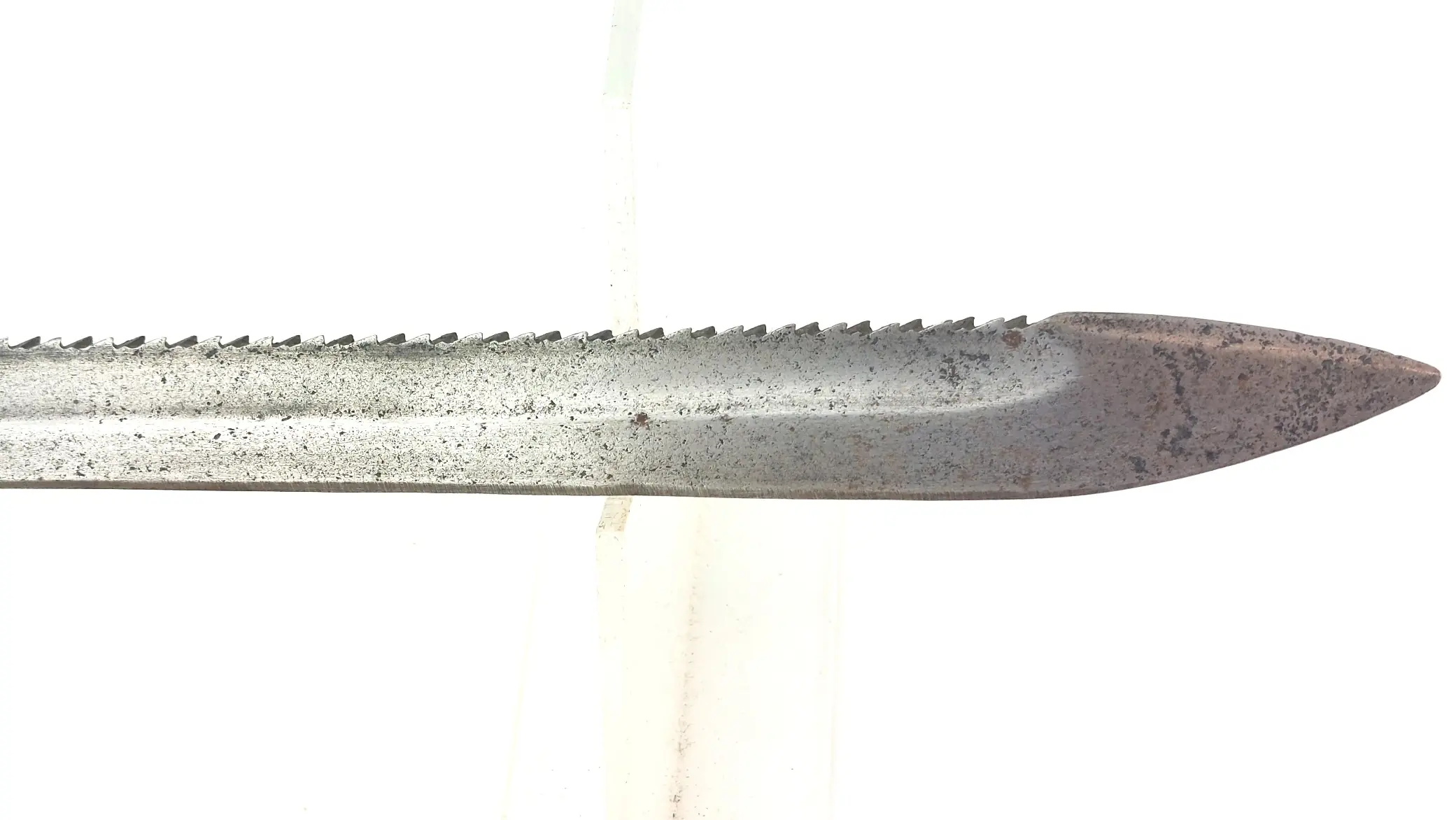
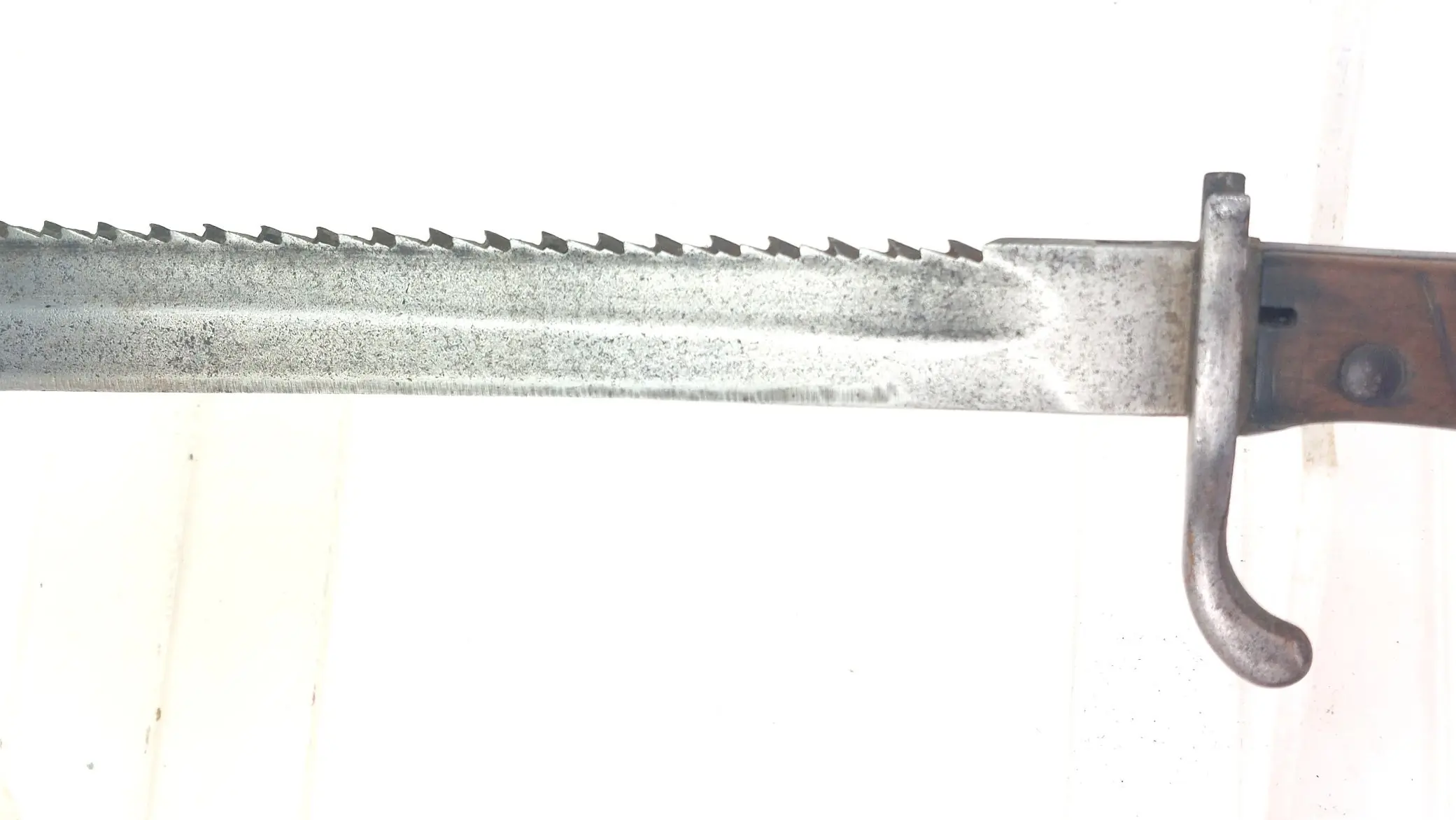
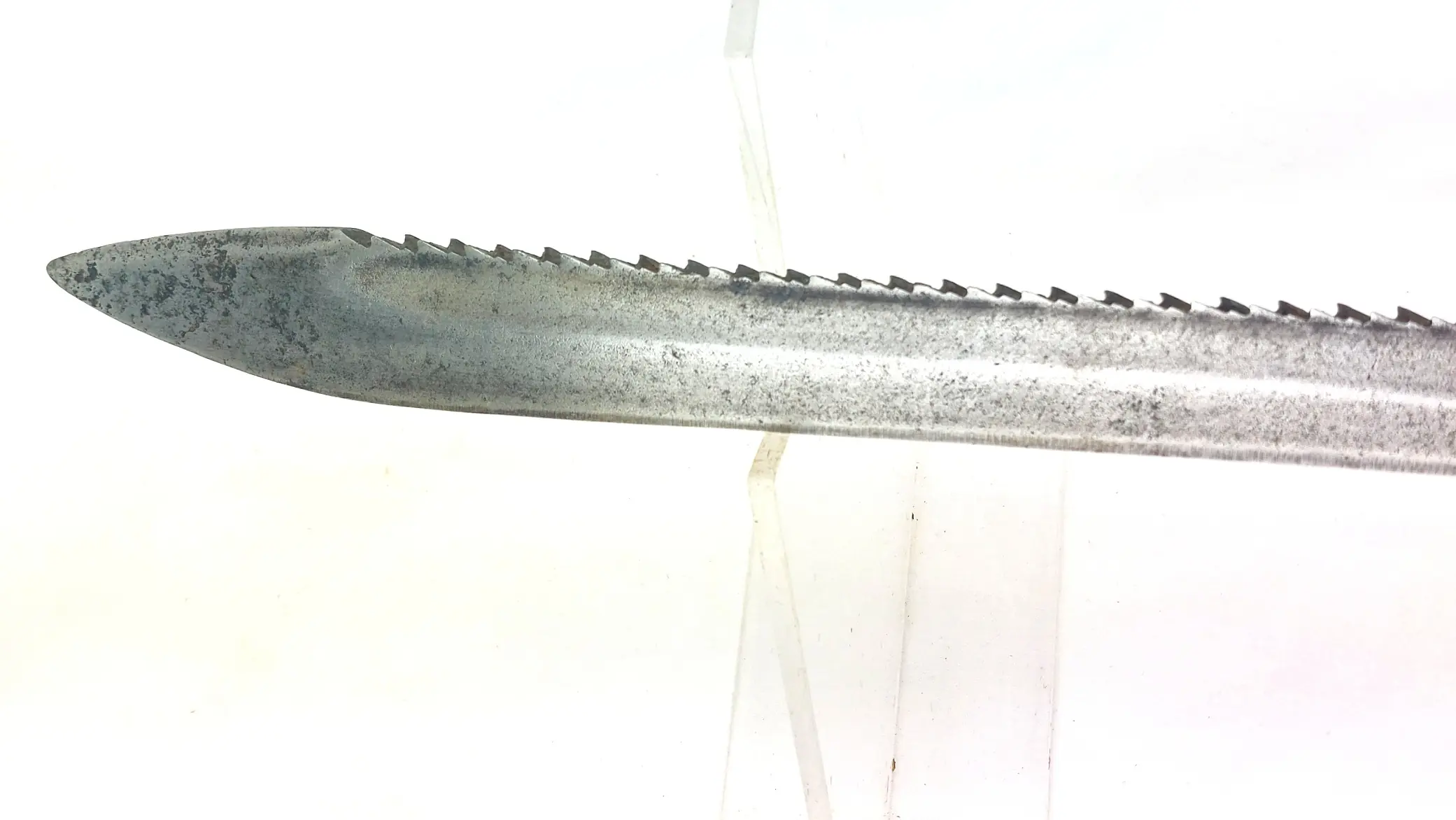
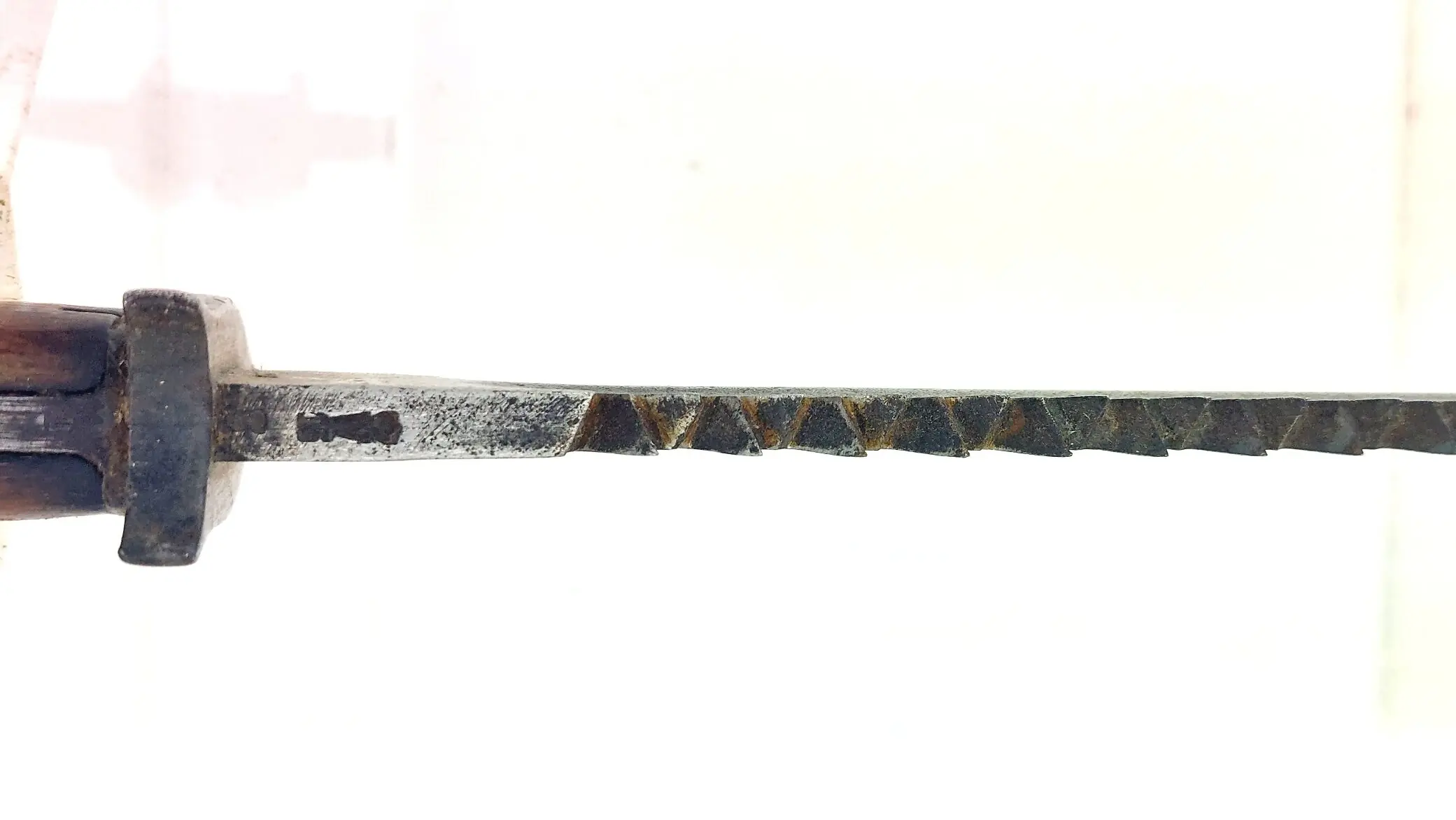
The robust, single-edged blade measures approximately 36.3 cm (14.3 inches), with an overall length of 49.5 cm (19.5 inches). It broadens towards the tip and is fitted with an impressive sawback spine, designed originally for engineering and utility tasks rather than purely for combat.
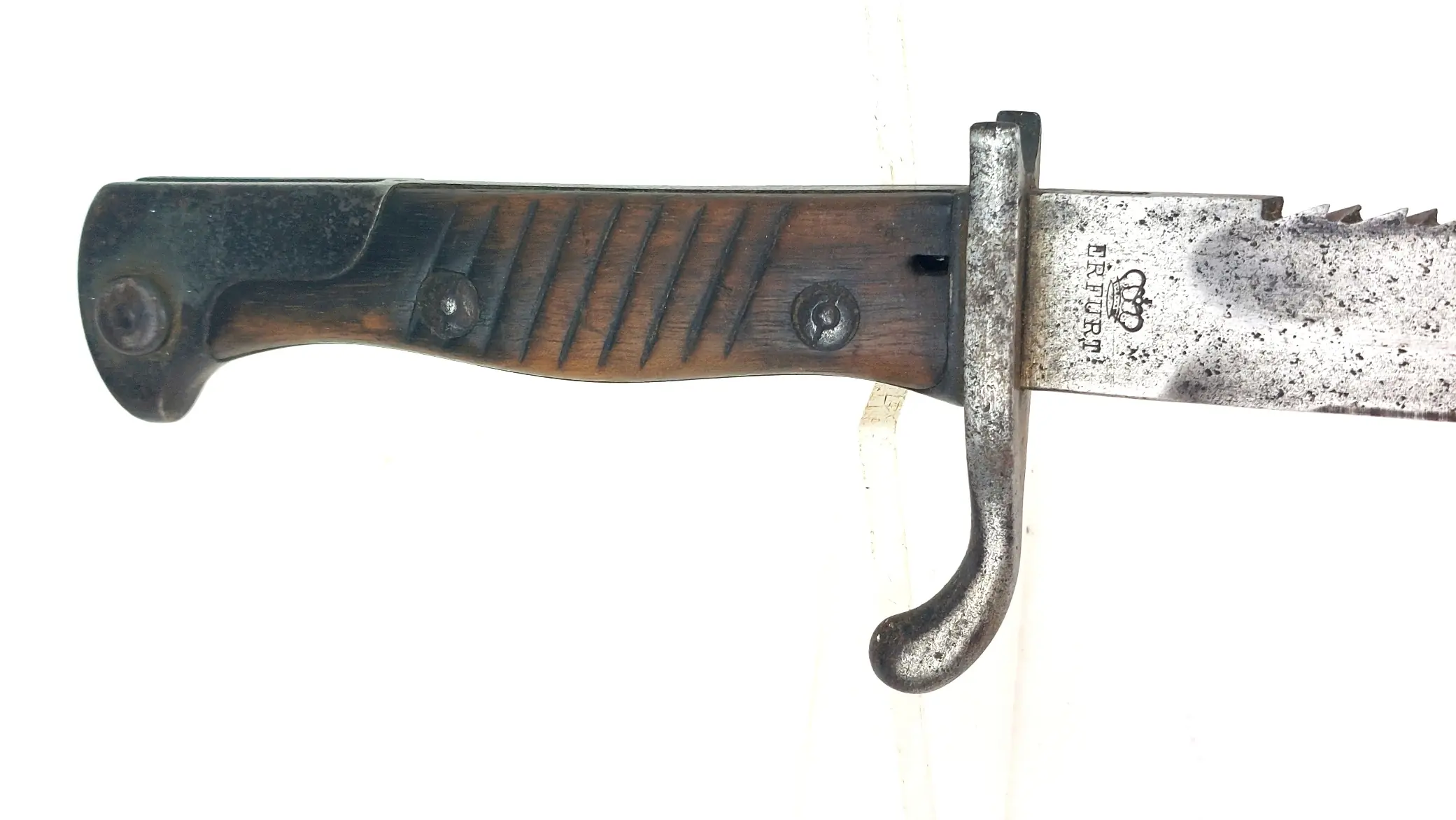
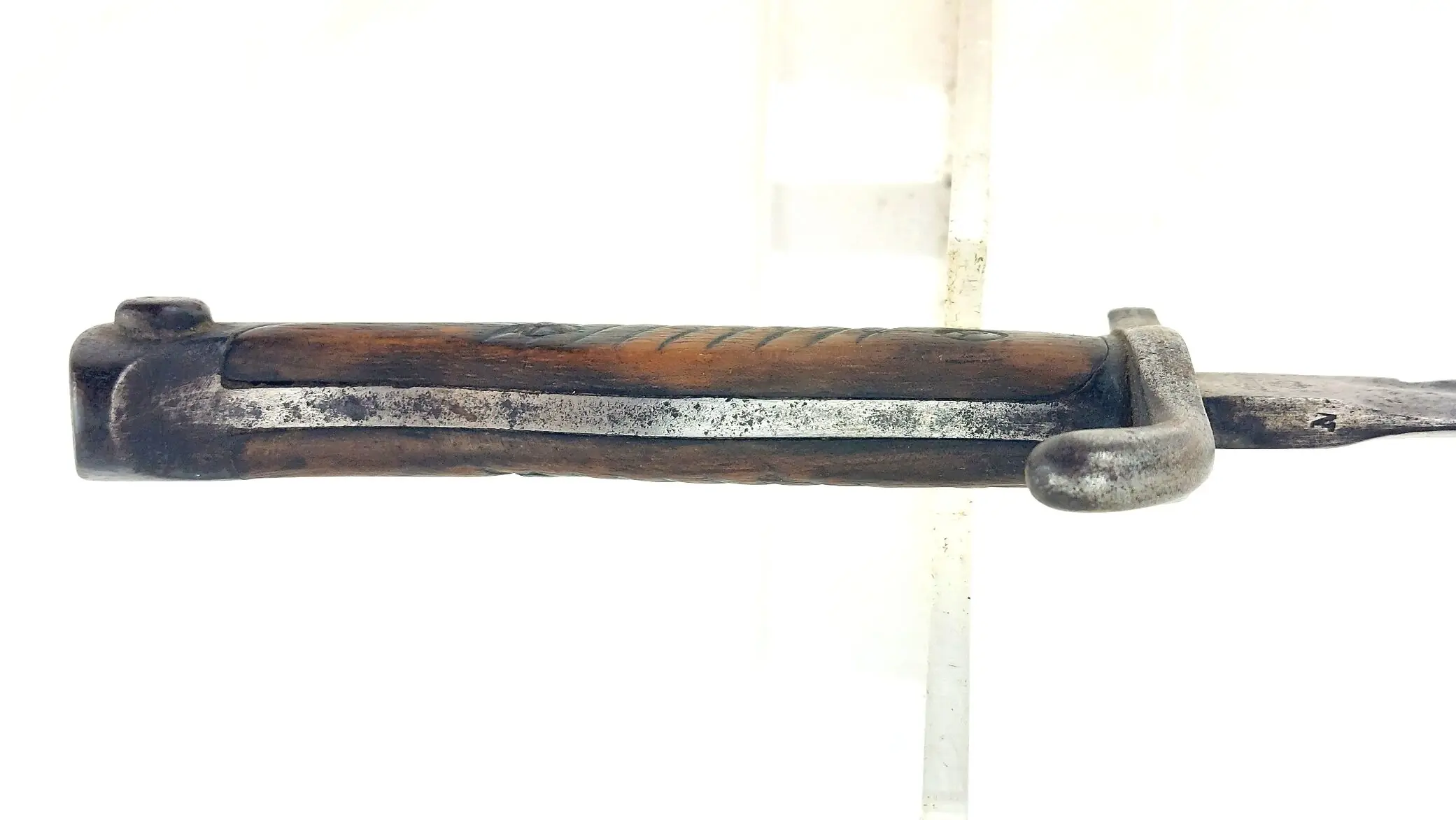
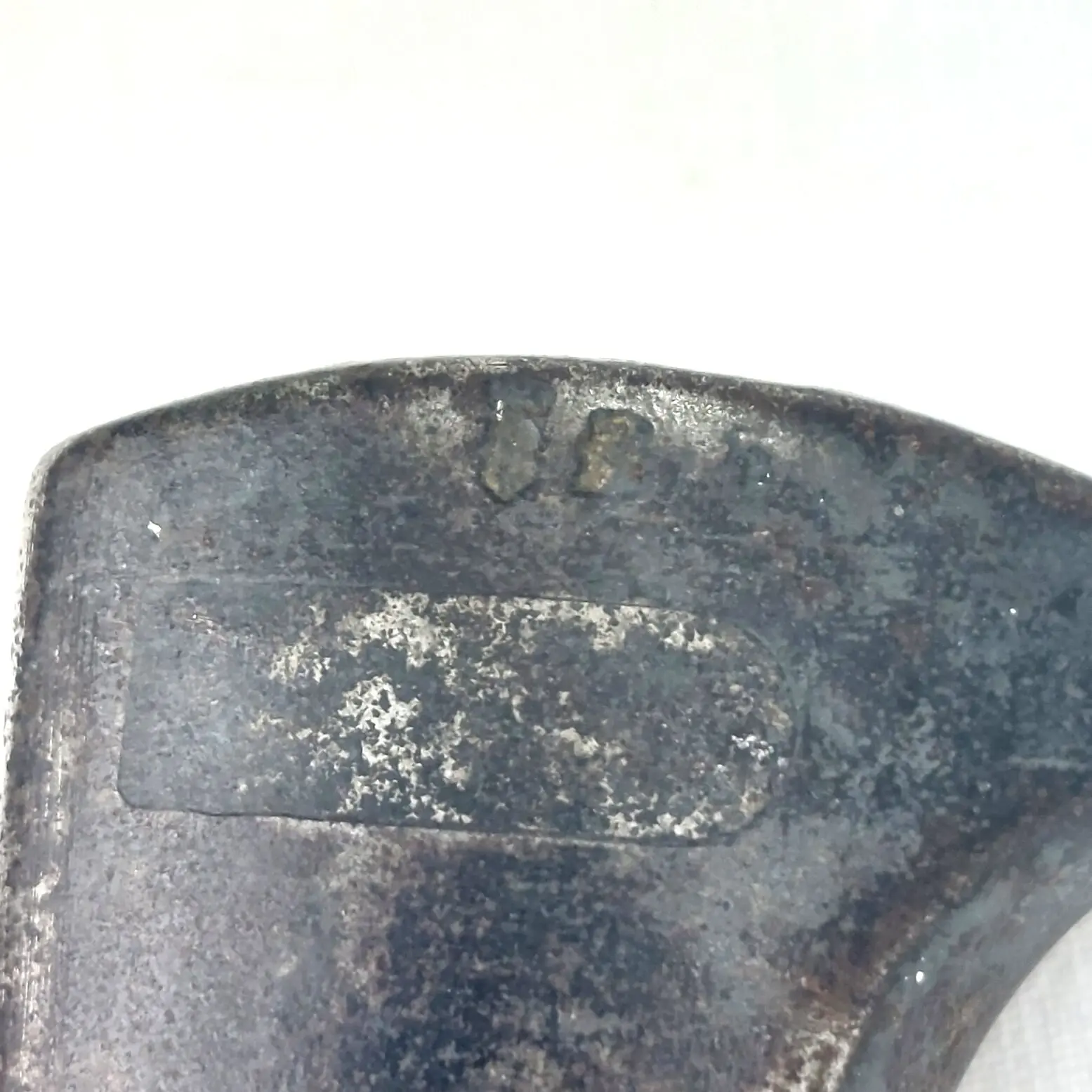
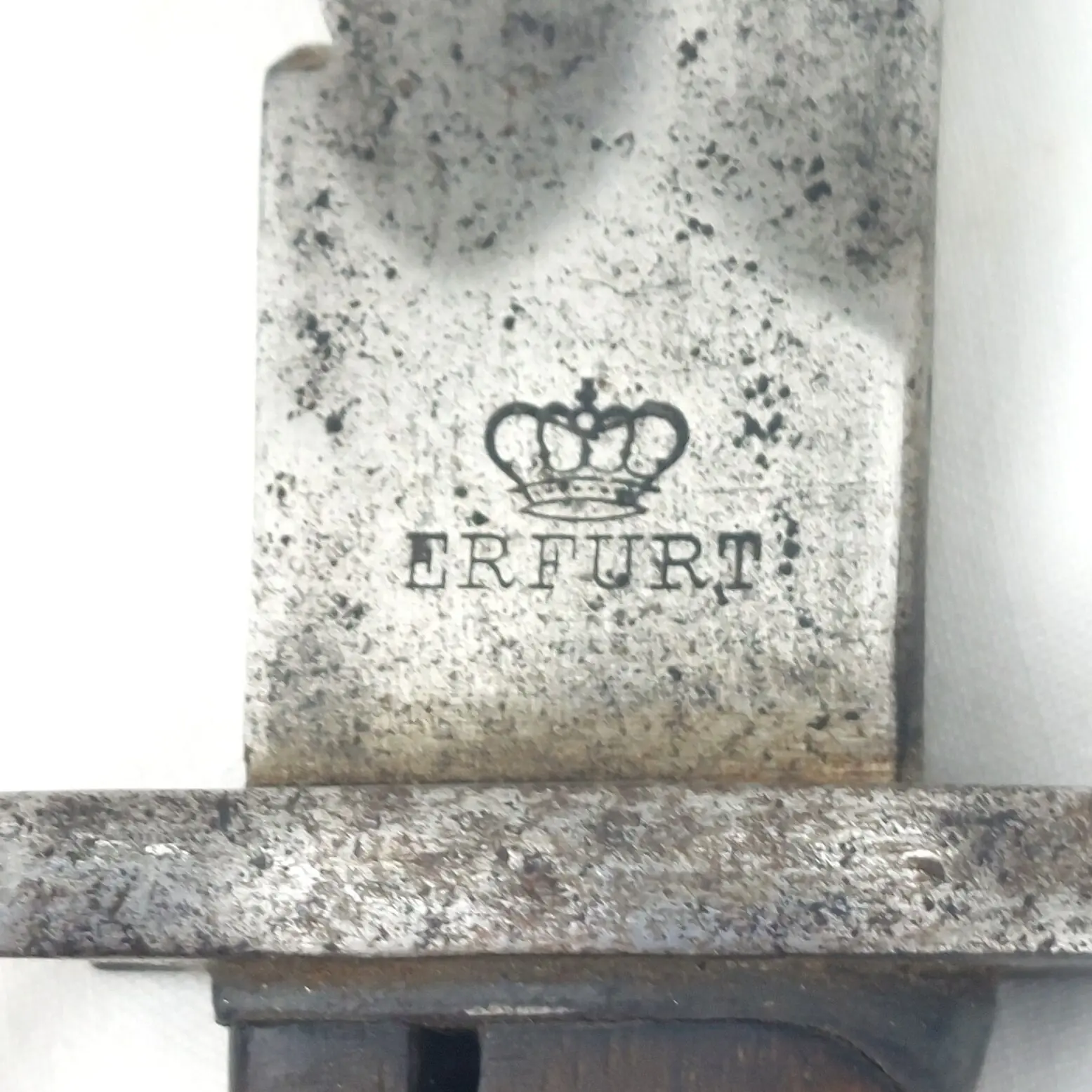
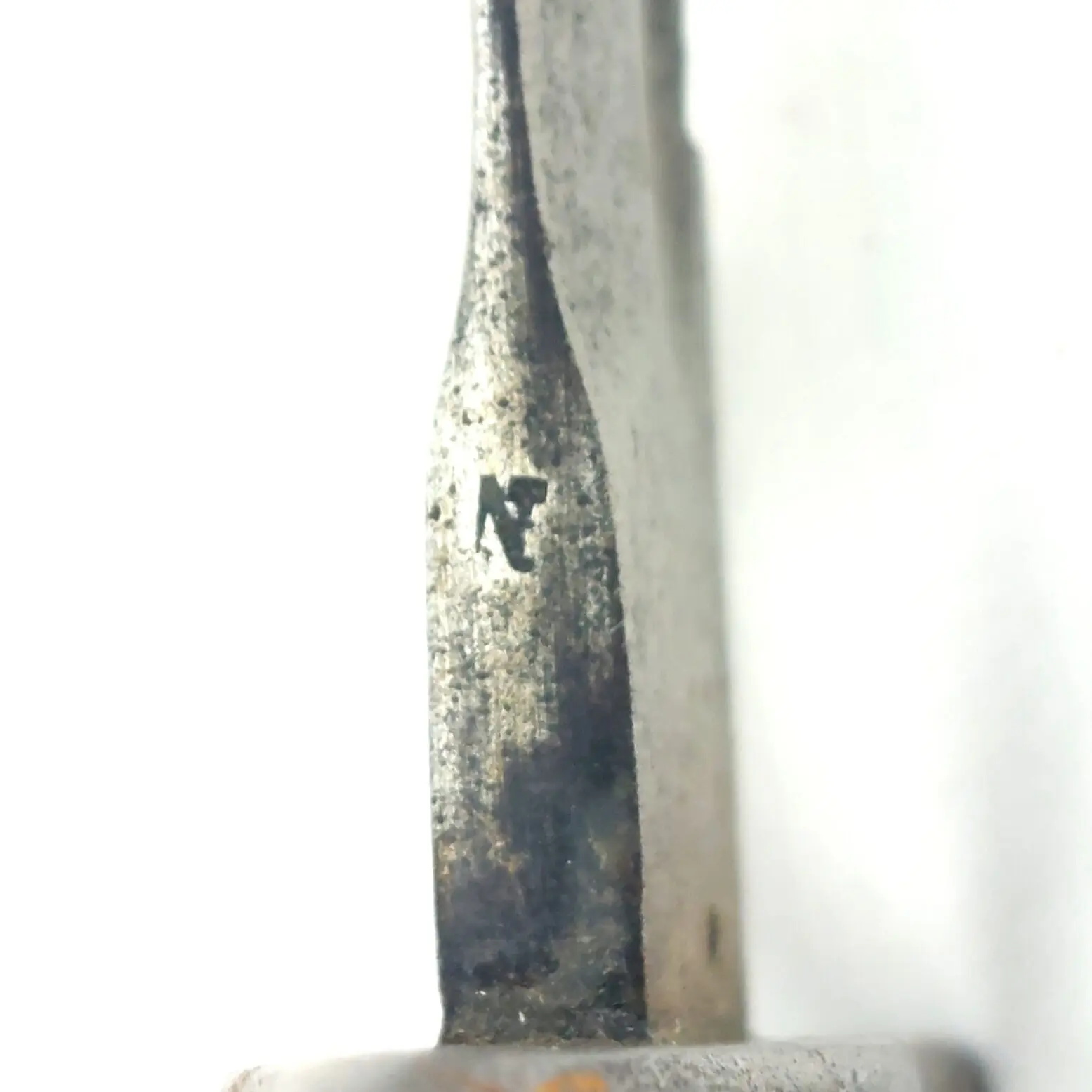
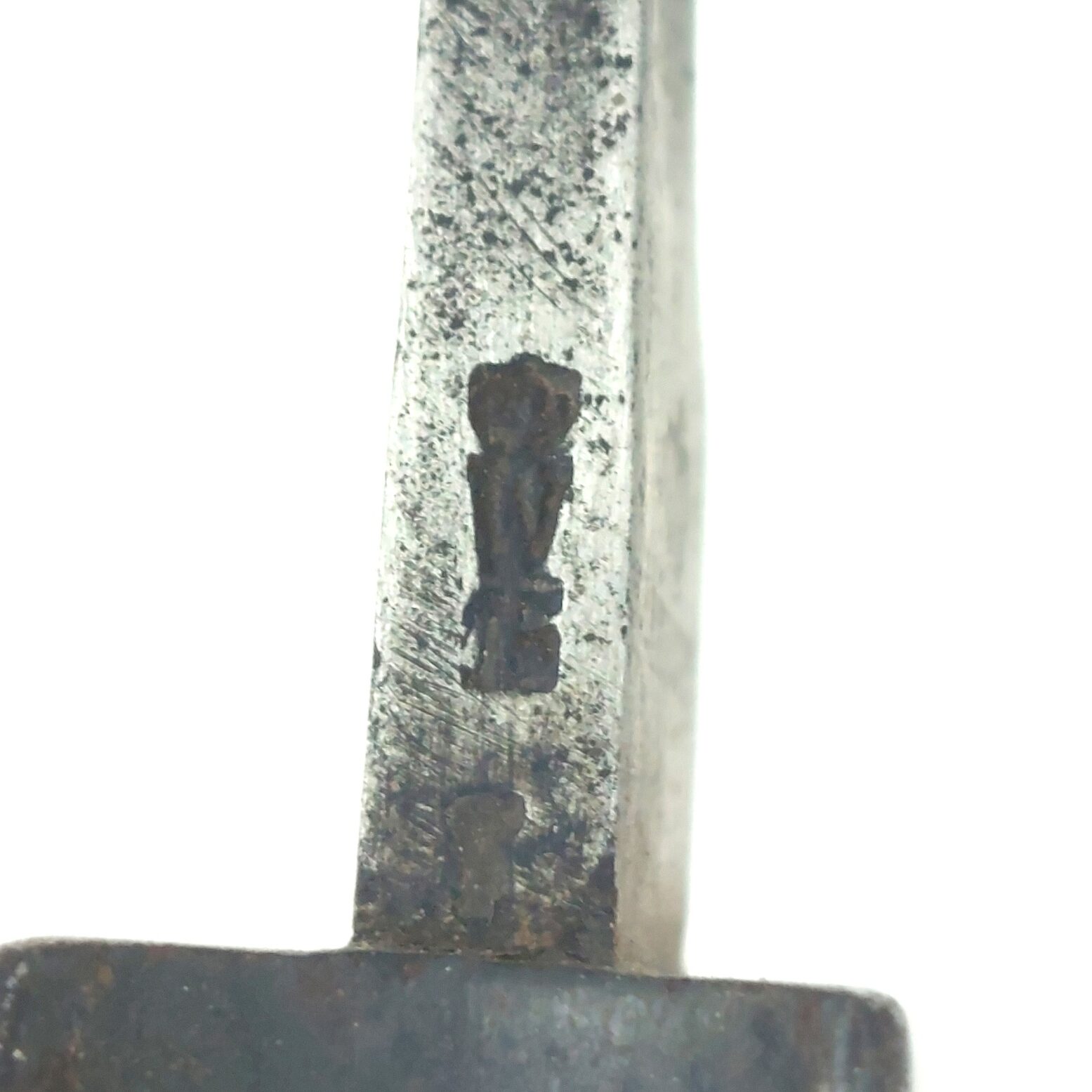
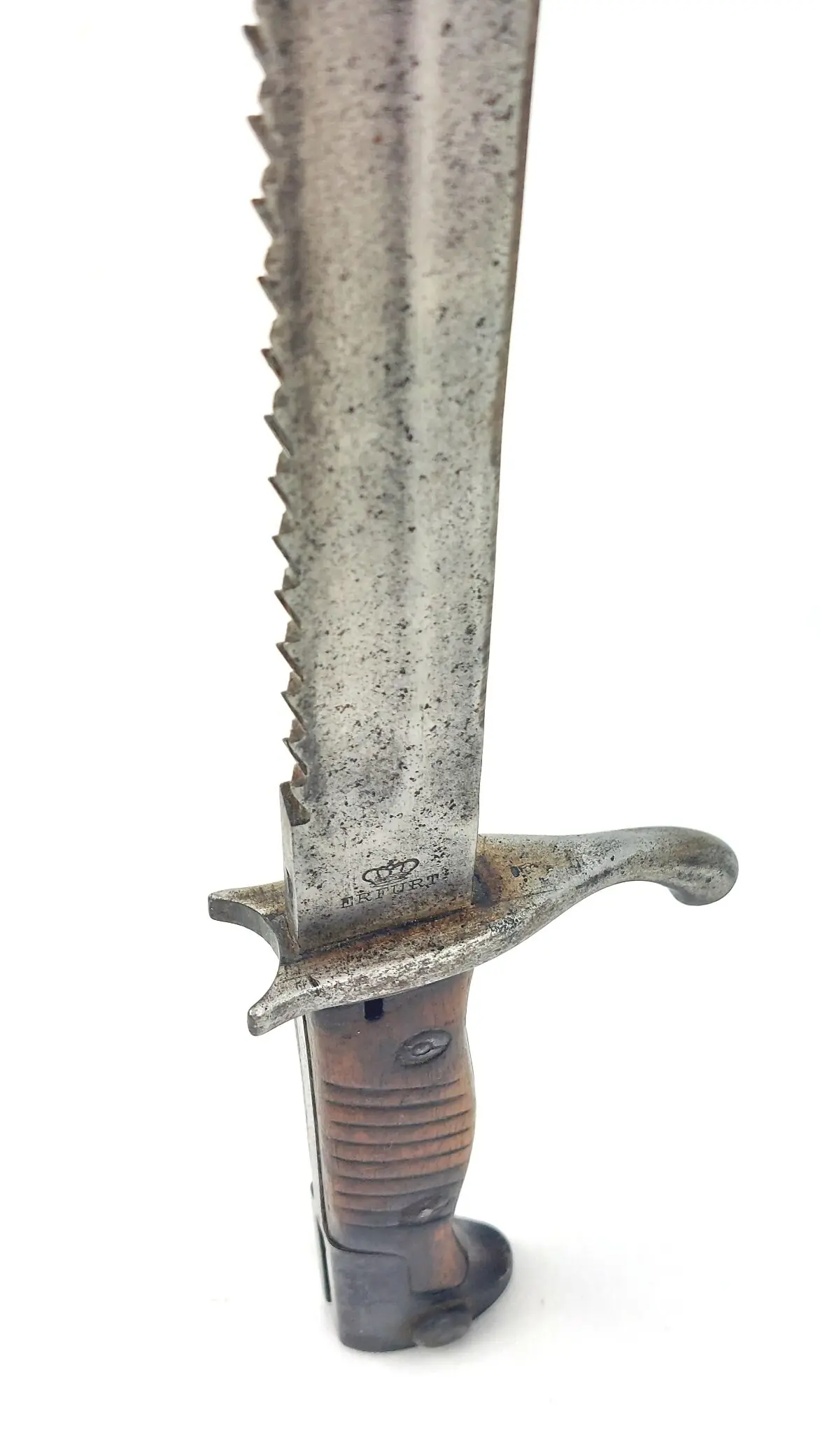
The ricasso bears a crisp crown over ERFURT mark, indicating production at the Imperial state arsenal rather than a commercial Solingen maker, making it rarer and more collectible. The spine is marked with a crowned "W" for Kaiser Wilhelm II, consistent with the 1916 manufacture date, alongside additional imperial acceptance and inspection stamps, including small crowned Gothic ("fraktur") proof marks on the tang and pommel. These confirm military acceptance and final quality approval. The pommel also carries partial serial or regimental markings, now largely obscured.
The sawback design was officially introduced for pioneer (engineer) troops, machine gun crews, and certain non-commissioned officers (NCOs). While often perceived as a savage combat feature, it was primarily intended to help clear brush and obstacles in the field, much like a machete. Nevertheless, Allied propaganda vilified these bayonets as cruel weapons, creating widespread fear among German troops of mistreatment if captured while carrying one. As a result, orders were issued in 1917 to withdraw sawback bayonets from front-line service, and many were ground down or reassigned to rear or garrison roles. Surviving unmodified examples, such as this one, are now scarce and highly sought after by collectors.
The hilt features characteristic ribbed wooden grips with visible diagonal grooves, a steel guard with turned-down quillon, and the early style partial muzzle ring. The grips show honest service wear and an attractive aged patina, while the saw teeth remain sharp and fully intact.
*Condition*
Blade with even age patina and scattered pitting consistent with field use. Saw teeth intact and sharp. Wooden grips in solid condition with expected wear from service. The press-stud catch is seized and non-functional. No scabbard is included.
Please see photographs as part of the condition report.
A rare and desirable example for any serious bayonet or WW1 militaria collection.
JAQEH_2617140525