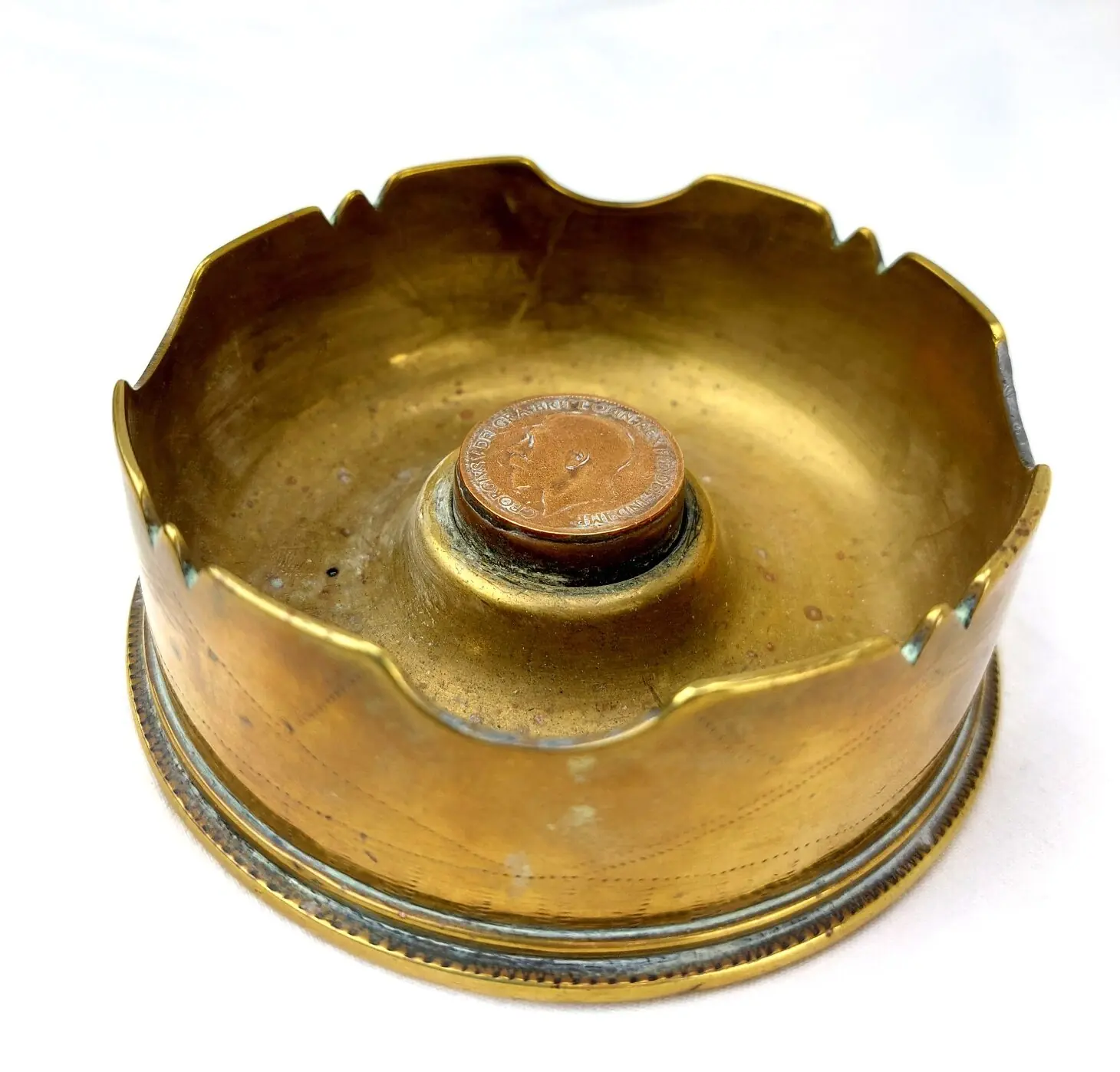
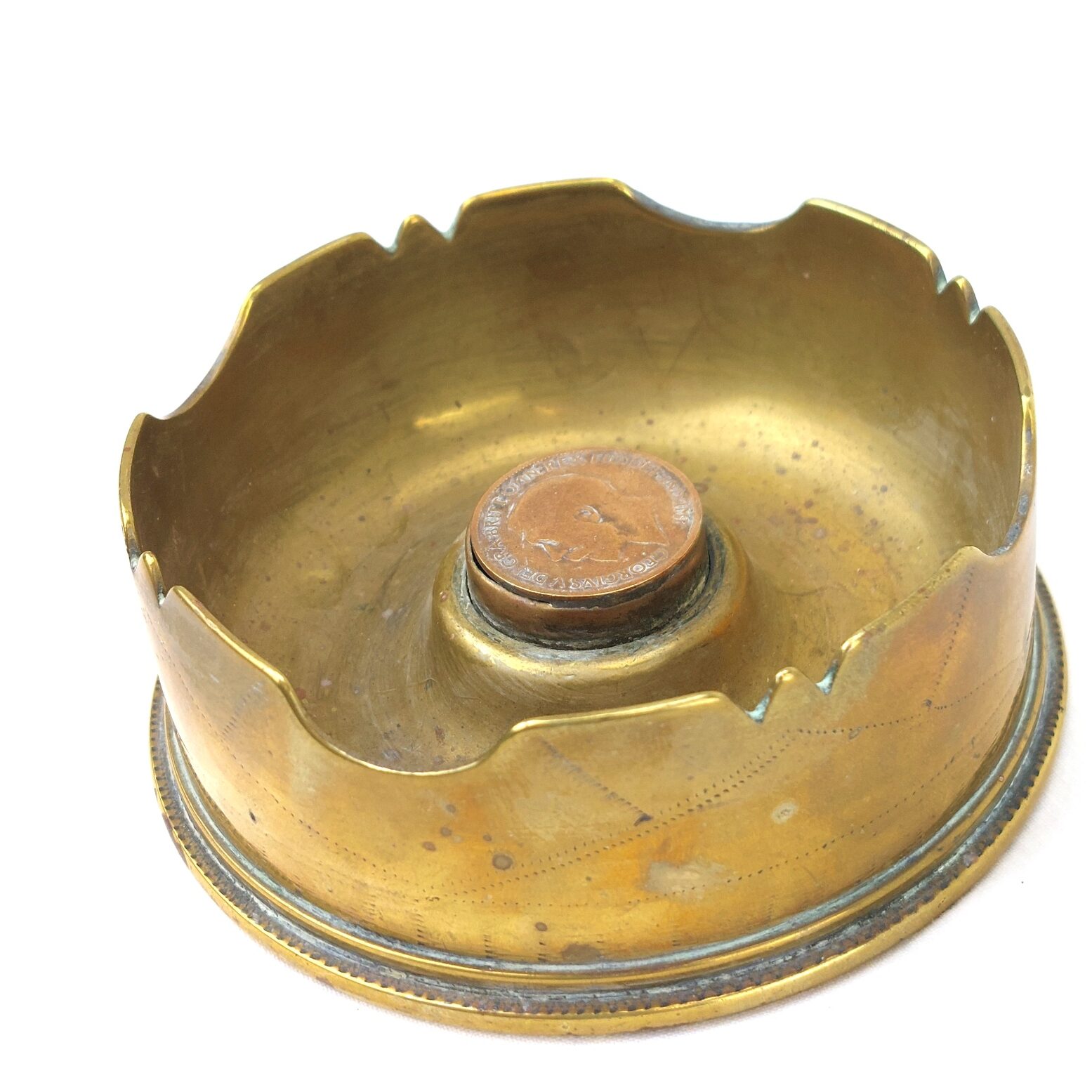
*British & Canadian, WW1, 18-Pounder Trench Art Ashtray — Hadfields Case, Dated 1916, Canadian-Inspected, George V Penny*
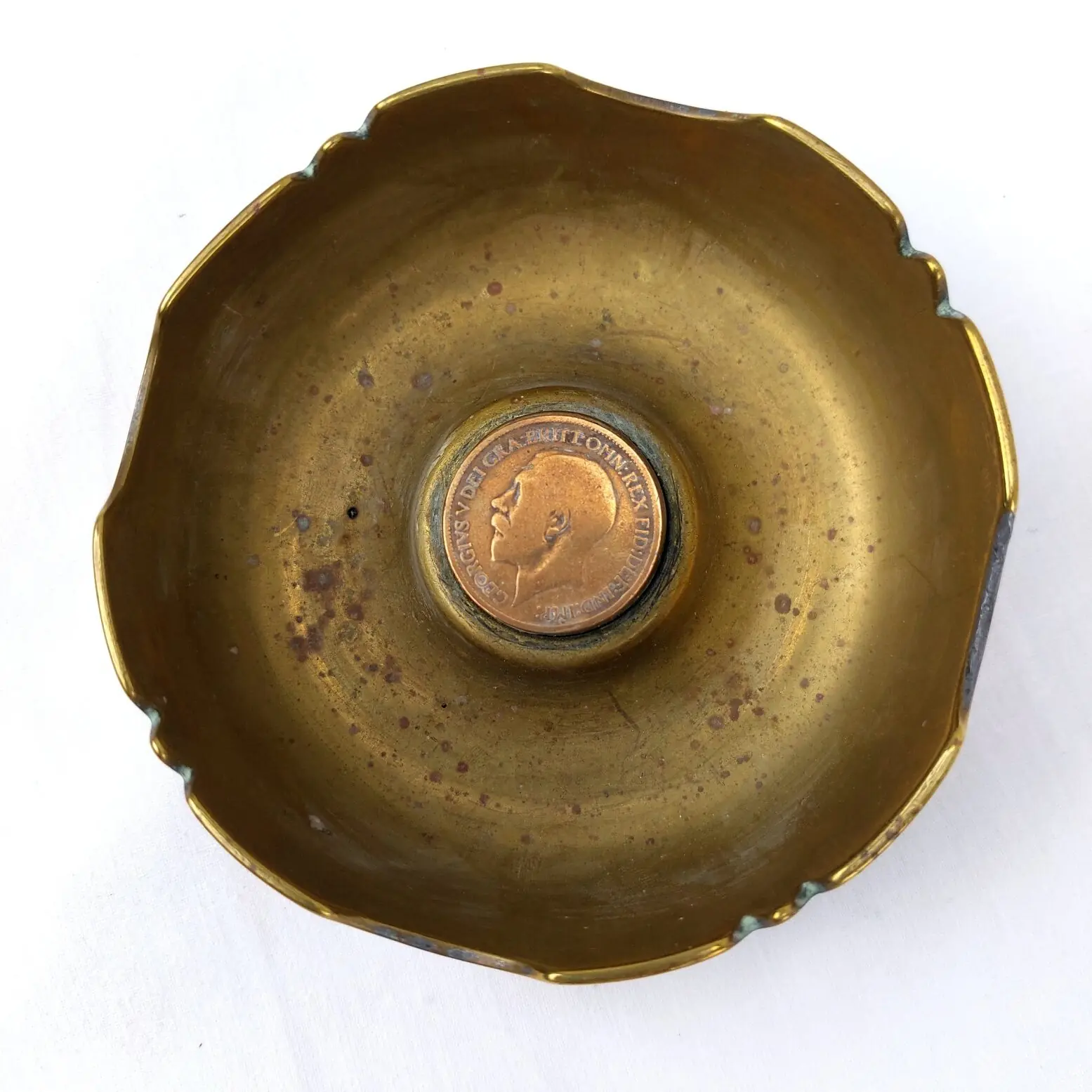
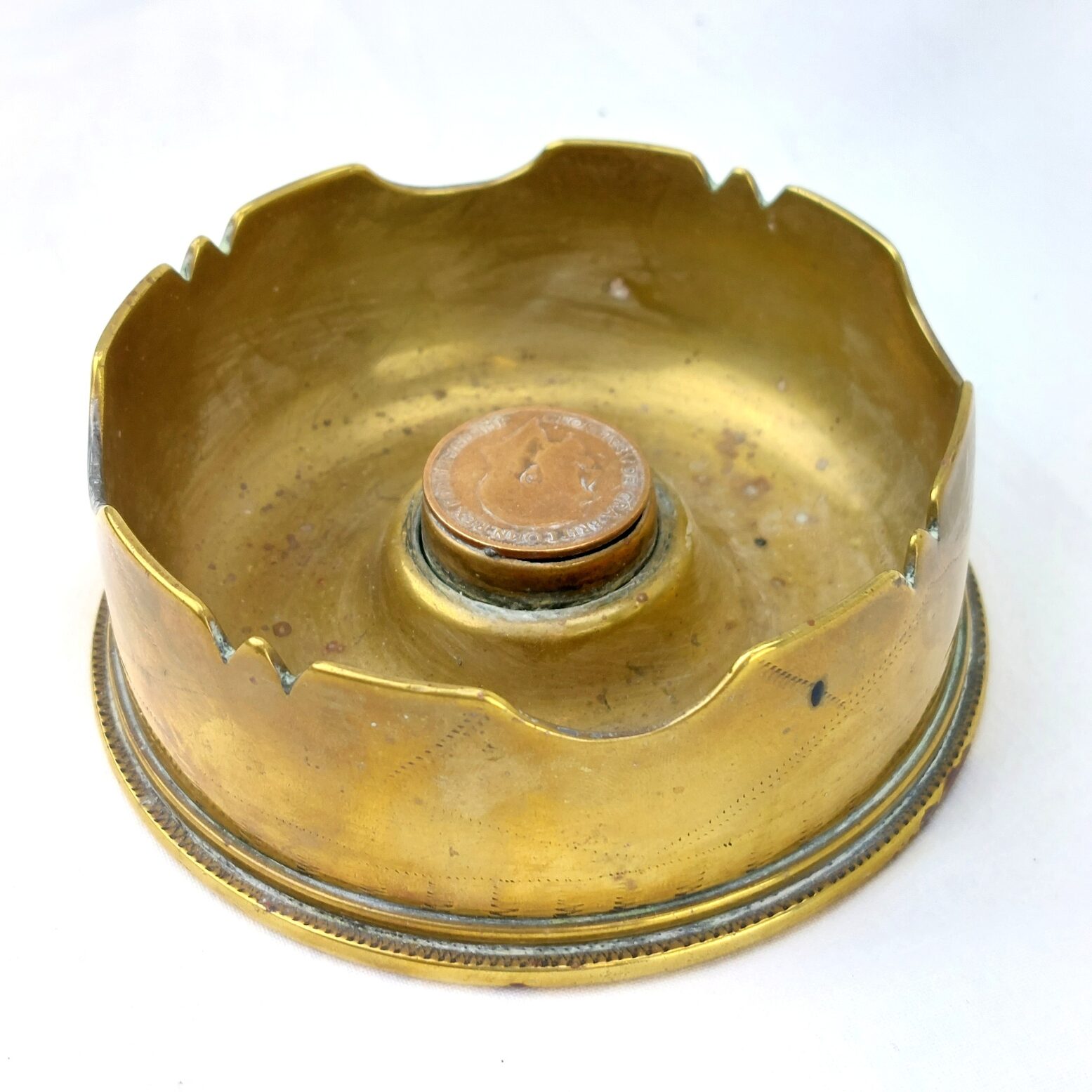
A finely detailed example of WW1 trench art, repurposed from a British-manufactured 18-Pounder Mk II shell case. Originally made by Hadfields Ltd. in Sheffield on 12 December 1916, this shell was later inspected and reprimed in Canada in 1917, as evidenced by distinctive Canadian ordnance marks. Converted into a decorative ashtray with a scalloped rim and an inset George V penny, this piece carries both historic and personal significance. Approx. 10.2 cm diameter, 3.2 cm height. Brass construction with warm tonality and intact markings.
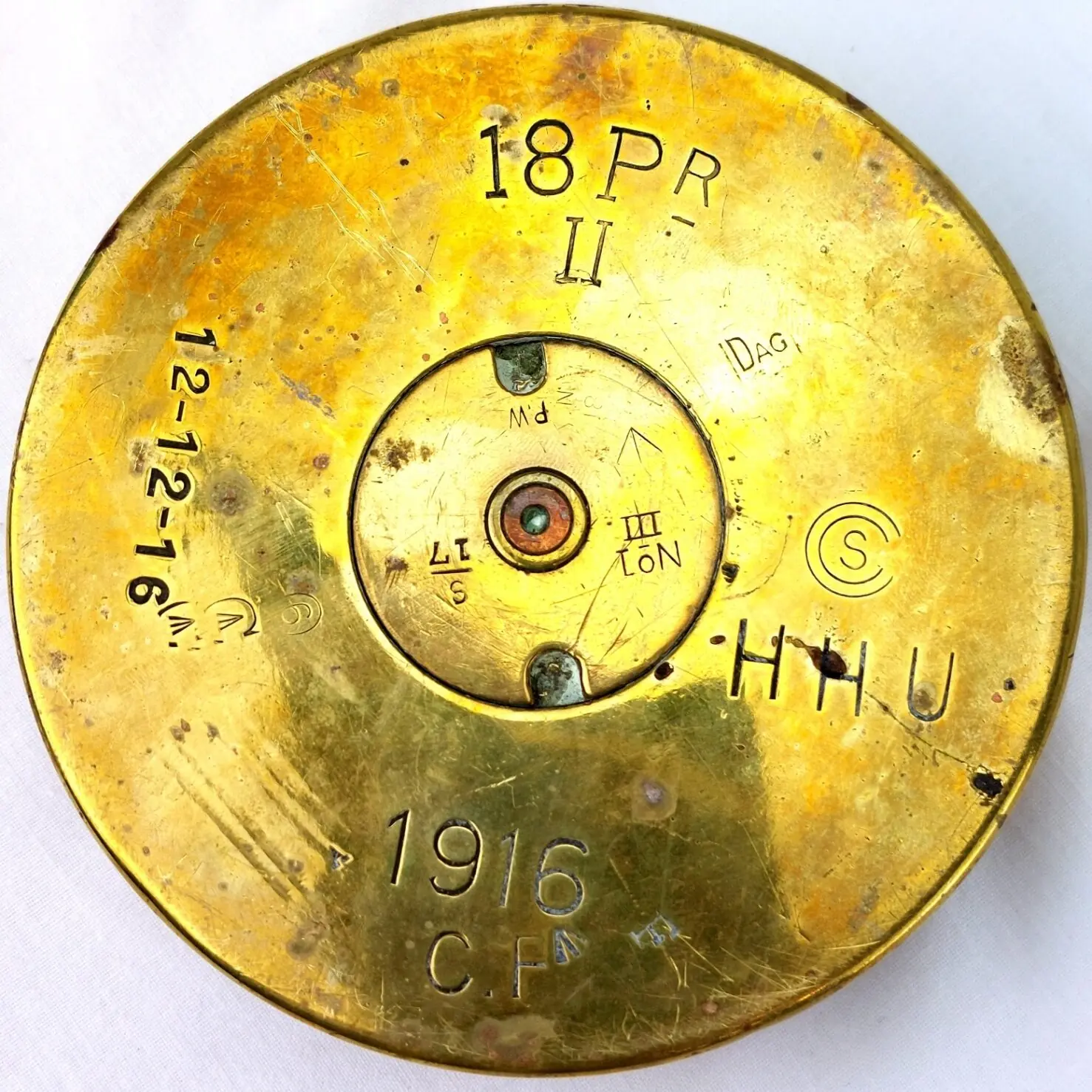
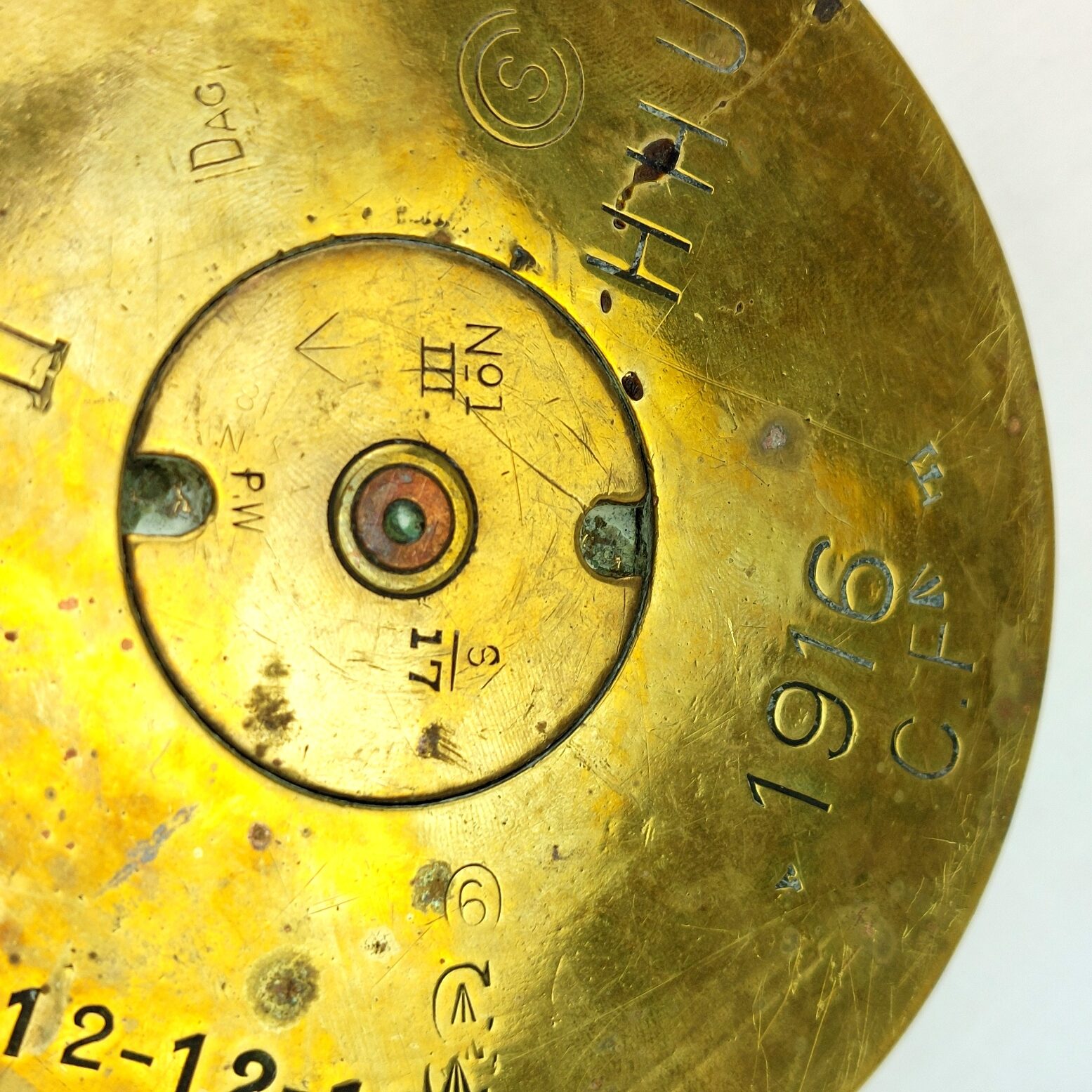
Markings (Base) & Interpretation:
-18 PR II – Standard 18-Pounder shell case, Mark II.
-12-12-16 – Manufacture date: 12 December 1916.
-C.F. – Cordite Filled (initial factory designation).
-HHU – Hadfields Ltd., Hecla Works, Sheffield — a major British supplier of WW1 shell casings.
-Broad Arrow within "C" – Canadian Government War Department acceptance mark.
-Concentric-circle monogram ("S") – Believed to be the Canadian Cartridge Company (CCC) marking.
-IDAG – Likely a Canadian depot or inspection code applied during reconditioning or stock processing under the Imperial Munitions Board.
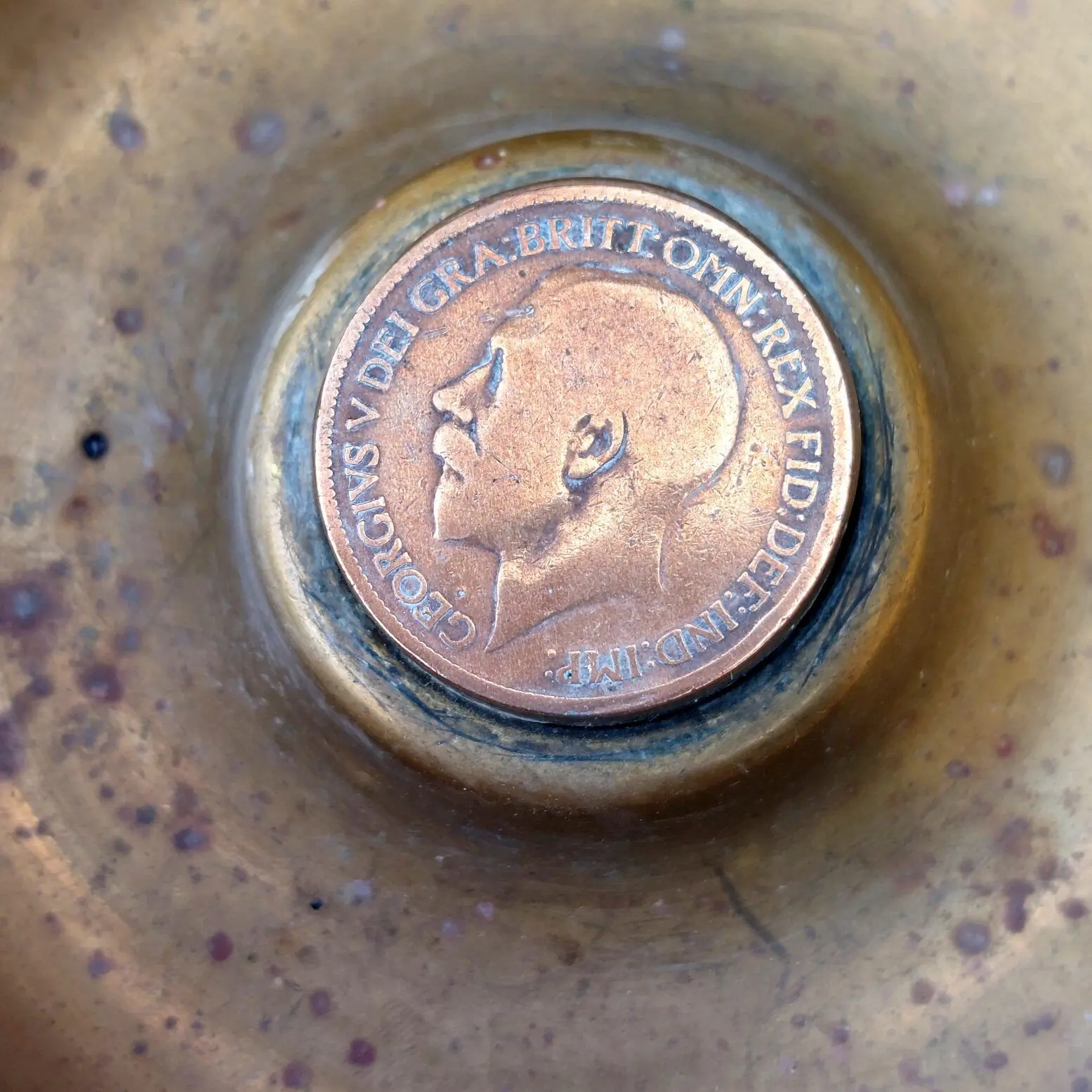
George V Penny – Inset coin (obverse visible), likely placed for patriotic or commemorative purposes.
Primer Cap Details:
-No. 1 III – British standard No.1 Mark III primer.
-9/17 – Primer fitted or inspected in September 1917.
-P.W. – Believed to represent Primer Workshop or Private Works — a contractor or depot designation commonly used on WW1 British and Dominion artillery primers.
Historical Note:
The 18-Pounder was the backbone of British and Commonwealth field artillery in WWI. Brass shell cases, like this example, were often recovered after firing, then inspected, reprimed, and stored for training or redeployment. This particular case was manufactured in Britain, then sent to Canada, where it received a new primer in September 1917 and was marked with Canadian inspection symbols.
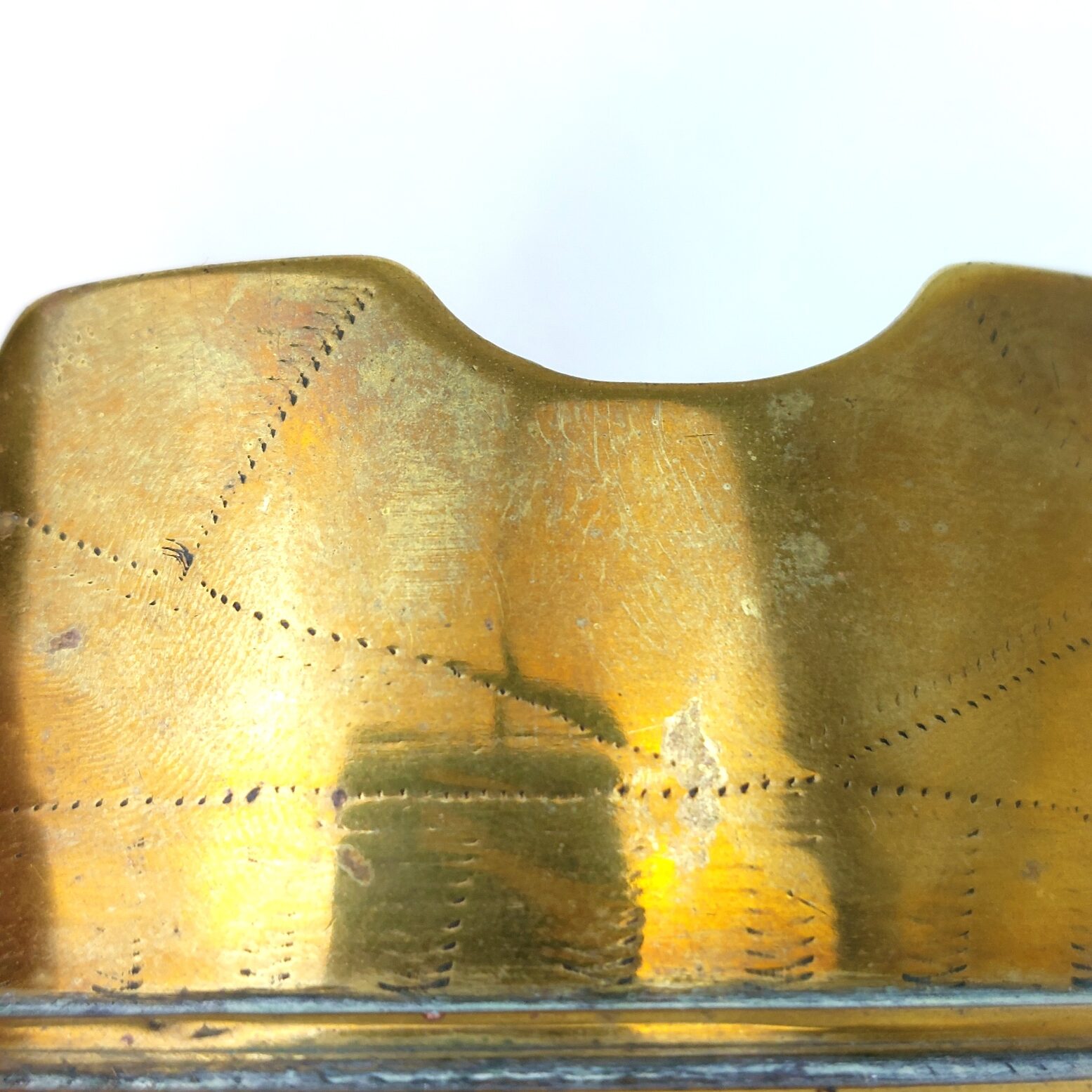
Its conversion into trench art — complete with scalloped edge and an inset George V penny — reflects a common practice by soldiers and depot workers who turned spent ordnance into personal mementos or practical items during and after the war.
*Condition*
Solid and intact. Aged brass patina with minor wear and handling marks. All stampings are clearly legible. Penny is securely inset and scalloped edge cleanly executed. Small areas of oxidation consistent with age. Please see photographs as part of the condition report.
WW1 trench art ashtray made from a 1916 18-Pounder shell case by Hadfields, later inspected and reprimed in Canada. Features a scalloped rim and George V penny — a rare, well-documented piece of wartime transformation.
JAQAD_2700130525