Trench ArtImperial German, WW1, Trench Art Shell Case Vase – Dated 1917, Royal Artillery Motif, Made by Artillerie Werkstatt Dresden
SKU / Ref. No: JAQAD_2703130525
£65.00
Your message was sent. We will contact you shortly.
*Imperial German, WW1, Trench Art Shell Case Vase – Dated 1917, Royal Artillery Motif, Made by Artillerie Werkstatt Dresden*
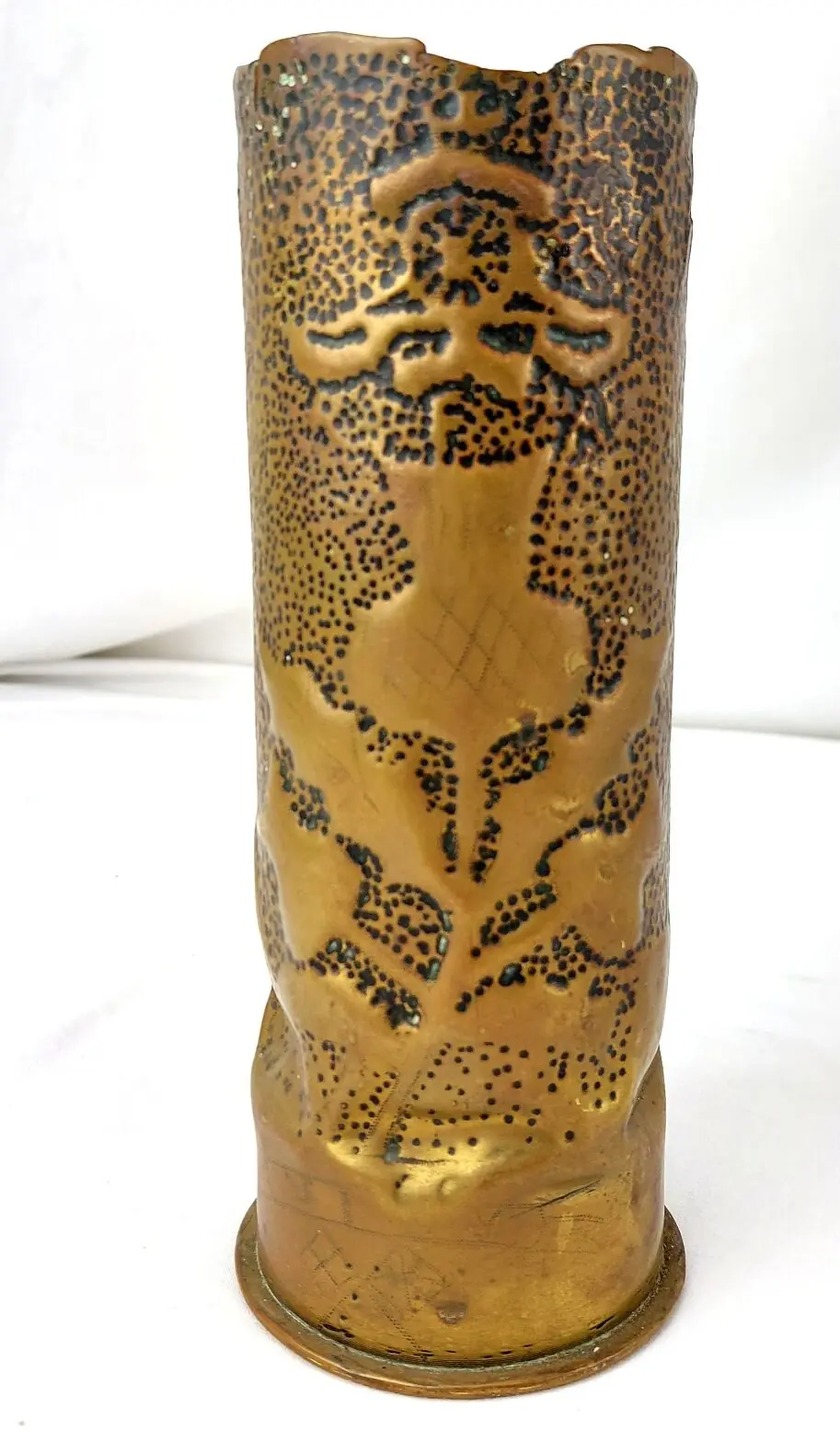
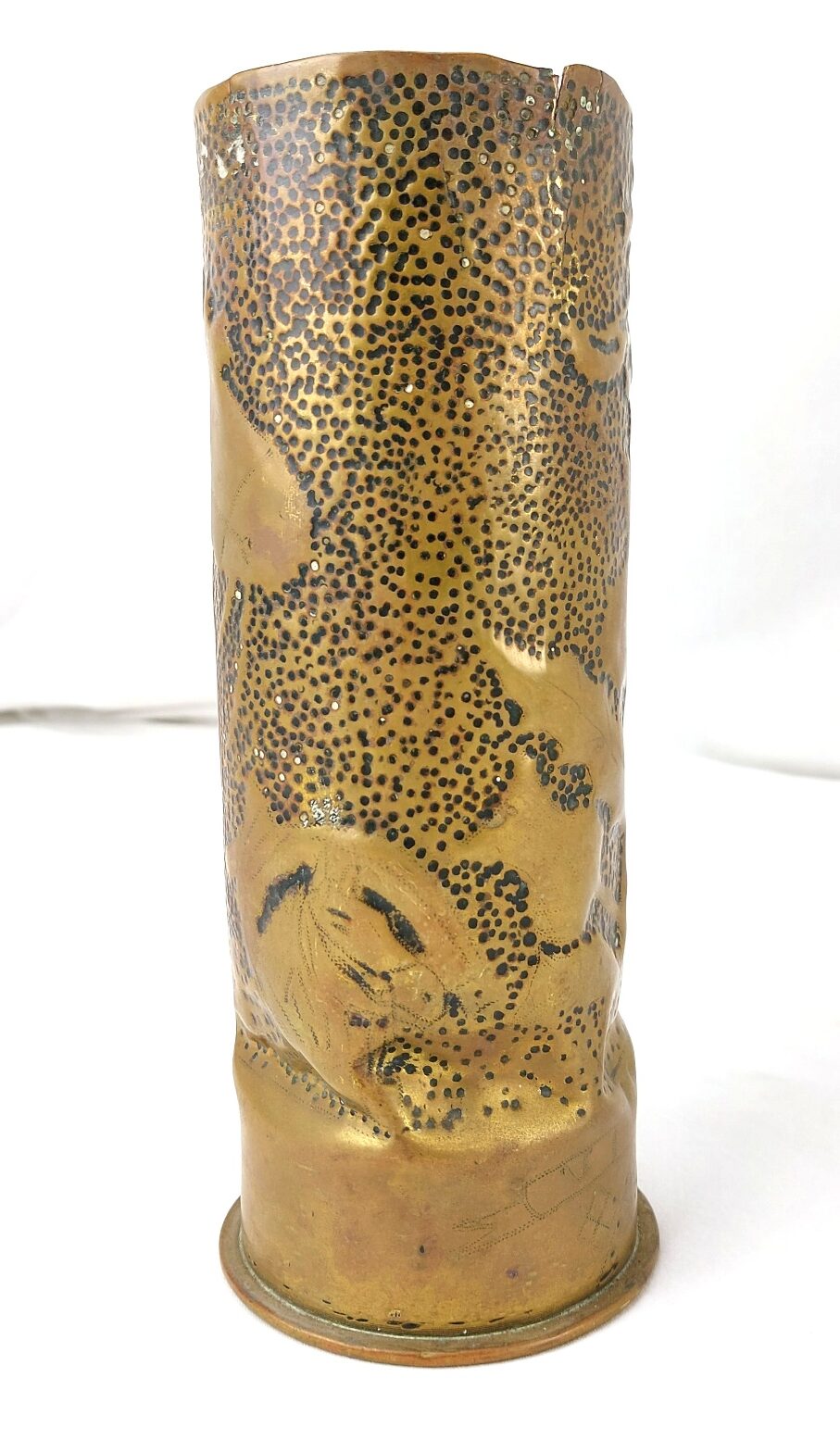
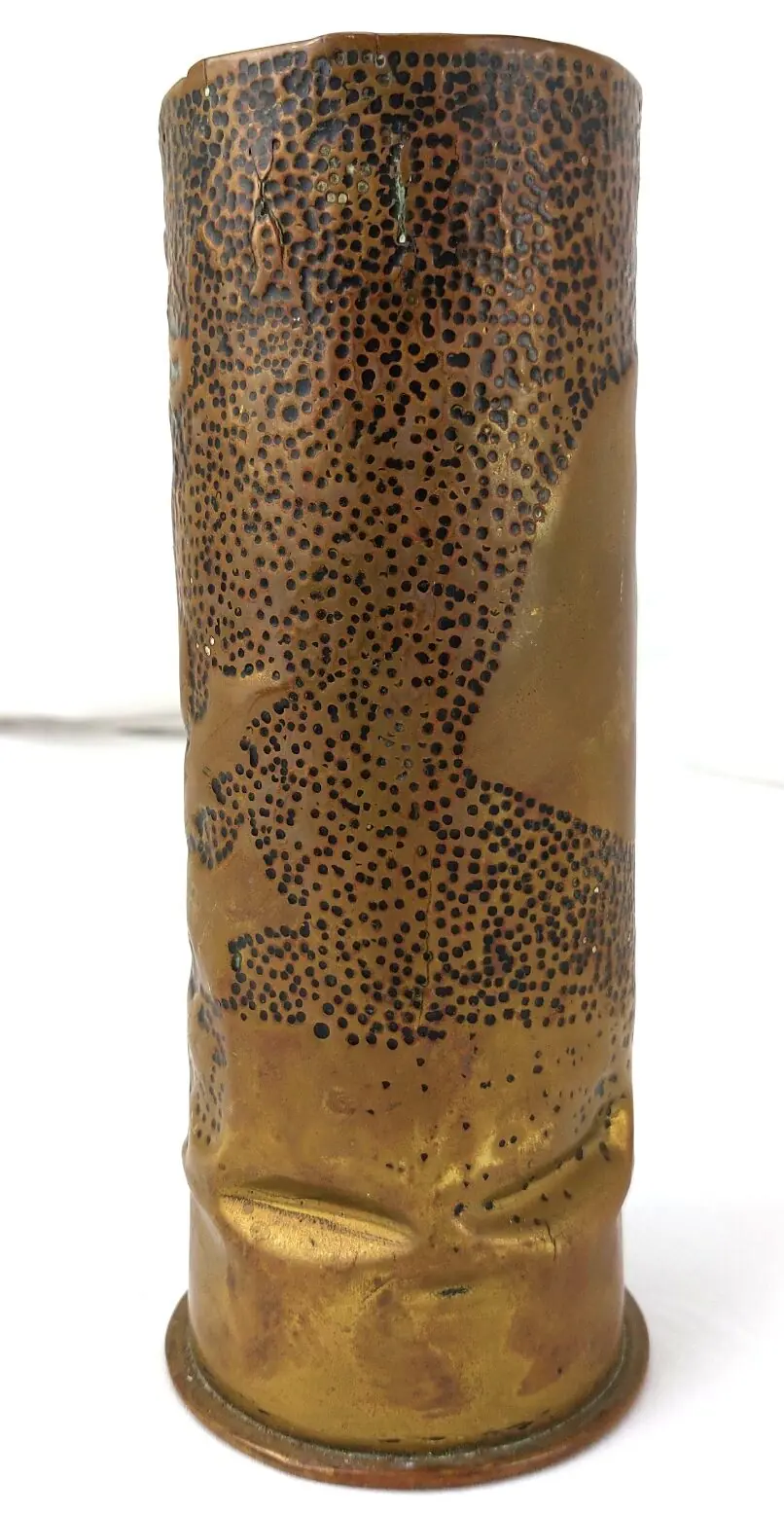
An original First World War German artillery shell case transformed into a detailed trench art vase. Measuring approximately 22cm tall with a 9cm base and 8cm throat diameter, the case features a scalloped rim with one chip to the lip and displays skilled hand-tooling and embossing.
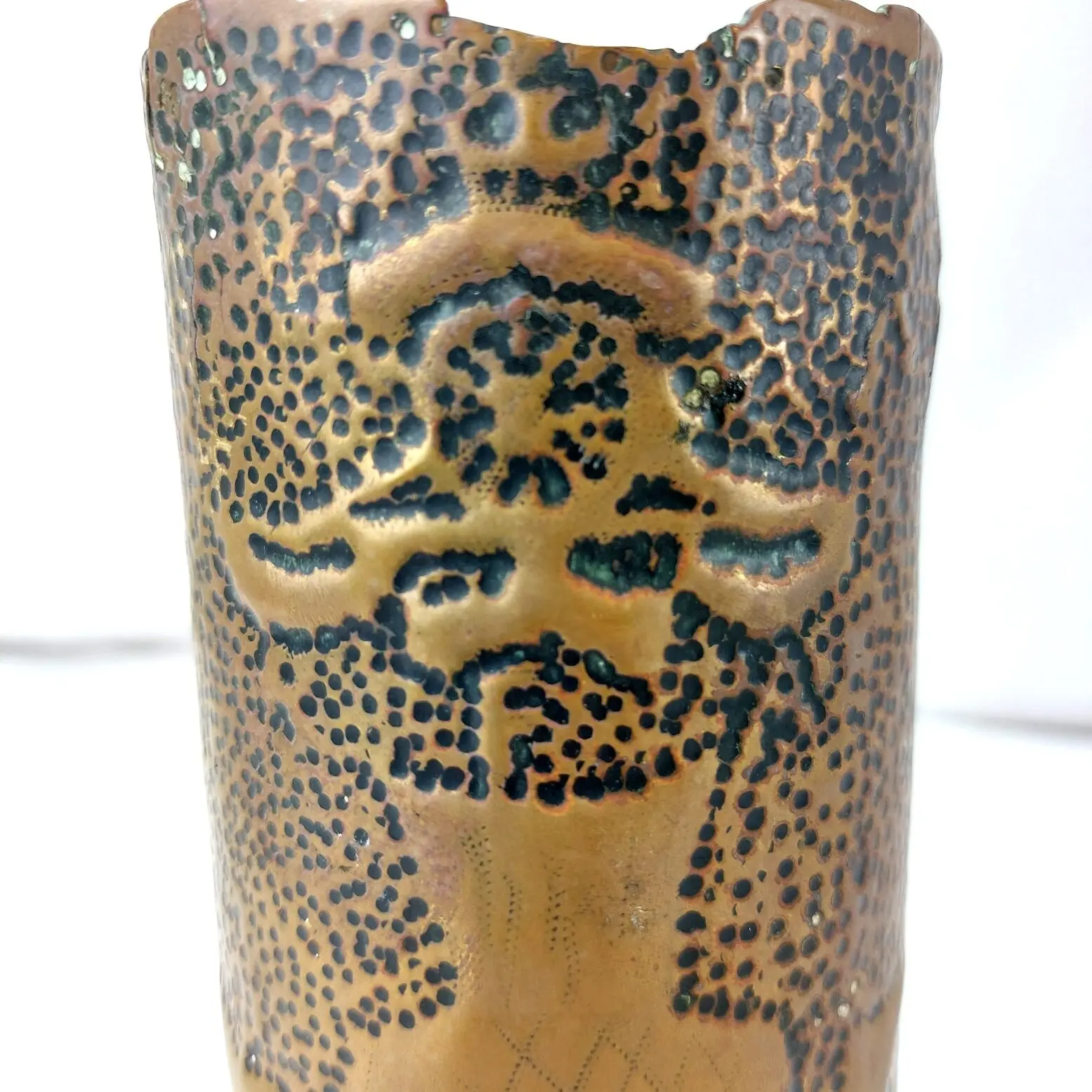
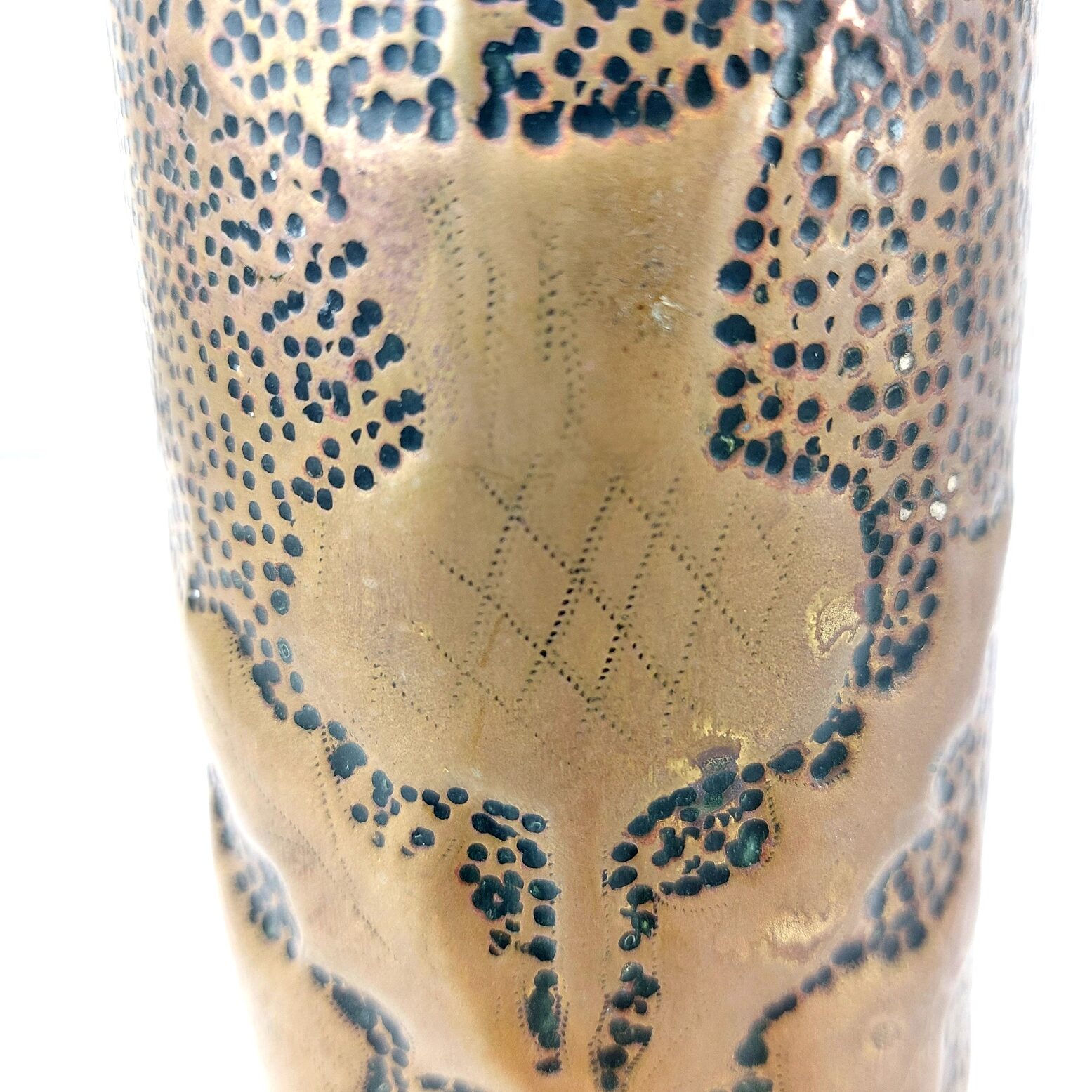
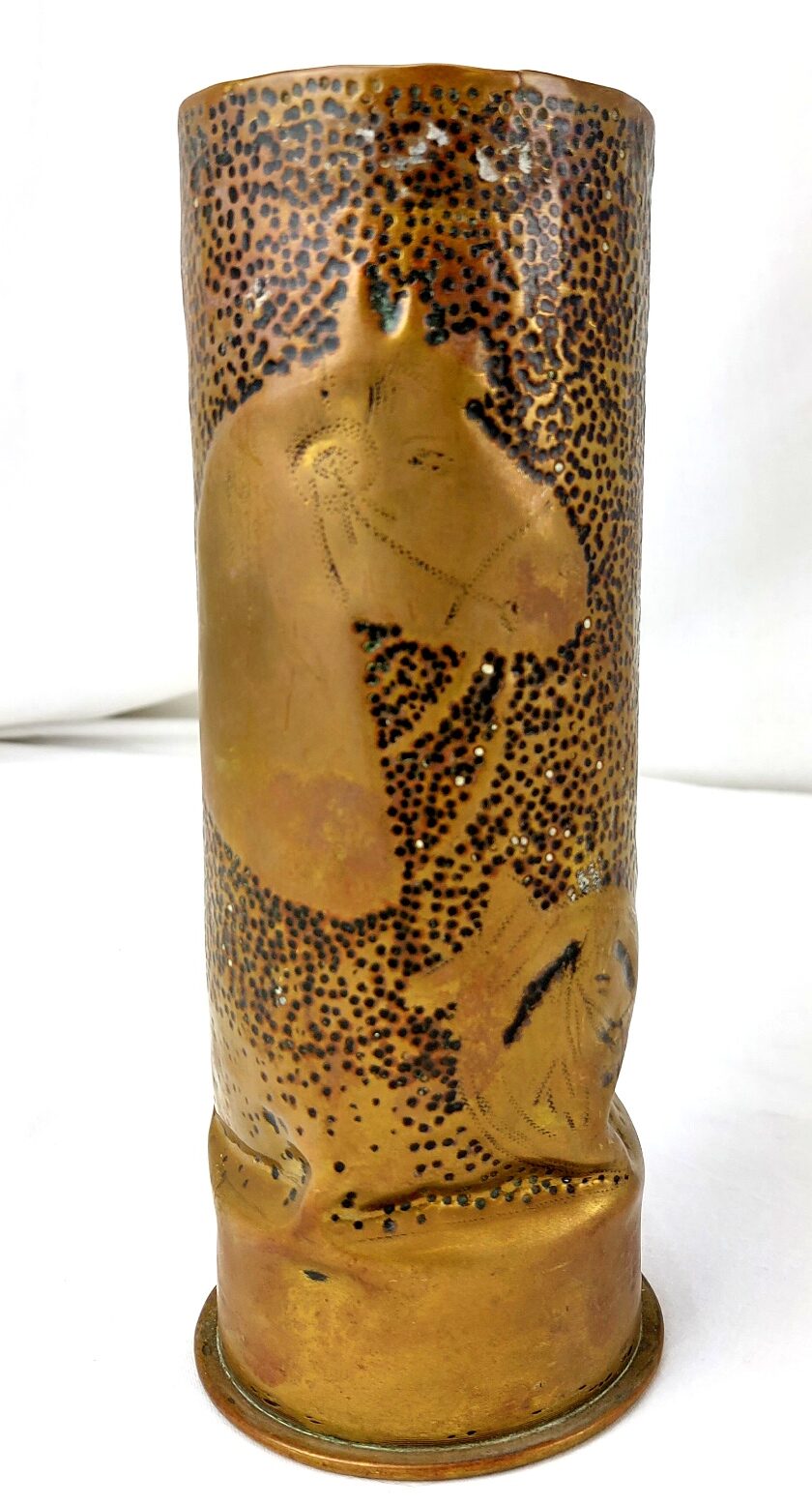
The body is decorated with a stylised Royal Artillery insignia, a large Scottish thistle in the centre and a finely embossed horse’s head on the reverse, possibly referencing a cavalry regiment or unit mascot. The designs are executed in stipple-punch and chased detail, creating texture and shadow over the brass surface. This is a particularly intricate example of Western Front trench art, likely made by or for a British soldier using a captured German case.
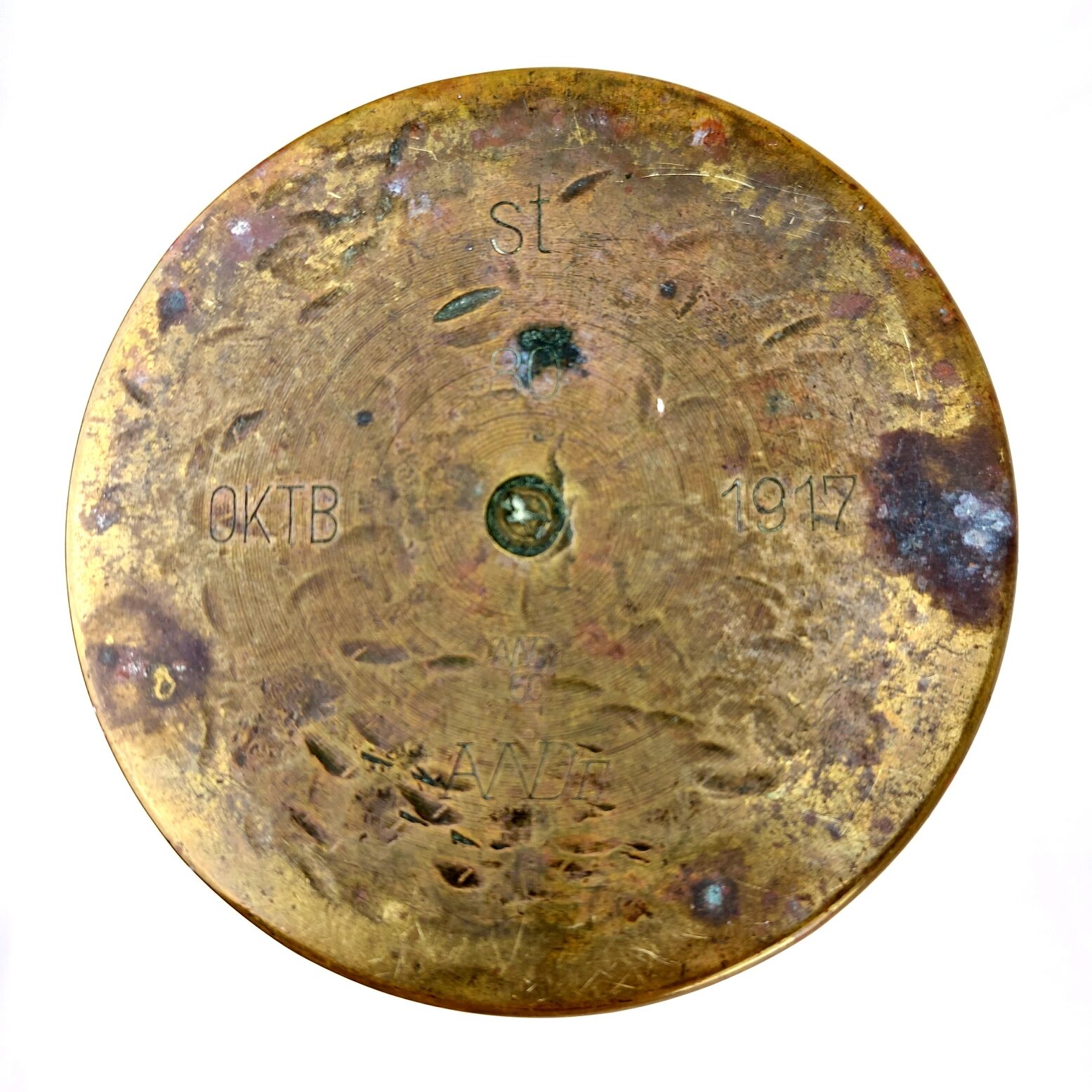
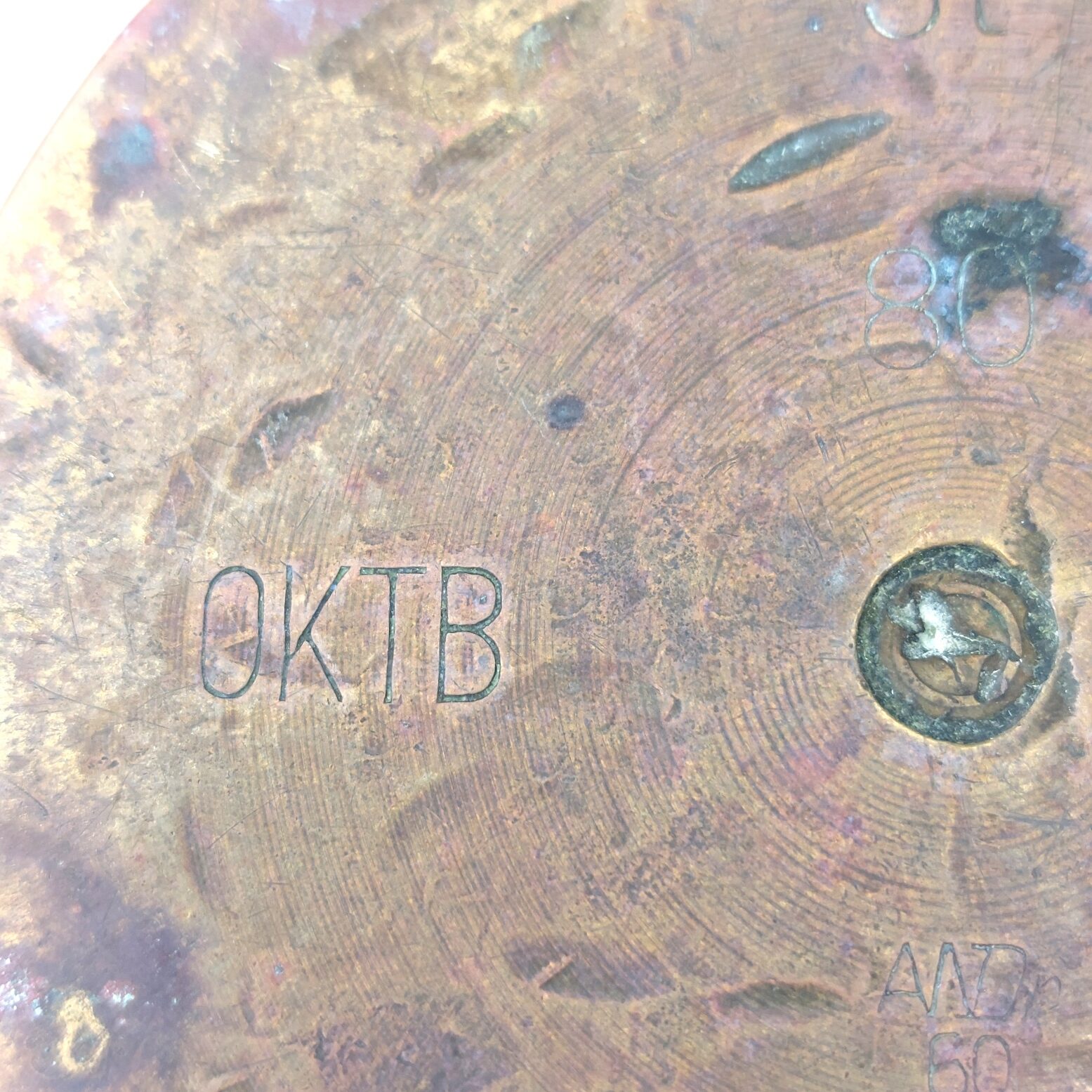
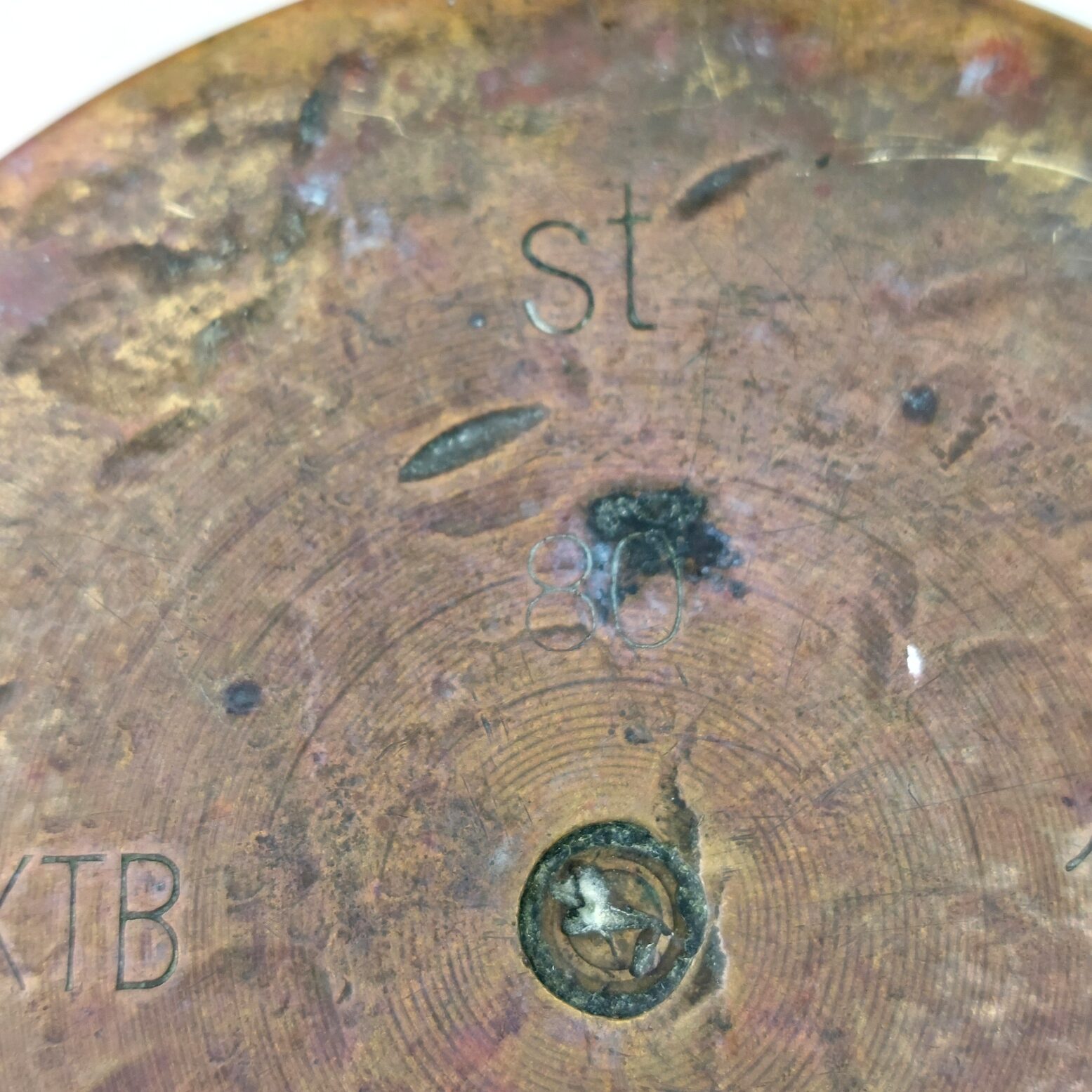
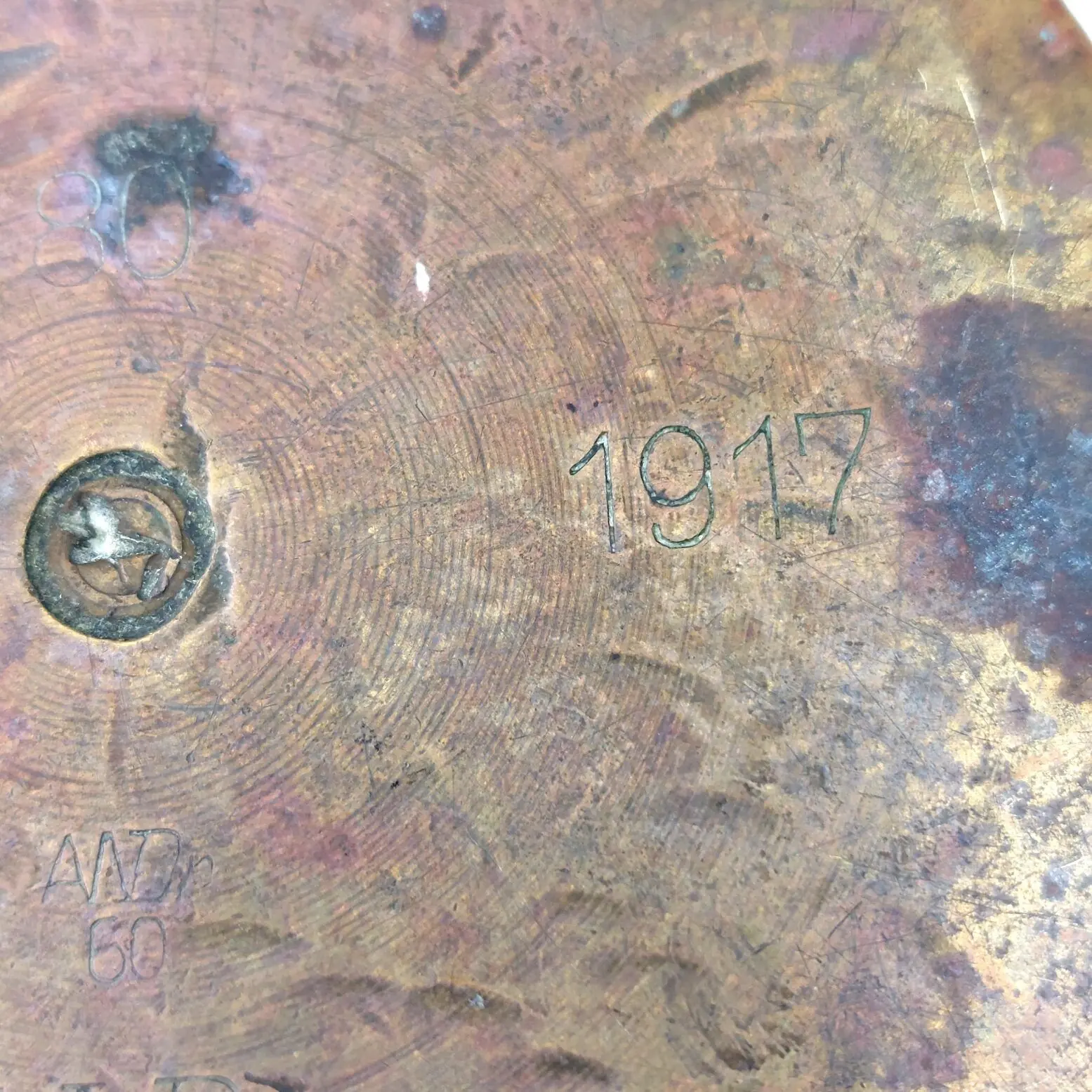
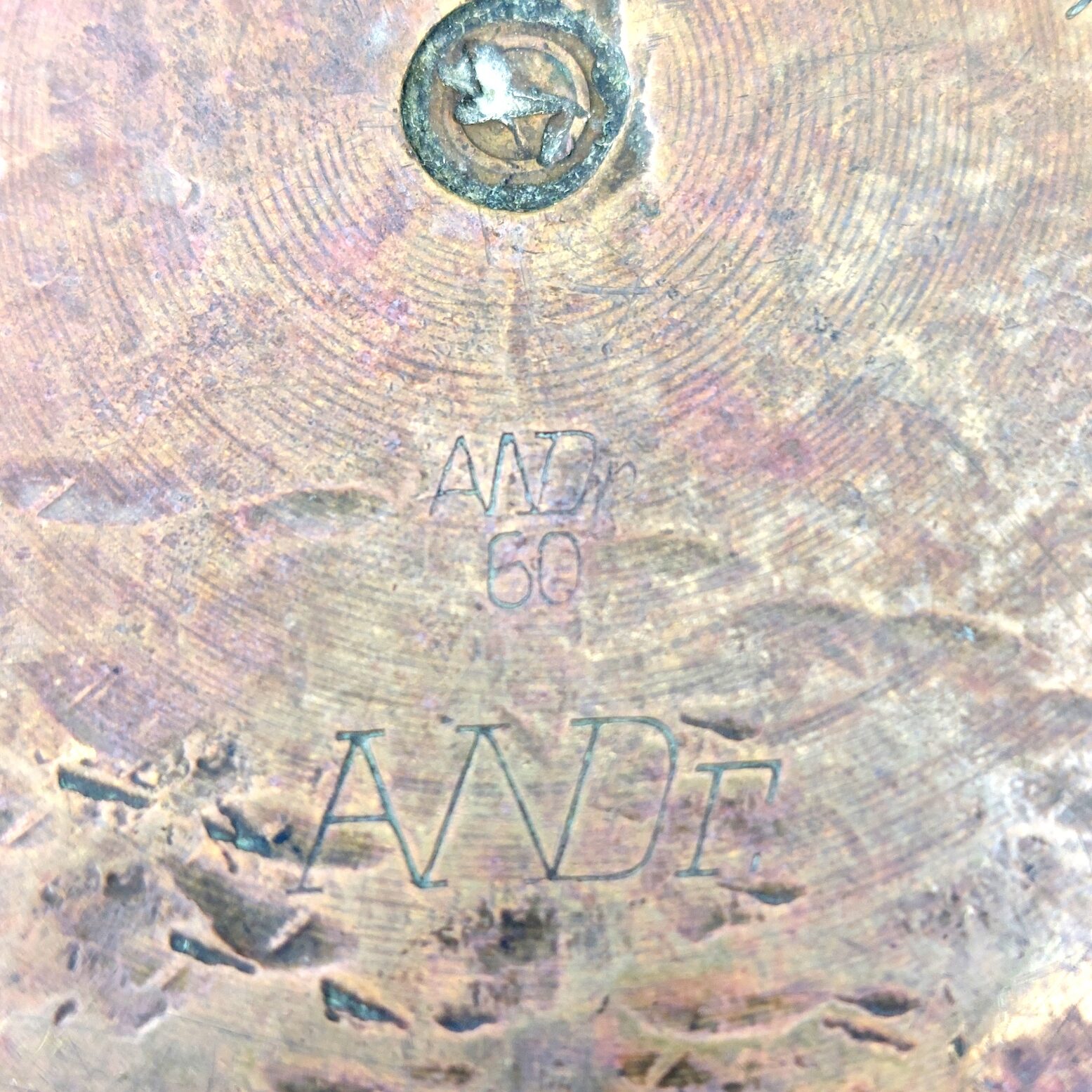
Base Markings:
-1917 – Year of production
-st – Stärkere (strengthened brass), indicating reusability
-80 – Lot or batch number
-OKTB – Possibly a sub-contracted or regional German facility
-AWDr 60 and AWDr – Artillerie Werkstatt Dresden (Artillery Workshop Dresden), inspector/factory marks
History Note:
This is a classic example of trench art — a decorative object fashioned from wartime debris, often by soldiers or prisoners using spent shell casings. It is particularly striking for its combination of British Royal Artillery imagery with German-manufactured ordnance, likely repurposed as a keepsake or commemorative object during or shortly after WWI.
Unlike British and French shell casings, which typically included markings indicating the specific artillery piece they were designed for, German shell cases of the First World War rarely identified the gun type on the base. Instead, they carried factory codes, inspection marks, and date stamps, relying on measurements and context to determine their intended use. This particular case measures 9 cm at the base and 8 cm at the mouth, with a height of 22 cm. These dimensions, along with the 1917 date and “st” strengthening mark, suggest it may have originally been part of the 7.7 cm Feldkanone series, likely the 7.7 cm FK 96 n.A. or FK 16 — two of the most common German field guns used during the war. The FK 16 in particular was introduced in 1916 and used longer cartridge cases, which could match the size and era of this example.
*Condition*
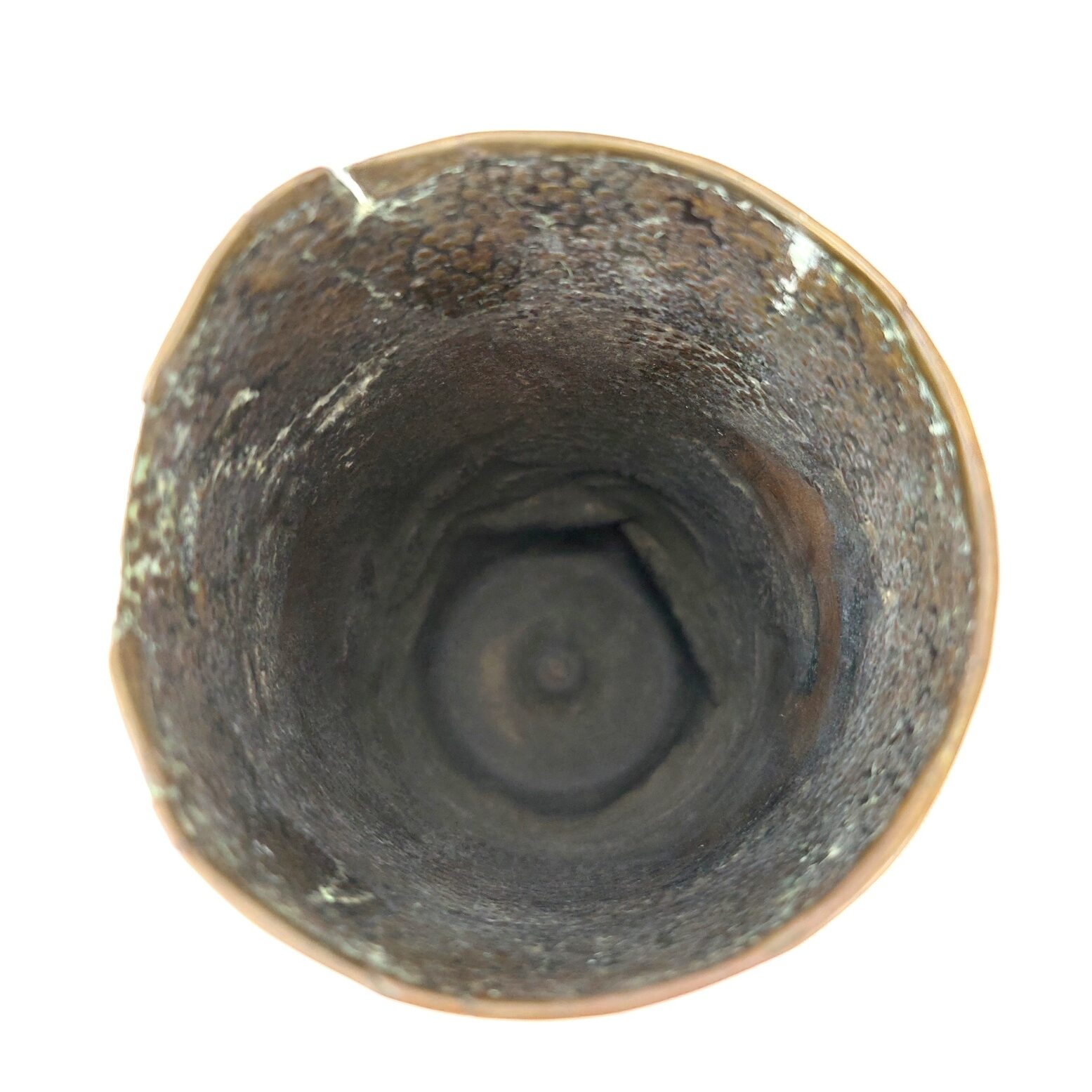
Good condition overall with excellent detail to the decorated surfaces. One chip to the upper rim and expected wear to the base from use and tooling. Rich natural patina with minor verdigris present in recesses. A visually striking and tactile example of authentic WWI trench art. Please see photographs as part of the condition report.
JAQAD_2703130525