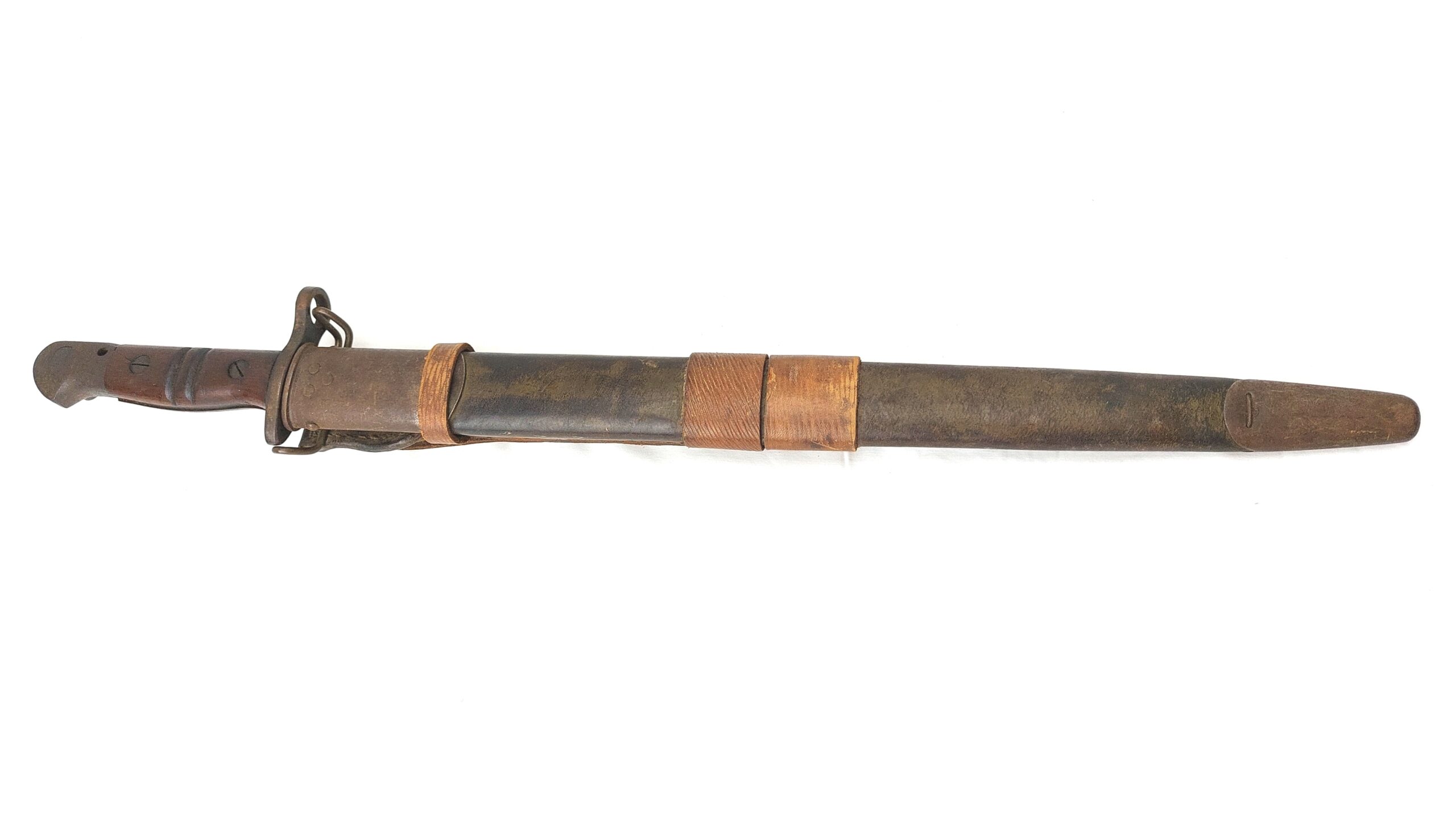
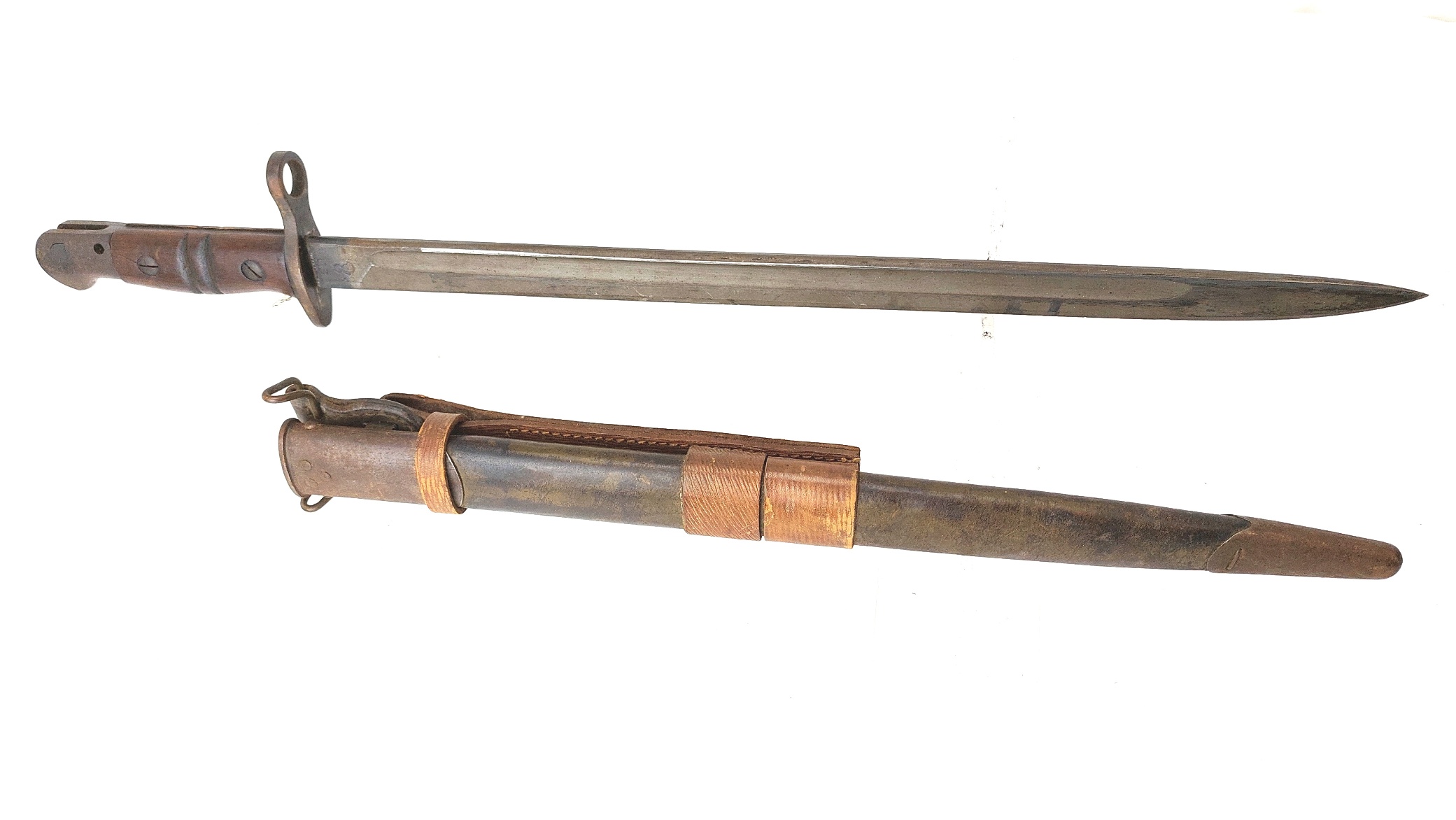
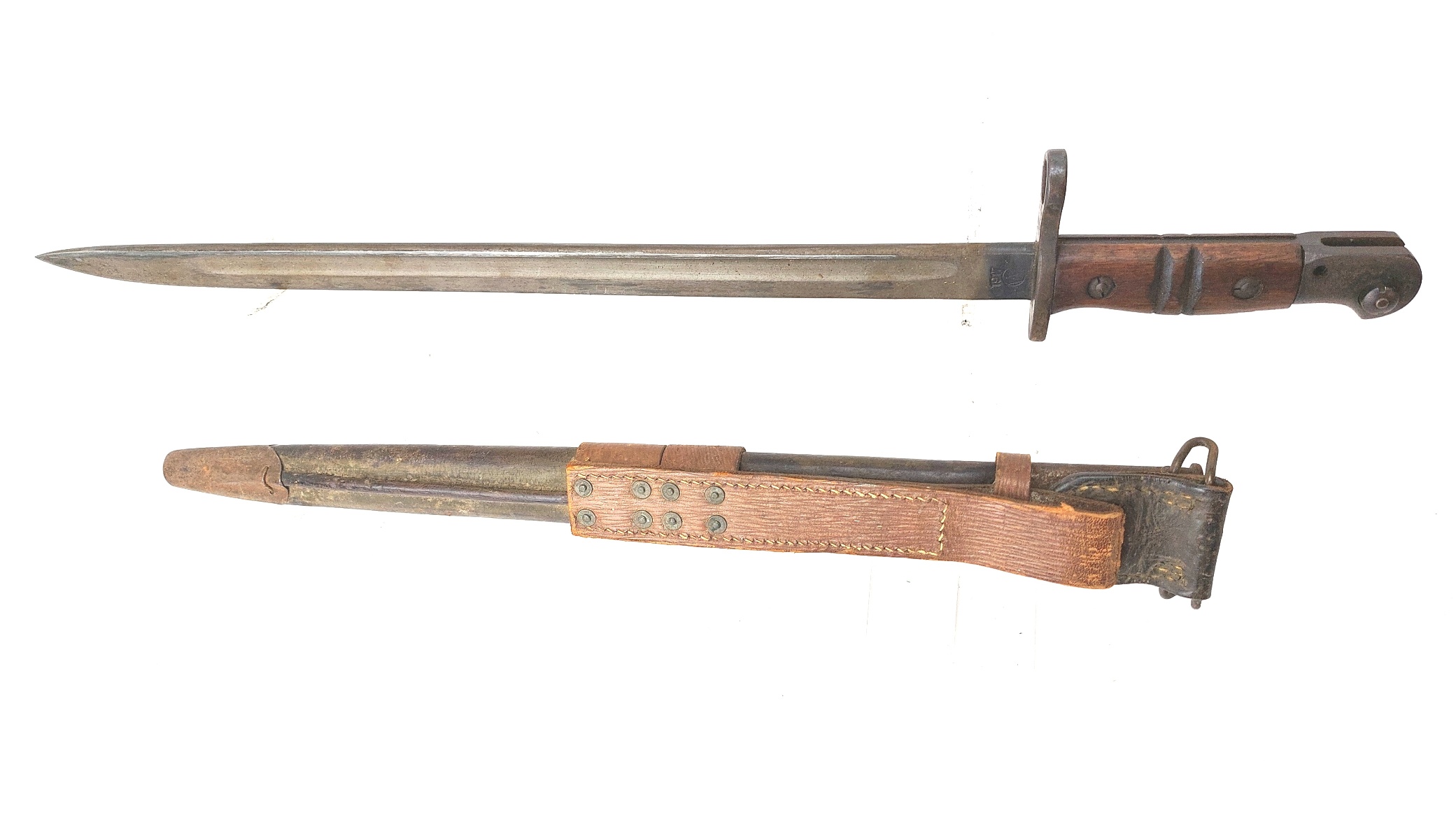
*US, WW1 - Dated 1917, Winchester Model 1917 Bayonet with 1st Pattern Maxim Scabbard and WW2 British P39 Emergency Frog*
A scarce and highly desirable Winchester-manufactured U.S. Model of 1917 sword bayonet dated 1917, retaining its early First Pattern Maxim patent scabbard and later fitted with a British Pattern 1939 emergency leather frog, reflecting continued service and Home Guard use during the Second World War.
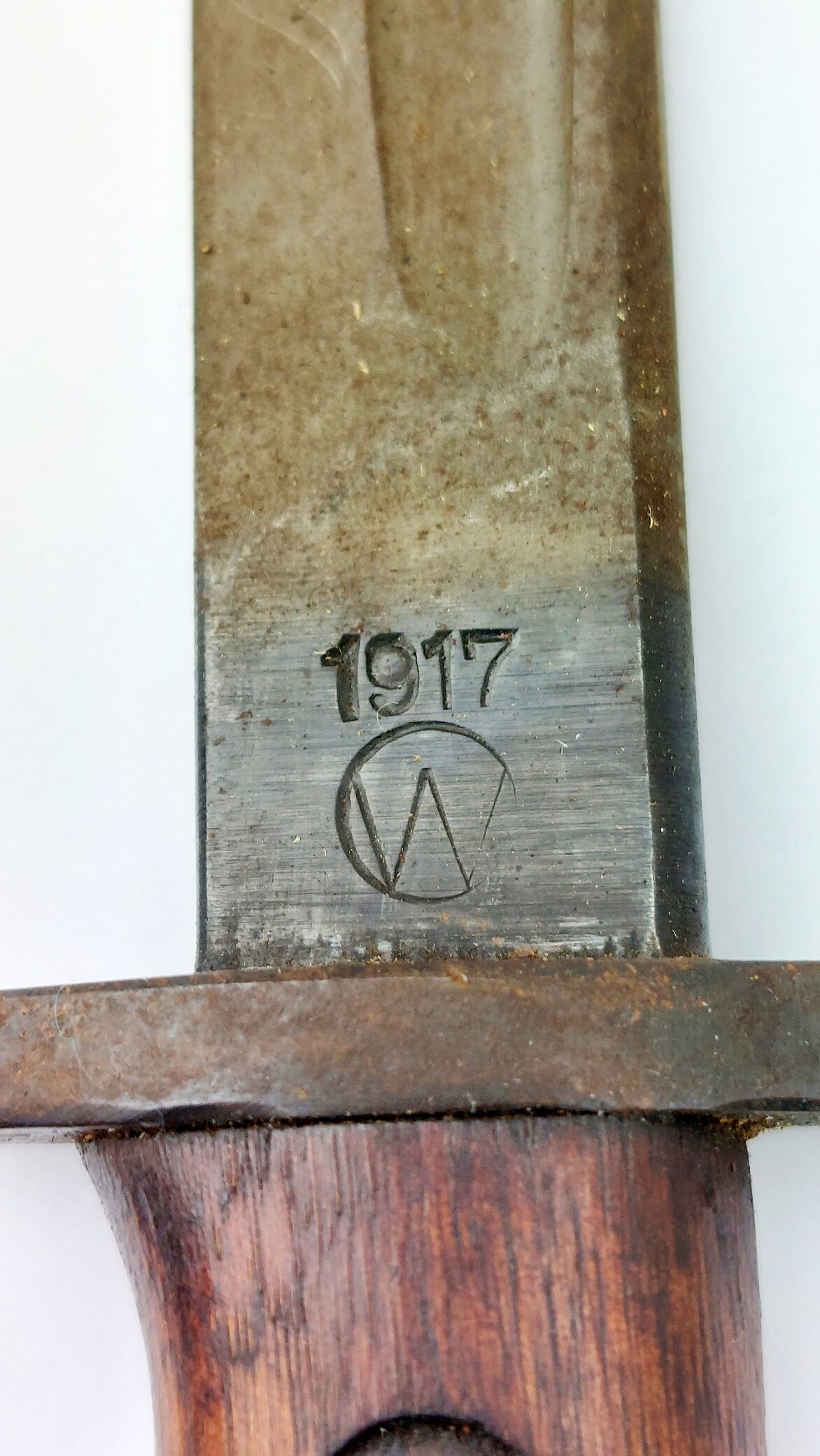
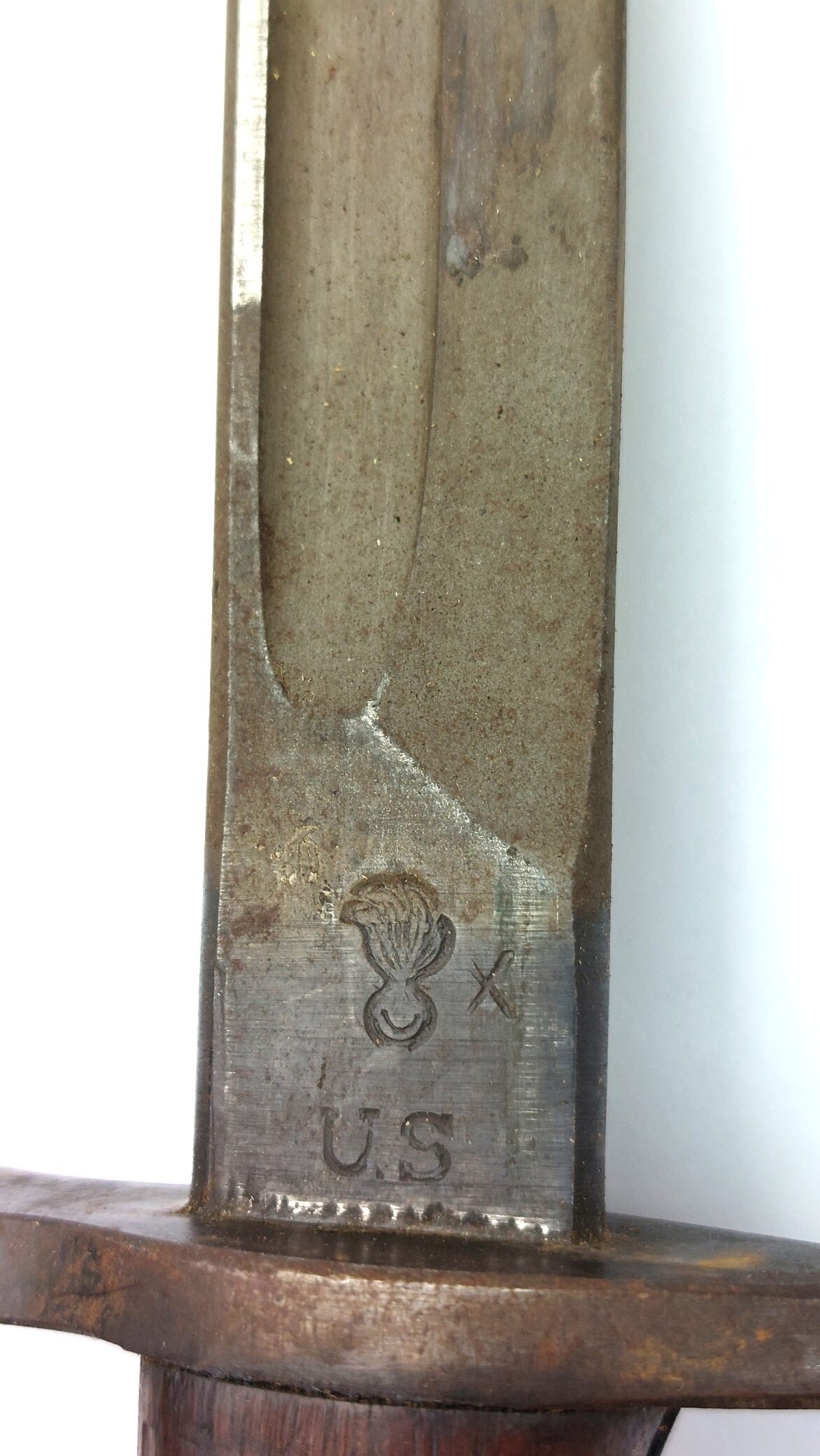
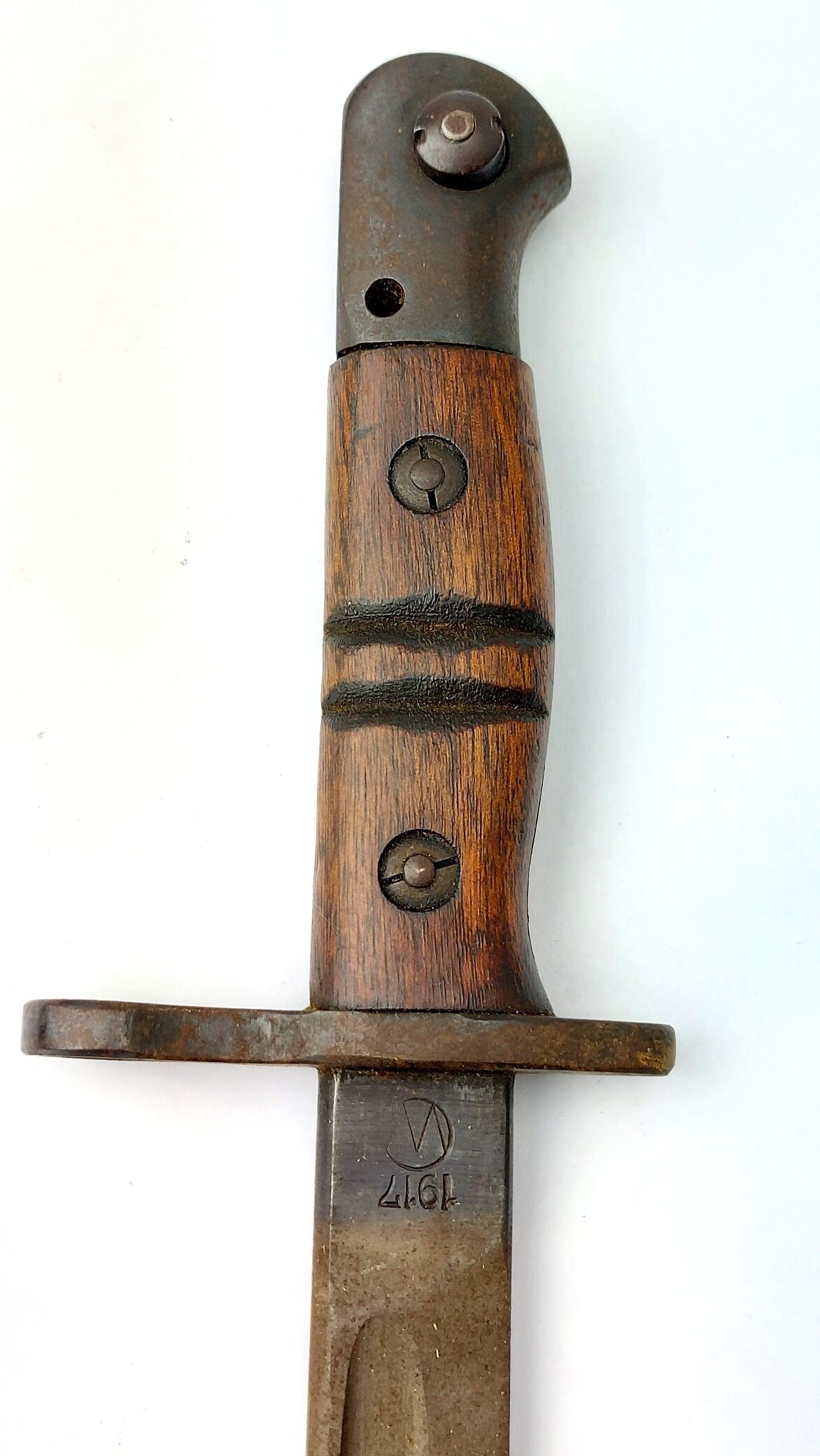
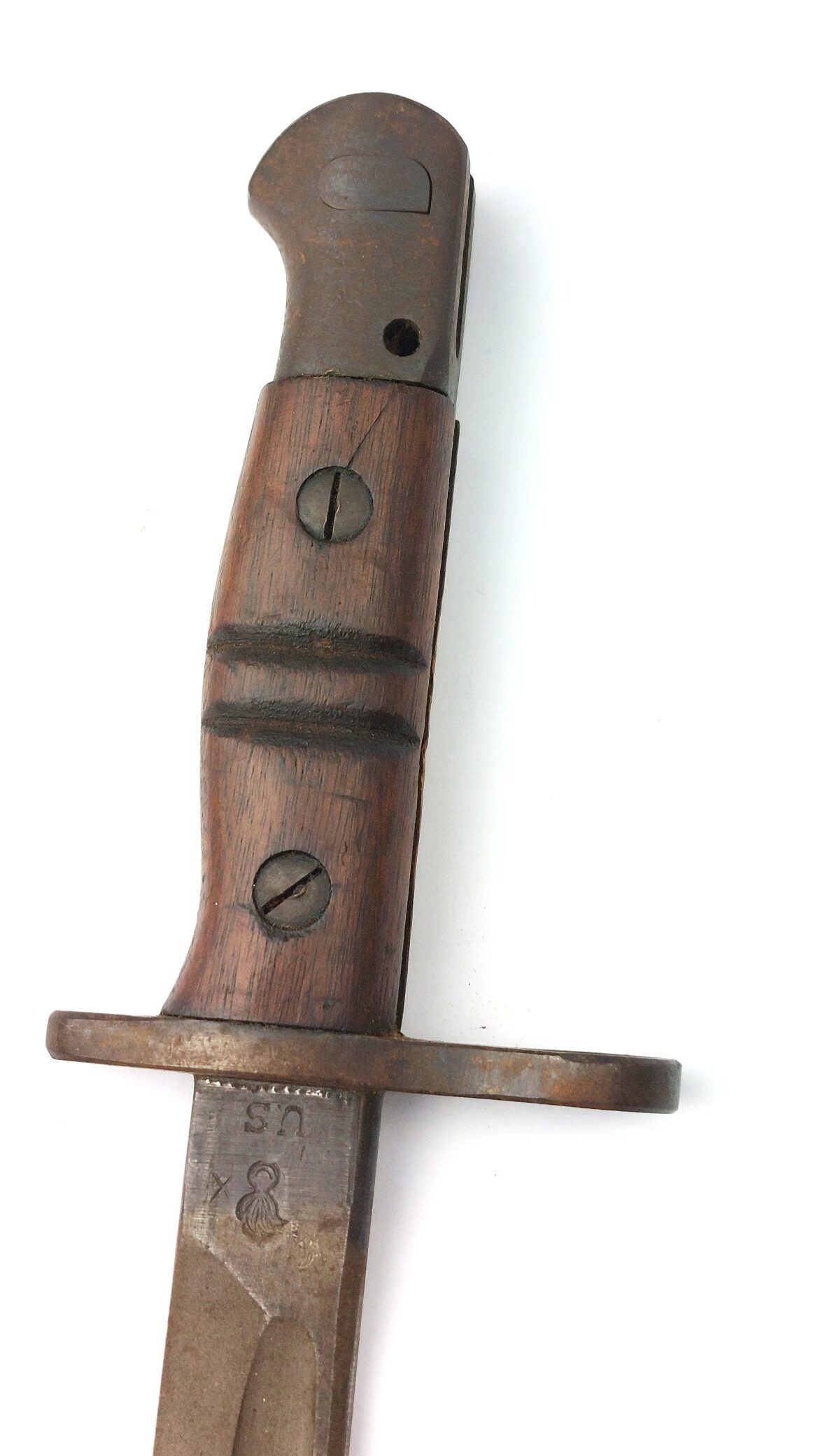
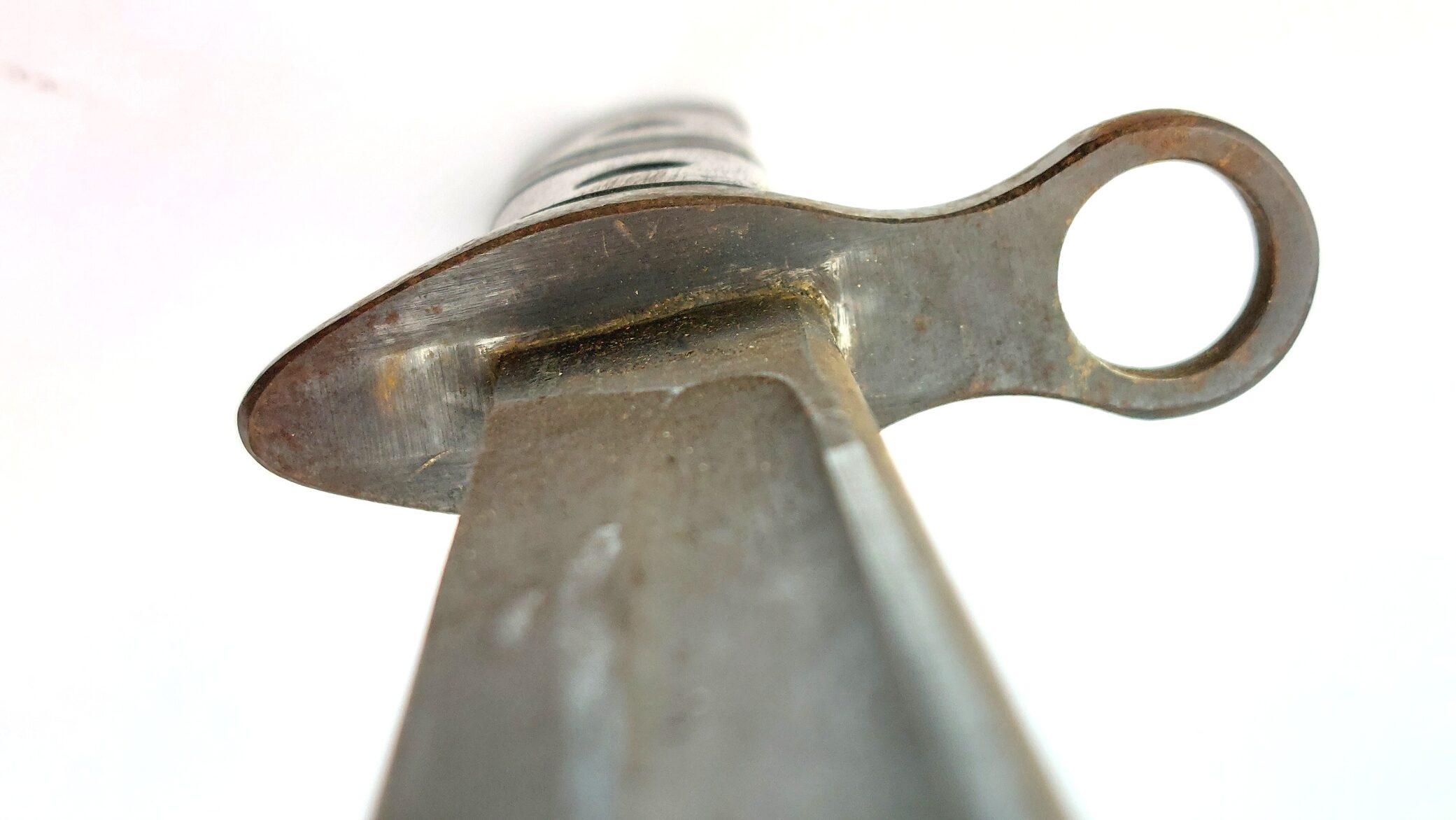
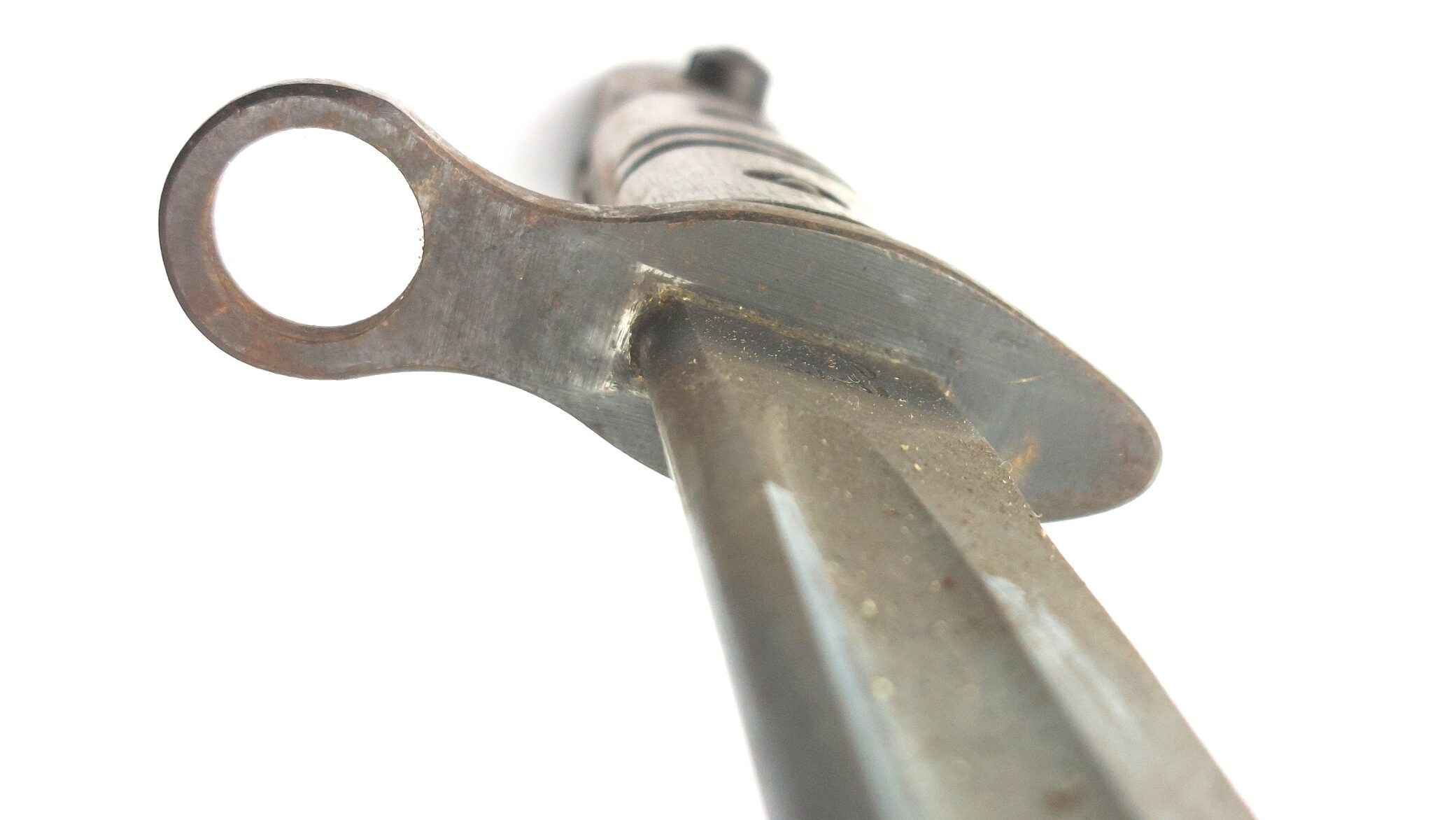
The long single-fullered blade is clearly marked on the ricasso “1917” above the Winchester “W” within a circle, confirming manufacture by the Winchester Repeating Arms Company during the first year of American wartime production. The reverse ricasso bears the U.S. ordnance flaming grenade above “U.S.” together with the inspection mark “X.”
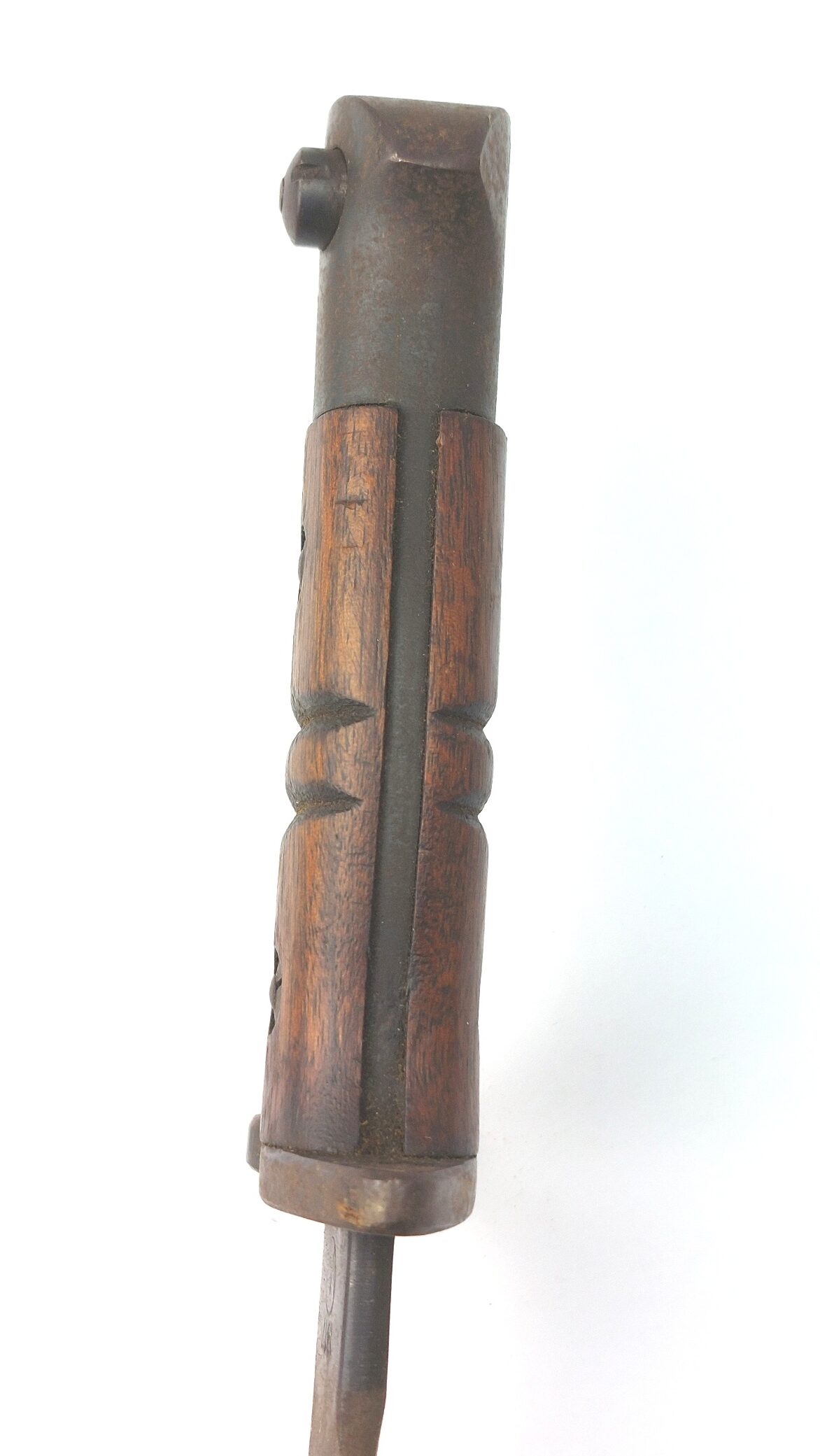
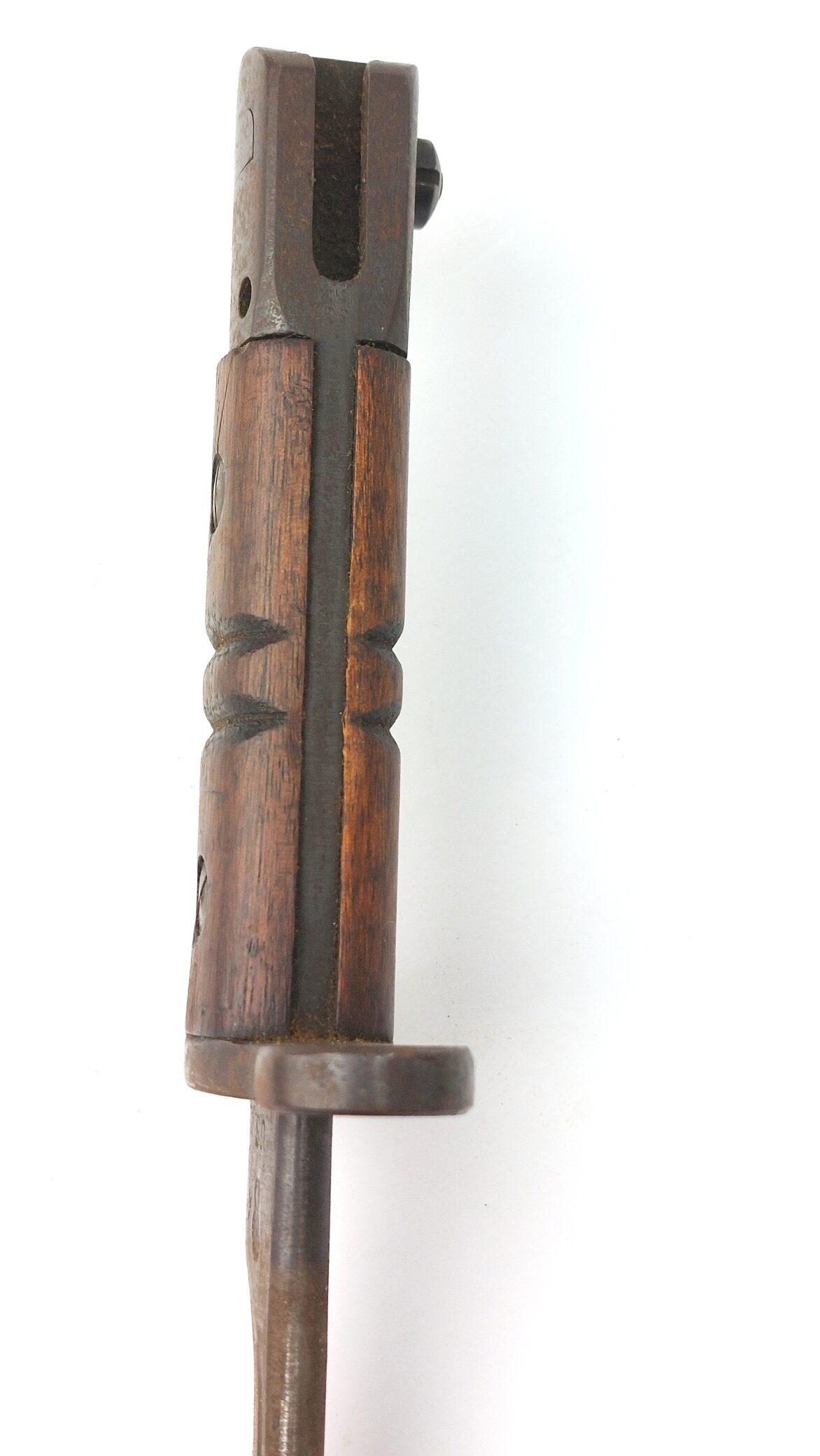
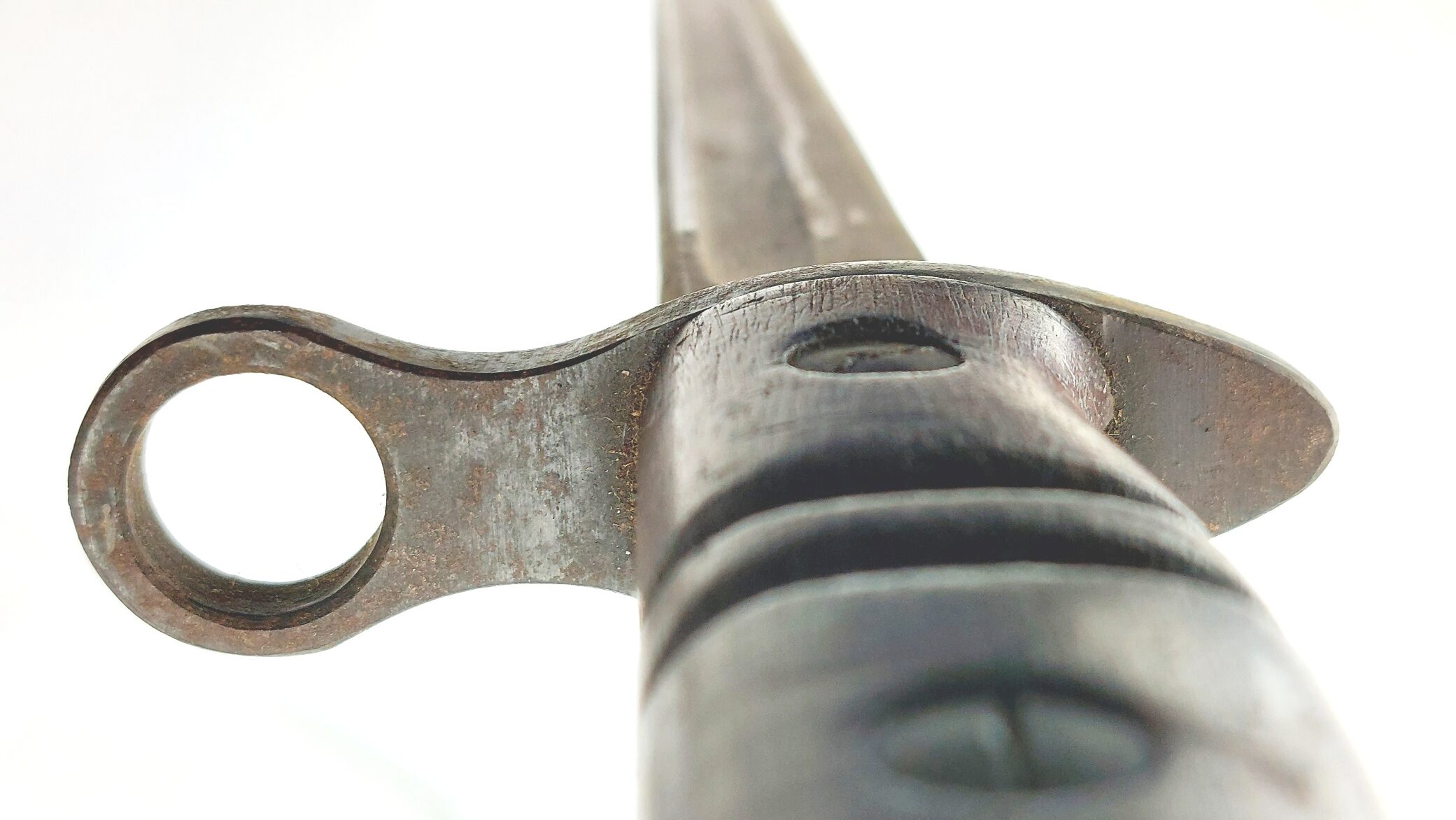
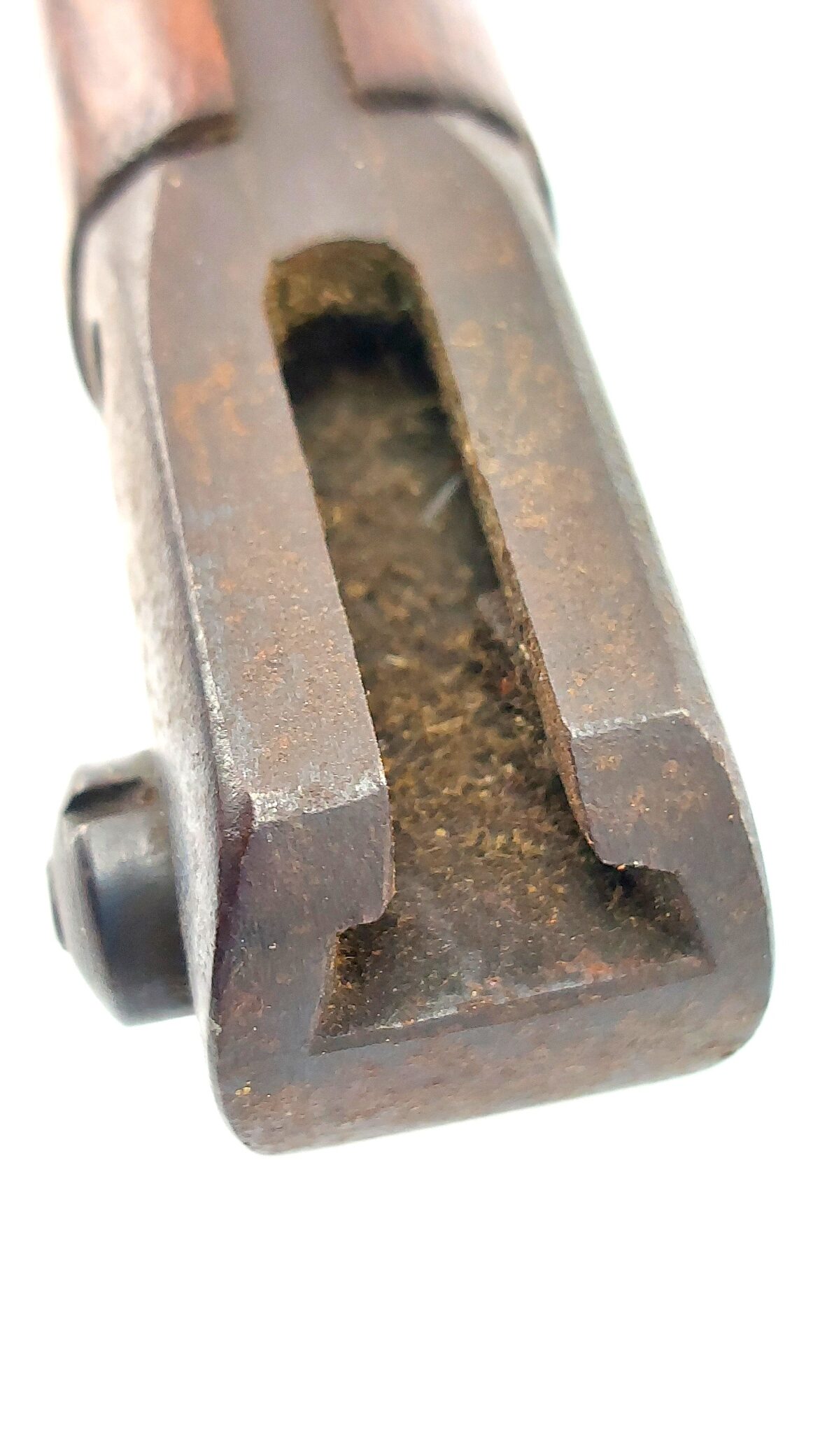
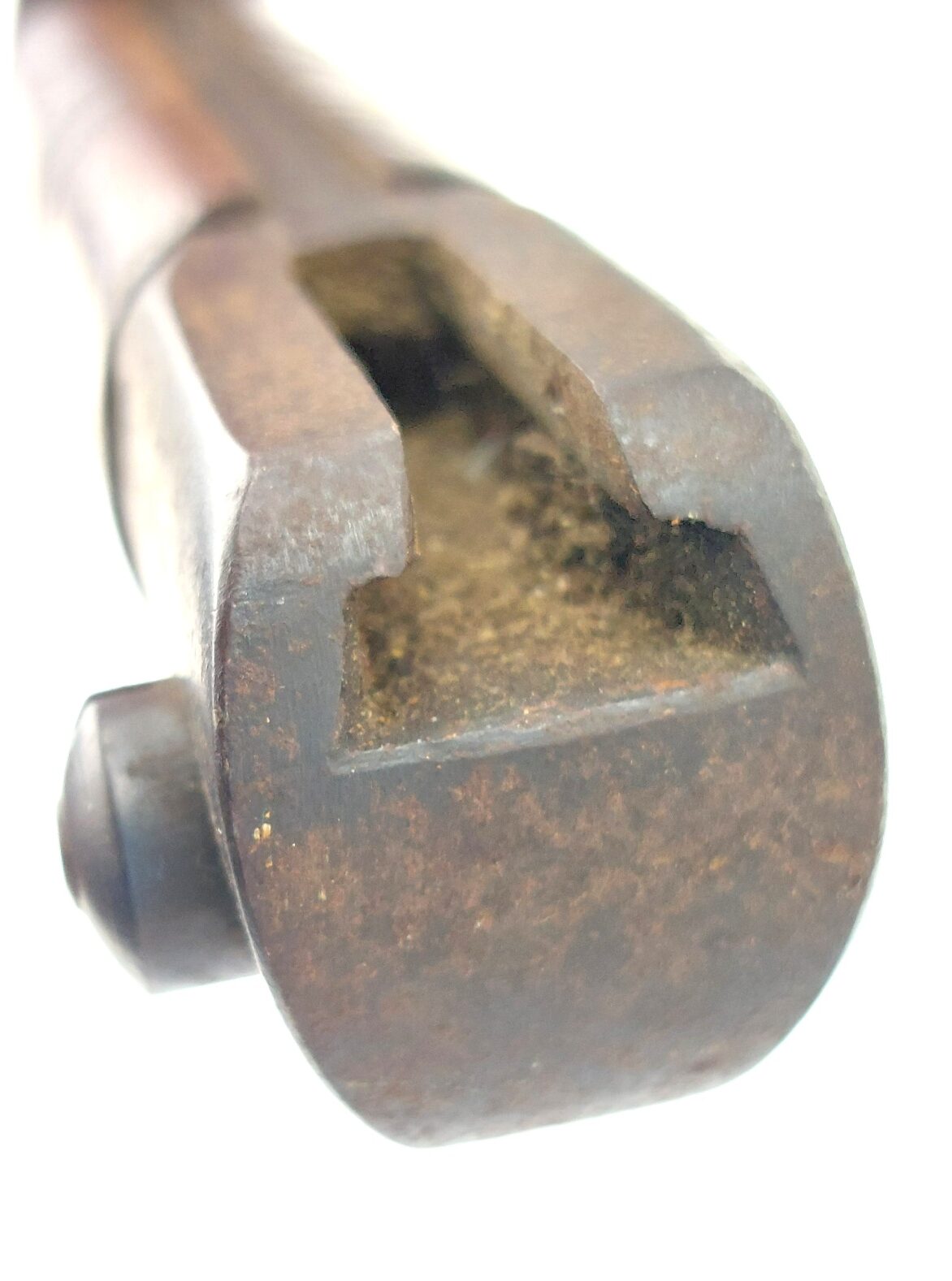
The bayonet retains its original grooved walnut grip scales, secured by the correct screw bolts, and the heavy steel pommel with press-stud release typical of the Pattern 1913 / Model 1917 design. The blade form reflects the British Pattern 1913 bayonet, from which the American Model 1917 was derived.
Approx. Measurements – Blade length: 43.2 cm. Overall length: 55.5 cm.
Scabbard and Frog:
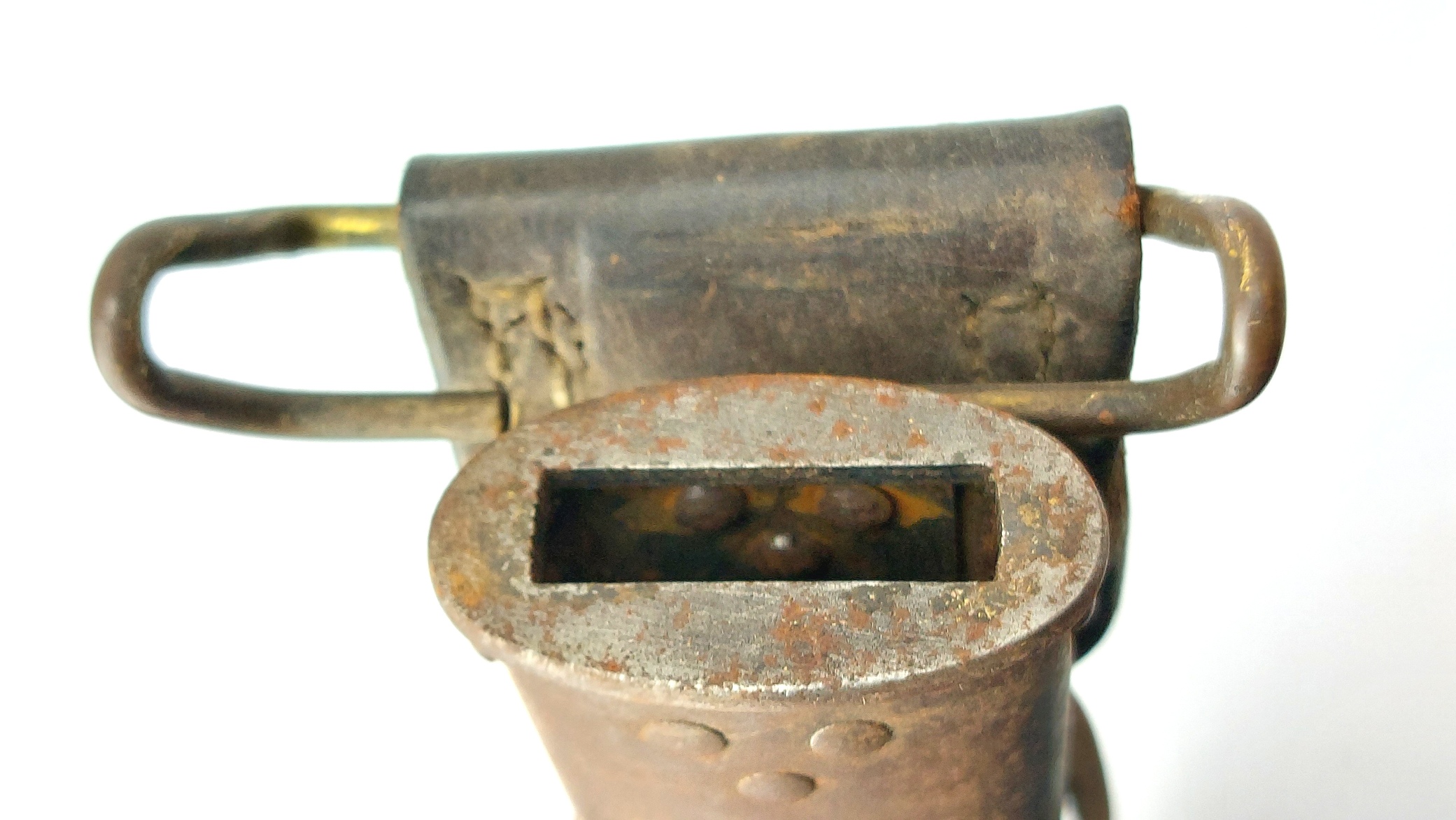
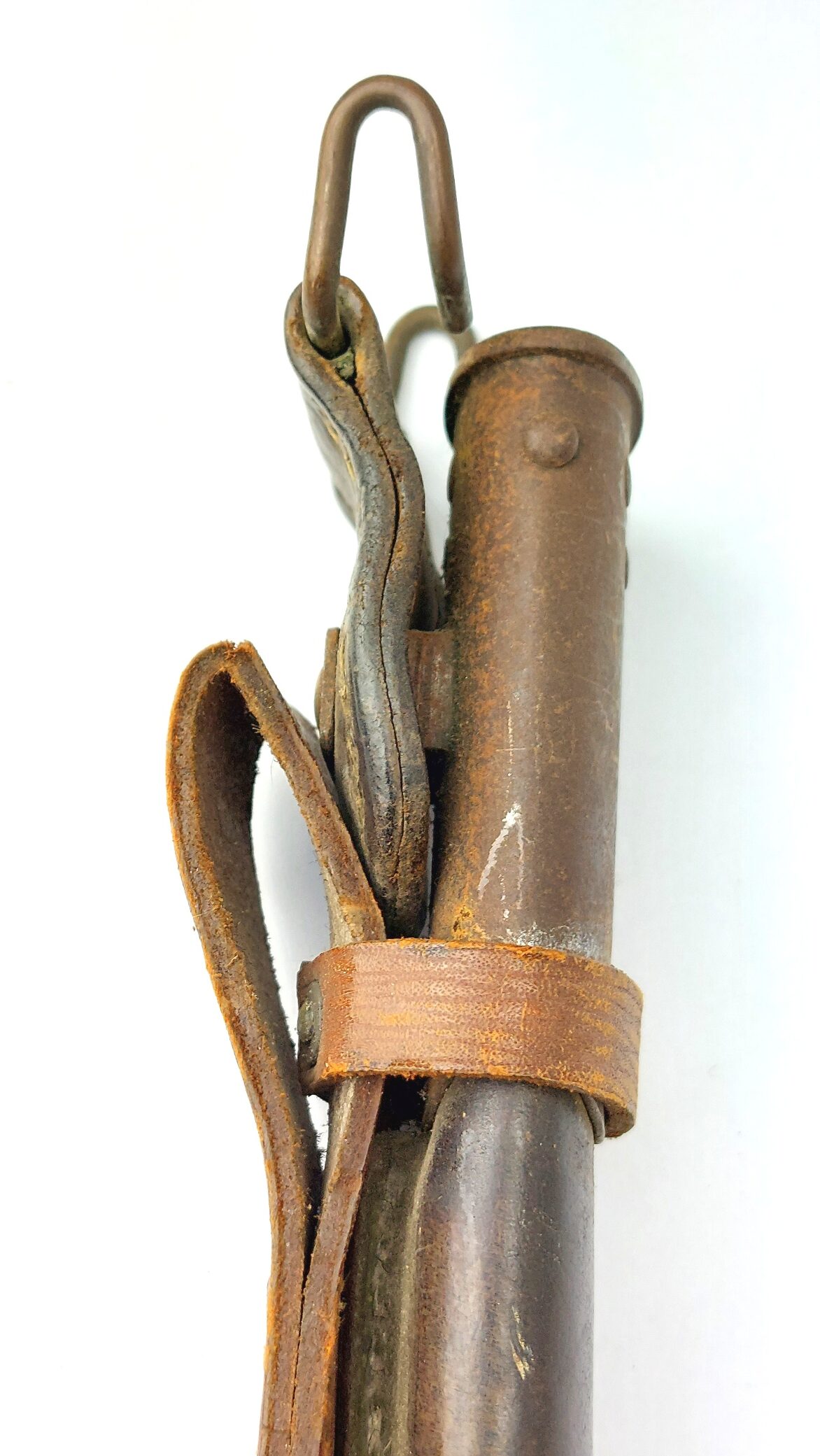
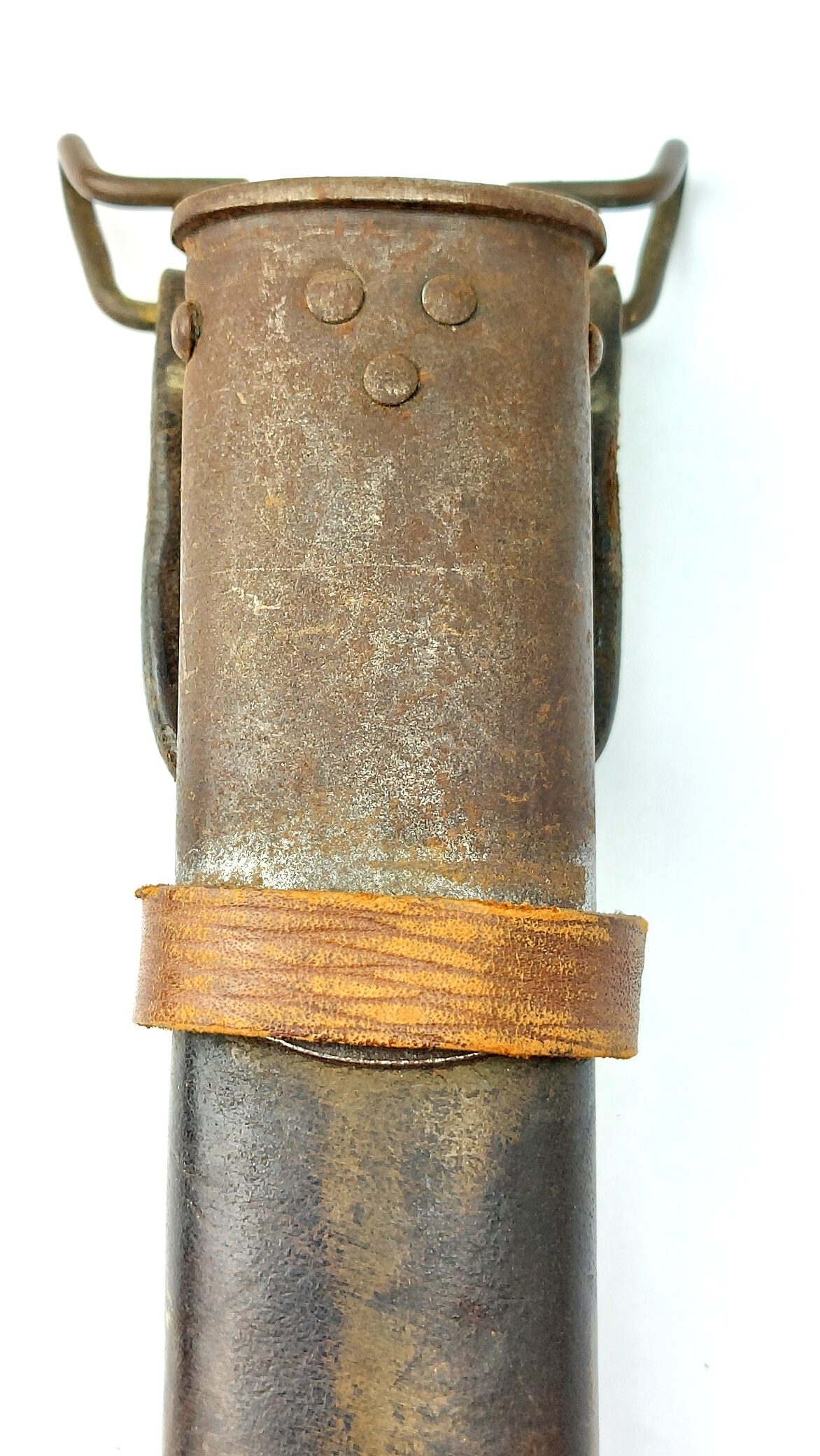
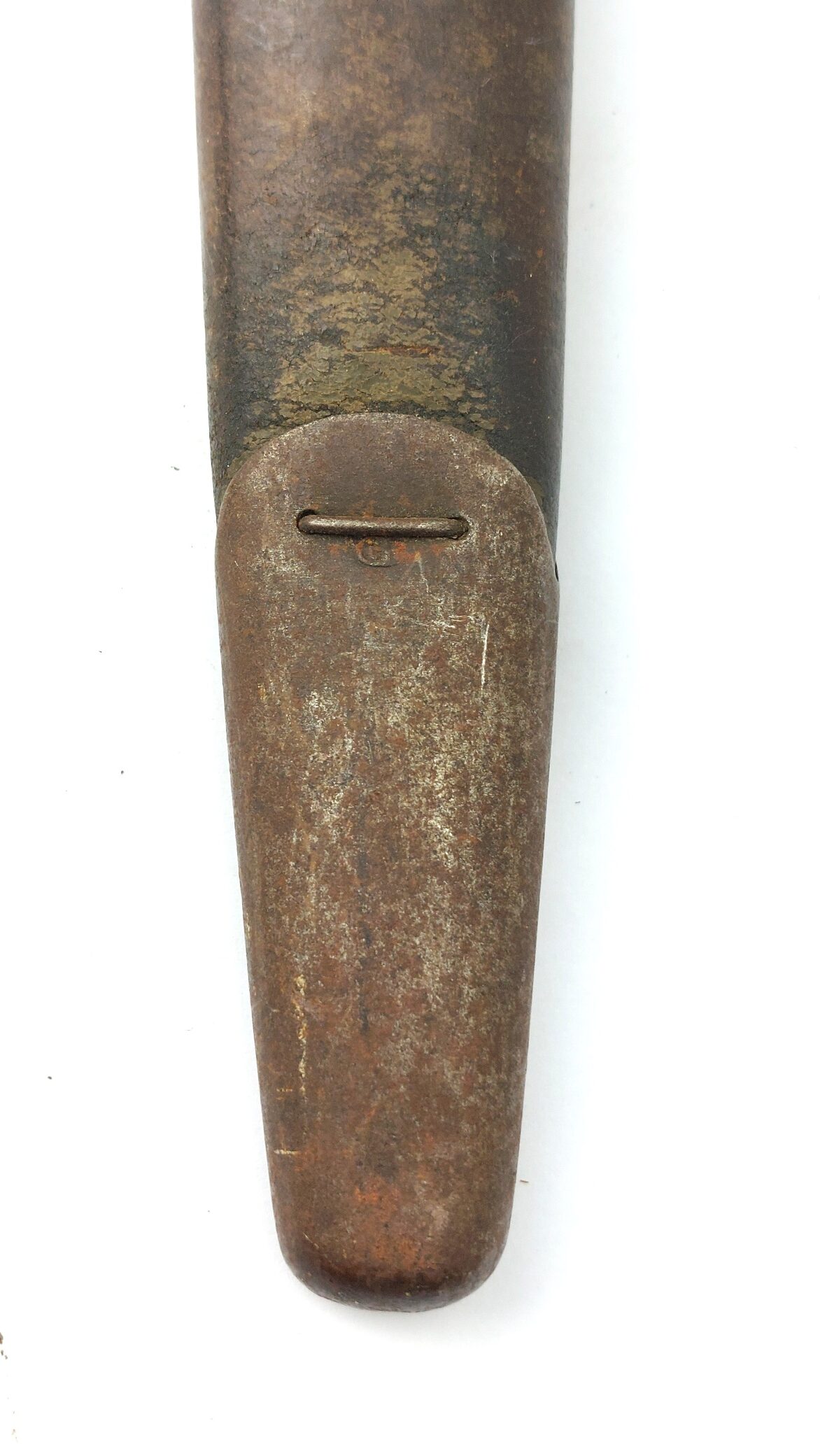
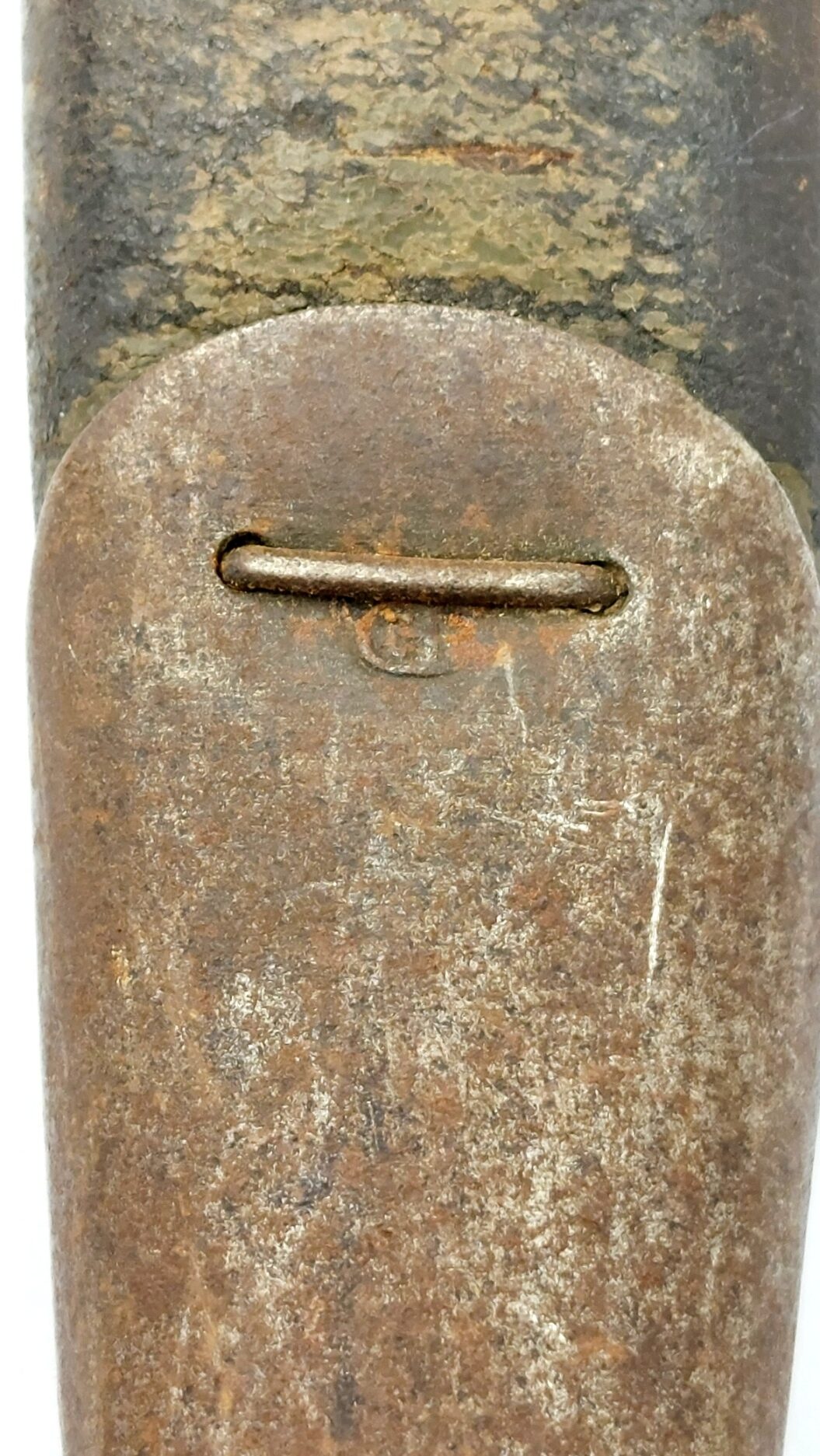
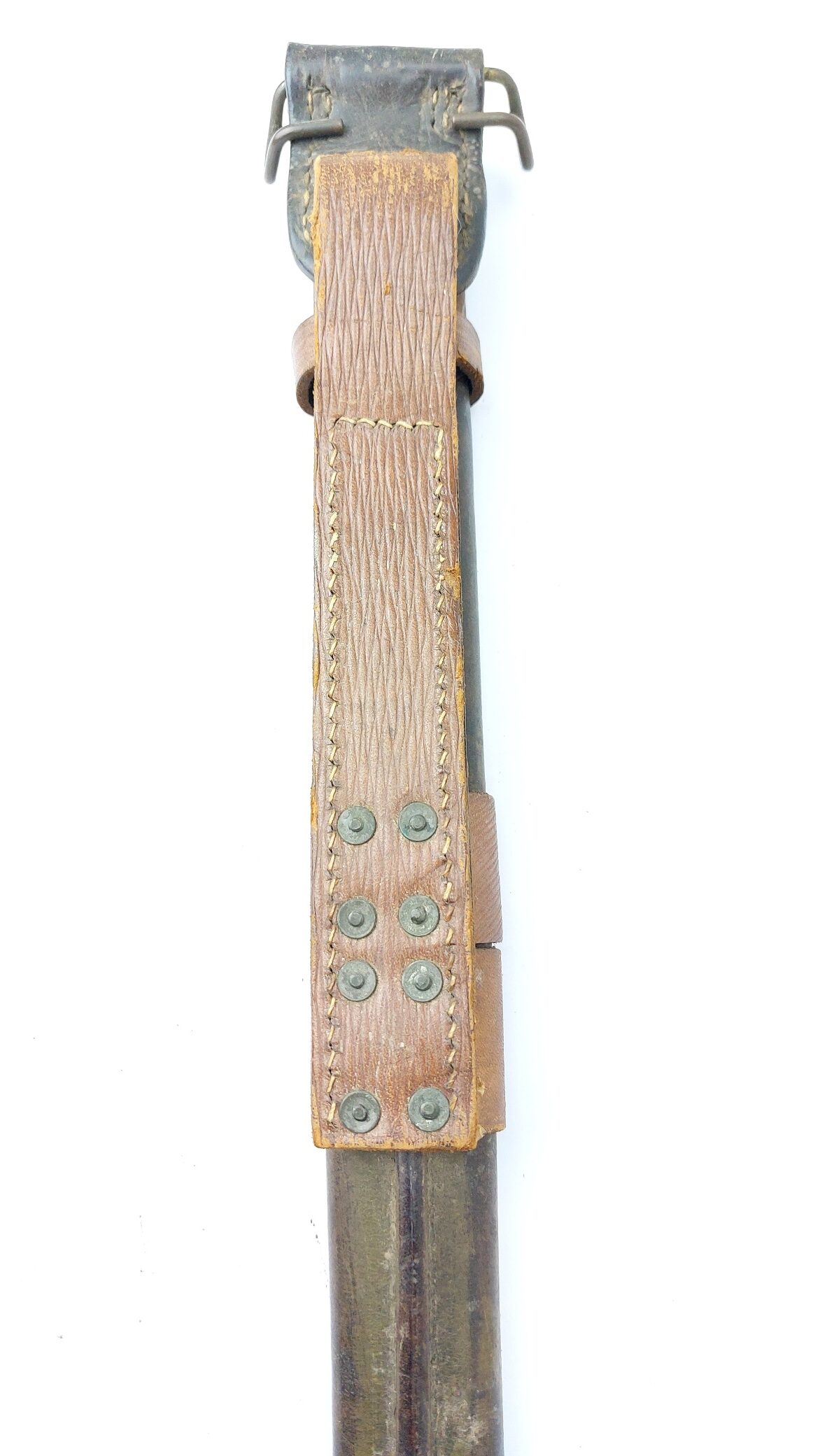
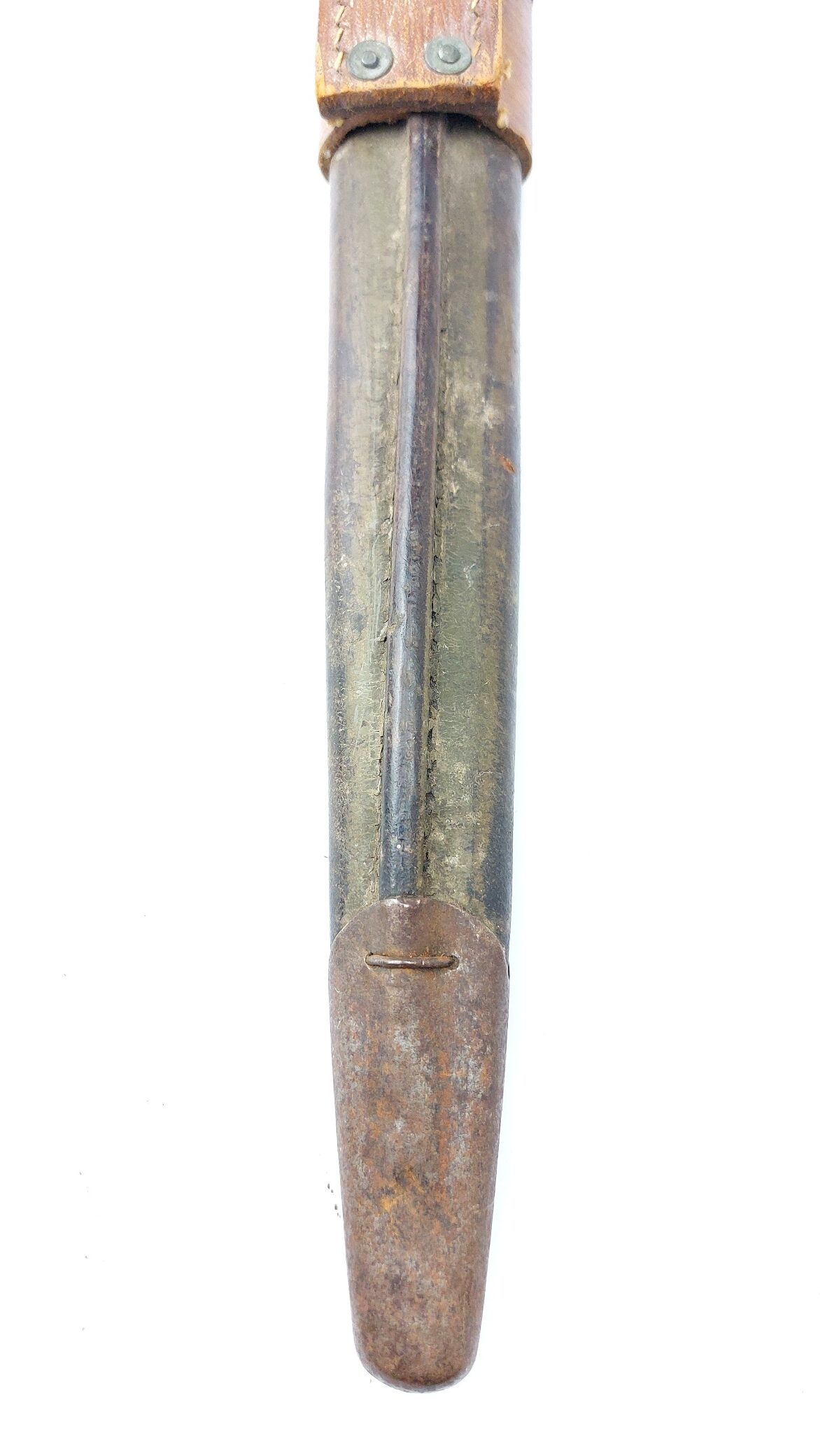
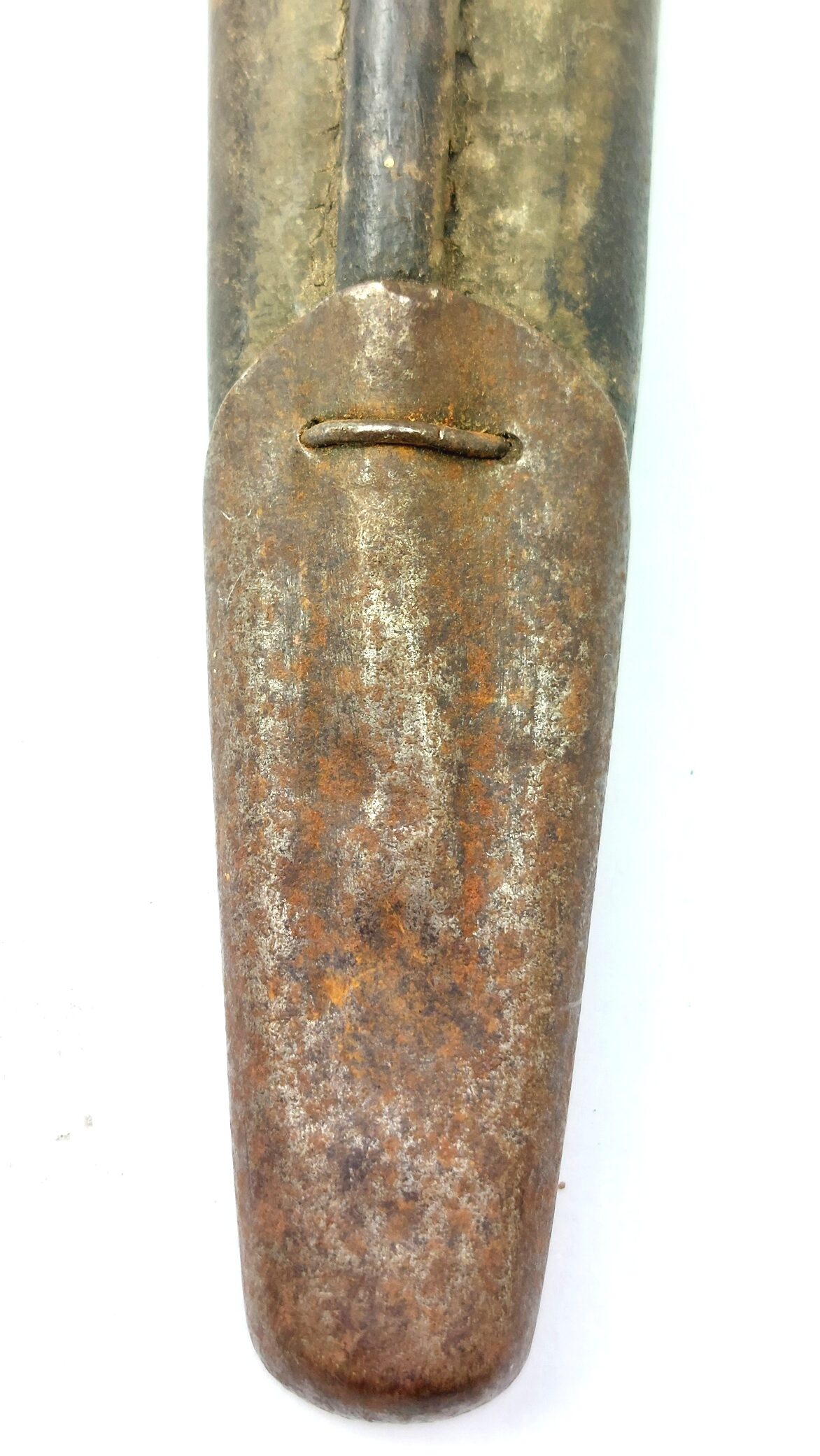
The bayonet is housed in a First Pattern Model 1917 scabbard, commonly known as the Maxim patent scabbard, incorporating the early leather belt hanger riveted directly to the steel throat mount. The chape is stamped “GF” within an oval, identifying manufacture by the General Fireproofing Company of Youngstown, Ohio, a wartime contractor responsible for producing scabbard fittings.
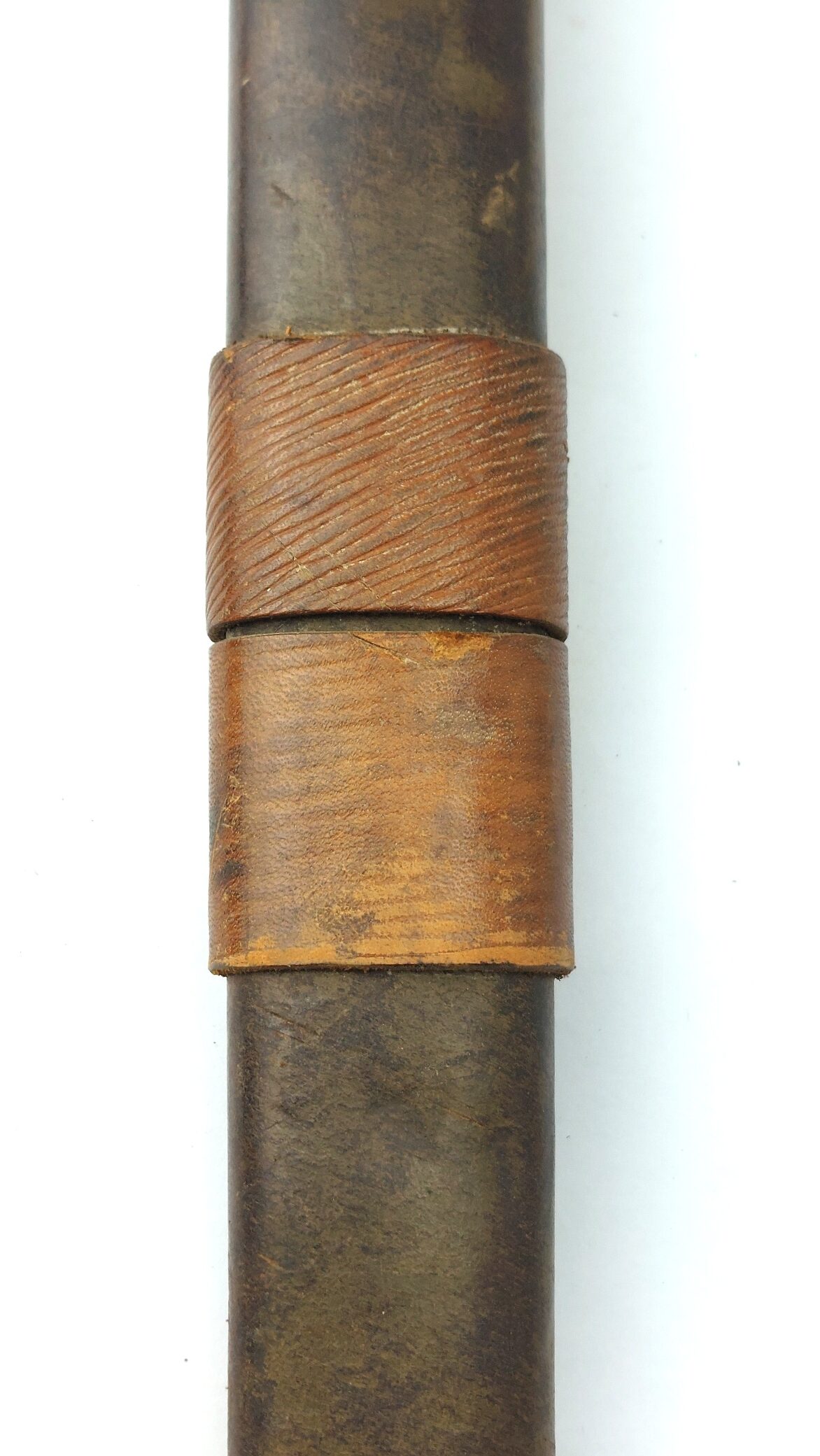
Early Maxim hangers were found to be relatively weak in service and many examples were reinforced or modified during their working life. In this case the scabbard is fitted with a British Pattern 1939 emergency leather frog, constructed from distinctive cross-hatched pebble-grain leather and reinforced with eight rivets. The frog incorporates a double-riveted retaining strap and twin leather bands designed to wrap tightly around the scabbard body, rather than using the traditional British frog stud system. These emergency frogs were produced during the early stages of the Second World War when shortages of webbing equipment led to simplified leather substitutes. They are frequently associated with the British Home Guard equipment and wartime training use, where large numbers of Pattern 1913 and U.S. Model 1917 bayonets were issued for defensive service in Britain.
History Note:
The Model of 1917 bayonet was adopted following the United States’ entry into the First World War in April 1917. American factories had already been manufacturing the British Pattern 1914 rifle and Pattern 1913 bayonet, and these designs were subsequently adopted for U.S. service as the U.S. Rifle Model 1917 and its accompanying bayonet.
Production occurred between 1917 and 1918 at three factories: Remington, Winchester, and Eddystone. While all three produced large numbers, Winchester manufacture was significantly lower at around 545,000 bayonets, compared with over one million by Remington and approximately 1.2 million by Eddystone, making Winchester-marked examples noticeably less common.
The long sword bayonet continued to see service beyond the First World War, and many examples remained in stores or were reissued for training and auxiliary service during the Second World War, particularly in Britain where they were used by Home Guard units and training formations.
*Condition*
The bayonet remains in solid service condition with clear Winchester and U.S. ordnance markings visible on the ricasso. The blade shows age-related staining and light surface oxidation consistent with period steel but retains good definition and profile. The wooden grips remain secure with honest service wear. The scabbard retains its original throat with General Fireproofing Company maker’s stamp, together with the leather body and attached emergency frog. The leather frog shows typical age and has become firmly bonded to the scabbard over time, a common occurrence with Pattern 1939 equipment due to long-term compression and natural oils in the leather. Please see photographs as part of the condition report.
JAQCOXBBE_299231012026