*British, WW1 era c.1898–1922, 19th (Alexandra, Princess of Wales’s Own) Hussars Officer’s Silver Cap Badge – “Assaye Elephant”, Two Lug Fittings*
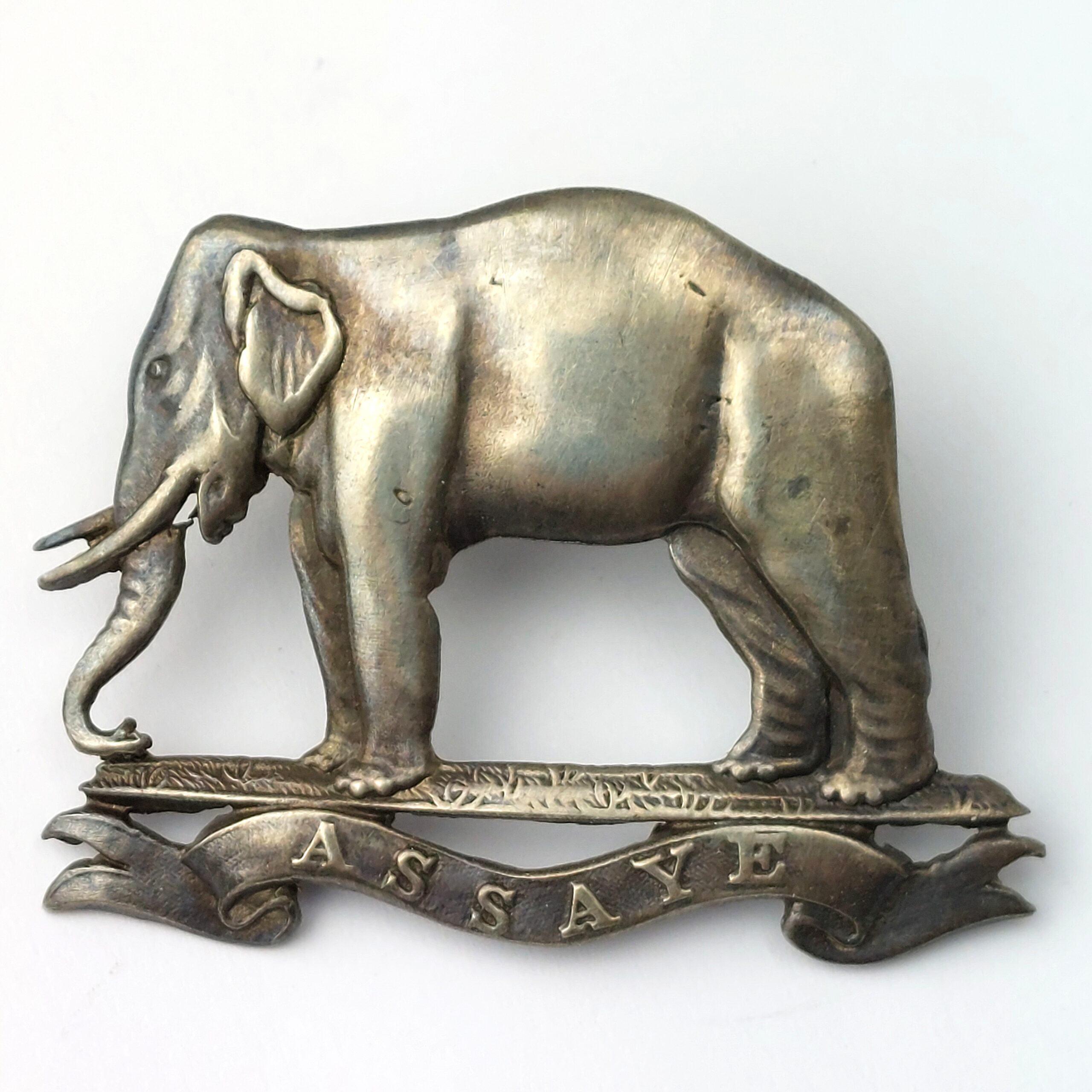
A British cavalry officer’s service cap badge of the 19th (Alexandra, Princess of Wales’s Own) Hussars, featuring the regiment’s distinctive “Assaye Elephant” device. The badge depicts a finely modelled walking elephant standing above a scroll bearing the battle honour ASSAYE, rendered in raised lettering.
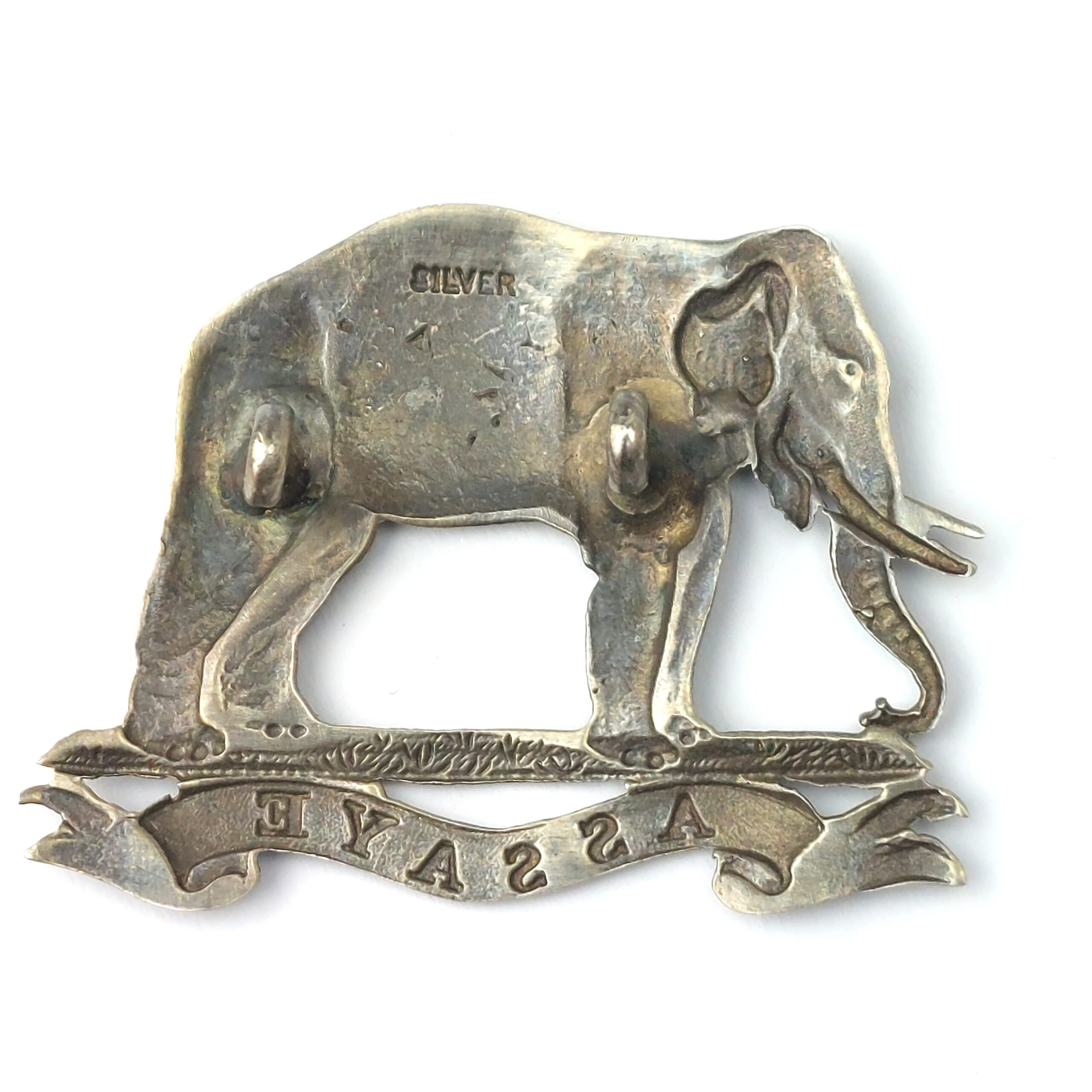
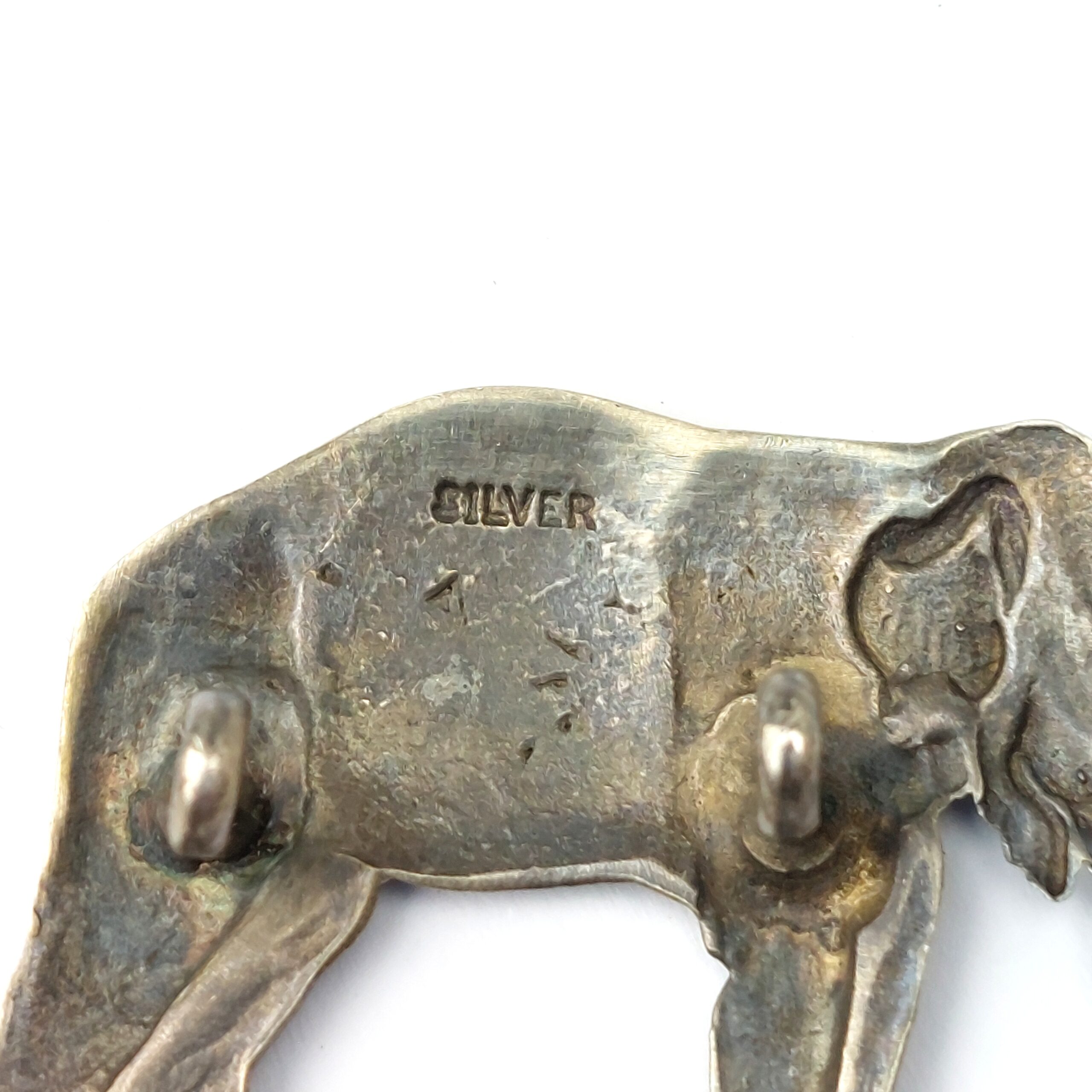
The reverse is stamped SILVER, confirming manufacture in silver for officer’s wear rather than the standard white metal versions issued to other ranks. The reverse shows two tall soldered lugs, the correct period fittings used to secure the badge to an officer’s peaked service cap by means of a split pin.
The elephant motif commemorates the regiment’s participation in the Battle of Assaye (1803) during the Second Anglo-Maratha War in India, one of the most famous victories of Arthur Wellesley, later the Duke of Wellington. The honour was adopted as the regiment’s principal badge and remained one of the most recognisable emblems in British cavalry heraldry.
Officer badges such as this were privately purchased items, often produced by military outfitters or jewellers rather than issued by the War Department, which explains the simple SILVER stamp rather than full British assay hallmarks.
Approx. Measurements – Width: 4.5 cm. Height: 3.4 cm.
History Note:
The 19th Hussars were originally raised in 1781 and later granted the title “Alexandra, Princess of Wales’s Own” in honour of Queen Alexandra. The regiment served extensively across the British Empire, including campaigns in India, South Africa during the Boer War, and on the Western Front during the First World War.
The elephant and “ASSAYE” scroll refer to the regiment’s participation in the Battle of Assaye (23 September 1803), one of the most decisive engagements of the Second Anglo-Maratha War. The battle became legendary in British military history and was later regarded by Wellington himself as his greatest victory.
This particular badge pattern—featuring the elephant above a single scroll—was worn roughly from the late Victorian period through the First World War until the regiment’s amalgamation in 1922, when it became part of the 15th/19th The King’s Royal Hussars.
*Condition*
Good original condition with attractive age patina to the silver. The SILVER stamp remains clearly visible on the reverse. Both original tall lugs are present and secure. Light service wear and minor surface marks consistent with age and use. Please see photographs as part of the condition report.
JAQ#3095BE9864237409