~ Victorian Staffordshire Pottery Money Box - Georgian Mansion House, c.1845-1870 ~
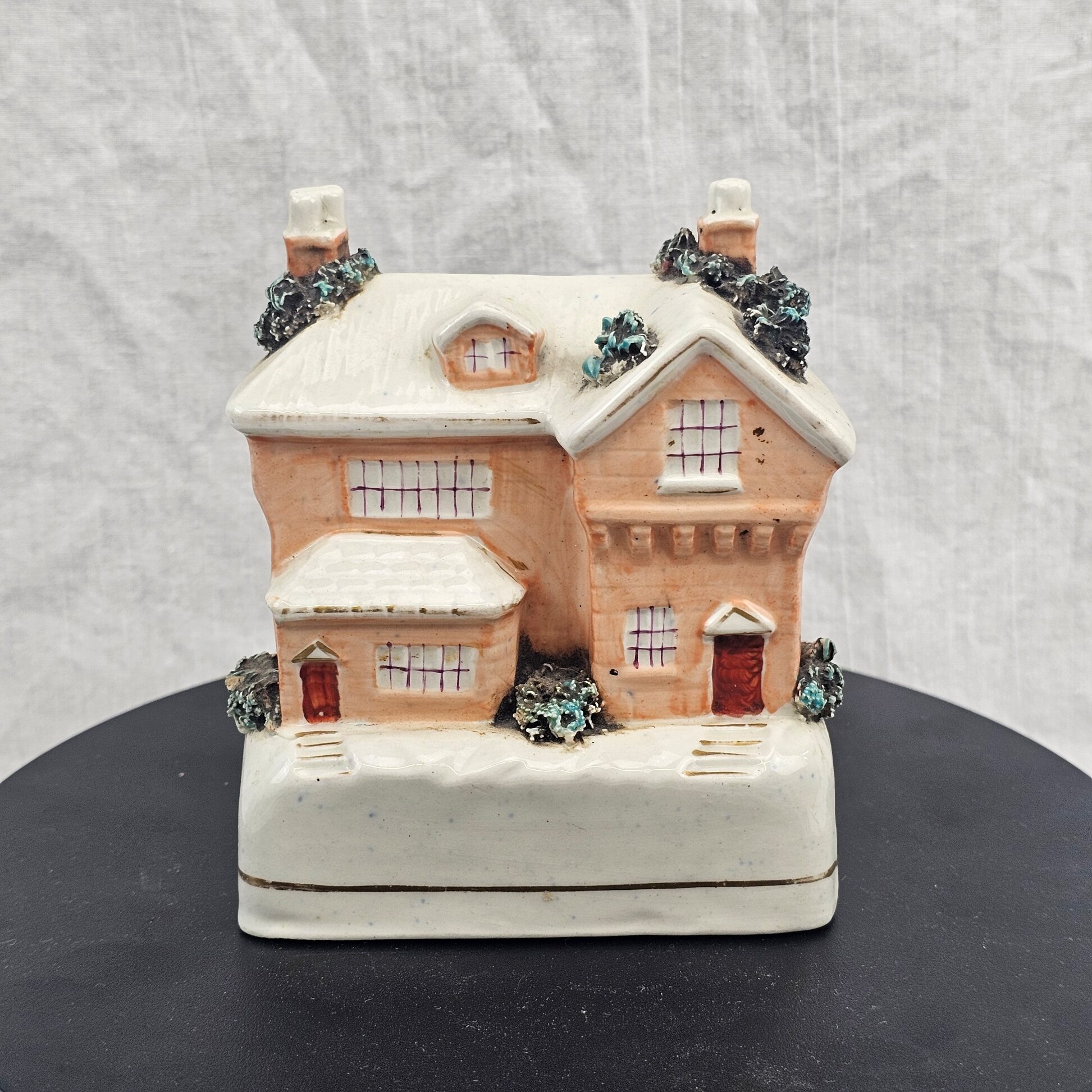
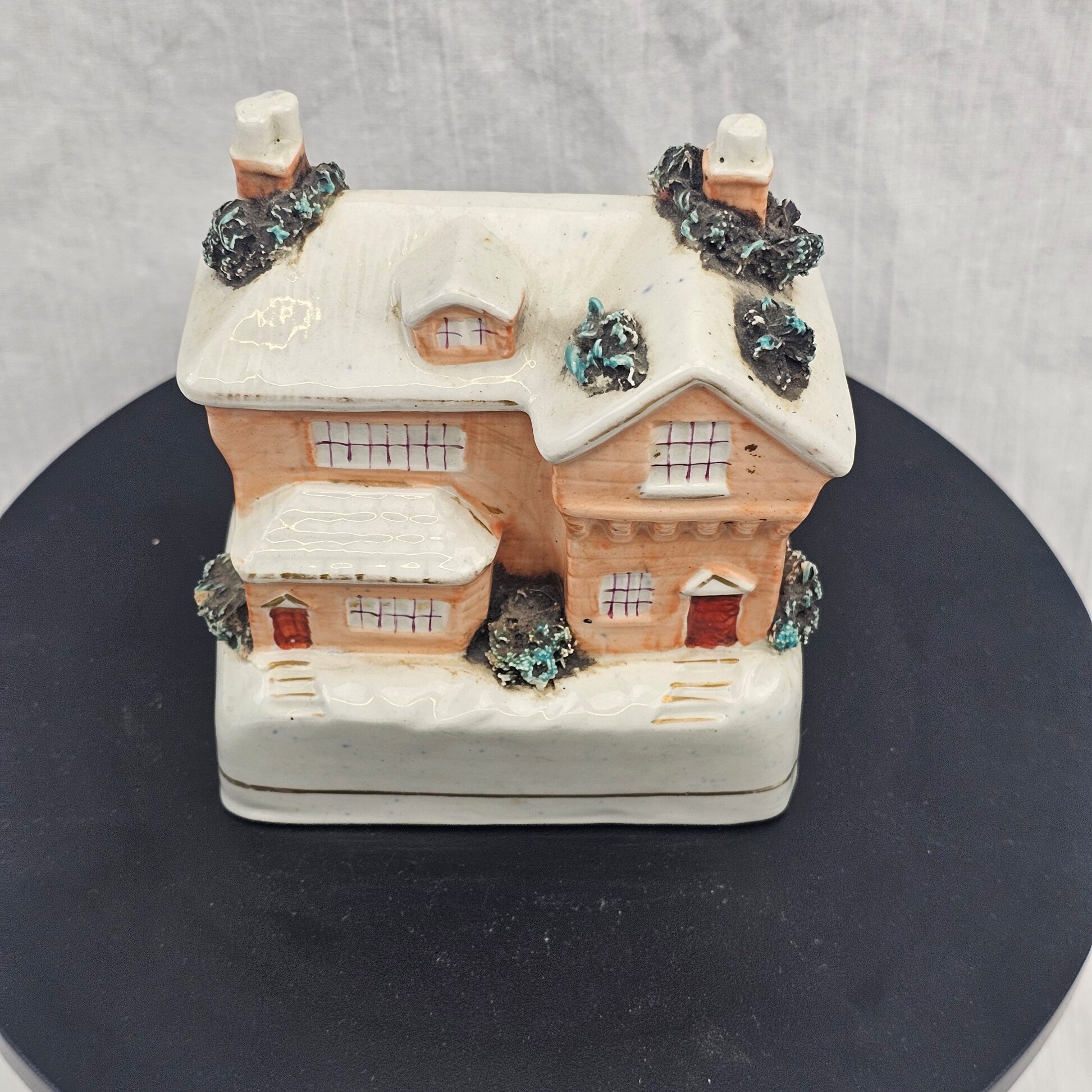
A charming and collectible Victorian Staffordshire pottery money box in the form of a substantial two-storey Georgian mansion house, complete with its original coin slot and decorated throughout with applied bocage and polychrome enamel details.
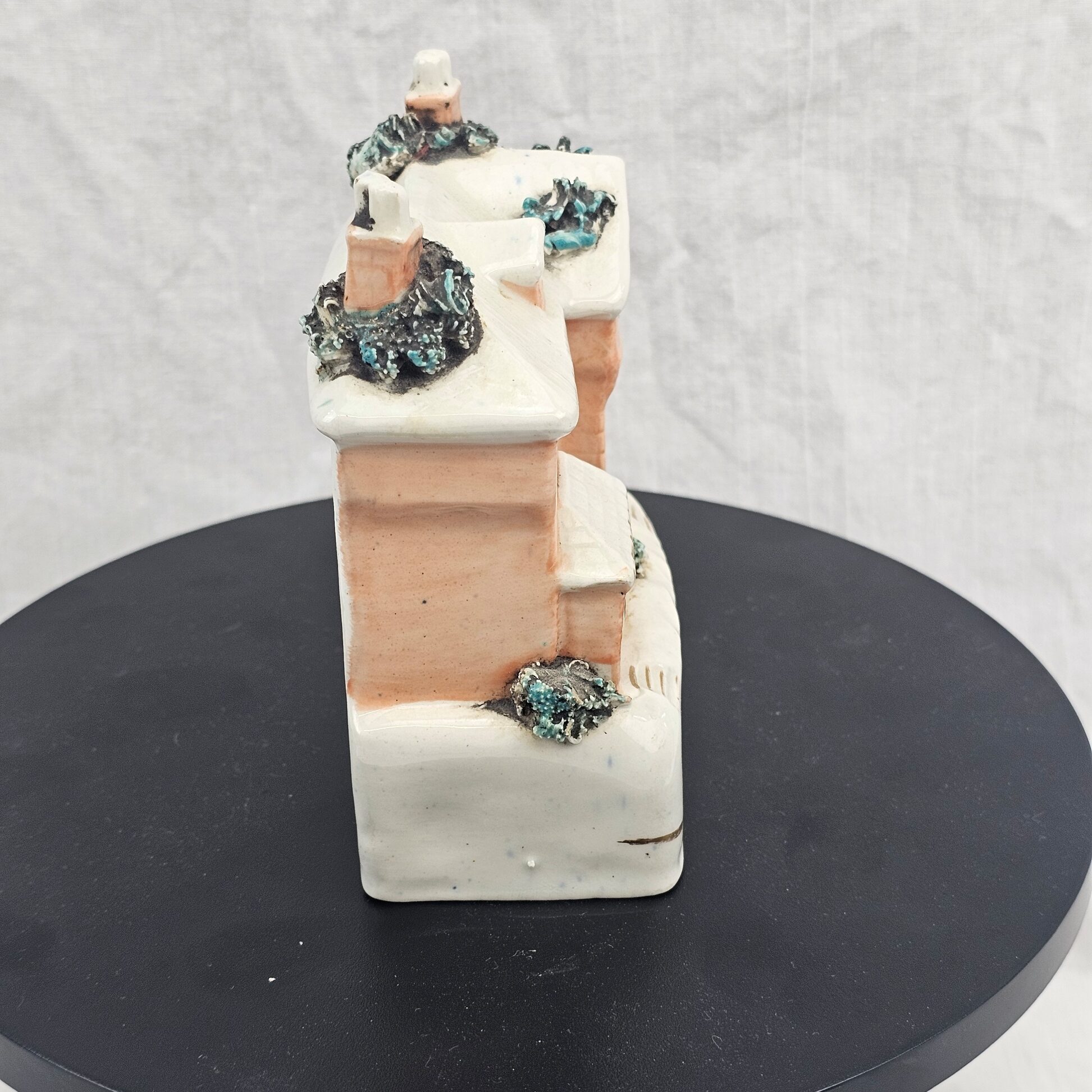
This delightful piece is a Victorian Staffordshire pottery money box — a form sometimes called a 'penny bank' — modelled as an imposing Georgian or early Victorian mansion house of considerable architectural ambition. Unlike the simple single-cottage forms that are the most common type, this example depicts a multi-part composition: a principal two-storey house block with a steeply pitched roof and a projecting dormer window, flanked by a lower wing to the left with its own gabled roof and entrance porch, suggesting a country house or vicarage of some social standing.
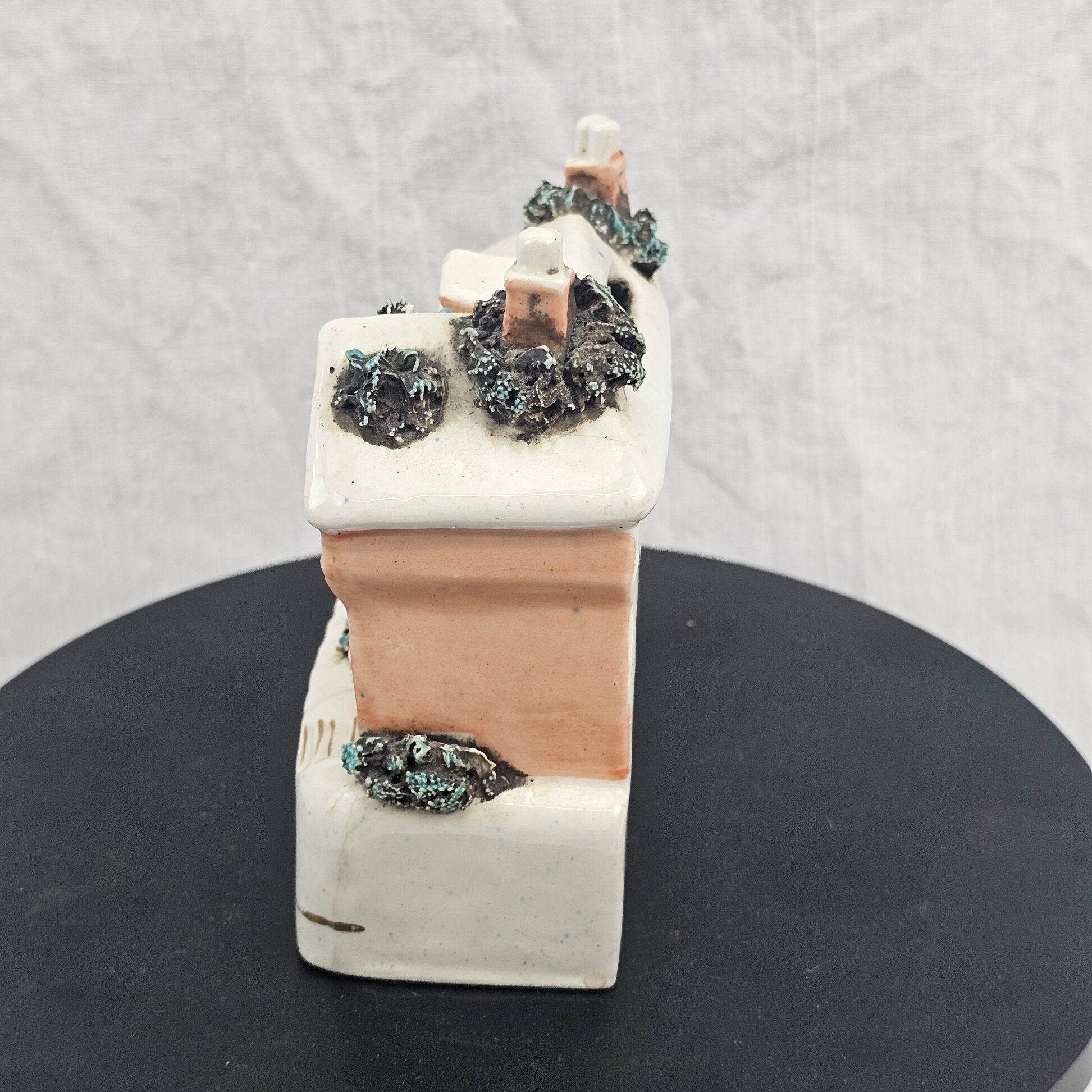
The walls are glazed in a warm salmon-pink, the roofs and window surrounds in white, and the panelled windows are painted with characteristic purple-mauve lines evoking multi-paned Georgian glazing. The two red doors — one to the main block and one to the lower wing - add a vivid focal point, and steps are indicated at each entrance in gilt. The two chimneys are modelled in salmon-pink with white tops, and at their bases, and distributed across the rooflines and ground level, are generous clusters of applied bocage decoration in a dark green and teal enamel - the characteristic sieved clay flower and foliage encrustation of Victorian Staffordshire cottage-ware, here in a darker, more dramatic palette than the brighter examples of the 1830s-40s. The whole piece sits on a raised rectangular plinth base in white with a single gilt-line border - a feature consistent with mid-to-late Victorian production.
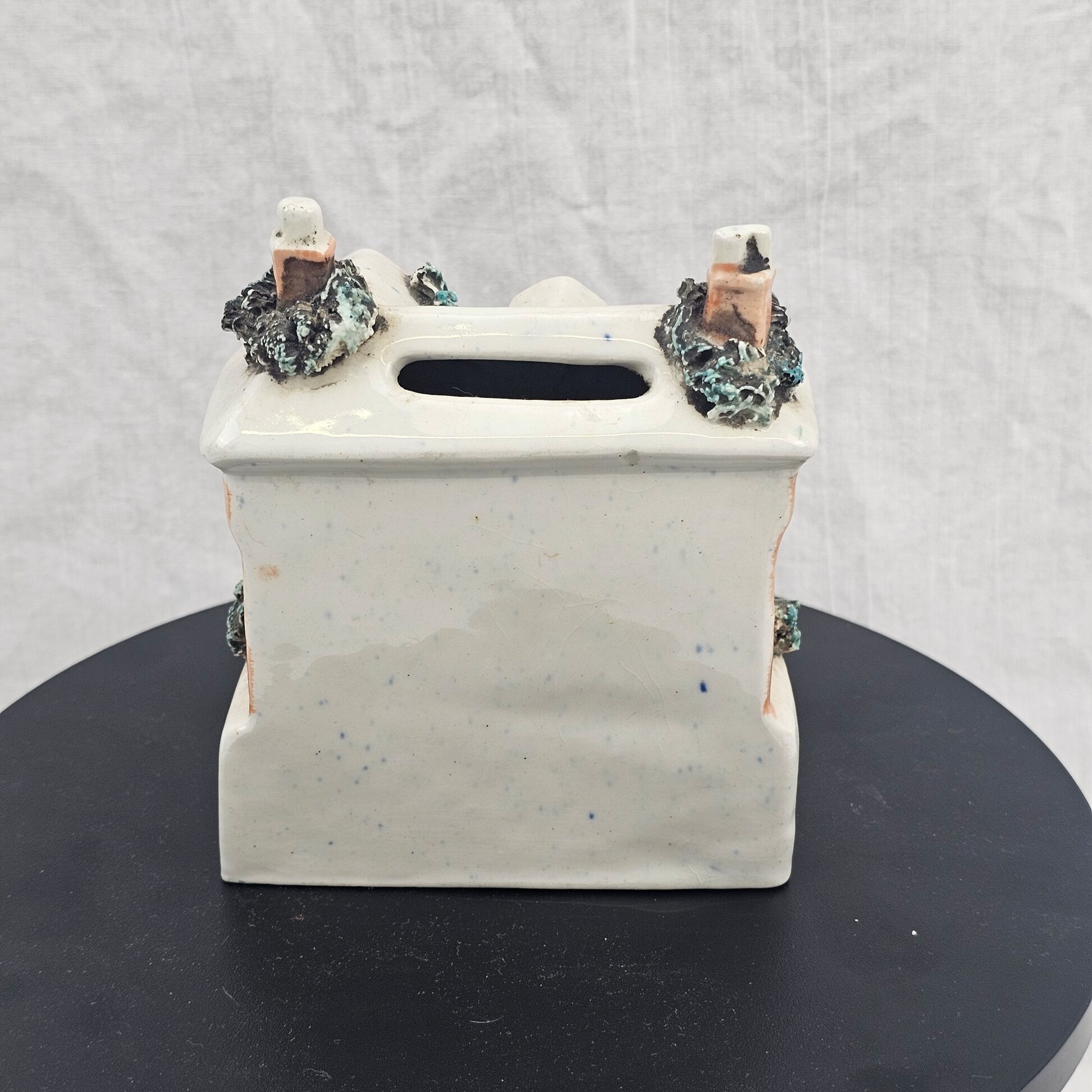
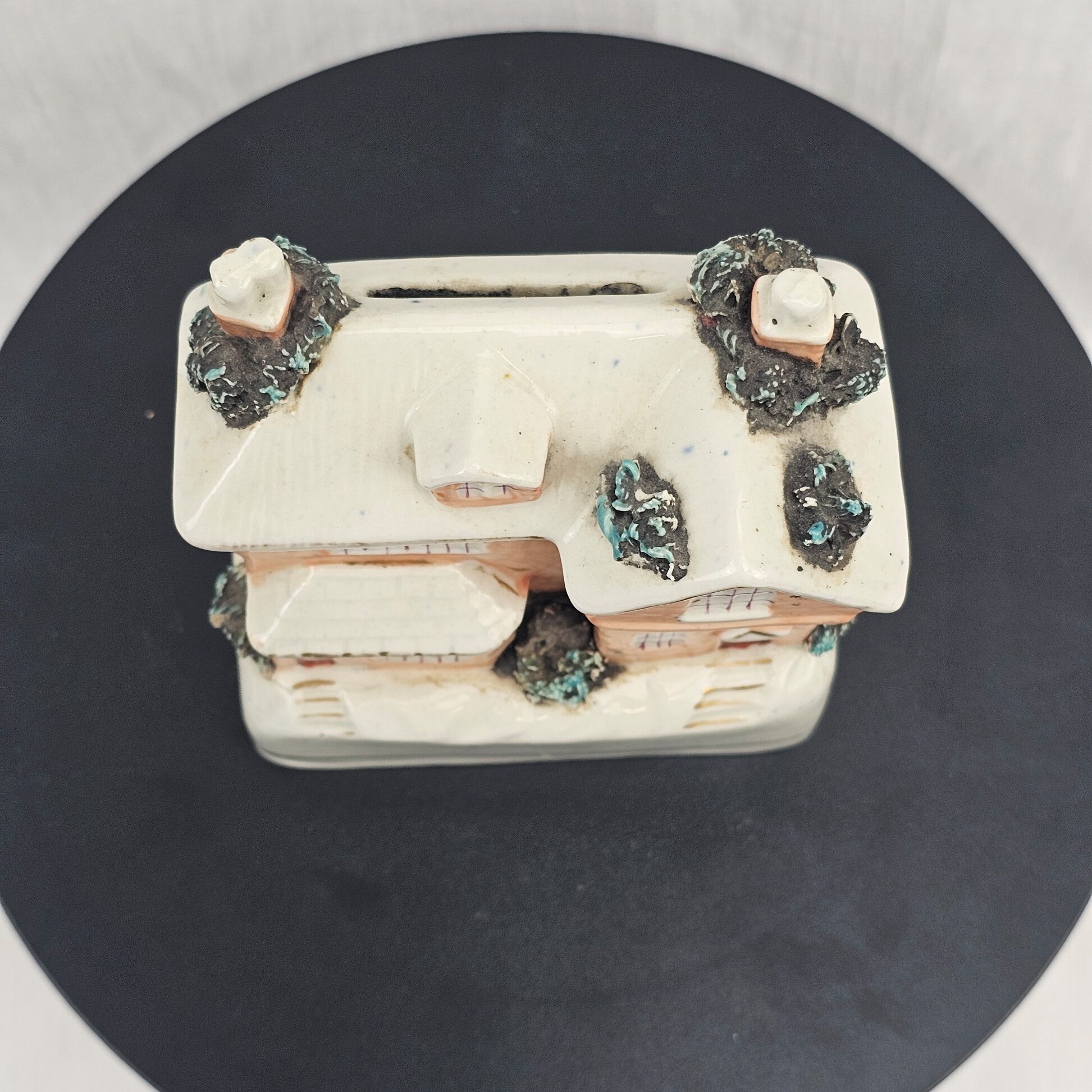
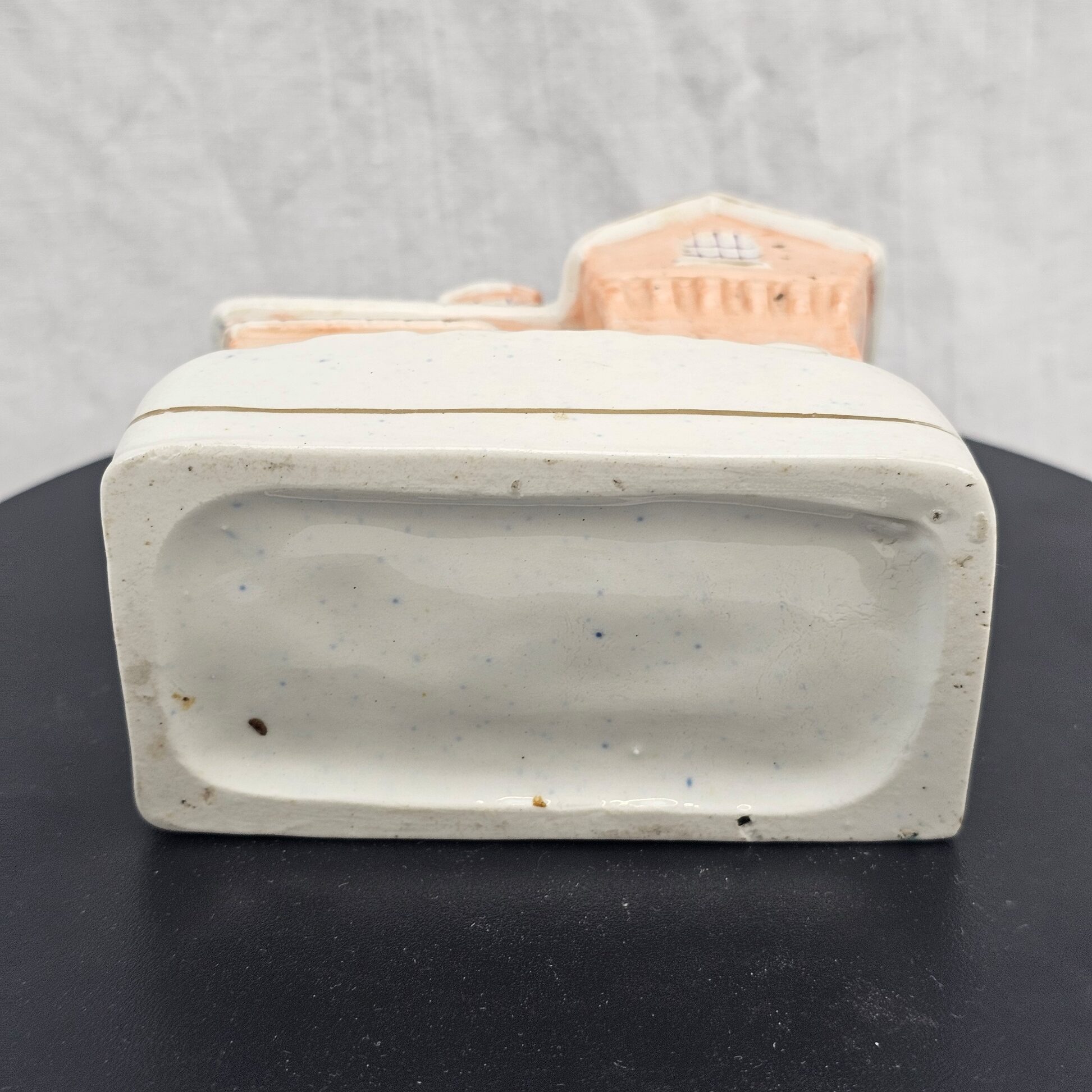
The coin slot is clearly visible in the roof (images 3 and 6): a neat rectangular aperture positioned centrally between the two chimney stacks, through which coins were inserted into the hollow interior. The base (image 7) is the characteristic flat, recessed rectangular form of press-moulded Staffordshire production, here glazed white with the characteristic fine blue speckle of the period. No maker's mark is present, entirely typical of the category.
Historical Context
Staffordshire pottery money boxes in the form of houses and cottages were produced in significant numbers throughout the Victorian period, from approximately the 1830s through to the 1870s. They served a genuinely practical domestic purpose as savings banks for children and households at a time before formal banking was accessible to working-class families, while simultaneously functioning as decorative mantelpiece ornaments in the tradition of Staffordshire architectural pottery.
The house form was the most popular and enduring shape, with manufacturers producing everything from simple thatched cottages to ambitious multi-storey mansion compositions such as this example. The coin slot was typically positioned in the roof or chimney to preserve the decorative integrity of the front elevation — allowing the piece to display attractively while still fulfilling its function.
The survival rate of pottery money boxes is notably lower than other Staffordshire architectural pieces, precisely because they were frequently smashed to retrieve their contents - making intact examples with the coin slot undamaged particularly sought after by collectors. The combination of intact structure, good decoration, and the more architecturally ambitious mansion form makes this a desirable example of the type.
Condition
The piece presents well overall, with good structural integrity and colourful decoration.
Coin slot (images 3 and 6): The slot is intact and undamaged - a key positive for this form of piece, as slot damage is very common.
Bocage decoration: The applied dark green/teal bocage clusters are largely present, though some darkening and surface accumulation of dirt/grime is visible, particularly around the bocage. This is consistent with age and is typical of this type of Victorian enamel decoration.
Roofline: Some light surface grime visible on the white roof areas (image 6 top view), which is cleanable with care.
Glazed surfaces: The white glaze is intact. Some fine crazing is present throughout, consistent with age.
Base (image 7): The hollow base is clean and intact, with age-related dirt spots and blue speckle in the glaze - both original characteristics.
No chips, cracks, or restoration are apparent from the photographs. Buyers are encouraged to examine all images closely before purchasing.