*German, WWII, 6 February 1944, Der Durchbruch Eastern Front Soldiers Newspaper – Complete 10 Pages – Vitebsk / Bengal Famine / Propaganda Issue*
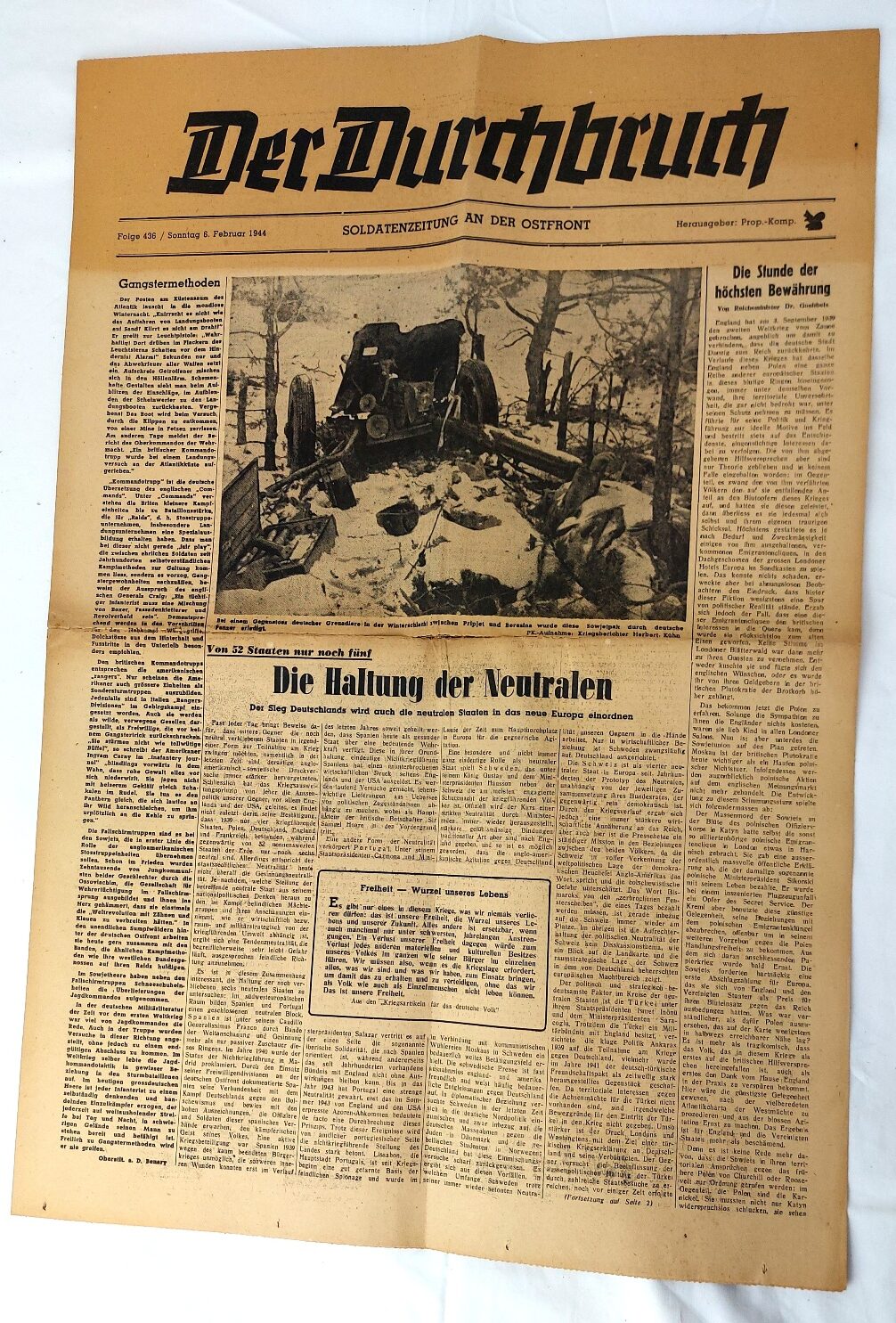
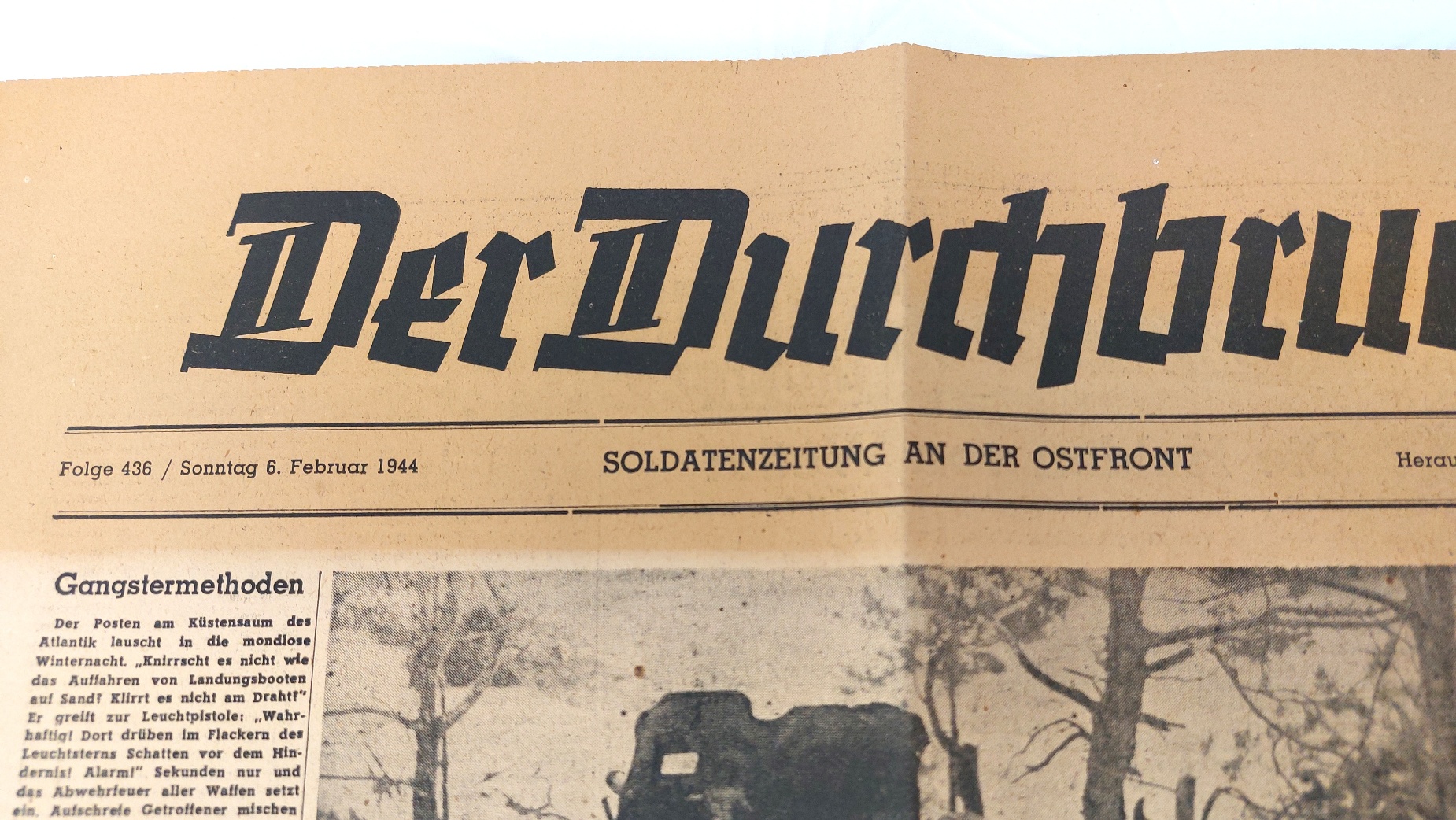
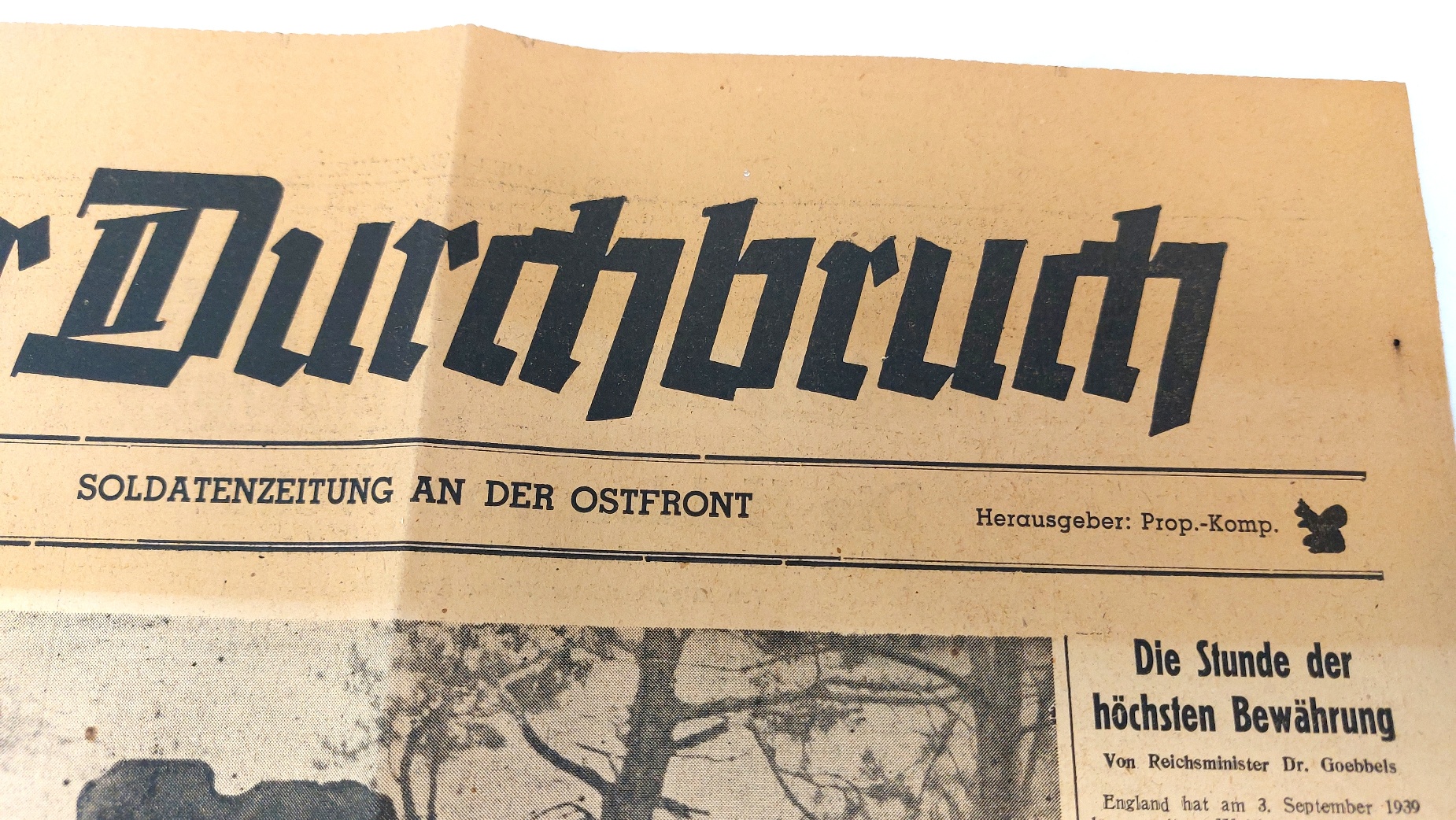
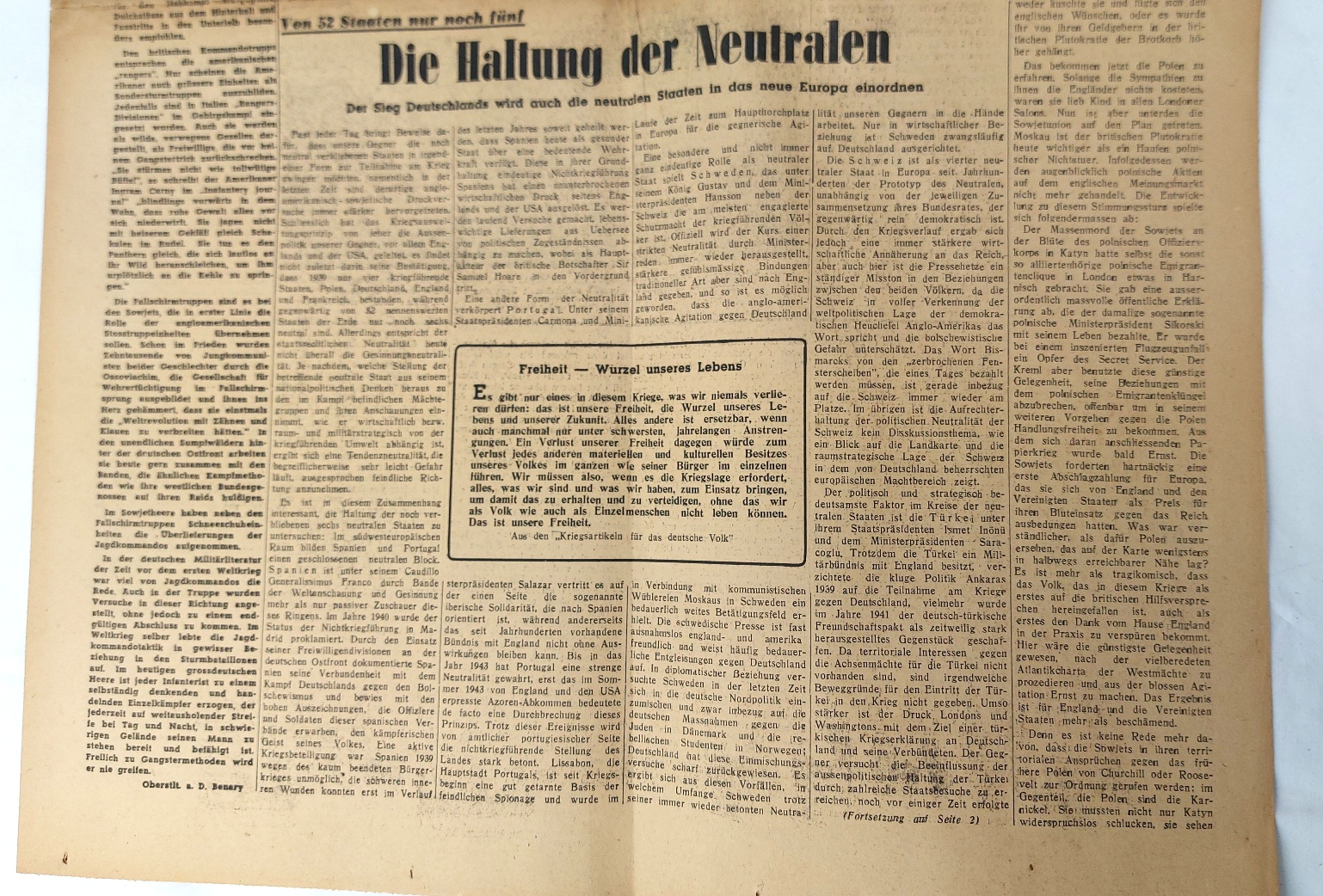
A substantial and original German World War II military newspaper titled Der Durchbruch (“The Breakthrough”), a Soldatenzeitung an der Ostfront (“Soldiers’ Newspaper on the Eastern Front”), issued specifically for Wehrmacht troops serving on the Eastern Front and published by the German Propaganda-Kompanie. This example is Folge 436, dated Sunday, 6 February 1944, representing a fascinating and historically revealing late-war issue produced during one of the most difficult phases of the war.
Distributed directly to frontline soldiers, newspapers of this type served as morale publications intended to provide carefully curated military news, political messaging and entertainment material for troops. By February 1944 Germany had shifted decisively onto the defensive across much of the Eastern Front, making this issue particularly interesting as it reflects the changing tone of late-war propaganda—moving away from triumphal battlefield victories and instead emphasizing endurance, sacrifice and psychological resilience.
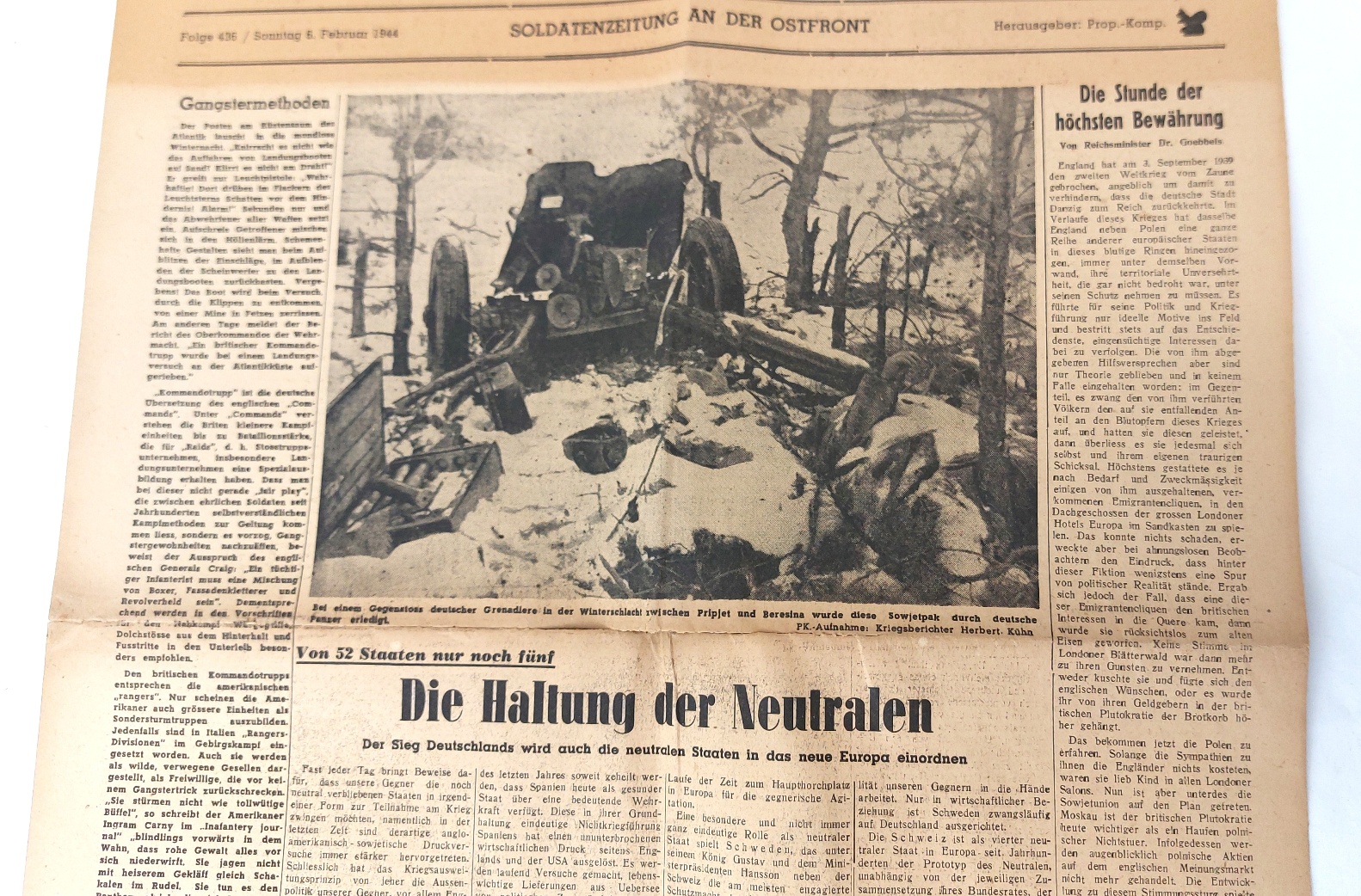
The front page is dominated by the major headline “Die Haltung der Neutralen” (“The Attitude of the Neutral Nations”) with the subheading “Von 52 Staaten nur noch fünf” (“Of 52 states only five remain”), arguing that the remaining neutral countries—including Sweden, Switzerland, Spain, Portugal and Turkey—would ultimately align themselves with Germany’s vision of a “new Europe.” Accompanying articles include “Gangstermethoden” (“Gangster Methods”), condemning Allied tactics, and “Die Stunde der höchsten Bewährung” (“The Hour of Supreme Trial”), a morale article attributed to Dr. Goebbels intended to prepare soldiers for increasing hardship and prolonged struggle.
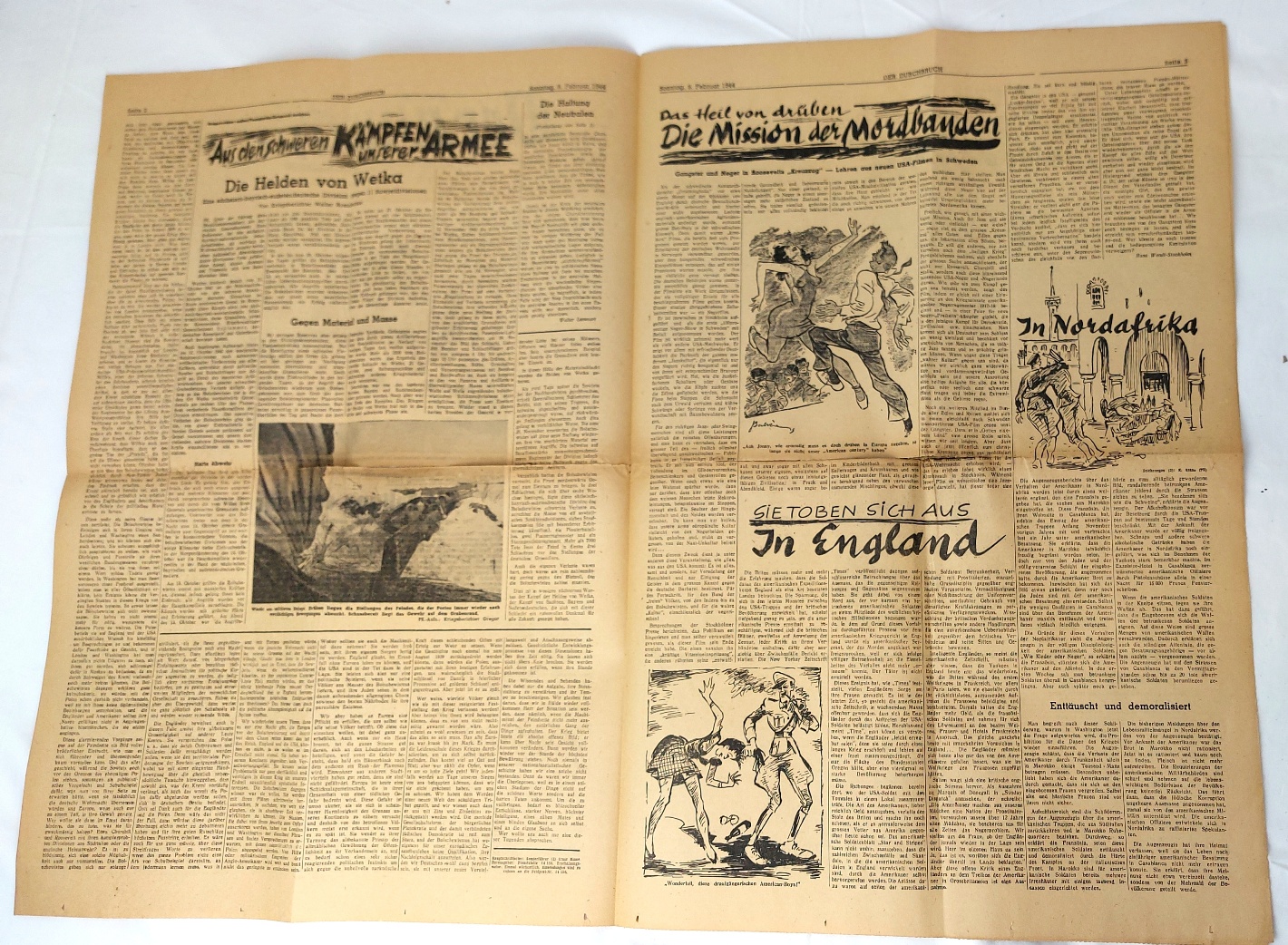
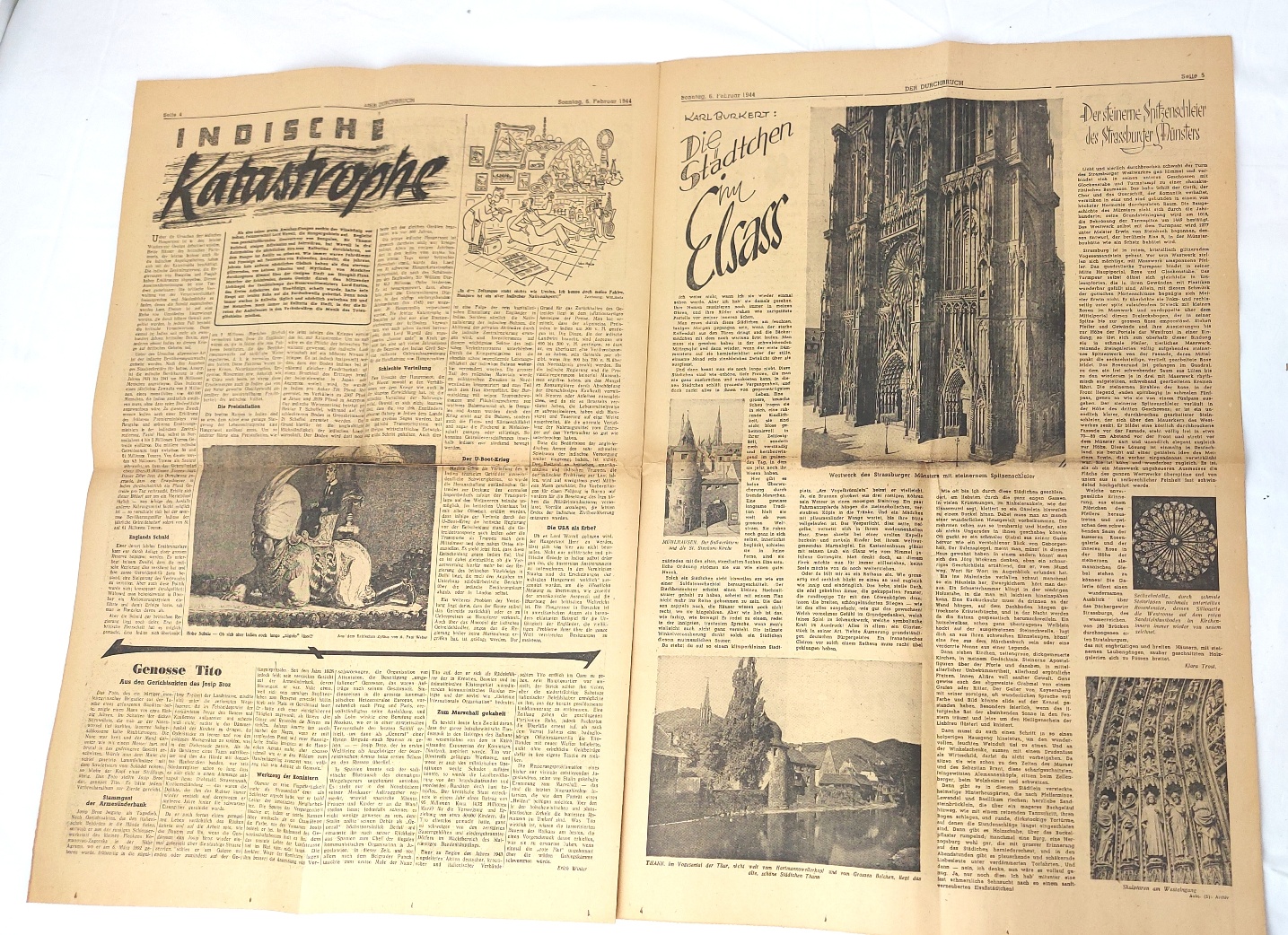
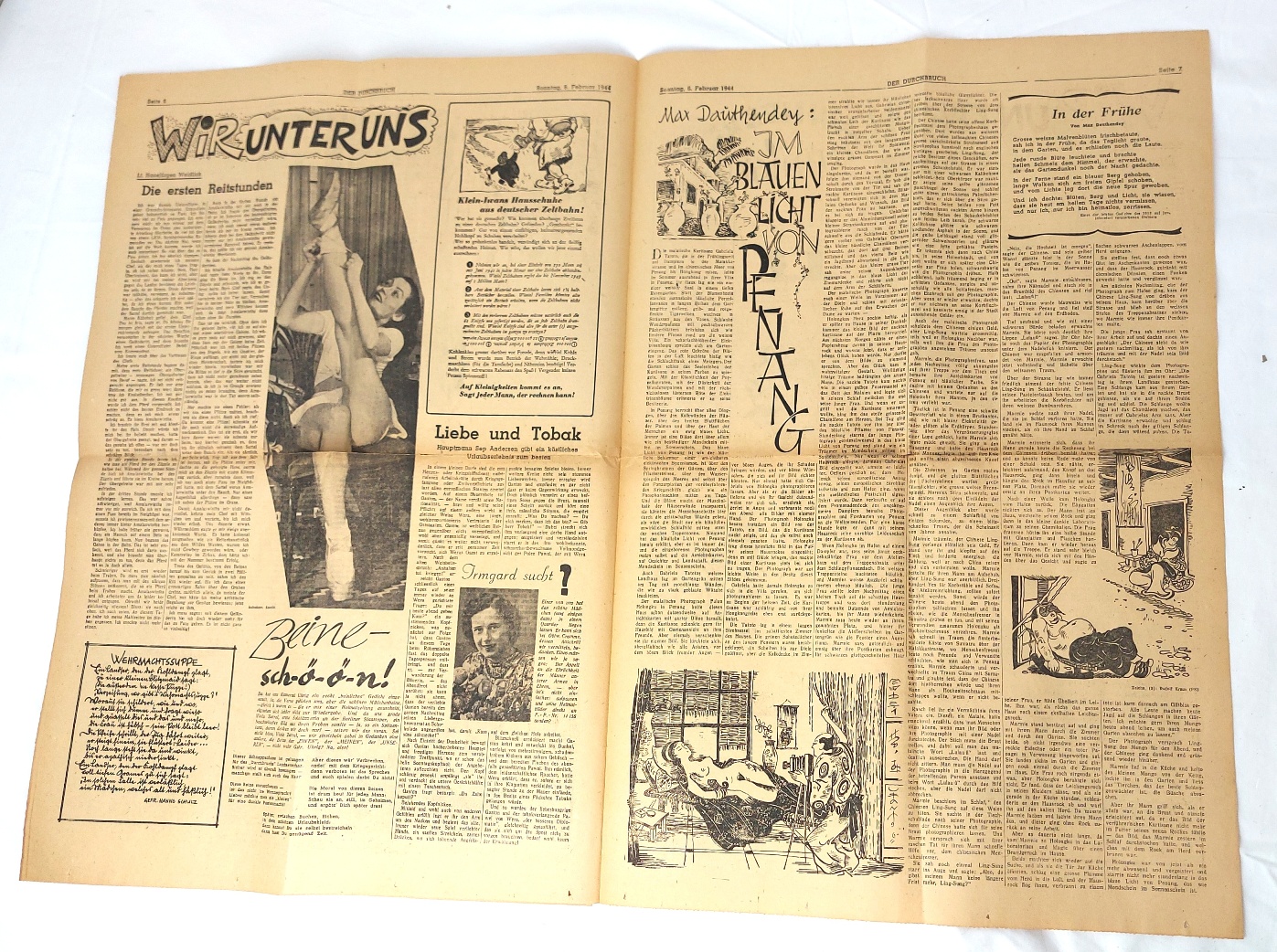
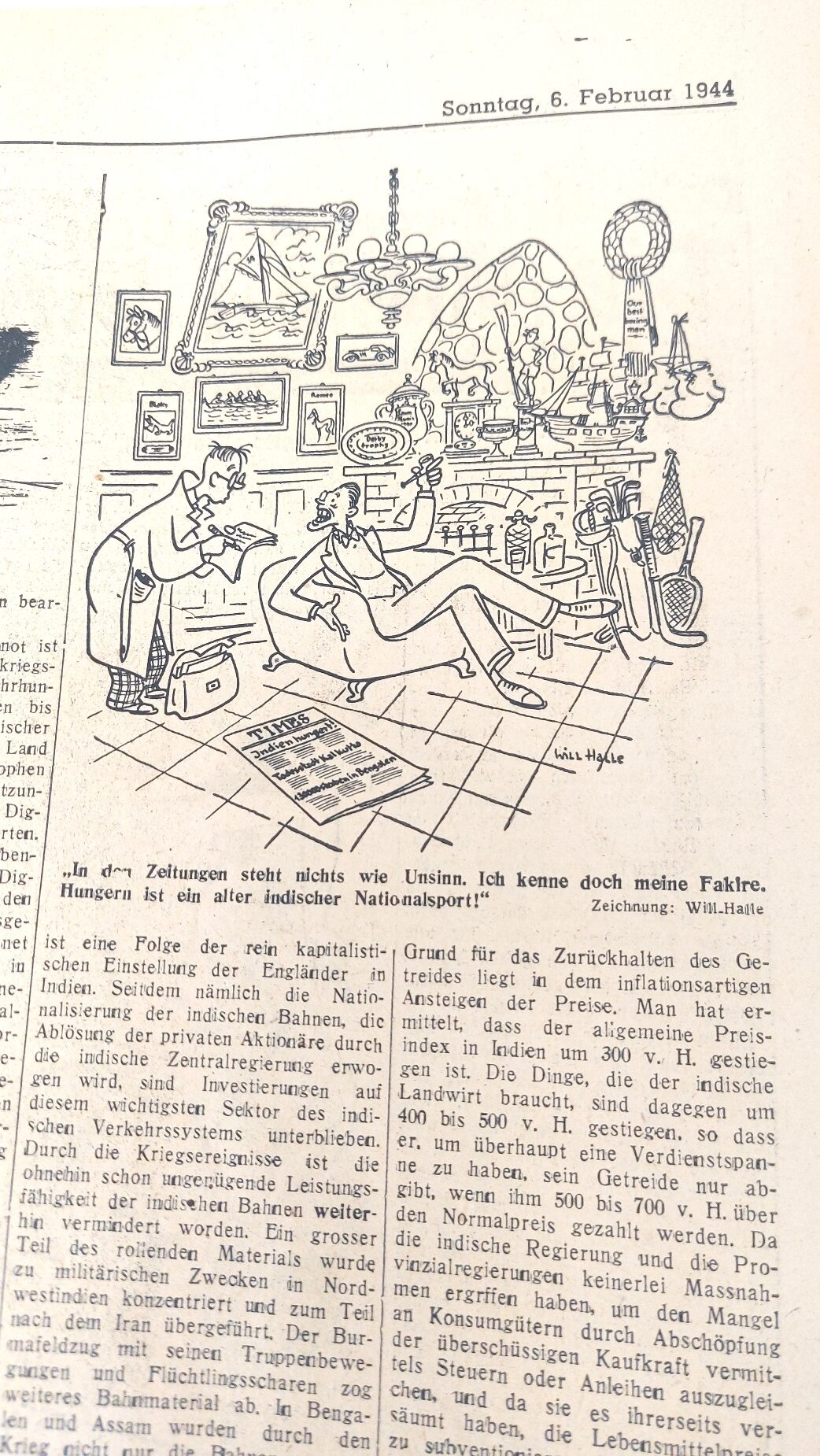
The remaining pages provide a remarkable cross-section of wartime propaganda and soldier reading material. Included are “Die Helden von Witebsk” (“The Heroes of Vitebsk”), dealing with fighting on the Eastern Front; “Die Mission der Mordbanden” (“The Mission of the Murder Gangs”), an illustrated anti-Allied propaganda feature; and “Indische Katastrophe” (“Indian Catastrophe”), a politically charged article exploiting the Bengal Famine to portray Britain and the Allies negatively. Alongside these are cultural and escapist features such as “Die Städtchen im Elsass” (“The Small Towns of Alsace”), architectural pieces on Strasbourg Cathedral, humour sections, cartoons, puzzles and lighter social content intended to provide a temporary distraction from frontline conditions.
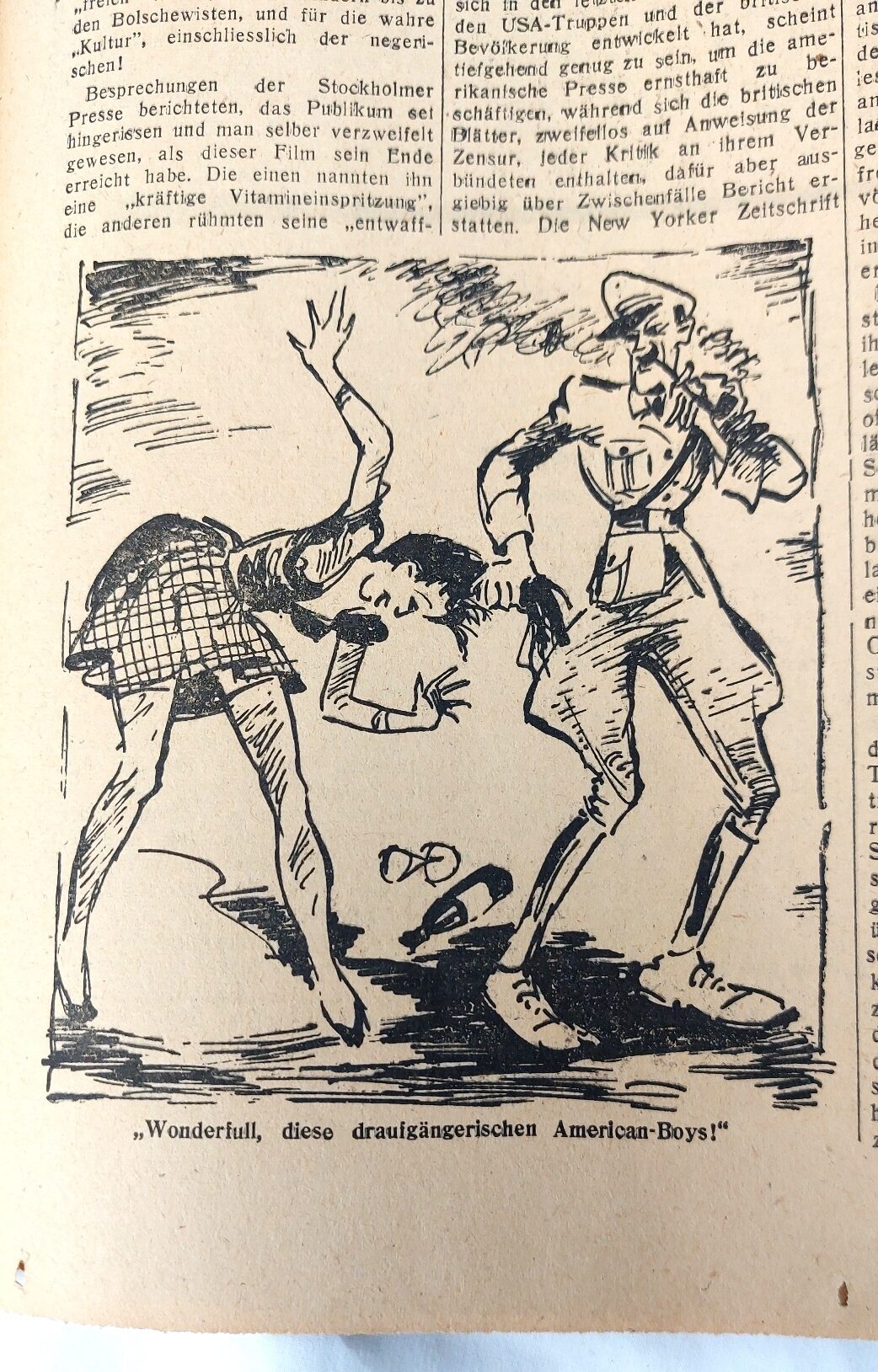
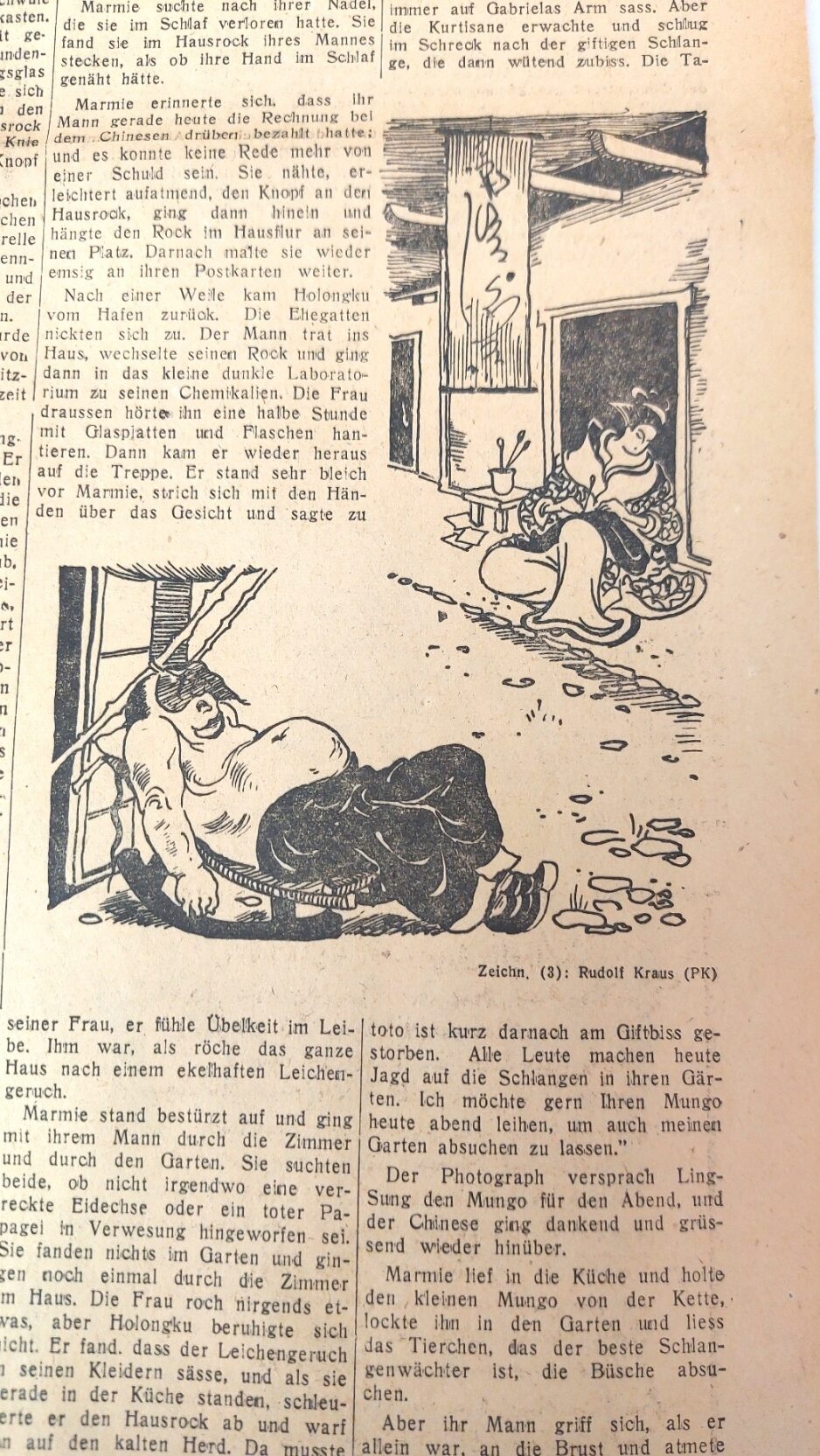
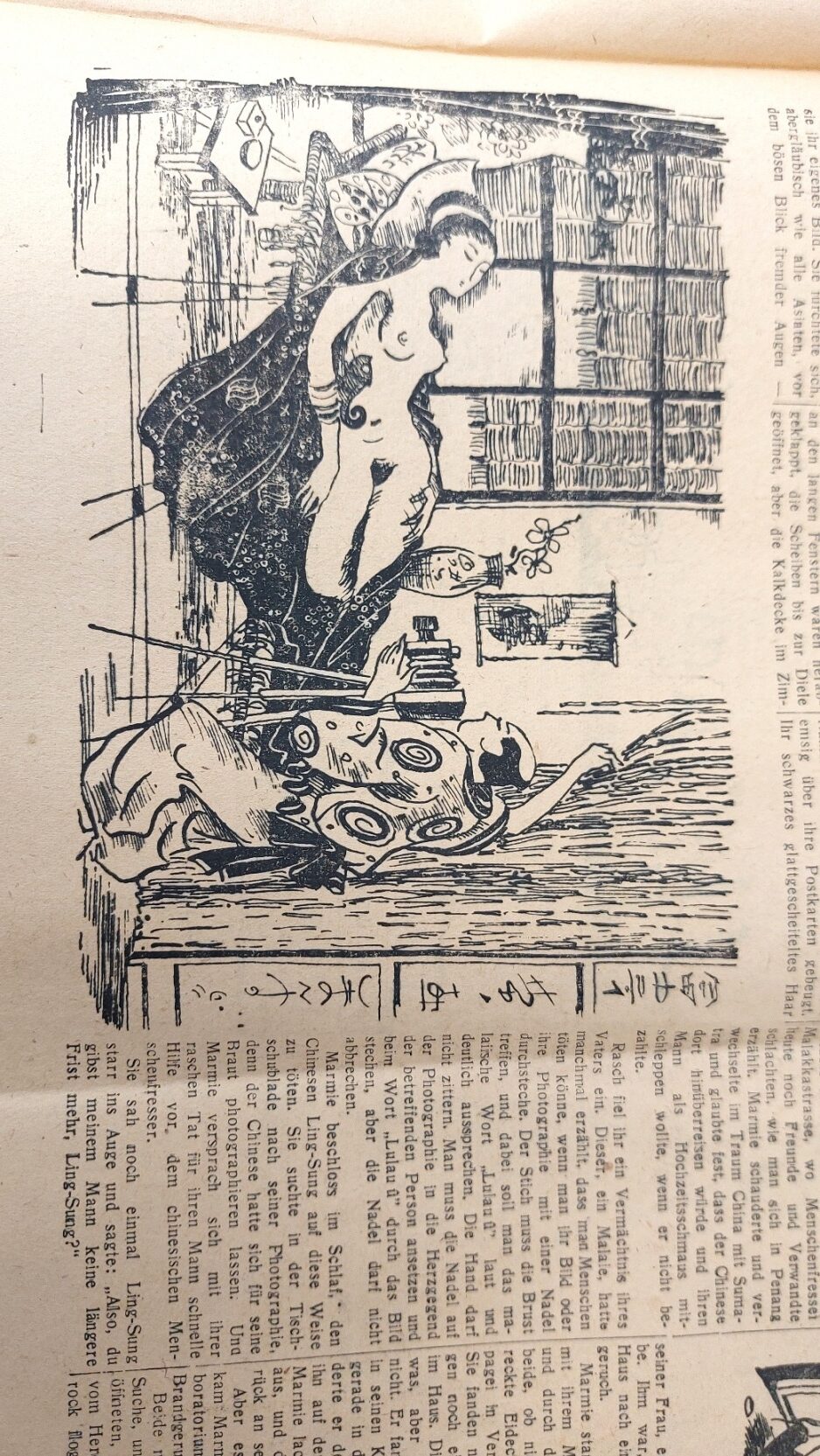
The issue includes numerous wartime illustrations and caricatures by named artists including Will Halle, Rudolf Kraus, and Karl Bunkert, together with a mixture of battlefield photography and propaganda artwork. Of particular interest is the inclusion of entertainment and glamour material among the military reporting, a common feature of troop newspapers intended to sustain morale among serving soldiers.
Approx. Measurements – Large broadsheet newspaper format.
History Note:
This complete ten-page issue captures the psychological shift within German military propaganda during the latter stages of the war. By early 1944 the Wehrmacht was retreating across large sections of the Eastern Front and publications such as Der Durchbruch increasingly focused on themes of sacrifice, endurance and unwavering commitment rather than rapid battlefield success. Articles concerning international events, such as the Bengal Famine, demonstrate how German authorities attempted to frame global events as evidence of Allied weakness while diverting attention from Germany’s own deteriorating military position.
Unlike civilian newspapers, frontline Soldatenzeitung publications were printed on fragile wartime wood-pulp paper intended for short-term use in harsh field conditions. Such newspapers were frequently discarded, destroyed, or even used as fuel, making complete surviving Eastern Front troop newspapers significantly less common than standard civilian wartime press material.
*Condition*
Complete 10-page issue retaining all pages. There is a substantial horizontal cut/tear extending through the centre section of the newspaper and visible across multiple pages, together with fold lines, age toning, handling wear and edge wear consistent with wartime paper ephemera. The issue nevertheless displays well and remains complete and highly readable. Please see photographs as part of the condition report.
A historically revealing and visually impressive Eastern Front soldiers newspaper combining frontline reporting, anti-Allied propaganda, wartime artwork, humour and morale material into a complete surviving late-war issue.
RQMBOXEE_6128241791