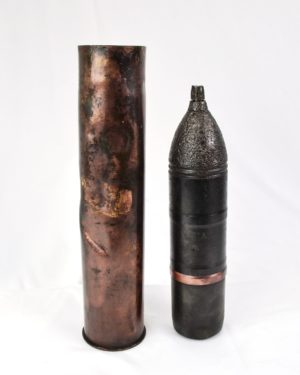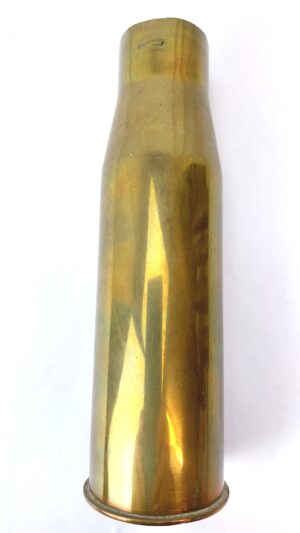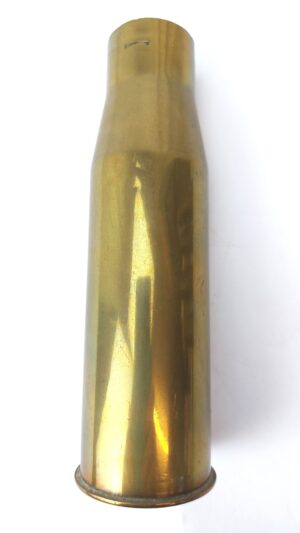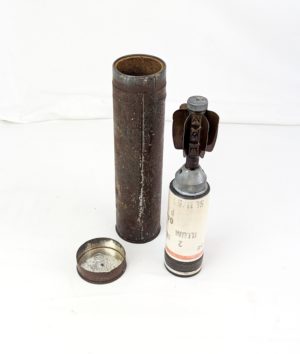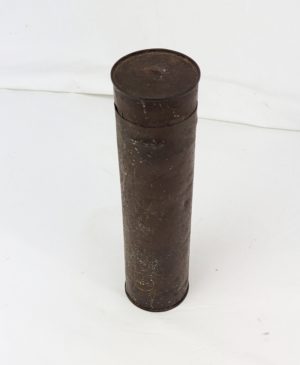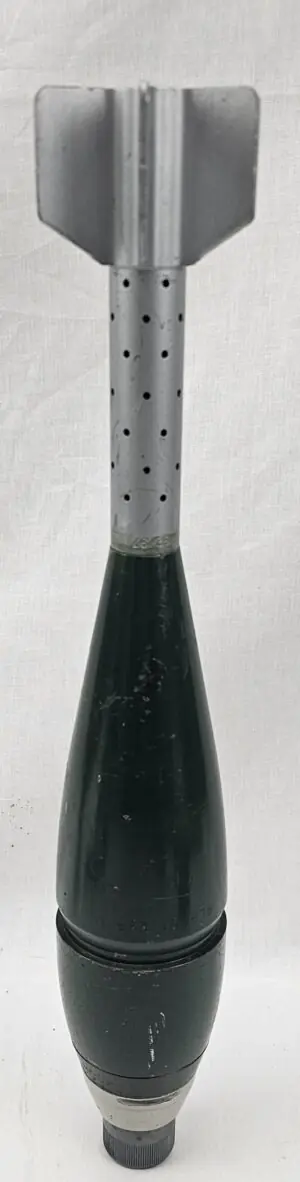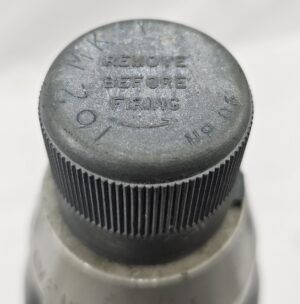
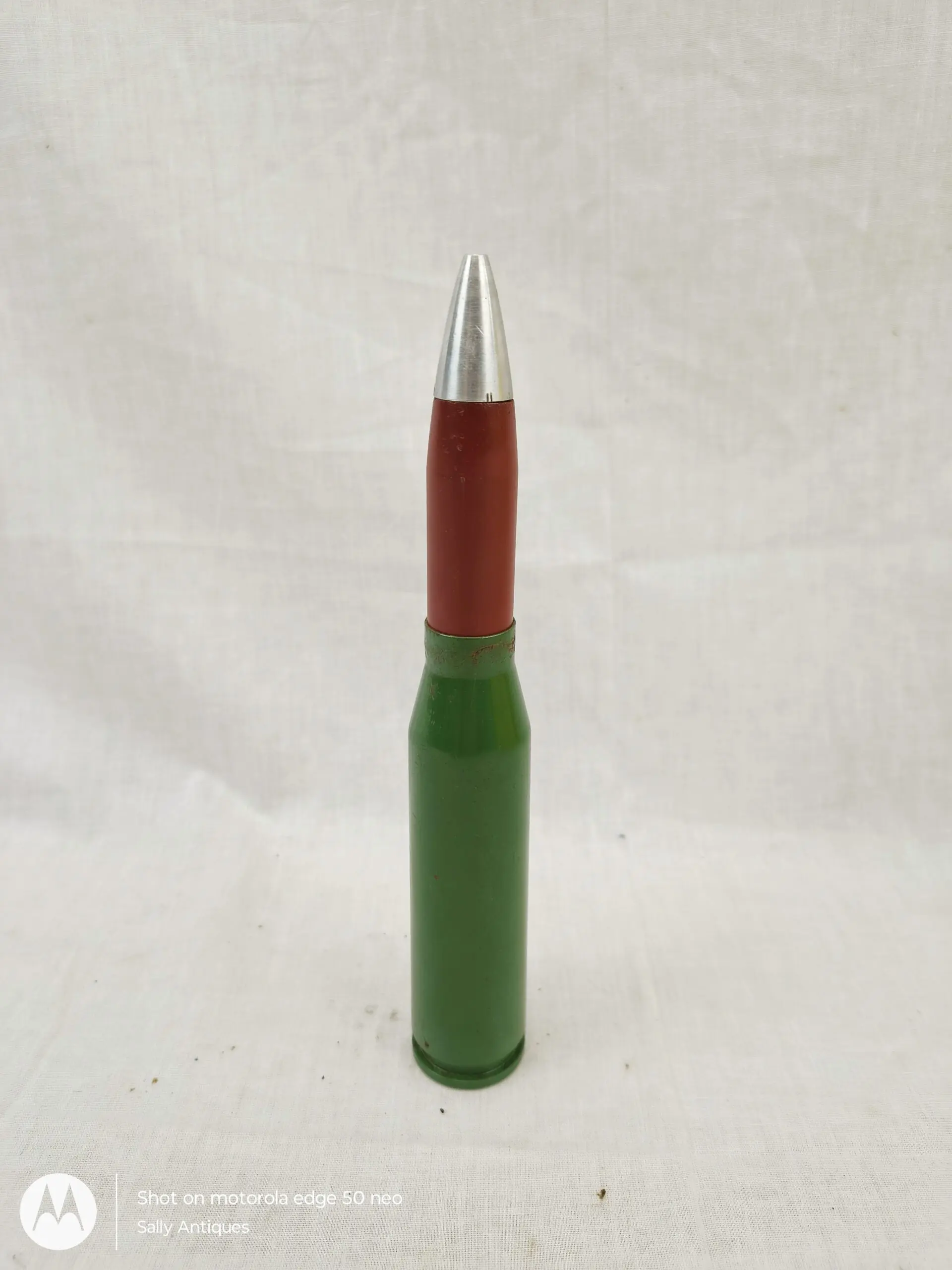
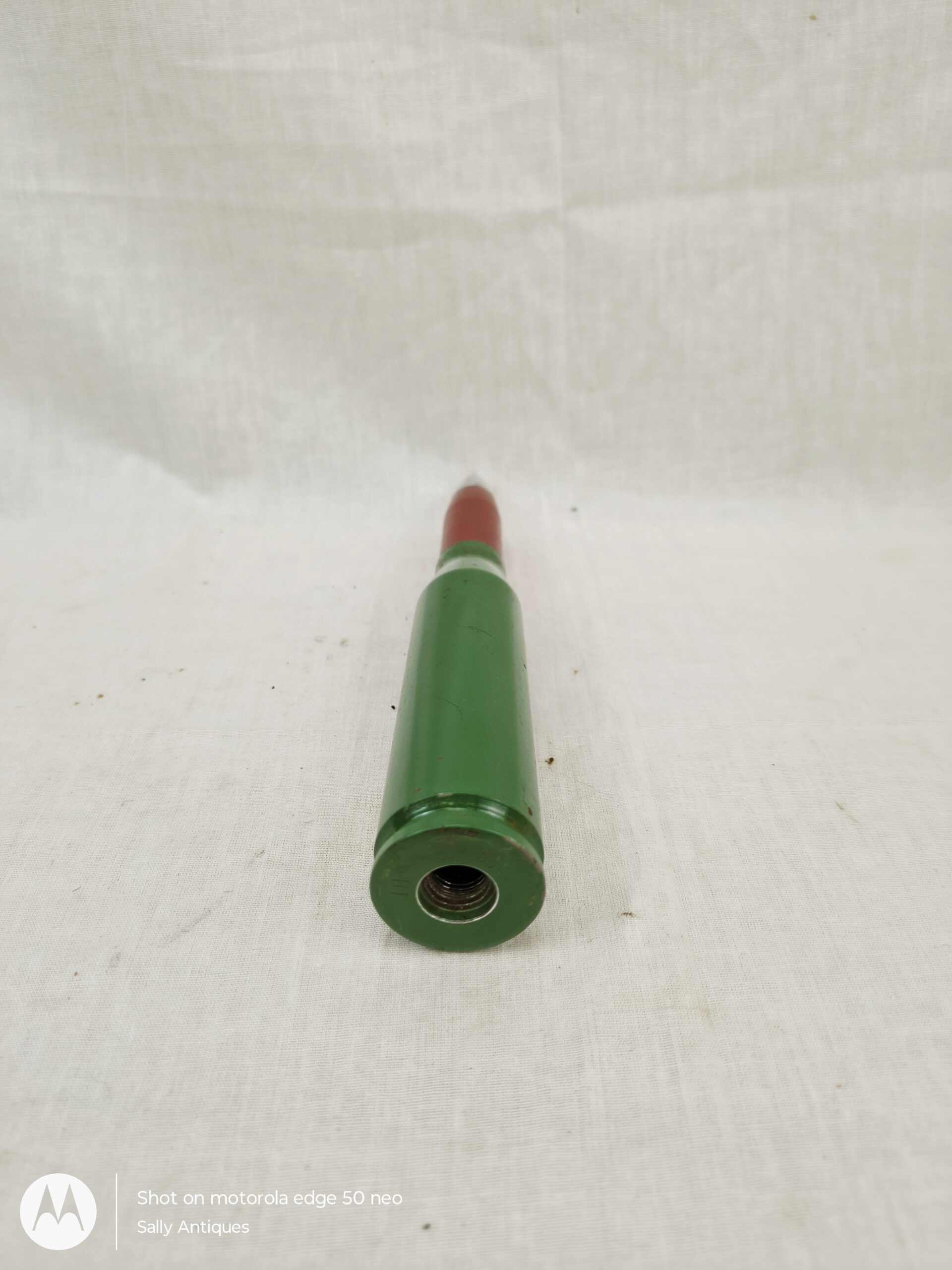
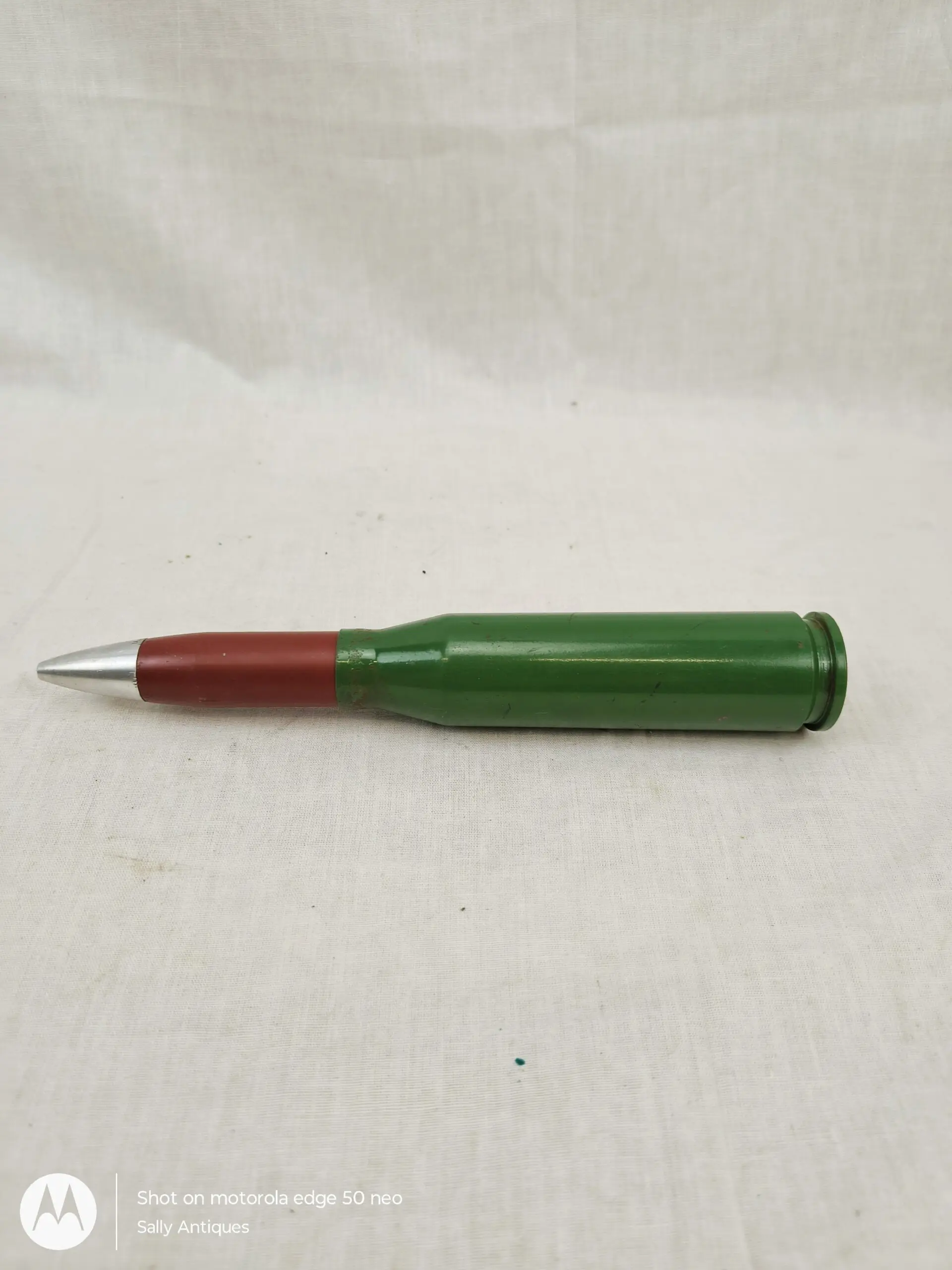
*20mm Oerlikon Anti-Aircraft KAA Round*
The 20mm Oerlikon KAA round is a widely used autocannon cartridge, designed for the Swiss Oerlikon 20mm series of cannons, which became one of the most successful automatic cannon designs of the 20th century.
Origins
The design originates from the 1910s–1920s work of Reinhold Becker (Germany) on a 20mm automatic cannon. After WWI, restrictions on German arms production led to further development in Switzerland by the Oerlikon company (Werkzeugmaschinenfabrik Oerlikon).
By the mid-1930s, Oerlikon had refined a series of 20mm autocannon models chambered for its proprietary ammunition, each with slightly different case lengths and designations (e.g., 20x110RB, 20x128, etc.).
The 20mm Oerlikon KAA
The KAA designation generally refers to the 20x110RB (rebated rim) cartridge, designed for the Oerlikon KAA autocannon, a compact and reliable weapon.
It was developed as a flexible anti-aircraft and naval gun round, effective against aircraft, light vehicles, and small vessels.
WWII Service
The round gained prominence during the Second World War, where the Oerlikon 20mm cannon was adopted by the Allies, most famously as a naval anti-aircraft gun.
Used extensively by the Royal Navy, US Navy, and Commonwealth forces, the 20mm Oerlikon was one of the most common shipboard AA weapons of the war.
Ammunition types included HE (High Explosive), HEI (High Explosive Incendiary), AP (Armour Piercing), and TP (Target Practice).
Post-War and Cold War Use
After 1945, the Oerlikon KAA round continued in service worldwide.
NATO and non-NATO nations produced and standardised various versions of the 20mm Oerlikon cartridge for naval, land, and air defence roles.
Still manufactured in some countries today for legacy Oerlikon systems.
Collectability
Inert examples of the 20mm Oerlikon KAA round are popular with ordnance collectors, especially those with naval or WWII interests.
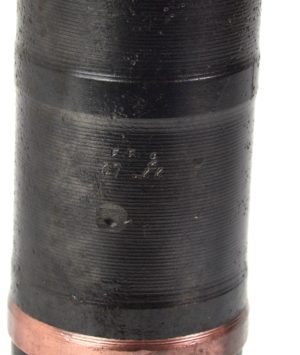
Markings (manufacturer codes, dates, naval property stamps) and condition strongly influence value.
Common as drill/inert rounds, with rarer tracer or AP types more sought after.