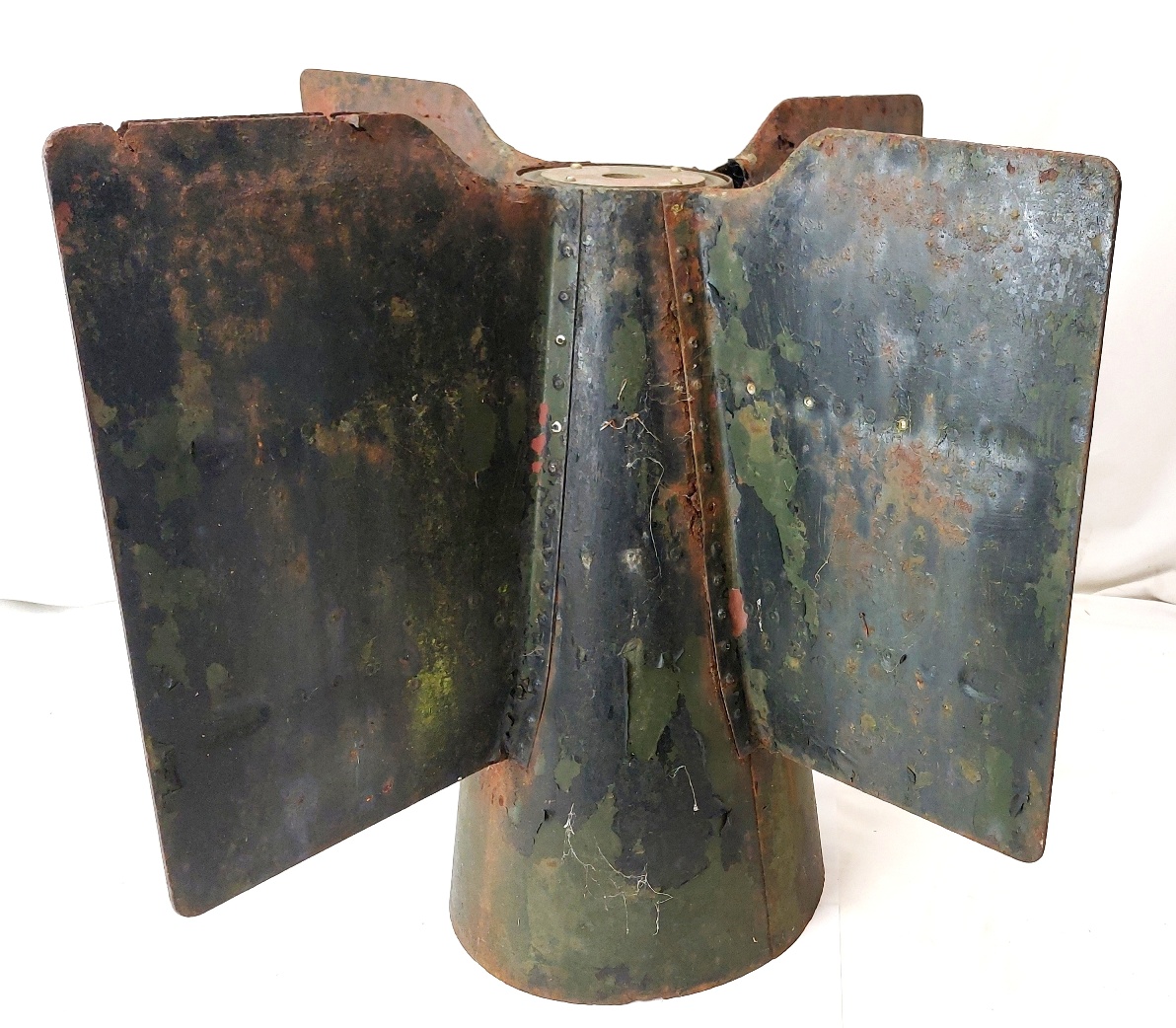
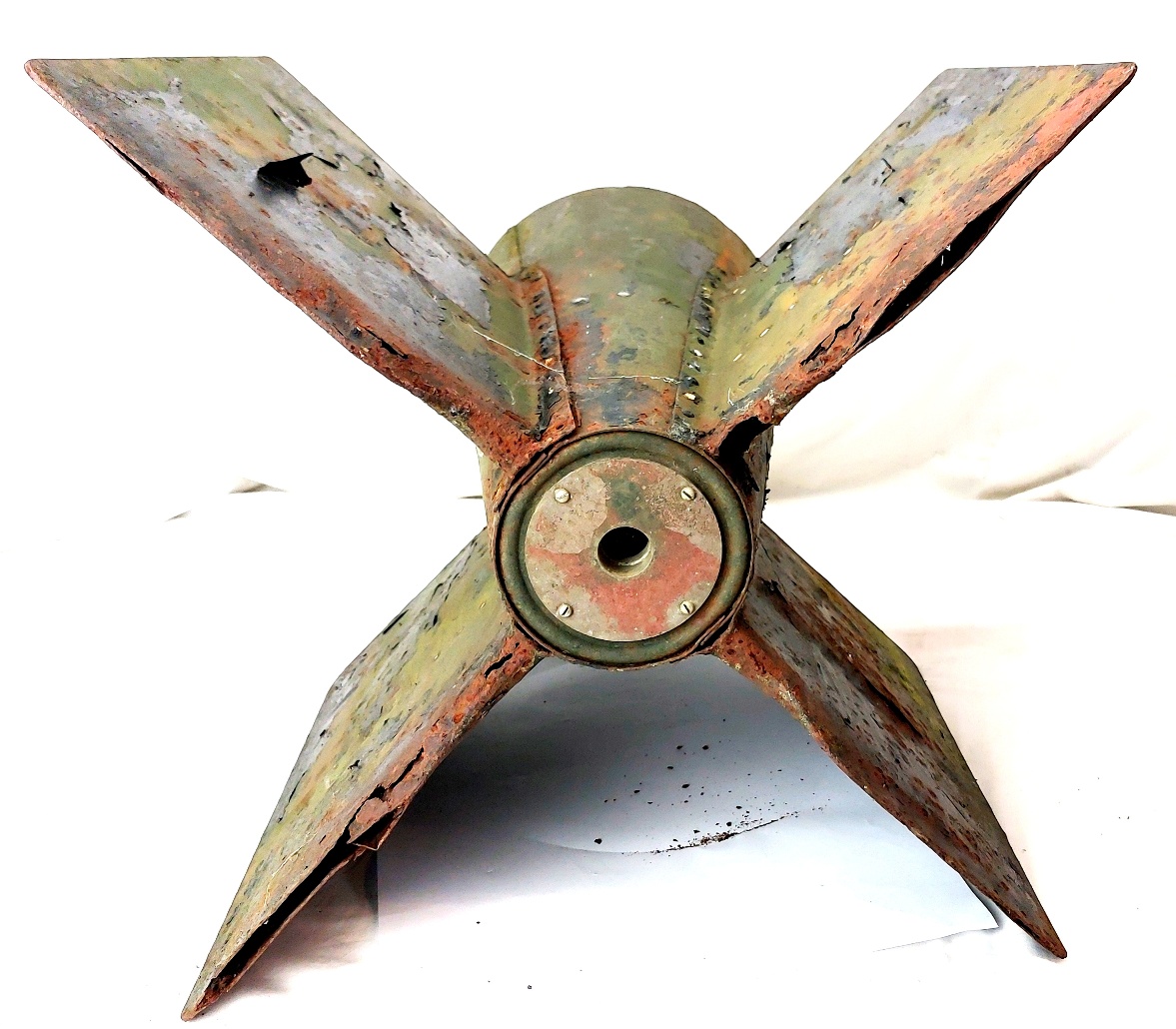
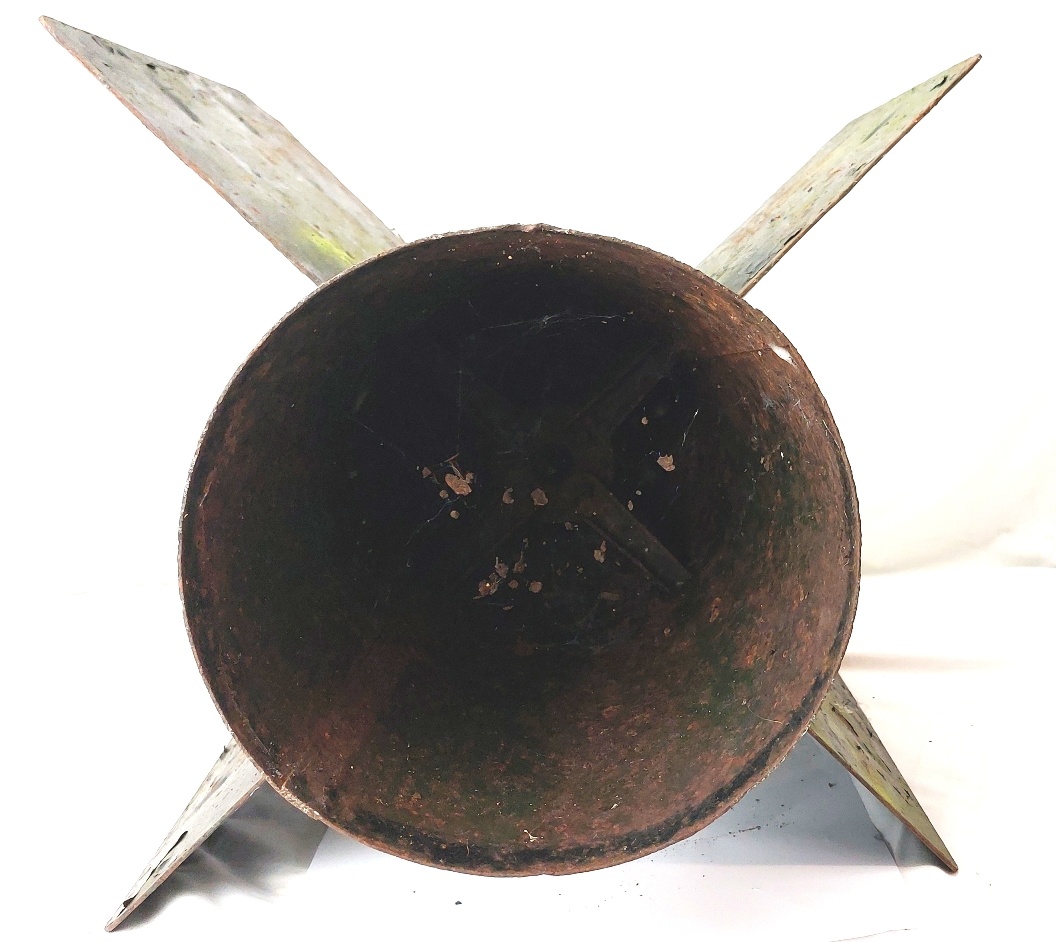
*British, Post-War c.1954–1967, RAF No. 107 Mk 4 Pattern Aerial Bomb Tail Fin Assembly, Inert*
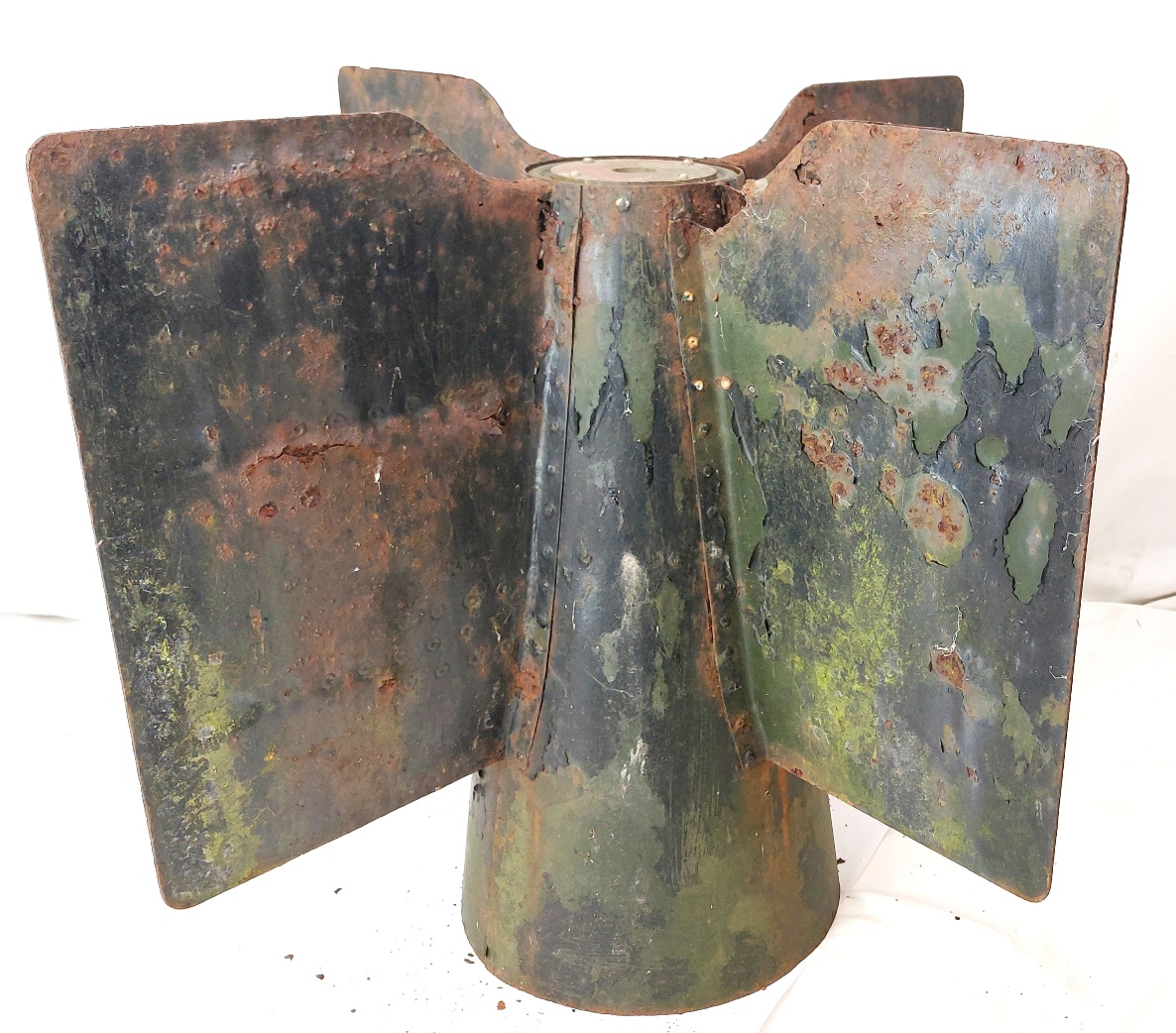
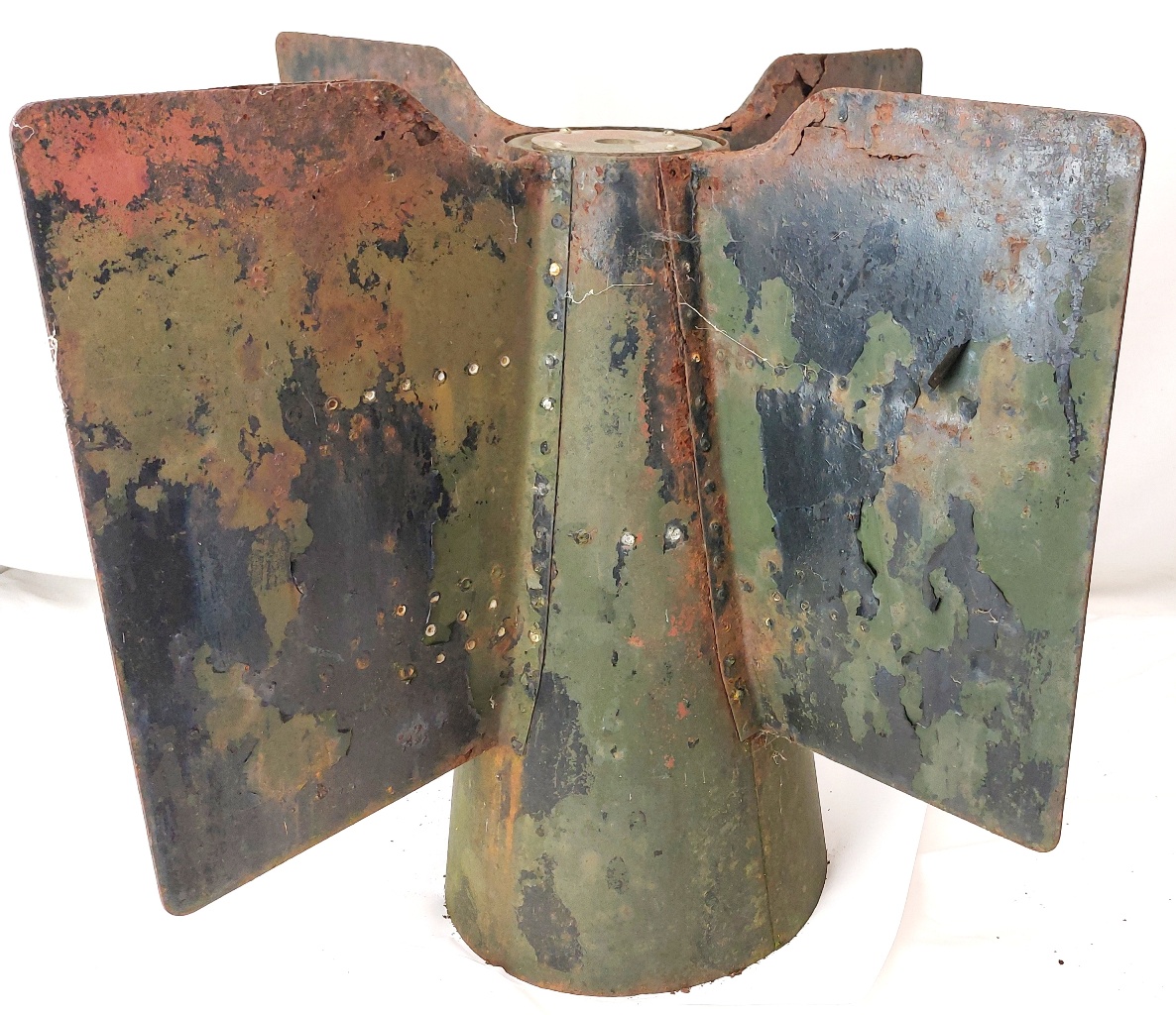
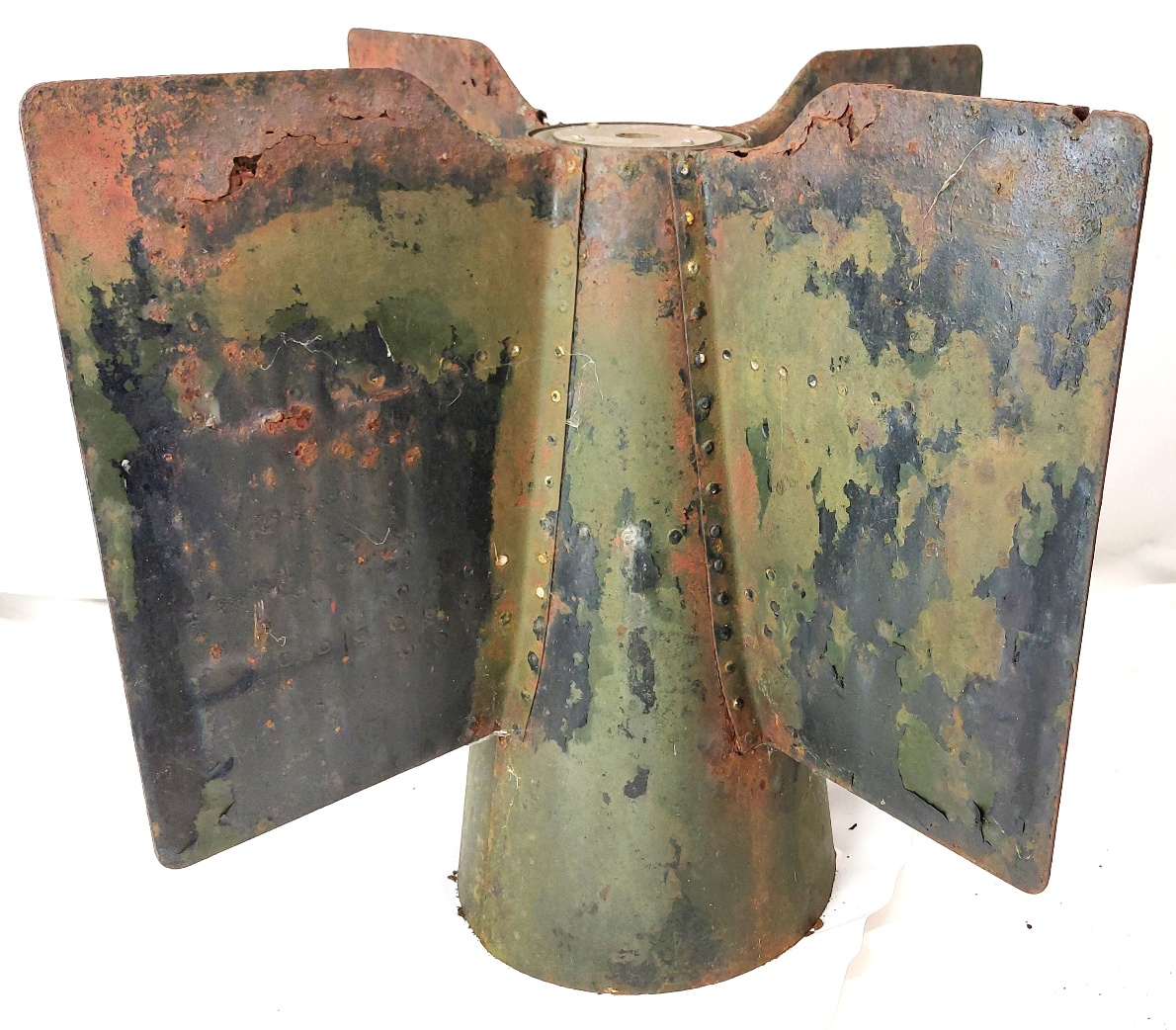
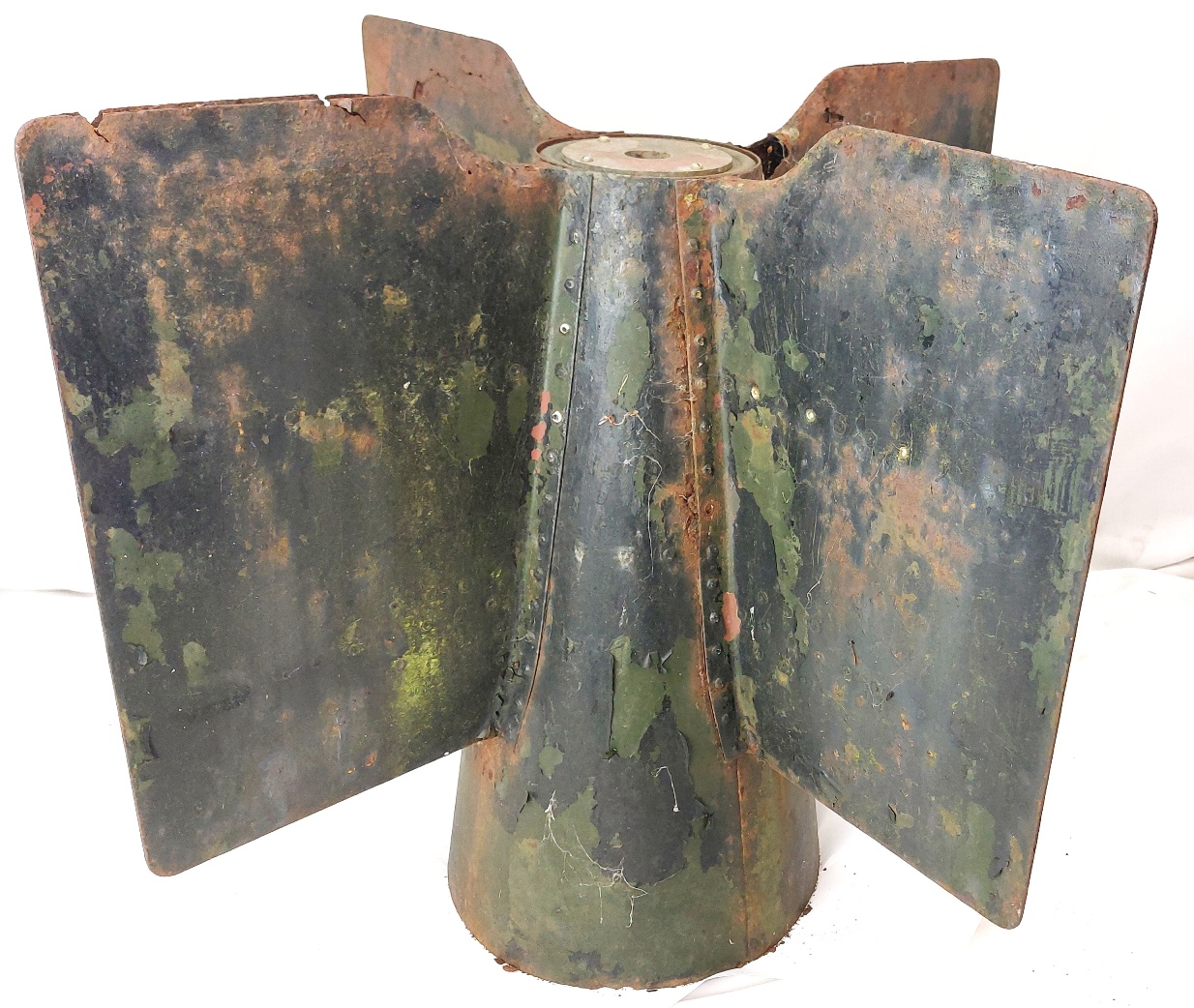
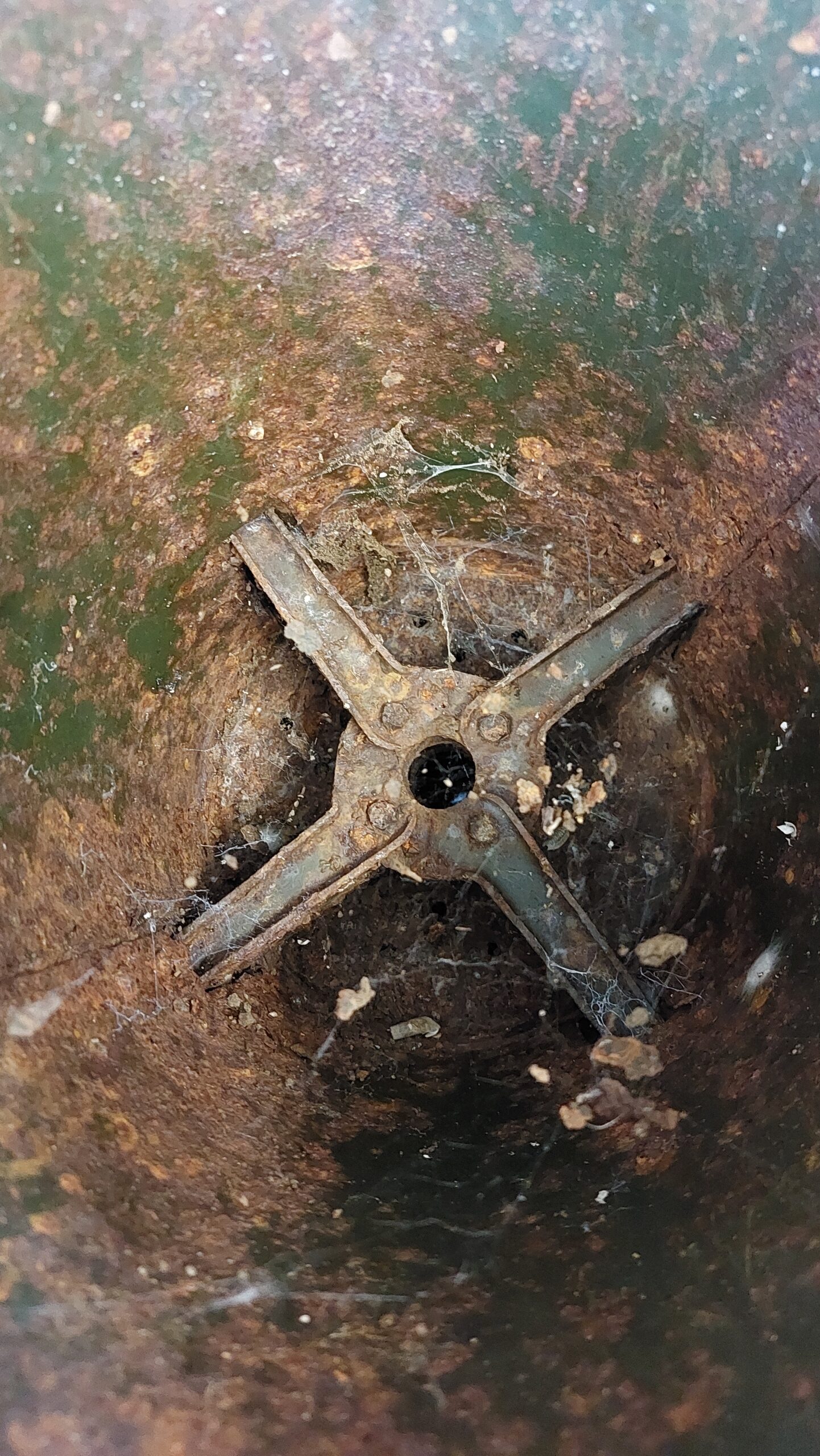
Large original British post-war RAF aerial bomb tail fin assembly, identified as the No. 107 Mk 4 pattern (or closely related No. 114 series) fitted to 500lb–1000lb class General Purpose and Medium Capacity aerial bombs. Completely inert and free from explosive content, this substantial welded steel assembly retains traces of original Dark Bronze Green / olive military paint beneath extensive surface oxidation and storage wear. Constructed from heavy-gauge steel with four stabilising fins around a tapered tail cone, it retains characteristic riveted seam construction, aerodynamic fin cut-outs, and the central arming spindle aperture plate associated with British Cold War ordnance.
The No. 107 Mk 4 tail assembly is closely associated with Britain’s high-altitude Cold War strike era and RAF aircraft including the English Electric Canberra, Blackburn Buccaneer, English Electric Lightning, and particularly the strategic V-Bomber fleet comprising the Avro Vulcan, Handley Page Victor, and Vickers Valiant.
Approx. Measurements: Overall height: 46.5cm. Each fin length: 36cm. Maximum fin width: 23.5cm. Overall span fin-to-fin: 41cm.
History Note:
Although individual factory markings or stencil data would be required to determine an exact production year, the No. 107 Mk 4 ballistic tail pattern can be dated broadly between 1954 and 1967. The design emerged during the mid-1950s alongside Britain’s expanding Cold War stockpile of 1,000lb Medium Capacity (MC) aerial bombs intended for high-altitude strategic bombing missions by the RAF V-Bomber force.
Tail fin units such as this were critical aerodynamic components, ensuring stable ballistic flight and accurate bomb delivery from aircraft including the Canberra and Vulcan during the era of Britain’s airborne nuclear and conventional deterrent strategy. By the late 1960s, RAF doctrine increasingly shifted toward ultra-low-level strike operations to evade Soviet radar systems. Traditional fixed ballistic tail assemblies such as the No. 107 became less suitable for these tactics, leading to their gradual replacement by retarded tail systems such as the No. 117 series, which used drag devices and parachute retardation for safer low-level bomb delivery.
*Condition*
Condition is fair to good for a large ex-military steel ordnance component stored over a prolonged period. Heavy surface oxidation, corrosion, pitting, paint loss, scratches, dents, and general age wear throughout. Several fin edges display rust perforation and seam separation, particularly along lower edges and riveted joins. Interior surfaces heavily oxidised. Retains visible traces of original RAF military paint and original riveted construction details throughout. Structurally solid overall and displays well despite corrosion and weathering. Completely inert / empty tail section only. Please see photographs as part of the condition report.
JAQ#3268#EB_17062026
Please contact the shop prior to purchase if youd like to arrange collection.