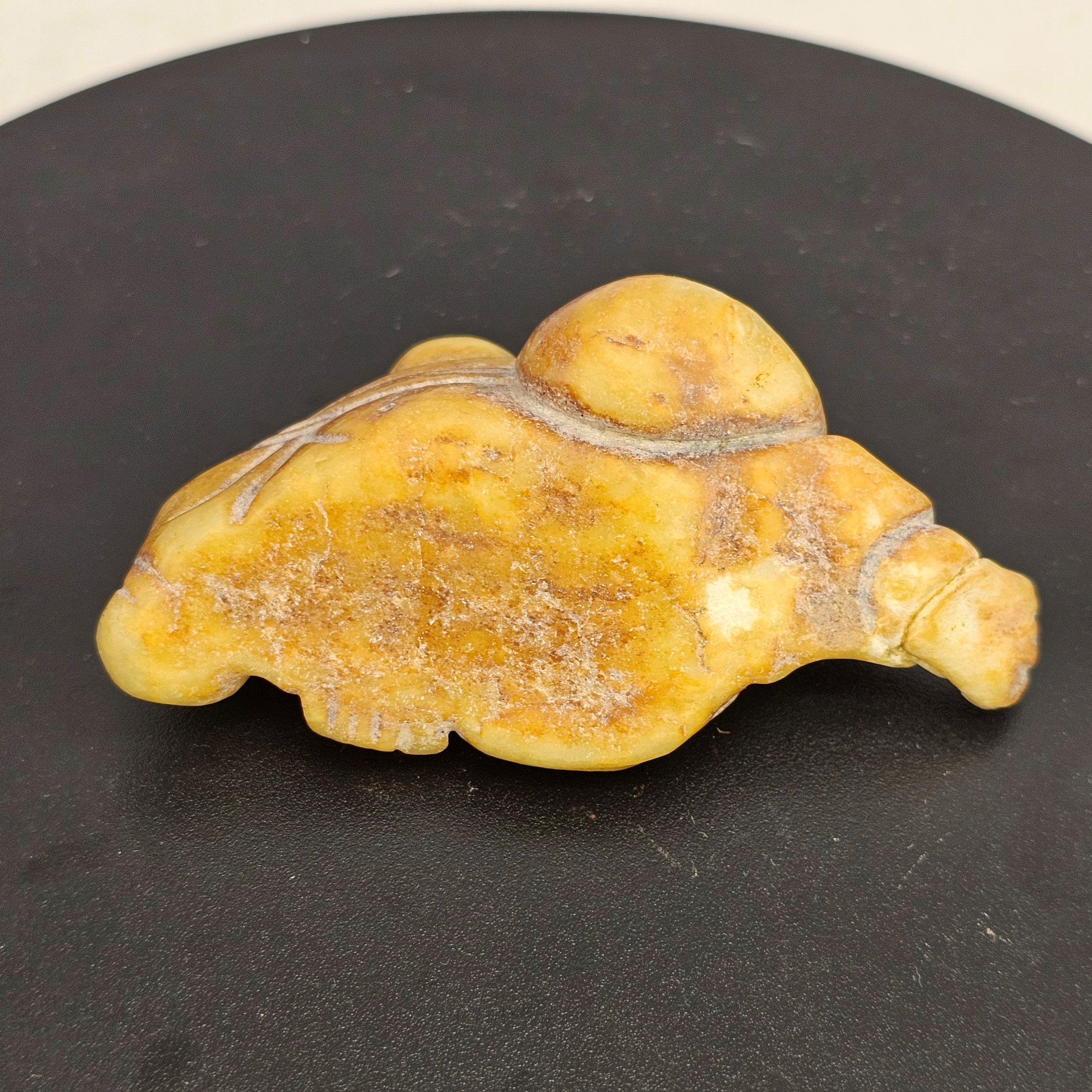
~ Late Ming Or Qing Dynasty Budai Nephrite Celadon Jade Figurine ~
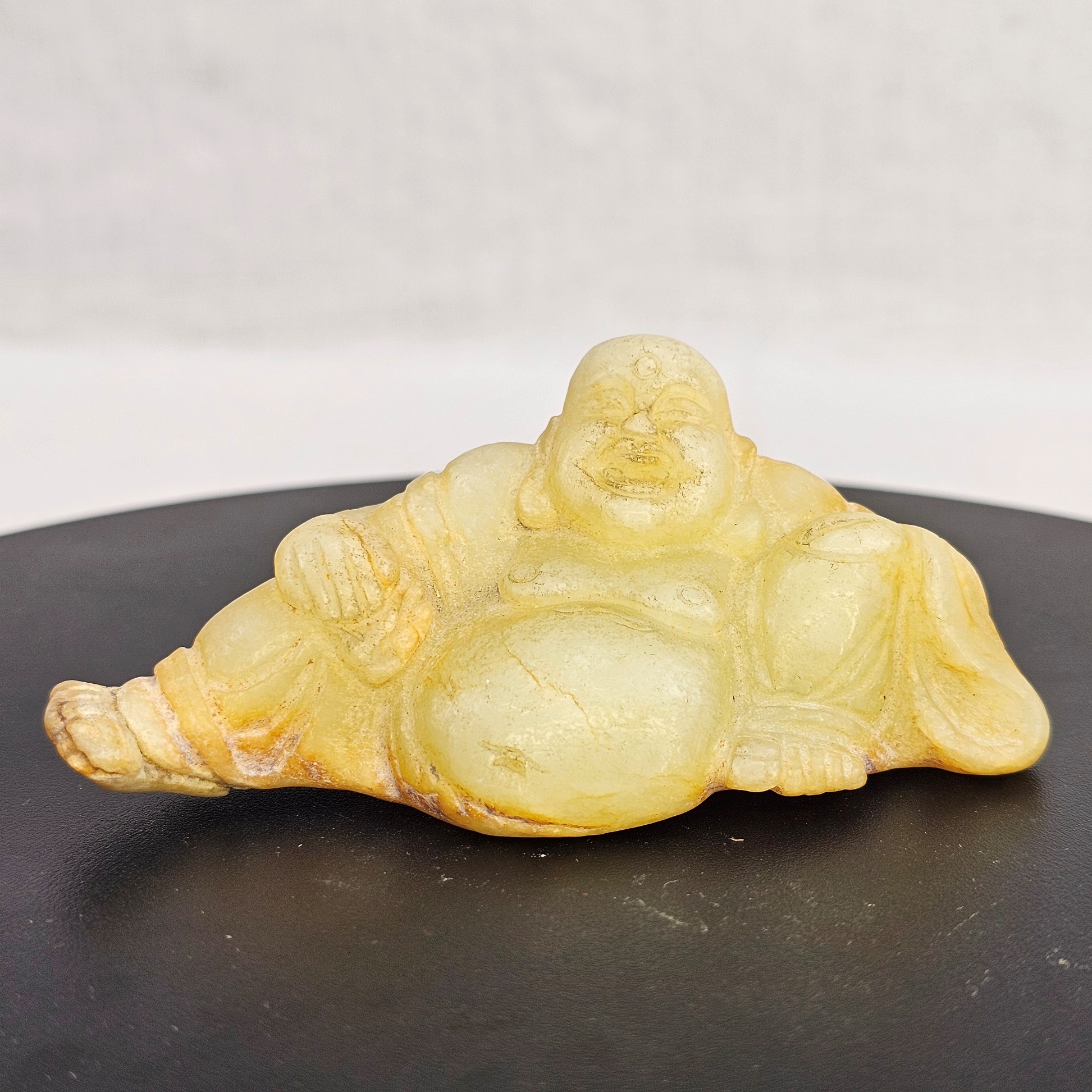
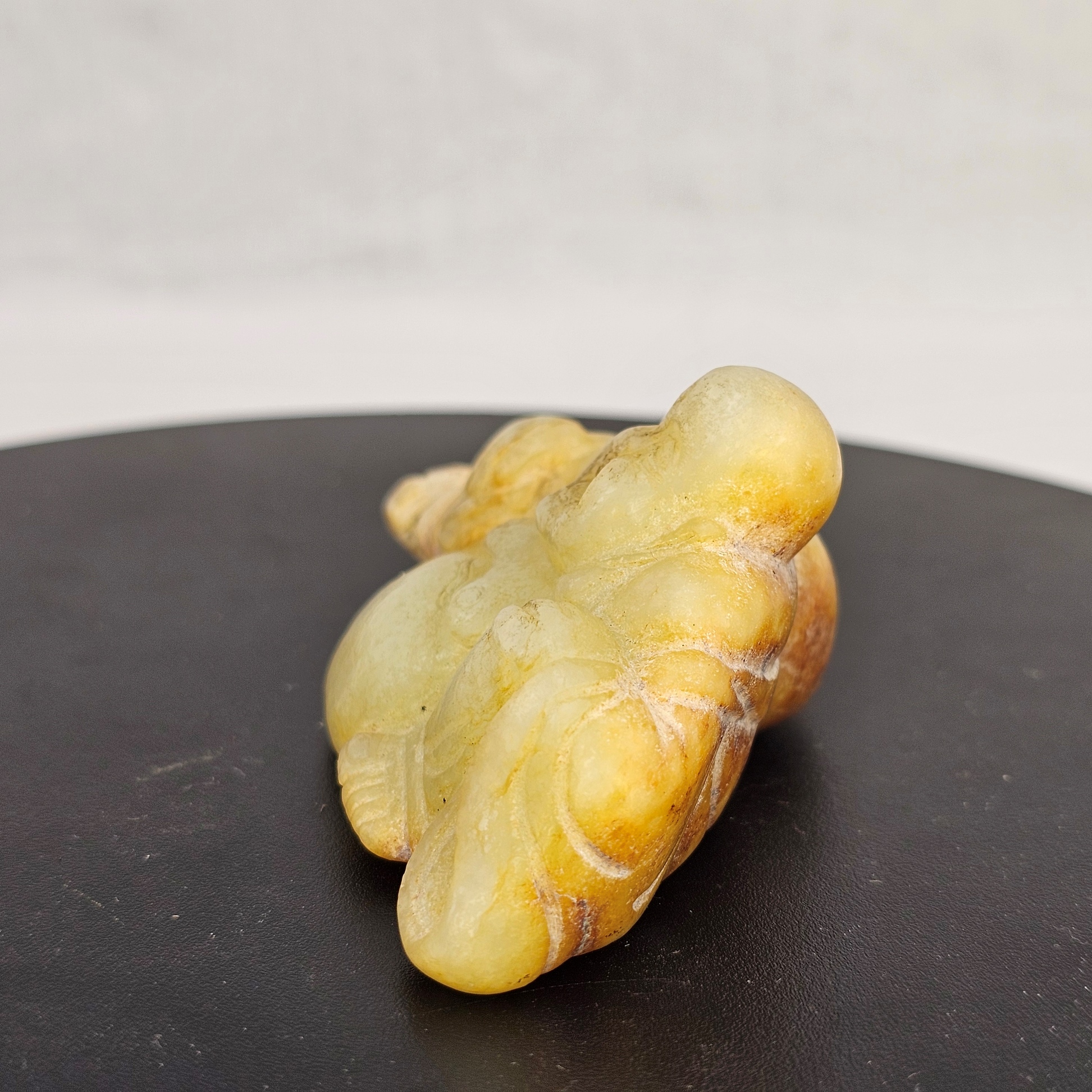
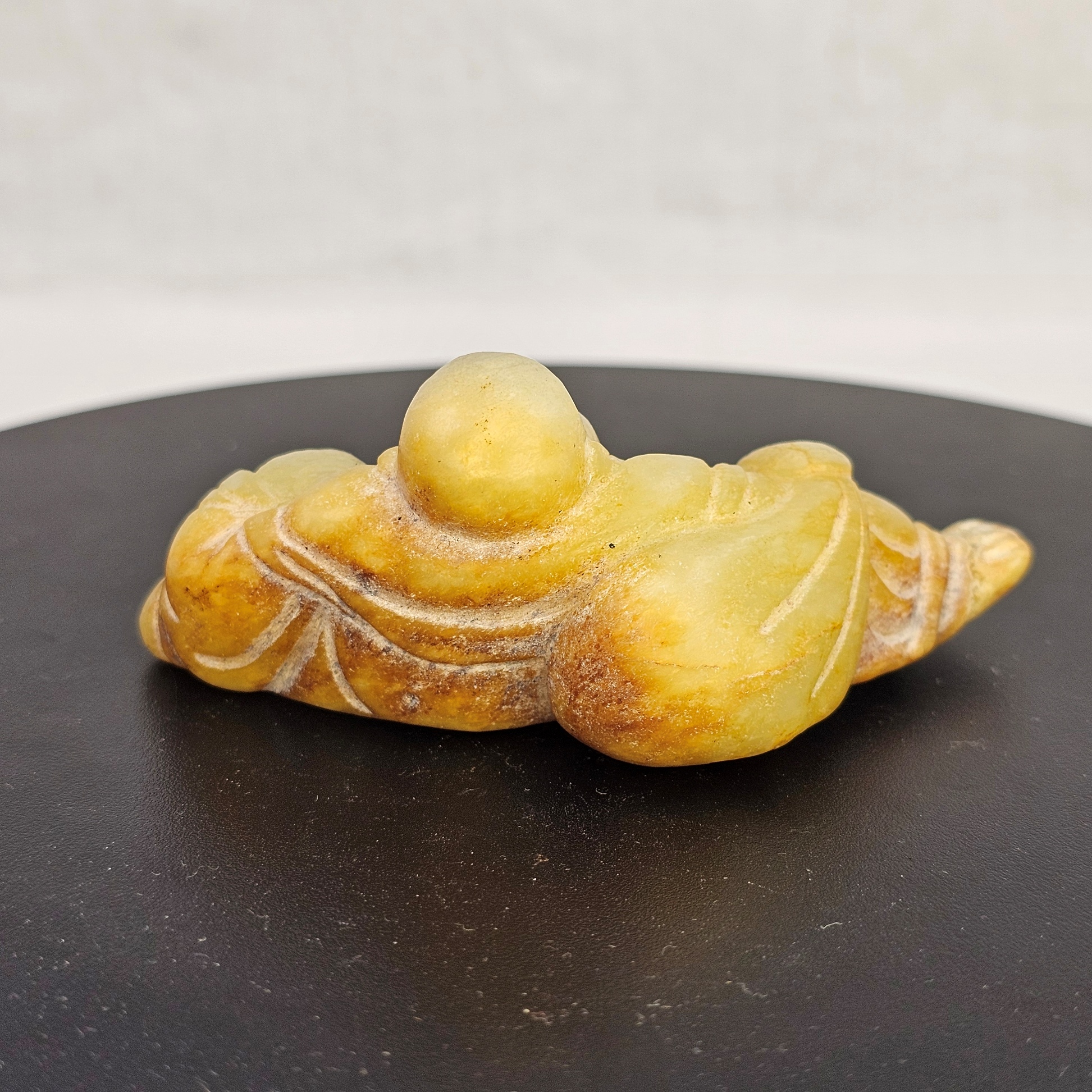
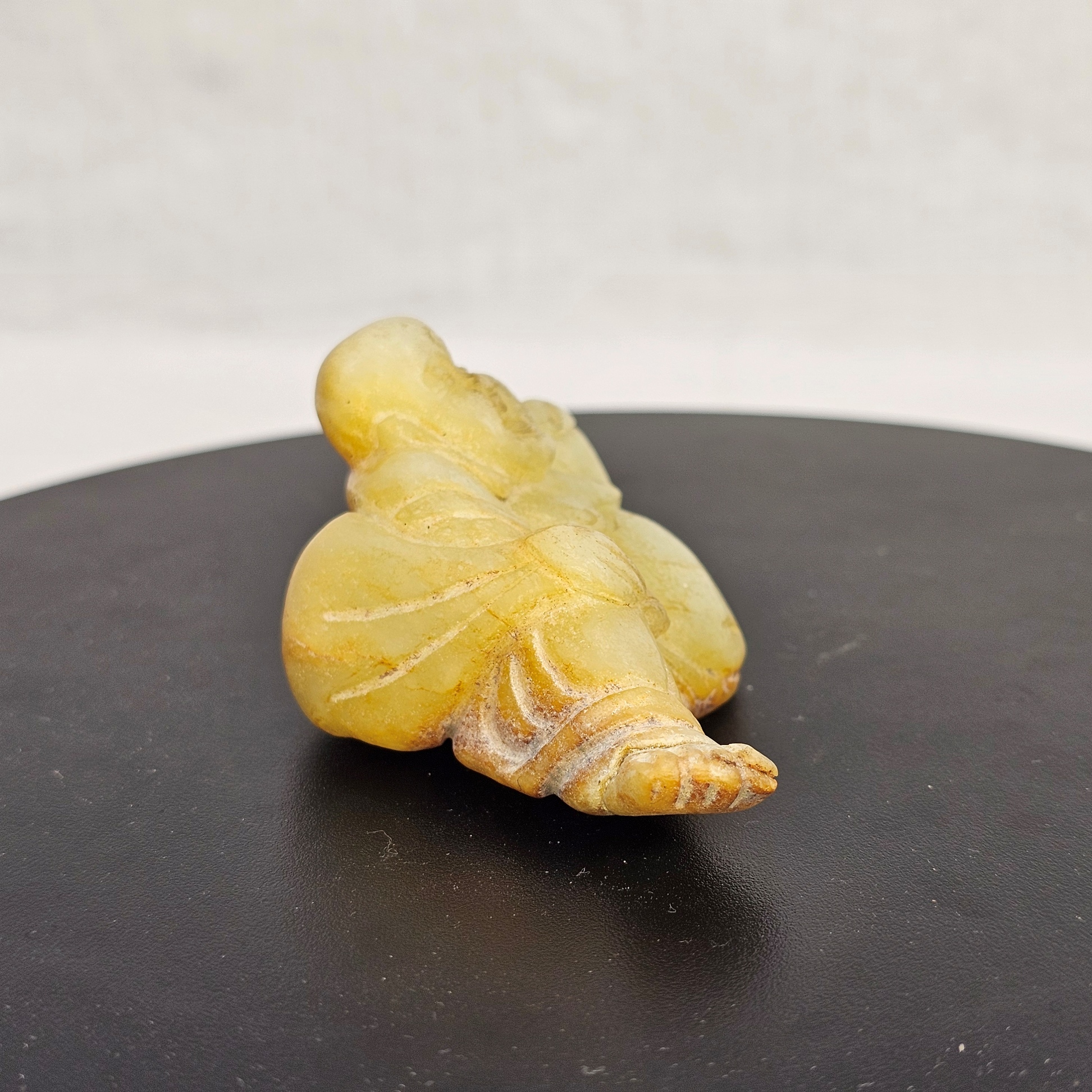
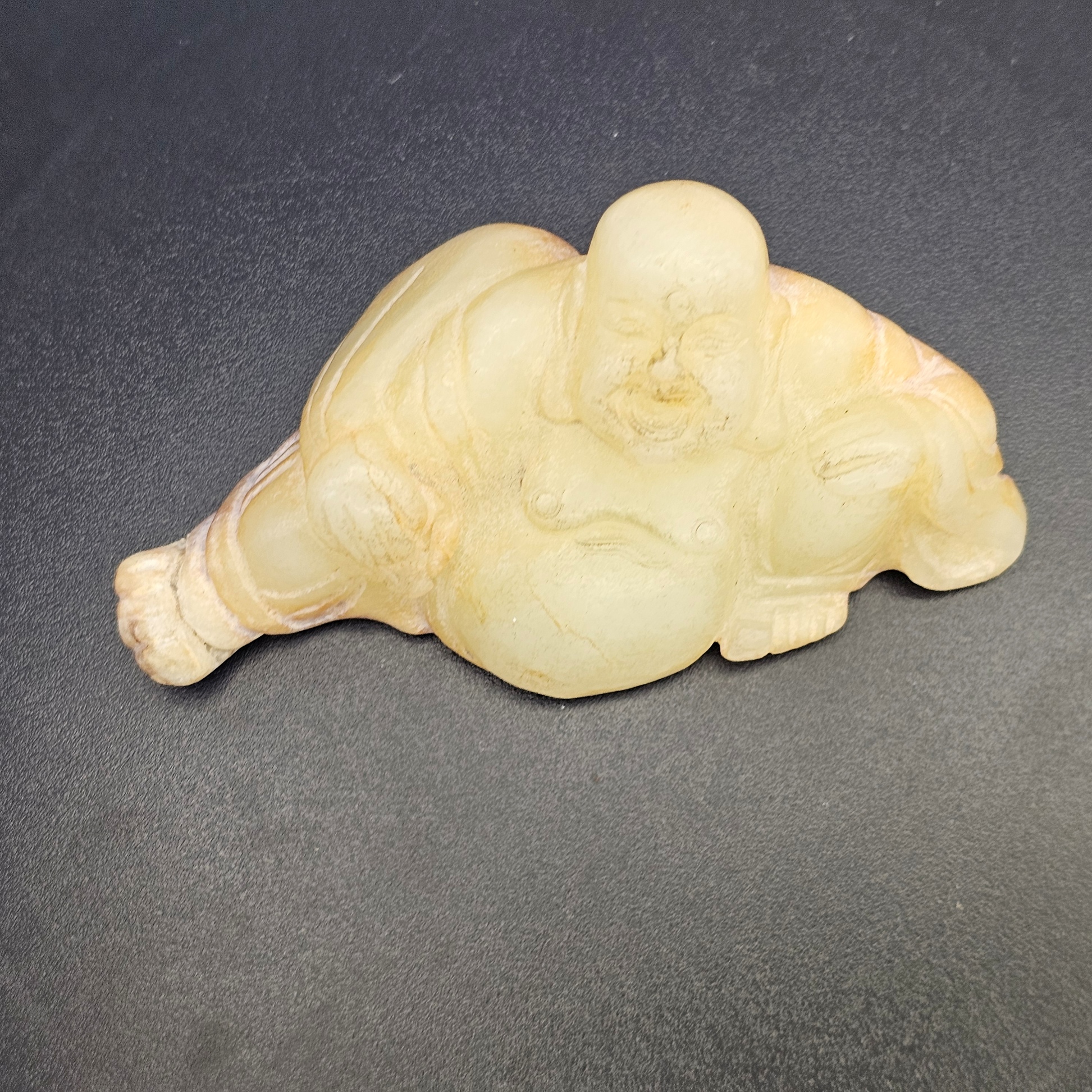
A characterful and vigorously carved nephrite jade figure of Budai, the beloved Laughing Buddha of Chinese folk Buddhism, depicted in a reclining pose with his enormous belly prominent before him, his robe falling open at the chest, his legs outstretched and crossed, and one arm supporting his weight to one side while the other rests on his body. The face is broadly carved with a wide, open smile conveying the generous good humour for which Budai is celebrated, with incised eyes and clearly rendered facial features. The reverse shows his robes detailed with incised foliate and rope-form lines, and a prominent cranial ushnisha or topknot crown rises from his bald head when viewed from above. The stone is an unusual warm yellowish-amber tone, transitioning through areas of pale celadon green, with the surface displaying significant calcification or earthing throughout, particularly concentrated on the reverse and underside of the figure. This surface calcification, whereby the stone has been altered through long burial or contact with mineral-rich soils, gives the piece a characteristically aged, powdery, and almost ochre appearance in those areas, while the upper face retains better polish and legibility of form.
Historical Context
Budai, meaning cloth sack, is one of the most beloved figures in Chinese popular religion, based historically on an eccentric wandering Chan Buddhist monk of the Five Dynasties period (10th century CE) known for his generosity, humour, and contentment. He is frequently depicted reclining or seated with his great belly exposed, representing abundance and the joy of living without attachment. By the Ming Dynasty (1368 to 1644) Budai had been absorbed into Chinese folk religion as a manifestation of Maitreya, the future Buddha, and his image was reproduced prolifically in jade, porcelain, bronze, and ivory as a household talisman and auspicious desk object. Reclining Budai figures in jade are particularly associated with the late Ming and early Qing periods, when informal, naturalistic figurative carving in yellowish and celadon nephrite was widely practised. The pronounced calcification evident on this example, resulting from mineral alteration of the stone's outer layers over a prolonged period, is consistent with considerable age and is a recognised characteristic of genuinely old jade pieces that have spent time in soil contact or unfavourable storage conditions. The warm amber and yellowish tones of the stone itself are consistent with nephrite varieties associated with the Khotan and Yarkand sources used during the Ming and Qing periods.
~ Condition ~
Please refer to the images for the condition. The piece is in good order.
~ Dimensions ~
The piece is 9.5cm (3.75 inches) wide.
JA_3721194939*