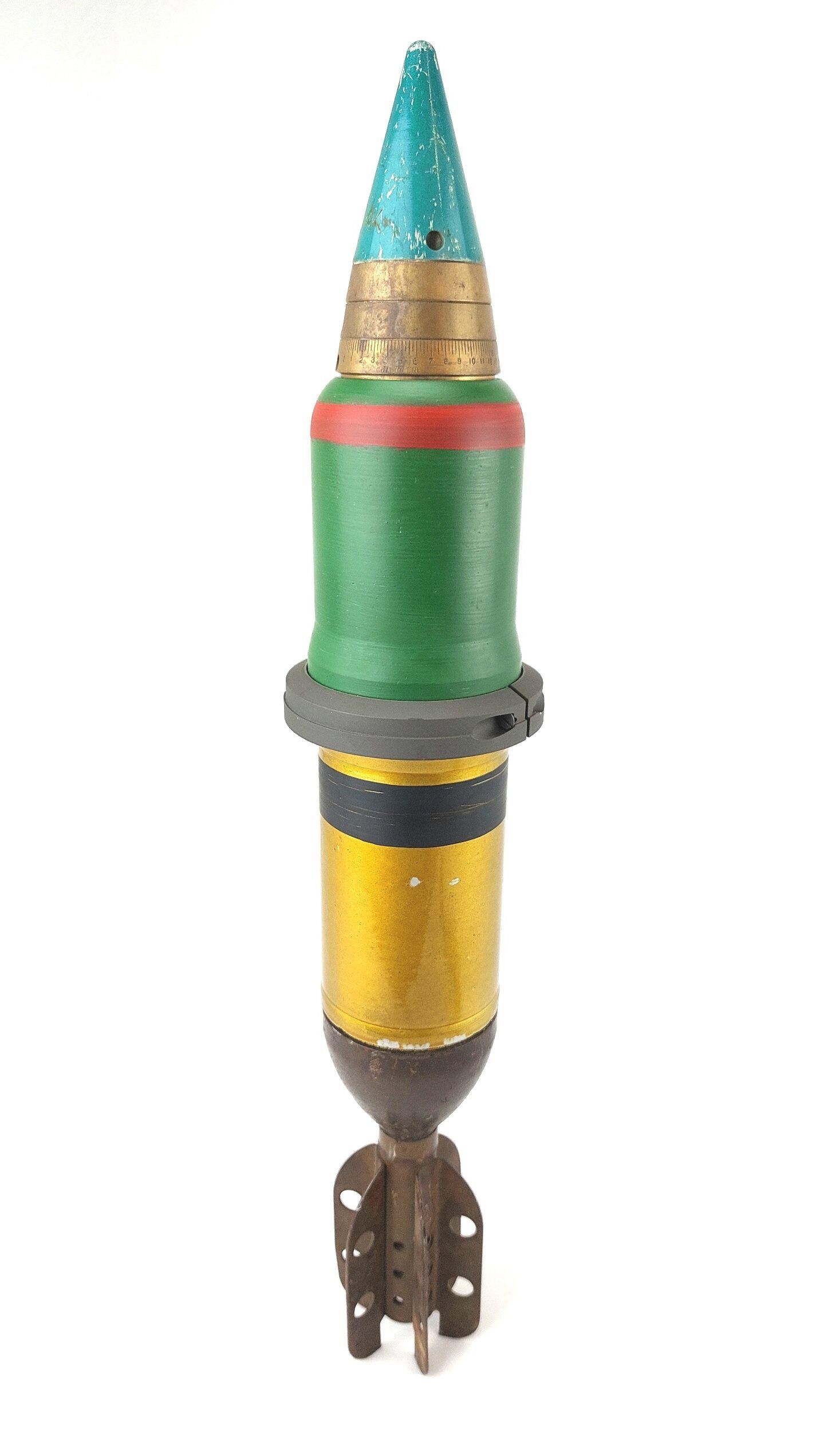
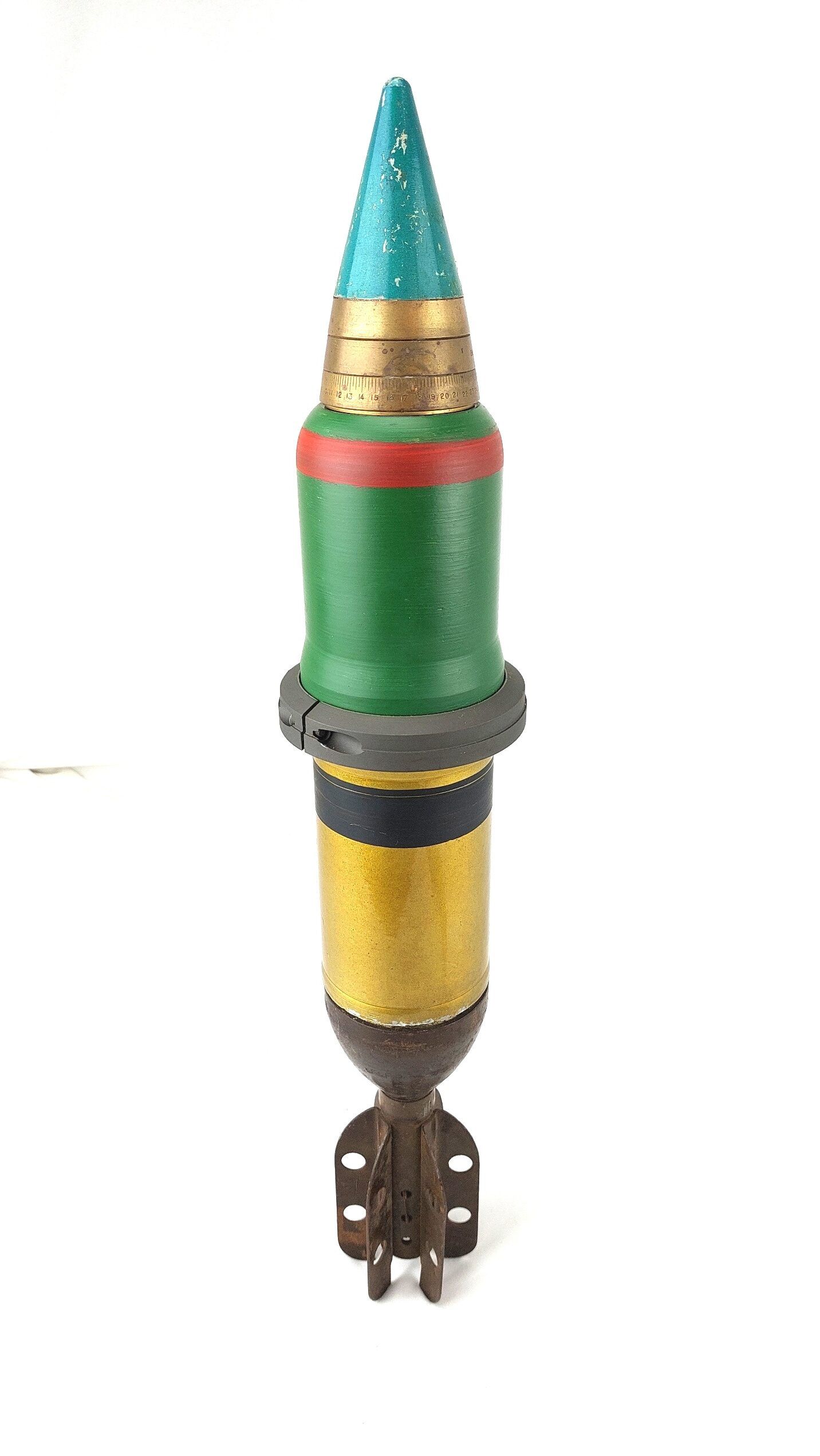
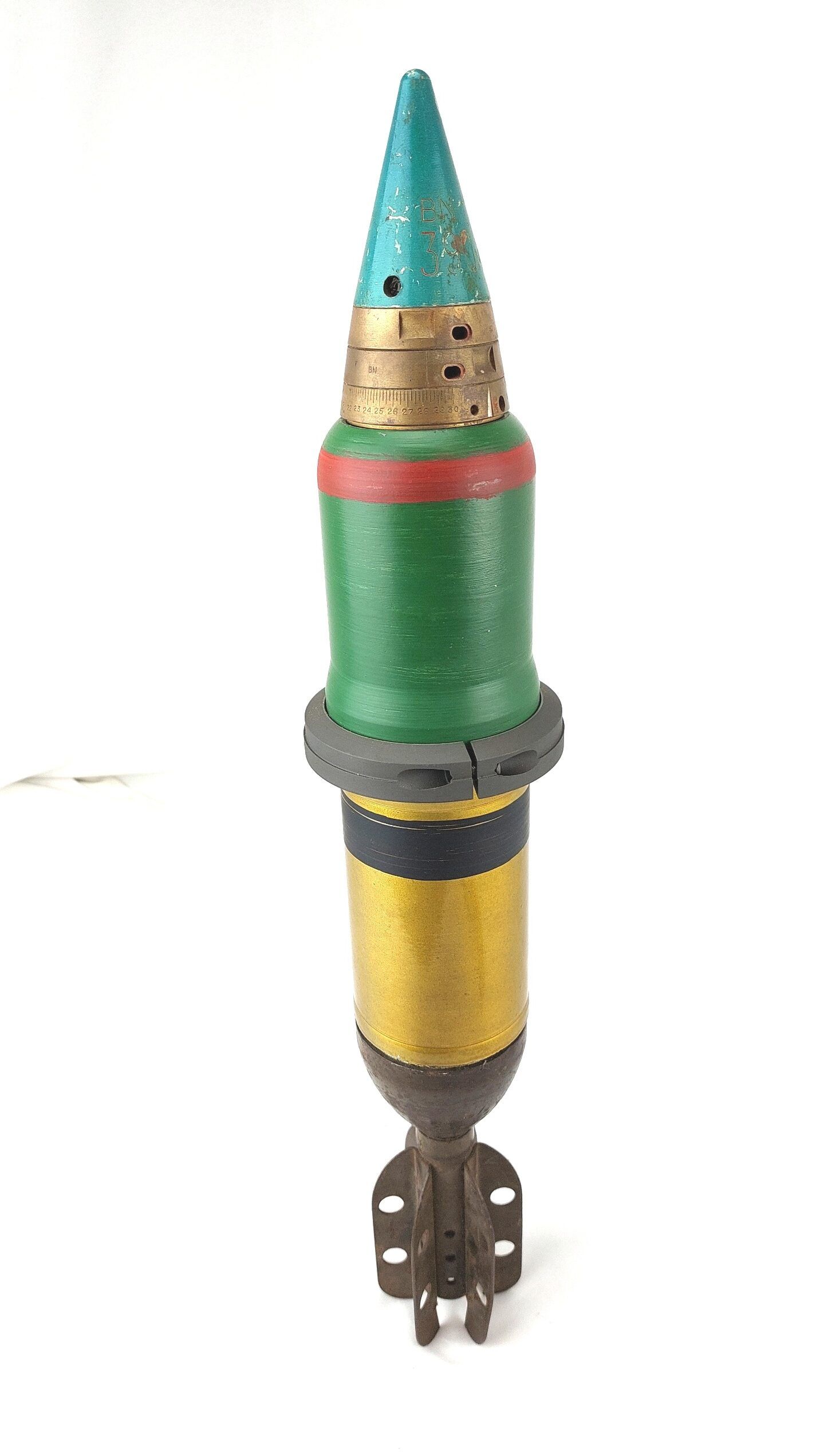
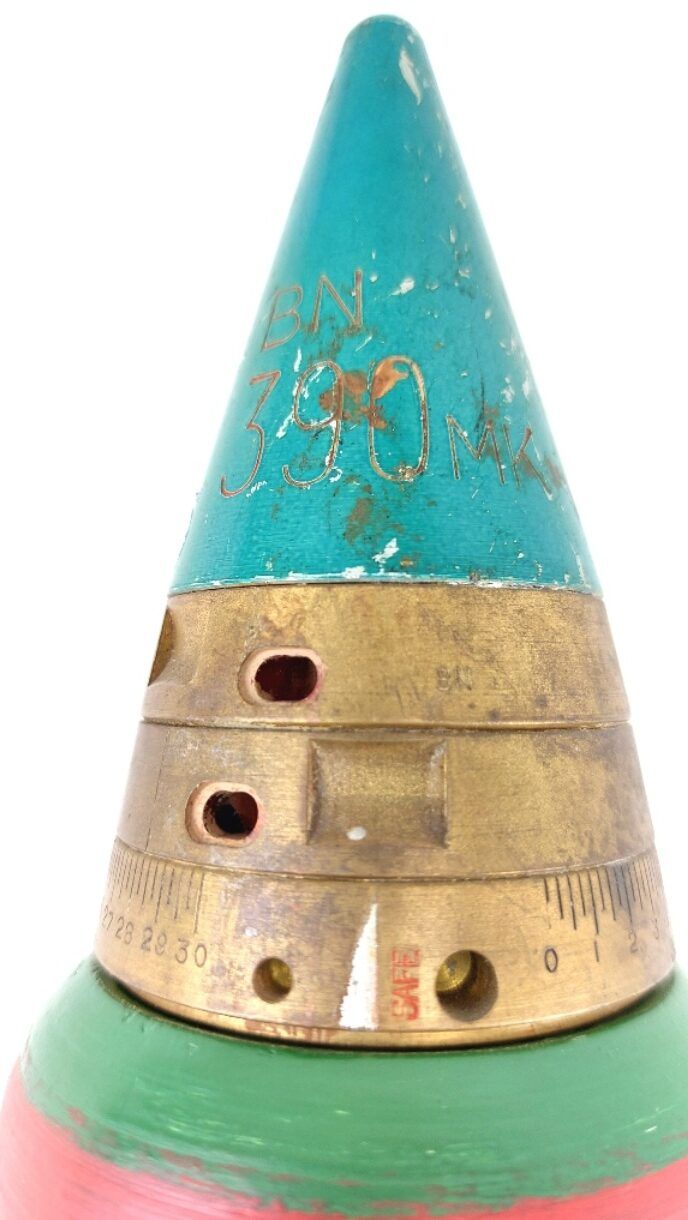
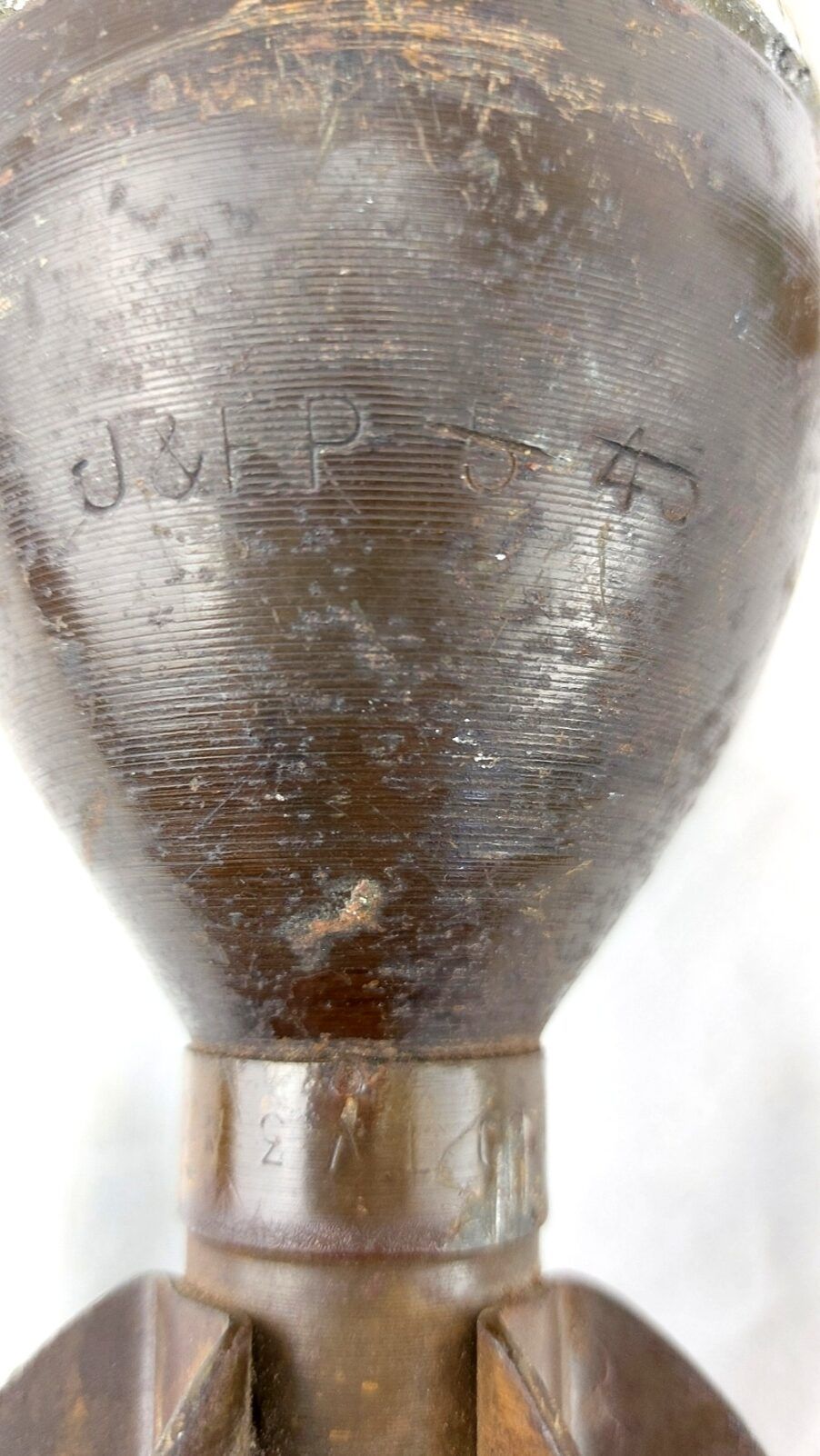
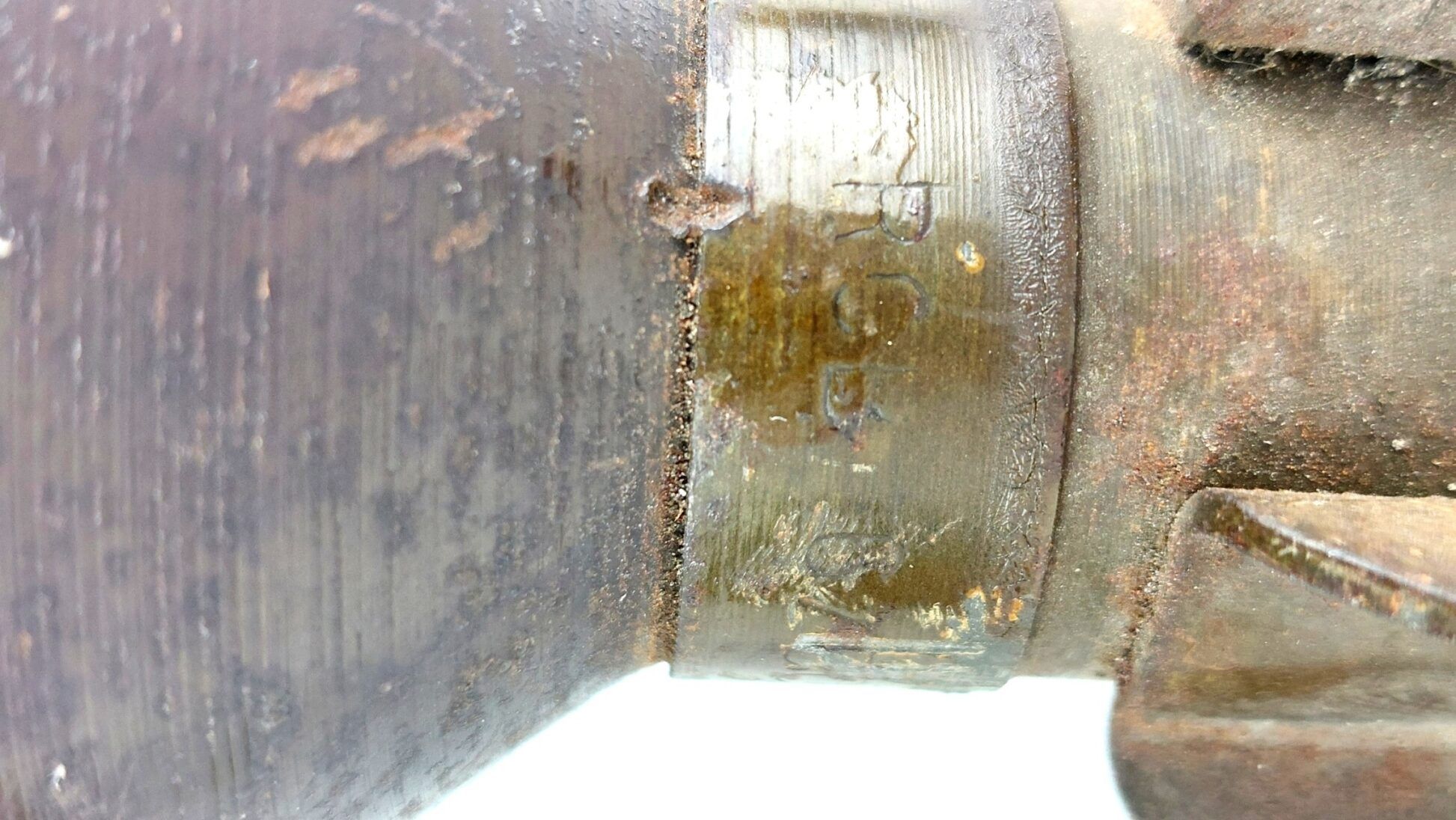
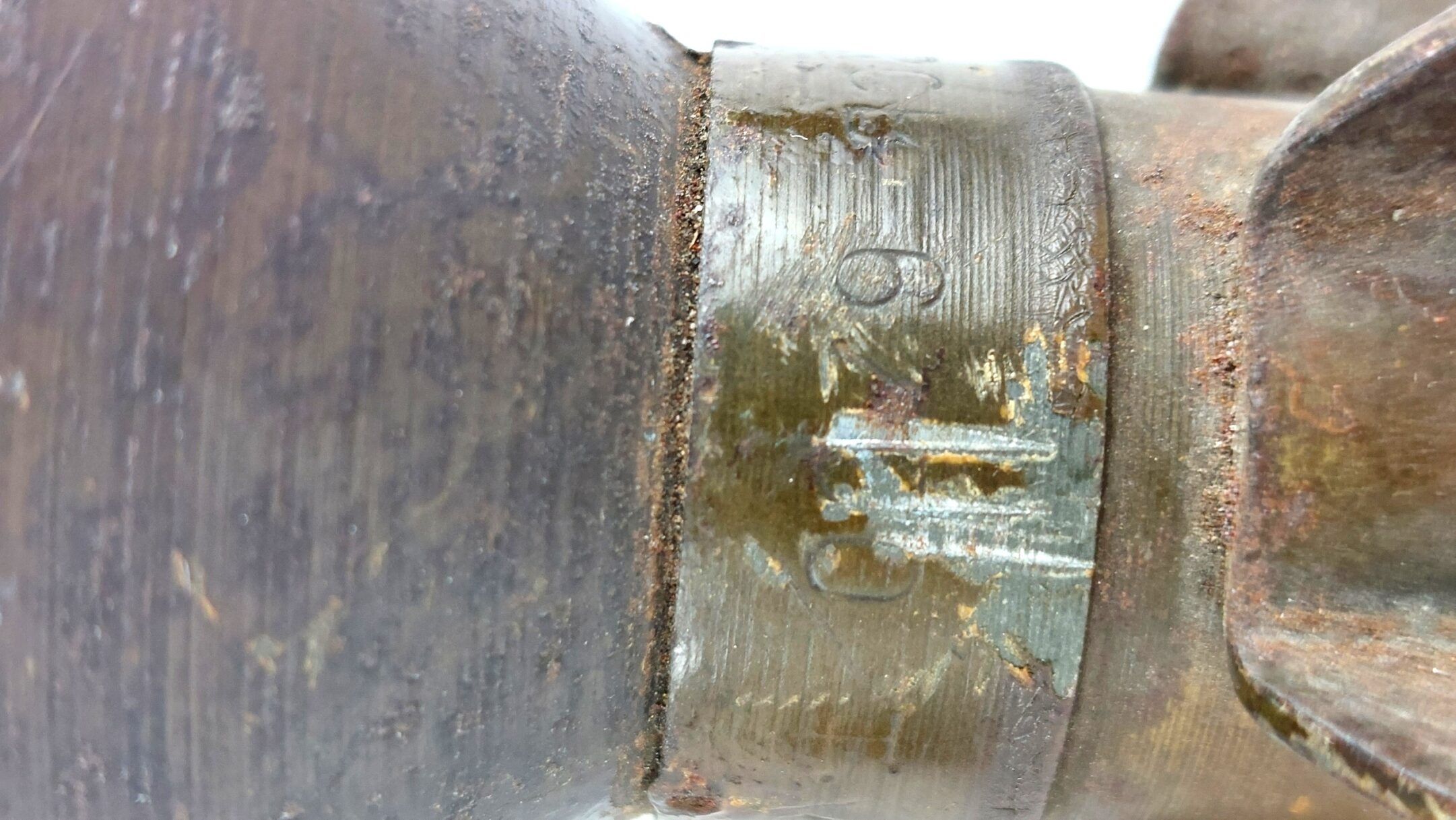
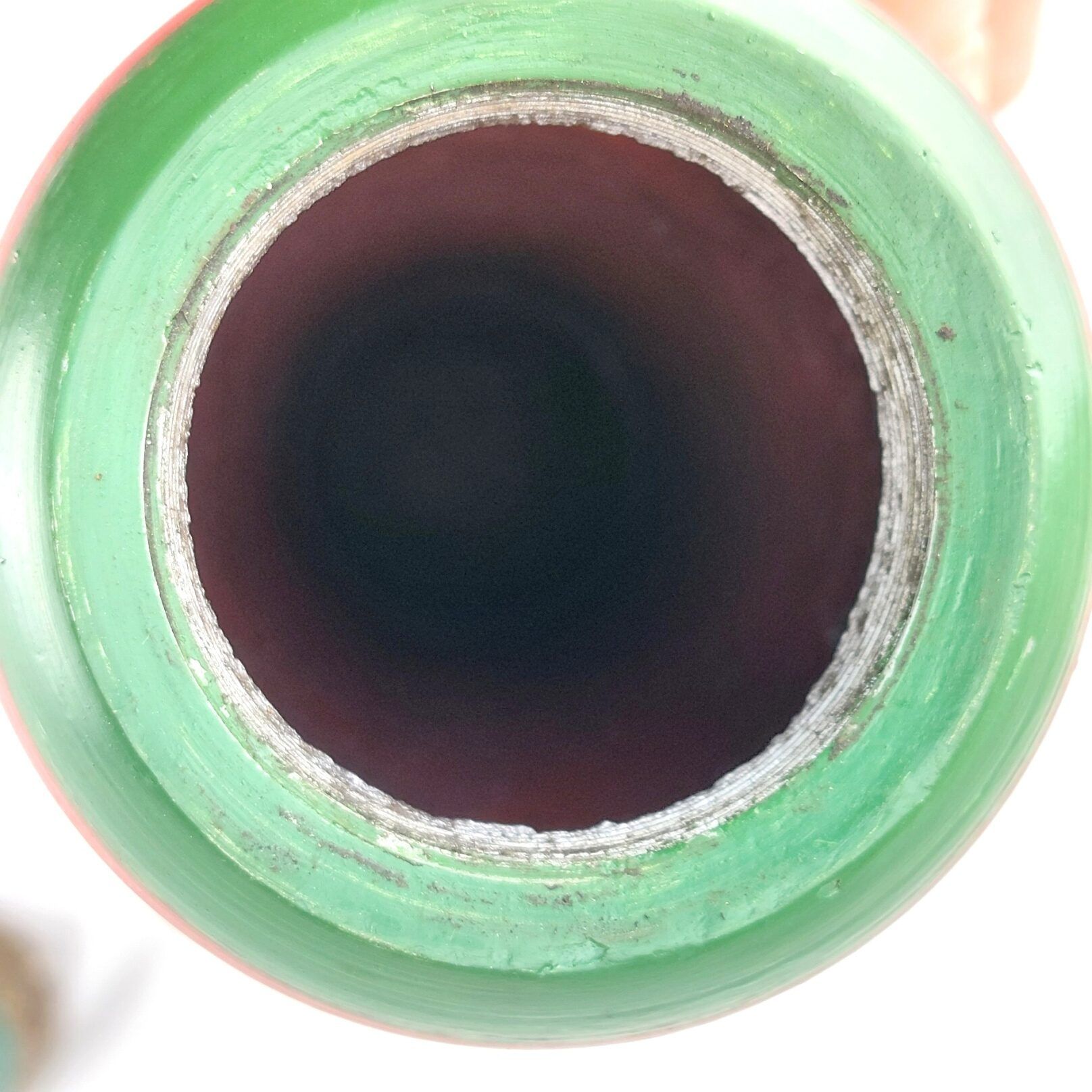
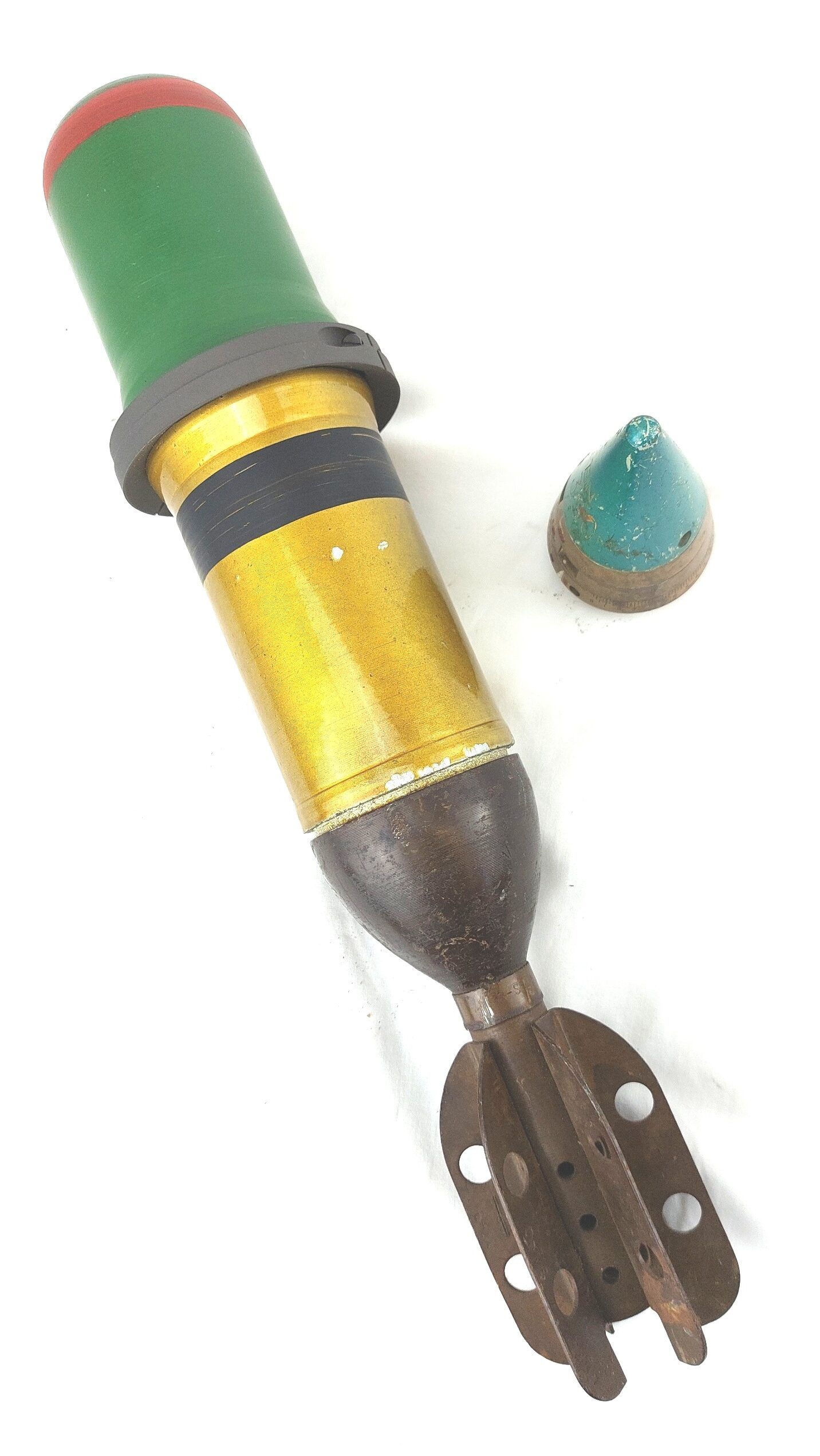
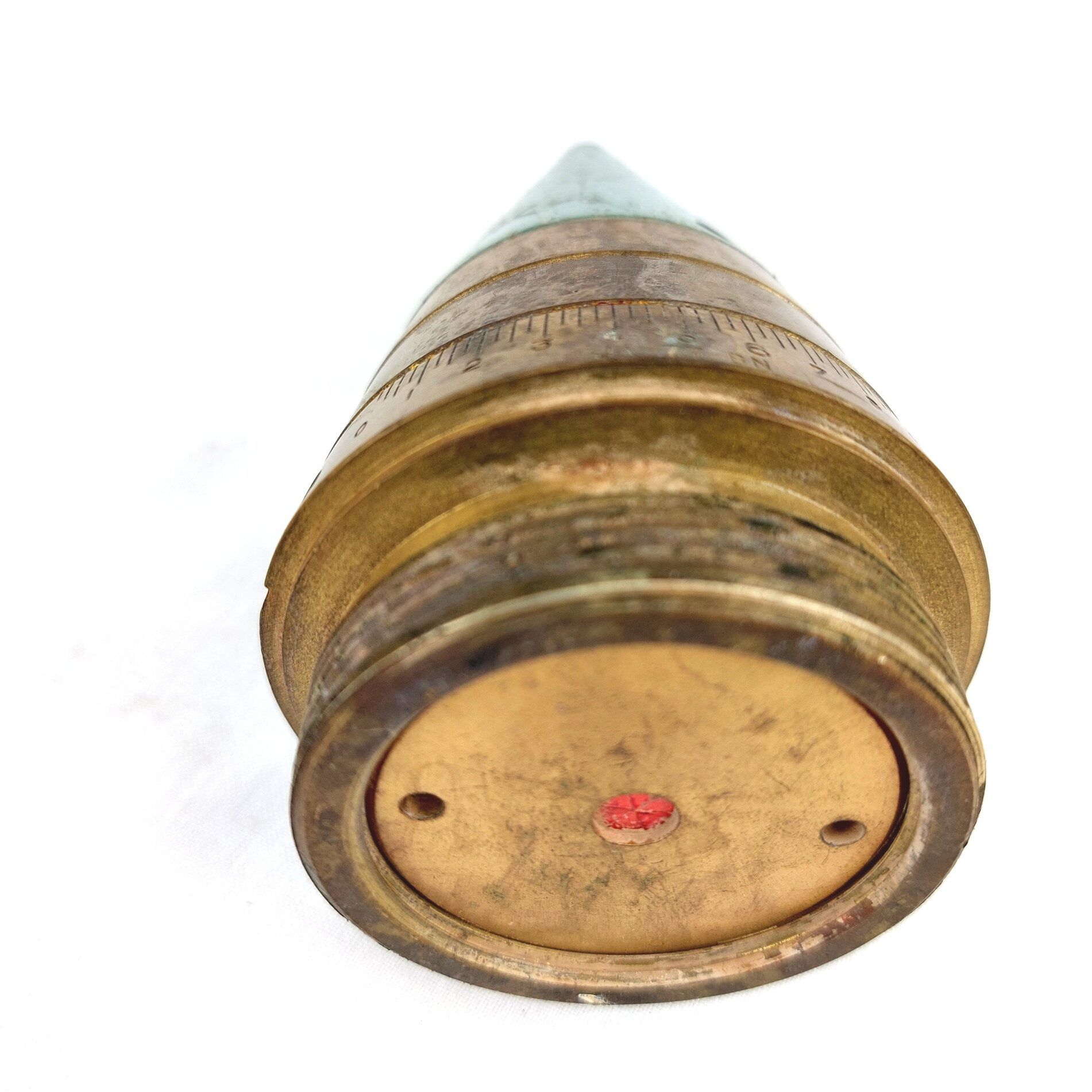
The Base Ejection Discarding Sabot (BEDS) system, developed around 1945, was a notable advancement in mortar munitions, particularly for extending the range and accuracy of smoke and incendiary bombs. This design allowed smaller bombs, such as 3-inch smoke candles, to be fired from larger, 4.2-inch mortars by using a collar or adapter around the bomb. The adapter ensured that the narrower bomb body remained centered within the larger bore, improving stability and range during flight.
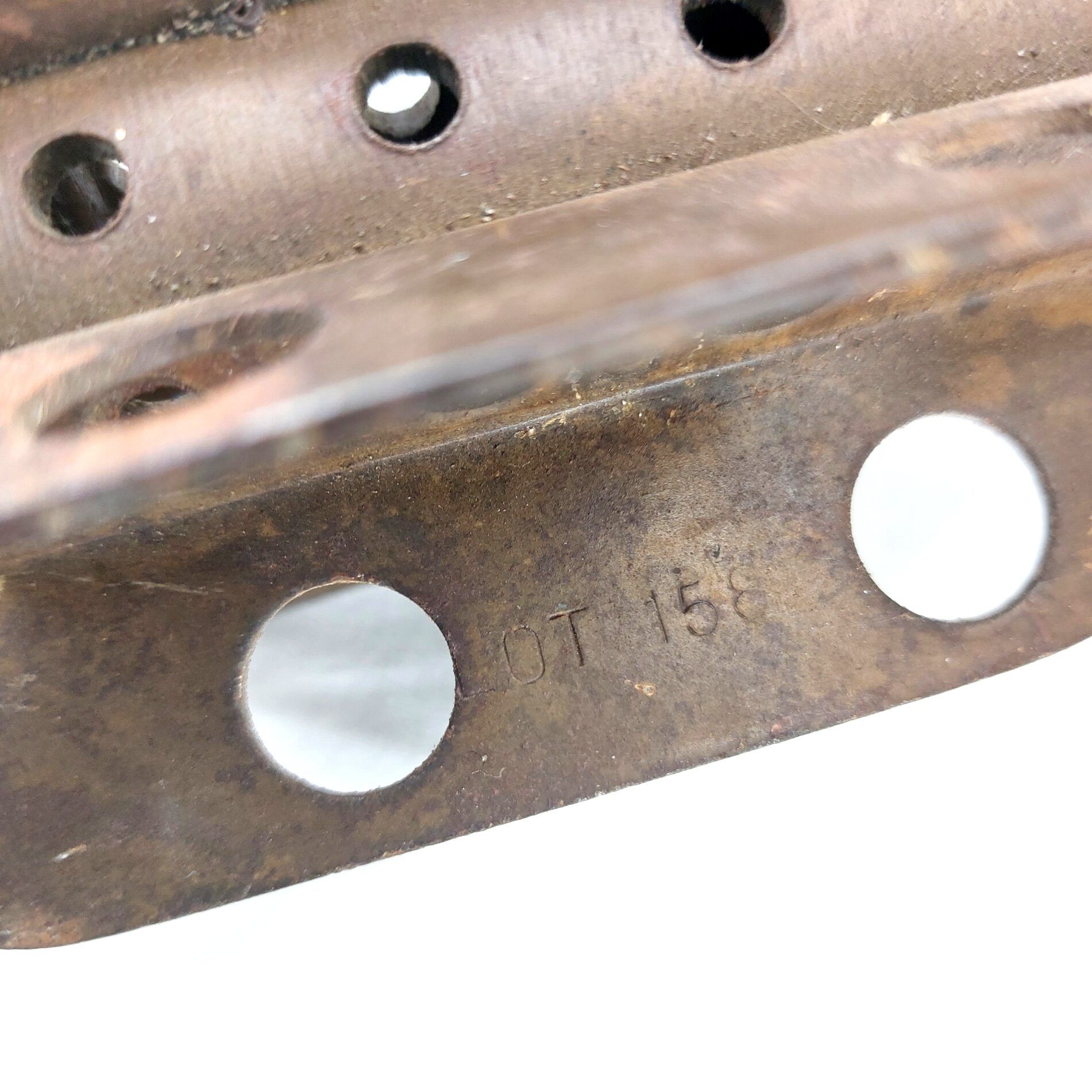
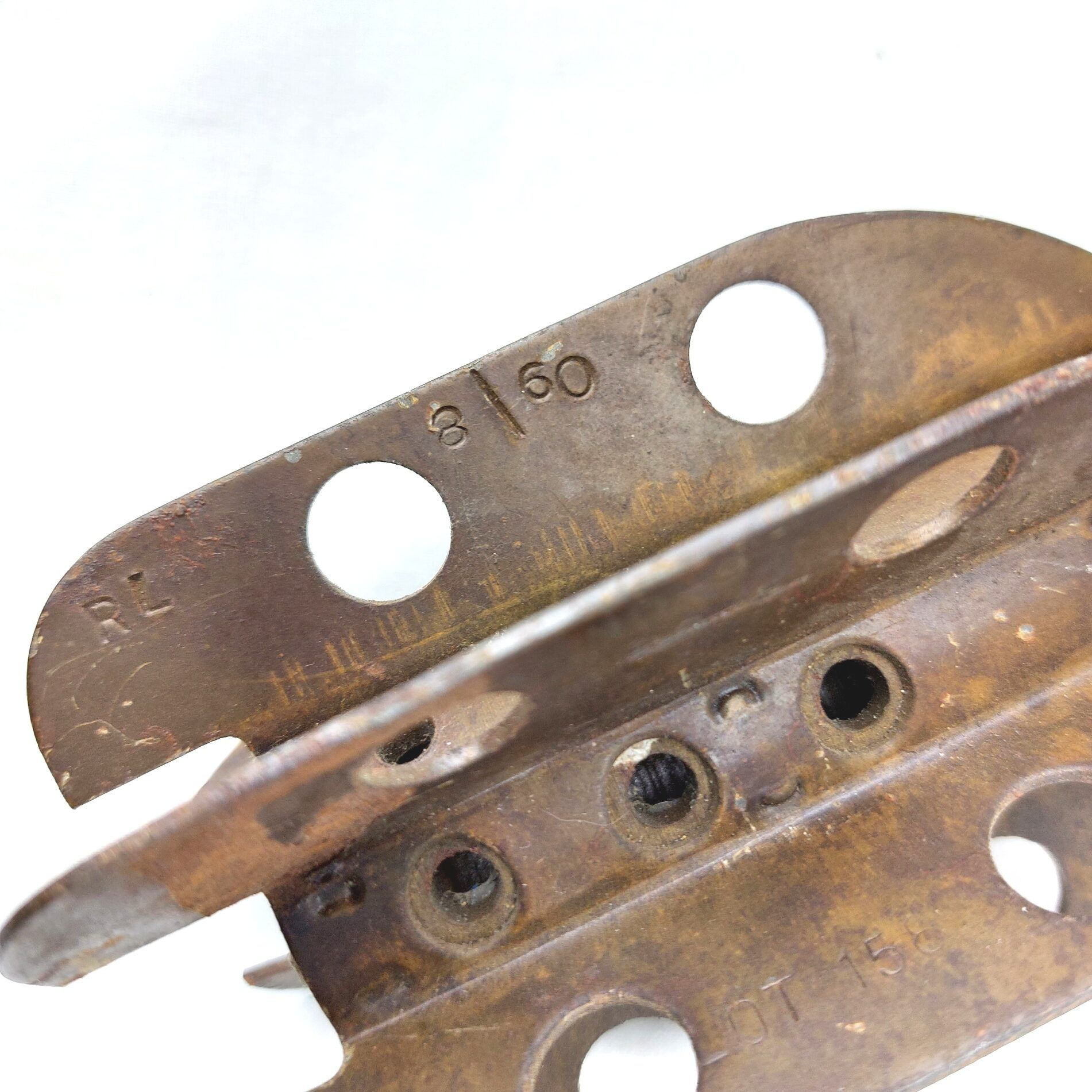
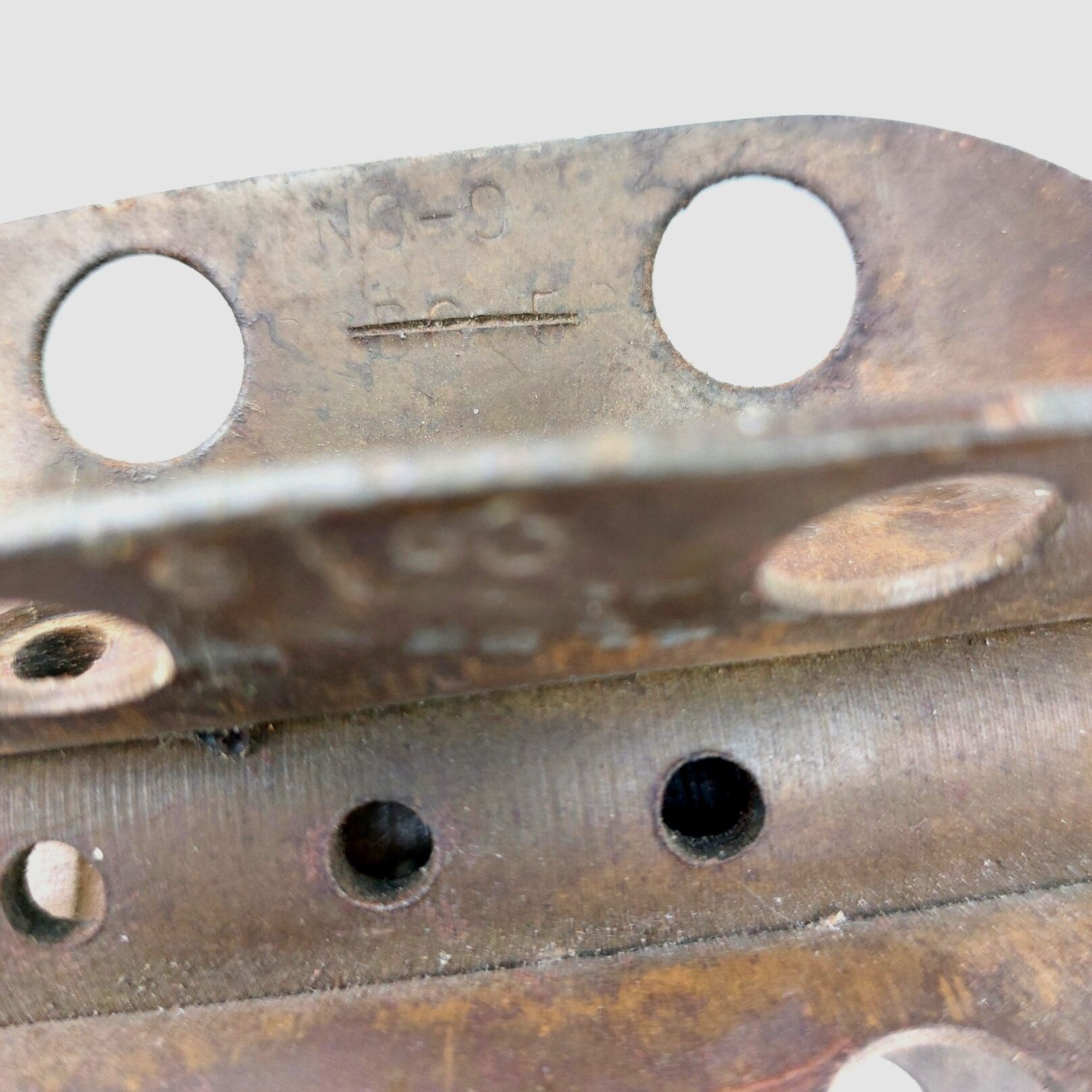
The 4.2-inch base ejection bomb was introduced shortly after the 3-inch version. It was made to house the same standardized filling containers used in the 3-inch bomb but with the added capacity to carry more payload due to its longer body. For example, where a 3-inch bomb might hold two thermite charges, the 4.2-inch version could accommodate three. To compensate for its length and ensure stability in flight, a special tail unit with spin-stabilizing fins replaced the standard tail unit.
This innovation allowed the British Army to repurpose existing ammunition types for enhanced performance while maintaining a consistent design approach between different caliber systems. The longer range and greater payload capacity offered strategic advantages, particularly for smoke screens, allowing more effective cover and signaling during combat operations. Additionally, the use of the BEDS system highlighted the ongoing post-WWII developments in ammunition to meet the evolving needs of modern warfare.
This information is detailed further in David Gordon's "Weapons of the WWII Tommy", which explores such innovations as part of the broader context of military equipment advancements during and after World War II. The BEDS system exemplifies the adaptation of existing technology to improve battlefield flexibility and effectiveness.