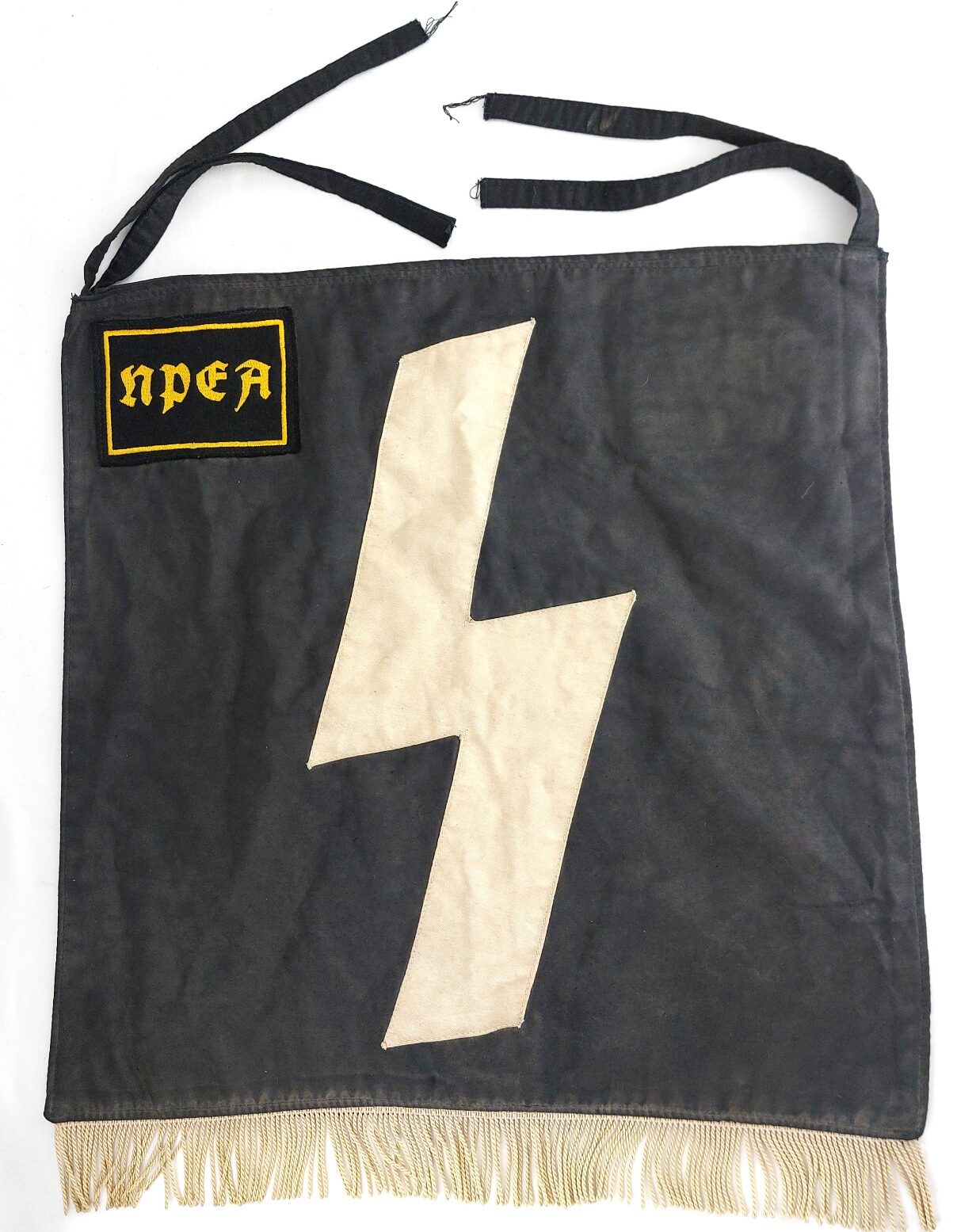
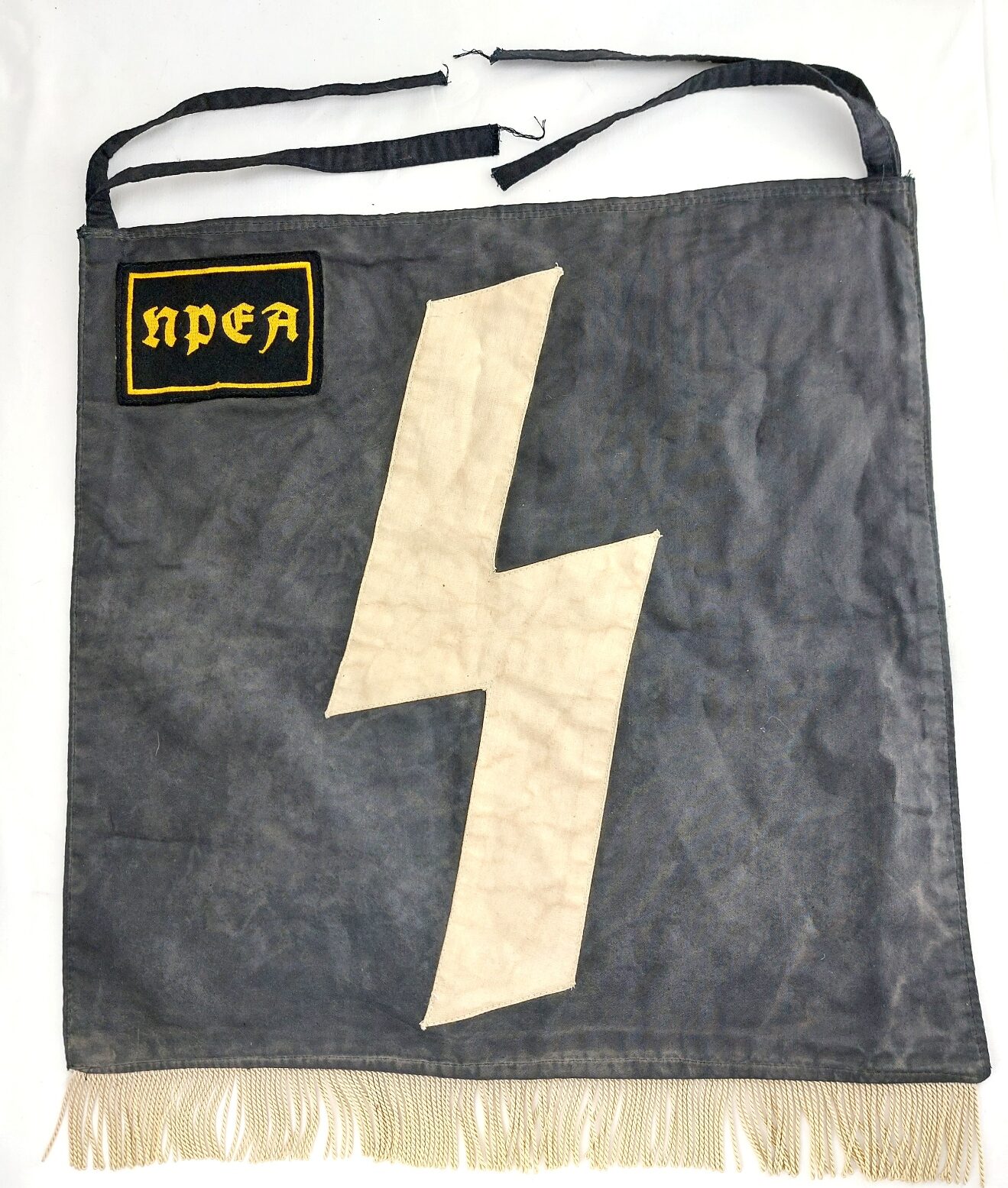
*German, WW2, Deutsches Jungvolk (DJ) (Hitler Youth Junior Section) Trumpet Banner with NPEA Insignia*
An original Deutsches Jungvolk (DJ) trumpet or fanfare banner (Trompetenfahne) dating from the Second World War period. Of double-sided, multi-piece linen construction, the banner displays the DJ’s characteristic black field with a central silver Sig-rune — the official emblem of the Deutsches Jungvolk adopted in 1929. It measures approximately 44.5 cm x 44.5 cm (excluding fringe) and is finished along the lower edge with a woven cotton fringe. The hoist edge is fitted with four securing straps — two on each side — for attachment to the trumpet during ceremonial display.
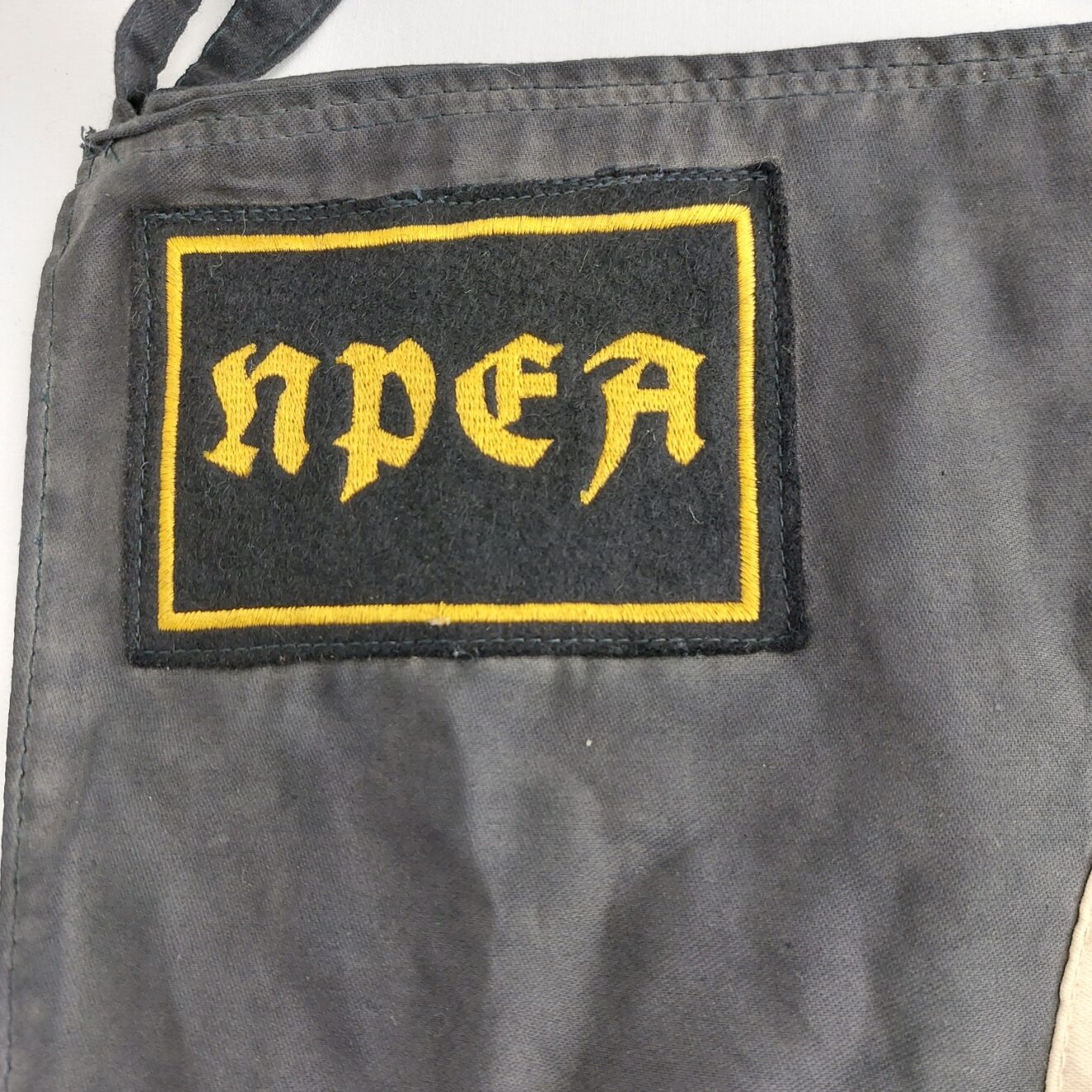
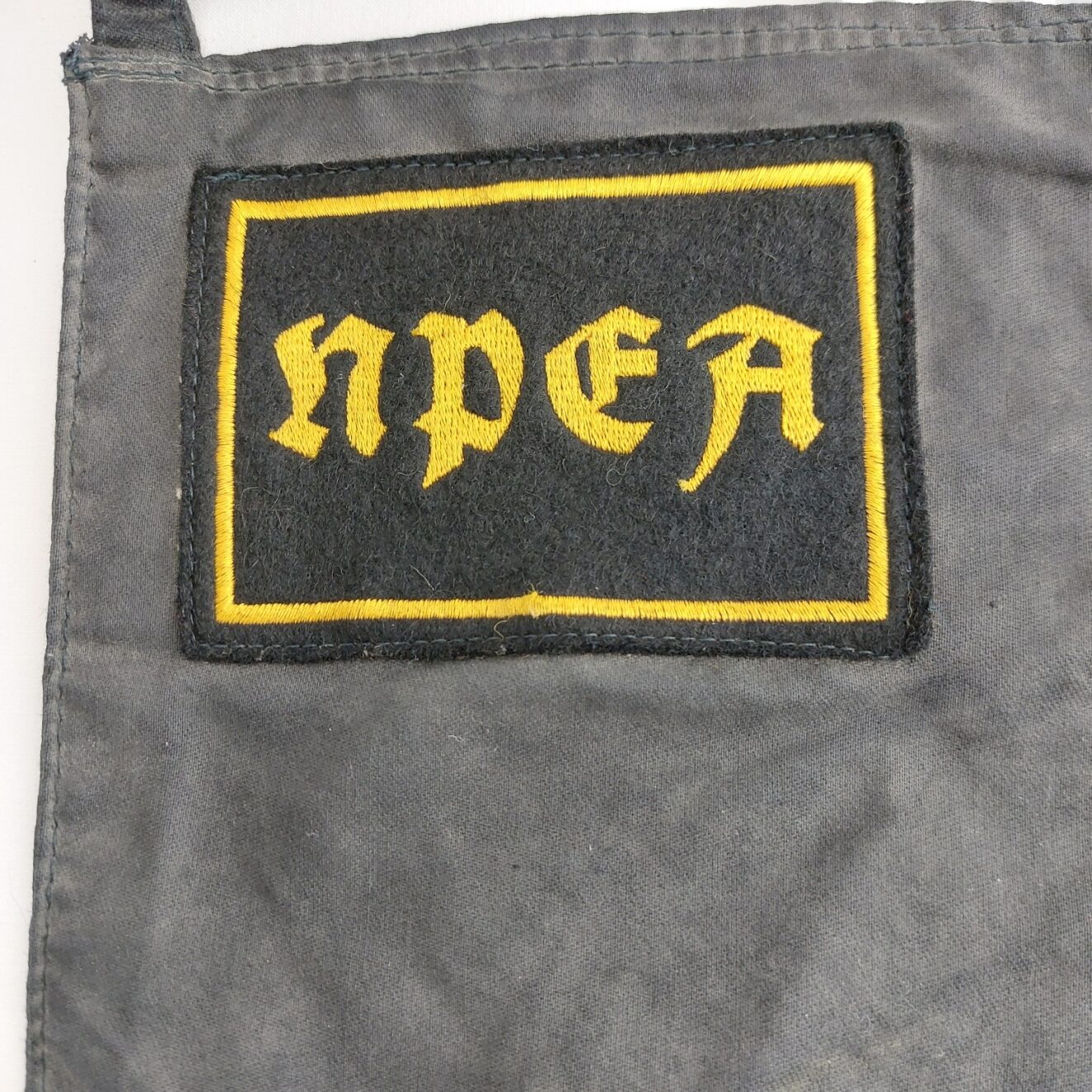
Affixed to each face is a Nationalpolitische Erziehungsanstalten (NPEA / Napola) badge, indicating association with one of the elite Napola schools. The combination of the DJ Sig-rune with Napola insignia is particularly uncommon, representing the crossover between general youth-movement ceremonial use and Napola institutional identity.
Rarity Note:
With only 43 Napola schools established between 1933 and 1945, and each maintaining a small number of ceremonial instruments, trumpet banners displaying Napola association are among the rarest forms of Hitler Youth regalia. Surviving examples represent unique, school-specific productions rather than standardised national issues.
Measurements: Approx. 44.5 cm × 44.5 cm (excluding fringe)
Historical Note:
The Deutsches Jungvolk (DJ) was established in Vienna in 1929 and served as the junior section of the Hitlerjugend for boys aged 10–14. On 9 November 1929 – the anniversary of the failed Beer Hall Putsch – the Vienna Gauleiter presented the DJ with its first official flag: a black field bearing a silver Sig-rune. The rune became the enduring symbol of the organisation, intended to embody vitality and ideological purity.
Napola schools (NPEA) were secondary boarding schools created by the Nazis to train and indoctrinate future political leaders of Germany. Founded in 1933, they combined classical education with military discipline and racial ideology. Admission was mostly limited to boys considered “racially flawless” and of above-average ability, there were also four schools for girls. By 1945 there were only 43 Napola schools in existence. From 1940 many fell under direct SS control, further tightening their ideological and physical regime.
Trumpet and fanfare banners were used during ceremonies, parades, and inspections by youth musical detachments (Fanfarenzüge). Given the small number of Napola institutions and the limited size of each school’s ceremonial band, banners carrying the NPEA connection are exceptionally rare, with very few surviving examples recorded.
*Condition*
Very good overall, with minor handling marks and light toning consistent with age. The Sig-rune and NPEA device remain intact and securely affixed. Cotton fringe complete. Stitching firm throughout. Please see photographs as part of the condition report.
RQMAOOXDOO_5246218535