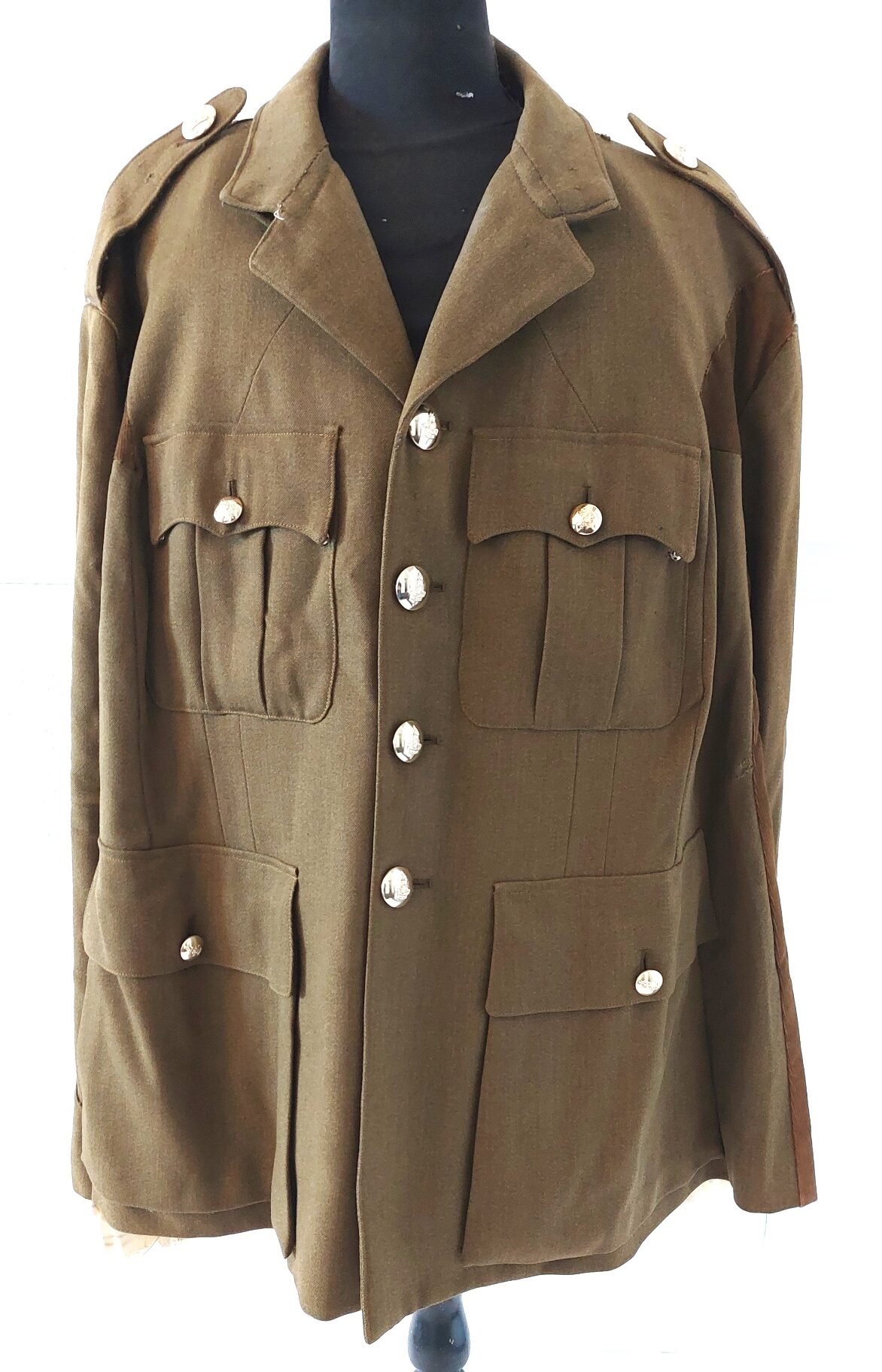
*British, Dated 1961, Royal Army Educational Corps Officer’s Service Dress Tunic by Gieves London, Named to 2nd Lt. K. C. Benner*
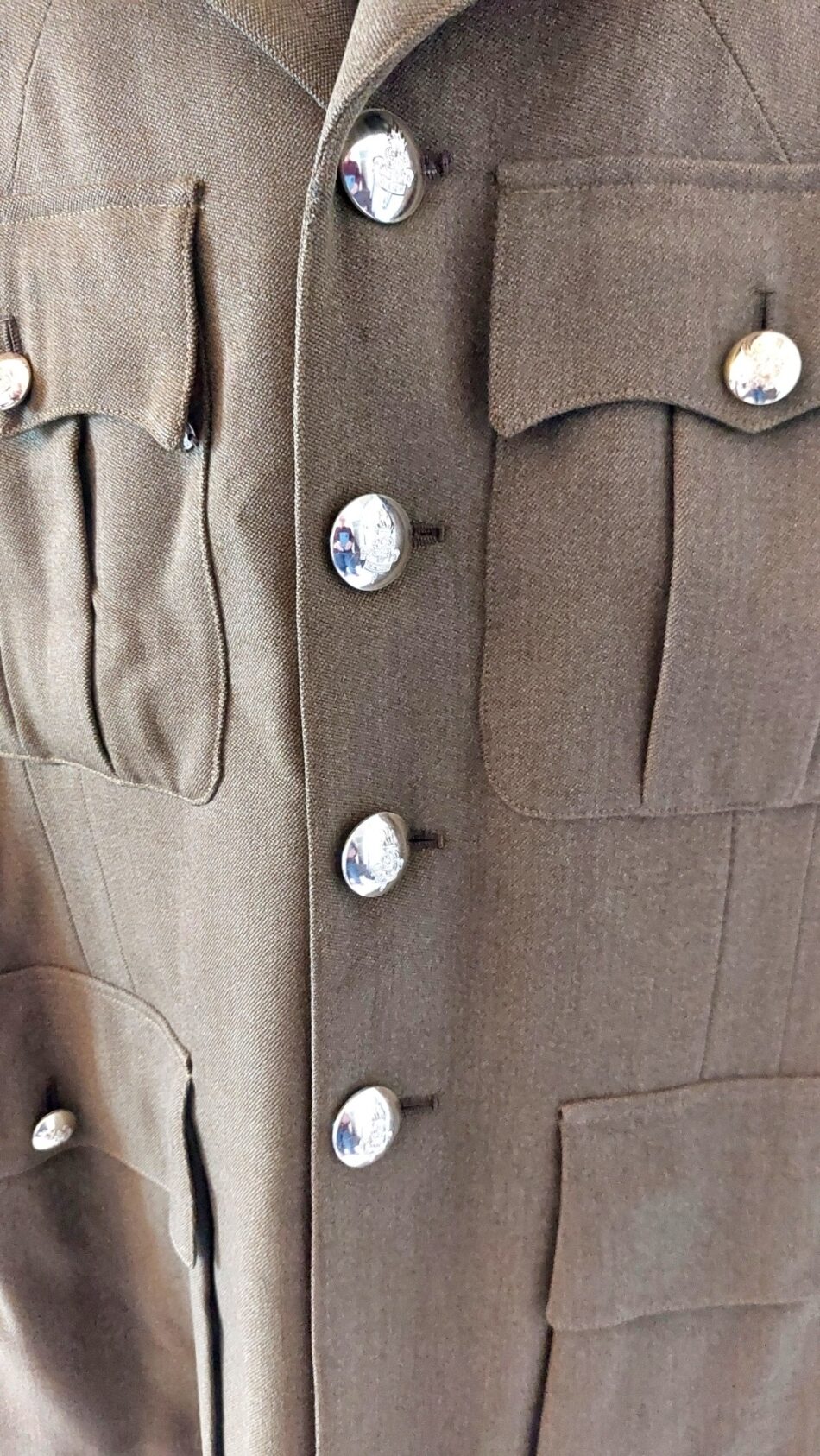
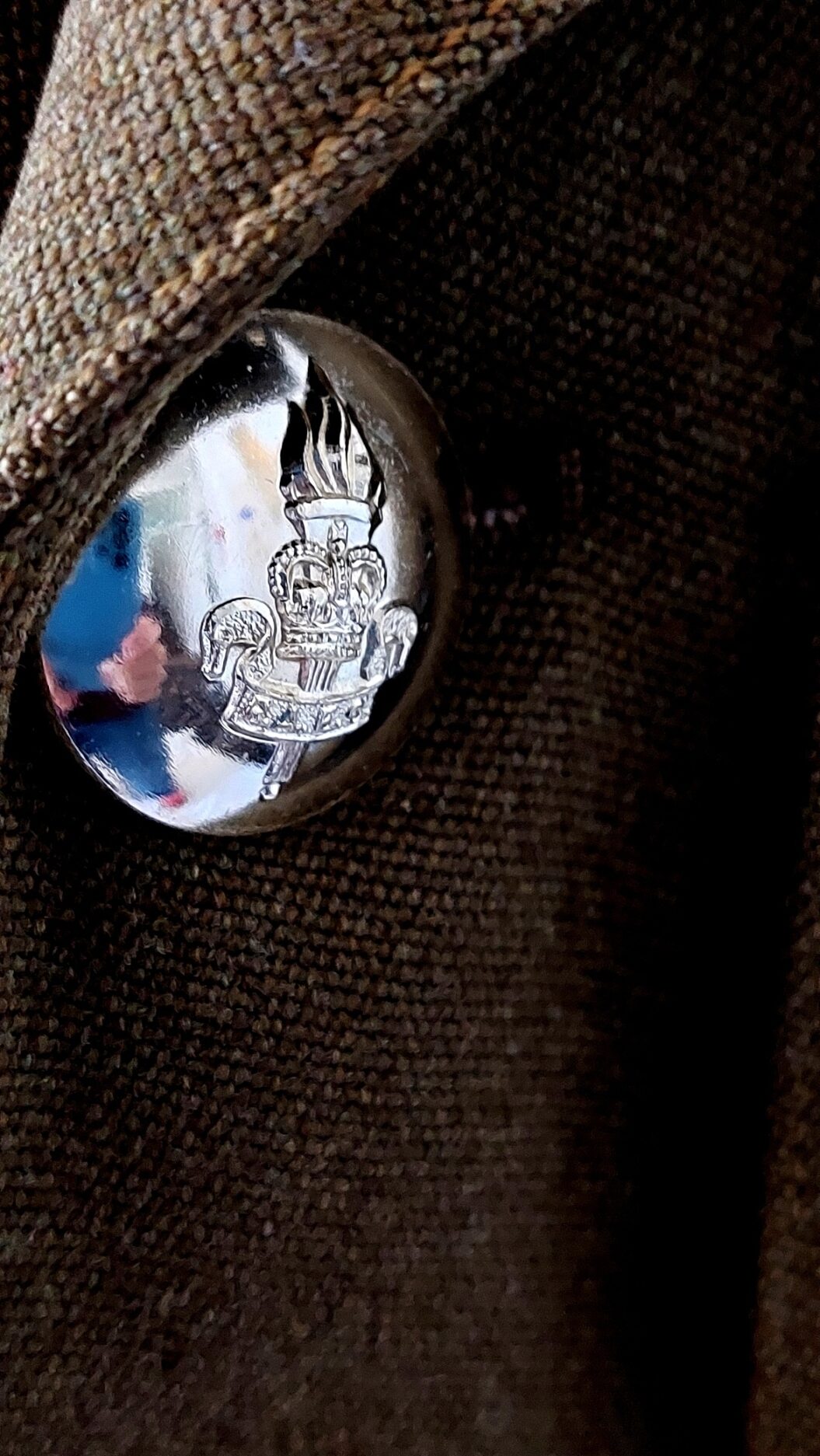
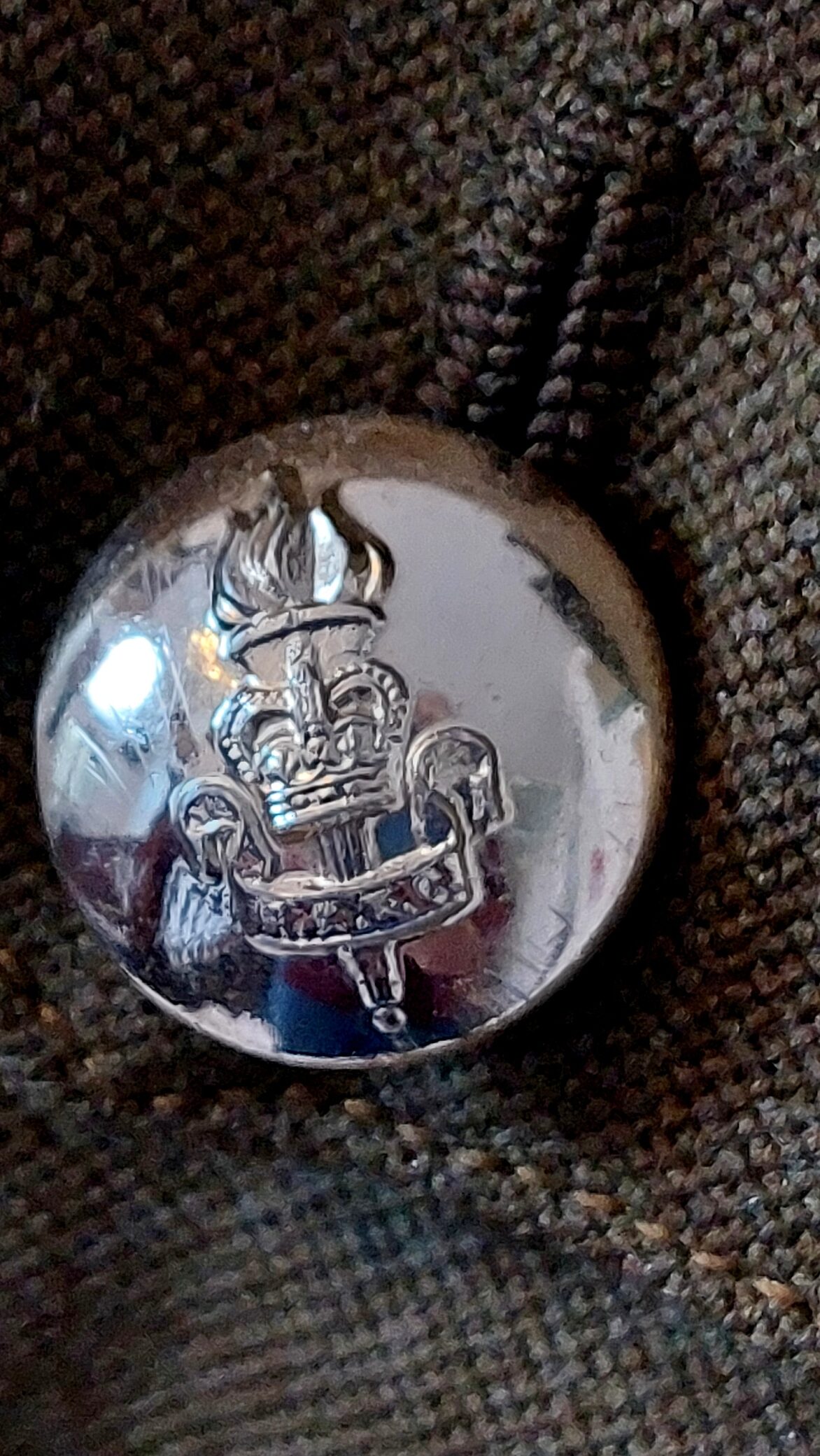
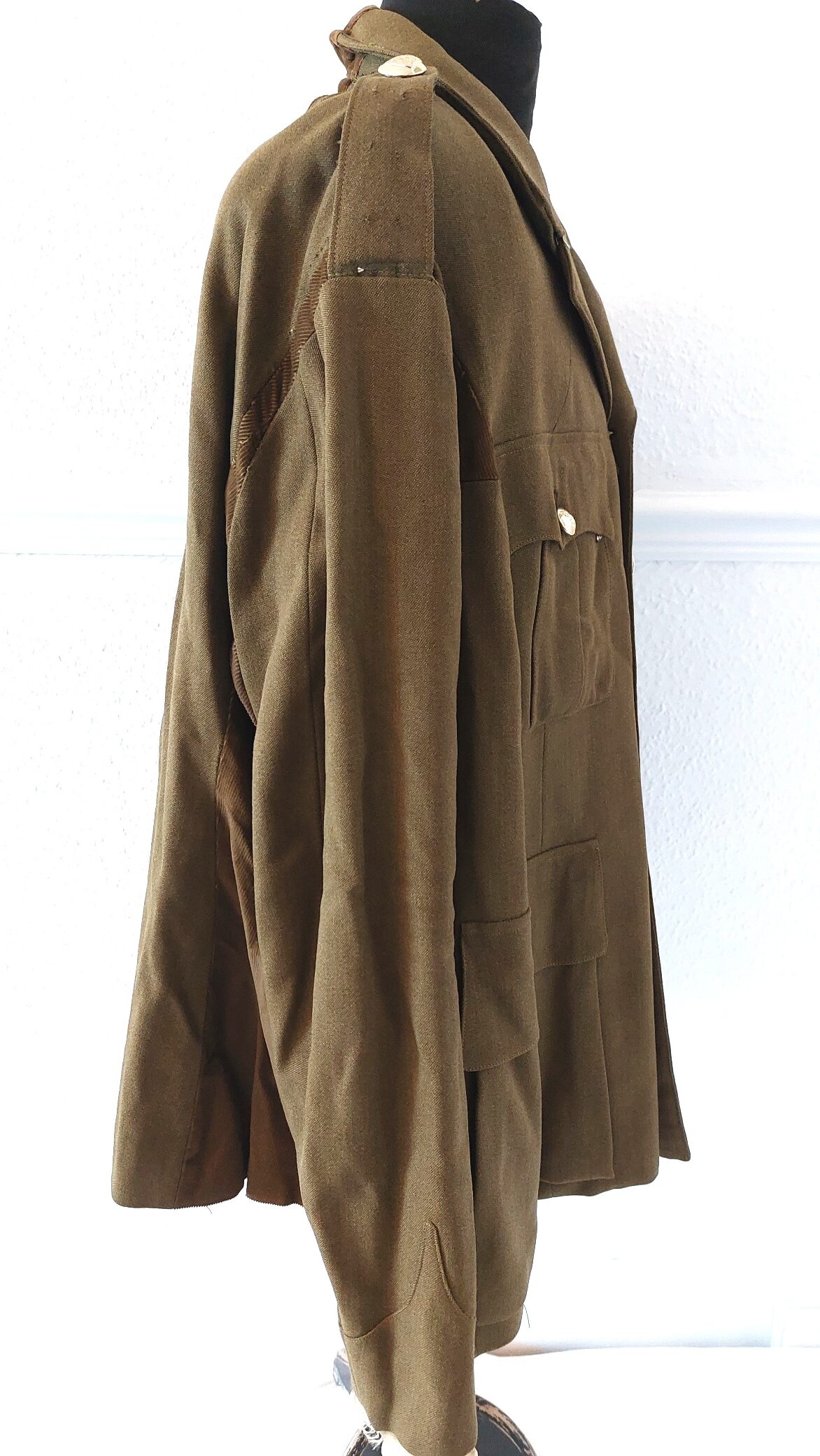
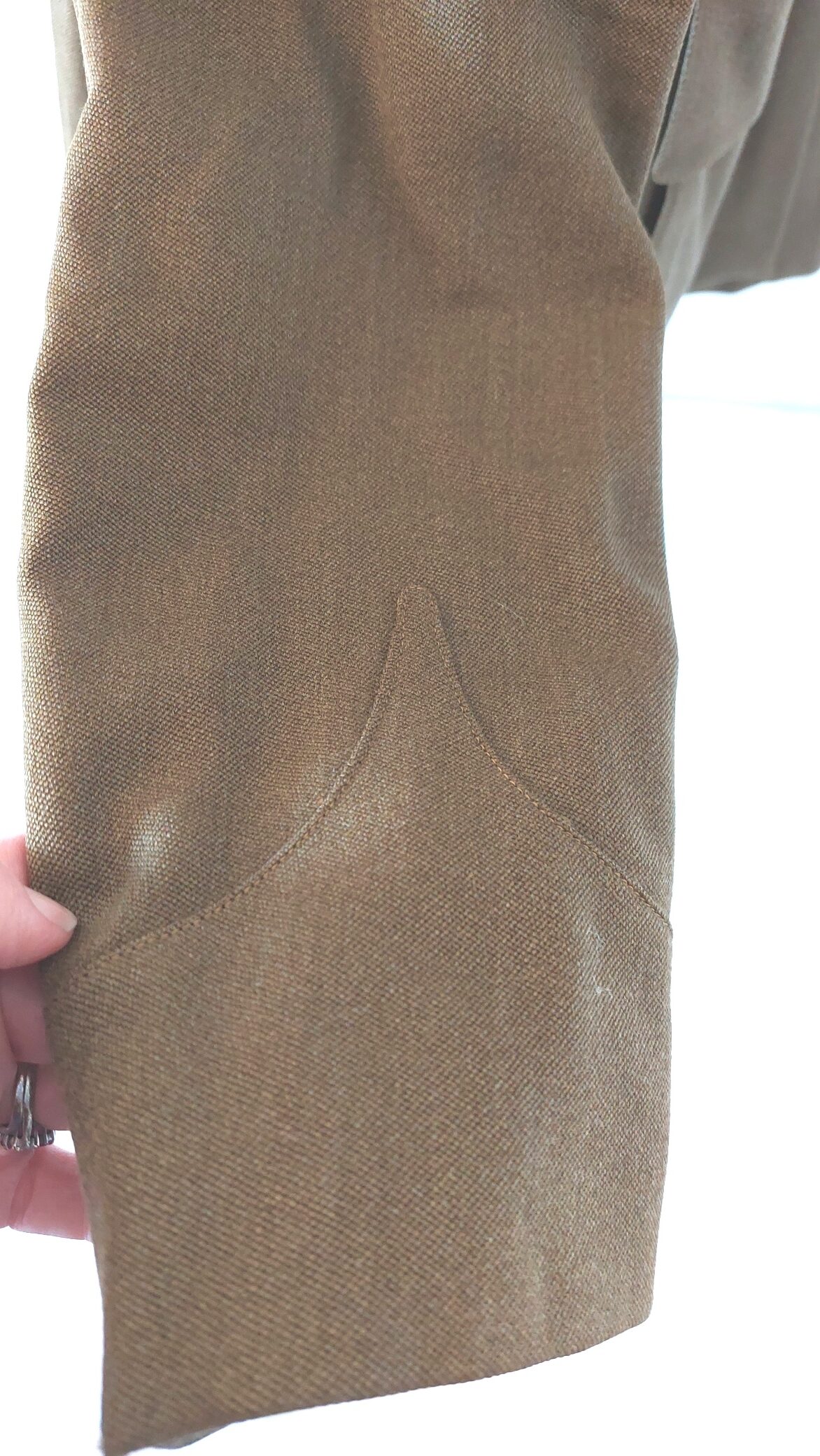
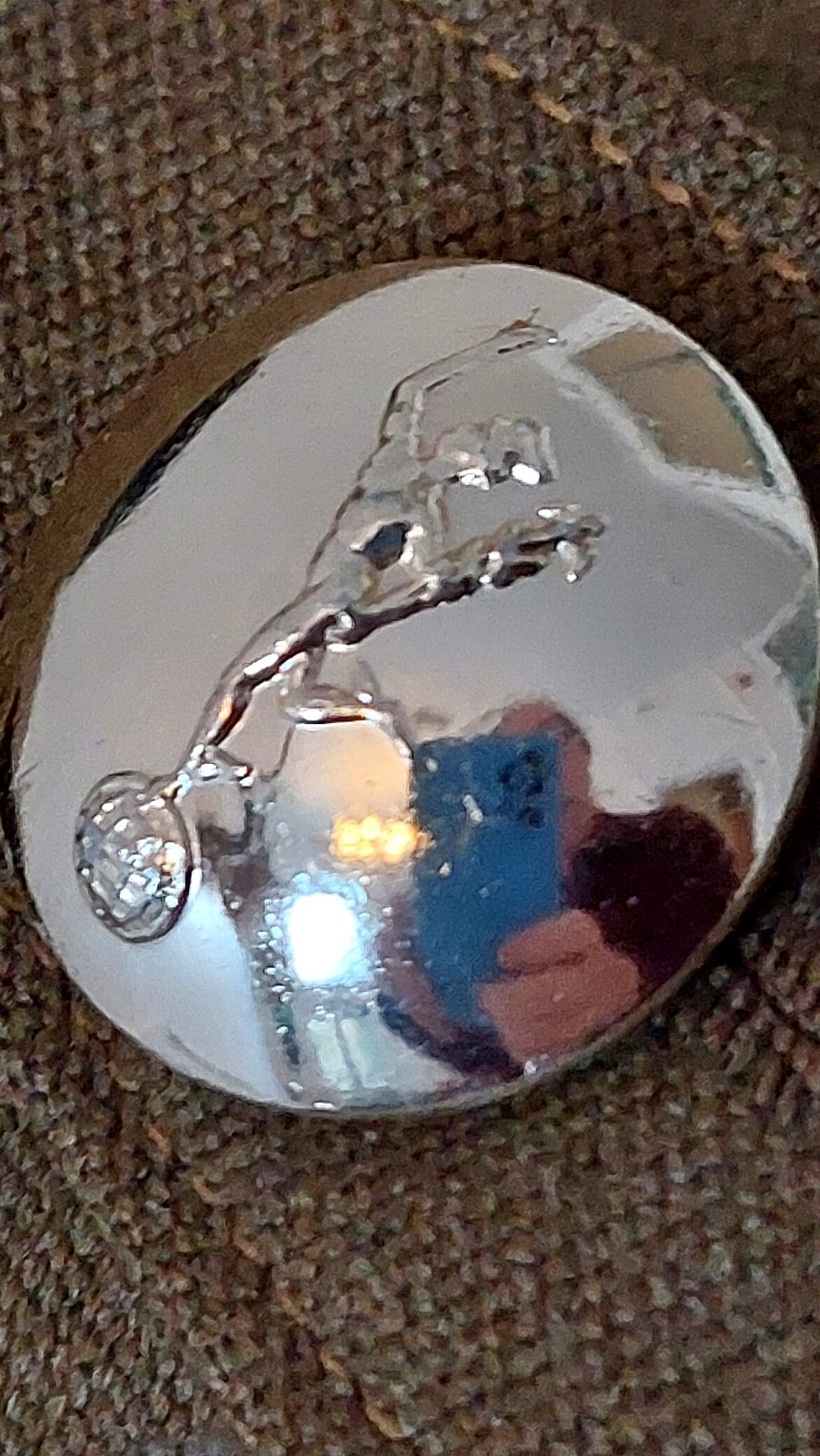
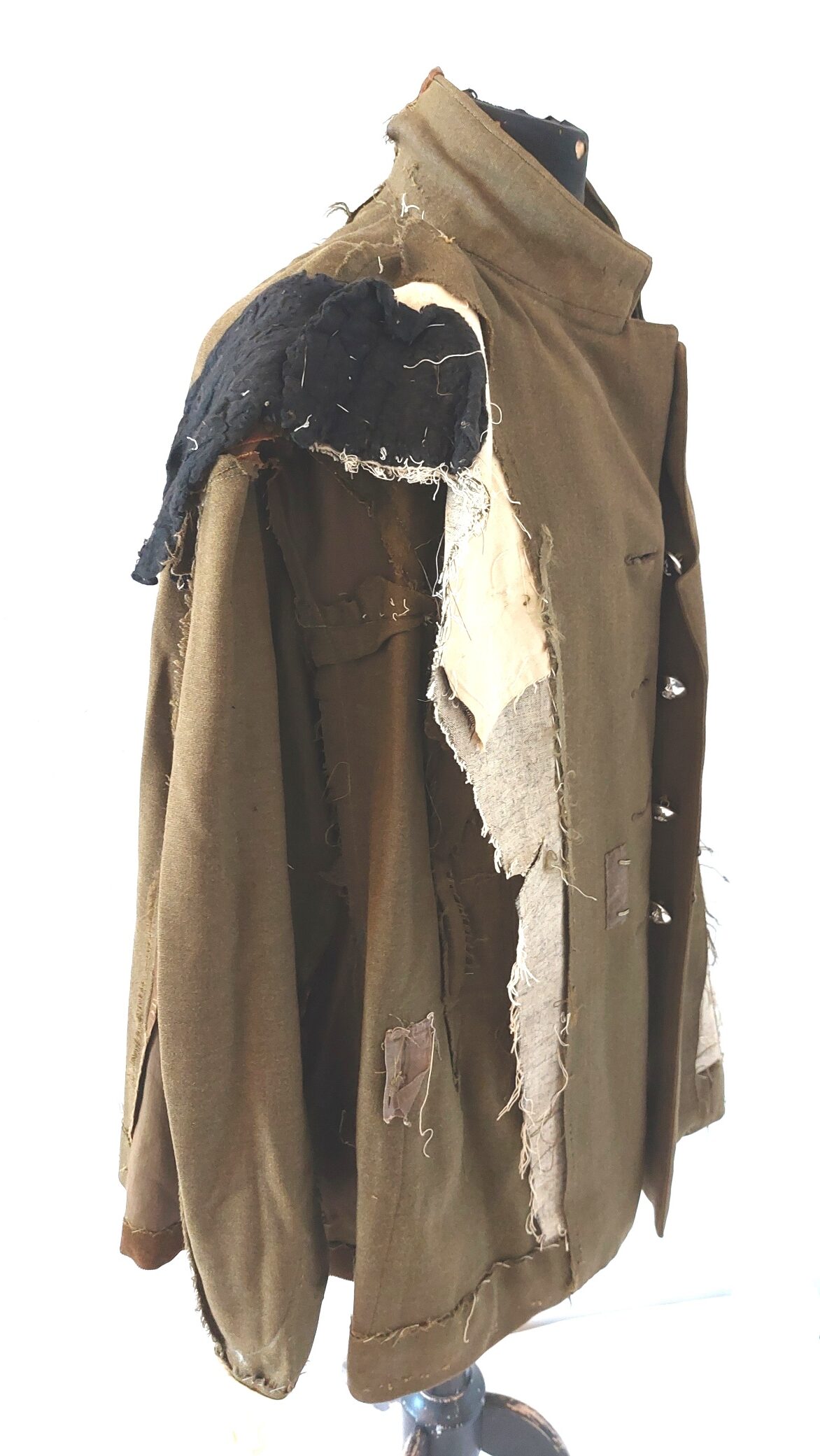
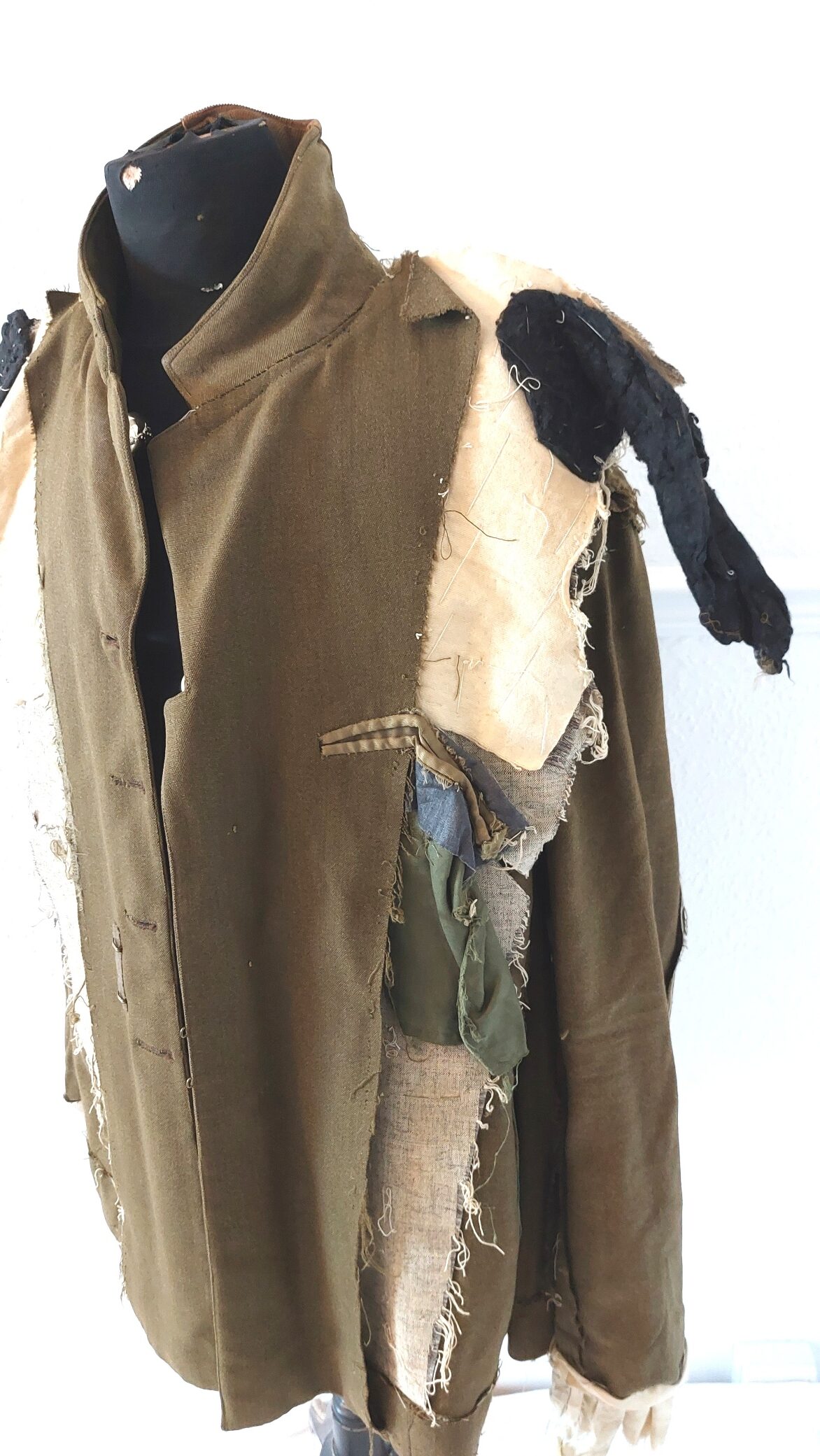
An original British Army officer’s Service Dress tunic tailored by Gieves Ltd., London, and named internally to K. C. Benner, an officer recorded in the British Army Lists of the early 1960s as serving as a 2nd Lieutenant in the Royal Army Educational Corps (RAEC). The tunic is constructed from khaki wool barathea in the traditional officer’s Service Dress pattern, featuring four pleated front pockets with scalloped flaps, shoulder straps, and a five-button front closure. The front buttons are the correct Royal Army Educational Corps officer’s pattern, displaying the crowned flaming torch, or “Torch of Learning,” above a scroll bearing the initials “R.A.E.C.” This was the standard Royal Army Educational Corps device used in the post-war period and is correct for a Queen’s Crown example of the early 1960s.
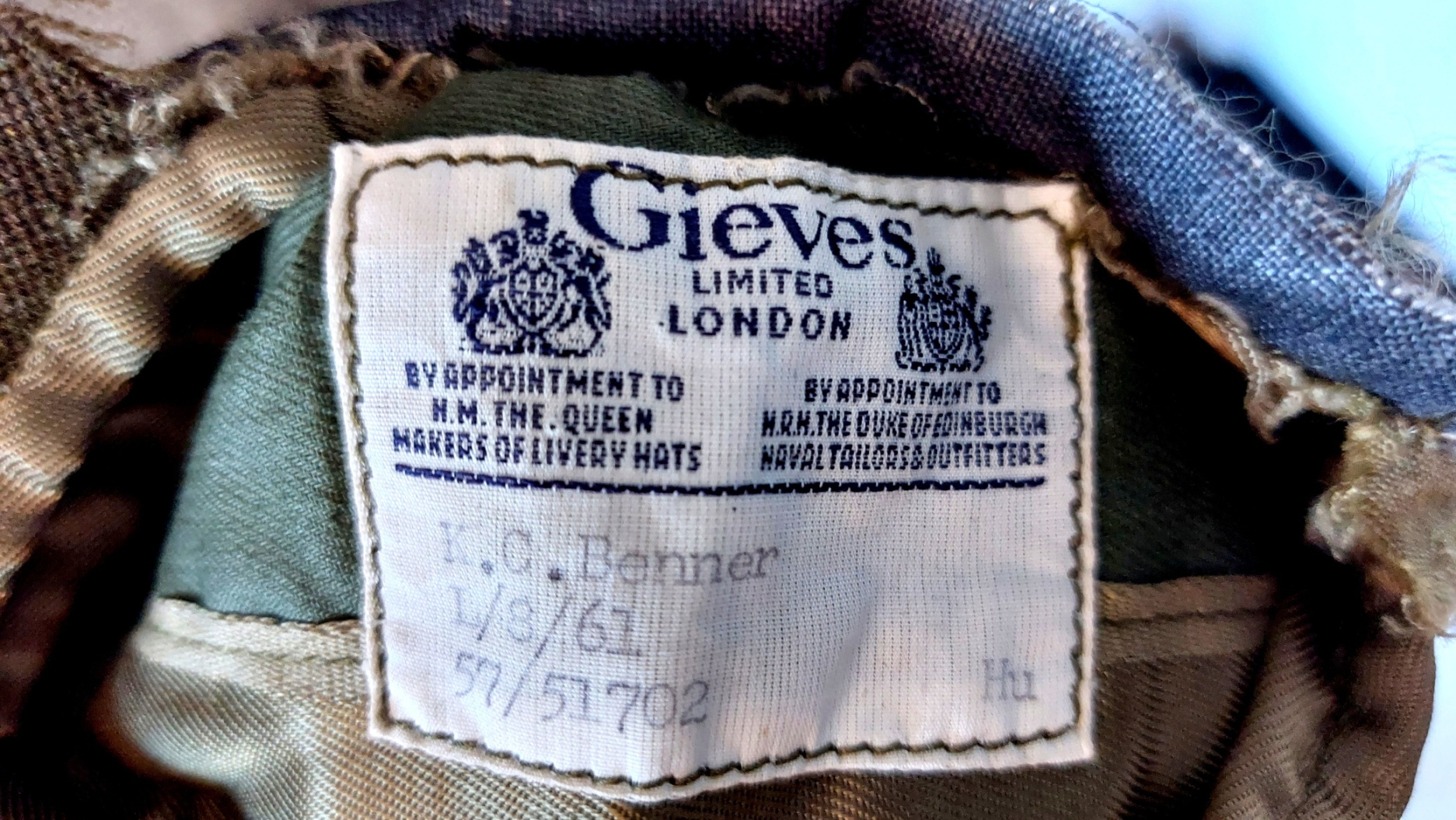
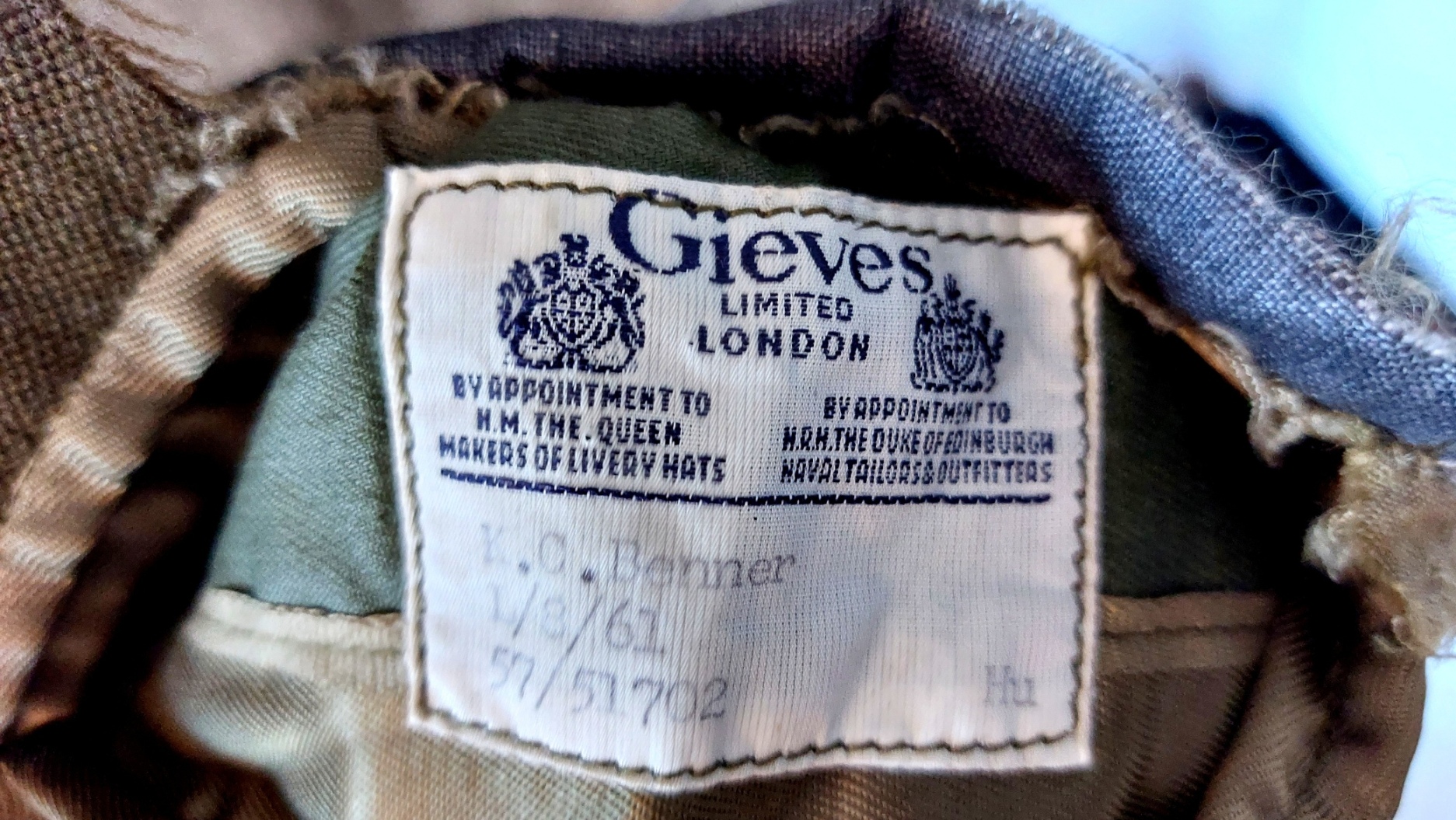
Inside the collar the tunic retains its original Gieves Limited London label, printed with Royal Warrant crests and indicating the firm’s long-standing role as military tailors and outfitters. Beneath this label the garment is handwritten with the name “K. C. Benner” together with the date “1/8/61” and the tailoring reference “57/51702.” The date almost certainly represents the tailoring or delivery date of the garment. Research indicates that K. C. Benner appears in the British Army Lists of 1962 as a 2nd Lieutenant in the Royal Army Educational Corps.
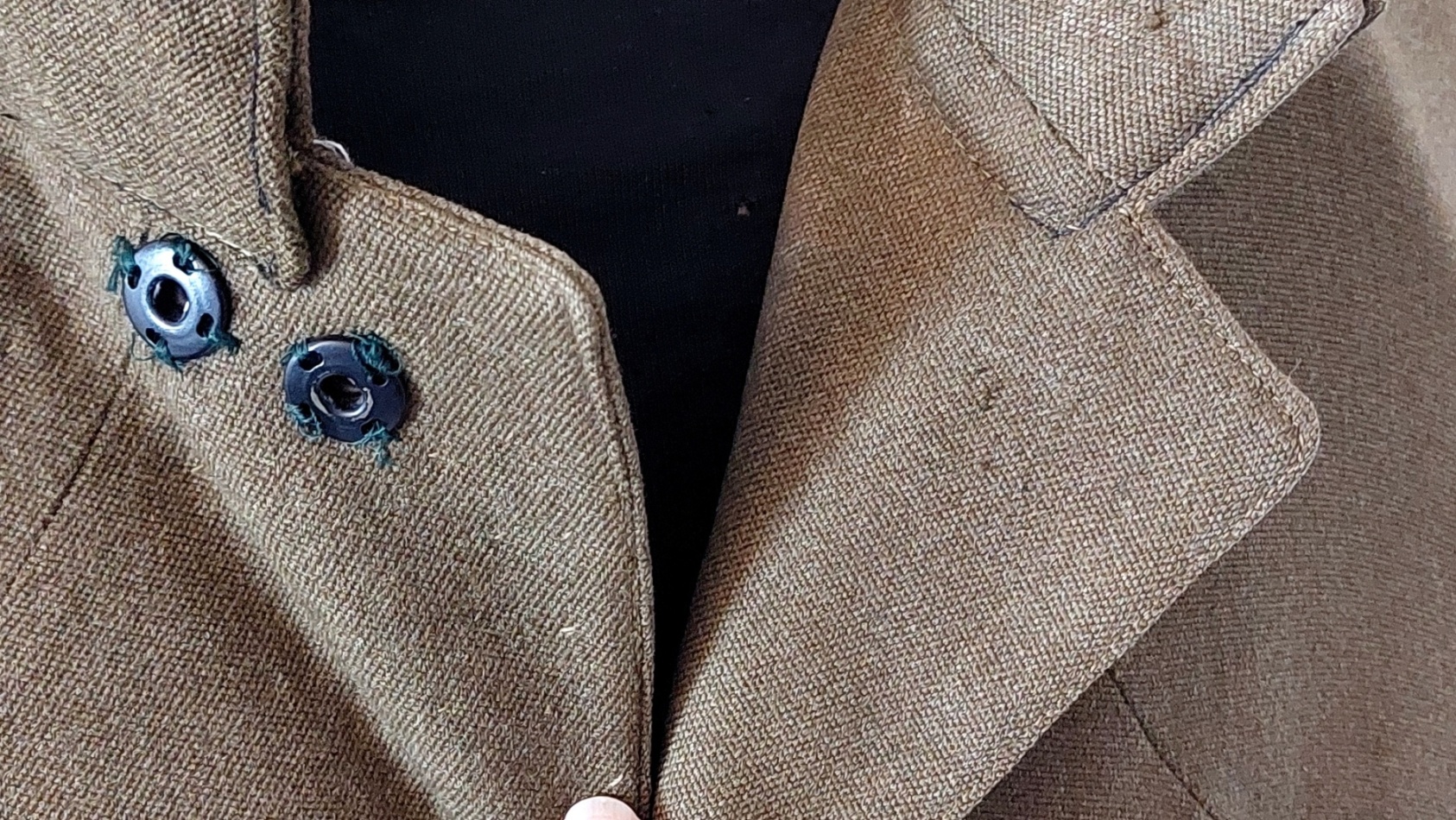
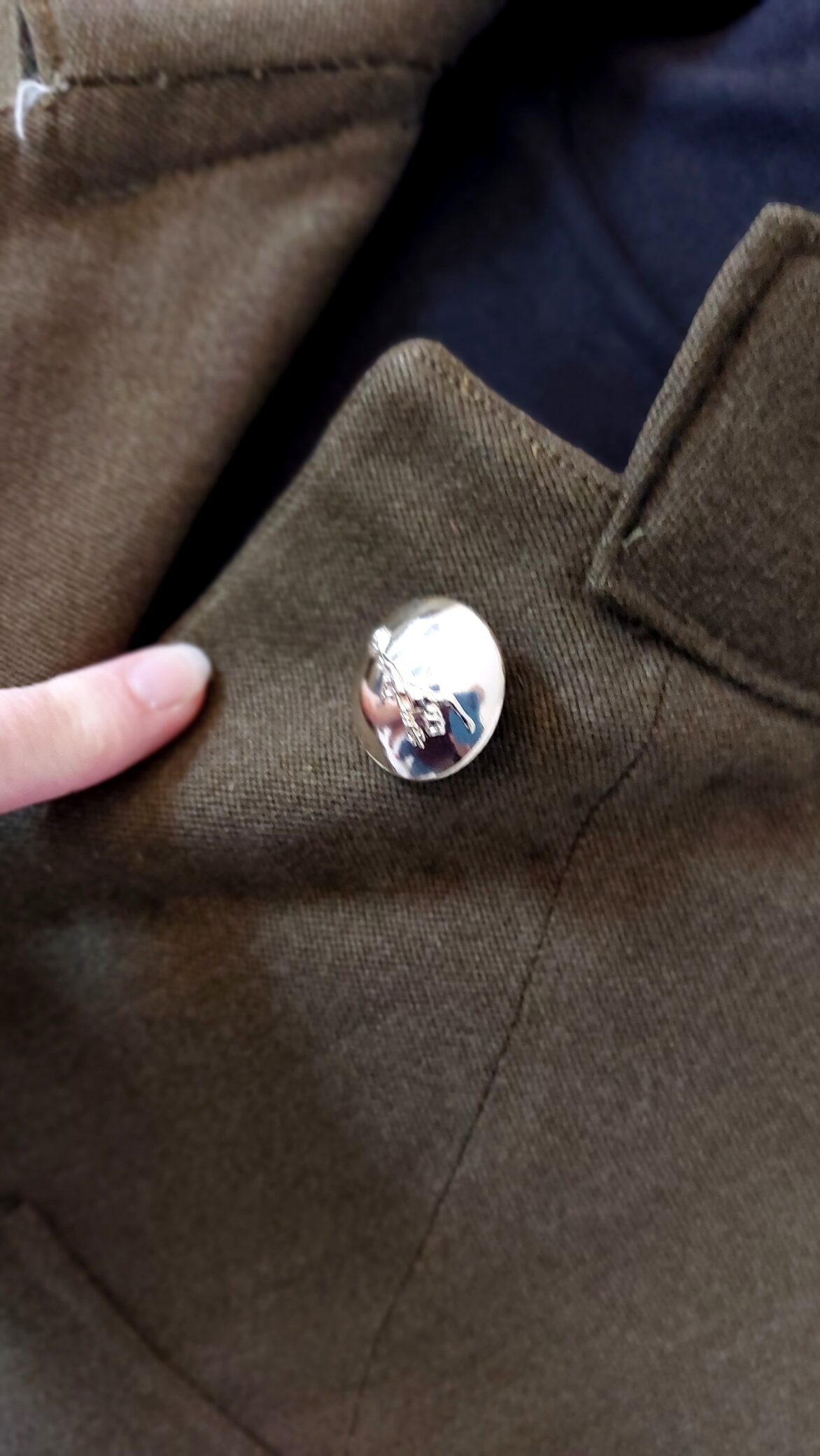
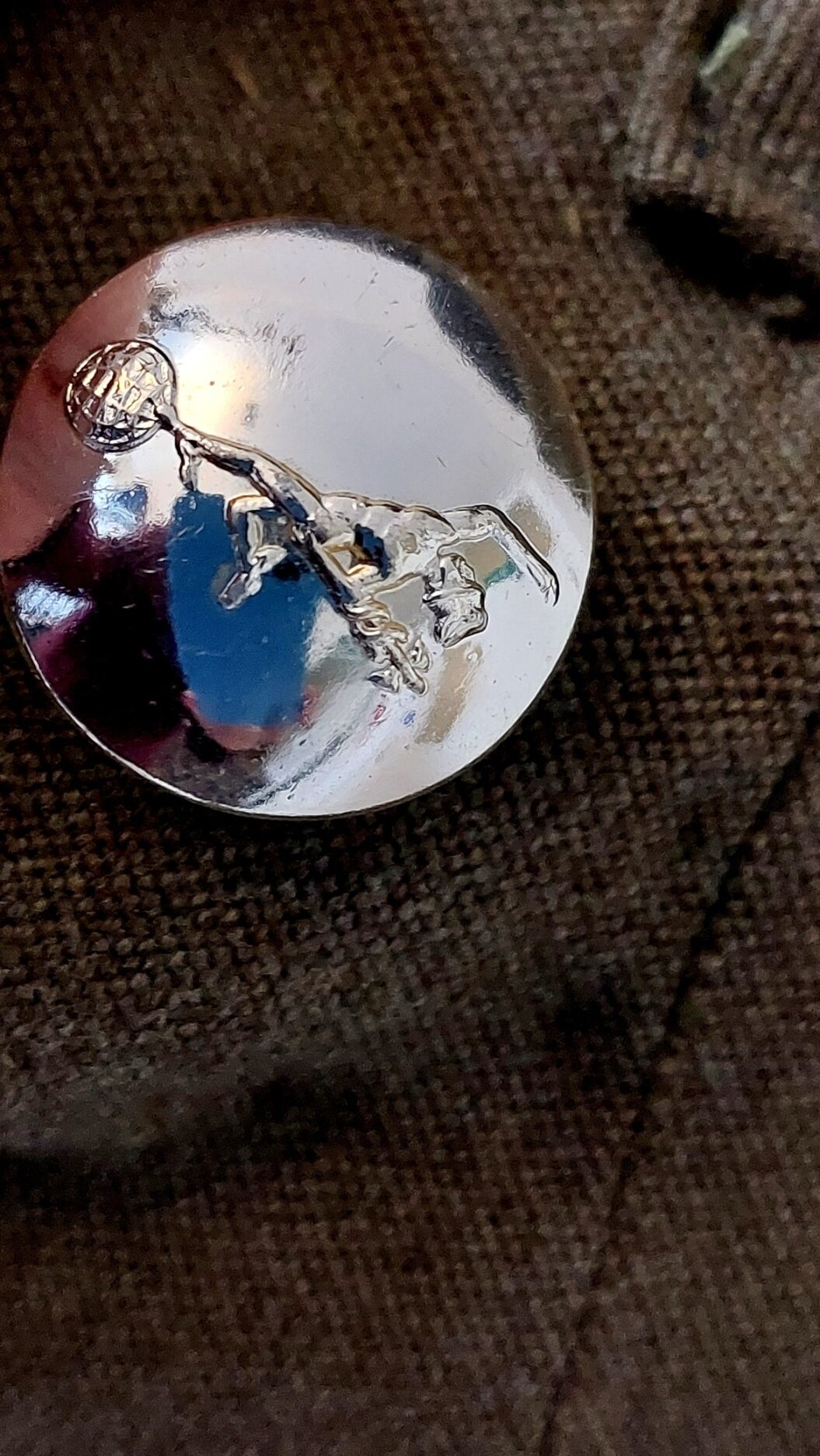
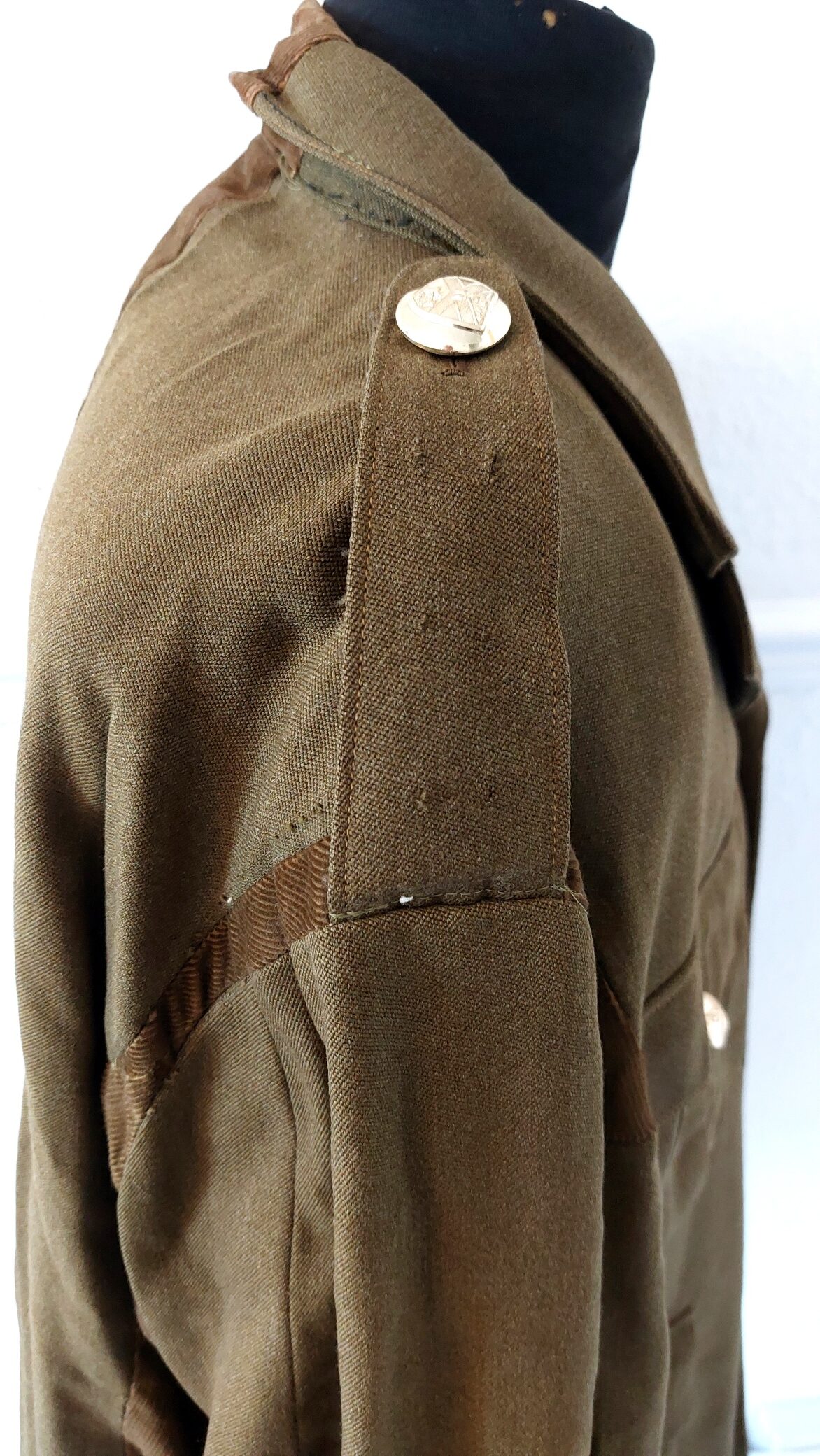
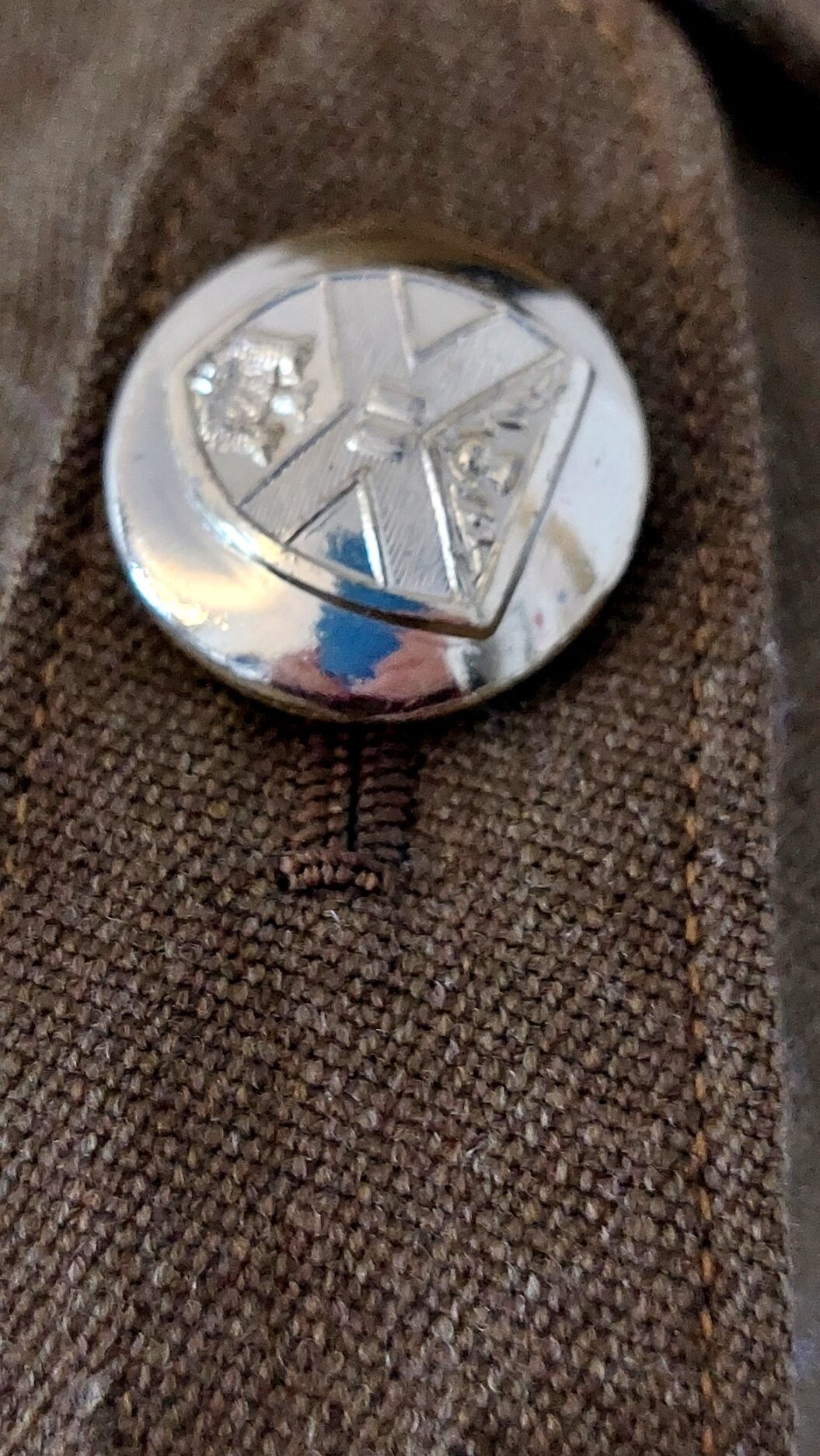
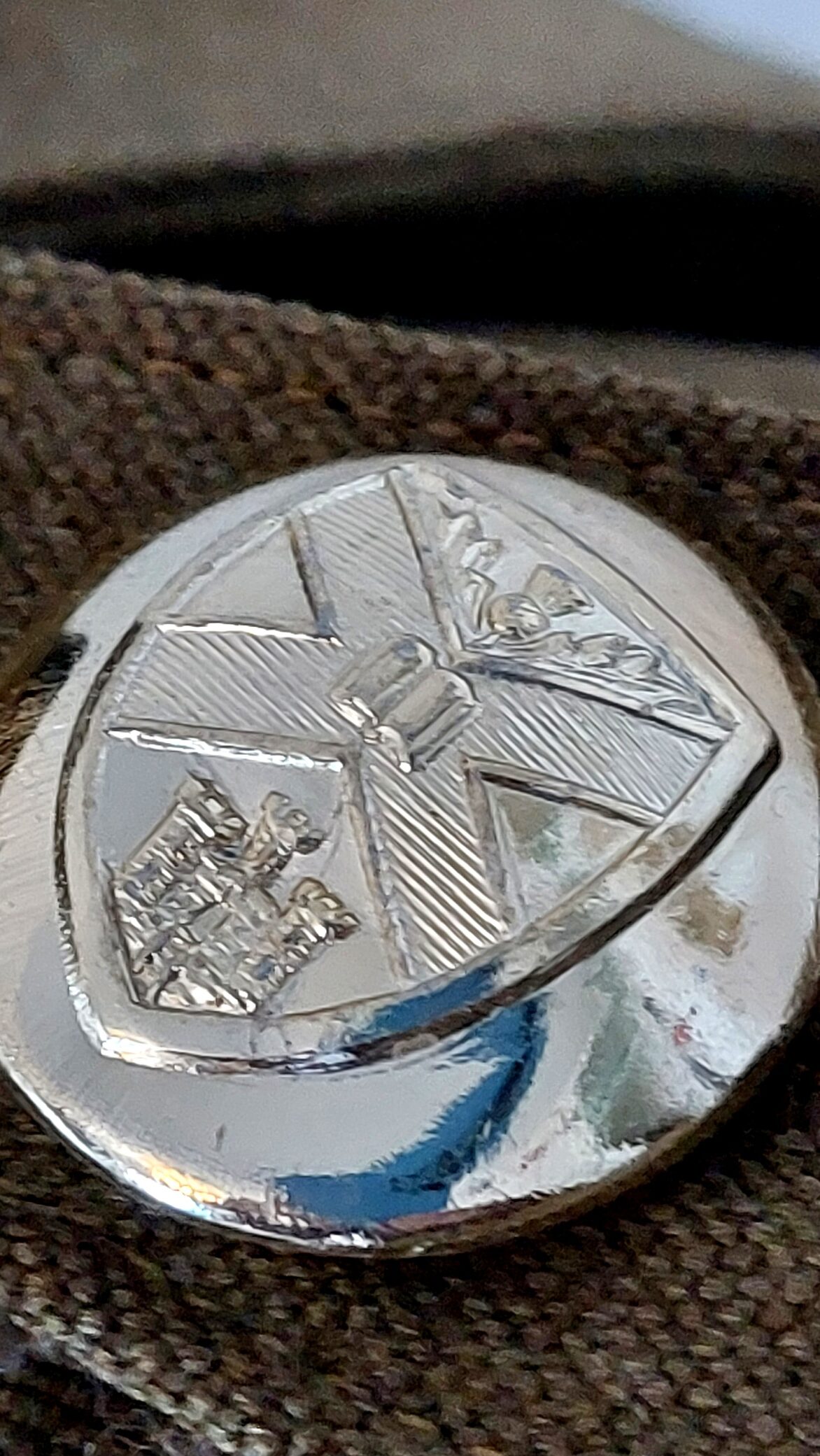
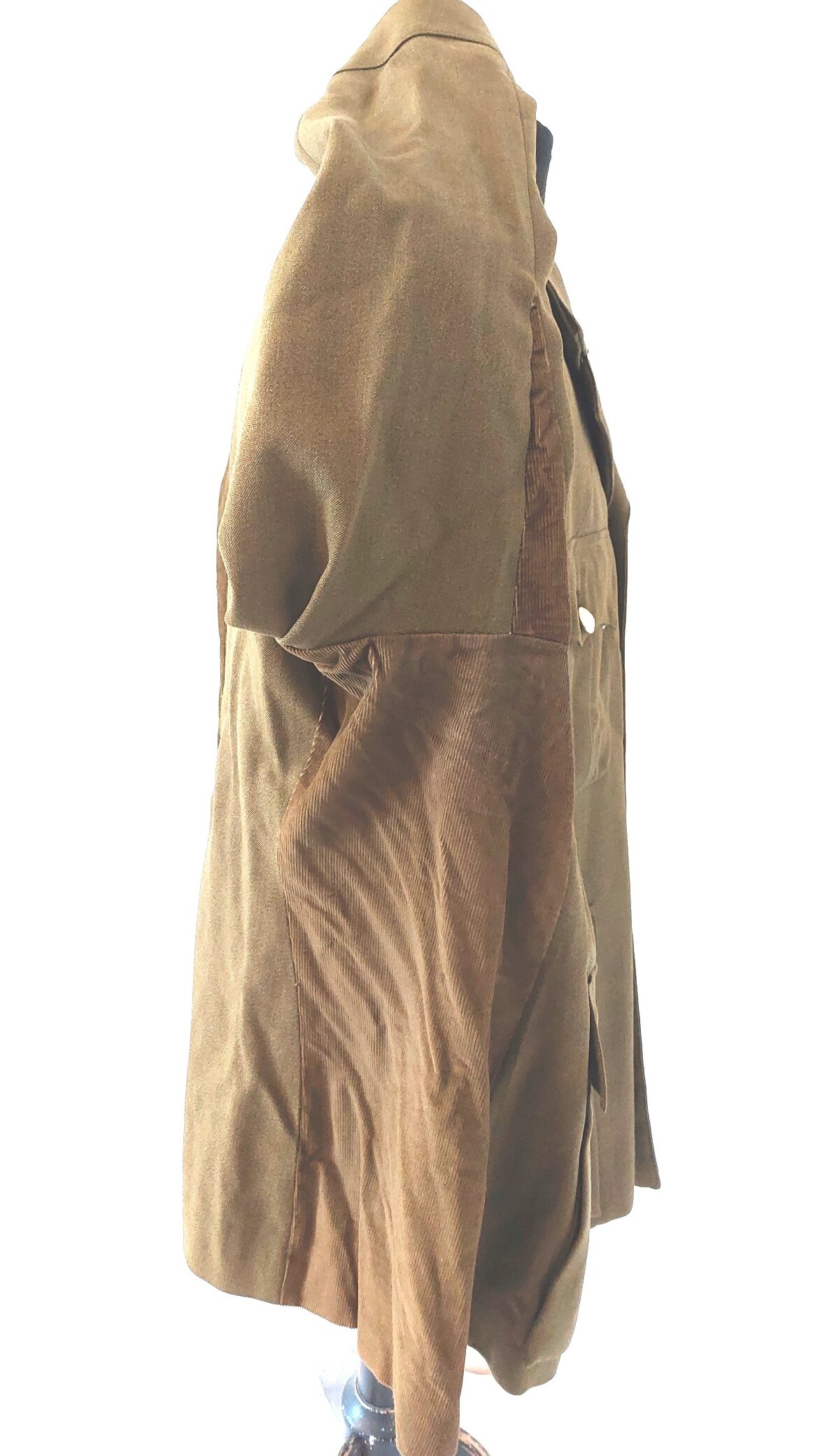
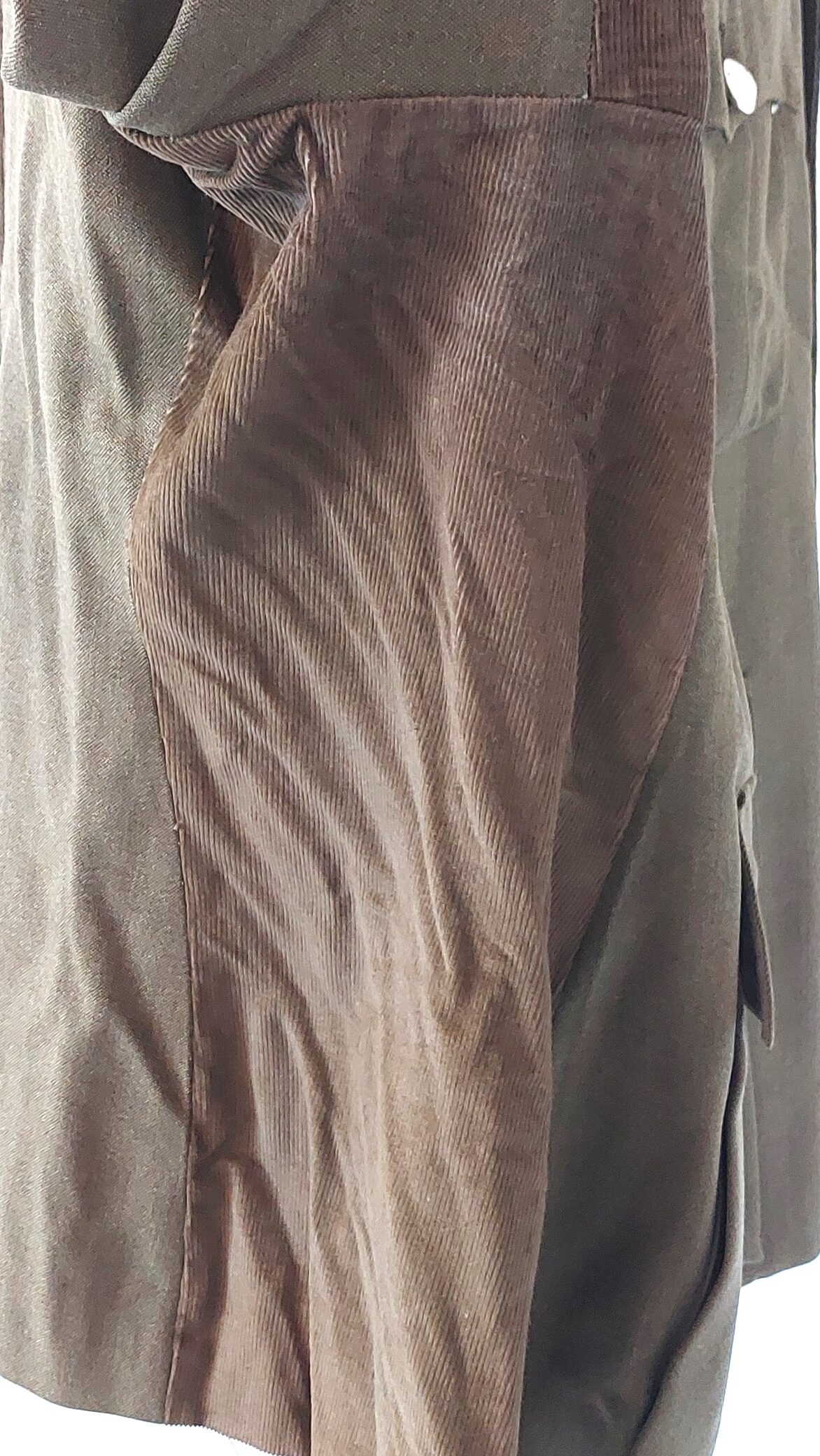
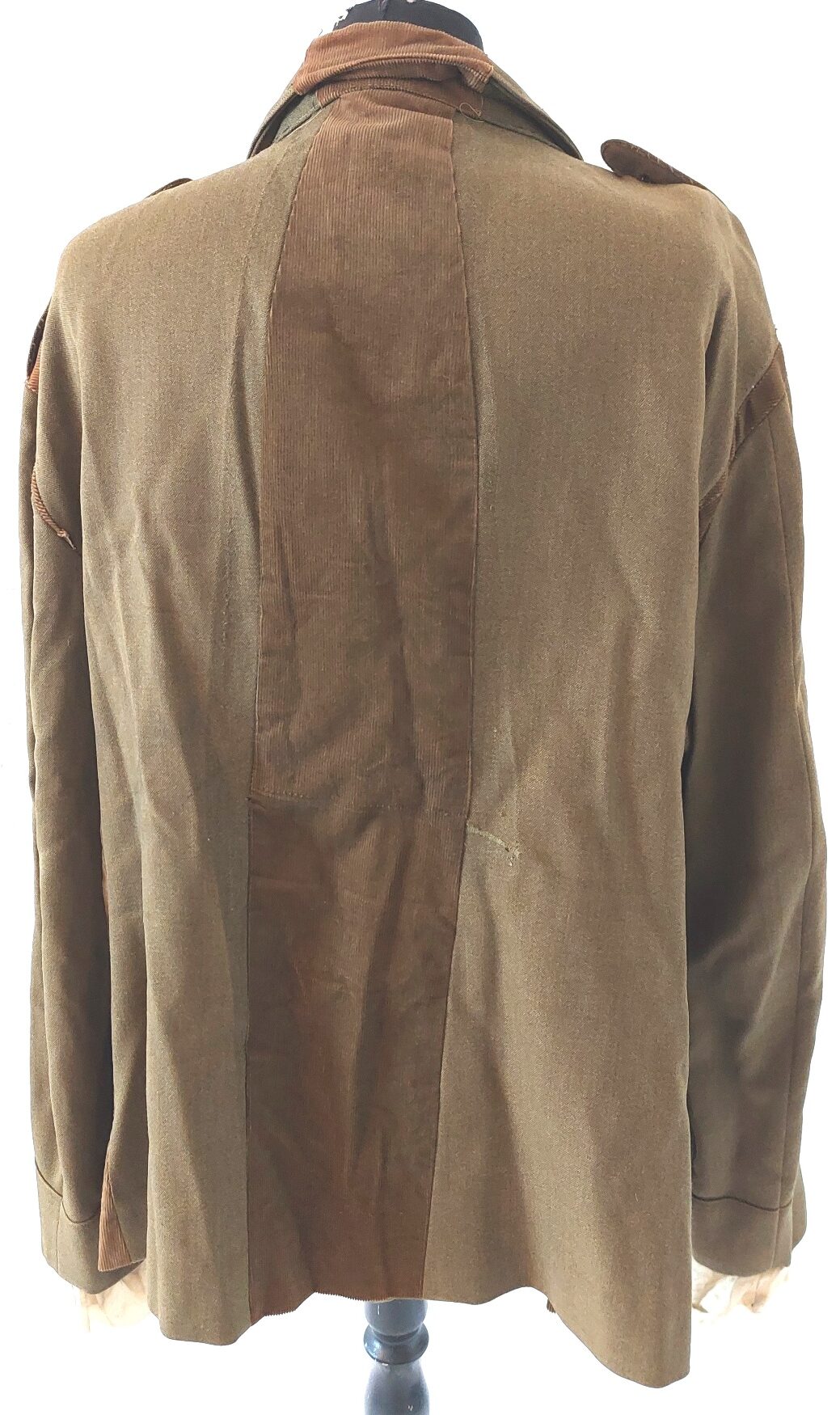
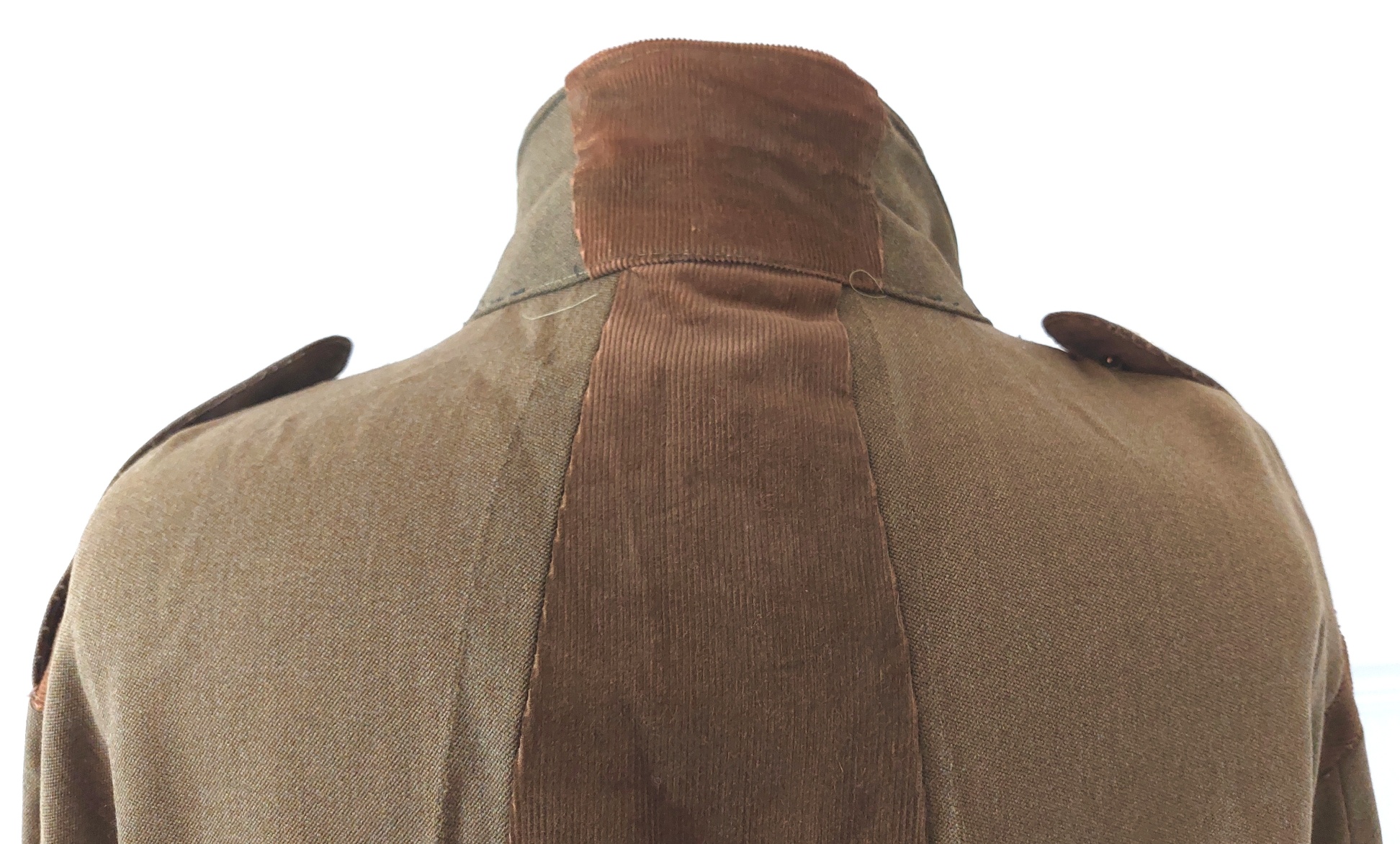
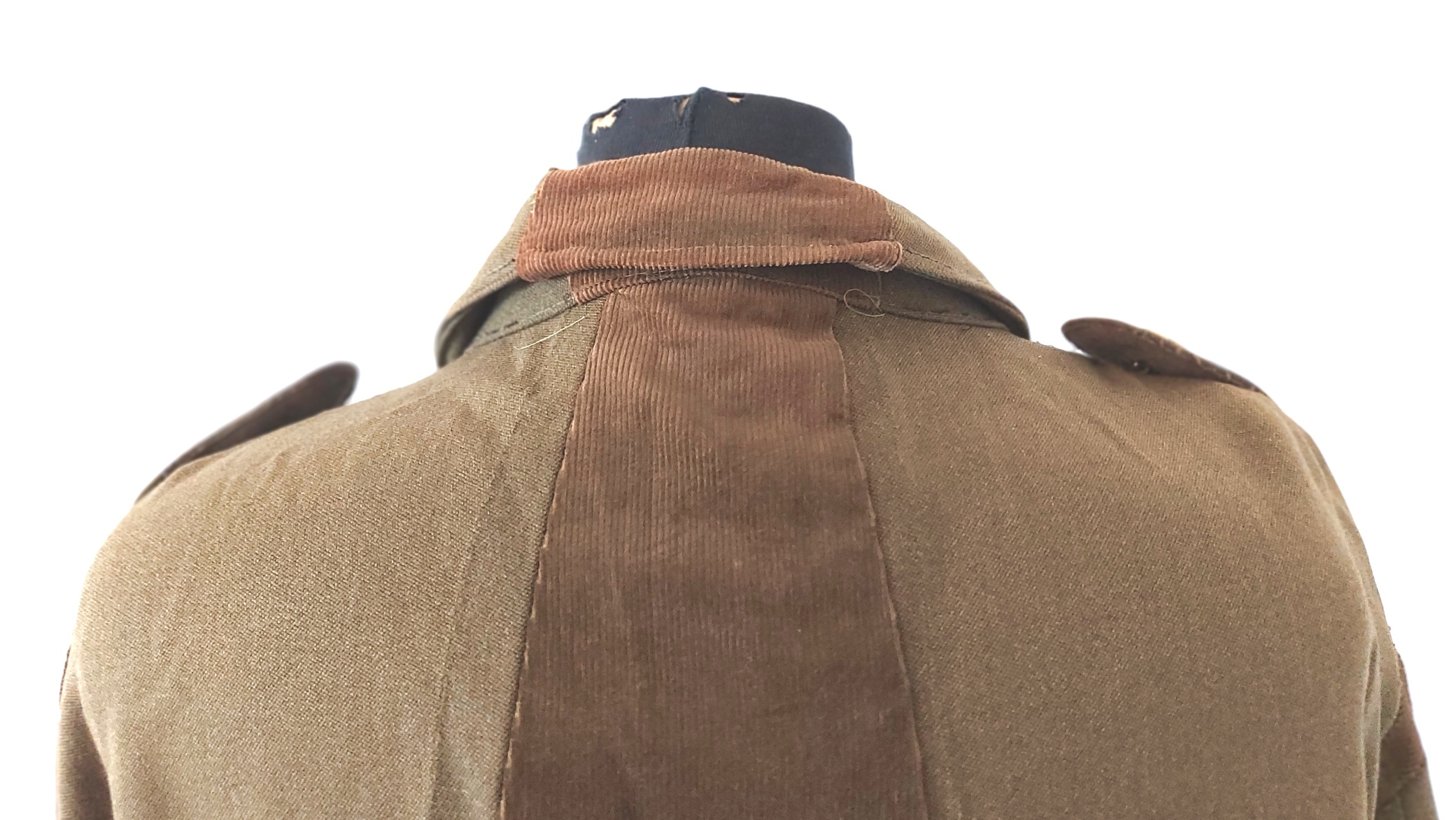
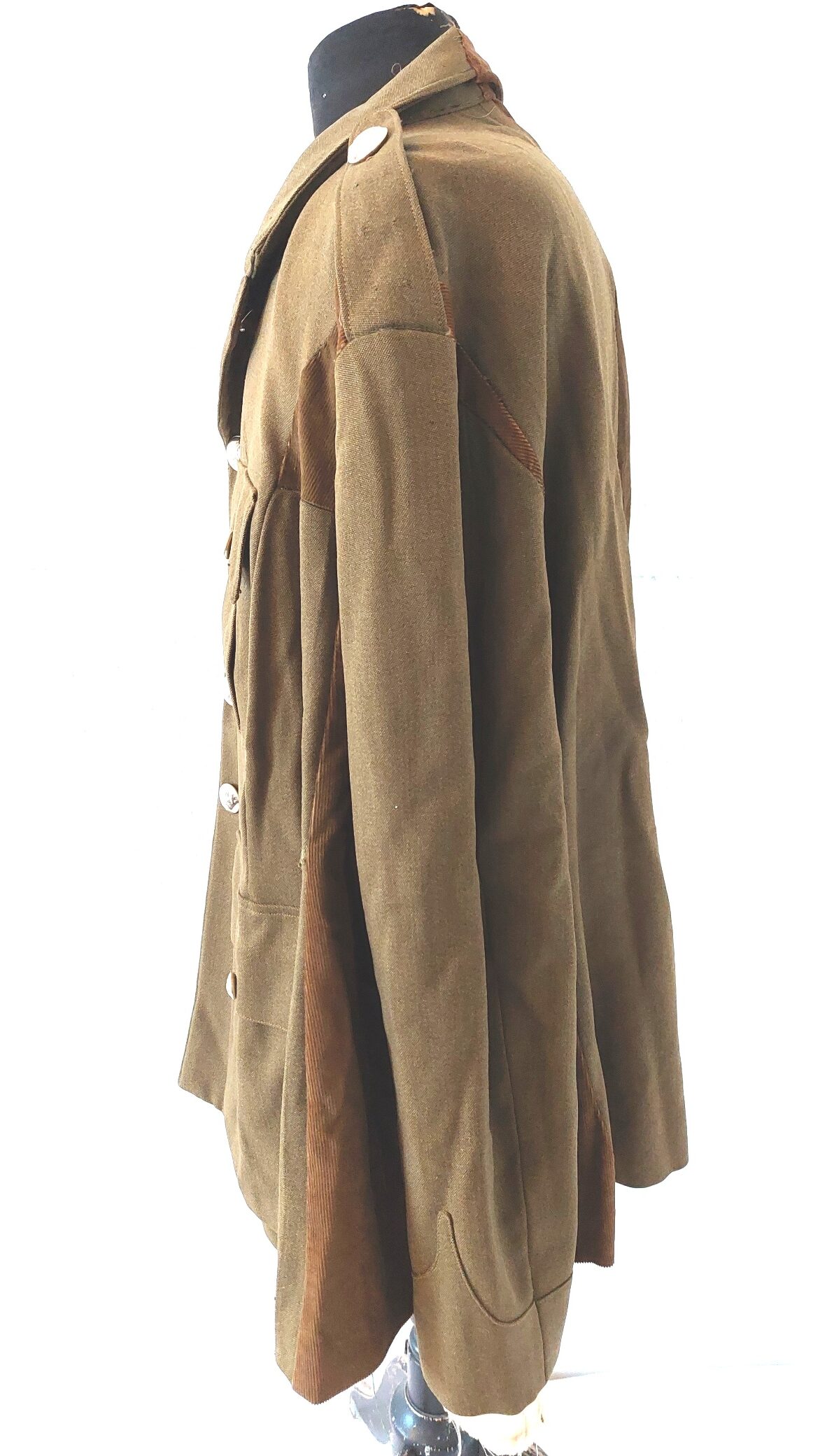
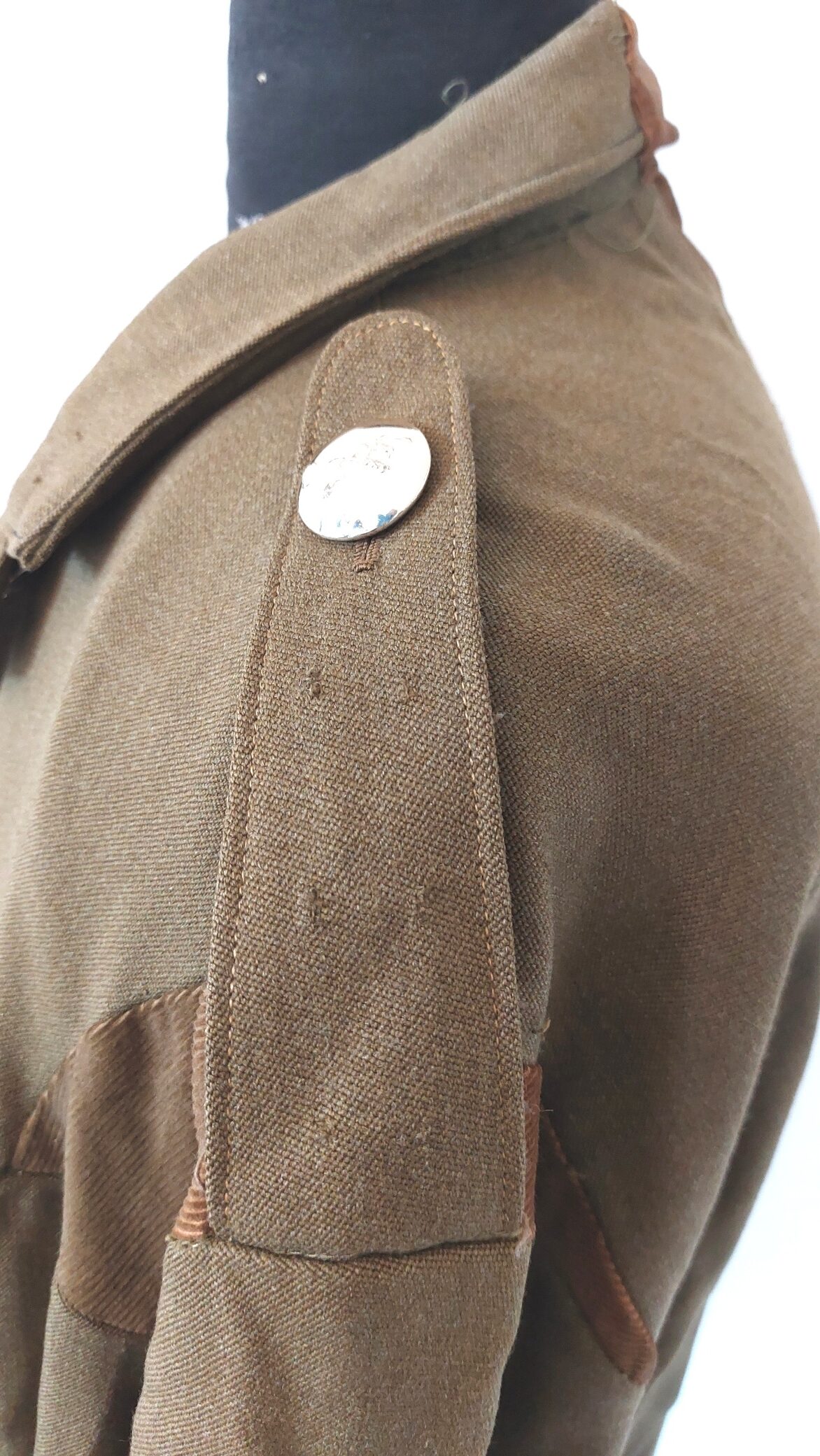
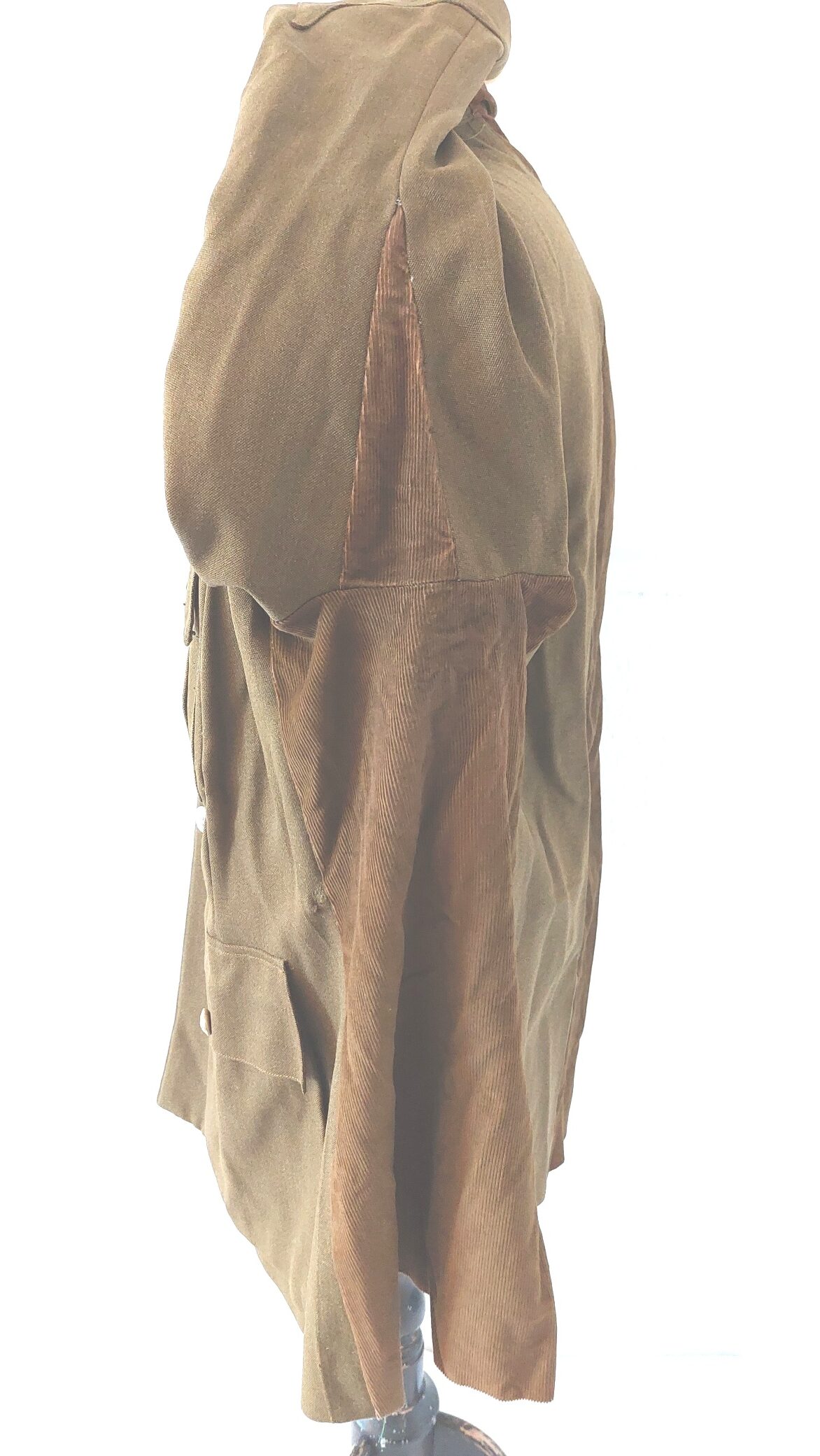
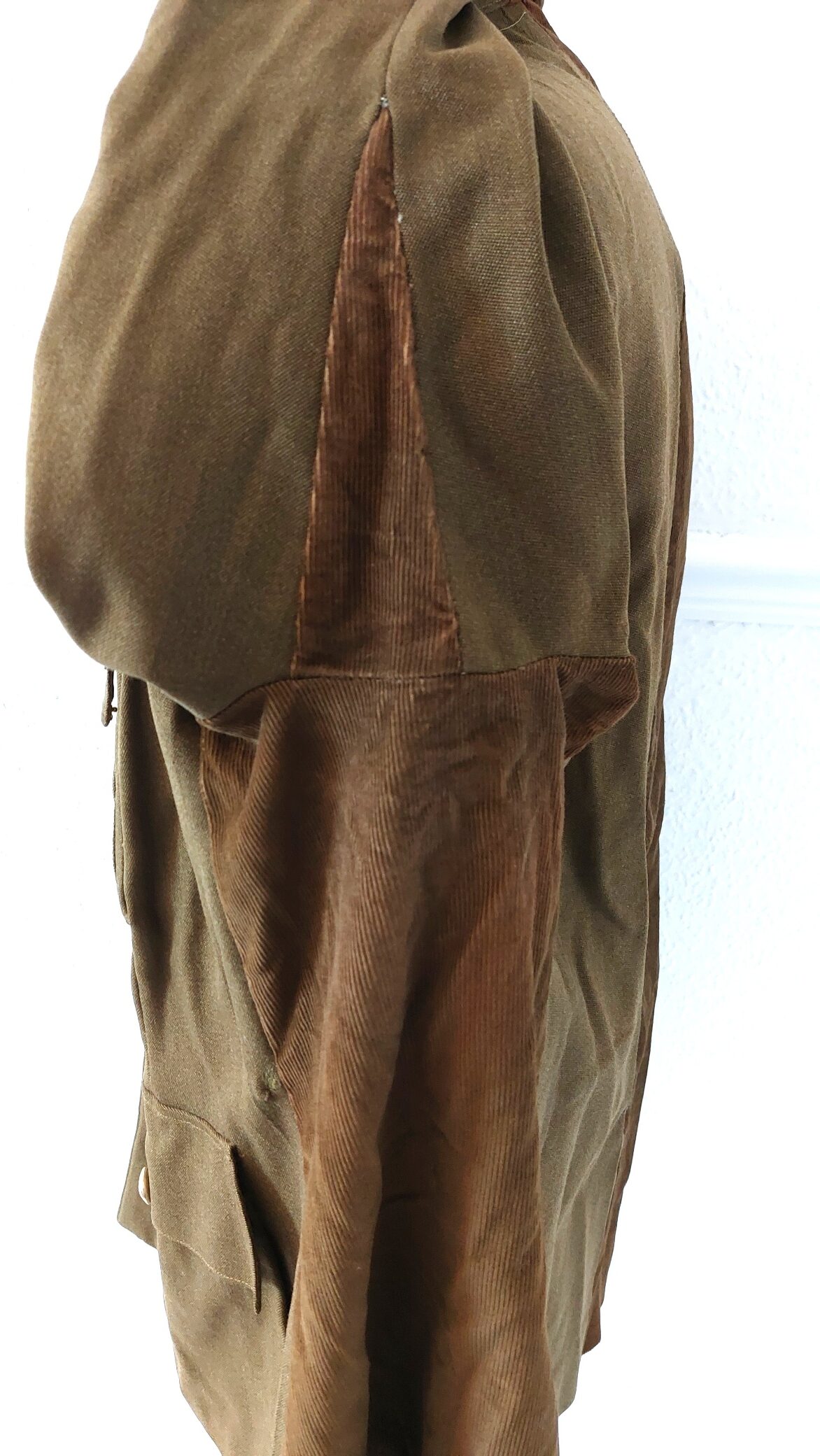
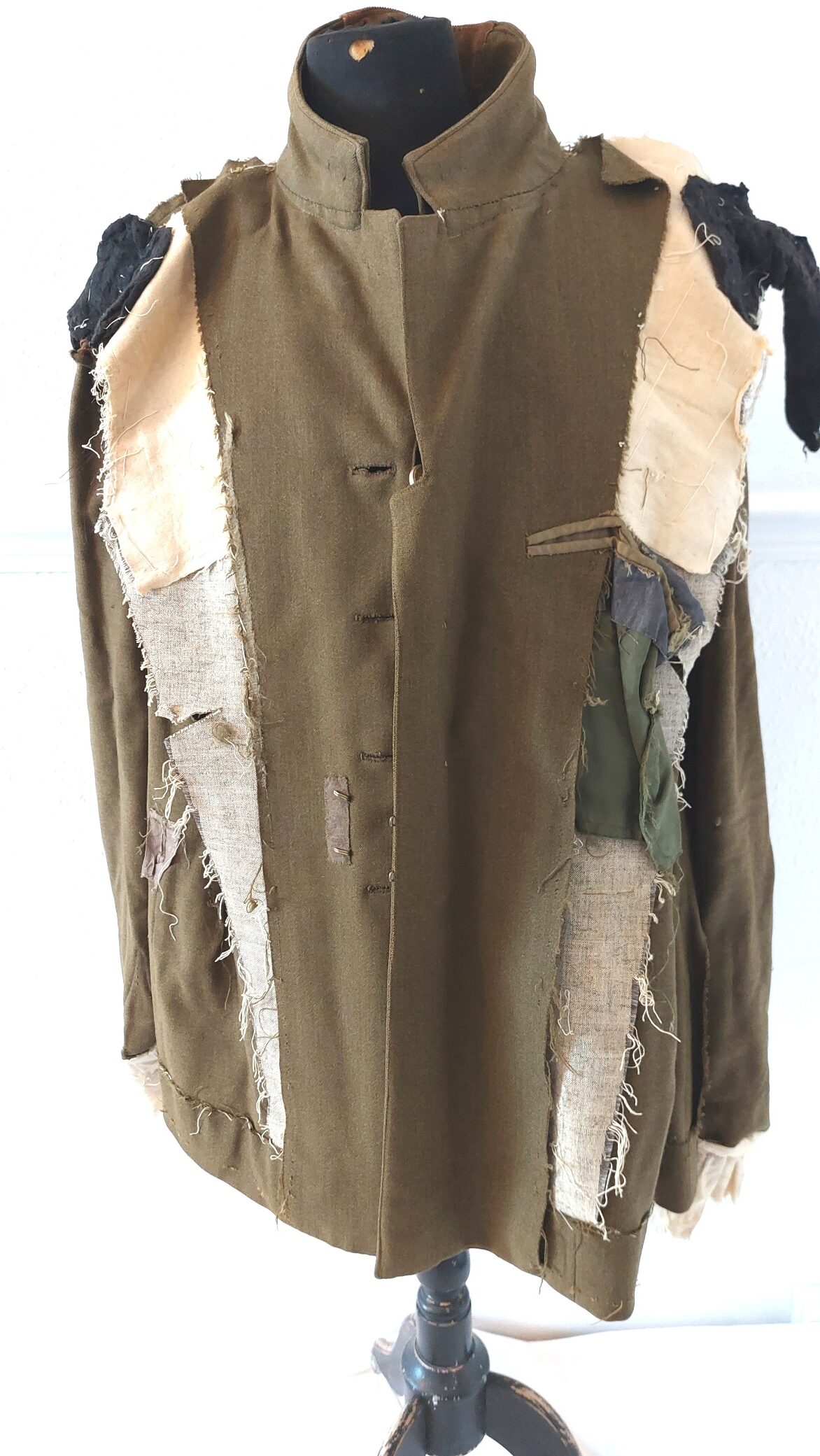
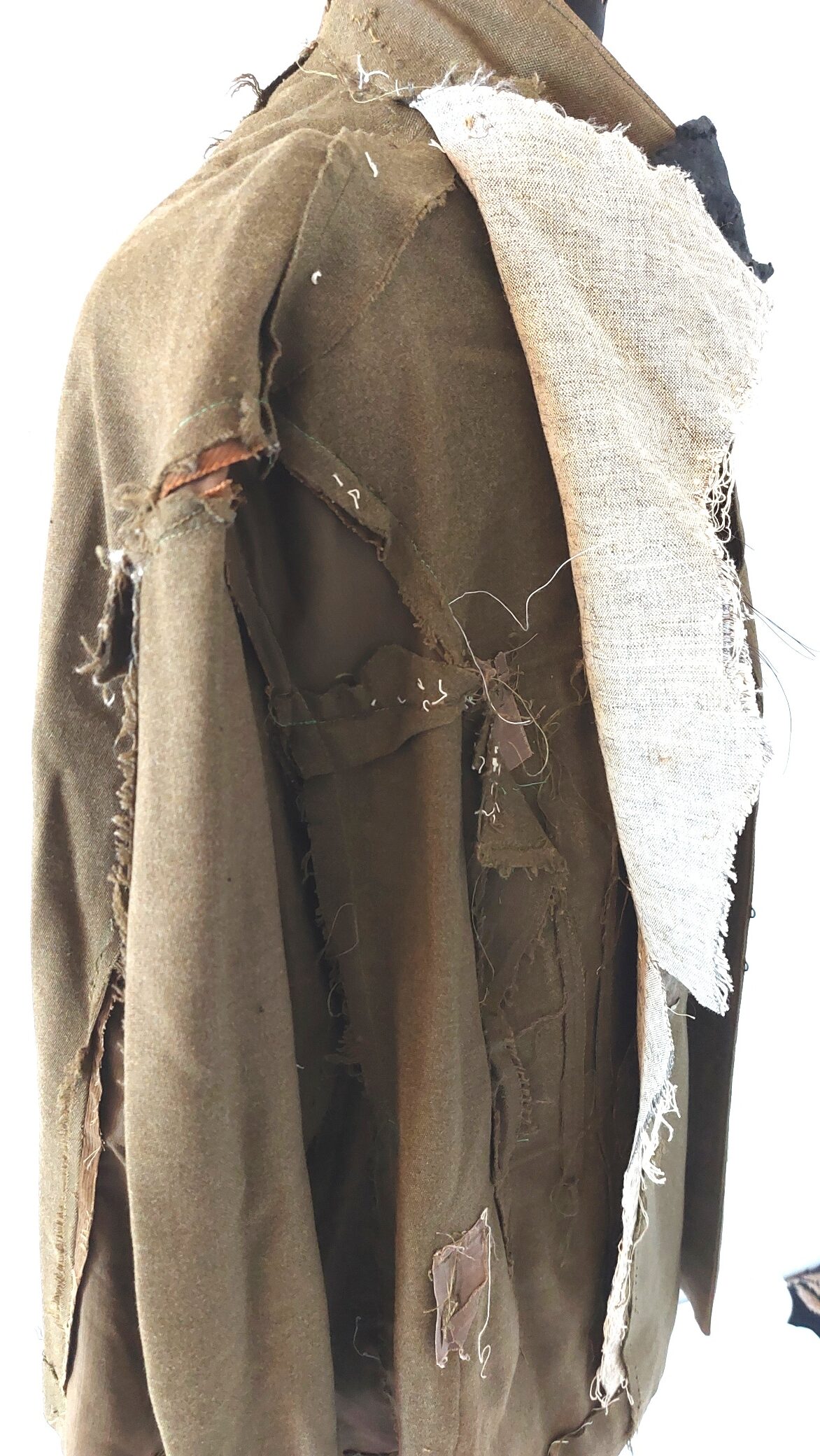
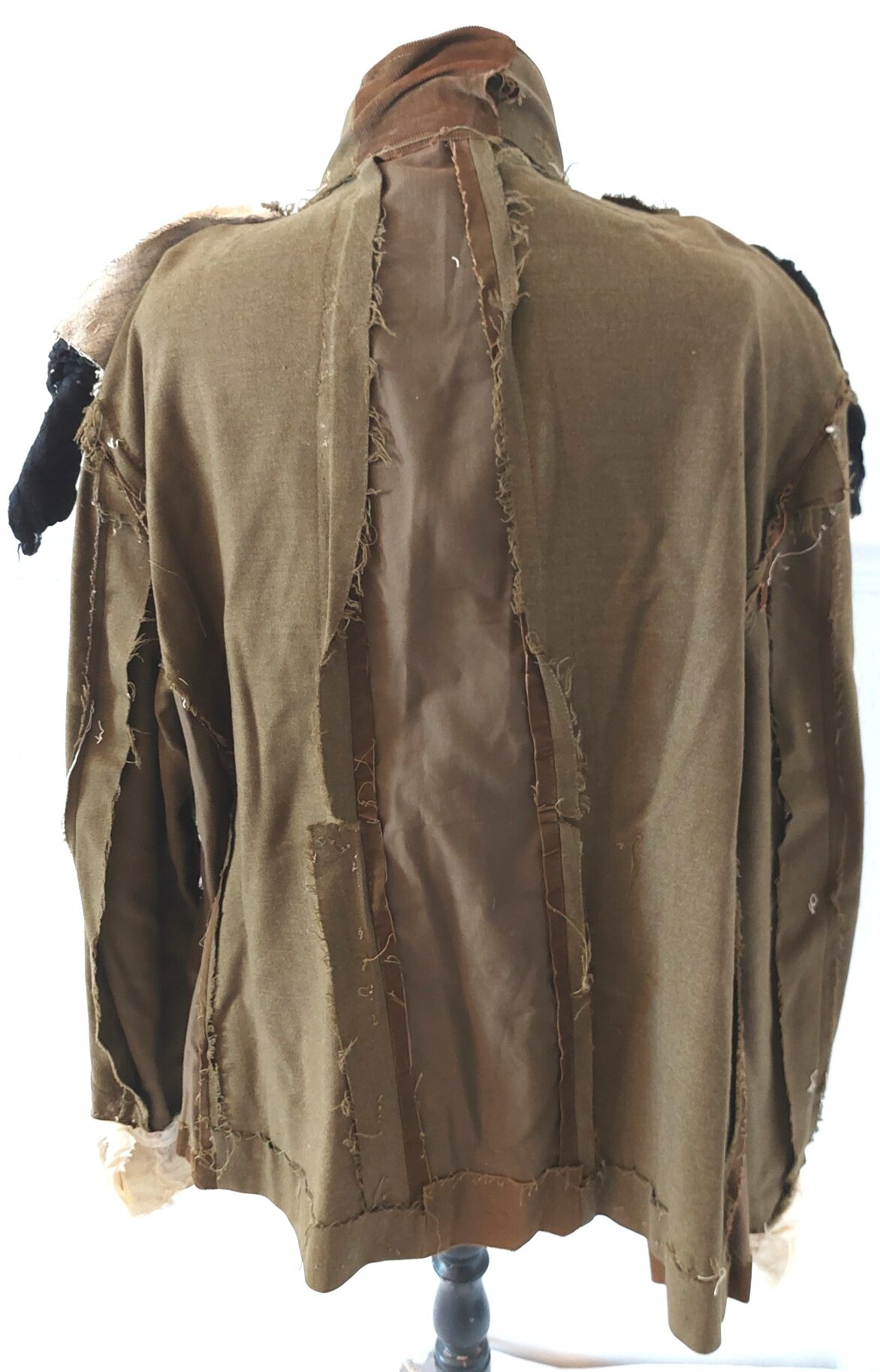
The tunic has been heavily altered internally, with the original lining removed and corduroy expansion panels inserted along the sides and centre back, evidently to enlarge the garment for later wear. Such alterations were commonly undertaken when former officers adapted their service dress uniforms for civilian or casual use after leaving the army. The tunic also now displays a mixture of buttons. While the front buttons remain the correct RAEC type, one shoulder strap and a button beneath the collar are Royal Corps of Signals Staybrite buttons, while the other shoulder strap carries a button bearing a saltire with an open book and castle device associated with the Edinburgh University Officers’ Training Corps (EUOTC). These mixed buttons are likely to be later replacements.
Despite these modifications, the garment retains its original exterior structure and remains a named example of early Cold War era British officer tailoring produced by the prestigious Savile Row firm Gieves.
Approx. Measurements – Shoulder width: 60 cm. Sleeve length: 65.5 cm. Overall length (hem to top of collar): 83 cm.
History Note:
The Royal Army Educational Corps (RAEC) was established in 1946 to provide education and instructional services to soldiers across the British Army. Officers in the corps were typically graduates or professional teachers responsible for literacy training, technical education, and professional development within military units. During the late 1950s and early 1960s, RAEC officers served across the expanding global commitments of the British Army, including postings with the British Army of the Rhine in West Germany, as well as garrisons in Cyprus, Singapore, and other overseas stations.
The presence of a button associated with the Edinburgh University Officers’ Training Corps suggests that K. C. Benner may have had a connection with the University of Edinburgh prior to commissioning, as membership in a university OTC was a common pathway into the British officer corps.
The tunic itself was produced by Gieves Ltd., one of Britain’s most prestigious military outfitters and a long-established Savile Row tailoring house supplying British naval and army officers since the nineteenth century.
*Condition*
Service-worn example showing significant internal alteration. The original lining has been removed and replaced with inserted corduroy expansion panels along the sides and centre back, enlarging the garment. Internal structure is therefore incomplete and the interior edges show fraying and unfinished seams. Several buttons have been replaced, resulting in a mixture of Royal Army Educational Corps, Royal Signals, and Edinburgh University Officers’ Training Corps types. The exterior wool remains generally sound with light wear consistent with age and use. Please see photographs as part of the condition report.
JAQB0#2958_6552235486