*Italian (Kingdom of Sardinia), Crimean War Medal 1854–1856, Named to Major J. D. Shakespear, Royal Horse Artillery – Battle of Balaklava Officer*
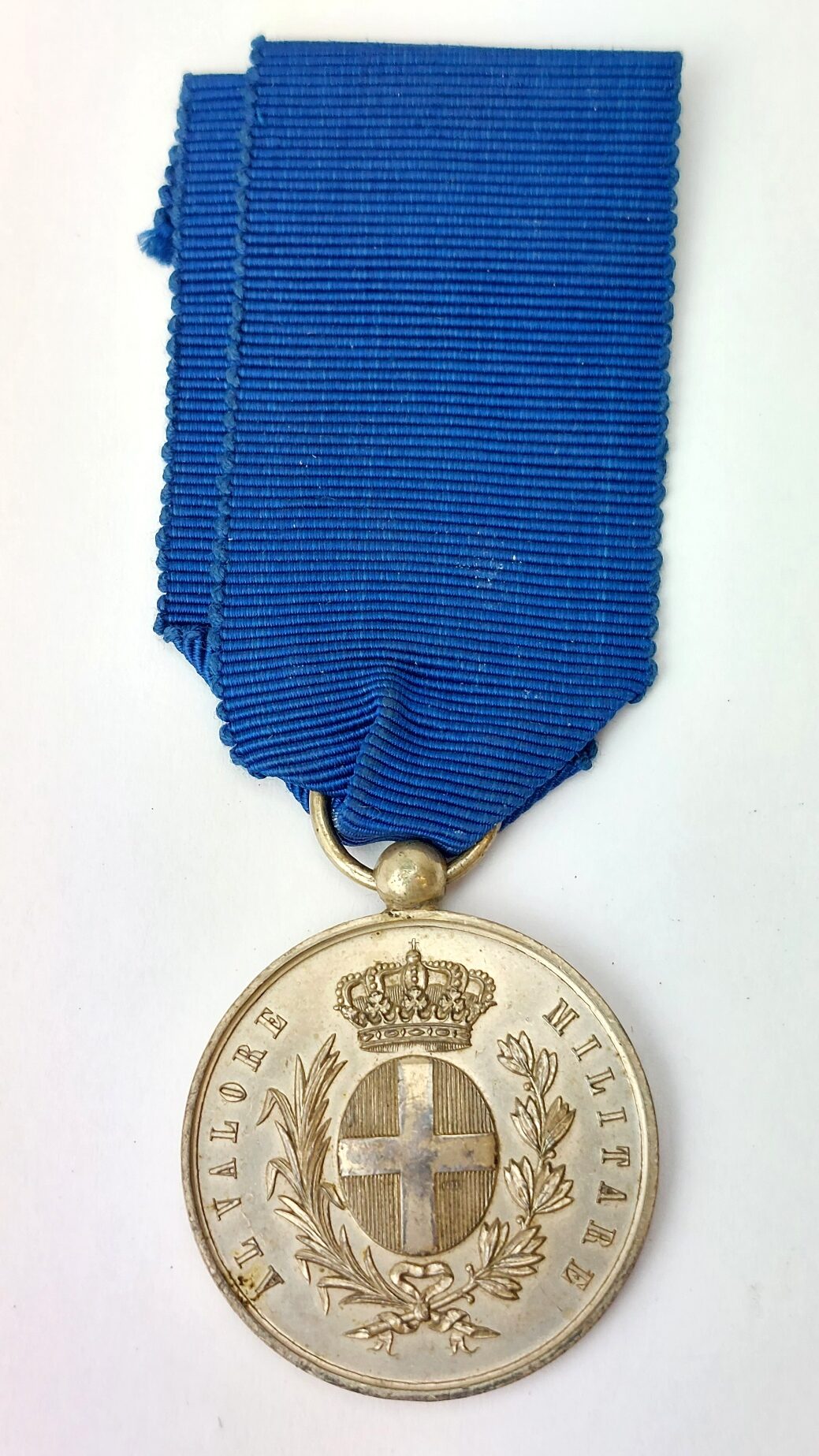
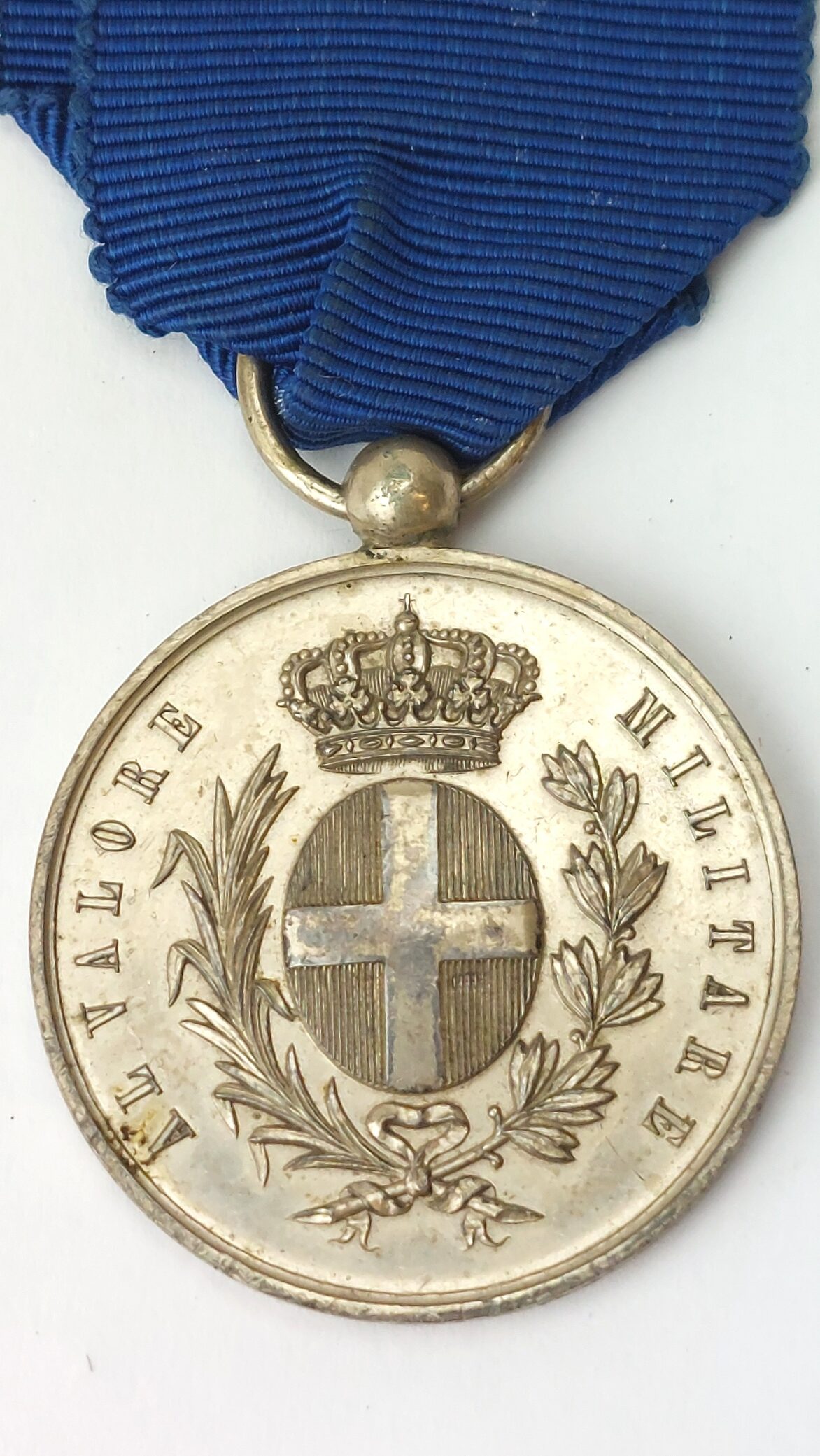
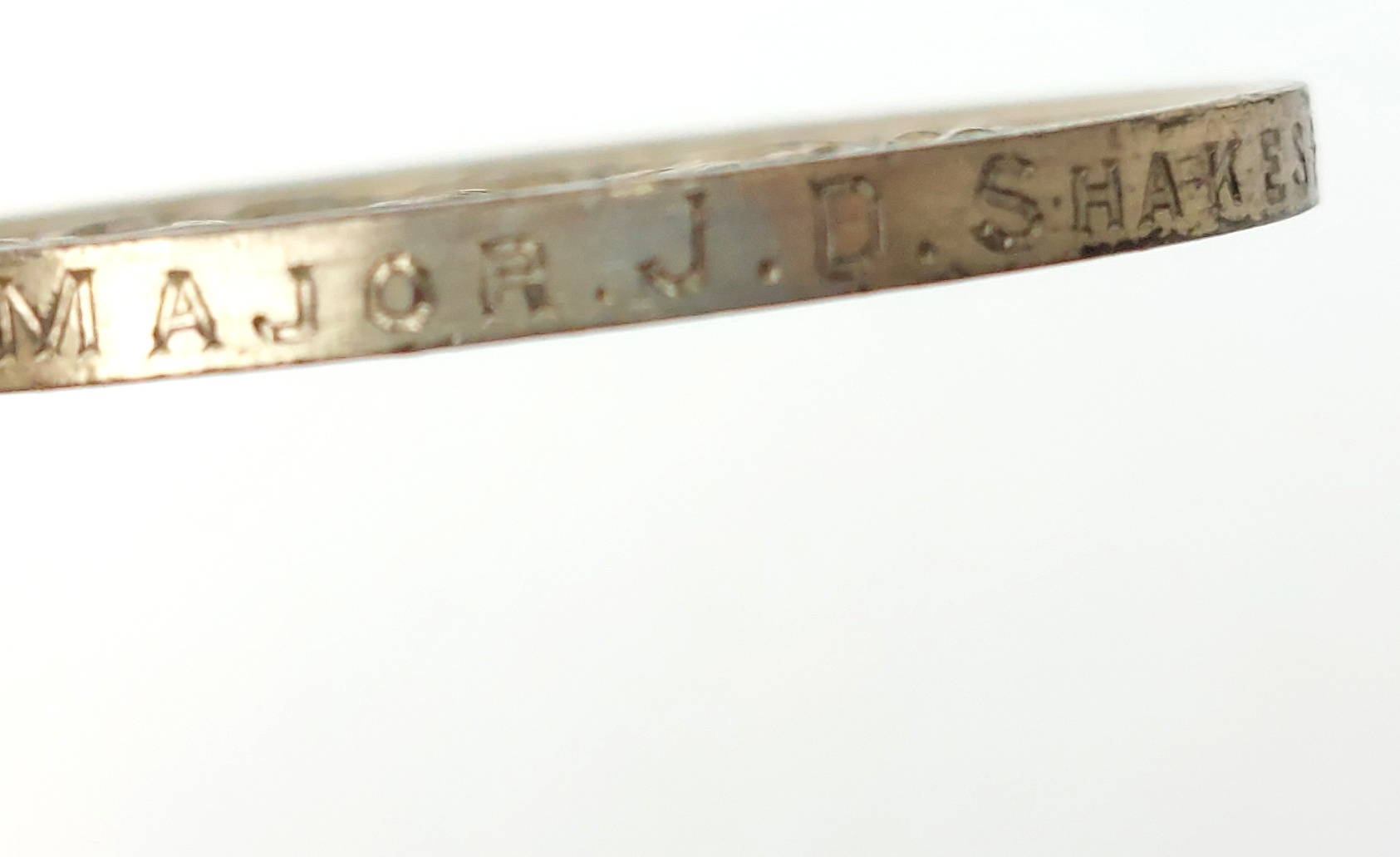
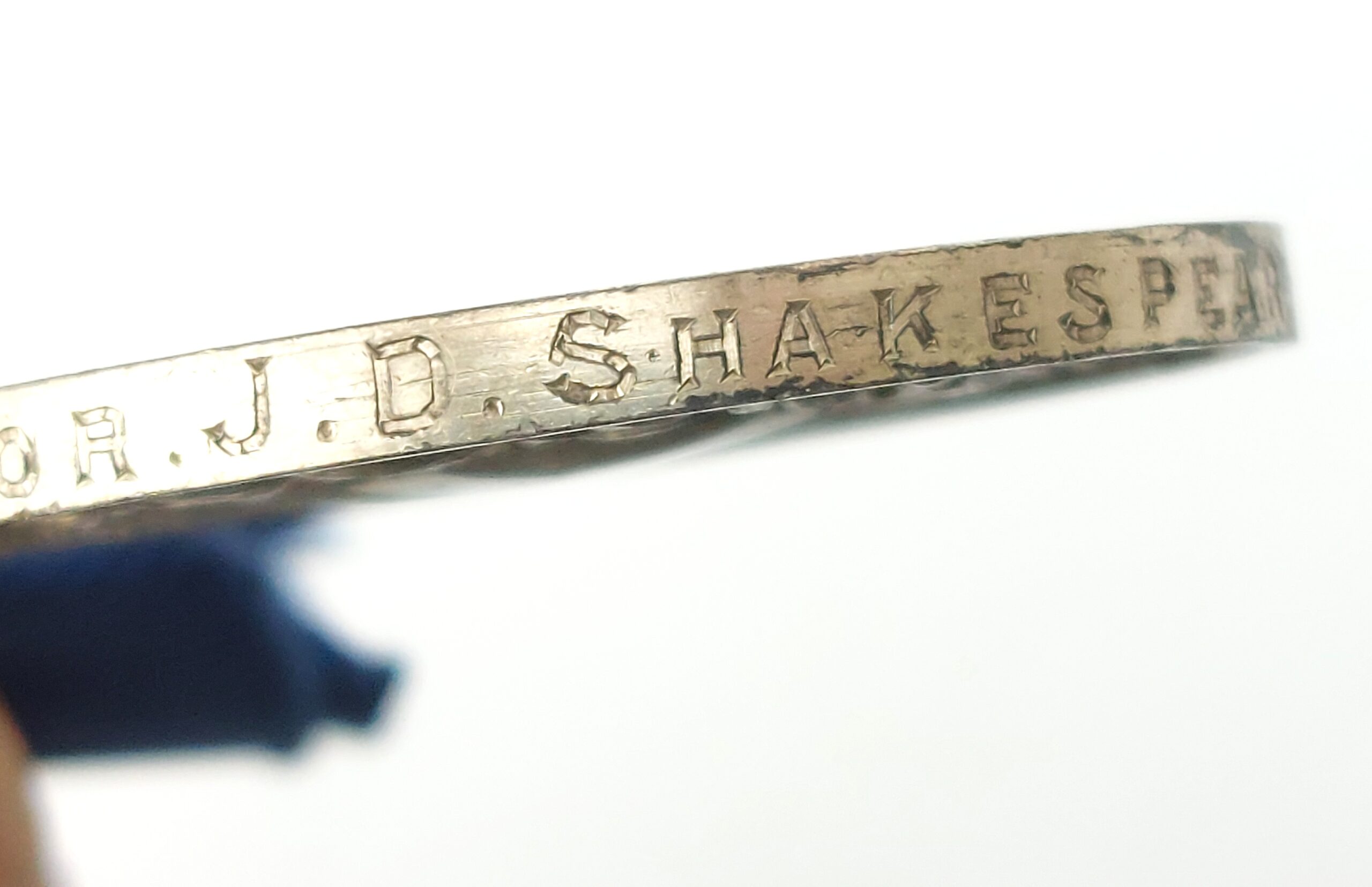
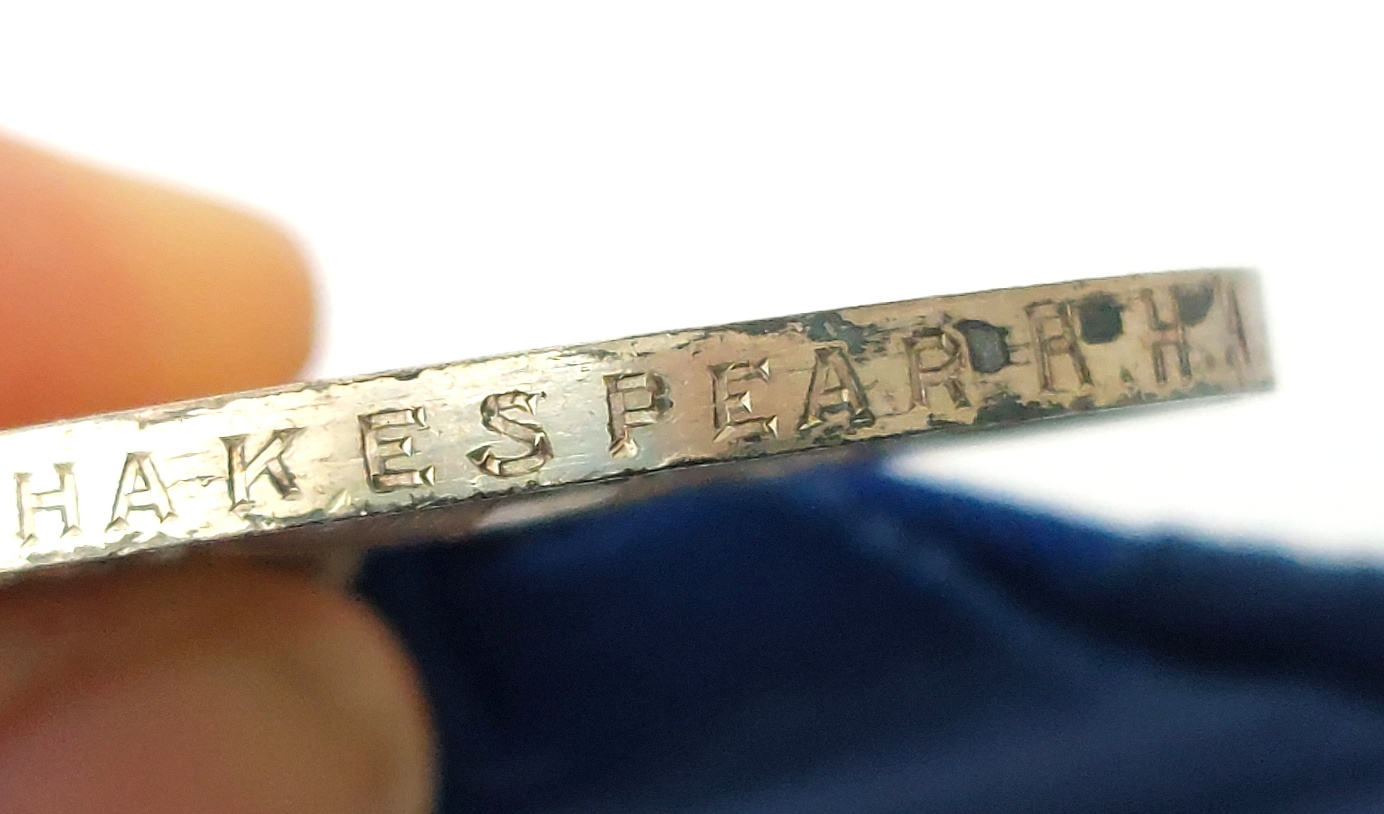
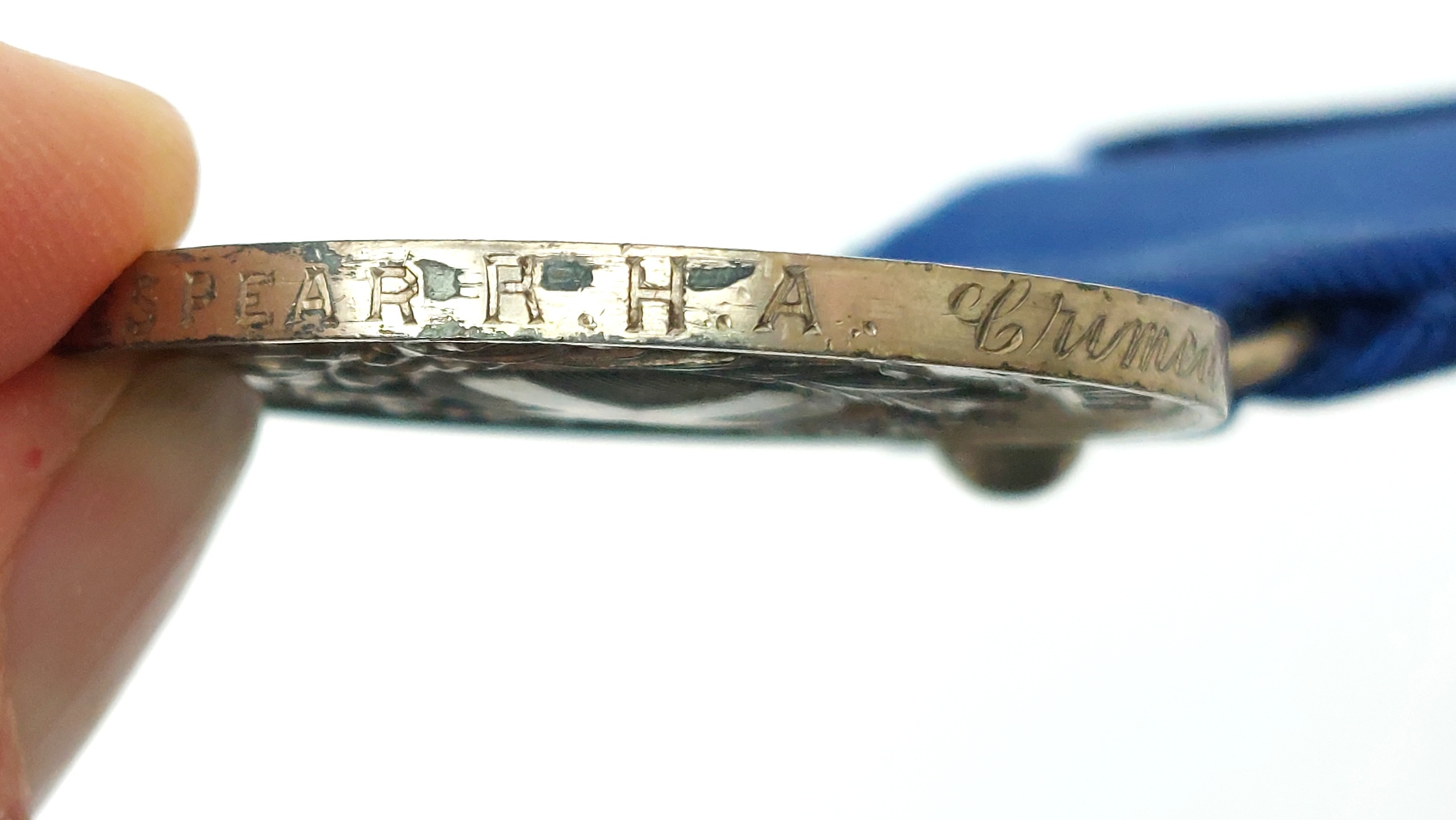
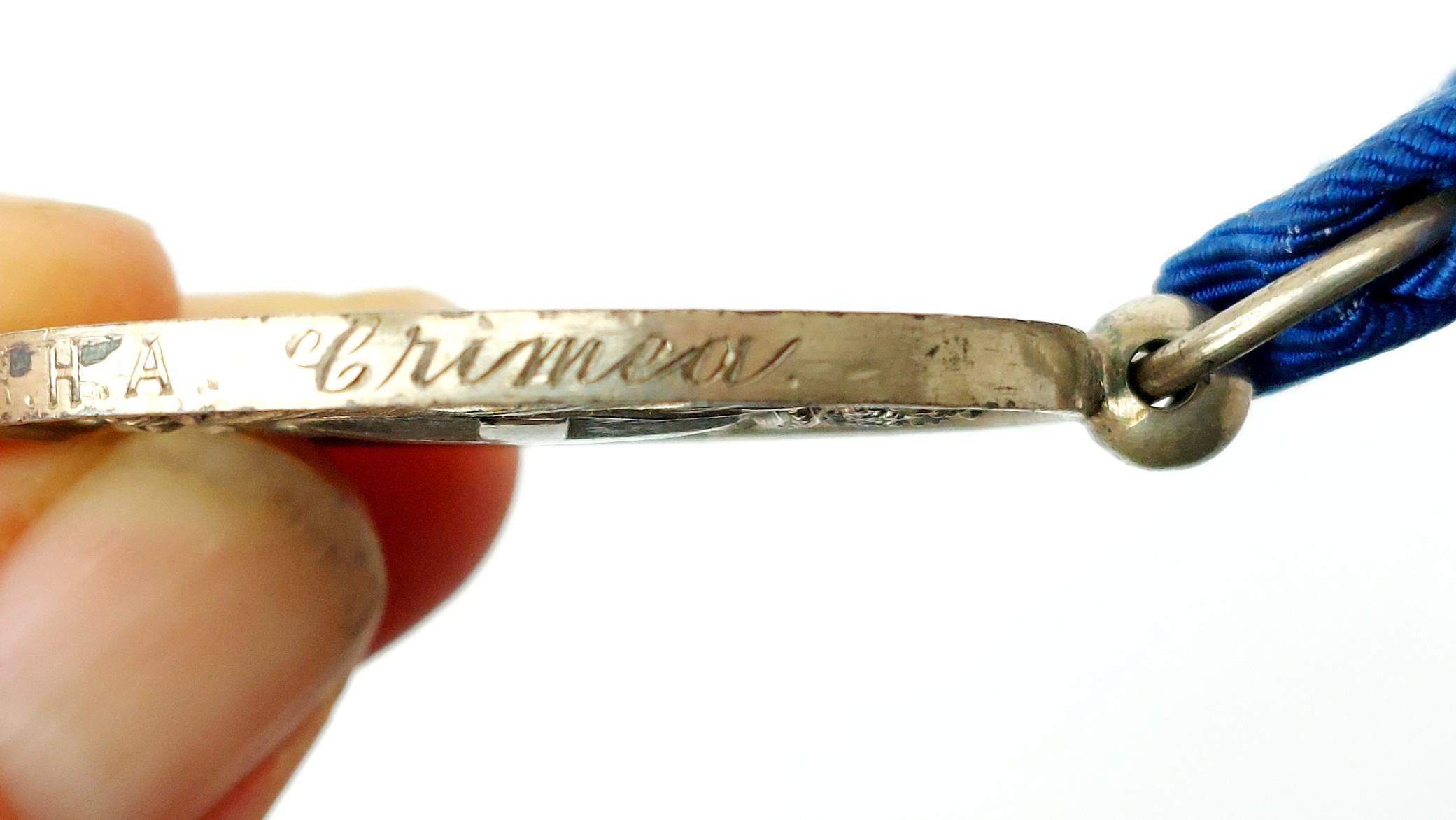
Italian Sardinian Crimean War Medal (Medaglia commemorativa della spedizione in Oriente), awarded for service during the Crimean War of 1854–1856, officially named on the rim to: “Major J. D. Shakespear, R.H.A. Crimea.”
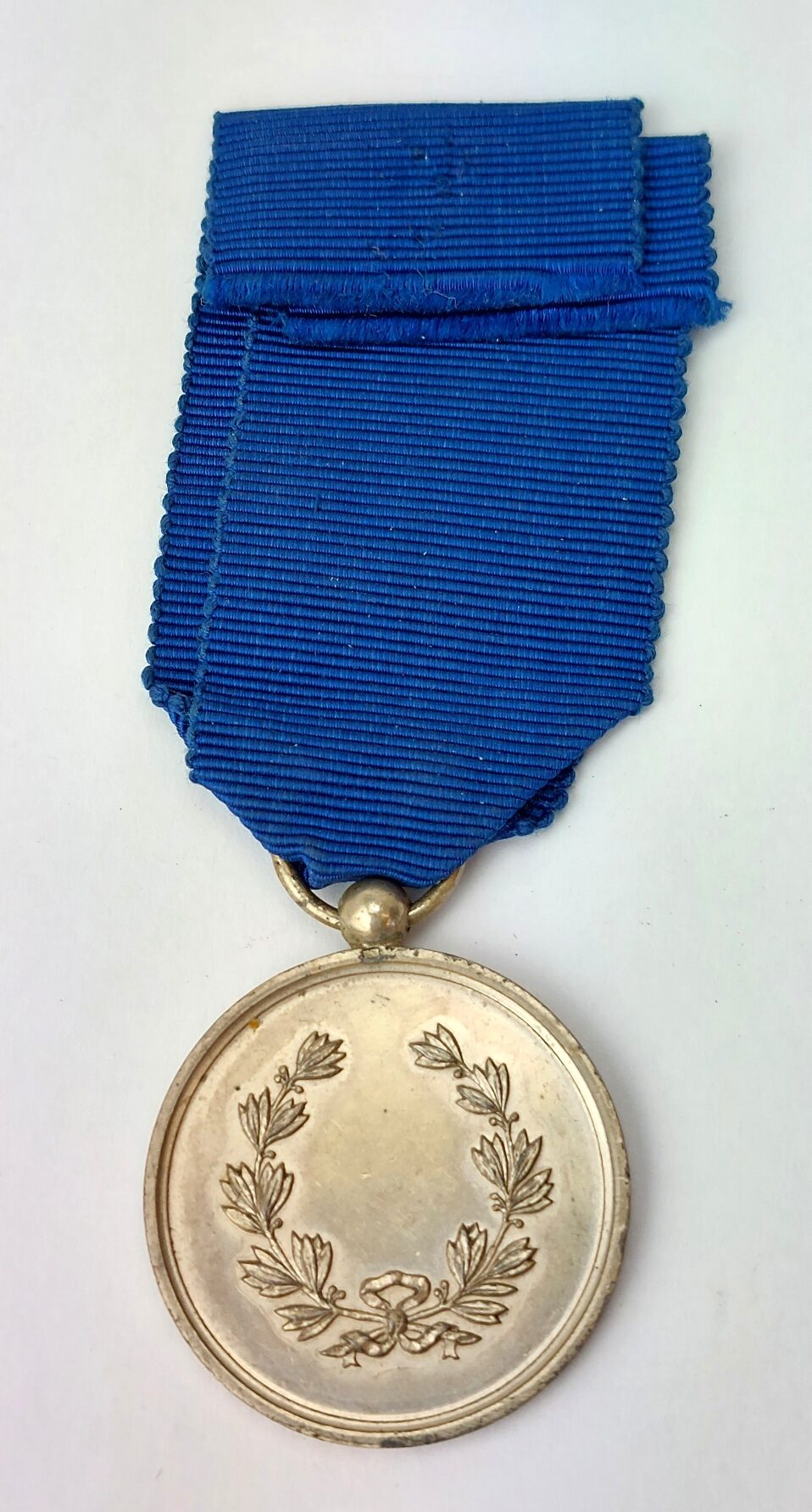
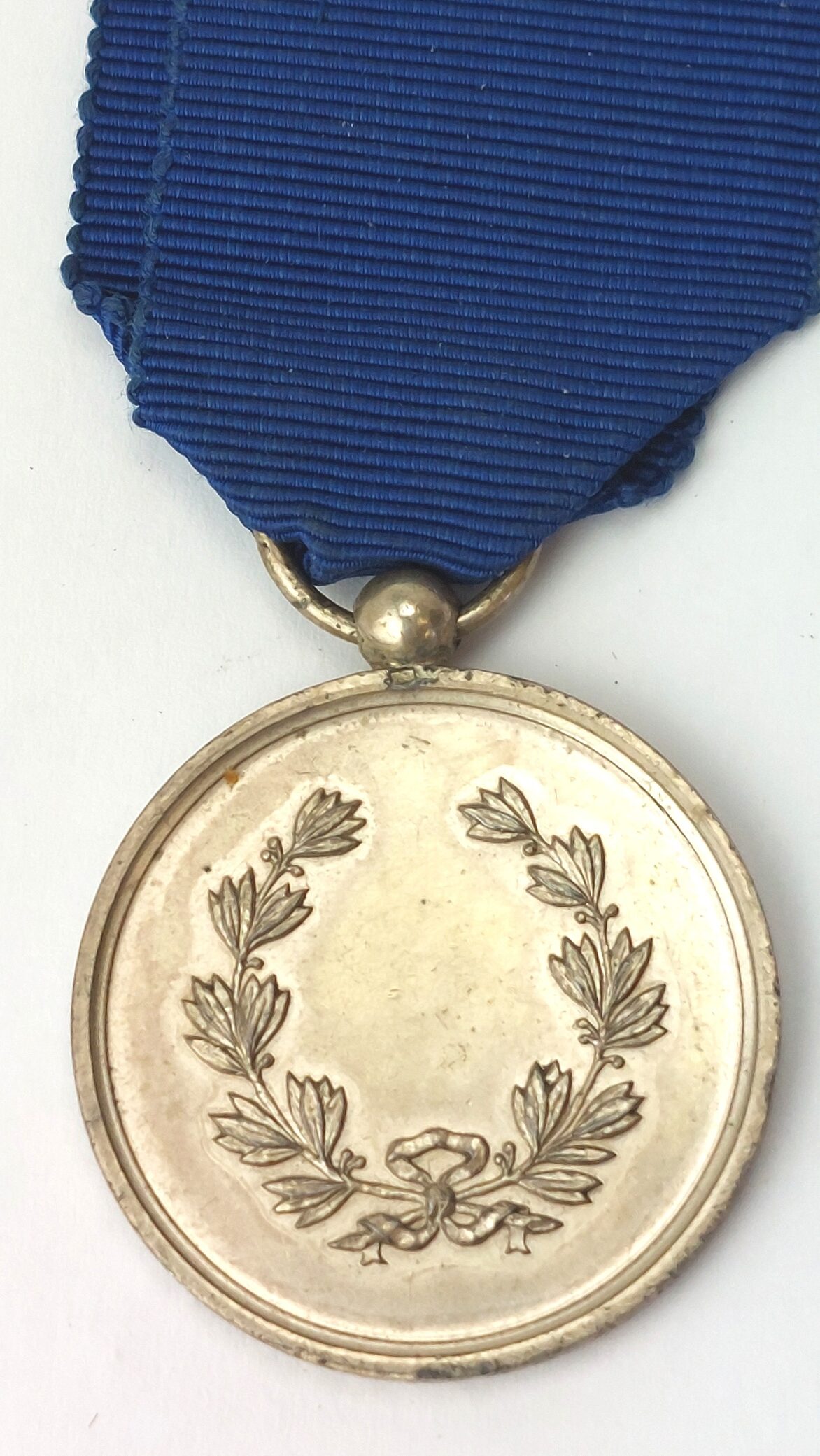
The silver medal displays on the obverse the crowned shield of Savoy, bearing the distinctive cross of the House of Savoy, surrounded by a wreath of palm and oak. Around the edge appears the inscription “AL VALORE MILITARE” (For Military Valour). The reverse features a laurel wreath tied with a ribbon at the base, with a plain central field. The medal remains fitted with its correct dark blue ribbon, the standard ribbon used for this Sardinian award when issued to allied forces. The naming is officially impressed on the rim, a practice used when the medal was awarded to British recipients during the Crimean War.
Approximate Measurements: 3.4cm diameter
History Note:
A scarce Sardinian Crimean Medal named to Major John Davenport Shakespear, Royal Horse Artillery, who assumed command of his troop during the Battle of Balaklava — one of the most dramatic engagements of the Crimean War.
The Sardinian Crimean Medal (Medaglia commemorativa della spedizione in Oriente) was instituted in 1856 by Victor Emmanuel II to commemorate the participation of the Kingdom of Sardinia in the allied campaign against Russia during the Crimean War. Sardinia entered the conflict in 1855, dispatching an expeditionary corps of approximately 15,000 troops under General Alfonso La Marmora to support the allied forces operating in the Crimea. Sardinian troops served with distinction during the later stages of the campaign and played a significant role in the Battle of the Tchernaya, where they successfully repelled a Russian attack during operations connected with the siege of Sevastopol. Following the conclusion of the war, the Sardinian government created this medal to recognise service in the Eastern Expedition of 1854–1856.
Although primarily awarded to Sardinian soldiers, the decoration was also presented to a limited number of allied officers and men who had served alongside Sardinian forces during the campaign. Approximately 450 medals were issued to British Army and Royal Navy personnel, making British-named examples comparatively scarce. Medals issued to British recipients were normally officially impressed with the recipient’s name and unit on the rim, as seen on this example.
This medal is named to Major John Davenport Shakespear of the Royal Horse Artillery, an officer whose service is closely connected with one of the most famous actions of the Crimean War. Shakespear served with “I” Troop, Royal Horse Artillery, attached to the cavalry division of the British Army operating in the Crimea. The Royal Horse Artillery provided highly mobile artillery support to cavalry formations and was heavily engaged throughout the campaign.
During the Battle of Balaklava, Shakespear assumed command of “I” Troop after its commanding officer, Major George Maude, was severely wounded during the fighting. Balaklava remains one of the most celebrated engagements of the war, encompassing both the Charge of the Heavy Brigade and the legendary Charge of the Light Brigade. Throughout the battle the Royal Horse Artillery batteries supporting the cavalry division were actively engaged, bringing their guns into action against Russian forces and providing vital artillery support during the dramatic movements of the cavalry.
Contemporary accounts emphasise the constant activity of the troop during the campaign. Artillery histories record that the wagons of “I” Troop, under Captain Shakespear, were regularly “The wagons of I Troop, under Second-Captain J. D. Shakespear, had been sent as usual before daylight to assist in the transport of shot and shell to the trenches.” reflecting the vital logistical role played by the artillery during siege operations around Sevastopol. Accounts of the campaign circulated widely in Britain, including correspondence published in The Times in 1855, which helped shape public understanding of the dramatic events of the Crimean War and the actions of the cavalry and supporting artillery.
Major Shakespear continued his career in the Royal Artillery following the war and ultimately retired with the rank of Major. He belonged to the wider Shakespear military family, several members of which served with distinction across the British and Indian armies during the nineteenth century. The family is particularly associated with Sir Richmond Campbell Shakespear, celebrated for his exploits in Central Asia and Afghanistan, including the rescue of Russian captives from Khiva in 1840.
Campaign medals connected with the Crimean War remain among the most evocative decorations of the Victorian era. Named examples to identifiable officers—especially those associated with the dramatic events at Balaklava—are particularly desirable among collectors of nineteenth-century British campaign medals. The relatively small number of Sardinian medals awarded to British personnel, combined with clear official naming and an identifiable officer recipient, make examples such as this especially attractive pieces of Victorian military history.
*Condition*
The medal remains in good overall condition, with clear details to the crowned Savoy shield and wreath. The impressed rim naming remains legible throughout. The medal shows normal age-related wear and light toning consistent with period silver campaign medals. The ribbon is present and displays some age-related wear and fraying consistent with its age. Please see photographs as part of the condition report.
Biography
Major John Davenport Shakespear, Royal Horse Artillery
1825 – Born into the Shakespear family, which produced several officers who served in the British and Indian armies during the nineteenth century.
1840s – Commissioned into the Royal Horse Artillery, part of the Royal Regiment of Artillery. The Royal Horse Artillery provided highly mobile artillery support to cavalry formations and was regarded as one of the most elite artillery branches of the British Army.
1854–1856 – Crimean War
Served in the Crimean War with “I” Troop, Royal Horse Artillery, attached to the cavalry division operating in the Crimea.
25 October 1854 – Battle of Balaklava
During the famous Battle of Balaklava, Captain Shakespear assumed command of “I” Troop after its commanding officer Major George Maude was severely wounded. The troop’s guns continued to support the cavalry during the dramatic fighting that included the Charge of the Heavy Brigade and the renowned Charge of the Light Brigade.
1855 – Accounts of the Crimean campaign and the actions of the cavalry division, including artillery operations, were widely reported in Britain, with correspondence relating to the campaign appearing in The Times.
Post-Crimean War – Continued service within the Royal Artillery, eventually attaining the rank of Major.
1912 – Died after a long life spanning the Victorian and Edwardian periods.
JAQ#3028IE0_1446237136