*British / European, WWII Era, Miniature Brass Pocket Compass, RAF / SOE Escape Compass Type*
A scarce and highly collectible miniature brass pocket compass of classic “wafer” form, strongly comparable to the small escape and evasion compasses associated with RAF aircrew and SOE field equipment during the Second World War. Compact, discreet, and full of period character, these tiny navigation instruments are increasingly sought after by collectors of RAF, MI9, and clandestine warfare memorabilia.
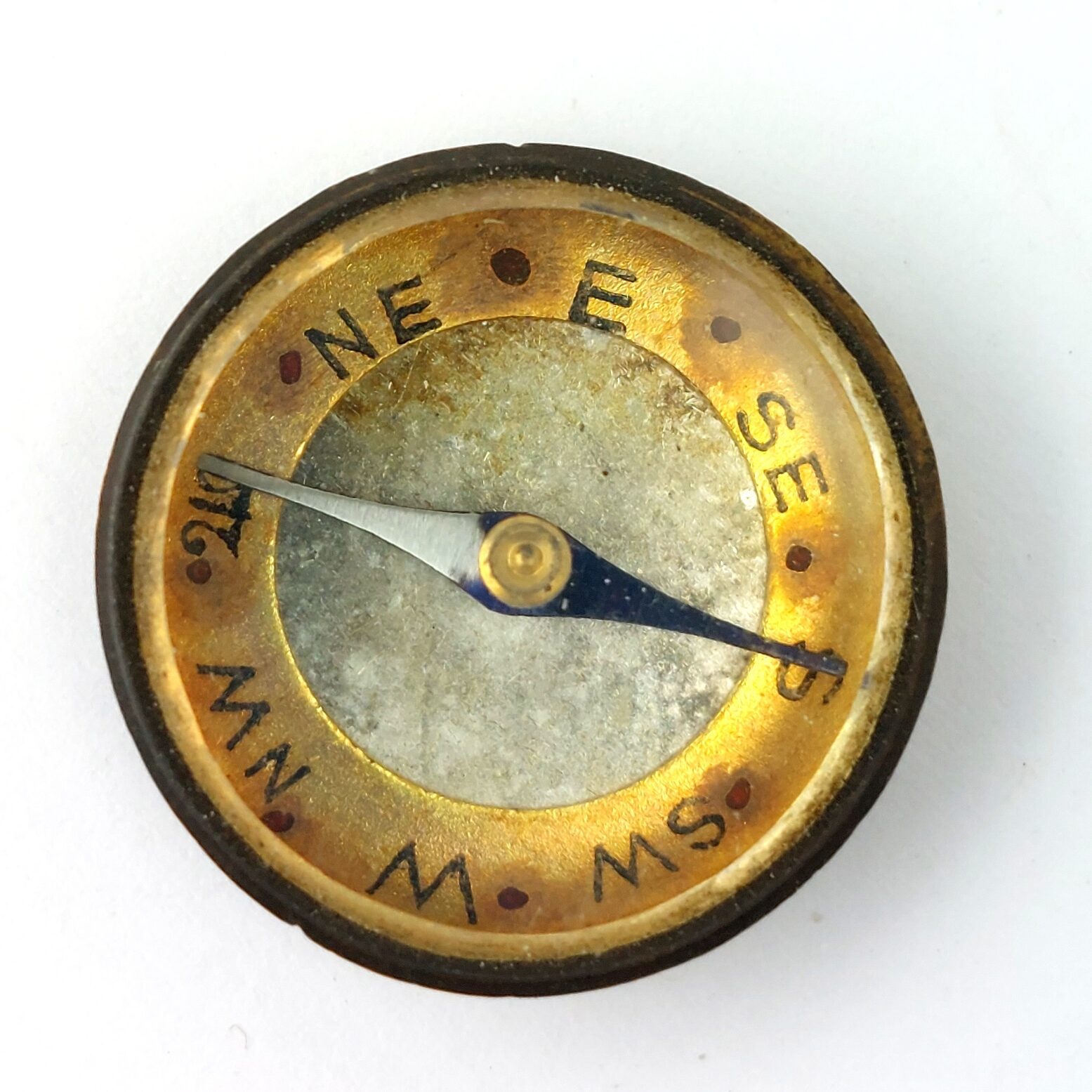
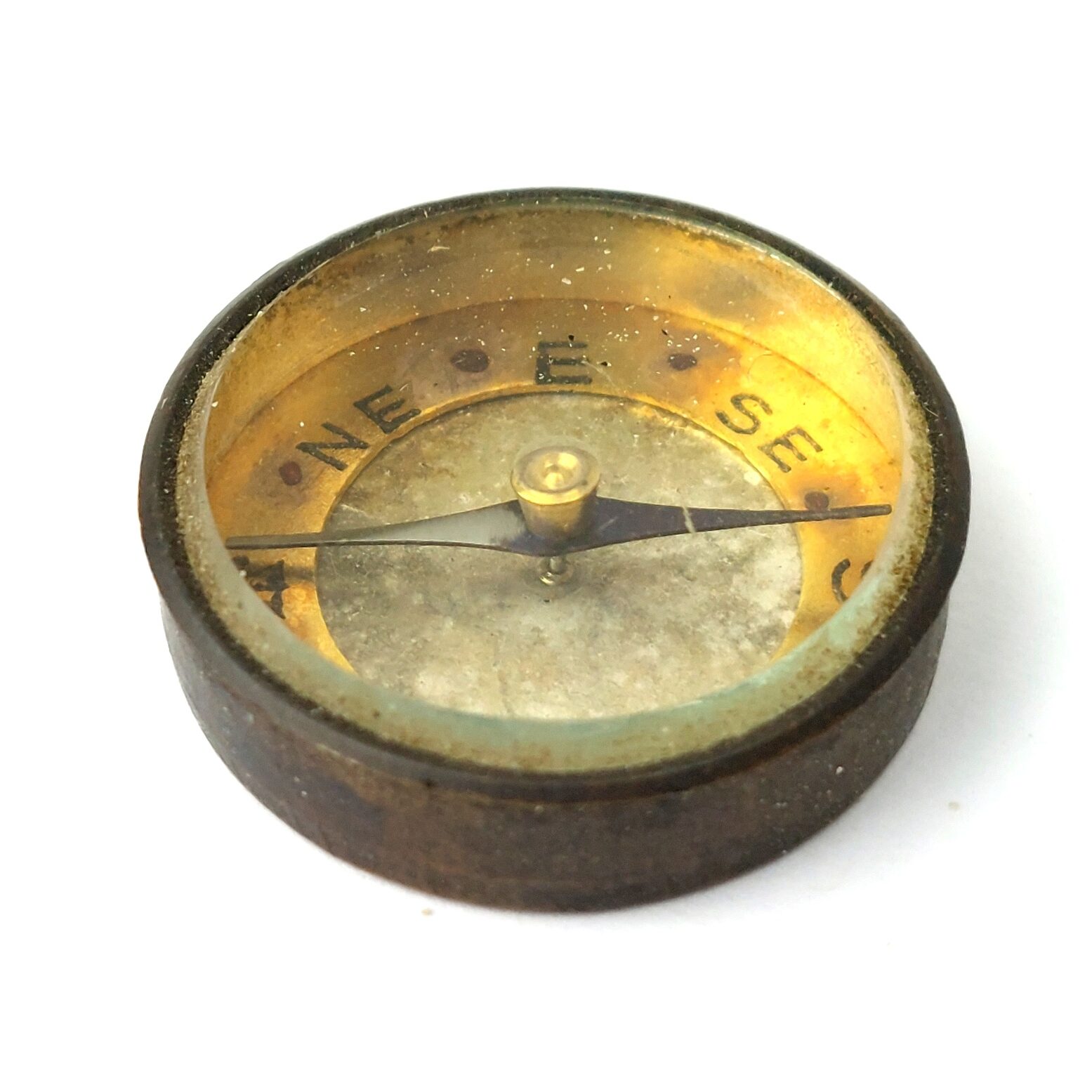
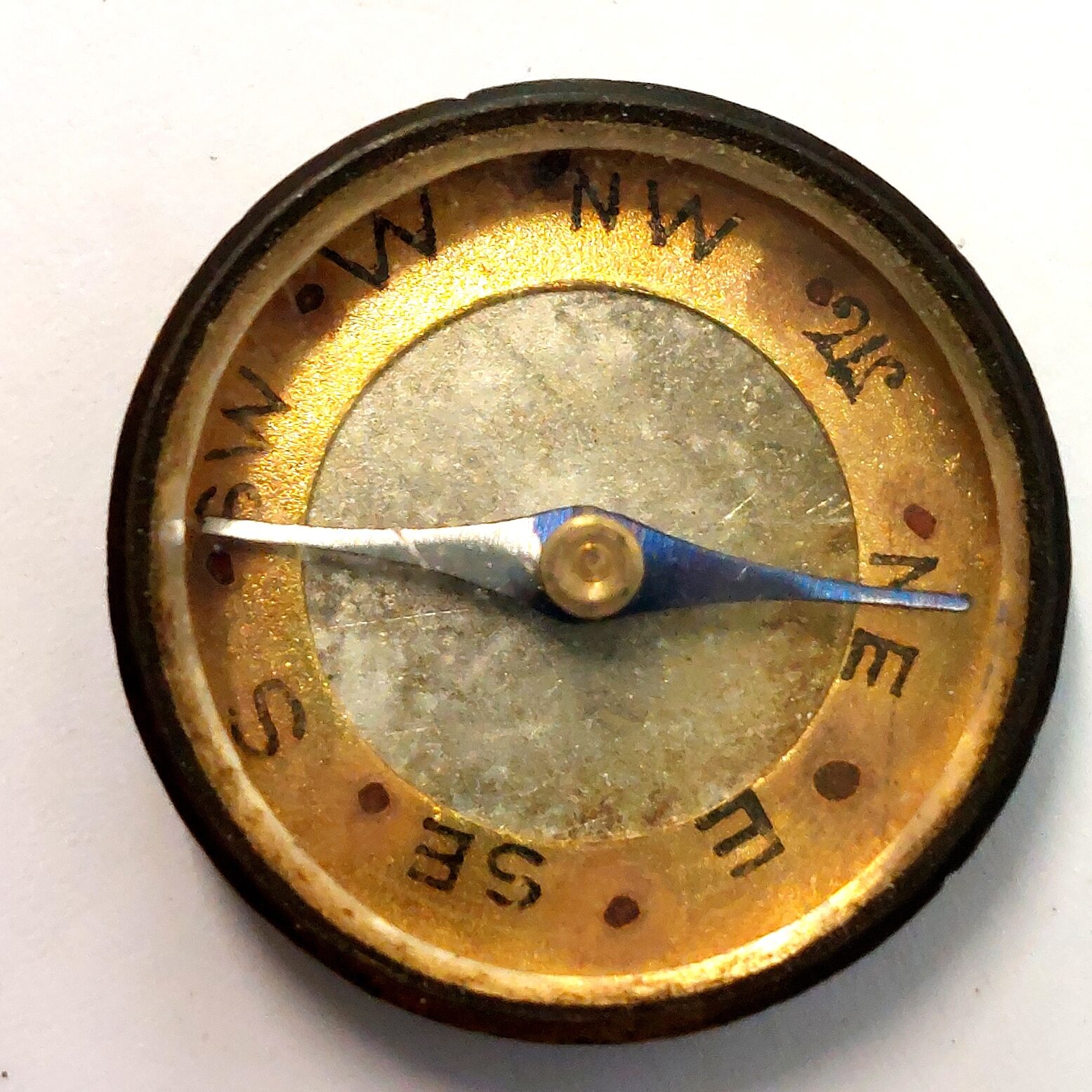
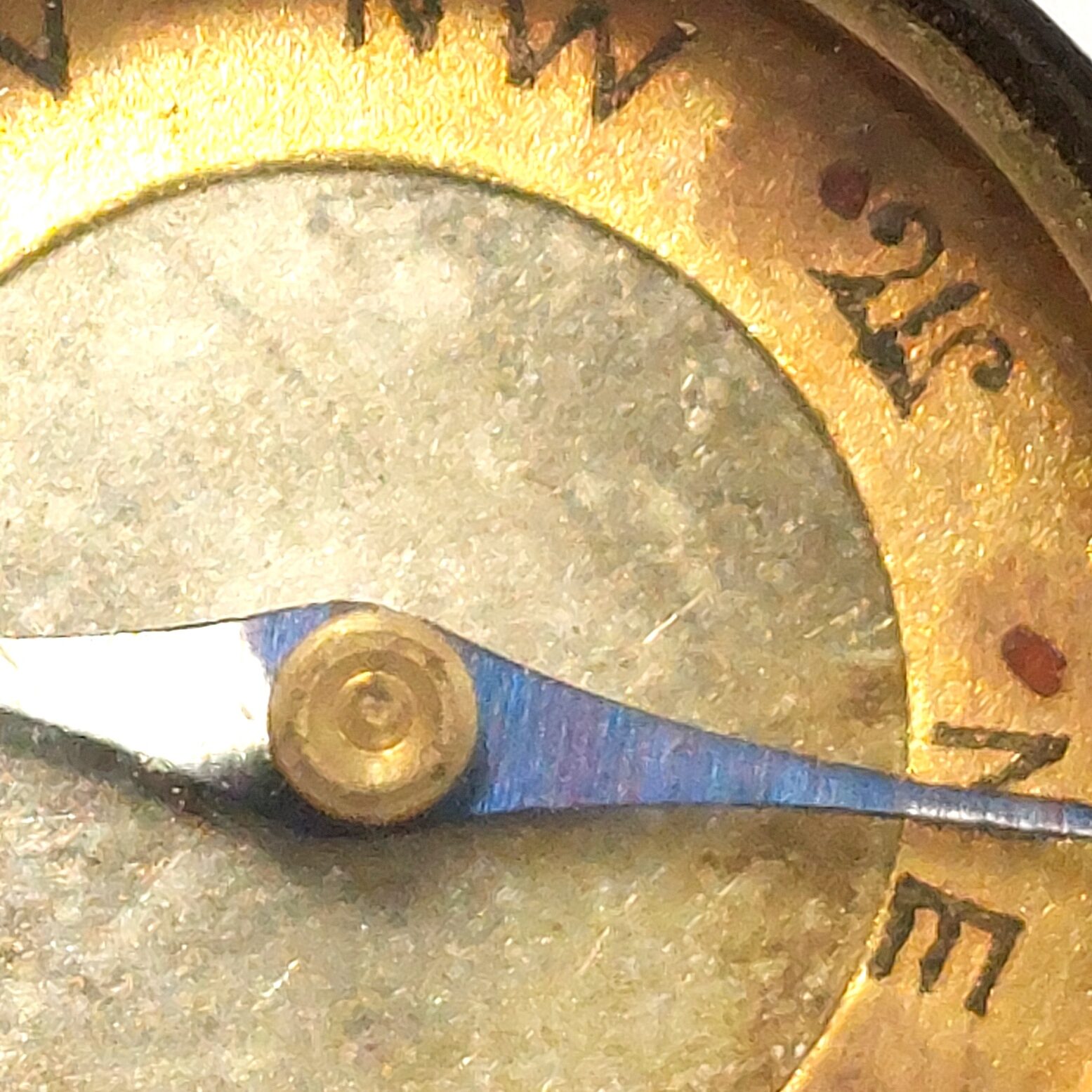
This example measures approximately 2cm in diameter and 0.7cm deep, with a glazed top, gilt-toned brass directional ring, blued steel needle, and a stylised fleur-de-lis north marker positioned between NW and NE. The fleur-de-lis was traditionally used on compasses to denote North and gives the piece a distinctive period appearance. Its small brass body and low-profile construction made it ideal for discreet personal carry or concealment amongst everyday effects.
Approx. Measurements – Diameter: 2 cm. Depth: 0.7 cm.
A very desirable miniature compass with strong WWII RAF and SOE escape kit associations, small enough to be concealed within personal effects and highly displayable within any military or intelligence collection.
History Note:
During the Second World War, British intelligence organisation MI9 developed a range of escape and evasion aids for RAF aircrew, SOE agents, and Allied personnel operating behind enemy lines. Among the most famous were miniature “button,” “wafer,” and pillbox compasses, designed to be hidden inside ordinary objects such as uniform buttons, shaving brushes, tobacco tins, pipes, and even clothing seams. Their purpose was simple but vital—allowing downed airmen or escaped prisoners of war to navigate toward safety without carrying obvious military equipment.
The smallest issued rotor compasses were often around 1.2–1.5cm in diameter, making this 2cm example slightly larger but still entirely practical for concealment and discreet field use. While official RAF and SOE issue examples were often plainer and more utilitarian, privately purchased miniature brass compasses of this type were equally suitable for wartime survival, travel, and emergency navigation. The traditional fleur-de-lis north marker reflects an older compass-making convention and places this example comfortably within that broader family of discreet wartime navigation instruments.
*Condition*
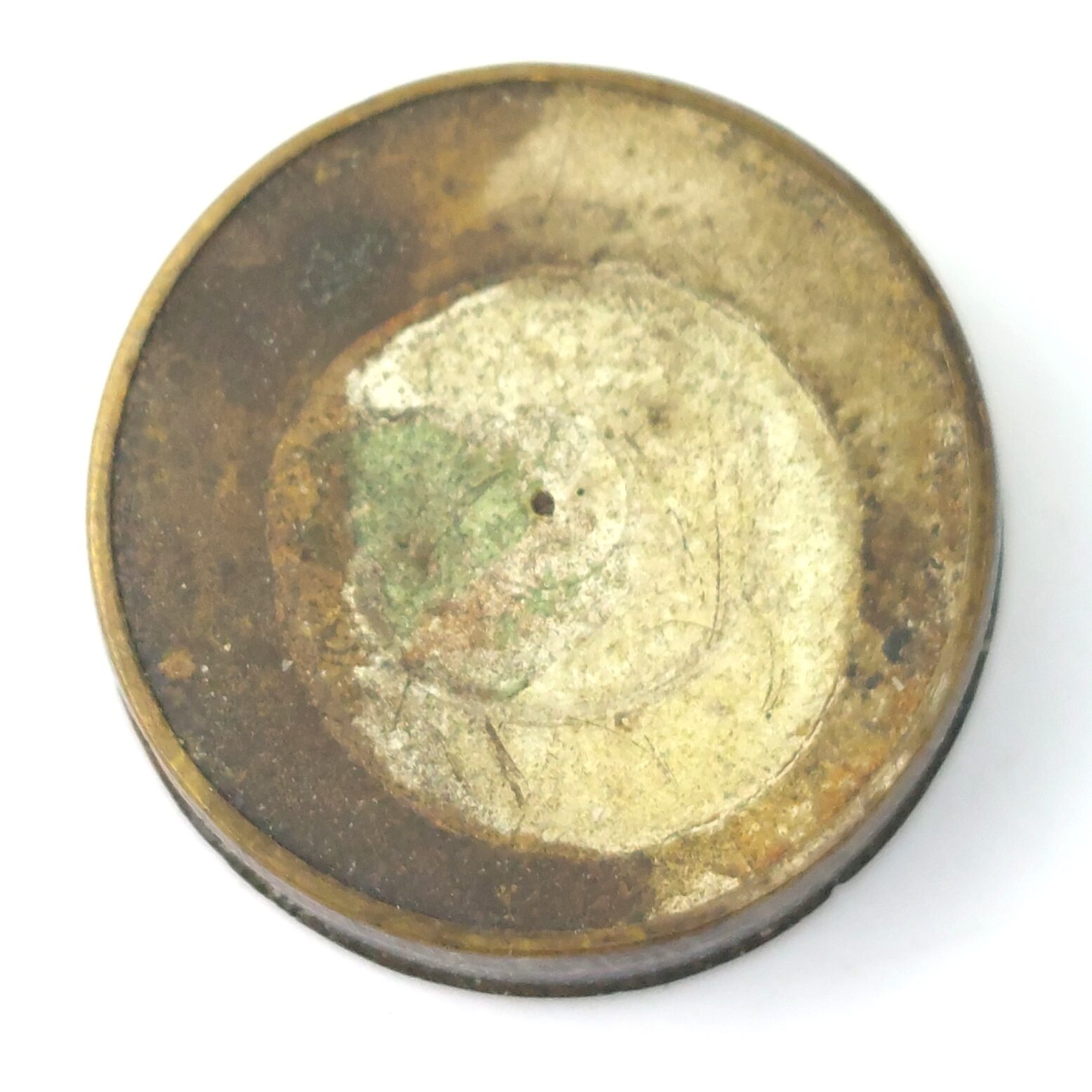
Original untouched condition with honest age-related wear throughout. Brass case shows natural patina, surface oxidation, and signs of long-term age. Dial remains clear with visible directional lettering and fleur-de-lis marker. Needle present and free-moving. Glass intact with surface wear and light scratches consistent with age and use. A good genuine period example. Please see photographs as part of the condition report.
JAQ#3061BE_4197238666