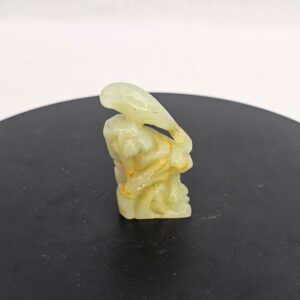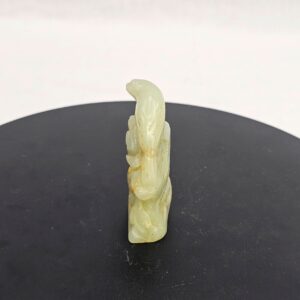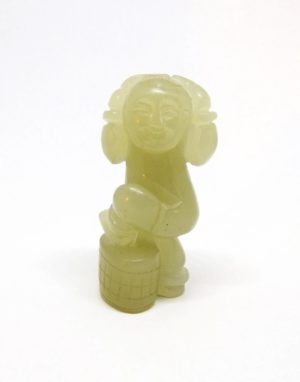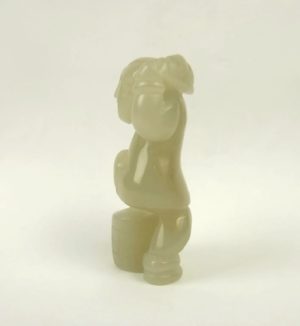
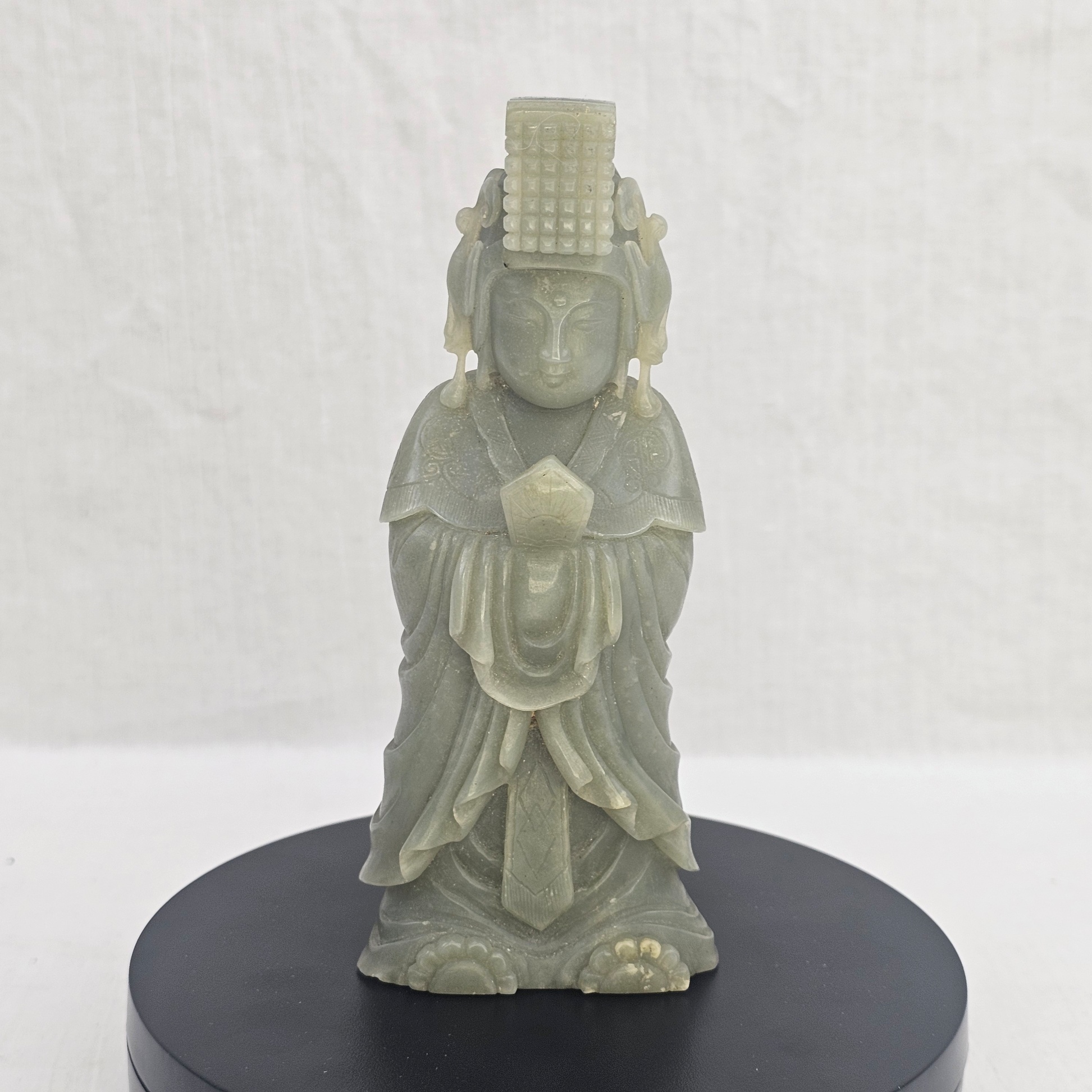
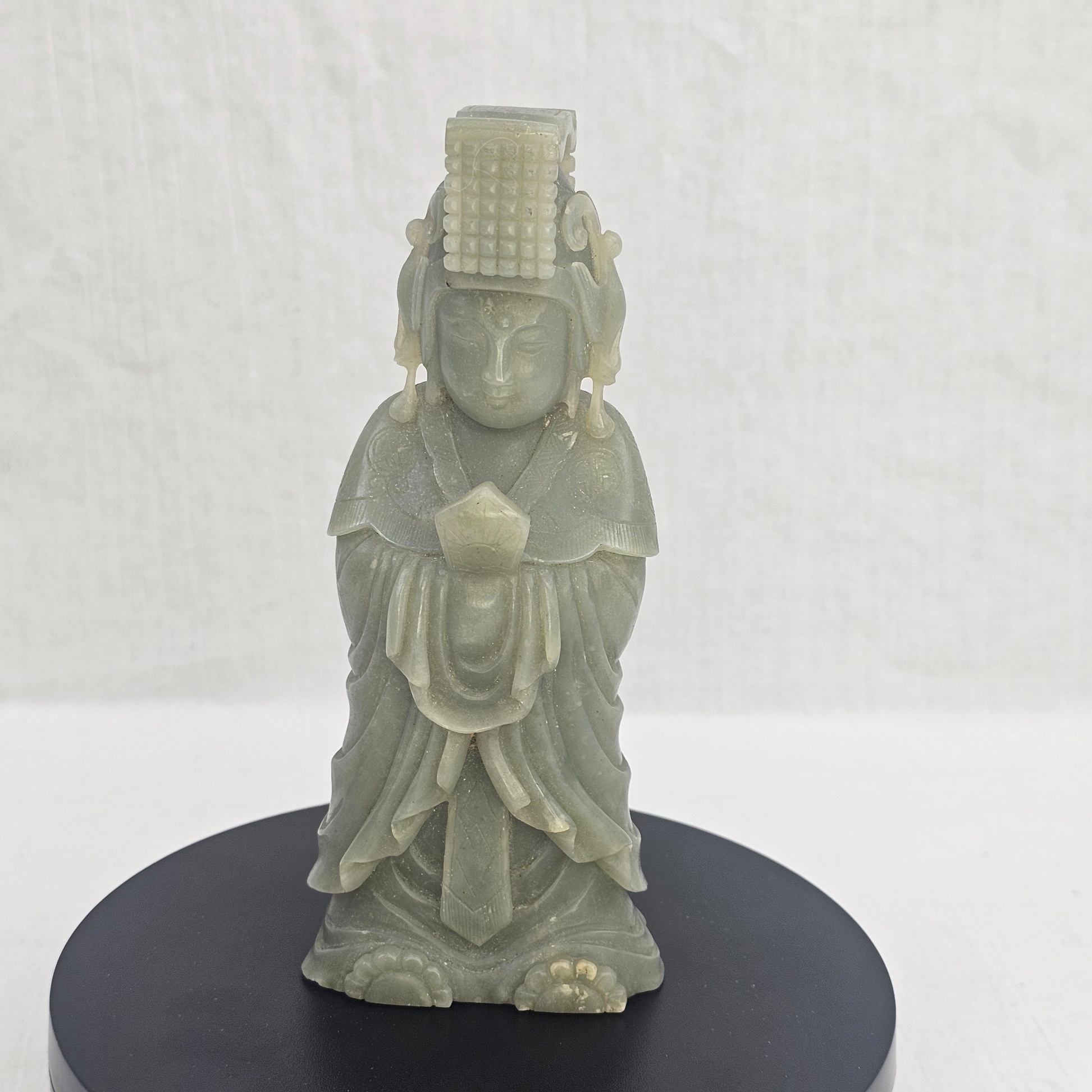
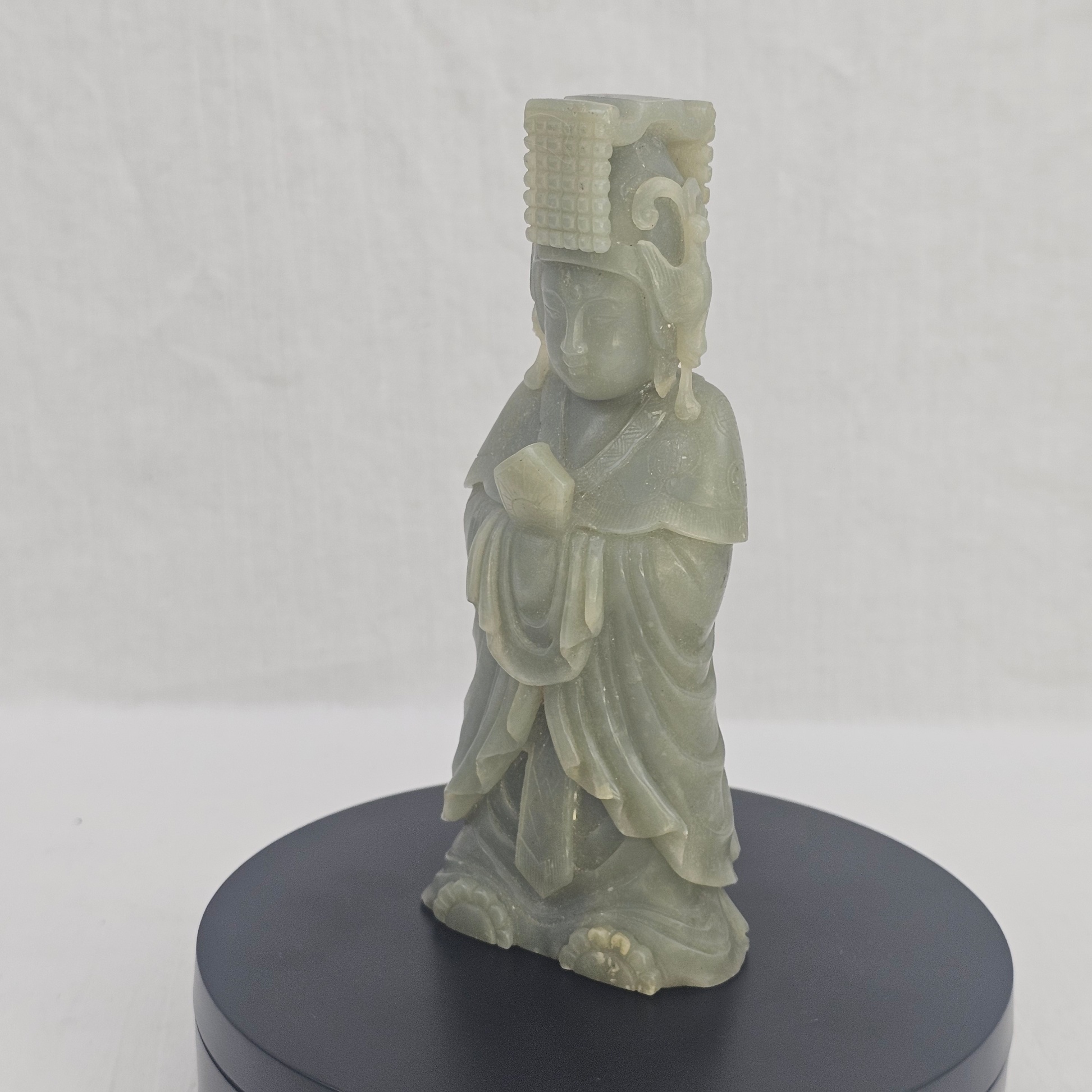
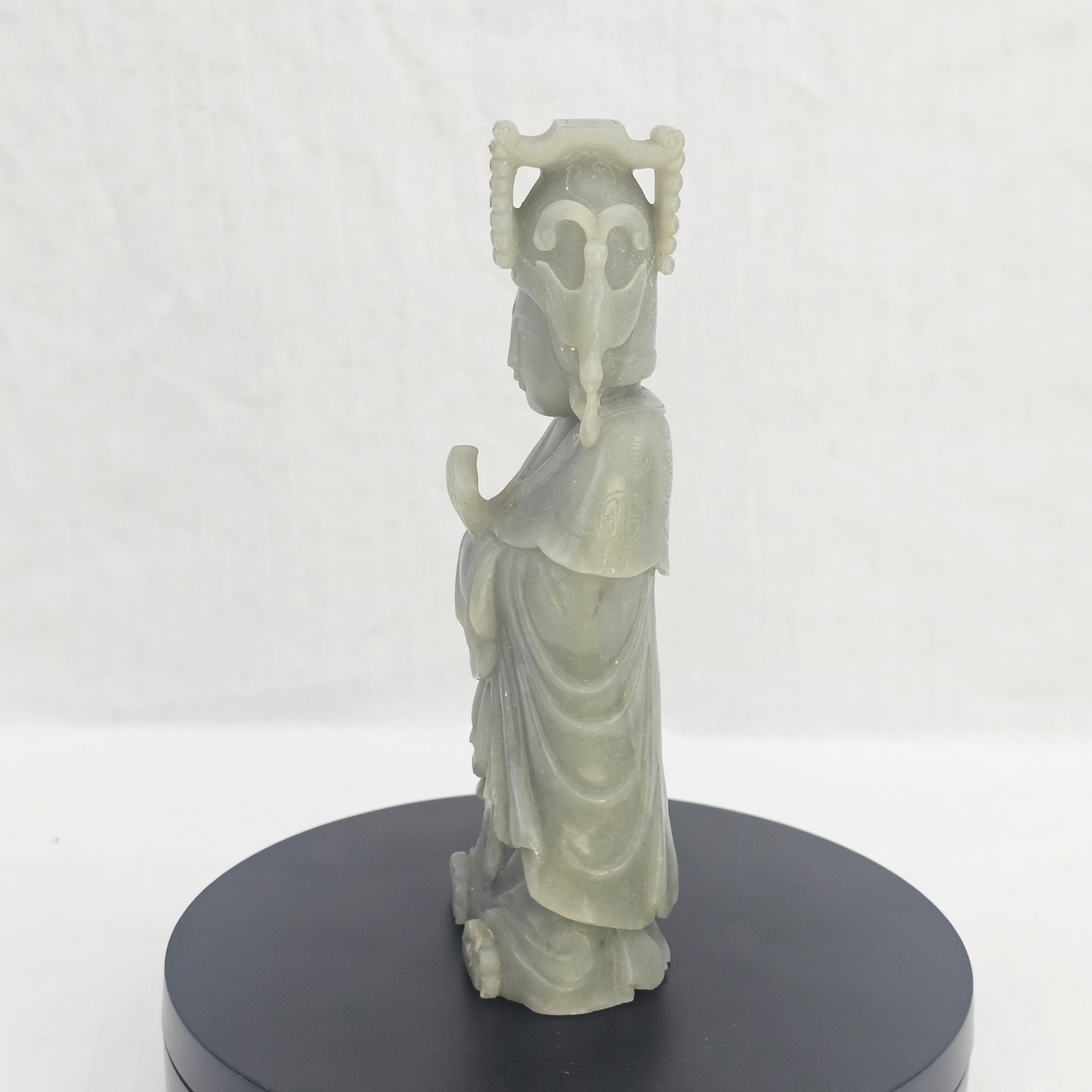
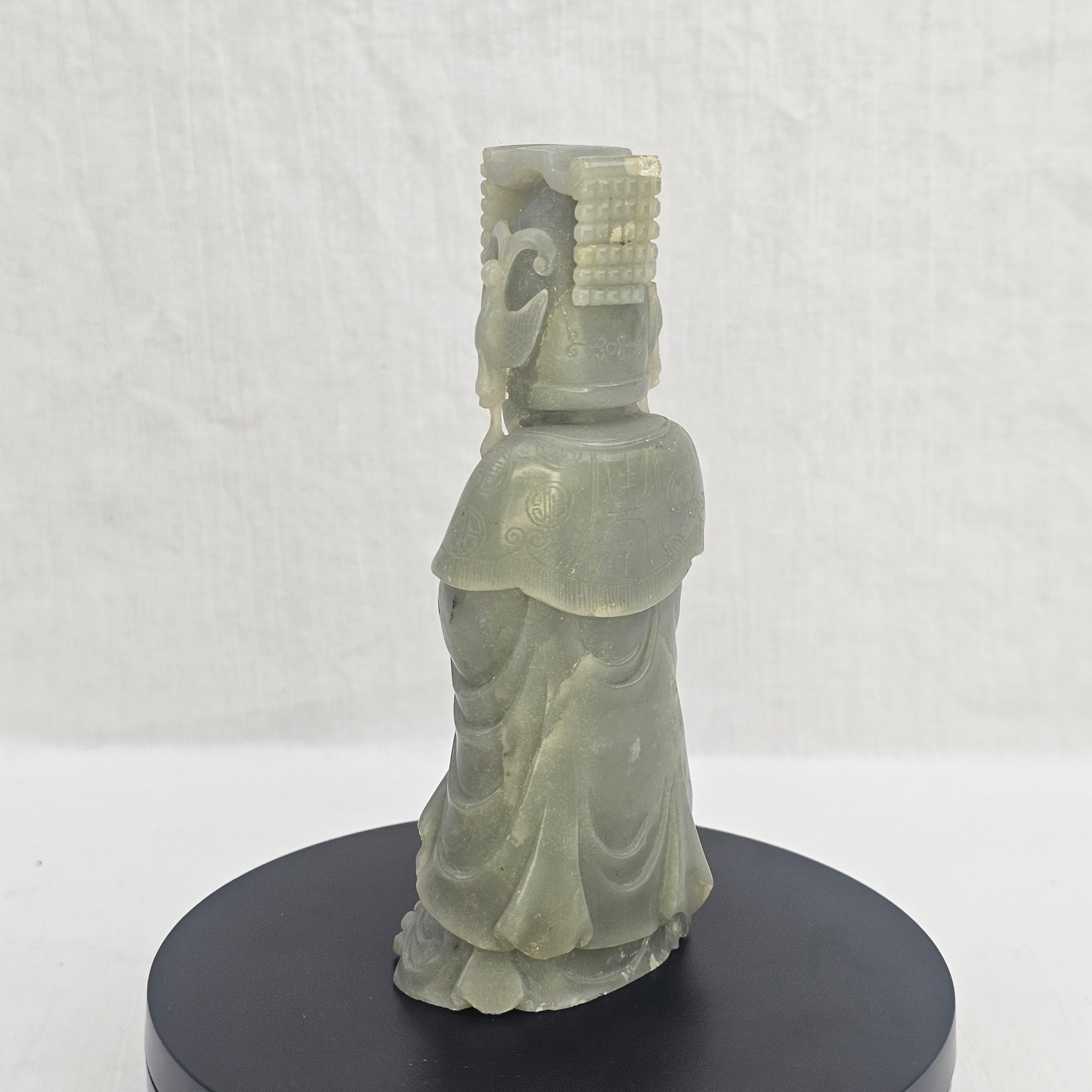
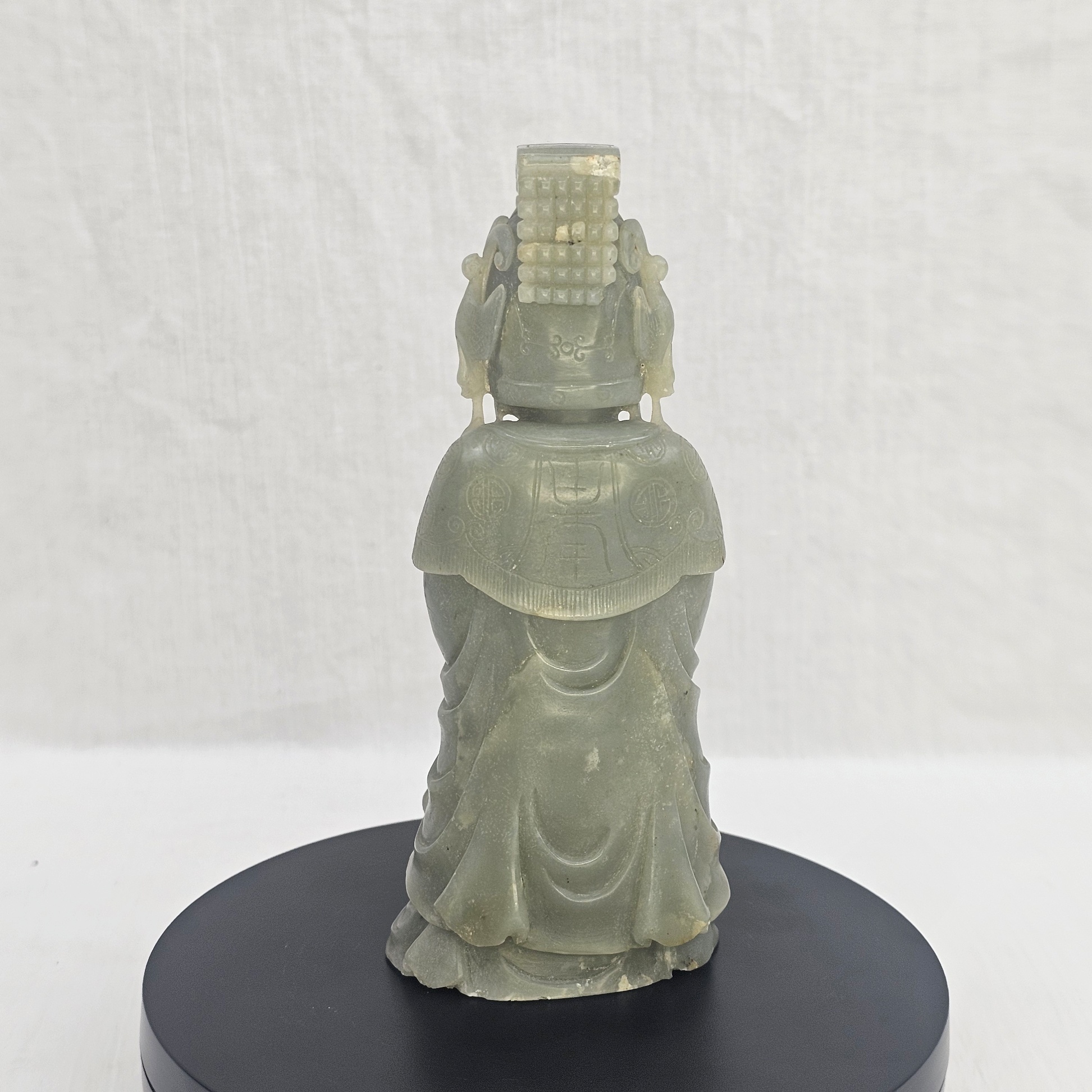
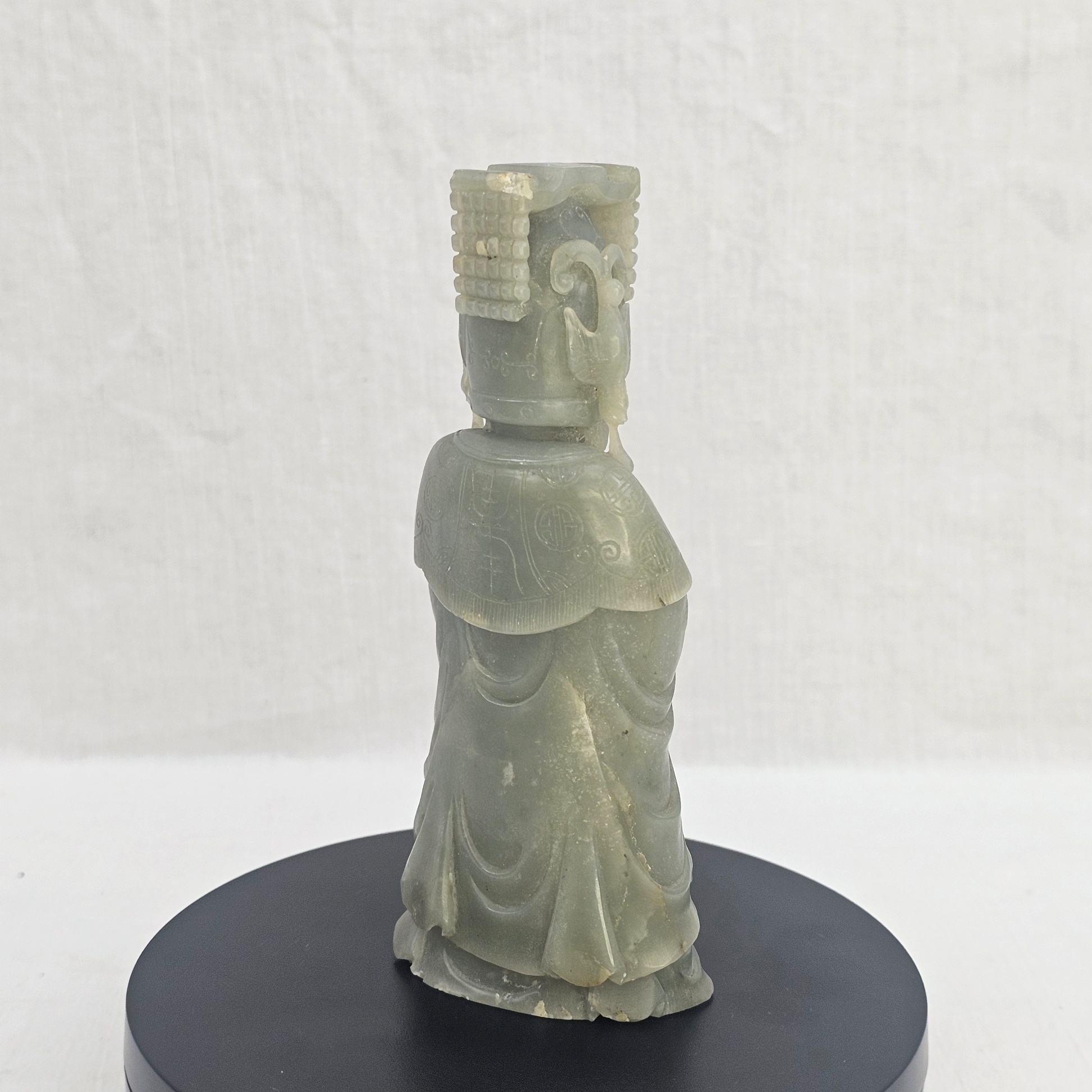
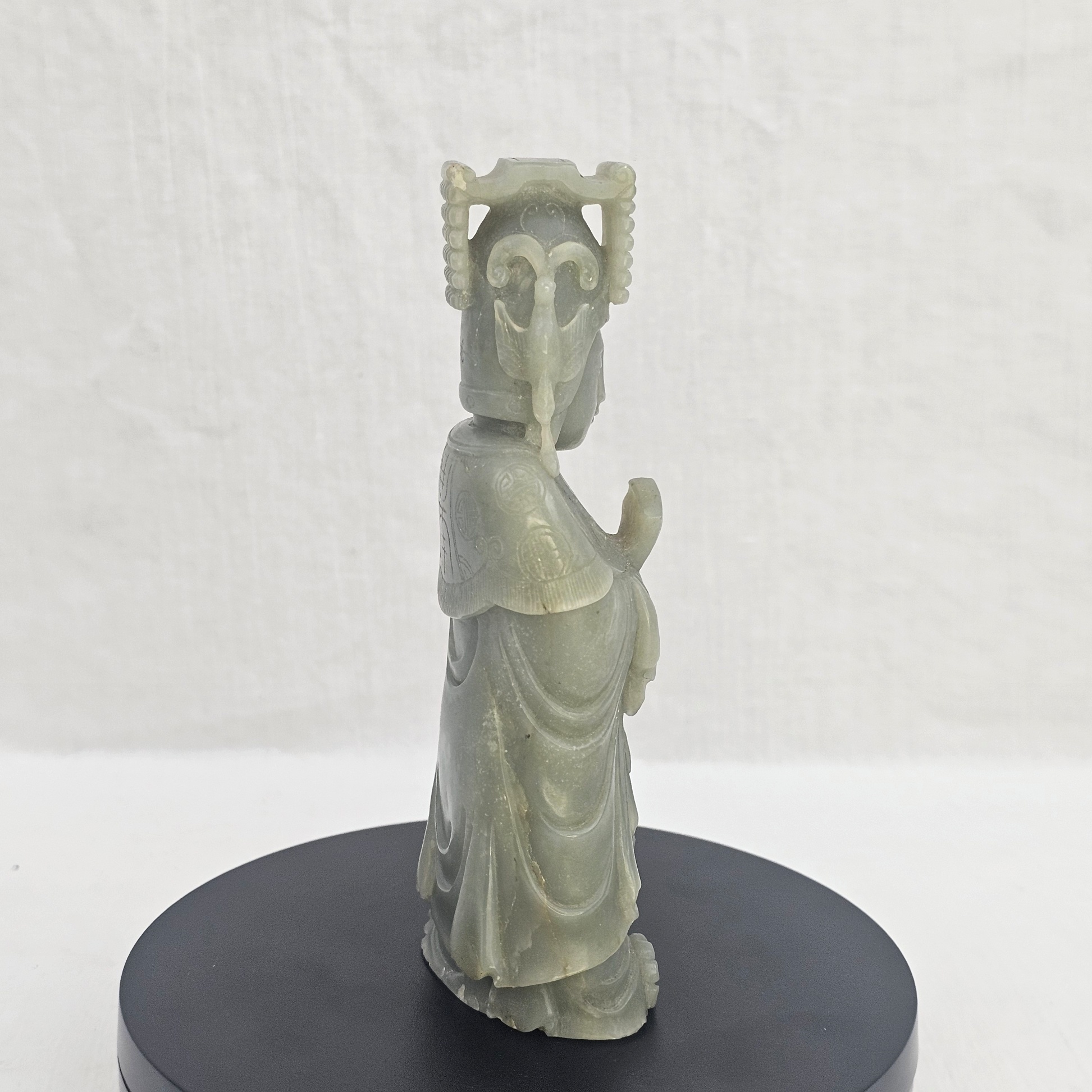
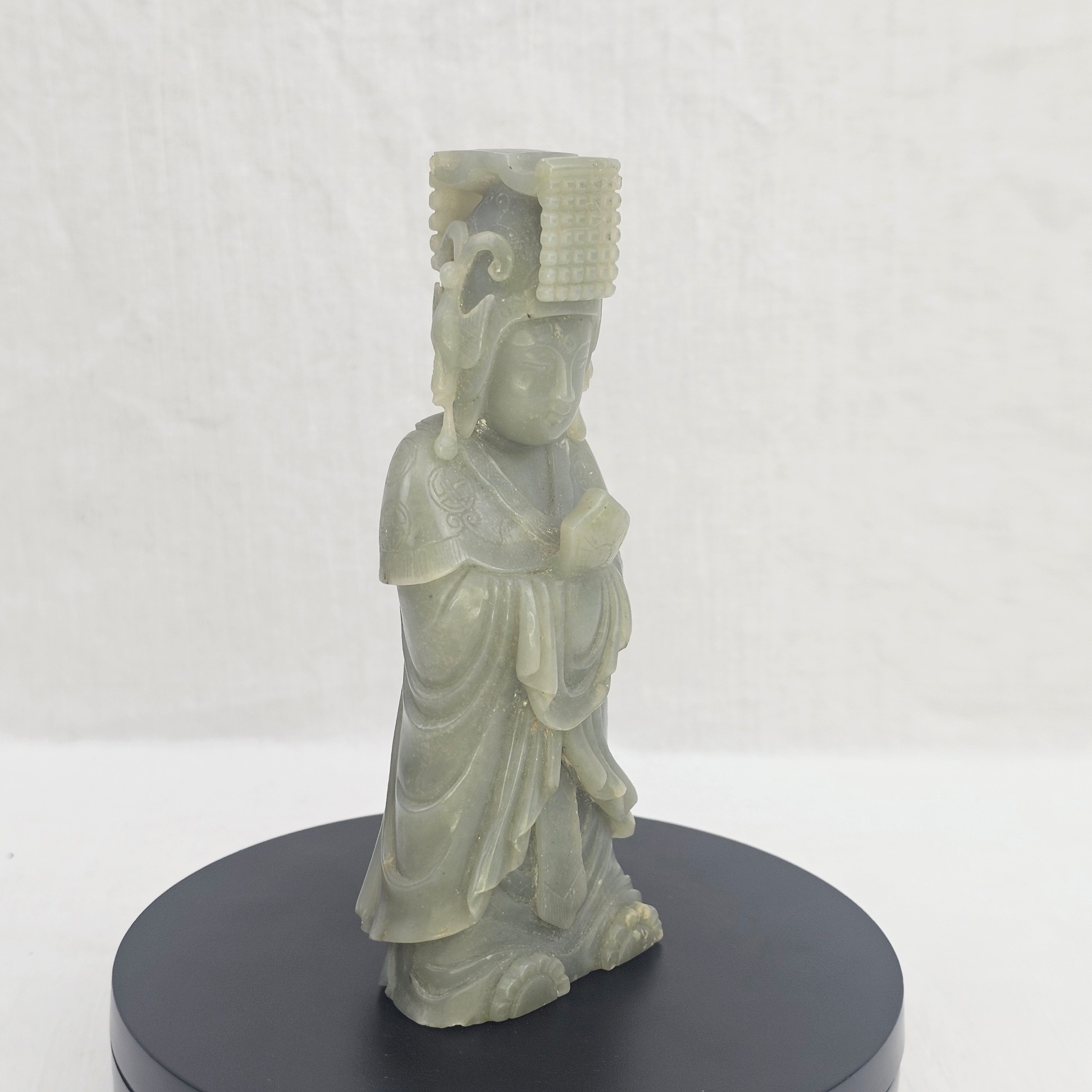
~ Chinese Carved Pale Celadon Nephrite Jade Figure of a Court Official, Ming Style, 20th Century ~
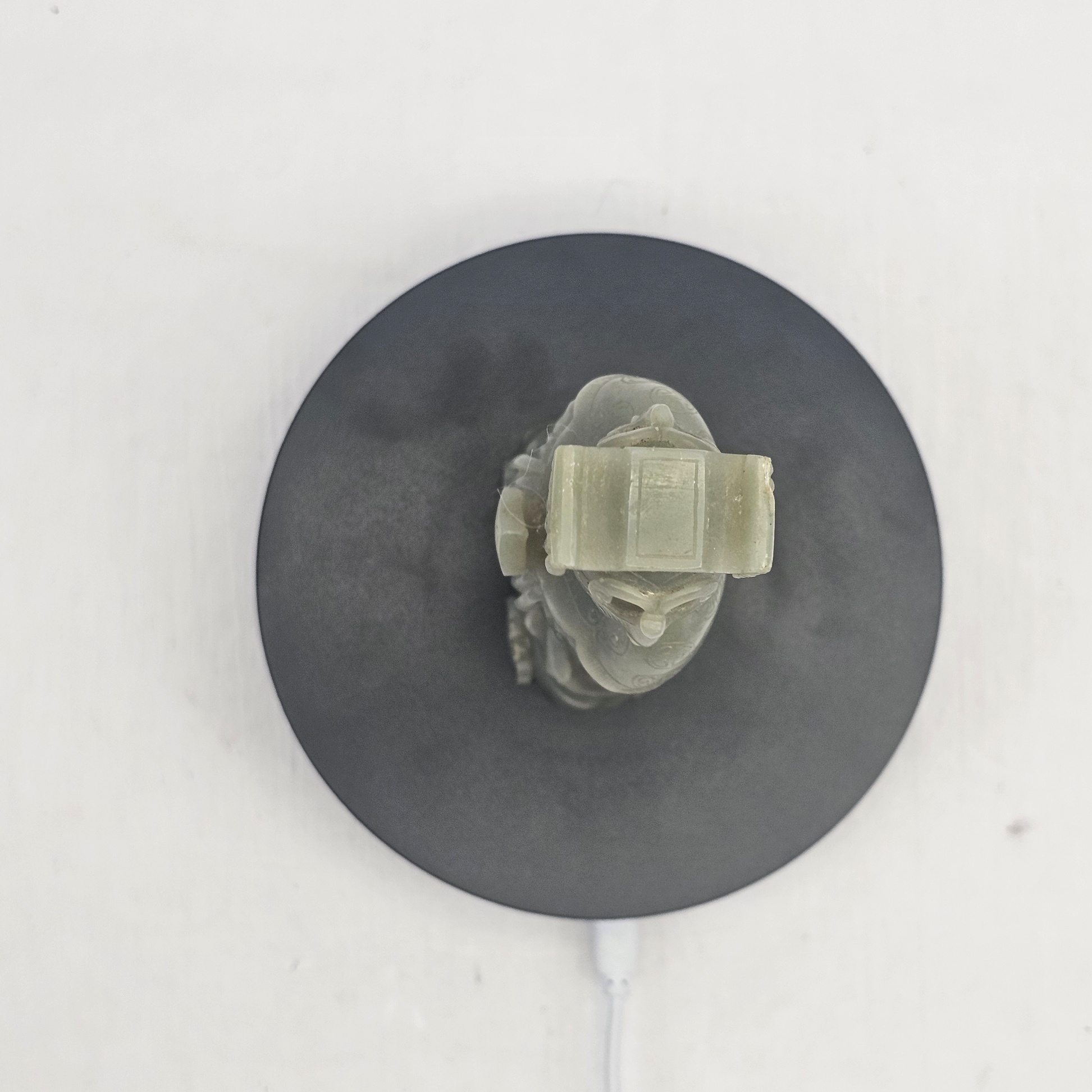
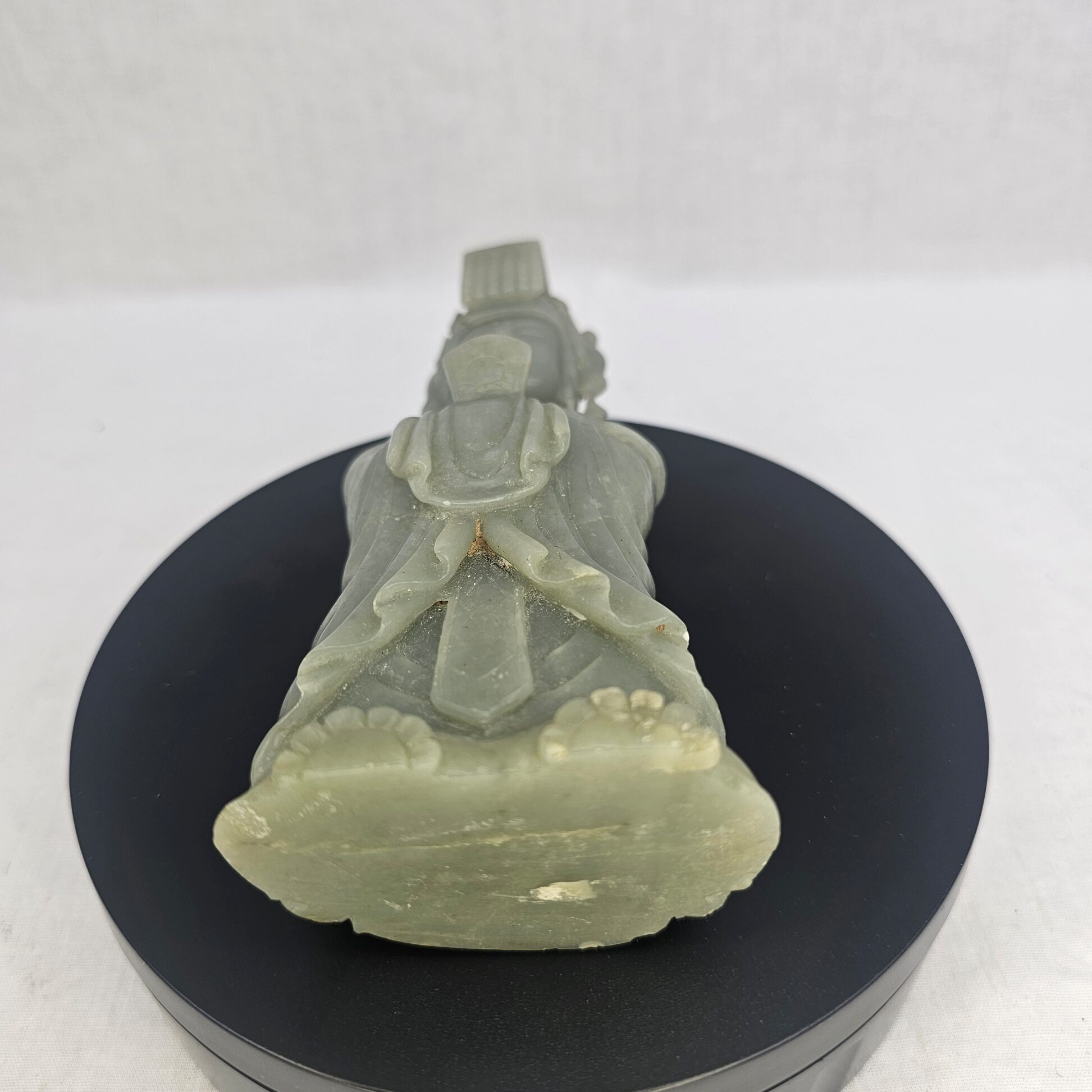
A finely hand-carved nephrite jade figure depicting a standing Chinese court official or scholar-dignitary, rendered in the Ming dynasty style. The figure stands in a formal pose, hands held together at chest height before him in a gesture of respect, and is dressed in flowing, multi-layered robes carved with naturalistic drapery folds cascading to the base. He wears an elaborate tall ceremonial headdress (similar to a futou or official's cap), decorated with a lattice/woven pattern and scrolling cloud or phoenix motifs to either side, with long pendant earrings or tassels falling either side of the face. The robe is decorated in low relief with archaistic roundels and shou (longevity) characters across the cape, and the figure stands on a naturalistically carved rocky or lotus-form base. The stone is a pale, slightly translucent celadon-green nephrite with characteristic cloudy inclusions and natural russet markings to the headdress and lower robe, typical of the material. The piece is presented on a later turned circular black wood/hardwood stand (later addition).
Carvings of standing court officials, immortals, and scholar-figures are a long-established theme in Chinese decorative jade work, with prototypes drawing on Ming dynasty (1368–1644) figural sculpture and earlier court costume. Figures of this type—often identified generally as "mandarins," officials, or attendant figures—were produced in considerable quantity from the late Qing dynasty through into the Republic period and the 20th century, both for the domestic market and increasingly for export to Western collectors, who valued the cool tactile quality and pale tones of nephrite. The detailed costume carving, including the characteristic "wings" of the official's hat and the layered, draped robes, reflects a deliberate antiquarian or "Ming style" revival popular with carvers working in Suzhou and other jade-working centres during this later period. While the form references earlier court dress, the style of carving, finish, and the pale, slightly chalky celadon nephrite used here are most consistent with a 20th-century workshop production rather than an early piece.