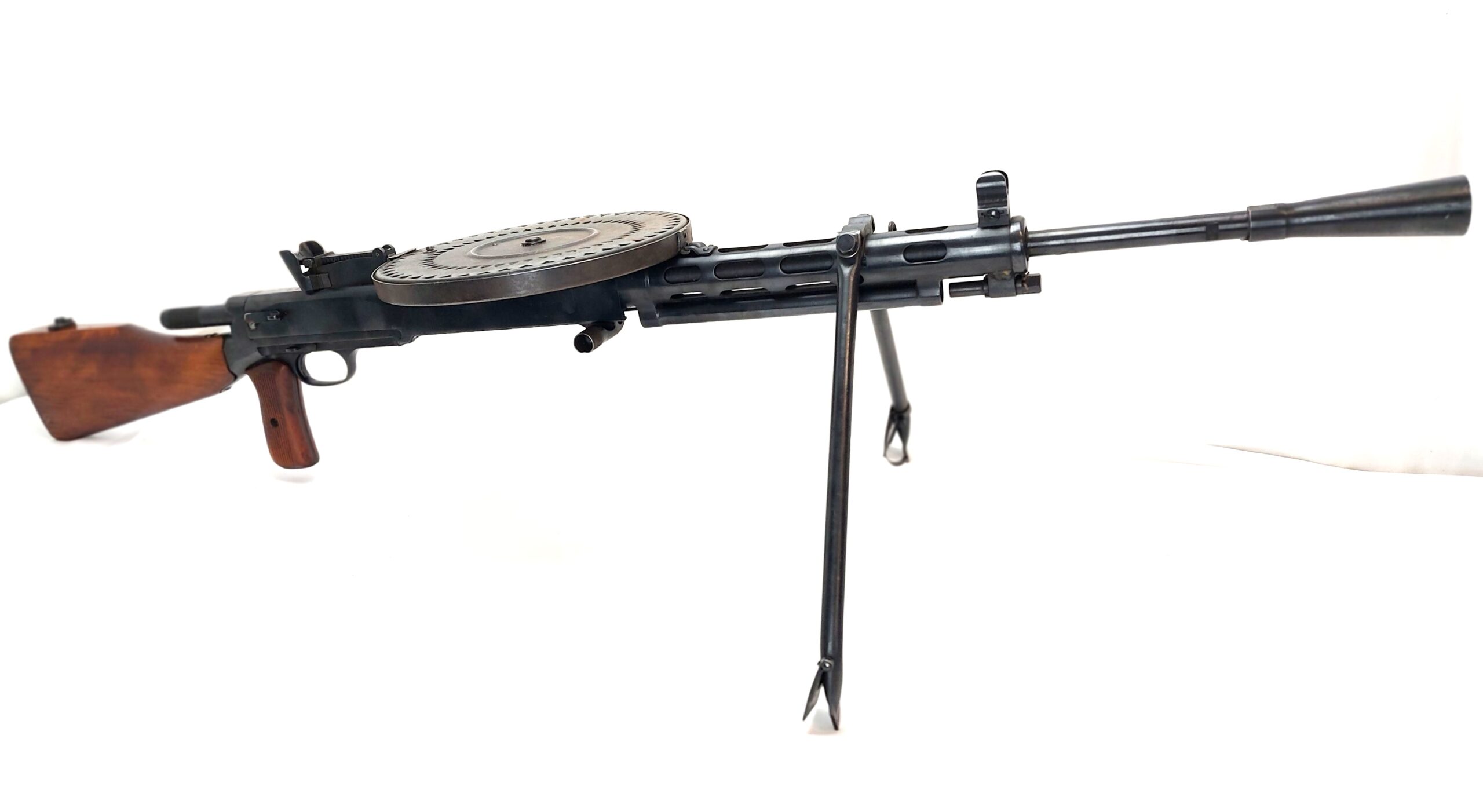
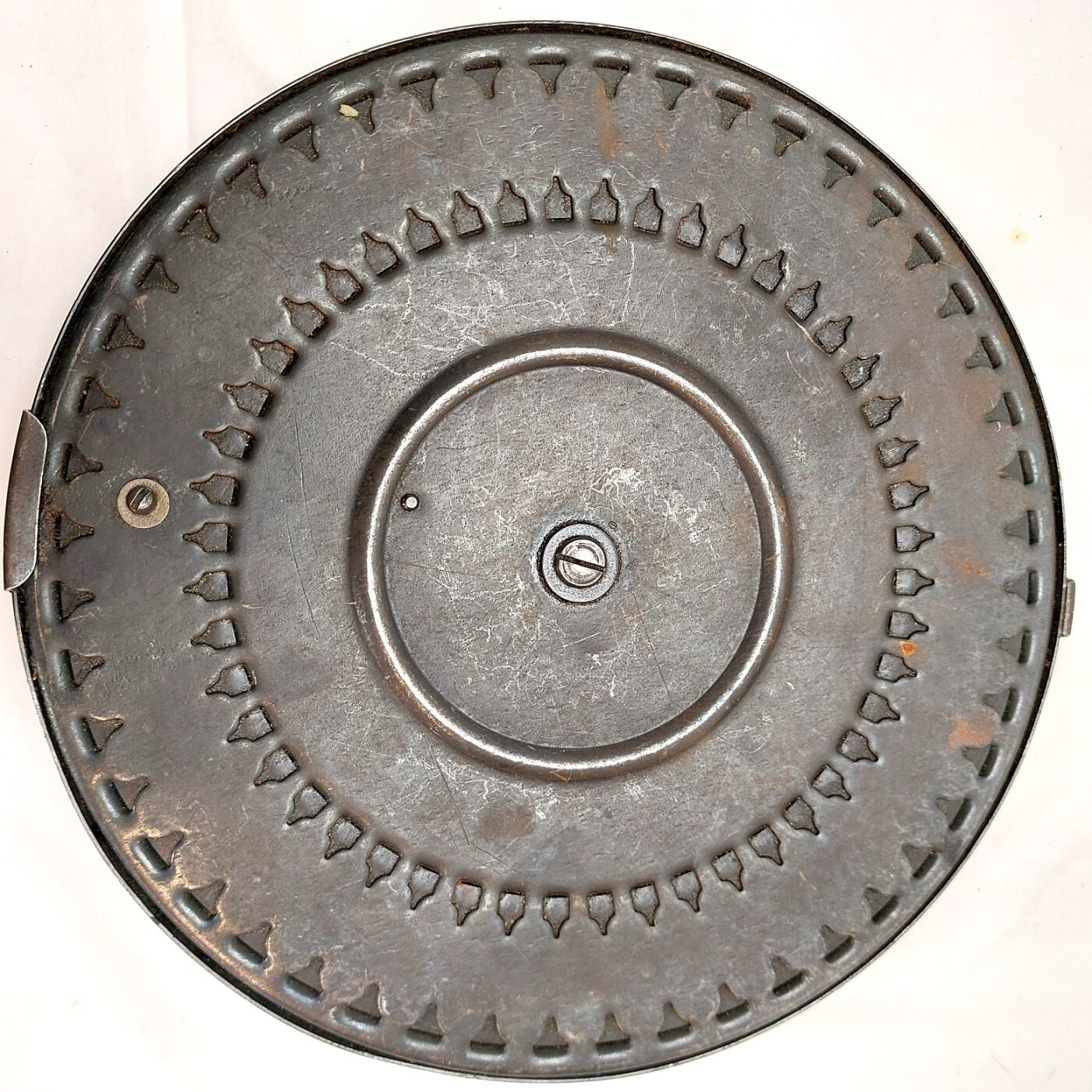
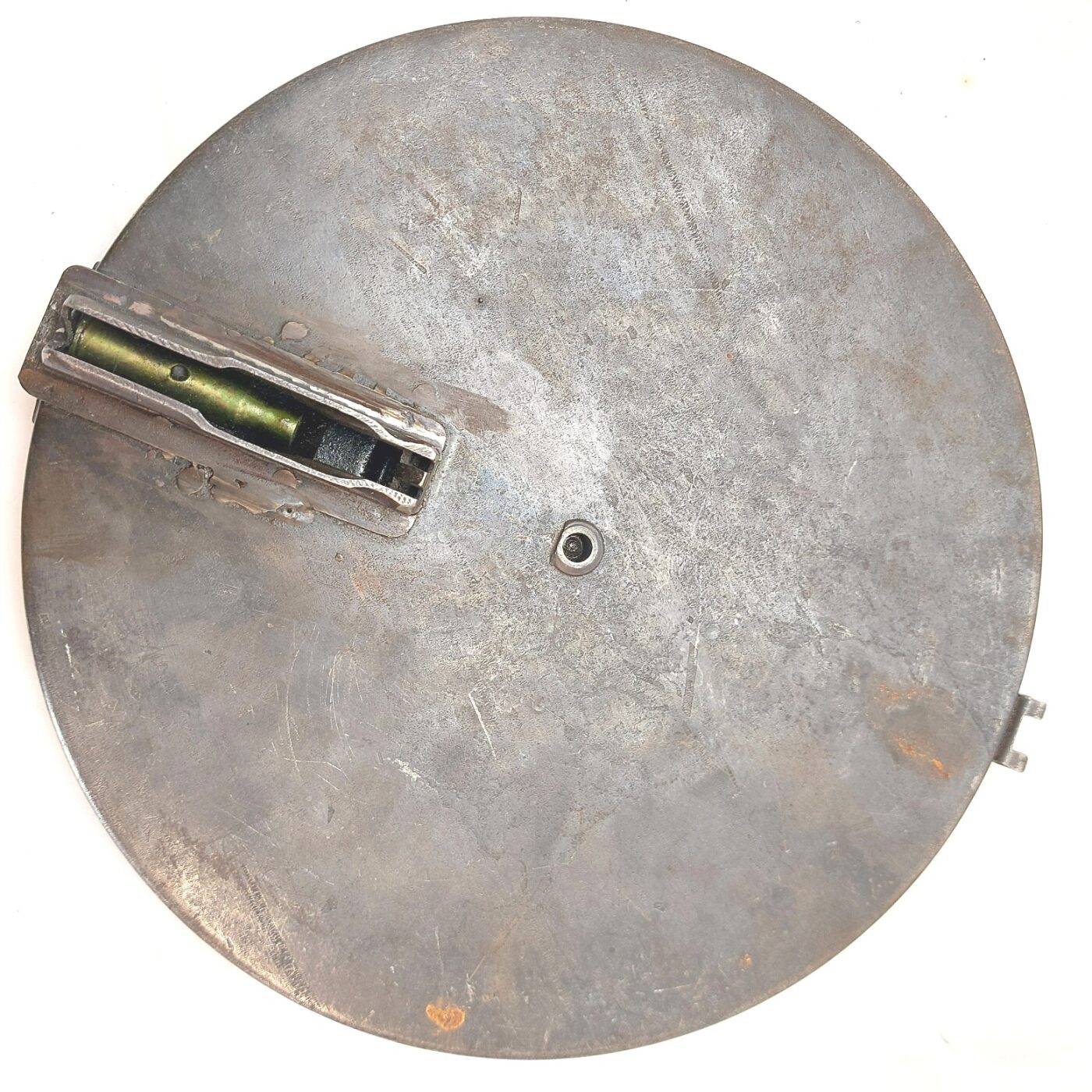
*Polish, Cold War Dated 1954, Factory 11 Radom DPM (Degtyaryov Pekhotny Modernizirovanny) 7.62×54R Light Machine Gun, Serial No. RK0221, Matching Numbers, with Pan Magazine & Bipod, EU Deactivated*
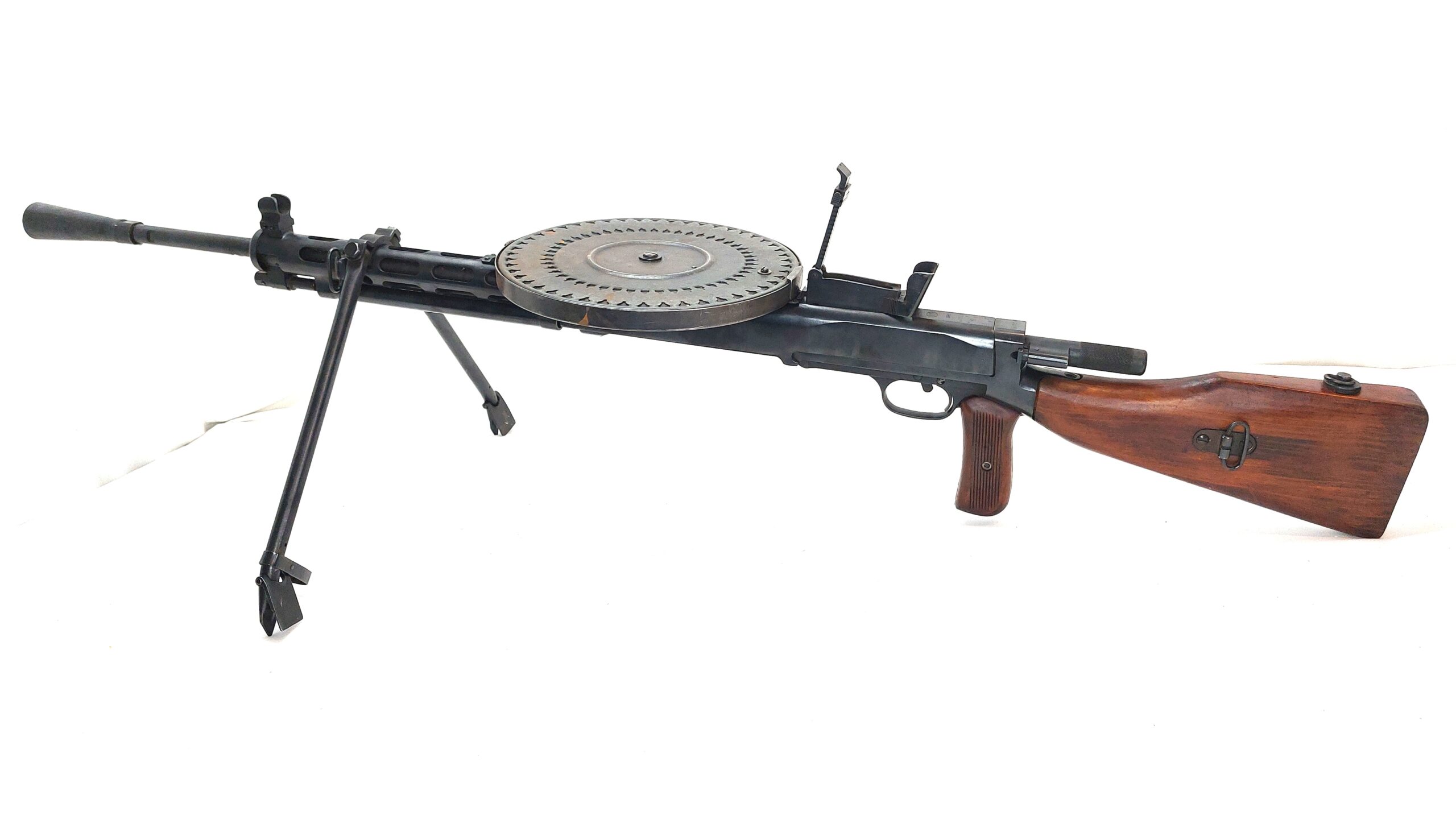
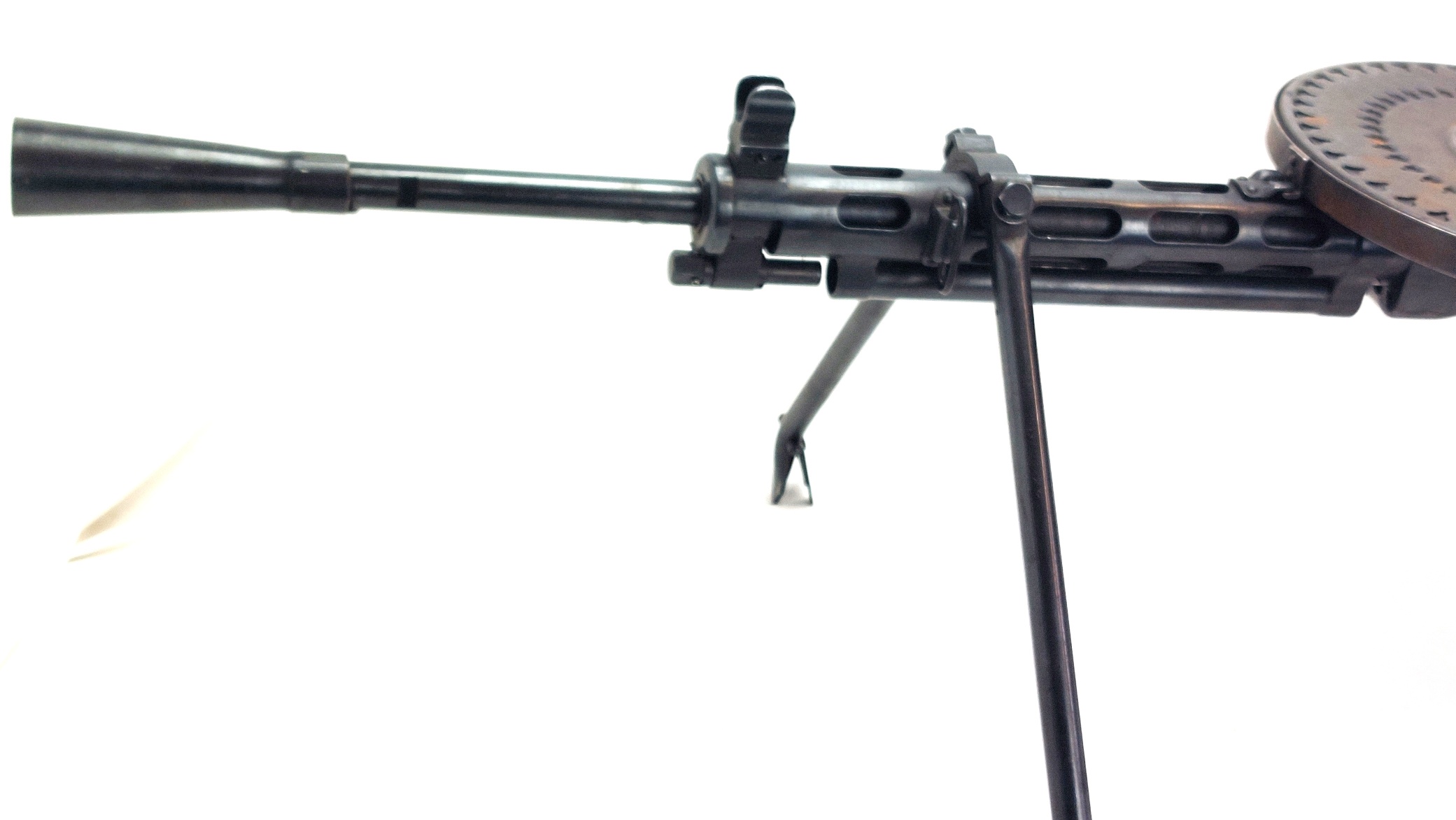
A scarce and highly desirable Cold War Polish-manufactured DPM light machine gun, produced at the Radom arsenal in 1954, presented as a matching example and complete with its characteristic pan magazine and bipod, and deactivated to current EU specification.
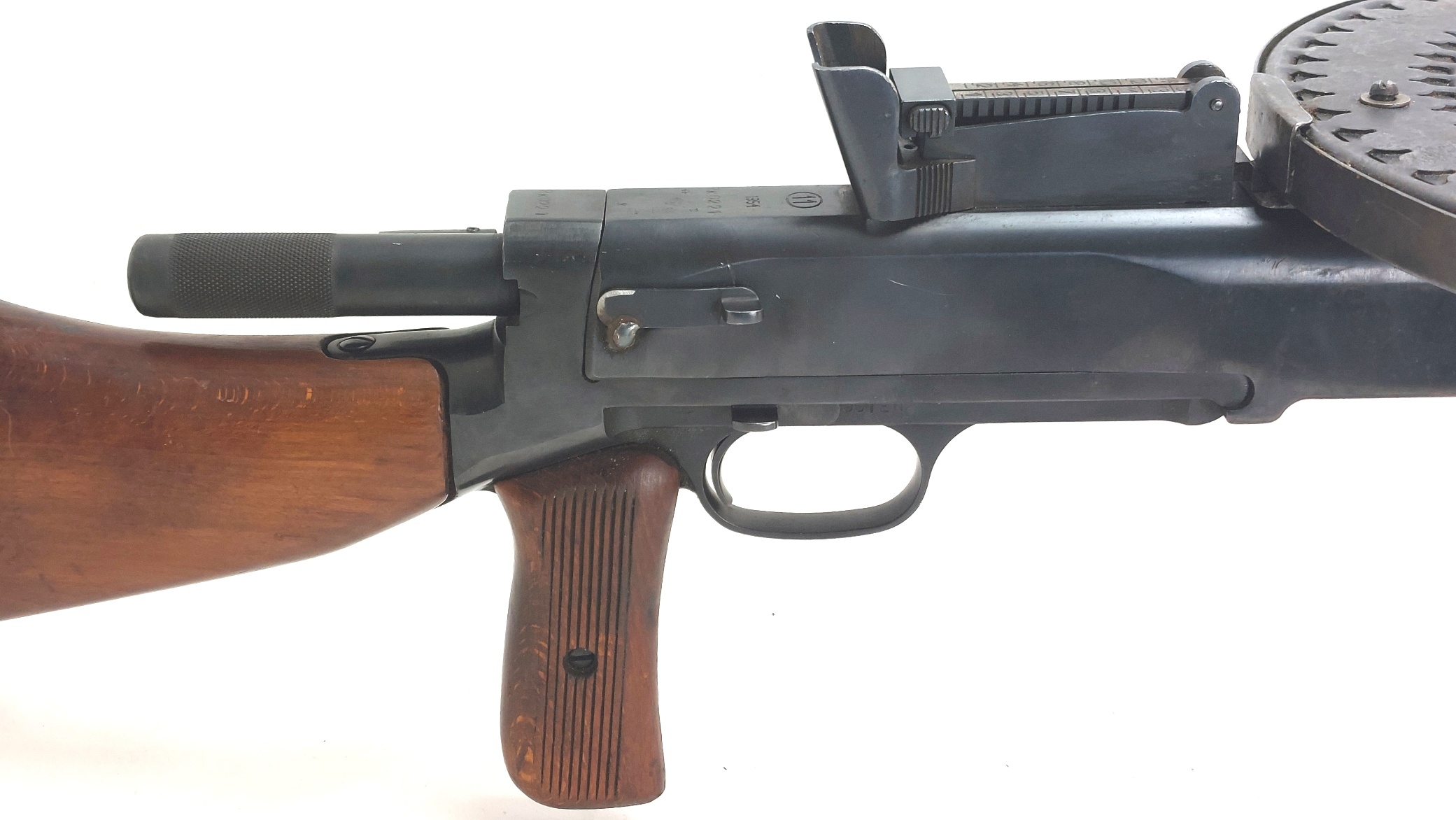
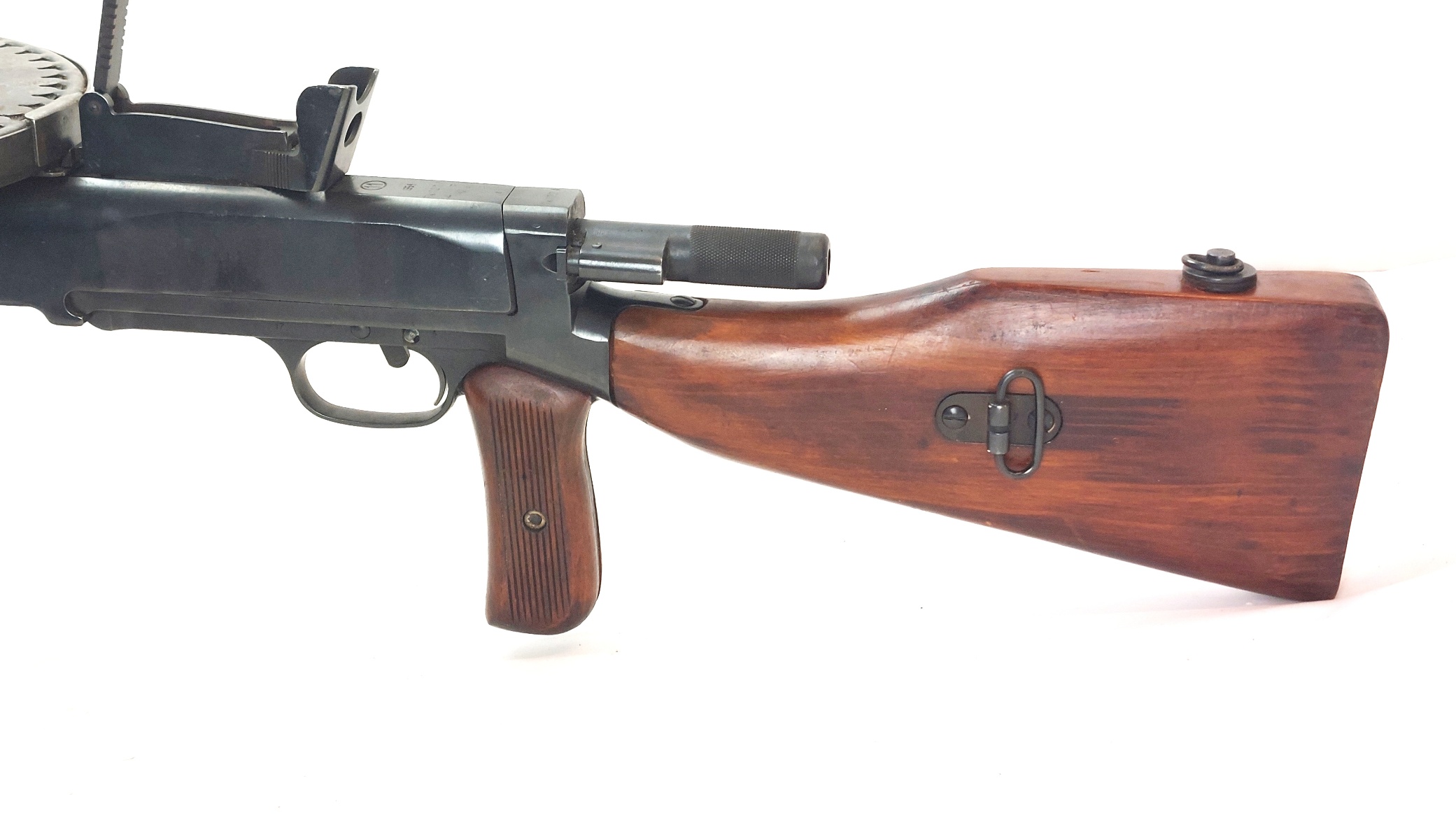
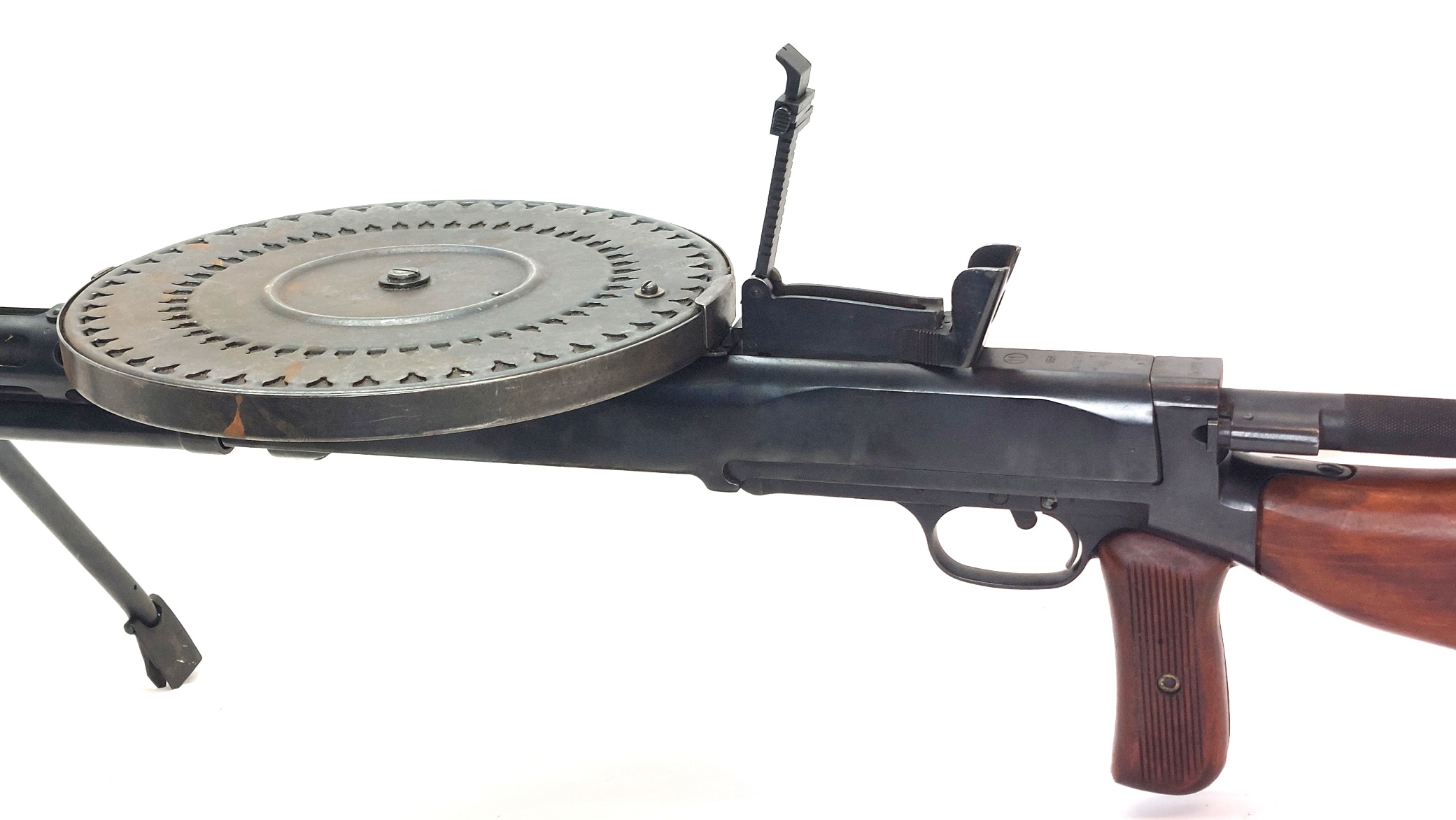
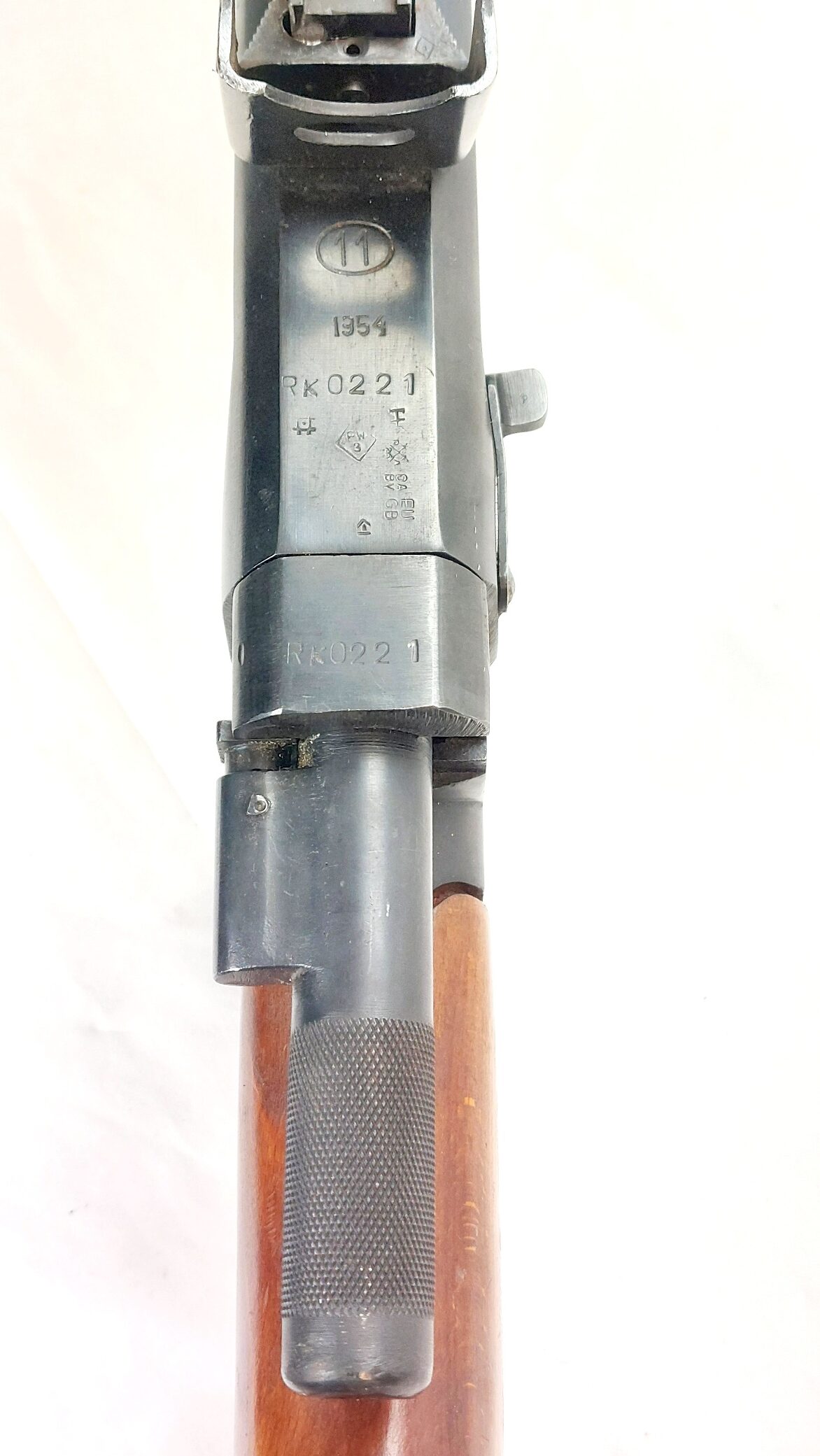
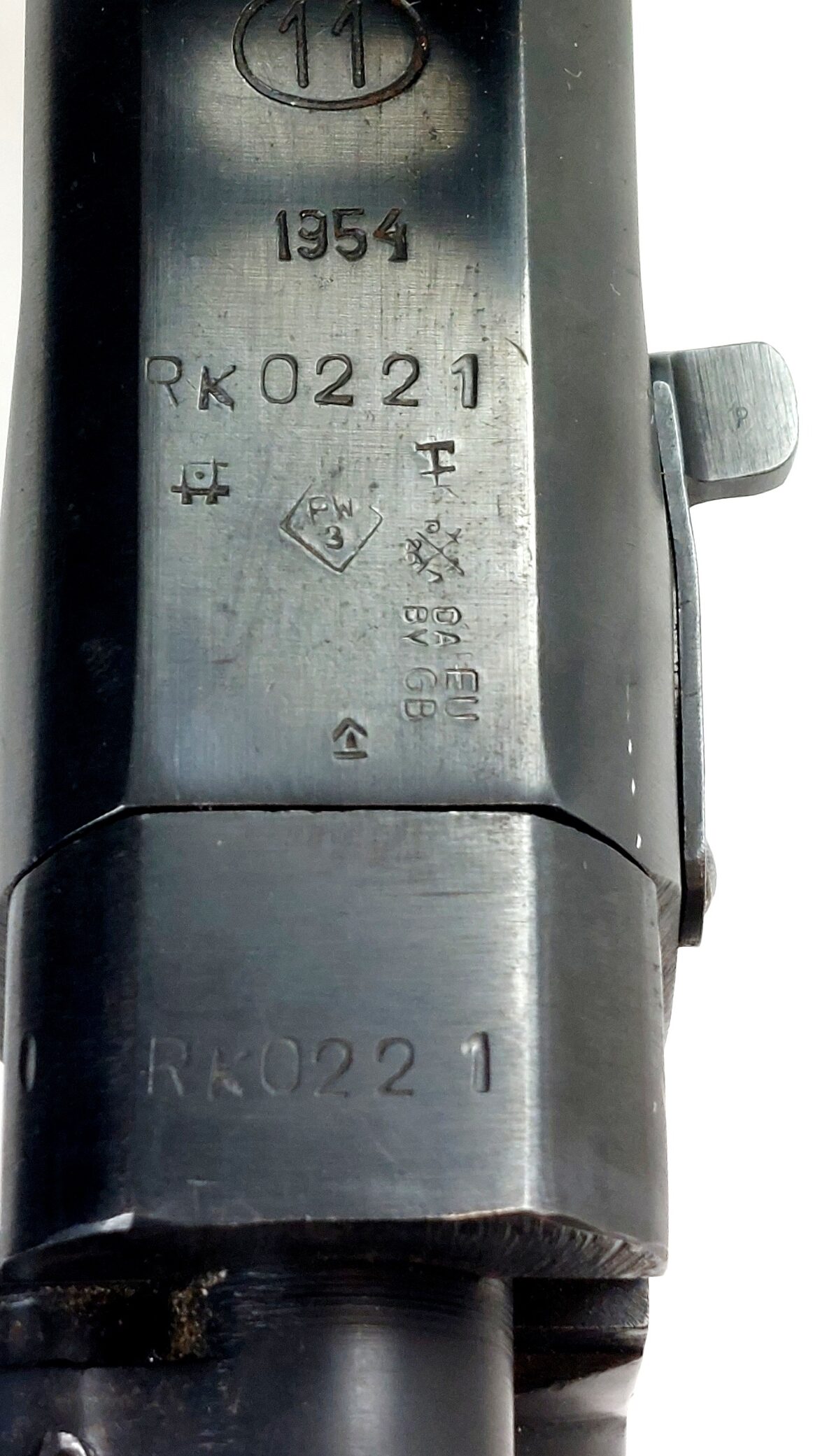
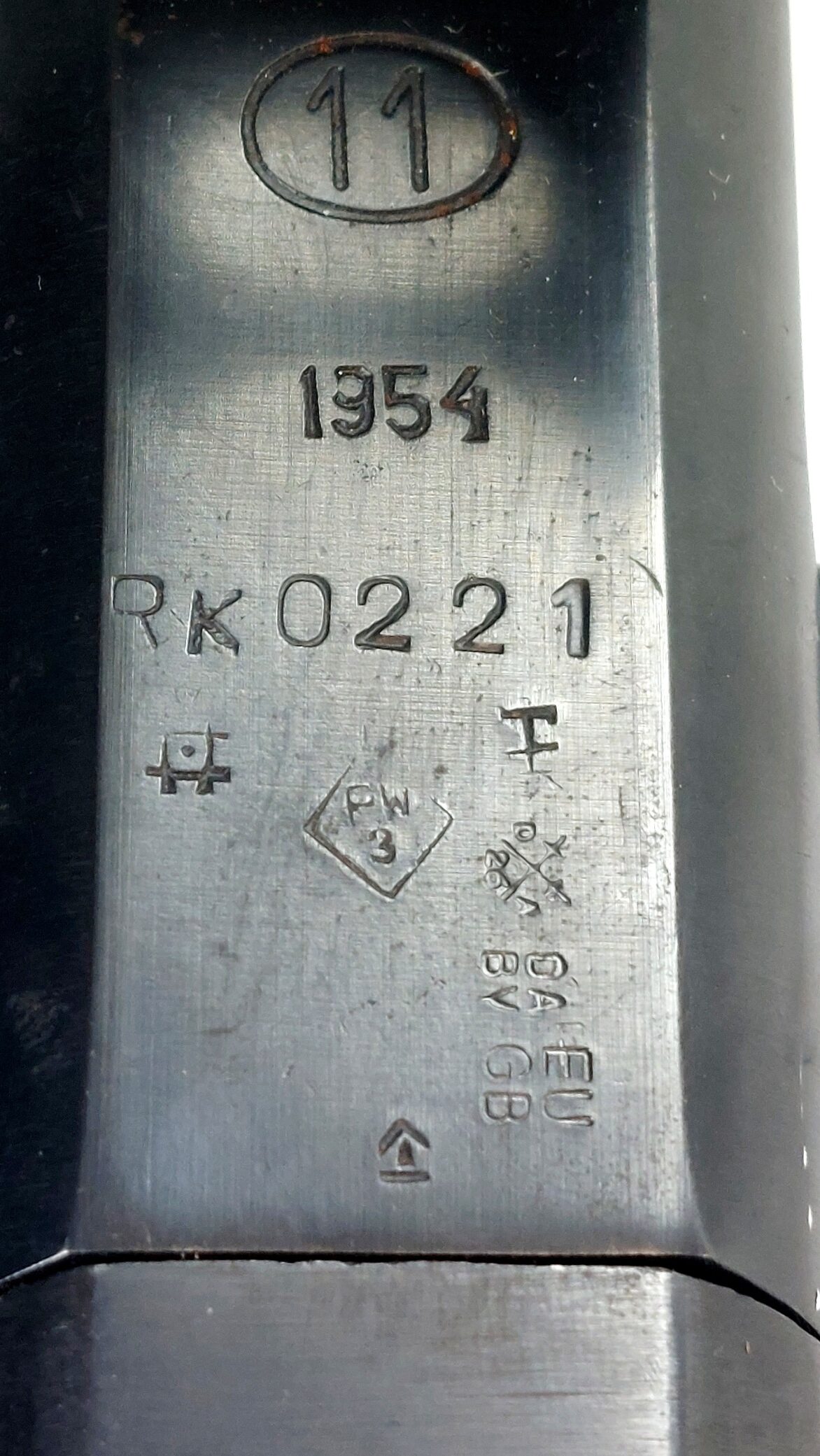
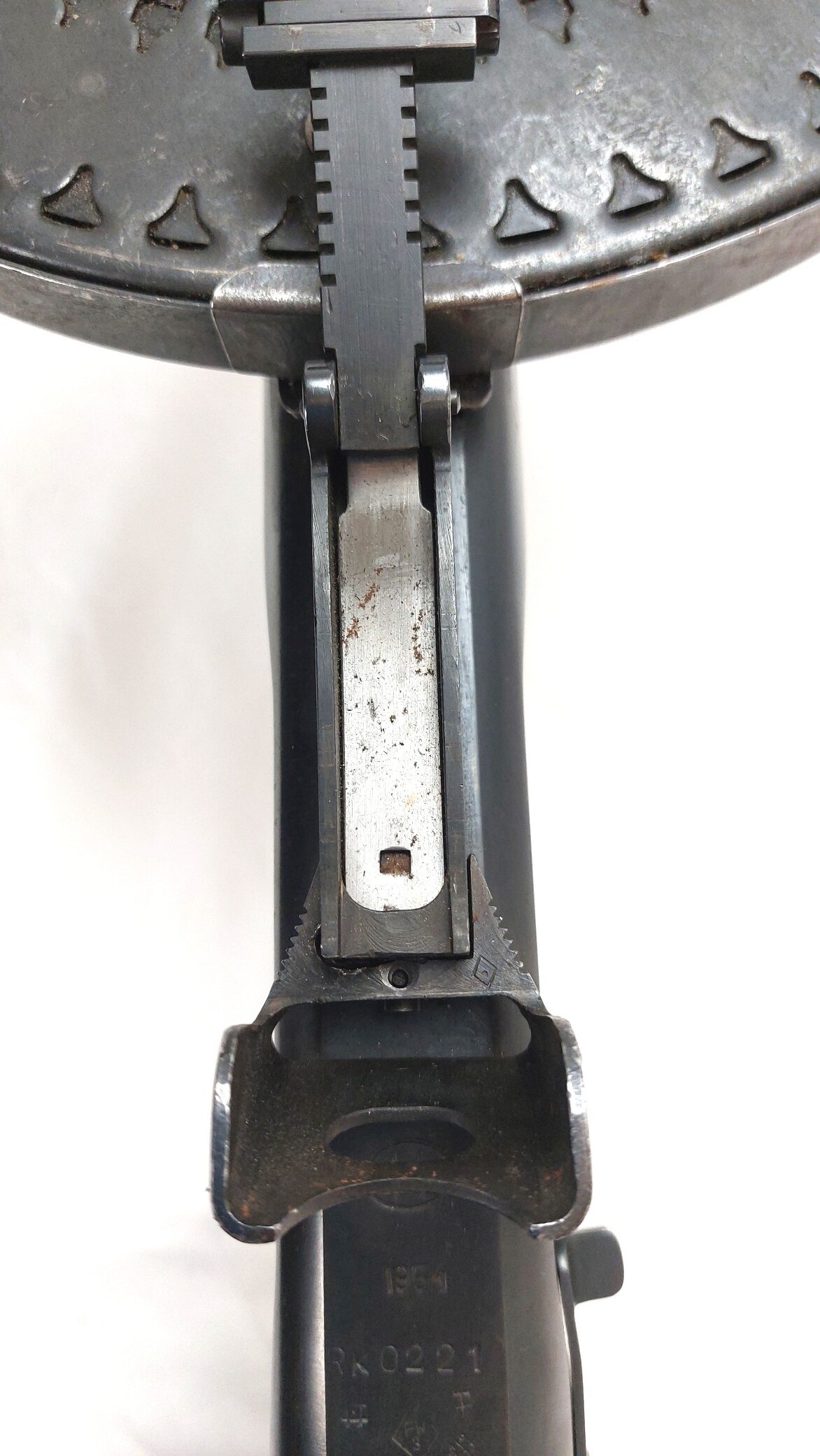
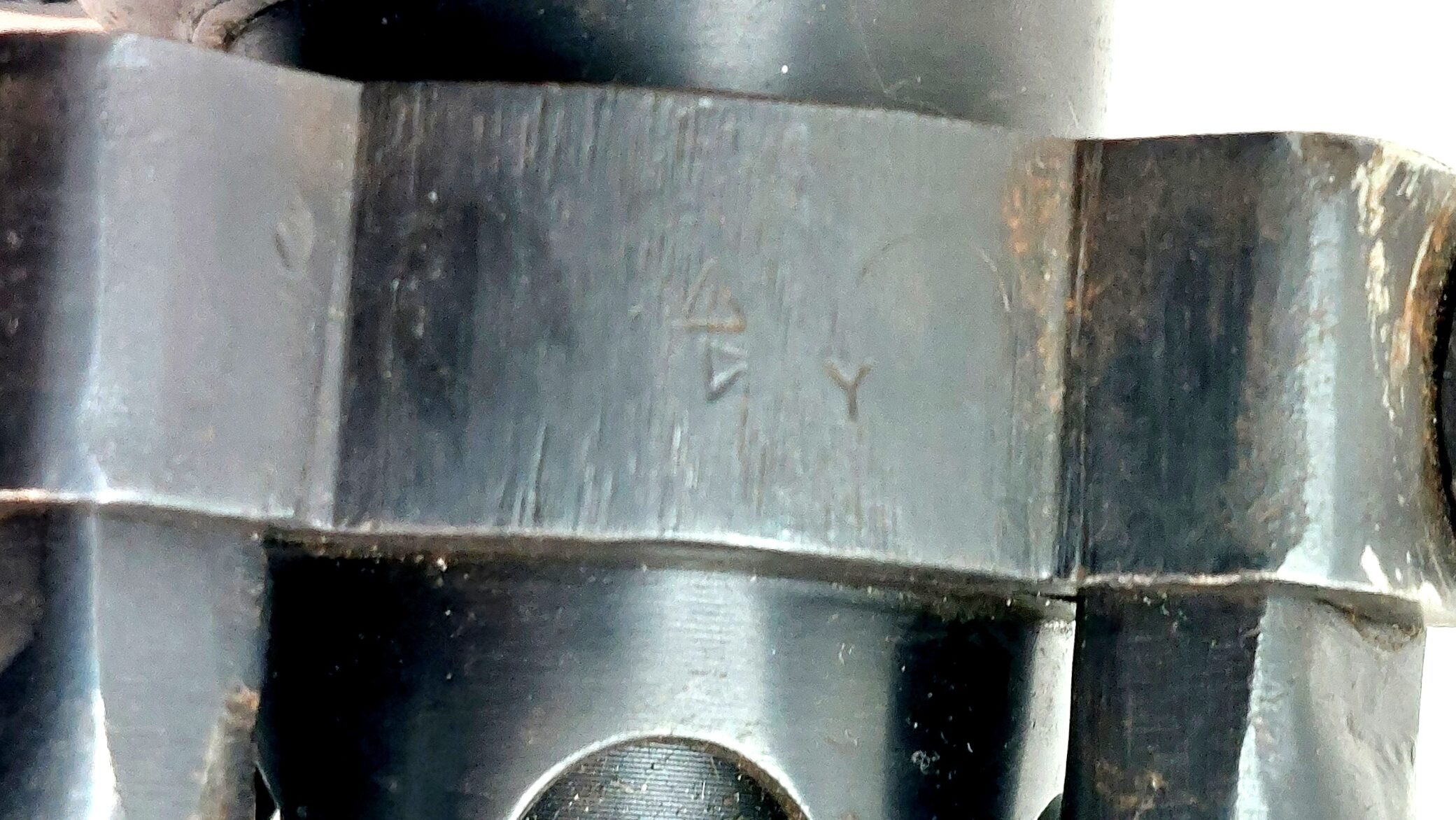
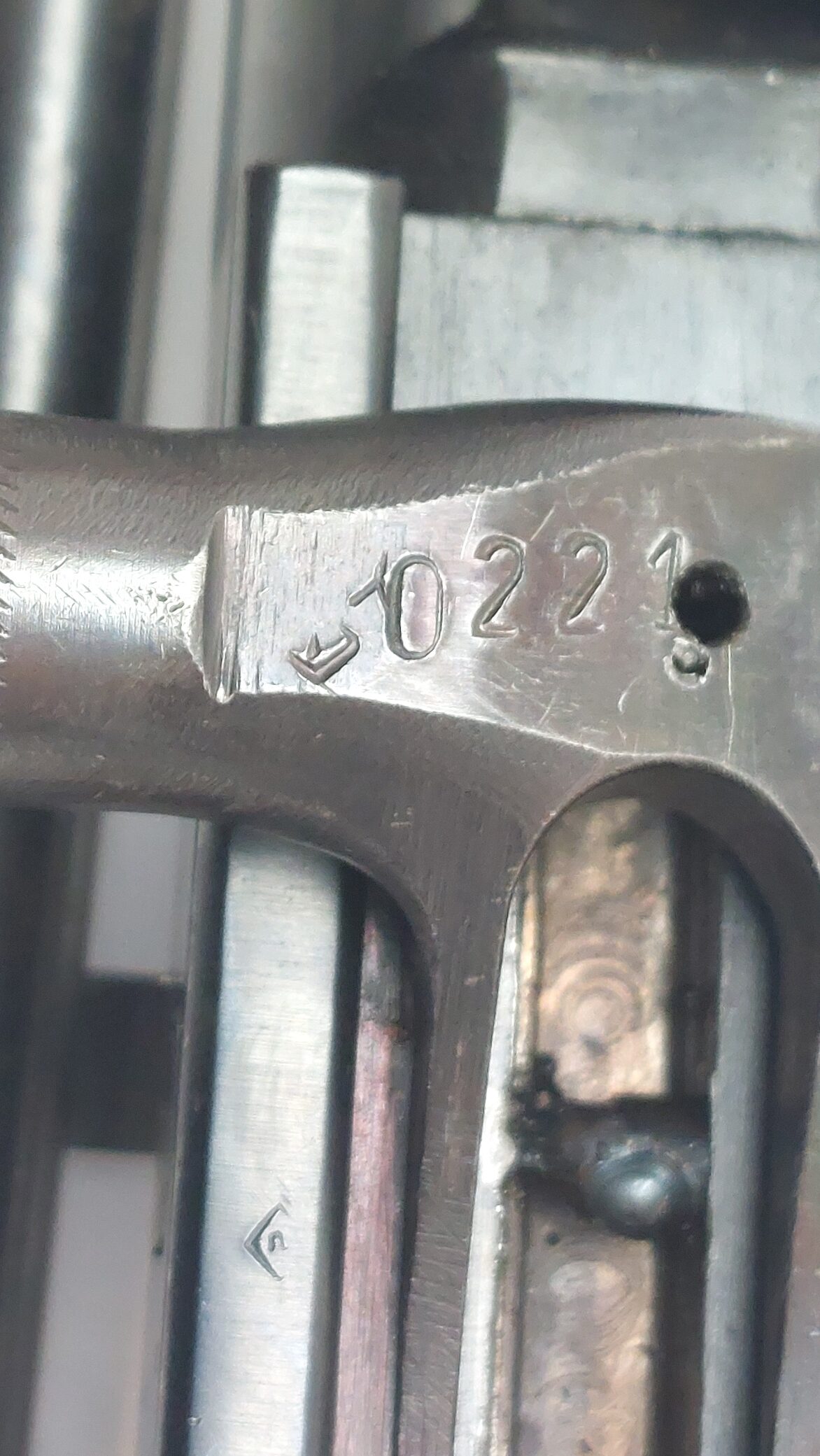
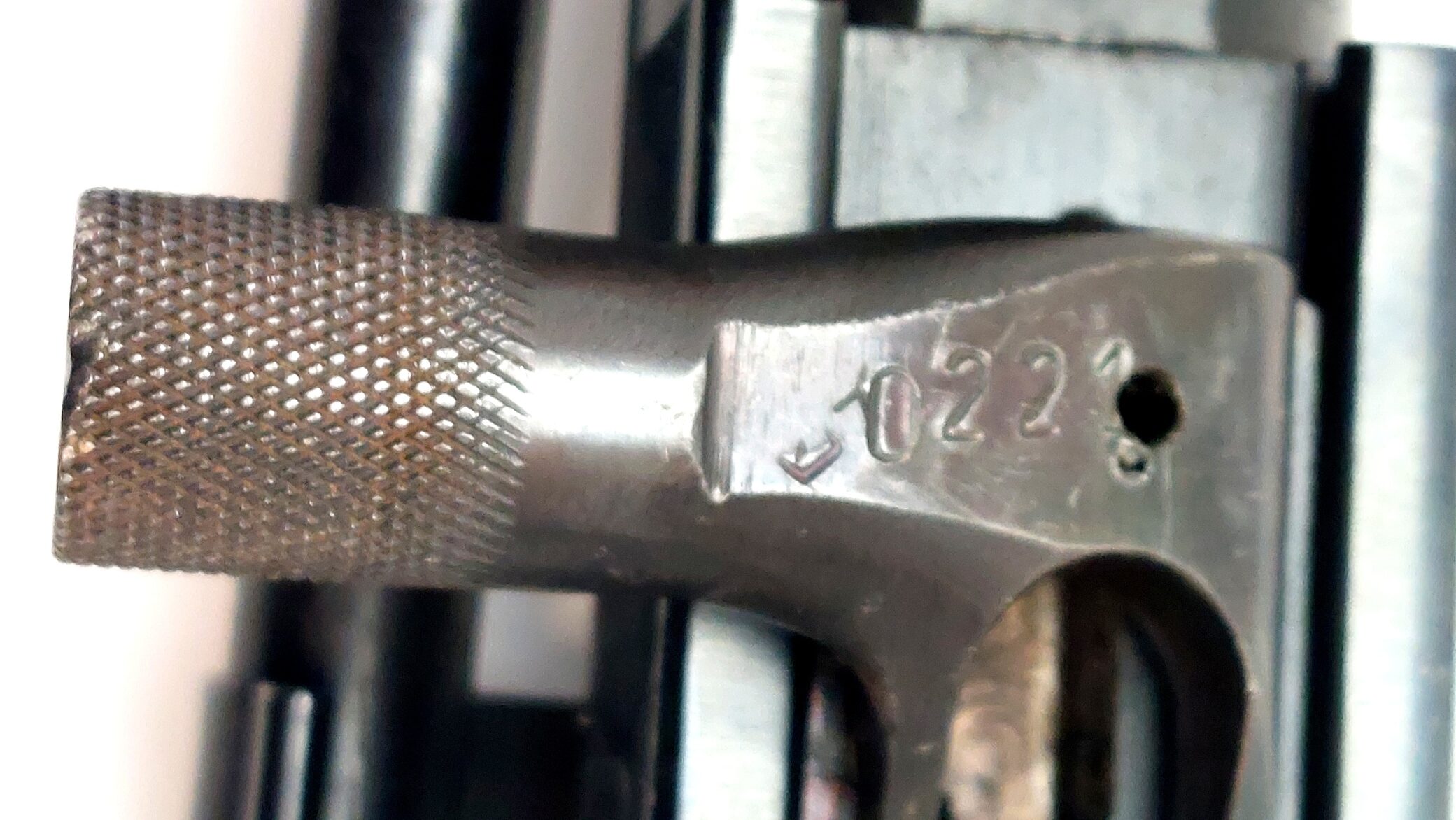
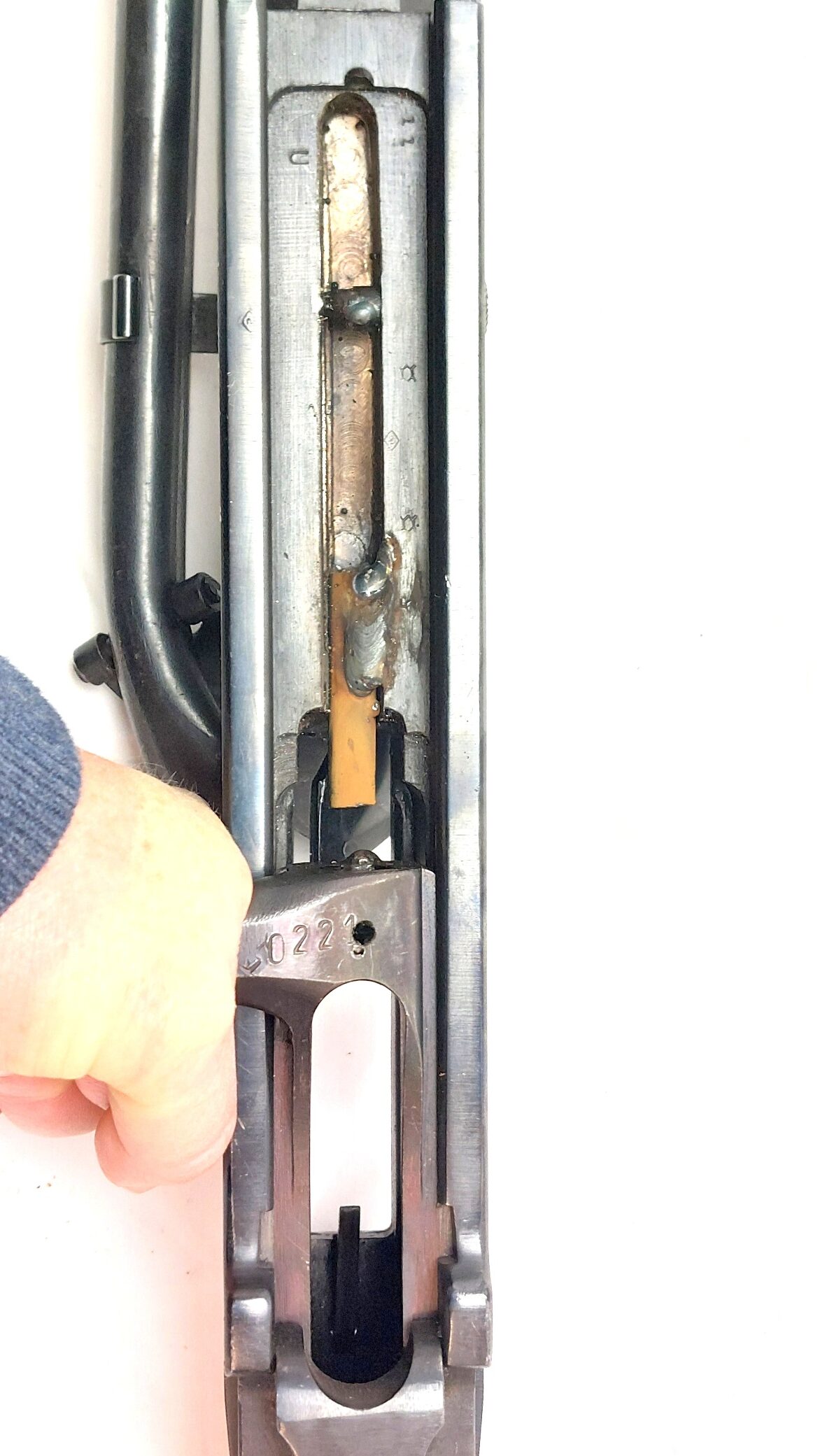
The receiver is clearly stamped with the Polish factory code “11” within a circle, identifying manufacture at the Łucznik Arms Factory, Radom, together with the date 1954 and serial number RK0221. The serial number is repeated across major components, including the bolt (marked 0221) and additional areas of the receiver. The matching nature of the principal parts is a strong indicator of originality and adds to the collectability of the piece.
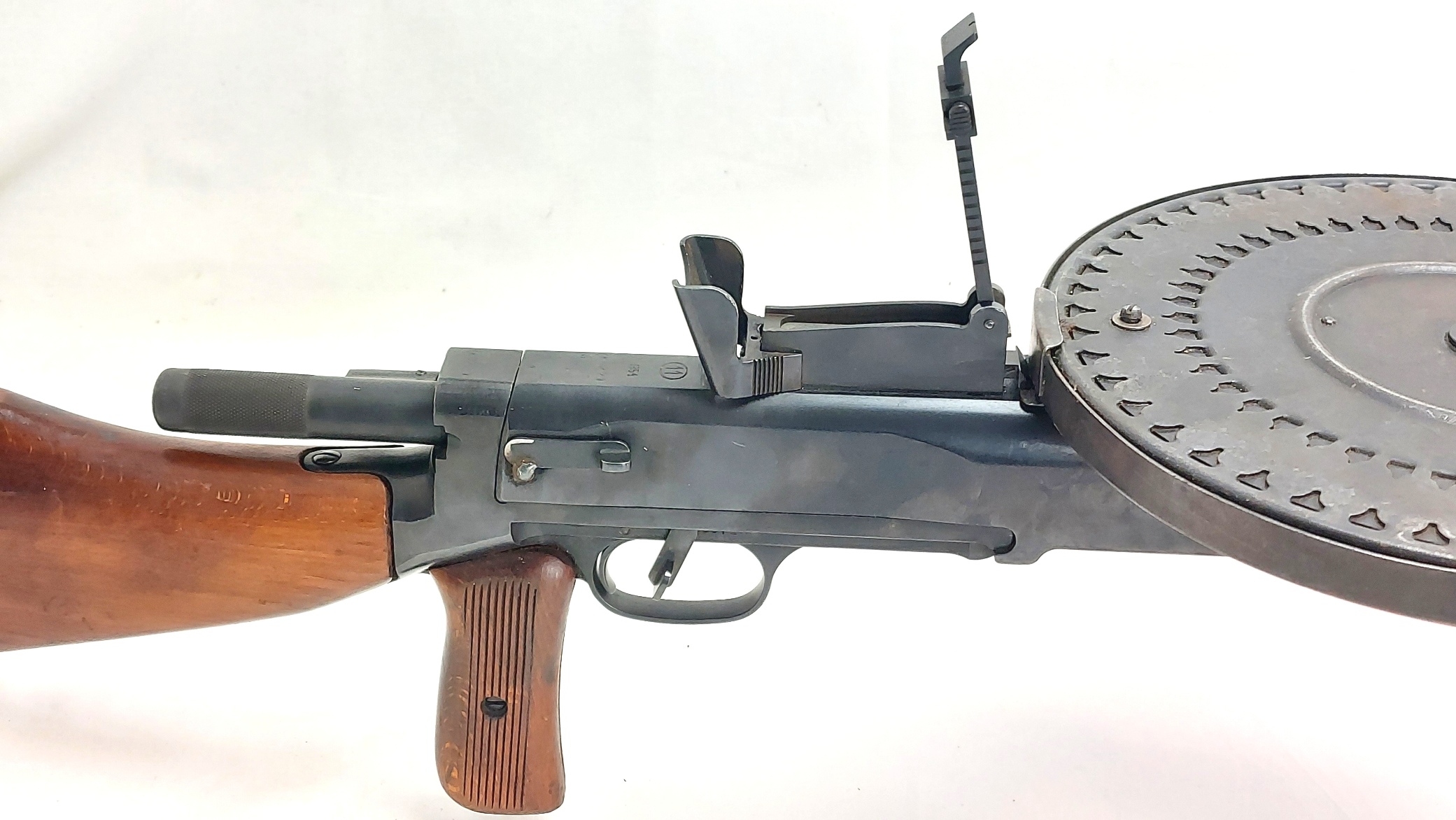
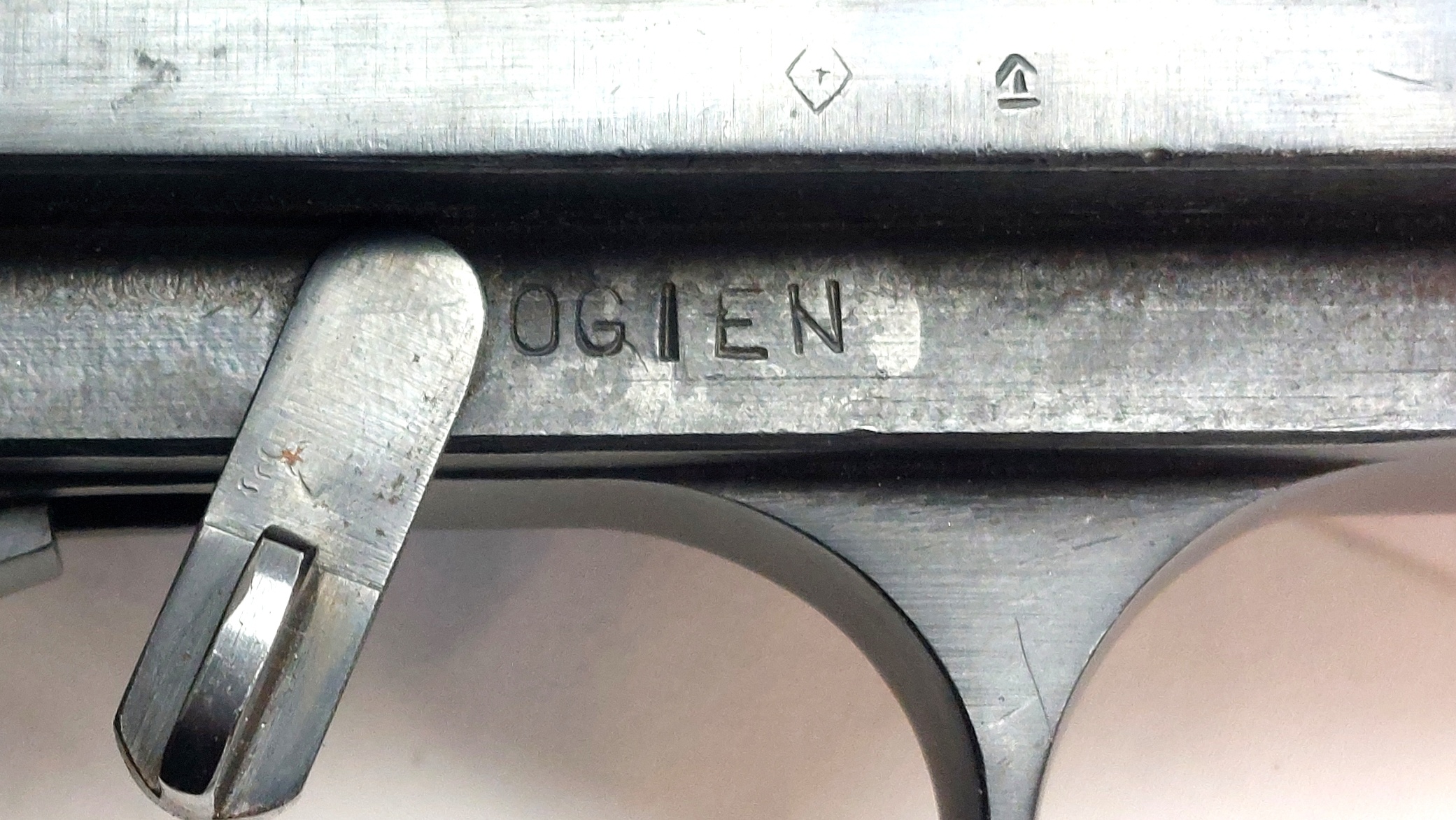
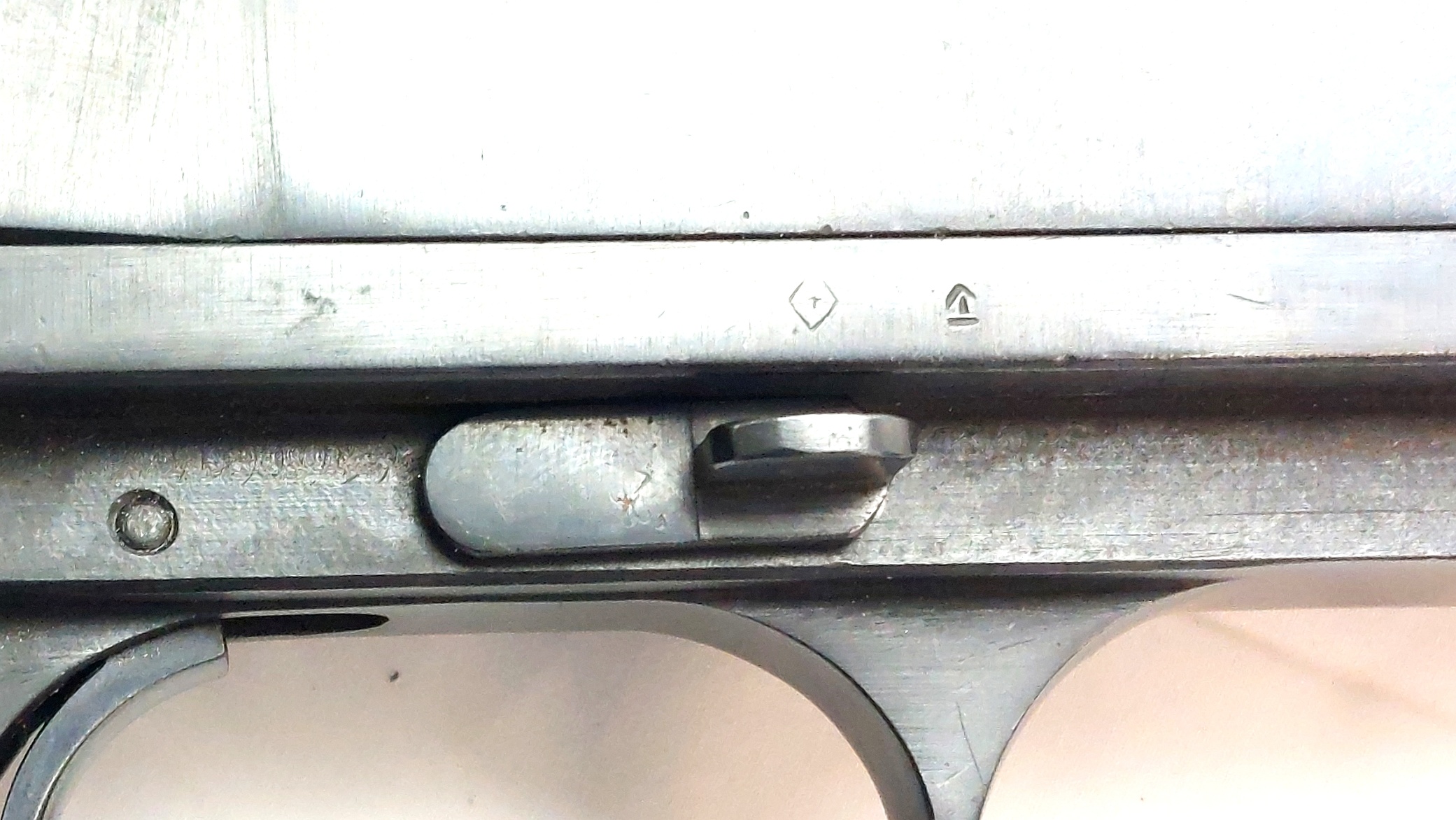
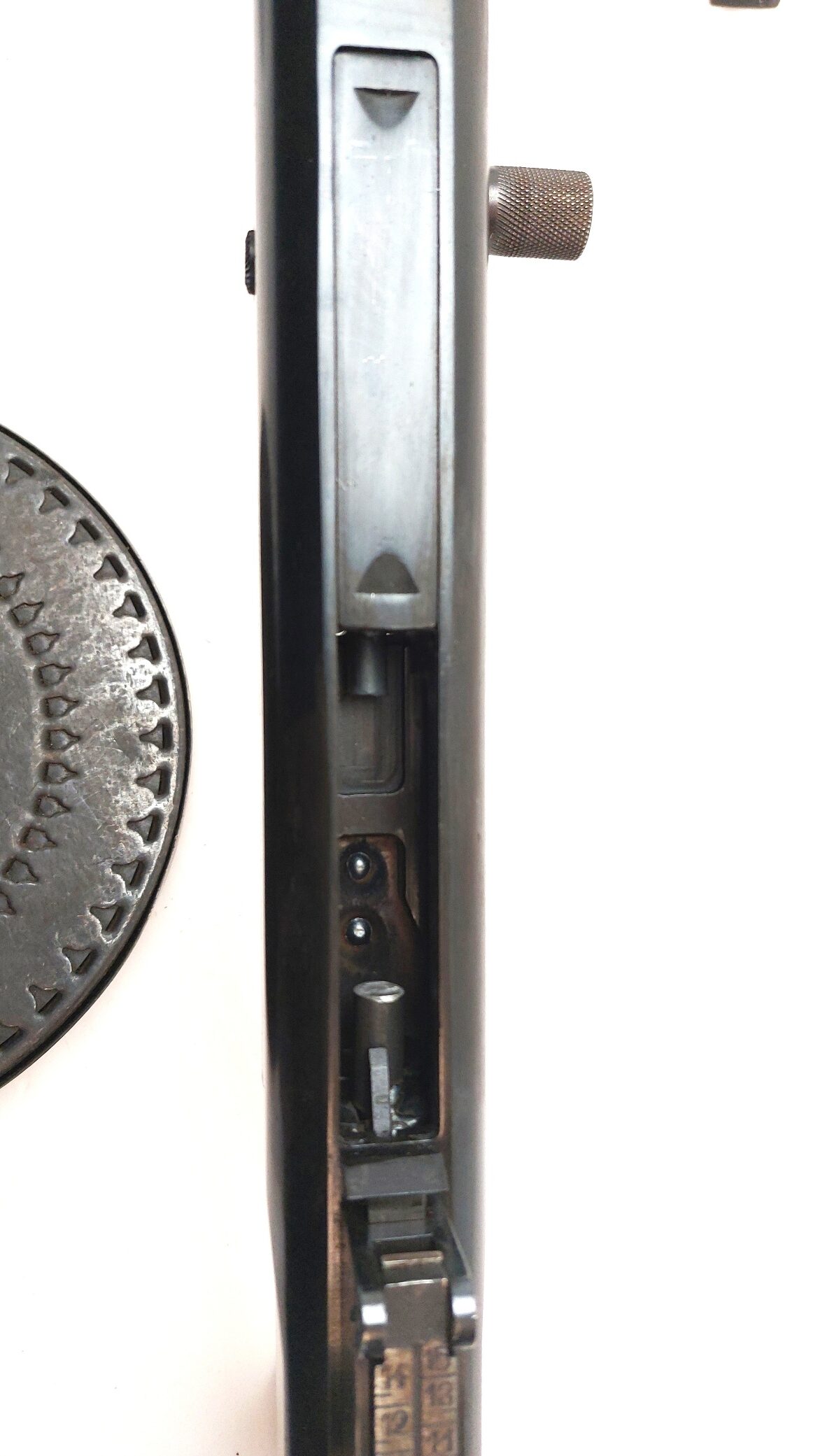
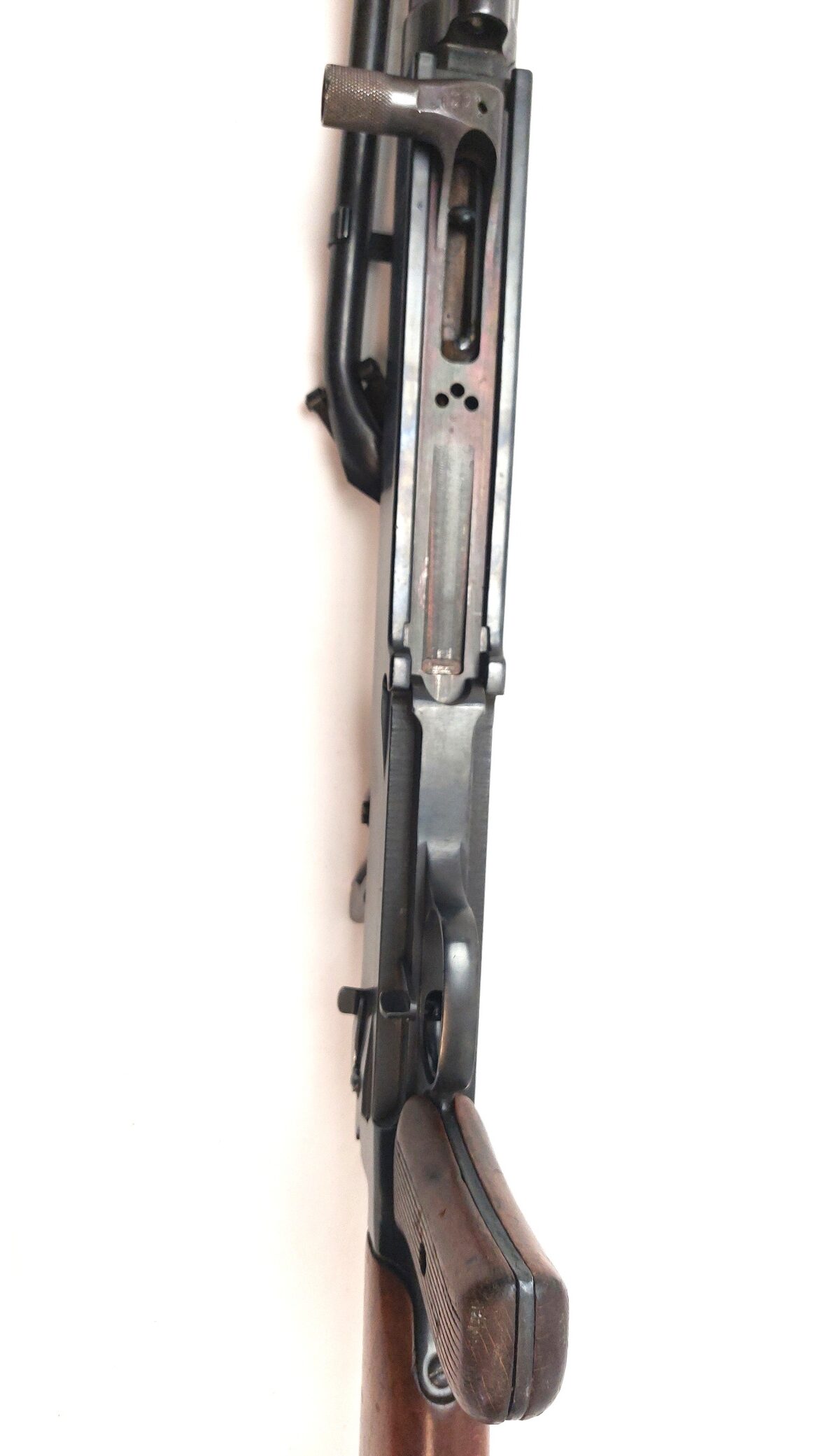
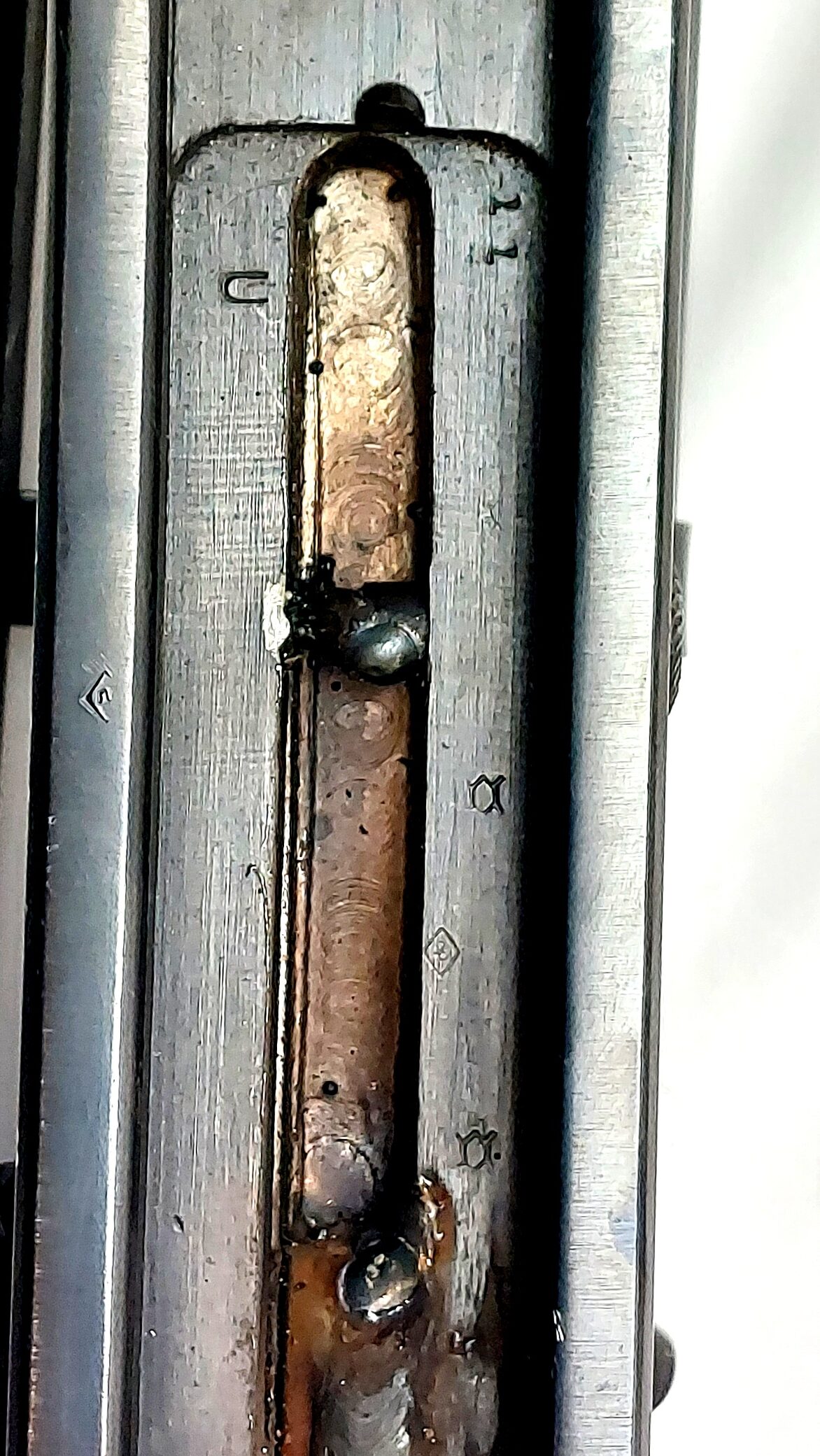
Further markings include a range of Polish military inspection and acceptance stamps, notably a diamond PW / 3 mark and other small proof marks throughout the metalwork. The safety selector is marked “OGIEŃ ” (Polish for “fire”), confirming post-war Polish service configuration and distinguishing it from earlier Soviet production examples.
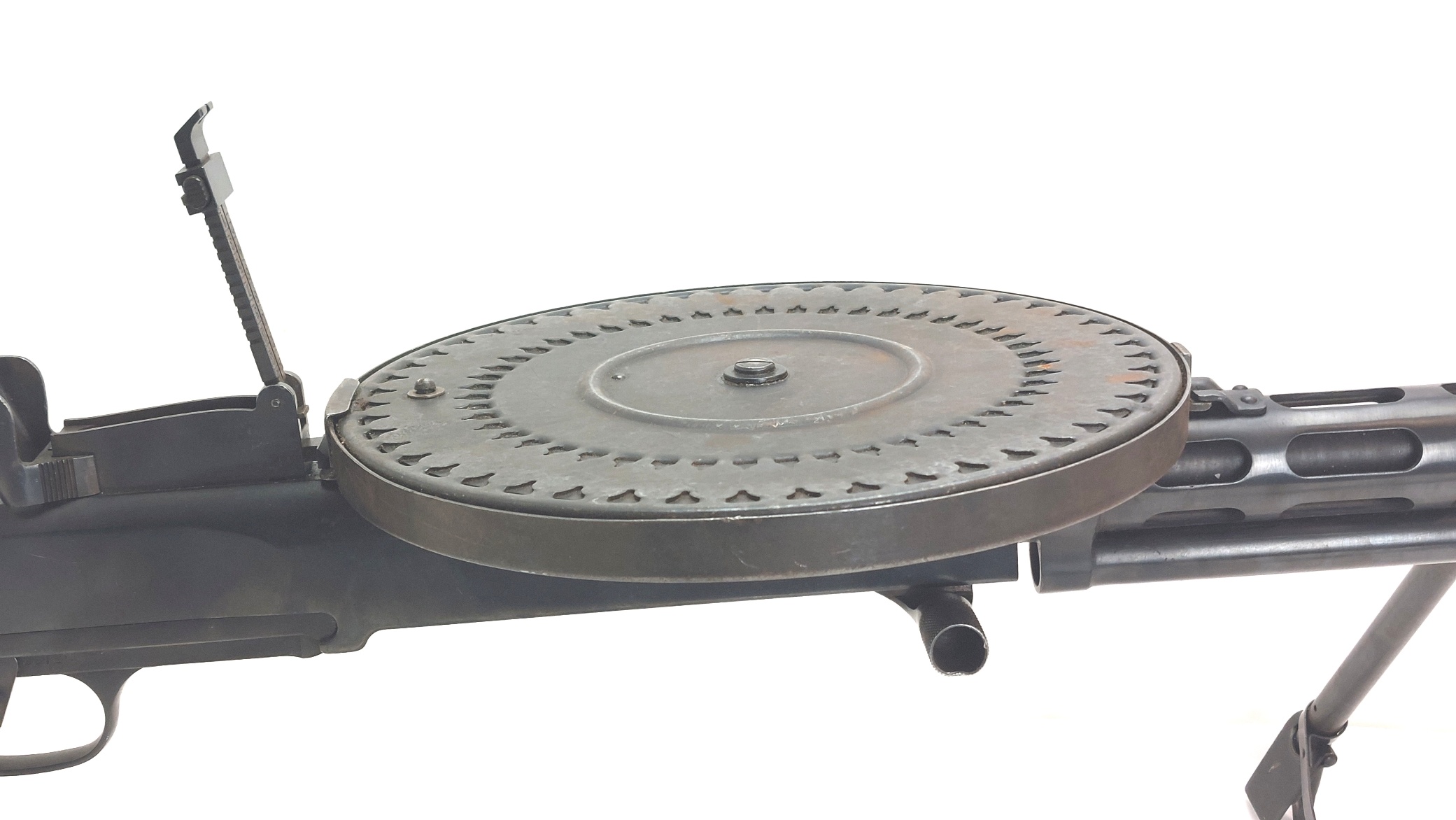
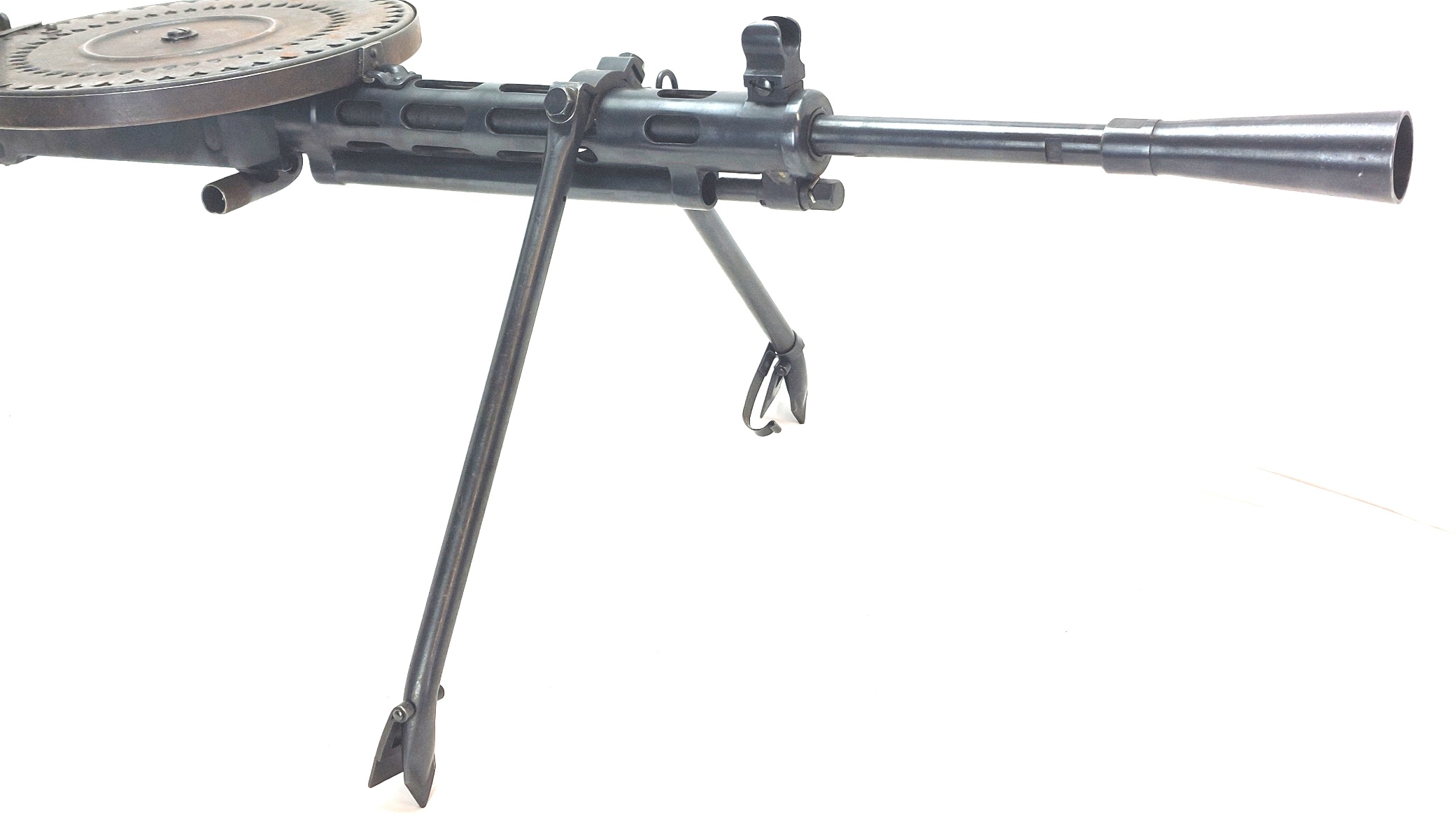
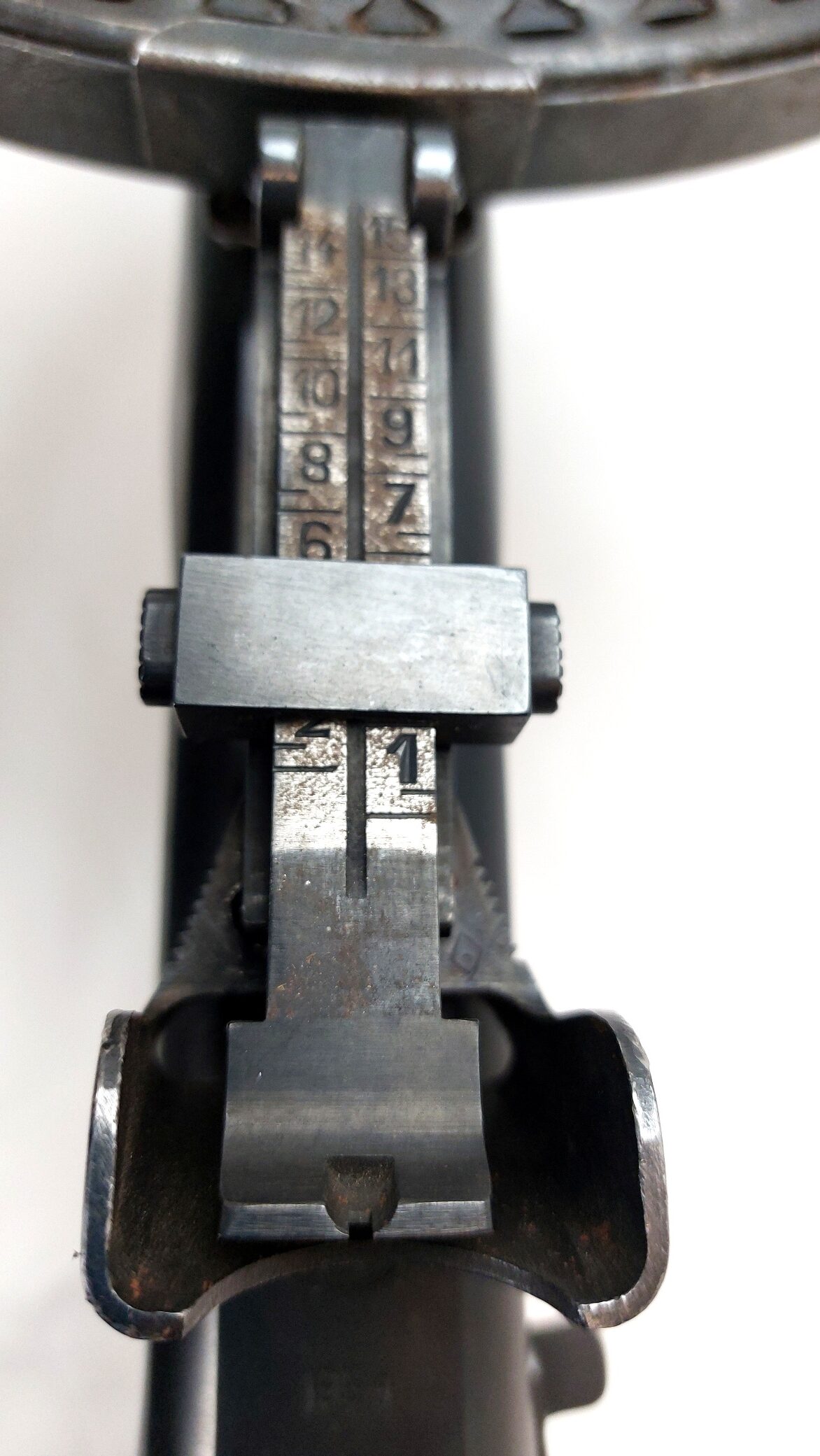
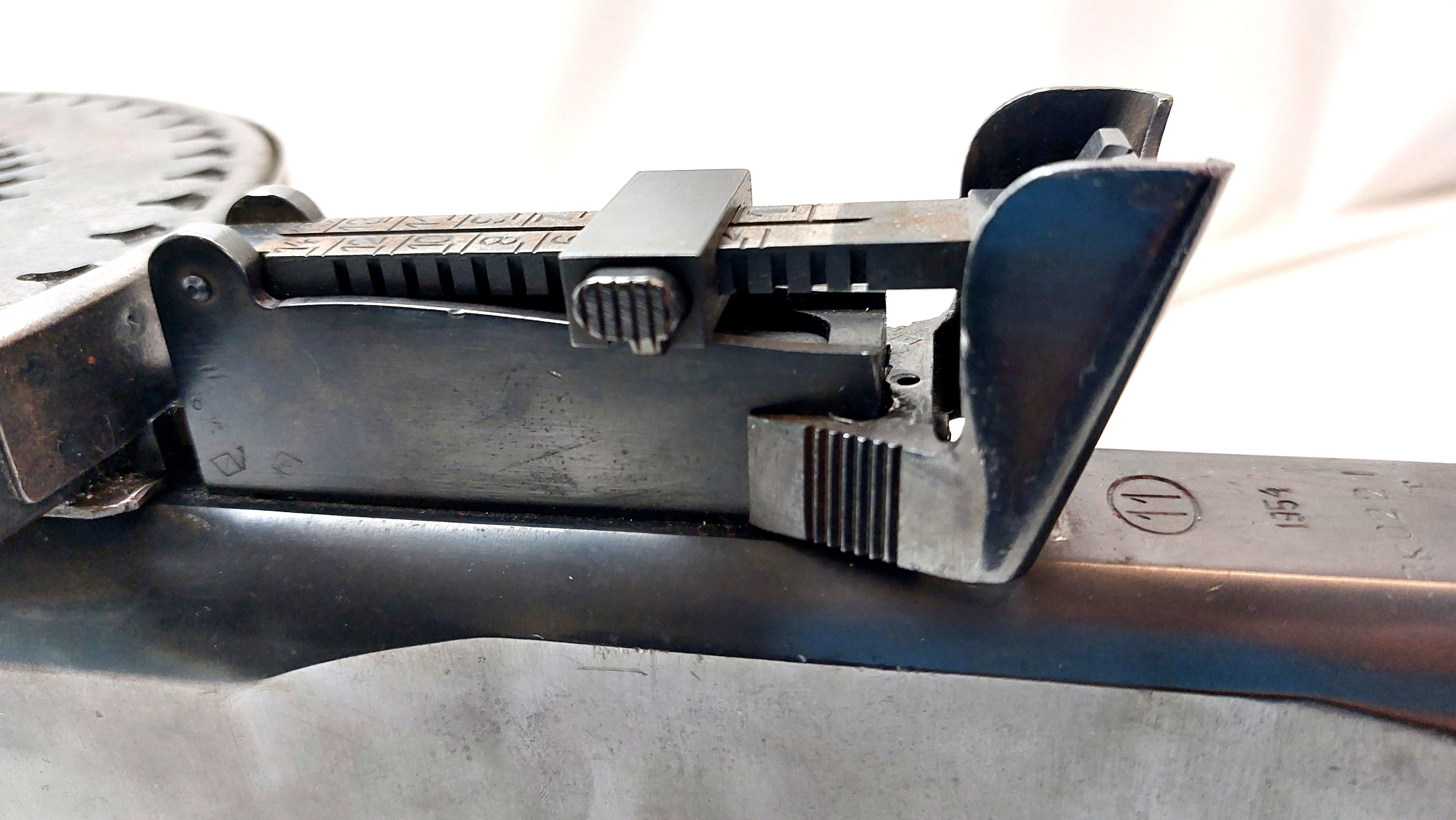
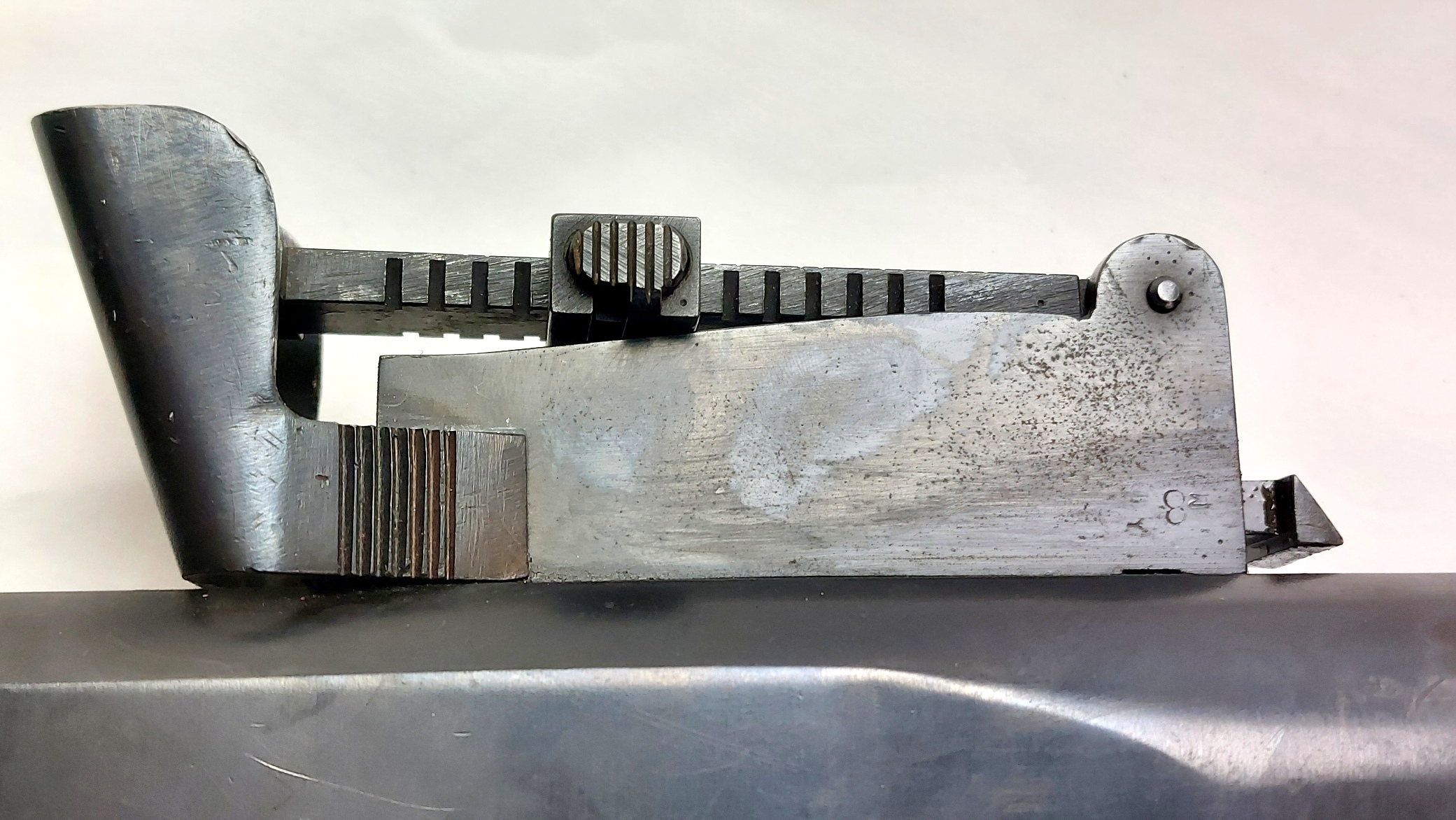
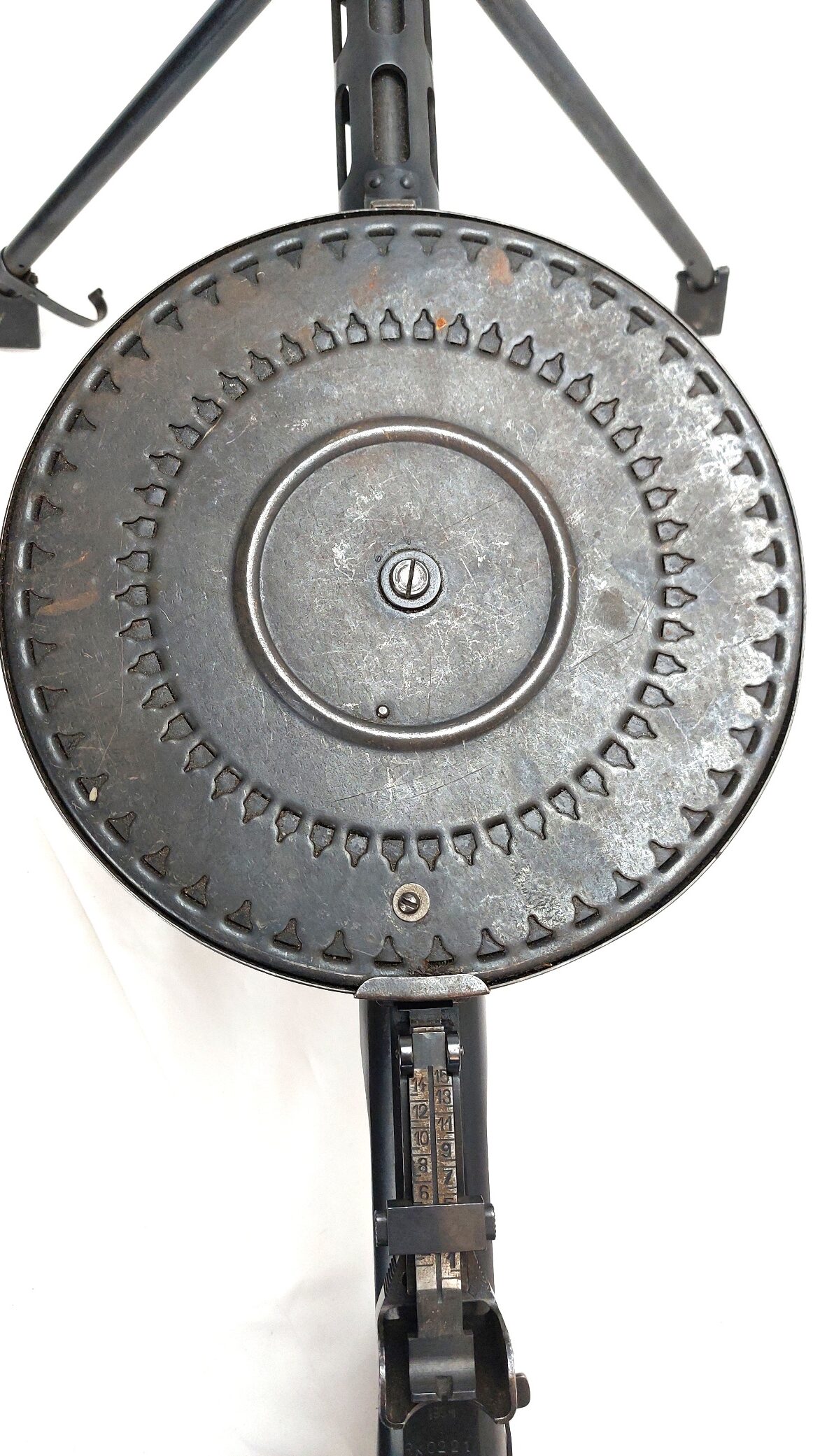
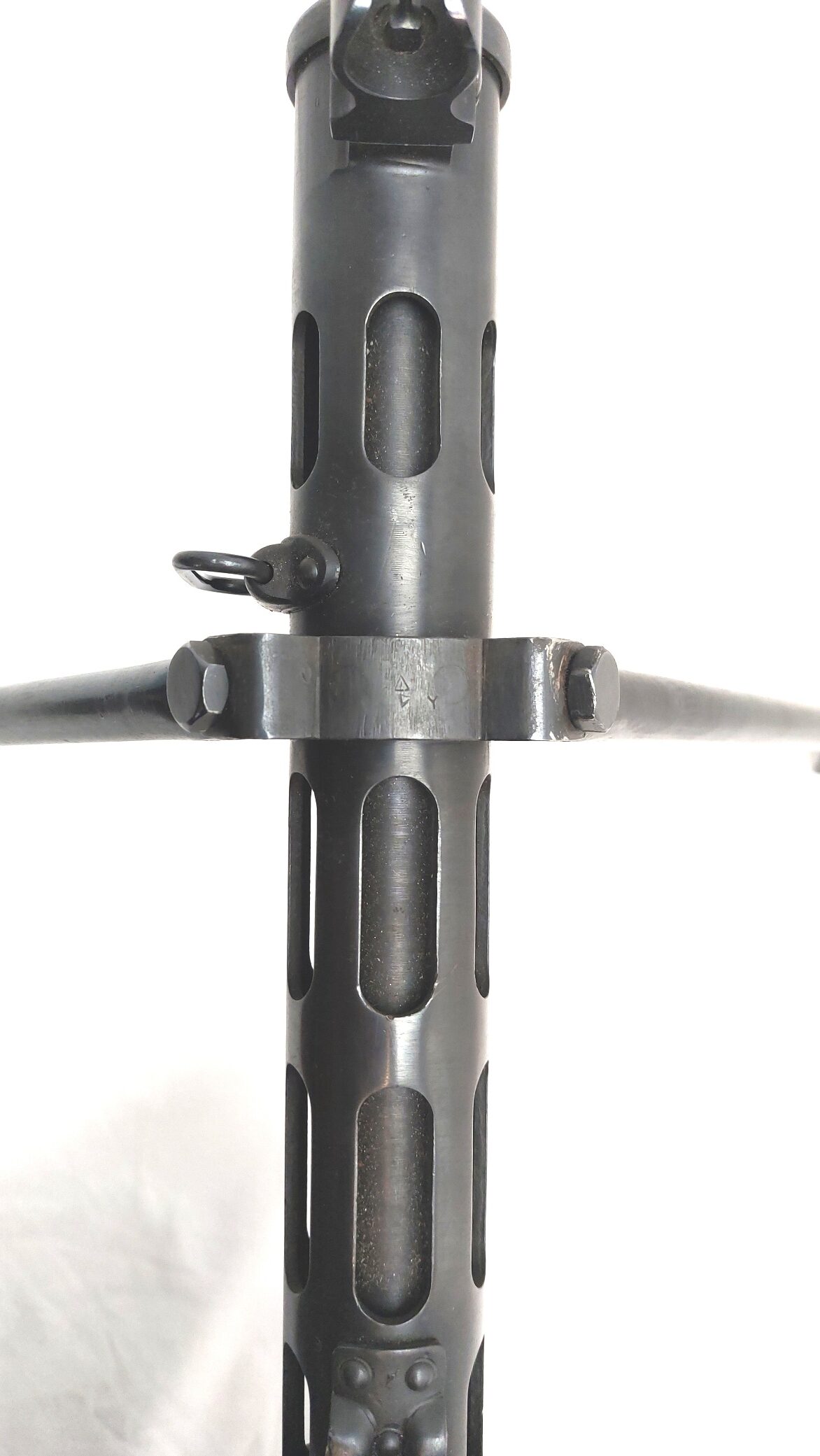
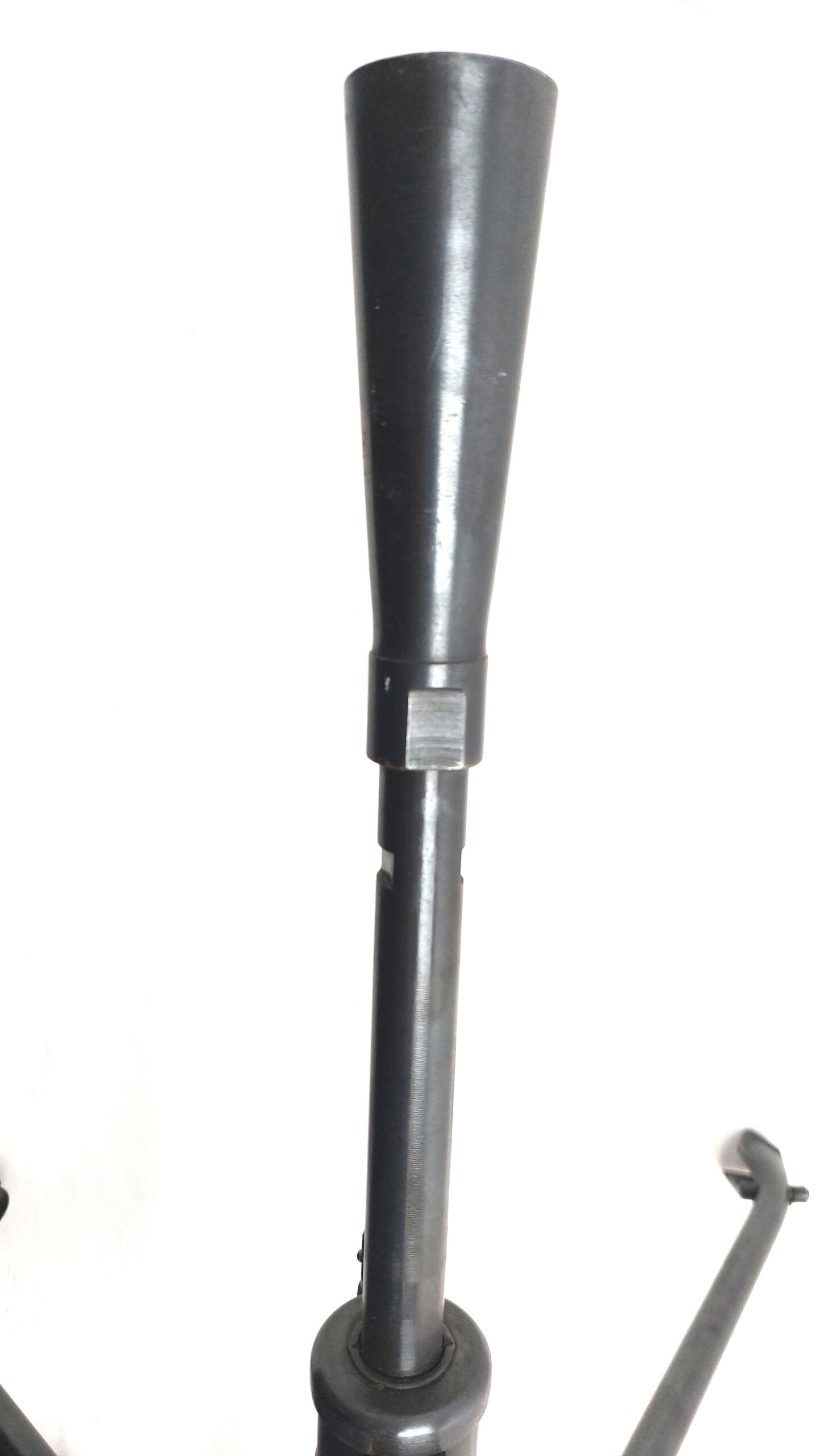
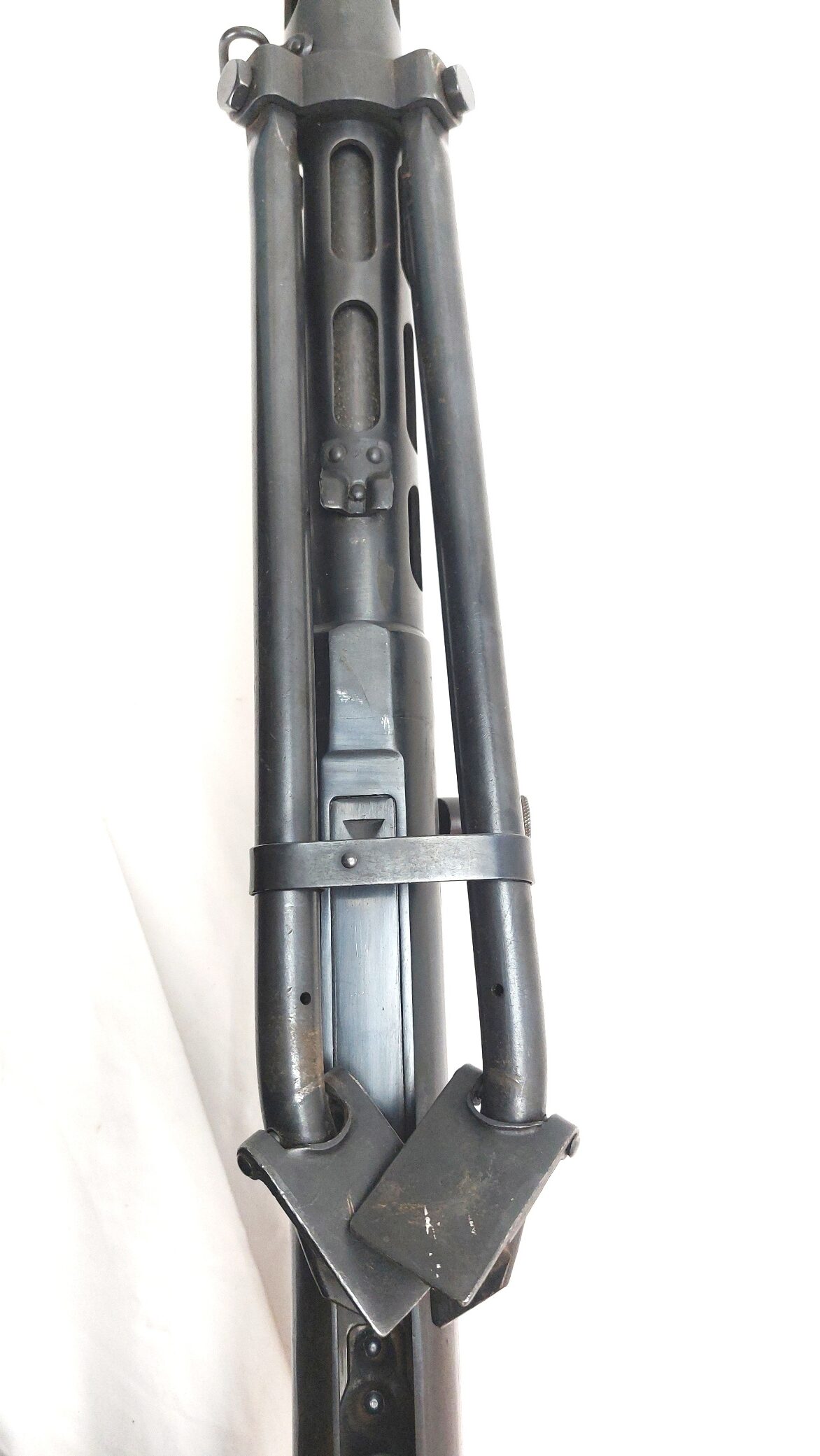
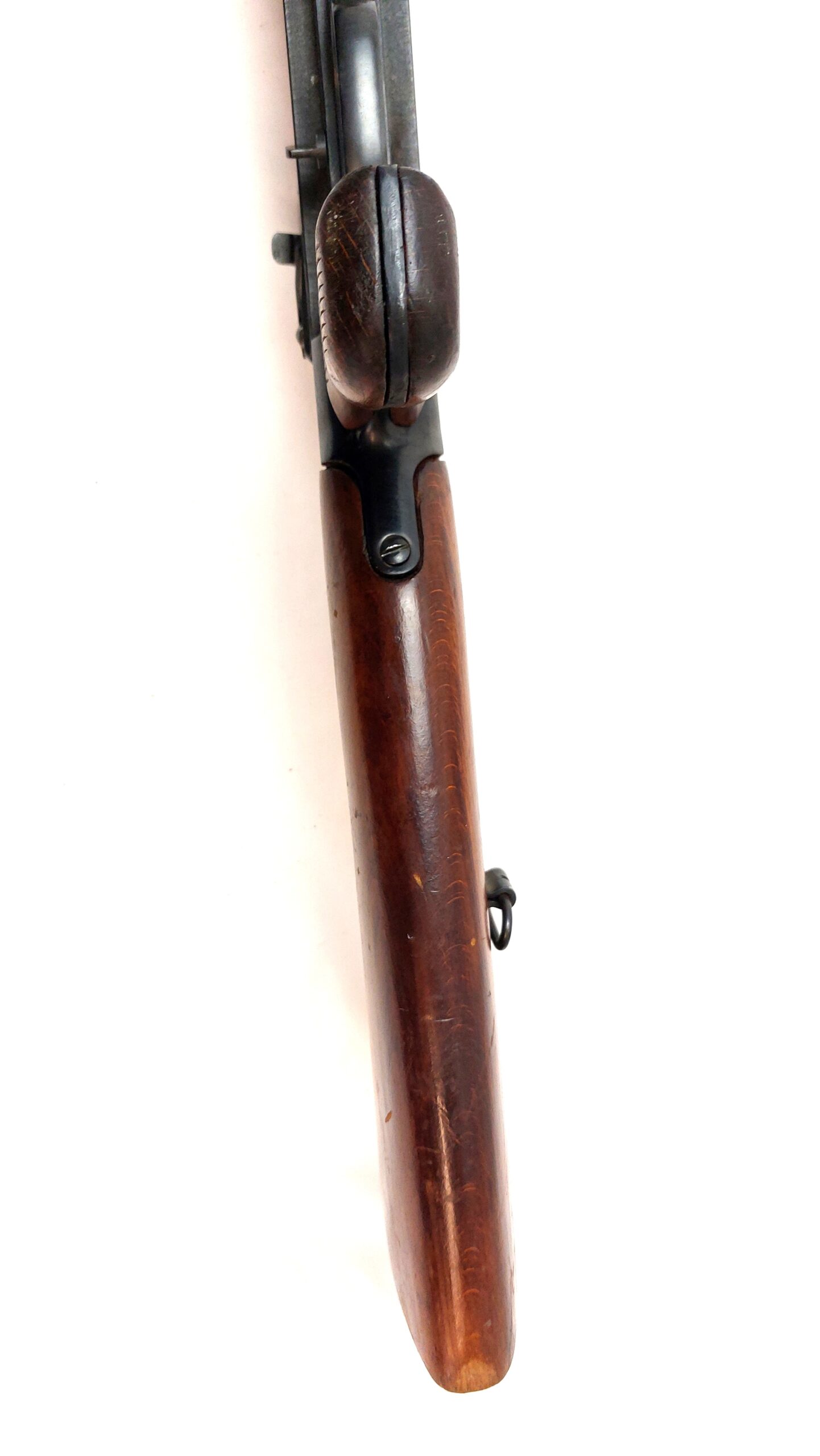
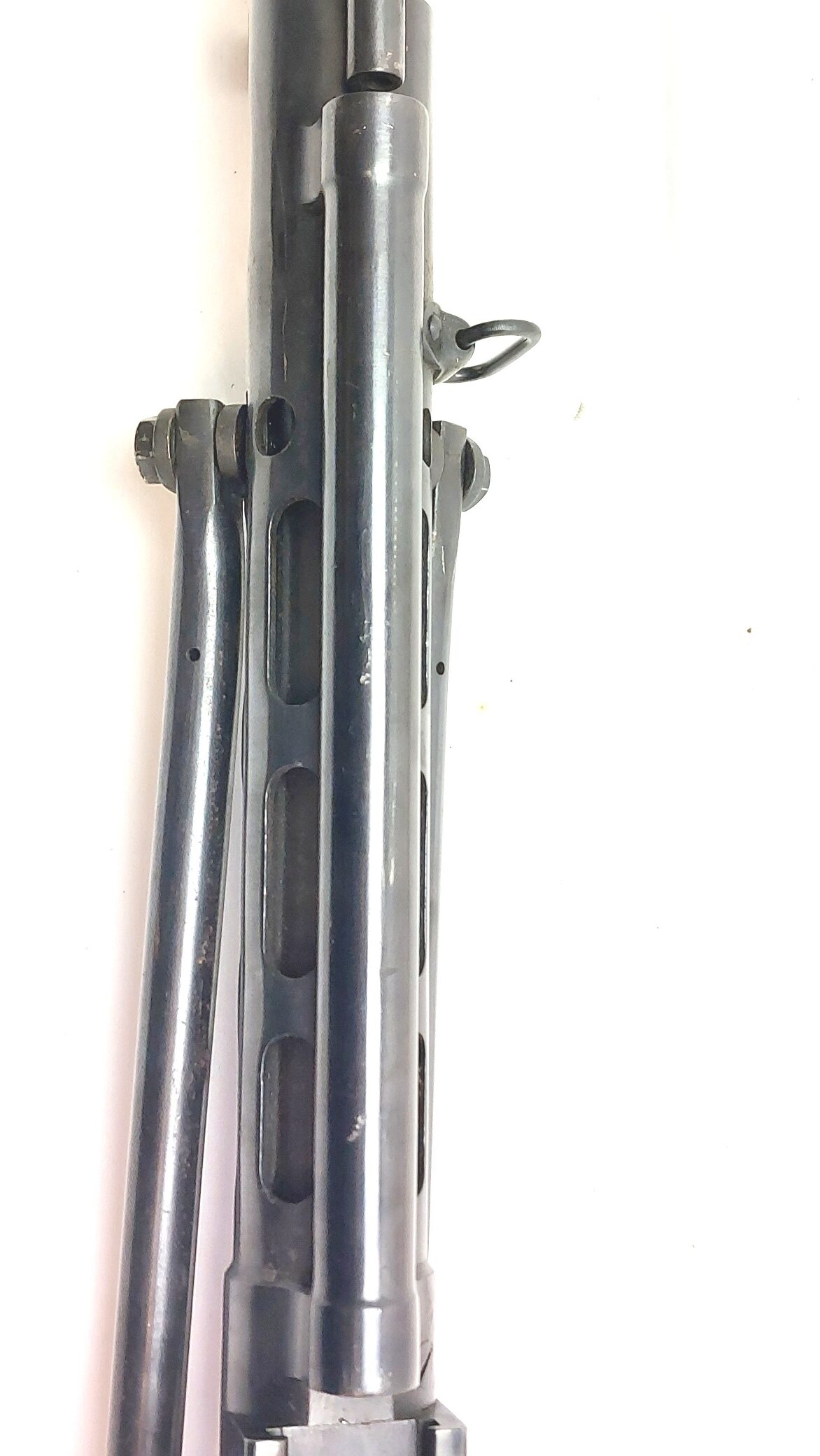
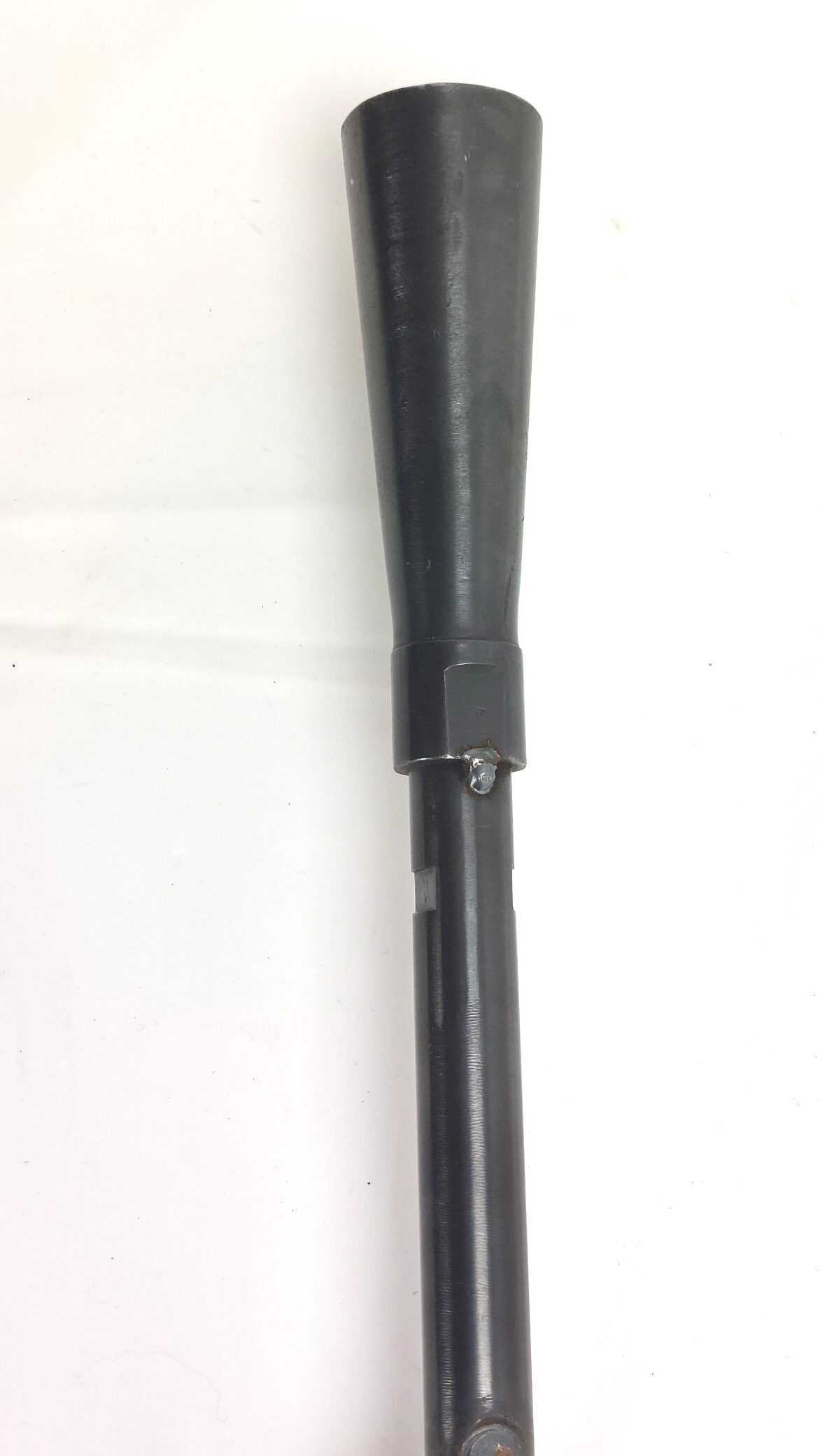
This example is of the improved DPM pattern, identifiable by its pistol grip and the relocated recoil spring housed within the rear protruding tube, a significant improvement over the earlier DP-28 design. The weapon retains its classic configuration, including the perforated barrel jacket, conical flash hider, adjustable rear sight, folding bipod, and top-mounted pan magazine.
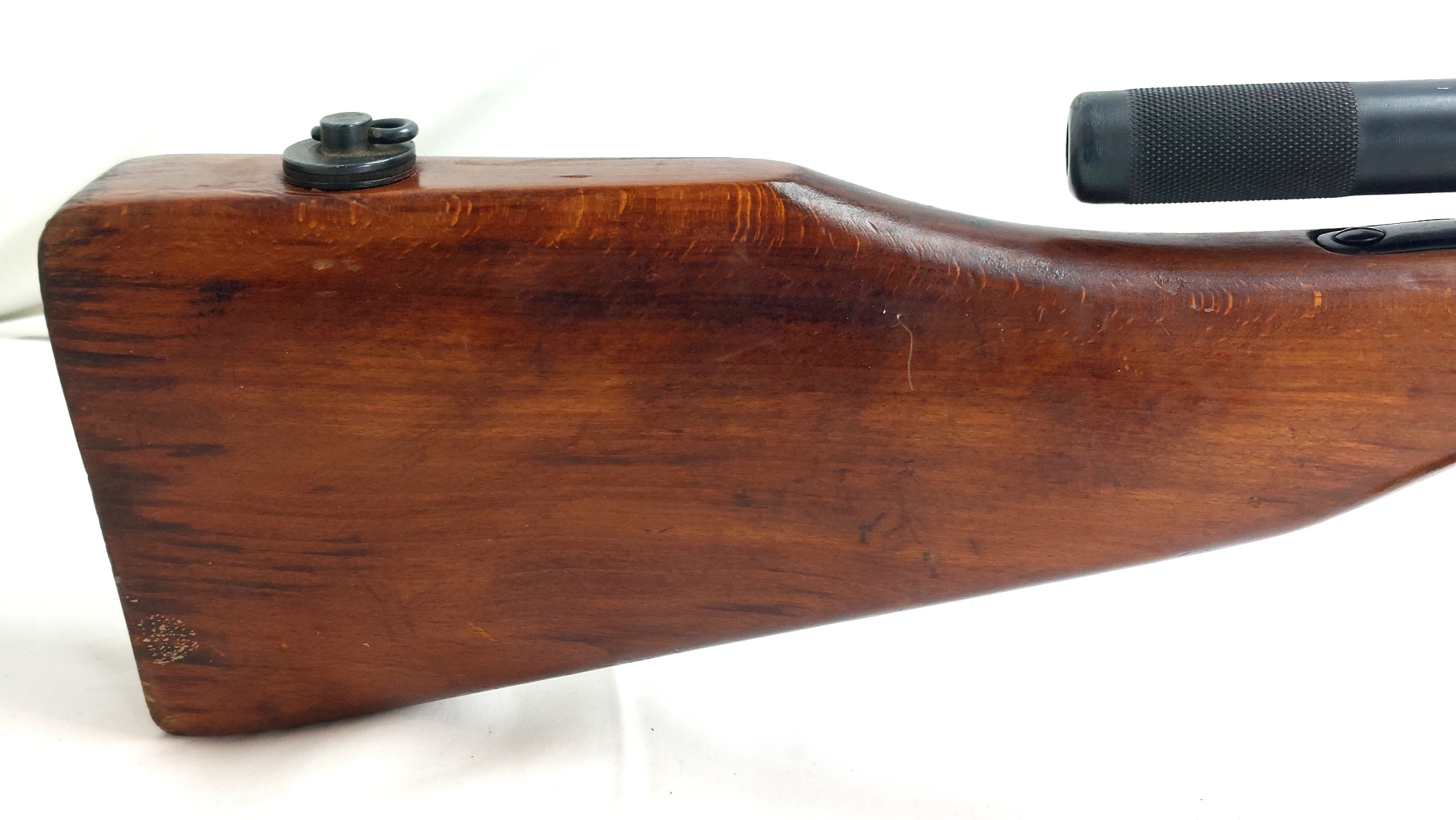
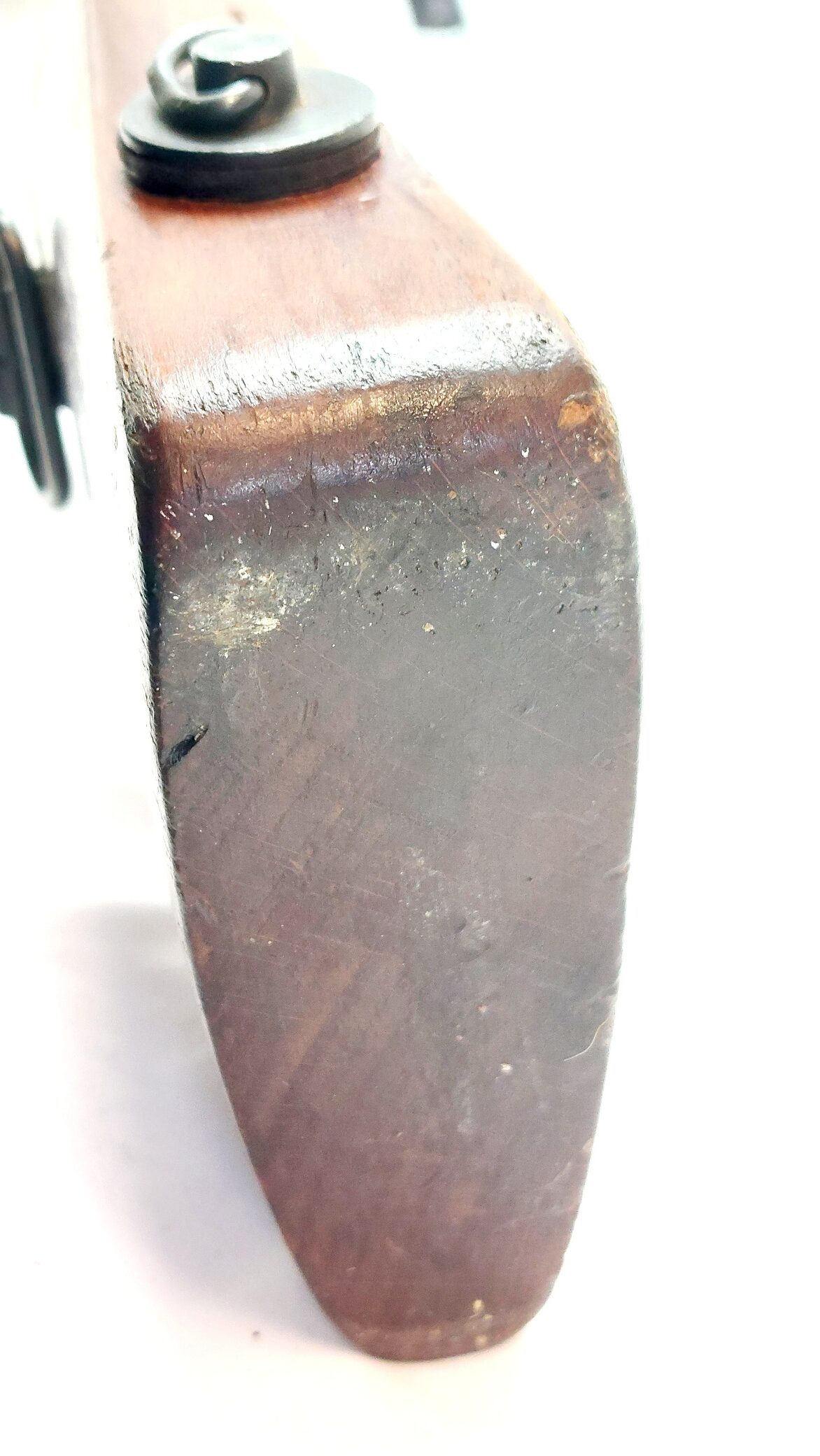
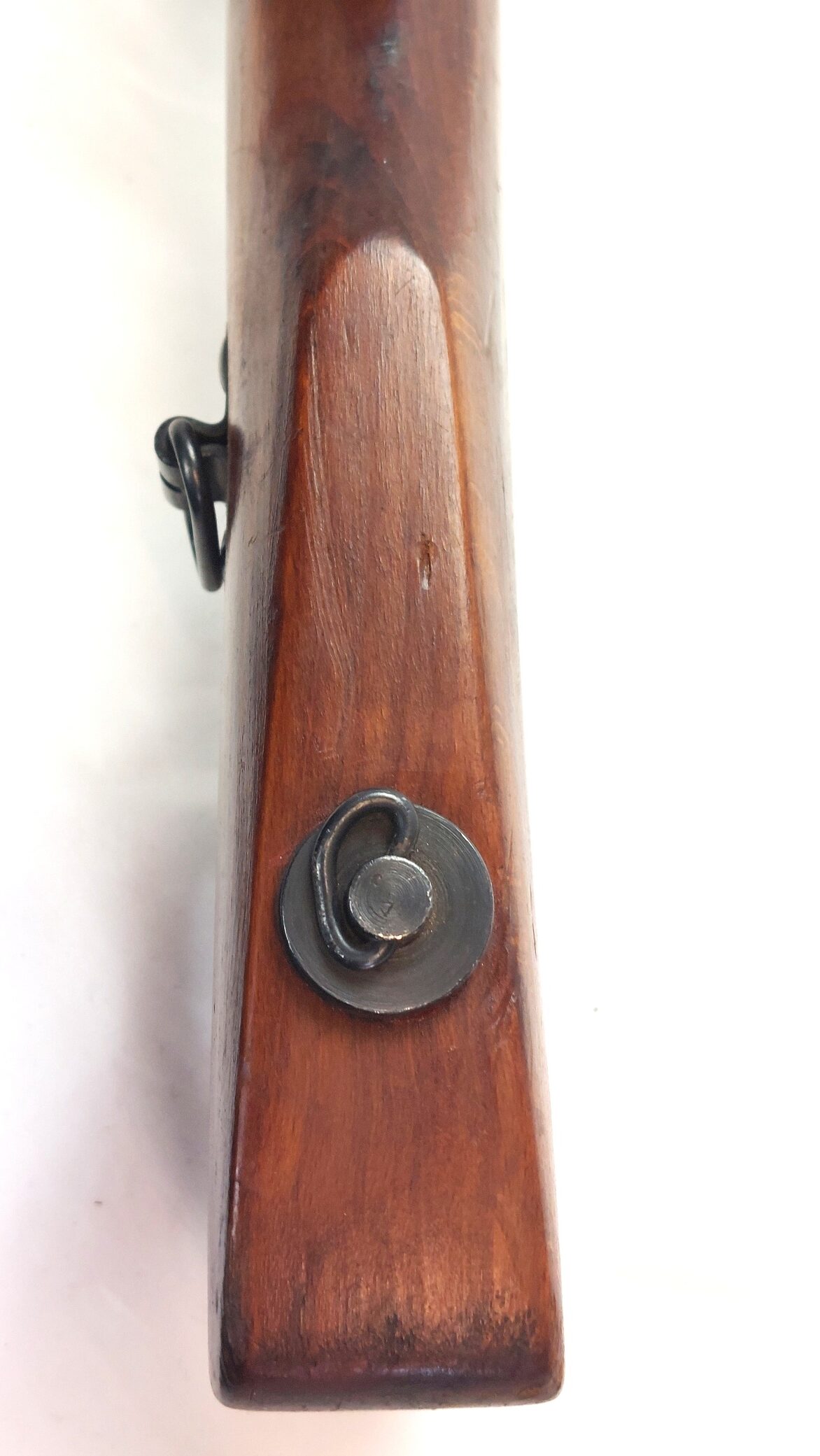
The pan magazine is present and in matching period condition, showing typical service wear. The bipod is of the correct pattern and securely mounted. The wooden buttstock and pistol grip display honest handling wear, with marks and minor impressions consistent with military use, while retaining a good overall appearance.
Approx. Measurements – Barrel length: 70 cm. Overall length: 127 cm.
History Note:
Poland’s strategic position in post-war Eastern Europe led to its early alignment with the Soviet Union and integration into the emerging Warsaw Pact, placing it among the key Eastern Bloc producers of Soviet-designed small arms. In the early 1950s, prior to the widespread adoption of Kalashnikov-pattern rifles, Poland undertook licensed domestic production of the DPM (Degtyaryov Pekhotny Modernizirovanny) light machine gun at Fabryka Broni “Łucznik” in Radom, under Soviet technical guidance.
The DPM was the post-war modernised development of the earlier Soviet DP-28, redesigned to improve reliability and handling through the relocation of the recoil spring into a rear-mounted housing tube and the addition of a pistol grip. Polish production, concentrated between approximately 1952 and 1955, was intended to equip the Polish People’s Army during a key transitional phase, bridging the gap between wartime Soviet small arms and the newer generation of infantry weapons such as the RPD and later Kalashnikov-pattern rifles.
While Soviet production of the Degtyaryov system was extensive, Polish-manufactured examples are particularly well regarded by collectors for their high standard of machining and finish, reflecting the quality associated with Radom output during this period. These arms represent an important and relatively short-lived phase in Eastern Bloc small arms development, combining proven wartime design with early Cold War manufacturing refinement.
The Radom factory itself carries significant historical importance. Seized during the Second World War and operated under German occupation for arms production, it was rebuilt and modernised after 1945, becoming one of the principal arsenals of the Eastern Bloc. By the early Cold War period, Fabryka Broni “Łucznik” had firmly established itself as a cornerstone of Polish military industry, producing a wide range of small arms for both domestic forces and Warsaw Pact supply.
*Condition*
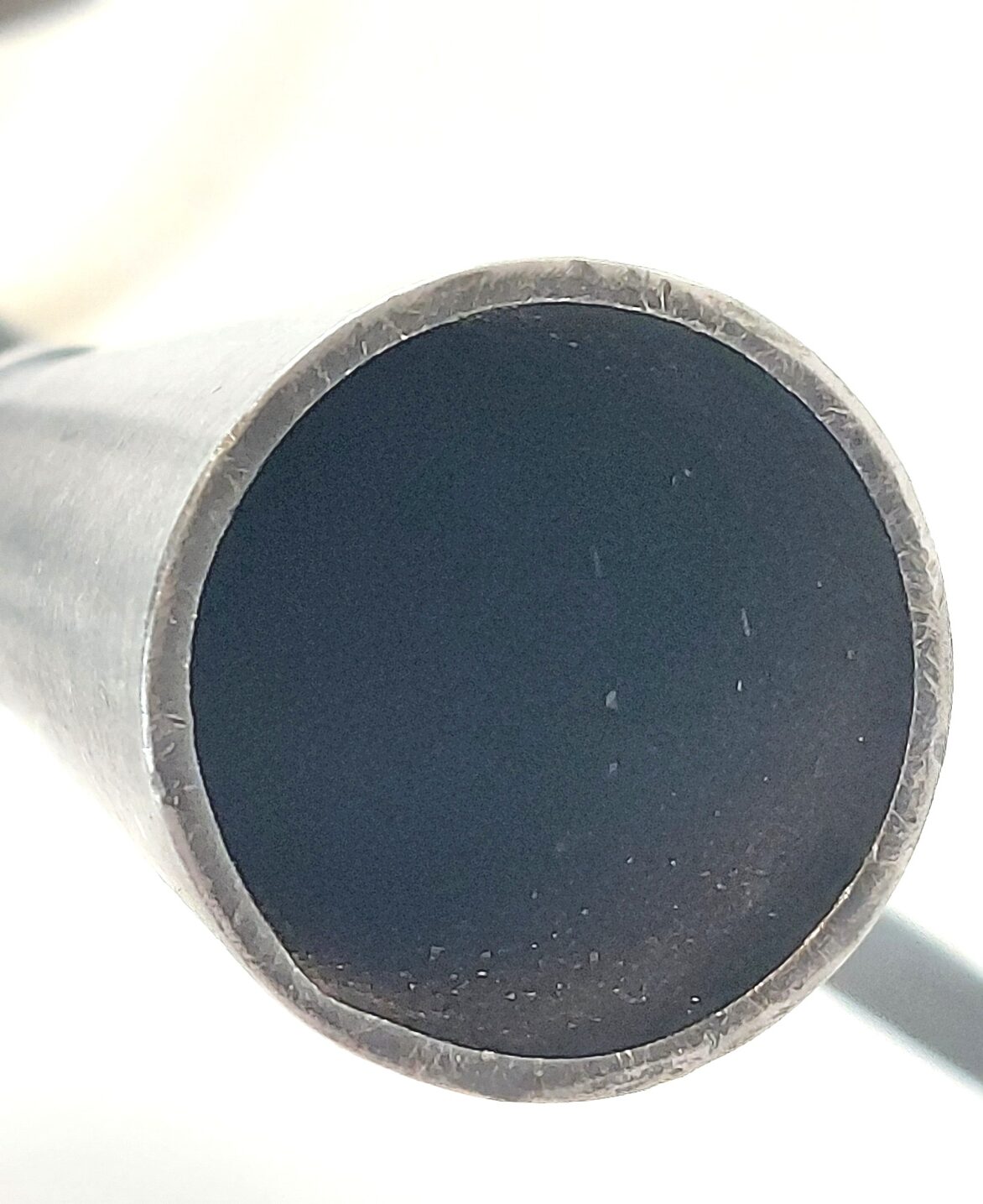
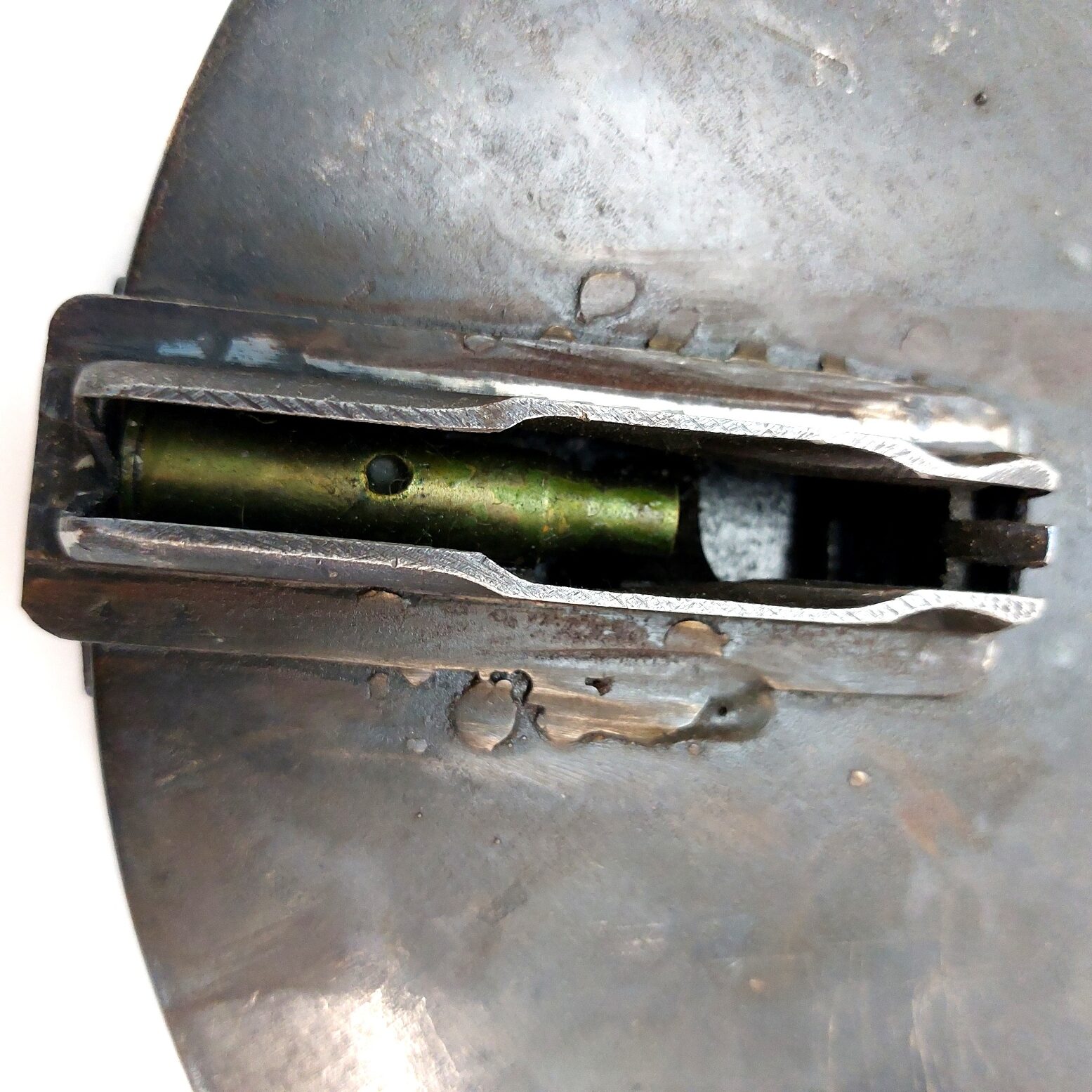
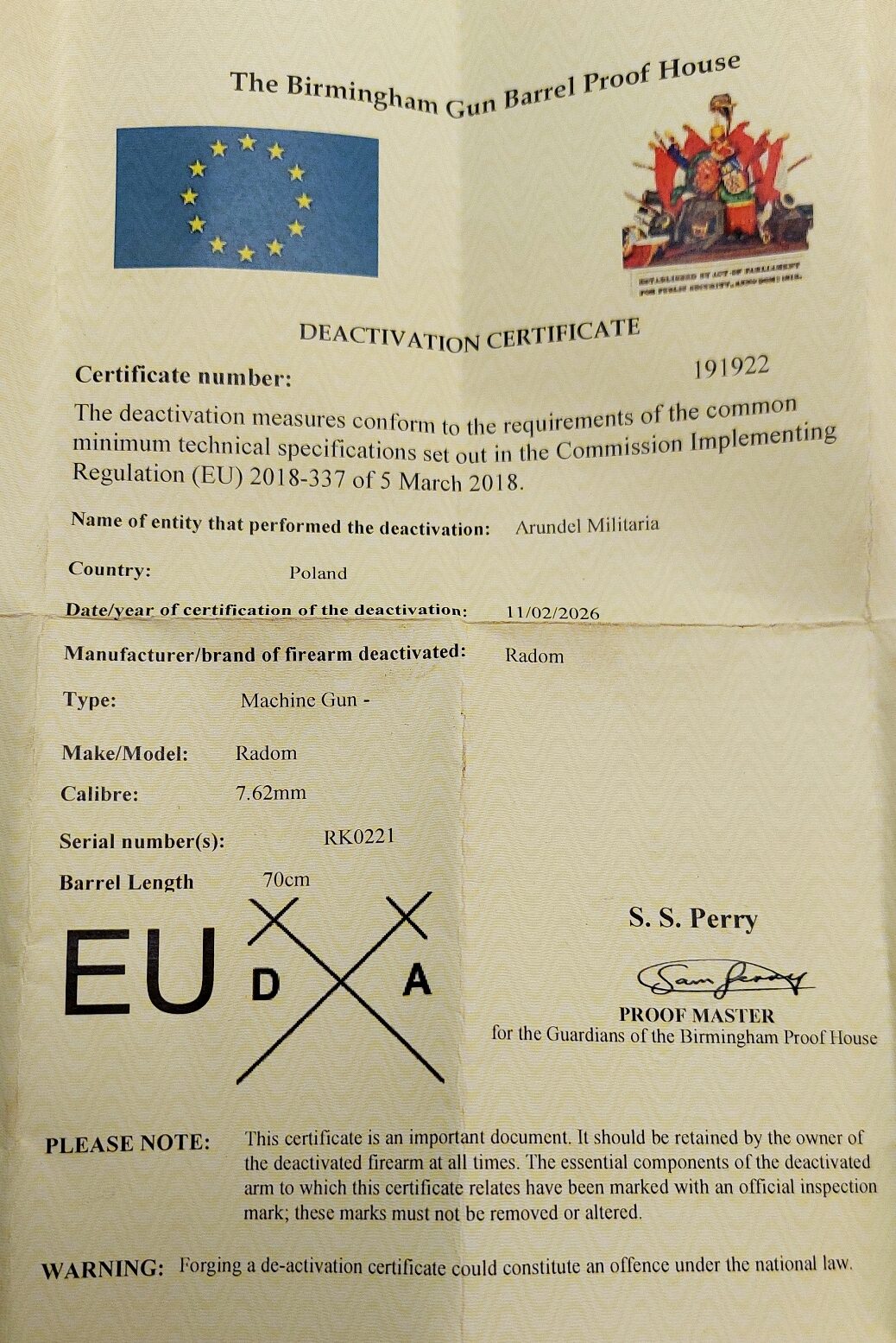
Internally, the weapon has been deactivated to current EU specification, with visible modifications to the chamber and internal components in accordance with regulation. The piece is accompanied by its Birmingham Proof House EU deactivation certificate (dated 11/02/2026), confirming compliance and legality within the UK. A well-preserved and complete example showing honest service wear. Metal surfaces retain a good finish with areas of light handling wear and minor marks consistent with age. Woodwork displays expected service use marks but remains solid and presentable. Magazine shows corresponding wear. Deactivation is clearly visible internally and conforms to current EU specification. Bolt moves but does not fire, mechanism does not function as a live firearm. Please see photographs as part of the condition report.
JAQCAOXHEE_289408102025