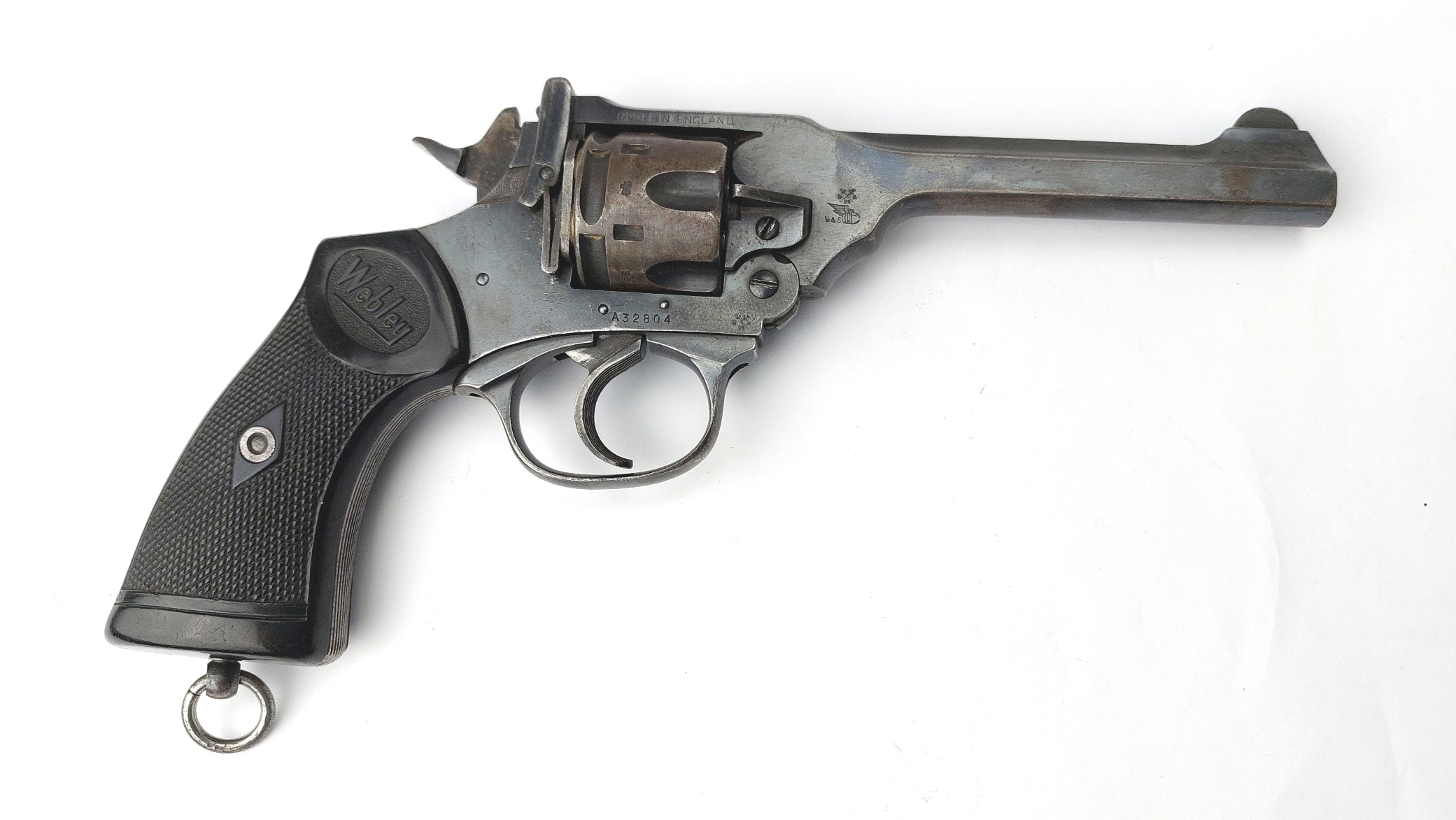
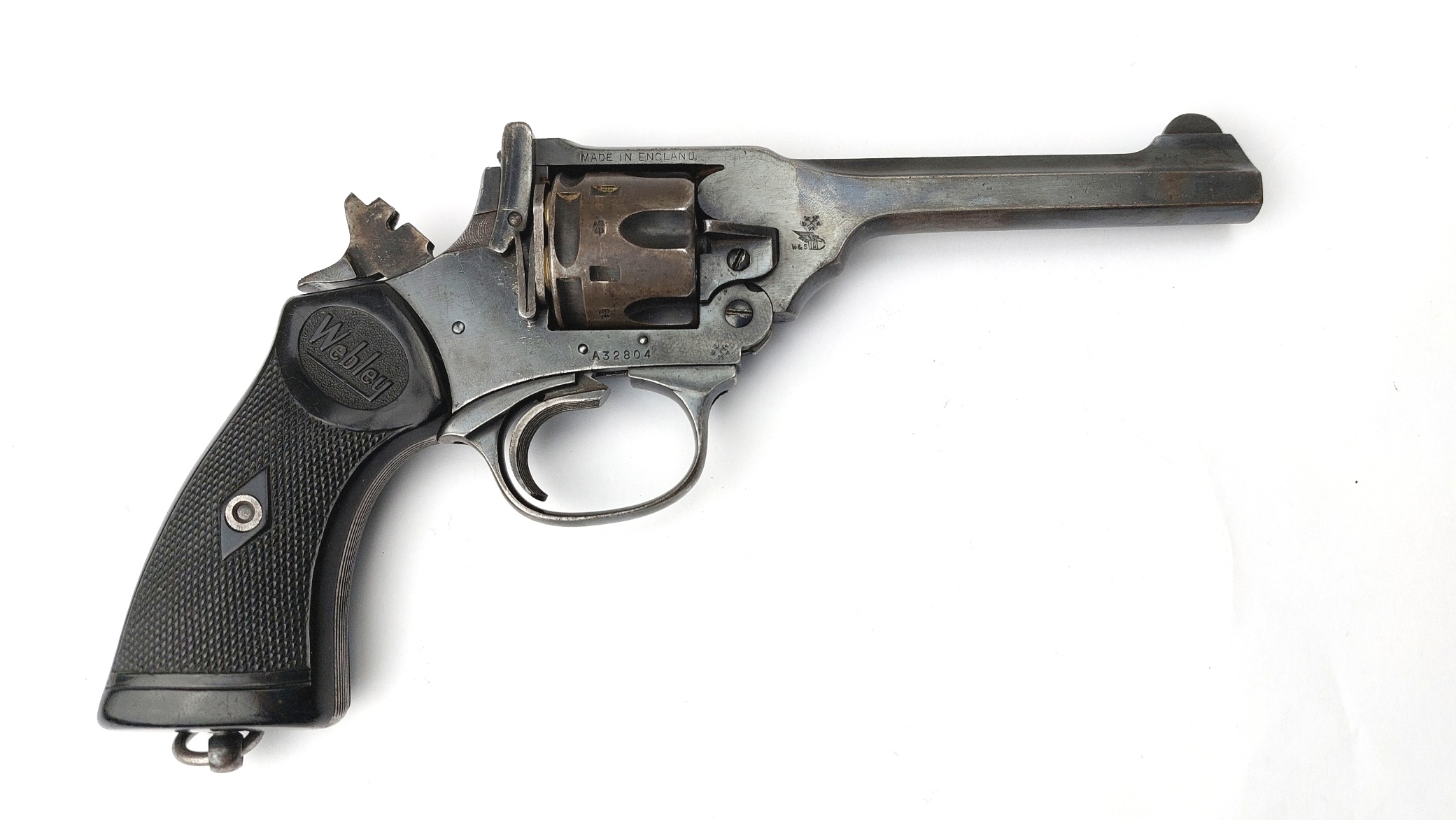
*British, c.1949–1951 Webley & Scott Mark IV .38 Revolver, 5" Barrel, Matching Numbers A32804, Old Spec Deactivated with WWII Inert Cartridges*
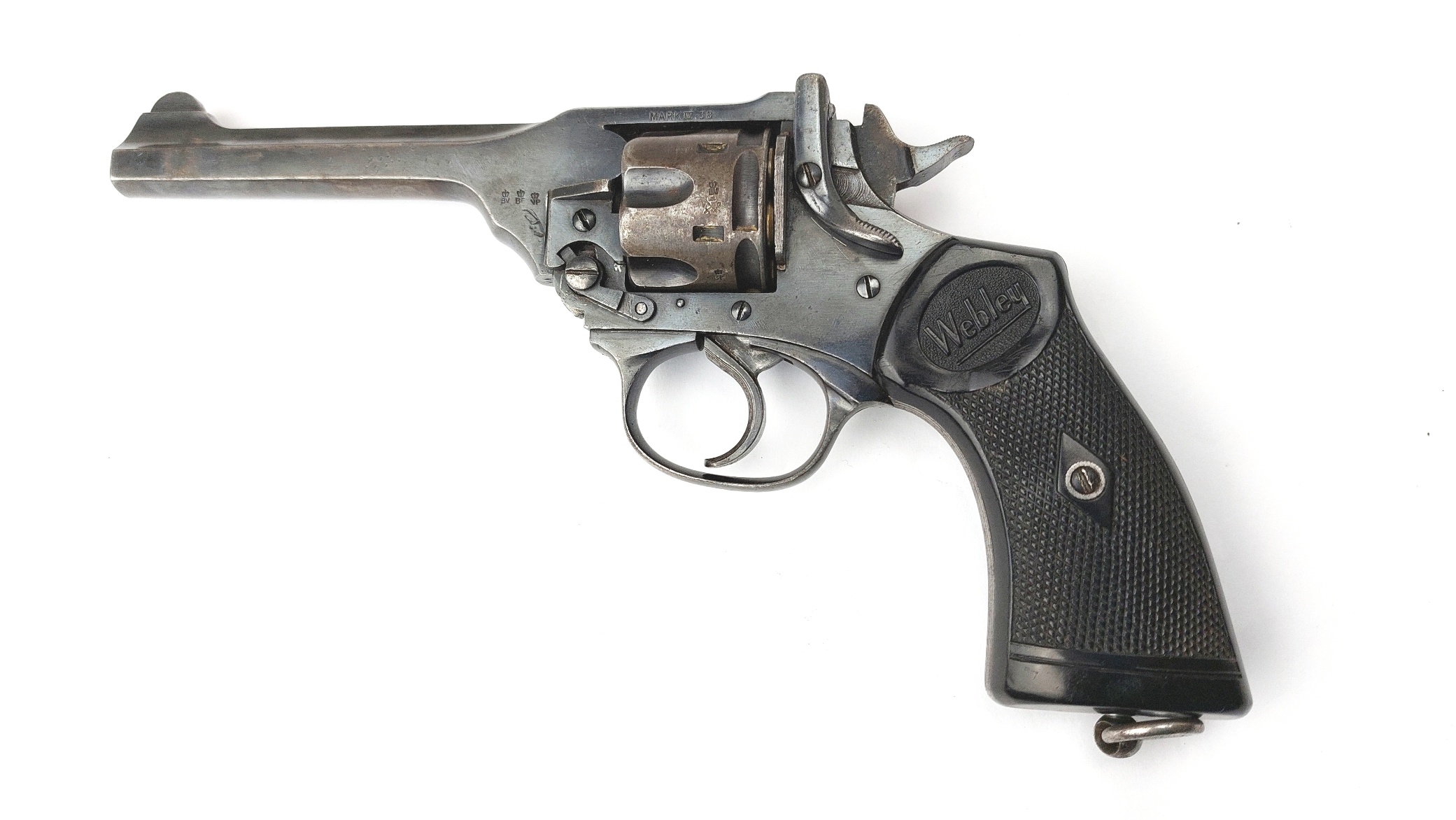
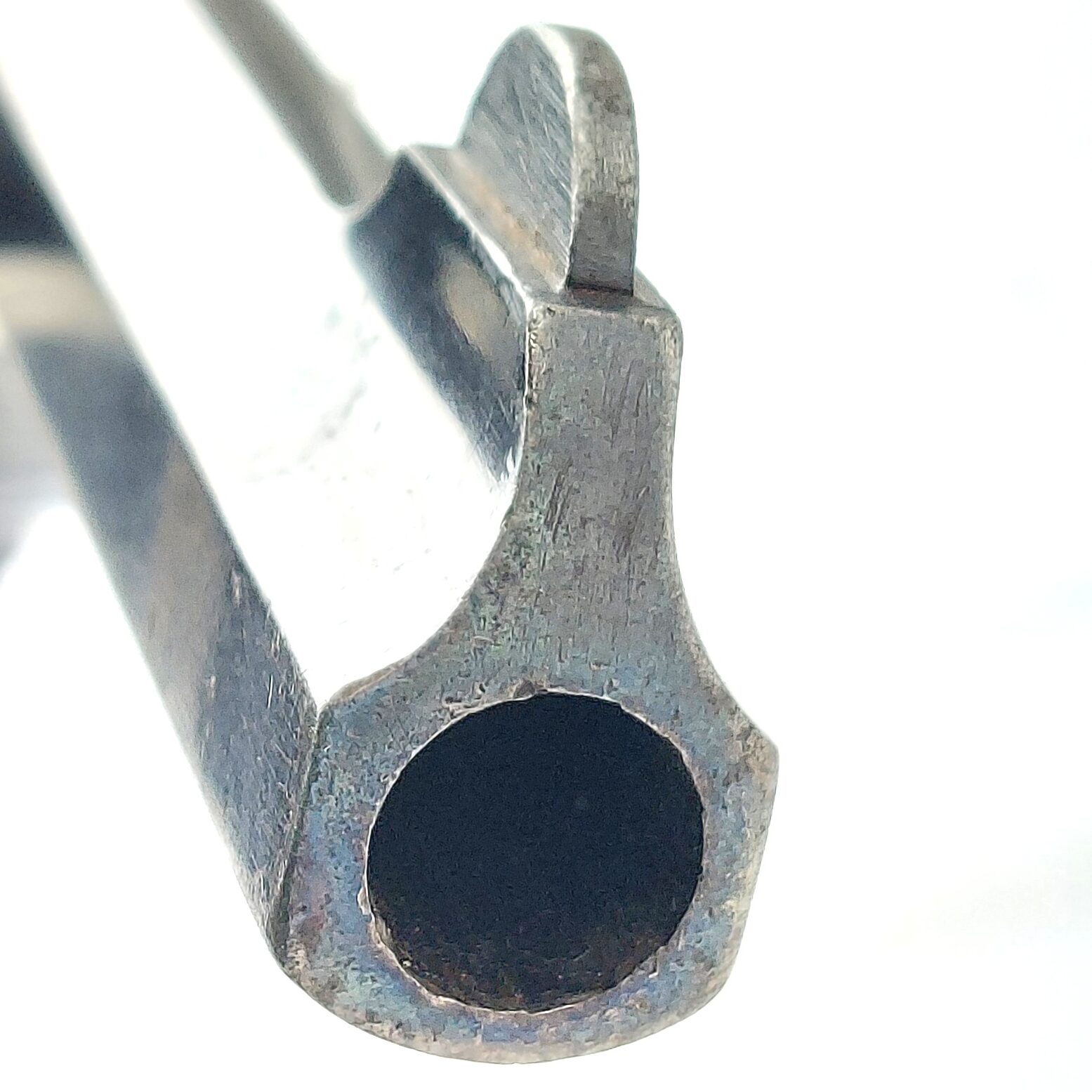
A British Webley & Scott Mark IV .38 top-break service revolver, manufactured in Birmingham and dating to the immediate post-Second World War period. The revolver retains the classic Webley service pattern with 5-inch barrel, six-shot cylinder and automatic extraction system, chambered for the .380 British Service cartridge (.38/200).
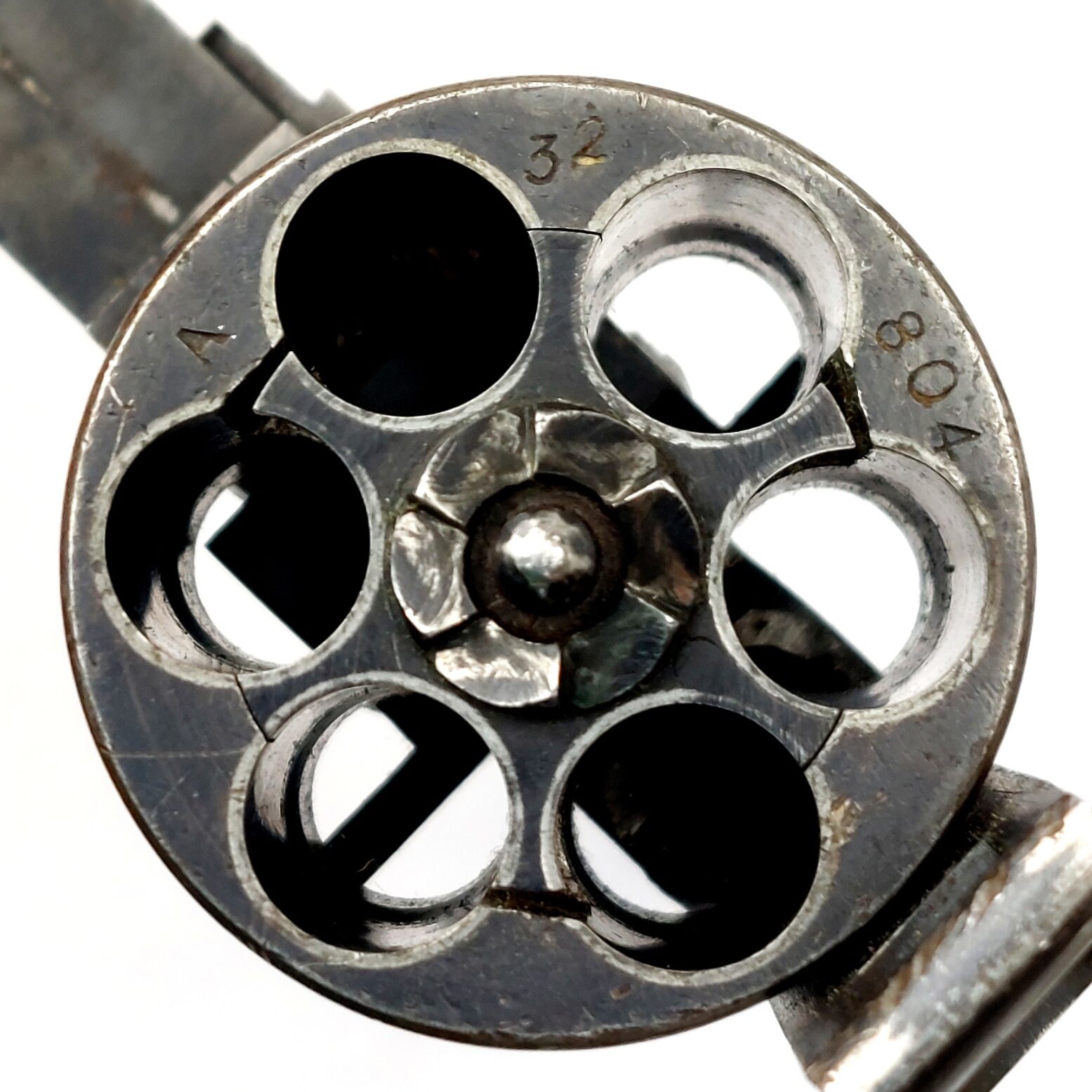
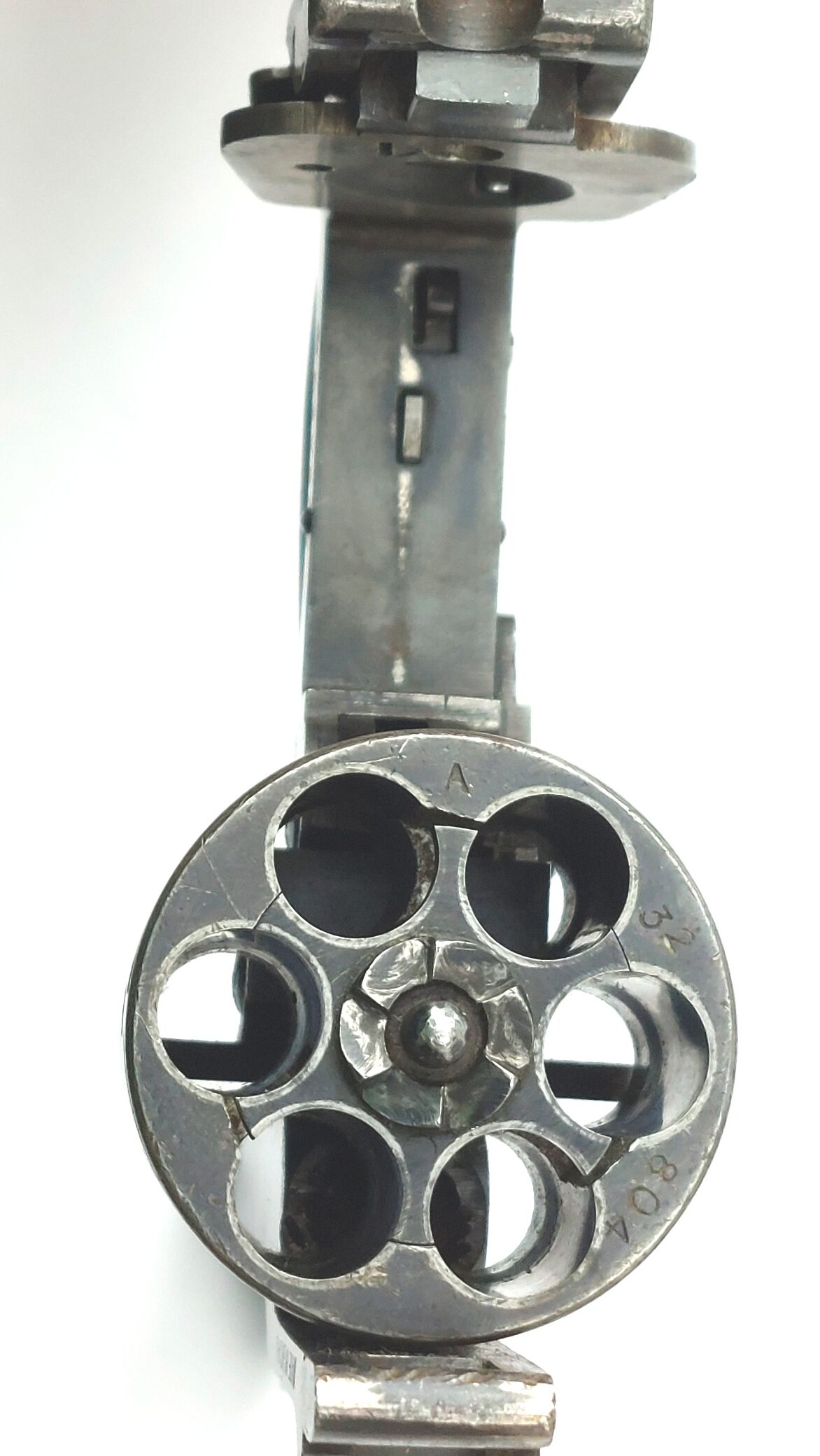
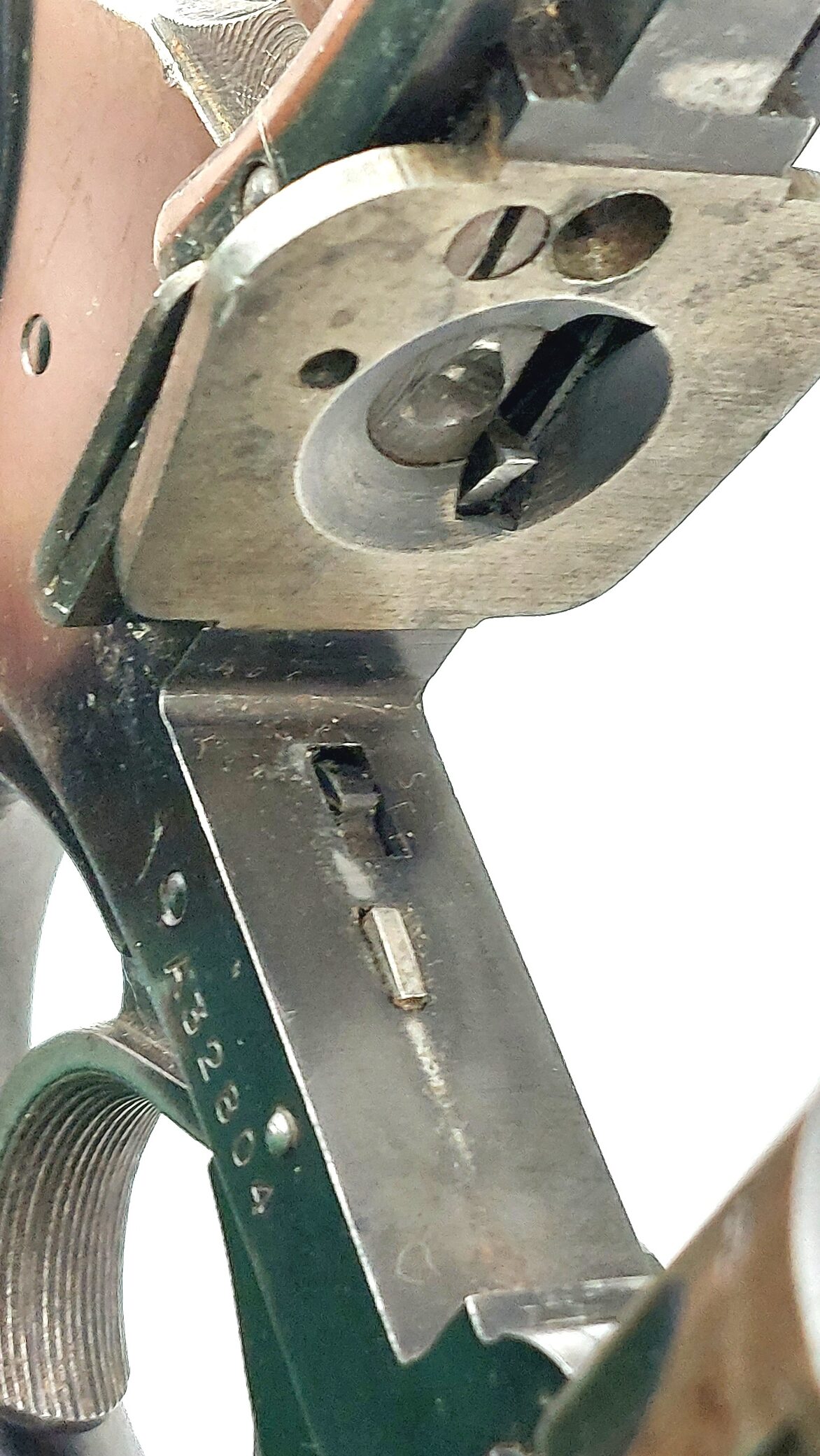
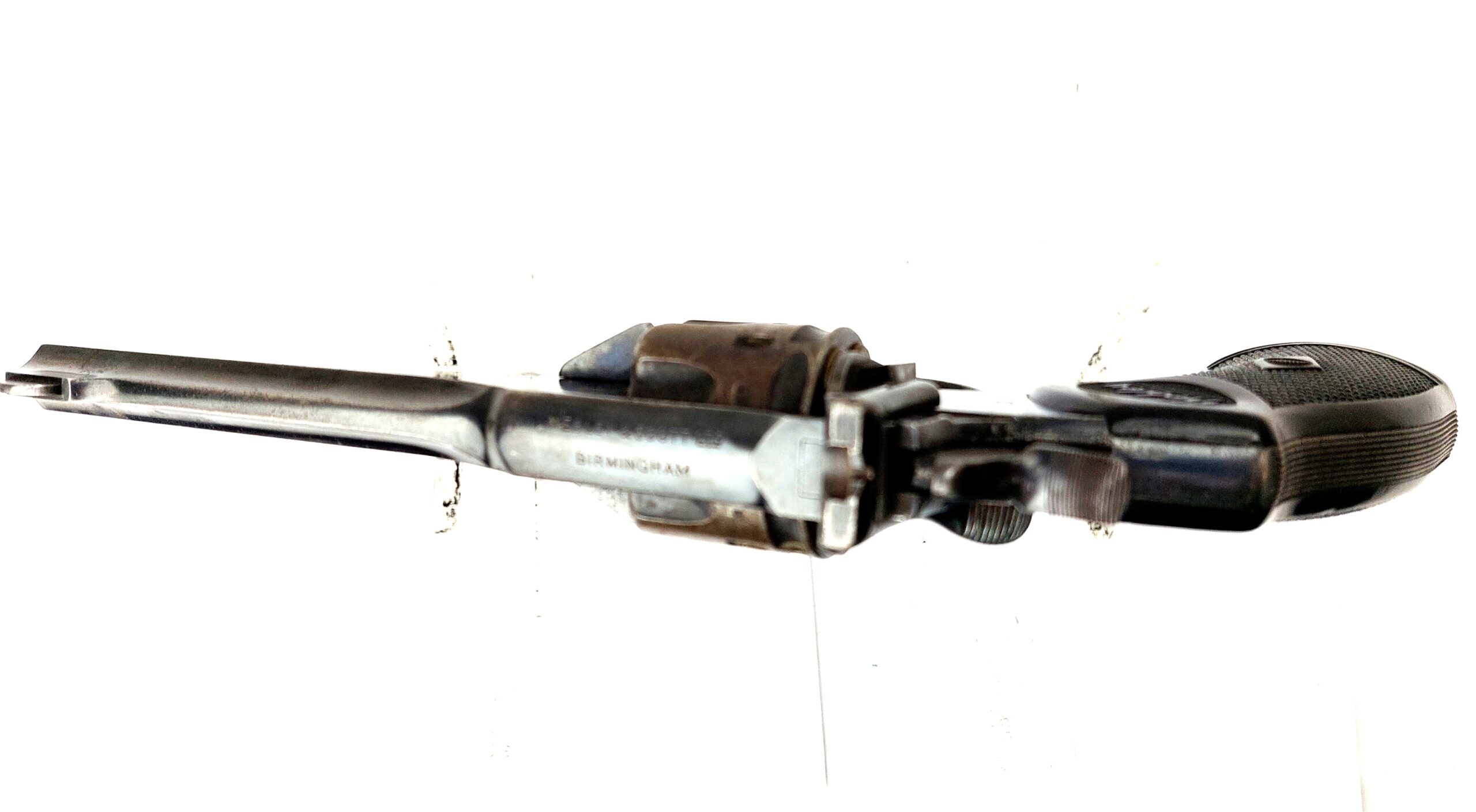
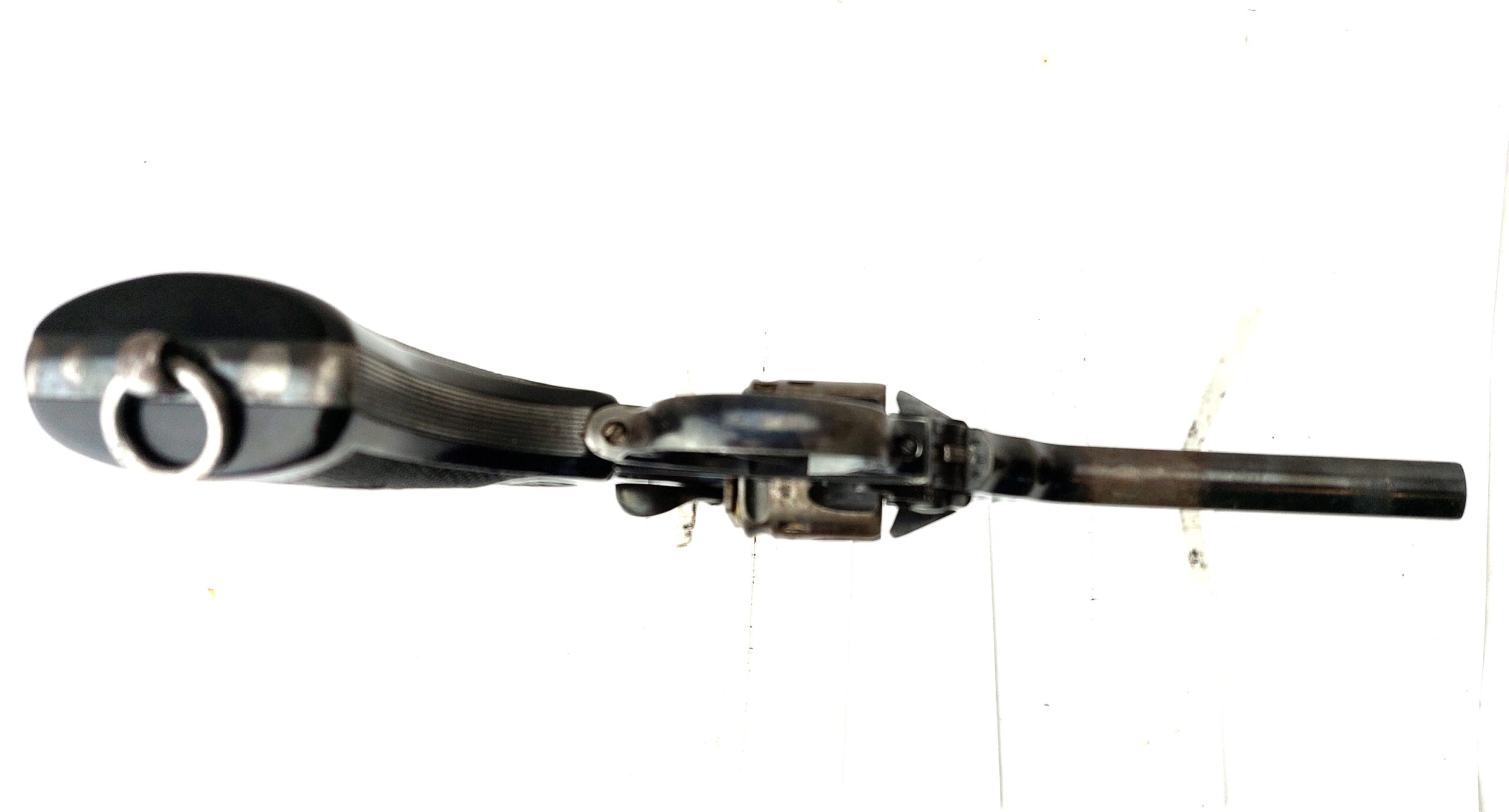
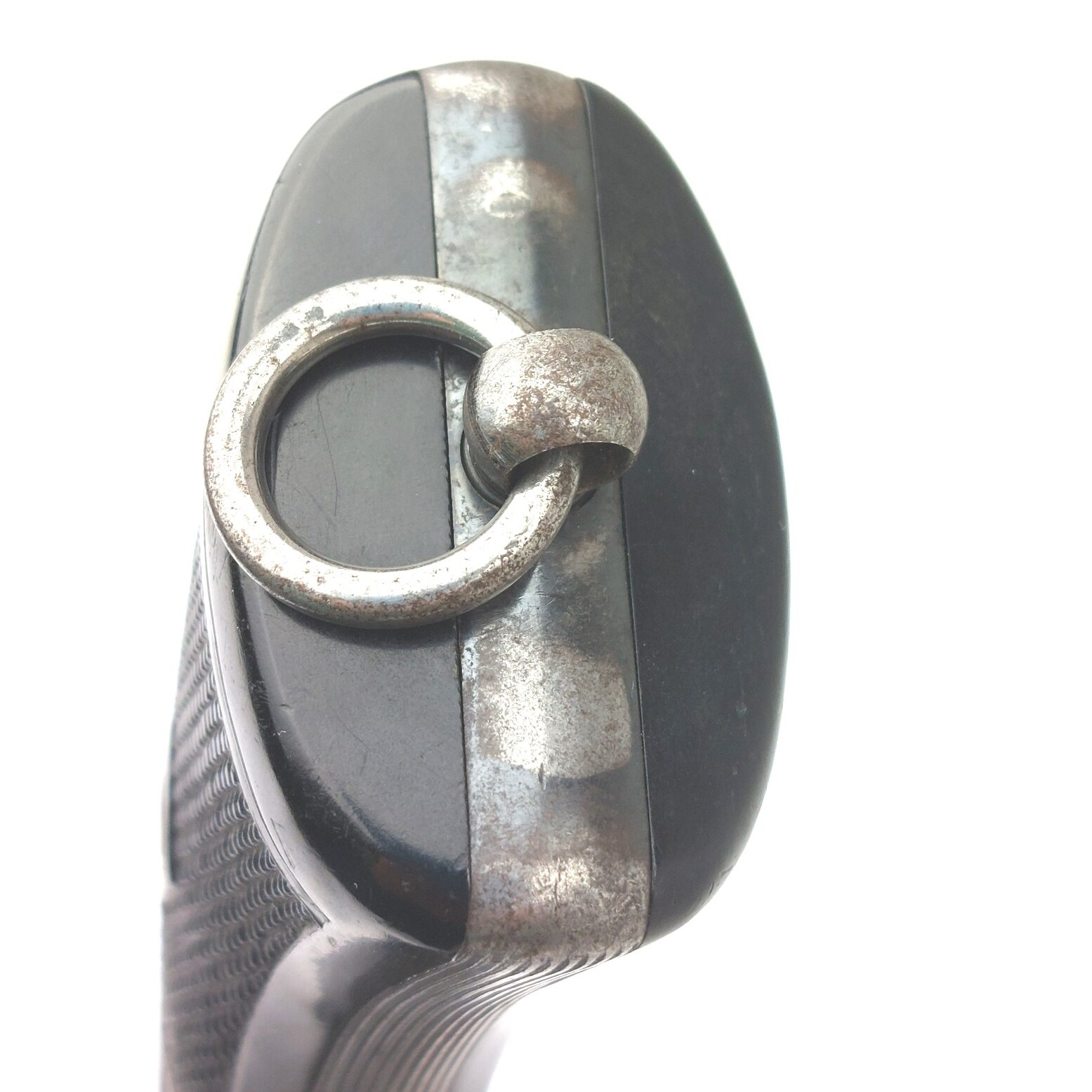
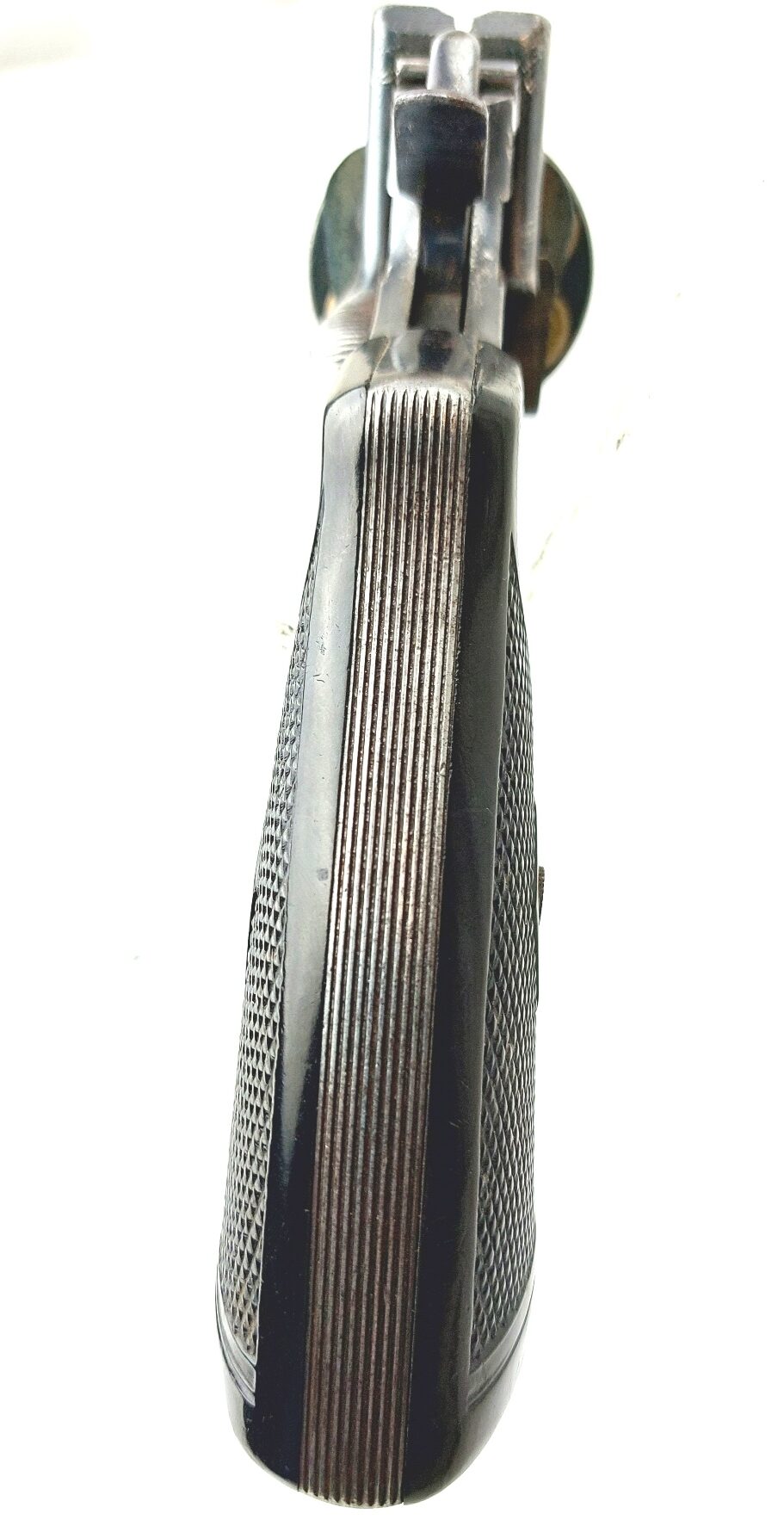
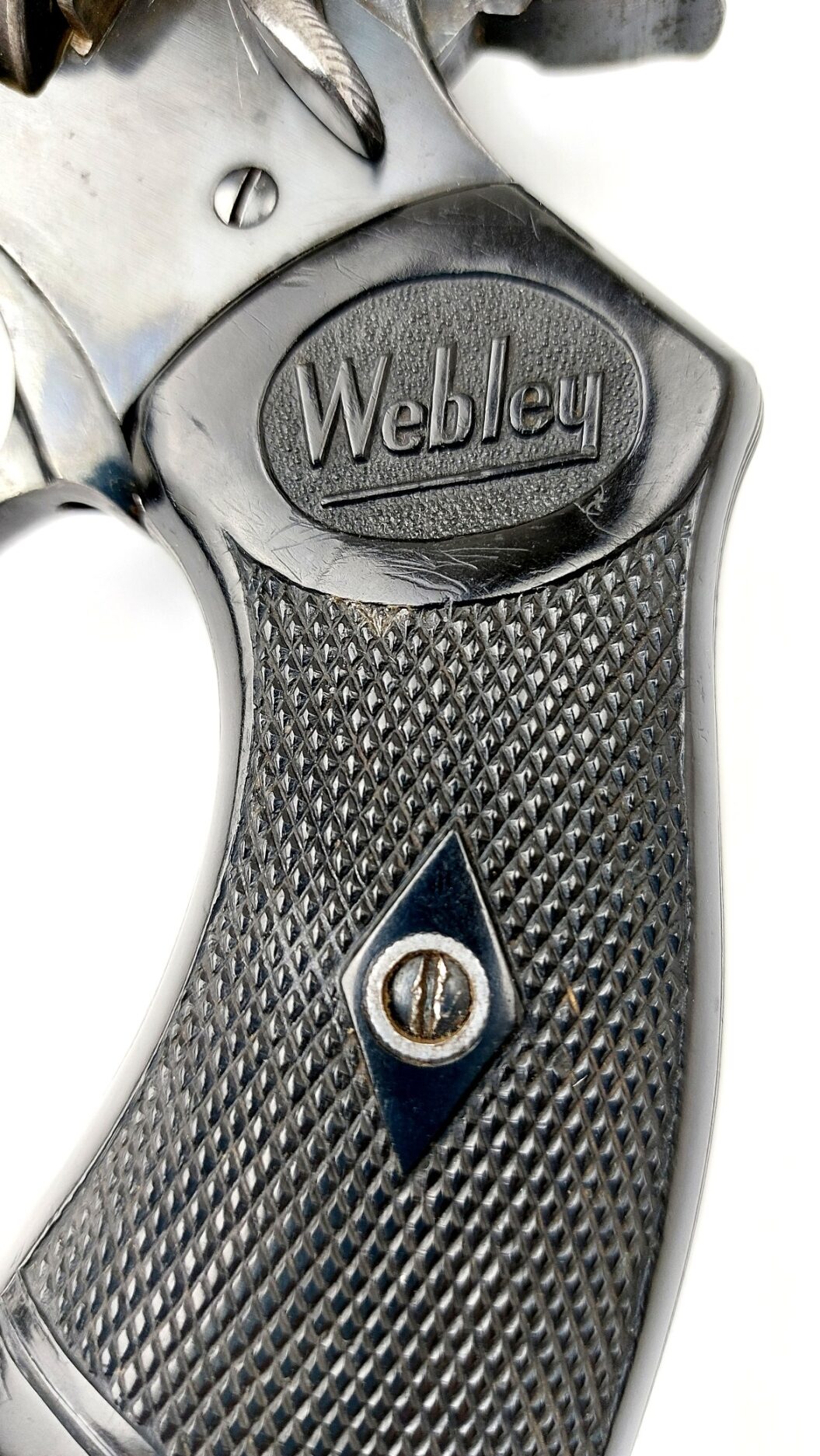
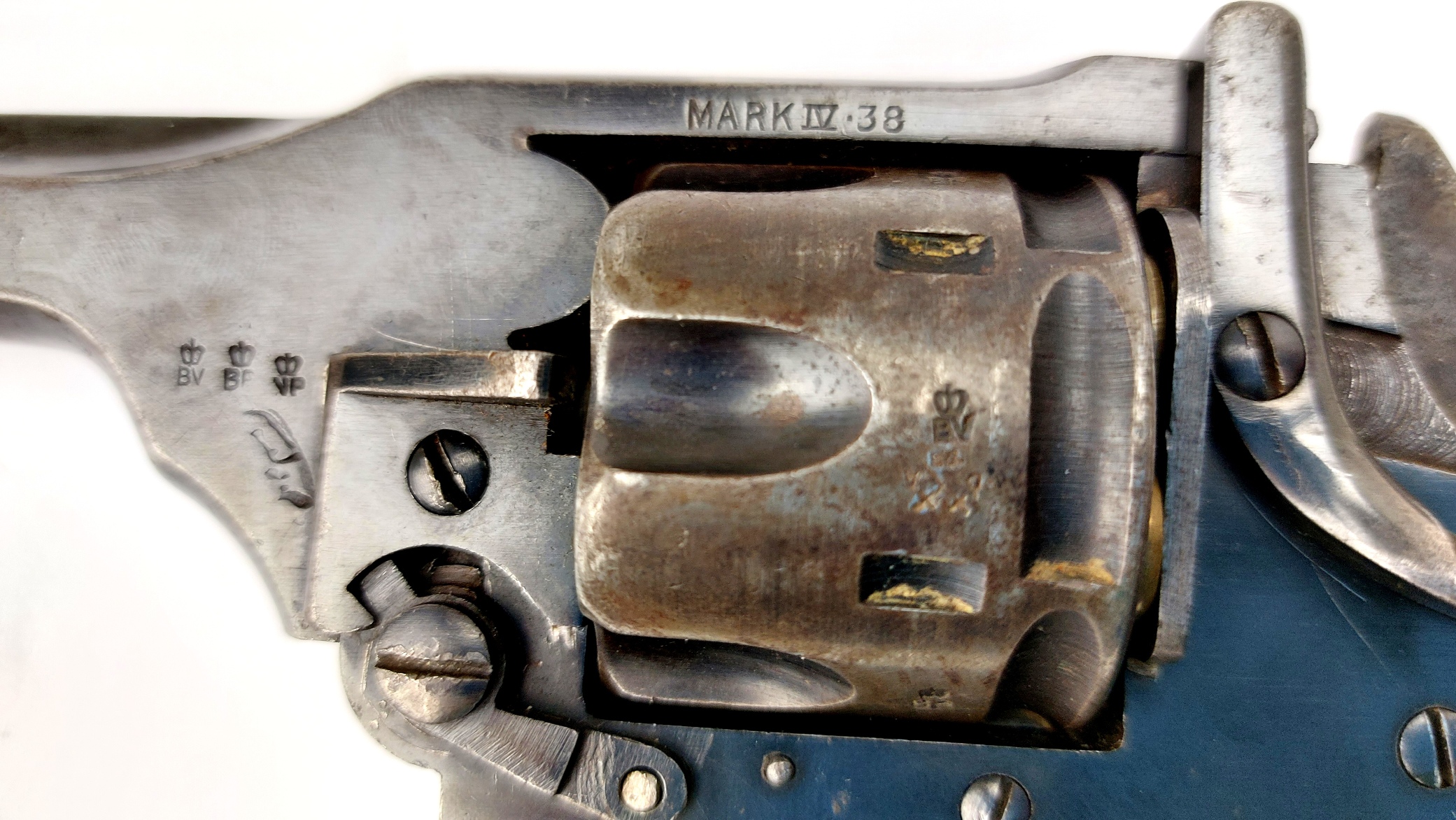
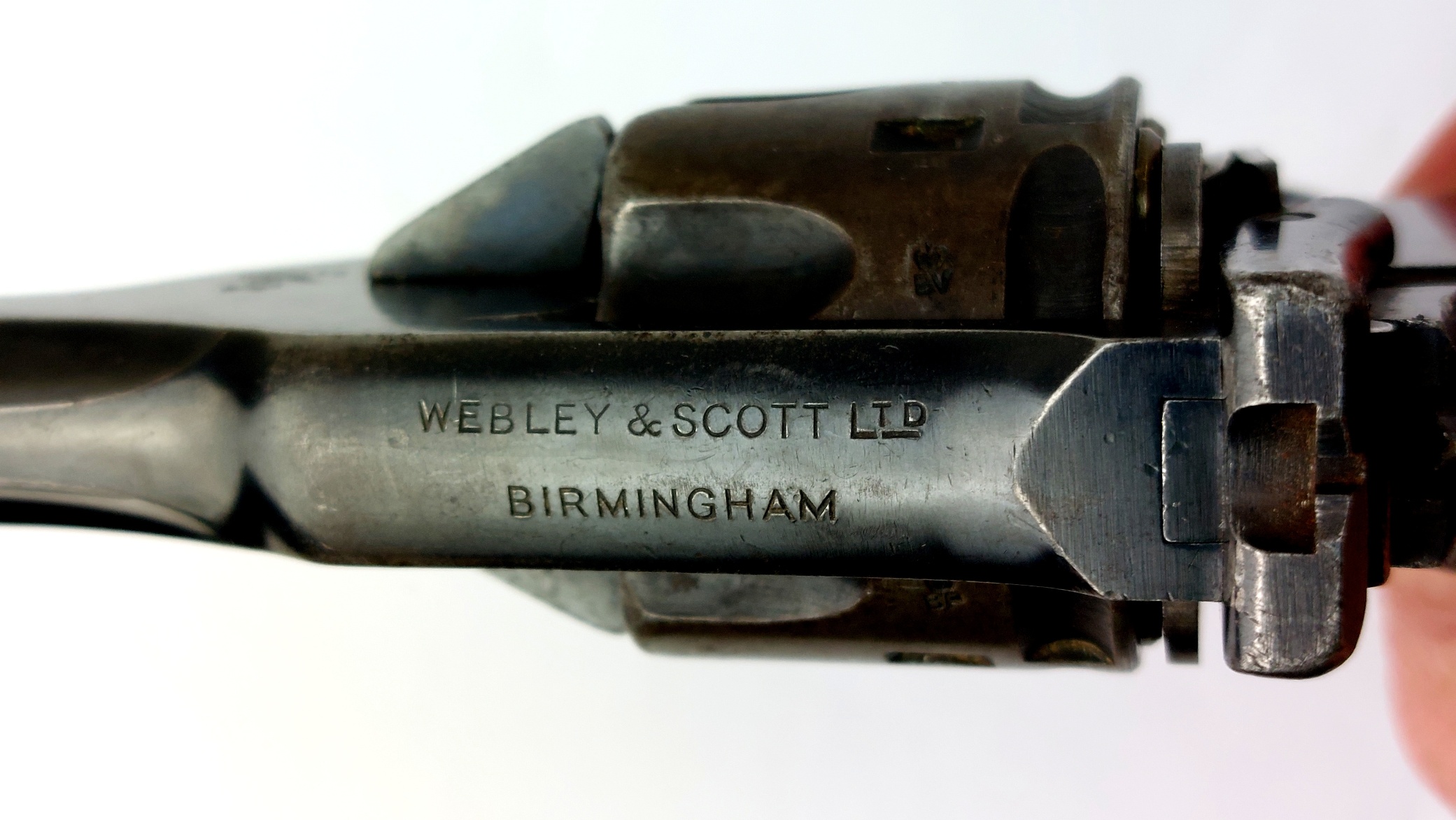
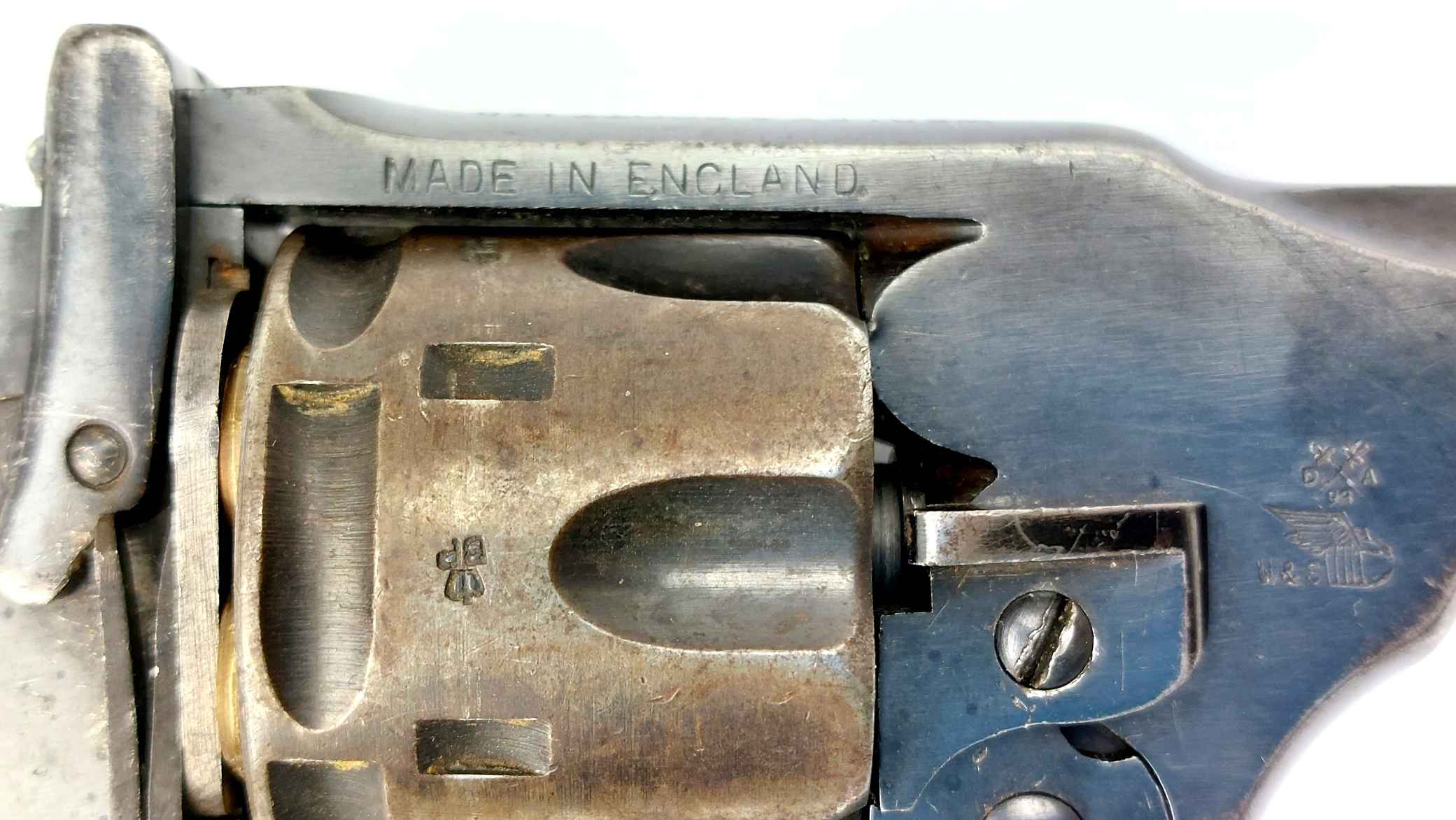
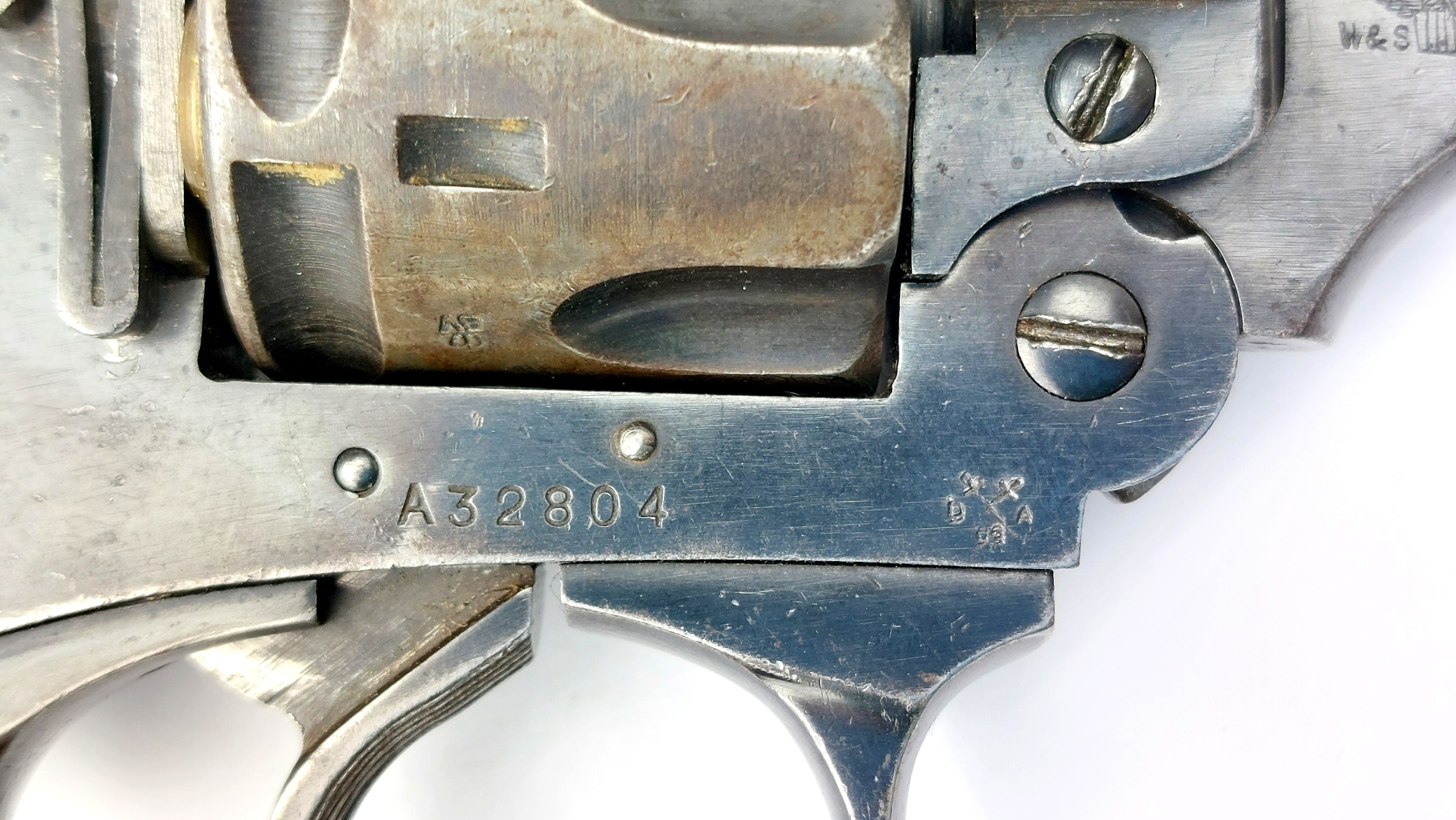
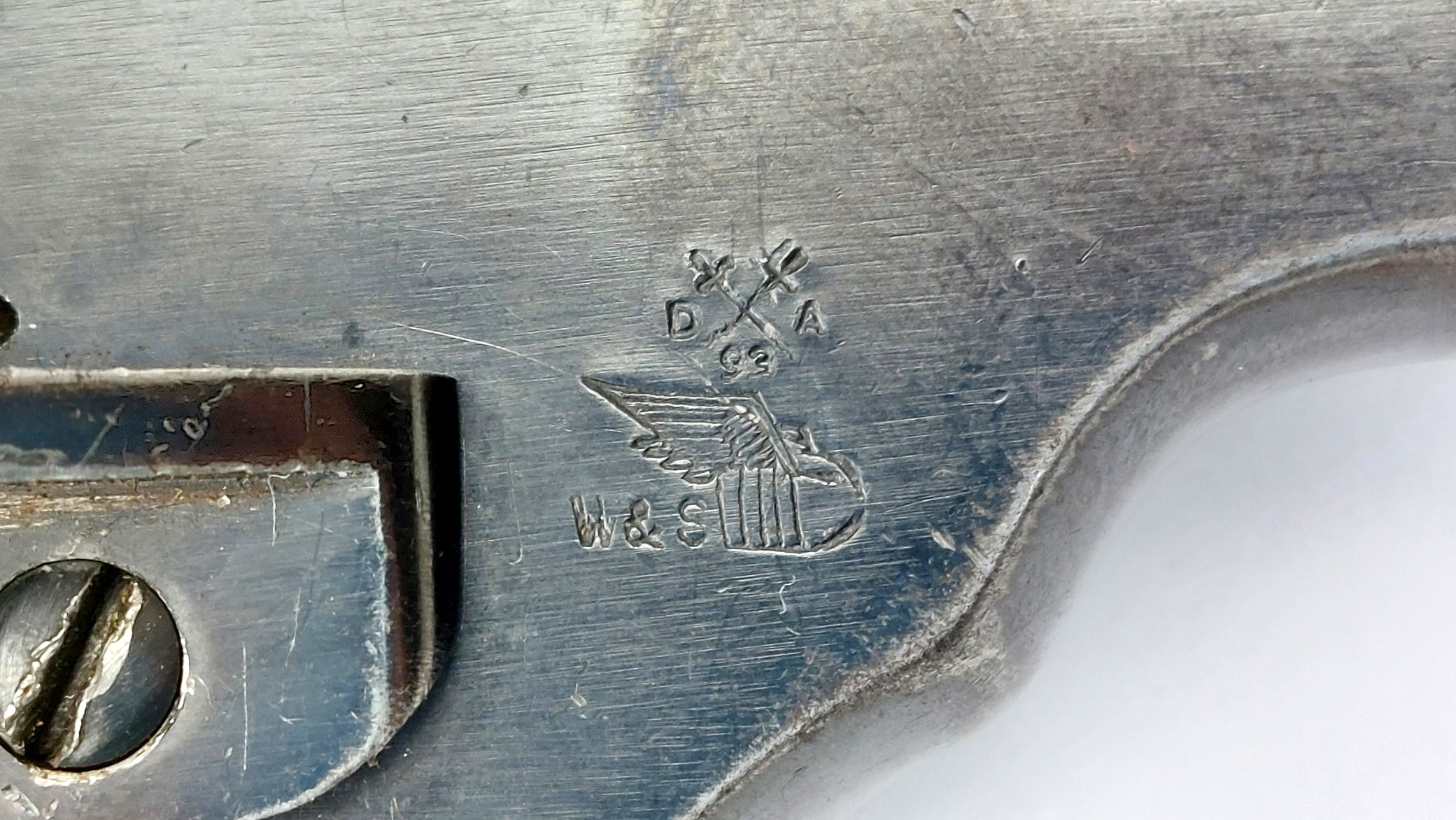
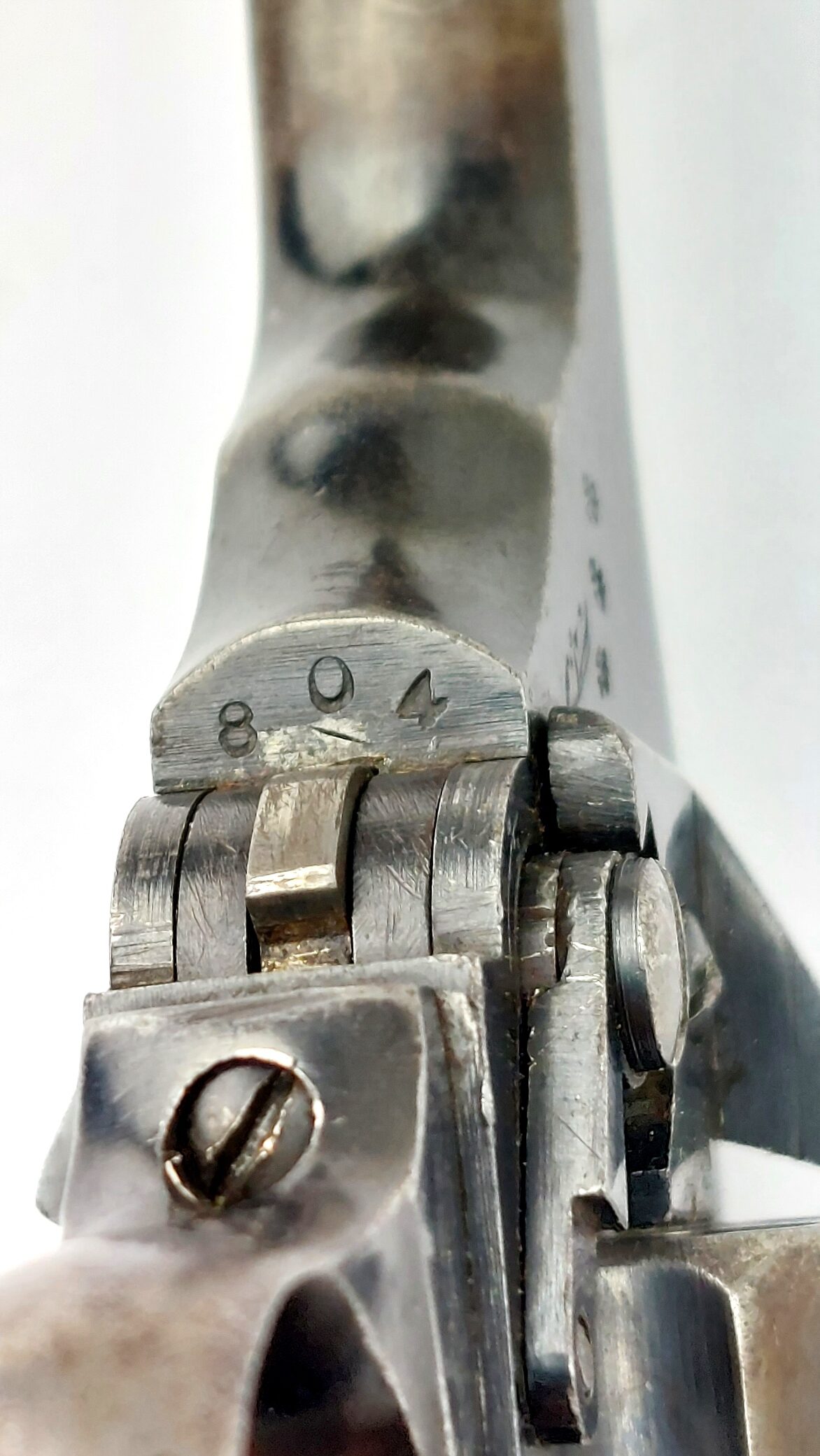
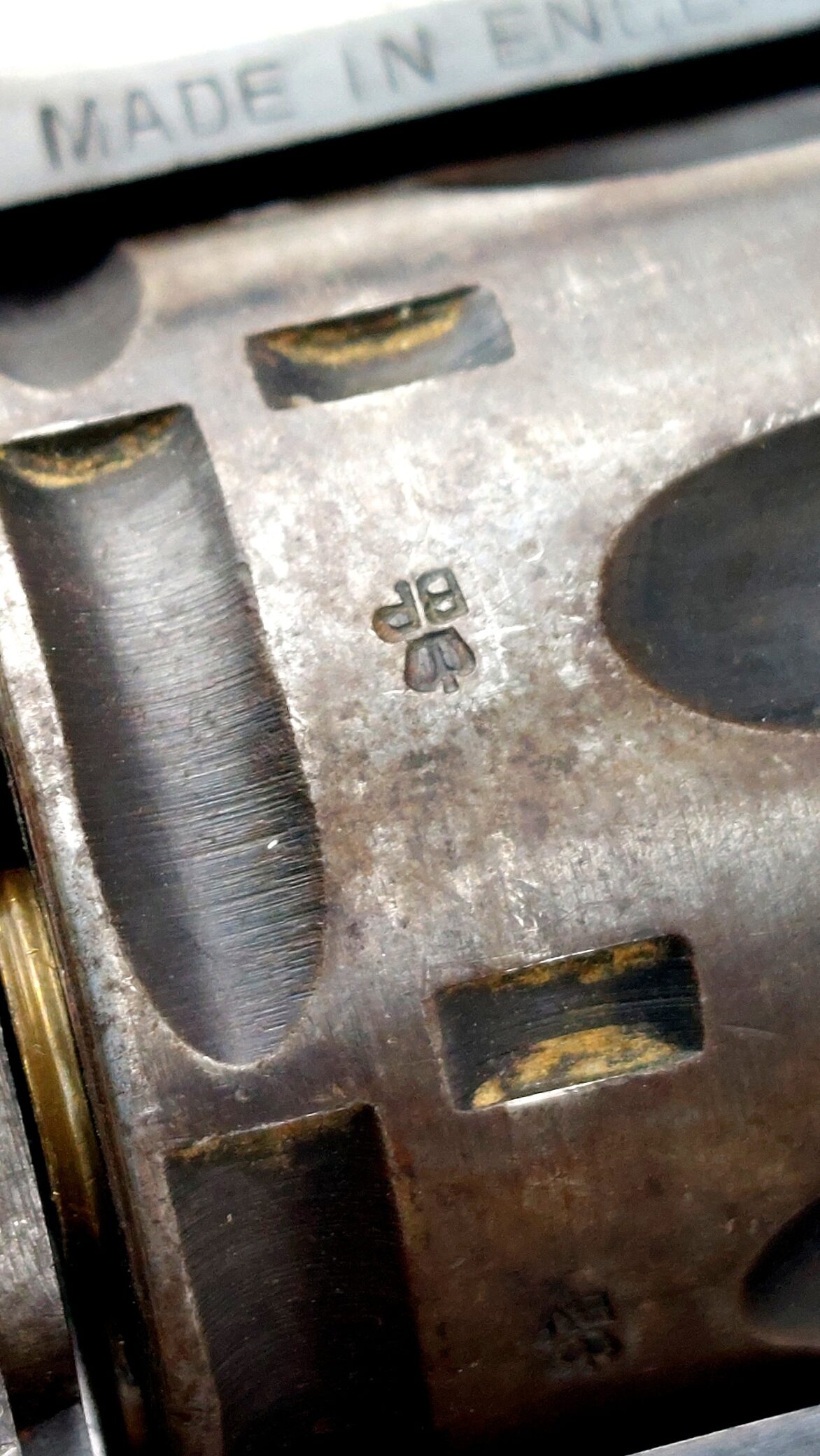
The top barrel rib is clearly stamped “WEBLEY & SCOTT LTD / BIRMINGHAM”, while the left side of the top strap is marked “MADE IN ENGLAND.” The right side of the frame carries the model designation “MARK IV .38” together with the Webley winged bullet W&S trademark. The revolver retains its original chequered black composite grip panels with moulded Webley roundel. The serial number A32804 is present on the right side of the receiver and on the cylinder and is repeated as the last three digits 804 beneath the cylinder, indicating matching numbered parts. The revolver also bears Birmingham Crown over BNP proof marks confirming nitro proof for smokeless powder at the Birmingham Proof House.
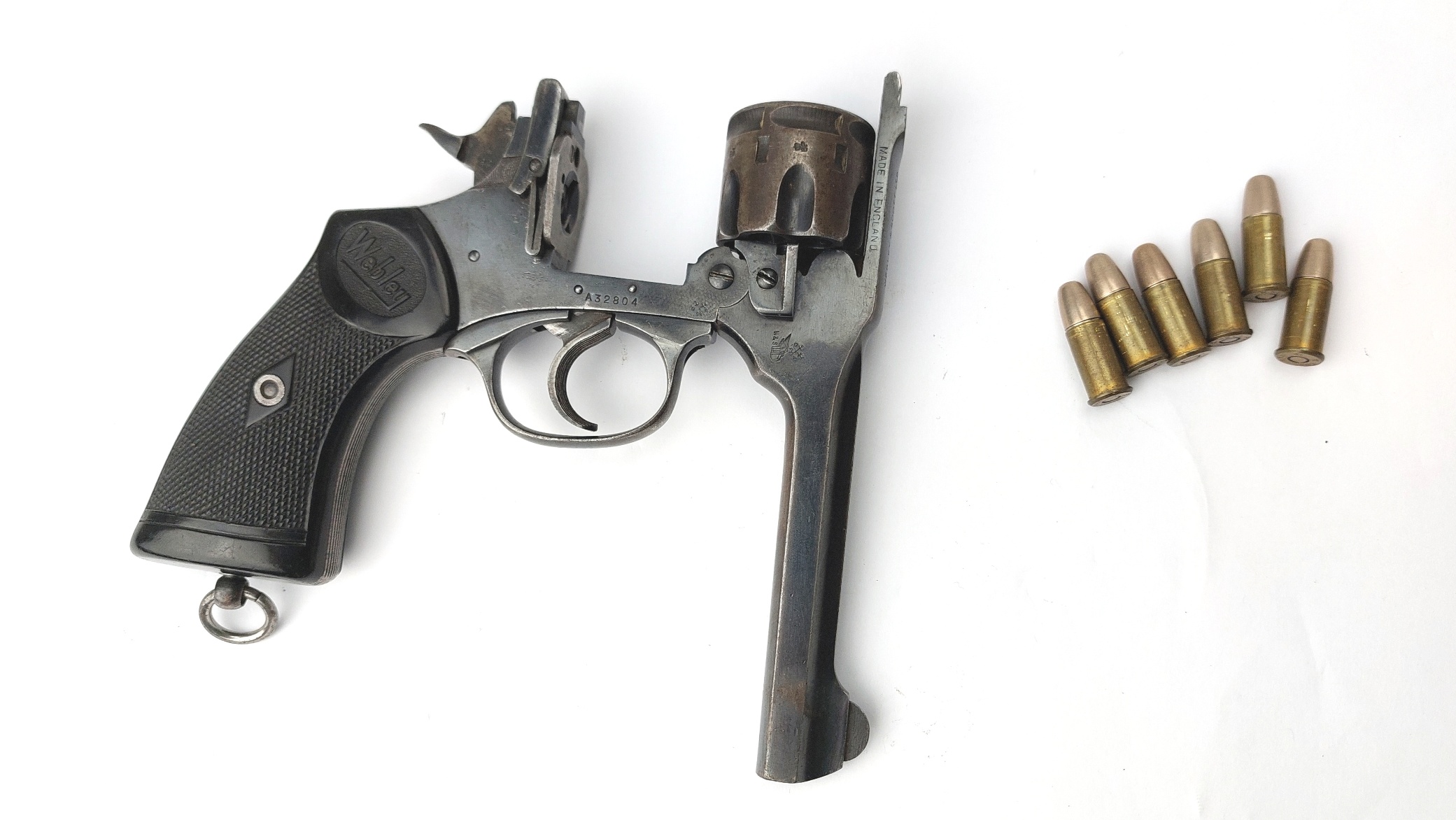
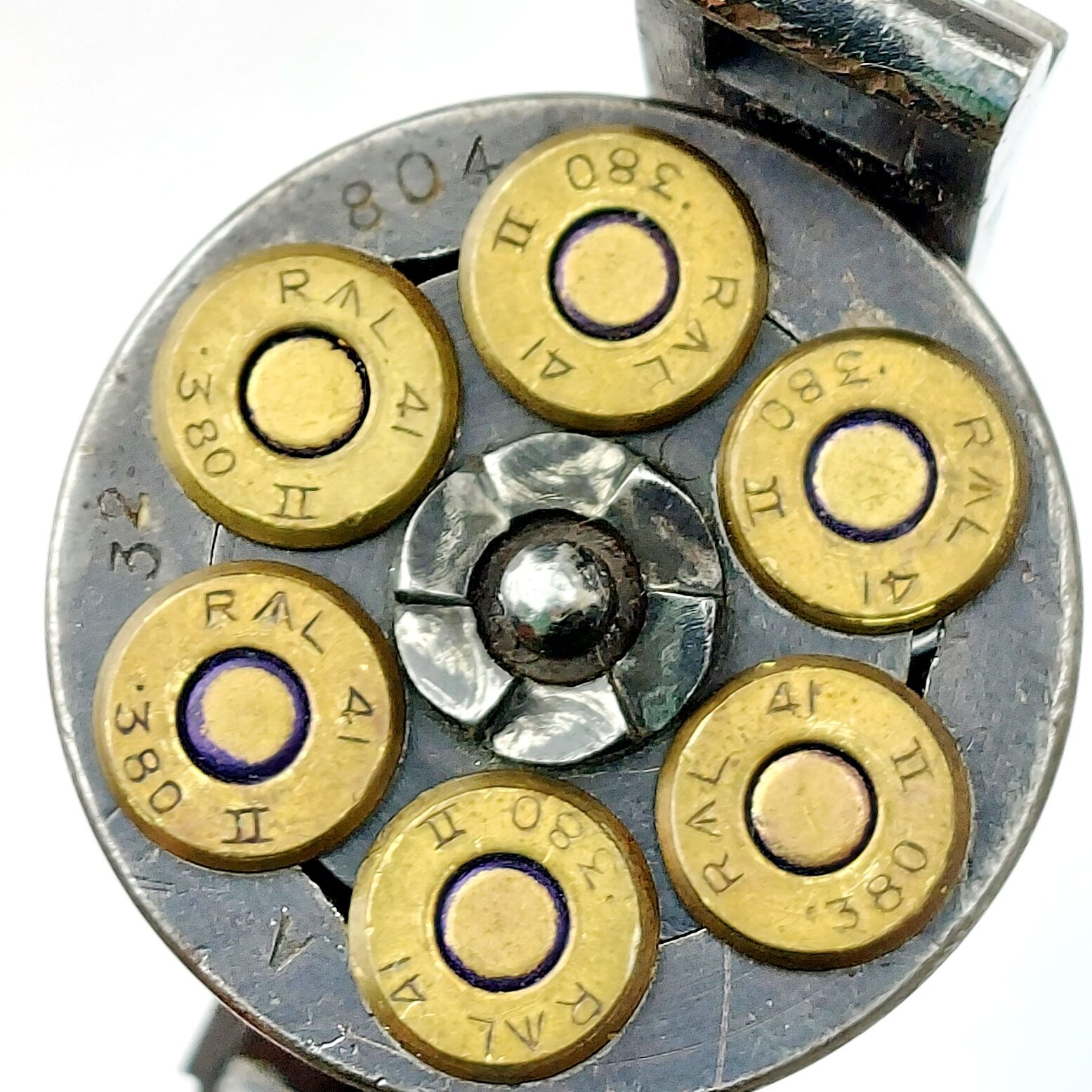
The revolver is accompanied by six inert .380 cartridges placed in the cylinder for display. These are period British service cartridges with headstamps “R ↑ L 41 II .380”, identifying manufacture at the Royal Laboratory, Woolwich in 1941, Mark II loading.
Approx. Measurements – Barrel length: 12.7 cm (5 inches). Overall length: 25 cm.
Historical Note:
The Webley Mark IV .38 revolver was introduced in 1932 as the successor to earlier .455 calibre Webley service revolvers. Designed to fire the lighter .38/200 cartridge, it became the standard British service sidearm throughout the Second World War, being widely issued to officers, aircrew, vehicle crews and military police. During the war Webley produced large numbers of revolvers under government contract, often finished in the utilitarian “War Finish” phosphate coating. Following the war, commercial production resumed and serial numbers were reset beginning with the A-prefix series in 1946.
The Webley & Scott Archive indicates that revolvers within the A25000–A44999 serial range were produced approximately between 1949 and 1951, placing the present revolver firmly within this post-war commercial production period. Unlike wartime revolvers which were produced with the utilitarian “War Finish” and normally carry British military ownership marks such as the broad arrow and government inspection stamps, this example displays only commercial markings and Birmingham proof marks, with no evidence of military acceptance or removed service markings, consistent with commercial production from new. These post-war revolvers were manufactured to a higher commercial standard and originally finished with a deep polished blued finish, traces of which remain visible on the present revolver. Such examples were commonly produced for the commercial and export market rather than issued under direct British military contract.
*Condition*
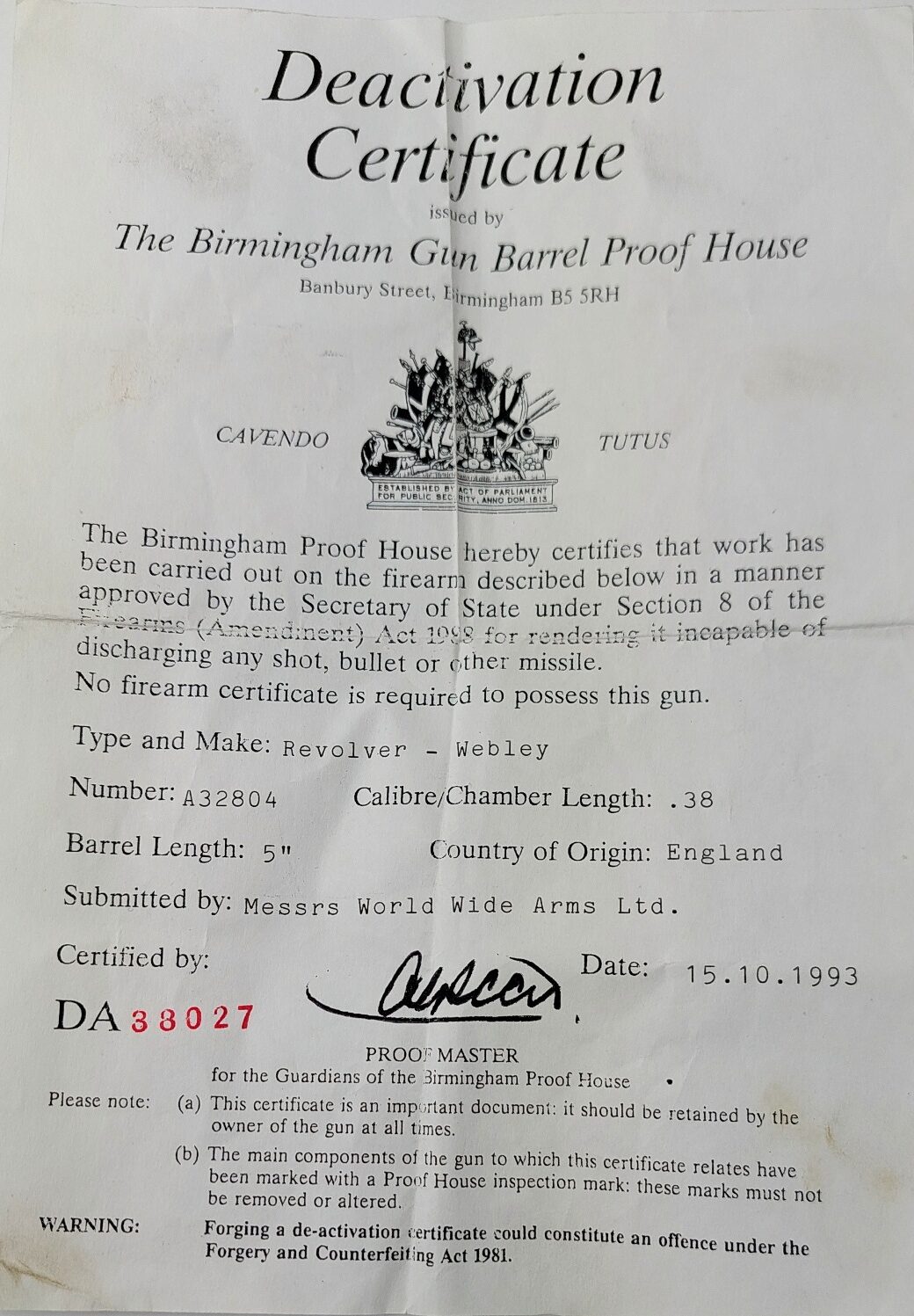
The revolver remains in excellent overall condition. The metal surfaces retains much of the original blued finish with areas of honest handling wear and light patination consistent with age. The cylinder shows typical rotation marks and finish wear. Markings remain clear and legible throughout, including the Webley & Scott barrel address, model designation and serial numbers. The grip panels are intact with strong chequering and clear Webley roundels. The action operates correctly within the limits of its old specification deactivation. The revolver is accompanied by six inert .380 cartridges. The revolver was deactivated by the Birmingham Gun Barrel Proof House and is accompanied by its original deactivation certificate dated 15 October 1993. As an “Old Specification” deactivation, the revolver retains much of its original mechanical operation: Top-break action opens correctly. Cylinder rotates. Hammer cocks. Trigger pulls and dry fires These earlier deactivation standards are now highly sought after by collectors, as modern UK deactivation requirements typically render the action completely immobile. Please see photographs as part of the condition report.
RQMEOOXIOO_5529234626